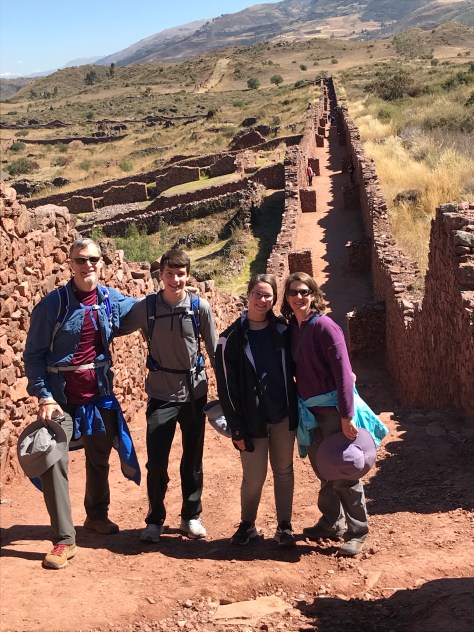
The Cusco area boasts archeological sites from periods throughout recorded history and today we sampled a wide range. The oldest spot in our morning tour was the city of Pikillacta, a Wari (pre-Incan) settlement dating from 1100 A.D. The stonework was primitive compared to later Incan standards but the scale and regularity of the urban layout were impressive. Unfortunately, the use of small stones and clay+straw mortar meant that the construction was not very earthquake-resistant, so the buildings were far from intact. Nevertheless we could still get a good sense of walled thoroughfares and building locations surrounded by a defensive wall originally 5m tall.
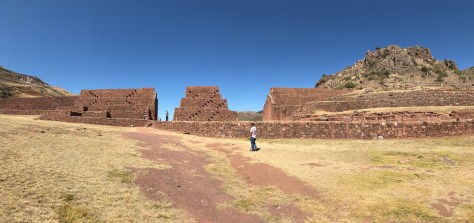
We also saw two Inca sites just down the road. One was an impromptu stop: we were unable to resist pulling over to take pictures of the great gate of Cusco, known as Rumicolca. All travel in and out of the capital valley had to pass through here. (For scale, Ben is standing in the gap between the stones.)
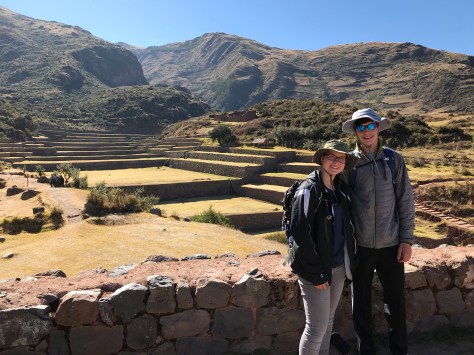
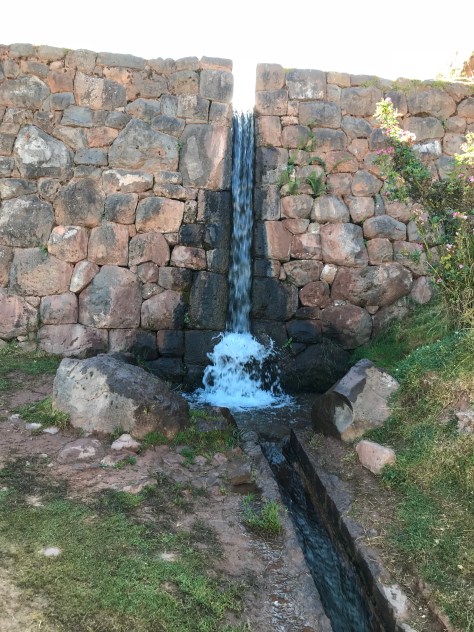
The second was an example of Incan mastery of water management and agricultural experimentation. Tipon features large agricultural terraces irrigated by an ingenious system of meticulously crafted water channels. The water springs from several natural artesian sources coming out of the rock; the Incan name for the village was Tampoq, which means “boiling” in reference to the water’s upwelling. N&S were especially fascinated by the details of Incan hydraulic engineering.
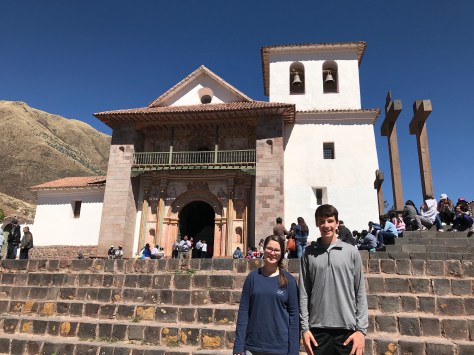
A third stop on our morning tour jumped ahead to the Spanish colonial era. The Catholic Iglesia de San Pedro Apostol in Andahuaylillas was built to help convert the native population to Christianity. It is known as the “Sistine Chapel of the Americas” thanks to its elaborate frescos, paintings, and carved wood decorations covered with gold leaf and silver. We couldn’t take photos inside, but just imagine the entire building’s interior decorated like a jewel box and you won’t be too far off. The exterior was much more modest by contrast.
To fill in further details in our timeline, we made a stop at the Museo Historico Regionale in Cusco, a thoughtfully curated museum located in a converted Spanish mansion. The subjects covered the entire period from Stone Age through through the liberation from Spain.
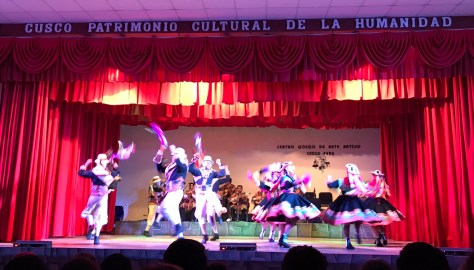
Topping everything off, we included two modern-day events. Over lunch, we caught most of the World Cup game between Denmark and Croatia in the company of local Peruvians and other tourists. And in the evening, we attended a live show of native music and dance featuring festive and authentic costumes, energetic dancers, and skilled musicians. Quite a journey through time!
 Howes' Doings
Looks beautiful. I’ve always loved learning about the many ways humans have harnessed and directed water throughout history. What great engineering! Y’all keep having fun.