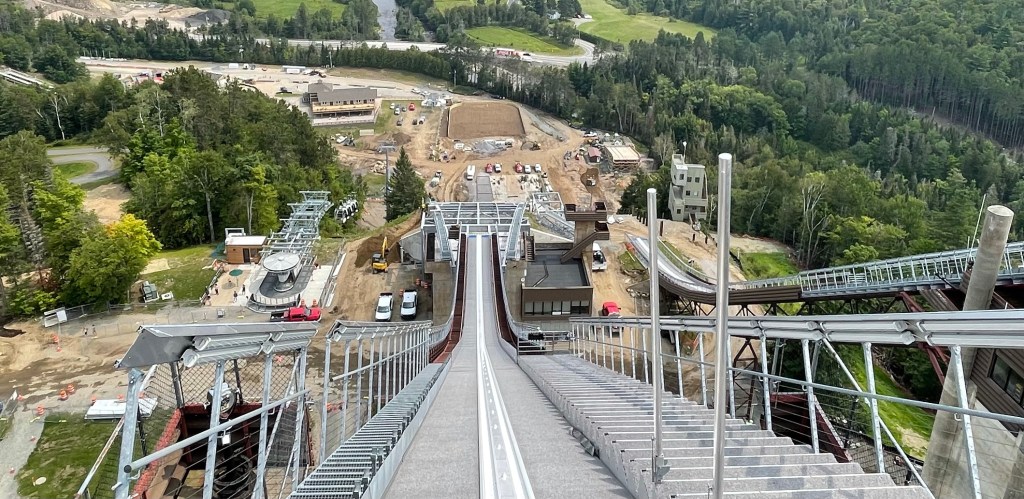
If you’ve heard of Lake Placid, it’s probably in the context of the Olympics, held here in both 1932 and 1980. Our theme for today was to visit the most striking of the Olympic venues: the ski jump and the bobsled run.
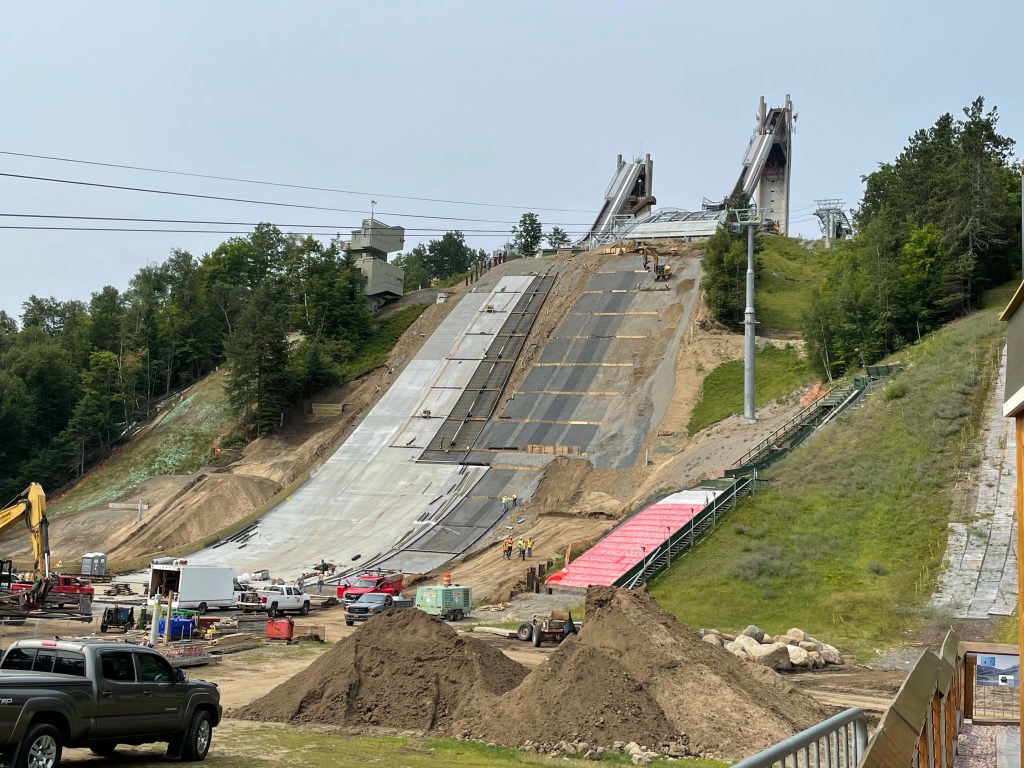
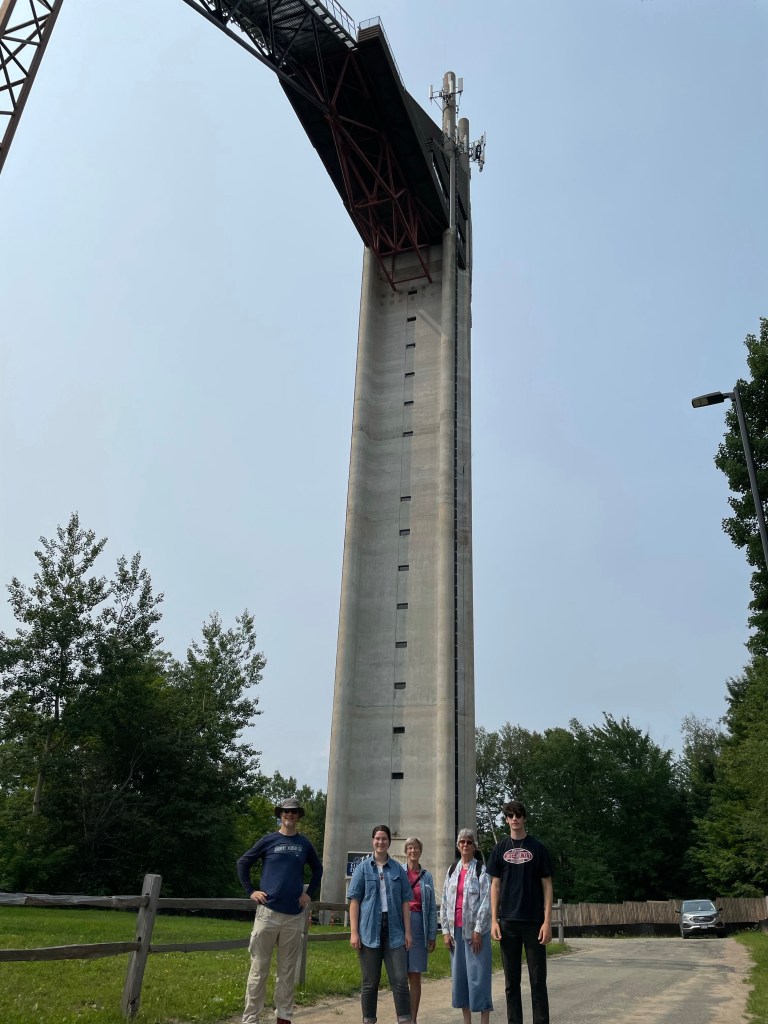
It’s hard to convey in pictures just how tall the ski jump towers are. The two little bumps in the photo above are respectively 90m and 120m atop a huge run-out hill (currently being reconstructed, and scheduled to be done this fall in time for the Olympic qualifiers in Dec). To get a better sense of scale, below is a photo of us at the bottom of the 120m tower, after taking a gondola up to the base. From there, the elevator ascends another 26 stories to the observation deck.
You’d think that upon reaching the top, the first thing we’d do would be to take in the view down the jump. Instead, we got waylaid by an informative and quite lengthy video that introduced us to the history of Lake Placid and how it came to host the Olympics. Did you know that one of the pivotal figures was Melvin Dewey, the same man responsible for the eponymous library catalog system? And we found out that we are staying in the modern successor to the popular resort that he established. We did finally take in the view down the ski jump (photo above), which cemented our respect for anyone brave enough to take on this high-flying sport!
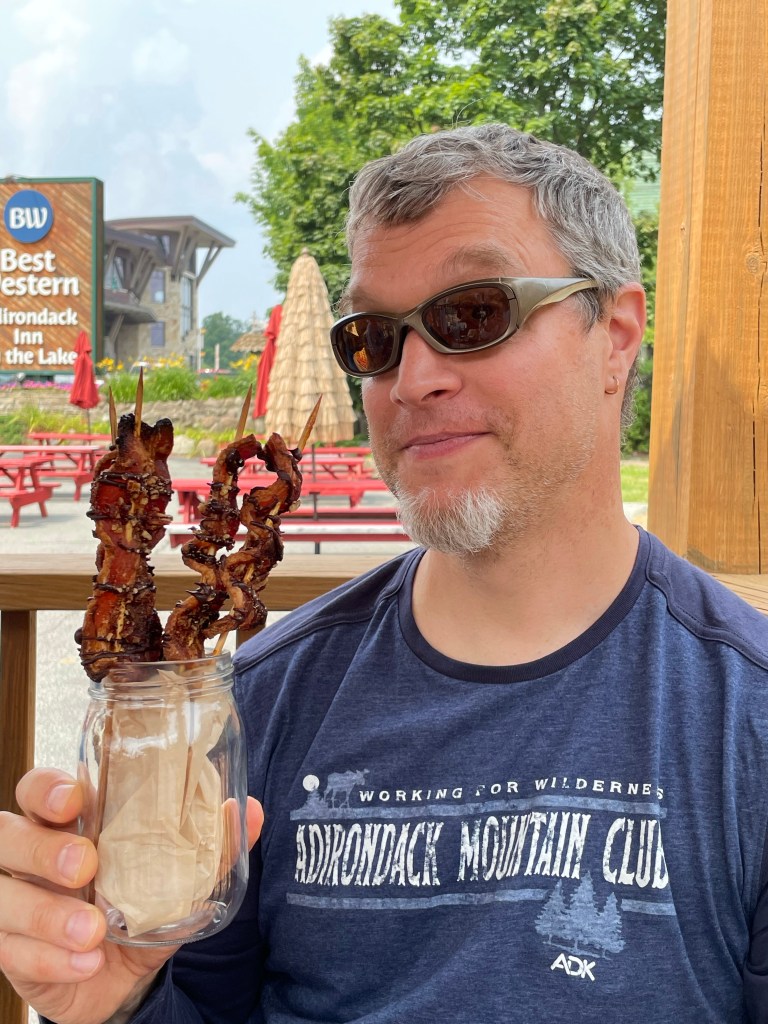
We paused from our Olympic touring to have a gold-medal (and Olympic-sized!) lunch at the Pickled Pig. Chocolate bacon skewers – need we say more? This restaurant was a change from our original lunch choice for the day, which turned out to be closed on Wednesdays. We’ve actually had a frustrating string of bad luck hitting the closed days of various restaurants – which seem to vary by place, but inevitably the day we try them. We were glad to get to “The Pig” having missed it on Monday.
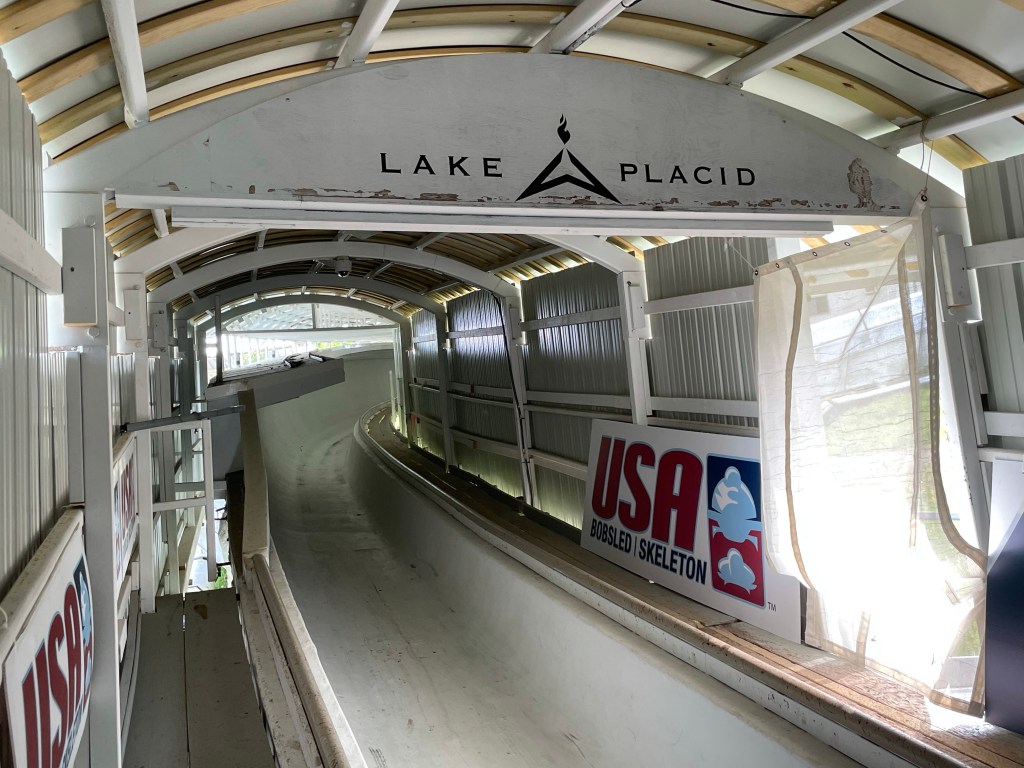
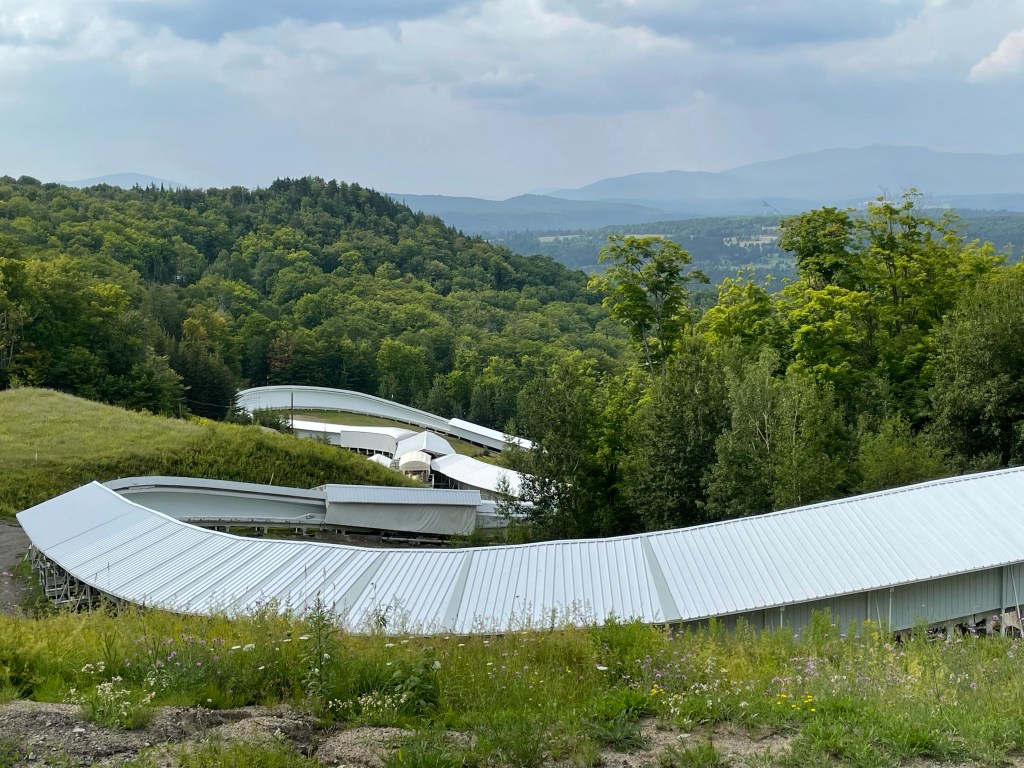
Full of bacon, some of us headed to the Olympic sliding center to explore the combined track for bobsled, luge, and skeleton. The speed that racers hit in these events isn’t always obvious on TV, but in person it was clear from the near-vertical bank on the turns and the fact that the run-out at the end of the race goes halfway back up the mountain. We ourselves hiked up far enough to get a view of the many switchbacks snaking their way down the slope.
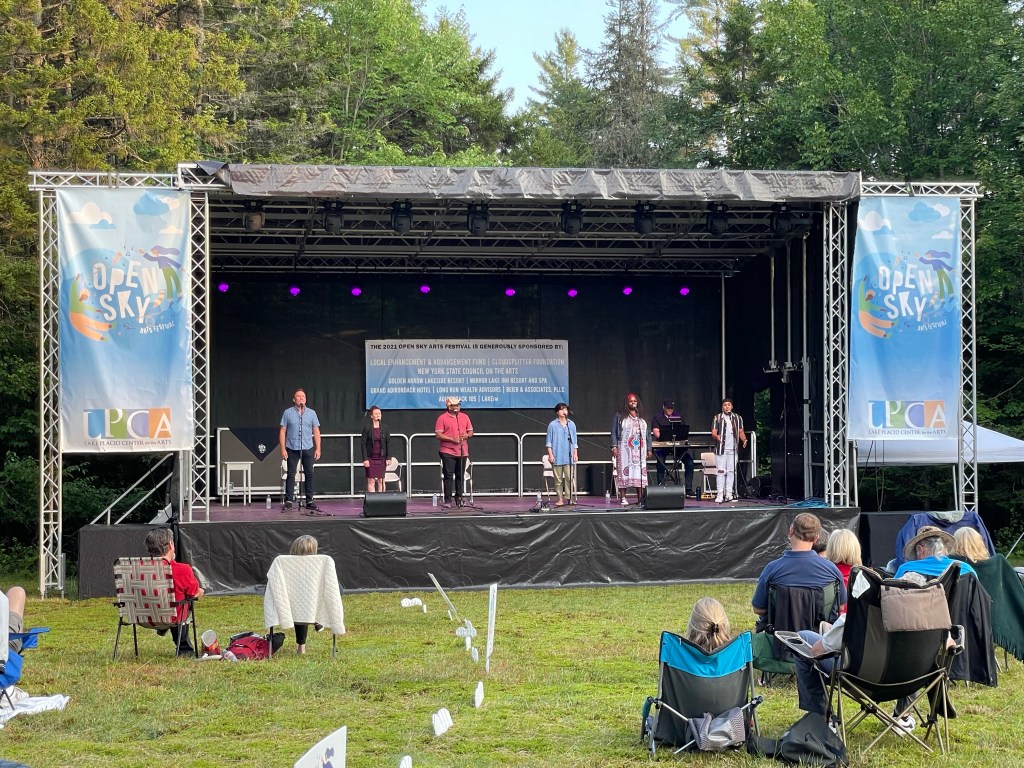
We closed out the day with a non-Olympic cultural event – an adapted version of the musical “Working”, presented as part of the inaugural Open Sky Festival in Lake Placid. It was a relaxing day to end a busy day.
 Howes' Doings
I love how much learning goes into your trips and that you share that with the rest of us. Anyone inspired to take up high speed downhill winter sports?