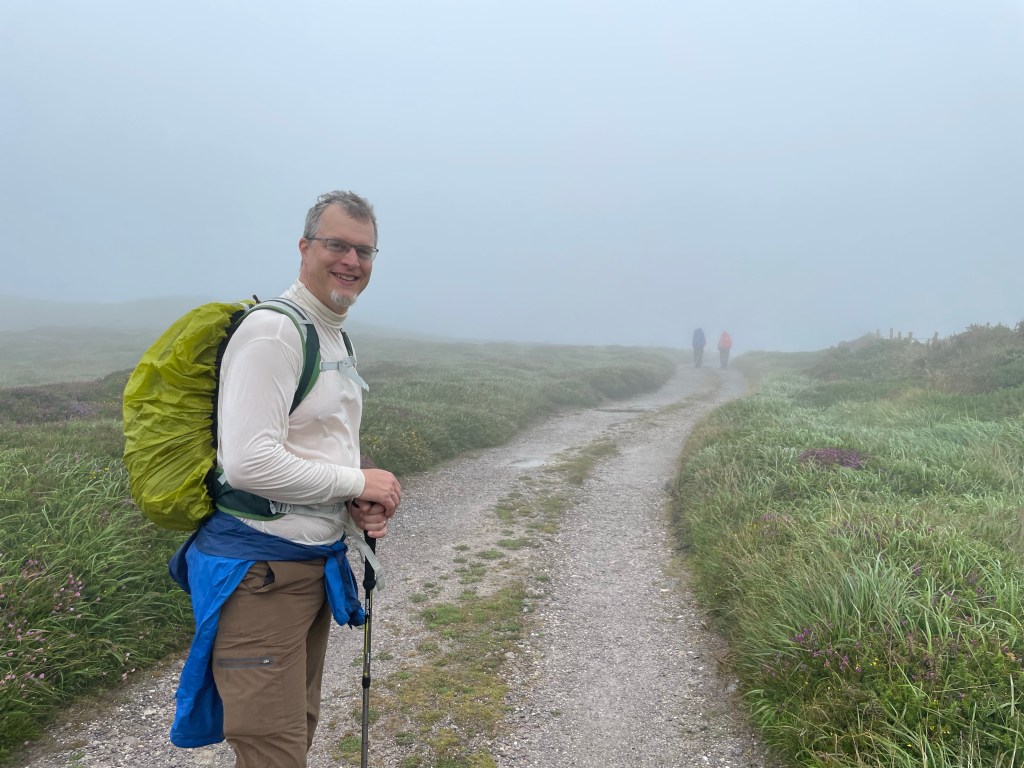
Today has taught us why there are so many beautiful flowers in Ireland, not to mention green grass growing on footpaths. Simply put: it rains a lot. We actually had relatively few moments of soaking rain, but the air was generally wet and foggy throughout the day. To use a term we were fond of during grad school at Cornell, it was “ithacating” through most of the day – there’s probably a good Irish word for it too!
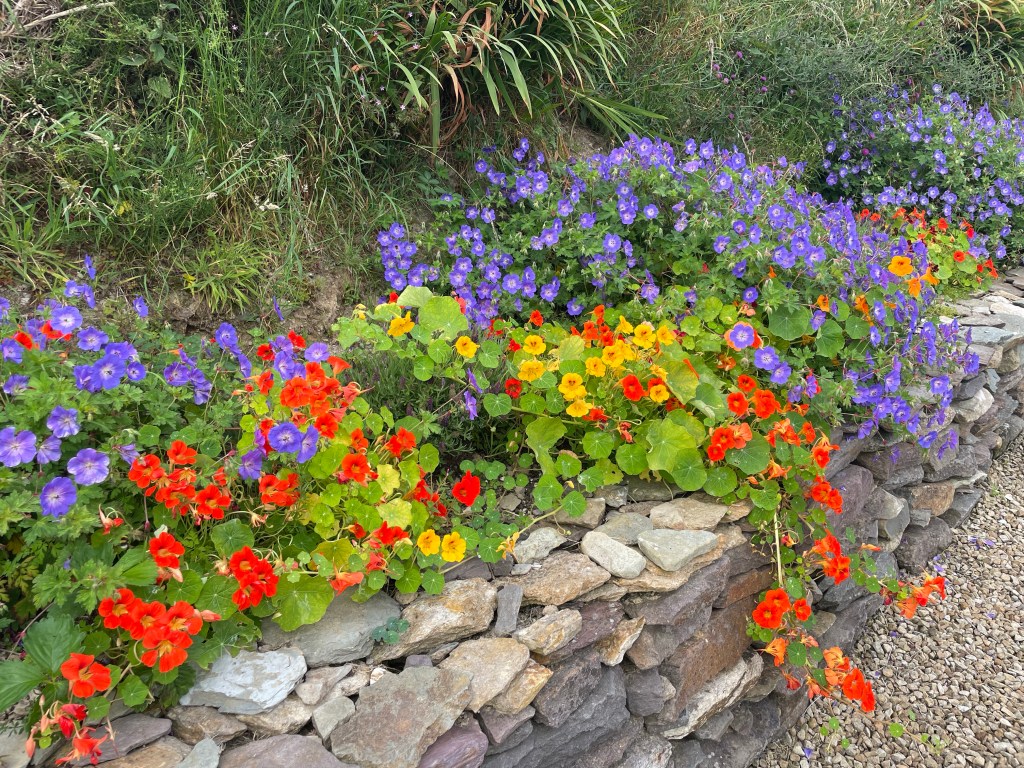
Today was not a day for grand vistas and sweeping views, but instead for seeing things up close and in detail. (Watch out underfoot.)


Fortunately, this was appropriate for the landscape through which we were traveling: mostly flat with archeological sites taking the fore. This was our longest hiking day and we made it even longer through some voluntary detours, but they were well worth it.
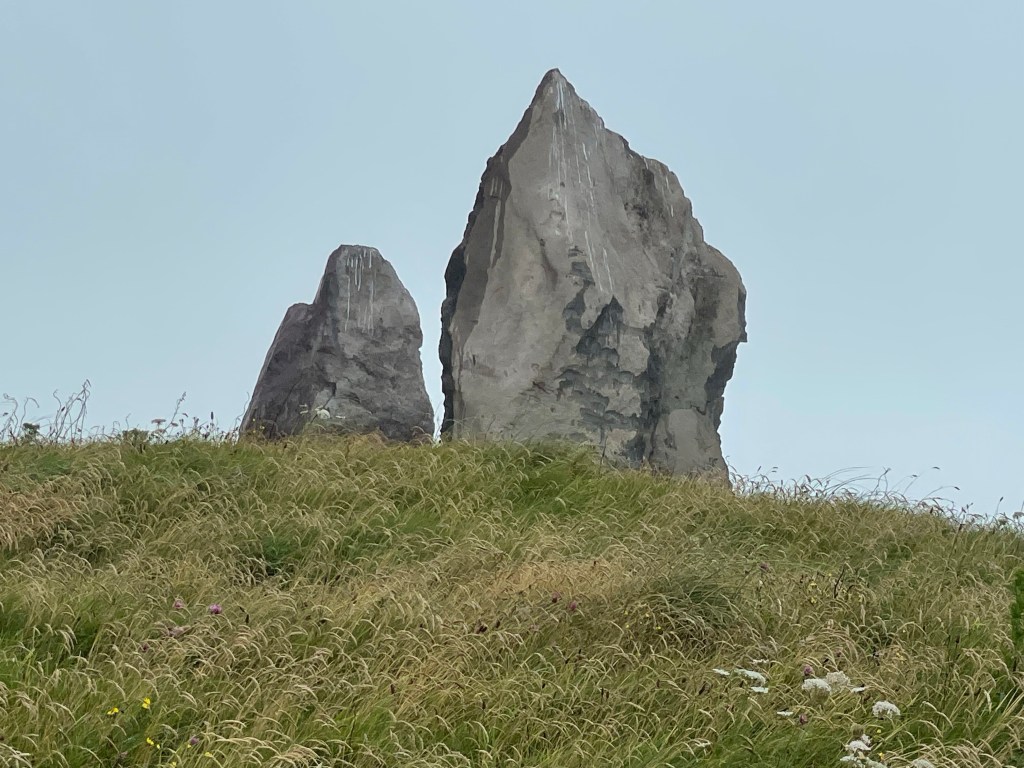
Striking north from Dunquin, we hit the northern coast of the peninsula at Smerwick harbor, a sizable bay along whose shores we were to spend several hours traveling. Although much of the first part was a beach walk, it was intersected by a finger of land jutting out into the water, at the end of which was our first ancient site. Several standing stones watch over the bay here and at least one of them is marked with the Ogham script of the early Irish people.
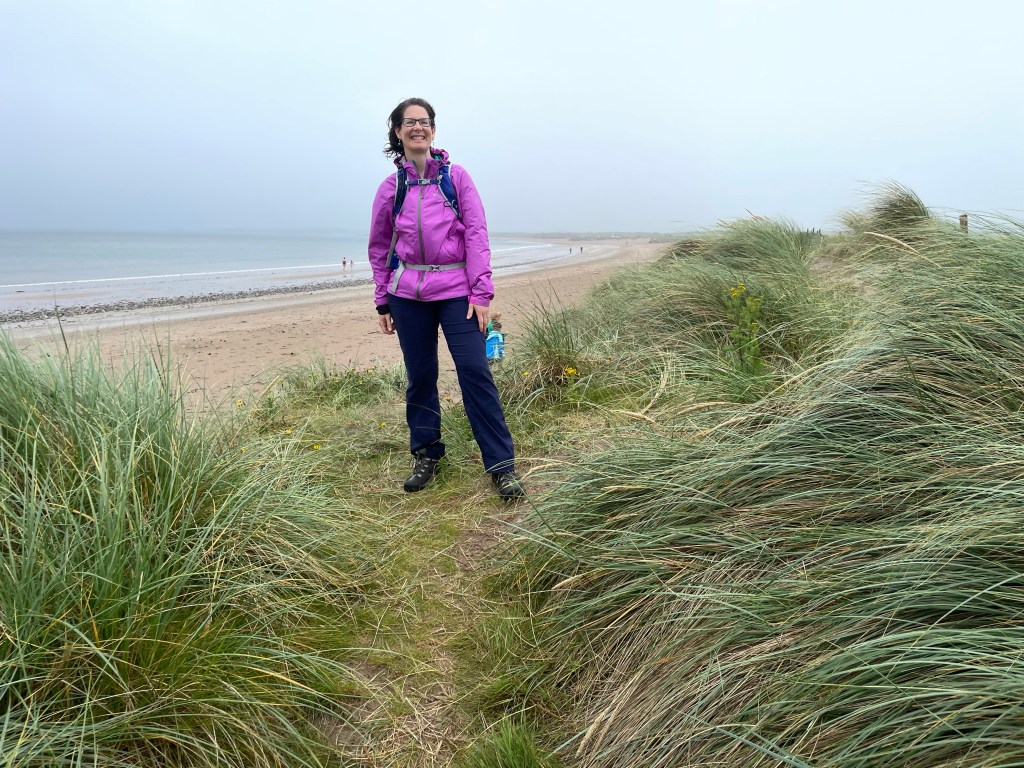
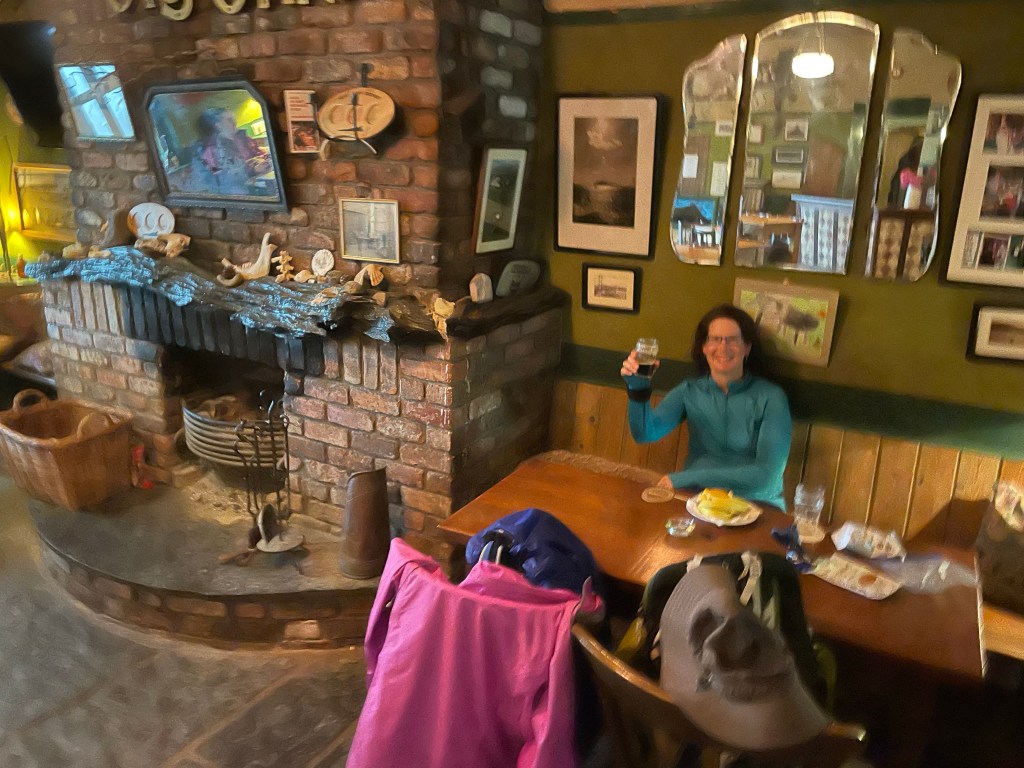
Shortly after the standing stones, we took our first planned detour with two destinations in mind: the West Kerry Brewery and the ruins of an early monastic community. The brew pub was warm and snug, and we sat by the fireplace for beer and some snacks to fortify ourselves for the ruins.
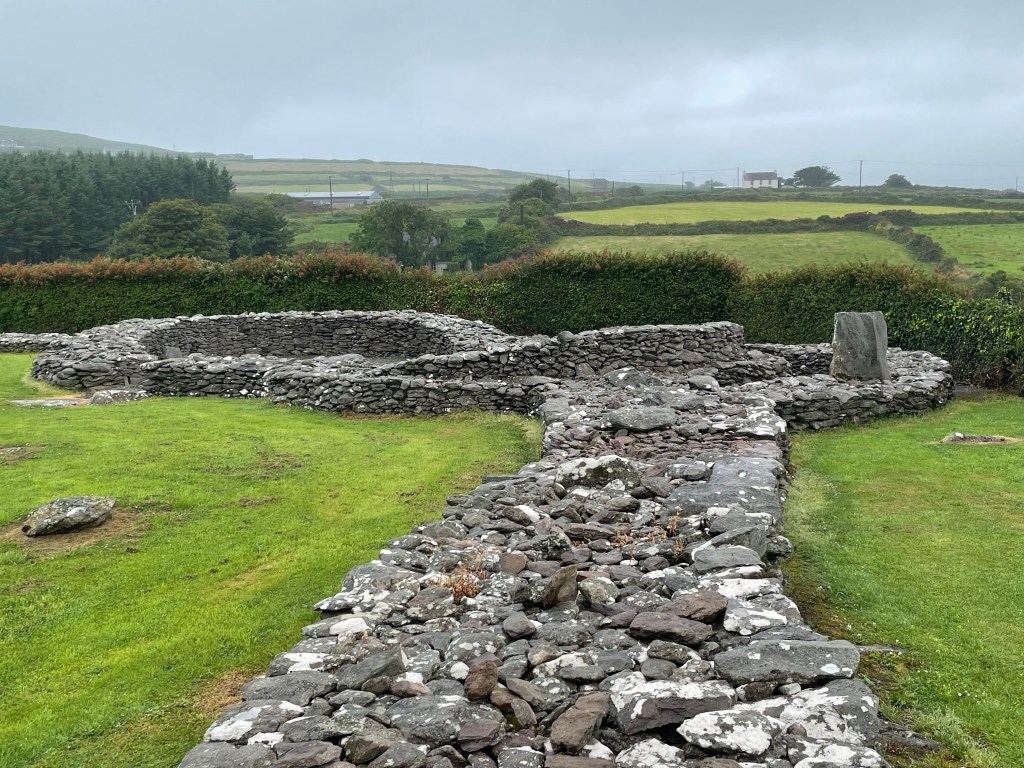
The monastic ruins are just foundations at this point, but the layout of the buildings is clear: many dry stone beehive huts and other structures. There’s also an early example of a Celtic cross carved on a standing stone.

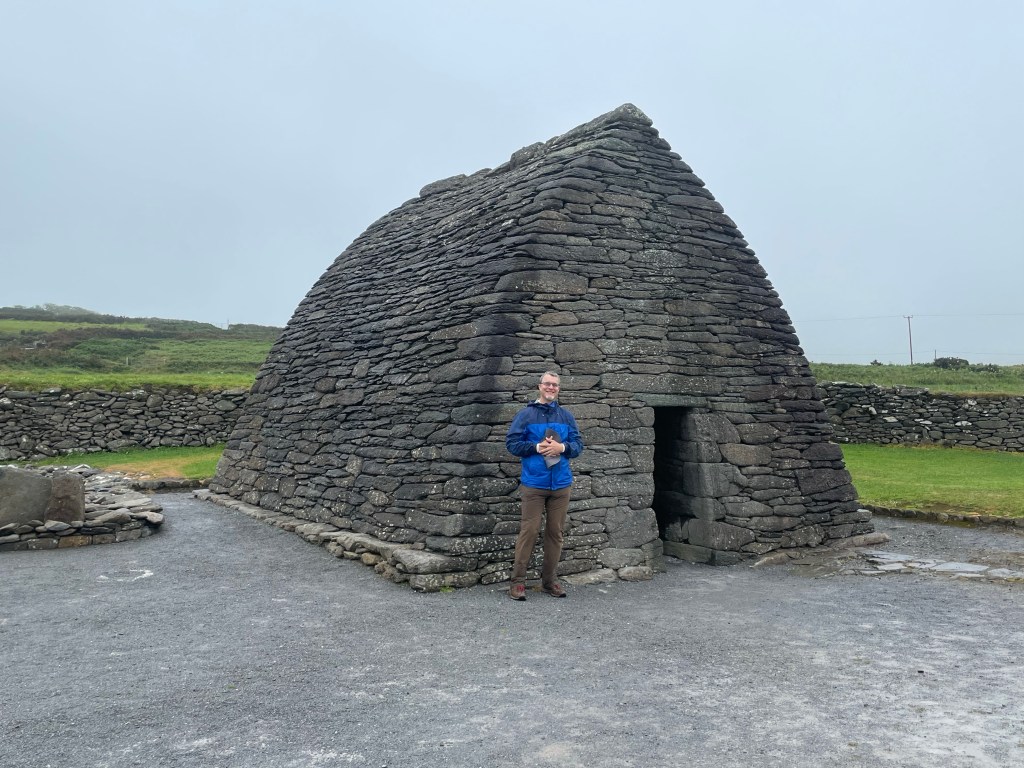
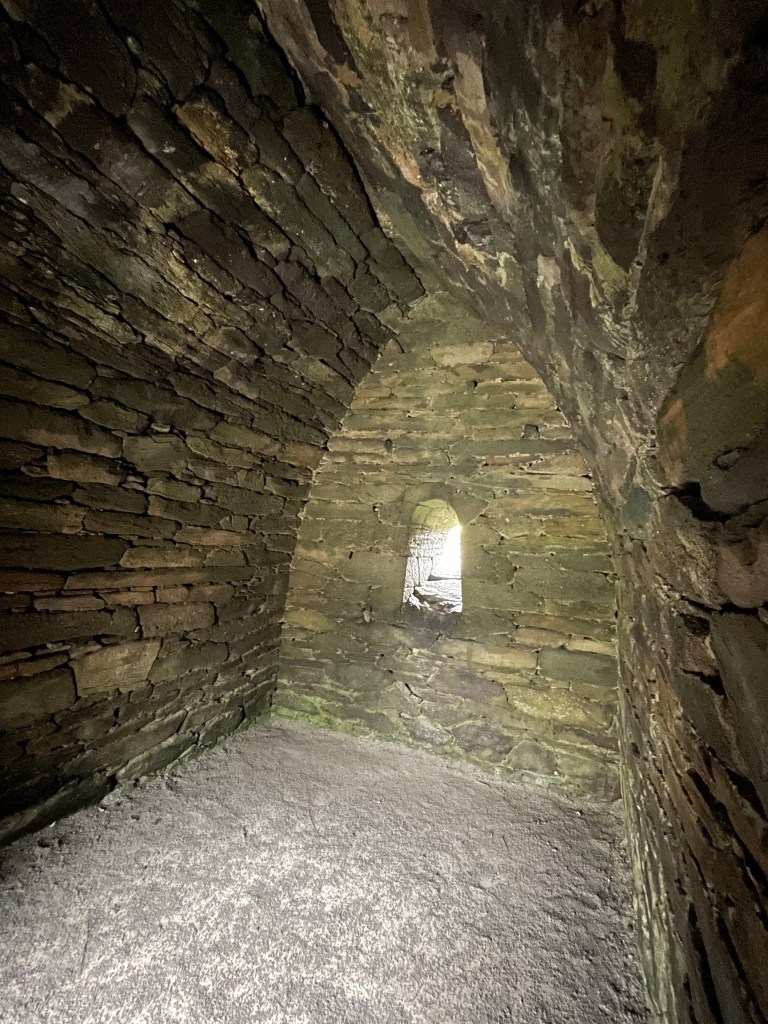
After returning to the coast and traversing another stretch of beach, we took our second planned detour of the day. This one ran along a busy road but was well worth it. The Gallarus Oratory is widely considered the finest example of dry stone masonry in all of Ireland. Probably 1300 years old, it has withstood the centuries without any mortar to support its walls or corbel-vaulted ceiling. We happened to arrive during a burst of rain, so we took shelter inside, as people have probably done for ages.
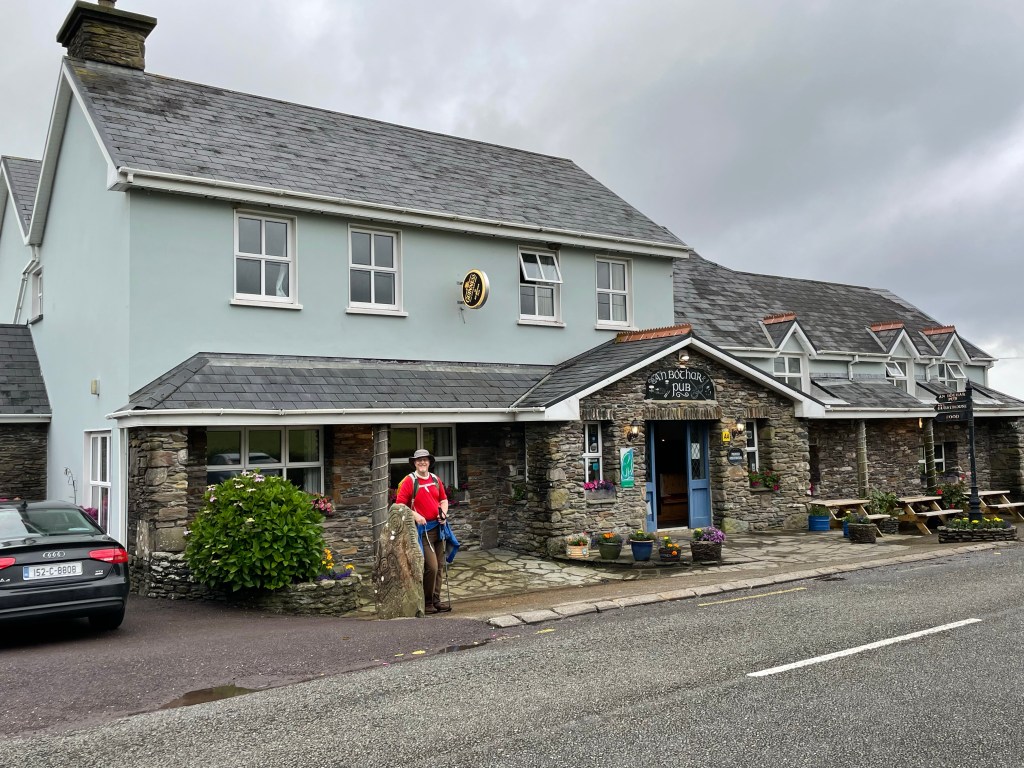
We made it to the hamlet of Ballydavid, but after 16 wet miles, our spirits were flagging a bit. A friendly local pointed us to the pub that served food and we ordered the soup of the day. Just what we had been craving: rich, hearty, hot!
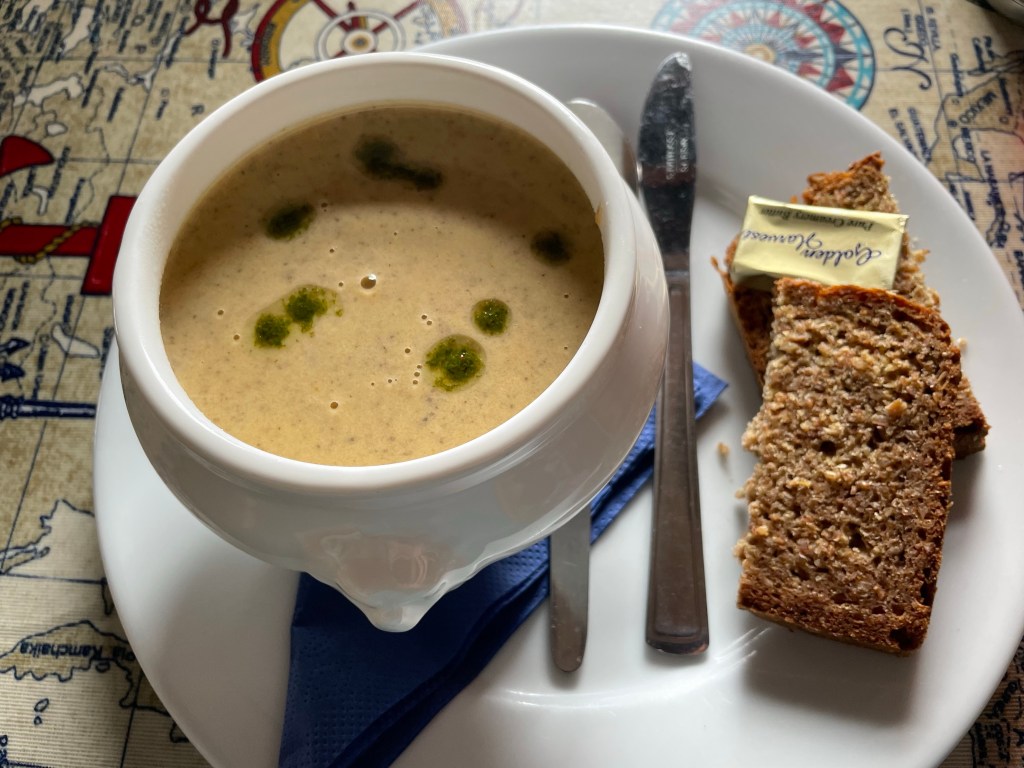
As an added bonus, the time spent in the pub meant that the one stretch of sunshine and blue skies during the whole day coincided with the cliff walk to Feohanagh – perfect timing! We were finally able to see some of the longer range views in this part of the Dingle peninsula.
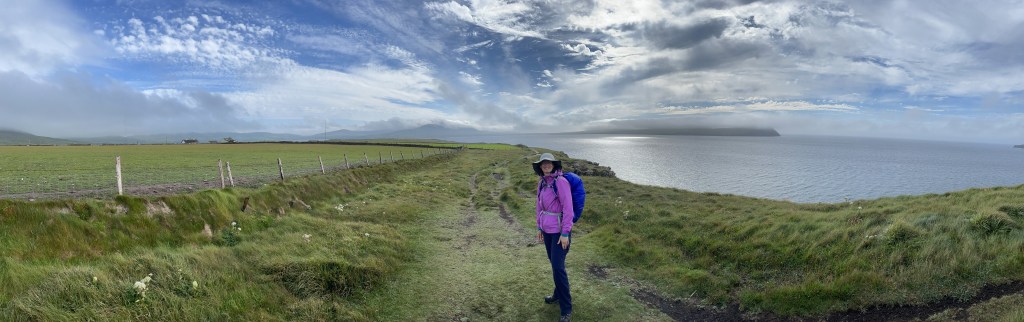
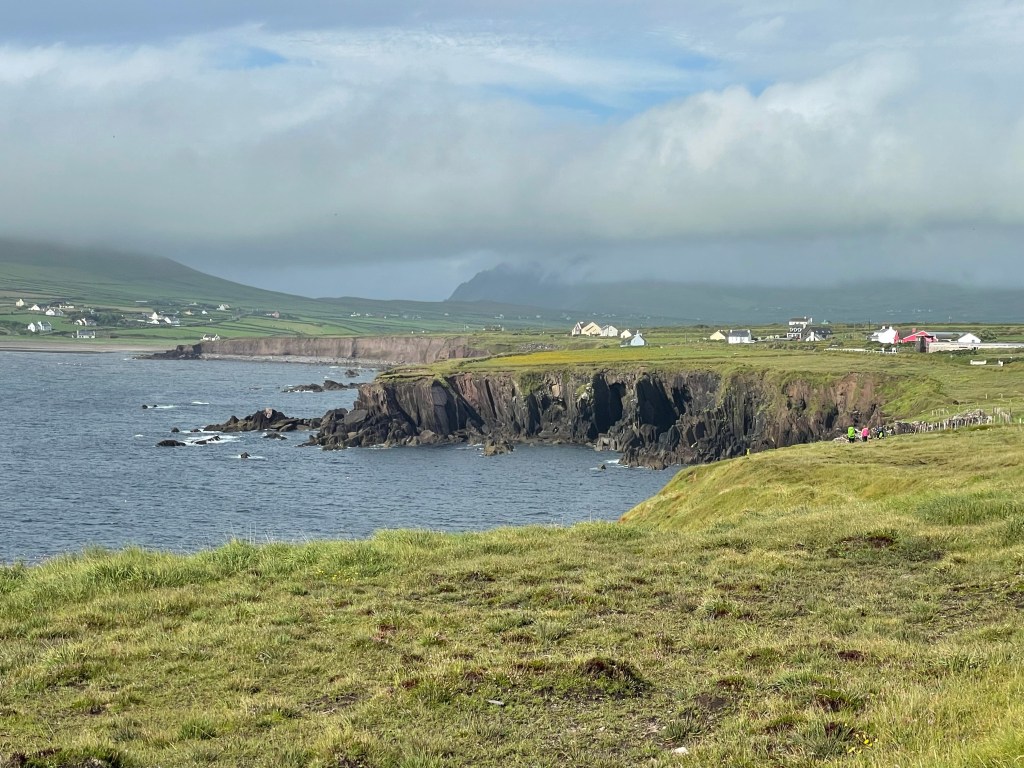
The clouds rolled in again soon after and the last few miles were a bit of a trudge through soggy ground but we reached our lodgings with plenty of light remaining. We were thrilled to find a spacious room, a hot shower, delicious food, and live music to boot.

 Howes' Doings
Keep the great adventure blogs coming!
Sent from my Verizon, Samsung Galaxy smartphone Get Outlook for Androidhttps://aka.ms/AAb9ysg ________________________________
What a great trip. I always enjoy your storie!