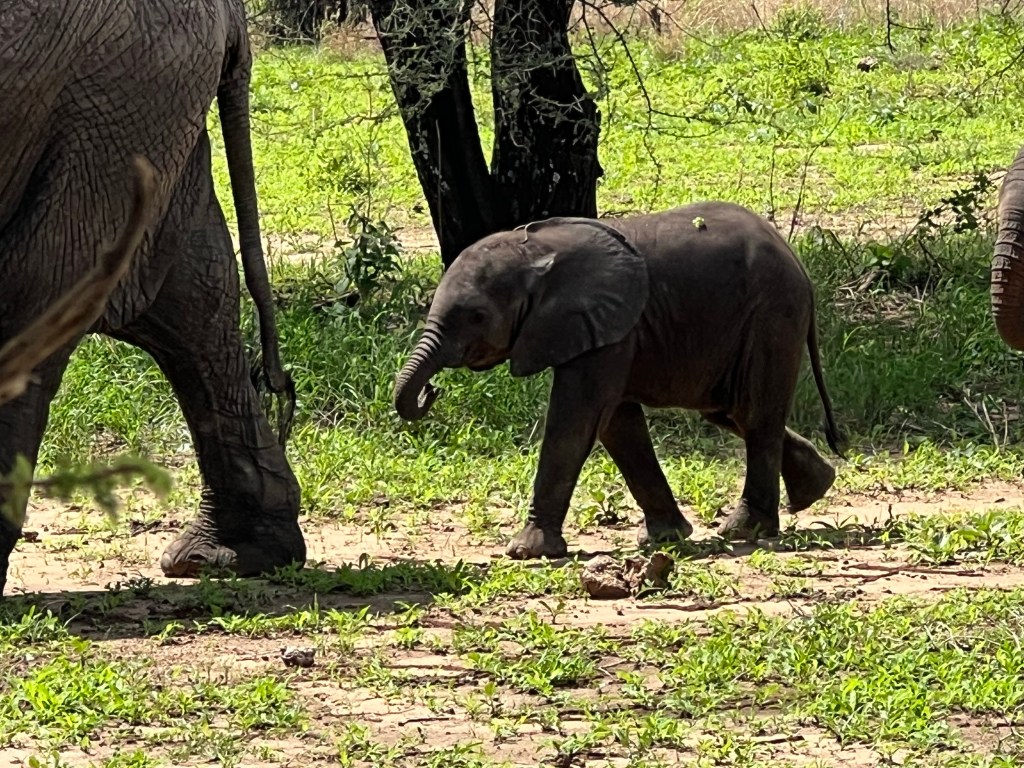
After another night of unfamiliar animal noises in the dark (we’re pretty sure some lions and elephants were mixing it up out there) it was time to pack our bags and say farewell to Tarangire. We had a long game drive to the park entrance which led to numerous elephant encounters. Most of the animals in the park are pretty tolerant of the human visitors, but we encountered one small herd led by a young matriarch who may have recently arrived from outside. She reacted quite intensely, trumpeting loudly and herding all the juveniles away from the road. Many of the groups had young elephants with them, including the smallest we’d ever seen – our guide estimated it was less than 3 weeks old!
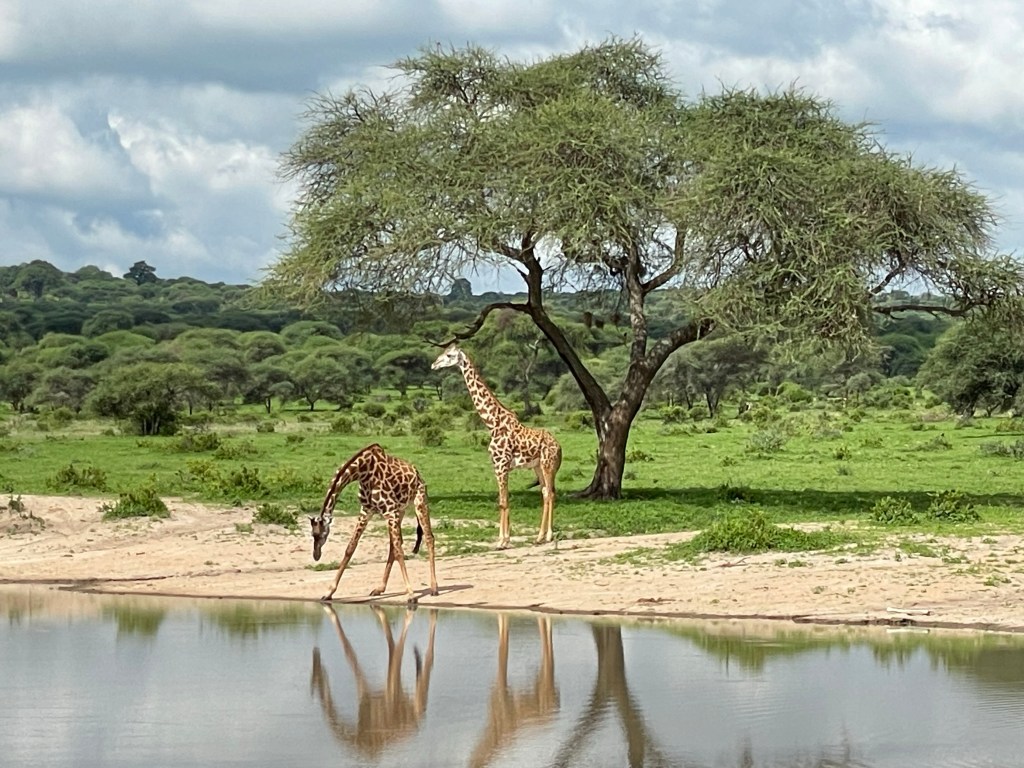
We also had some fine giraffe sightings. One especially picturesque group was drinking by a pond. Giraffes are particularly vulnerable when they bend down to drink so the others kept watch for lions.
Speaking of lions, on a more somber note, we came across a lone zebra on the plain. This was unusual because they usually live in herds, but on closer inspection we saw it had a large weeping gash on its hind quarters. Because the smell of blood attracts predators, the zebra was driven from the herd. We wished it well, but had to drive on.
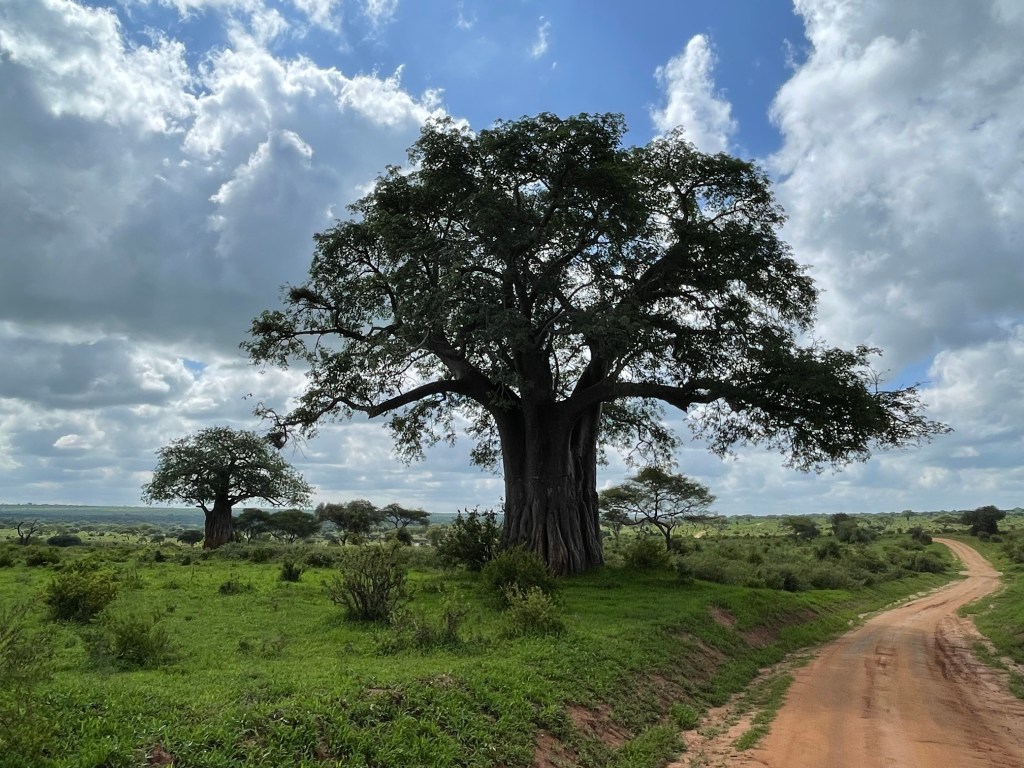
We didn’t have a good picture of the iconic baobab tree (Nick’s favorite!) but made sure to take one for you today (see lead photo). The camp served us juice the day before that was made from its fruit – tasty but fibrous.
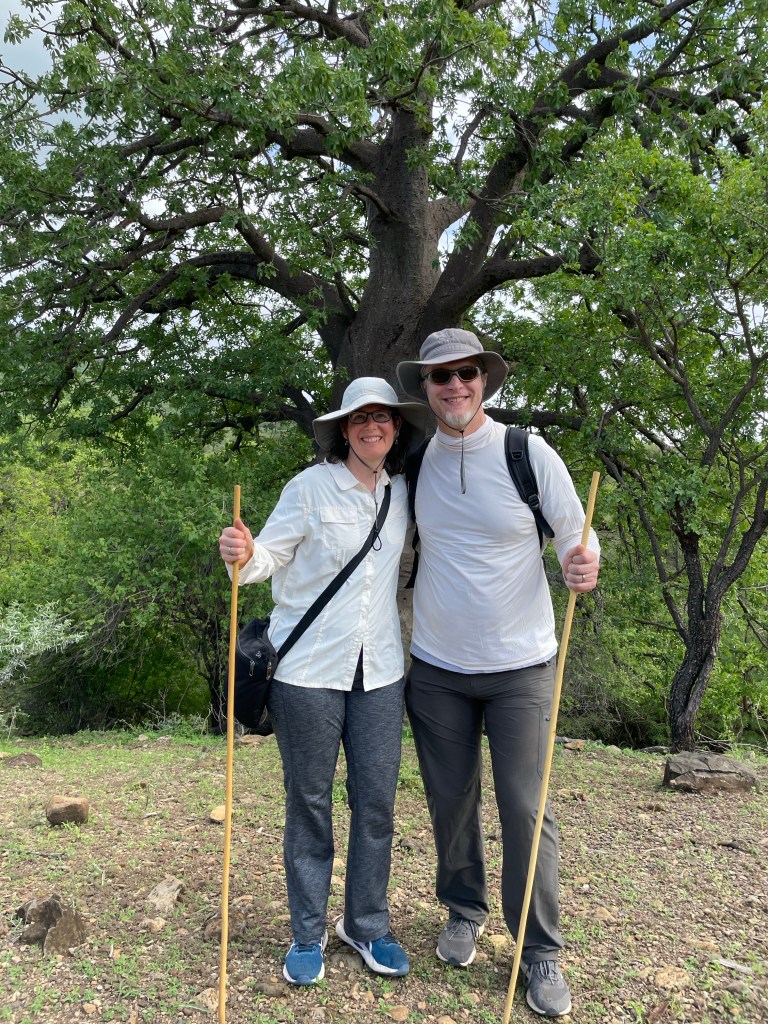
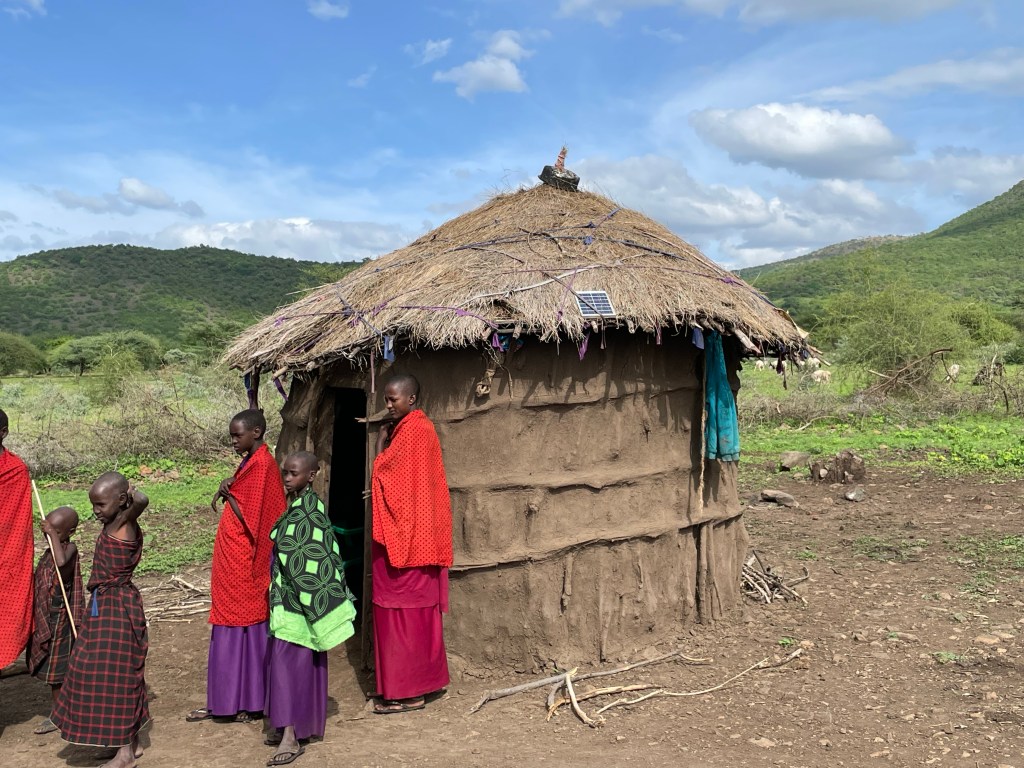
We left Tarangire at mid-day. En route to our evening lodgings on the rim of the Ngorongoro Crater, we stopped at a cultural center run by a non-profit working with the local Maasai people. Our interpreter outfitted us with the sticks traditionally carried by Maasai herders and took us on a medicine walk. He pointed out the healing properties of many local plants and answering our numerous questions about Maasai life and culture. As part of the tour, we were also welcomed into a family compound, called boma, where we were instructed on customary greetings and some useful Maa phrases. We particularly liked their phrase for thank you, which includes a part like “very much” that one can repeat multiple times for emphasis. Phonetically: ashay naling naling naling naling pea (with extra enthusiasm on the last word). We learned that the houses are all built by women and we were able to see inside one. It was surprisingly dark inside, though many now have solar powered lights for evening use.
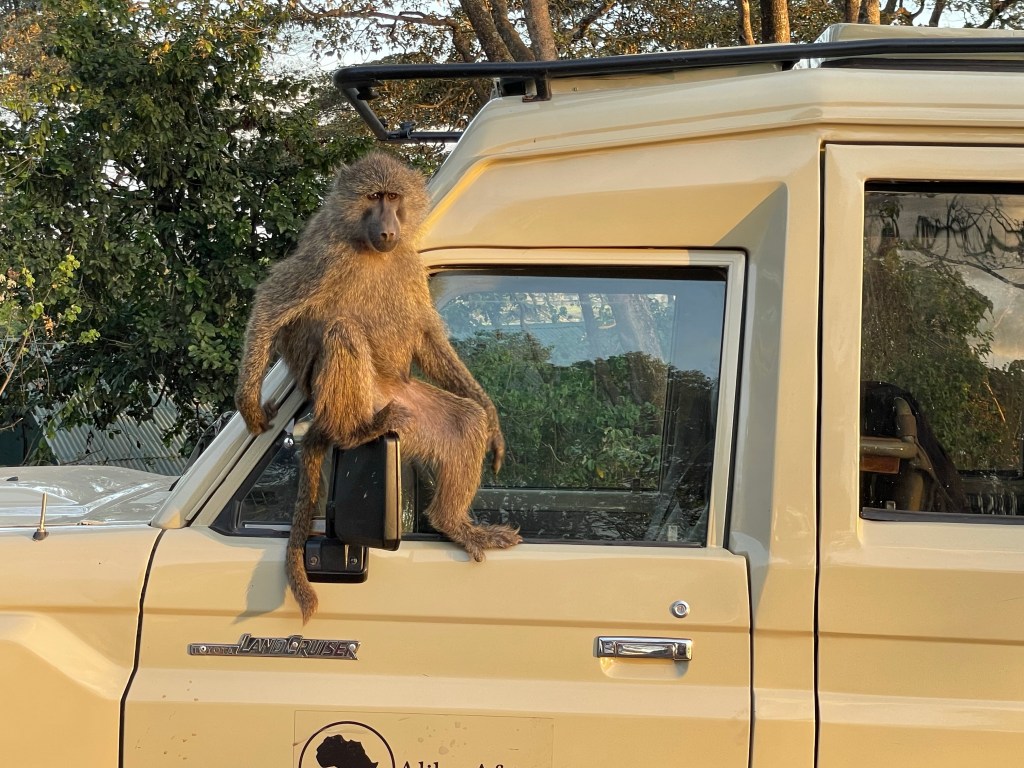
We got to the entrance to the Ngorongoro Crater Conservation Area just as the sun was setting and were entertained by the resident baboon population while we waited for our tickets. Luckily we were warned in advance to close the windows – if they manage to get inside your car, they will rifle through your belongings for food and possibly leave a smelly souvenir of their visit. By the time we left, there were no less than four climbing over the outside!
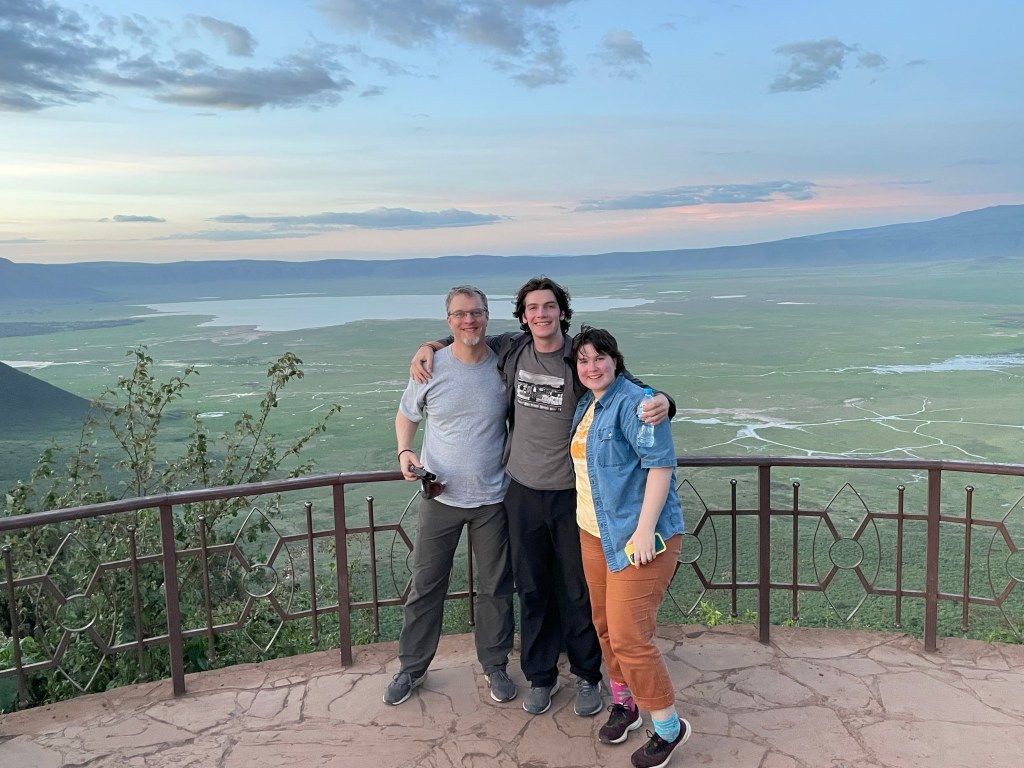
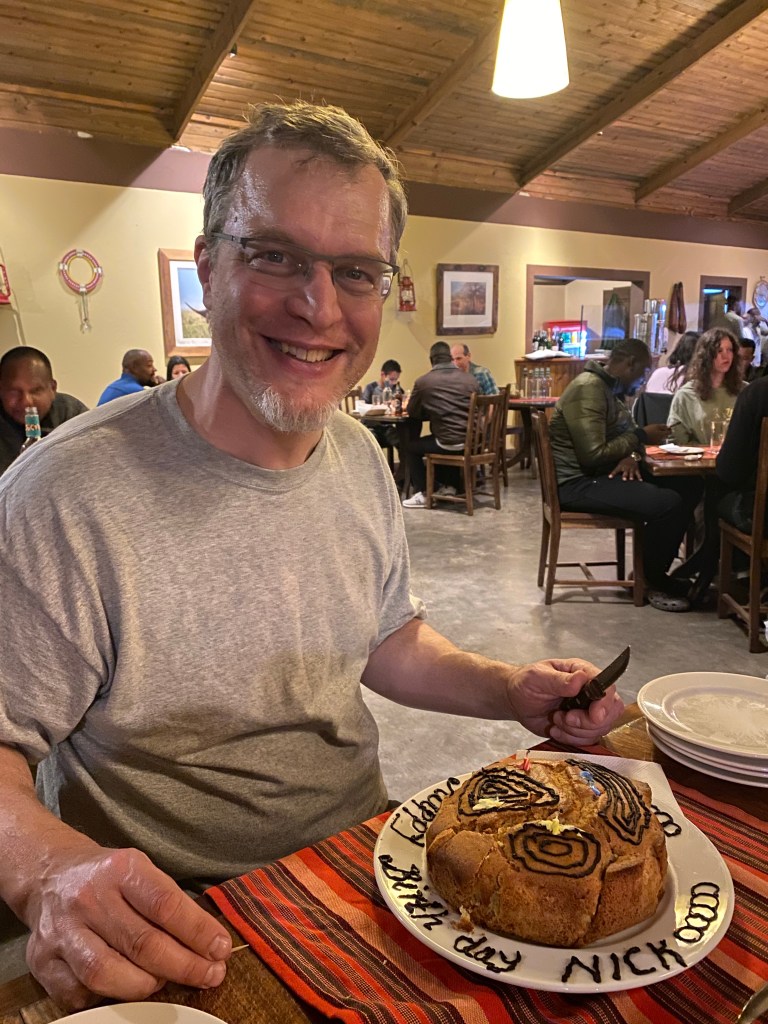
On the way to the lodge, we stopped at overlook point for our first glimpse of the crater itself, which we will explore in more depth tomorrow. At dinner, we celebrated Nick’s birthday with help from the lodge staff, who led us in Tanzanian birthday song and chant. Oh, and cake, too! Happy birthday Nick!!
 Howes' Doings
What’s not to love – wildlife, the great outdoors, learning about other cultures, and a birthday! Happy birthday, Nick.