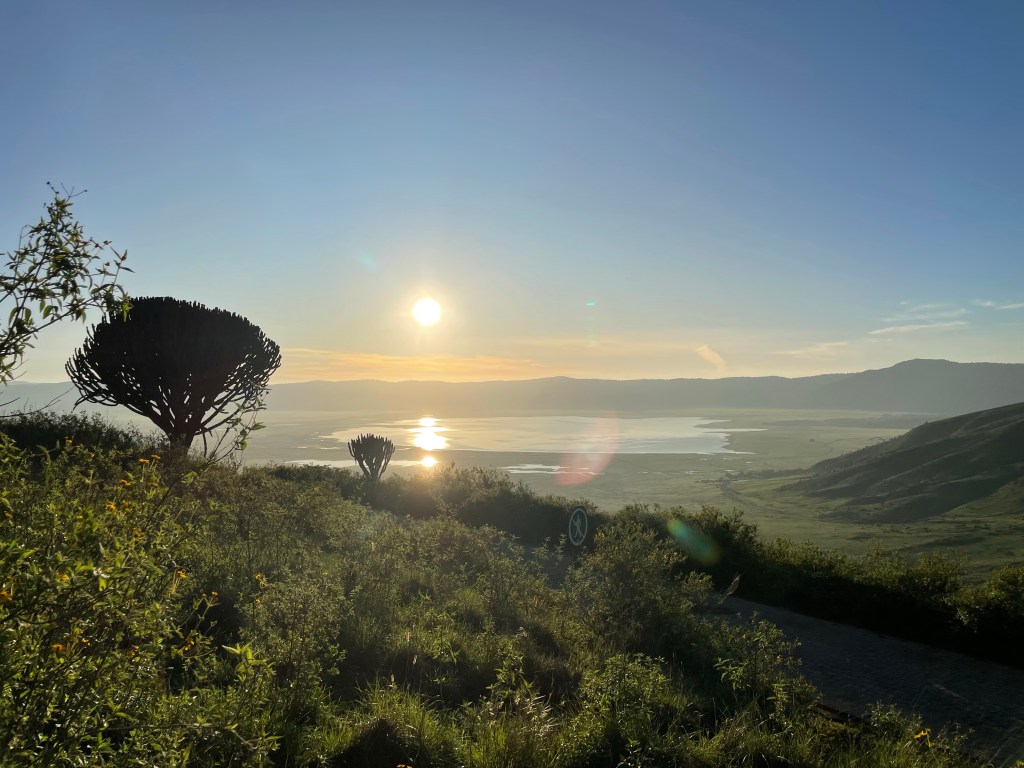
Our story begins two and a half million years ago when a mountain the size of Kilimanjaro vaporized itself in a volcanic eruption that left behind a circular caldera eleven miles across and nearly two thousand feet deep. Fast forward to the present day where we awoke before dawn in our lodge on the rim of that same crater, known today as Ngorongoro, or “sound of the cowbell.” We made an early start to beat the crowds and to see the animals only active at dawn.
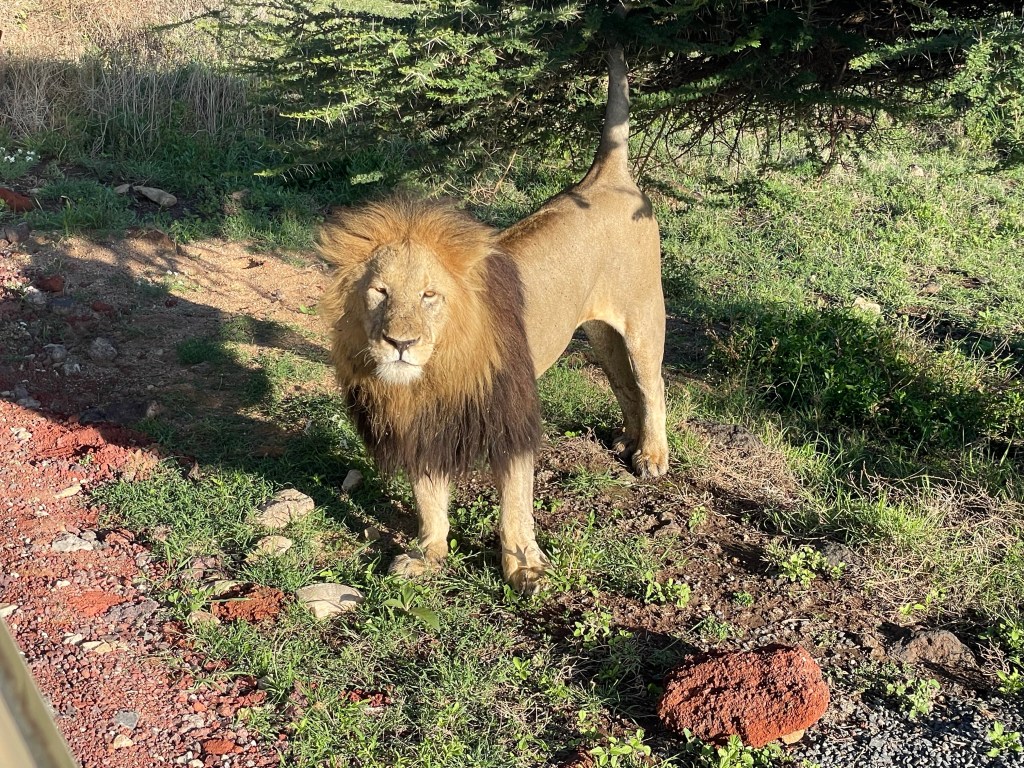
Turns out our promptness paid off in spades. We were still making our way down the crater wall when someone spotted a lion emerging from a ravine down below. Imagine our surprise when he paused, turned our way, and proceeded directly and deliberately toward our Land Cruiser. Perhaps we should have felt a little fear but he showed no interest in us. Instead, he scratched his head on a tree before skirting around our vehicles on his way up the hill on the other side. He settled down under a bush, perhaps to watch the efforts of the female hunters in his pride, whom we now saw were stalking some buffalo above. What a way to begin the day!!
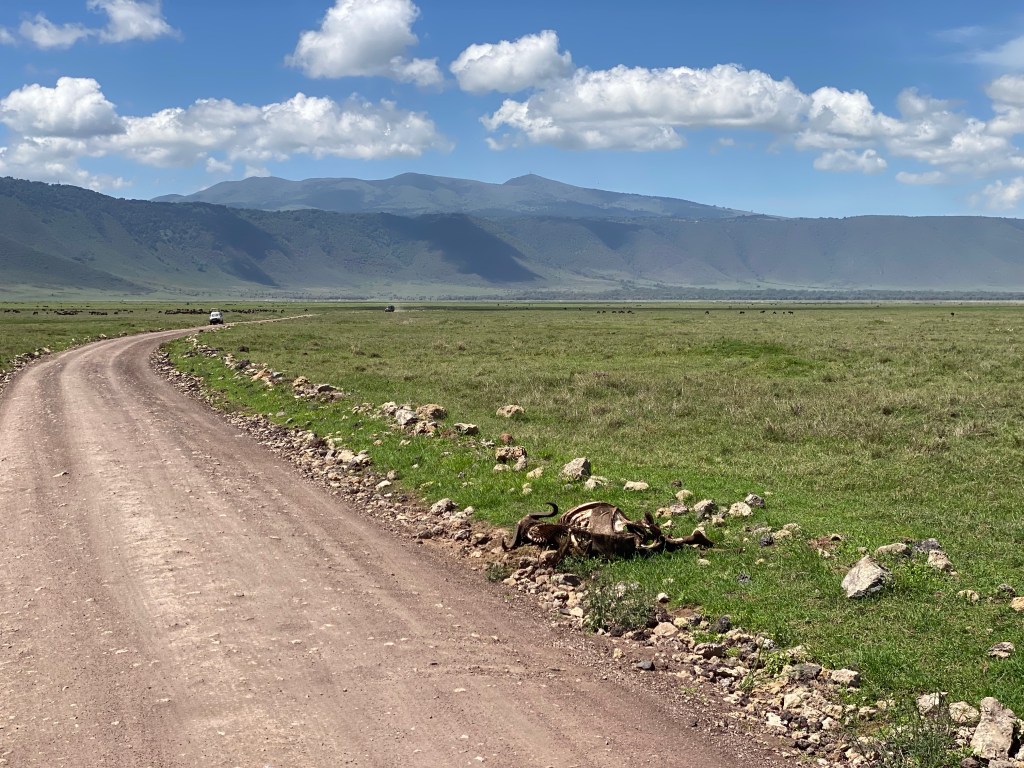
Ngorongoro crater is a unique and fascinating place, teeming with wildlife because of the year-round water supply and rich volcanic soil. It’s a bit surreal the way so many types of animals live happily on top of one another (and occasionally beside the bleached bones of their former comrades). Yet even the carnivores share space with the others when they’re not hungry.

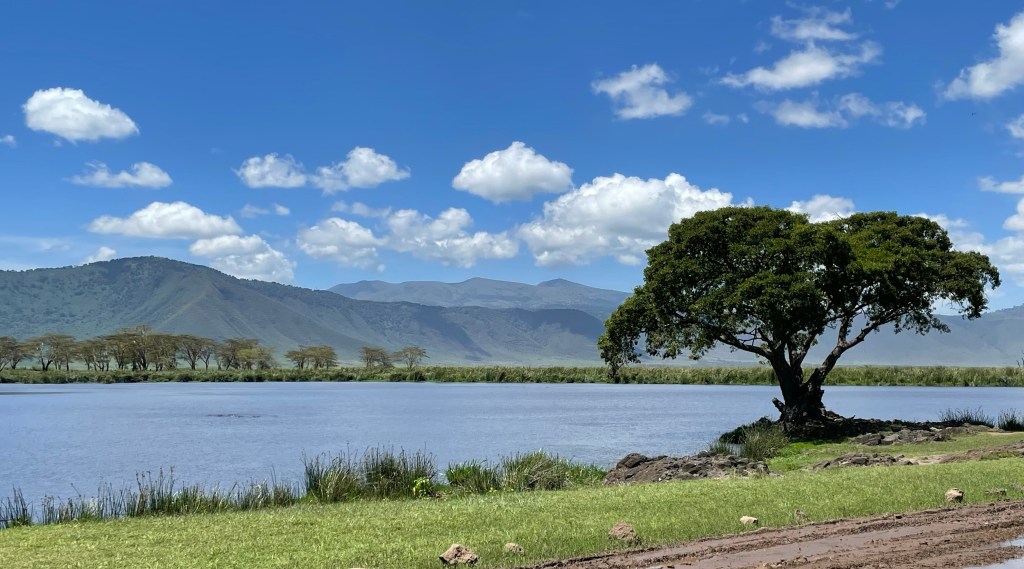
Besides many animals we had already seen, the crater offered some new characters. We enjoyed the hyenas and hippos but felt especially lucky to catch a rare sight of a black rhinoceros – only at a distance, so there’s no photograph to share with you. We had lunch near a ridiculously beautiful picnic site with hippos blowing bubbles in the nearby pond, a hawk soaring overhead, and hungry Guinea fowl prowling for morsels dropped by picnickers.
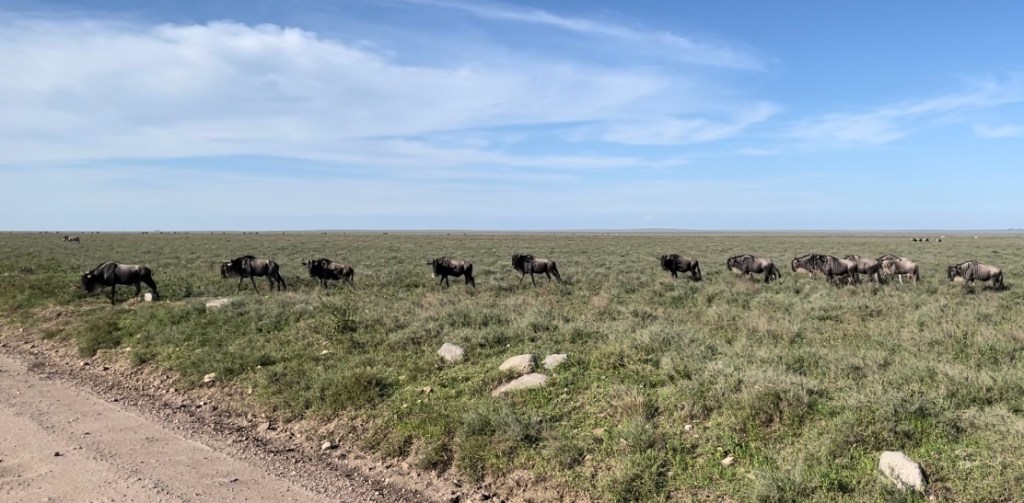
We left the crater shortly thereafter for the long drive to our Serengeti campsite. And by long, we mean many hours over unpaved potholed roads. The first part of the journey led over flat plains filled with wildebeest and zebra migrating towards the south. They say that the great migration was even larger in the past, but it is plenty impressive even today. For our entire journey over the flats, we were never out of sight of moving animals.
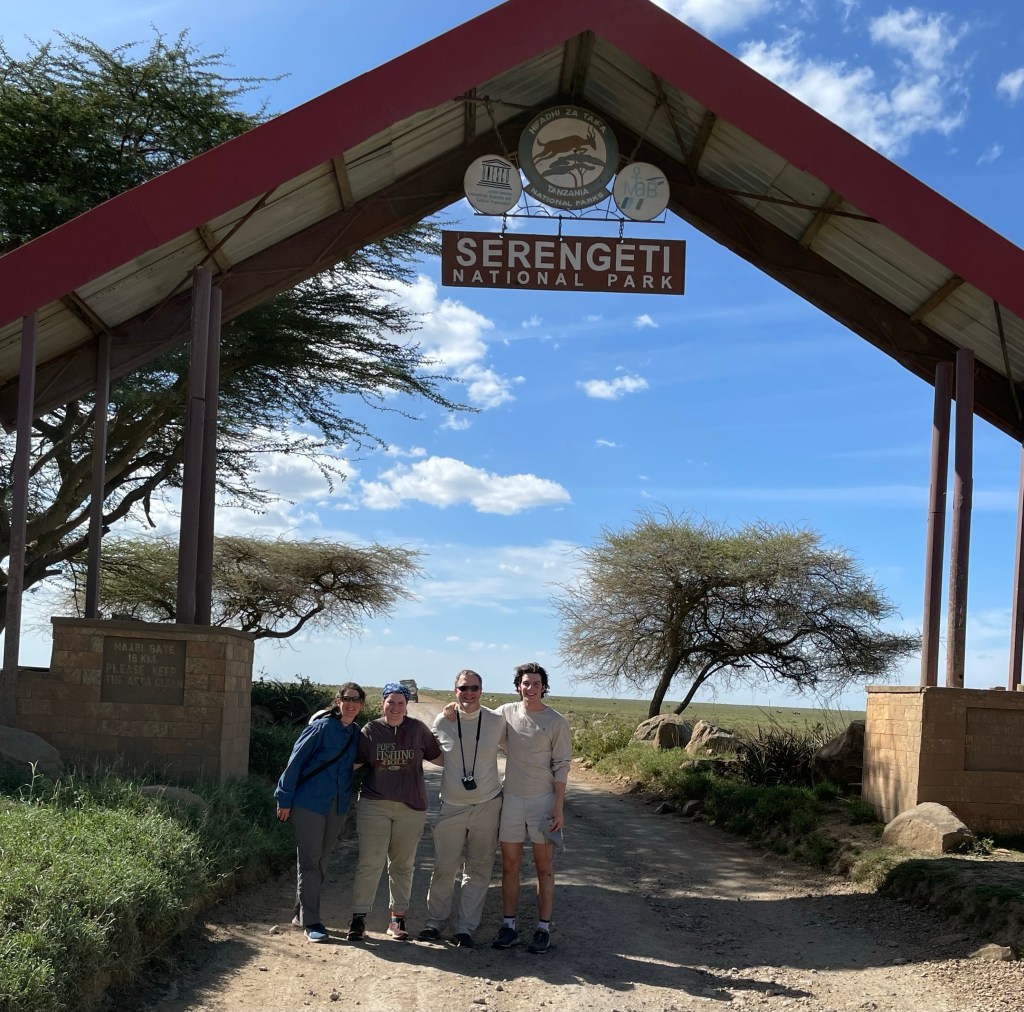
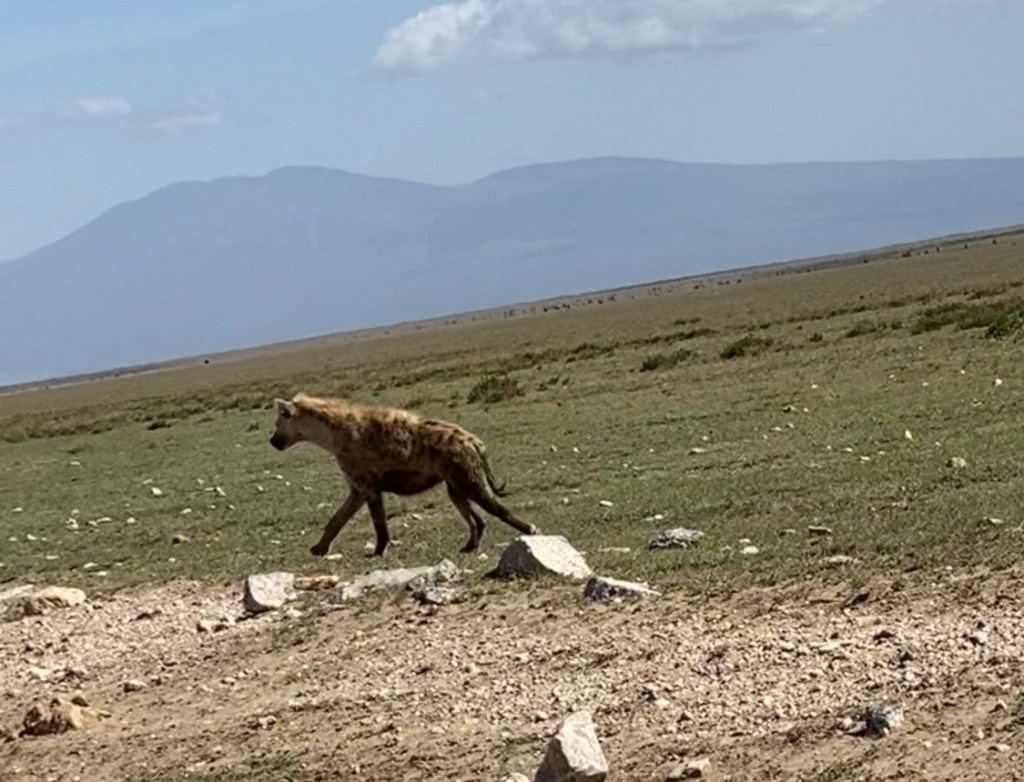
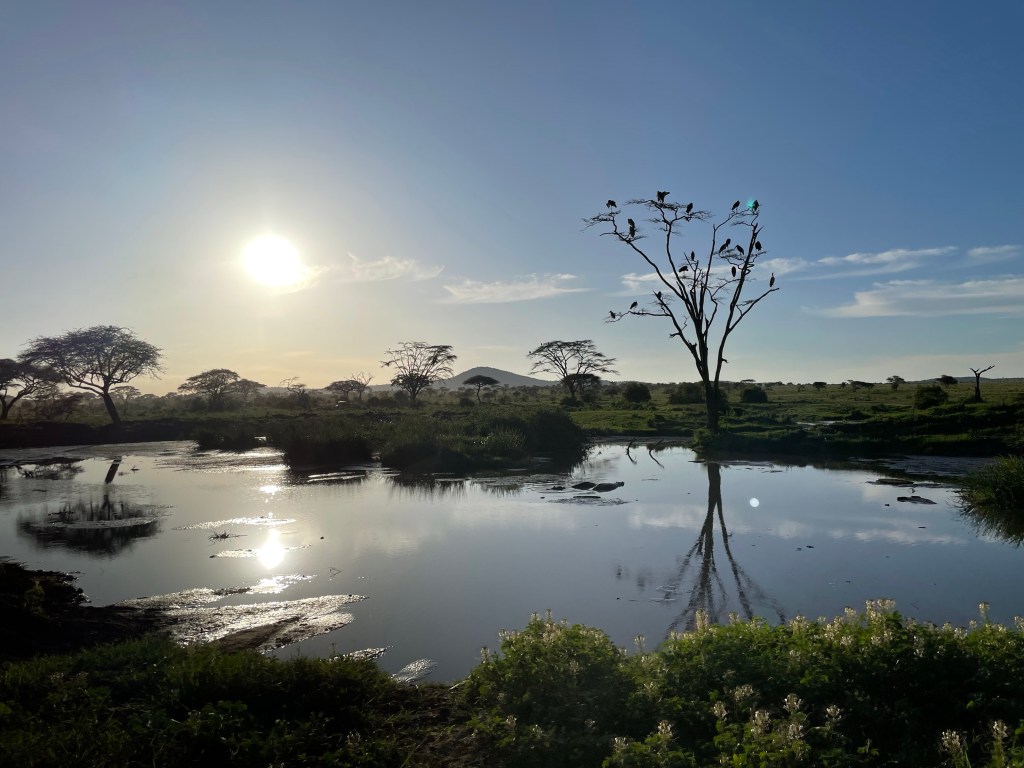
This leg of the trip gave us some close-up views of animals we had previously only seen from further away: hippos taking mud baths in a pond (can’t believe how they smelled!), hyenas loping along, and some friendly jackals by the side of the road. We also had a special treat due to the keen eye of our guide, who spotted the head of a cheetah hidden in grass perhaps a hundred yards from the road. Turns out, it was a mother raising twins, who also poked their heads up after a little wait. We played peekaboo as they appeared and disappeared from sight, before reluctantly moving on so that we could get to our campsite before dark.

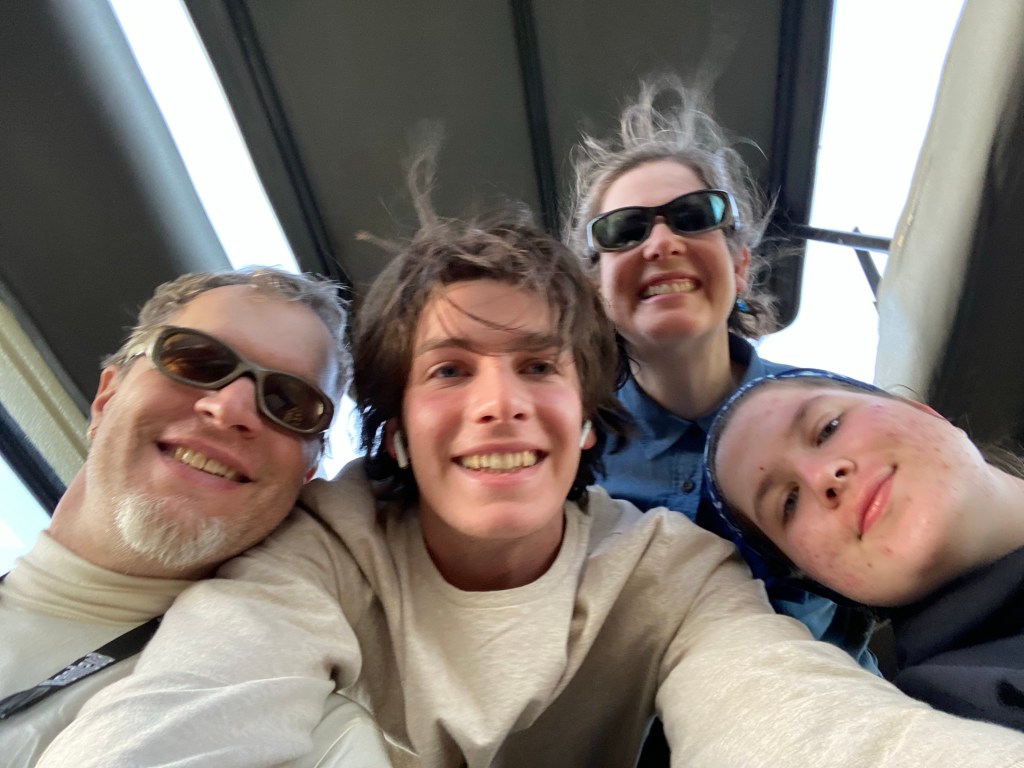
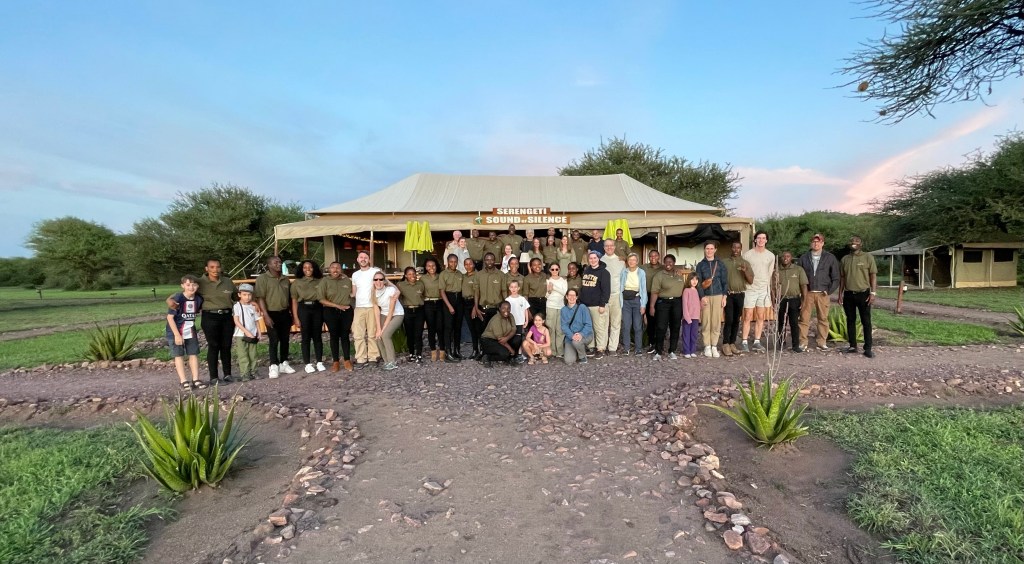
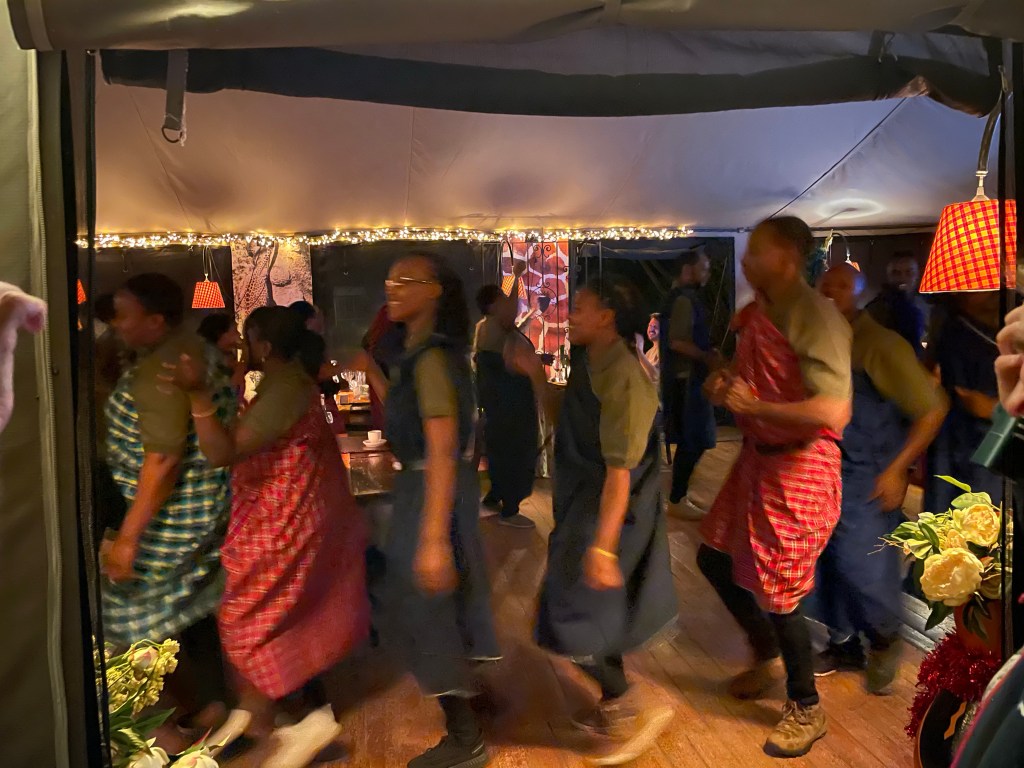
Our camp, the Serengeti Sound of Silence, is quite new and, tonight at least, anything but silent! It’s New Year’s Eve and the staff welcomed all the guests to join them at the campfire after dinner for participatory singing and dancing. We could have used the sleep but how could we turn down an invitation like that? One for the memory books – happy 2023!
 Howes' Doings
Great way to ring in the new year!