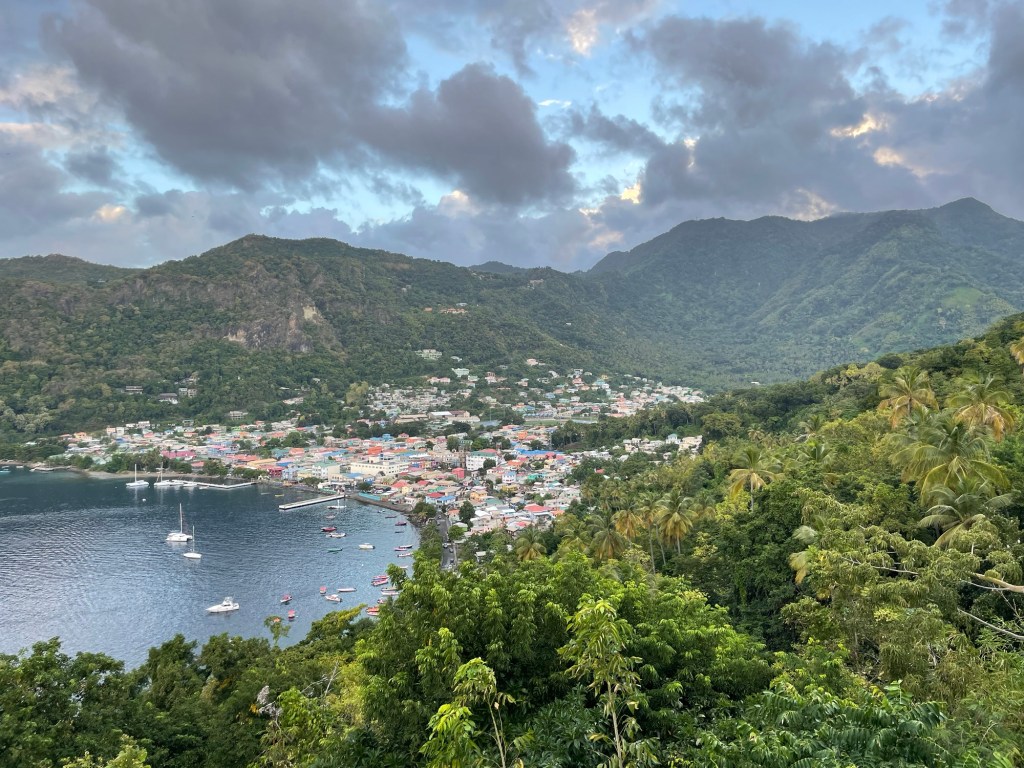
Today we had planned all our activities within the Soufrière region, which we learned is a volcanic caldera (more on this later). After our early start the day before, we had an unscheduled morning with a late breakfast on the terrace.
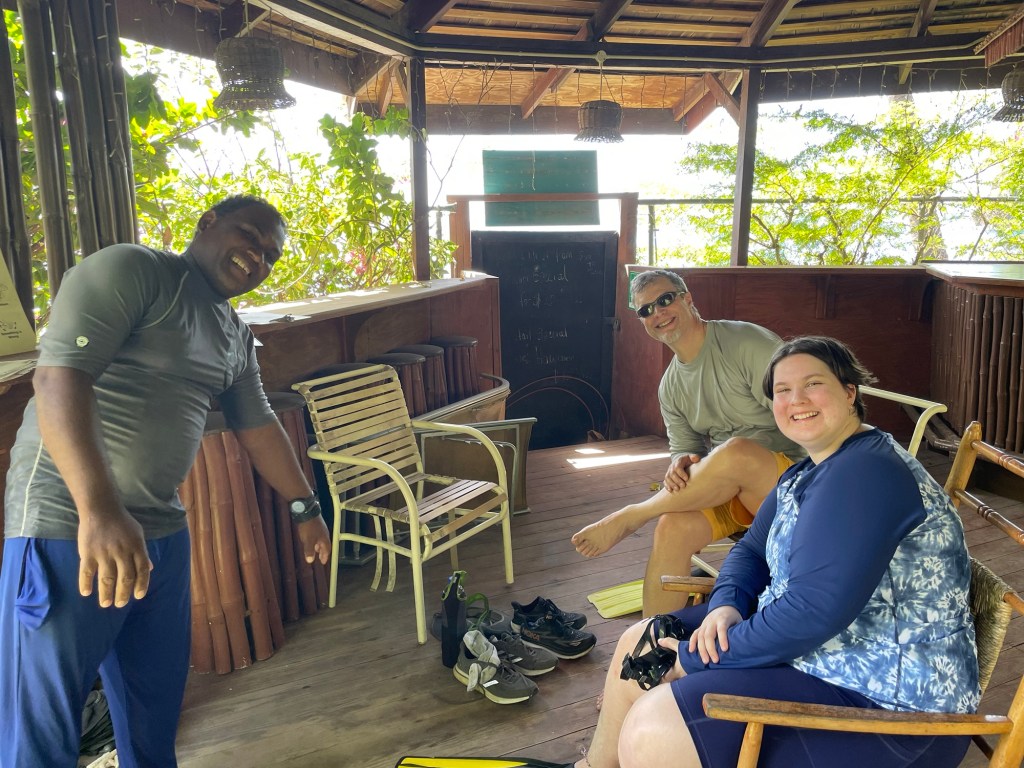
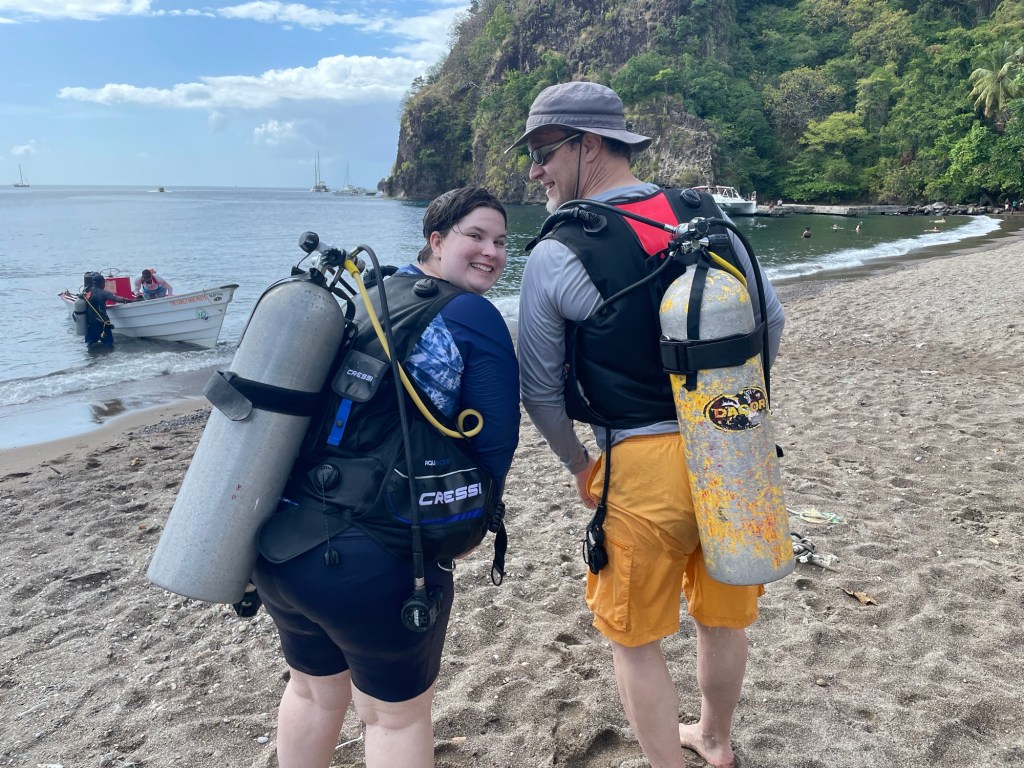
At noon, Rowan and Nick had an appointment on the Soufrière beach. Rowan has always been interested in scuba diving and this was their chance to try it out. Scuba instructor Chester was efficient and professional, and knew just how to set us at ease. After a short lesson on safety, equipment, and critical hand signals, he had us in the water – literally immersion training! Of course, we didn’t go very deep (maybe 30 feet or so), but we cruised underwater along the reef for 45 minutes and saw lots of interesting aquatic life. There was a long-legged crab hiding under a rock, a hard-to-spot octopus prying open a shell, and a sea eel that Rowan got to hold after Chester picked it up (we wouldn’t have dared on our own). No pictures from the dive itself but we have them in our mind’s eye.
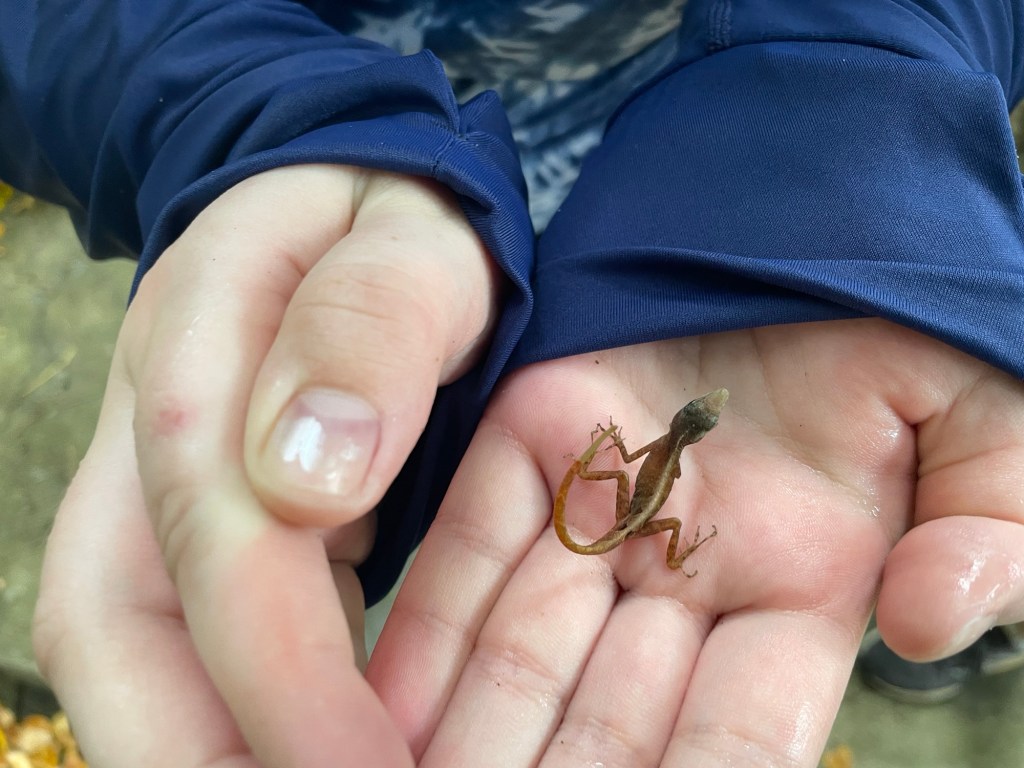
In other animal adventures, there are tiny lizards all over the rocks and walls around our hotel. Rowan identified them as the St Lucian anole, and actually caught one of them today. It skittered around our arms and shoulders before jumping off again, none the worse for wear.
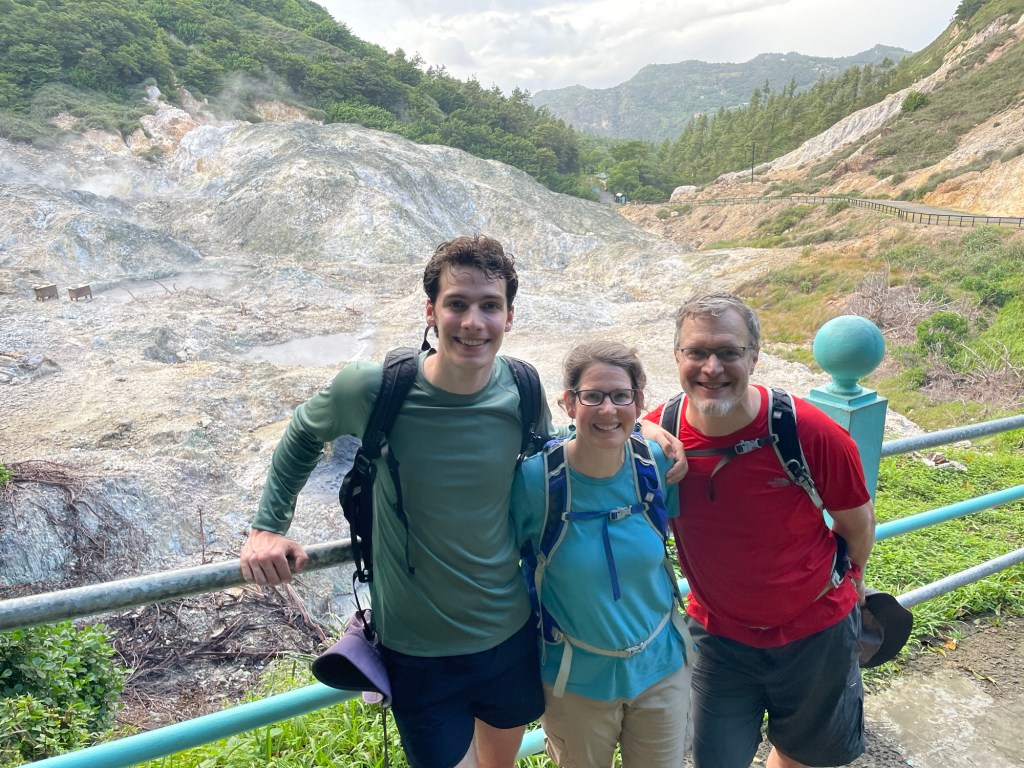
After lunch, some of us went on another expedition to an attraction billed as a “drive-in volcano”. The site of St Lucia’s most recent eruption (dating to 1766), the area now appears as a barren landscape punctuated by bubbling mud pits and scented with wafting sulfurous fumes.
Although this particular spot is the most geologically active area, the entire town of Soufrière sits within the caldera – you can see the walls in the leading photo for this post. A portion also extends into the sea and our guide said that during particularly high tides, one of the mud pools develops geyser-like activity.
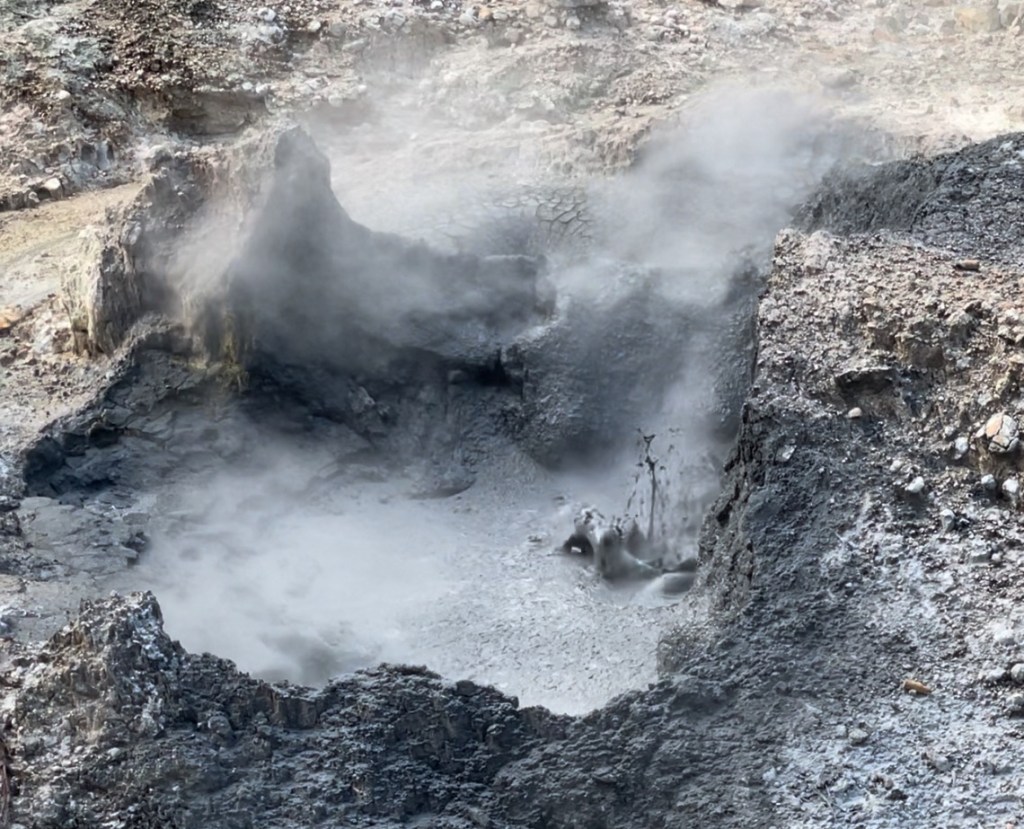
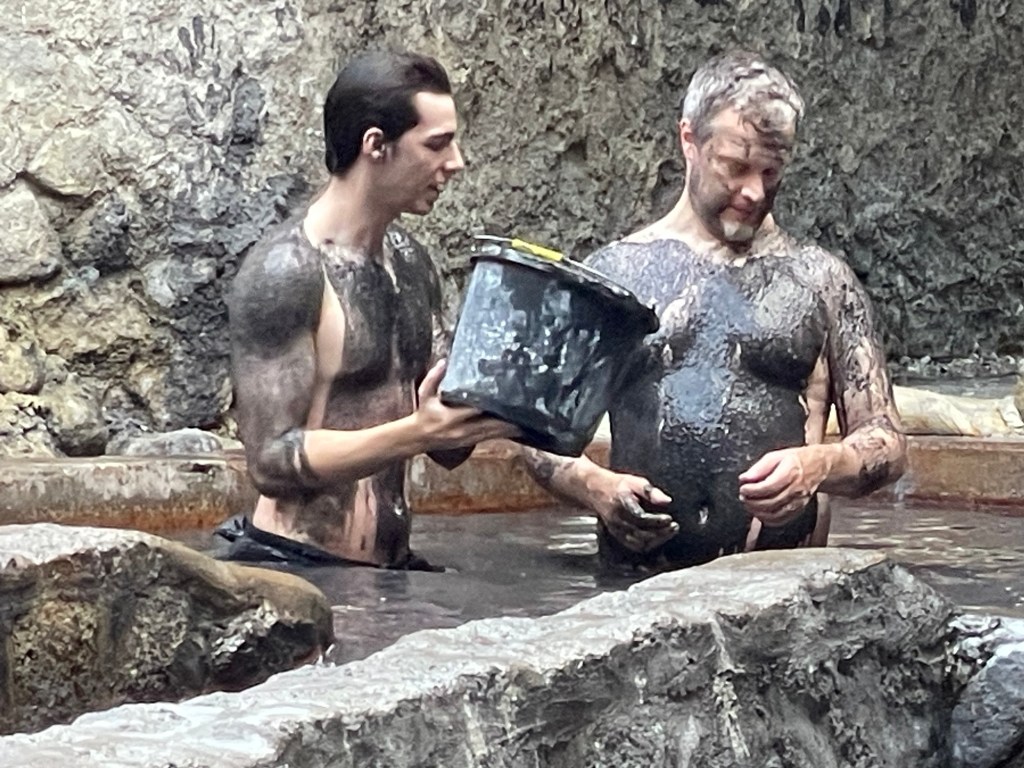
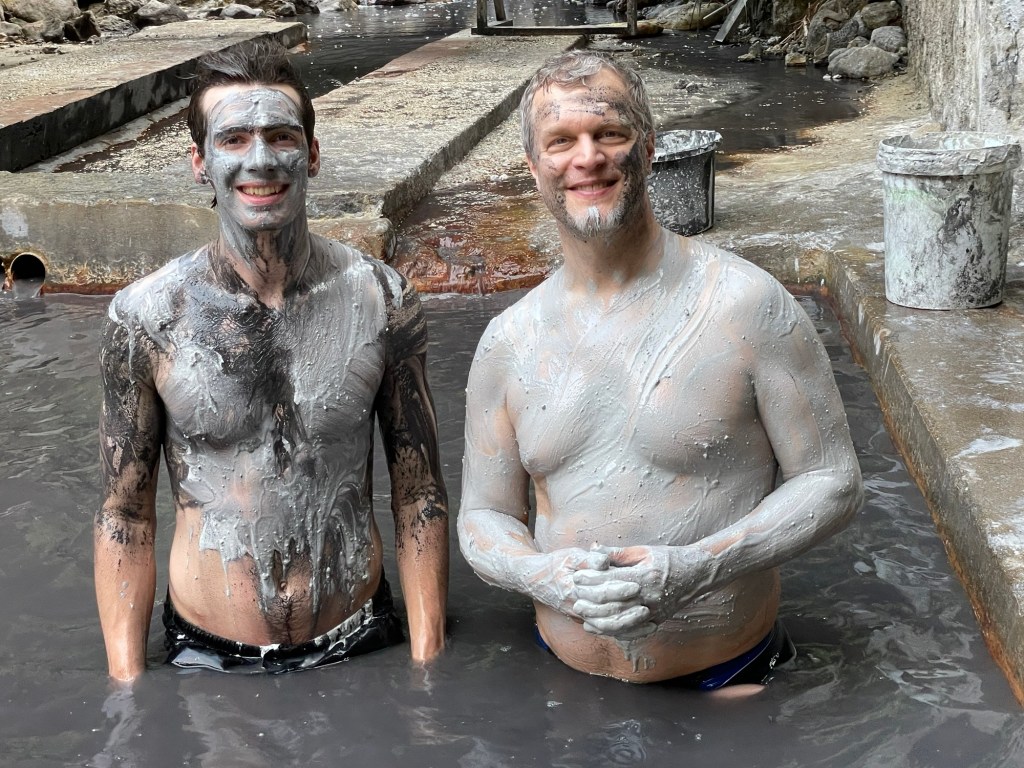
A small stream flows through the volcanic area, picking up minerals, sediment, and heat as it goes. A bit downstream, people have built a series of rock pools to capture the flow and allow bathing. Many consider the volcanic mud to offer health benefits and even anti-aging properties. We’re not sure how seriously to take this, but Nick and Ben couldn’t pass up the chance to lather themselves with hot mud just in case. The pool itself is filled with a sort of slurry that can be collected in the buckets provided. Susannah didn’t get wet, but had a great time taking photos as the action unfolded. The mud bathing seems popular with everyone – local residents outnumbered the tourists when we were there.
 Howes' Doings