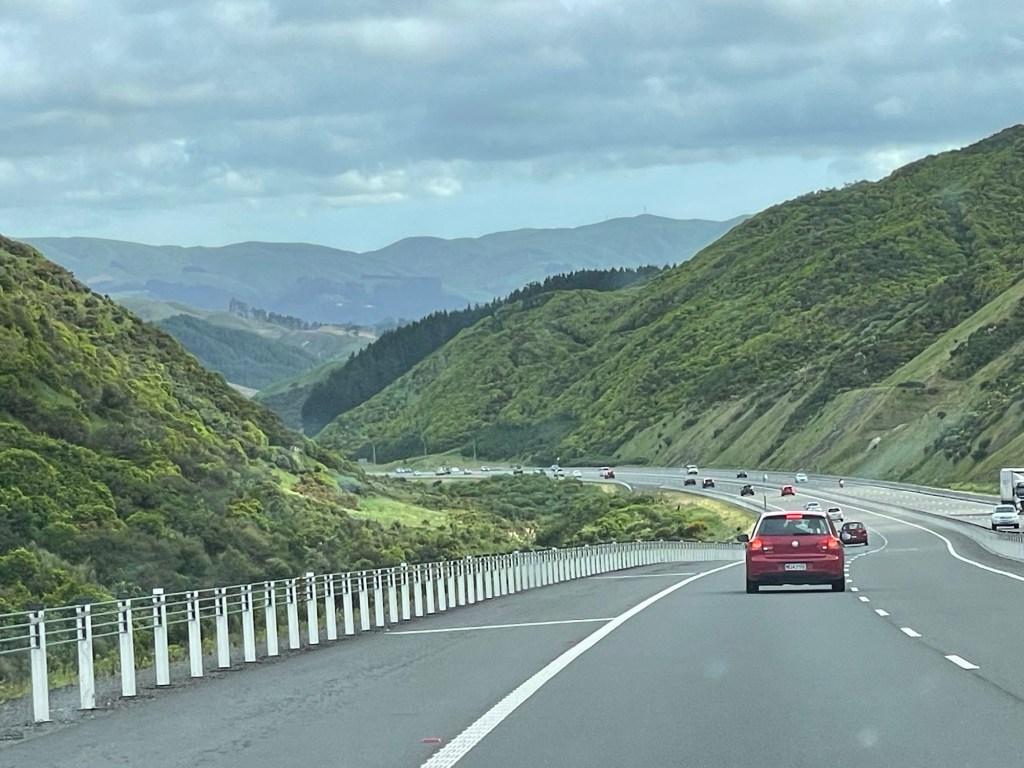
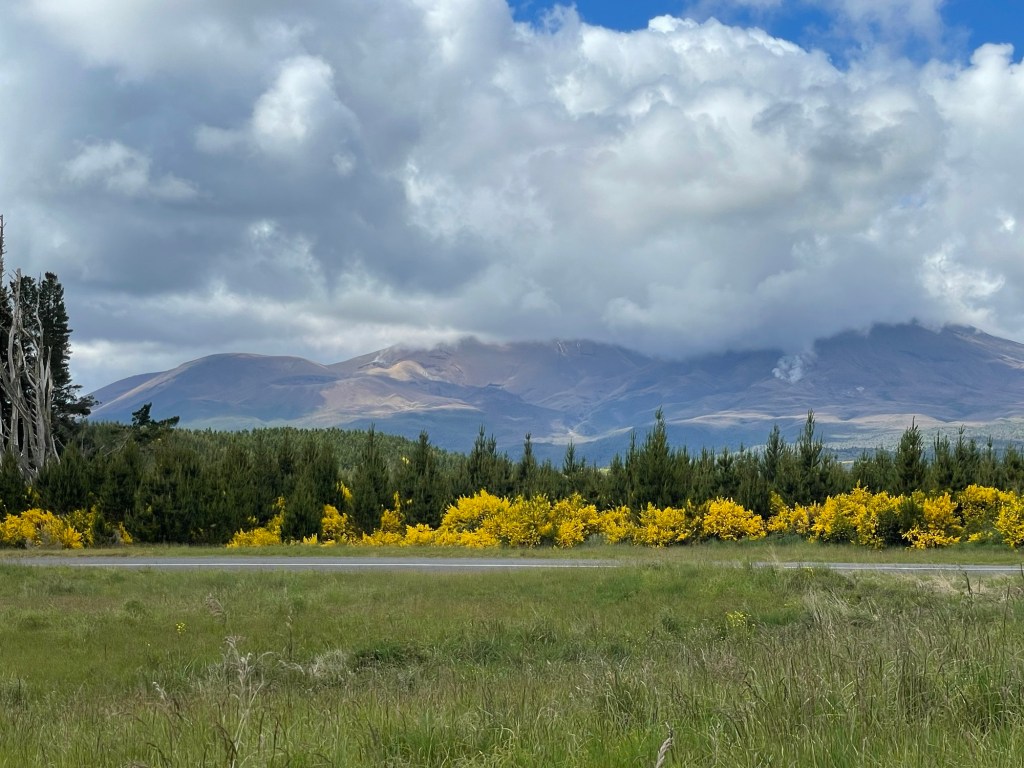
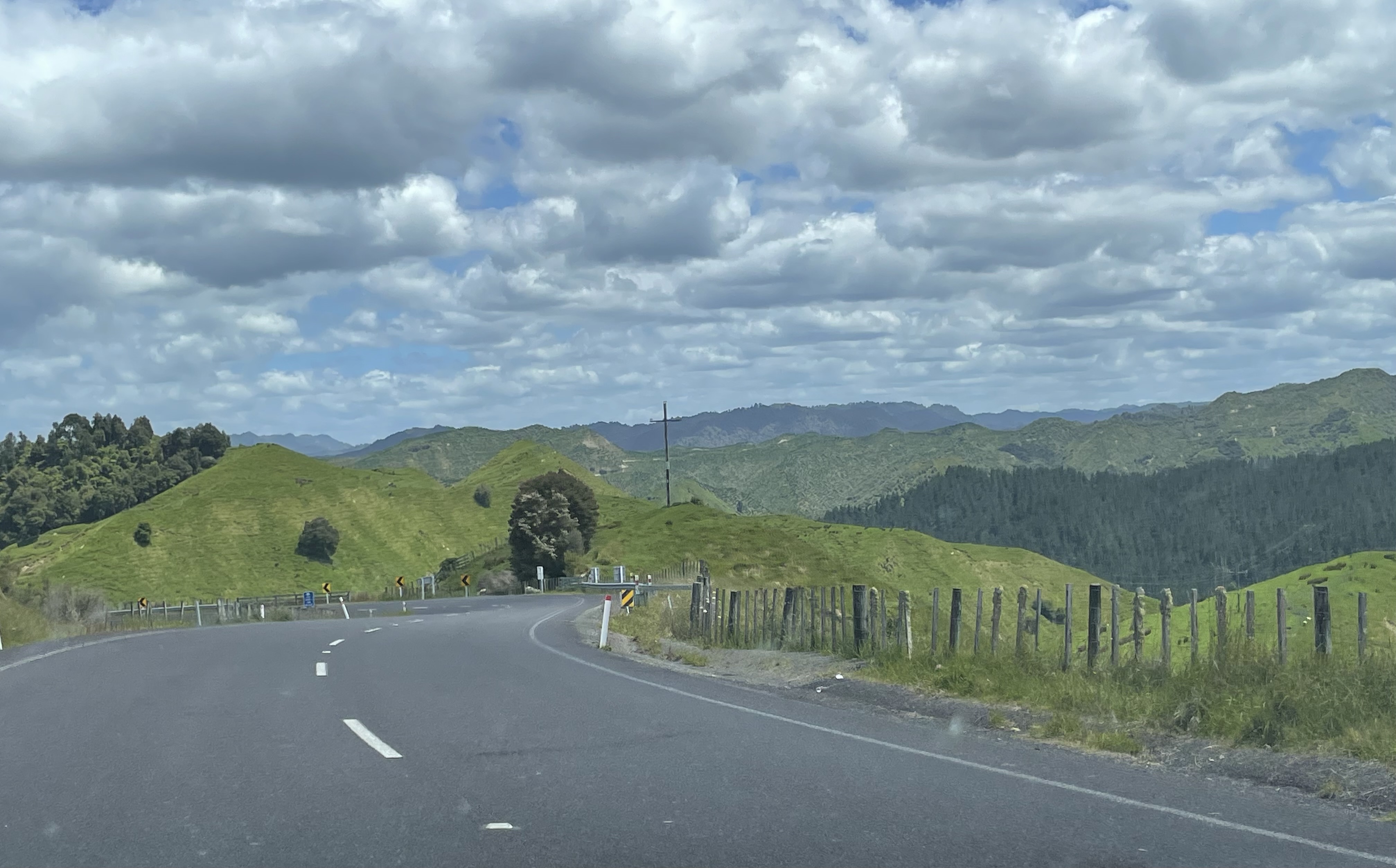
Doesn’t everyone like a road trip? Today we packed up and headed south to Wellington, at the southern tip of the North Island. The first part of our journey passed once more through the Tongariro National Park, which is actually quite large. We said goodbye to Lake Taupo for the last time and began our drive with a large loop around the volcanic range that we had just crossed the day before. The roadside in this region is lined with shrubs bearing bright yellow flowers. We learned later that this is Scotch broom, which is considered invasive, but it sure looks cheerful at this time of the year.
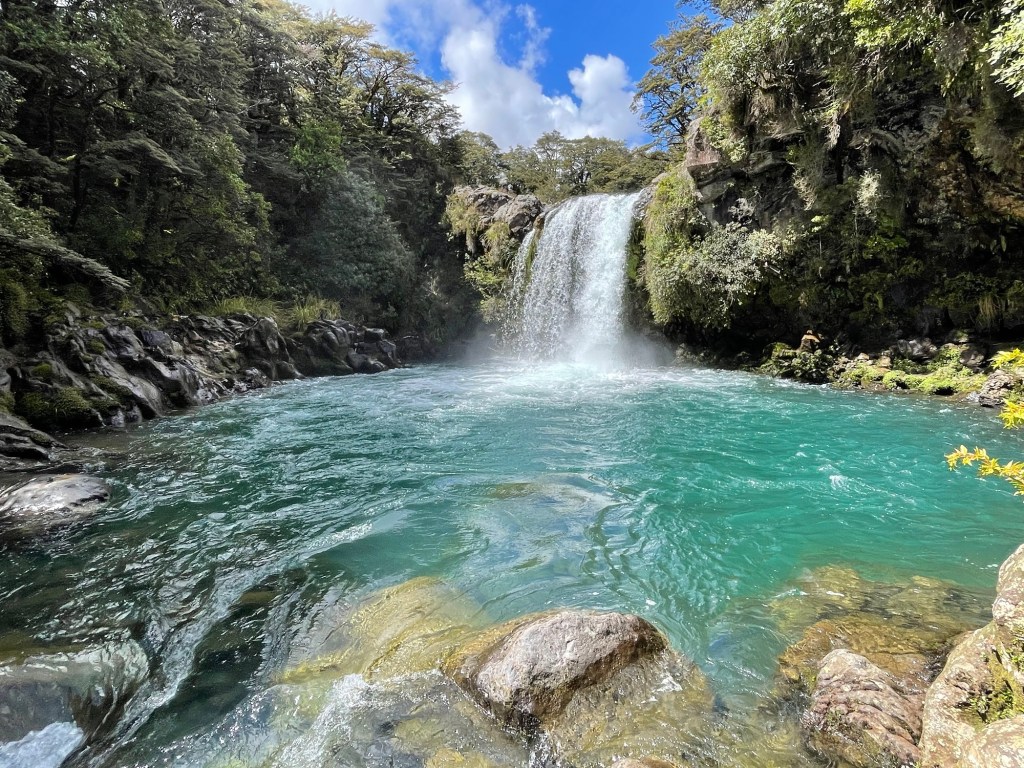
Mount Doom is not the only location from the LotR movies shot in the park. Not far from our route was the Tawhai Falls, now also known as Gollum’s Pool after its cinematic cameo. Indeed, while we visited, there was a steady line of people waiting to take pictures in front of it in crouched position like an apprentice Andy Serkis. Even without actors, it is quite a lovely site.
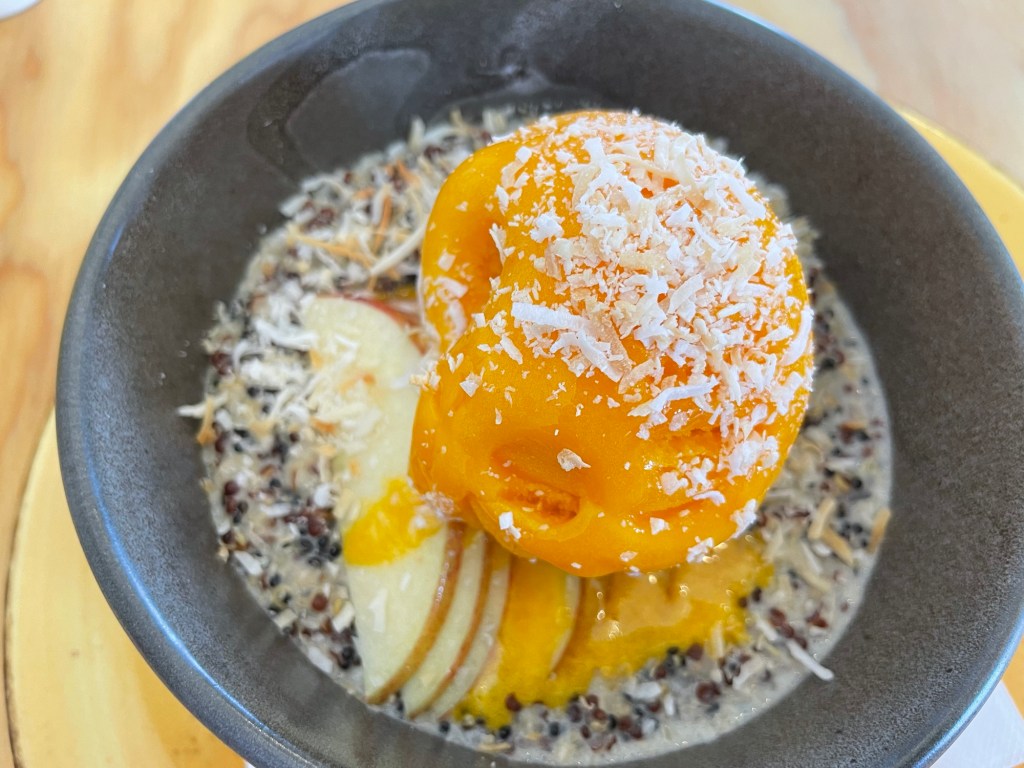
After a morning’s travel on a winding road through hugely scenic (but hard to photograph) farmland and river valley, we stopped about halfway through the drive in the seaside town of Whanganui for lunch and a chance to stretch our legs. The Yellow House Cafe where we ate offered a number of interesting dishes, including this quinoa porridge topped with thinly sliced apple and a scoop of mango sorbet.
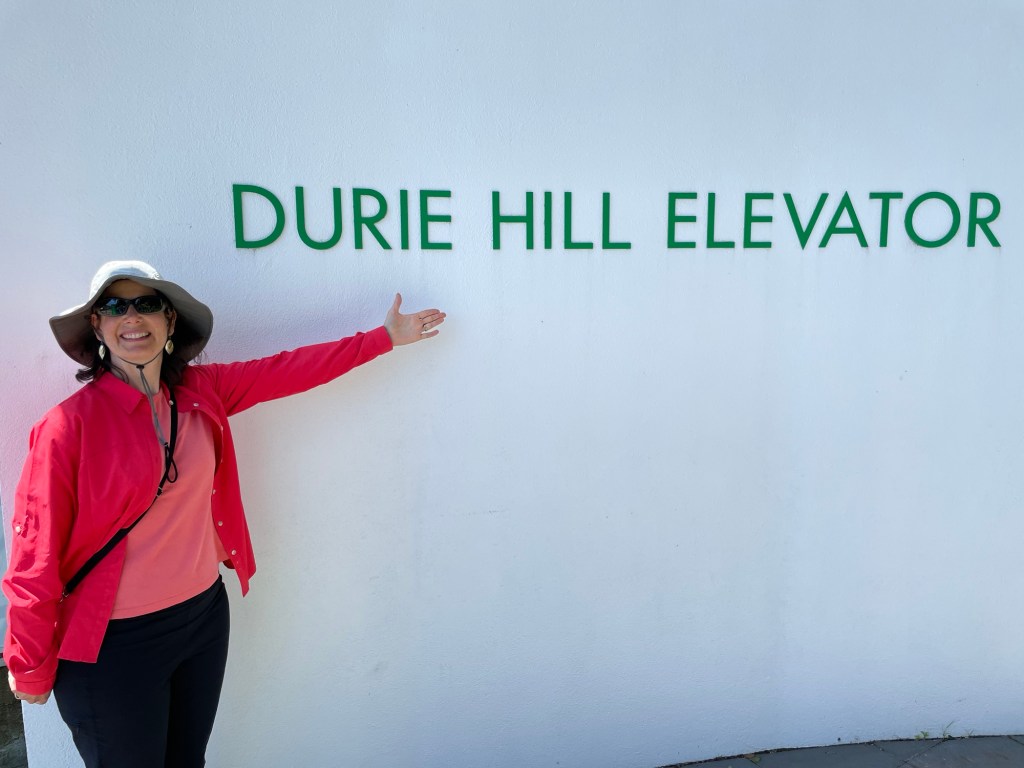
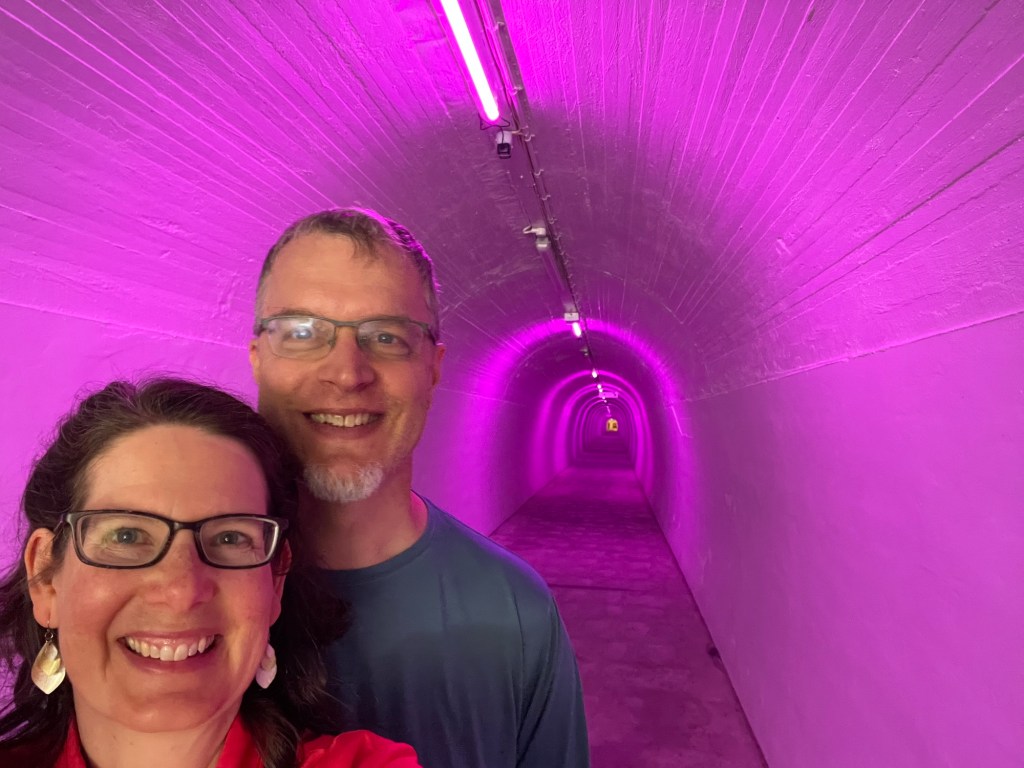
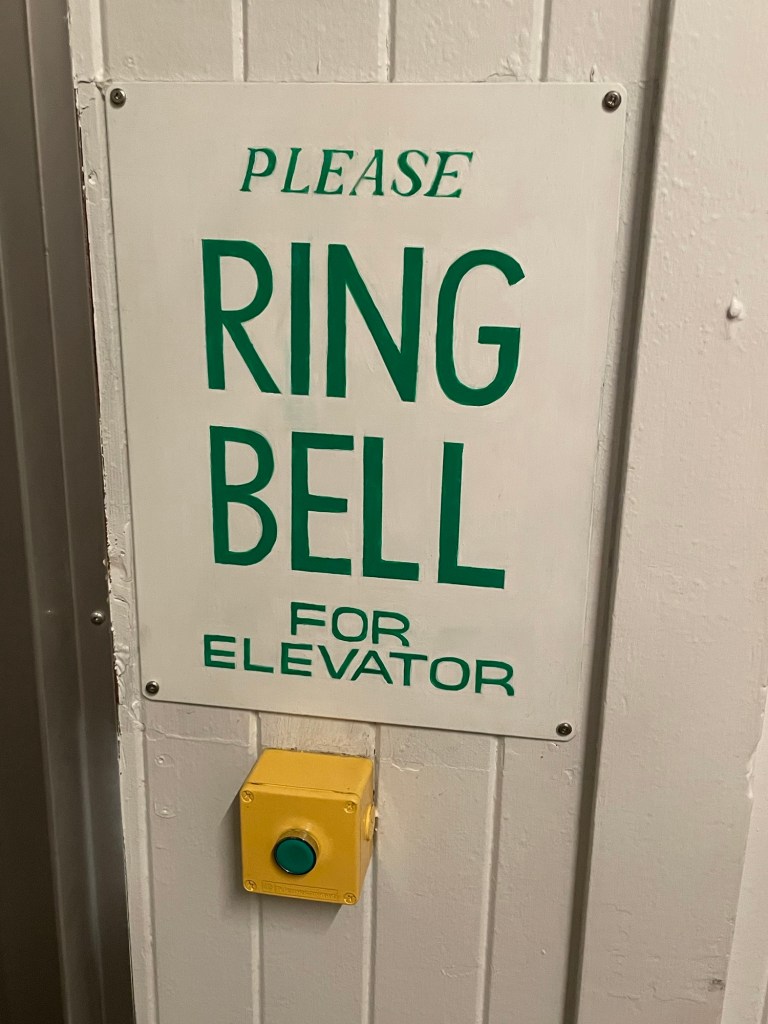
The city of Whanganui has a number of attractions dating to the early 20th century, including a trolley museum we didn’t visit. (You can ride the trolley on an extremely short semicircular track that stretches for about half a block.) Instead we headed for the suburb of Durie Hill across the river, which is serviced by a unique form of public transit: an underground elevator. (Well, unique in New Zealand anyway; apparently there is one other such installation in Lisbon, Portugal.) The elevator is accessed via a tunnel at the base of the hill; walking it takes you eventually to the base level, where you ring a bell for the operator and wait about a minute until the lift arrives. We paid our $2 fare and rode to the top. On the way, the operator told us that many people use the service to commute to work, and children ride it to school in the morning along with their bicycles. Who knew? The construction of the elevator was associated with the the planned development of a “garden city” suburb at the top of the hill, an early example of successful urban planning. You can see the top of the elevator in the photo below. It’s the orange tower, and houses the machinery (mostly original) that makes the lift run.
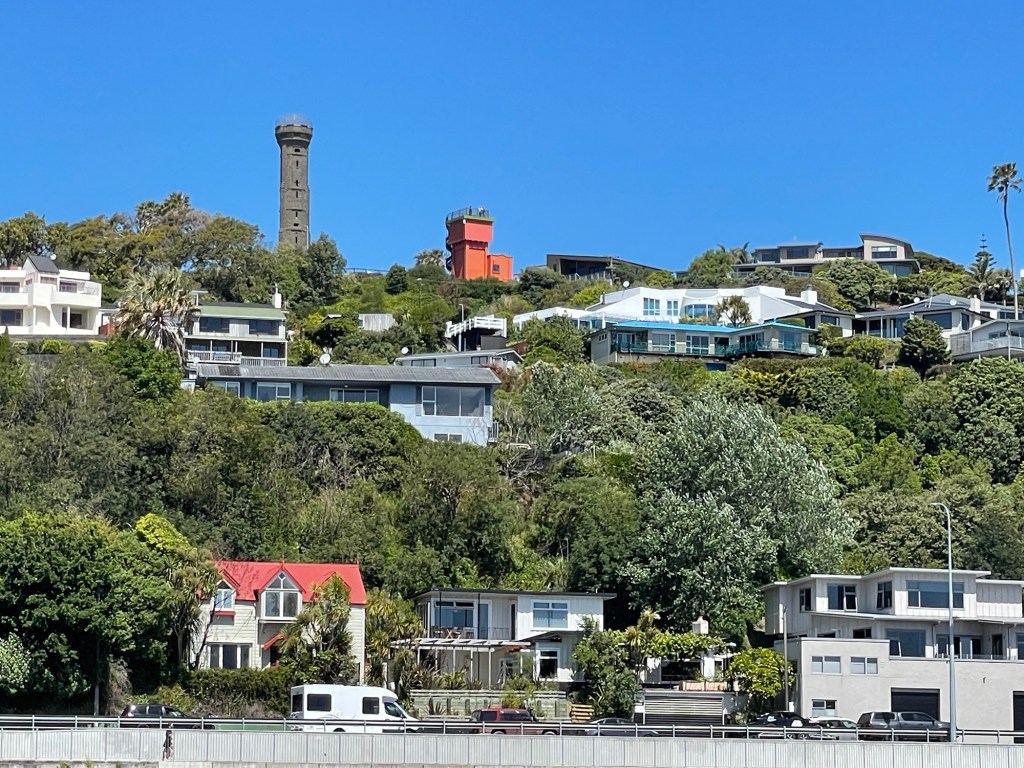
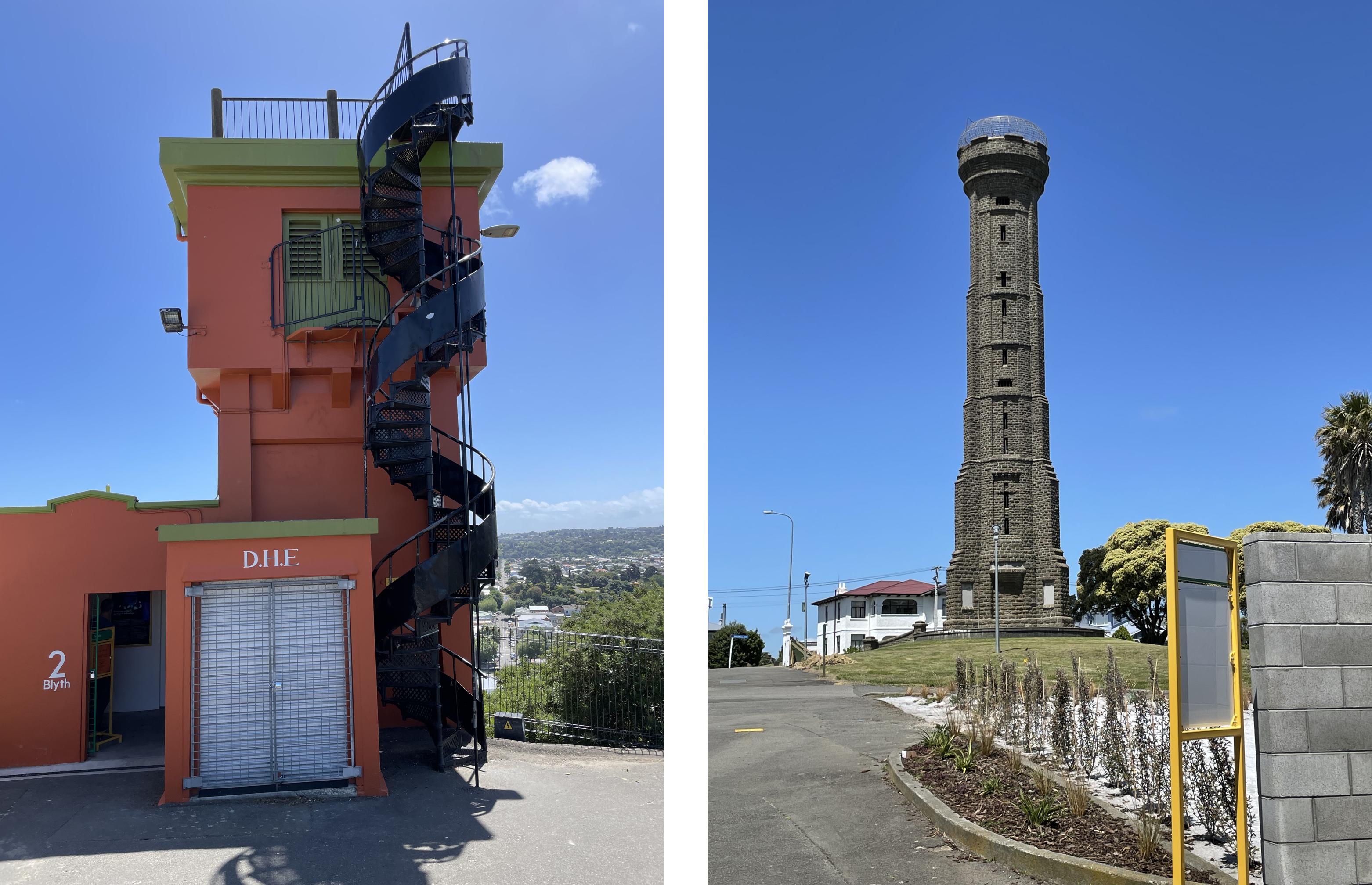
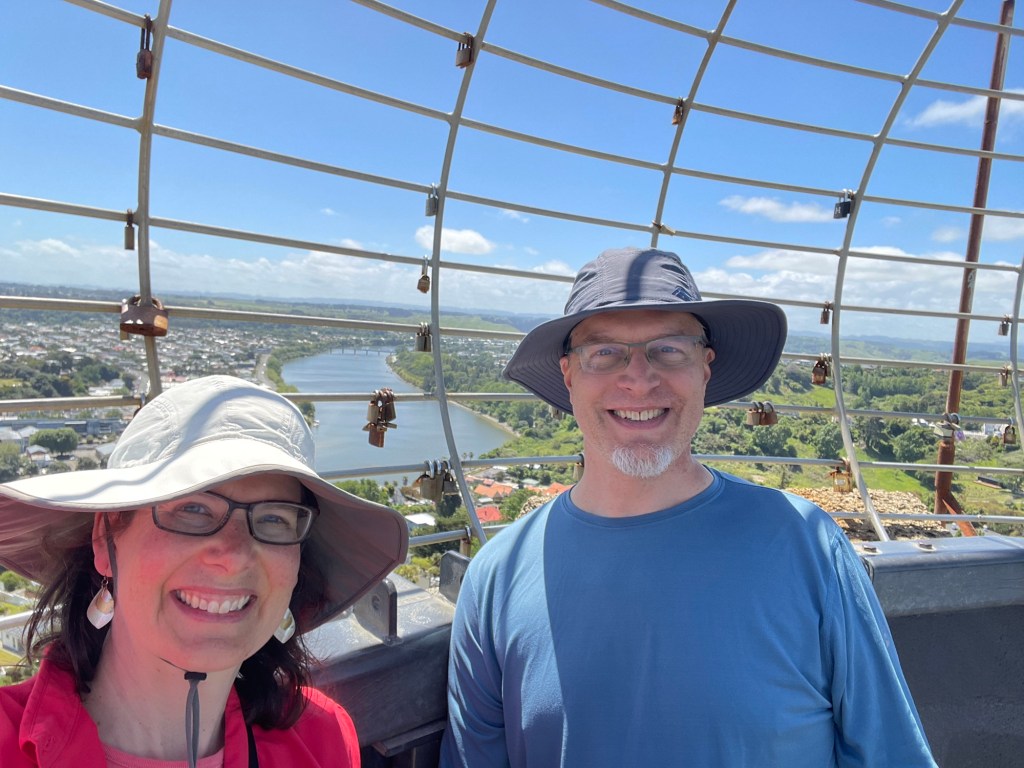
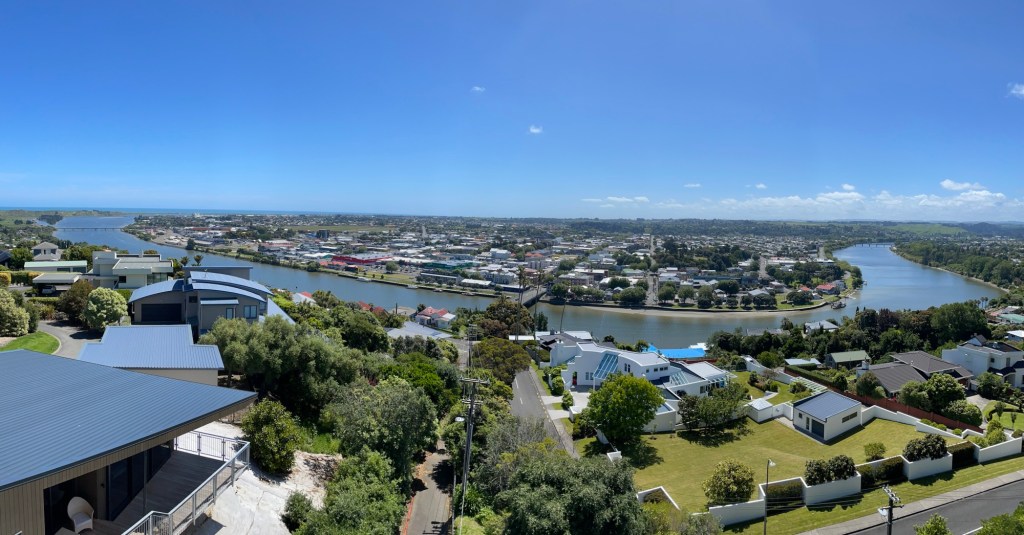
Not far from the elevator’s upper station is a stone tower built as a memorial to the 500-odd men from the area slain during World War I. We climbed the 176 steps to the observation platform at the top, which offers panoramic views of the city below. Apparently the “lover’s locks” fad has reached New Zealand, because the safety cage around the platform was studded with small padlocks.
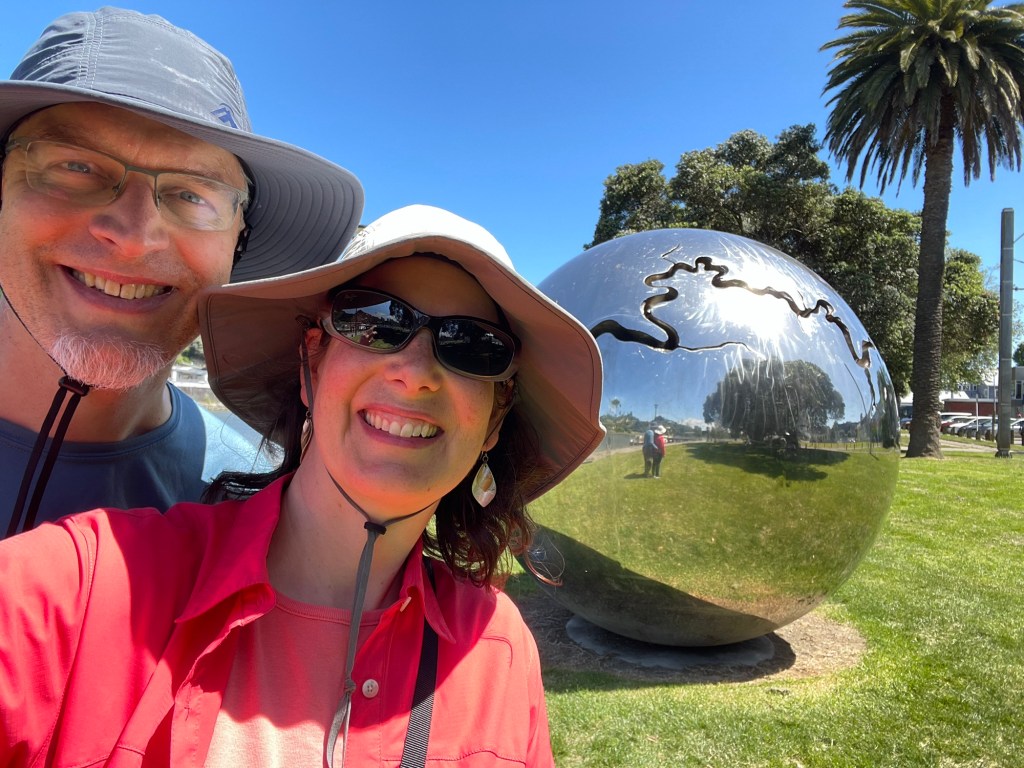
One final sight in Whanganui was this silver sphere installed on the riverfront. The city has a lot of interesting public artwork, and is apparently a popular place for artists too.
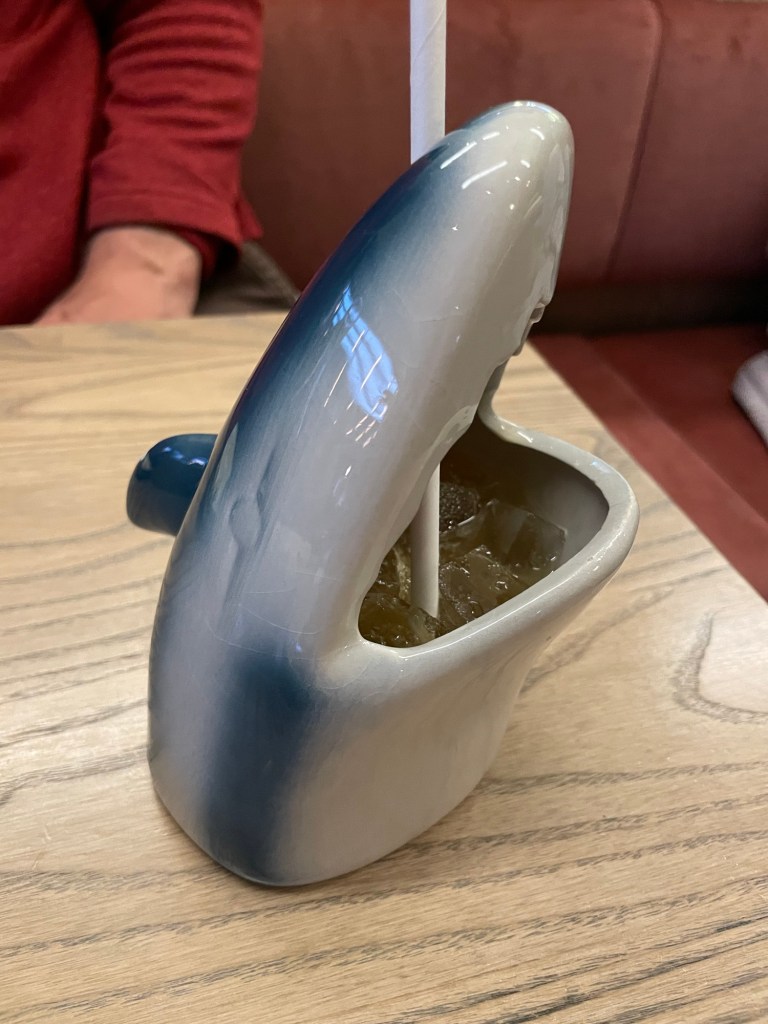
After several more hours drive we finally reached Wellington, where we turned in our rental car. The studio apartment we are staying in is right in the center of the city, surrounded by great restaurants. On the recommendation of a friend of Rowan’s who is a Wellington local, we ate at Mr. Go’s, an Asian fusion cafe that offers tapas-style dishes and also creatively-named cocktails served in fanciful vessels. We were tempted by the “Prayers of the Soulless” but in the end settled on the “Grandpa Shark,” which included spiced rum and passionfruit juice. For the record, it was delicious.
 Howes' Doings
There is an elevator (and elevator building) like this in the San Diego zoo, which incorporates a large natural hill; the idea is that patrons can ride the elevator to the top of the hill (obviating a long uphill climb), then take a leisurely meander down the long pathway winding round past many of the animal habitats and enclosures to the bottom. Fortunately, the animals don’t need to commute, and few ride bicycles!