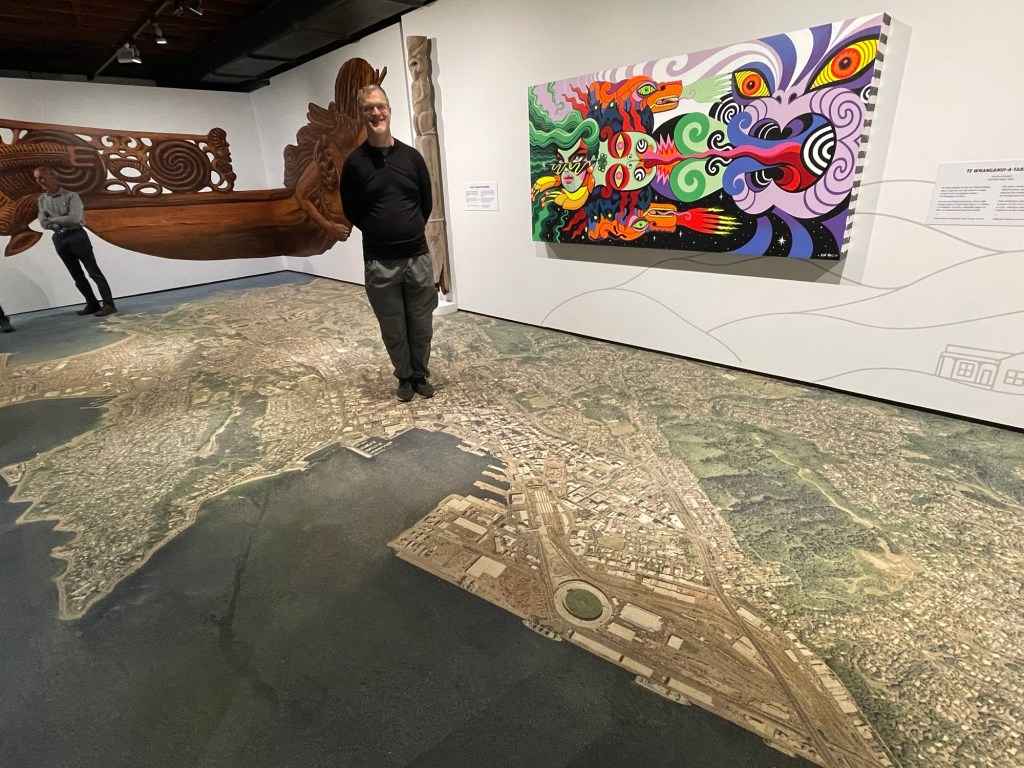
We spent today exploring Wellington on foot. Literally so, in the case of the photo above — the Wellington Museum has a large room carpeted with an aerial map of the city. Nick is standing in the middle of the central business district, roughly where our lodging is located.
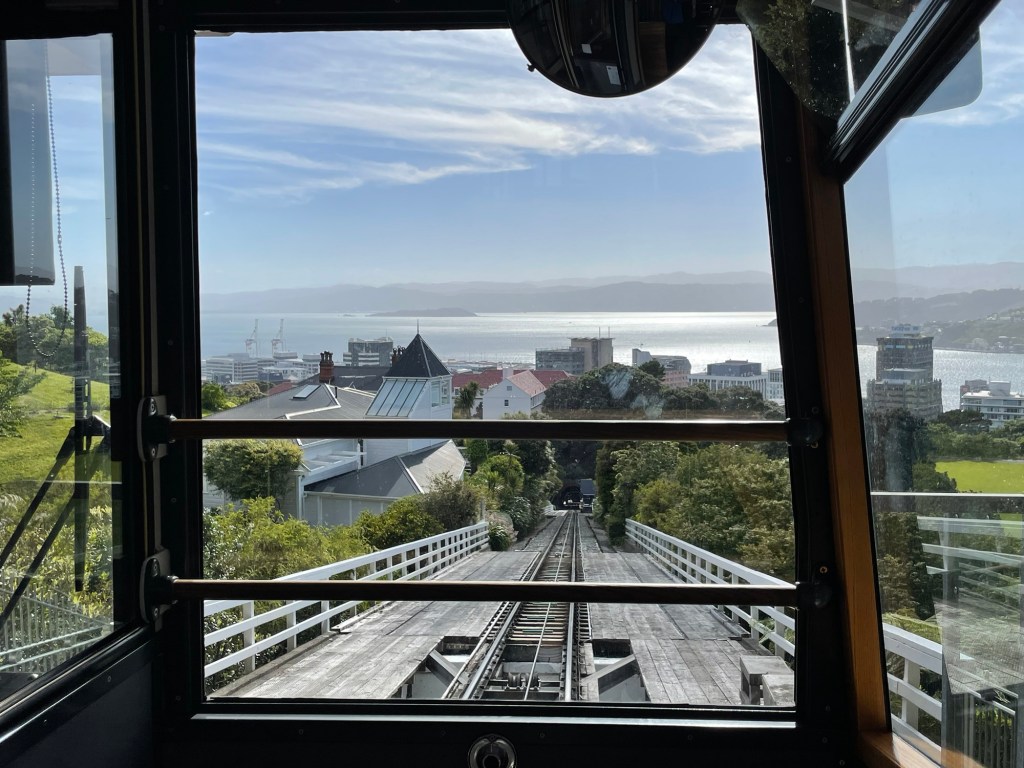
Susannah began the day with an early morning trip up the Wellington Cable Car to see the city from up high. The Cable Car is New Zealand’s only running funicular railway, providing service from the central business district to the suburb of Kelburn up the hill. At the top, there is a small but informative Cable Car Museum, including previous cable car models and even a Lego display of the current cable car route.
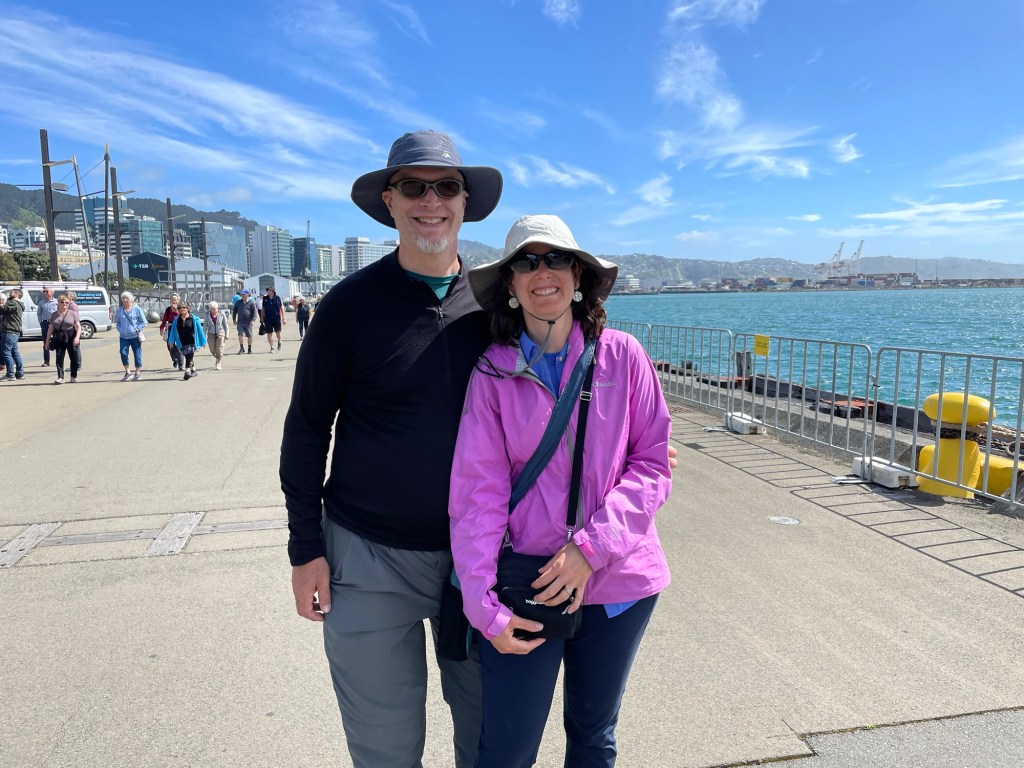
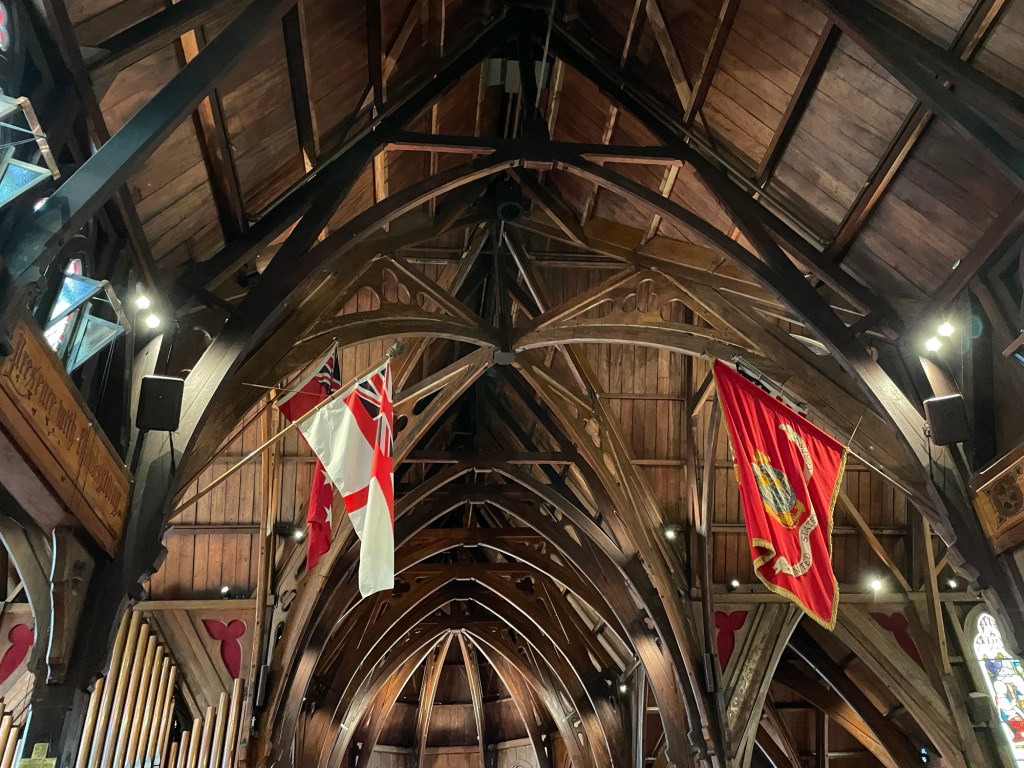
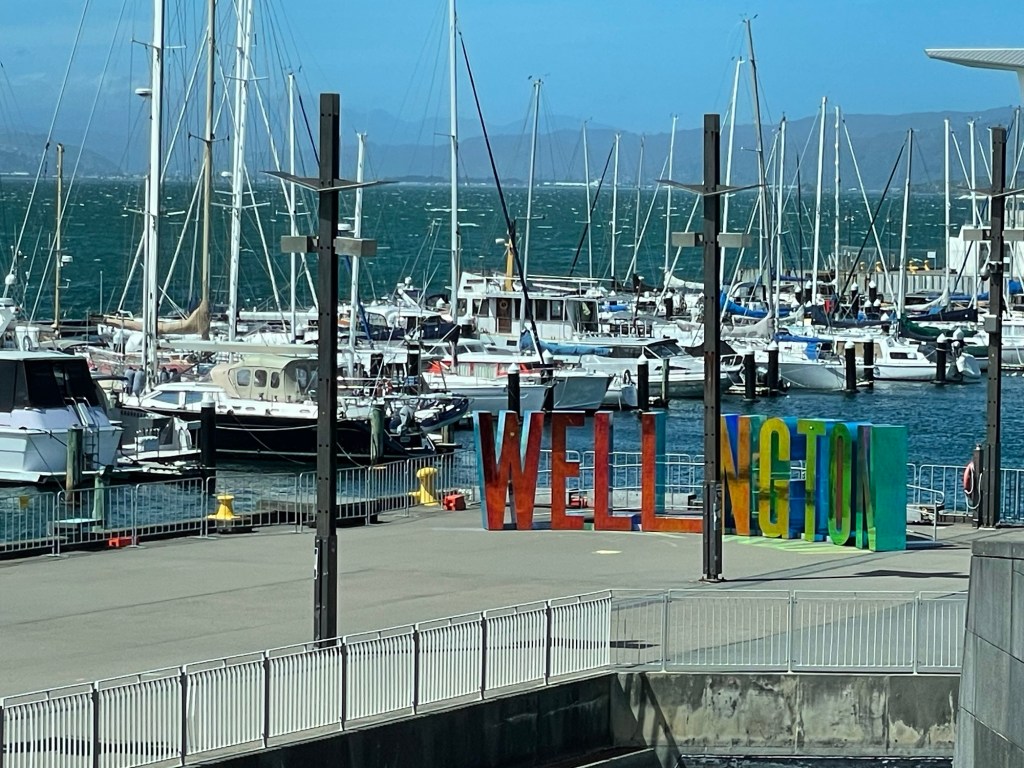
We reunited for an official mid-morning walking tour of the city. Our guide was a longtime resident, and shared her personal reminiscences as well as the official tour information. We began at the waterfront near the Te Papa national museum, worked our way through the central business district to the houses of Parliament, and finally ended at Old St. Paul’s Cathedral, a wooden structure that looks rather modest on the outside but has beautiful wooden timber vaulting reminiscent of a ship’s hull hidden within.

As part of the tour we saw several maps of the Wellington Harbor, including the carpet shown in the lead image, as well as this diorama showing the shipping lanes and navigation lights. The harbor shoreline has changed greatly over the years, remade both by human activity (mostly infill near the port) and nature (uplift caused by earthquakes). The city sits on a major fault zone, and the last major quake shifted some areas along the plate boundary by more than 40 feet.

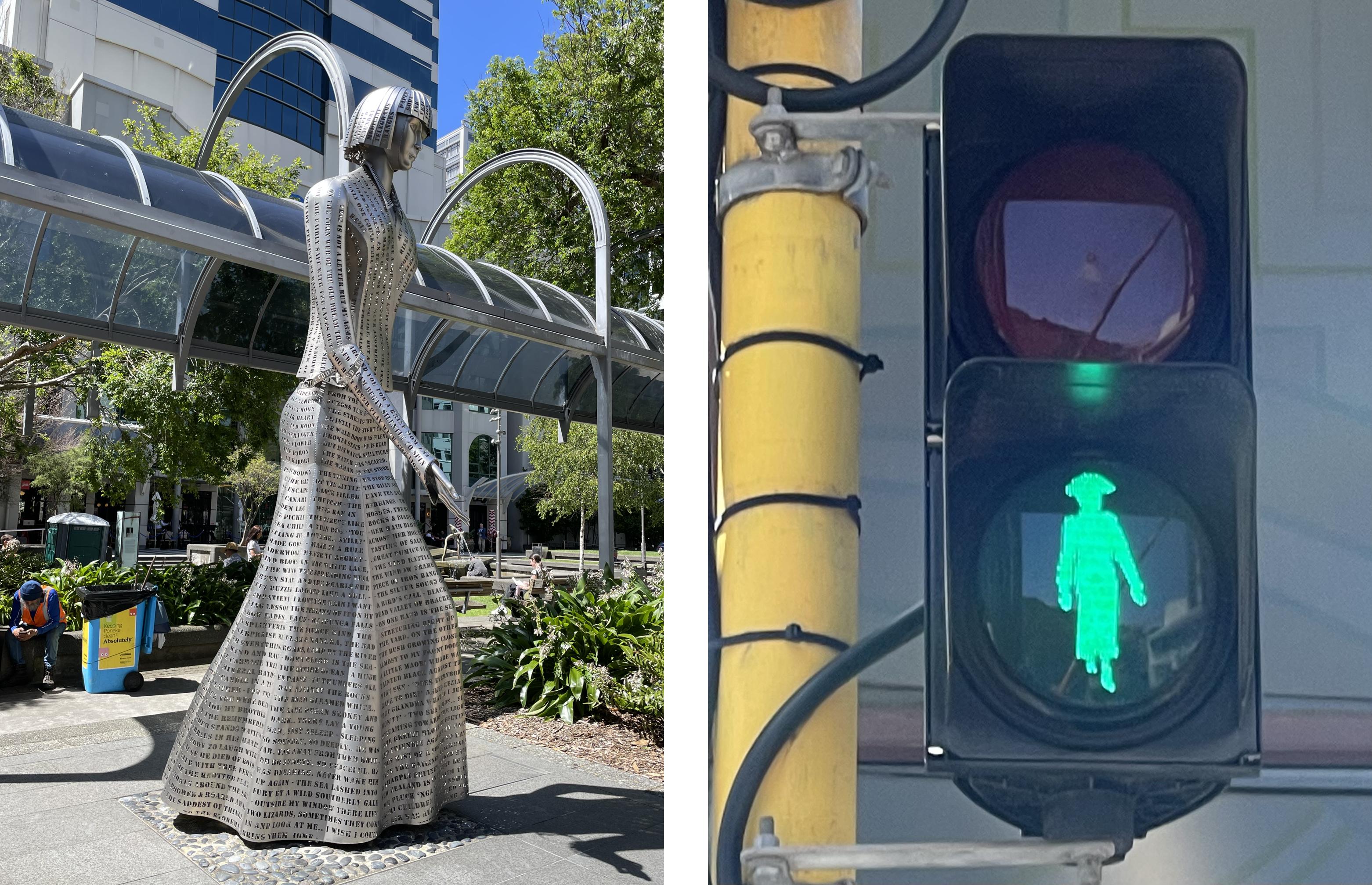
We learned about some of the women who played a significant role in NZ history. We liked this sculpture of Katherine Mansfield, a celebrated writer. The words laser cut into steel are taken from her journals and short stories. We also learned about Kate Sheppard, a suffragette who biked around the country collecting signatures for the petition to allow women to vote. In the end she got over 30,000, around 3% of the population at that time. Some of the walk signals at crosswalks feature her silhouette, a move that is intended to encourage people to vote.
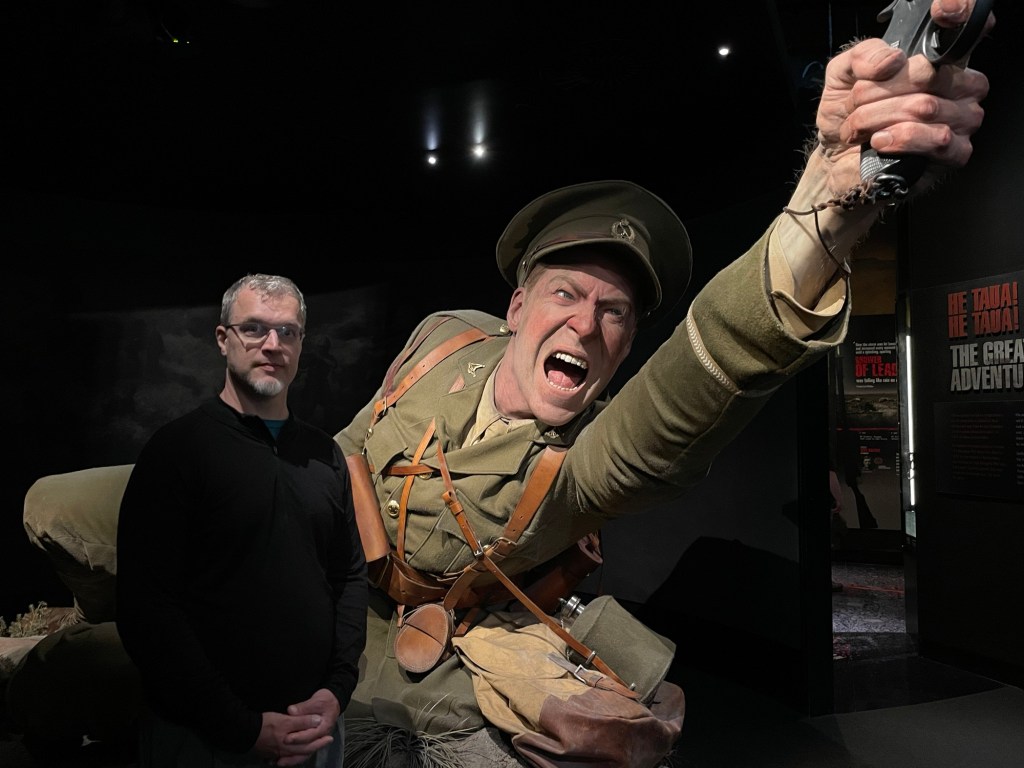
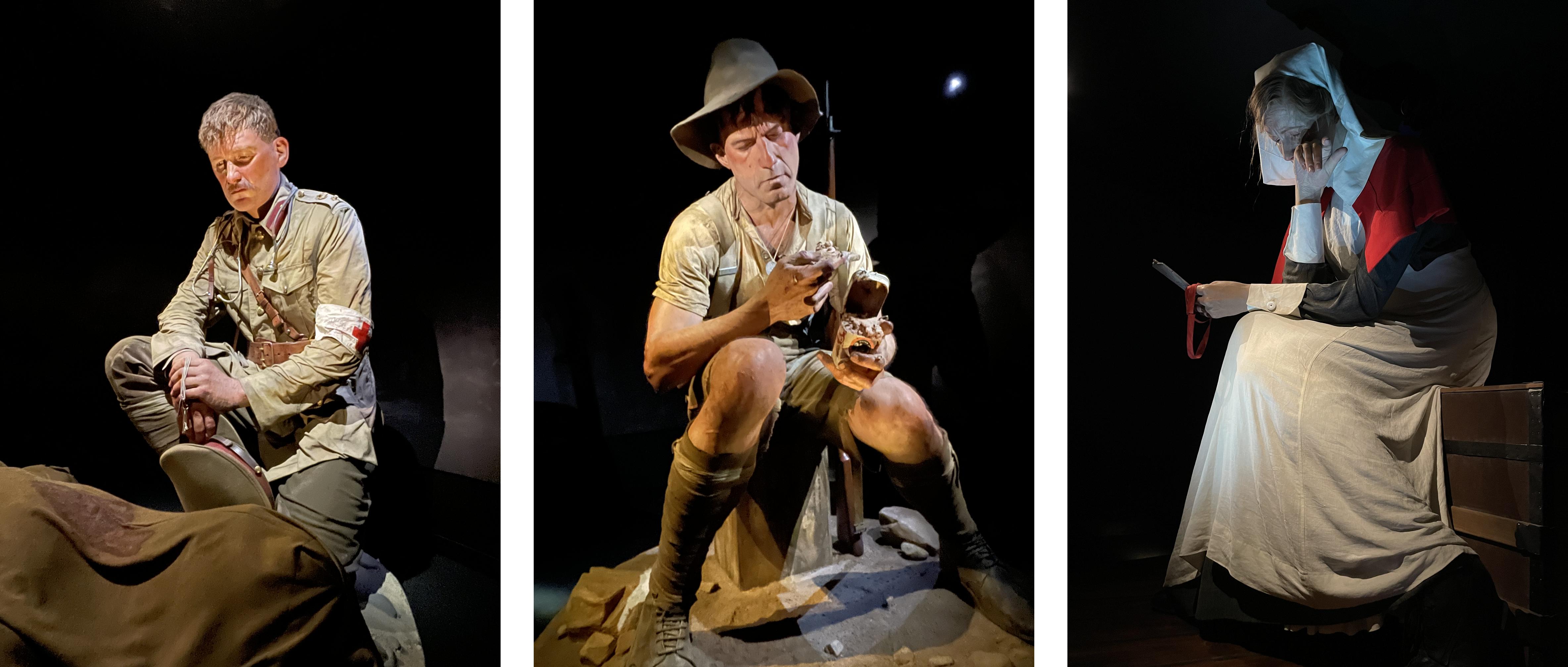
In the afternoon we visited Te Papa, the national museum. They had recently installed an exhibit on the disastrous Gallipoli campaign of World War I, in which soldiers from New Zealand and Australia played a significant role. The exhibit featured larger-than-life models of some of the combatants, rendered in exquisite detail by Peter Jackson’s special effects studio Weta Workshop. The displays were paired with the actual words of the depicted subjects.
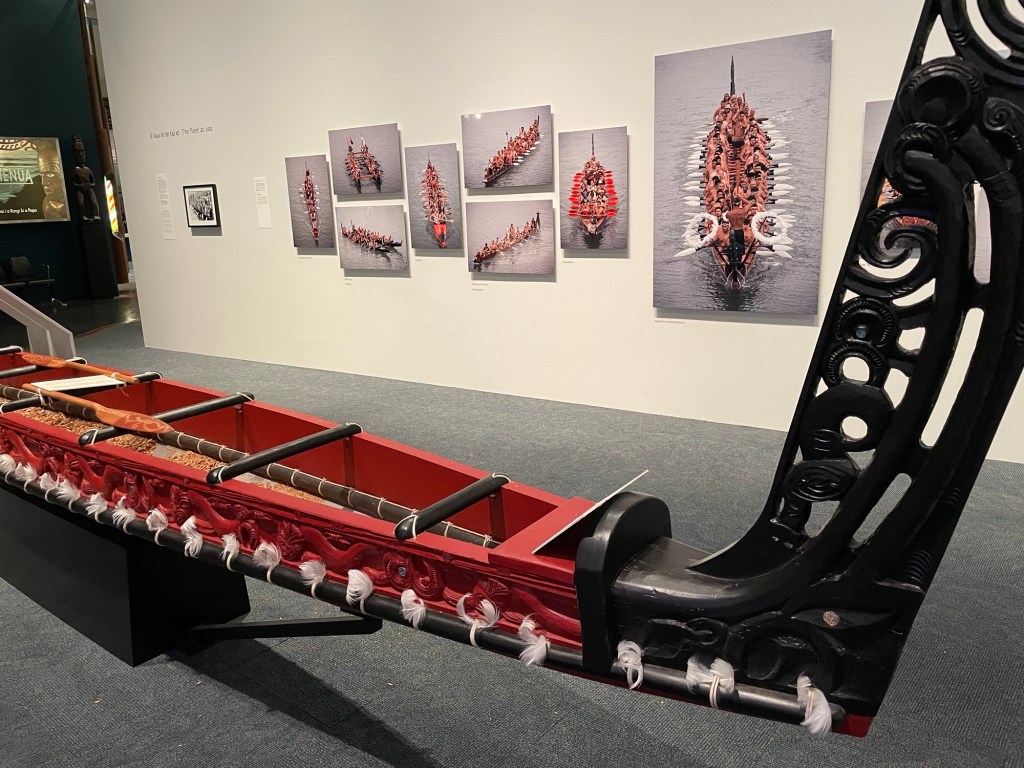
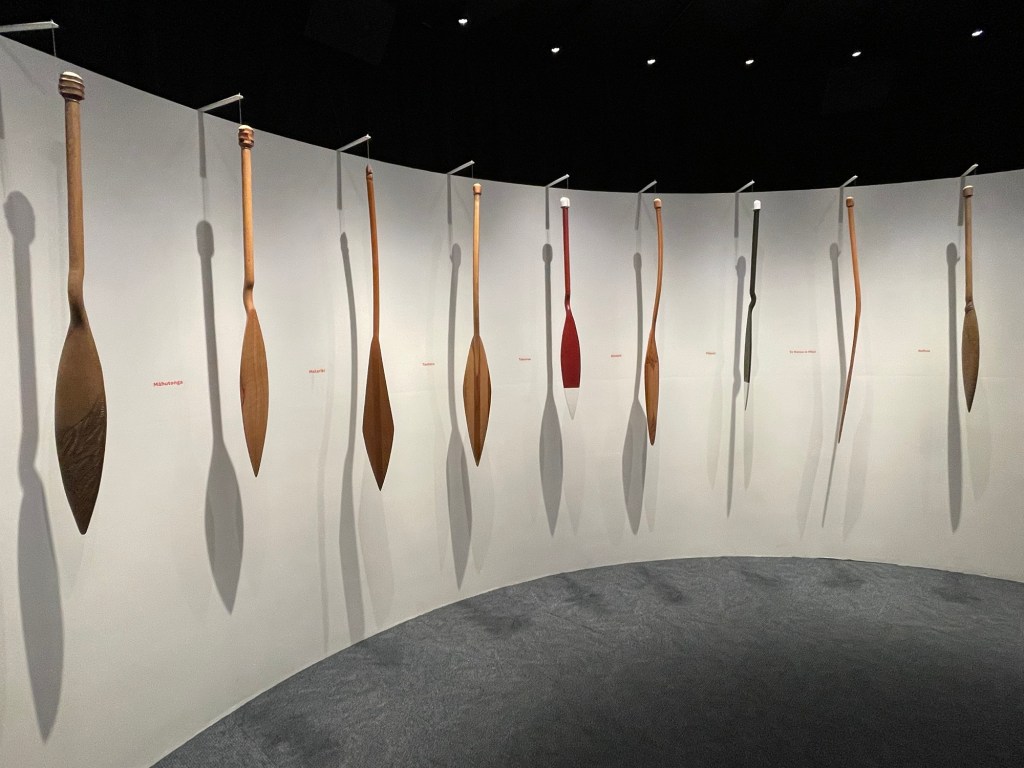
The museum also featured exhibits on aspects of Maori culture, including a large room focused on the waka (so-called war canoes, although they were also used for peaceful transport).
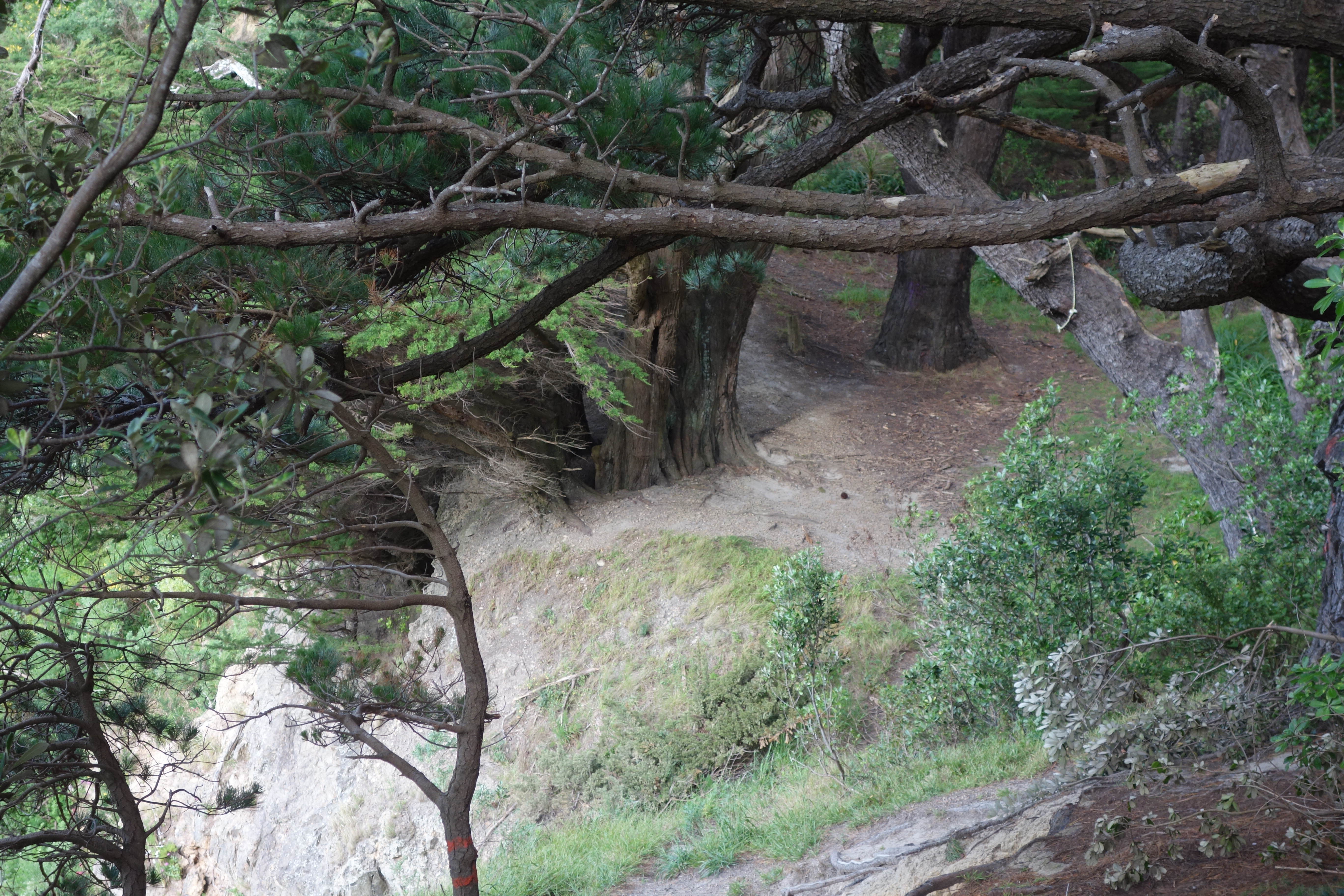
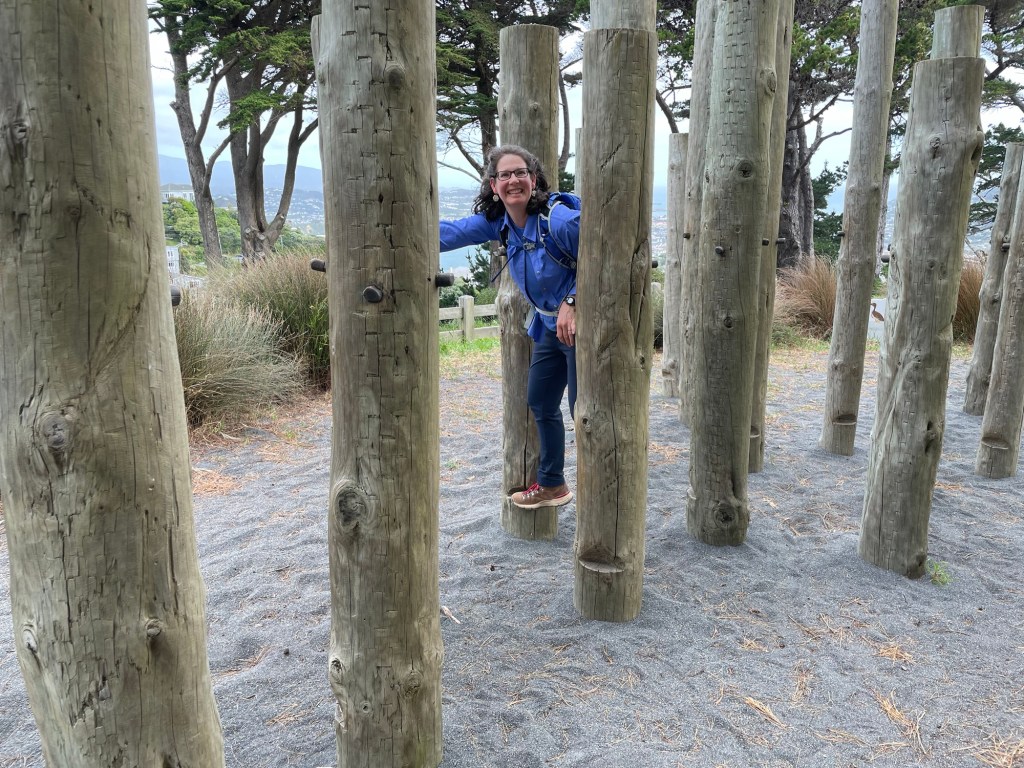
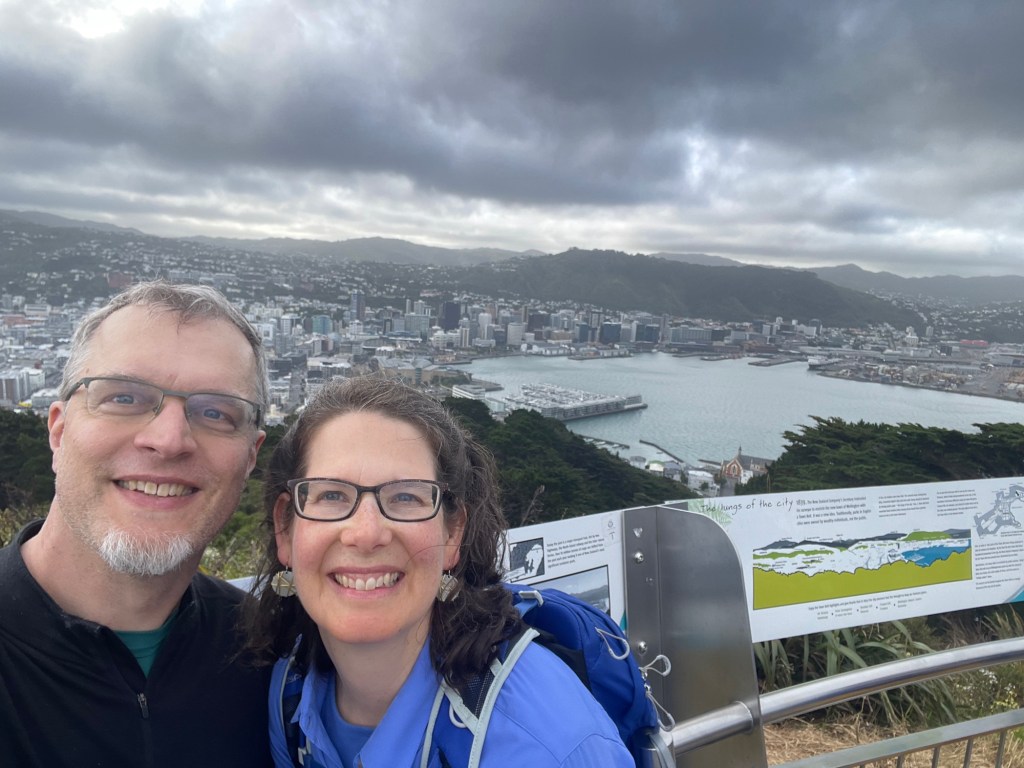
As a final act for the day, we wanted to climb Mount Victoria for another on-high view of the city. The hill forms part of Wellington’s green belt of parks that surround the CBD, and sites within it were used for filming several scenes from the LotR movies. It is hard to believe that images of a fantasy world could be shot so close to a modern city, yet the park did have a wild feel to it that would be unusual in the U.S.
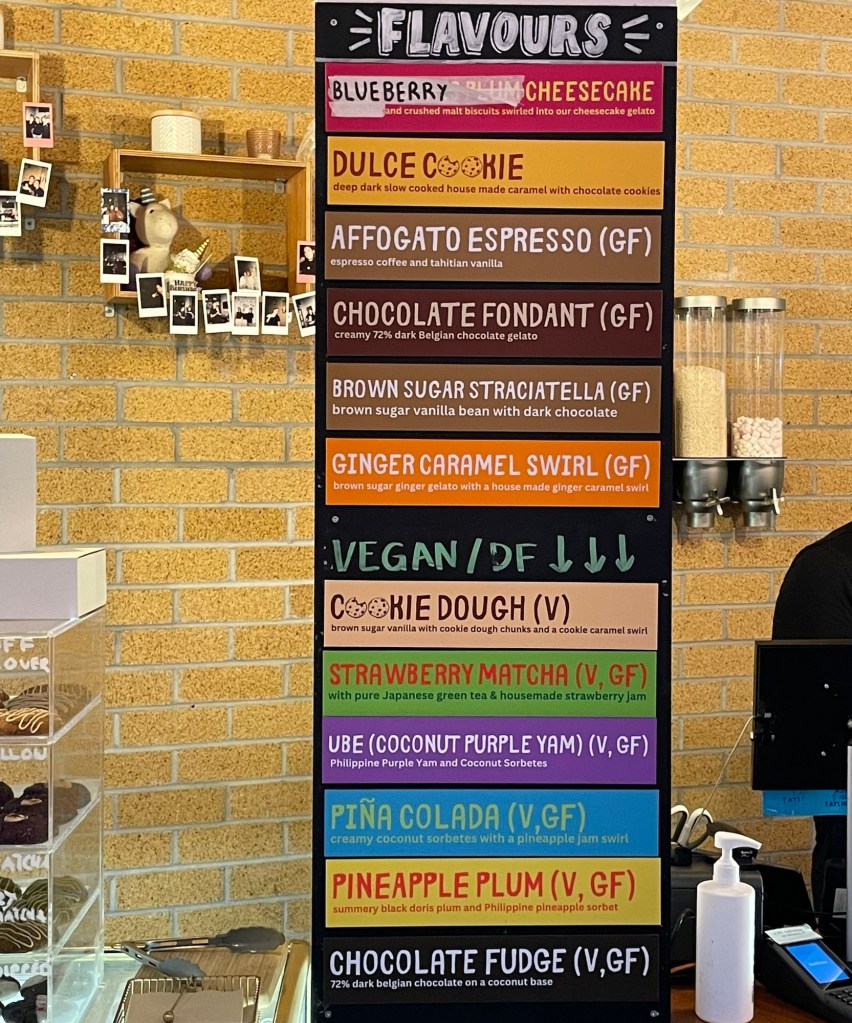
After dinner at a pizza restaurant that used homemade sourdough for their crust (another fine recommendation from Rowan’s friend), we rounded off our meal by tasting some of the unusual flavors on sale at our corner gelateria.
 Howes' Doings