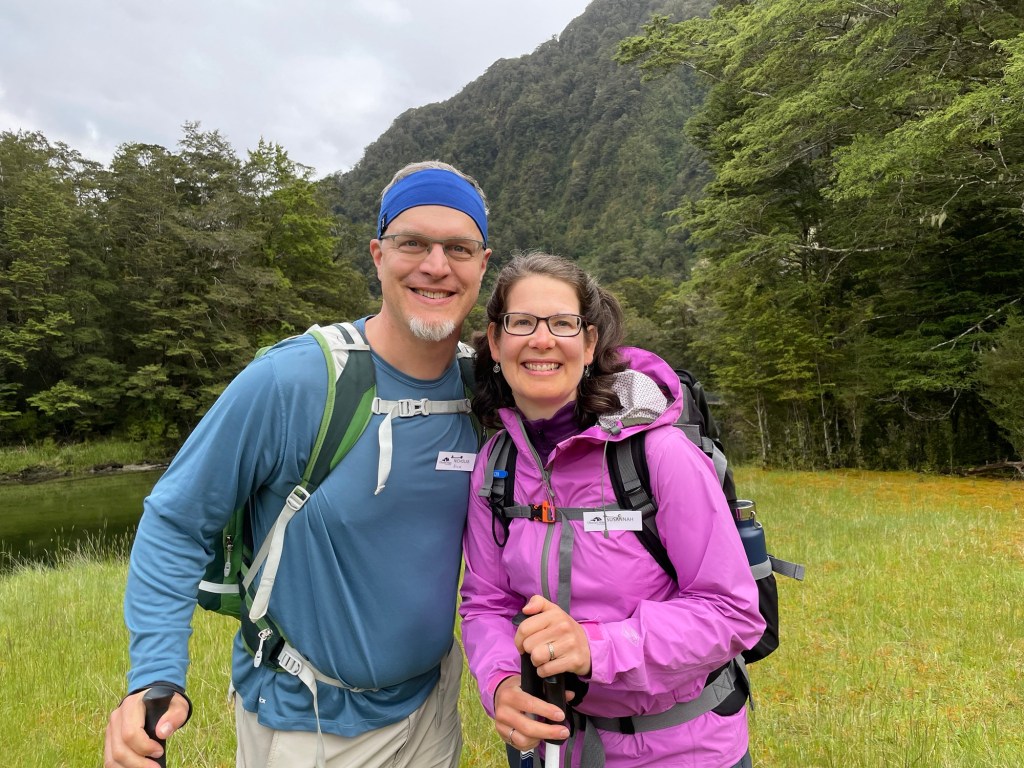
The lodges on the Milford Track have an unusual sort of alarm clock – the generators that provide power turn off every night at 10 pm and only resume at 6:45 the following morning. If you leave your bedroom light-switch on, then the light will wake you as soon as the generators kick in, which conveniently leaves just enough time to get dressed before heading to the common room for lunch assembly and breakfast. What is lunch assembly, you ask? An array of ingredients spread across several tables so every hiker can fix a sandwich to their liking.
After the rain of the day before, the dawn promised a sunny day ahead and everyone in our group was eager to hit the trail. We had to pace ourselves at the start because the bridge across the Clinton River had a max capacity of 10 people at a time. They call it a swing bridge, which is a good name; as people walked, it swayed and lurched back and forth, somewhat unpredictably.
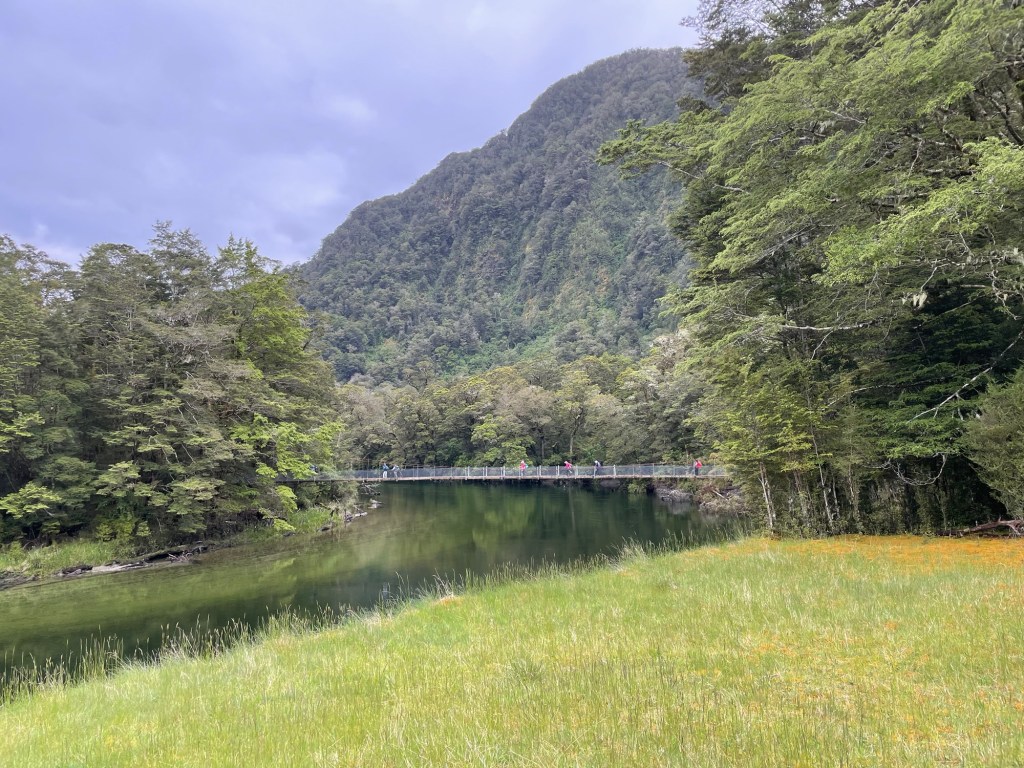
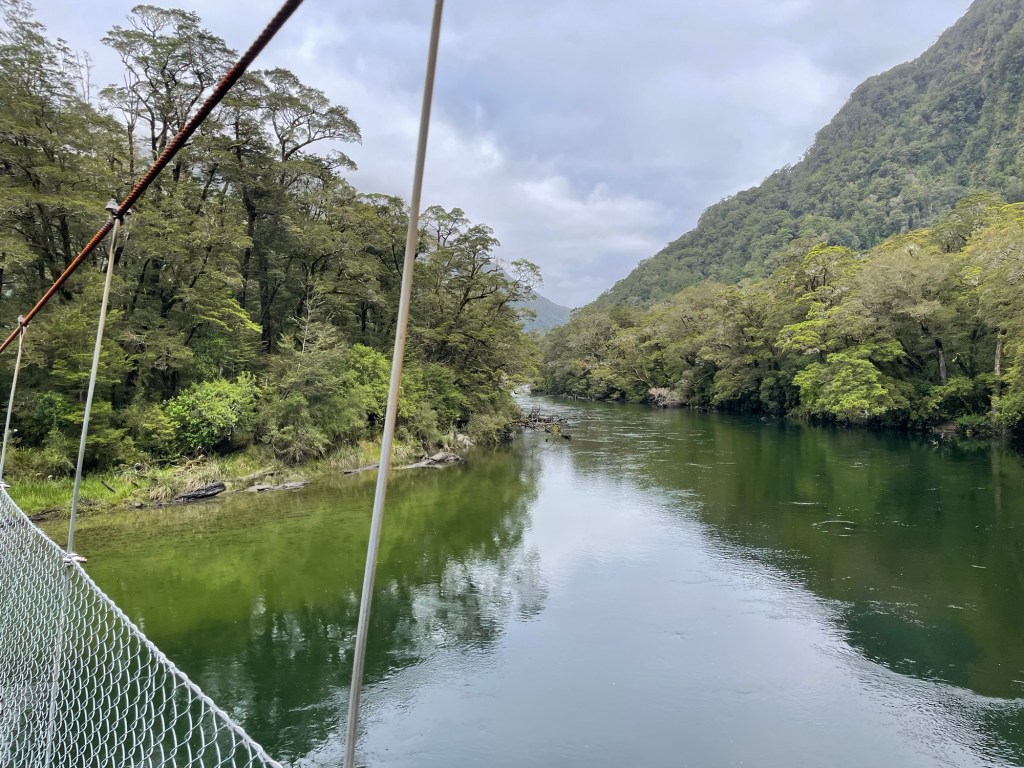
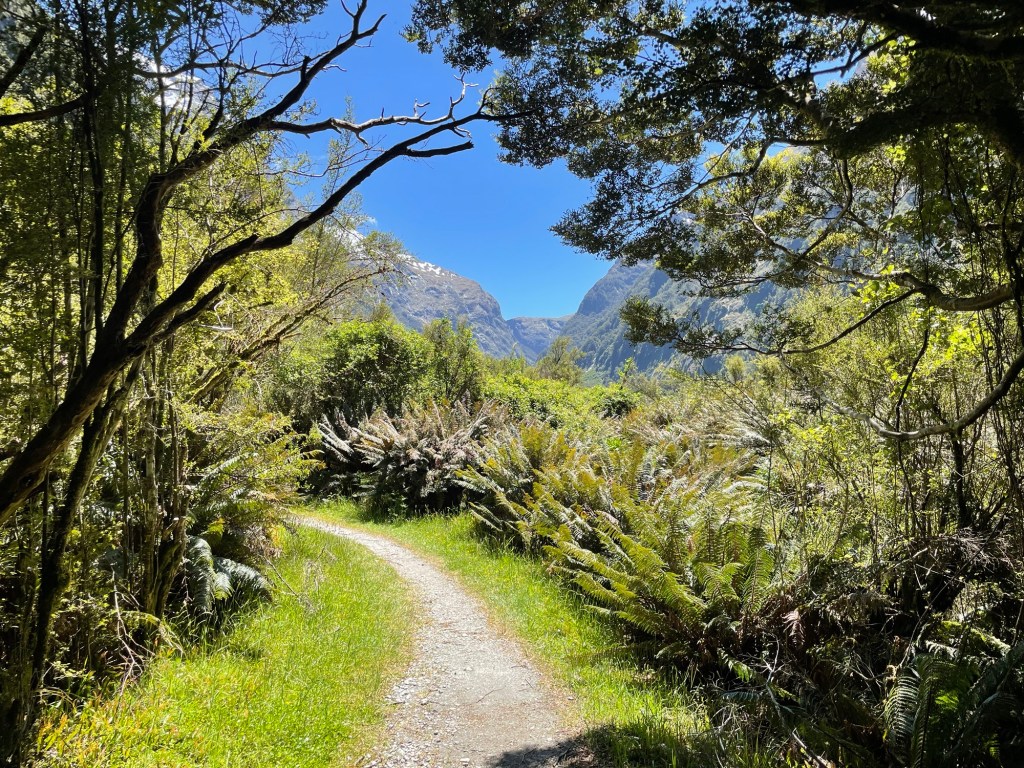
The trail in this 10-mile section is a delight to walk along: level, smooth gravel nearly all the way, following the riverbank. For this, we have partly the glacier to thank, for carving out such a broad flat valley 18,000 years ago. Some credit also goes to Quintin Mackinnon, who laid out this section in 1888 for the reward of 40 pounds, plus expenses. Truly the highest view-to-effort ratio of any hike we’ve ever taken!
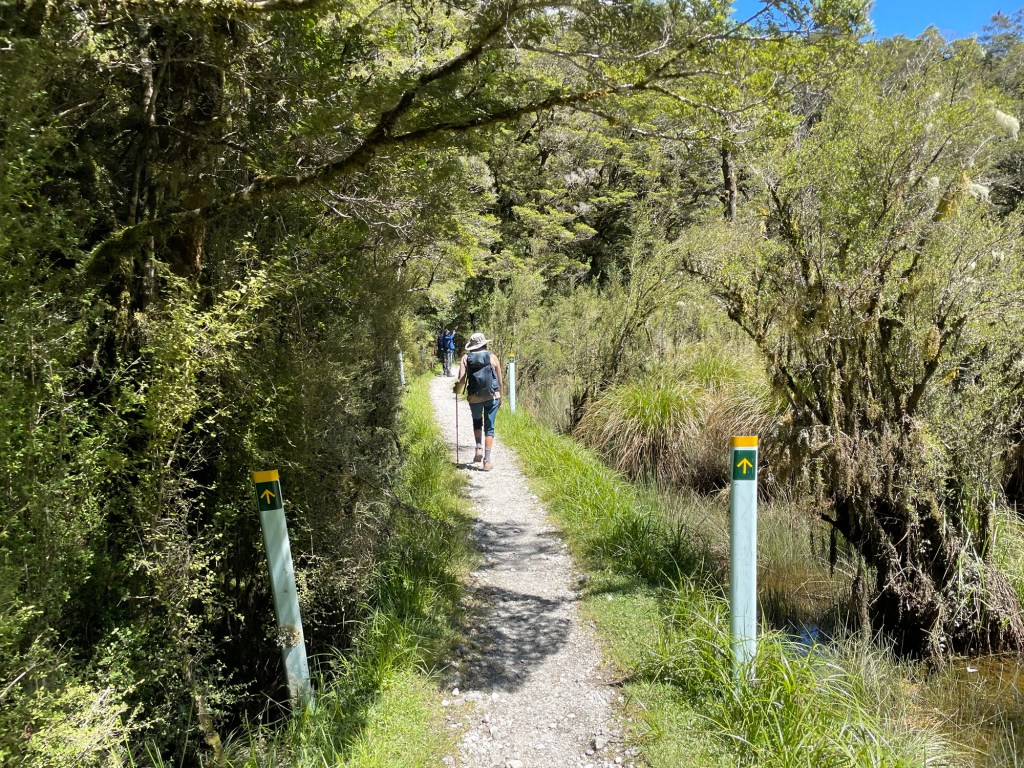
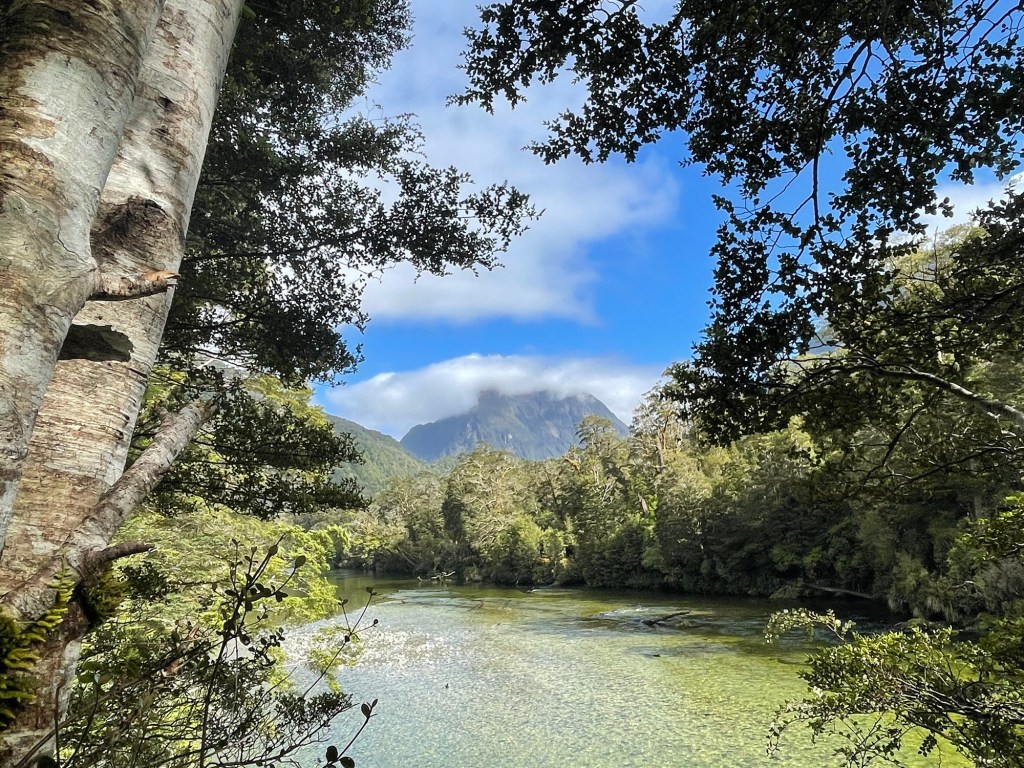
Several hikers in our group the night before had mentioned forest bathing, the Japanese concept of seeking rejuvenation in nature. We certainly felt the truth of that today. The bush here is gorgeous, dripping in green with moss covering seemingly every service. No real surprise there: the region gets over 7.2 meters of rainfall annually and more than 200 rainy days in calendar year. Statistics like these made us appreciate the increasingly sunny weather we were experiencing.
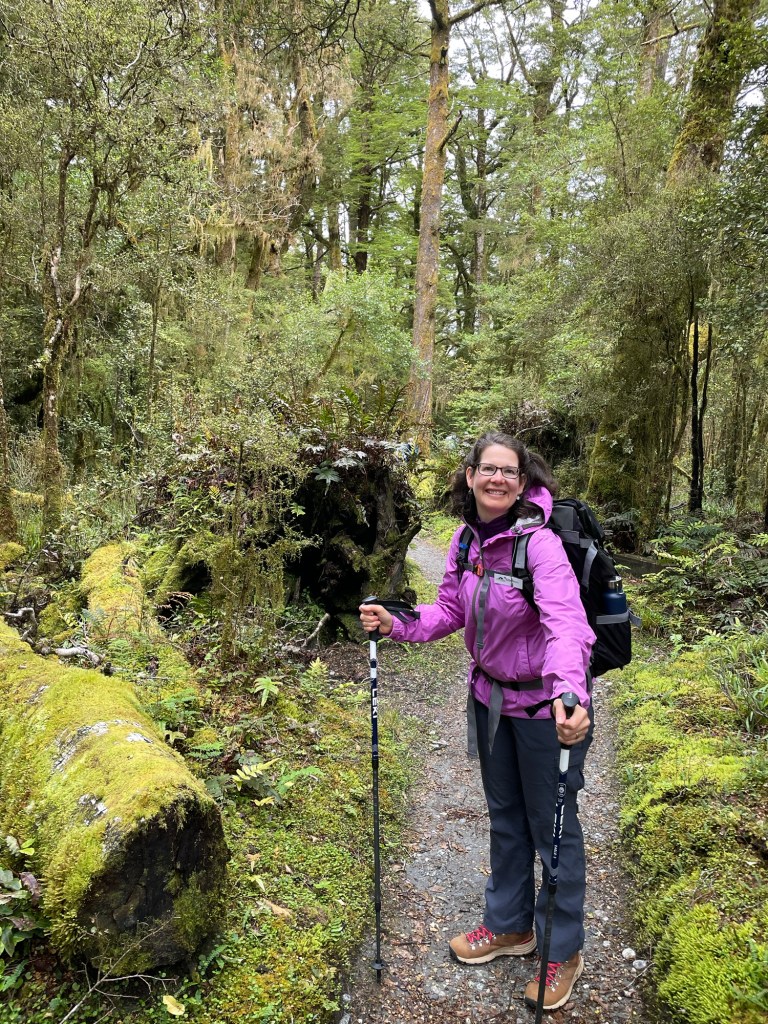
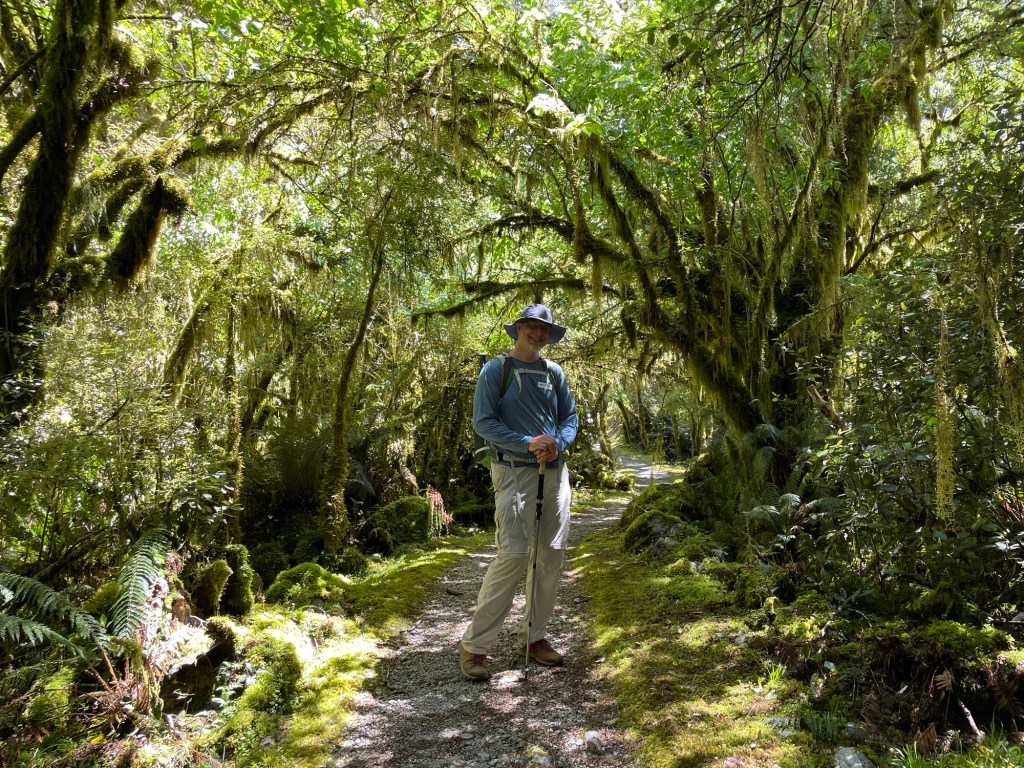
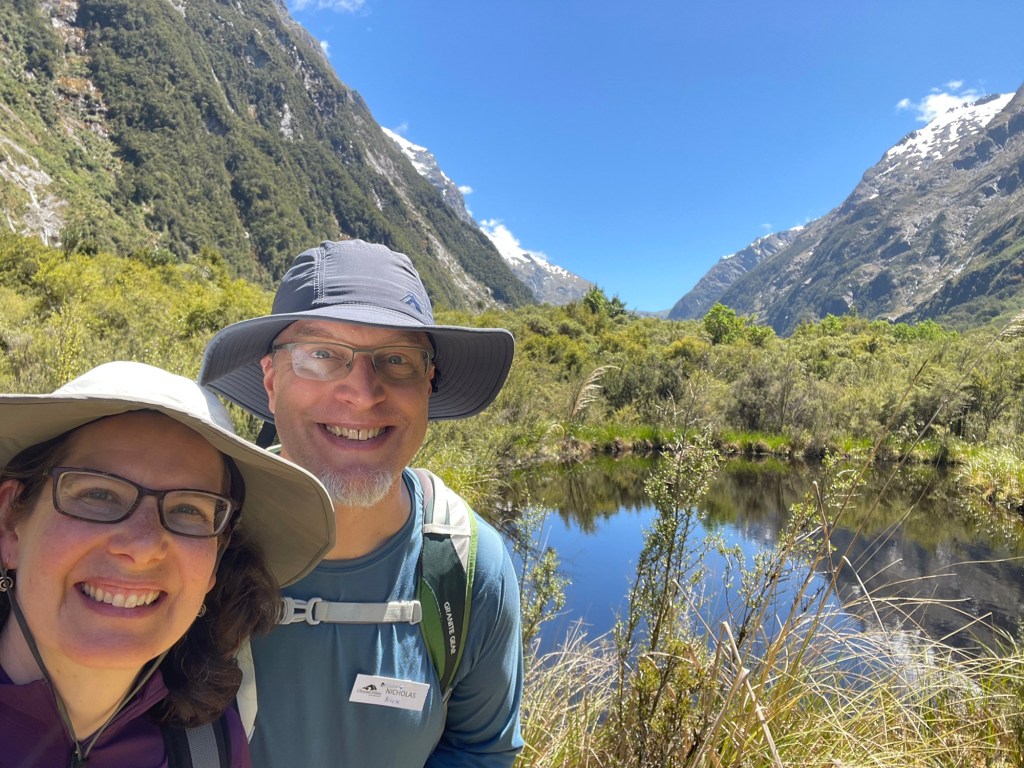
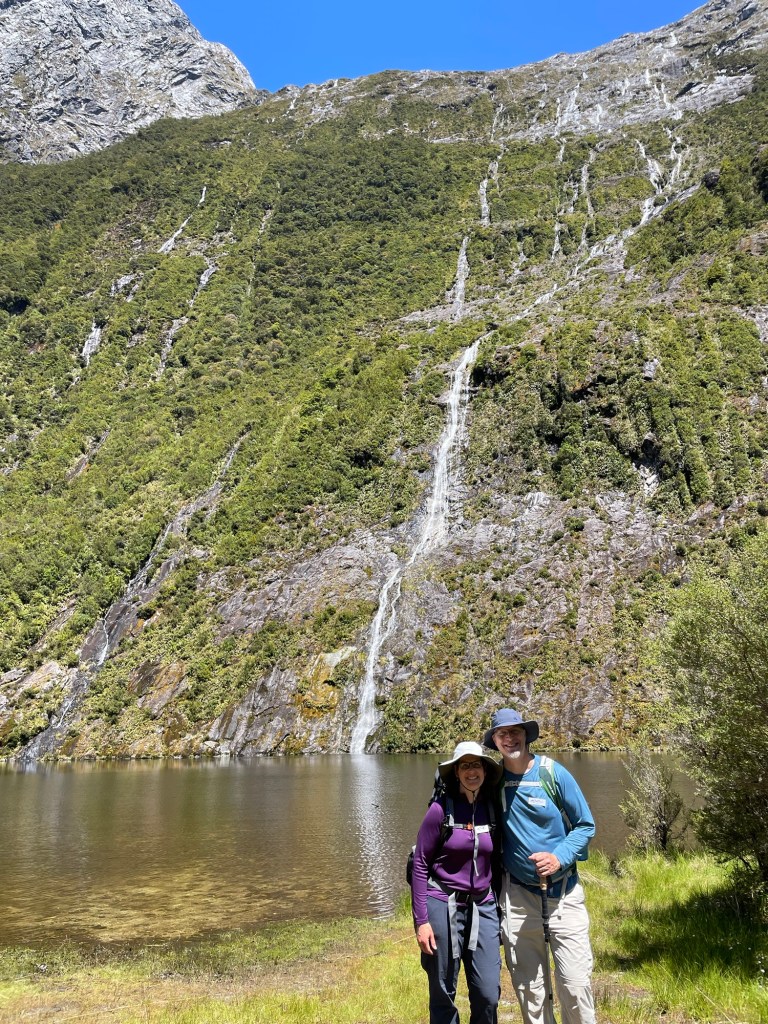
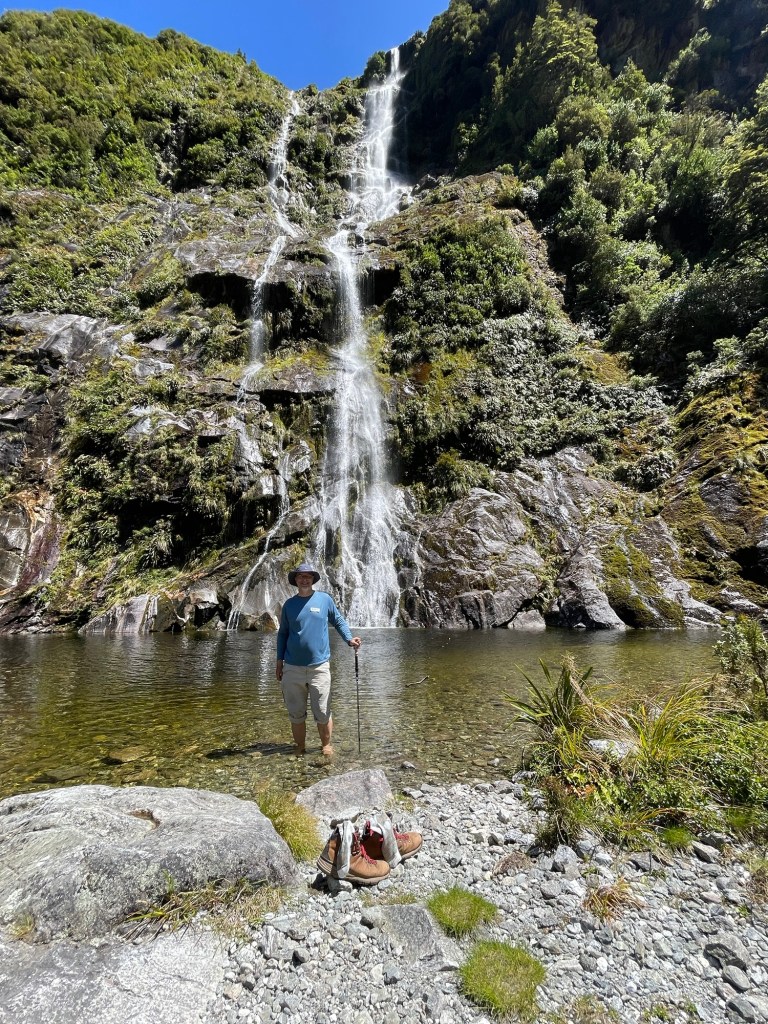
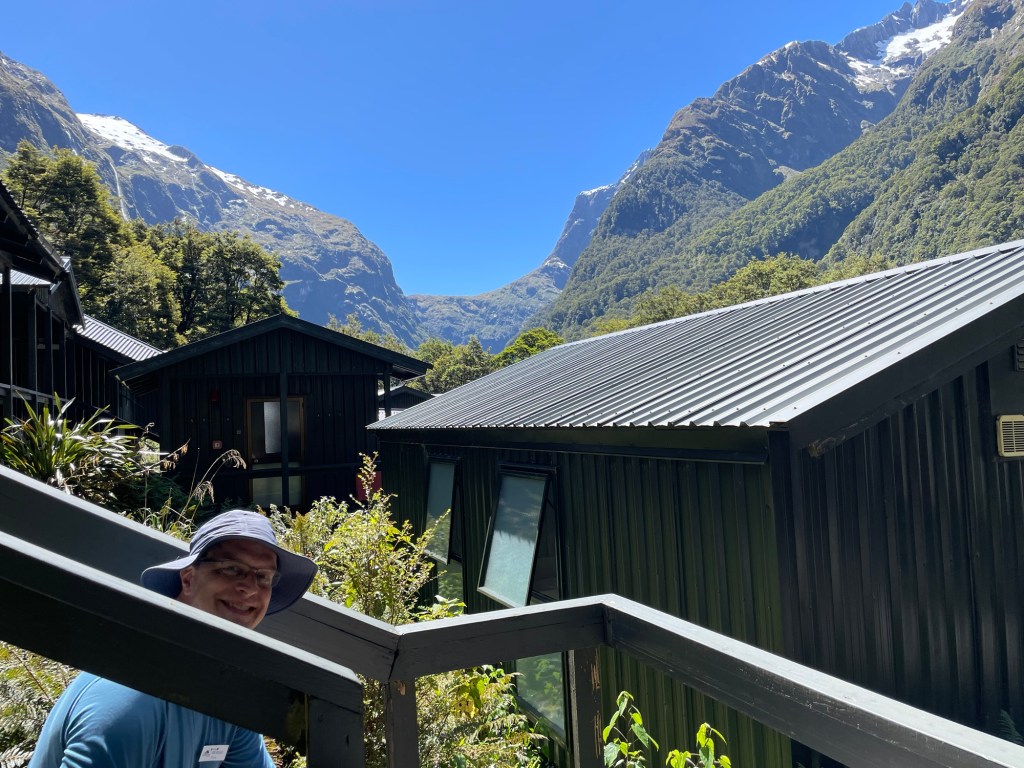
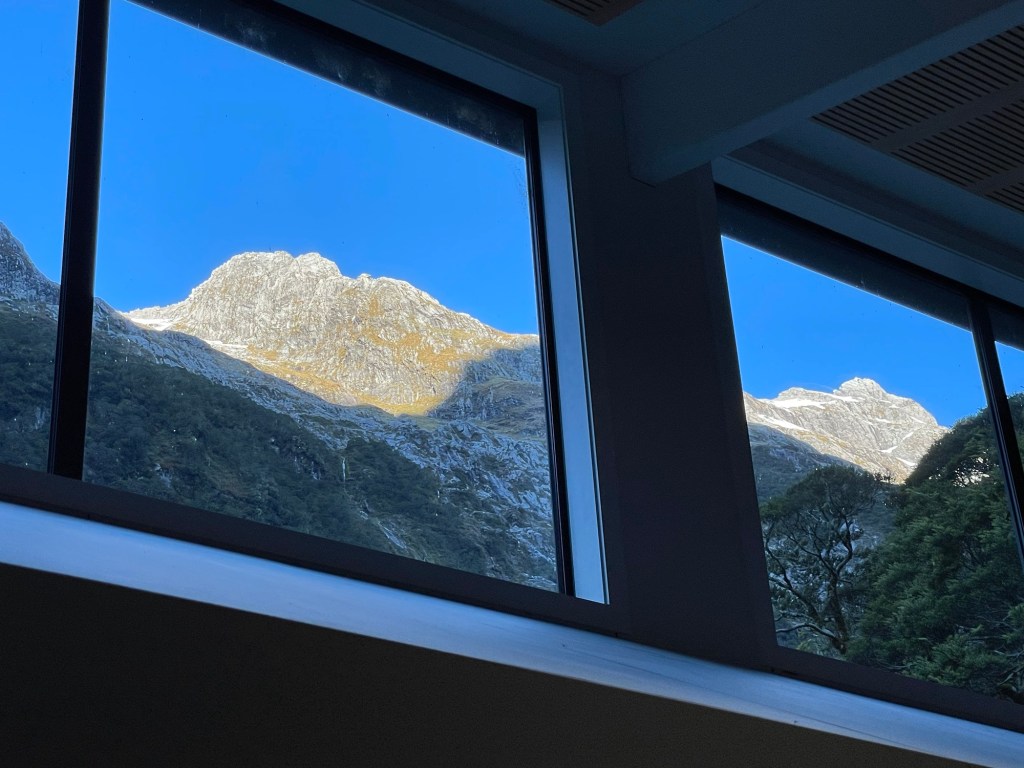
All throughout the day, we knew we were surrounded by mountains. Our path led us up the fjord to a branching point presided over by Mount Sentinel. Following the left branch brought us within reach of Mackinnon pass, which we will cross tomorrow. Before lunch, we were mostly in forest and the trees allowed us only occasional glimpses of the cliffs looming on either side. In the afternoon, however, we reached more open country and could really take in the grandeur of these mountains. We hope you can see a bit of their beauty in the photos.
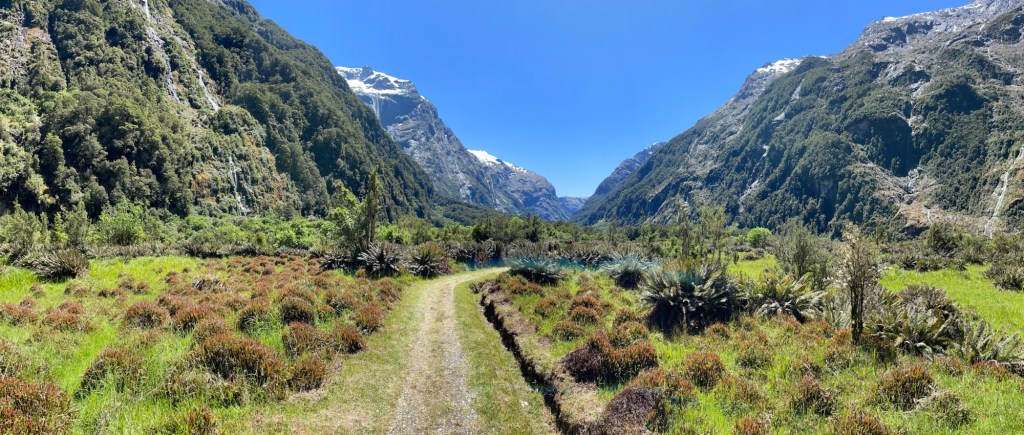
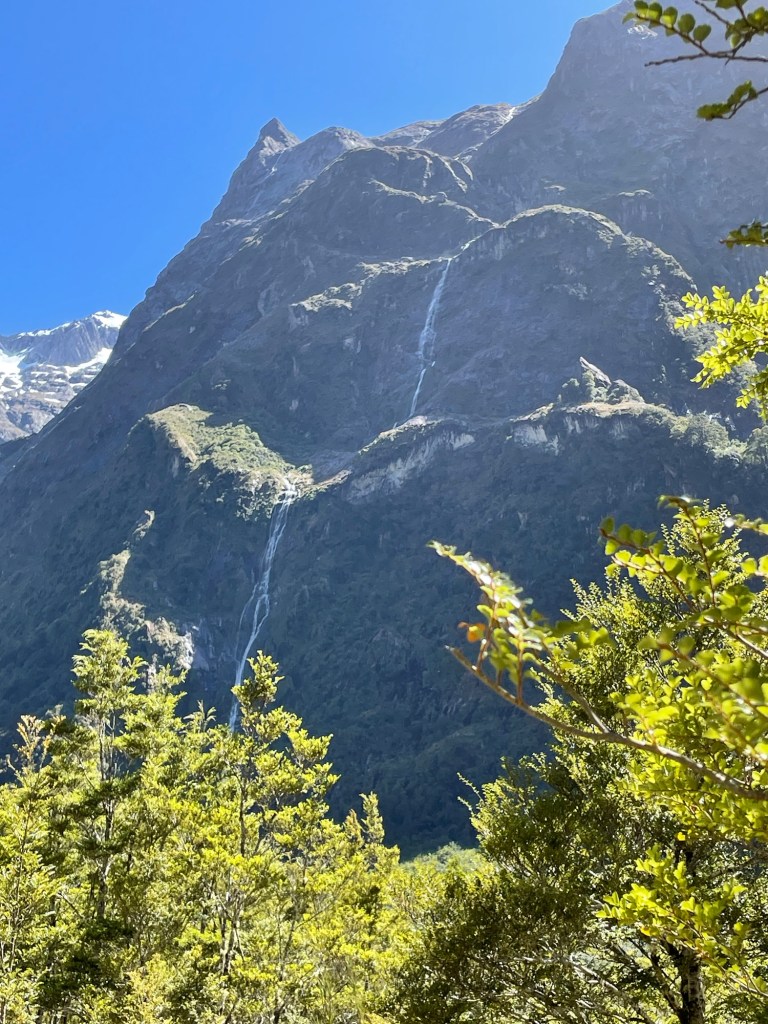
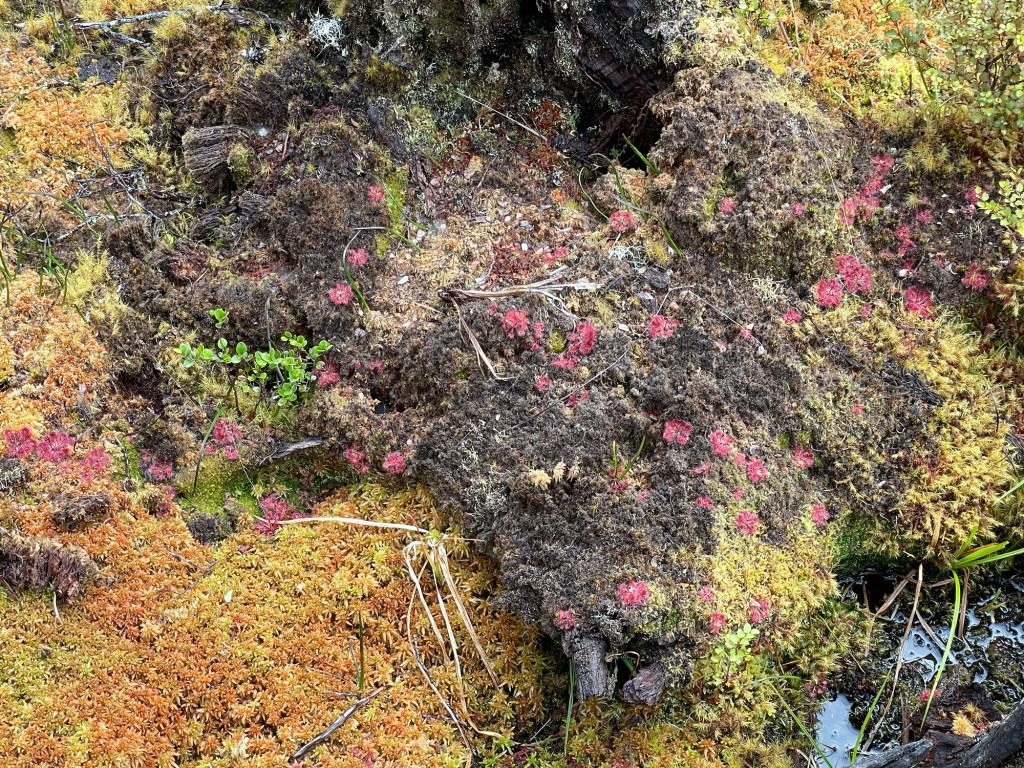
In previewing the day’s walk the evening before, our guides had described several opportunities for additional walking characterized as “side quests”, that visited sites and features near the path but not directly on it. The first of these was a wetland, specifically a bog or a mire, meaning that the moisture comes from rain water rather than a stream. The star attraction here was the sundew, a carnivorous plant that captures and eats the local sandflies (more on these later). The next two quests led to small lakes created by avalanche activity and fed by melt water coming down the cliff faces from snowfields on high. These rivulets leap down the rock face in a series of small jumps, so while they look from a distance like a single long waterfall, in reality they might better be characterized as vertical streams. In winter, snowslides follow the same routes down the face. The lakes at the bottom are called “avalanche impact tarns” because they sit in a depression that has been hammered out by repeated pounding of ice and snow from above.
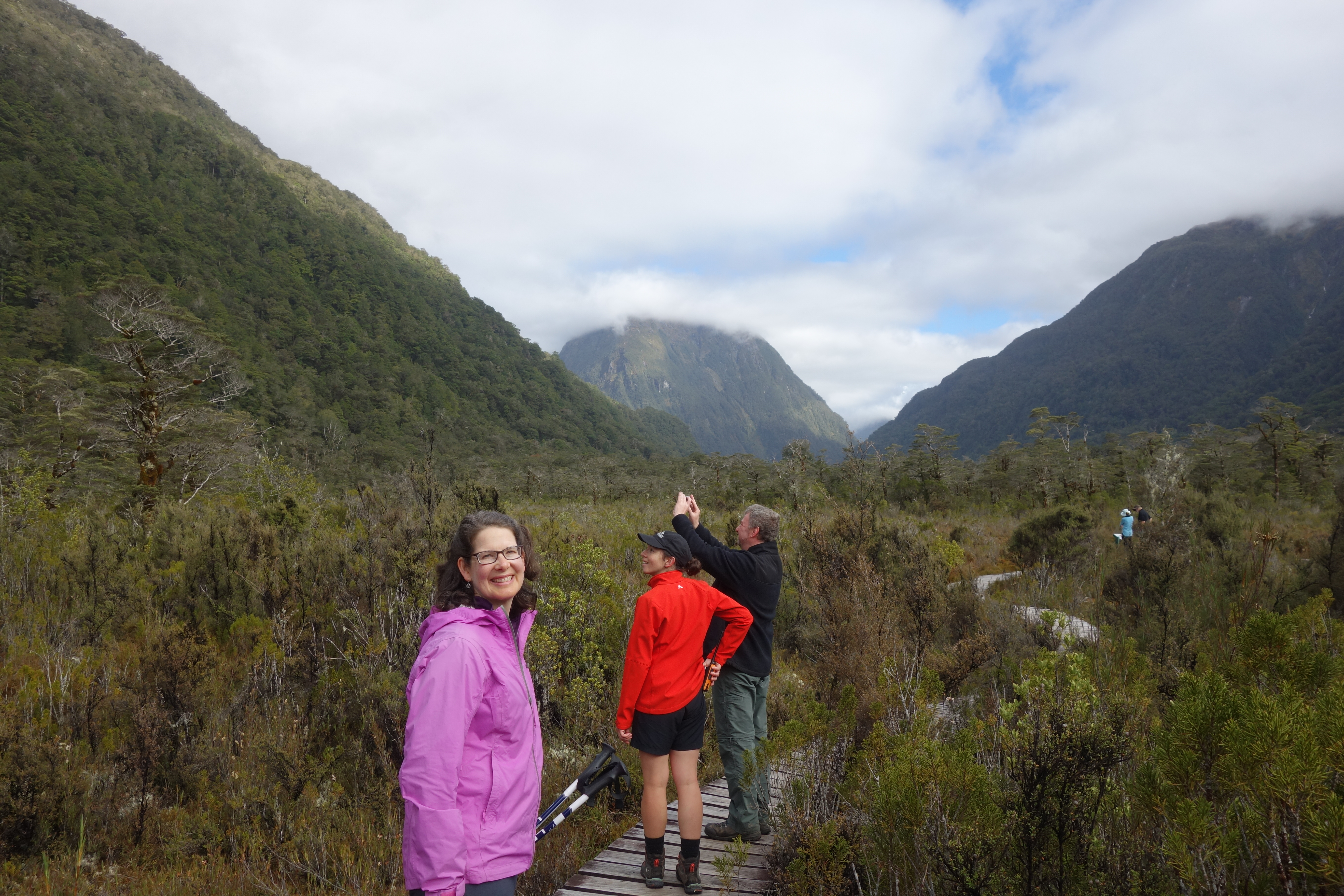
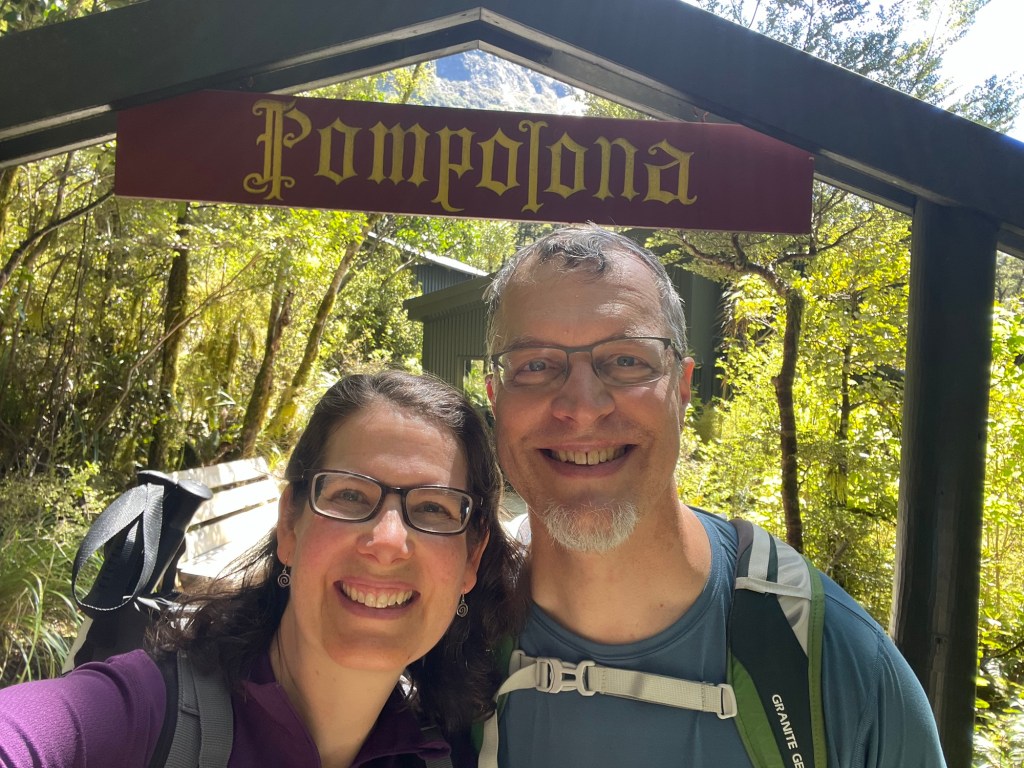
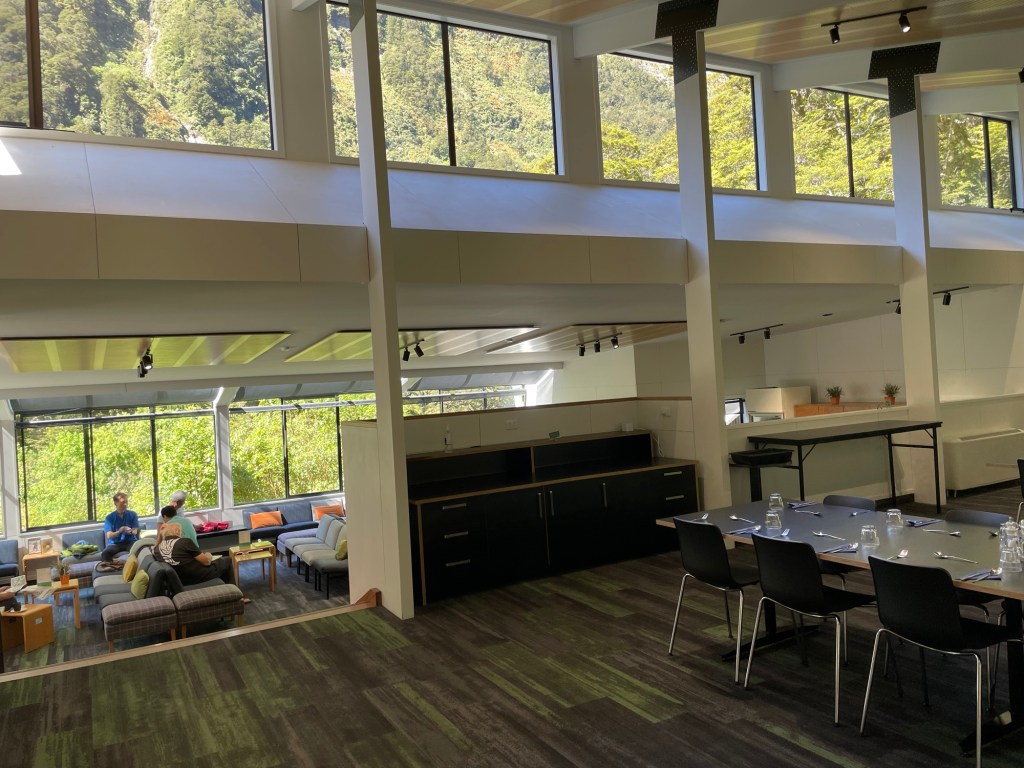
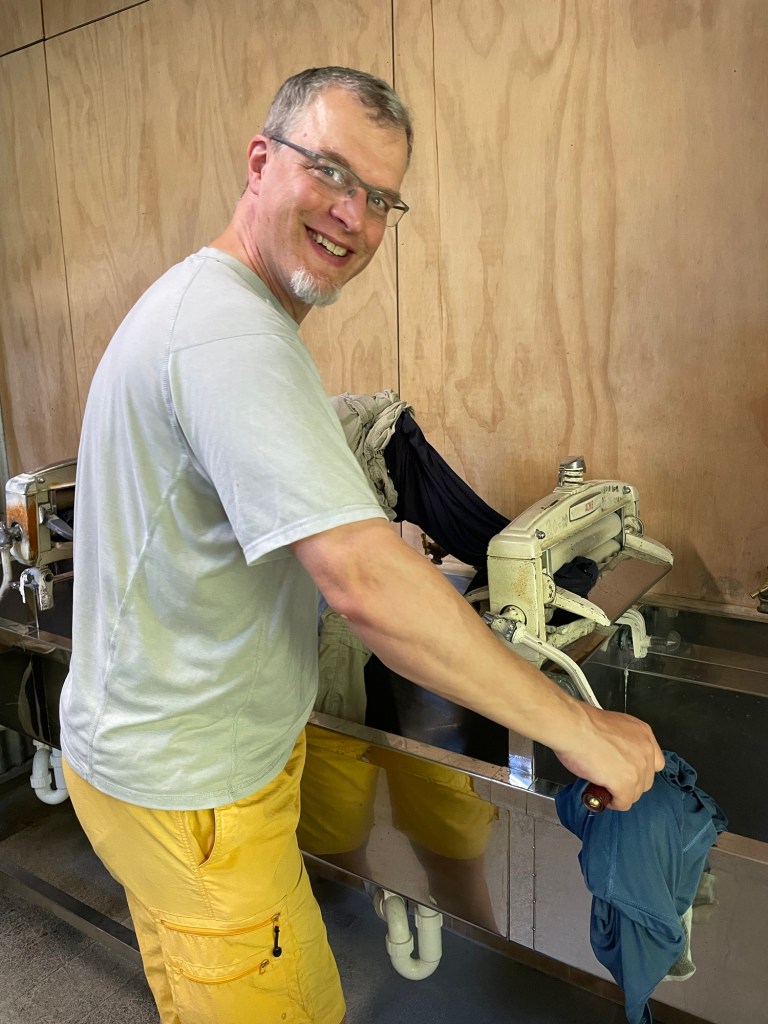
Our room for the night is at Pompolona Lodge, named for “a sort of fried scone” once made by the first trail guide. Fittingly, fresh baked scones and tea were waiting for us when we arrived. The lodge is spacious and airy, with clerestory windows allowing views of the mountains high above. It has a number of welcome amenities, including some that seem to be standard in all of overnight lodges: a guest laundry and drying room. If you’ve never heard of the latter, a drying room is a clothes dryer as a walk-in freezer is to an ice chest. To help the drying process along, this particular laundry included hand-cranked mangles to wring out your newly-washed clothes, which we both put to good use.
Bird of the day: The Kea, or alpine parrot, is a clever bird, sometimes too clever – they’re often said to be equivalent in intelligence to a 3-year-old human. Keas are attracted by novelty and are a local hazard in the lodge where we stayed: any equipment or clothing outside might be torn to pieces by their curious beaks. The lodge staff have left a decoy set of hiking boots nailed to the porch railing and a gang of adolescent keas flew in and worked industriously at pulling one boot to shreds.
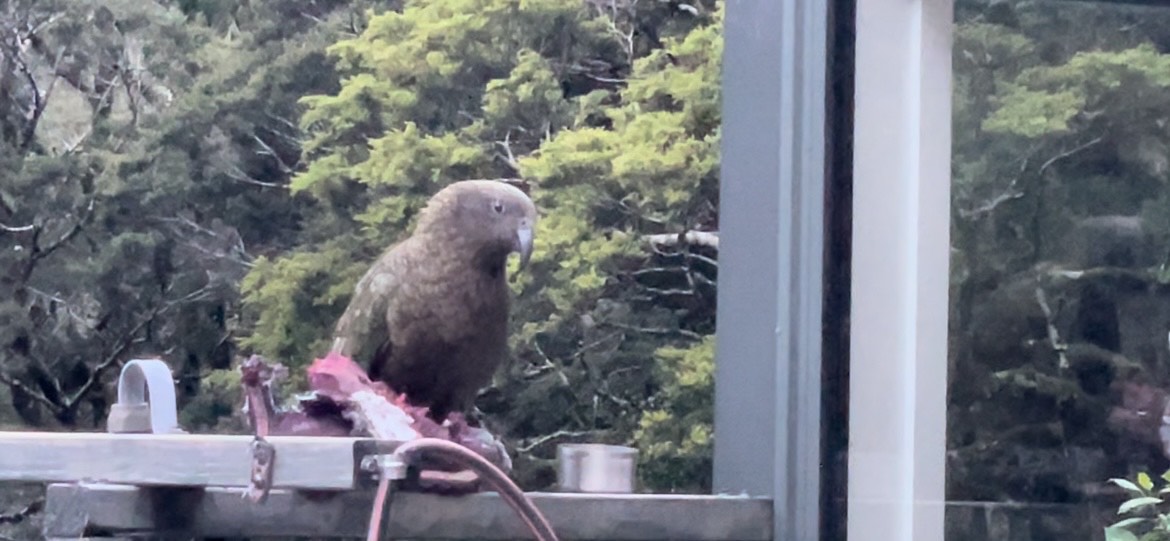
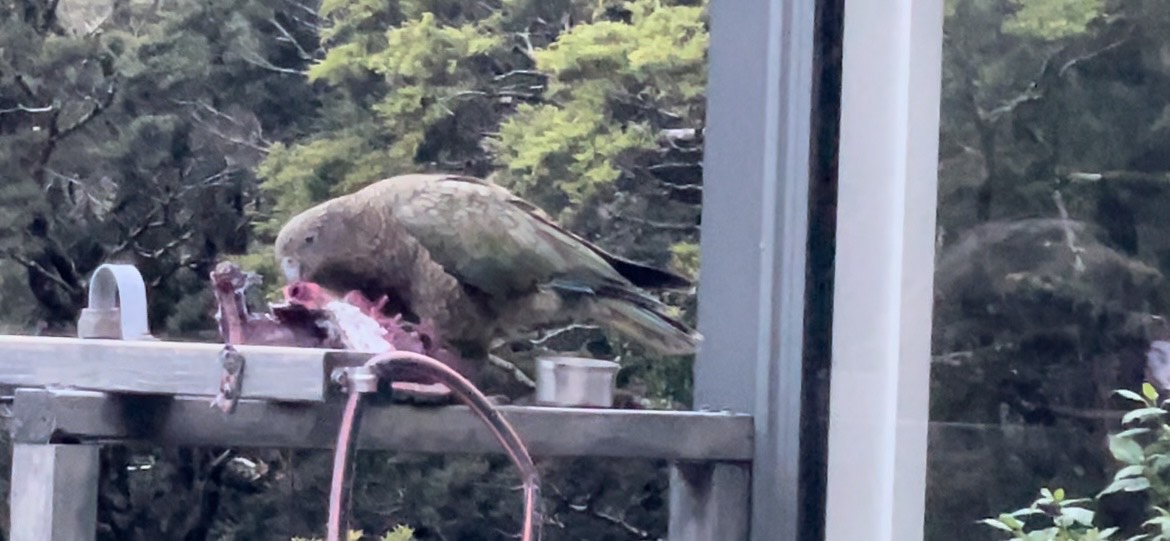
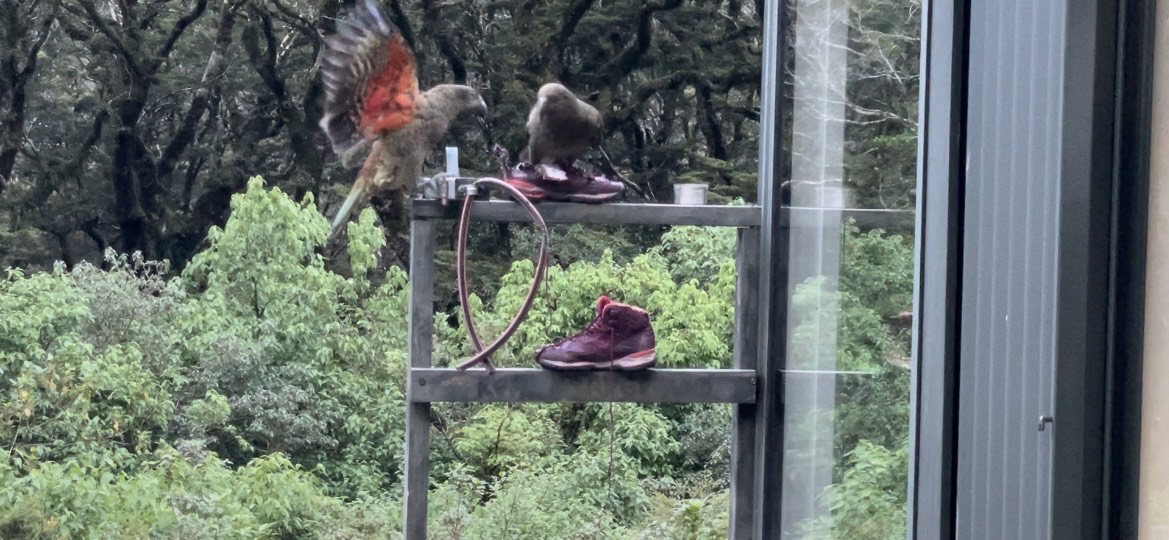
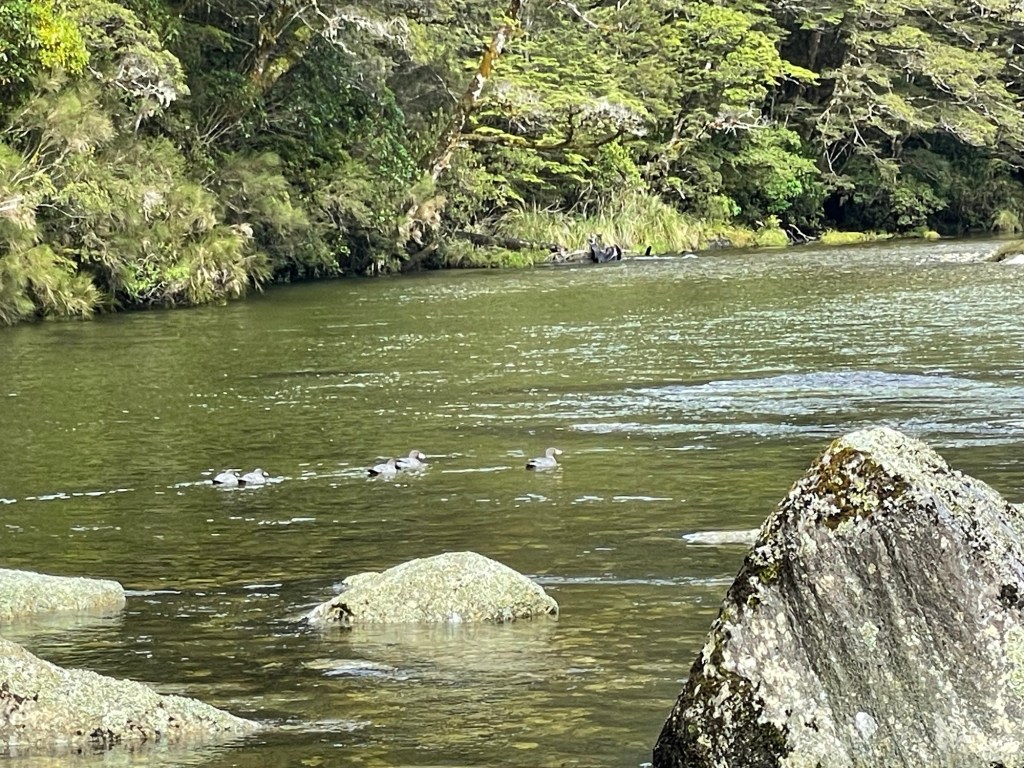
Bonus bird of the day: The Whio (pronounced fee-oh) is a “whitewater duck”. Found only on river rapids, they paddle constantly to keep position in the flowing water. We saw a group of five or so birds fishing for lunch in one of the rapids along the trail; we’re pretty sure they were Whio.
 Howes' Doings