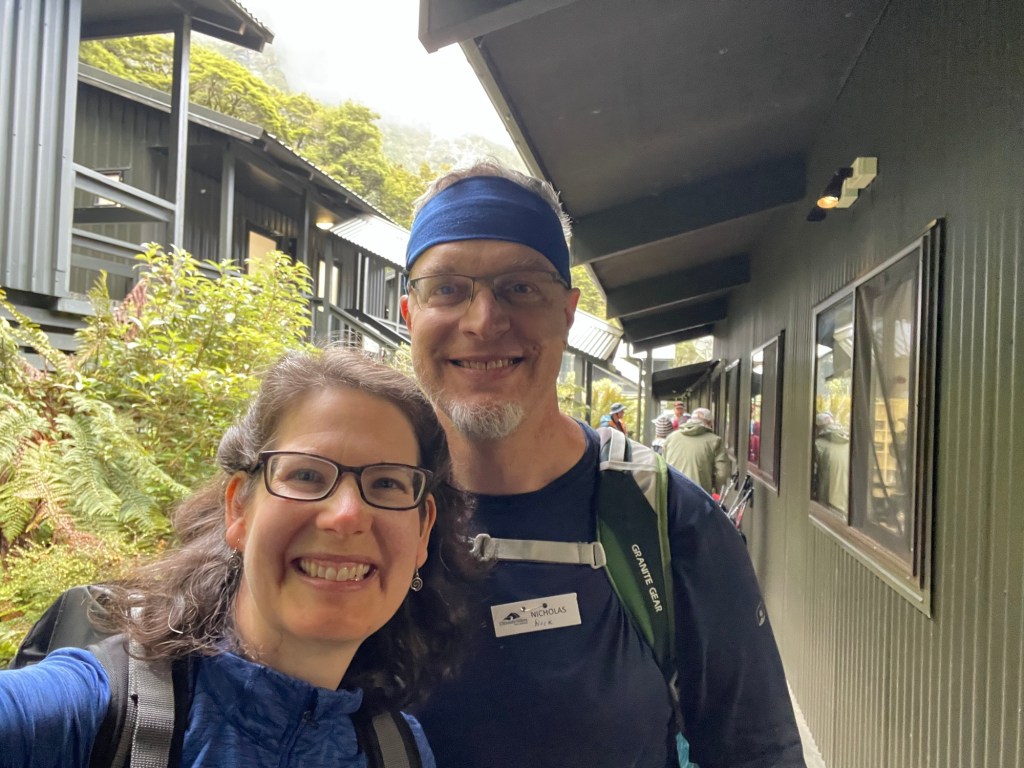
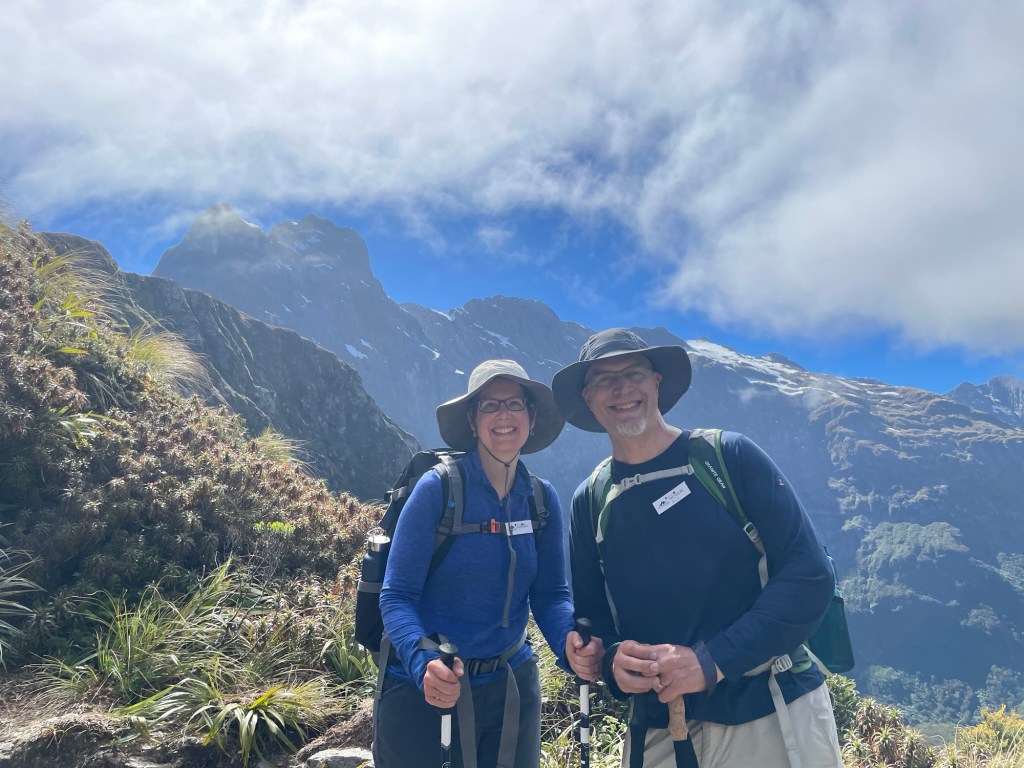
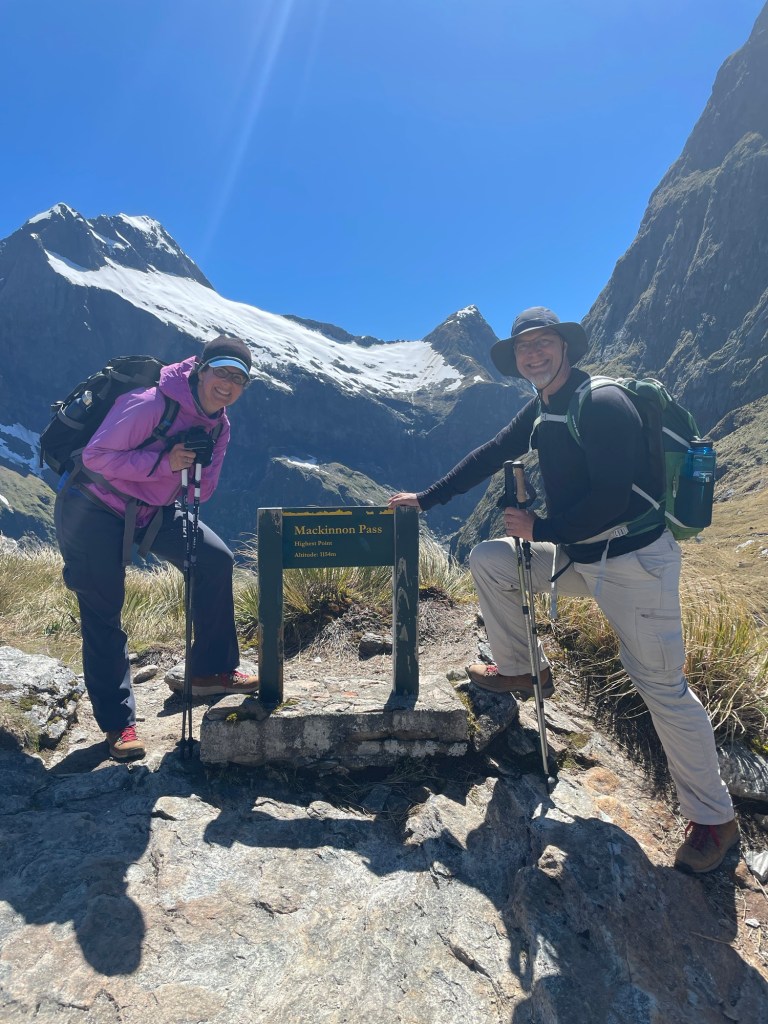
An unusual feature of the Milford Track is that nearly all the elevation change is concentrated on the third day. Whereas we spent yesterday hiking up the Clinton River along the mostly flat bottom of the valley, and will spend tomorrow hiking down the Arthur River along the mostly flat bottom of the adjacent valley, today we crossed the ridge between them at the Mackinnon Pass. The overall distance is a bit less than the day before (roughly 9 miles), but the total elevation change is about a mile – first 700m up, then 900m down on the other side. In poor weather, we imagine it can be a pretty miserable passage, but fortunately, we were blessed with clear blue skies and open vistas.
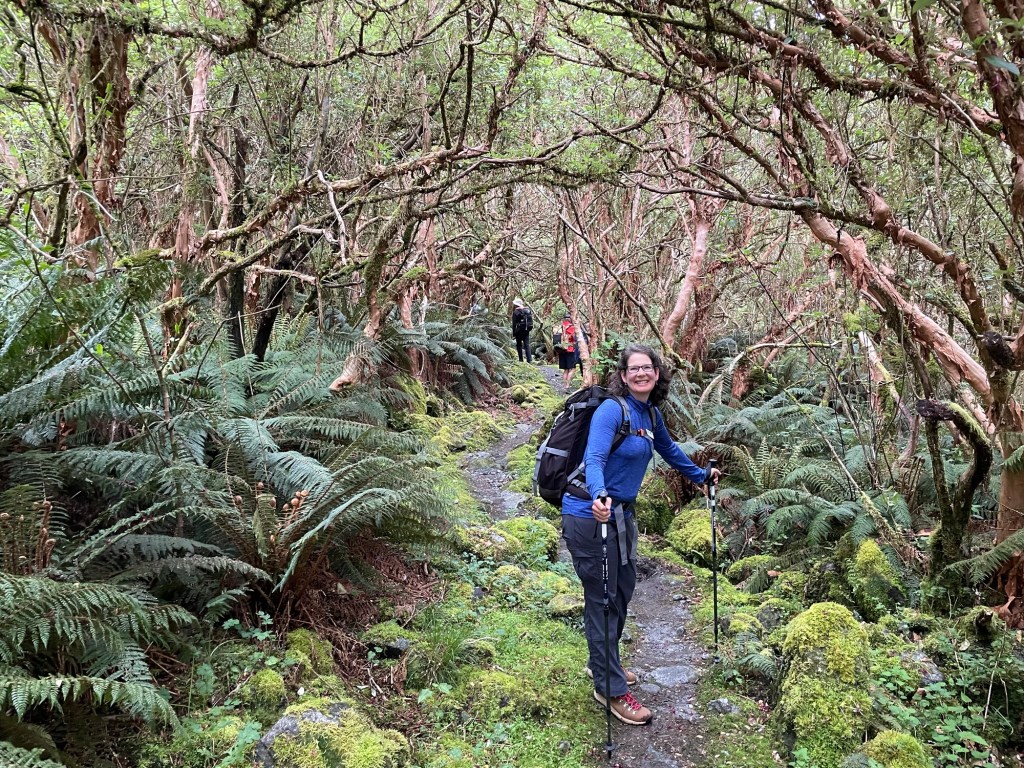
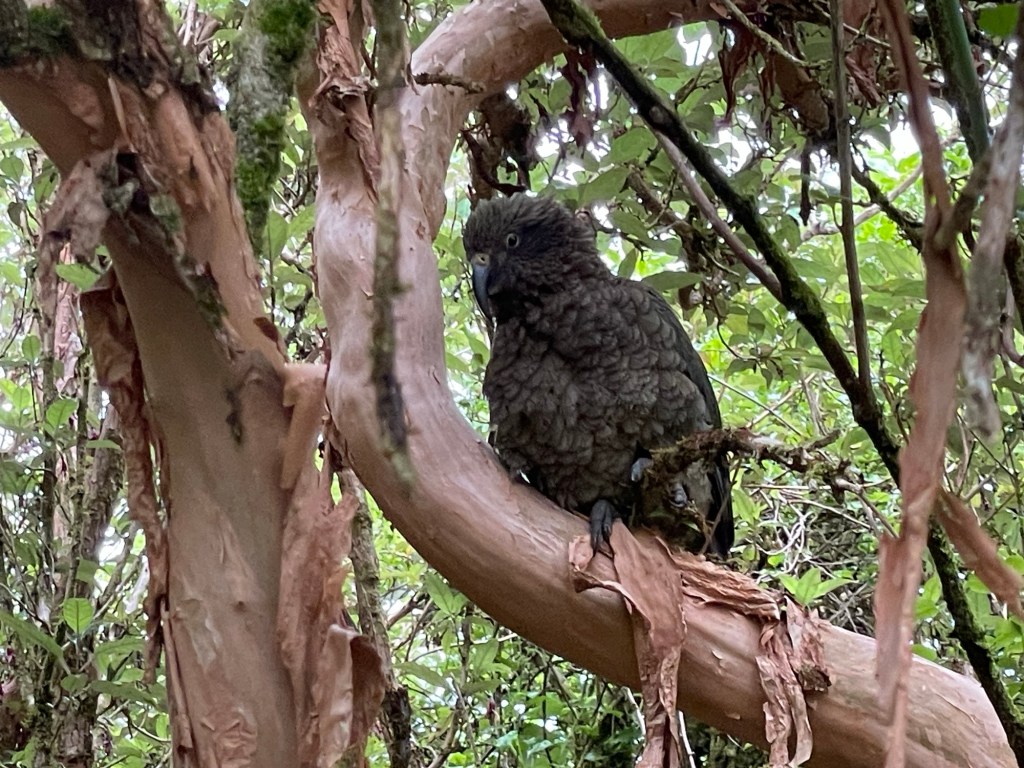
The morning mists had yet to burn off when we departed Pompolona Lodge at 7:30 AM, and for the first few hours, we couldn’t see all the way to the tops of the cliffs above us. The trail rose gradually at first, through scrub forest and fuchsia tunnels — that’s tunnels formed by fuchsia trees, not actually red ones. Most of them had flowered earlier in the spring, and the petals still covered the ground in places. In one such thicket we came across an adult kea who eyed us suspiciously from his (her?) perch.
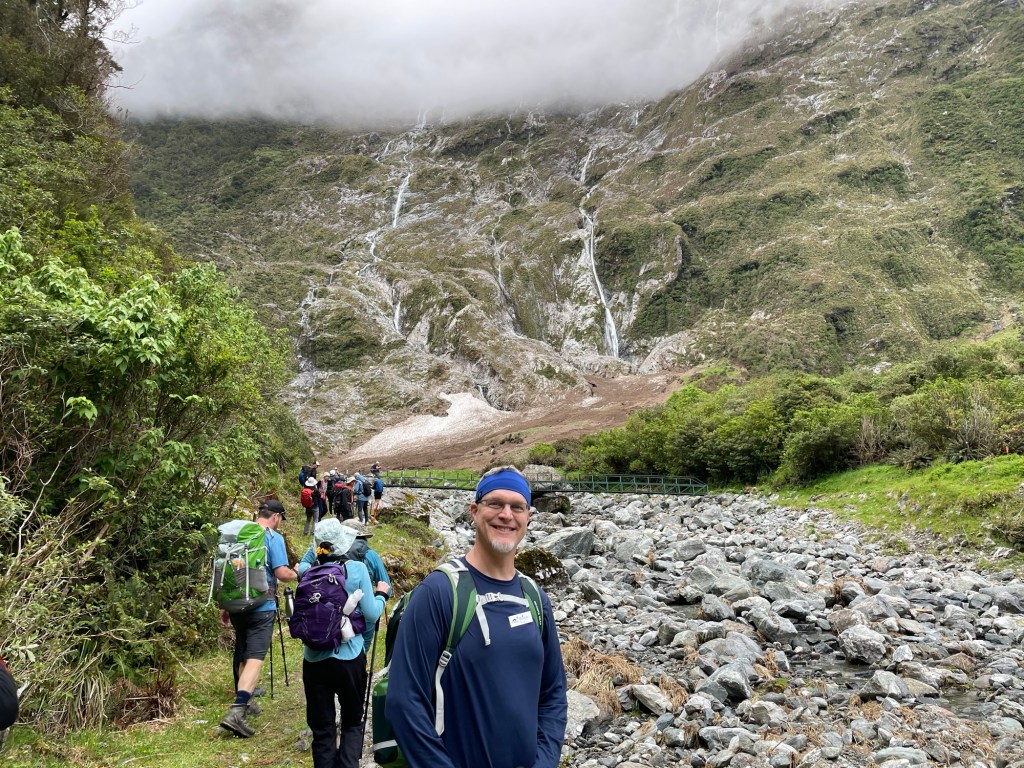
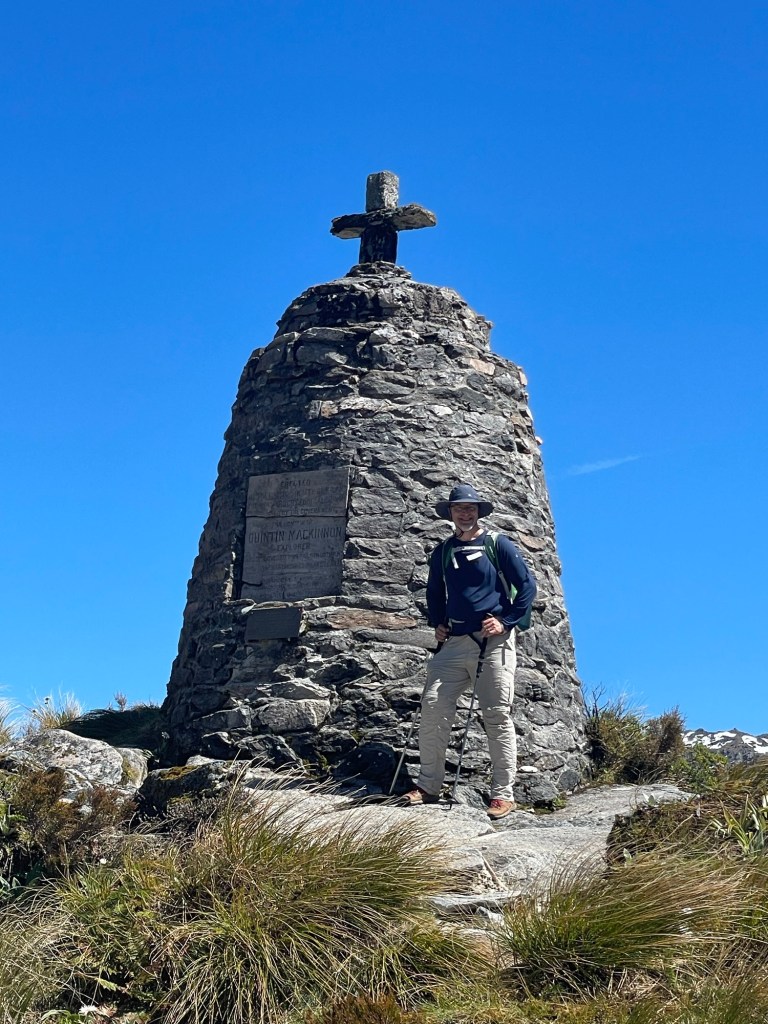
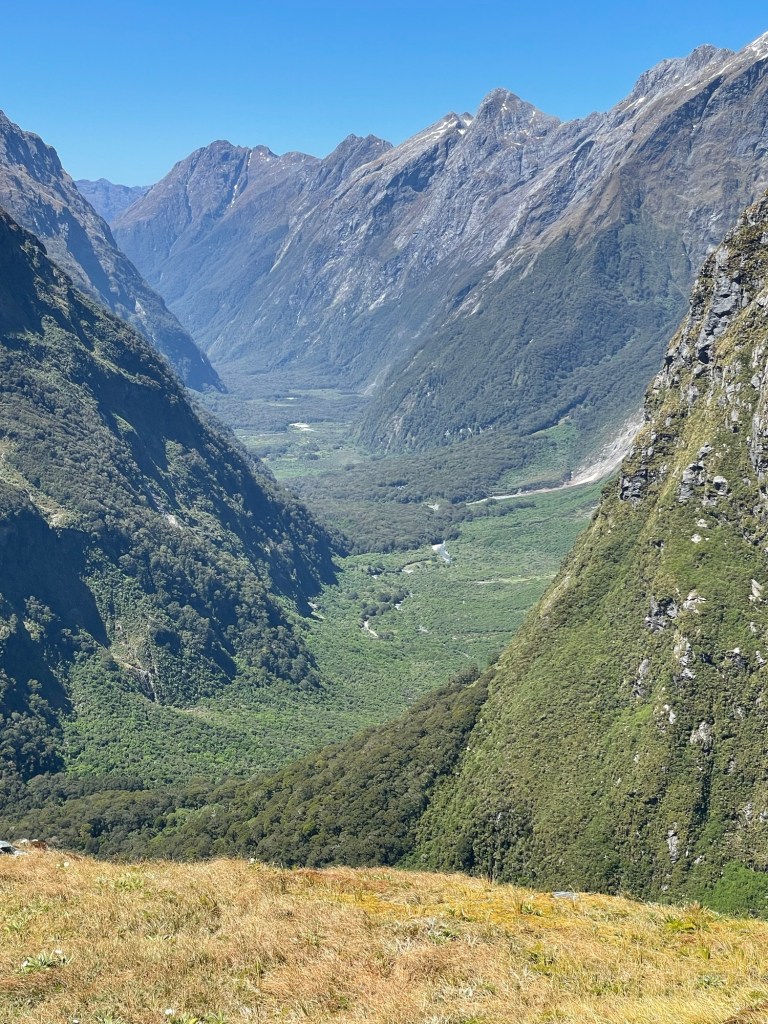
As we gained more height, we could gauge how far we still had to go by the height of the cliff walls on either side. Then the mists finally began to part, and we discovered that the mountains were twice as tall as we had originally been able to see! After a while, we cleared the forest zone, and began to get long views across and down the valley. From there, it wasn’t too far to the saddle point, where stands a stone monument to Quintin Mackinnon. Not far from this point is a cliff one of our guides called “the 12-second drop”. A back of the envelope calculation suggests that the bottom must be more than 700 meters below. (We steered clear of that way down!)
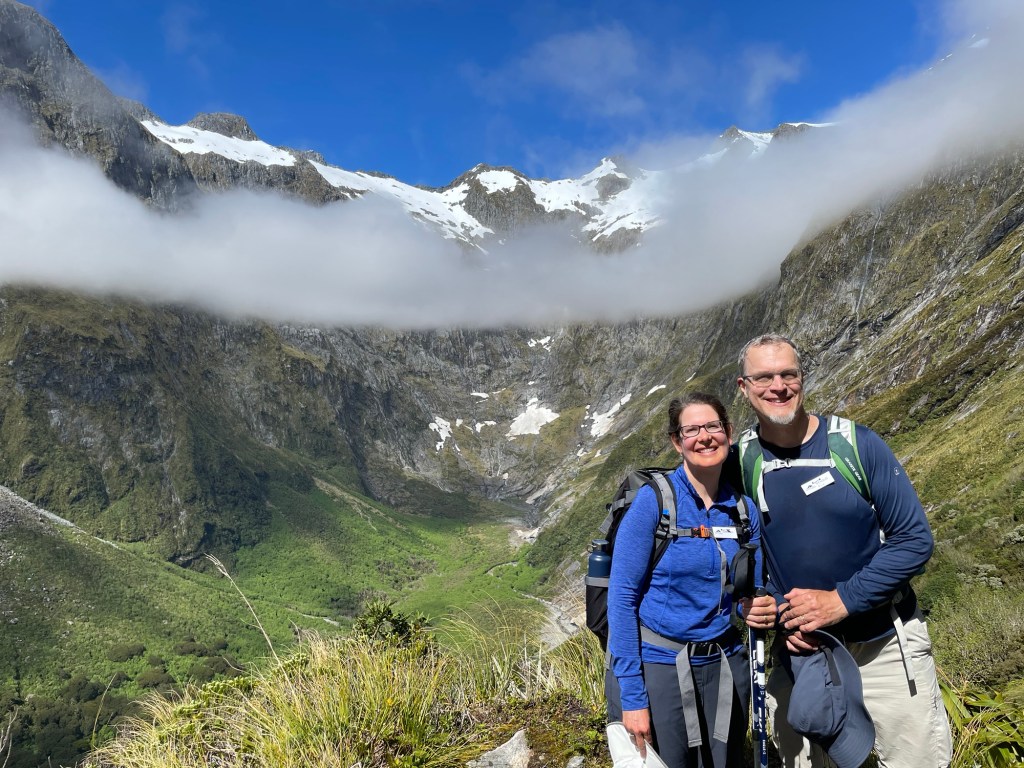
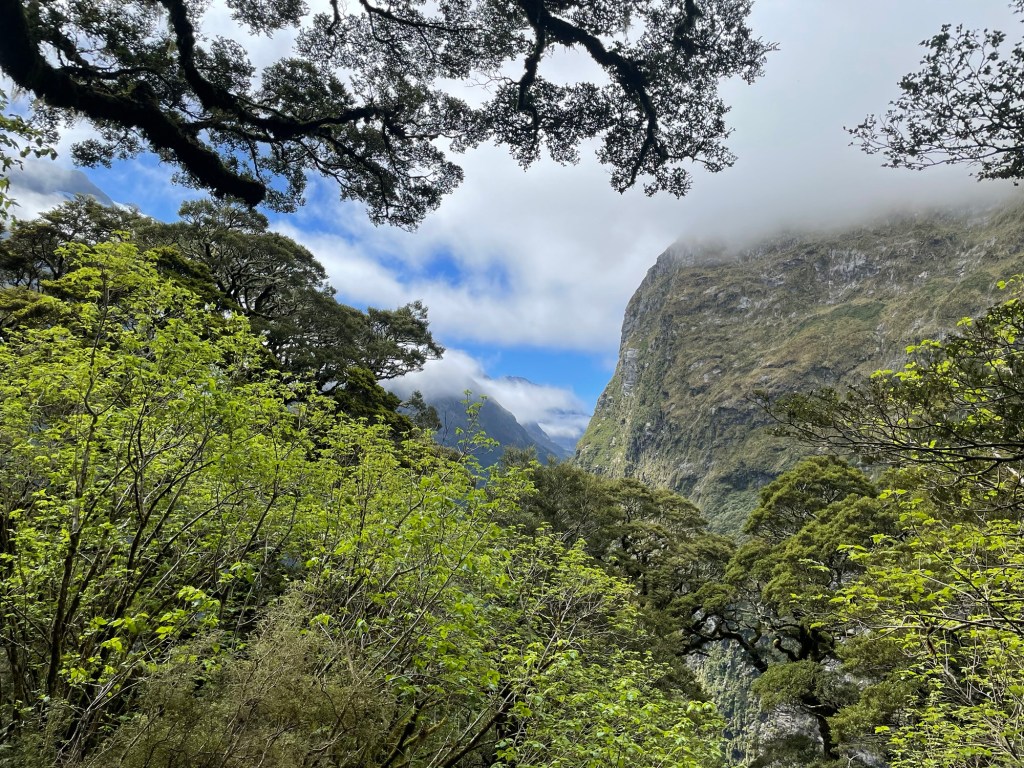
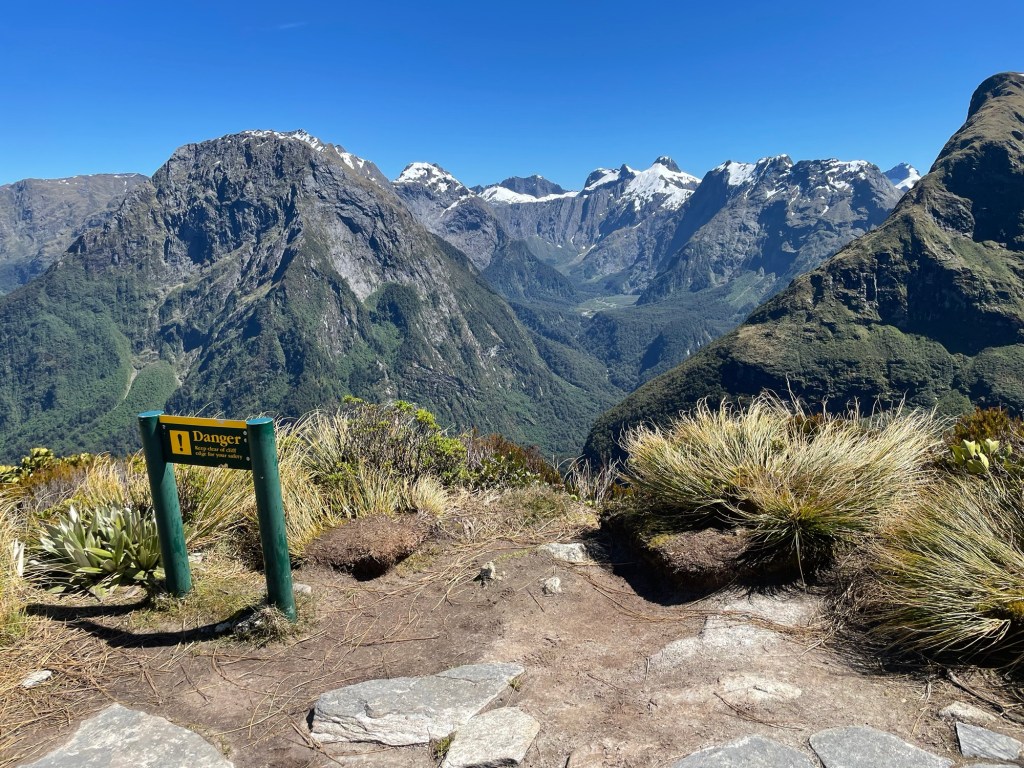
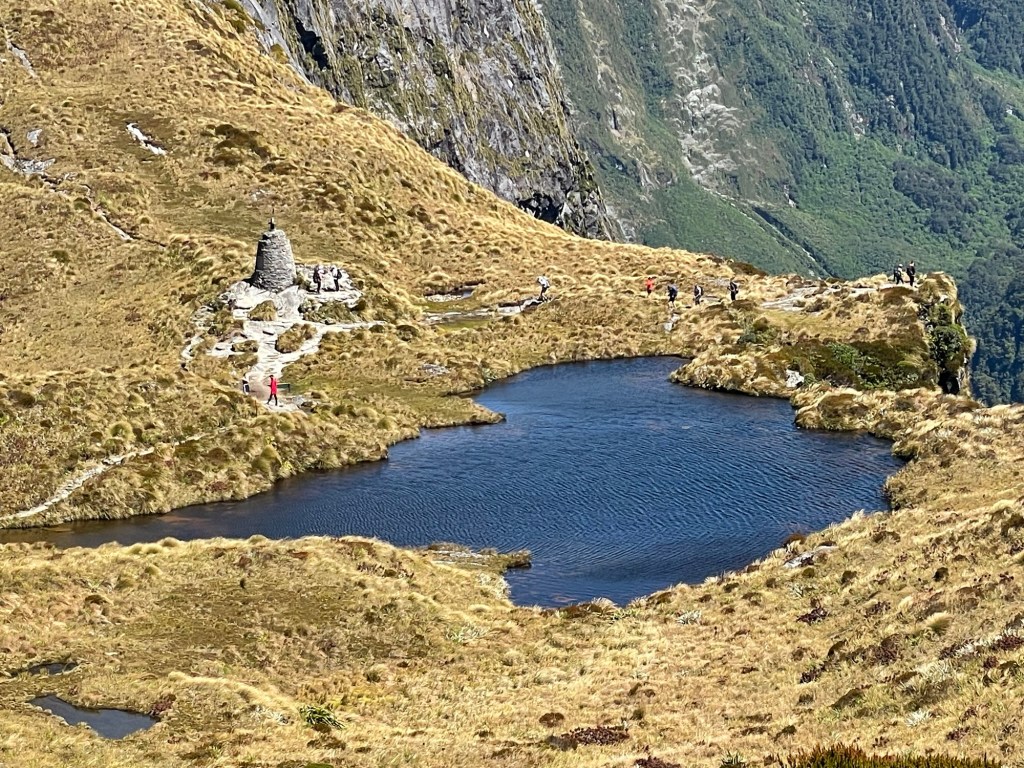
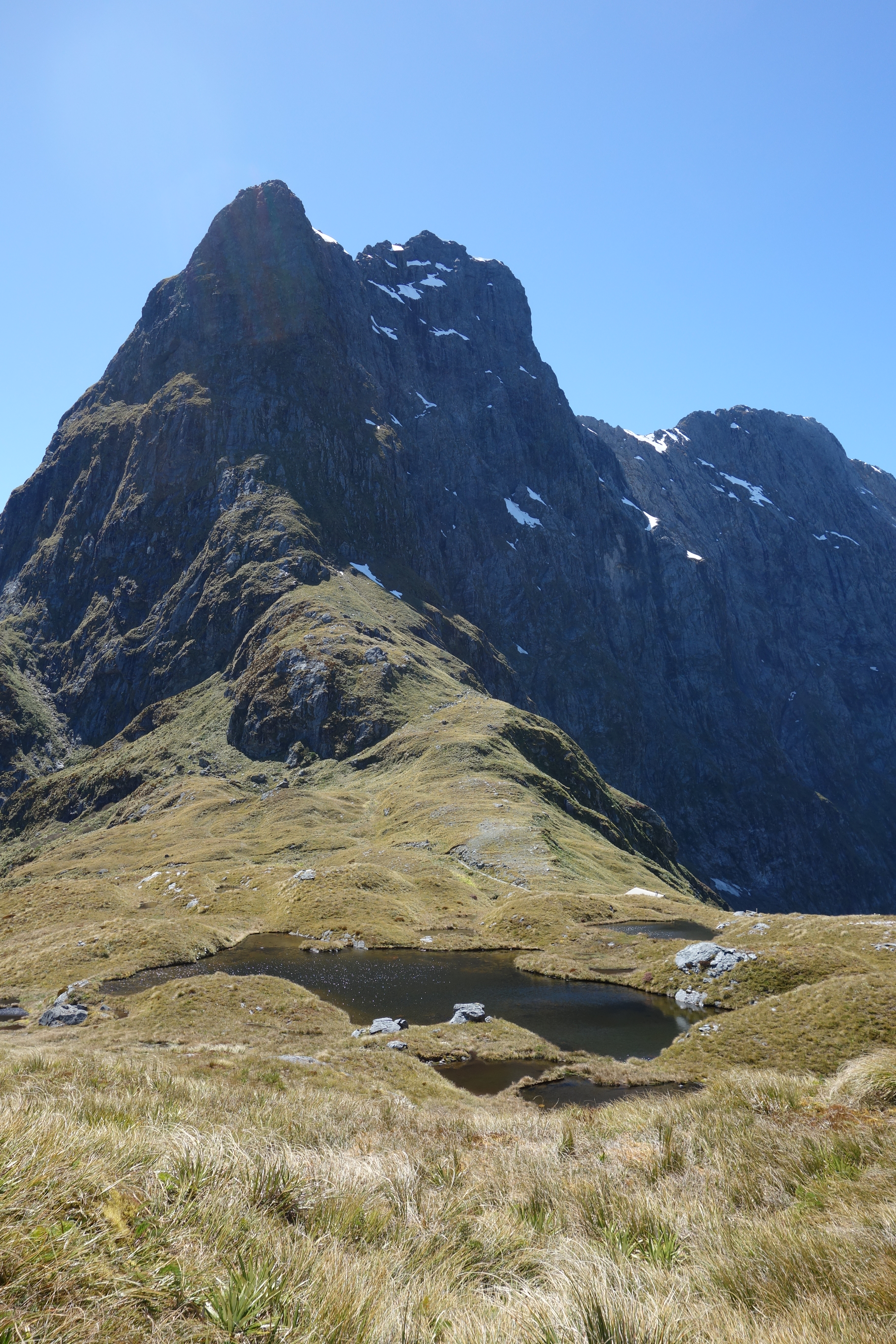
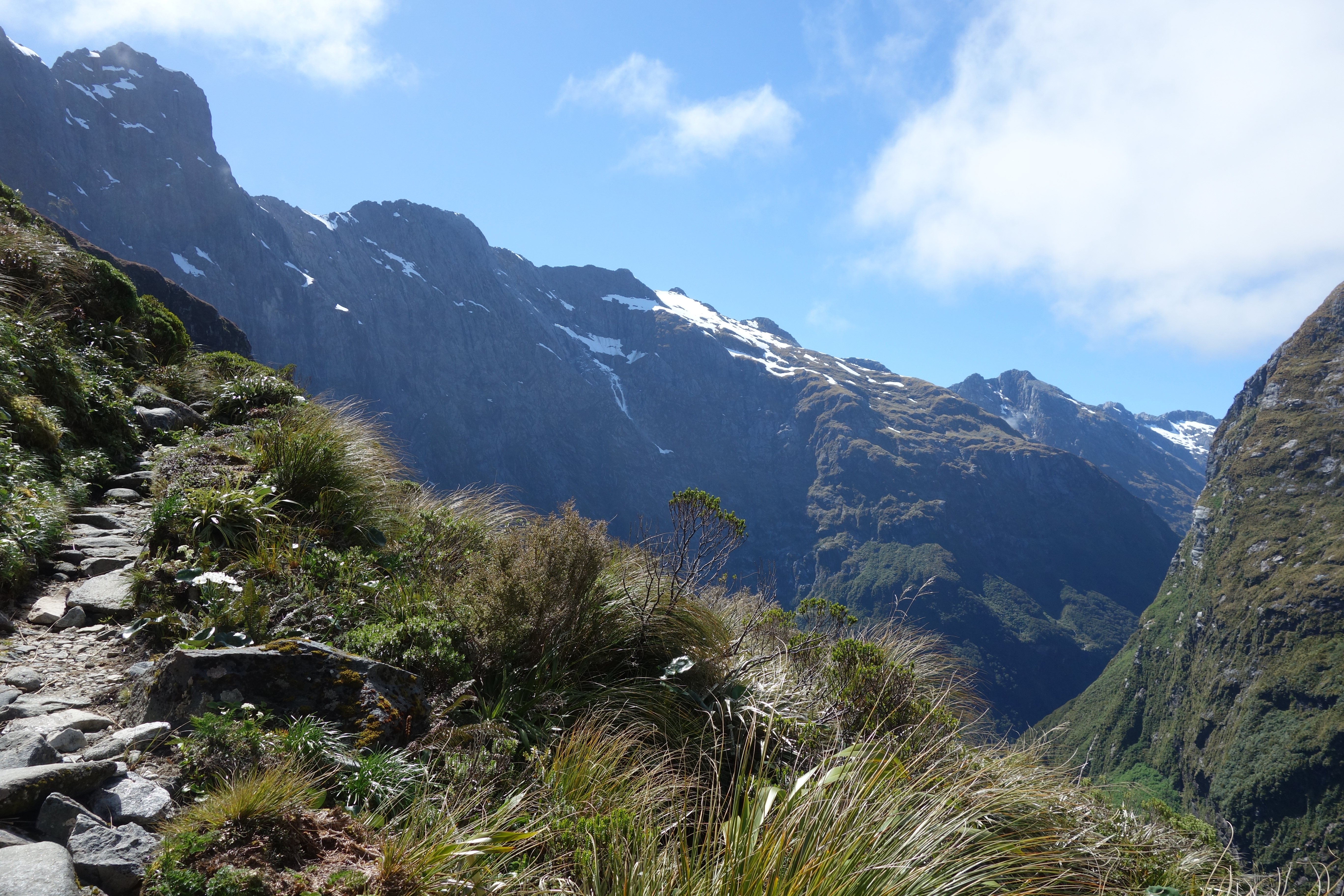
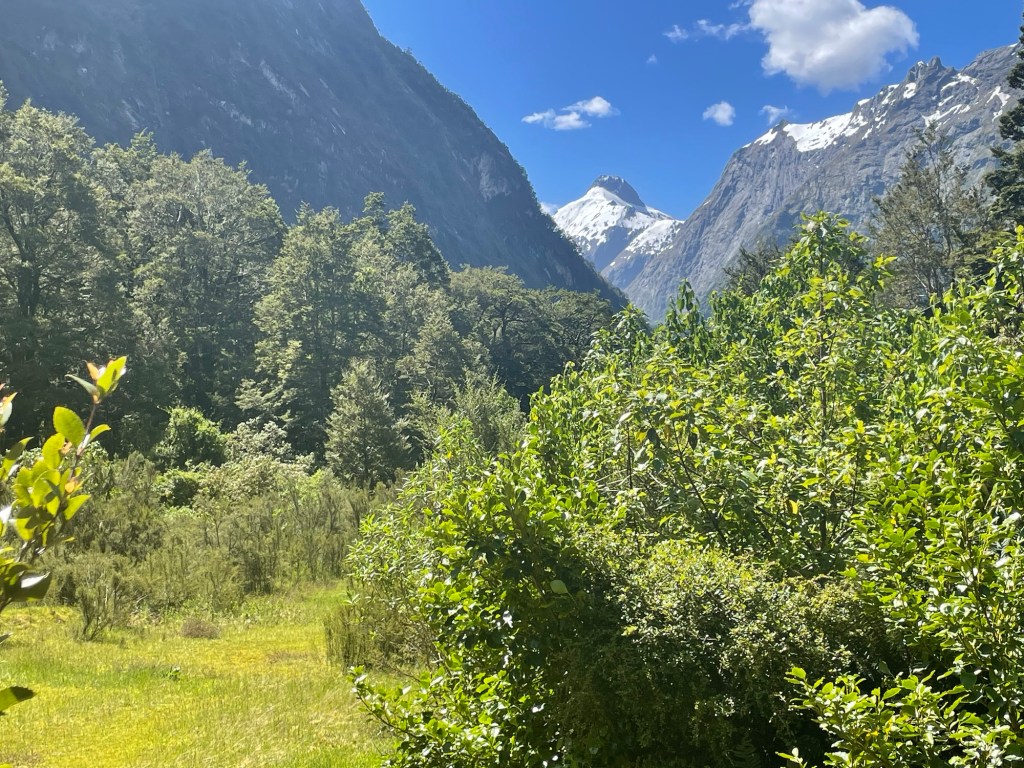
The track at the pass follows the ridgeline for some distance with views of distant peaks reflected picturesquely in tiny mountain tarns. We could really see in every direction; the pictures hardly do justice to the scale and grandeur of the scene. The weather was so pleasant that we all eschewed the shelter at the top and ate our lunches al fresco on the rocks — something that basically never happens, according to our guides. We could have stayed at the top for hours, but after lunch with a view of the valley we had left below us, we reluctantly strapped on our packs and began the trip down the other side.
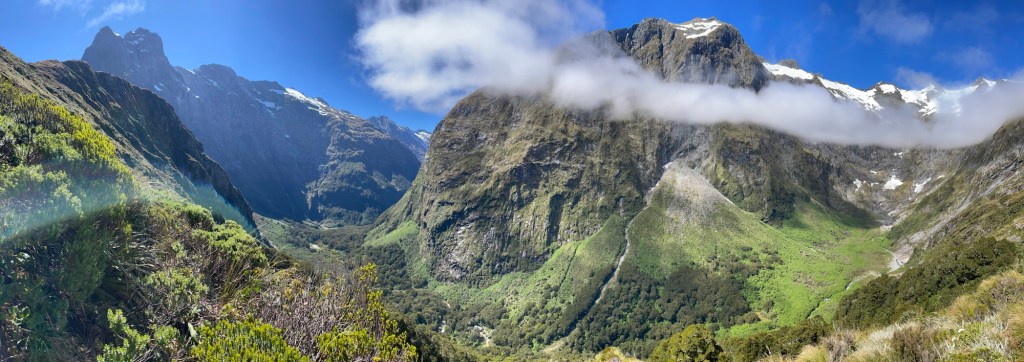
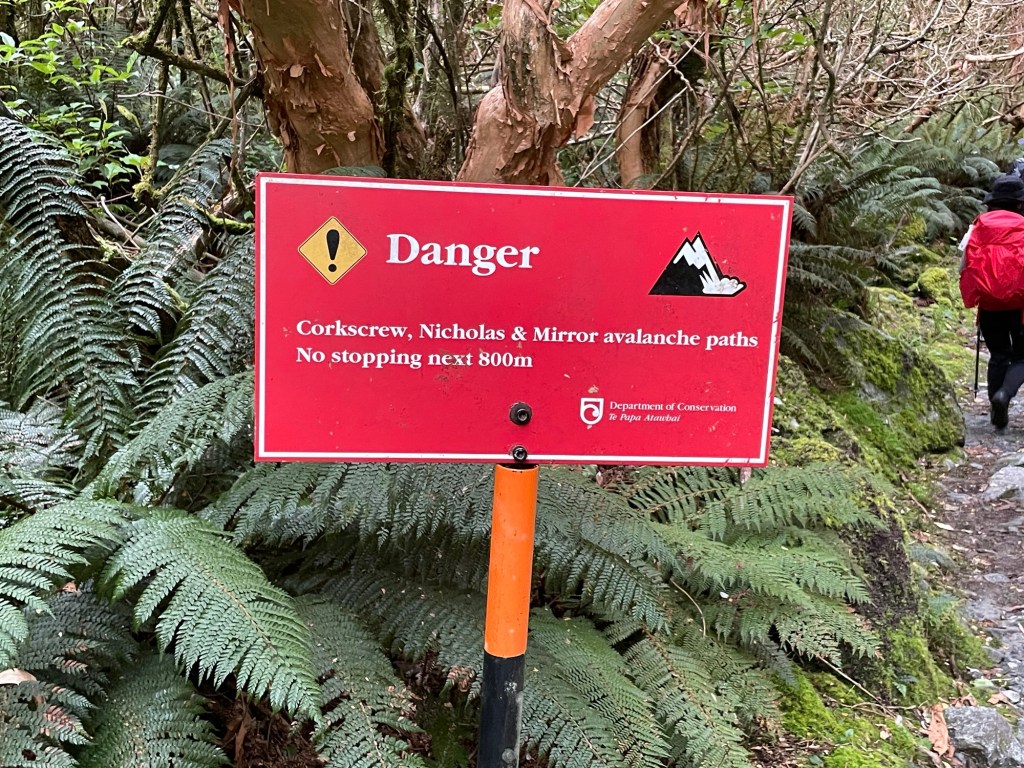
With snowpack still massed on the upper heights of some peaks, and the warming spring sunshine beating down, avalanches are a very real possibility. In fact, we heard or saw four of them today – fortunately at some distance. In the afternoon, our guides directed us to take an alternate path down, so as to avoid an area judged as particularly high risk.
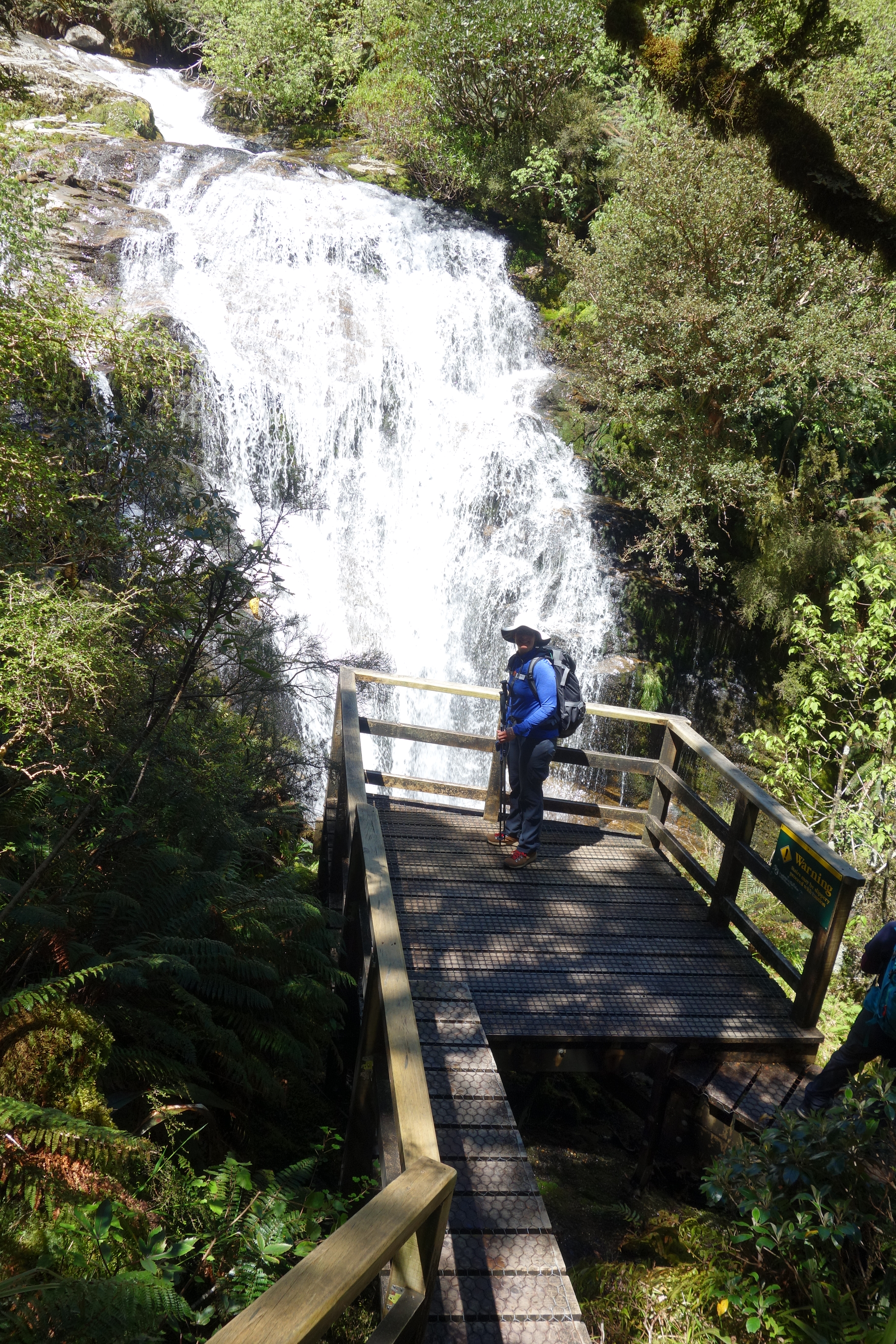
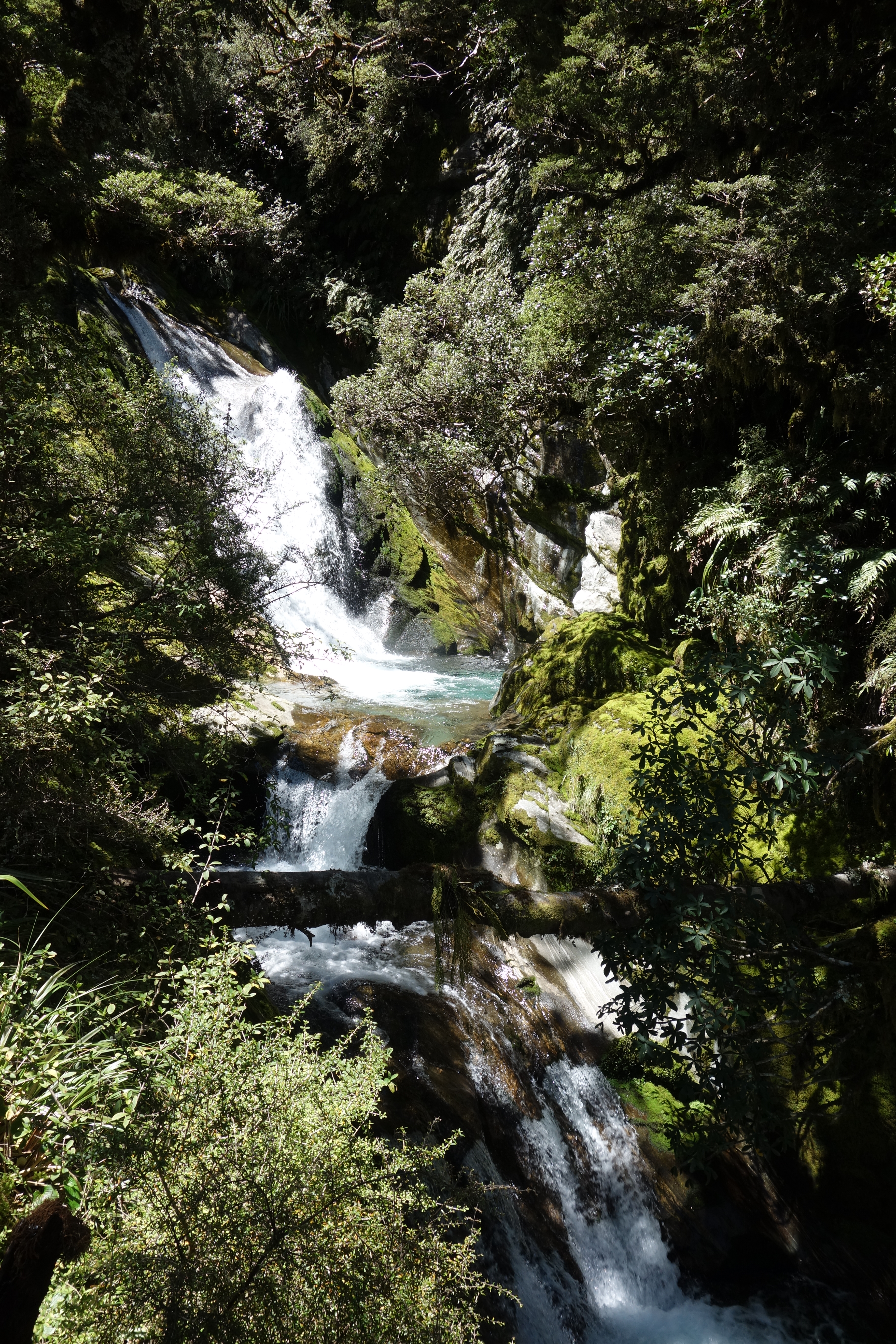
The trail on the way down now follows by the Anderson Cascades, a seemingly endless series of chutes, pools, and cataracts. Each time we thought we’d seen the best part, we would descend a little to find yet another wonder. We soon found ourselves saying “But wait, there’s more!” over and over, and though we lost count of the number, but there must have been dozens of levels, one beautiful glen after another. The trail originally bypassed this wonder, but was rerouted after the cascades were discovered and now follow it via a set of staircases and walkways.

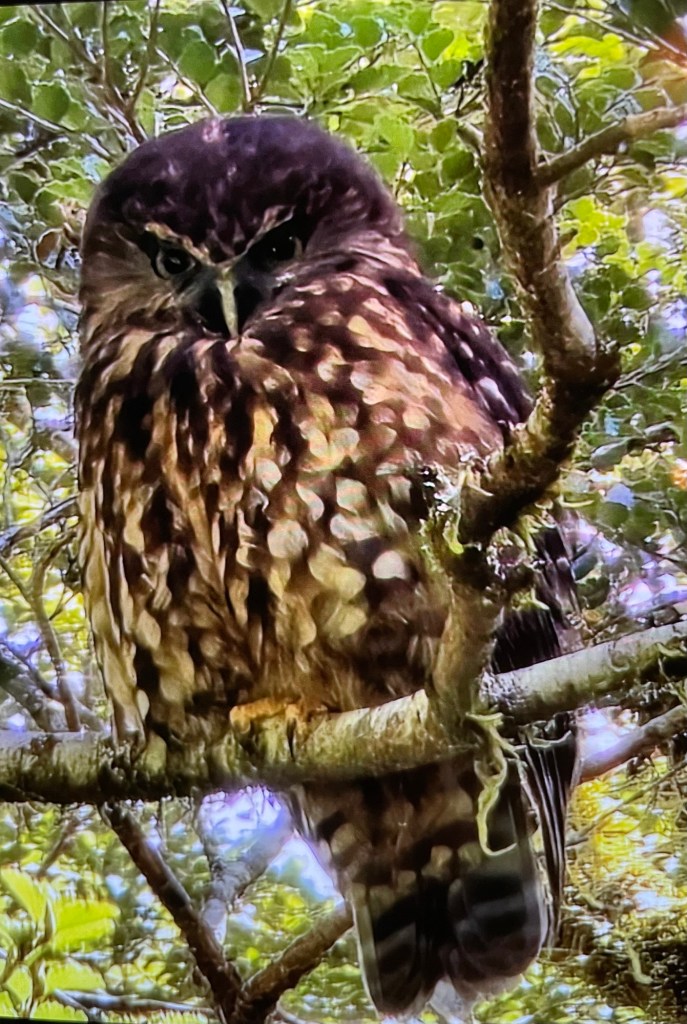
Bird of the day: just below the cascades, we noticed that one of our fellow hikers had pulled off the trail and was looking up in the trees. It turns out he had spotted a Morepork, New Zealand’s only native owl, and a bird we hadn’t expected to get to see. Some of the guides have never actually seen one in the wild. It kindly posed for this photograph, unruffled by the gesticulating hikers below.
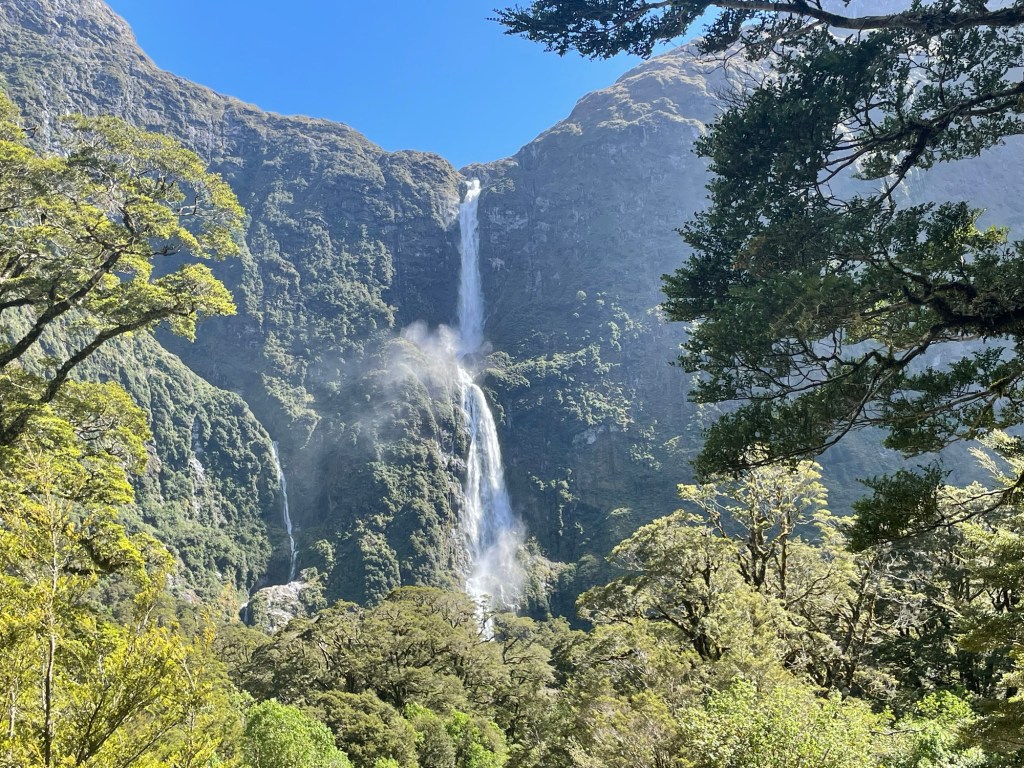
Our main trek of 9 miles landed us at Quinton Lodge by about 3:30 PM, tired yet happy, and – fortunately – in enough time to take the optional side quest to Sutherland Falls. Heeding the advice of our guides – “put your bag down, but don’t sit down” – we dropped our bags in our room and set off on this track. Without quite meaning to, we’ve now managed to see the tallest waterfalls on both islands in New Zealand.
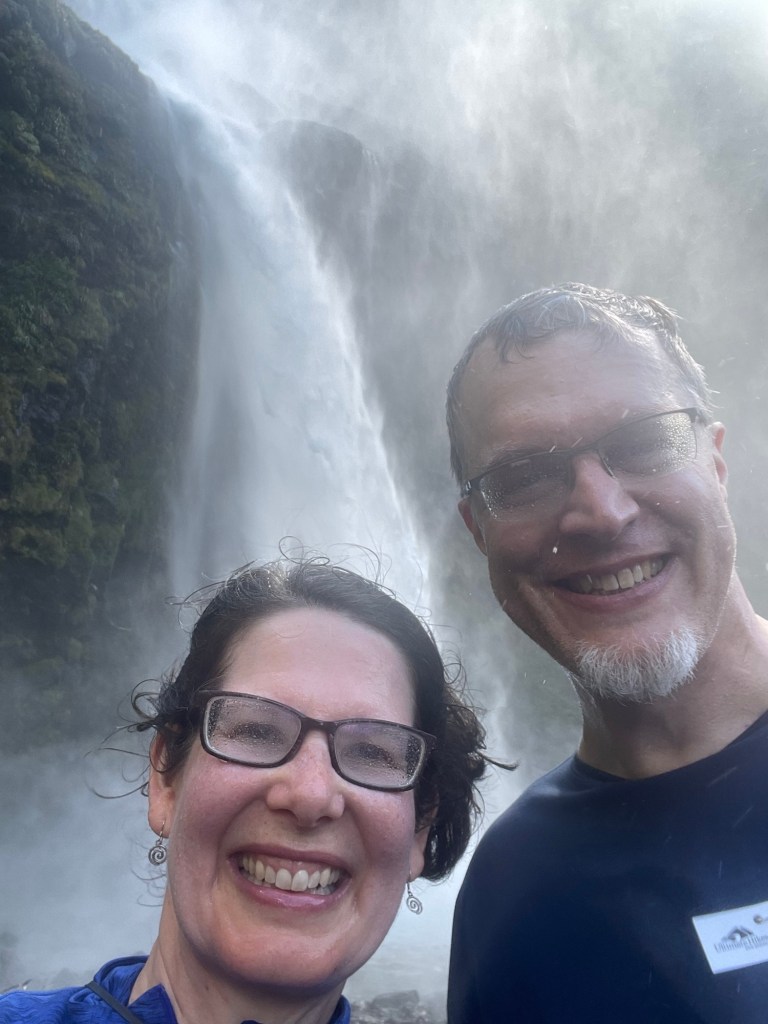
At 580 meters, Sutherland Falls is the highest of all. Its European discoverer and namesake is Donald Sutherland, who was responsible for creating in 1880 the seaward leg of the Milford Track, connecting Quintin Lodge and Milford Sound. The waterfall is spectacular when seen from a distance. Standing near the base of the falls is a somewhat raw experience: with the breeze blowing off bottom, laced with flying spray, it feels something like standing in a Nor’easter. Meanwhile, the thundering water sounds like a jet engine at close range. Thoroughly wet and satisfied, we reversed course and returned to the lodge, adding three more miles to our total for the day.

Although our previous hikes had prepared us fairly well for this day, we were still moving a bit gingerly about the lodge that evening. We were far from the only people doing what was jokingly termed the “Milford shuffle.”
 Howes' Doings