
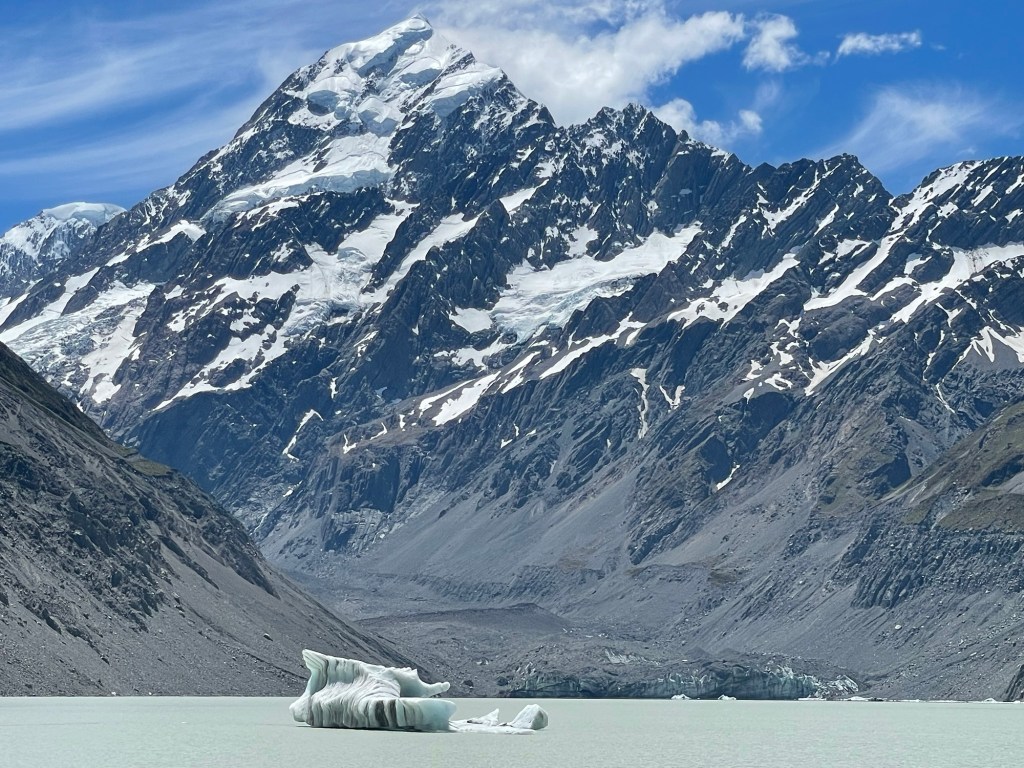
Today, we had lunch by a glacier! Or rather, the meltwater lake at its end, the glacier itself being much reduced. (You can see it as a low muddy wall in the rear of the picture above, at the far side of the lake. All of the glaciers here are a shadow of their former selves. We climbed over immense ridges of rubble that used to be the terminal moraines of these mountain glaciers. All the space behind them now occupied by water used to be filled with solid ice many stories tall. Decades of global warming have produced a predictable effect.

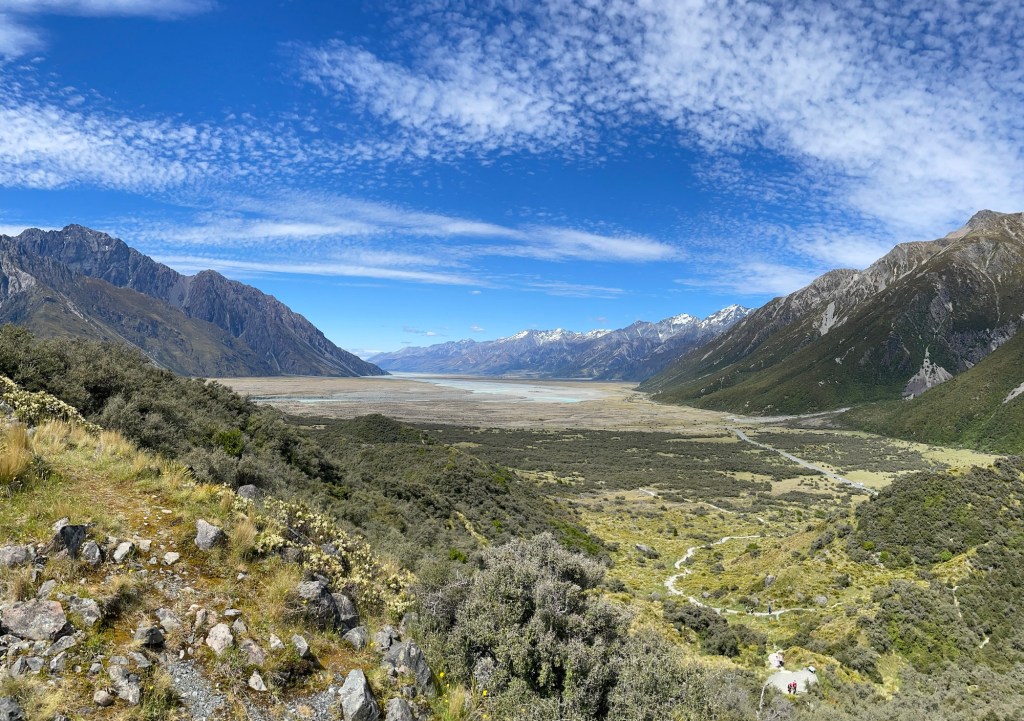
We are in the heart of the Southern Alps, near the tallest peak in New Zealand: Aoraki / Mt. Cook. The dual name represents a combination of the Maori placename with the European designation, much as Denali and Mt. McKinley refer to the same peak in the United States. James Cook occupies a cultural place in New Zealand similar to Columbus in North America: some honor him for enabling the migration of colonists from Europe, while to others he is blameworthy for the same reason. Most of the signage we saw references both names without further comment.
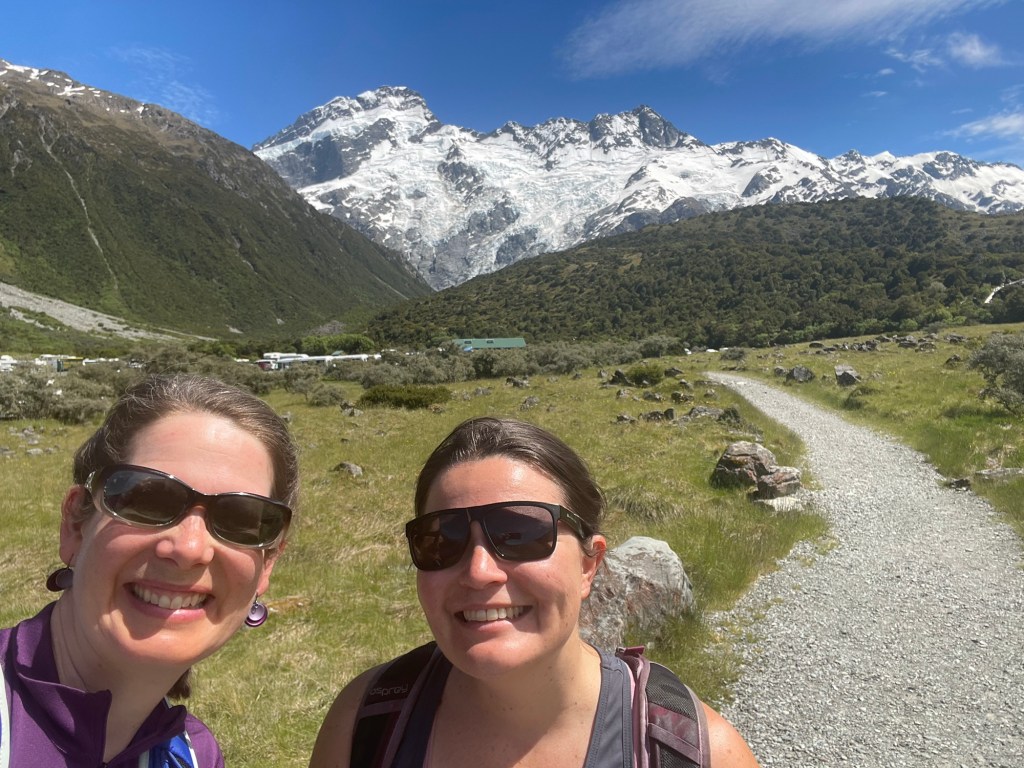
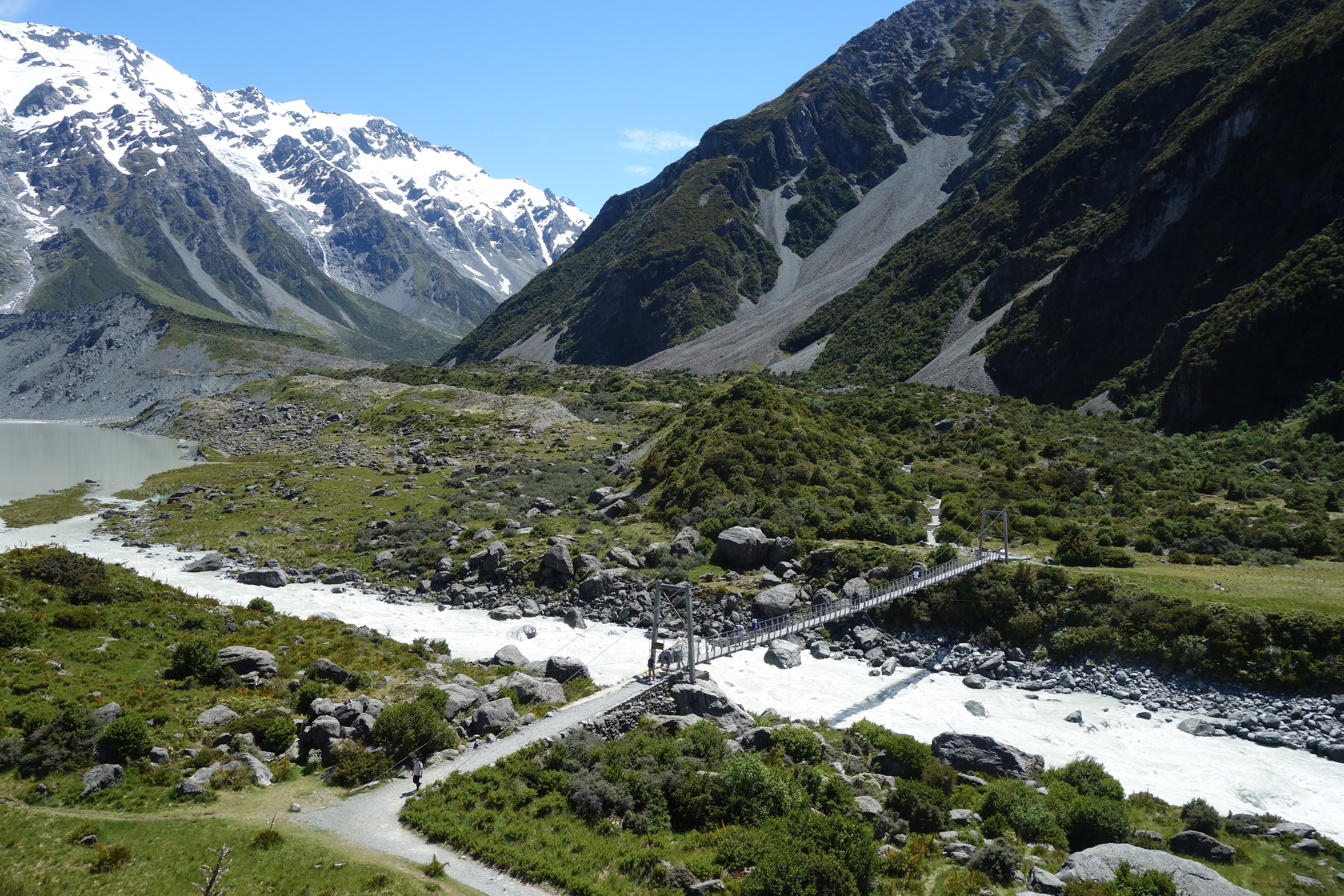
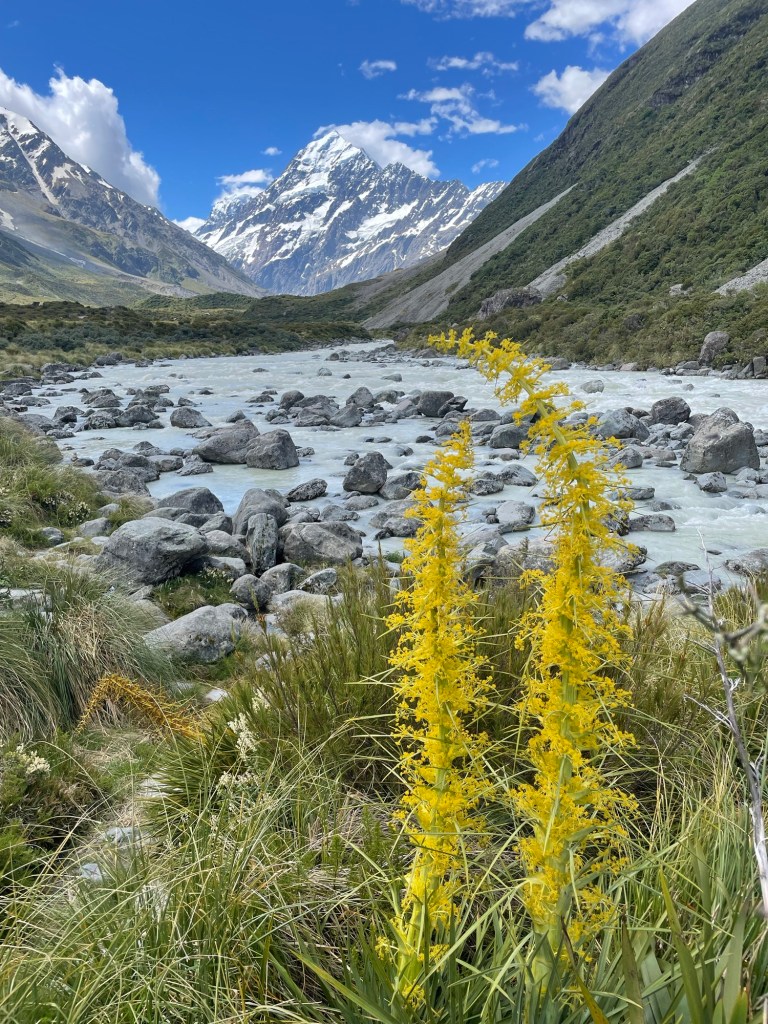
The Hooker Valley Track which we walked today travels about 5 km from the car park to the shores of Hooker Lake, one of the glacial meltwater lakes surrounding Aoraki. It is a very popular route, and we shared the trail with lots of other hikers who had come out to enjoy the warm and sunny day. The trail itself is fairly easy, without much elevation change. It crosses rushing meltwater streams on three large swing bridges. The meltwater itself carries finely powdered stone scraped off by the glaciers, so much so that it appears a silvery grey color as it flows. The lakes have a slight greenish tinge (“like a matcha latte,” said Alison).
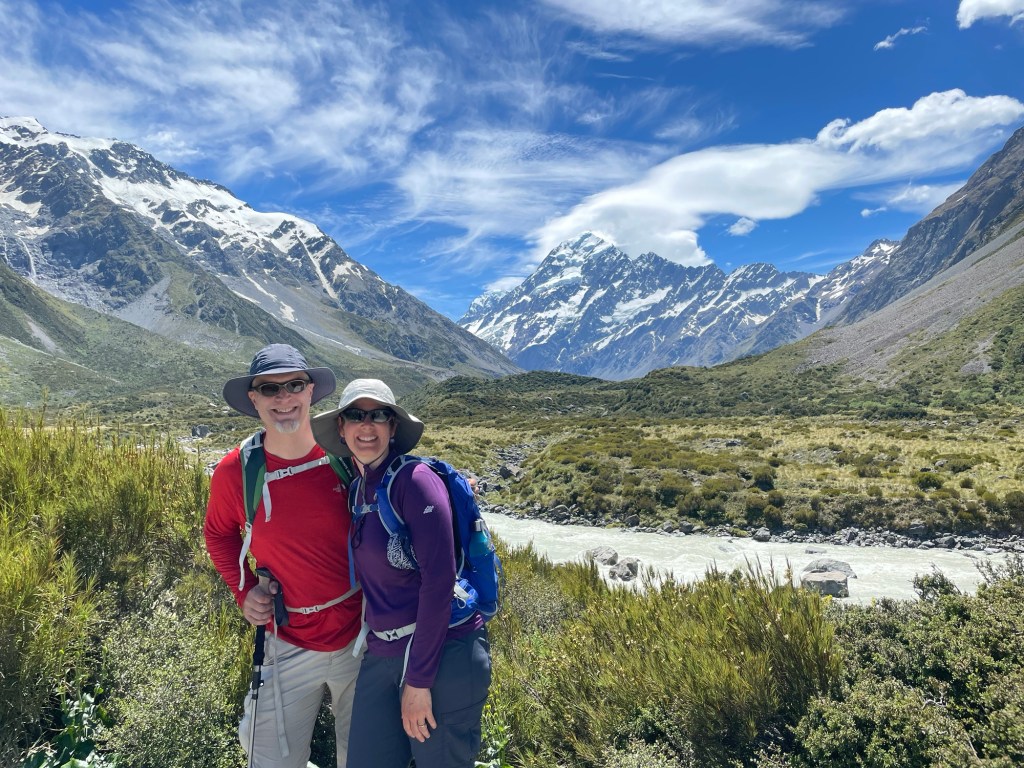
After a pleasant hike, we reached the end of the trail where we planned to have lunch: Hooker Lake. The water has small icebergs in it, calved off the front of the glacier visible on the far side of the valley. We took a leisurely lunch by the shores of the lake, but unlike some of the other visitors, we did not choose to wade or swim in the chilly (3 degree Celsius) water.

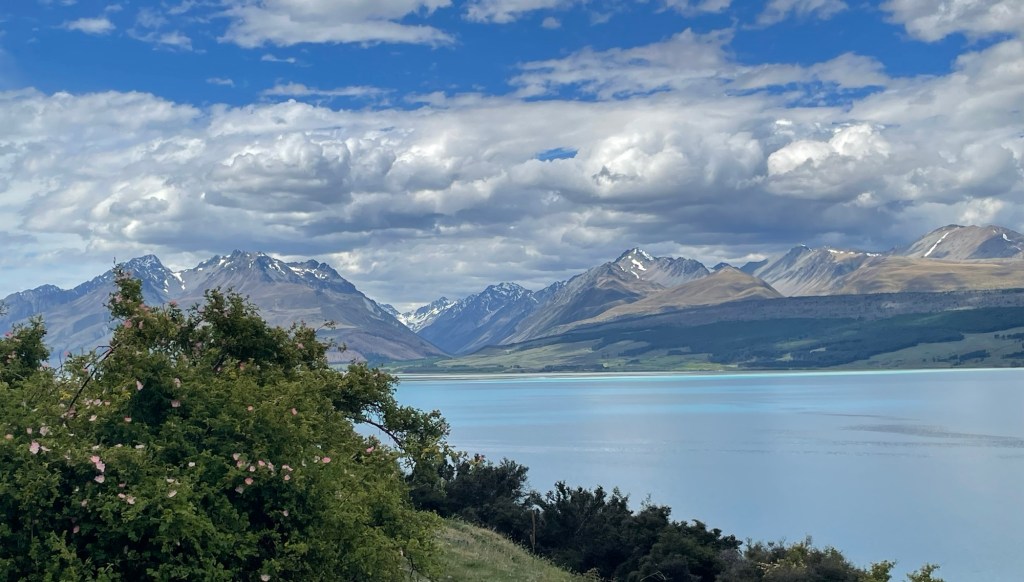
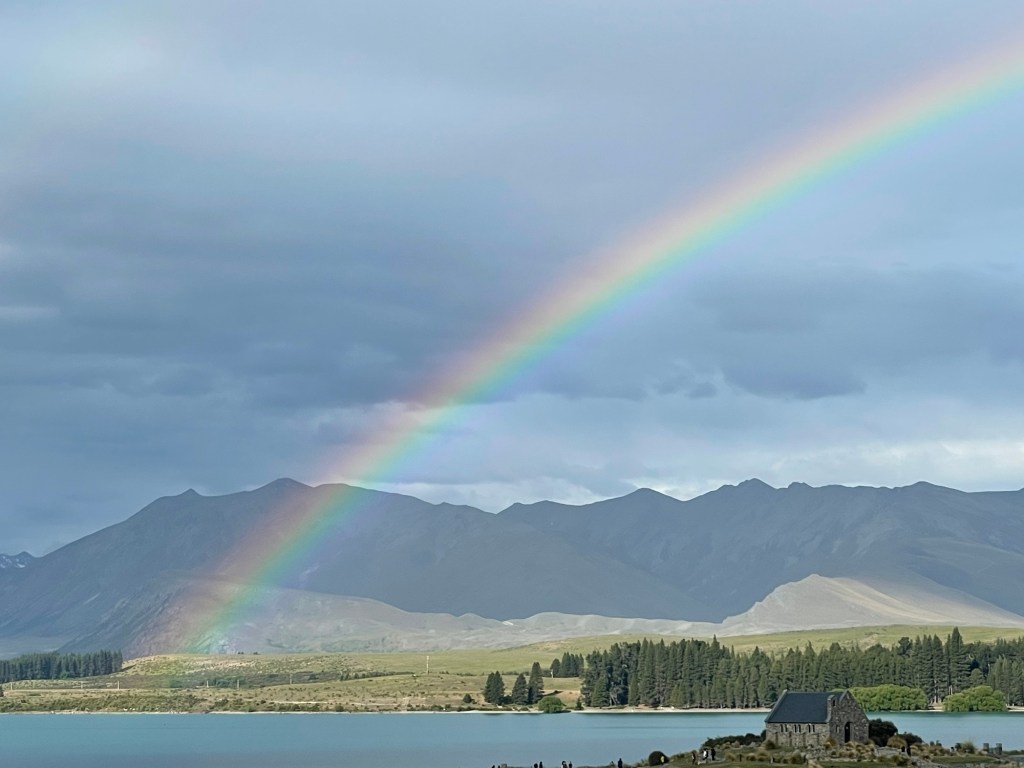
Much farther down the valley, the highway follows the shore of Lake Pukaki, a natural lake that was much enlarged by the addition of a hydropower dam. From there, we continued on to Lake Tekapo, which is the town we’ll be staying in for the next two nights. You know that a place is happy to see you when you are greeted on arrival by a rainbow. That one disappeared not long after the photo was taken, but then while we were having dinner a second rainbow appeared. Both arched over the lake, and the picturesquely located Church of the Good Shepherd on the shoreline. An attractive and recently completed pedestrian footbridge gives easy access to the chapel from the center of town.


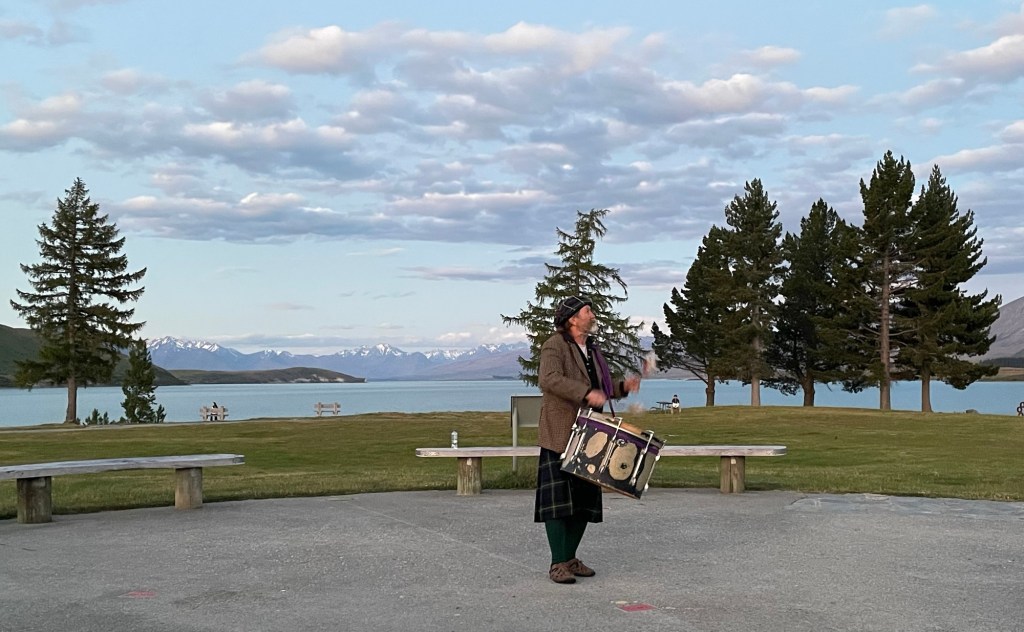
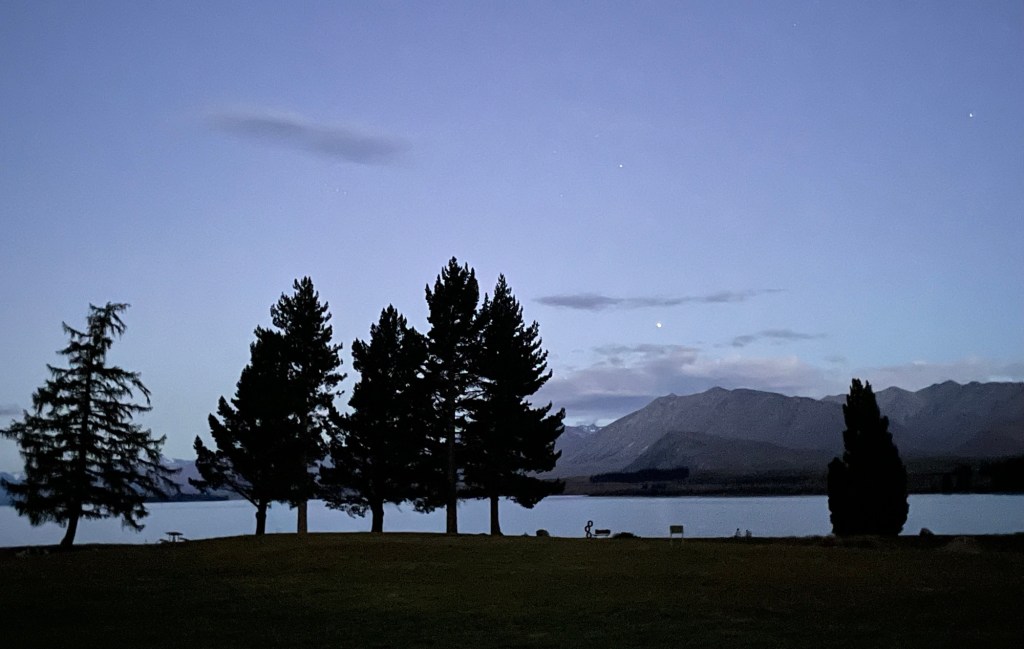
While exploring the lakeshore on foot we came across a placard advertising a free show put on by local storyteller Billy the Bard at dusk. Curious, we decided to check it out, and spent the next hour listening as he spun an entertainment blending local myths, scientific facts and astronomical education, with participatory singing and dancing. It was both entertaining and a fascinating piece of local color. By the end of his show the sun had gone down and the stars were out, and since attendance was by koha (gift or donation), we gladly made an offering in thanks.
 Howes' Doings