
Dubrovnik functioned as an independent city state for centuries, building heavy fortifications to protect itself from Venice and other nearby powers. Continuing our tour of the local military infrastructure, we planned to visit several of the outlying structures that helped keep enemies at bay. First up was Fort Imperial, perched on the summit of Mount Srd overlooking the old city. There is a cable car that was out of commission today due to high winds. Luckily we had planned to take the hiking trail anyway.


In concordance with its long independent streak, Dubrovnik’s official city motto is “Libertas”. One can still find small odes to liberty and independence displayed around the city, like these trailside pieces.
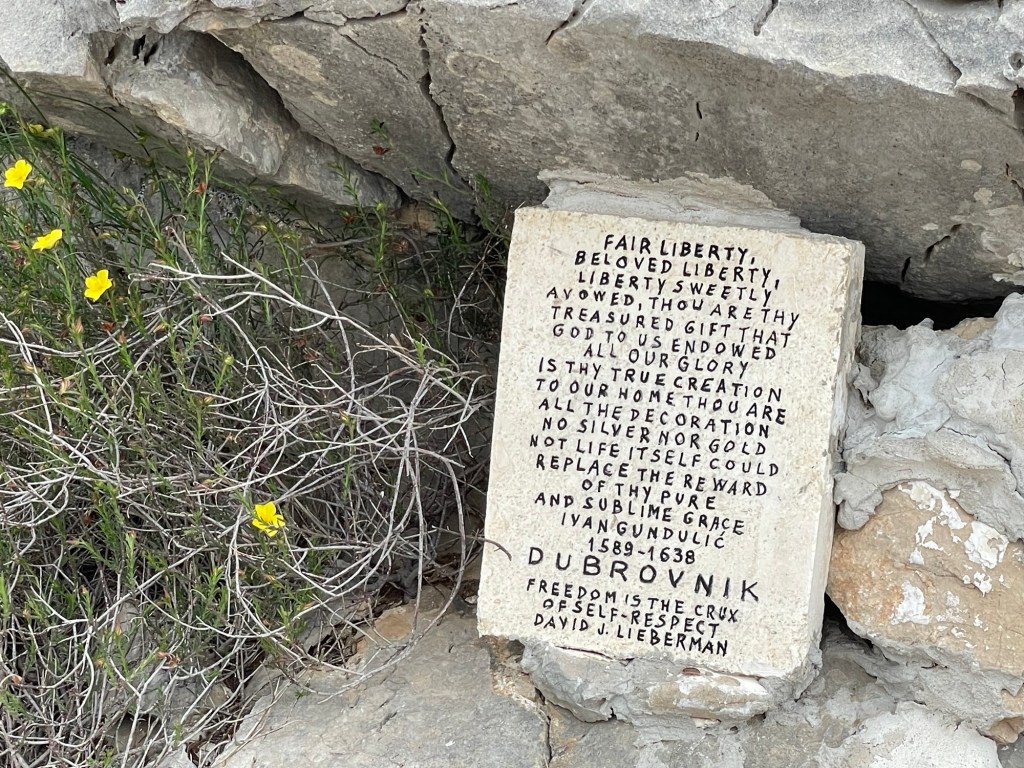
We

The trail to Fort Imperial features numerous switchbacks on the way up. Around 15 years ago they installed a series of bronze panels depicting the 14 stations of the cross, one at each turnaround.


As we gained altitude, we could see the newer parts of Dubrovnik and islands farther to the north. From the top, we could also see the ranges of mountains further inland.

Fort Imperial is quite new by local standards, built by the French in just a few years after Napoleon’s armies ended the city-state’s centuries of independence. With powerful modern artillery, massive city walls became less important and instead it was necessary to control the higher ground nearby. This truth was confirmed anew during the 1991-92 Balkan war. Local residents had assumed that their status as a UNESCO heritage site would protect them from any aggression, and were unprepared for war. This confidence proved hollow when Serbian army units moved into the area, pursuing their dream of a “Greater Serbia”. A small band of just a few dozen men managed to hold Fort Imperial in the face of their attacks, stopping their advance outside the city and turning the invasion into a siege. You can still see the craters left in the fort’s walls by modern high-explosive shells. Cut off from the outside by both land and sea and under fire from the opposing forces, the city’s residents endured a difficult year before negotiations brought an end to fighting in the region. Information boards in the old city detail all the structures that were damaged during this period.

Our second fort of the day is named Tvrdava Lovrijenac (or the Fort of St. Lawrence in English). It sits on the coast next to the city, separated from it by a small rocky cove. Originally built in the 11th century, the structure as it stands today is a massive bastion built to support heavy cannon. From the parapets at its top you can find excellent views of the seaward city walls — but the best views are to be had from still one more headland over, where you can see both the fort and the city in one sweeping vista.


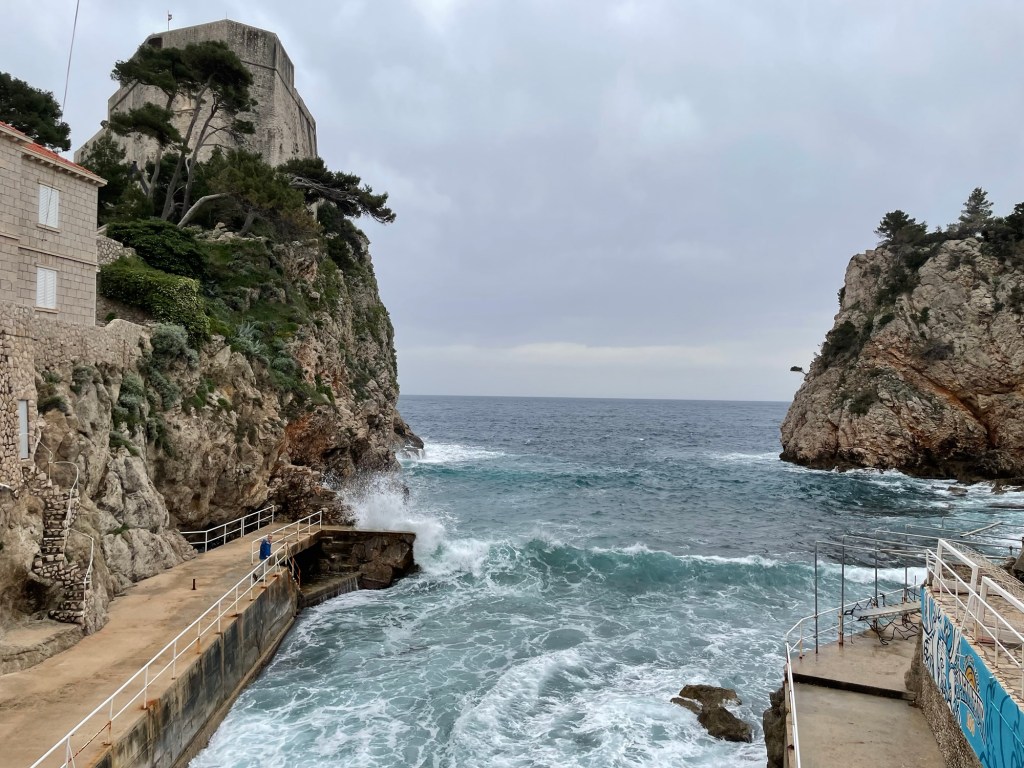
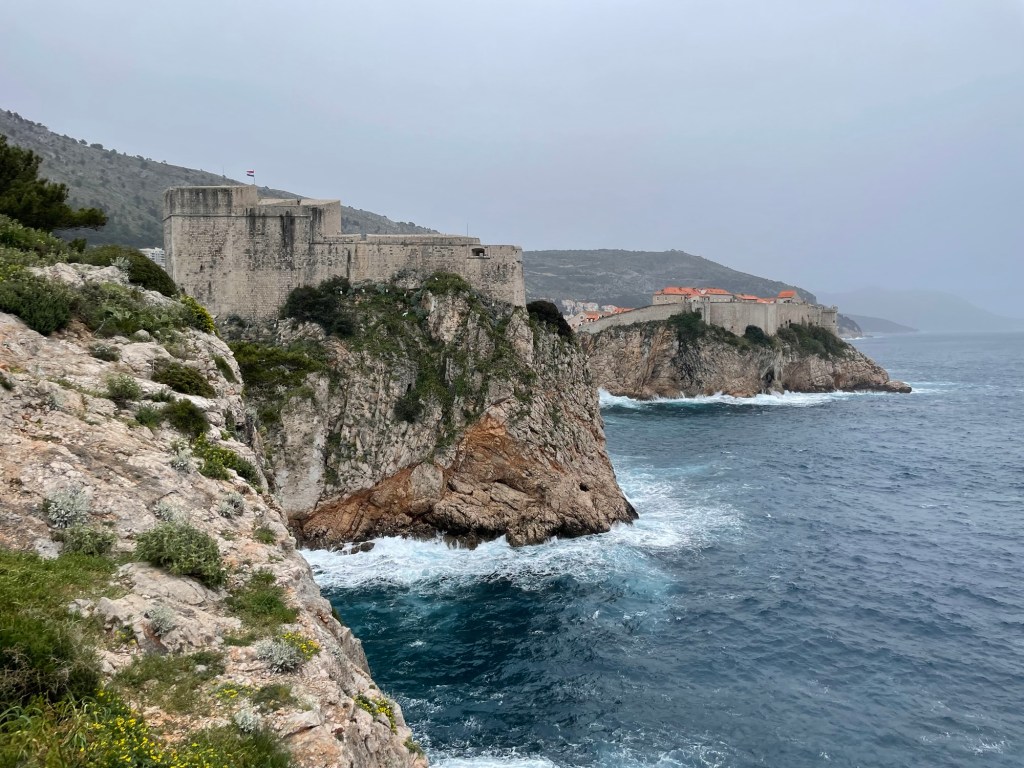
On our way back we stopped at the Wine Museum located just outside the Pile gate. It contained informative exhibits on local winegrowing, including the many grape varietals native to the region (including the once-unknown ancestor of Zinfandel grapes in California) and all the traditional machinery used to harvest grapes, process them into wine, and transport the final product.
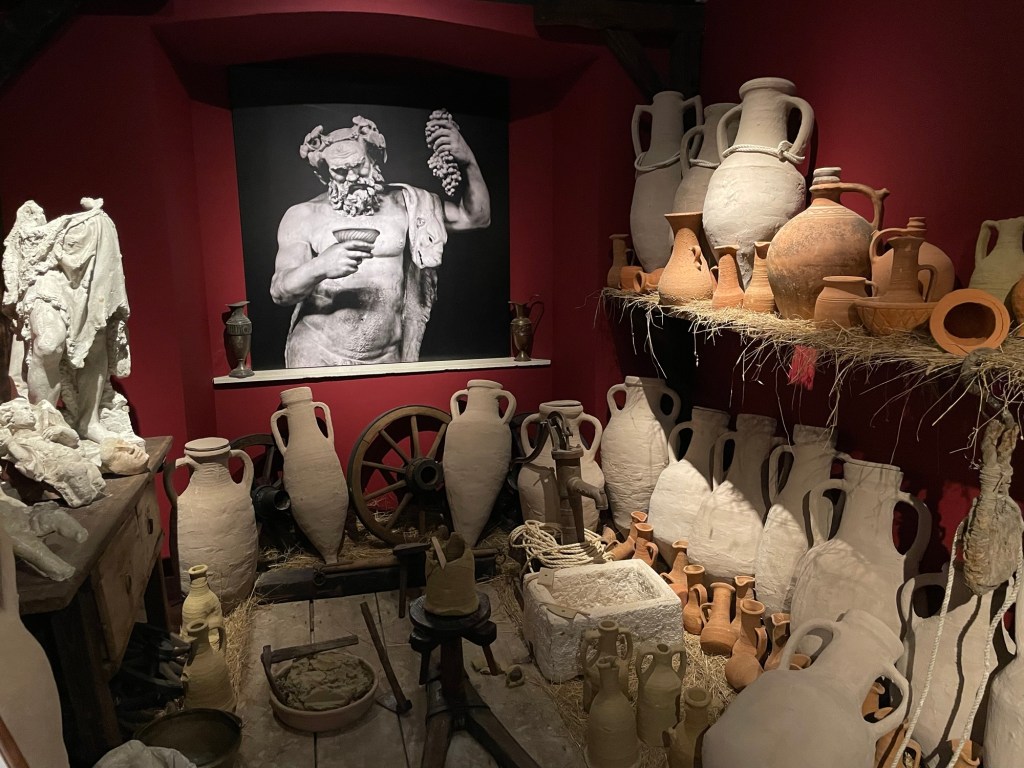

A local company makes wine called “Navis Mysterium” that they age in either bottles or amphorae for several years under the surface of the Adriatic Sea. They come out covered with picturesque debris, and (reportedly at least) perfectly aged in a constant temperature environment.

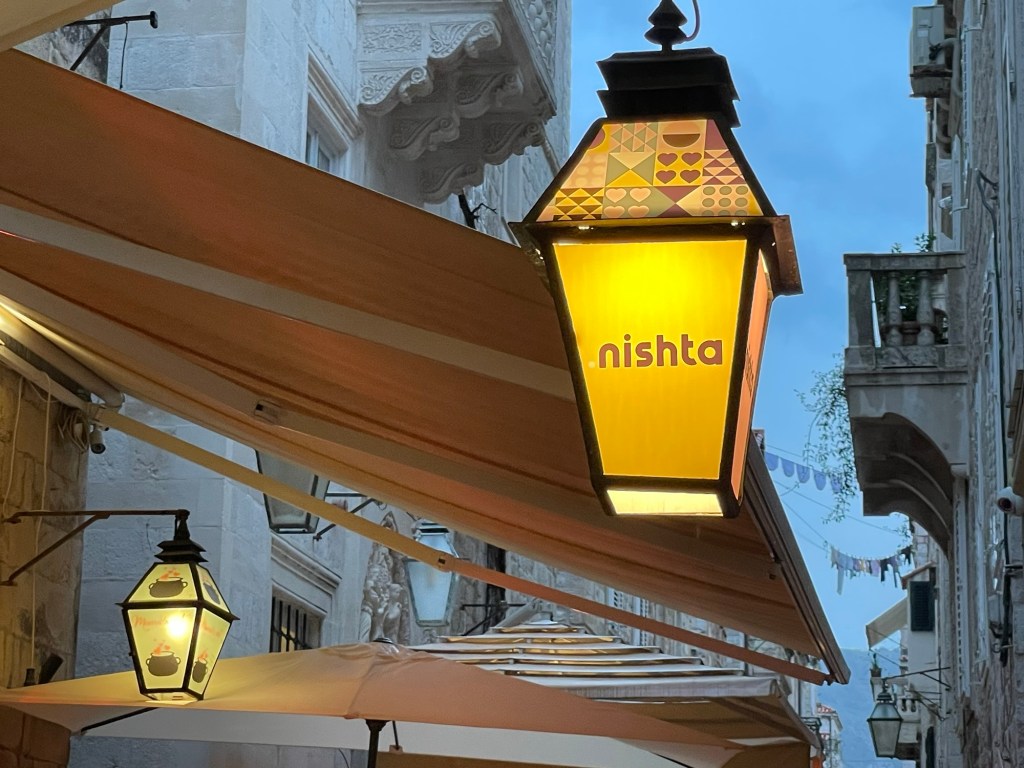
We had a nice dinner with local wine at a vegetarian restaurant not far from our lodging (on a picturesque pedestrian street replete with outdoor seating protected by retractable awnings and dotted with lanterns, before walking to our third fort of the day. For the evening, we had tickets to the Dubrovnik Symphony Orchestra concert held within Fort Revelin overlooking the city harbor. The concert hall was a massive vault within the structure. We had bought two of the last four seats available, numbered 99 and 100, assuming they were all the way at the back. Imagine our surprise to find that we were in the second row, with a clear view of the players! The symphony here has a tradition dating back seven centuries, and the music was quite enjoyable.



 Howes' Doings