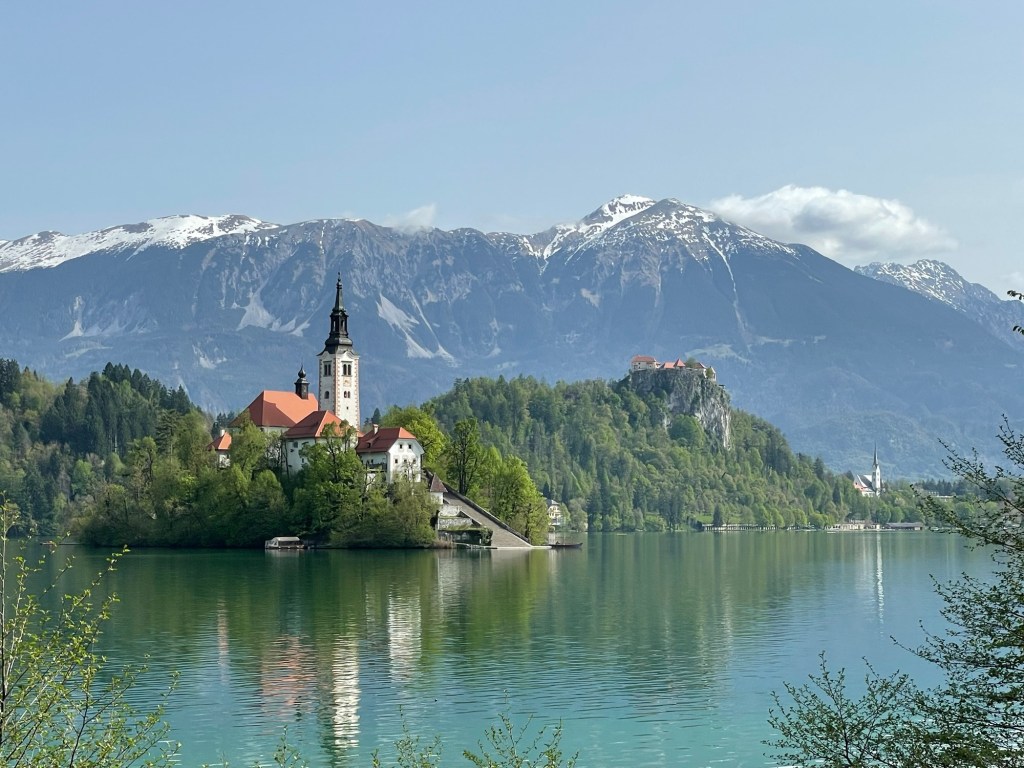
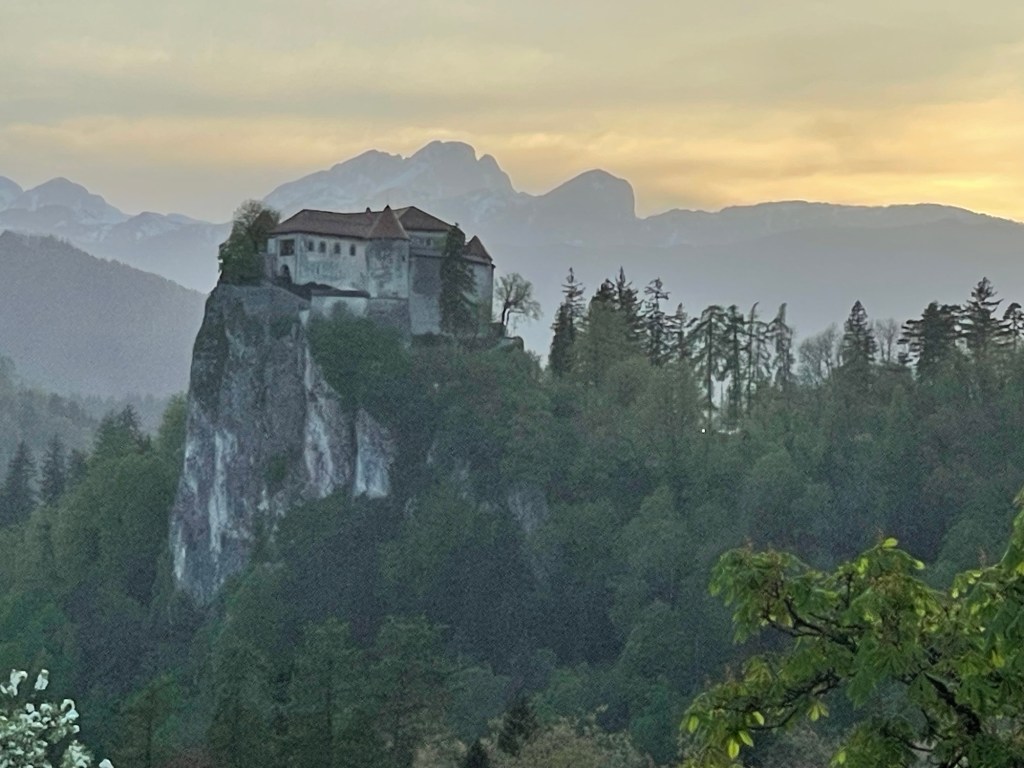
After our castle-view dinner yesterday, we continued our drive into the evening to arrive in the town of Bled after dark. Although we could see Bled’s eponymous castle lit up by floodlights from the window of our lodging, we didn’t truly get a sense of the place until dawn the following morning. It perches on a rocky bluff, overlooking the lake and the town below.

Bled is blessed with a combination of natural beauty and manmade enhancements that blend seamlessly into a harmonious whole. Archaeological excavations reveal that it has been drawing visitors for millennia, offering a valley of fertile flat land with the castle mount in the center to provide both early warning and a place of safety in case of threat. The island that rises from the lake also attracted visitors, with evidence that it was a site for pagan gatherings in early days. Since the spread of Christianity it has served as a pilgrimage site sacred to St. Mary. You can see the layout of the region in the bronze relief map below. The town lies at the bottom end of the lake, the castle is to the right, and the island lies at the top. Behind it all, the foothills of the Julian Alps keep silent watch.

With the promise of a bright and balmy day, Nick & Susannah decided to go for a jog around the lake first thing in the morning. This proved to be a popular choice, as we saw many other runners. There are paths running the full way around, and each new stretch offered different views that demanded to be photographed, so that we made slower progress than we had intended.


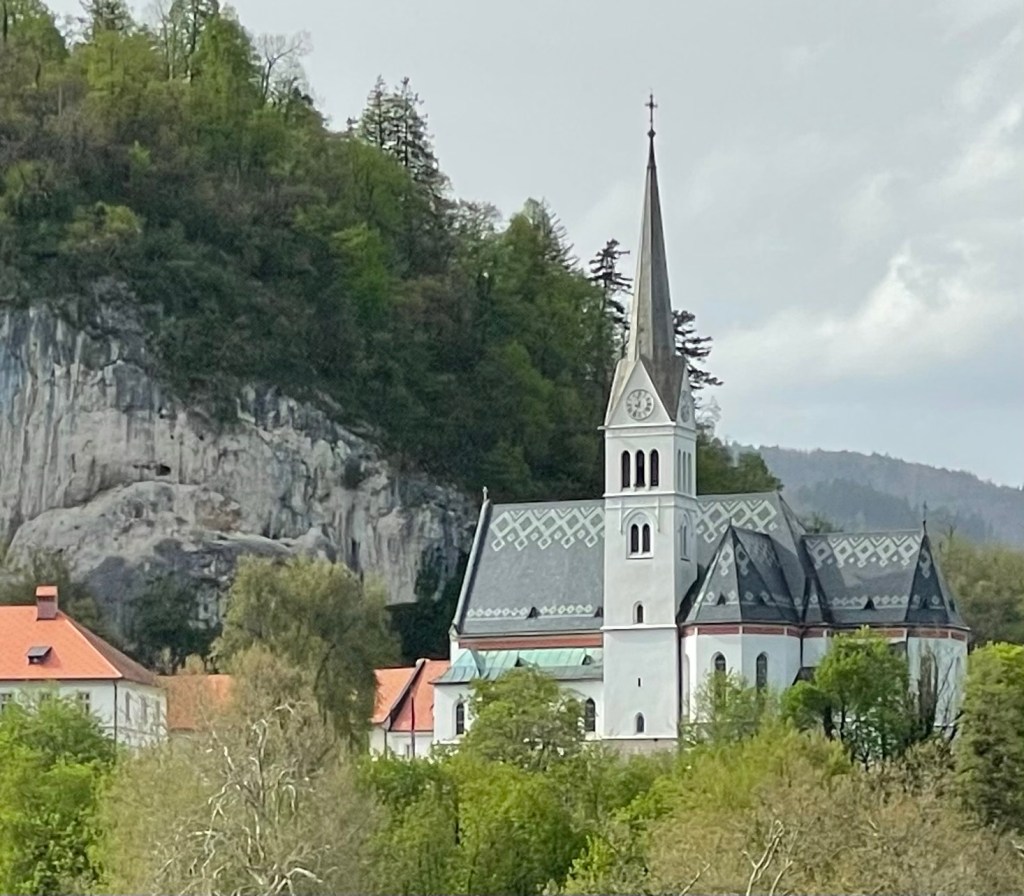
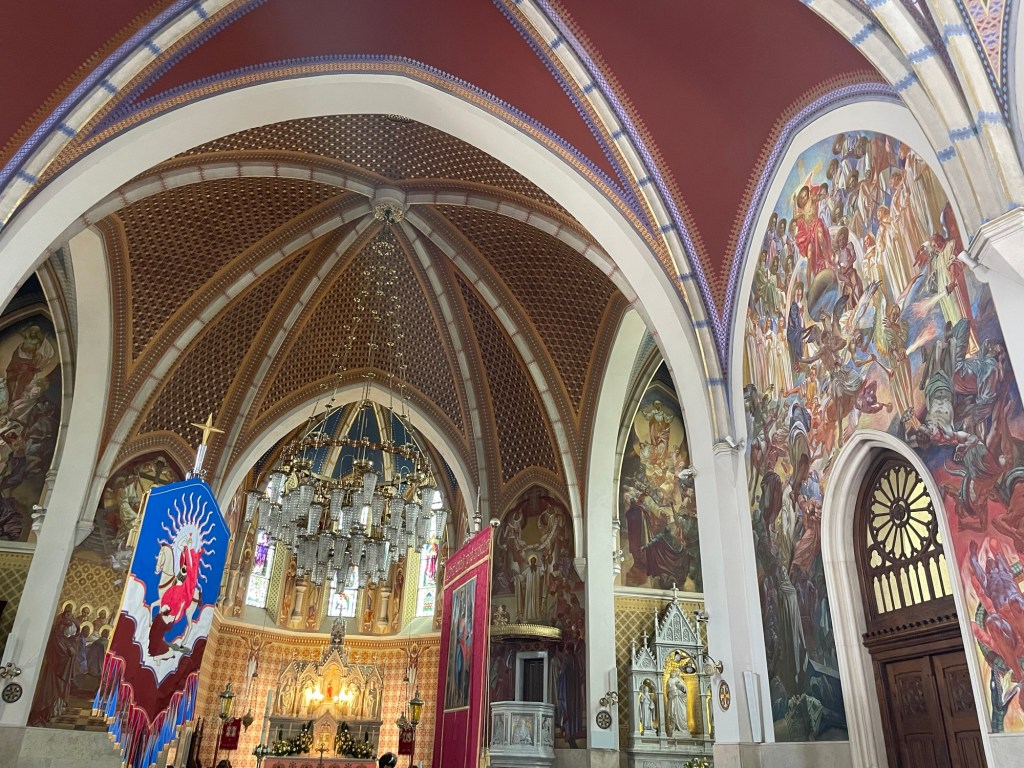
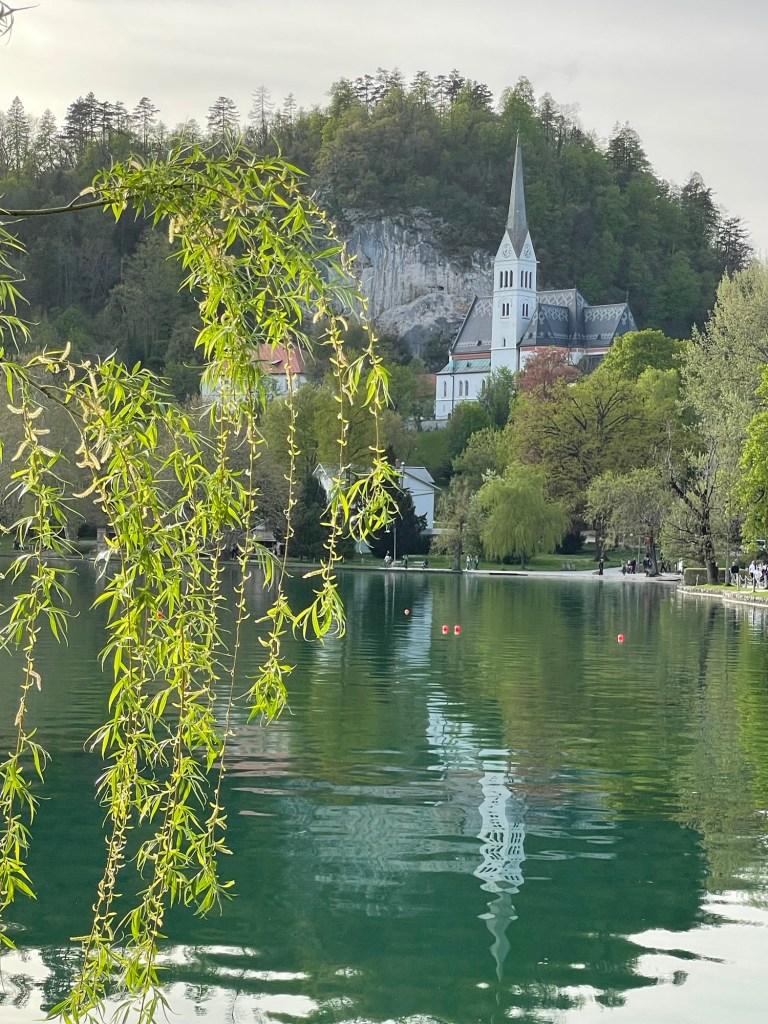
After breakfast at our lodging, we set out to see the first of the town’s famous landmarks: Blejski Grad, a.k.a. Bled Castle. Along the way we passed by St. Martin’s church, a fine specimen of local religious architecture with an intricately patterned slate roof. Although the windows are decorated with stained glass, the real stars of the interior decor are the many colorful frescoes that cover the walls. Among other themes, they depicted each of the phrases from the Lord’s Prayer. The aisles also held colorful banners suspended from poles.
From the church, a short but steep hike brought us to the castle gates. Although there have been fortified settlements on the promontory since prehistory, credit for the building of Bled Castle in 1011 goes to Bishop Albuin of Brixen, who had had been granted feudal ownership of the region seven years prior and wished to consolidate his holdings. His success is attested to by the fact that the bishop’s successors continued to rule over the area for the next eight centuries. The castle was remodeled multiple times over that period; the current incarnation is in the Baroque style with some modern embellishments. The views remain fantastic in all directions, but particularly out over the lake.


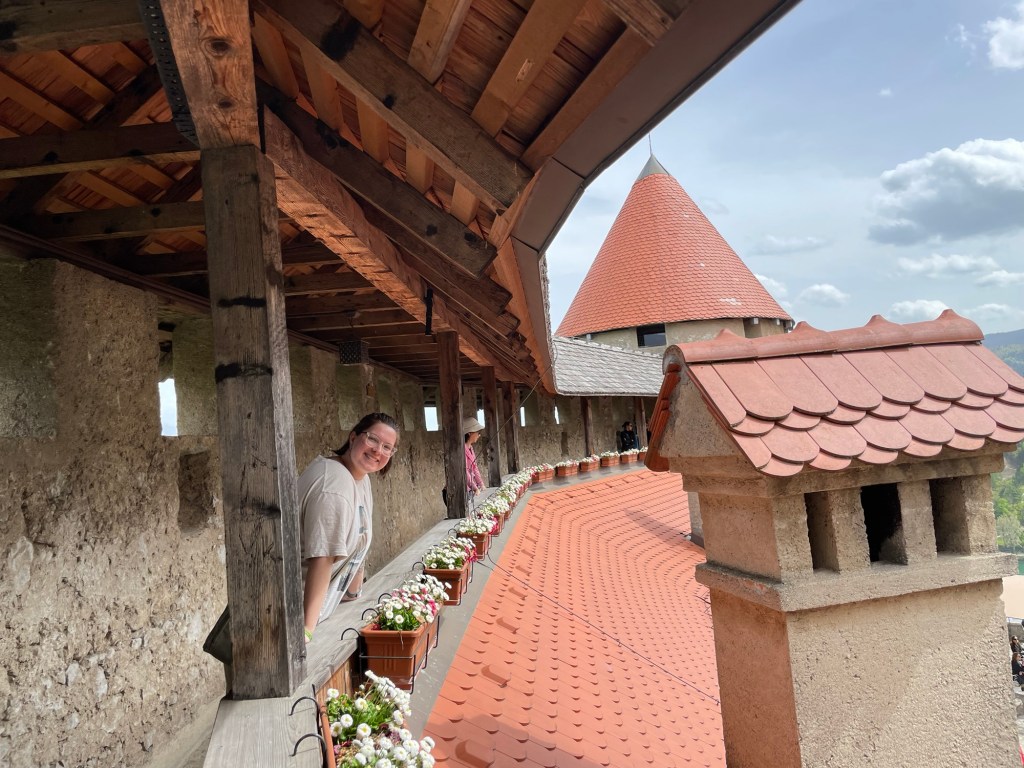

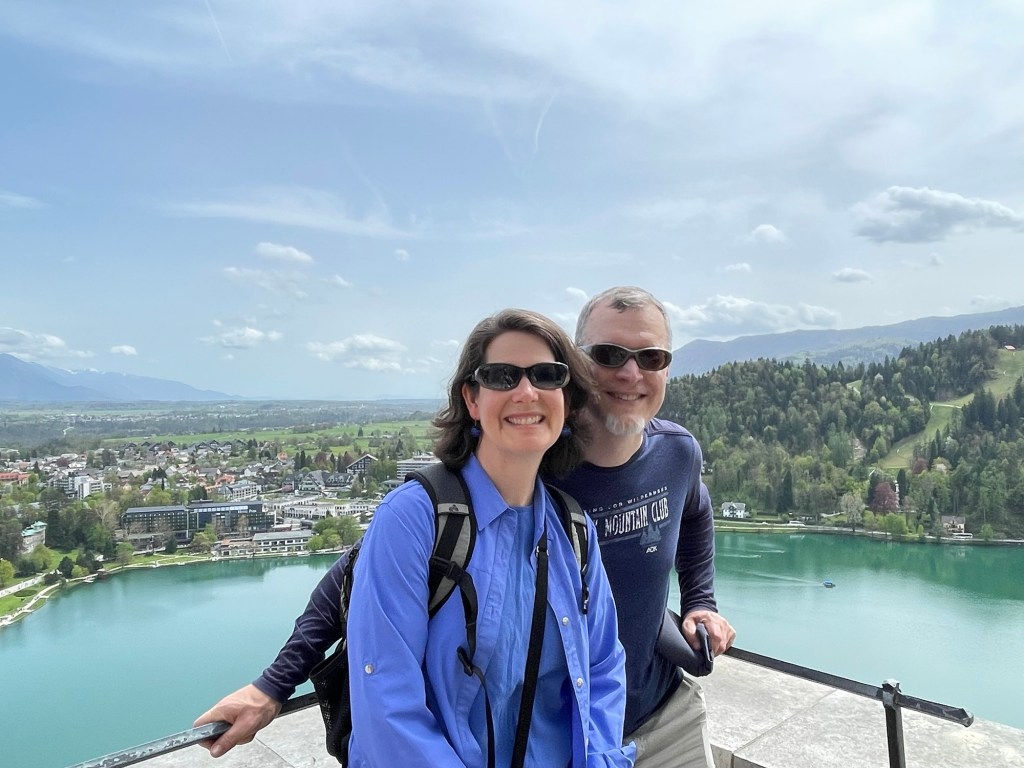

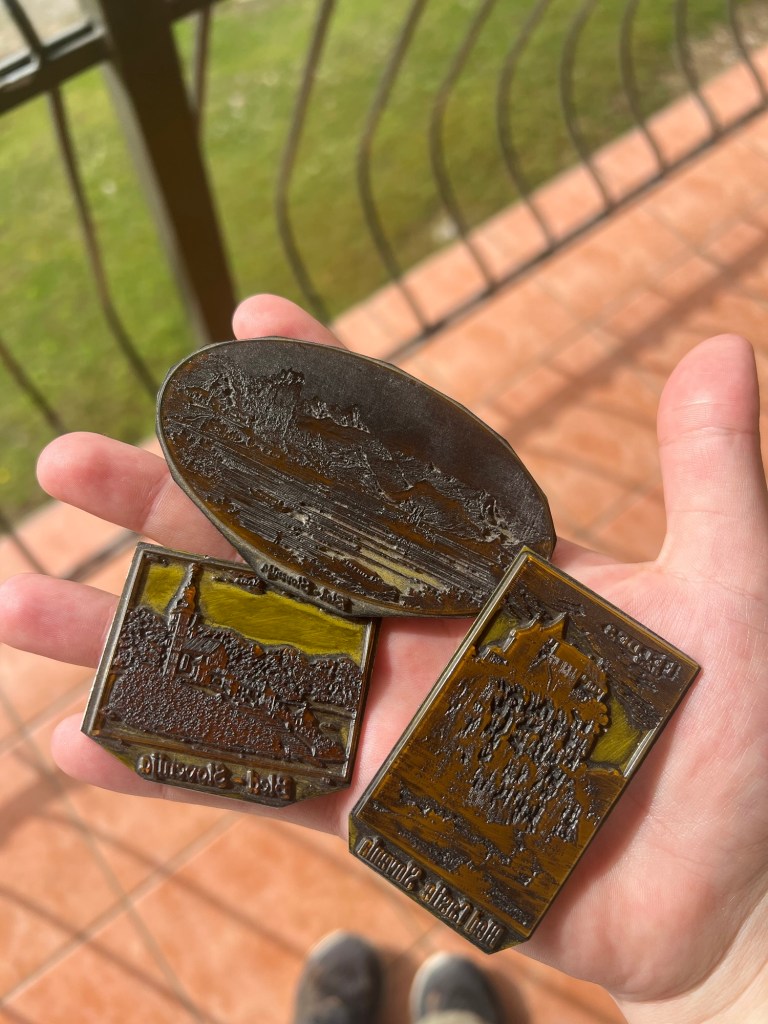
Unlike Predjama Castle, at Bled there has been little attempt to portray the lives lived by former inhabitants. Rather, the buildings have been adapted as a sort of combination museum and mini-mall, with a restaurant, cafe, and several small businesses. Our favorite was the print shop, which offered replicas of famous early works published in Slovenian, in addition to bookmarks, woodcuts, and other items. The printer there was very friendly, and at our special request shared with us a few of the older worn-out plates that had been retired from active use.


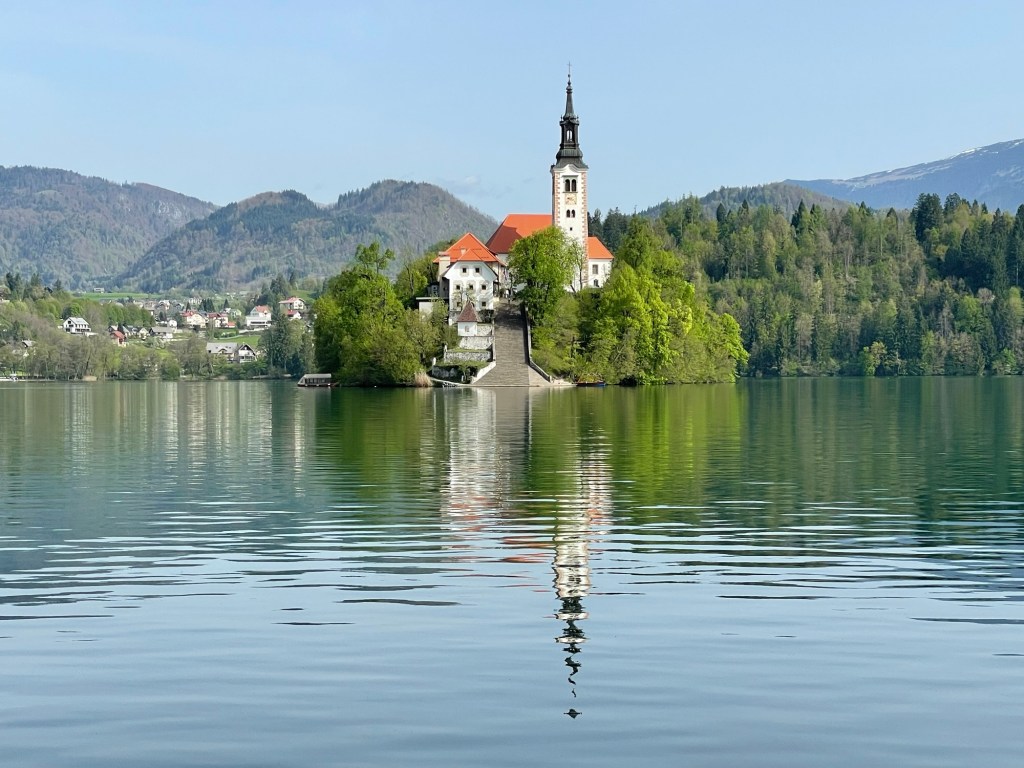
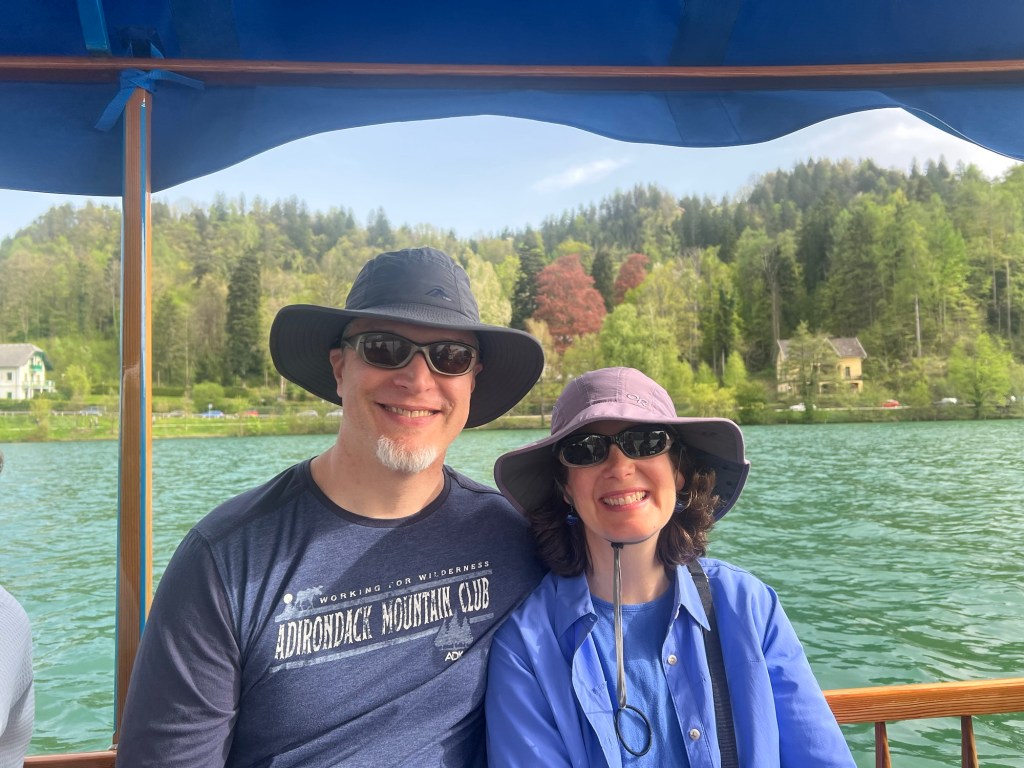
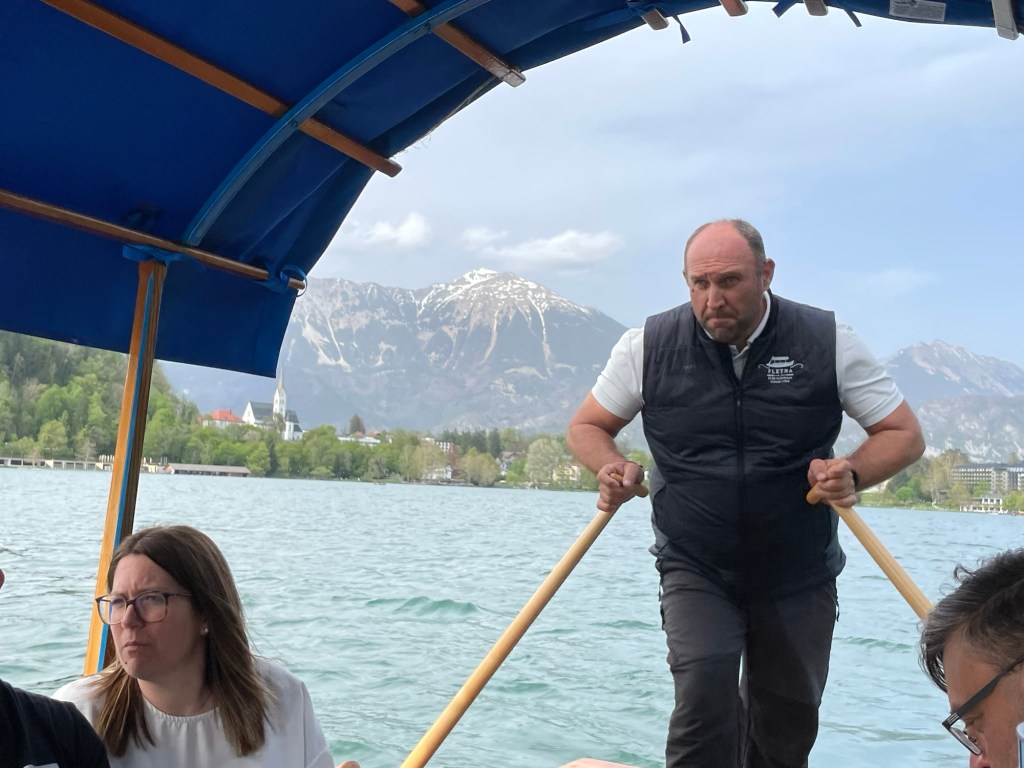
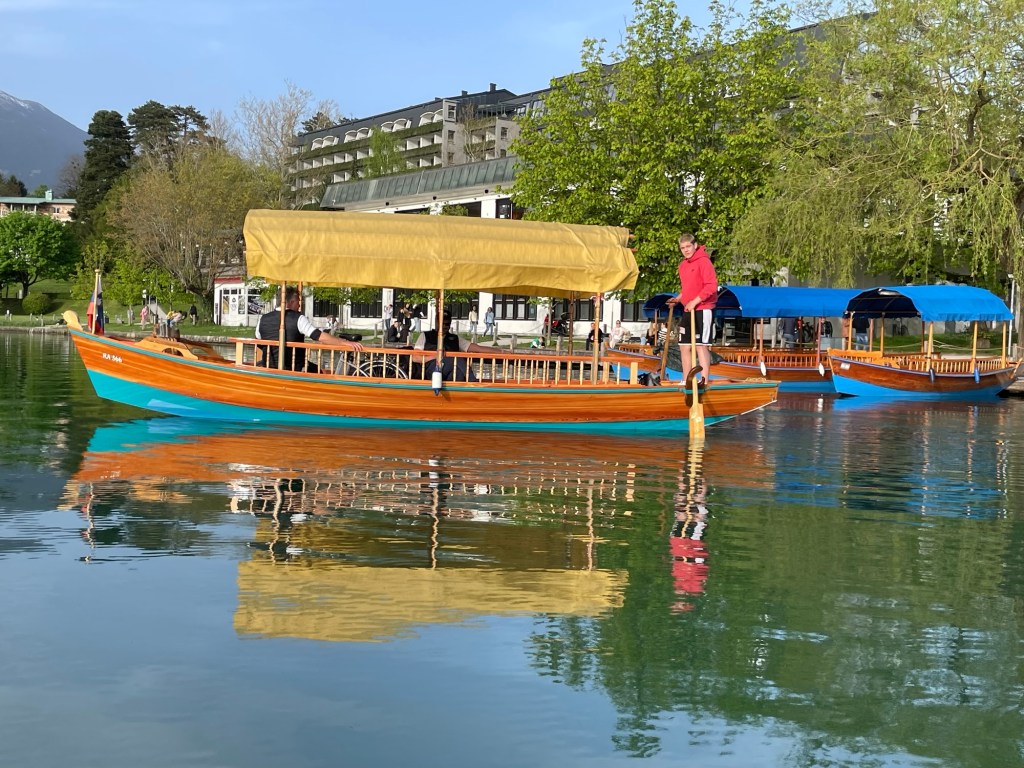
Our visit to the castle took into the early afternoon, so after a late lunch we headed back into town for our last essential Bled experience of the day: a trip to the island where the Church of the Mother of God on the Lake stands overlooking the waters. Traffic on the lake is strictly controlled: during the middle ages twenty-three families were granted the right to ferry pilgrims across the water to the island, and their descendants remain in charge of the business to this day. Gasoline motors are not allowed. Although you can rent your own rowboat by the hour, the majority of visitors take the pletna. These are rowed boats of a specialized design endemic to the area, able to carry up to eighteen passengers at a time and propelled by a single oarsman using double sculls. Though it seems awkward to look at, they move surprisingly fast using this system. The boats have no schedule; instead they take passengers until they are full and then depart. Ours sported at least four or five native languages amongst its passengers: we heard English, Italian, Croatian, German, and Slovenian. From the water, we had excellent views of all the local sights as we traveled the length of the lake.
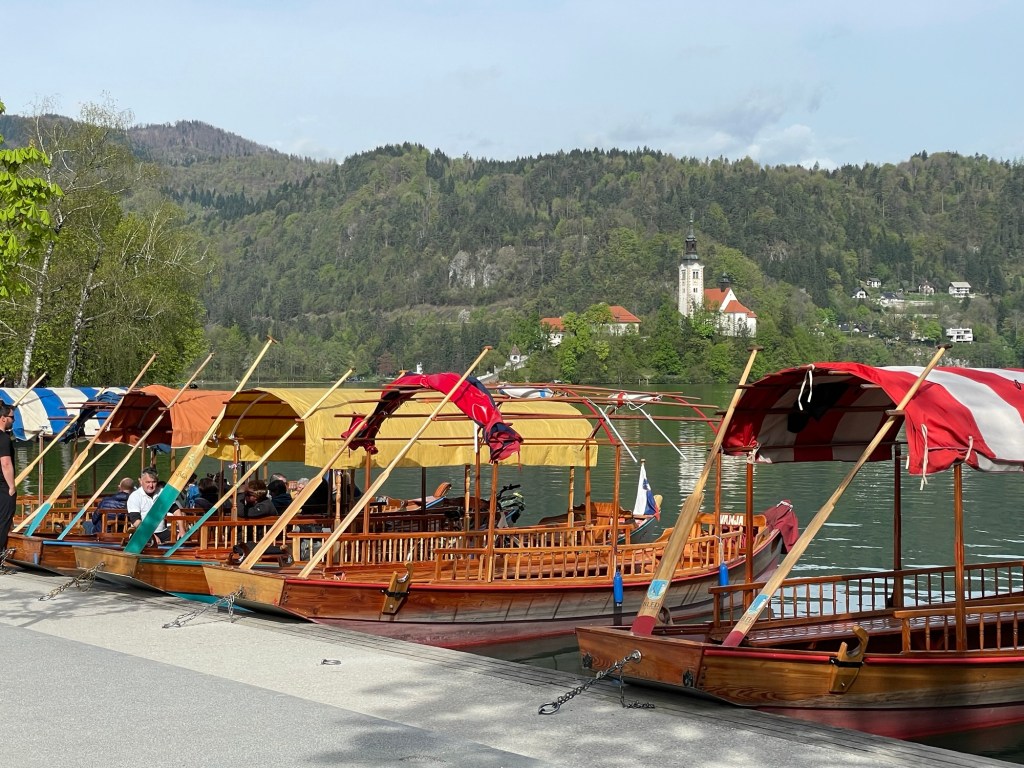



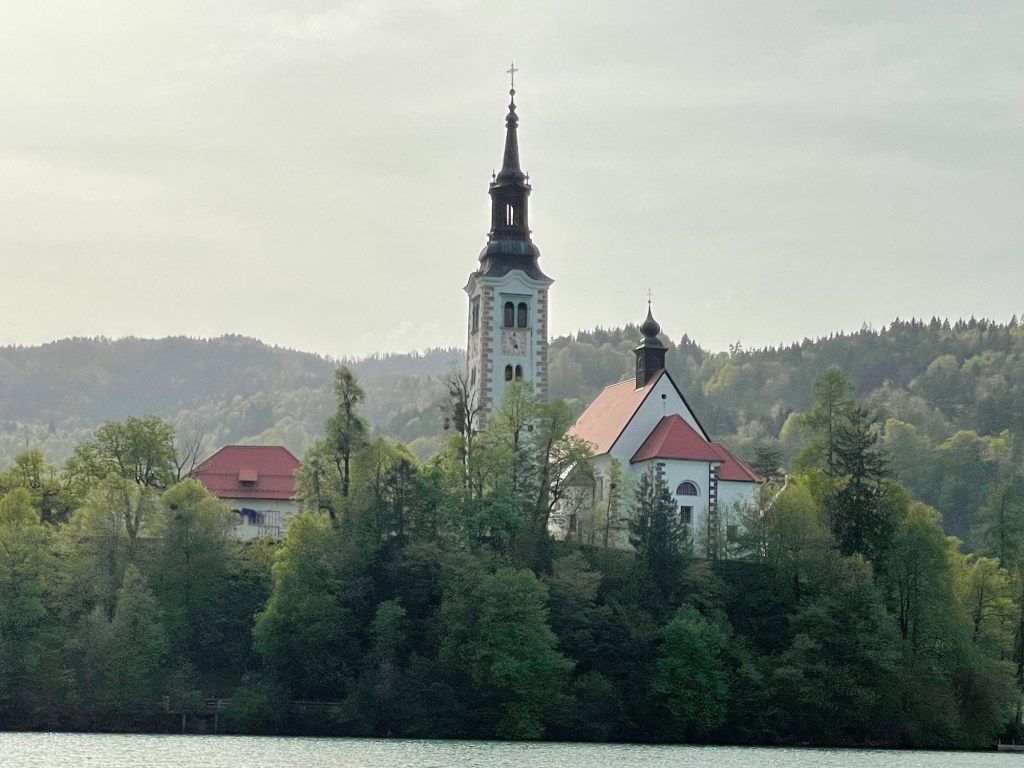

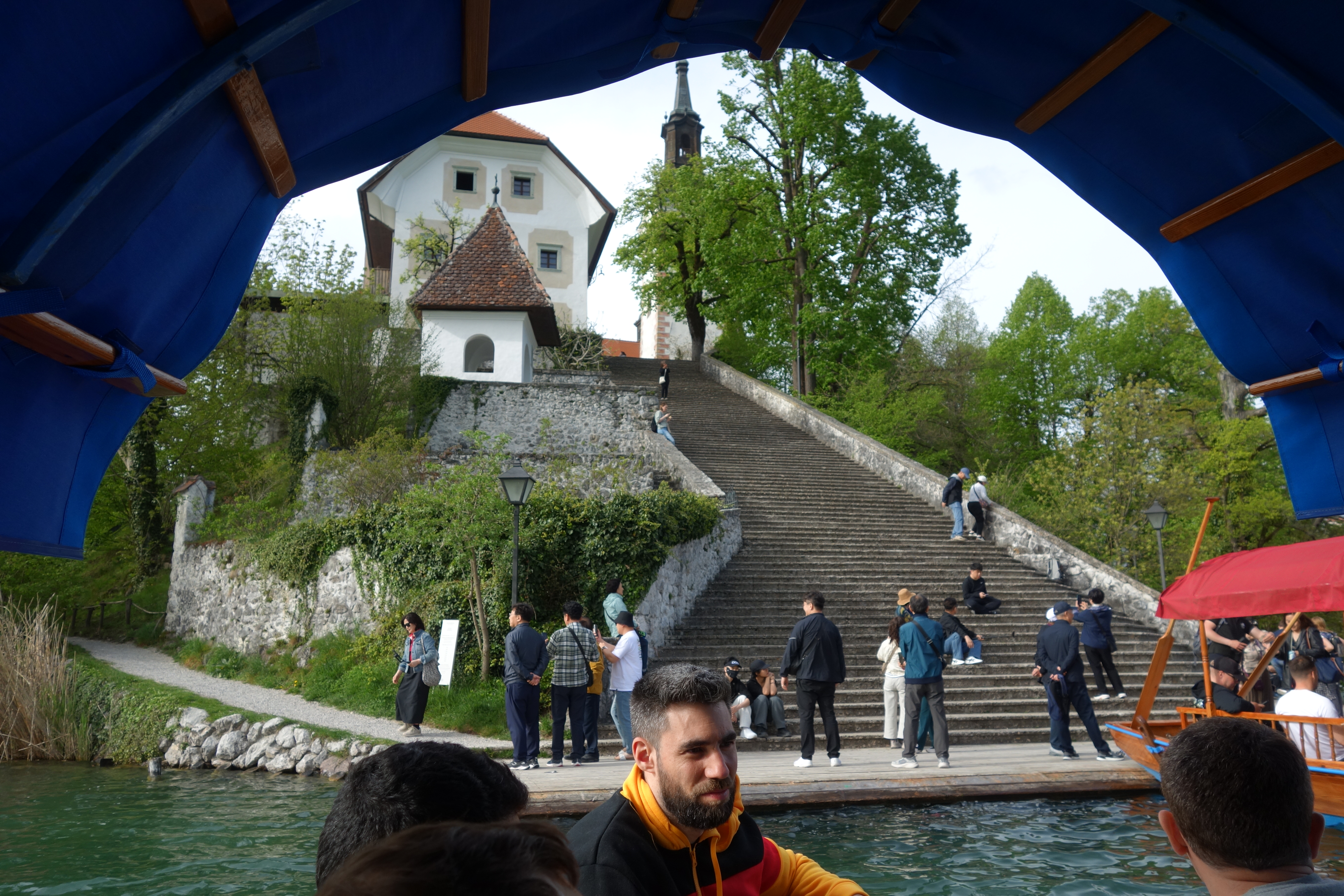
The pletna land on the island at the base of a dramatic series of stone steps leading up to the church and clocktower. Climbing the steps is supposed to bring good luck, or perhaps it is ringing the bell of the church — we heard different stories. A popular local legend tells that a lady of the castle, in mourning for her husband killed by bandits, commissioned a large bell to be cast and placed in the church. However, tragedy struck as the bell was being transported to the island: the boat capsized, and the bell sank to the bottom of the lake, where it can still at times be heard tolling away in mourning for the lost husband. This sad story somehow made its way to the ear of the Pope, who commissioned a new bell and had it installed to replace the one that was lost. Today, those who ring the bell and make a prayer to St. Mary may have their wishes granted. Not wanting to miss our chance, we all took a turn on the rope.
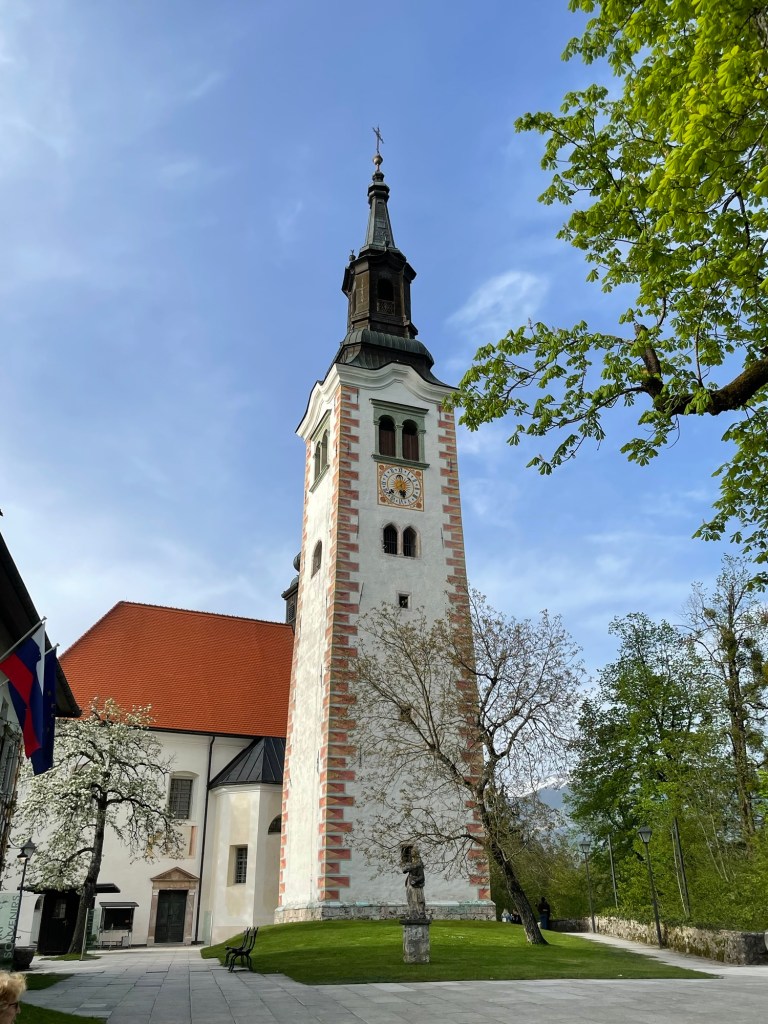

The tall tower next to the church holds a mechanical pendulum clock with a complex mechanism that tools the quarter hours, half hour, and hours, each with a different ring. It had grown rusty and inoperable, and was only recently refurbished within the last ten years. Climbing the tower allowed us to see the workings, and also gave elevated views across the lake.

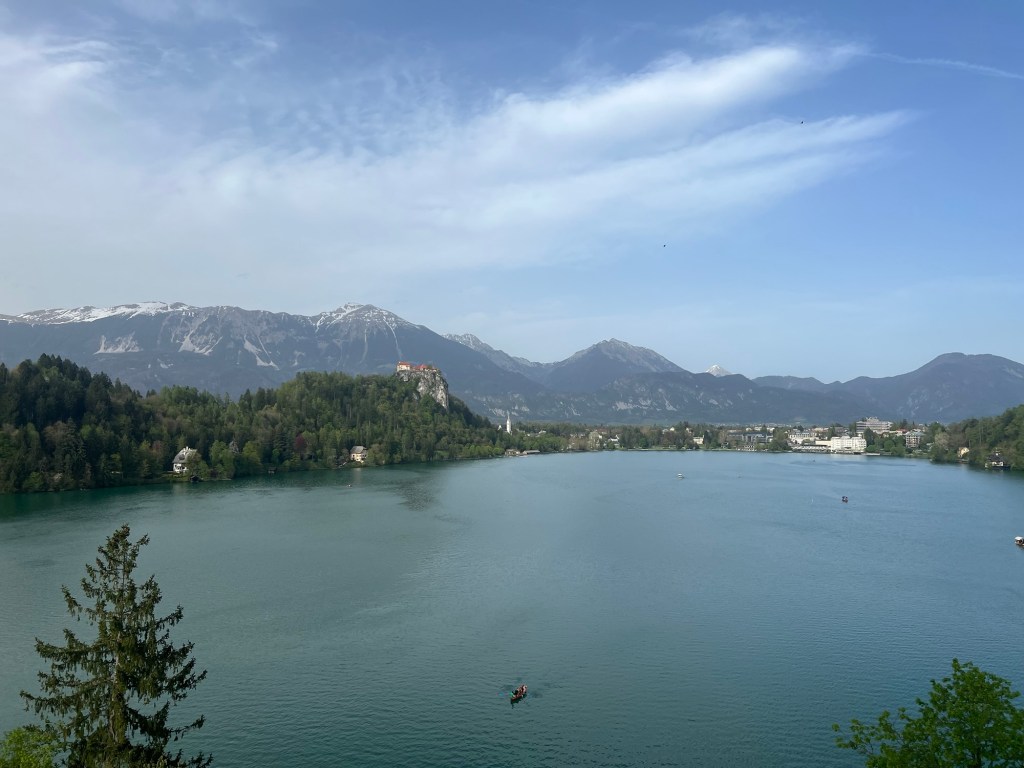
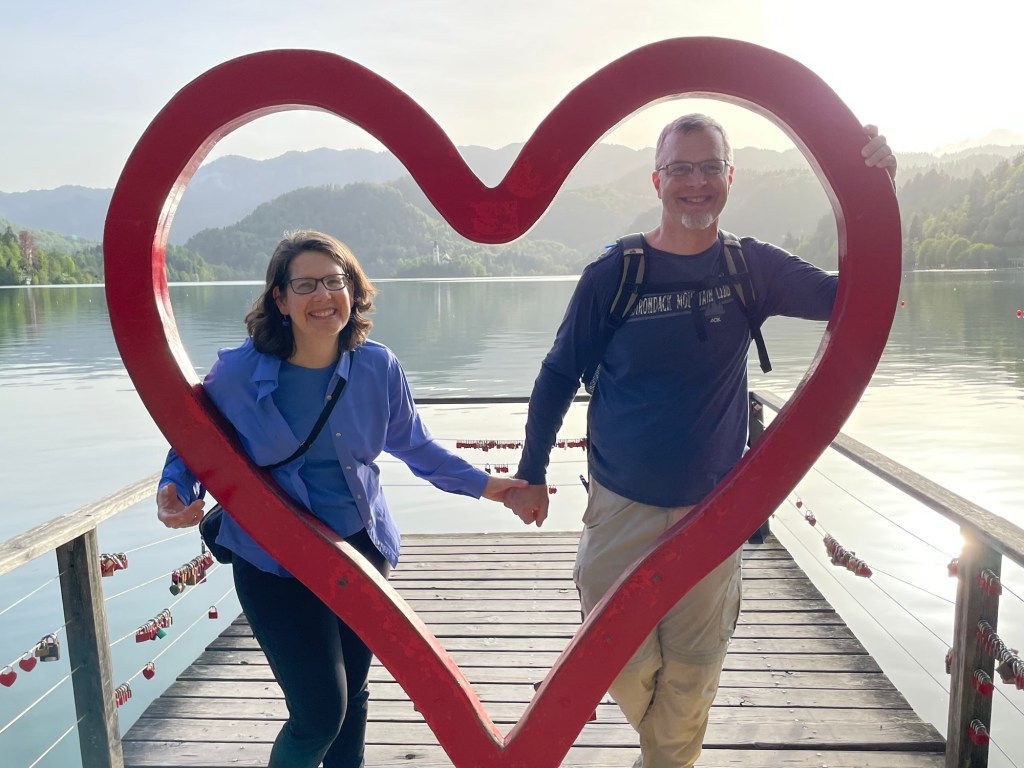
Besides the church and tower, we also visited a small museum and made the short circuit of the island’s shores. The building that now houses the museum was originally built to accommodate the many pilgrims who used to flock to the island for the Feast of the Assumption in mid-August. These days pilgrims may still visit, but nobody stays on the island overnight. Our own time was limited because our boat operator was waiting to take us home, so we boarded the pletna once more for the trip back to town. The day was near to ending by then, so we spent some time on the waterfront admiring the beauty of the landscape in the late afternoon sunlight.




 Howes' Doings