
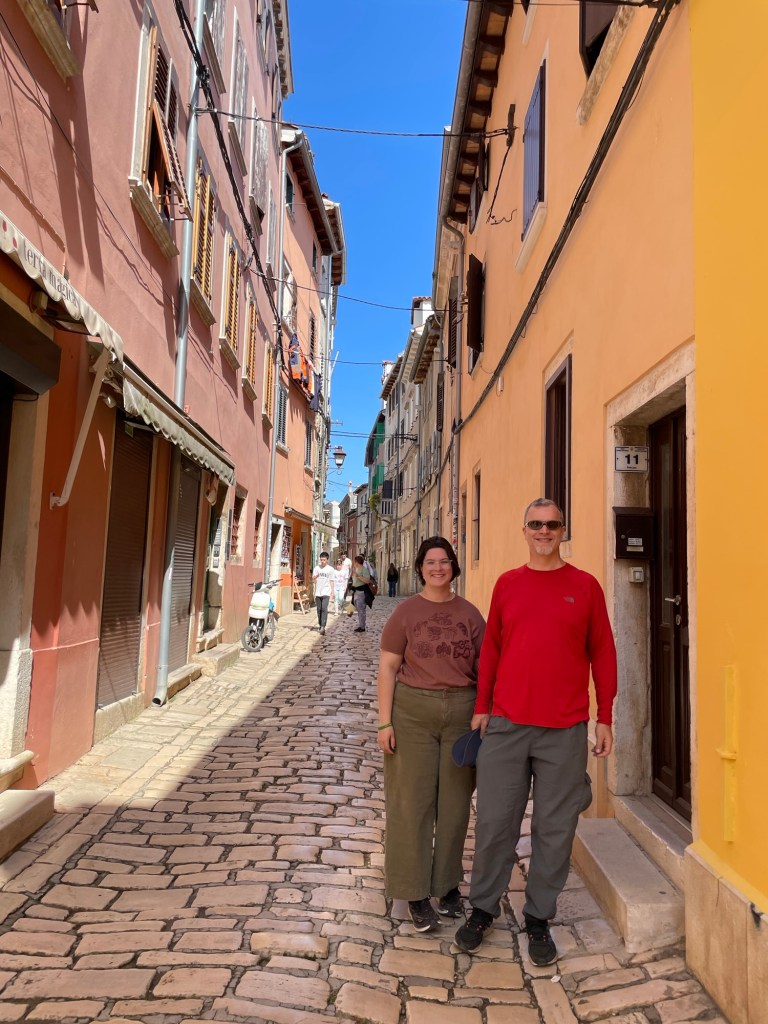
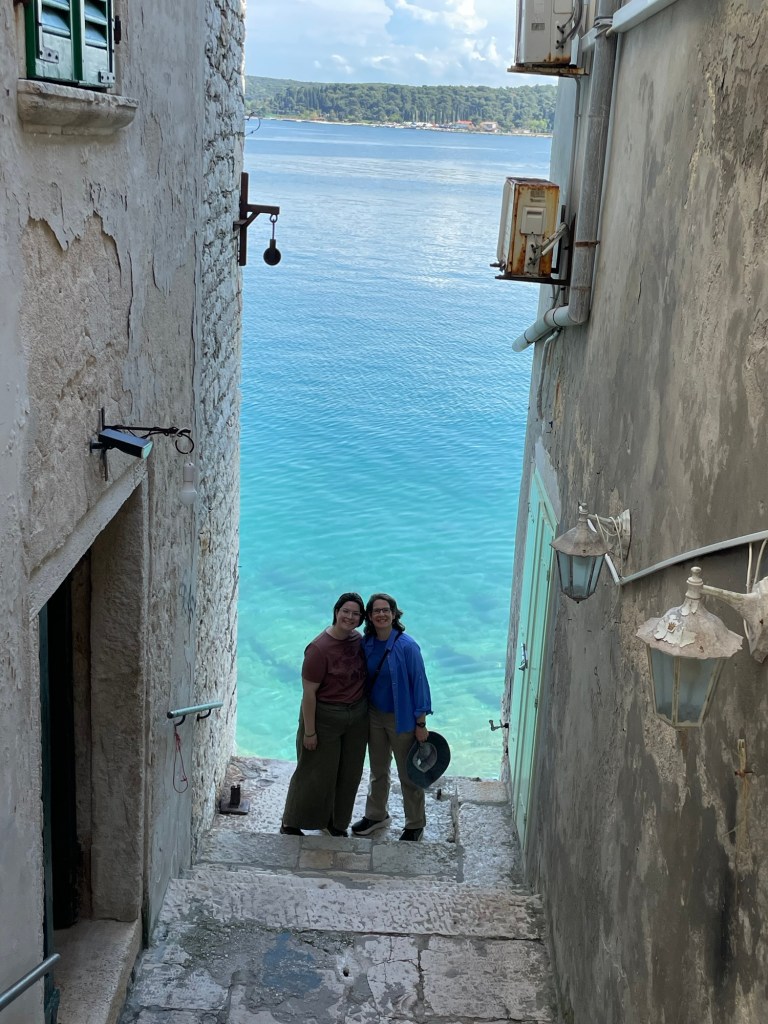
Today we spent exploring Rovinj and its environs on foot. Walking is a good way to get around here, because most of the old city is pedestrian only. The town developed in stages; the oldest settlement was on an oval island just off the coast, where the street plan was designed so that the houses on the outer edge provide a solid wall defending against attacks. In more recent centuries, when threats from the water had subsided, some narrow openings were made in these defenses for easier access to the sea. As the town grew, the island became overcrowded and buildings spilled onto the mainland, with a bridge connecting the two districts over a narrow canal. Ultimately the canal itself was filled in to make a new street, and the onetime island became a peninsula.


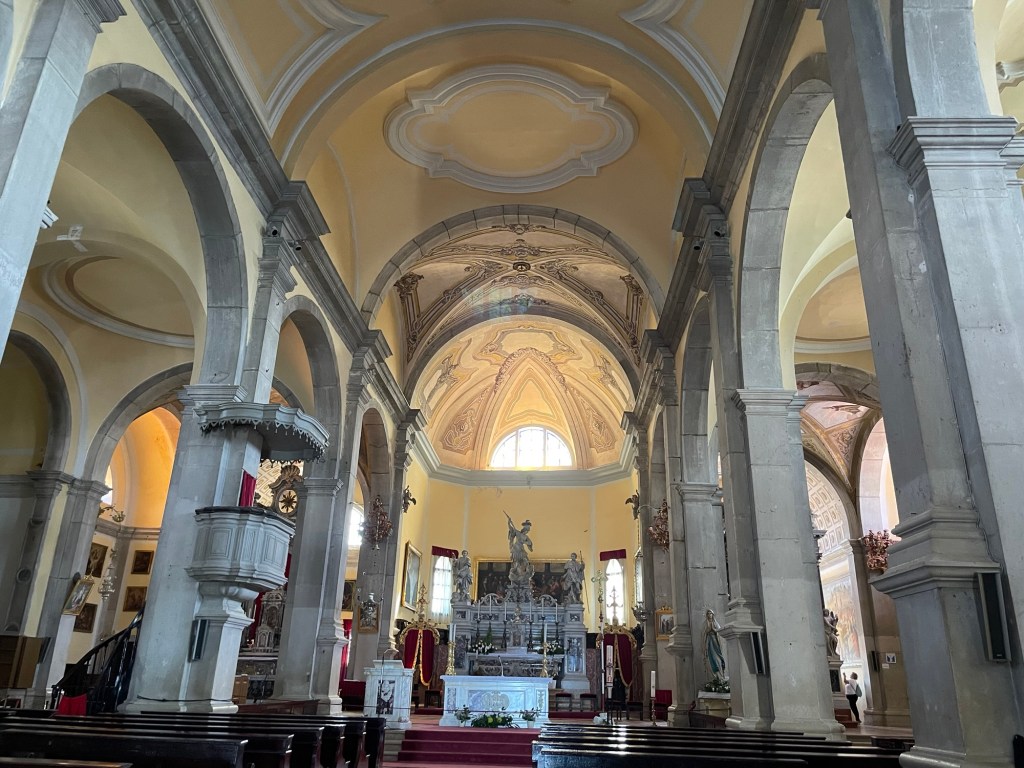
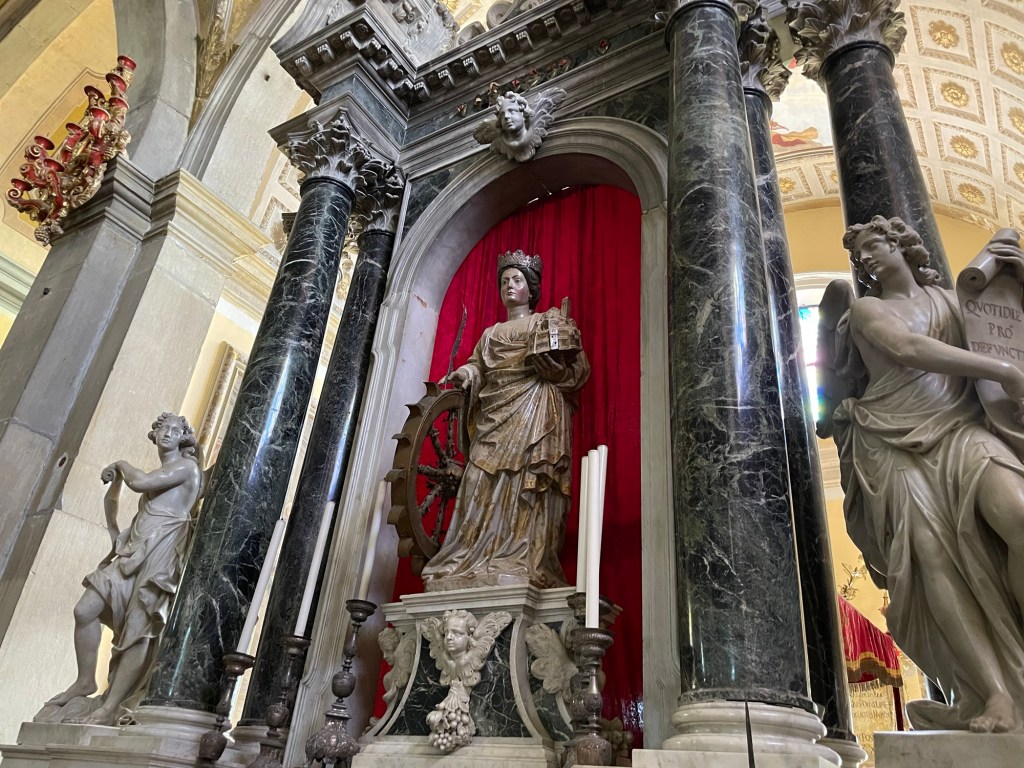
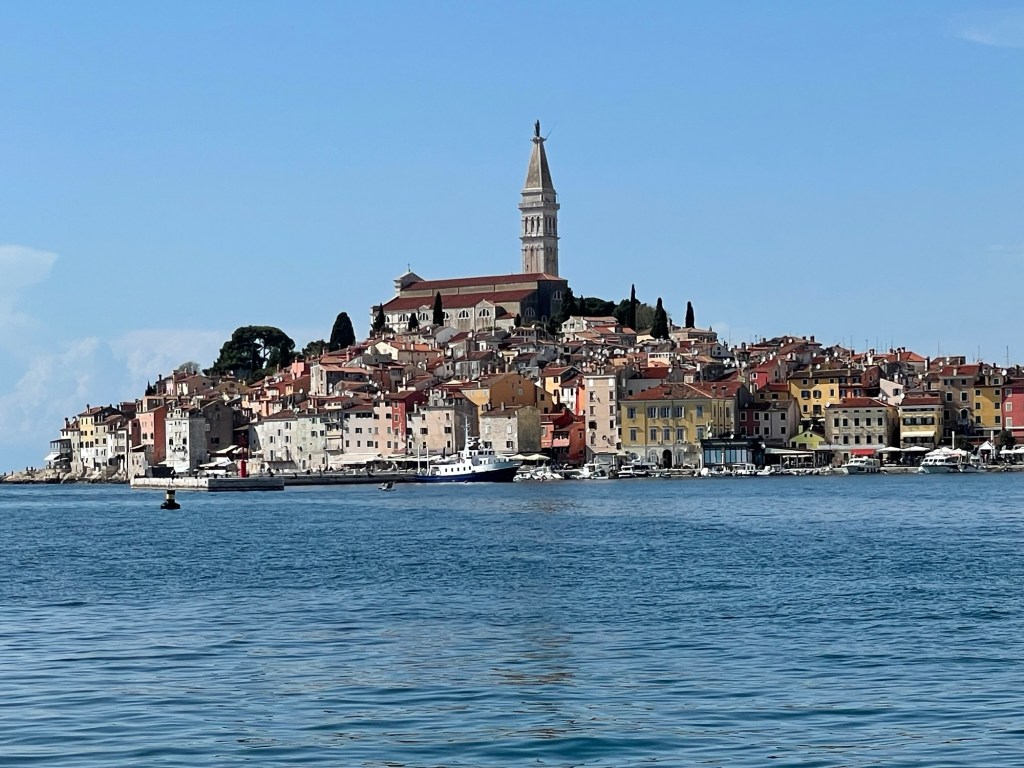
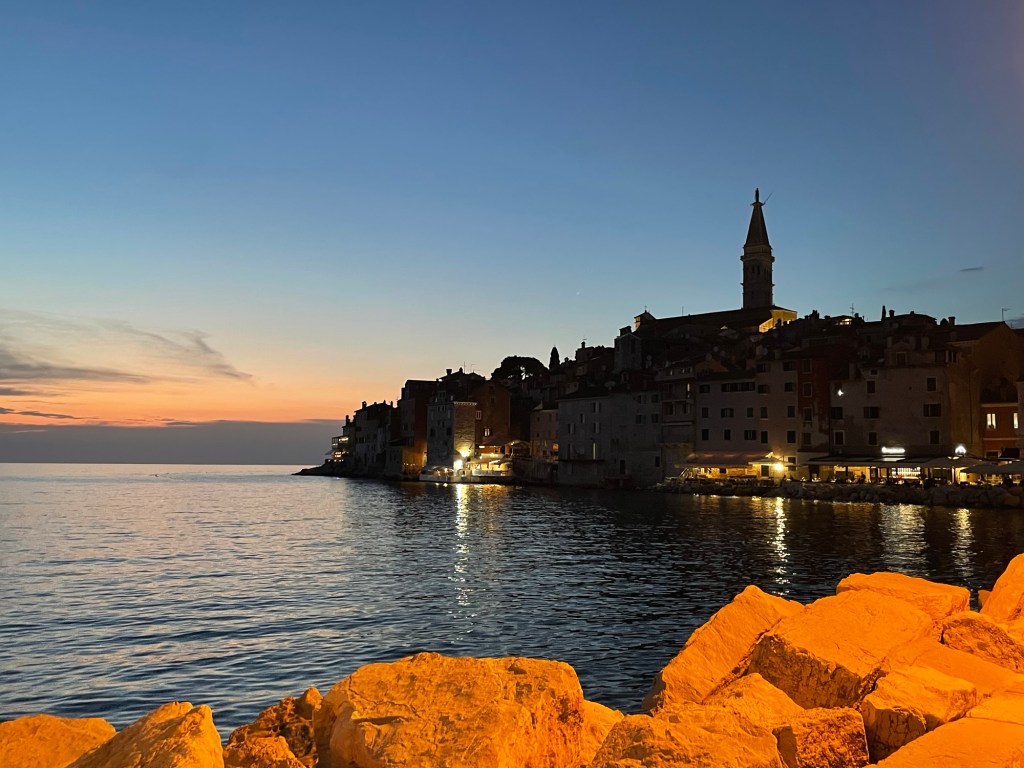
The beautiful campanile at the center of old Rovinj is attached to the Church of St. Euphemia. An early Christian martyr who lived in the vicinity of Constantinople, Euphemia is the patron saint of Rovinj. Why, you might ask? Apparently local fishermen discovered her remains nearby in a giant stone sarcophagus, which had miraculously floated from her original burial place all the way to Rovinj harbor. She now lies at rest within the church inside the very same vessel that sailed her all the way from Greece. Atop the campanile, a statue in her image serves as a weathervane: when she faces the sea, the winds bring good weather. If she turns inland however, one can expect a storm. Luckily for us, today she was looking outwards.


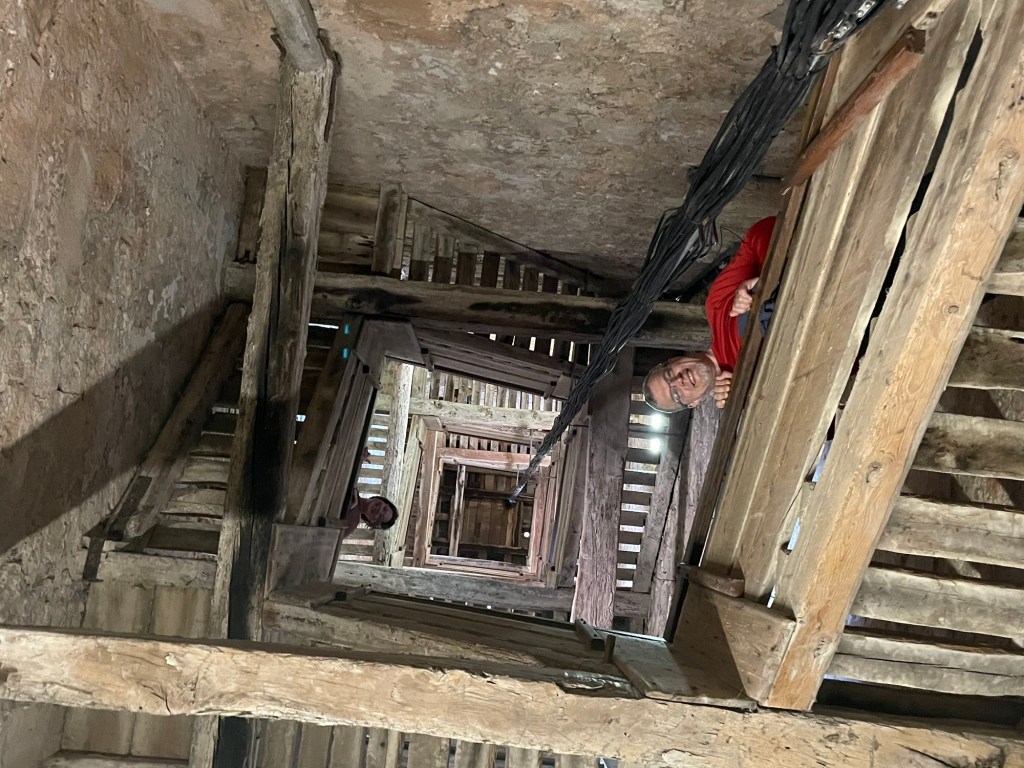
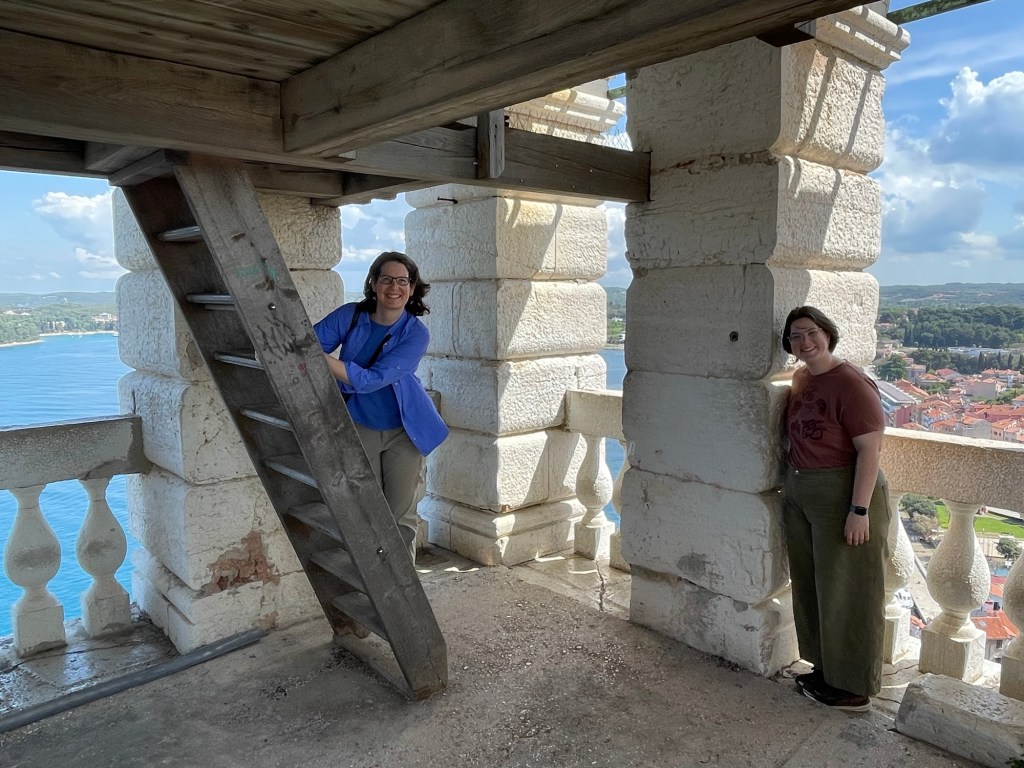
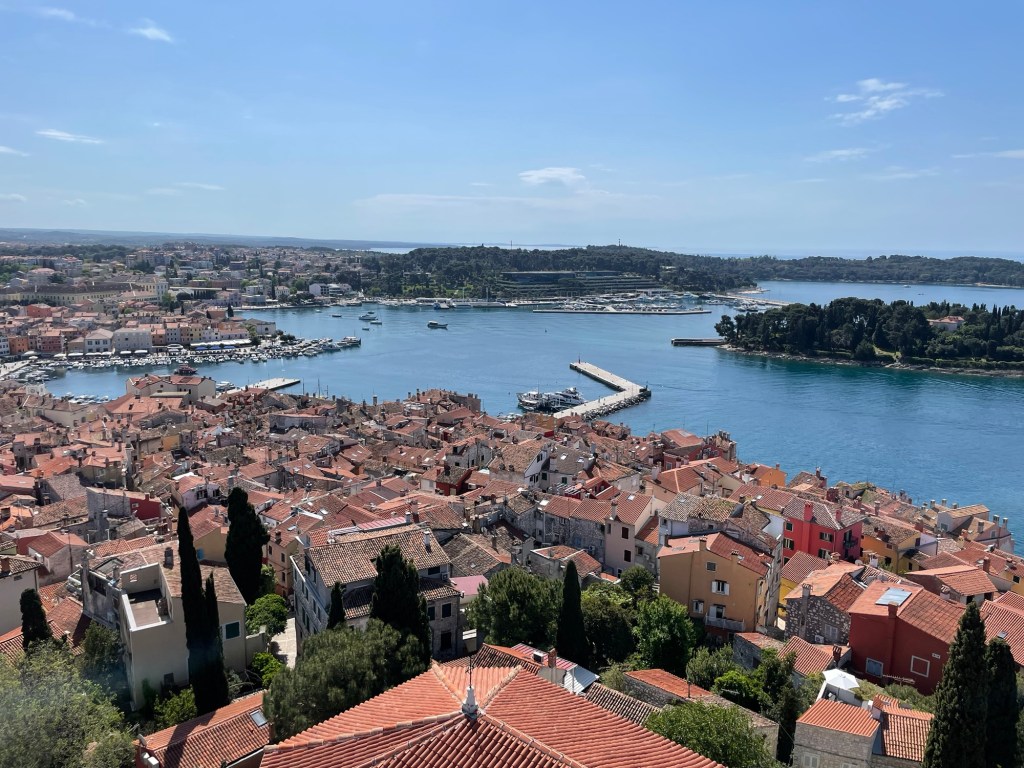
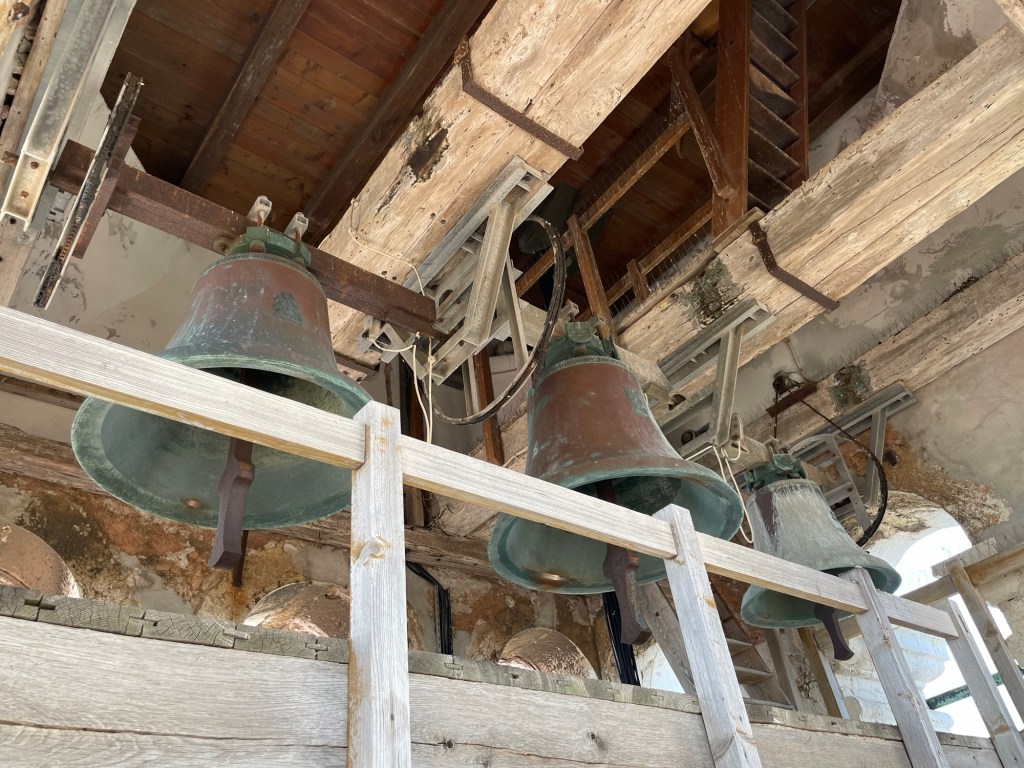
Visitors to the church can climb the campanile as far as the bell platform, so of course we wanted to see it. A rather impressive and rickety set of wooden steps led up to the top, where we had excellent views of the city and its environs.

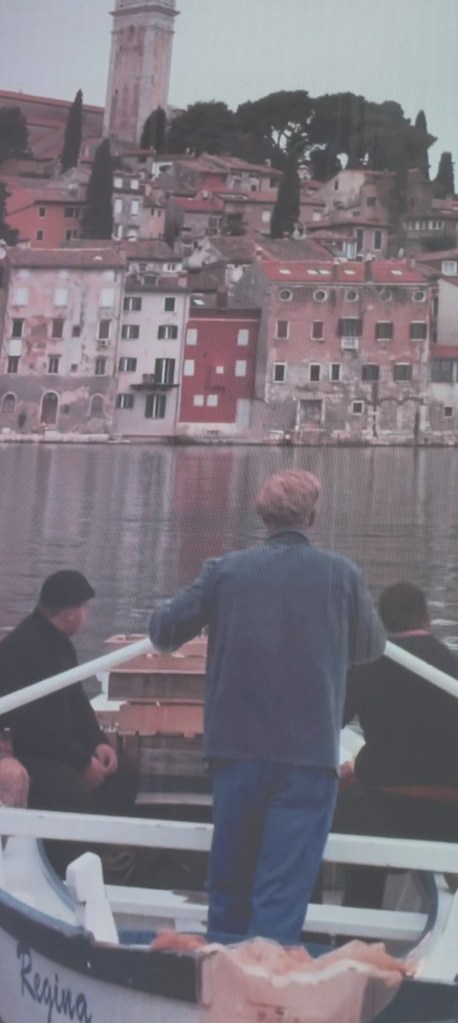
After spending some delightful hours wandering the city, we came across a small museum dedicated to local culture. Focusing particularly on the batana, which is the local flat-bottomed fishing boat, it showed how they were constructed and their significance to the people of the region. The sails were decorated, and each family had its own distinctive design.



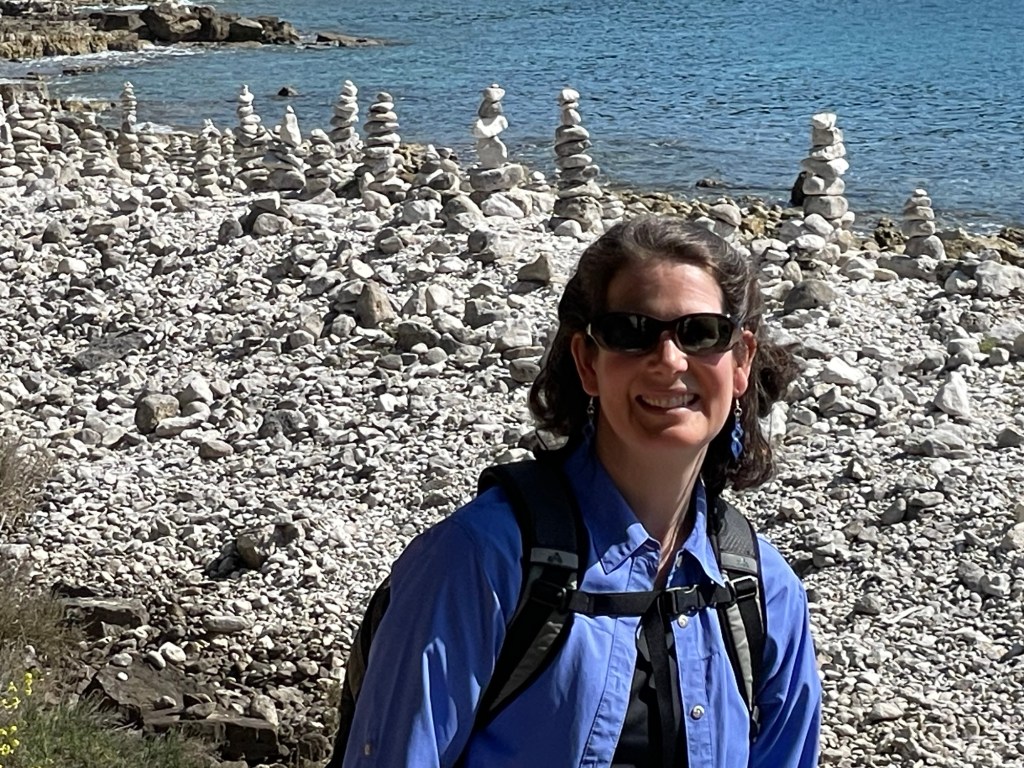
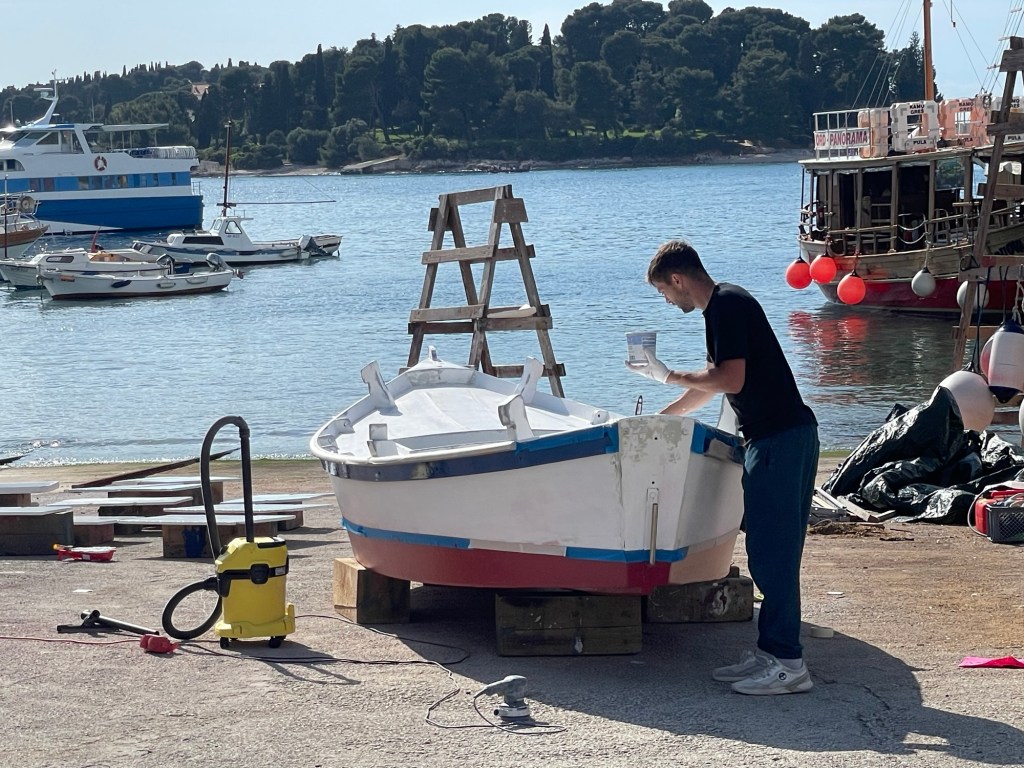
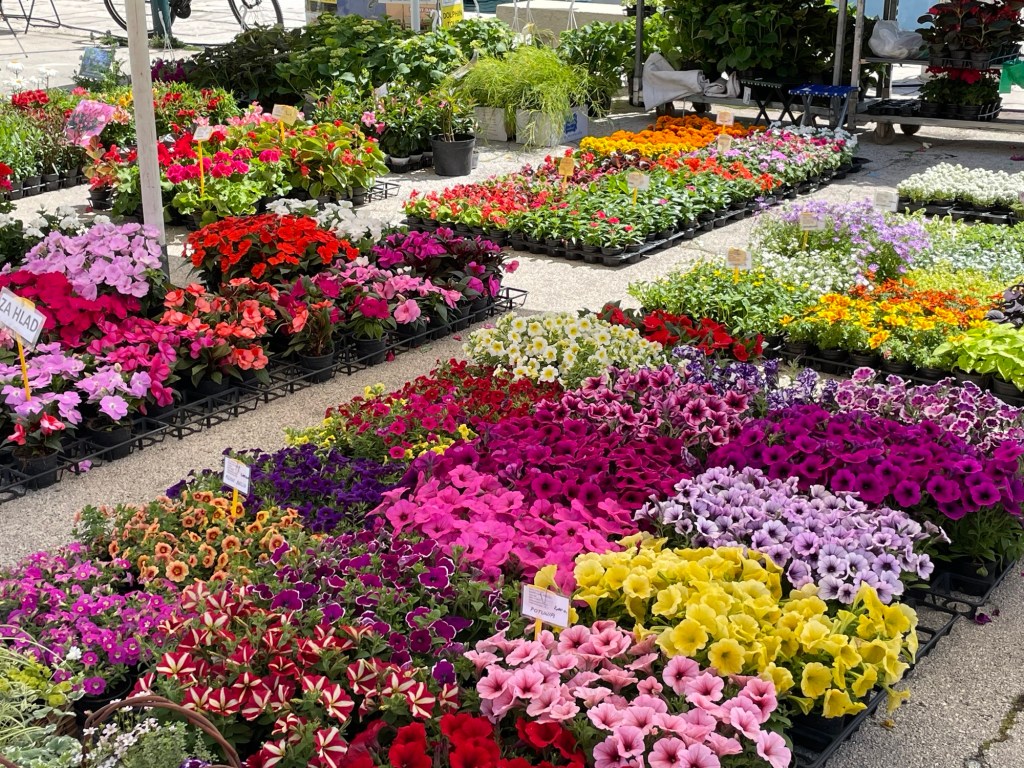
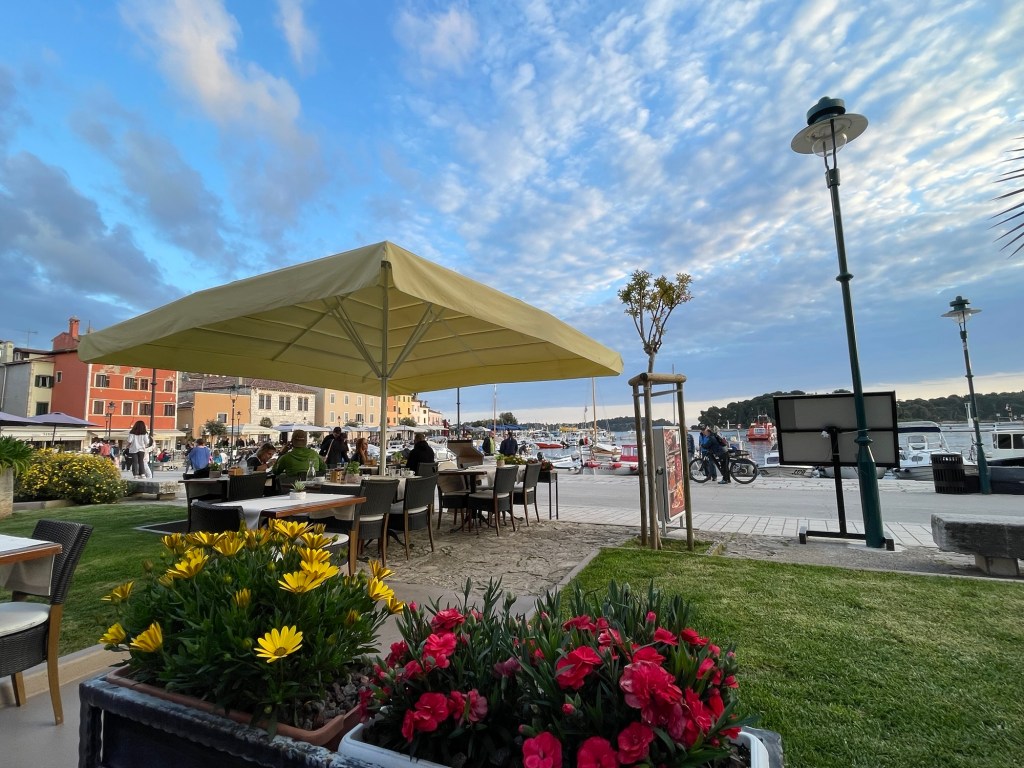
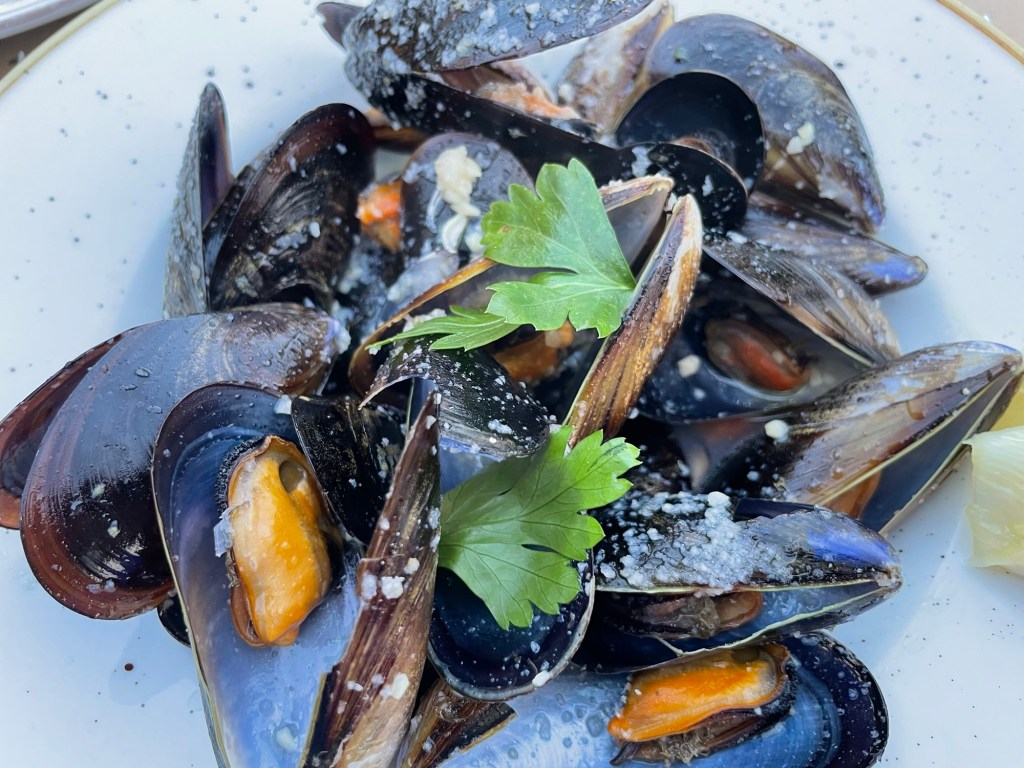
Later in the afternoon we went for a walk down the coastline to the Golden Cape, a park with views of the city. This area has no sand, but there are rocky coves with pebble beaches. Sheer cliffs at the end of the cape are also popular with rock climbers. On our way back, we had some great views of the city from a distance. We also saw a shipyard where someone was repainting a batana, stopped for some dark chocolate gelato, and marveled at the display of flowers for sale by the marina. After another seaside dinner, we took a stroll to the end of the pier for some photographs in the dusk.







 Howes' Doings