
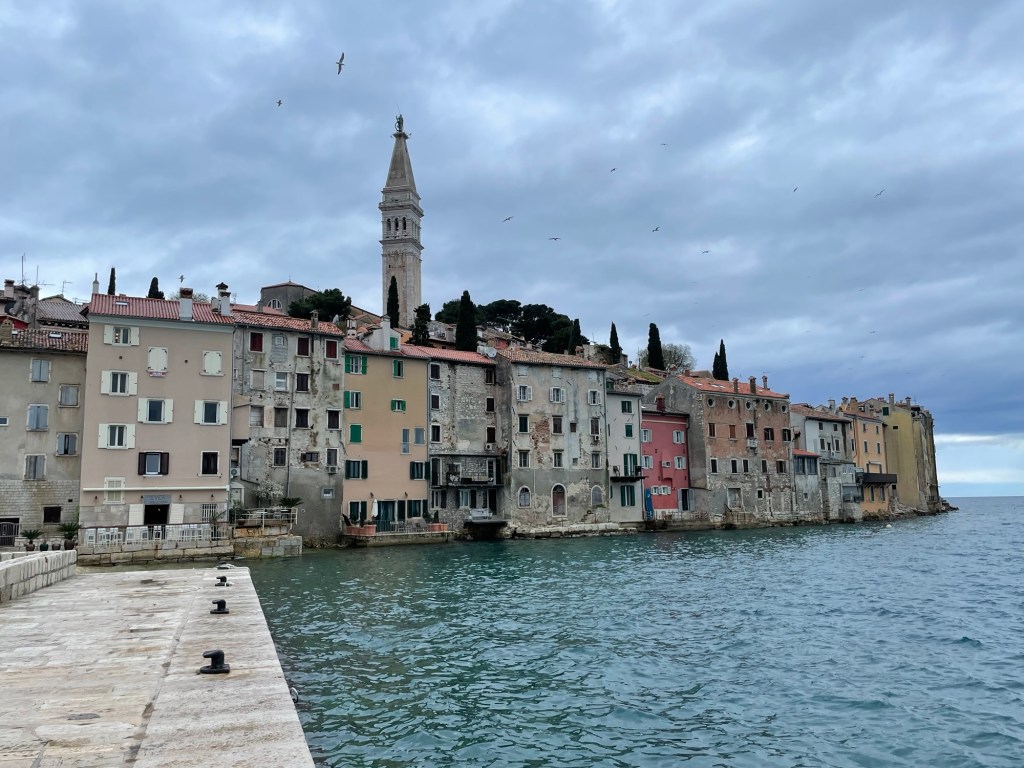
This morning when we woke up, Saint Euphemia was facing towards the land. Sure enough, the weather was gray and rainy — not a good day for walking around, but not so bad for driving in a car. Which was fortunate for us, because today we planned to visit several sites on the Istrian peninsula in the vicinity of Rovinj. Time for a road trip!
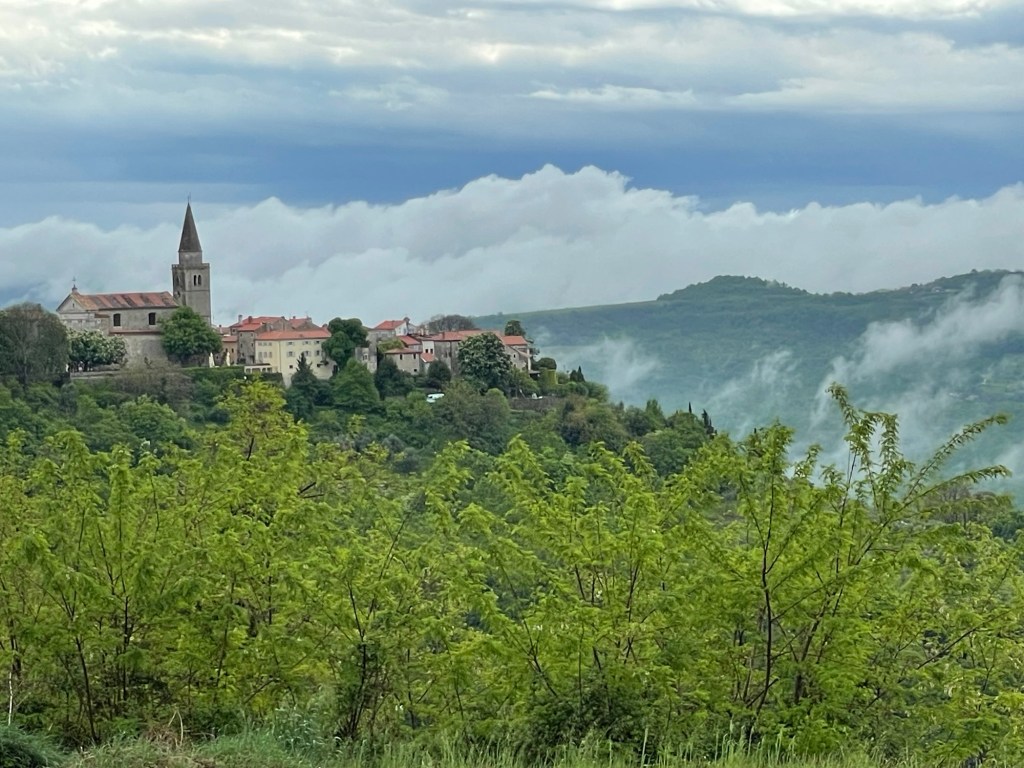
Our first two destinations were old hill towns to the north. Grožnjan is known as an artistic center, and features dozens of shops selling all manner of different art pieces — painting, glass, metalwork, jewelry, sewn crafts, etc., plus a handful of the usual tourist souvenir shops thrown in for good measure. We could tell that on a clear day there would have been excellent views in all directions, but today we were lucky to get enough of a break in the clouds to see the line of the next ridge. At least the rain mostly held back while we explored the town.


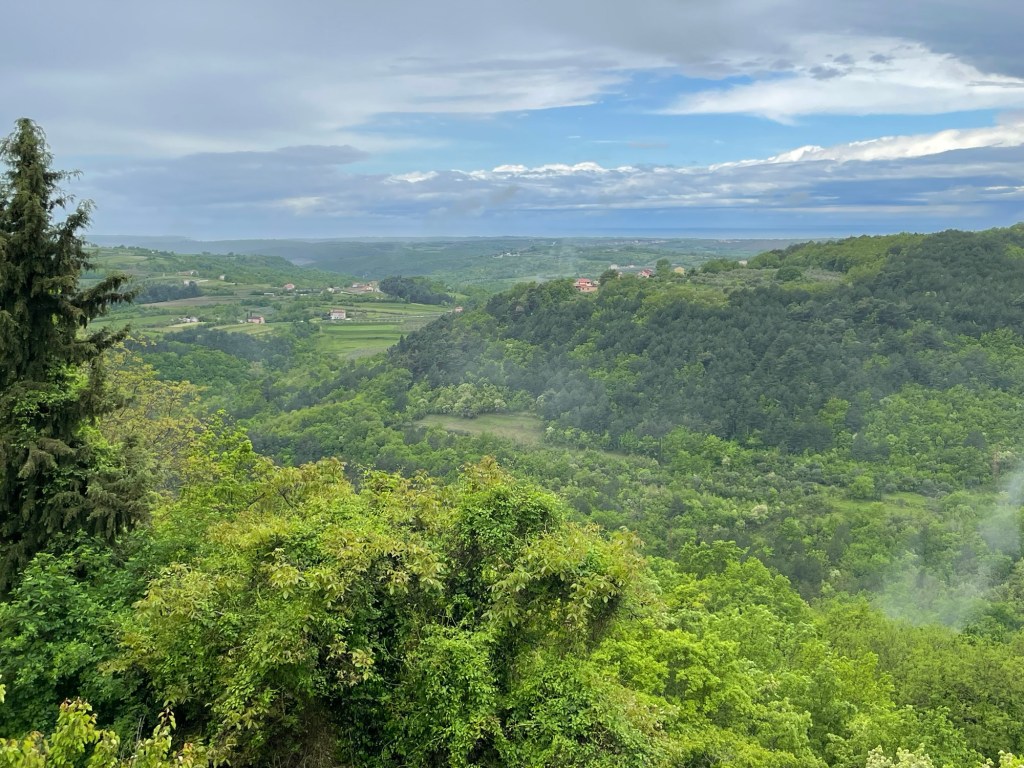
By the time we reached our second hill town, named Motovun, the rain had set in and the fog had grown denser. It was around lunchtime, so after parking we found ourselves a restaurant with indoor seating and ordered a meal. One of the specialties of this region is the wild truffle, and in restaurants many of the dishes feature this ingredient. They come in two varieties, white and black. We decided to share a plate of pasta with black truffles, so that everyone could have a taste.
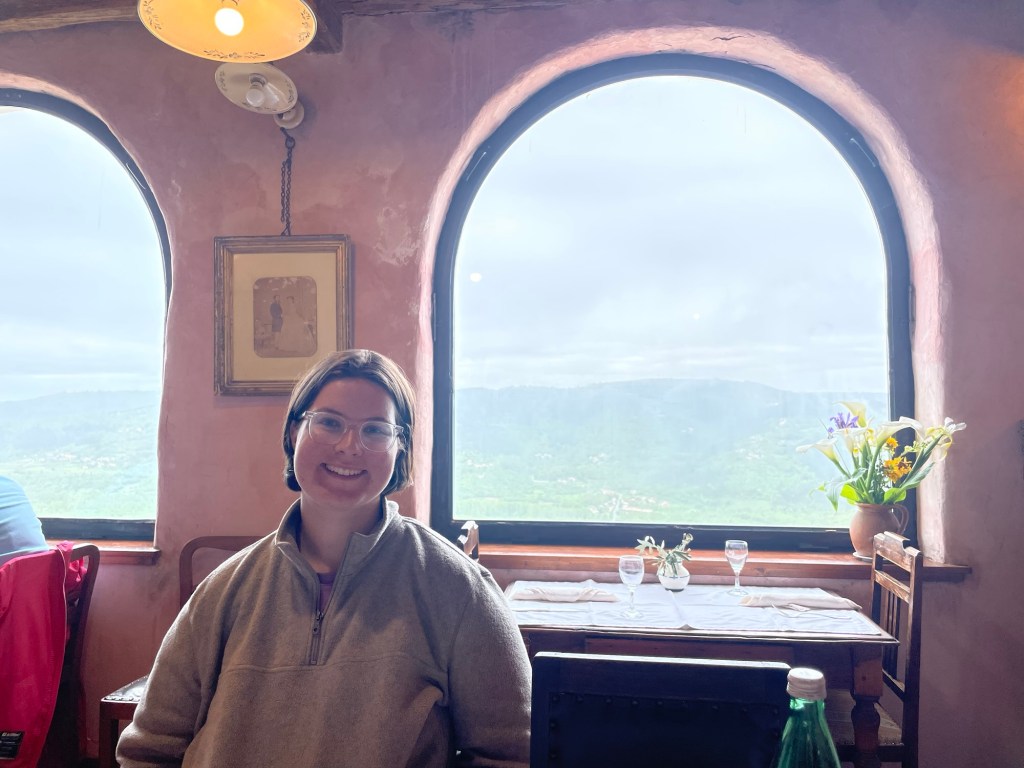

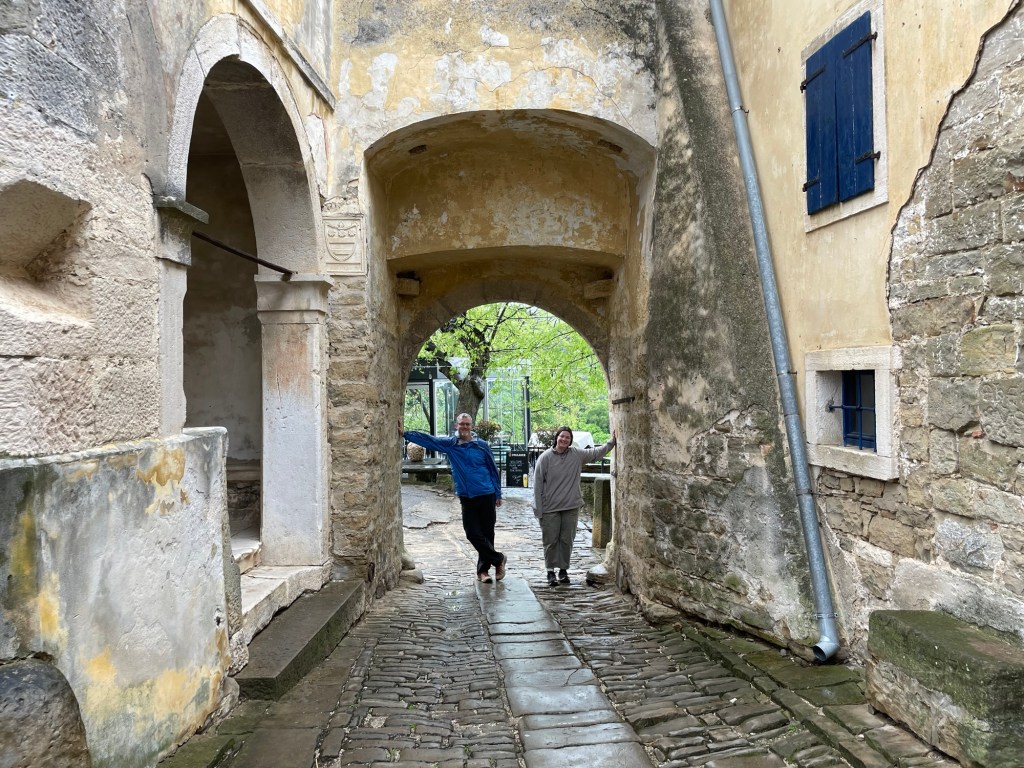
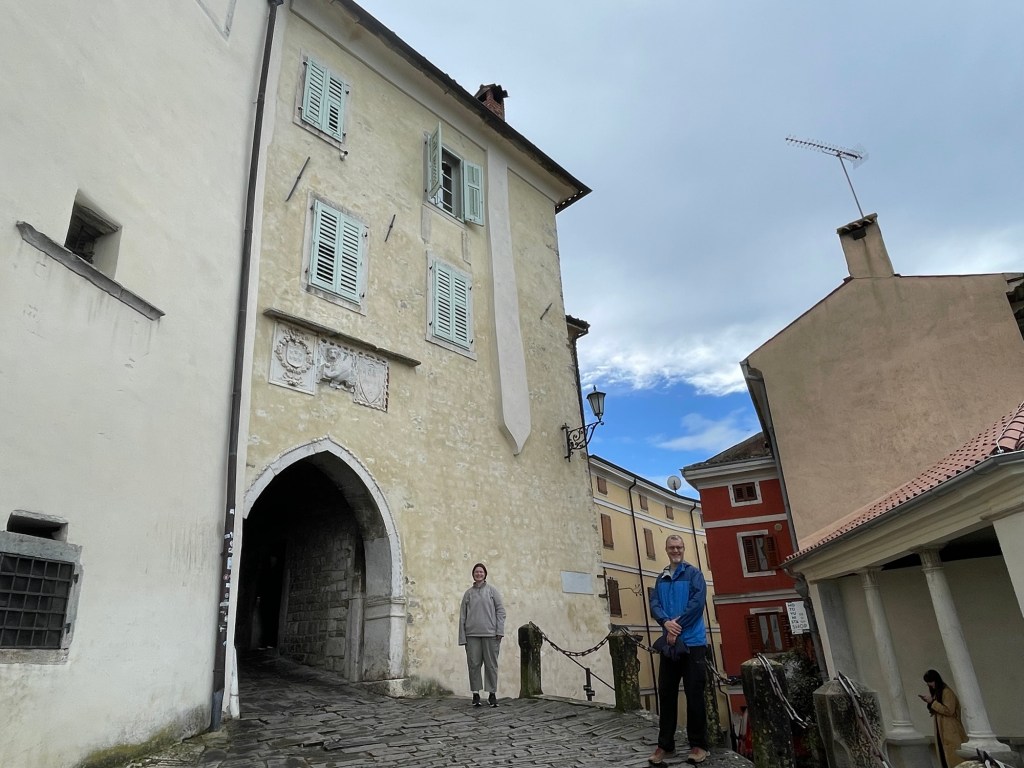
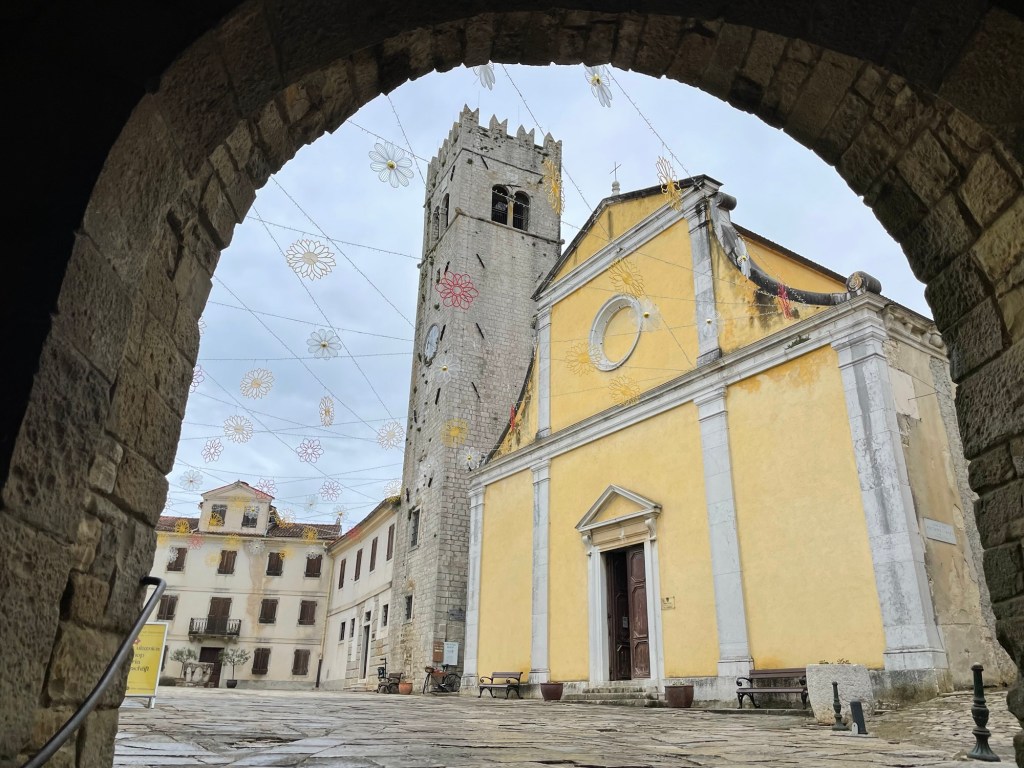
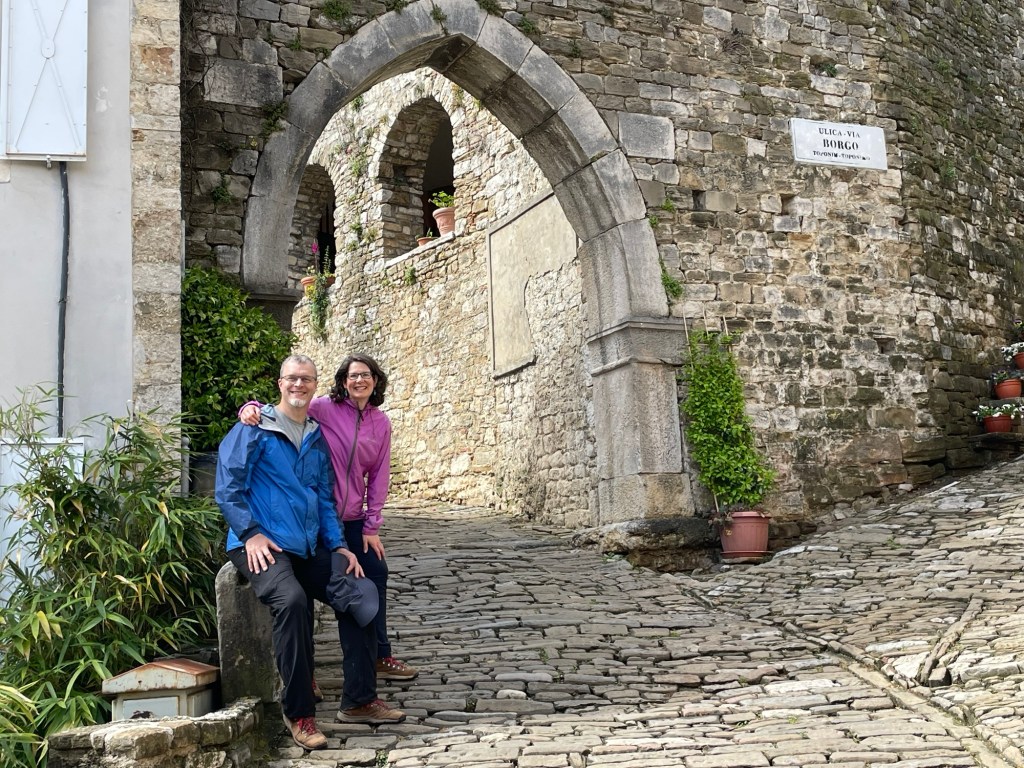
By the end of lunch, the skies had cleared a bit and it was no longer raining. Motovun retains its medieval fortifications, and they are something fierce: a high wall with multiple gatehouses, and even the houses below the walls are built for defense, standing close together with limited points of entry. Once inside, a walk around the walls offers great views in every direction.






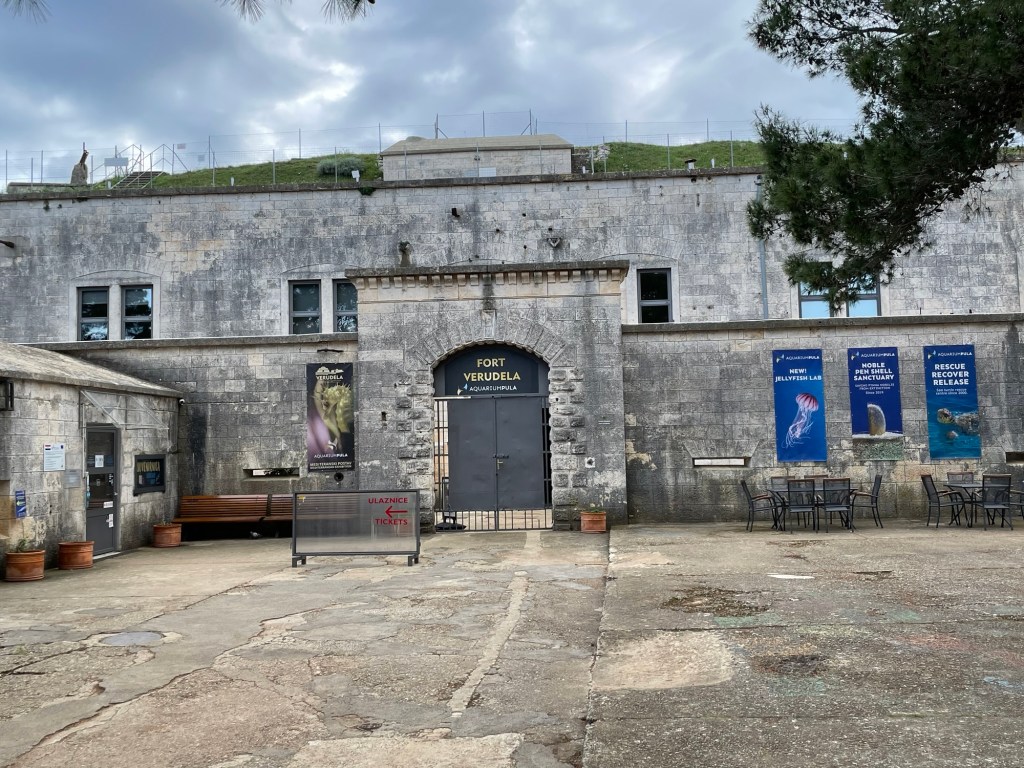
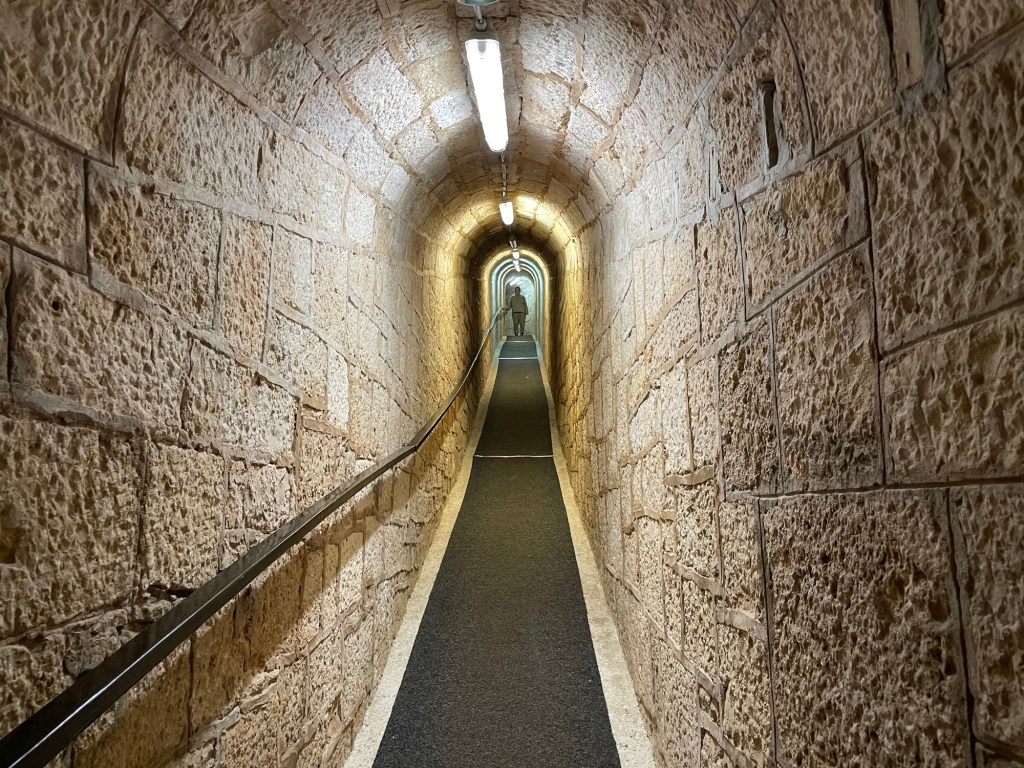
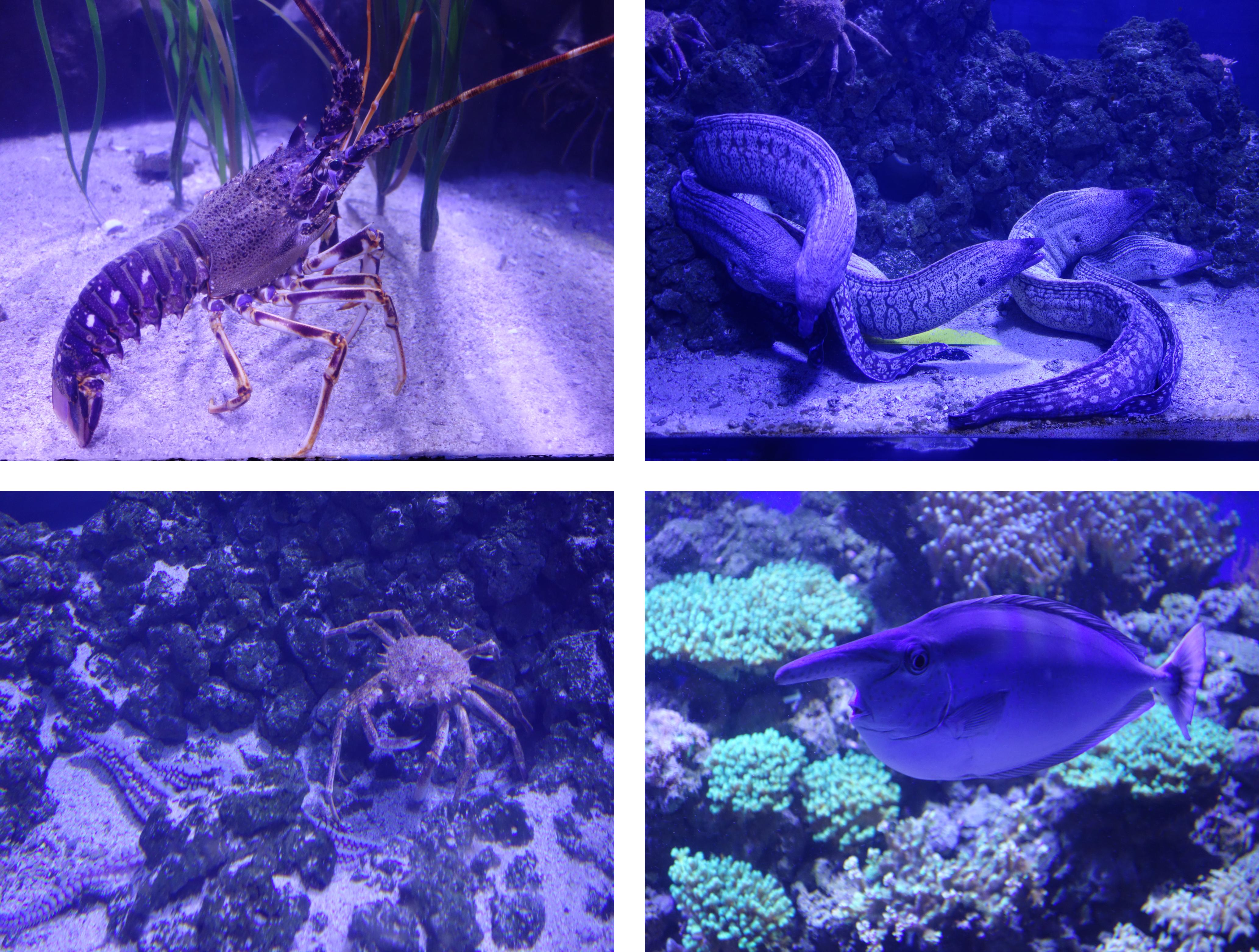
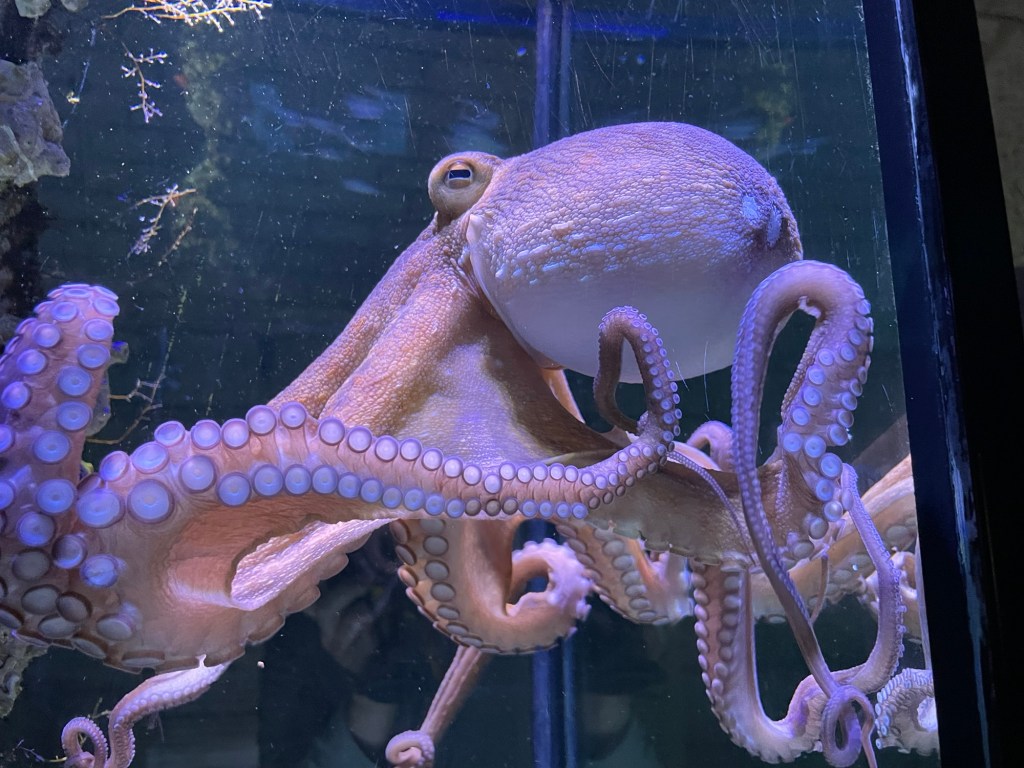
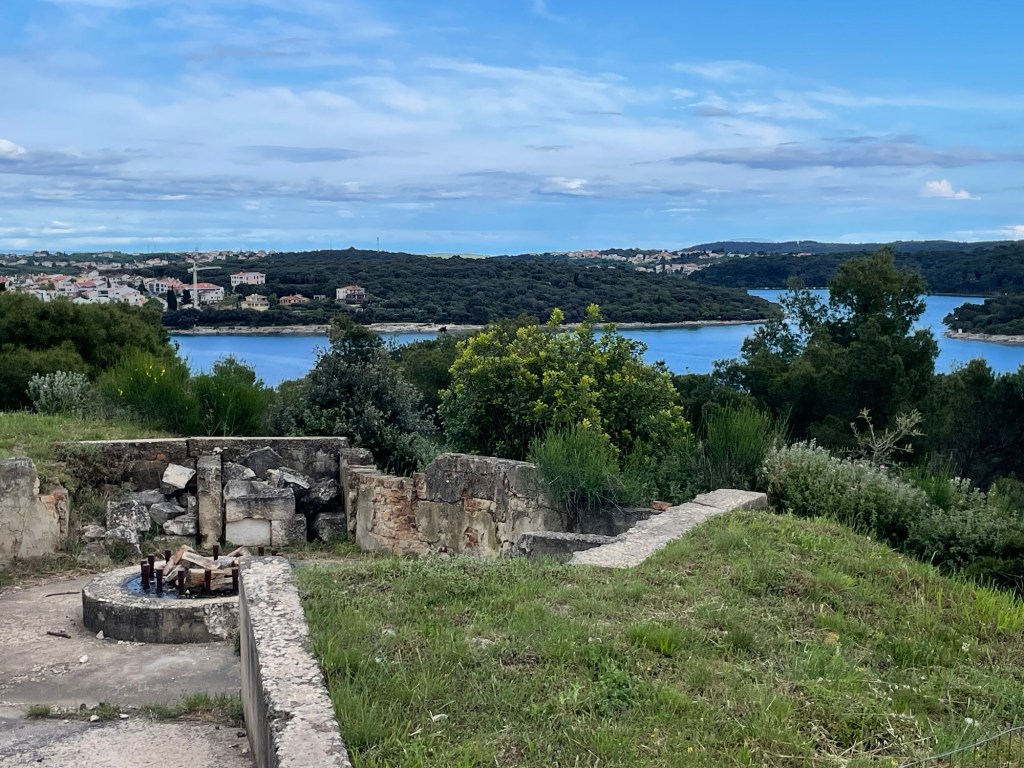
Bidding farewell to the hills, we next drove south to Pula. This coastal town once served as the chief naval base of the Austro-Hungarian Empire, and as a result is surrounded by extensive fortifications meant to protect the town and its shipyards. Now superfluous, the old forts have been stripped of their armaments and are mostly fallen into ruin. The military style of architecture doesn’t lend itself well to reuse, but here in Pula they have come up with a clever idea: one of the forts has been repurposed as an aquarium, with different tanks installed in each of the vaulted chambers inside. It works remarkably well, given that most fish prefer a constant temperature and dim lighting. We saw lots of fascinating creatures, and enjoyed our visit immensely. The octopi were our favorite characters, spending most of their time actively exploring their environments. (We’re also quite partial to the Rowan-turtle!)



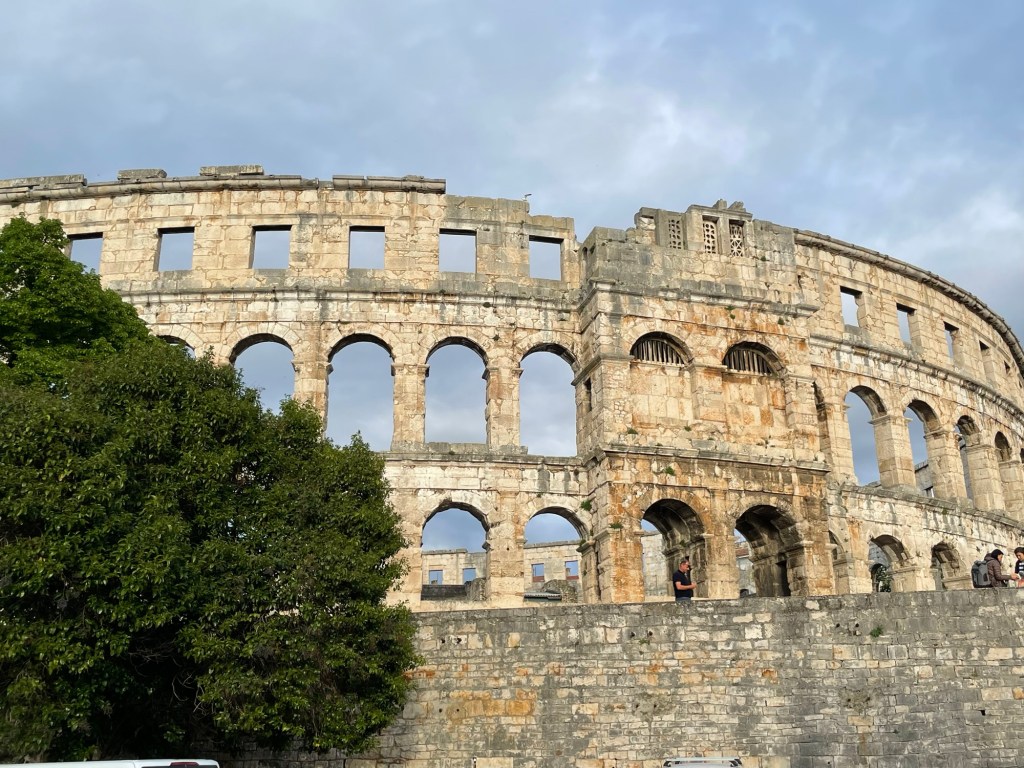
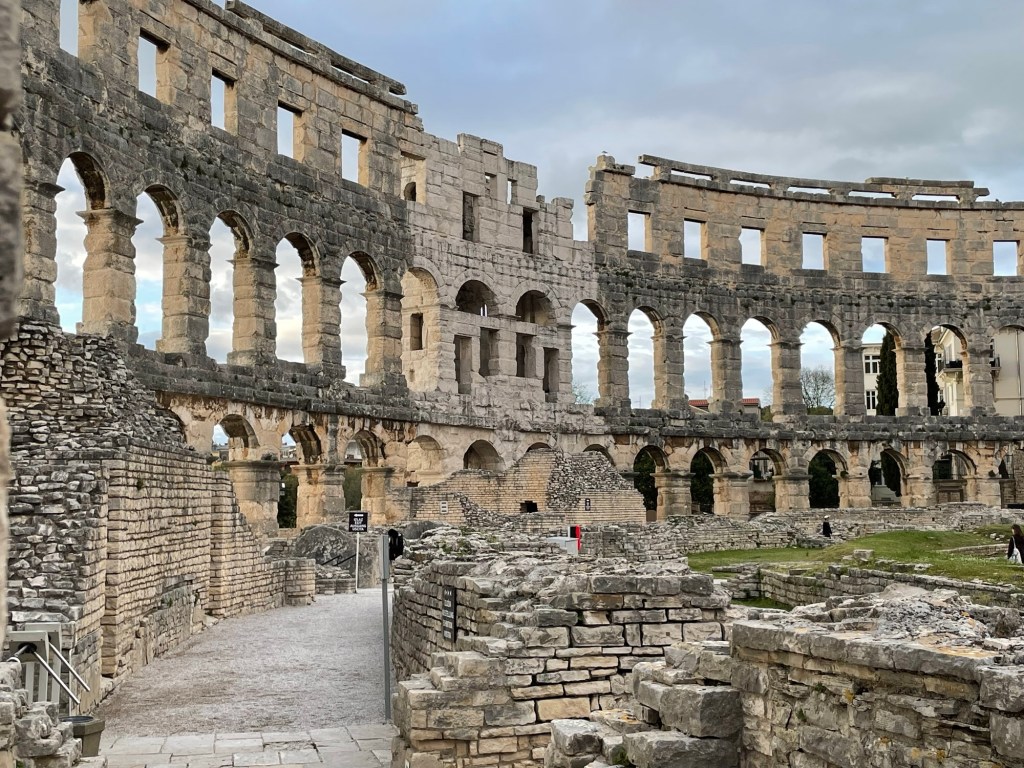
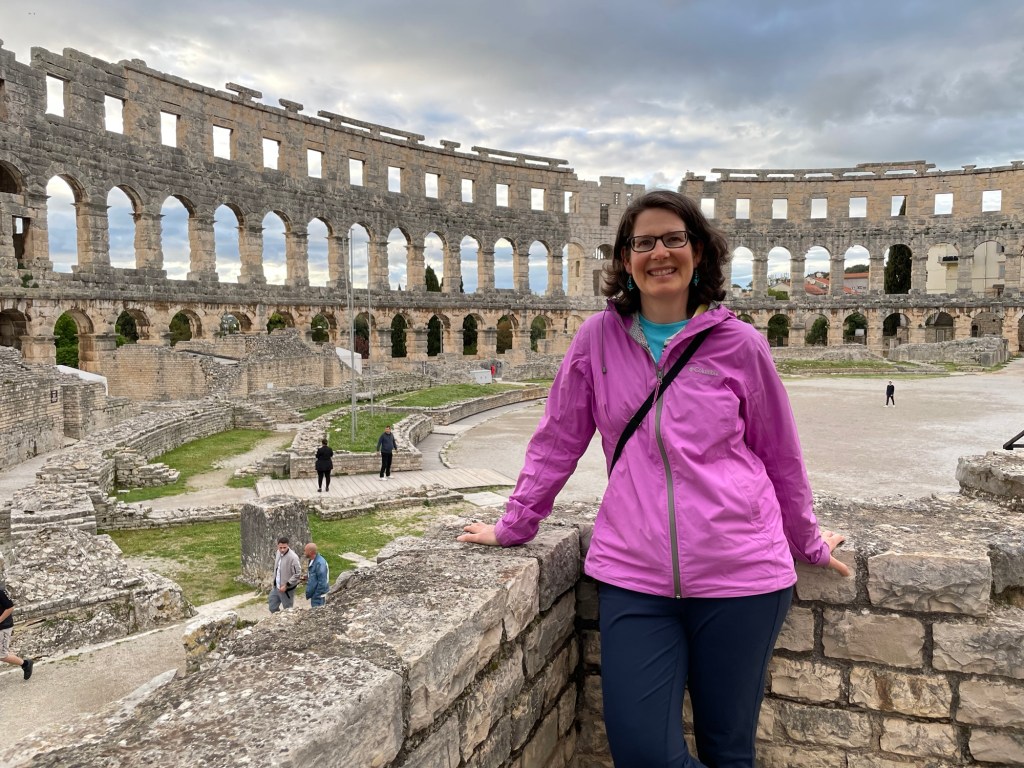
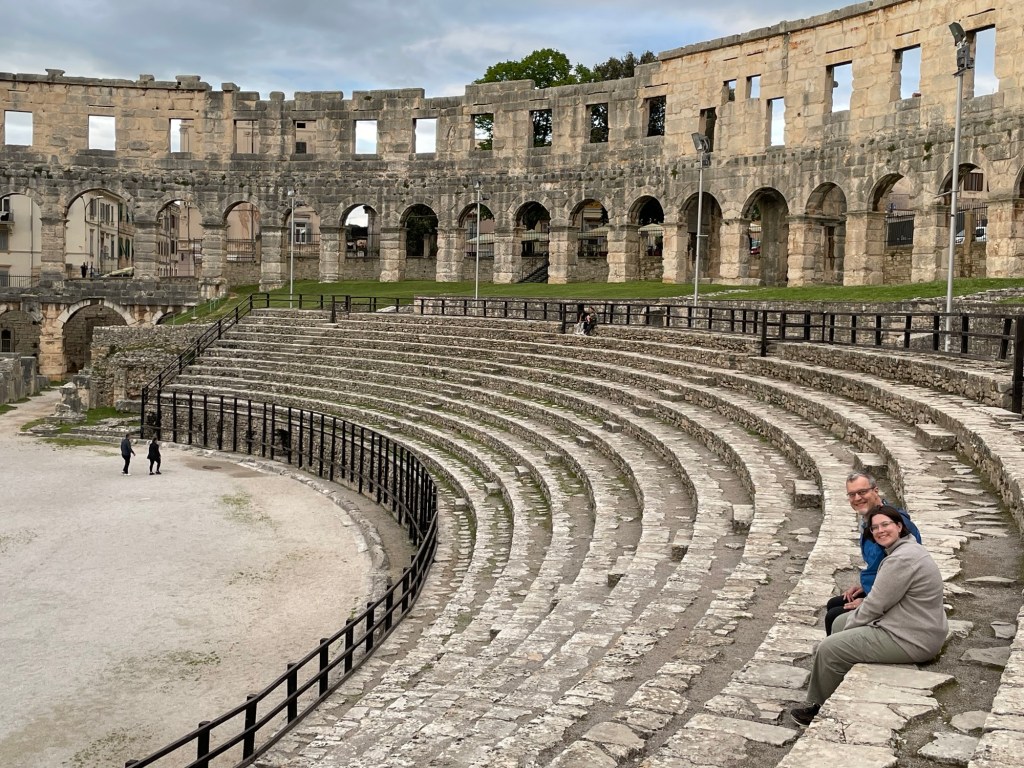
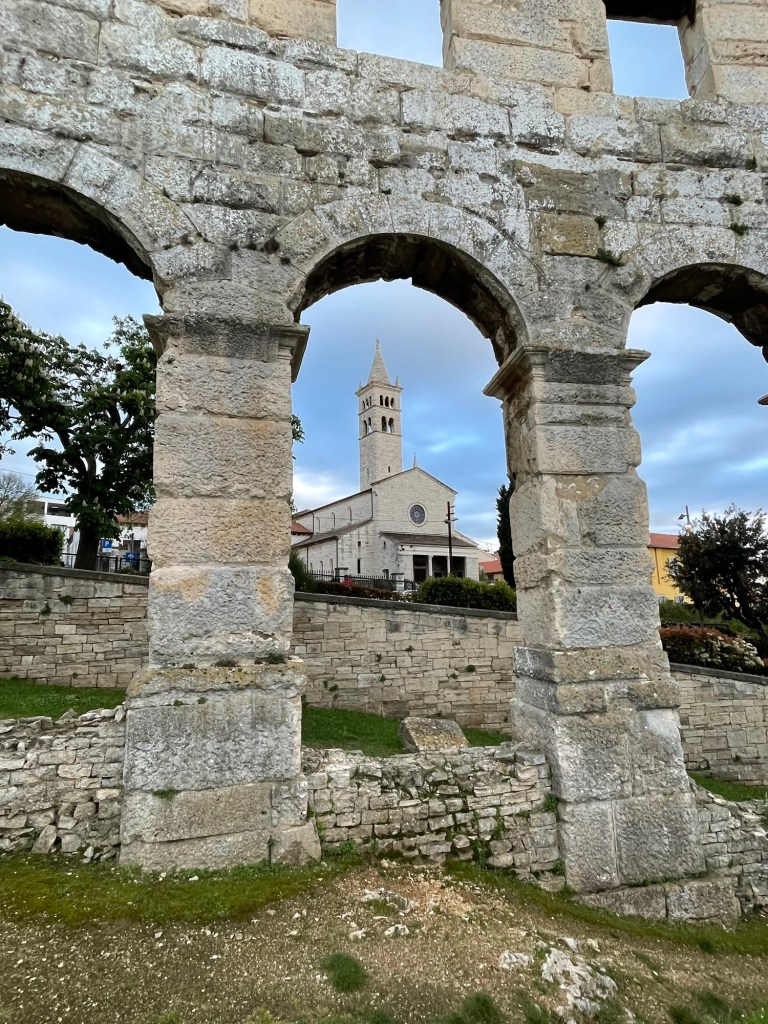
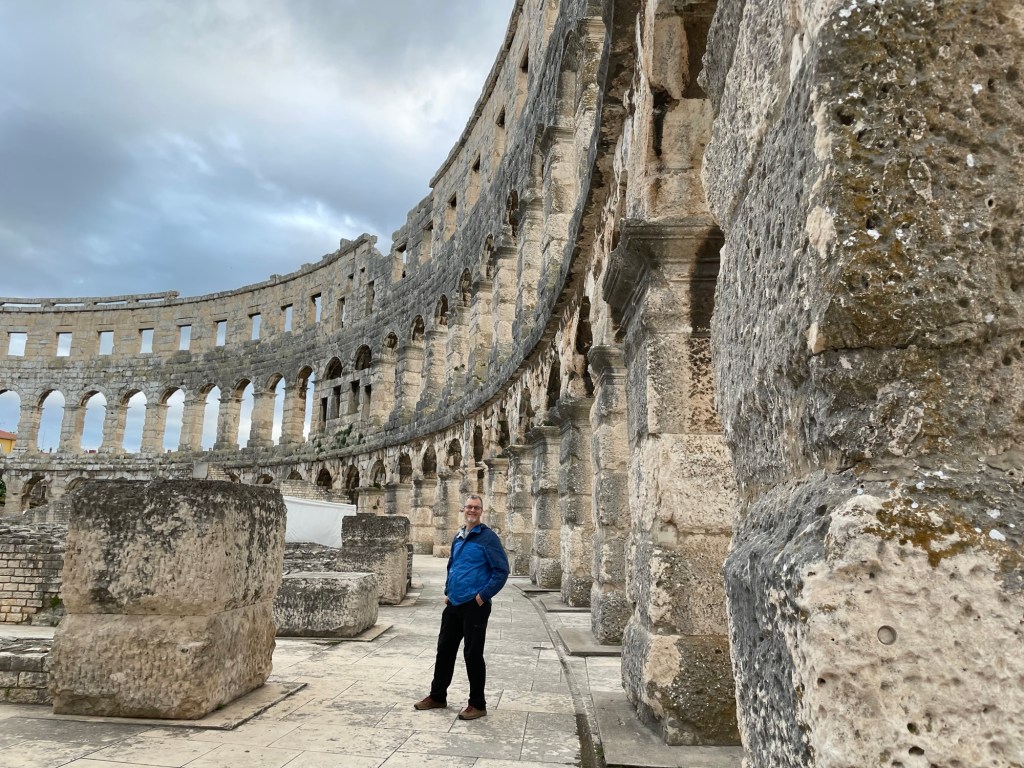
Our other reason for driving to Pula, and our last sight of the day, was an enormous stone amphitheater built by the Romans. It’s not as large as the Colosseum in Rome, of course, but was among the ranks of the next largest in the empire and could hold 23,000 spectators when full. In many ways, stadium design hasn’t changed all that much in the last two millenia: like today’s arenas, the amphitheater consisted of a central performance area surrounded by seating (each spectator was allocated 44 centimeters of bench space) with ramps and concourses below to allow for access and concessions. Today most of the interior structure is gone, with the stone repurposed over many centuries for other building projects in the area. Luckily for us, the immense blocks of the outer wall were too big to easily remove and so their ring remains mostly intact. We spent a happy hour scrambling amongst the ruins and exploring the space, guided by numbered QR codes that linked to explanations of the history and architecture. When dusk fell, it was time to head back to our lodging in Rovinj, feasting along the way on sandwiches from a kebab shop picked up just outside the arena.
 Howes' Doings