Au P’tit Train du Nord

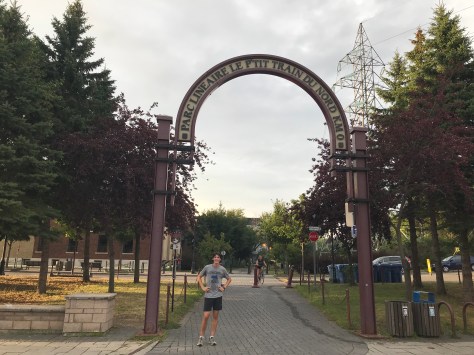
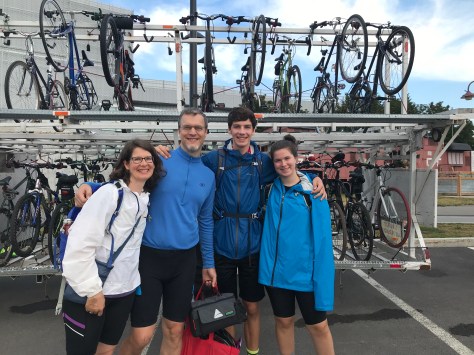
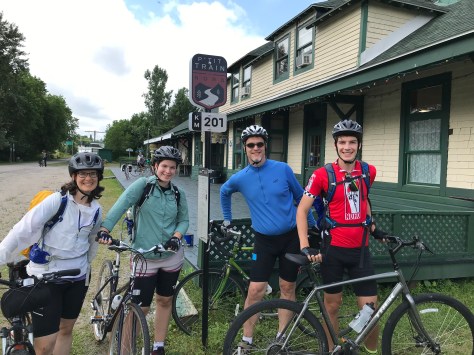
Today marked the first leg of our journey following le P’tit Train du Nord. We’re going only one way (west to east) so the first order of business was to get ourselves and our gear to the other end of the trail. Enter the kind folks at Autobus P’tit Train du Nord, who strapped our bikes onto their enormous double-decker bike trailer and brought us to the town of Mont Laurier, 200 km away. Of course, we had to pose by the first of many distance markers along the trail!
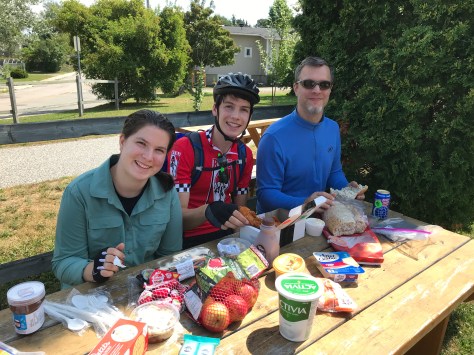
Arriving around noon, we didn’t make it far before stopping for lunch, so we had a picnic at a conveniently located IGA supermarket.
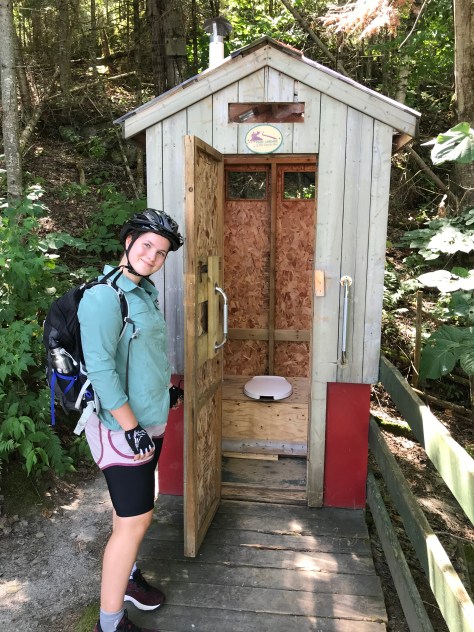
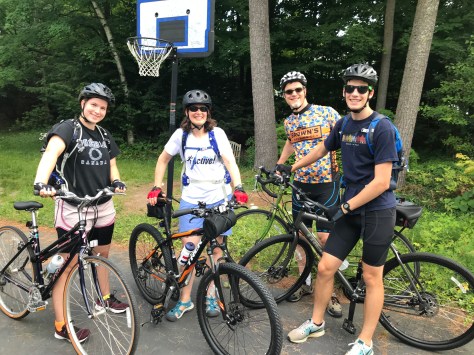
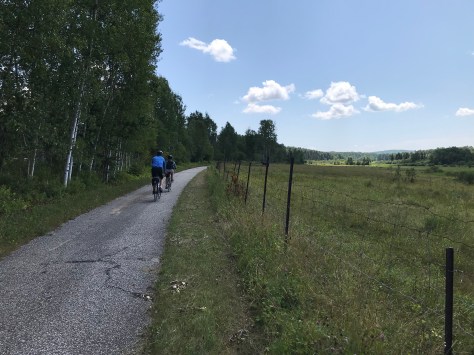
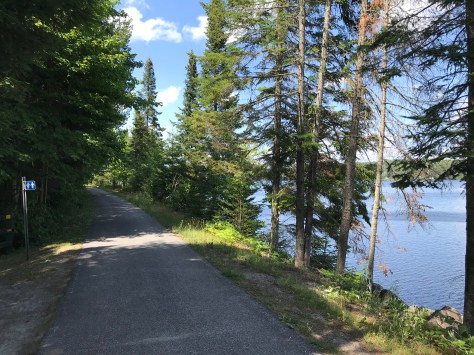
This end of the trail runs through open forests and past lakes and marshes, taking a fairly level path through the surrounding mountains. Given the spacing of towns, the first two days are our longest, at about 60 km each. The scenery is striking and the trail amenities are fantastic (including regularly spaced rest areas with picnic tables, shelters, and even public bike repair stations – oh, and the all-important outhouses!) We started biking all together, but partway through split into two groups, with Nick and Ben going faster so Ben had time for his training run before dinner. Susannah and Rowan followed at a more leisurely pace, enjoying the scenery and telling stories of the rivalry between outhouse trolls and bog trolls. 🙂
The weather here seems to be tricky to predict. The morning forecasts made all sorts of ominous threats of rain but we experienced only a short sprinkle this afternoon and even had quite a bit of sun. As luck would have it, the skies opened up scant minutes after we had all finished with biking and running and safely stored in the shed. (Two other people staying at the hotel arrived just 15 minutes later but got completely soaked.)

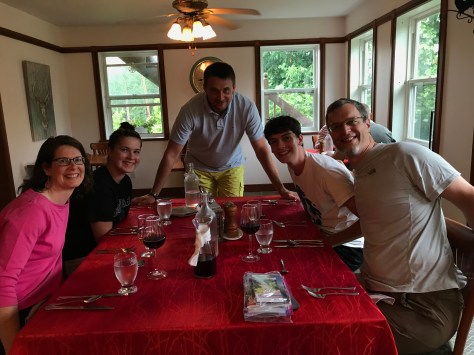
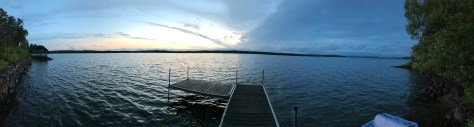
Our first trail B&B is the Auberge Chez Ignace, along the lake in Nominigue. The owners are very welcoming and also amazing cooks, serving us a delicious 5-course dinner. After dinner, we checked out the lake and caught the sunset in panorama.
O Canada

After a delicious waffle breakfast with our friends, we successfully shopped for last-minute supplies plus some unplanned purchases in downtown Burlington, even catching the beginning of the sidewalk sales. Lunch was from American Flatbread, thus completing our required Burlington restaurant stops.

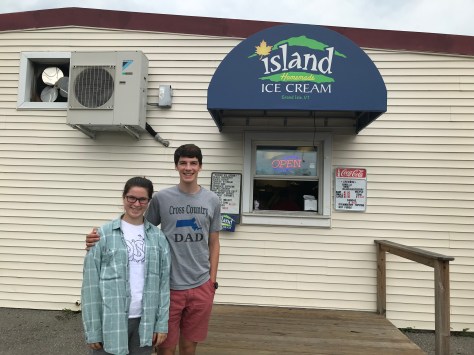
But today was primarily a travel day, taking us into Canada! We drive through the Champlain islands on the way, with the kids eagerly looking for creemee stands. (We found one but opted for their homemade hard ice cream rather than the soft serve variety.) Entering Canada was pretty straightforward, especially since we didn’t have any items of concern: firearms, CBD, produce, or >$10k in cash. 🙂

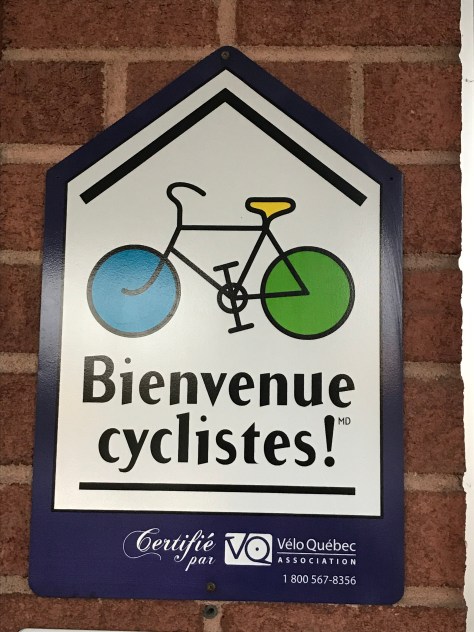
Driving through Montreal during rush hour was no picnic, but eventually we arrived in Saint Jerome, and unpacked into our hotel room. They’ve clearly had many cyclists visit previously – they had a welcome sign in front and even a storage shed to house our bicycles.

We made a short exploration of downtown Saint Jerome – Nick and Susannah tried out beer and cider (yum!) at the Microbrasserie Dieu Du Ciel while Ben took a run on the P’tit Train Du Nord. We’ll all be biking on it tomorrow, but Ben is officially the first family member to test out the trail.

And now for a good night sleep so we can be ready for our first official bike leg tomorrow…

Birthdays, Burlington, Bicycles, and Burning Buildings

Our family adventure this summer is a bicycle trip in Quebec! The P’tit Train du Nord is a 200+ km rail trail that runs northwest of Montreal and we’re excited to travel along it under our own power.

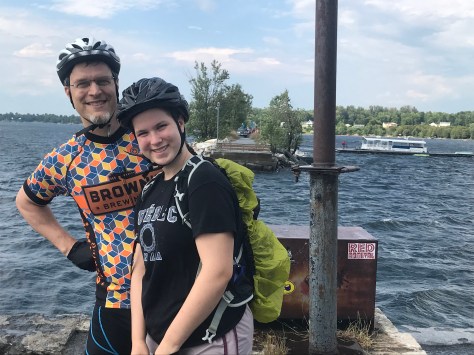
We started our journey on Susannah’s birthday with a stop in Burlington VT, one of our favorite cities. After lunch at the Skinny Pancake (of course!) we took an excursion on the Burlington bikeway along the causeway into Lake Champlain. Good to take a test ride before we launch into the longer P’tit Train du Nord portion!

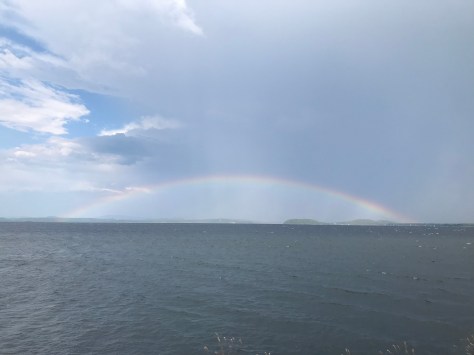
We were in good company with many other Burlingtonians along the path when the rain started. No problem – great chance to try out our pack covers and experience biking in the rain (there’s some wet weather forecast for later in the week too.) We were pretty drenched by the time we reached the causeway but then the skies cleared and we were rewarded with a gorgeous rainbow across the lake!

The causeway has a 200-foot gap in it to allow boat access, but there is a local ferry available to bring cyclists across. We biked up to the ferry landing but decided to head back to Burlington after seeing lightning in the distance. The headwinds were very strong on the return trip – it felt as though we were biking up a steep hill despite the causeway’s flat terrain.

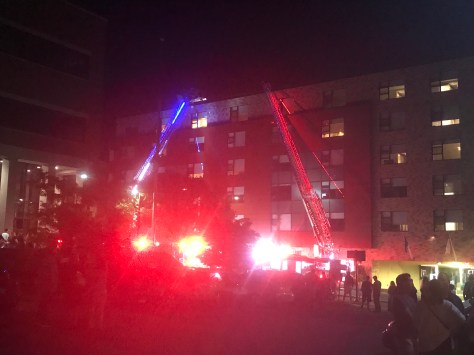
After showering off all the dirt at our friends’ house (thanks, ReutterMacs!) we headed into town for a fancy dinner at Hen of the Woods. Absolutely delicious food – if you get a chance to visit, try the Hen of the Wood mushroom toast and any of their rabbit dishes. We were just finishing up our main courses when the power went out and we were asked to evacuate the building. Apparently there was a chimney fire in the hotel above and we could see smoke and flames surging from the roof. Firefighters arrived in droves and we had to clear the area.

Luckily our friends had dessert on hand and then joined us in board games to round out the night. Today was quite a memorable start to our adventures!

Three Cheers for FacePeru!

We’ve been in Peru now for more than two weeks now, mostly at altitude. Our hearts no longer pound when we walk uphill and we feel fully acclimated. Unfortunately, now it’s time to go home.

We’ve had a marvelous time in Peru, thanks in large part to the organizational prowess and cultural stewardship of Juan Trujillo and FacePeru. Back in November when we booked this trip, we sent Juan a few ideas of things we would like to do and and he curated a remarkable tour out of them. Even better, he was able to modify it on the fly to accommodate our change of plans after the first hike. We were warmly welcomed and completely taken care of in all aspects of our trip – quite a luxurious experience for Susannah who usually handles all the logistics! If you’re ever thinking of visiting Peru, we highly recommend talking to Juan.

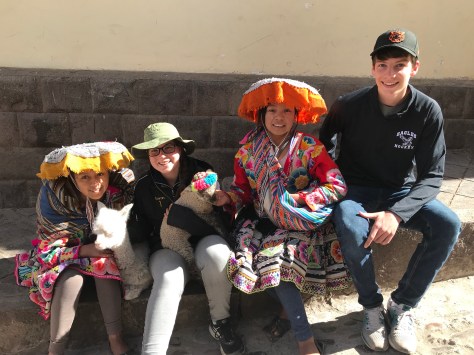
We spent our last day doing a little shopping in the market and revisiting our favorite little cafe (Mama Oli’s). Rowan finally got to hold a baby lamb (posing for pictures with baby-animal-loving tourists is a booming industry in Cusco) and then it was off to the airport with us. Adios Peru – we had a wonderful time!

How to Hang Out on Your Birthday

Longtime readers of our blog will know that Ben’s birthday always falls during our big summer trip. Today was the day and we were determined to do something memorable. What better way to celebrate 16 years of life than to risk it all by hanging off a mountain face?!

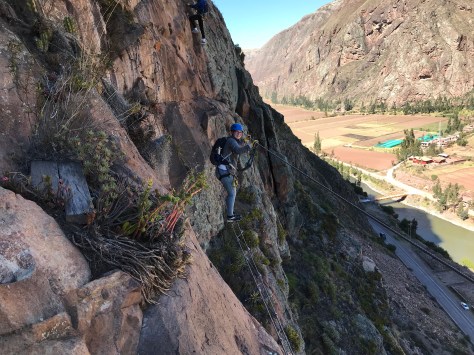
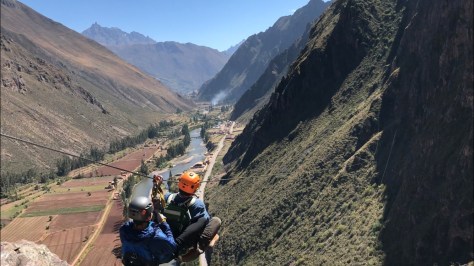
Not far from Ollantaytambo, Natura Vive offers such death-defying experiences to those with a hankering for them. After signing your life away, you can take a round trip tour 400 meters both up and back down the local cliff face. Of course, the down is much faster than the up – we travelled by zip line in six installments, racing with the cars on the road below. Most of the traverses were solo but the longest one (700 m) was done in tandem to ensure enough momentum to reach the far platform. The views along the Urubamba river valley were striking from all directions.

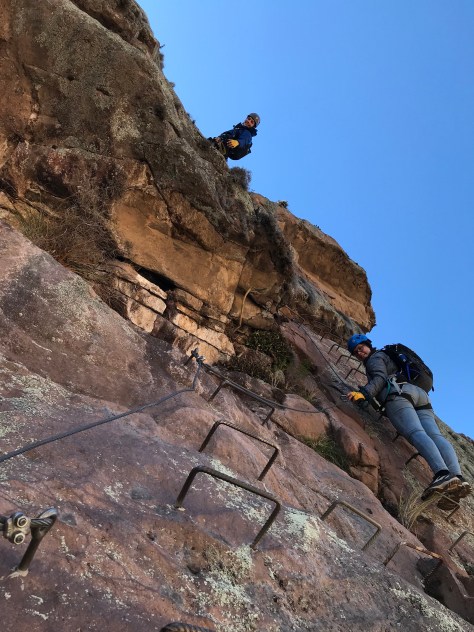
The way up went more slowly but was a new experience for all of us. Called “via ferrata”, the route consisted of some 900 steel rungs drilled into the cliff face with a steel safety cable running alongside. Each of us – outfitted in climbing harness, helmet, and rubber-grip gloves – was attached to the cable by two spring release carabiners that we transferred one at a time each time we passed an anchor point, approximately every 5 feet. With this equipment in place, we were able to scale the sheer cliff face safely even though none of us is an expert rock climber.

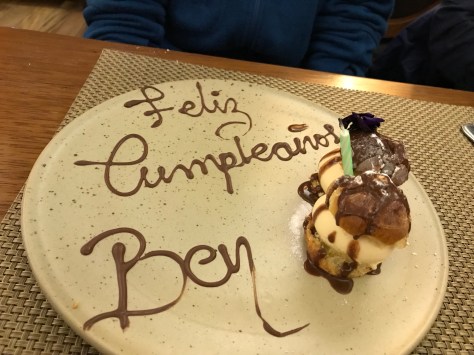
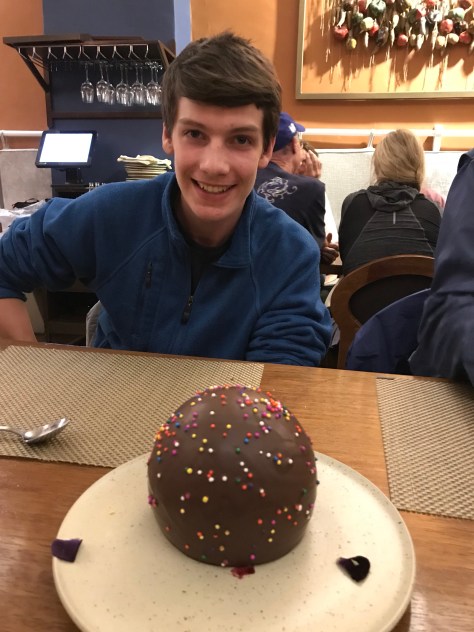
The return to Cusco took the rest of the afternoon but we had several more treats in store. The hotel Midori Cusco, where we had stayed before, treated us as old friends this time and gave us the best rooms in the house. After sharing presents with Ben, we made our way to a long-awaited dinner reservation at Chicha, which had been recommended to us on our culinary tour in Lima. The highlight of the dinner was the “miraculous bomb” dessert, a showstopping treat nearly the size of Ben’s head, made only slightly less impressive by the waiter’s repeated fumbles in attempting to serve it. After dramatically cracking the shell, he proceeded to spill the shards off the plate onto the table – not just once but twice while mumbling sorry. Apparently you need to be a professional to do these sorts of things! We ate it anyway and it was delicious. Happy birthday Ben!

Marveling at Machu Picchu

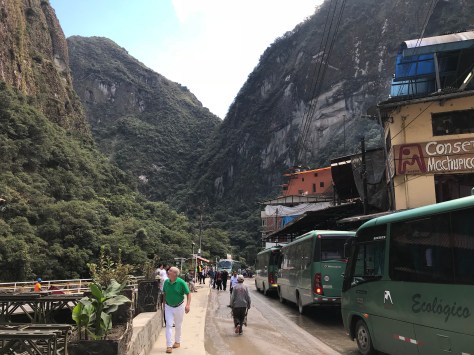
Unless you’re willing to shell out $1000 a night to stay at the hotel right at Machu Picchu, the only lodgings in the area are in Aguas Calientes, at the bottom of the gorge. AC is an odd town in a number of ways: flat land is in short supply, so unlike most settlements of its size, all the buildings are multistory. The only mechanized connection to the outside world is via the railroad, so the streets are pedestrian zones. There is a bus depot on the edge of town, but the buses only go one place. Some years ago, all the transportation services were Balkanized but they have since joined together under a single service that efficiently shuttles people up and down the mountain all day long (though that doesn’t mean you won’t spend an hour in line waiting for a bus at peak times). On the other hand, to walk the streets of AC at night is to suffer an endless series of solicitations from representatives of the restaurants that line the first floor frontages and given the isolation, bargains are hard to find.

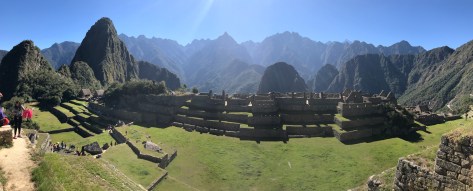
We were just as happy to board our bus at shortly after 7 AM for our ride up to the ruins. (Actually, many of the buildings are not ruins at all, other than being short a thatched roof and some plaster on the walls – the stonework is in remarkably good condition overall.) Visits to MP are tightly controlled these days – everyone must enter with a certified guide and a ticket tied to you passport, and then must travel a prescribed circuit (don’t think about leaving to go to the restroom in the middle or you won’t get back in), but with Juan leading us, the visit seemed very natural and the timing was perfect. Though clearly there were many people about, we often had spaces to ourselves in some of the most interesting areas.

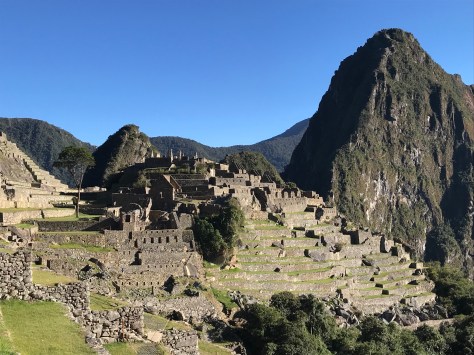
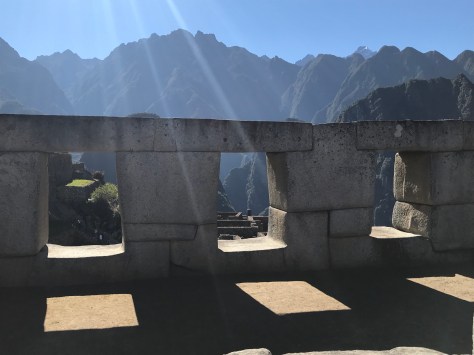
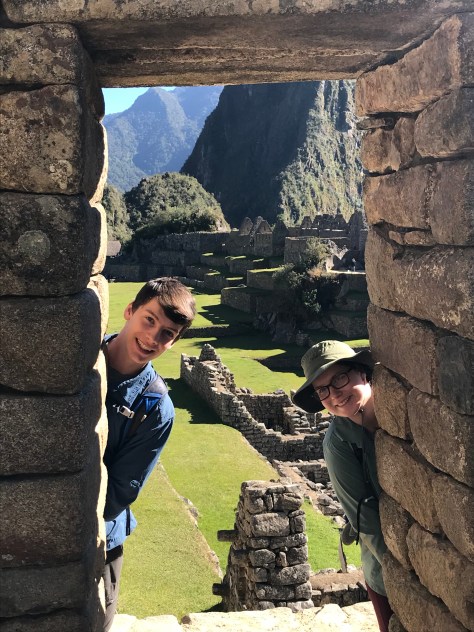
We had gotten great views of the overall site the day before, but actually being in the buildings afforded opportunities to view through windows, into courtyards, and out to the surrounding valleys. Coupled with Juan’s detailed explanations and historical perspectives, we got a good feel for the ancient city.

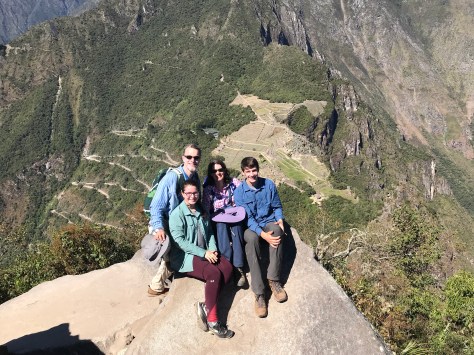
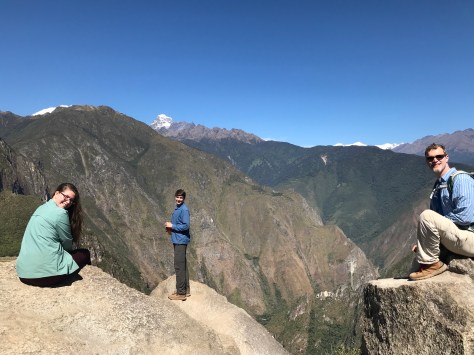
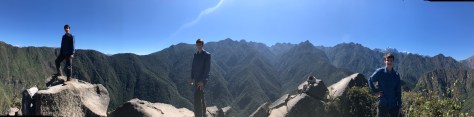
A highlight of the day was our hike up Wayna Picchu. This is a side trip requiring an extra ticket of which only 400 are issued per day due to the limited space on the steep trail. The hikers are released in two groups and partially by luck we were some of the first through the gate in our 10 AM cohort. Thanks to our time acclimating to the altitude and our “warm-up” hikes earlier in the the trip (remember the ones equivalent to hiking the Grand Canyon?!), we were faster to the top than other groups without really meaning to be. Well, Ben actually did want to be first to the top, and he was. 🙂 Rowan was next and the parents followed a bit later but we still had the peak to ourselves for close to 15 minutes, allowing us to take some family shots and creative panoramas.

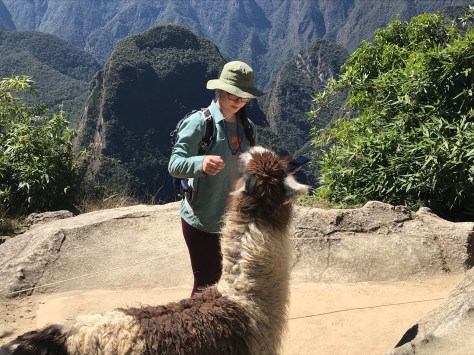
Back in MP proper, we encountered a wandering llama who was inspecting the guests to see if they had food. Interestingly, the MP llamas have been unintentionally trained to come toward the mere sound of a crinkling wrapper. This proved useful to lure our camelid friend close close enough for some photo ops with Rowan.

After taking in a few more sights, it was time to go, riding the bus to AC and then the train back to Ollantaytambo, carrying our memories of the inspiring Incas with us.

Hiking the Inca Trail

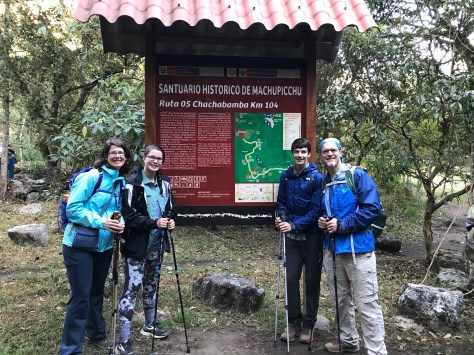
We’re reaching the end of our trip and coming to the climactic moments: hiking the Inca Trail to Machu Picchu. We’ll only spend one day on the trail itself, starting at Km 104, which comprises the final approach, and is about 6.5 miles of hiking.

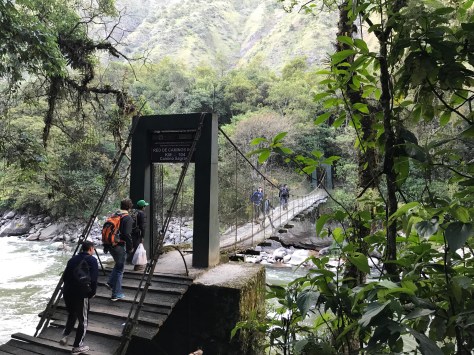
We had tickets on Inka Rail from Ollantaytambo to our trailhead, literally just a whistle stop in the woods with a jungle bridge leading across the river Urubamba.

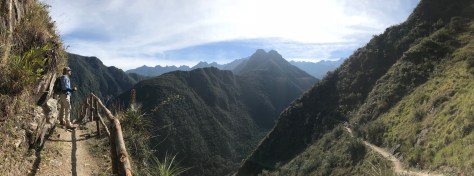
From river’s edge, the trail climbed slowly upward until it opened up to offer panoramic views up and down the valley. Ironically, the views were possible mainly due to a fire set by local farmers which burned down the jungle foliage and actually led to the discovery of the previously unknown Inca highway.
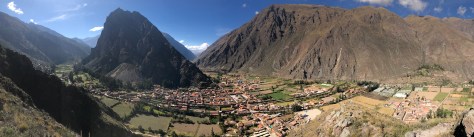
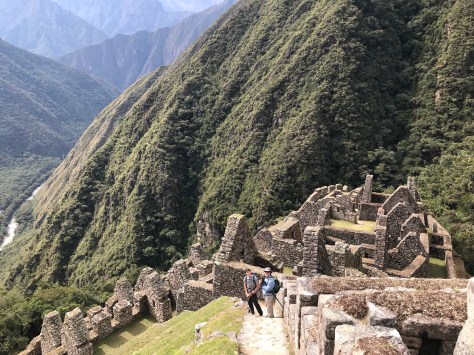
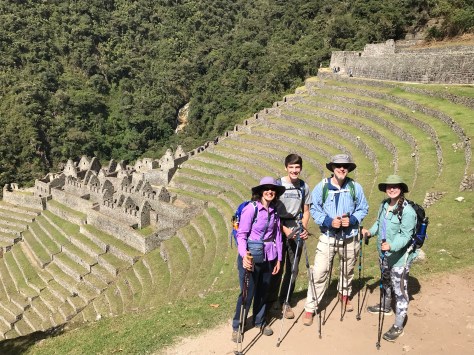
Before reaching MP itself, we passed by several satellite settlements, essentially support communities for providing additional food and other resources. The trail passes through one of these, named Winaywayna (“forever young”) named after the orchids that grow in the area. The Incas certainly knew how to settle in spots with spectacular views and work them to best advantage.

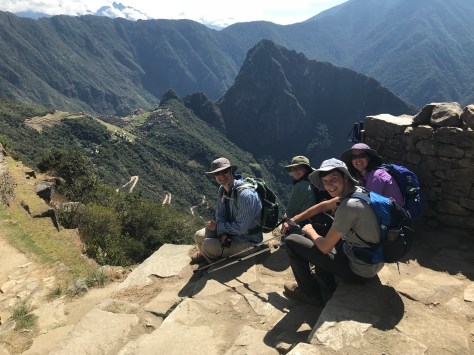
As we drew closer to MP, the pavement underfoot showed occasionally showed flagstones of blue serpentine, artfully scattered across the more common white granite. The point where the famous city first comes into view is called Intipunku, or the Sun Gate. Seeing it in person for the first time, even at a distance, seems a bit unreal. The setting amidst soaring cliffs and mountains inspires both wonder and awe.

Over the next hour or so we approached closer, passing shrines to the earth mother along the way, each step revealing a new view to our eyes of the ruins. Our tickets didn’t allow us to enter the ruins today, so we contented ourselves with views from above. We did have the opportunity to see another piece of the site a few minutes walk away. Called Inca Bridge, it is part of the defensive arrangements for the city. The trail to the west hugs a sheer cliff face, and at a point where there is no alternate route a gap has been left to be spanned only by removable wooden beams. Beyond this point the trail has not been restored, and is only visible as a ribbon of overgrown greenery across the sheer face of the cliff.

Returning to the city overlook we took the bus down the winding road to Aguas Calientes for the night. In the morning we will return for more detailed exploration. But lest you doubt whether we were actually there, we include a picture of the kids in front of the classic view you have doubtless already seen.

Roaming Free in Ollantaytambo

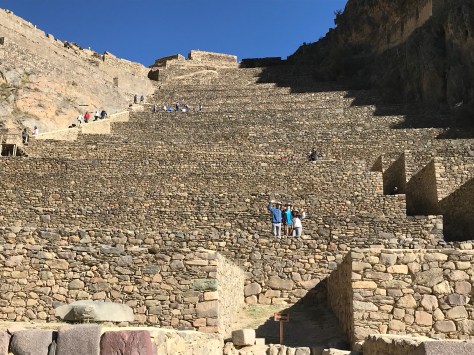
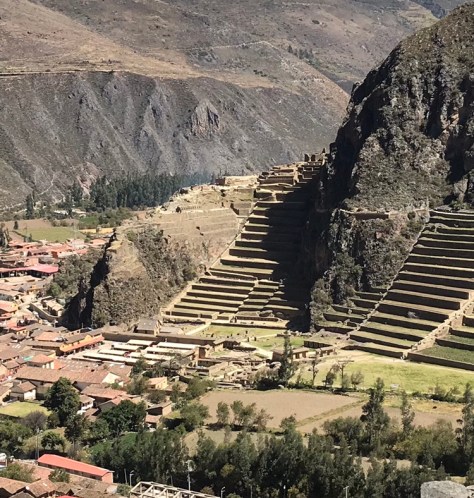
Today was a free day in our itinerary to explore Ollantaytambo on our own. Our ten-day combo pass to 16 popular sites in the Cusco region was about to expire, and we put it to good use at the large Inca site that looms just above the town. (Actually the whole town is technically one big Inca site because the buildings are all built on the old stone foundations. You can see the handiwork everywhere if you look carefully – the streets all have running water passing through them in ancient stone channels, cleverly diverted from the main stream above town and then distributed in a series of branches all powered by gravity.)

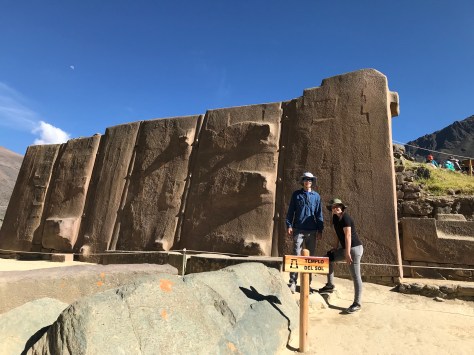
Ollantaytambo sits at the junction point of three significant valleys, and there are traces of stonework (mostly terraces) on the mountain slopes all around. The most significant of these are the foundations of the Sun Temple, destroyed (as usual) by the Spaniards but still impressive for the massive stones cunningly fit together. Further cut and shaped pieces lie scattered about nearby, and one imagines how impressive the whole thing must have been in its heyday.

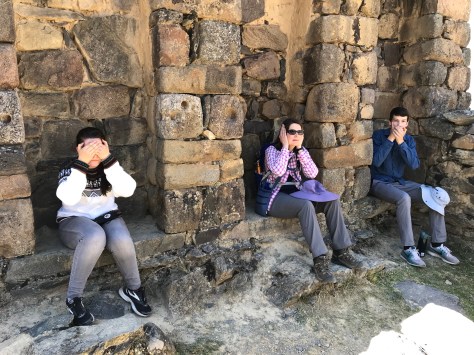
We spent quite some time scrambling about the ruins, climbing up to a high watchpost with sweeping views. For some reason the building there features outward-facing niches, so we could not resist a little monkey business.

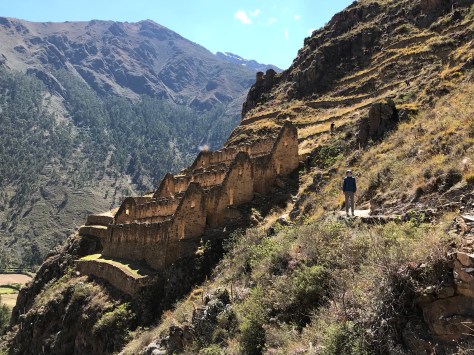
After exploring the official pay-to-see-’em ruins we crossed the valley to the opposite slope where more structures awaited. These were mostly agricultural storage and the like, and being considered less culturally significant they are left open to visit at will. Nevertheless they offer a spectacular vantage point for photos of the main site across the valley.

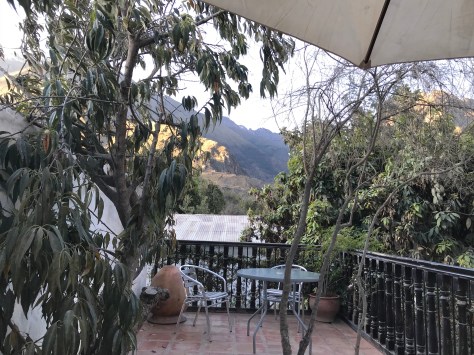
Having packed a lot of activity into the morning, we took a late lunch and spent the rest of the afternoon relaxing in the hotel with books and Scrabble. Our hotel is right at the railroad station, but feels like it is in a walled garden, with generous balconies and views of the mountains. Plus it has its own organic farm nearby!

Terraces of Different Types

Today’s itinerary took us to more sites in the Sacred Valley, most of them terraced in one form or another.

Chinchero was the morning’s first destination. It boasts Inca agricultural terraces surmounted by a Spanish church. Although the farmed any more, the locals do use the largest open space at the top for drying potatoes in the sun. The process takes weeks but afterward the potato is small and hard and can keep for up to ten years.

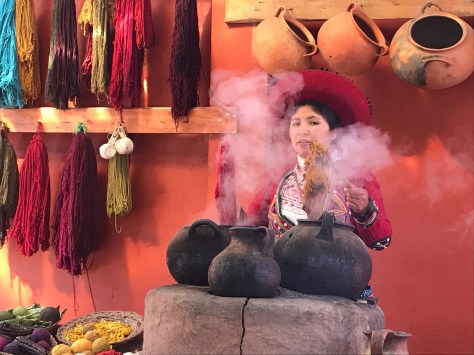
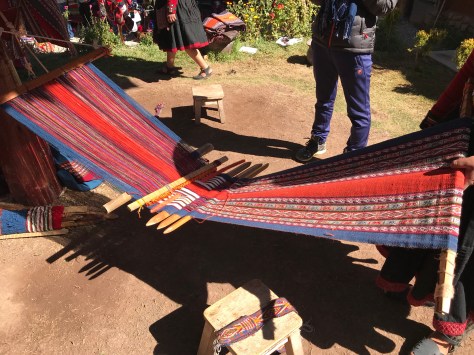
Chinchero is also known for its weaving collaboratives and we had the chance to visit one. The women gave a well-practiced presentation on the textile-making process, from shearing to cleaning to spinning to dyeing to weaving. All steps use natural materials local to the area, including grated yucca root for wool-washing detergent, and crushed beetle (cochineal) for the red dye. Weaving a large piece can take over a month of nearly full-time work.

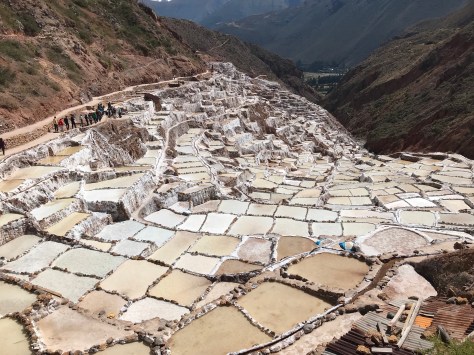
On our next stop we encountered a site that hasn’t changed much since pre-Inca times, and seemed like something out of another world. A spring issuing from the rock in one particular small Andean valley happens to carry brine picked up from passing through buried salt deposits. The local inhabitants have been diverting the water of this stream for centuries into small evaporating ponds to make salt. The Maras salt mine is the only active one in Peru, and currently contains 5000 ponds, each owned and operated by individual families. A back-of-the-envelope calculation suggests that the entire facility produces salt at a rate of around 50 tons per day during the dry season. Wow!

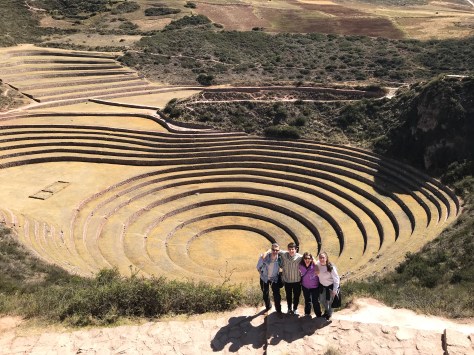
The last archeological site of the day also features terraces but is unique among Inca sites for another reason. The terraces at the Moray ruins make full circles, filling three amphitheater-like bowls of different sizes. Like several sites we had visited, the terraces at Moray were still cultivated for agriculture as recently as 15 years ago, but since the archeological sites were nationalized by the government, all such activity has ceased and today they grow only grass. Archeologists have noted that the microclimate at Moray differs greatly between the three bowls and their various levels – up to 9 degrees F – and this has led to theories that the site was used by the Incas for agricultural experimentation and selective breeding. We just thought the place looked really cool!

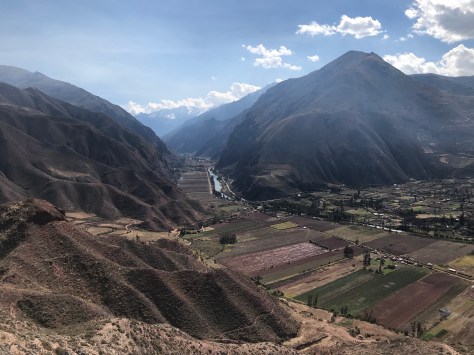
We wound up the day by reaching Ollantaytambo, a key town in the Sacred Valley that we will explore more tomorrow. On the way to the town, we caught a great view of the valley itself, full of fertile soil along the Urubamba river.

Splendid Sacred Valley Visit

Some days are special that you can’t imagine how they might be improved. Today was one of those days! Juan put together a varied combination that perfectly suited our family’s interests.

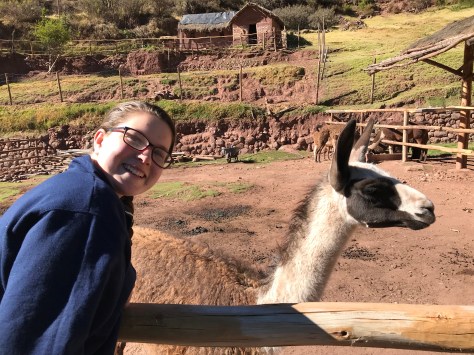
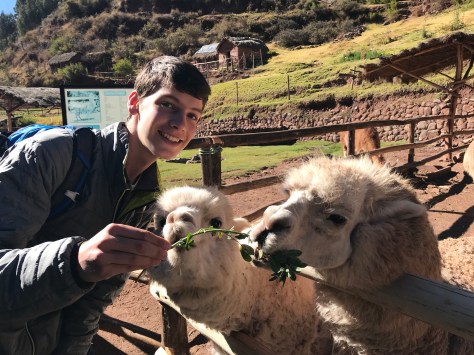
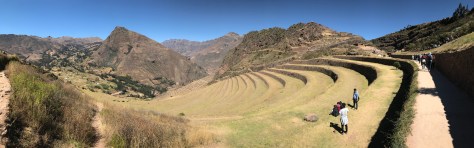
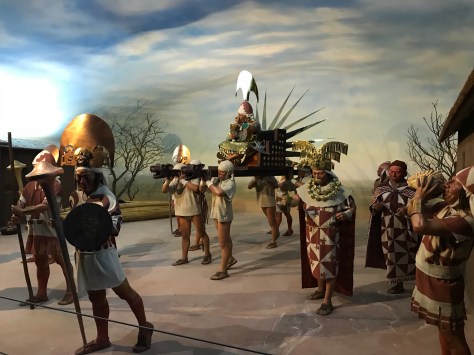
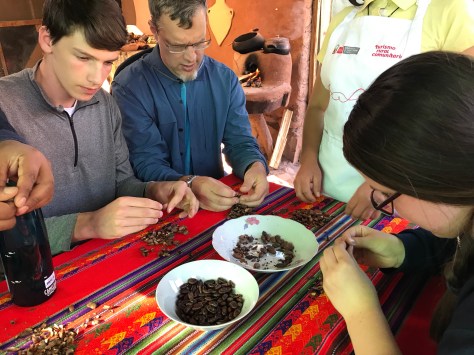
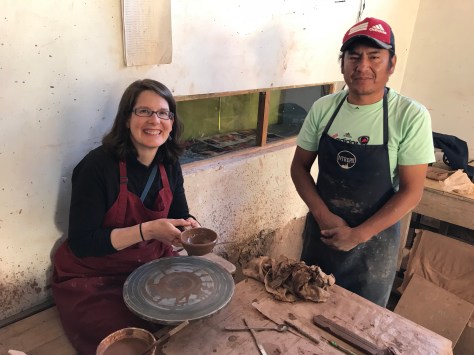
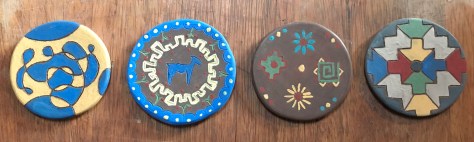
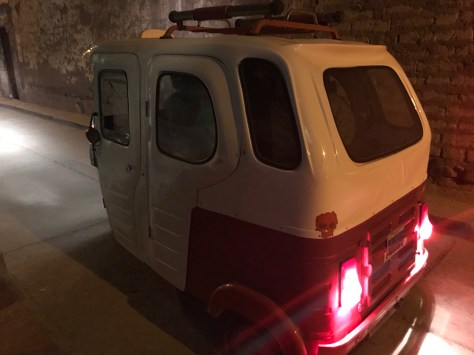
First up was a visit to a camelid farm. What’s a camelid you say? Well, basically it’s a relative of a camel, which in South America means llamas and their ilk (including alpacas, vicunas, and guanacos). Rowan was in heaven, but we all enjoyed feeding the friendly animals. And if you’ve been wondering, we can confirm from experience that vicunas do spit!Shortly after, we got our first view of the Sacred Valley (so named by the Incas), a wide swath of fertile land along the Urubamba river that we’ll be exploring the next few days.One of the commonly visited towns in the valley is Pisac, in part because of its market in town, and in part because of its extensive Inca ruins just outside of town. We arrived at the market before the hordes of tourist buses, but we were not so lucky at the ruins. Luckily the latter are quite large and Juan knew how to find the less-trafficked areas. The archeological site boasts broad terraces and several complexes of buildings but the new thing for us was the cemetery located on an east-facing cliff face. Inca burials took place in holes carved into the rock. Unfortunately, Spanish treasure seekers looted them long ago.The surprise hit of the day was a museum not originally on our itinerary but proposed by Juan as an optional addition. We had already seen several historical museums in Cusco but this one, the Museo Inkariy, turned out to be a completely different experience – much to our delight. The museum features eight different pre-Columbian cultures leading up to the Inca and presents each one with carefully selected, high quality pieces and detailed interpretation, culminating in a dramatic life size diorama complete with sound. (If you ever visit this area, we highly recommend this museum!)Following the museum visit, we travelled to Urubamba where we participated in several activities organized through Turismo Rural Comunito, a local women’s cooperative. After a home-cooked meal, we had a hands-on lesson on chocolate making. The outcome was delicious and we look forward to trying the process at home. (If you know of a good source in the U.S. for raw dried cocoa beans, please let us know.)Next, we visited a ceramics workshop where we tried several stages in the pottery-making process, including grinding stones to make clay, throwing pots on a kick-wheel, and hand painting hardened clay pieces. We weren’t able to take the wet terra cotta pots home with us, of course, but we hope that our painted coasters will survive the journey.The day was capped off with a beautiful hotel (the Iorana in Urubamba), a delicious dinner at the recommended El Huacatay restaurant (try the roast alpaca!), and a ride home in a motortrike taxi (aka tuktuk) – that is a fun, if loud, mode of transportation!