Travels through Time

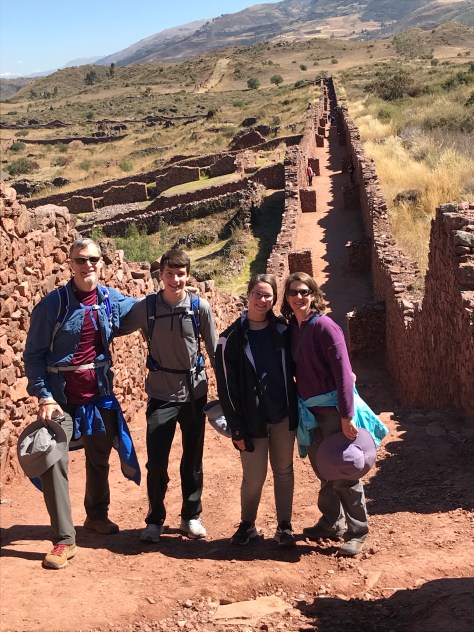
The Cusco area boasts archeological sites from periods throughout recorded history and today we sampled a wide range. The oldest spot in our morning tour was the city of Pikillacta, a Wari (pre-Incan) settlement dating from 1100 A.D. The stonework was primitive compared to later Incan standards but the scale and regularity of the urban layout were impressive. Unfortunately, the use of small stones and clay+straw mortar meant that the construction was not very earthquake-resistant, so the buildings were far from intact. Nevertheless we could still get a good sense of walled thoroughfares and building locations surrounded by a defensive wall originally 5m tall.

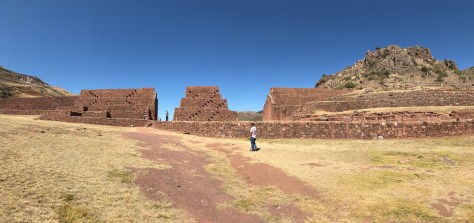
We also saw two Inca sites just down the road. One was an impromptu stop: we were unable to resist pulling over to take pictures of the great gate of Cusco, known as Rumicolca. All travel in and out of the capital valley had to pass through here. (For scale, Ben is standing in the gap between the stones.)
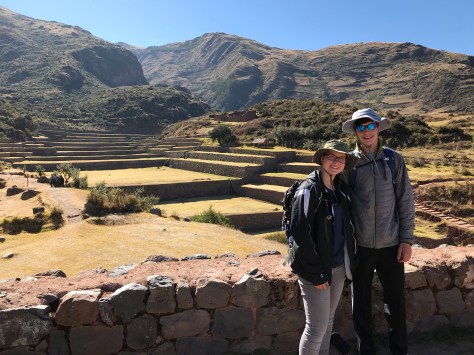
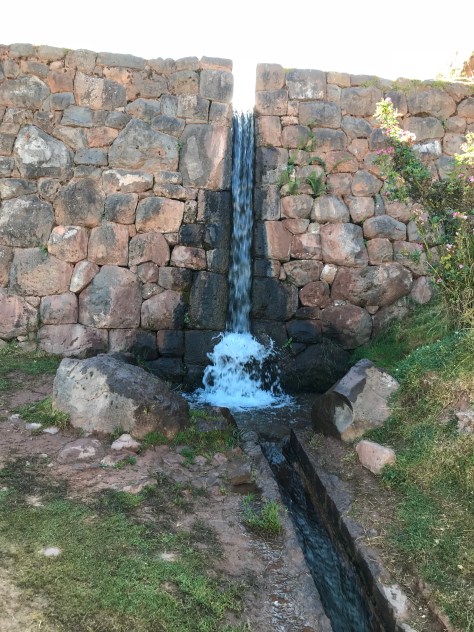
The second was an example of Incan mastery of water management and agricultural experimentation. Tipon features large agricultural terraces irrigated by an ingenious system of meticulously crafted water channels. The water springs from several natural artesian sources coming out of the rock; the Incan name for the village was Tampoq, which means “boiling” in reference to the water’s upwelling. N&S were especially fascinated by the details of Incan hydraulic engineering.
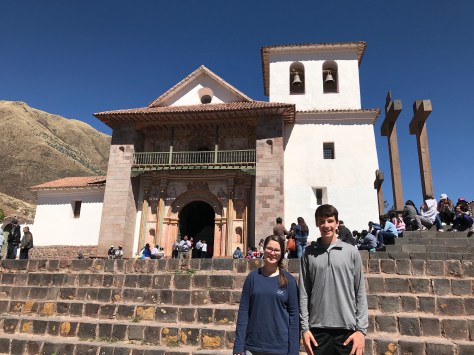
A third stop on our morning tour jumped ahead to the Spanish colonial era. The Catholic Iglesia de San Pedro Apostol in Andahuaylillas was built to help convert the native population to Christianity. It is known as the “Sistine Chapel of the Americas” thanks to its elaborate frescos, paintings, and carved wood decorations covered with gold leaf and silver. We couldn’t take photos inside, but just imagine the entire building’s interior decorated like a jewel box and you won’t be too far off. The exterior was much more modest by contrast.
To fill in further details in our timeline, we made a stop at the Museo Historico Regionale in Cusco, a thoughtfully curated museum located in a converted Spanish mansion. The subjects covered the entire period from Stone Age through through the liberation from Spain.

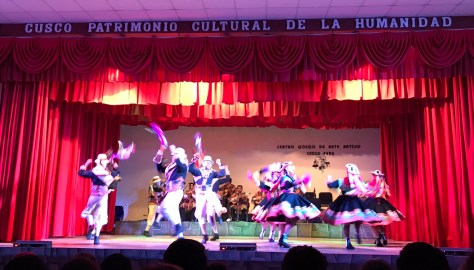
Topping everything off, we included two modern-day events. Over lunch, we caught most of the World Cup game between Denmark and Croatia in the company of local Peruvians and other tourists. And in the evening, we attended a live show of native music and dance featuring festive and authentic costumes, energetic dancers, and skilled musicians. Quite a journey through time!
Really Resting in Cusco

After our 4-day hike, a day of rest seemed in order. We talked with our fabulous trip coordinator Juan who made some changes on the fly to our itinerary, allowing us more time in Cusco and some additional local jaunts in lieu of another 3-day trek as originally planned. And so, our primary plan for today was to sleep in, do laundry, and visit the Inca Museum just around the corner from our hotel. We managed the second two, but our confused body clocks seemed to think that 7 AM was a luxuriously late hour!

The Inca Museum has a decent collection of pre-Columbian and pre-Inca artifacts, plus (as one would expect) many exhibits on the Incas. Some of the most interesting were large three-dimensional scale models of famous archeological sites, including Choquequirao and Machu Picchu. We also saw a somewhat eerie life size display of real Inca mummies. Unlike Egyptian mummies, Incan ones crouch in a fetal position with their heads up as though they are watching you. (Unfortunately, the museum does not allow photos so we can’t share any here.)

We thought our museum visit was drawing to an end, but the real highlight was still to come. Nick stumbled upon a small door near a display of the museum’s musical instrument collection, and on entering heard music begin to play. Not a recording – a man in local traditional dress was playing a wooden flute, and proceeded with an almost magical demonstration of instruments making animal sounds of all kinds – bird wings in flight, panther growls, falcon screams, and woodpecker tapping, to name a few, all performed with a real showman’s (shaman’s?) touch. Turns out the room contained a vast collection of replica instruments from pre- Incan and Incan eras, and the musician’s skill made them come to life. Better yet, he encouraged us to try them! We were all spellbound but Susannah was especially in heaven, since she had been hoping for exactly such an opportunity without knowing how to find it. The instruments were for sale and we simply had to take a few home, including a unique “trilogy” instrument that plays sounds of three animals: snake, panther, and condor. Very cool!

Later in the afternoon, Susannah and Nick visited a museum showcasing contemporary Peruvian folk art (an eclectic mix coming from a rich tradition not entirely familiar to us) and further explored the streets of Cusco on foot. All in all, a good day’s rest.

Concluding Our Glamping Adventure (Choquequirao Trek, Day 4)

We can’t conclude the story of this trip without discussing the food, along with the people and logistics that made it possible. Our chef Victor and sous-chef Rene served meals on white tablecloths while dressed in chef’s whites. We were greeted before each meal with a refreshing wet towel to wipe off the dust of the trail. Each meal consisted of multiple courses – a rich soup or delicate salad followed by a main course with a balance of sides, plus dessert and tea/hot chocolate. Even when we woke at 4 AM, which we did the last day to hike before the sun grew strong, a hot breakfast was ready half an hour later.

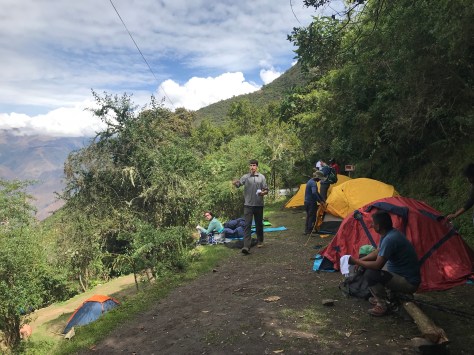
Even more impressive than the gourmet food cooked over camp stoves was the fact that after each meal, the chefs and the horsemen would clean and pack up camp, load everything back onto the horses, and make their way along the same trail we were hiking (passing us on the way), to arrive at the next camp in time to set everything back up again before we got there. Magic!

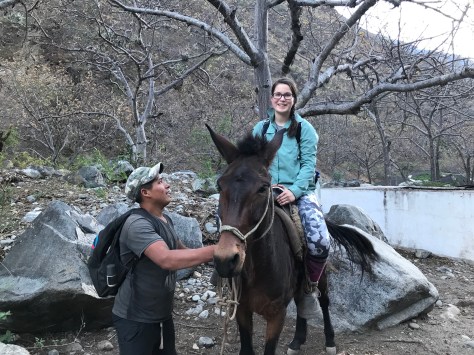
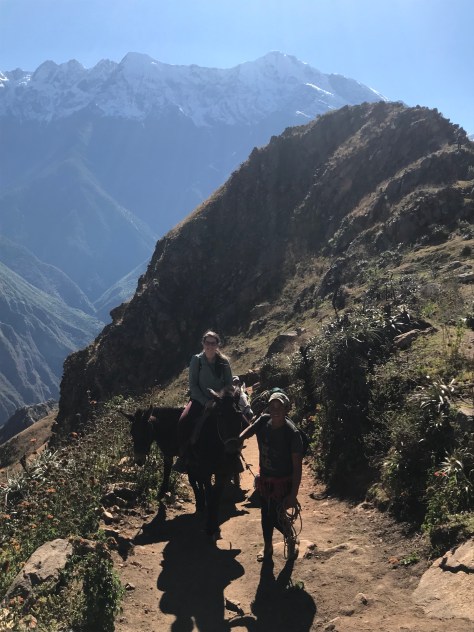
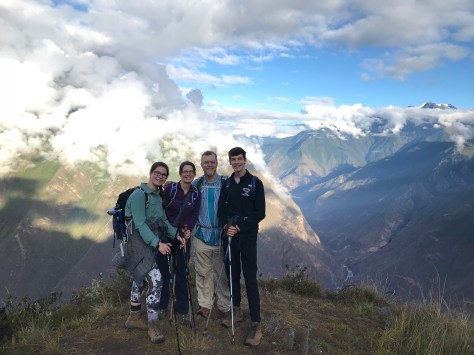
Speaking of the horse handlers, Rossel and Chino (also helped by his son Edwin) took care of not only the horses but myriad other tasks in setting up and breaking down camp. They became particularly important on the last day when Rowan needed to ride one of the horses in lieu of hiking due to her increasingly painful blisters. She was delighted, since she had been hoping for a horse ride anyway, and travelled out of the canyon as part of a train with several other visitors from another party. The other three of us hiked out with Fermin, taking our last views and saying goodbye to the beautiful Apurimac valley.

A four-hour drive brought us back to Cusco, exhausted, very satisfied, and ready for showers! All in all, an incredible trek that we will remember for a very long time!
The Golden Place (Choquequirao Trek, Days 2-3)

One of the perks of hiking for two days and then getting up at 5 AM is the opportunity to have a world-class archeological site entirely to oneself for nearly two hours. And what a site it is!
The Incas clearly cared about aesthetic design in harmony with the landscape and laid out their cities accordingly, which is why they make for such stunning photographs.

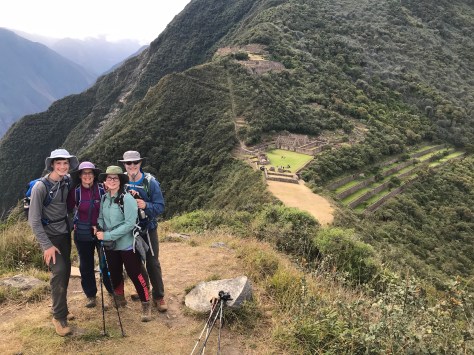
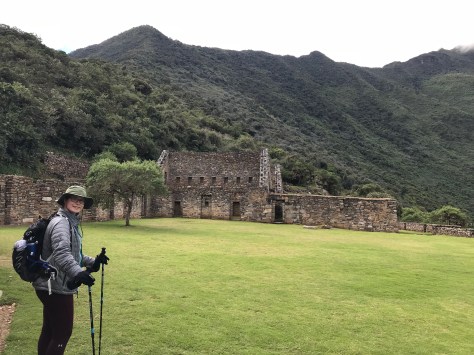
Choquequirau is possibly the last city built by the Incas. The name translates as “golden place”, in reference to its perfect location with line-of-sight views to multiple sacred peaks and surrounded by a bend of the sacred river in the valley deep below. (The greedy Spanish conquistadors heard this name and leapt to their own conclusions – but luckily though they searched they never found it.)

To date, archeologists have only uncovered about 35-40% of the site’s structures, but those that have been restored reveal the awesome beauty of the site. The entire city is located on a mountain spur that juts into the river’s course. The center of the site consists of an elegant and welcoming plaza surrounded by multiple buildings situated on a saddle of the mountain ridge. Above, the spur’s peak is flattened into a round walled platform used for ceremonies but also affording an unbelievable 360 degree panorama.

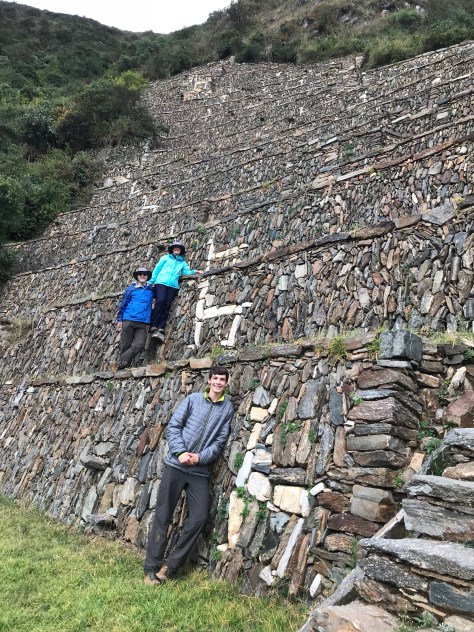
Other parts of the site include a temple with ritual baths, granaries and food storage rooms, a viewing chamber for sacred mummies, and a large guest house for travelers coming and going on the Inca road system. Both flanks of the steep mountain saddle are extensively terraced; some were used for agriculture but others leave us still guessing as to their exact purpose. Of the latter, the Llama Terraces are the most impressive. Although they are situated at quite a hike down from the main plaza (Susannah counted over 500 stone steps) they seem to hang suspended off the mountain, and one feels that a single leap could reach the foaming river far below. Their name comes from the white llama images embedded in the stonework.

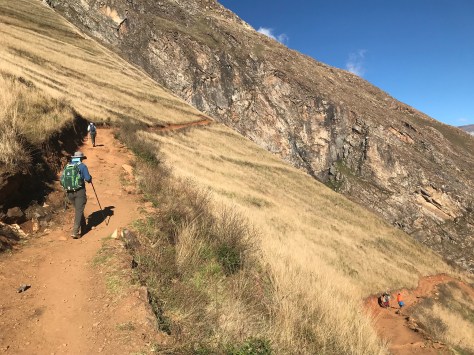
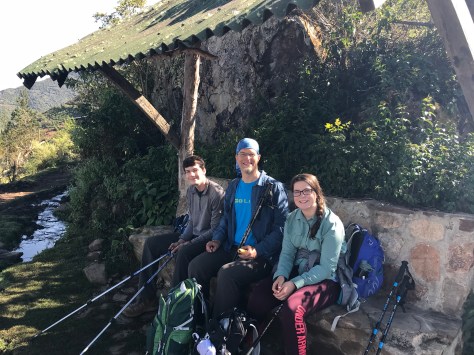
Backing up, we should fill in a little about the journey that brought us to this destination. We did in fact get up at 5 AM (in the dark) on the second day and left camp only shortly after our planned 6 AM departure in the dawning light. What followed was a 4000 foot climb – enough said about that! Good thing there were occasional benches to rest on (and take in more views).

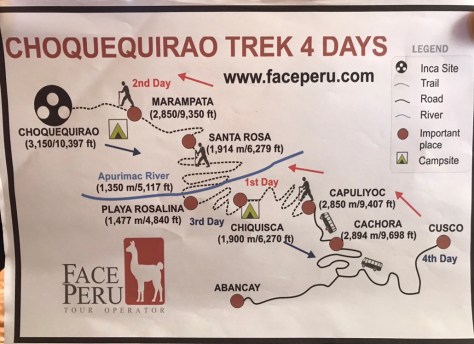
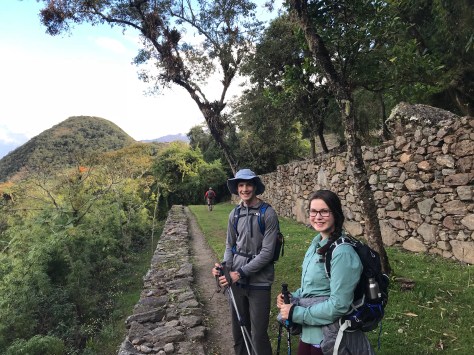
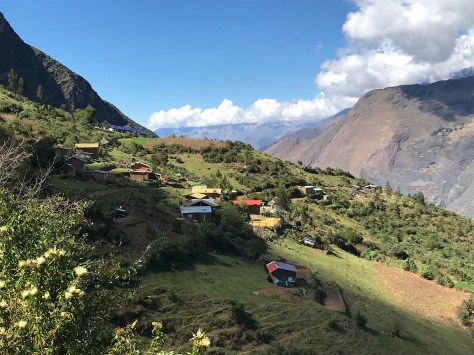
The path leveled out near the tiny but charming village of Marampata – off grid, off road, and home to about 15 families. From there, a further 2.5 hour traverse led us to the official Choquequira campground, 40 minutes below the ruins themselves. After an elegant lunch, we explored the ruins that afternoon and again the next morning.

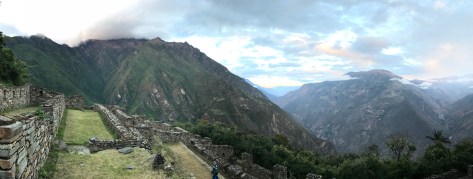
The return trip was simply the reverse of these steps, back to Marampata (photo below), all the way down to the river this time, and partway back up to end day 3. We reacted Chiquisca campground shortly after dark.

Our journey was not completed without some hardships, and nobody emerged completely unscathed. Rowan’s feet blistered on the first day and they became increasingly painful as she walked further on them. Susannah acquired a mild head cold, which she treated with anise tea and honey. Both Ben and Nick had some stomach troubles (low electrolytes? battle with the local microfauna?). Nick’s came on so suddenly that our guide Fermin called it a “mal viento”, or bad wind, and prescribed an inhalation of crushed Andean mint that conveniently grew right along the trail side.

Despite the challenges inherent in visiting Choquequirao, the remoteness was an important part of its charm. Future visitors to the site could have a very different experience because there is talk of building a tramway that could someday deliver up to 3000 people a day. We agree that Choquequirao should be more widely shared with the world, but we feel so privileged to have seen it in its current form, with no more than a handful of backpackers.

You Can See the Finish from the Start (Choquequirao Trek, Day 1 of 4)

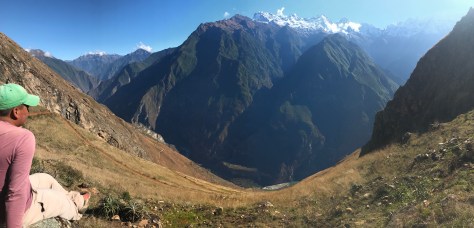
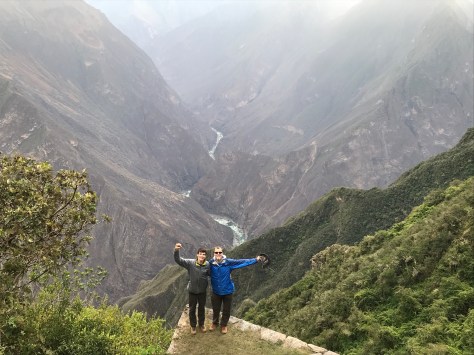
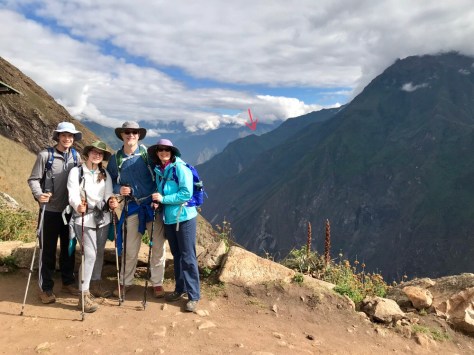
It’s a simple plan, really – down one side of the valley, up the other side – all so we can visit some significant Inca ruins not accessible by road. And as the title says, you can see the finish from the start – see red arrow in photo. But the valley is 5000 feet deep and the trip there and back is quite a production, taking 4 days and involving a guide, 2 chefs, 6 horses and their 2 handlers.

To reach the starting point of this trip, we left Cusco at 4:30 AM and drove the winding mountain roads for more than 4 hours in the pre-dawn dark to the trailhead at Cachora.

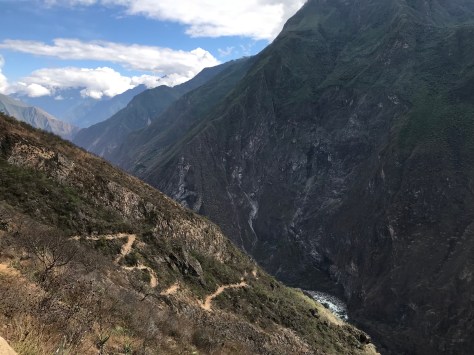
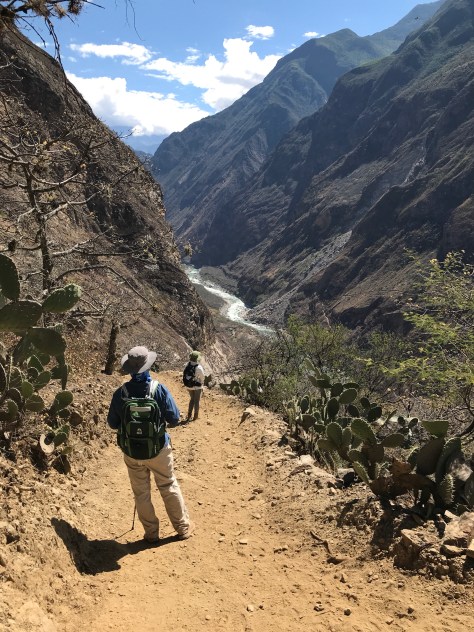
It’s hard for the eye to make sense of the scale of these mountains. Looking down from our first overlook we could see the Apurimac river far down below and it didn’t seem so far away. Yet, hours later after descending thousands of feet, we still hadn’t reached it!

We reached the river’s edge campsite in time for a late lunch and the end of the Argentina/Nigeria World Cup game playing on a tv powered by a solar panel. The food was amazing and we’ll say more about it another day.

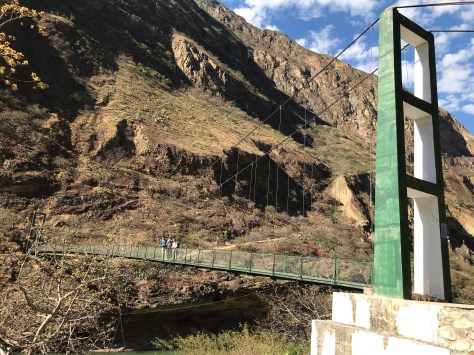
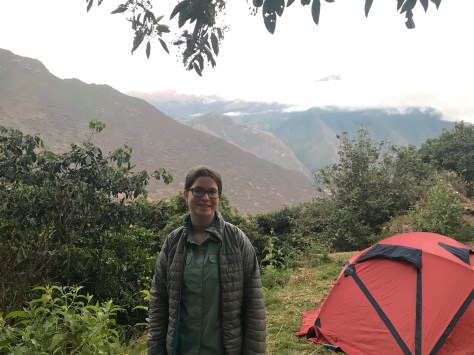
Since we still had daylight left, we made the decision to cross the river and begin tomorrow’s upward climb early, camping partway up. Dinner was in a one-room adobe schoolhouse featuring artwork by the local kindergartners. Our tents were pitched along a flat ledge with views across the valley and, as darkness set, the Milky Way above, mostly washed out by a lustrous near-full moon.

The next day’s wake-up wasn’t until 5 AM so we got to sleep in!

Chilling in Cusco

Well, it turns out that the advice about altitude adjustment isn’t entirely fiction – three of us were fine but Nick woke up feeling more than a bit sick. Luckily, he got a dose of oxygen from our guide Juan and after some fresh air was feeling better again.

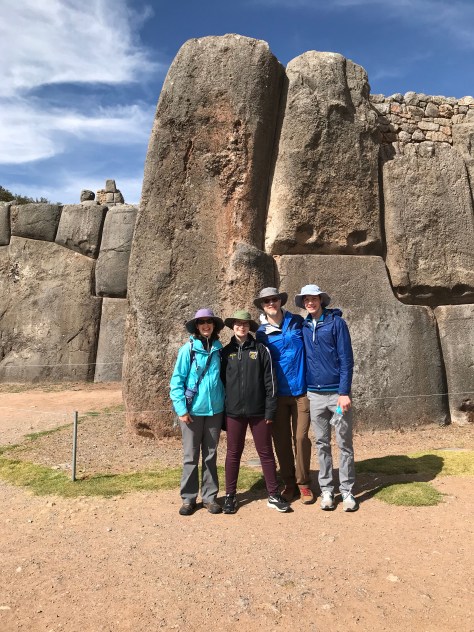
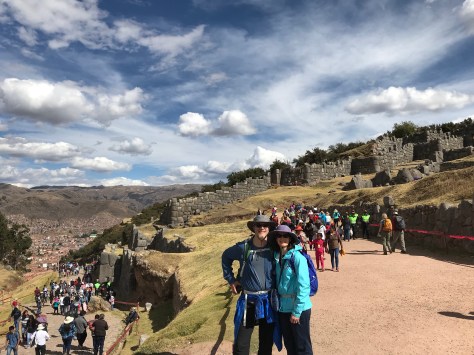
Our first destination was Sacsaywaman, which is an entirely different experience with a guide and minus the tens of thousands of people. They were still deconstructing the viewing stands but we could get up close to the Inca stonework this time. The largest stones stand perhaps 15 feet tall and required hundreds of people to move them (without wheels!) Sacsaywaman (pronounced by tourists and locals alike as “sexy woman”) is an Inca ceremonial site, known as the “head of the puma”, mistaken for a fortress and mostly destroyed by the Spanish during their colonial rule.

Not far away lies the Temple of the Mother Earth, somewhat nondescript from the outside. To enter, one passes through a narrow serpentine crack in the limestone to reach an underground altar still used by farmers for offerings.

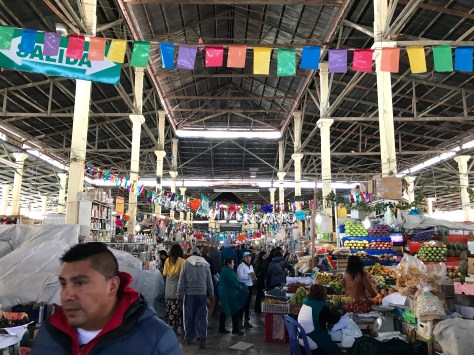
Leaving the Inca world behind, our next stop was the San Pedro market in the center of Cusco. Although the market has an increasing number of stalls catering to tourists, the majority still serve traditional needs of the local Peruvians, including soup stalls, clothing and tailor shops (with beautiful antique Singer sewing machines still in active use), offerings for the gods, and assorted grocery goods including all manner of animal body parts.

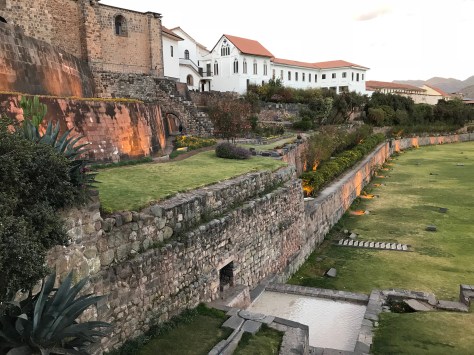
As mentioned, the Spanish liked to destroy or co-opt symbols of the Inca religion. The Temple of the Sun has been converted to a convent but traces of the stonework remain from this “Vatican of the Inca”. After posing by the largest stone at Sacsaywaman, we were tickled when Juan pointed out the smallest stone here – evidence of the Inca stonemasons’ attention to detail.

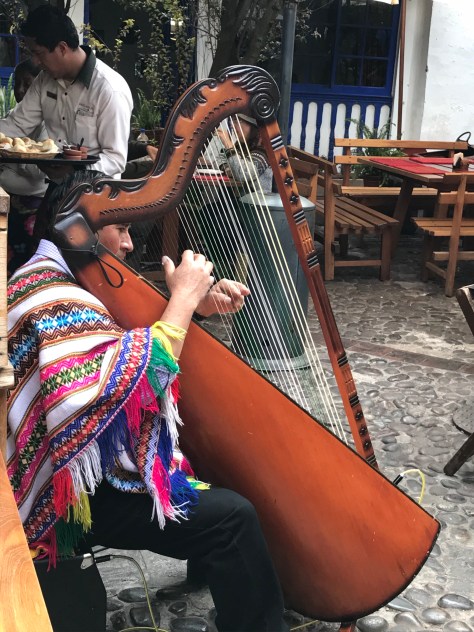
We had our big meal at Pachapapa, which may cater to tourists but suited us quite well. We enjoyed trying alpaca meat grilled on skewers, while being serenaded by a Peruvian harpist in the courtyard.

The day was not quite complete without a trip to the Choco Museum – really a glorified chocolate shop, but who’s complaining?! We tried cocoa beans in all stages of their processing, plus samples of varying chocolate products, including tea brewed from the skins of the cacao nut.

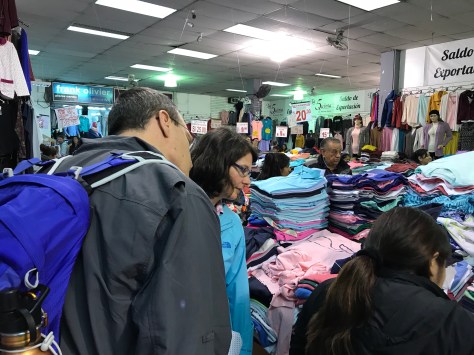
The kids also tried their hands at bartering in the market, with success especially in the knitted sweater and woven bracelet departments!

Day of “Rest” in Cusco

So the tour operators recommended that we take a full day of rest in Cusco to adjust to the altitude (elevation 11,000 feet), advice we fully planned to take. But we arrived in Cusco on the final day of the weeklong festival Inti Raymi. The streets were overflowing with people here to see and participate in the closing ceremonies, which were being held at the top of Sacsaywaman, a hilltop fortress overlooking the city. What to do?

In the end, we compromised by walking up very slowly, surrounded by the hordes of locals making the same trek. We could hear the traditional music and catch glimpses of the recreated Inca ceremony from an overlook point but couldn’t see that well due to the tightly packed crowds.

We dined at an upscale Peruvian restaurant recommended by the guide who met us at the Cusco airport – every single thing we ordered was excellent. (Another recommendation for adjusting to altitude is to eat bland simple food on the first day – oops!)

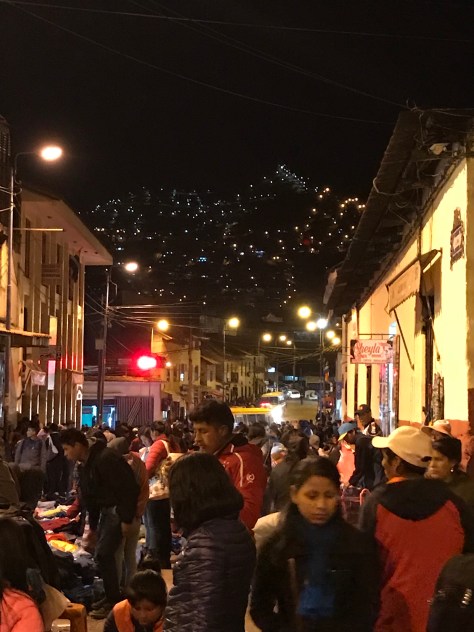
The day was not quite complete without a trip to the local market, which had a mix of daily household goods and clothing, plus handcrafts. It was already dark at 6 PM and the lights shining on the surrounding hills looked like stars.

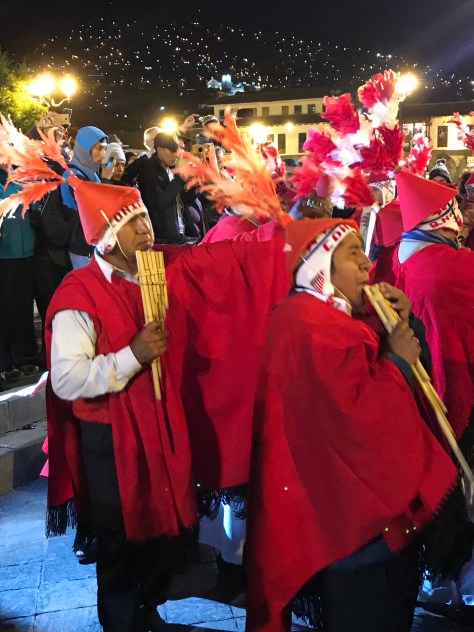
We thought our day was finished, but on our way home we had a surprise “yapa” (local word for an added bonus) in the form of a traditional panpipe group performing in the Plaza de Armas.

Lima: All the Way to the Top

We had one day to experience Lima, so we made the most of it, beginning in the morning with a culinary tour of the city. Lima hosts a rich food tradition with many fusion elements and we had the chance to sample many of them, starting with award-winning coffee and chocolate at Tostaduria Bisetti. The baristas there are truly artists of the foam medium.

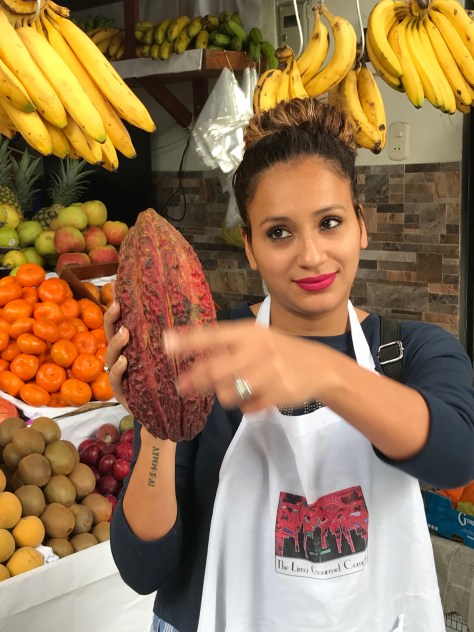
We wandered around Barranco, the Bohemian romantic district, although the atmosphere is pretty laid back in the morning. A local cafe served us smoothies made from lúcuma, a fruit that tastes a bit like butterscotch. Our next stop was a local market, featuring stands with a wide variety fish, nuts vegetables, and vibrant displays of fruits — many of them unfamiliar to us. Our guide talked us through the many items that were new to us, and provided tasting samples of six different fruits. Good thing we didn’t have to taste all 4,000 types of potatoes! (Pop quiz: Can you identify the item being held by our guide? It’s not a potato.)

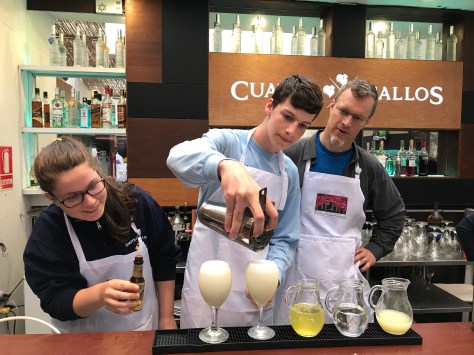
The highlight of our tour was a trip to a cevicheria, Cuatro Gallos, where we prepared our own ceviche and Pisco sours, both traditional Peruvian delicacies. Three parts Pisco, one part each fresh lime juice, simple sugar, and egg white, topped with three drops of bitters. “Fill it to the top” were the instructions. Who knew the kids were such skilled bartenders?

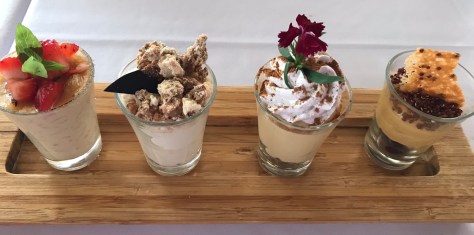
Lunch was a special treat in a gourmet restaurant surrounded by an archaeological ruin in adobe brick that predates the Incas by 1,000 years. Following a tasting menu for the main course, dessert featured four varieties of custard, delectable to both eye and palette.

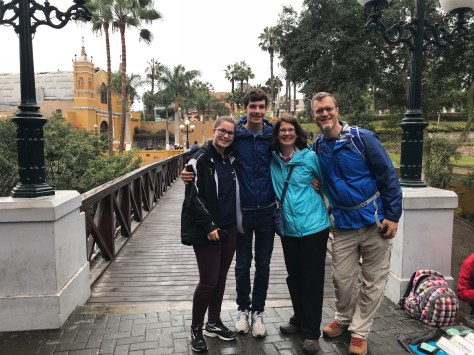
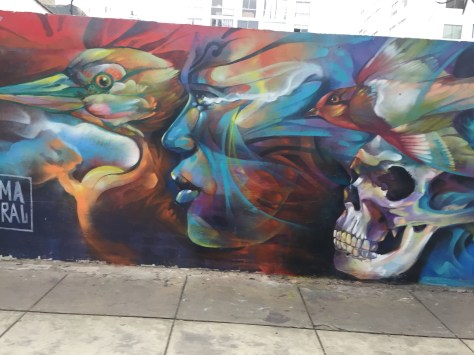
After the first tour we had barely a moment to gather our things at the hotel before embarking on a second, this one a cultural tour of Lima with our local guide, Ana Sophia, who had met us at the airport in the wee hours of the morning. She is a font of information about of the history and culture of Peru, and we learned about the Inca, Colonial, and Guano periods. Along the way, we saw many public murals, the result of government-sponsored competitions.

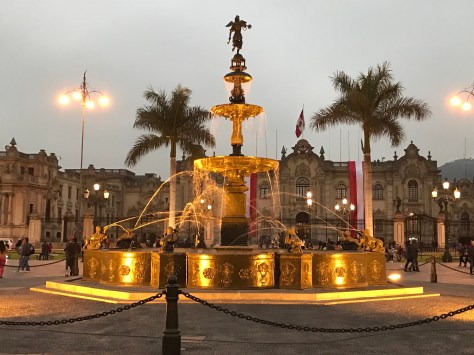
She took us to downtown Lima, center of the Spanish power. According to Ana Sophia, Peruvians like three things: food, noise, and the complicated life. Despite the gray conditions outside (Lima is located in a coastal desert topped by a near-perpetual cloud layer), Lima residents are out and about enjoying the temperate climate and each other’s company. We saw a fountain that was once filled with 3000 liters of Pisco spirits free for the taking, in celebration of the mayor-decreed Pisco sour day.

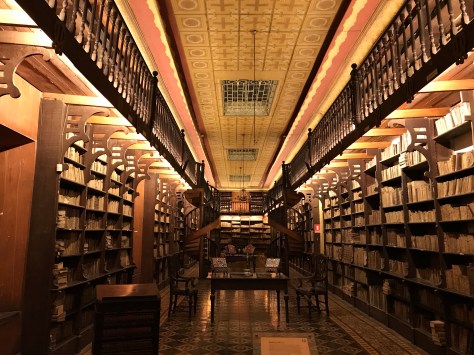
Lima’s architecture reflects European, Moorish, and South American influences, and we saw several churches decorated with ornate silver and gold altar pieces. Beneath one of these lie Lima’s catacombs, a multifunctional construction that serve to absorb seismic waves thus protecting the Franciscan monastery church built above, while simultaneously providing a final resting place for the city’s dead. The monastery also features ornate carved wooden ceilings fit together like puzzle pieces, and a library worthy of Hogwarts holding many dusty 500 year old tomes.

Following the Peruvian tradition of a large meal mid-day and a light dinner, we had sandwiches at La Lucha at the end of our city tour, back in the Miraflores district where our hotel was located. Miraflores is also known for its shopping, which was too good an opportunity to pass up. Turns out Vineyard Vines makes their clothing in Peru, which we scored for a fraction of their cost at home. The park nearby is ruled by a pride of semi-fed cats fed by volunteer locals.

What a day in Lima – all the way to the top, indeed!

Arrival in Lima!

This summer’s adventures are to Peru, a long-time bucket list destination for us – exciting!

Turns out that the trip to Lima can be a long one, as we found out yesterday: we left the house just before 7 AM (to drive to Boston) and didn’t arrive at our hotel in Lima until nearly 3 AM local time as a result of several flight delays on top of a generous layover in Fort Lauderdale. But we did have a chance to get a family meal at the airport Chili’s, and, more importantly, we discovered that the kids *can* sleep on planes with some creative positioning!

Our Lima tour guide met us at the airport despite the hour and brought us to our hotel – very nice to have a welcoming committee. 🙂

To Be or Not To Be in Helsingør

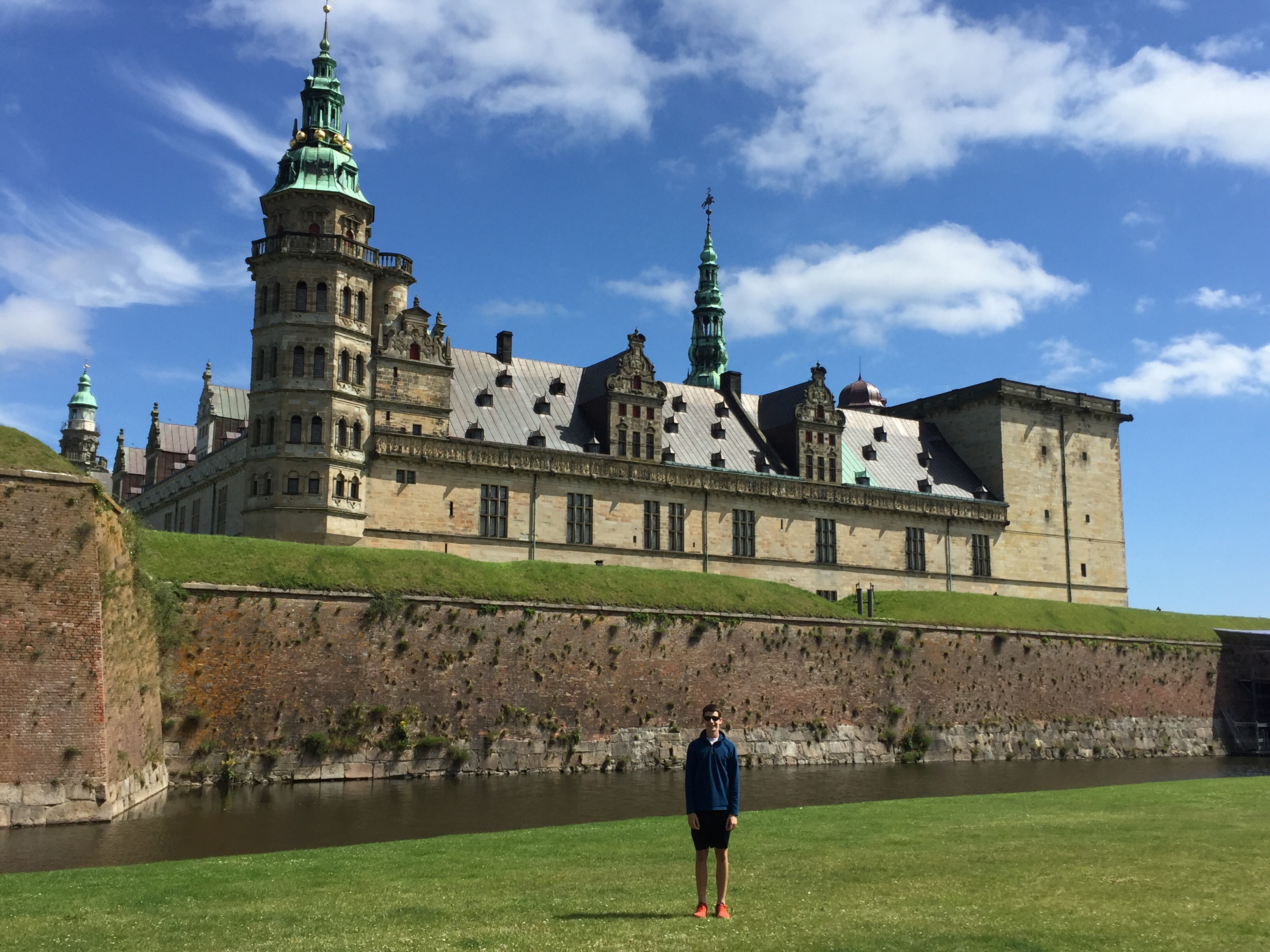
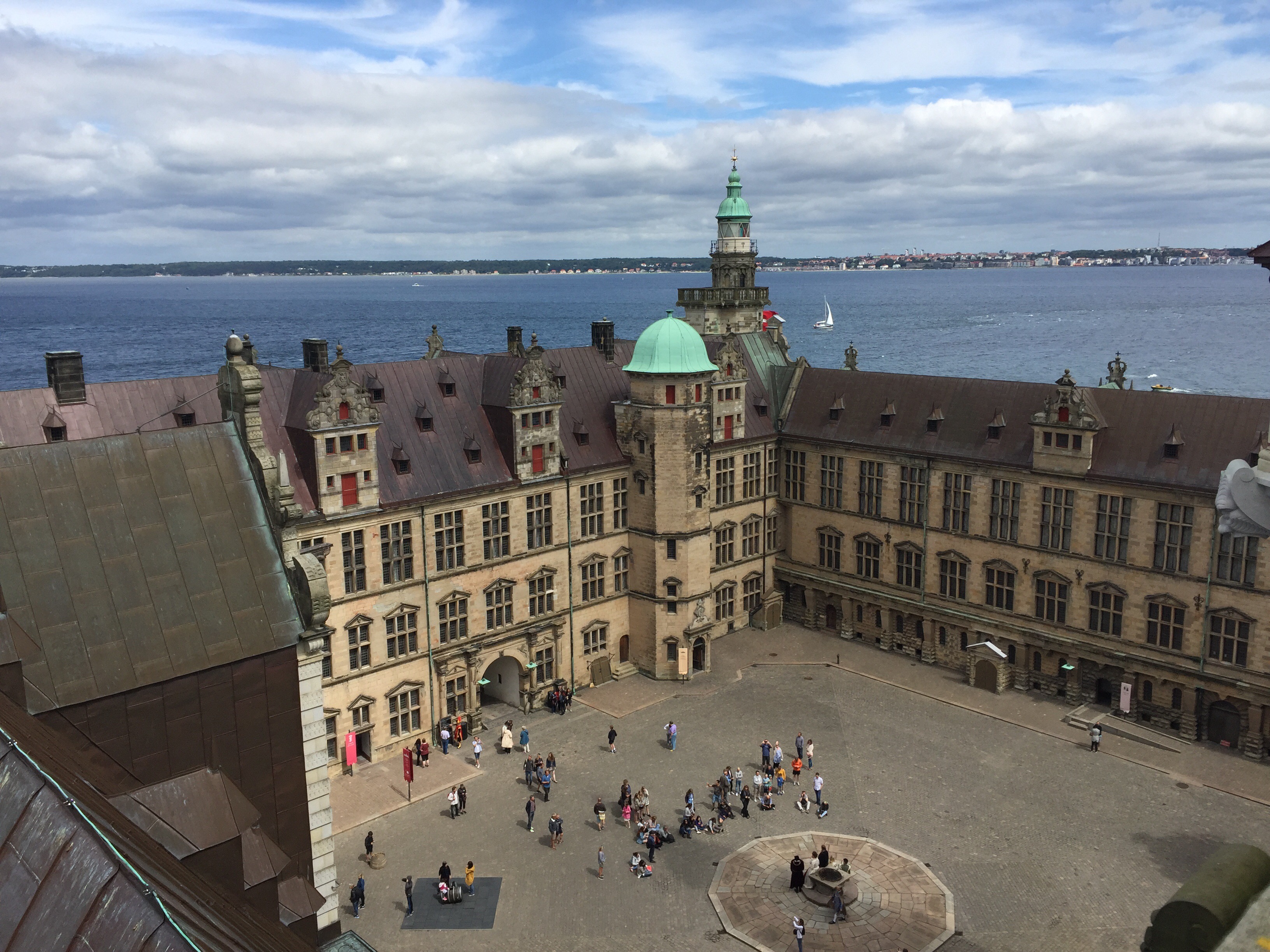
In our case the answer is an emphatic “To be!” – we spent a lovely day in Elsinore (as Shakespeare called it).  The castle is actually called Kronborg and was built into its present form by Frederick II to serve both as a royal residence and to collect tax duties from all the shipping traffic between the North and Baltic seas.


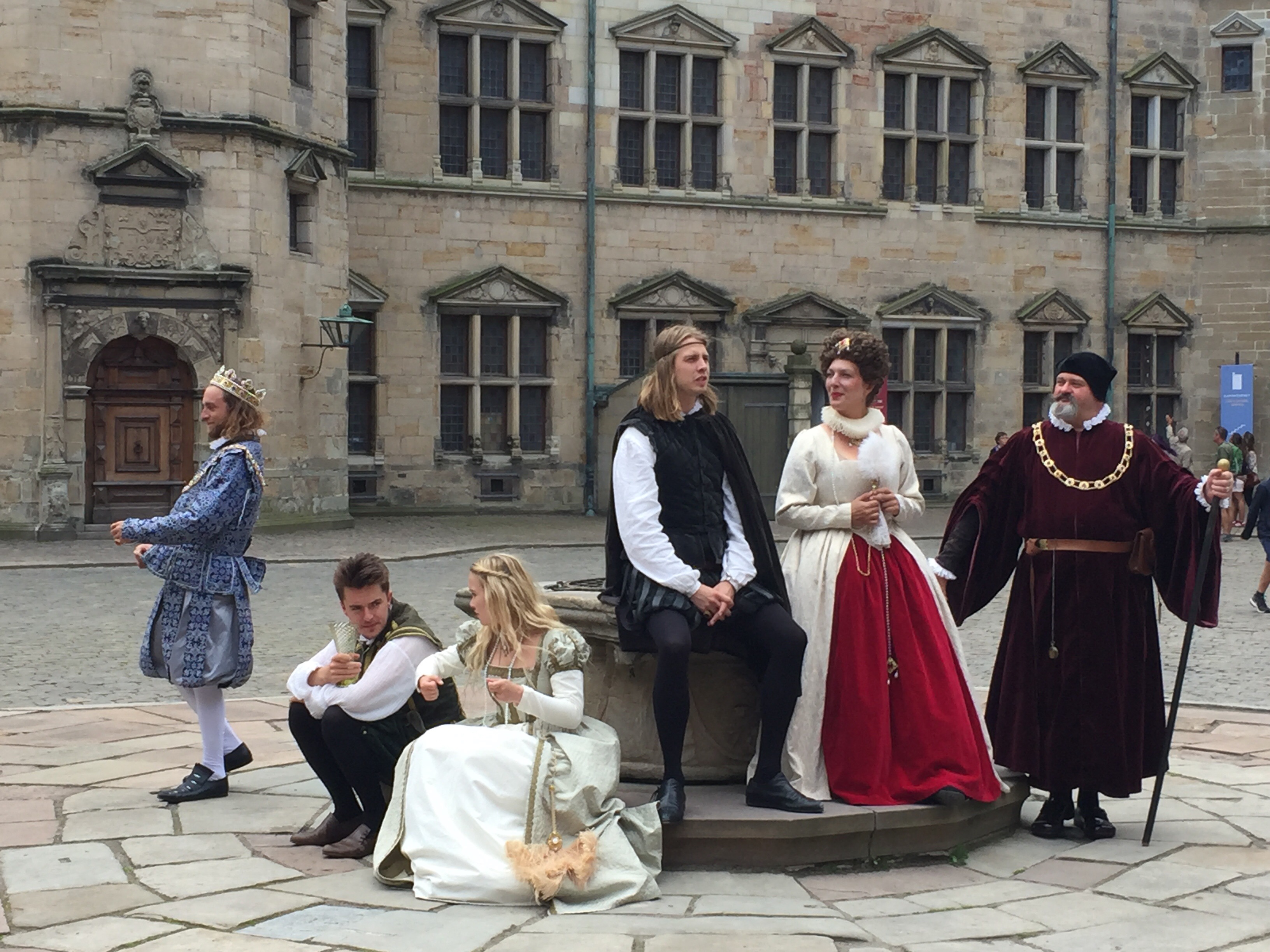
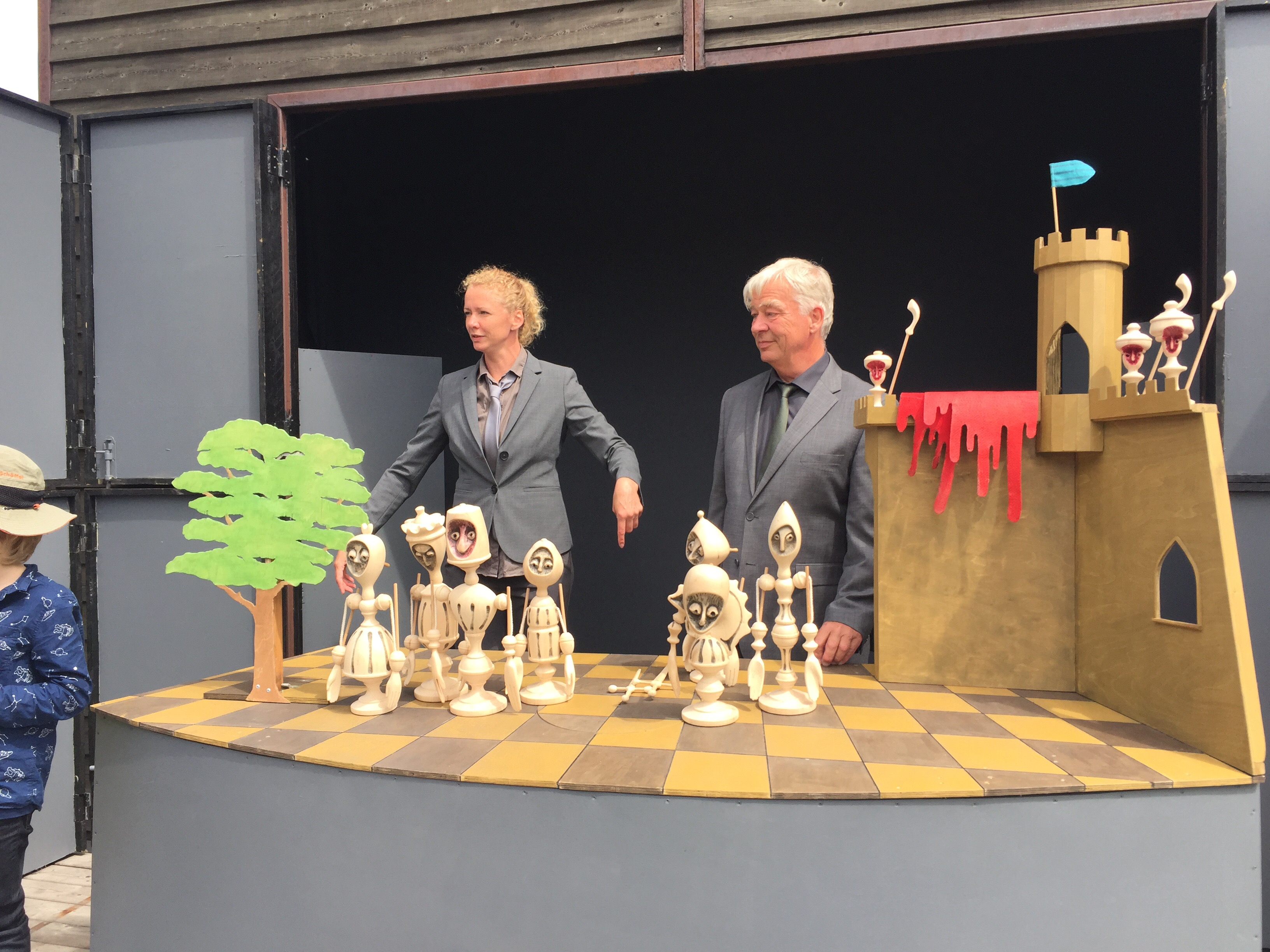
Thanks to Hamlet there will forever be an association between this castle and the Bard (never mind that the play is based on no actual historical events).  As a result we were able to enjoy performances of not one but two of Shakespeare’s works. Throughout the rooms and grounds of the castle a troupe of actors was carrying out scenes from Hamlet over the course of the day.  While these were well done and a treat to witness, the real highlight of the day was a half-hour rendition of Othello performed entirely with puppets. The two puppeteers were so expressive they managed to convey the entire story in captivating manner, even to people not previously familiar with the play.  It was an unexpected but delightful surprise.


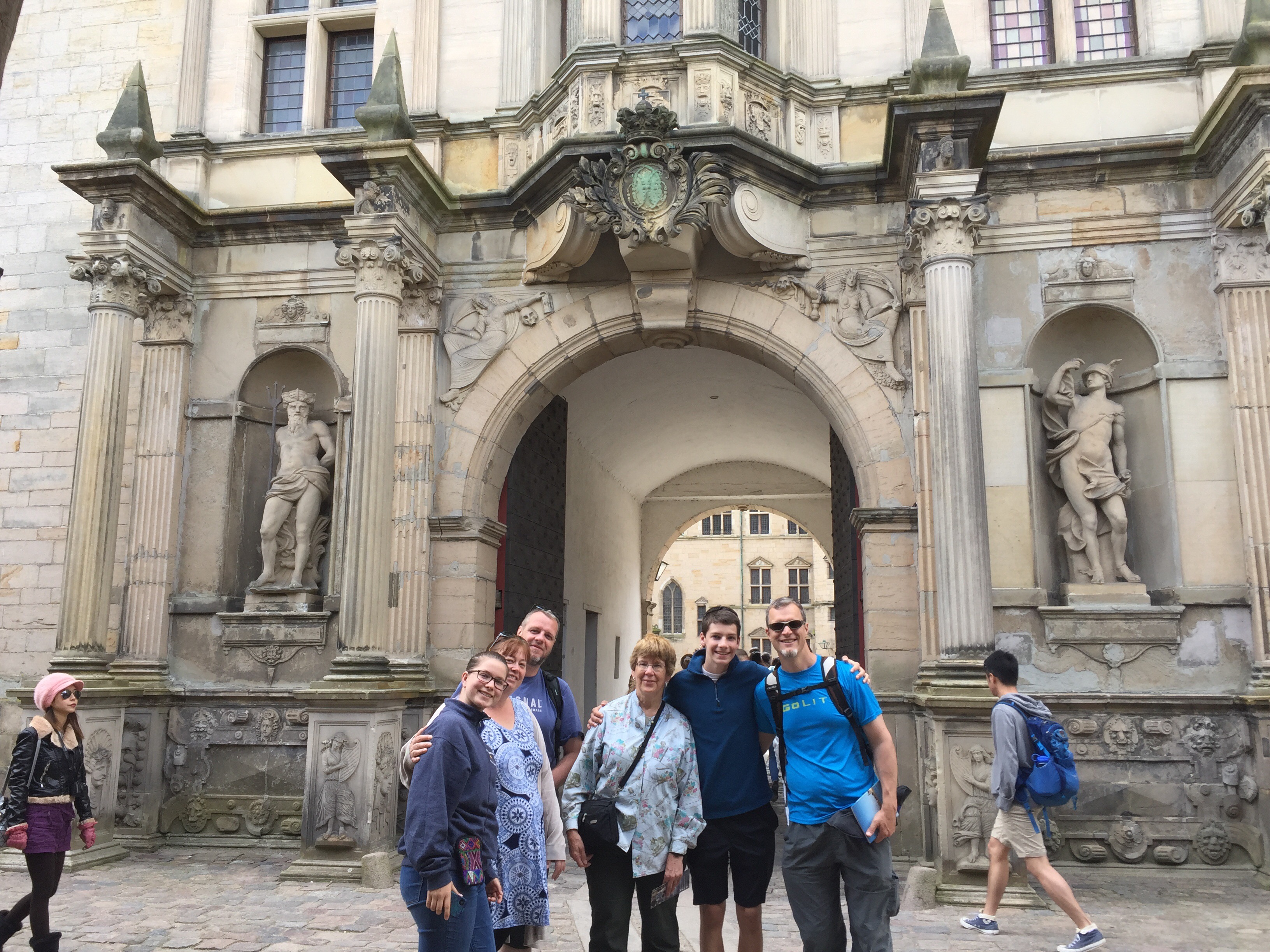
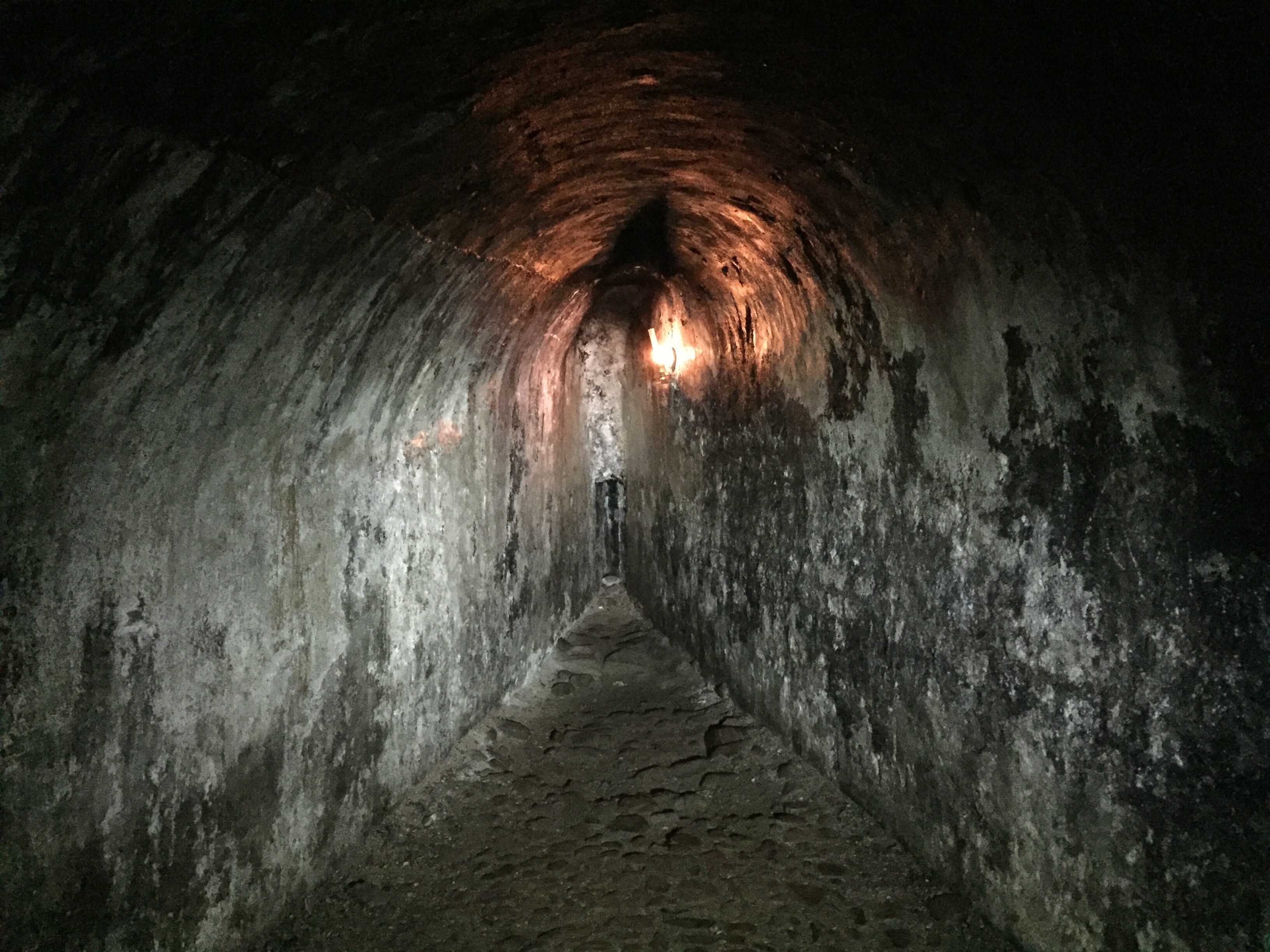
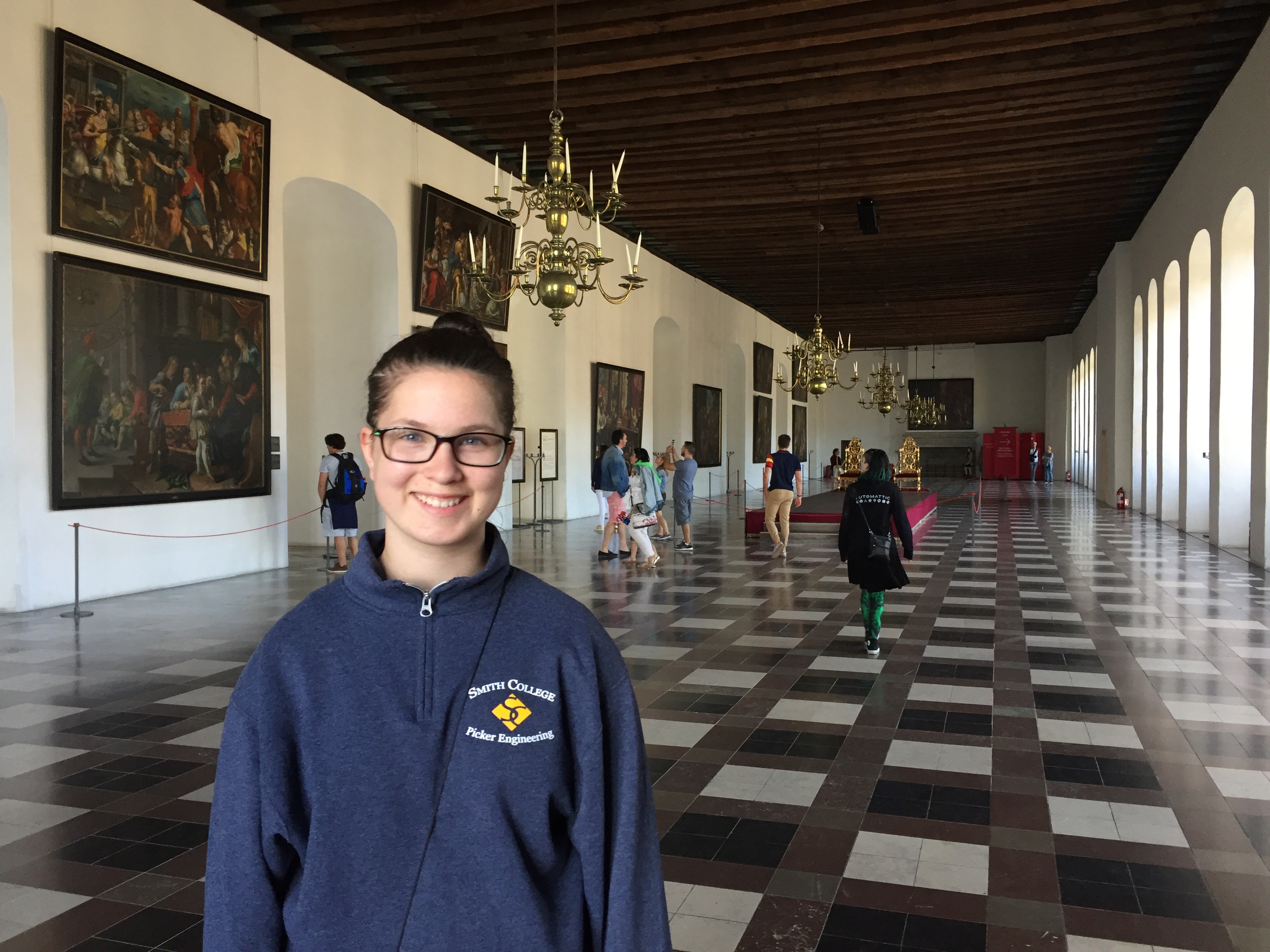
The castle tour is divided into multiple separate entrances.  One leads to the casemates, which were suggestive of dungeons.  (Actual prison cell shown below.) Another leads to the royal chambers and grand ballroom, the largest in Northern Europe.  It is easy to imagine all the castle scenes from fairy tales taking place in this room.  So, which one would you rather live in?

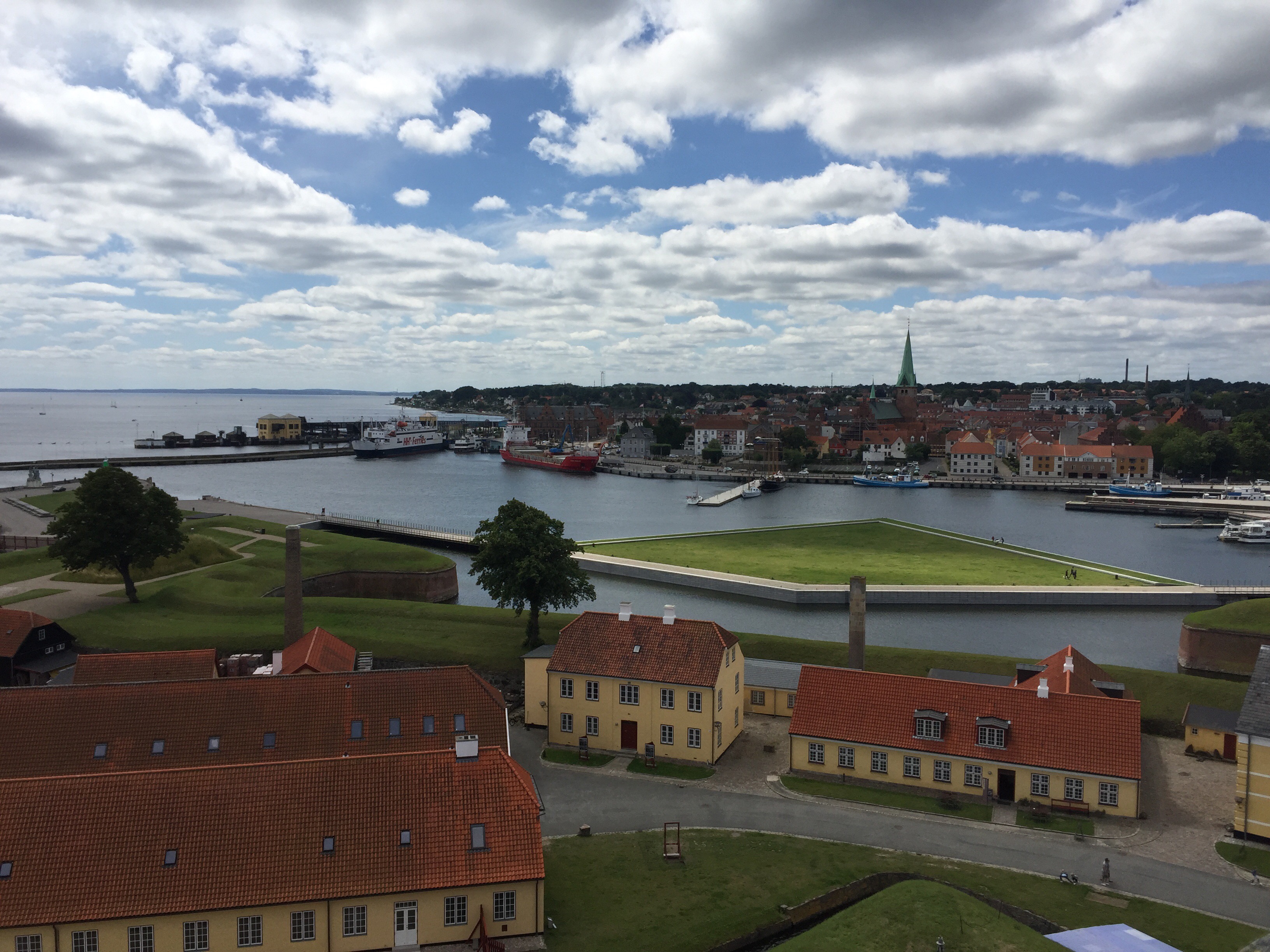
A third entrance leads up the 145 steps to the Cannon Tower, which affords views into the castle courtyard, across the sound to Sweden, and to the neighboring town of Helsingør proper beyond the extensive fortifications.


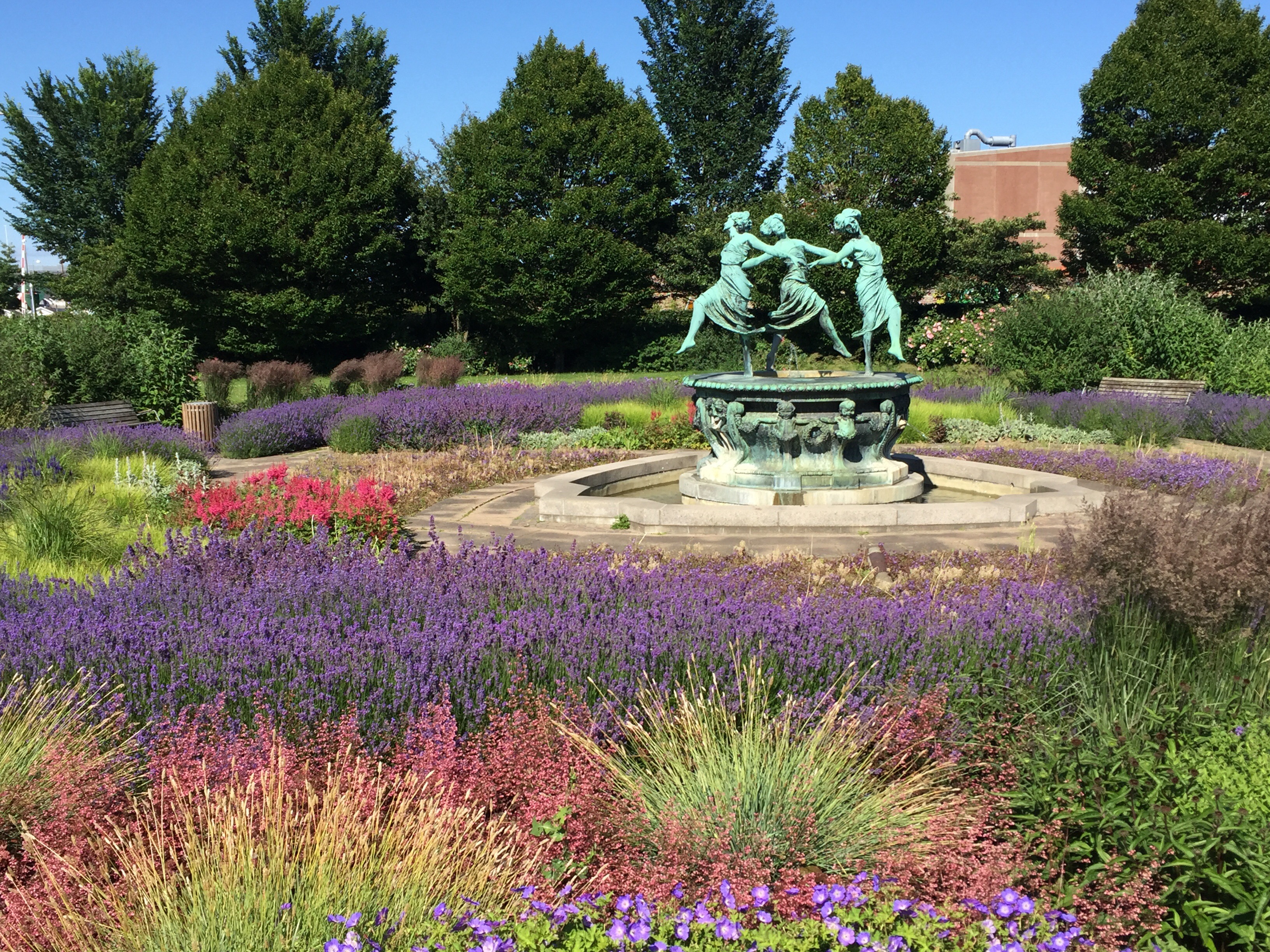
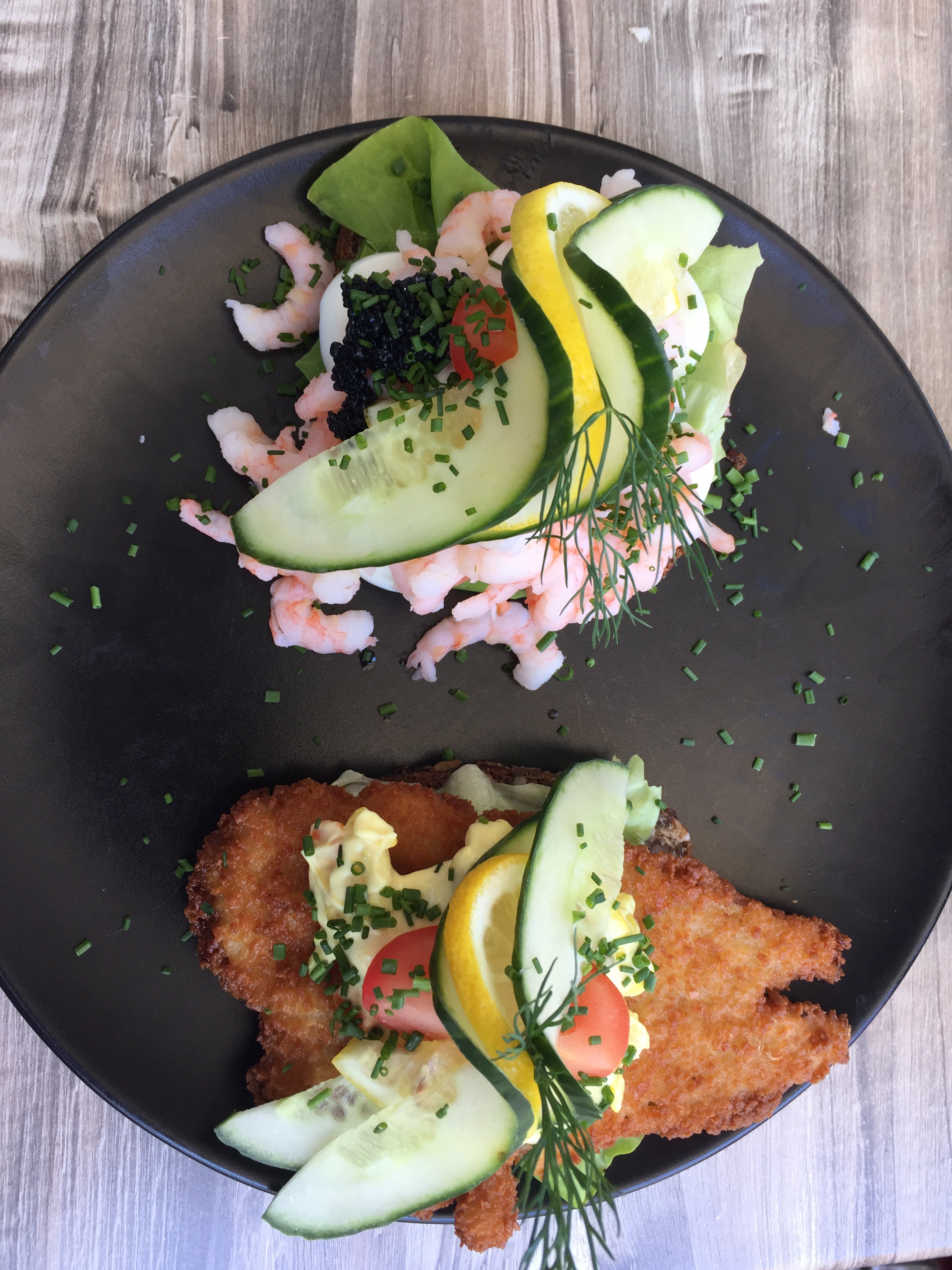
Our castle tour complete, we ventured into said town in search of a late lunch, past the harbor (featuring a classic car rally), a scenic garden shown below, and narrow streets with half-timbered houses.  We landed in a lovely outdoor cafe where several of us tried the classic Danish “smørrebrød” (easier to eat than to pronounce!)

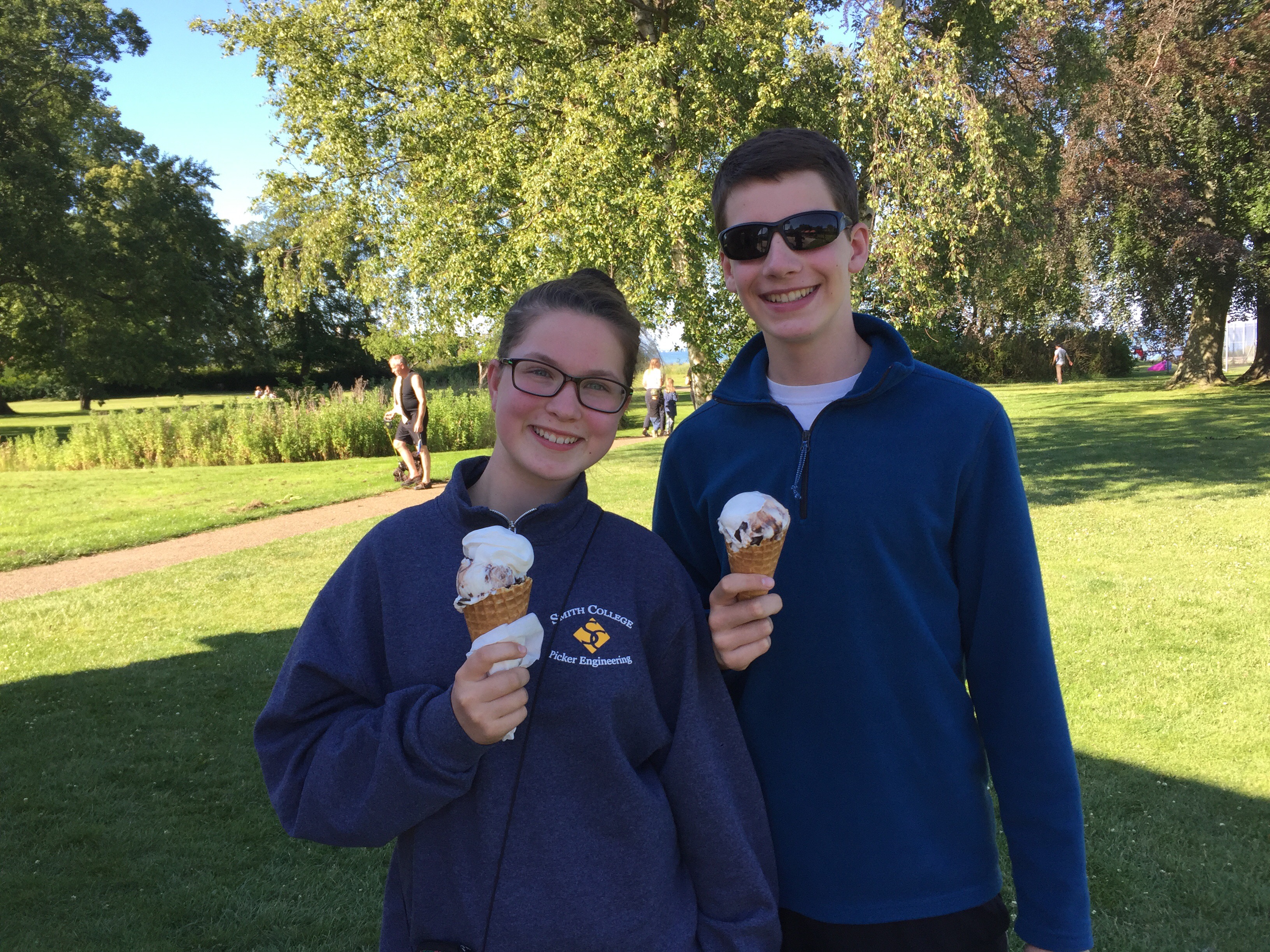
On the way home, we drove along the very scenic coastal road and made the obligatory stop for ice cream (soft ice cream on top of hard ice cream, topped with a chocolate- dipped marshmallow) at a favorite place of Christina and Thomas.

We capped off our lovely day with a crackling bonfire, drinks, and stories in their garden – very hygge!