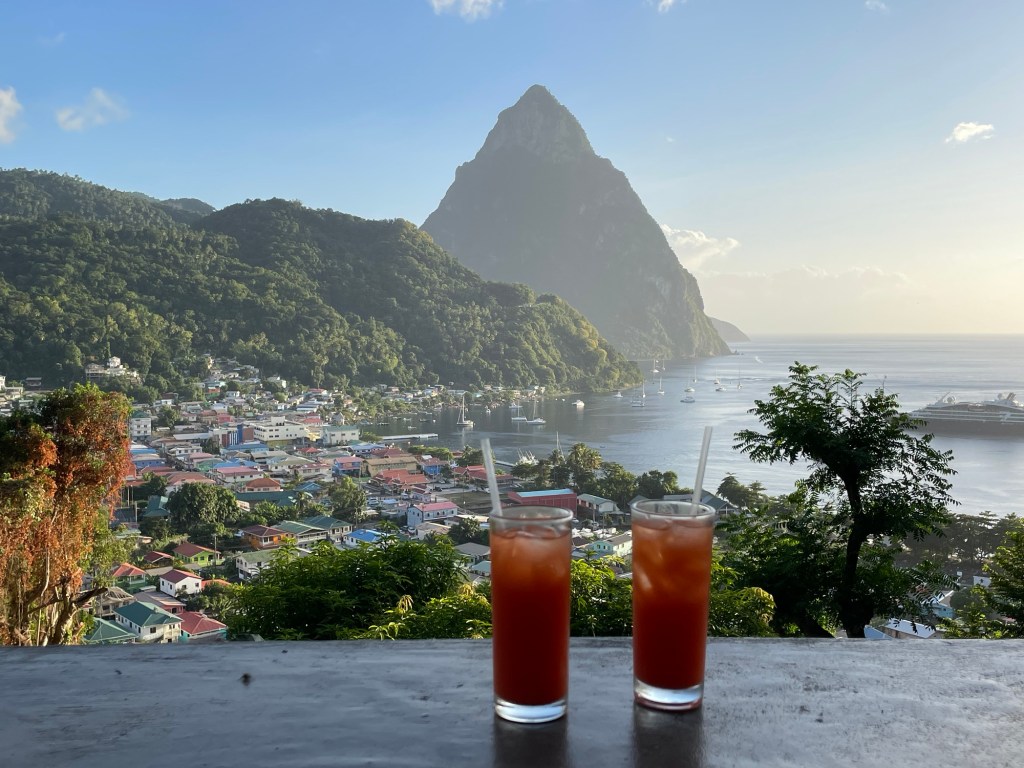
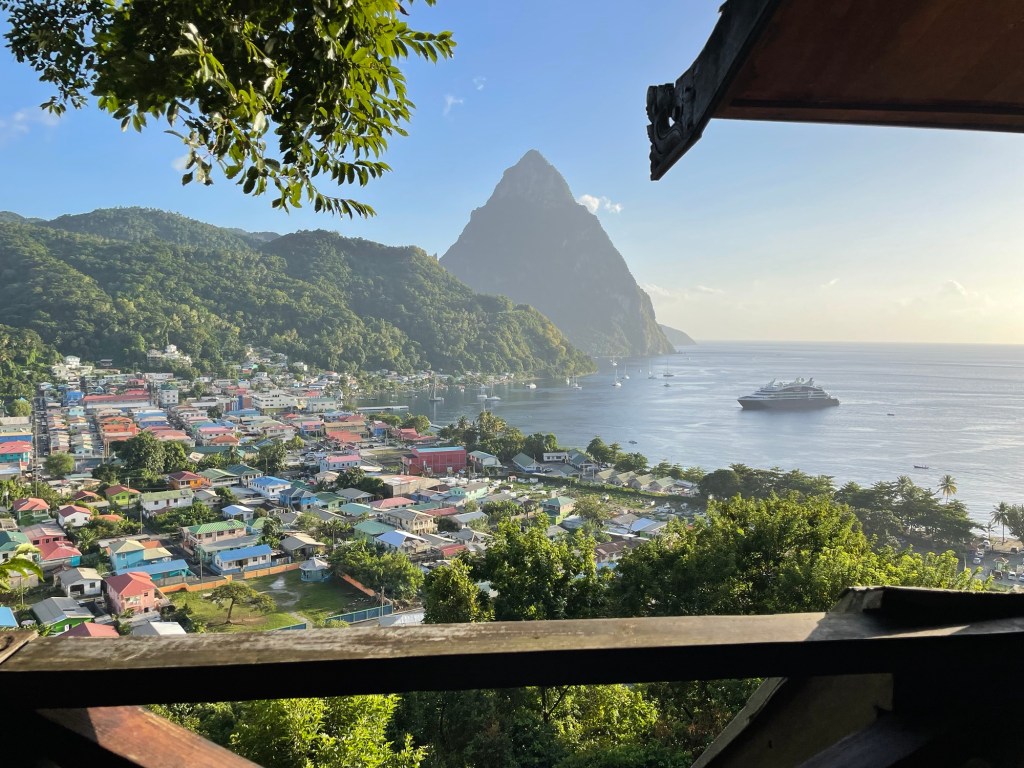
We’re writing this post from our cliffside room overlooking Soufrière harbor in St Lucia. We had decided to take advantage of a shared January break to go on a family vacation at the start of the new year – this time in the Caribbean. We chose St Lucia for its mix of hiking, snorkeling, history, and nature – something for everyone.
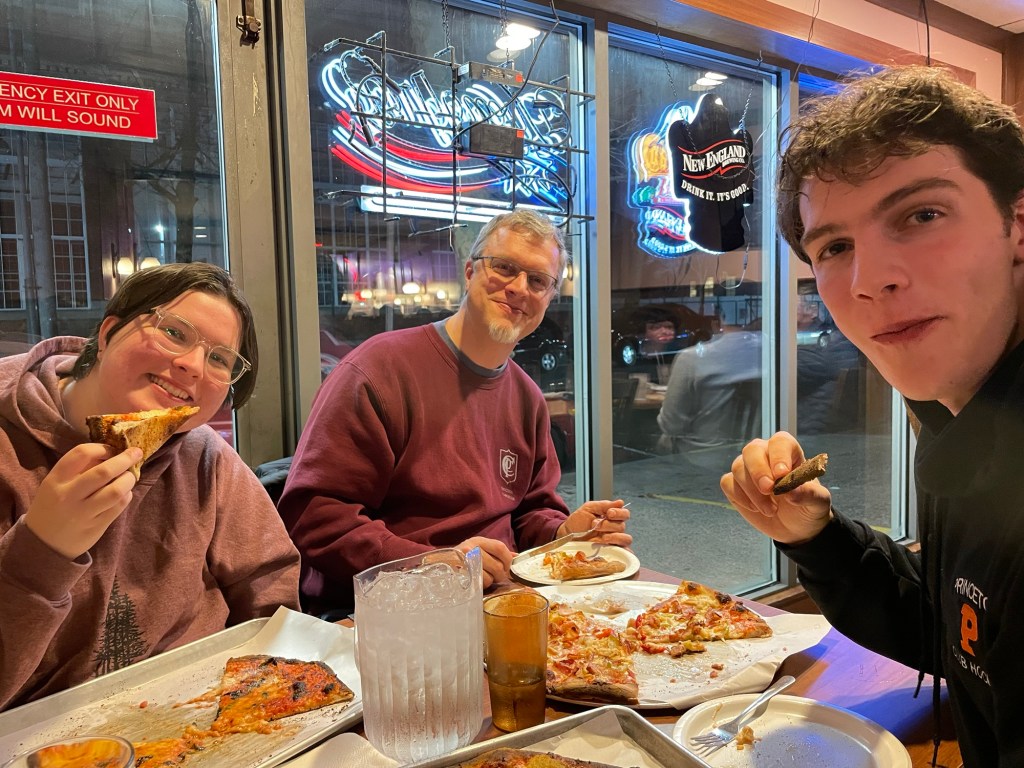
The closest direct flight left from JFK airport, so we drove partway down to New Haven the night before. This gave us the chance to stop by Modern Apizza and sample their clams casino pie – yum! (Thanks, Cha!)
After a very early start to beat the commuters, a pleasant check-in, and a 5-hour flight, we landed here in paradise. Our friendly taxi driver from the airport pointed out many local attractions we hope to see this week. He has an interesting career, split between driving tourists and installing street lights, plus playing musical gigs in the evenings.
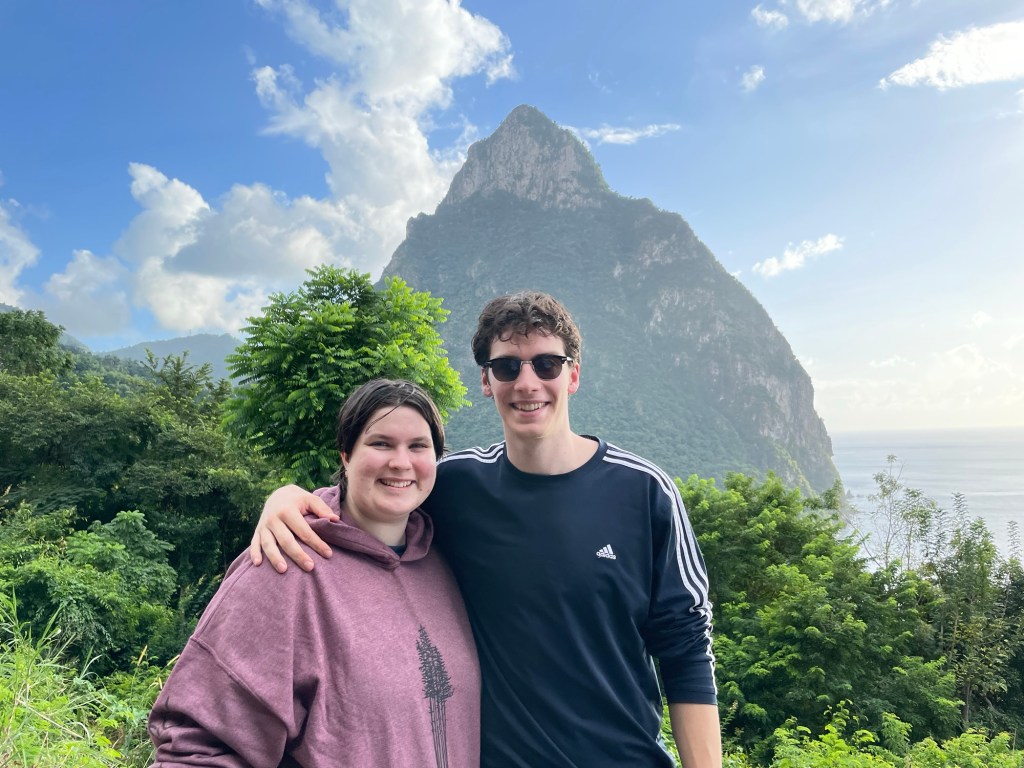
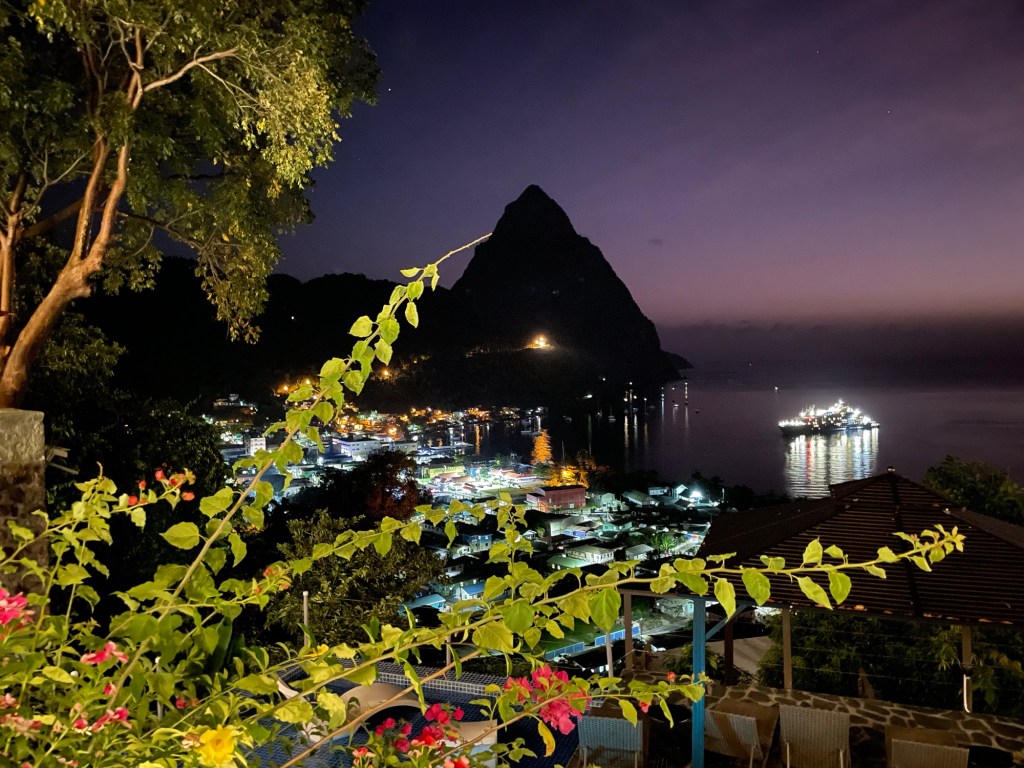
He dropped us off at our accommodations for the week, the Green Fig. An unavoidably prominent and unspeakably picturesque feature of the local landscape is the Petit Piton, the volcanic mountain visible in all the photos below. It’s a UNESCO World Heritage site and we can see why.
We arrived in late afternoon, but the staff greeted us with welcome drinks and kindly fed us a snack. We had just enough time for a dip in the pool nearest our room before heading to dinner. We’re going to hit the sack early tonight and look forward to exploring Soufrière in the morning.
Although we’re flying home today, we had much of the day to do some final activities in Stone Town.
Susannah and Kate started early with sunrise yoga in the “Ballroom” of our hotel. It wasn’t intended to be a hot yoga session, but given the warm temperatures even at 6 AM, we were quickly sweating. Our guide was gentle and strong, and she helped us work out the kinks from our many hours of bumpy truck rides on safari.
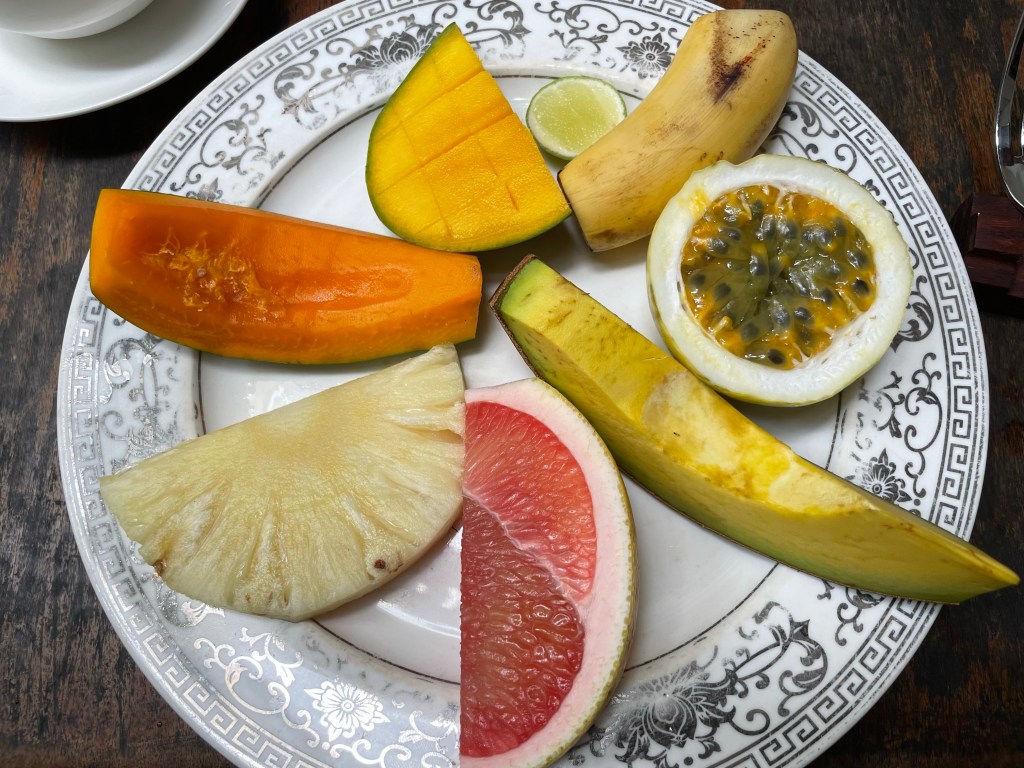
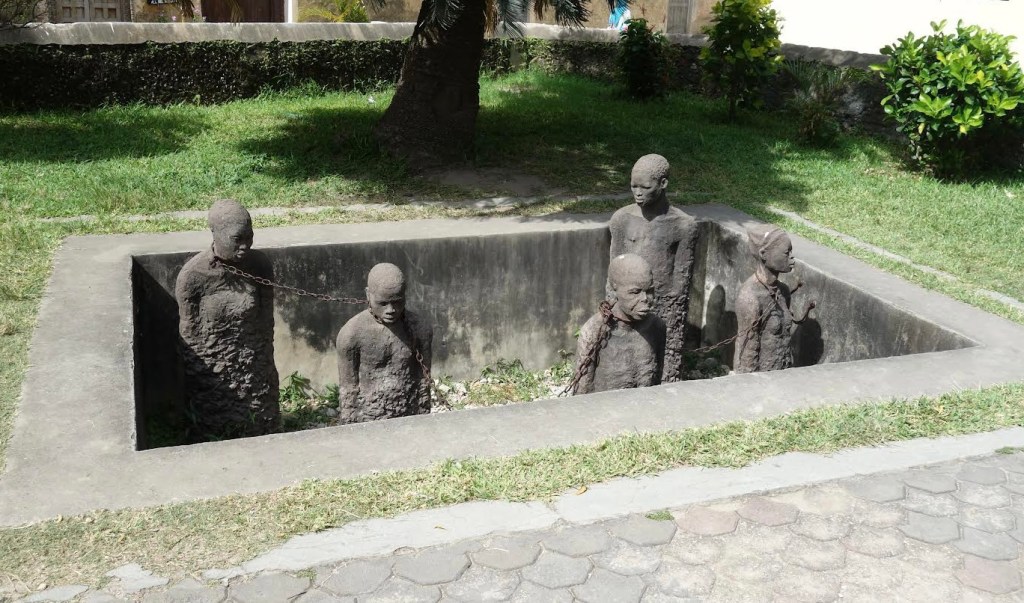
After a final hotel breakfast (last call for the tropical fruit assortment!), most of our party headed out on shopping expeditions. Some also made time for a visit to the site of the former Slave Market, where a museum presents the heartbreaking stories of the east African slave trade. The Anglican Church of Stone Town now occupies most of the site, with its altar where the auction block once stood. There is a sculpture commemorating the many lives unjustly enslaved here.
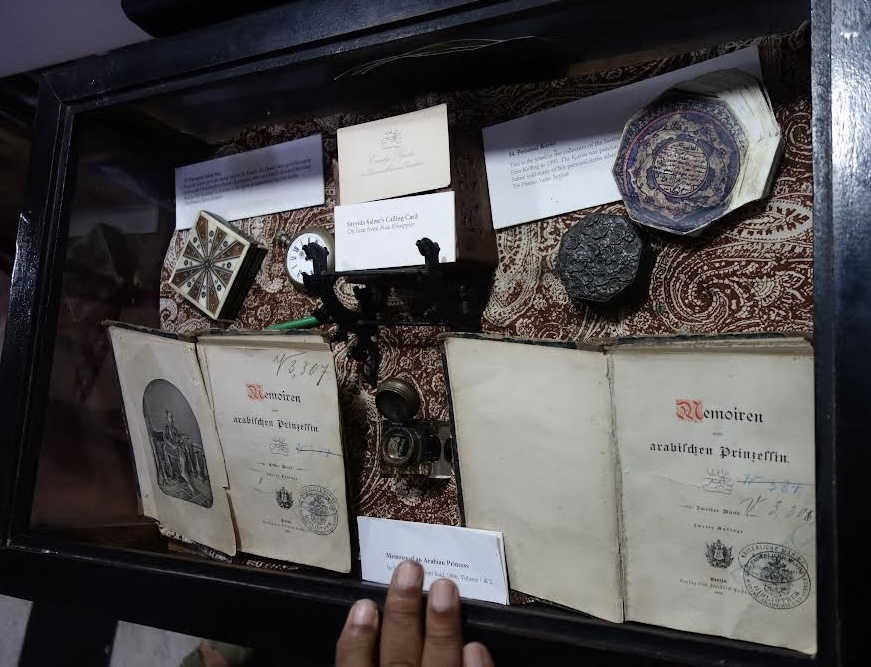
While waiting for our airport transport, we also had time to visit the small but delightful museum devoted to the story of Princess Sayyida Salme, a daughter of the local sultan who broke convention and caused a great scandal by eloping with a German businessman in the mid-1800s (converting to Christianity in the process). He died tragically young, leaving her to raise their three children in an unfamiliar culture. She had already taught herself to write at a young age (something forbidden for girls) and is now remembered as the author of several books explaining Zanzibari culture to Europeans.
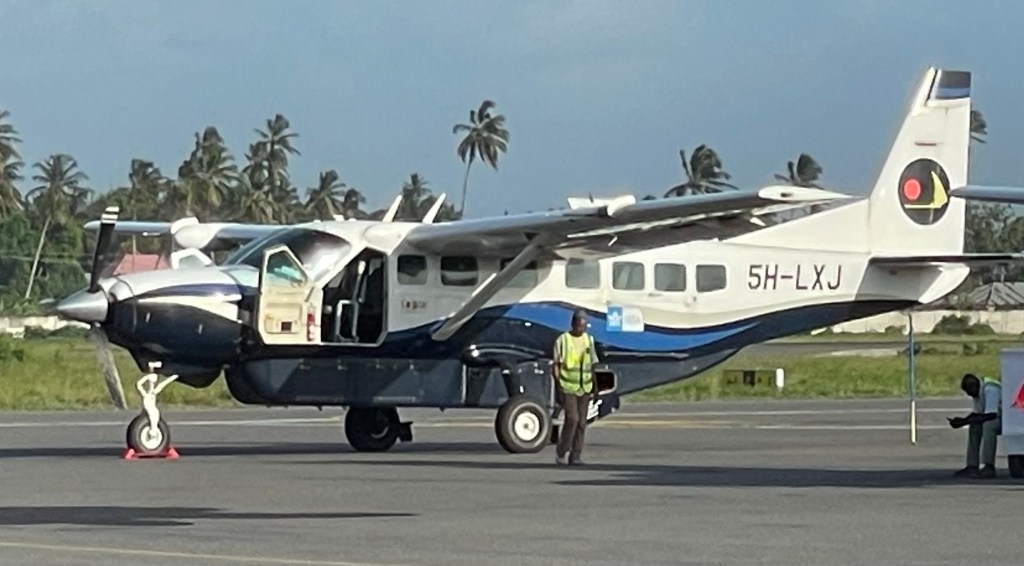
An unexpected highlight of the day for some was our short flight from Zanzibar to Dar Es Salaam on a 12-person puddle jumper. Our group took up three quarters of the seats and we had great views of both Zanzibar and the mainland as we crossed the Indian Ocean.
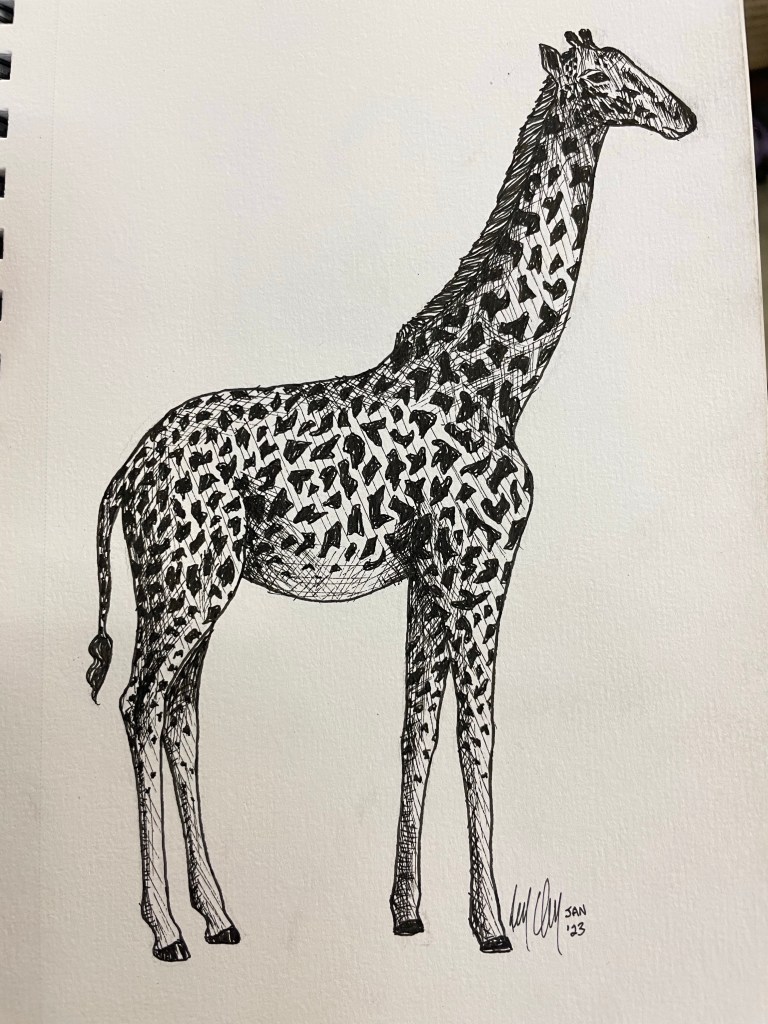
Now after more than 24 hours of travel, we are finally home safely, filled with memories of our action-packed adventure. We close with a giraffe drawing Rowan made while waiting in the airport. Thanks for joining us on our safari adventure!
Since Zanzibar is an archipelago, it seemed only right to take to the seas for our penultimate day here. We booked an all-day excursion through Safari Blue, a well-known local snorkeling tour company. When we arrived at the launch site, there were crowds of other people trying on flippers and buying water shoes for protection from the sharp coral. We were quickly sorted into individual boats – ours was shared with four Norwegian university students and a lawyer from DC, all on holiday.
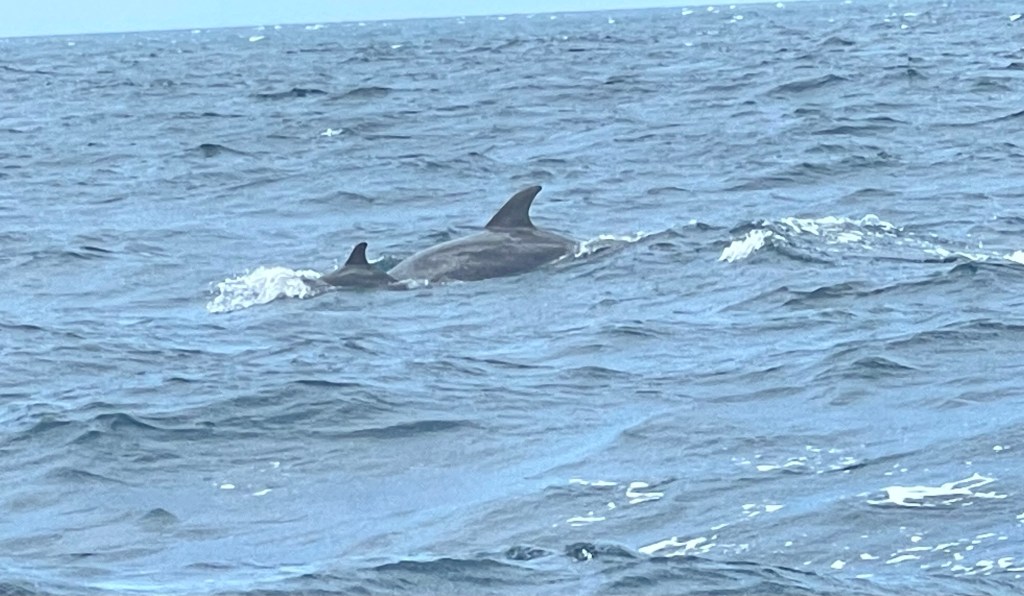
Our first stopping point was seemingly in the middle of the ocean nowhere near land, but our guide said that dolphins often congregated at this location, and sure enough, we soon saw tail fins. With mask and snorkel we could see them better and follow them for short stretches, but they were in their element and clearly in control of the situation.
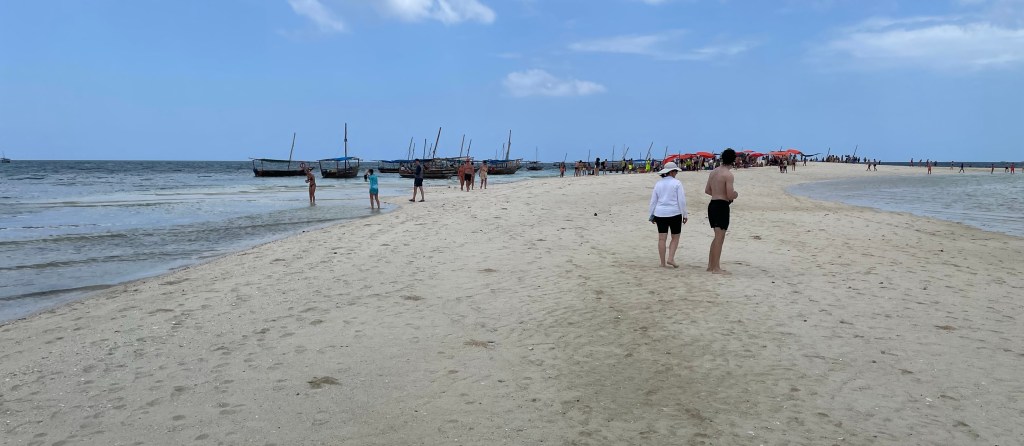
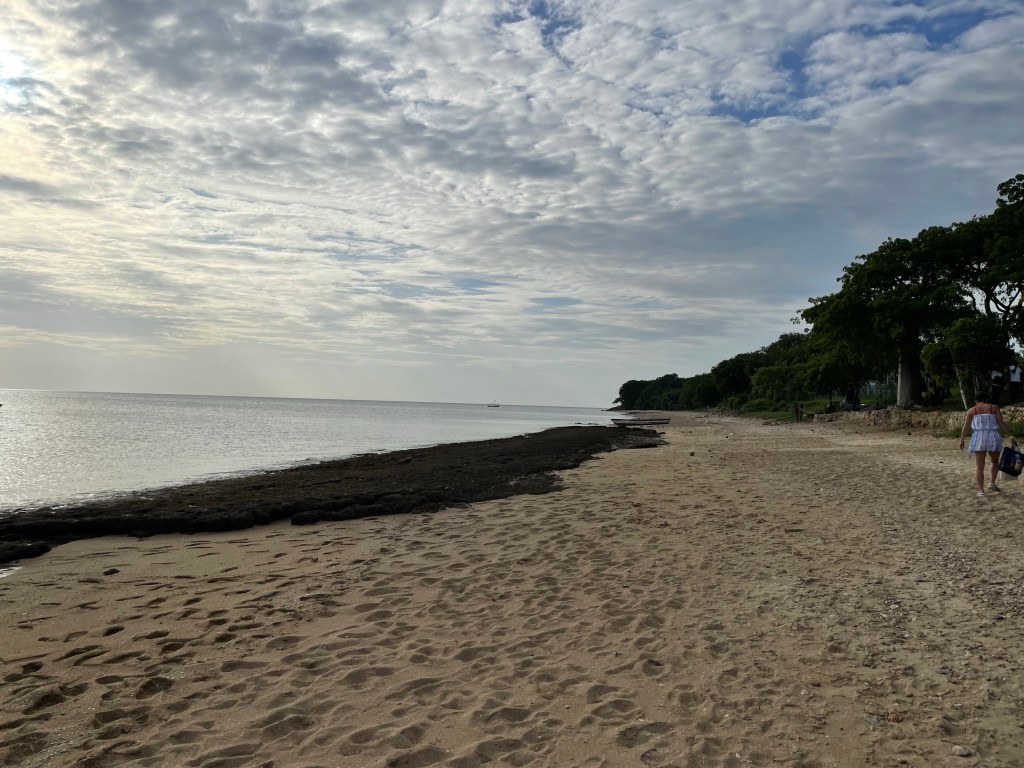
Stop number two was an isolated sand bar in view of several islands (see lead photo). Apparently it’s a popular destination for all-day beach parties, and even mid-morning was quite well populated. We only made a short stop, long enough to circumnavigate the shoreline on foot.
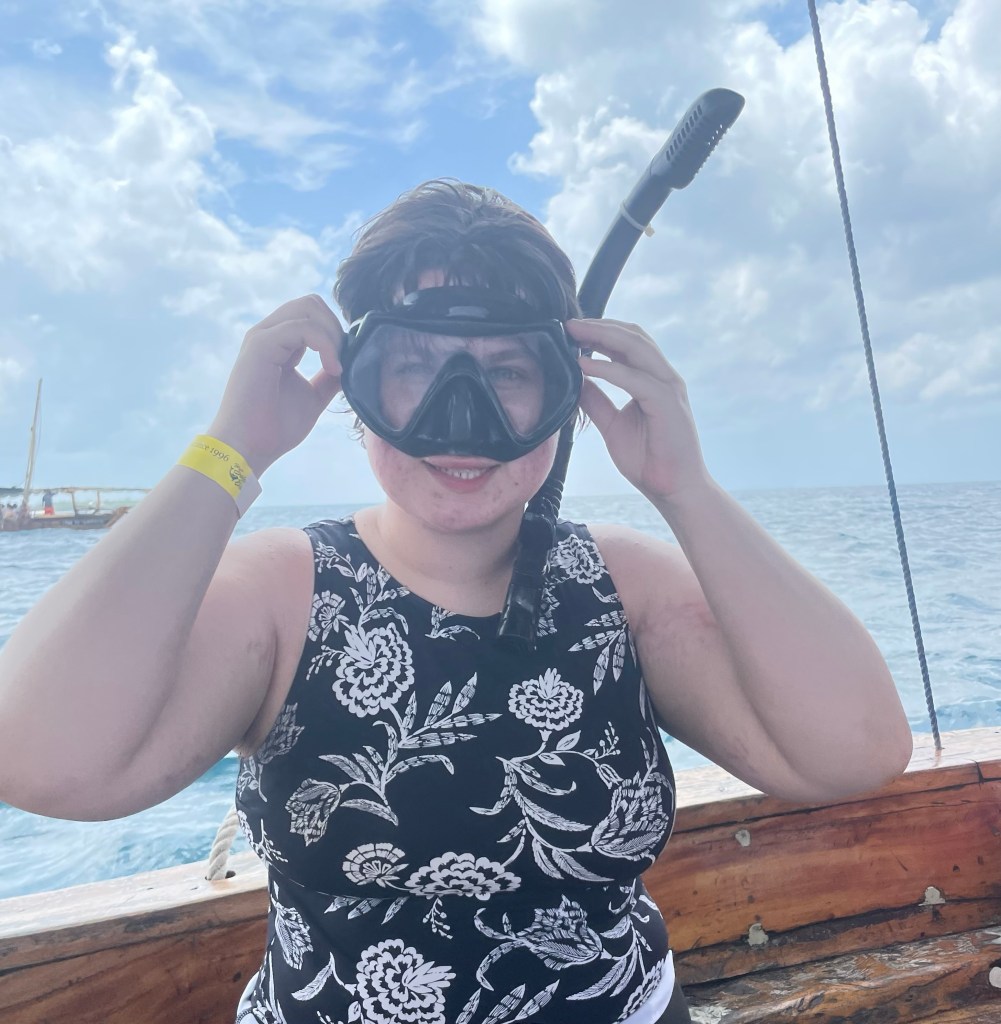
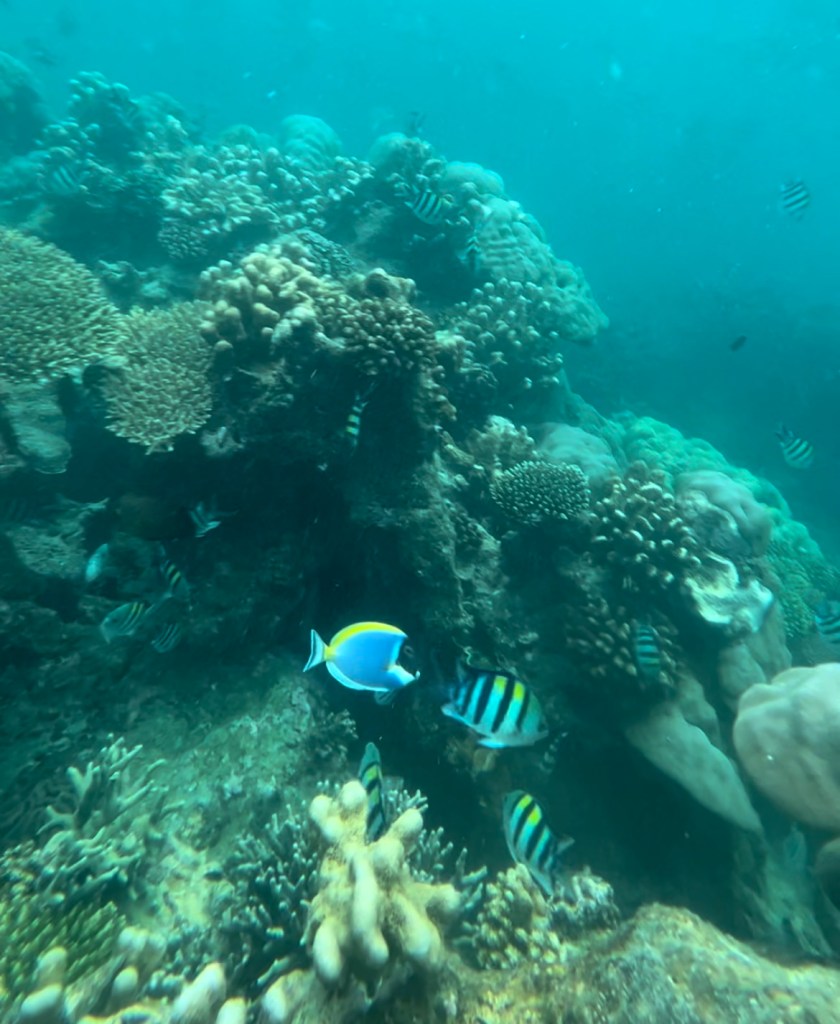
Stops 3 and 4 were both snorkeling sites. Of the four in our immediate family, only Nick had ever snorkeled before, so this was a new experience for most. The first location was fairly shallow with a diversity of coral, including some in blue, and the largest sea urchins we’ve ever seen (foot-long spines!?) The second location was much deeper with huge schools of fish of different kinds and a few much rarer types.
Thanks to fellow passenger Andi for capturing this underwater shot
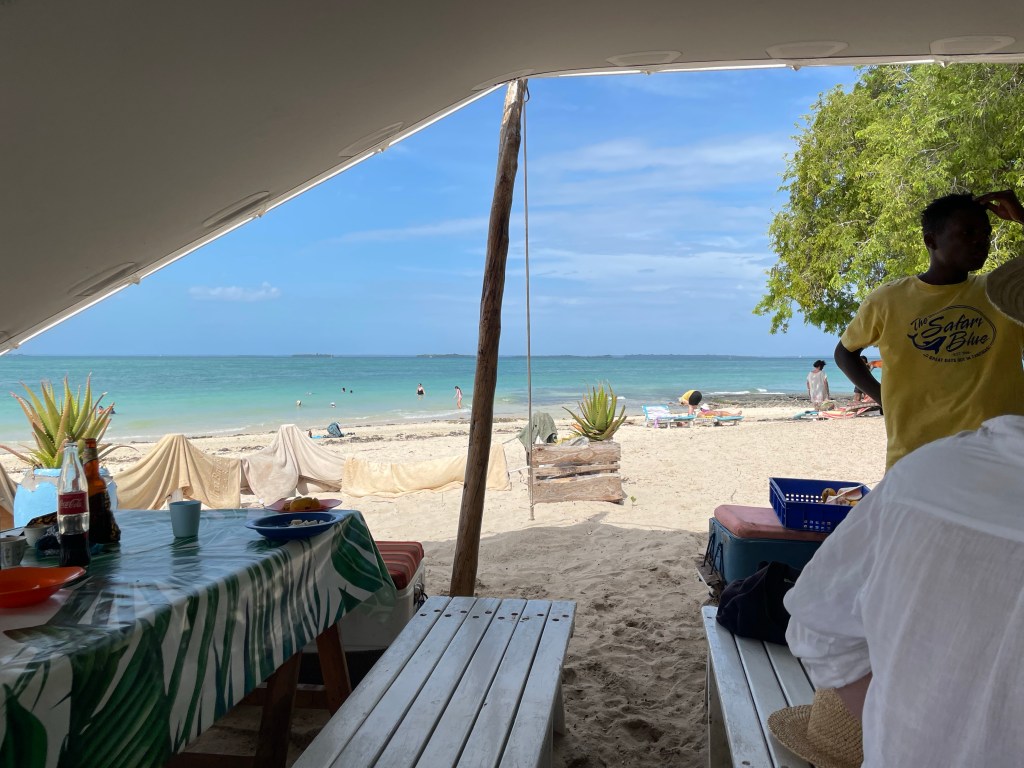
The water was a perfect temperature and we could have stayed longer, but as they say, time and tide wait for no one – soon it was time to move on to our next destination: a massive seafood barbecue buffet under a spacious tent pitched on a long sandy beach. Because our outfitter specializes in this one tour, they enjoy economies of scale and serve up a varied and delicious menu with plenty of food and drinks. For dessert we again sampled a number of different local fruits, including baobab and sugar cane.
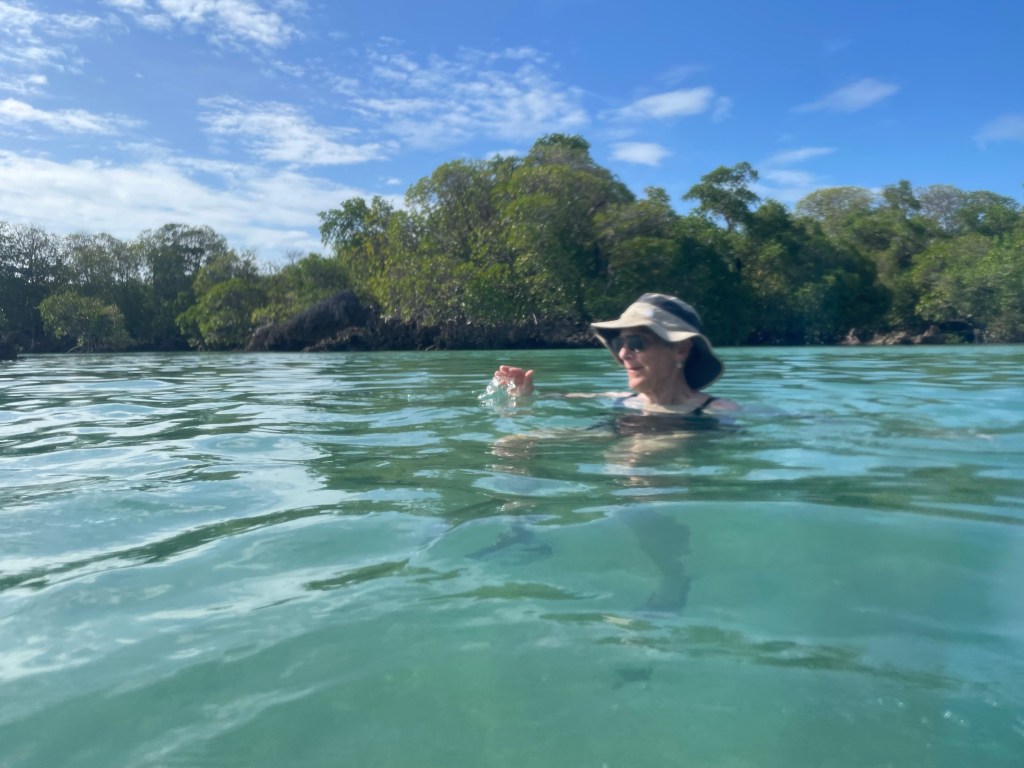
Two more experiences still awaited us. For a bit of postprandial exercise, we were taken to an enclosed tidal lagoon ringed by coral for a swim. The mangroves in the area make the water extra-salty so it was especially easy to float.
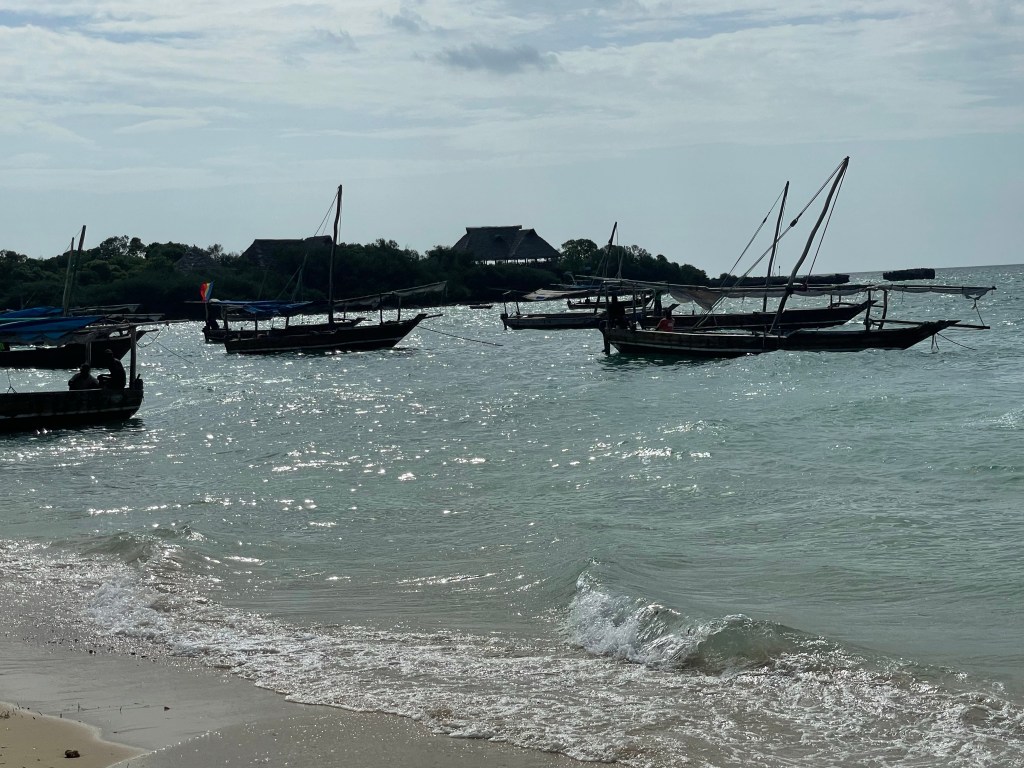
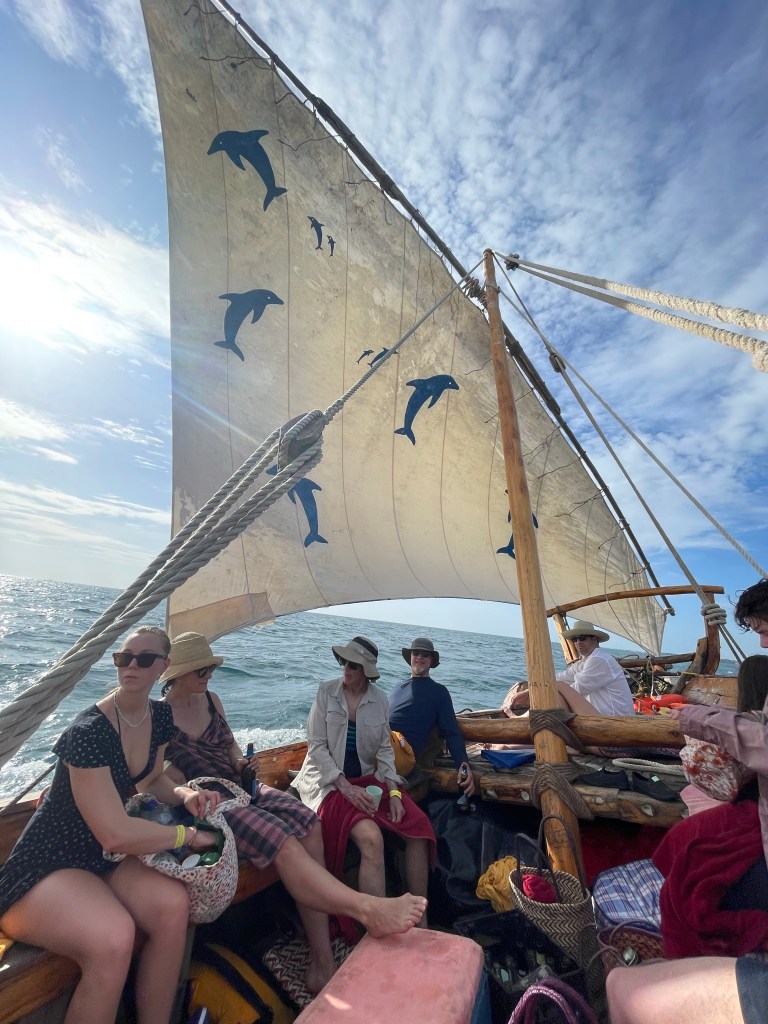
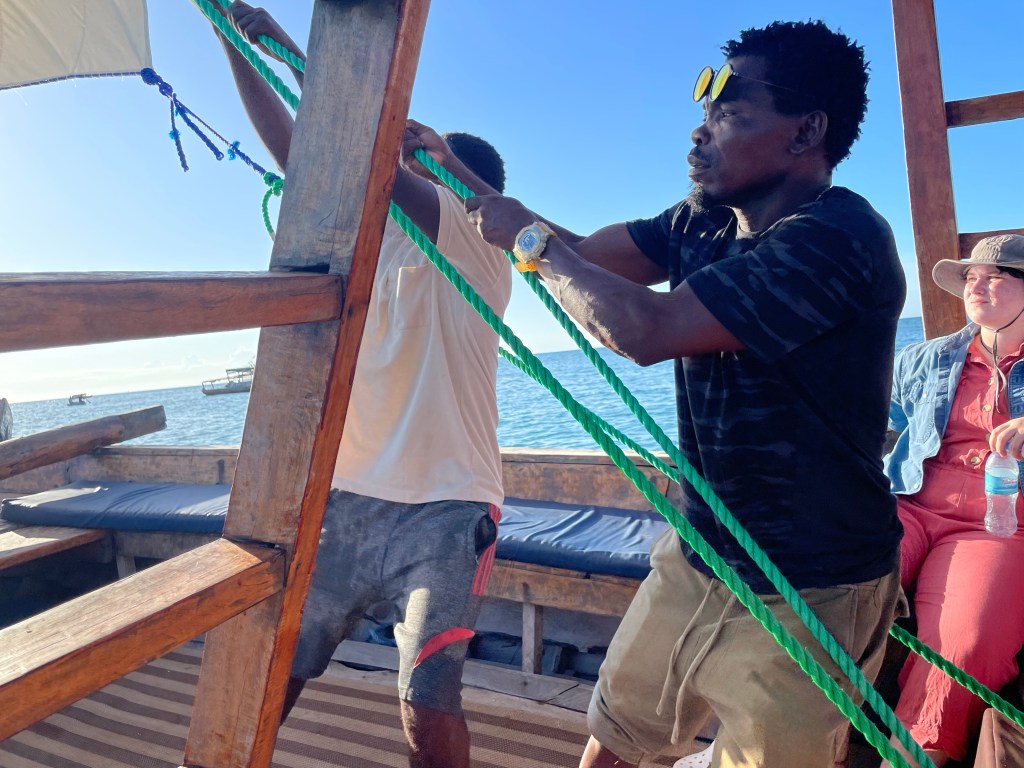
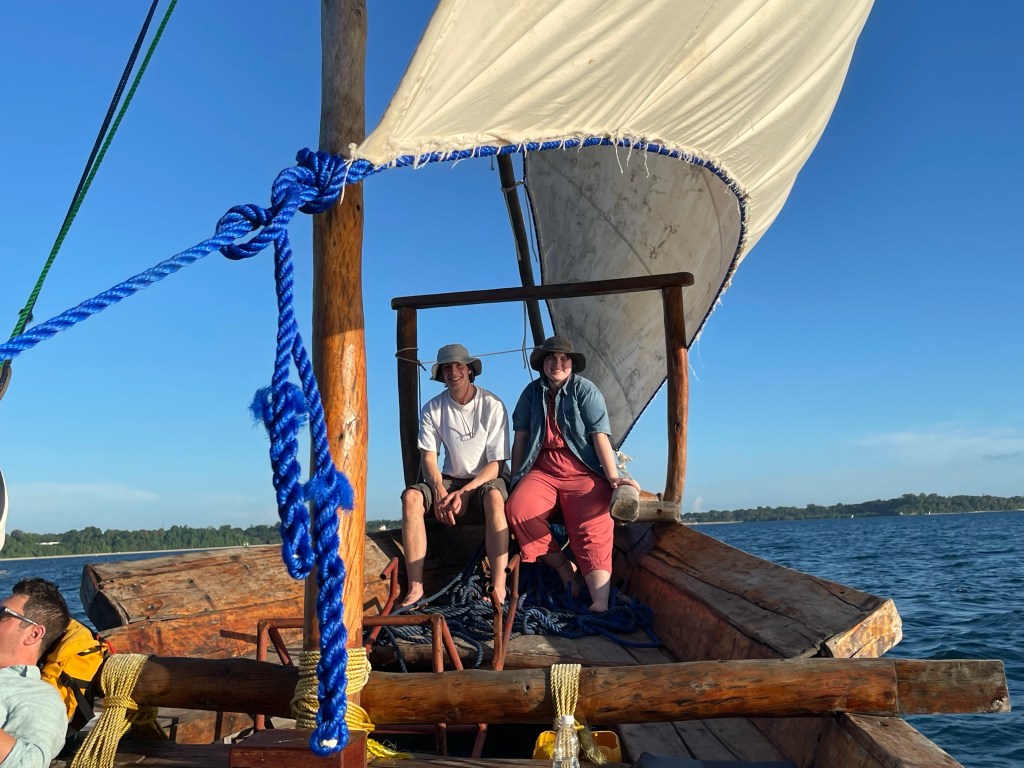
After a bit of paddling around, we climbed aboard once more for the last leg of our journey. Our previous travel had been powered by outboard motor; this time, the crew shipped the engine and raised the sail. One crew member acted as DJ and we all relaxed to music as we sipped our drinks and sailed the turquoise seas in the slanting light of the late afternoon sun – delightful!
Zanzibar is a very cosmopolitan place thanks to centuries of trade with groups from many nations rubbing shoulders. They are tolerant of the practices of all religions and have houses of worship representing many different faiths. We were given the opportunity to practice tolerance ourselves at 5 AM when the call to prayer sounded from the minarets of the 71 mosques in the city. We further practiced our tolerance at 6:25 AM when one of the three Hindu temples in the city (which happens to be next door) rang bells for several minutes straight in honor of the sunrise. Just in case we were still contemplating sleep, the secular authorities also got into the act with an air raid siren at 7:30 AM to alert government workers that their day was beginning.
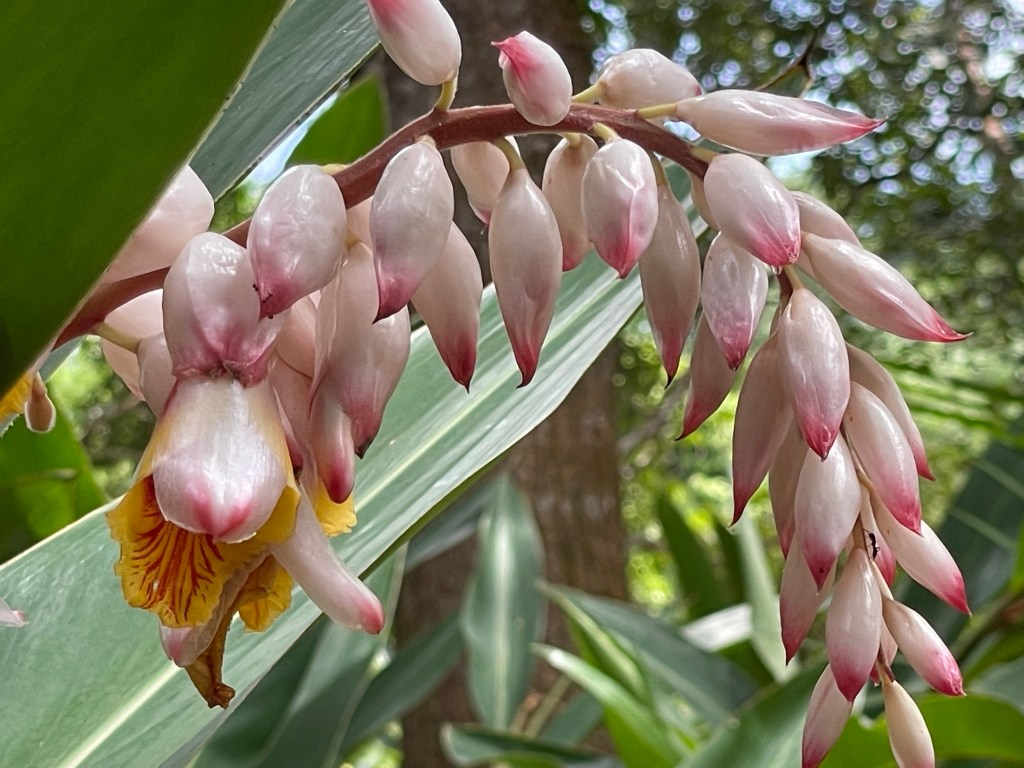
Blossoms of a male cardamom flower.
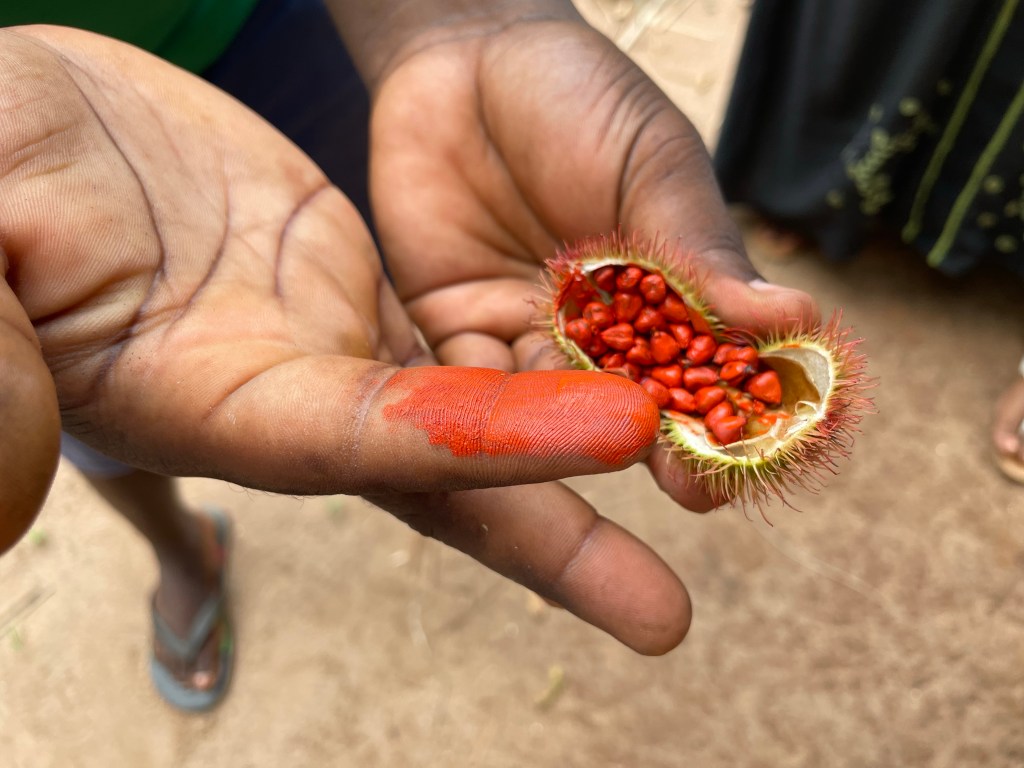
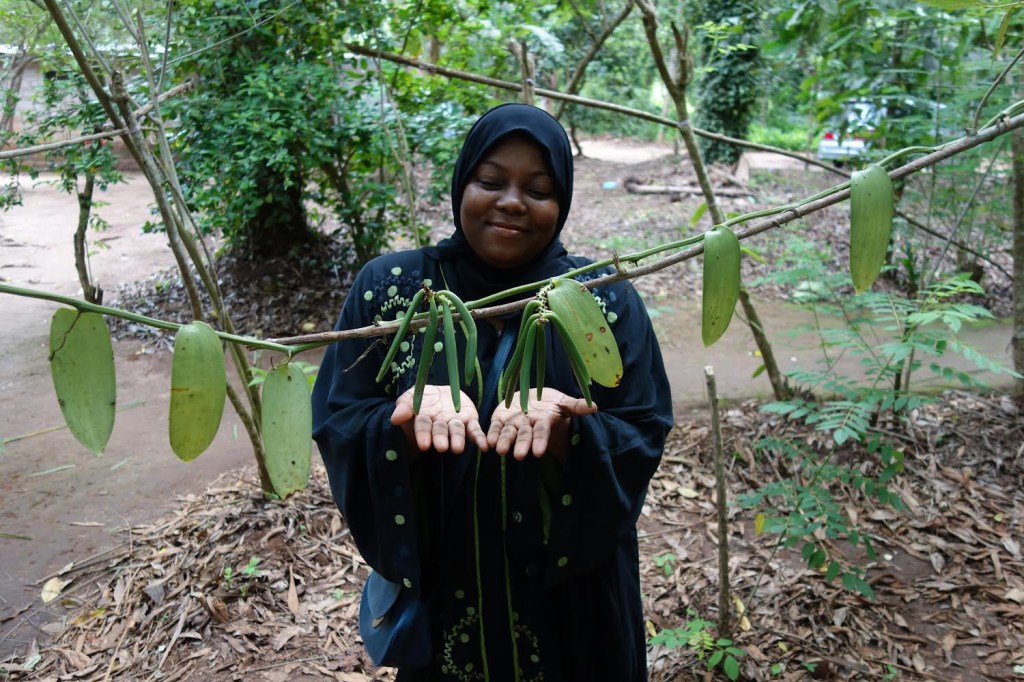
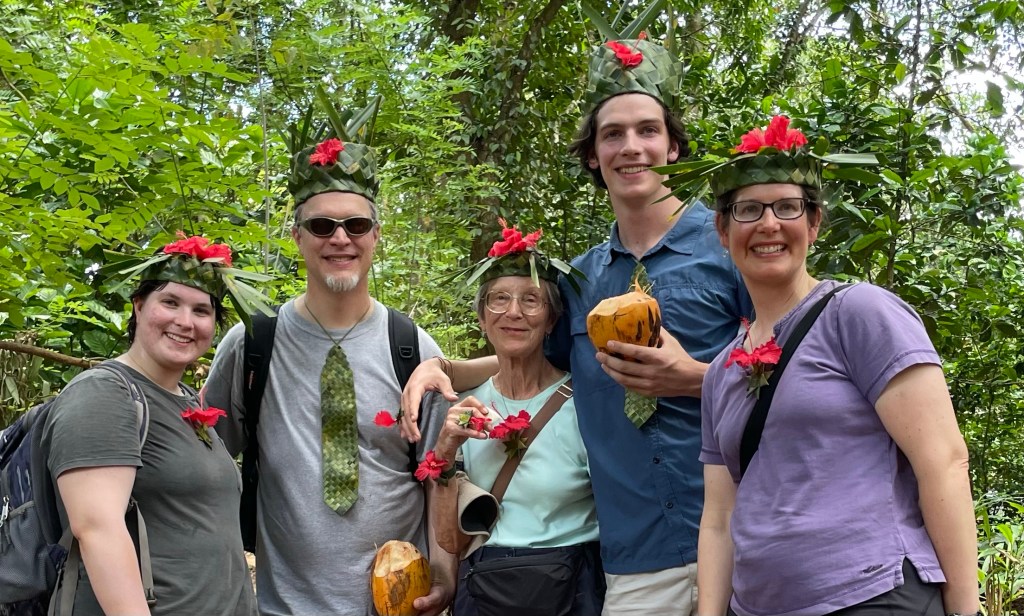
The isles of Zanzibar were known to early European traders as the Spice Islands and to this day they still grow many of the spices we find in our kitchens. So it seemed fitting to start our day with a tour of a spice plantation. We saw many different plants, both spices and fruit, including the so-called “king” and “queen” of spices: clove and cinnamon. The law actually prohibits private export of cloves so if you’re a farmer wanting to do business abroad you have to sell your crop to the government. The guides were knowledgeable about spices and their medicinal uses, and as we walked they somehow fashioned us a whole wardrobe out of palm leaves and hibiscus flowers!
Anatto, used in lipstick and to color food.Unripe vanilla beans grow on a vine.Don’t we look fine?
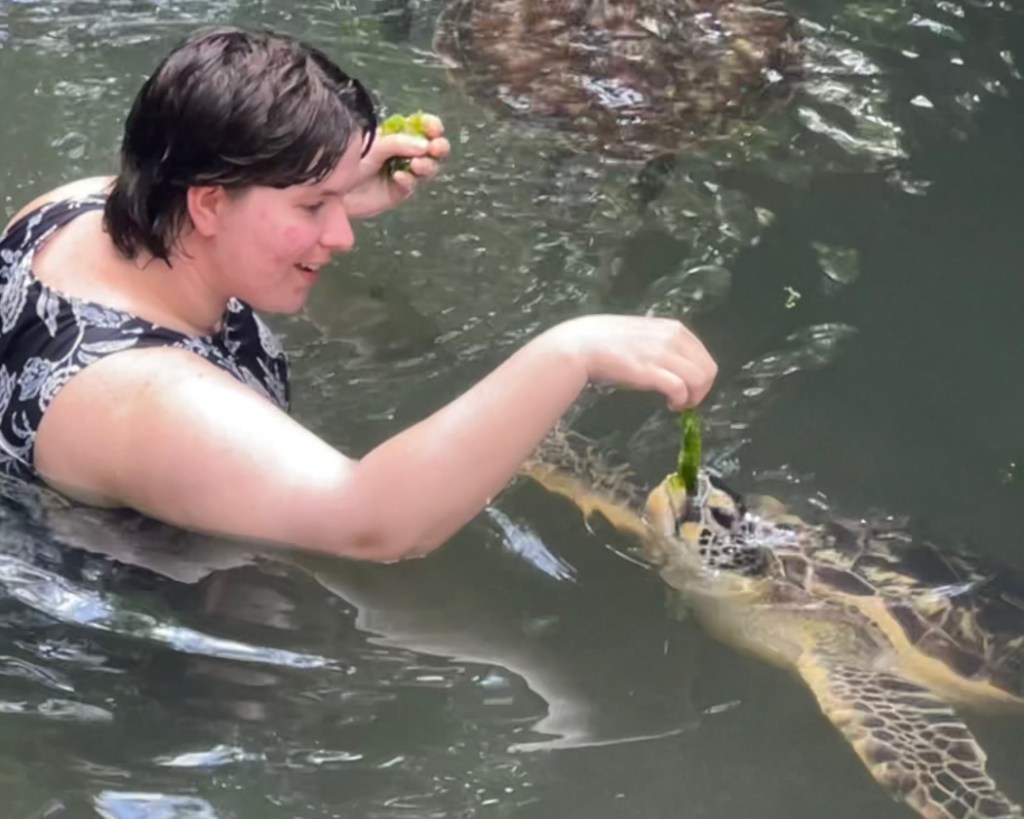
After a sampling of various tropical fruits (jackfruit was new to all of us), we parted ways, with some heading back to Stone Town while Rowan and Susannah continued north to Nungwi, at the very top of the main island. The destination was a natural marine aquarium that rehabilitates injured sea turtles. In order to support these activities, they have developed an ingenious business plan: have tourists pay for the opportunity to swim with the turtles. Rowan has rarely been so happy – the experience was worth every shilling of admission! Rowan and cousins swam with and fed the turtles for nearly an hour and a half, far outlasting all other visiting groups that afternoon.
Mmmmm, kelp…
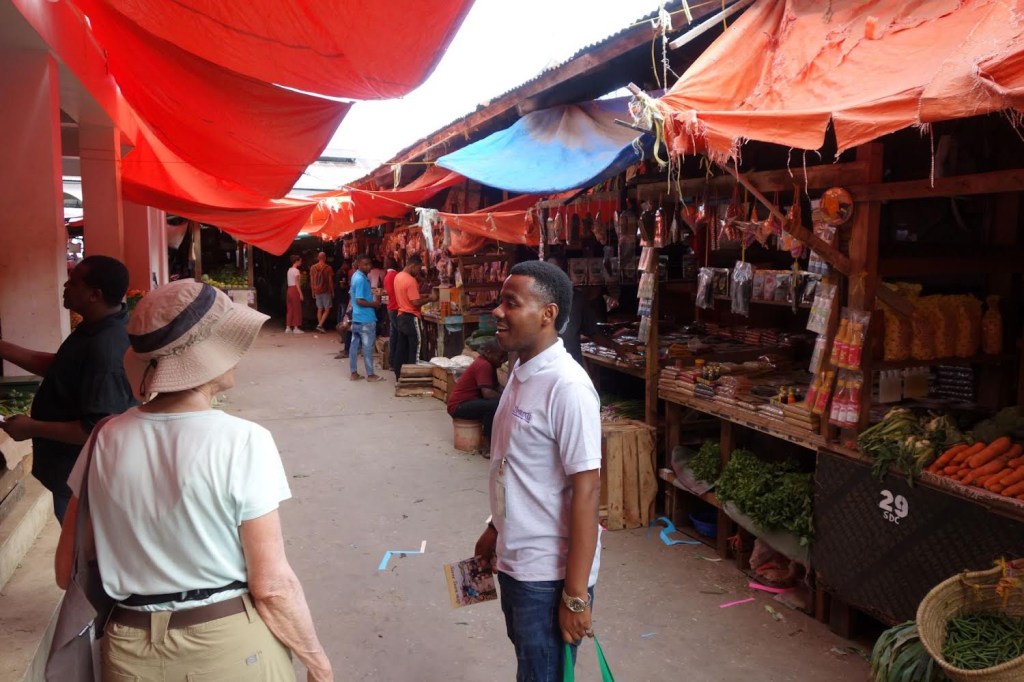
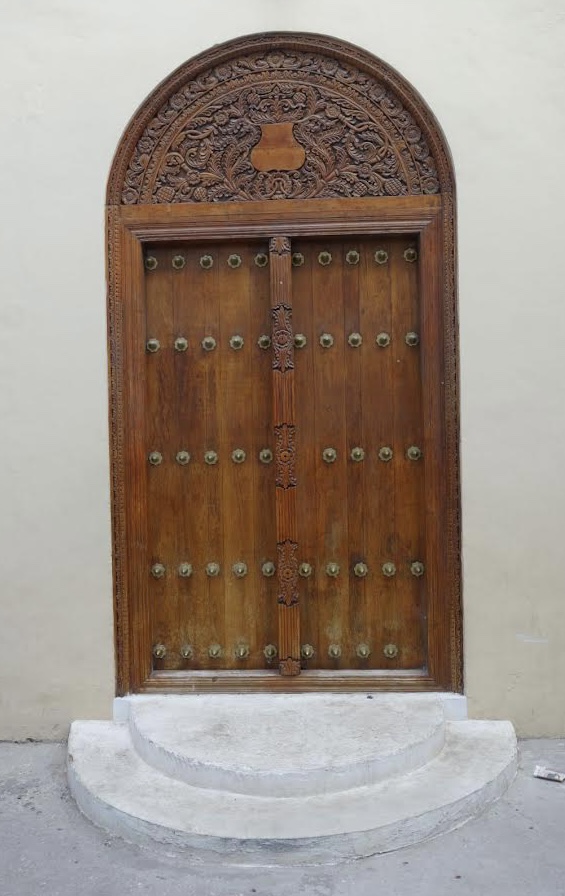
Meanwhile back in Stone Town, Nick and Lyn took a guided walking tour of the old city. Their guide took them through the markets, explaining many of the foods and customs. Along the way they saw the many ornate carved wooden doors for which Zanzibari homes are famous. Sadly, many historic examples are disappearing from their place of origin as wealthy foreigners buy them up for their own houses across the world.
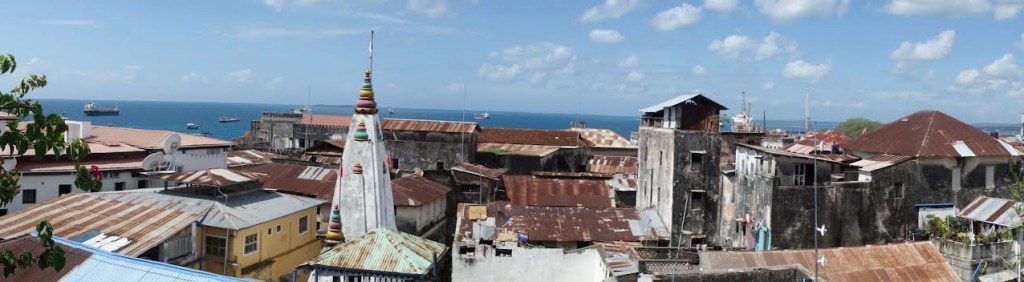
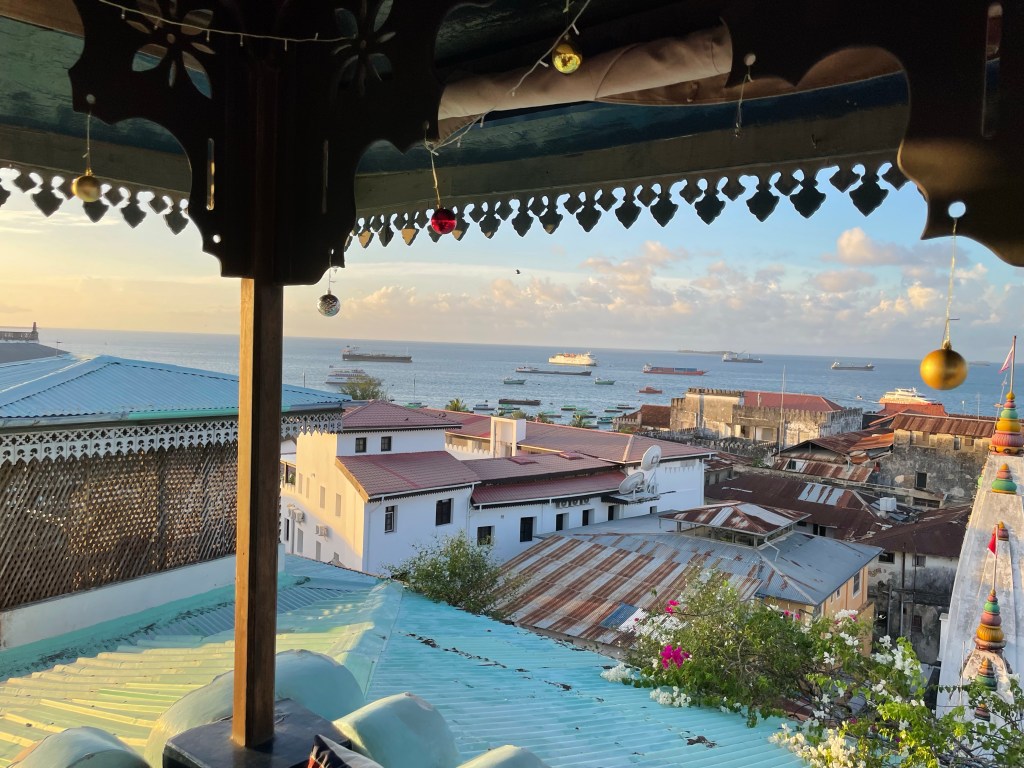
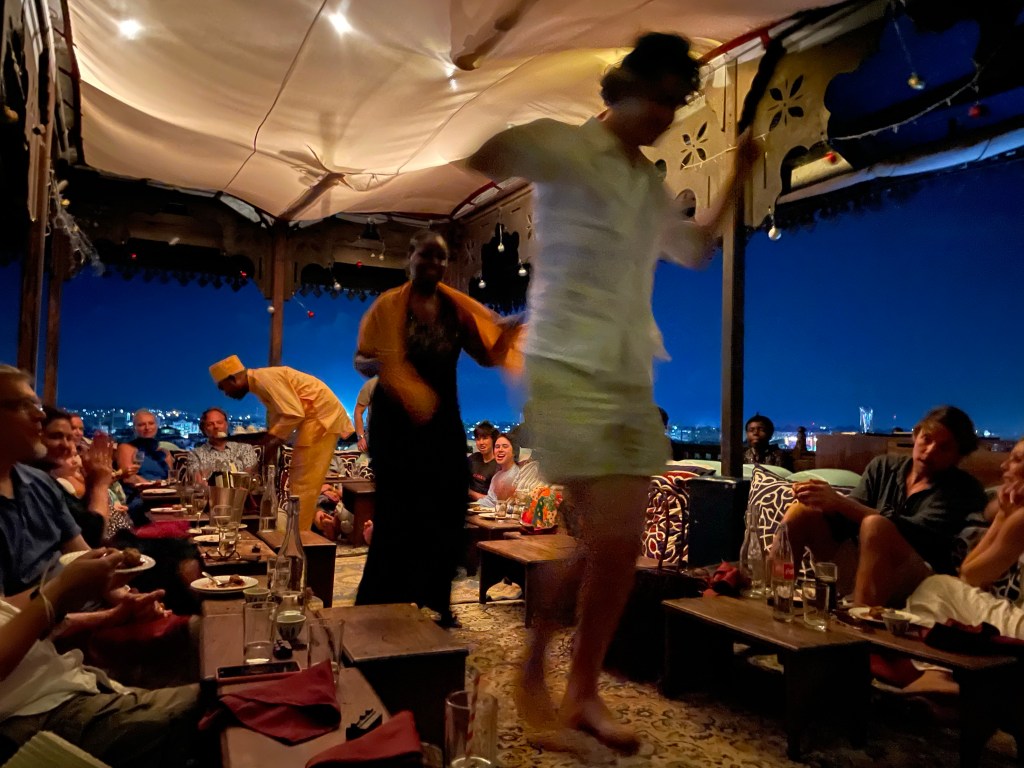
We capped off the day with pizzazz at the rooftop restaurant at our hotel. This is one of the most distinctive dining experiences on offer in Zanzibar, with a 360-degree view across the rooftops of the old town and down to the ships in the harbor. We were seated on cushions on the floor as waiters served tapas-style platters and a group of women musicians entertained us with traditional music and dance. Mother Nature also chipped in with a stunning sunset display.
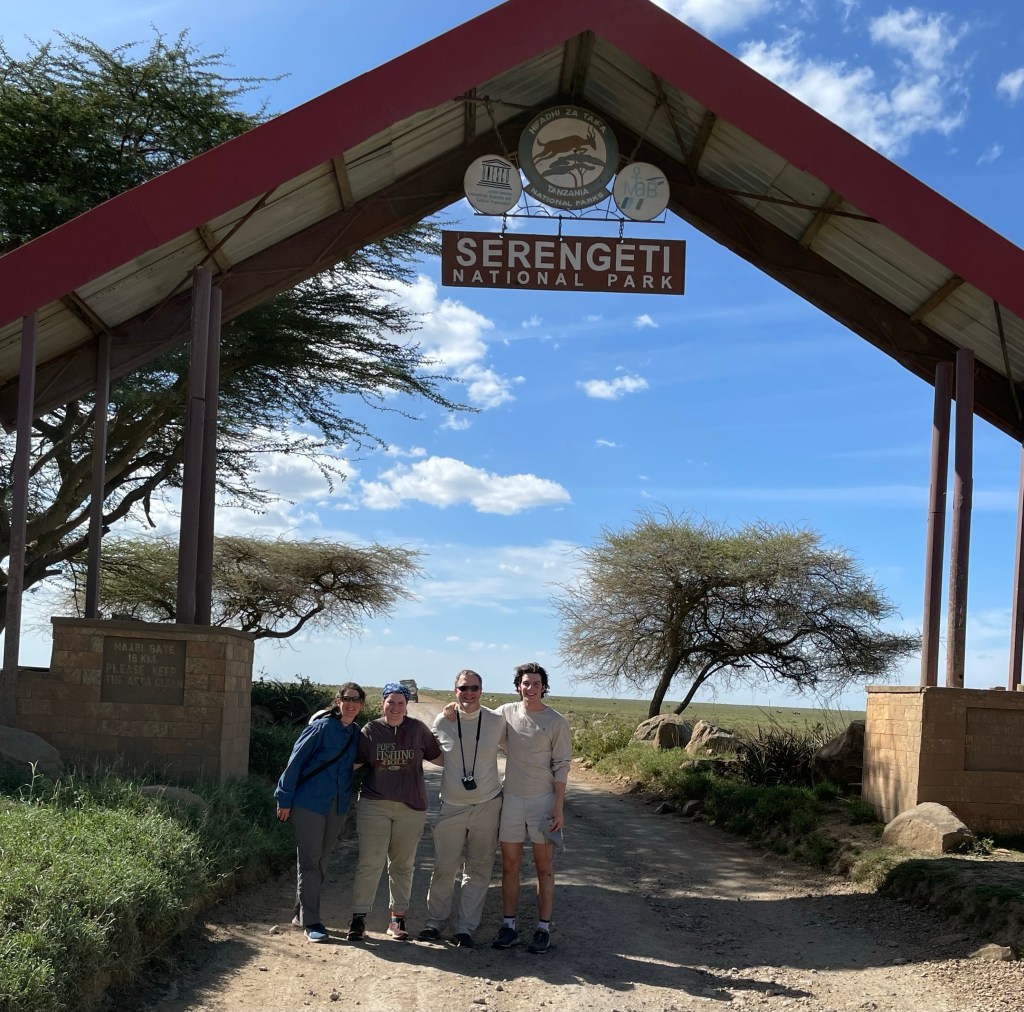
Today we said goodbye to the Serengeti. The Sound of Silence camp serves their meals under domes and then has the practice of counting “1-2-3-wow” in Swahili before removing all domes at a table with flourish in unison. They taught us the words on the first day and by now we are quite skilled at the practice, able to count to 5 both forwards and backwards. Waow!!
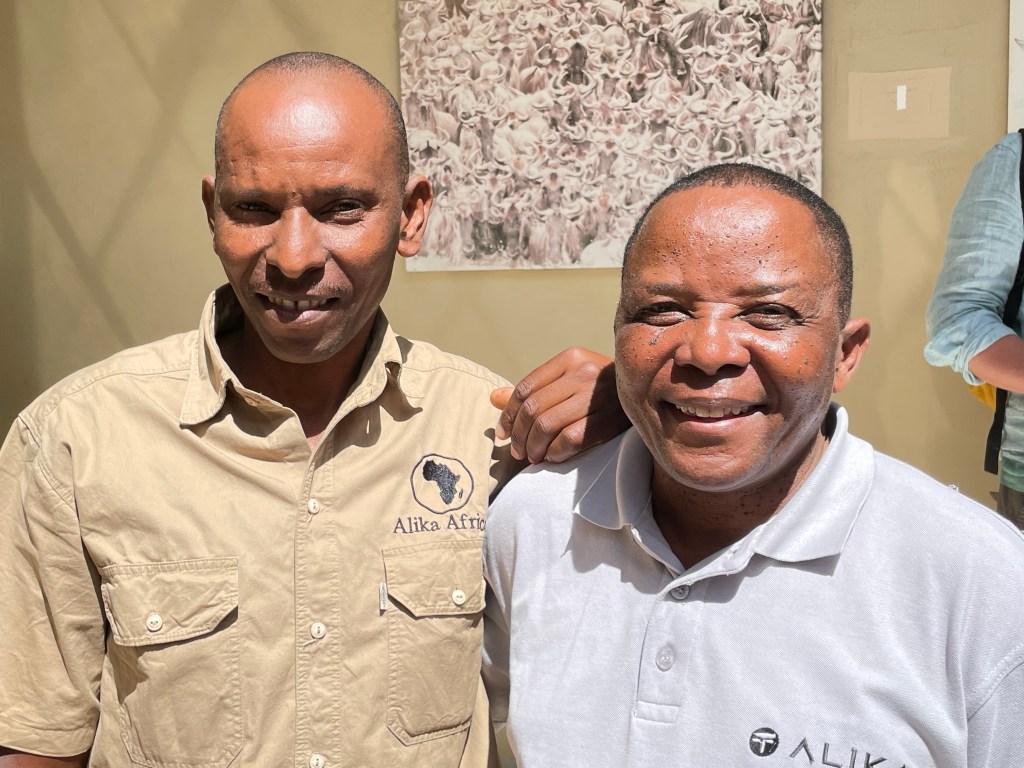
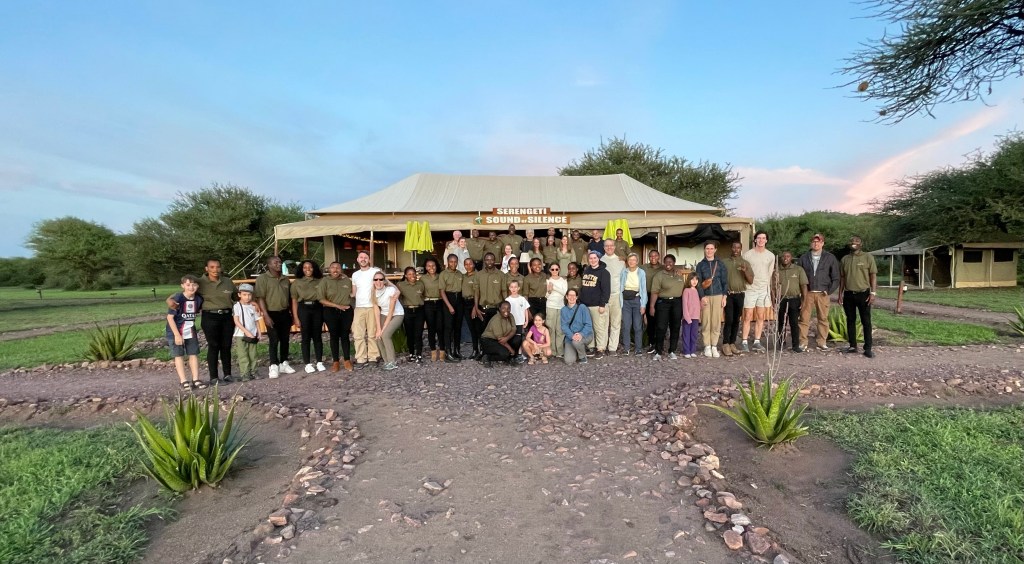
The friendly staff at our camp sang us a song of farewell as we walked to our vehicles for the trip to the airport (squeezing in a last bit of game drive along the way – including another cheetah and leopard) and once there we it was also time to say goodbye to our tremendous guides Sifuni and Isack. Our flight took us past Mt. Kilimanjaro (only the very tip of the peak was visible above the cloud deck) and across an arm of the Indian Ocean to the islands of Zanzibar.
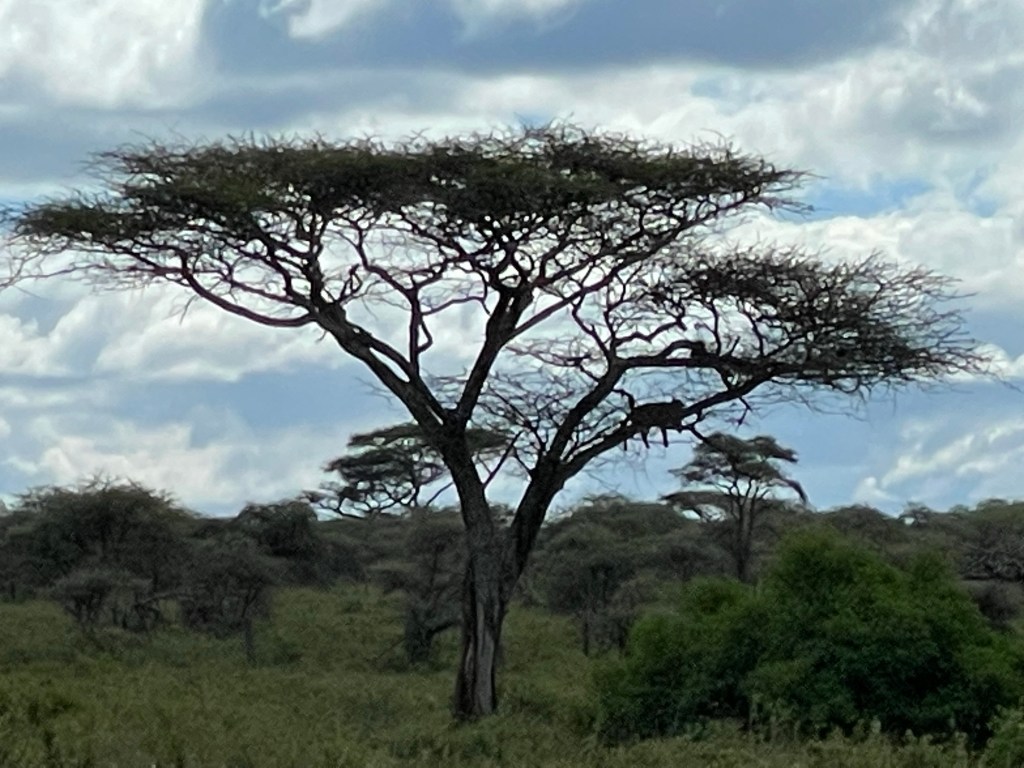
Can you spot the leopard on the branch?
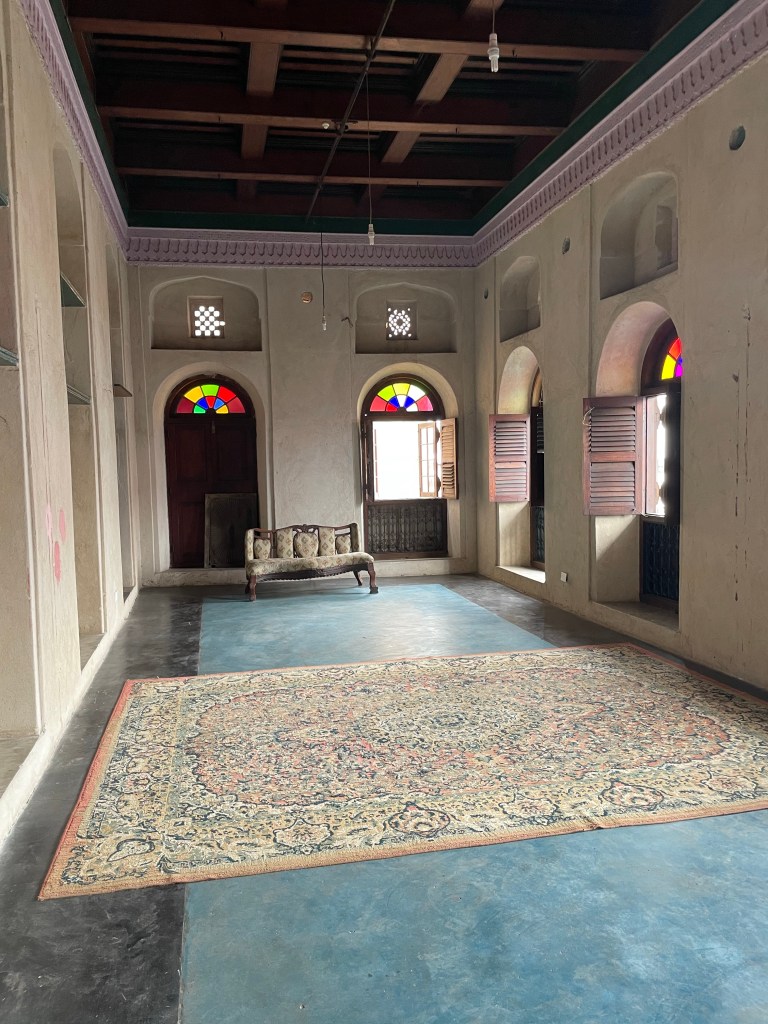
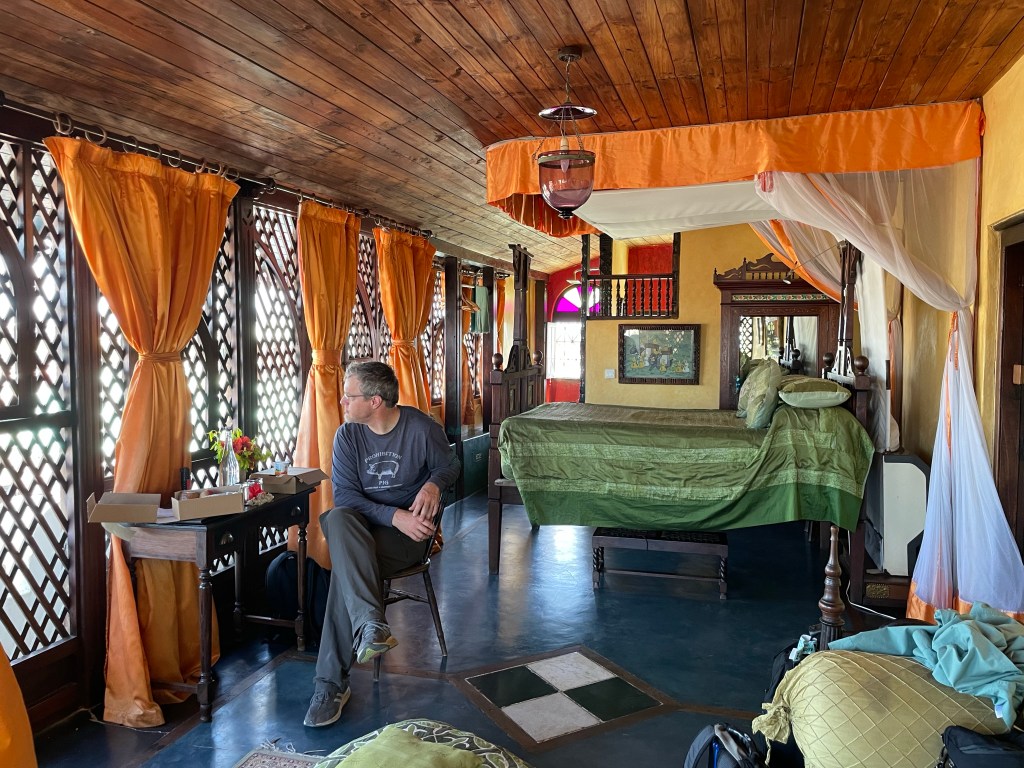
Although Zanzibar and Tangyanika merged in 1964 to form the country of Tanzania, they feel like very different places. The culture of Zanzibar has much more Arab influence, and climate is noticeably more humid. We are staying at a hotel housed in one of the historic buildings of Stone Town, and the climb to our rooms up its steep staircases had us all dripping with sweat by the time we arrived at our rooms. But what rooms! With carved wooden screens, canopied beds, and spacious plaster tubs each one feels fit for royalty (though not necessarily this century; our room has a distinct lack of AC or fan).
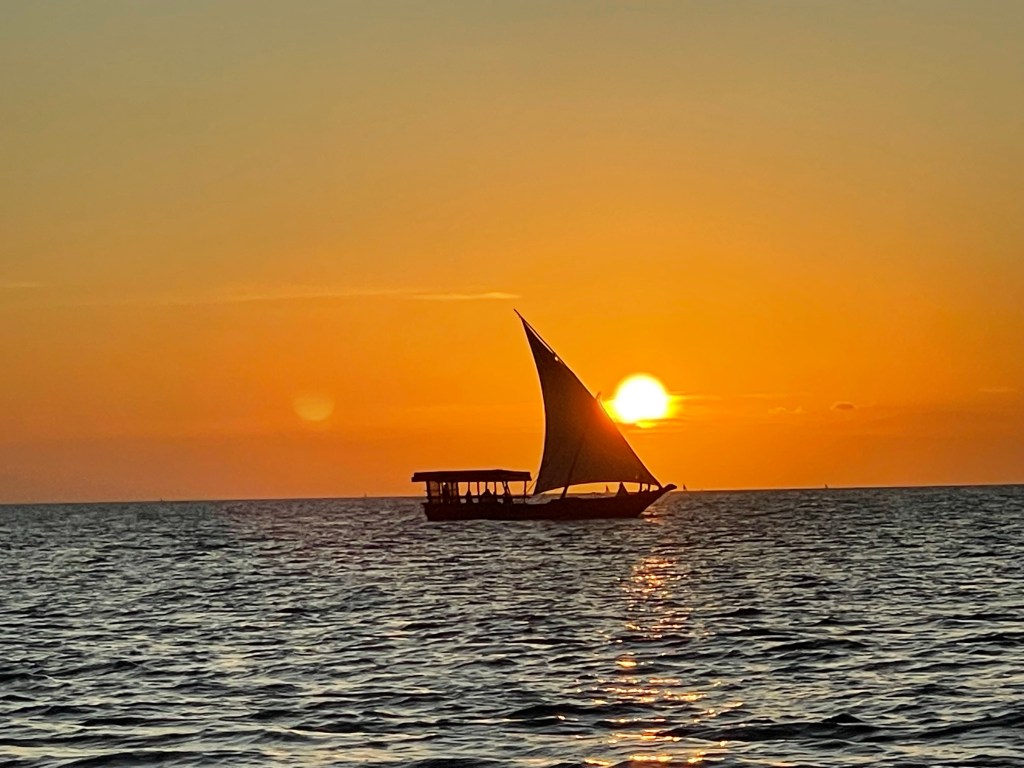
By the time all the travel was done, we didn’t have much daylight left. We made the most of it by takng to the water on a dhow-style sailboat for a sunset cruise. Our captain James, though now catering to tourists, had grown up as a fisherman and told us a little about that way of life. The fishing grounds are far away from land, so the men spend the night on the ocean before returning the next morning with their catch. Apparently the hotels that cater to tourists now buy up so much of the local fish that very little remains for the locals.
After our short cruise we returned to shore and walked the streets of Stone Town for a while before retiring to our hotel.
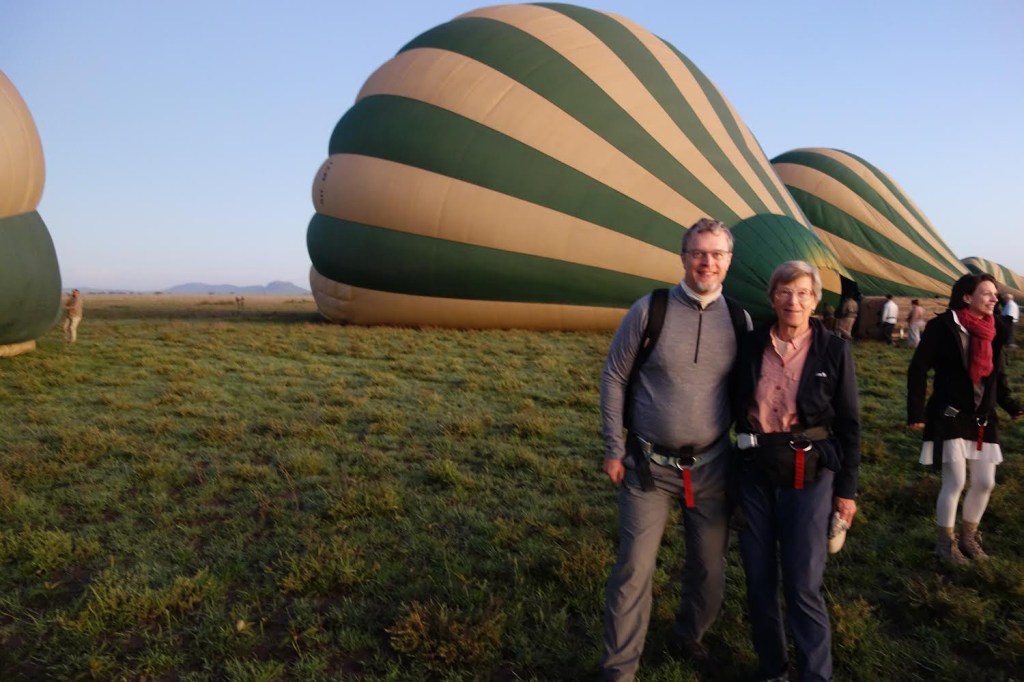
If you’re ever in the Serengeti and have the opportunity to take a balloon safari, we highly recommend it. Yes, it’s crazy expensive but do it anyway – you won’t regret it!
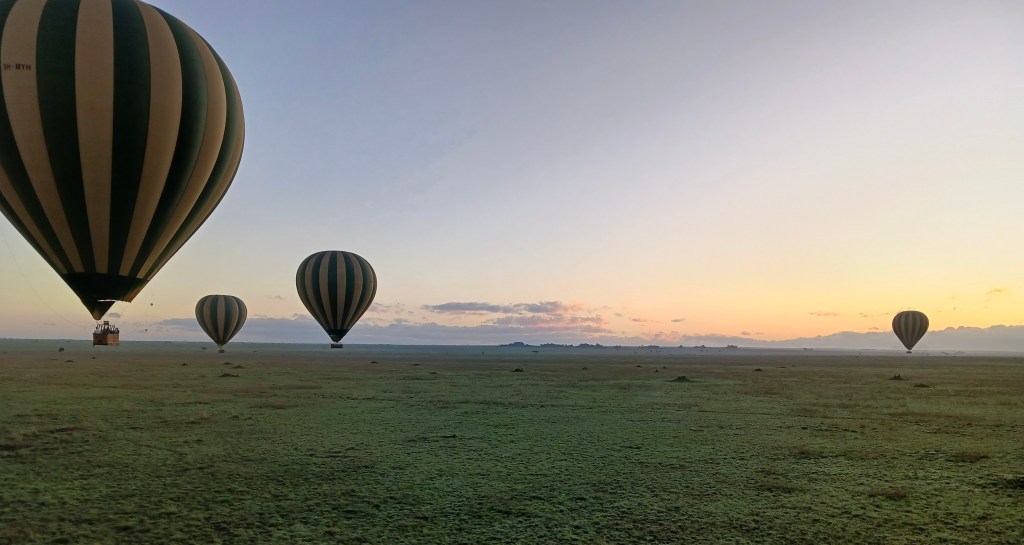
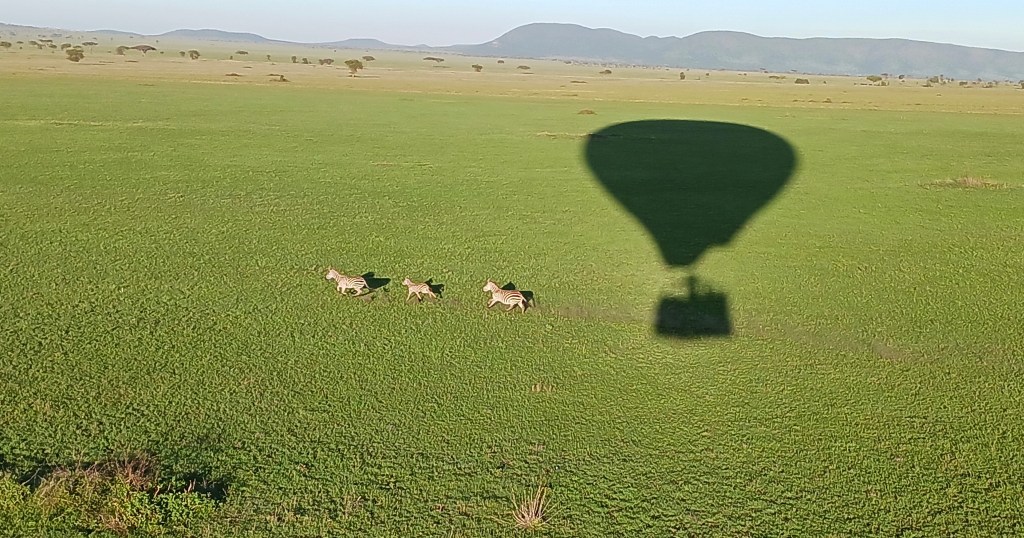
Nick and Lyn had the joyful experience as a joint birthday present this morning, getting up well before the sun to make their way to the launch site in time for dawn. After some balloon-shaped biscuits and a final trip to the “loo with a view”, they loaded into the balloon basket on their backs, feeling somewhat like astronauts in a space capsule. Then the pilot was doing his thing and suddenly they were floating. The next 80 minutes were a magical experience with a half-dozen balloons riding the winds across the Serengeti plains. Viewing the animals from above was interesting but most exhilarating were the ever-shifting configuration of the balloons, the dawn light from behind, and soaring up high to take in the full expanse.
Meanwhile, a different part of our group went on a game drive along the ground, seeing many familiar animals, some even closer than had been seen previously. Today’s leopard has stashed his prey in the branches above him.
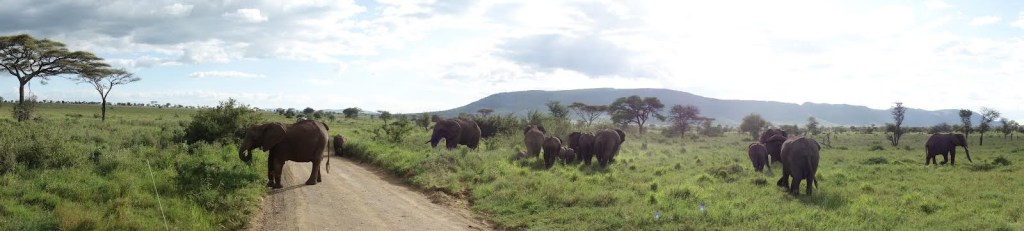
Unobscured leopardElephant panorama
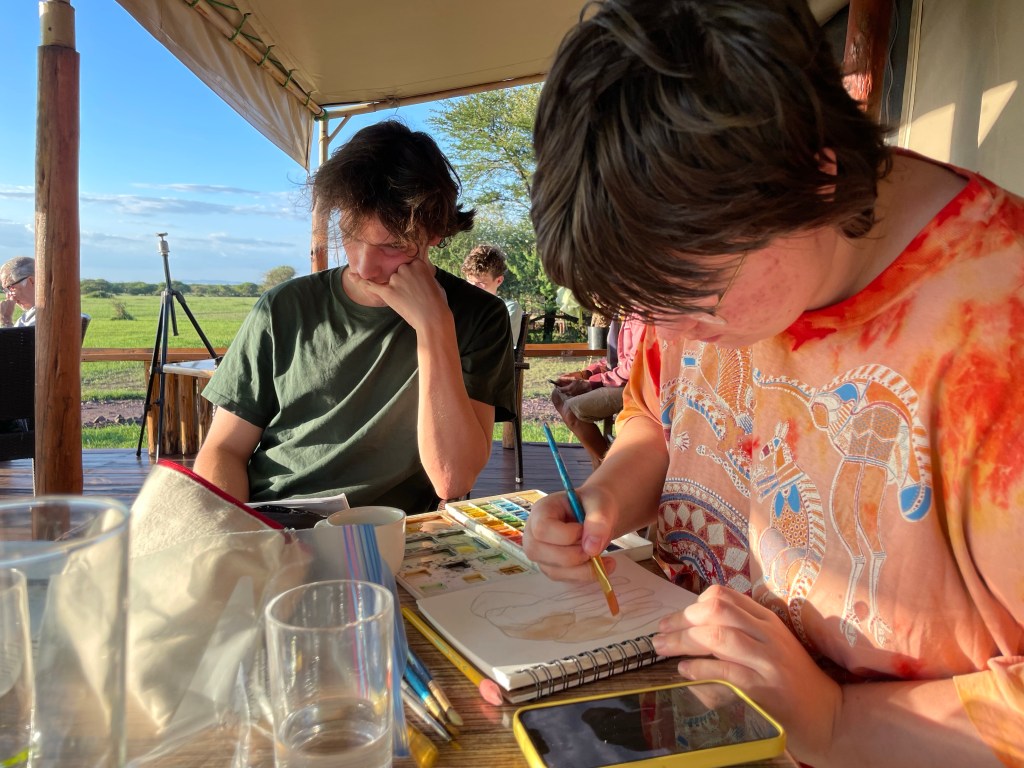
While we’re making recommendations for the Serengeti, we must mention how much we have all enjoyed our stay at the Sound of Silence tented camp. The manager has a gift for making people feel welcome. He has built a joyful community of camp staff who feel like family, a feeling that is extended to all the guests as well. In fact, Susannah decided to spend the whole day in camp, walking the path along the row of tents, reading and relaxing, and taking in the late afternoon sun from the main tent porch. Other family members joined the porch time as well, each with a different activity. Rowan’s elephant was a big hit with the camp staff. Dinner time started with a striking sunset and ended with singing by the camp staff – we will miss this place!
The camp path is the only safe place to walk, and then only during the daytime.
Today we took a full day game drive around the central Serengeti. The animal life is less concentrated here than Ngorongoro Crater, but there is a wider variety. The region we are in is home to all three of Africa’s big cat species and we were lucky enough to see them all today.
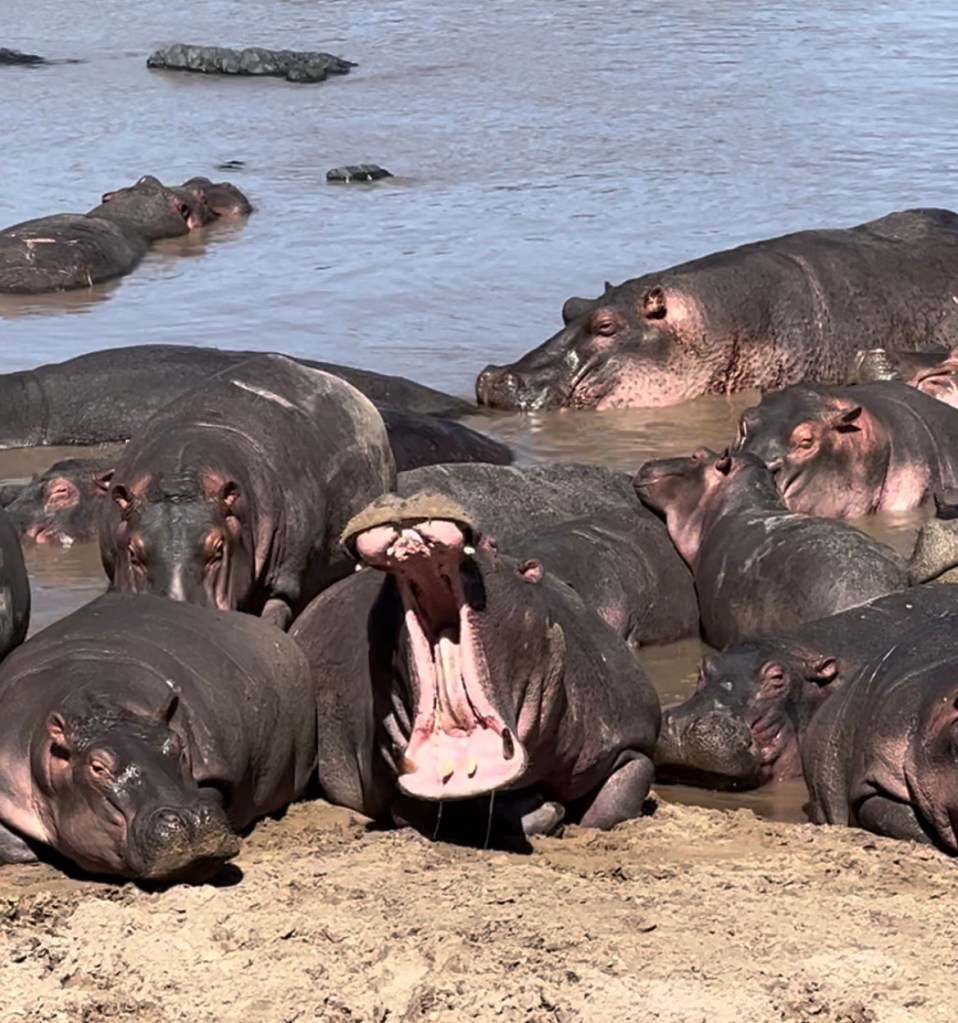
Before any of that, though, we stopped by a river bend where hippos congregated in the muddy waters. The wind must have been blowing away from us because this time the smell of their dung didn’t reach us from our perch on the bank above. Thus we were happy to spend quite a while observing hippo politics, which seems to involve lots of dozing lazily in the sun interspersed with brief and noisy episodes of bickering over position, often with surprising viciousness.
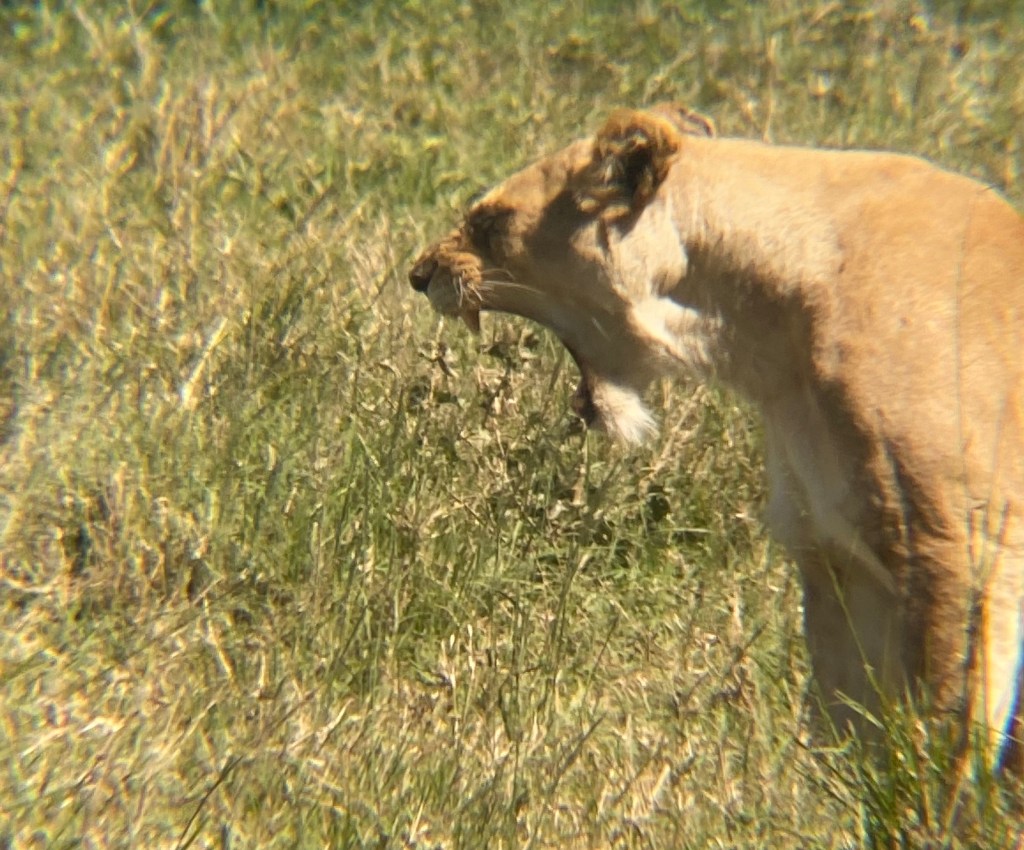
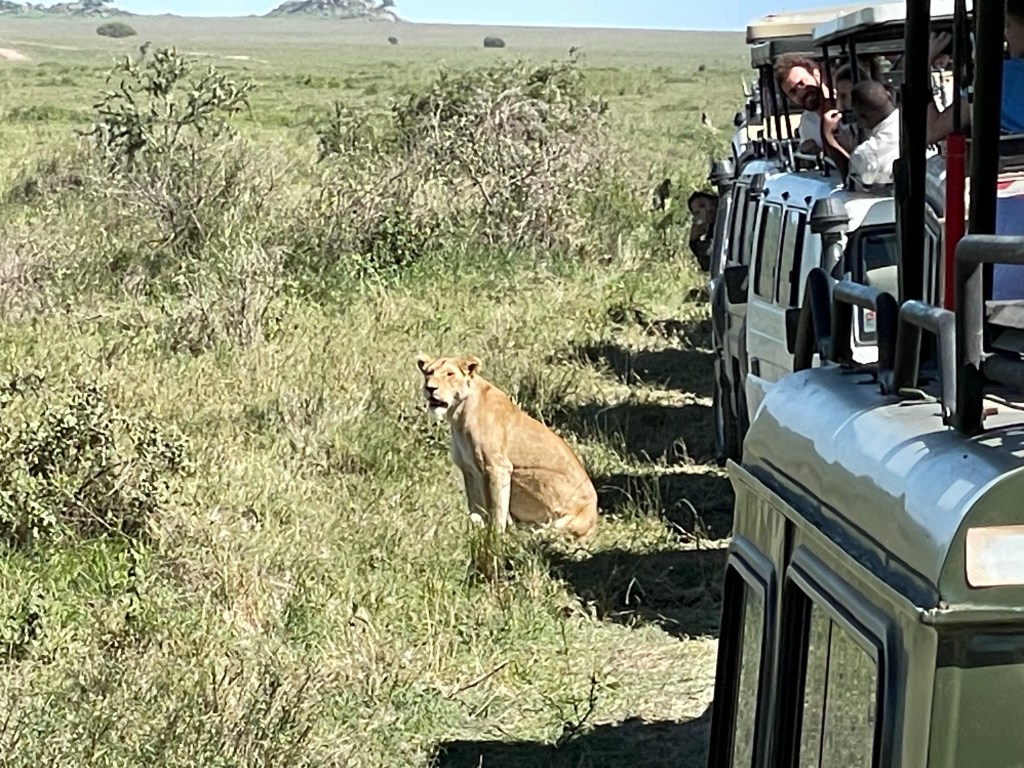
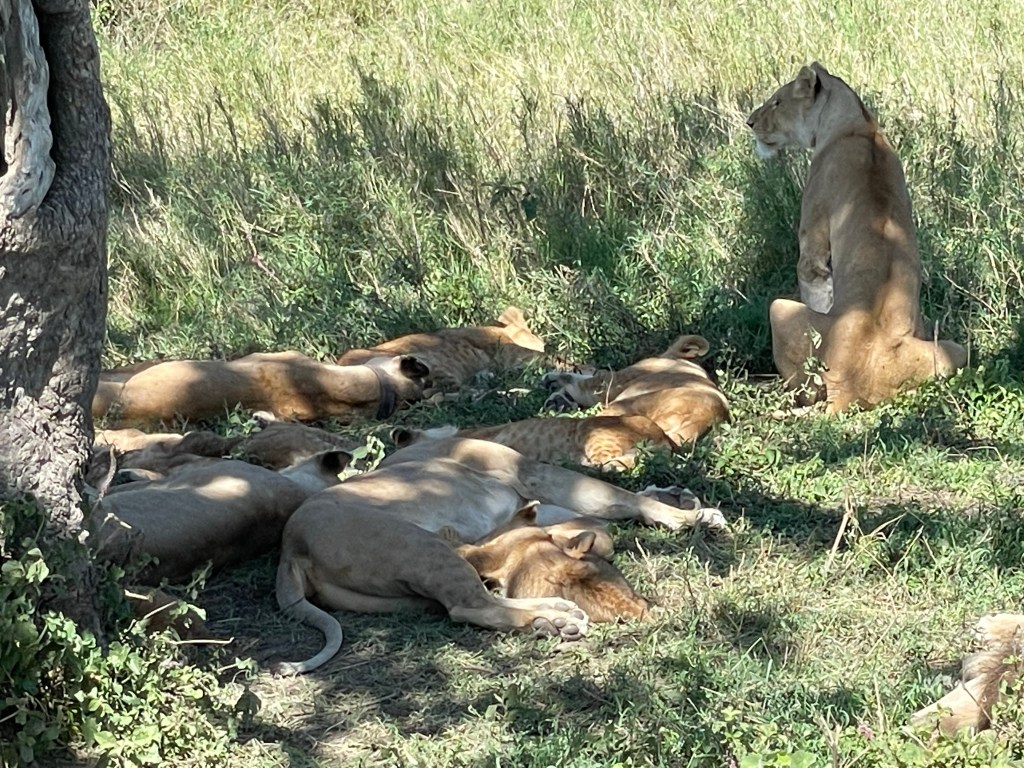
There are two effective ways of “hunting” big cats in the Serengeti. The first is to scan the landscape with eyes peeled for small tan blobs, hoping fervently that one will resolve itself into a feline form. The second is to observe the motions of other Land Cruisers (which are pretty easy to spot from far across the plain) and head towards their points of concentration. The latter strategy led us to a nearly-hidden leopard in a tree and a baker’s dozen of lions napping in the shade. One enterprising lioness took advantage of the shade provided by the traffic jam of Land Cruisers before moving to join her family by the tree after a stretch and a yawn (see above).
Lions in the shade (another six were on the other side of the tree)
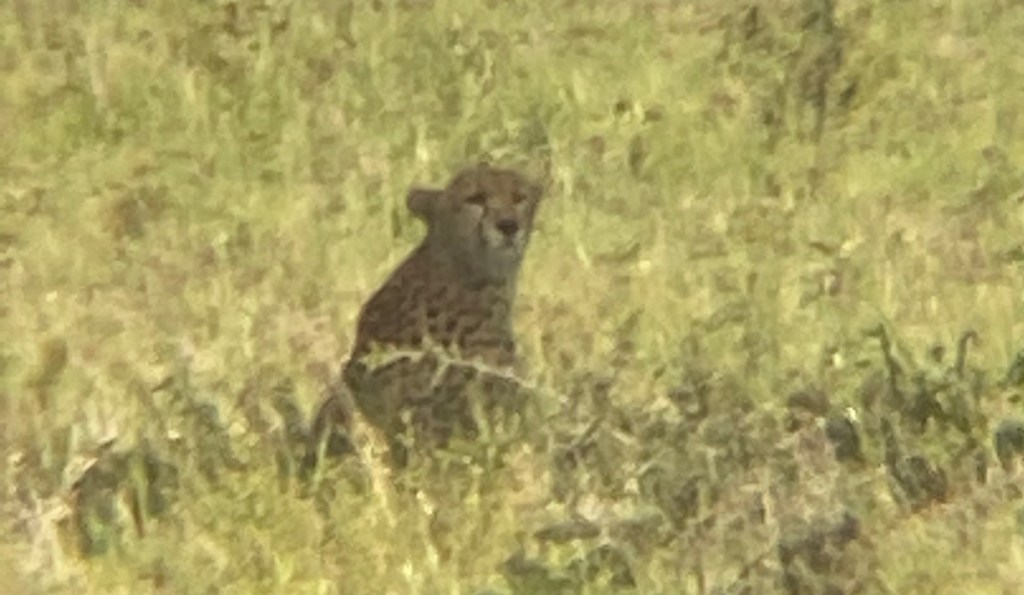
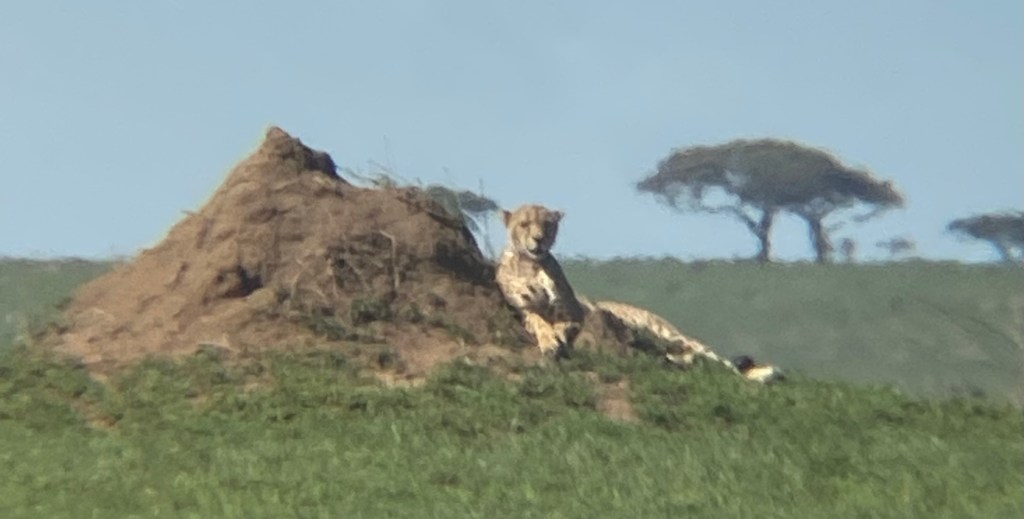
Our cheetah spotting came via the first method, with credit to Isack, our guide. He was the first to notice this cheetah lolling against a termite mound. By the time we left, other tourists had followed the second method and our cheetah friend had quite an audience.
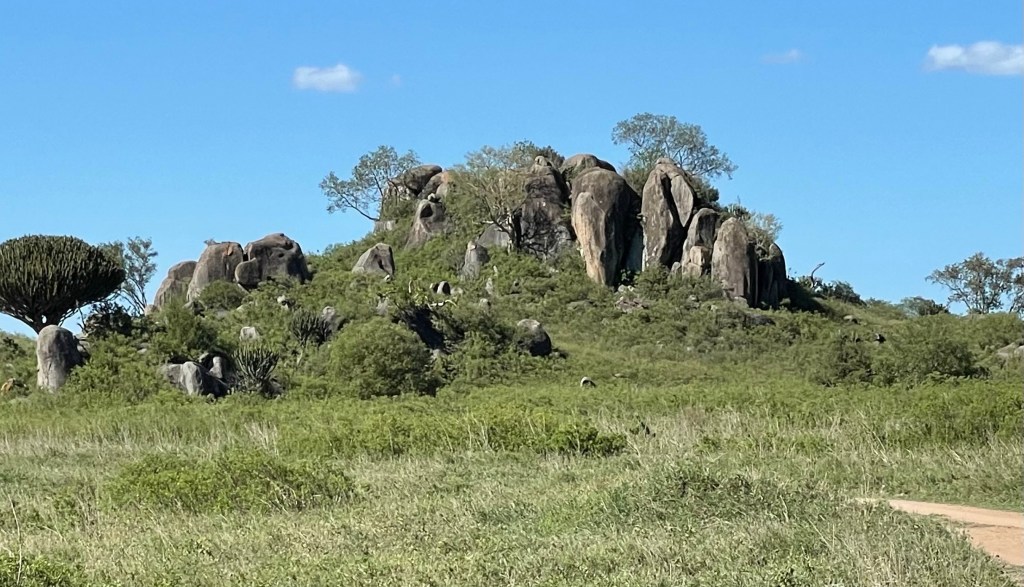
Those of you who have seen The Lion King will recall Pride Rock. It turns out to be inspired by real features of the Serengeti landscape. Known as “kopjes”, these massive rock formations protrude abruptly from the otherwise flat plains. We were exploring one of these formations when we happened upon our penultimate big cat of the day. Tipped off again by a concentration of Land Cruisers as we came around a corner, we learned that a mother leopard had been spied walking with her two cubs before retreating back out of view. We watched fruitlessly for a reappearance until others spotted the mother making her escape from the back side of the rock pile, younglings safely stowed away somewhere. This became our third leopard sighting of the overall trip, and the only one not obscured by tree branches. (Still too far for a good picture – sorry!)
The last cat sighting of the day belongs to Rowan, whose sharp eyes spotted a lone lioness sleeping in the grass, unfortunately also out of good photography range with our equipment.
A kopje in the Serengeti plain
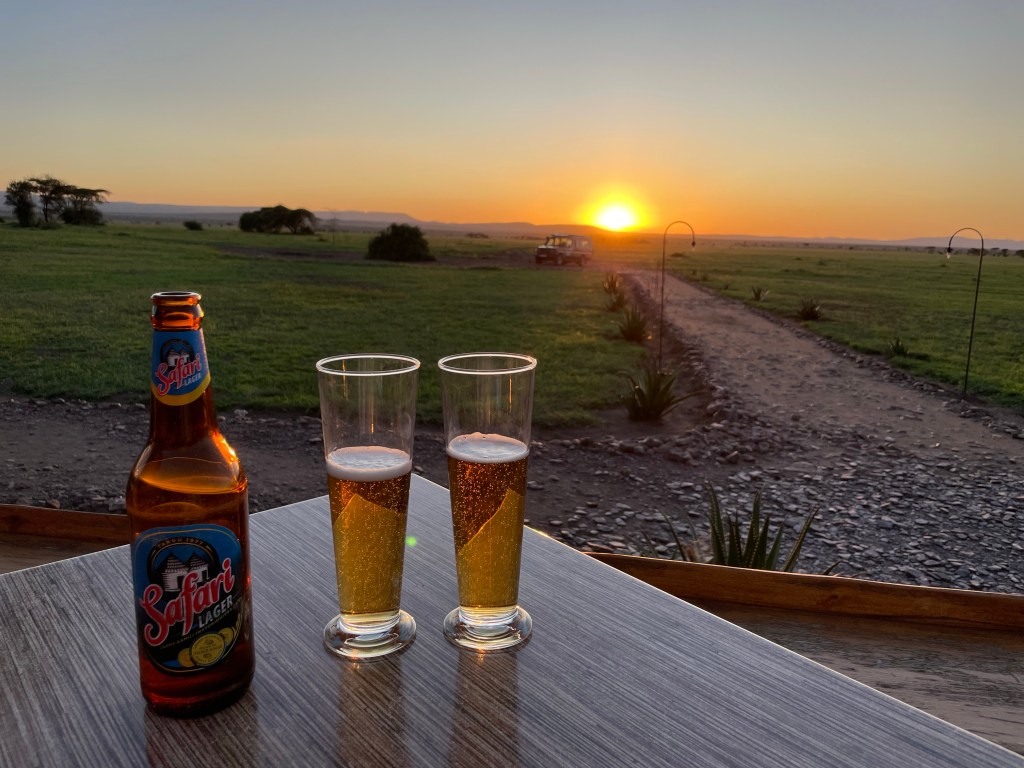
We made it back to our camp before sunset, which gave us the chance for some relaxation enjoying the scenic view and local beer. This is a tented camp surrounded by wilderness, so guests moving around after dark are escorted for their safety by staff member carrying a flashlight and spear. We asked our escort the first night whether he had ever had to use the spear; he answered in the affirmative. We did not press for details!
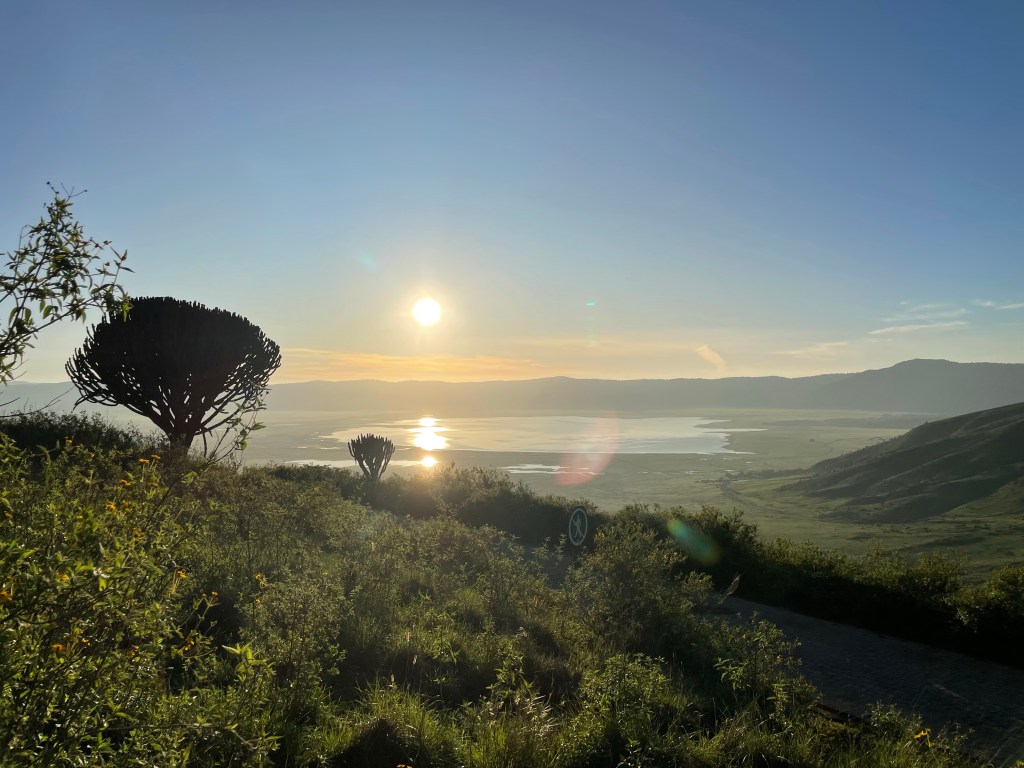
Our story begins two and a half million years ago when a mountain the size of Kilimanjaro vaporized itself in a volcanic eruption that left behind a circular caldera eleven miles across and nearly two thousand feet deep. Fast forward to the present day where we awoke before dawn in our lodge on the rim of that same crater, known today as Ngorongoro, or “sound of the cowbell.” We made an early start to beat the crowds and to see the animals only active at dawn.
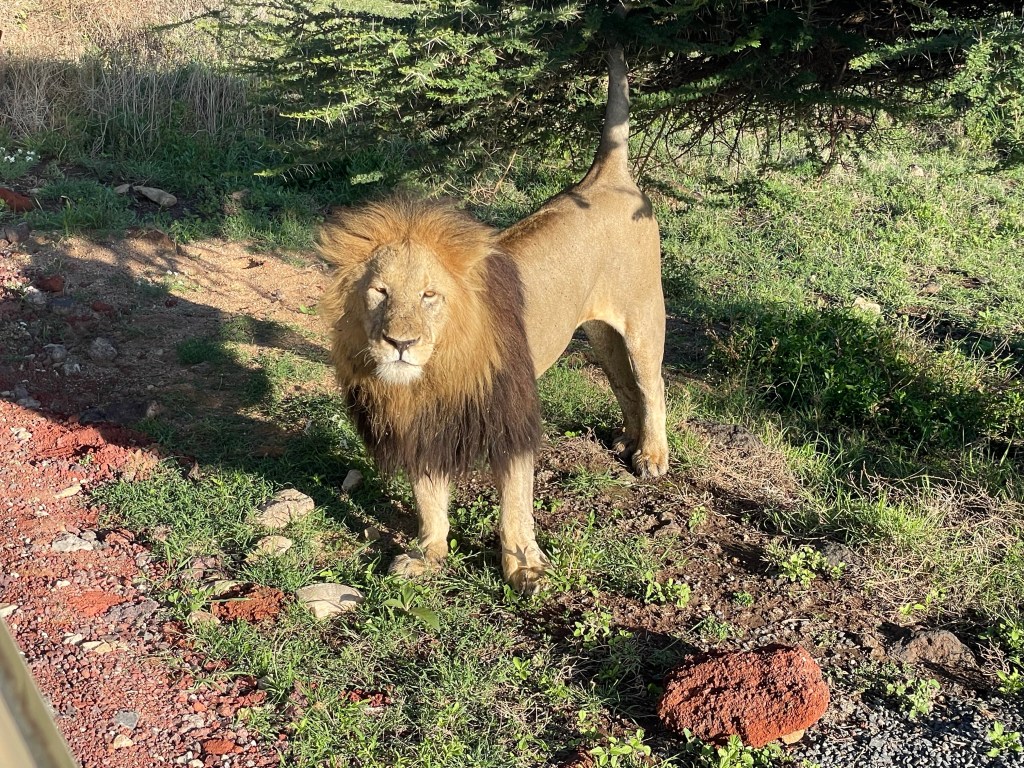
Turns out our promptness paid off in spades. We were still making our way down the crater wall when someone spotted a lion emerging from a ravine down below. Imagine our surprise when he paused, turned our way, and proceeded directly and deliberately toward our Land Cruiser. Perhaps we should have felt a little fear but he showed no interest in us. Instead, he scratched his head on a tree before skirting around our vehicles on his way up the hill on the other side. He settled down under a bush, perhaps to watch the efforts of the female hunters in his pride, whom we now saw were stalking some buffalo above. What a way to begin the day!!
Lion so close! The tan line in the lower left corner is the window frame of our vehicle.
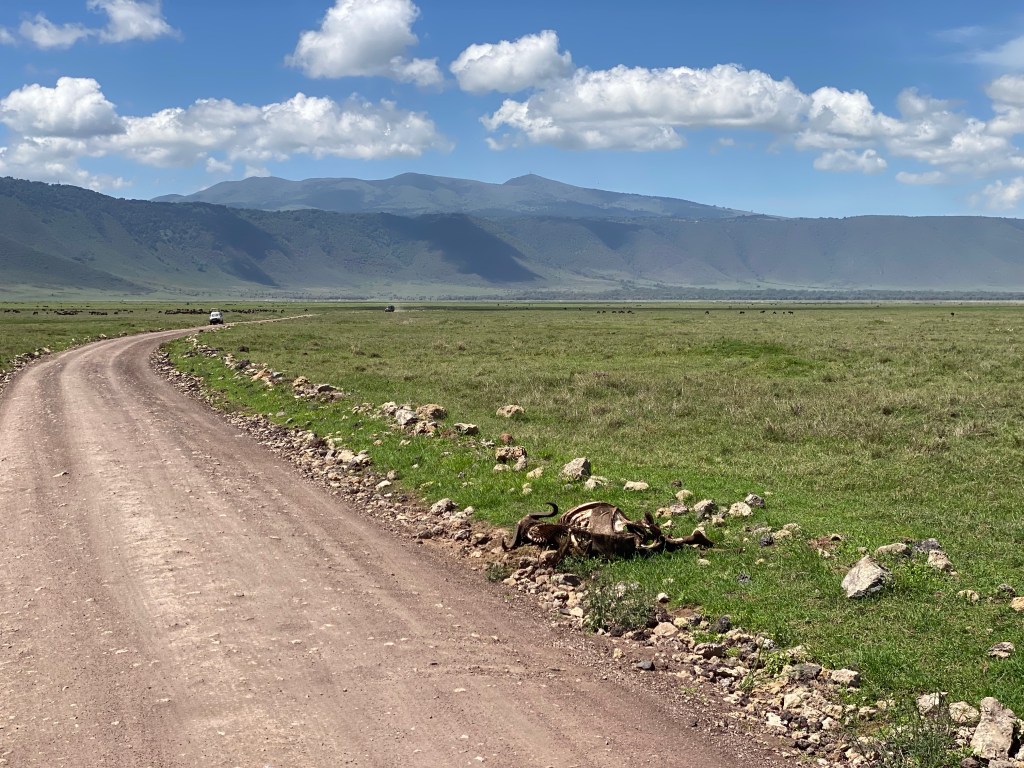
Ngorongoro crater is a unique and fascinating place, teeming with wildlife because of the year-round water supply and rich volcanic soil. It’s a bit surreal the way so many types of animals live happily on top of one another (and occasionally beside the bleached bones of their former comrades). Yet even the carnivores share space with the others when they’re not hungry.
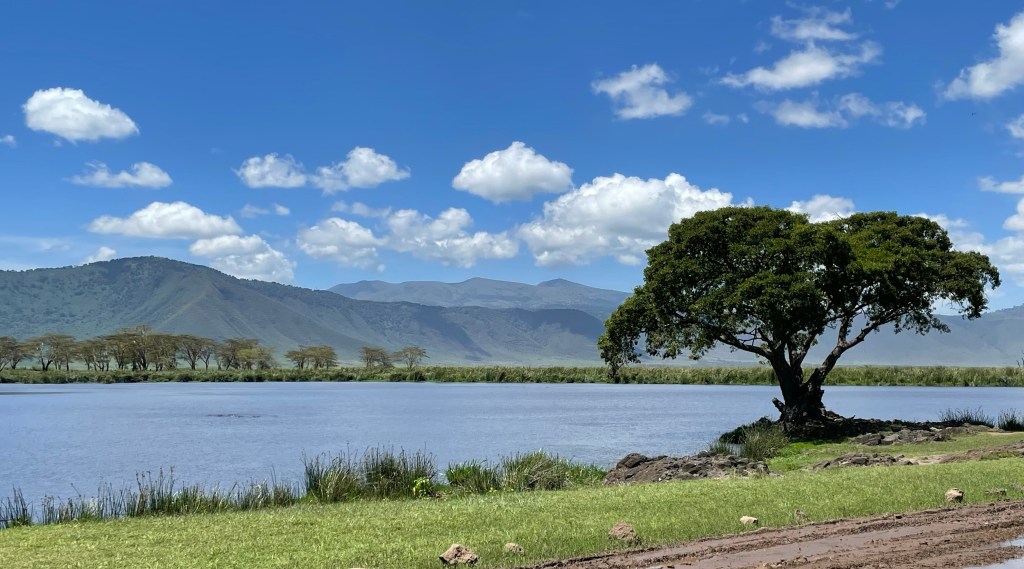
Besides many animals we had already seen, the crater offered some new characters. We enjoyed the hyenas and hippos but felt especially lucky to catch a rare sight of a black rhinoceros – only at a distance, so there’s no photograph to share with you. We had lunch near a ridiculously beautiful picnic site with hippos blowing bubbles in the nearby pond, a hawk soaring overhead, and hungry Guinea fowl prowling for morsels dropped by picnickers.
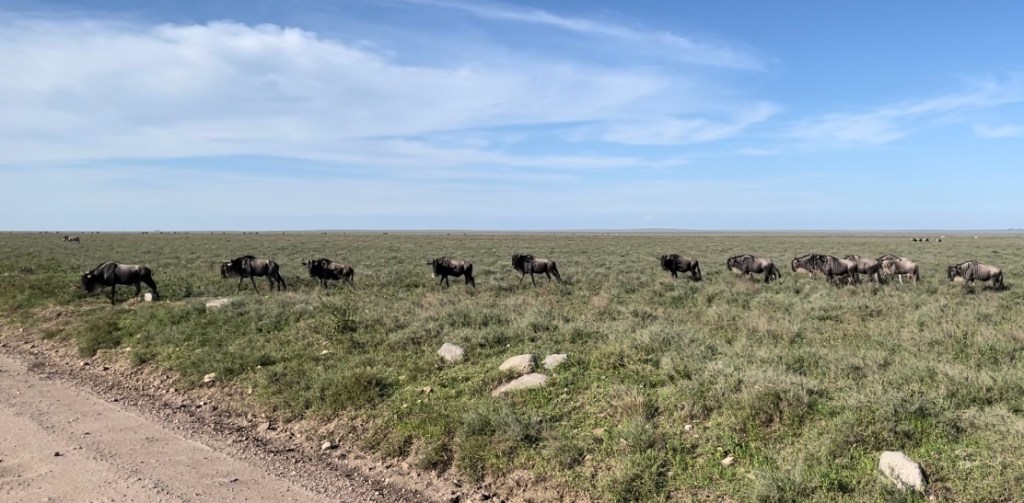
We left the crater shortly thereafter for the long drive to our Serengeti campsite. And by long, we mean many hours over unpaved potholed roads. The first part of the journey led over flat plains filled with wildebeest and zebra migrating towards the south. They say that the great migration was even larger in the past, but it is plenty impressive even today. For our entire journey over the flats, we were never out of sight of moving animals.
Lines of wildebeest cross the road.
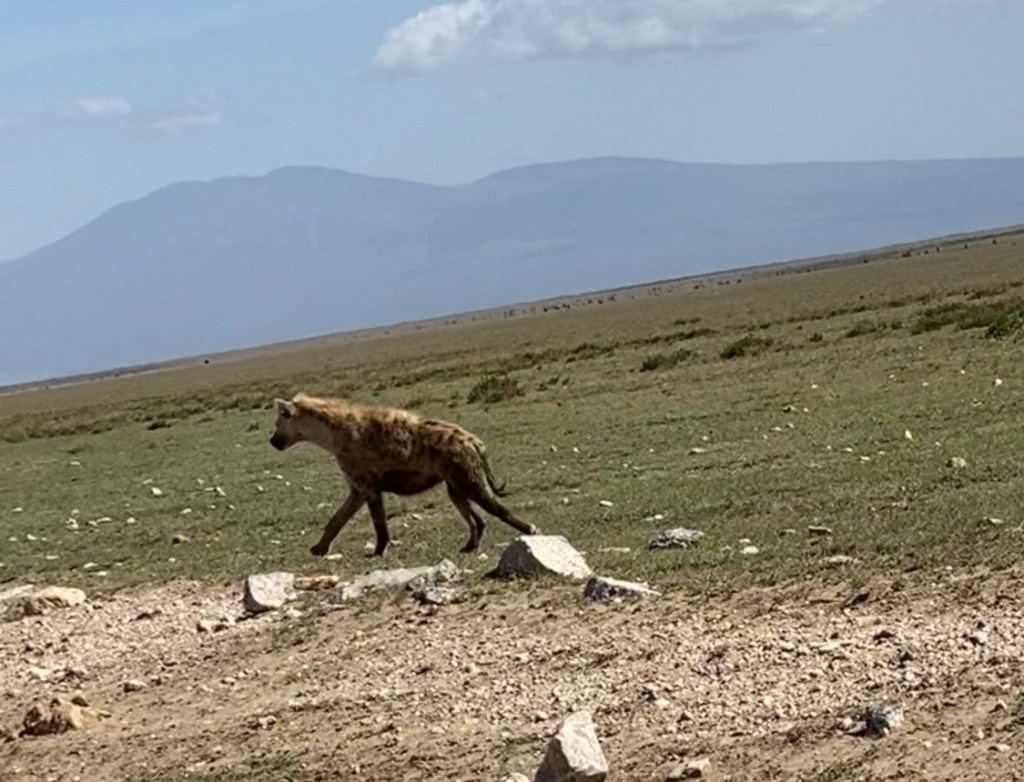
This leg of the trip gave us some close-up views of animals we had previously only seen from further away: hippos taking mud baths in a pond (can’t believe how they smelled!), hyenas loping along, and some friendly jackals by the side of the road. We also had a special treat due to the keen eye of our guide, who spotted the head of a cheetah hidden in grass perhaps a hundred yards from the road. Turns out, it was a mother raising twins, who also poked their heads up after a little wait. We played peekaboo as they appeared and disappeared from sight, before reluctantly moving on so that we could get to our campsite before dark.
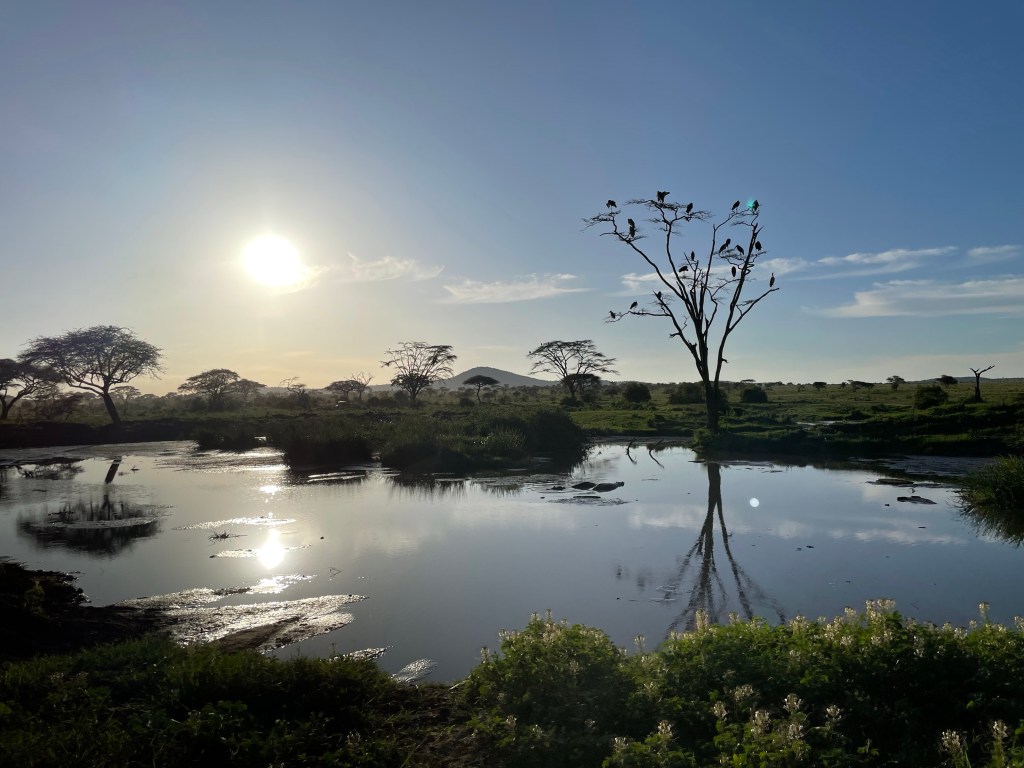
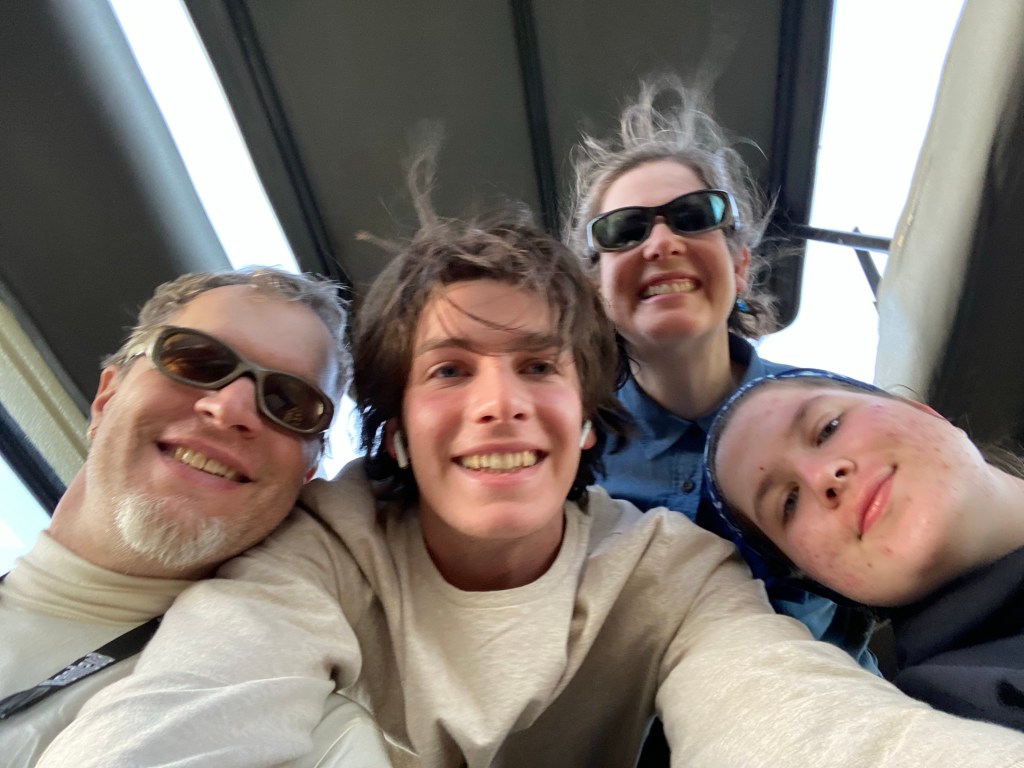
Marabou stork fill the branches of a dead tree near sunset.Tired but happy from the action-packed day
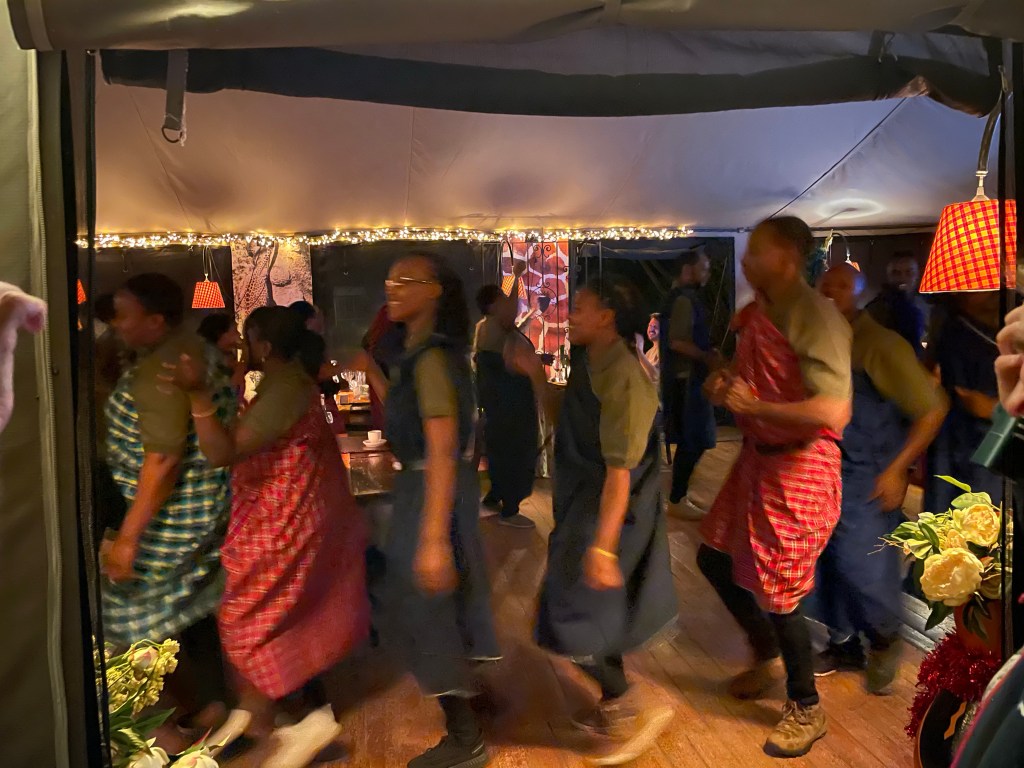
Our camp, the Serengeti Sound of Silence, is quite new and, tonight at least, anything but silent! It’s New Year’s Eve and the staff welcomed all the guests to join them at the campfire after dinner for participatory singing and dancing. We could have used the sleep but how could we turn down an invitation like that? One for the memory books – happy 2023!
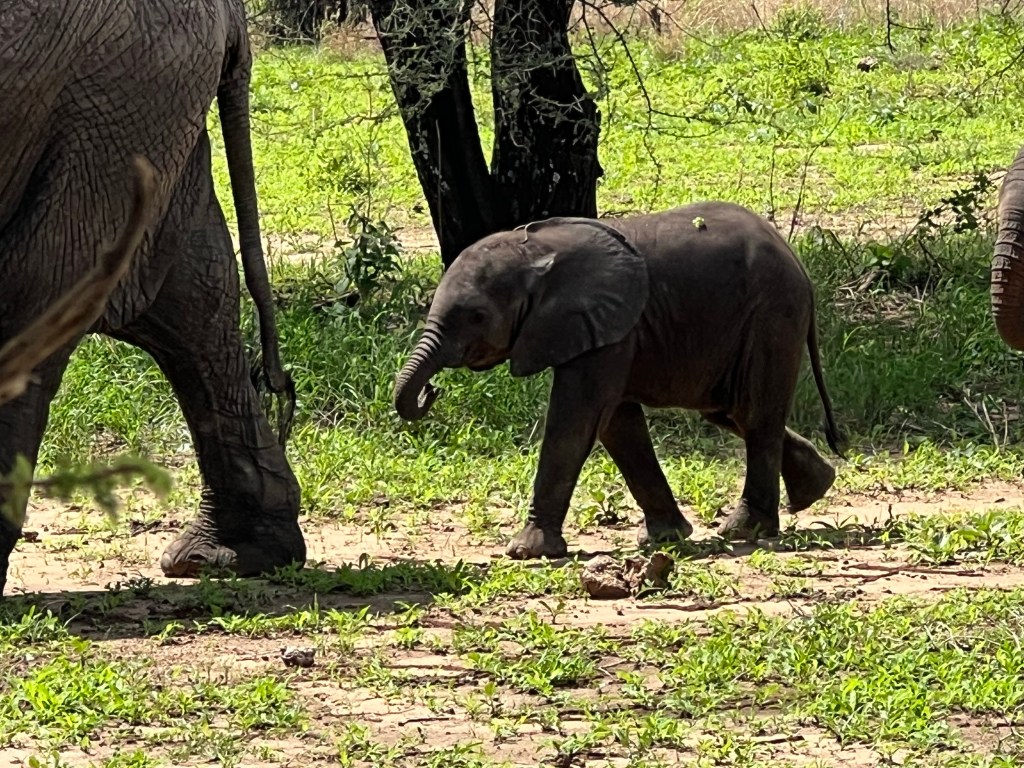
After another night of unfamiliar animal noises in the dark (we’re pretty sure some lions and elephants were mixing it up out there) it was time to pack our bags and say farewell to Tarangire. We had a long game drive to the park entrance which led to numerous elephant encounters. Most of the animals in the park are pretty tolerant of the human visitors, but we encountered one small herd led by a young matriarch who may have recently arrived from outside. She reacted quite intensely, trumpeting loudly and herding all the juveniles away from the road. Many of the groups had young elephants with them, including the smallest we’d ever seen – our guide estimated it was less than 3 weeks old!
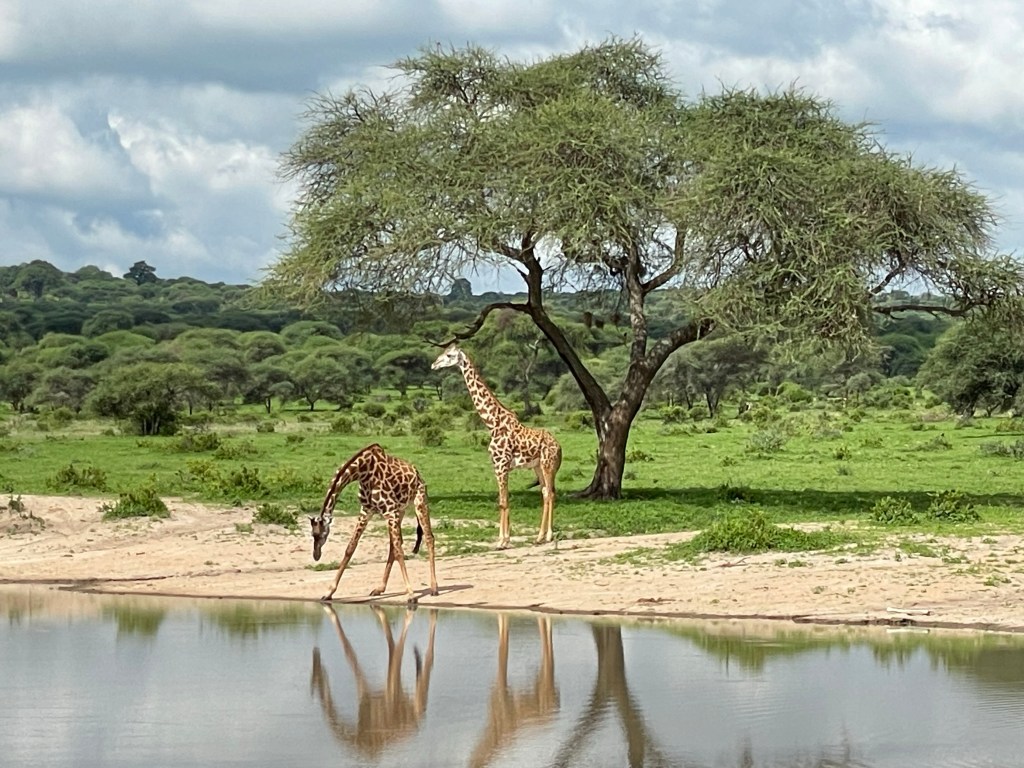
We also had some fine giraffe sightings. One especially picturesque group was drinking by a pond. Giraffes are particularly vulnerable when they bend down to drink so the others kept watch for lions.
Speaking of lions, on a more somber note, we came across a lone zebra on the plain. This was unusual because they usually live in herds, but on closer inspection we saw it had a large weeping gash on its hind quarters. Because the smell of blood attracts predators, the zebra was driven from the herd. We wished it well, but had to drive on.
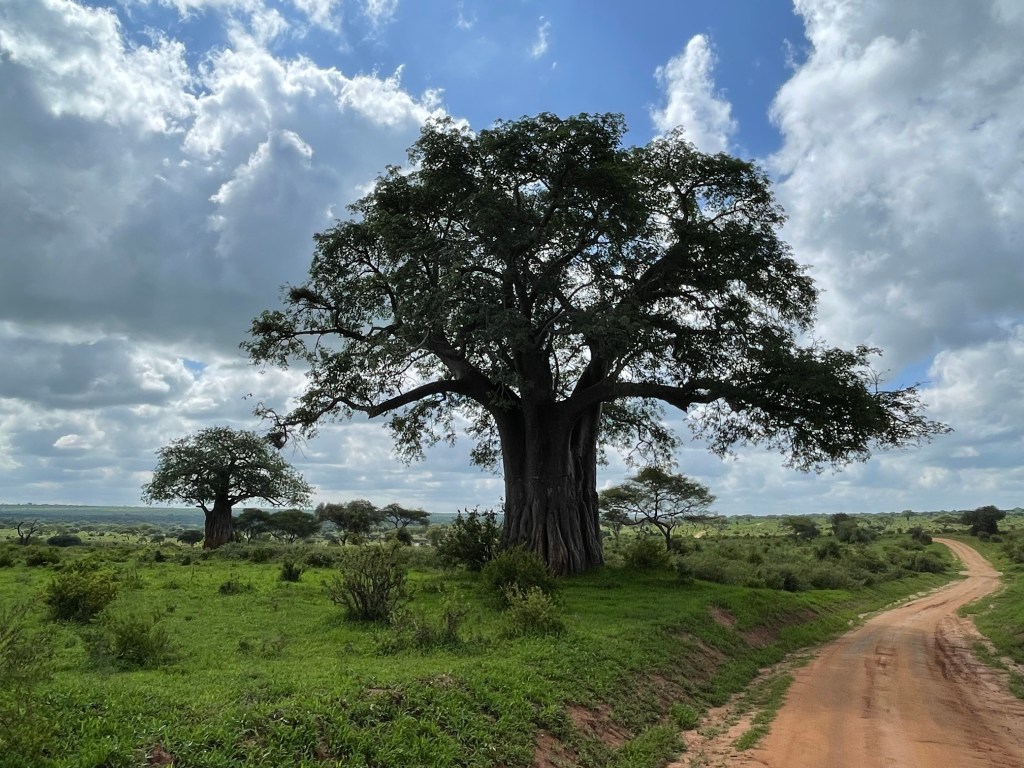
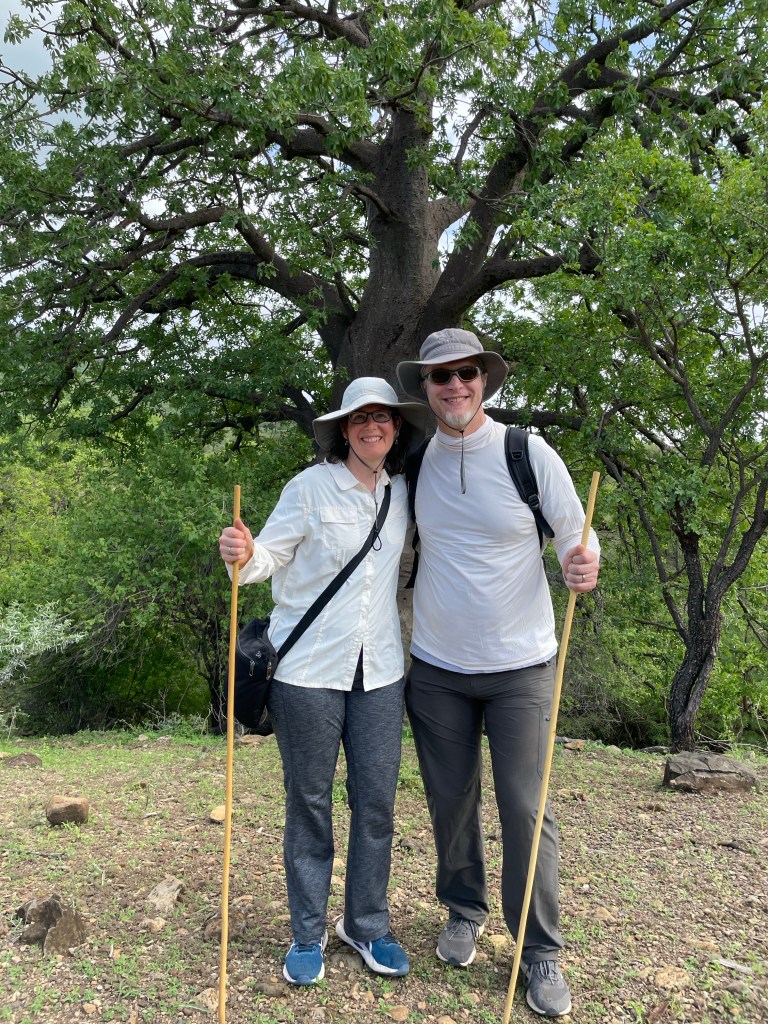
We didn’t have a good picture of the iconic baobab tree (Nick’s favorite!) but made sure to take one for you today (see lead photo). The camp served us juice the day before that was made from its fruit – tasty but fibrous.
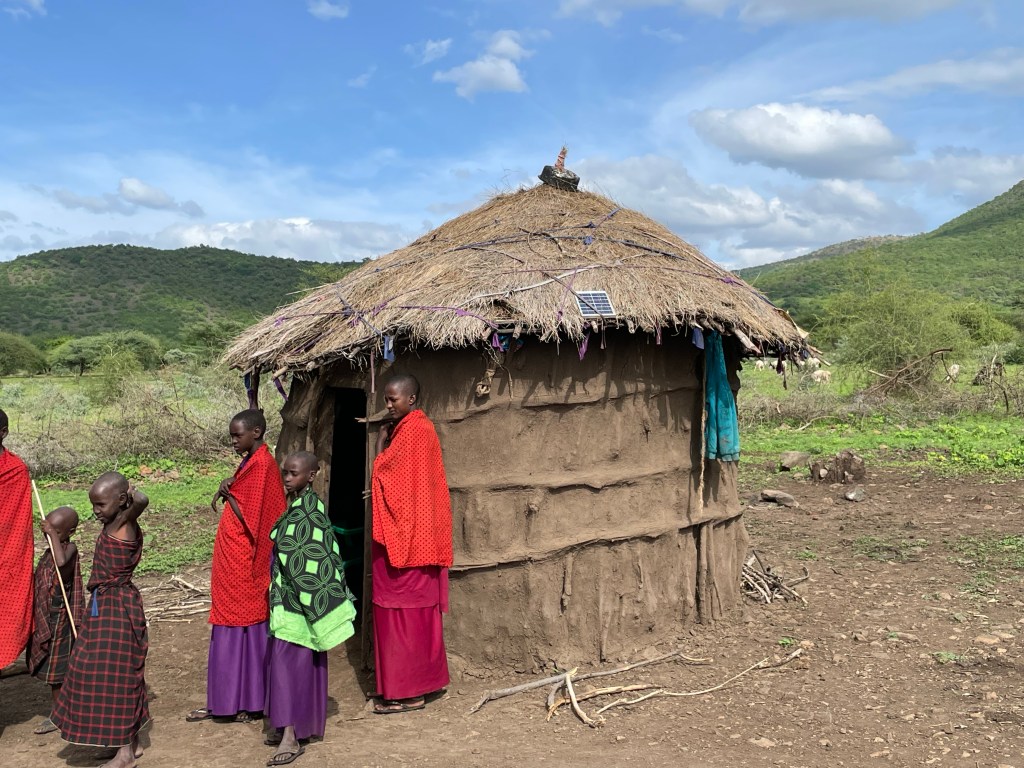
We left Tarangire at mid-day. En route to our evening lodgings on the rim of the Ngorongoro Crater, we stopped at a cultural center run by a non-profit working with the local Maasai people. Our interpreter outfitted us with the sticks traditionally carried by Maasai herders and took us on a medicine walk. He pointed out the healing properties of many local plants and answering our numerous questions about Maasai life and culture. As part of the tour, we were also welcomed into a family compound, called boma, where we were instructed on customary greetings and some useful Maa phrases. We particularly liked their phrase for thank you, which includes a part like “very much” that one can repeat multiple times for emphasis. Phonetically: ashay naling naling naling naling pea (with extra enthusiasm on the last word). We learned that the houses are all built by women and we were able to see inside one. It was surprisingly dark inside, though many now have solar powered lights for evening use.
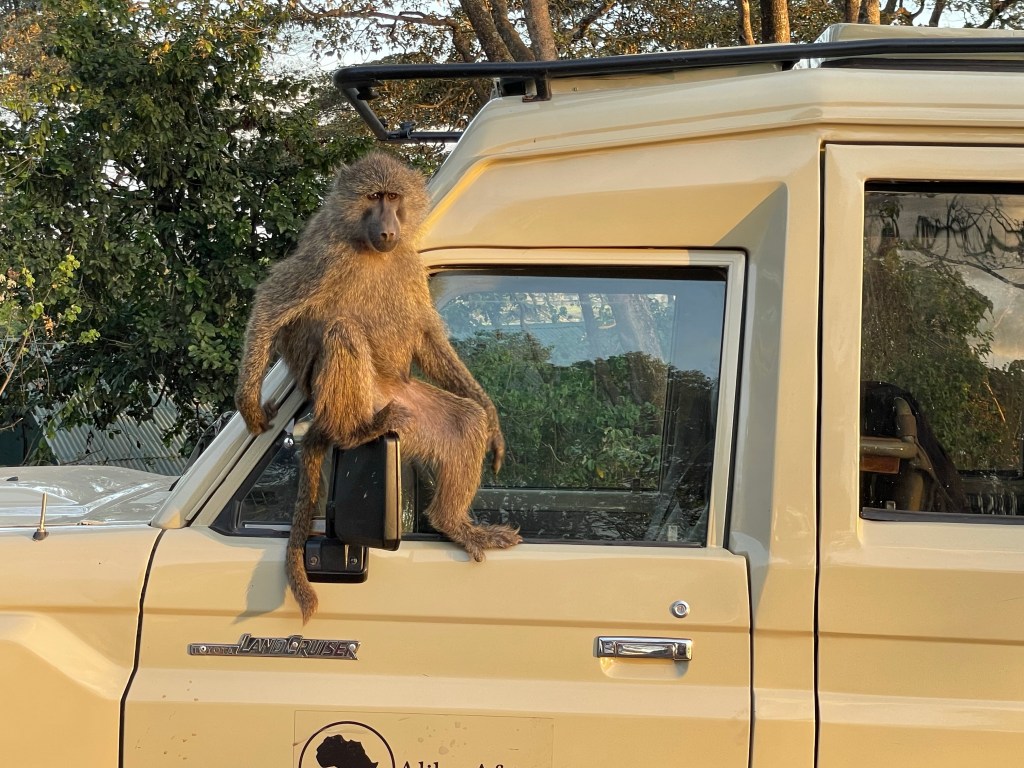
We got to the entrance to the Ngorongoro Crater Conservation Area just as the sun was setting and were entertained by the resident baboon population while we waited for our tickets. Luckily we were warned in advance to close the windows – if they manage to get inside your car, they will rifle through your belongings for food and possibly leave a smelly souvenir of their visit. By the time we left, there were no less than four climbing over the outside!
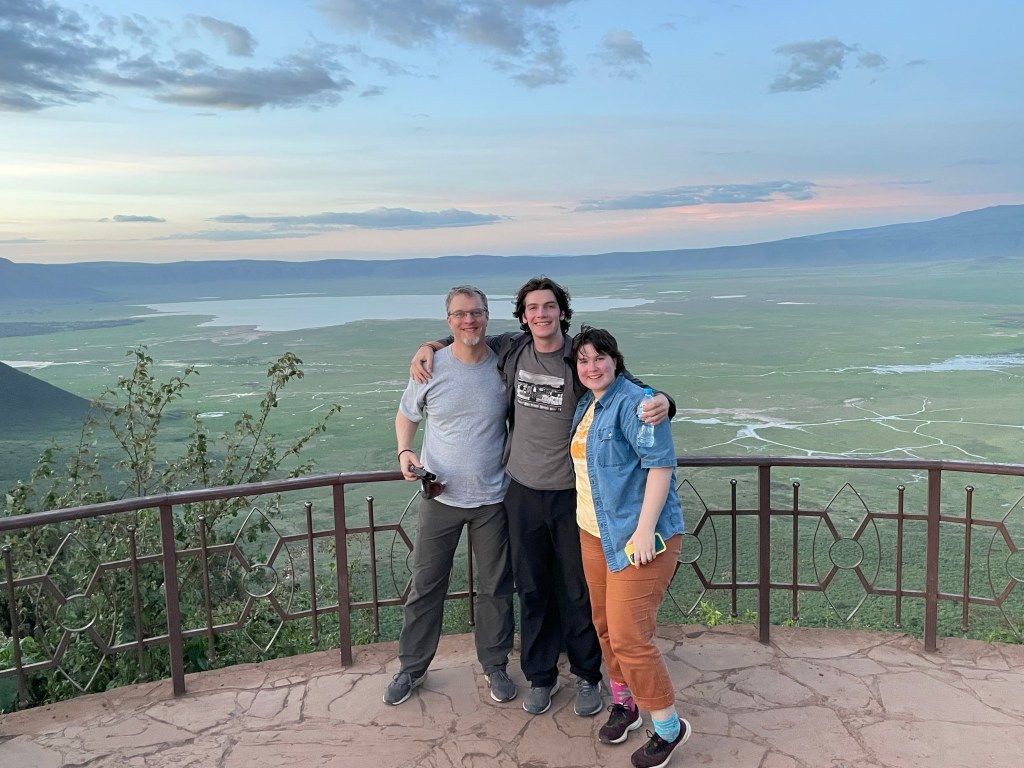
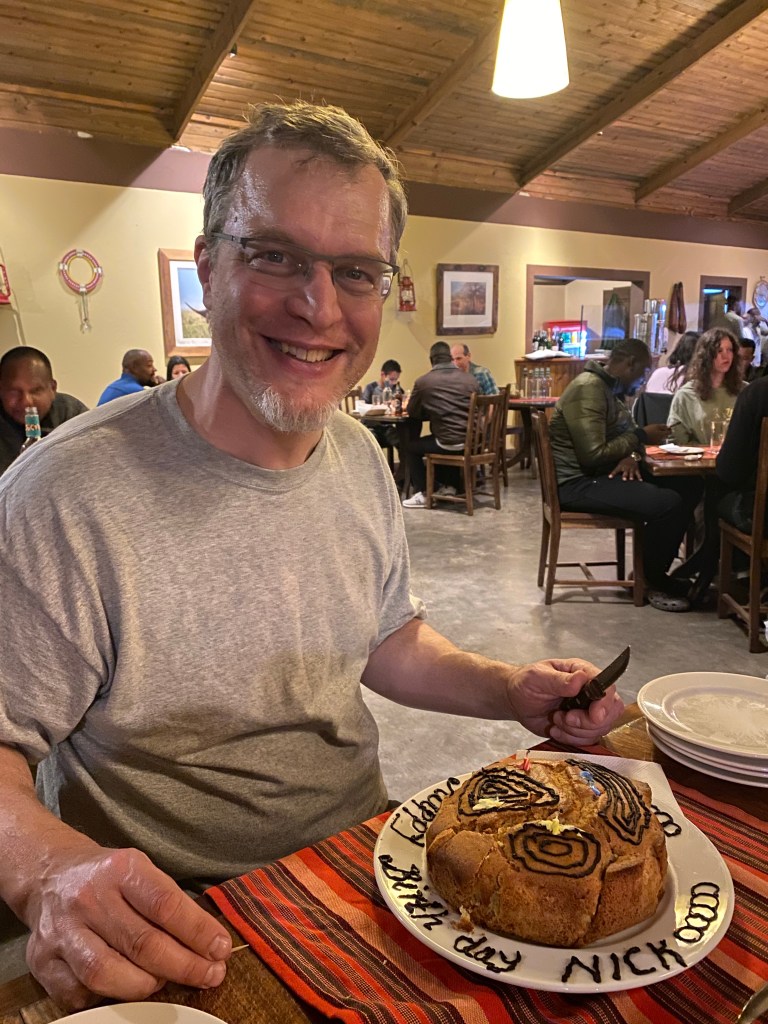
On the way to the lodge, we stopped at overlook point for our first glimpse of the crater itself, which we will explore in more depth tomorrow. At dinner, we celebrated Nick’s birthday with help from the lodge staff, who led us in Tanzanian birthday song and chant. Oh, and cake, too! Happy birthday Nick!!
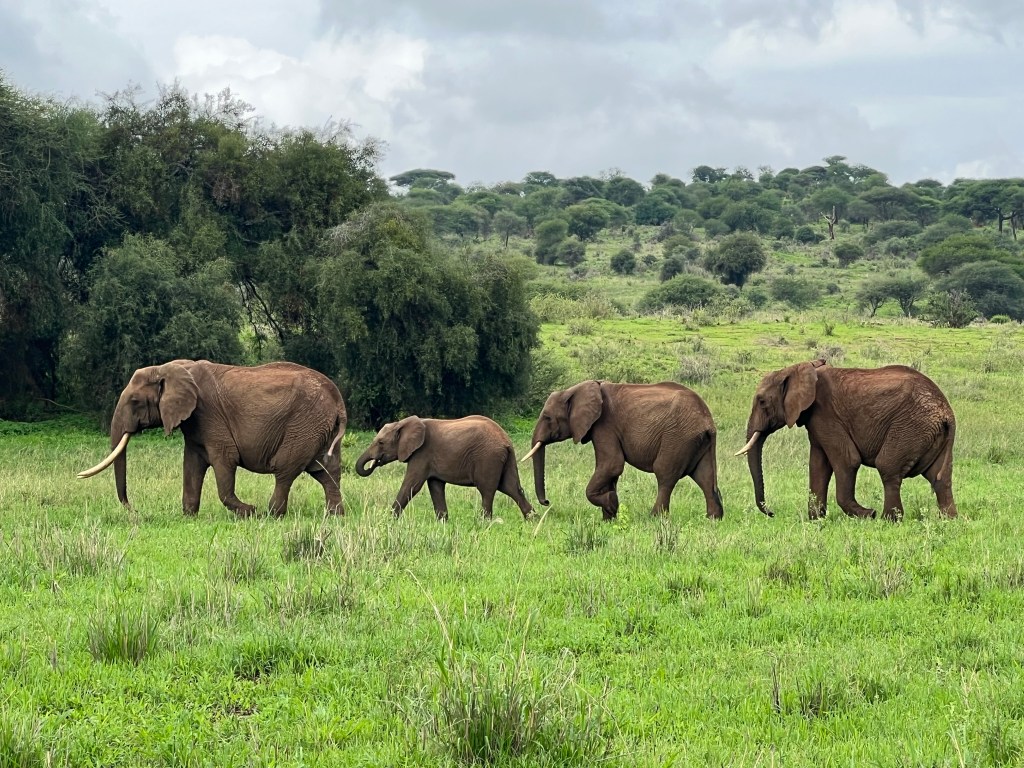
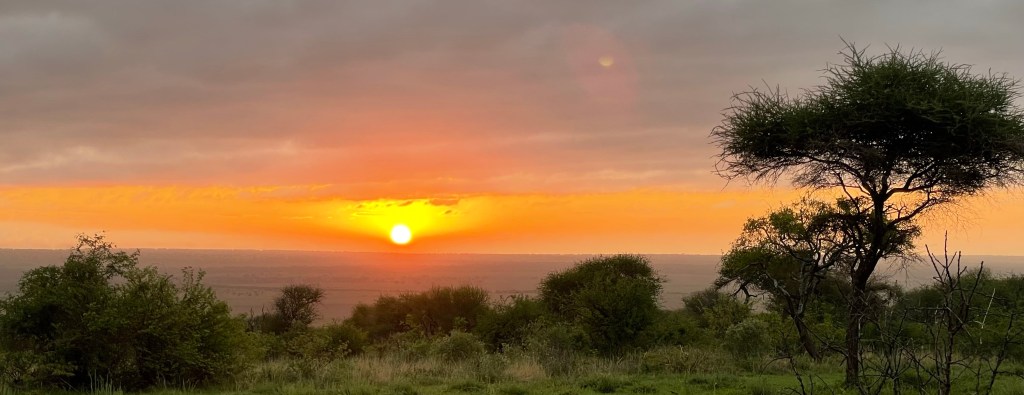
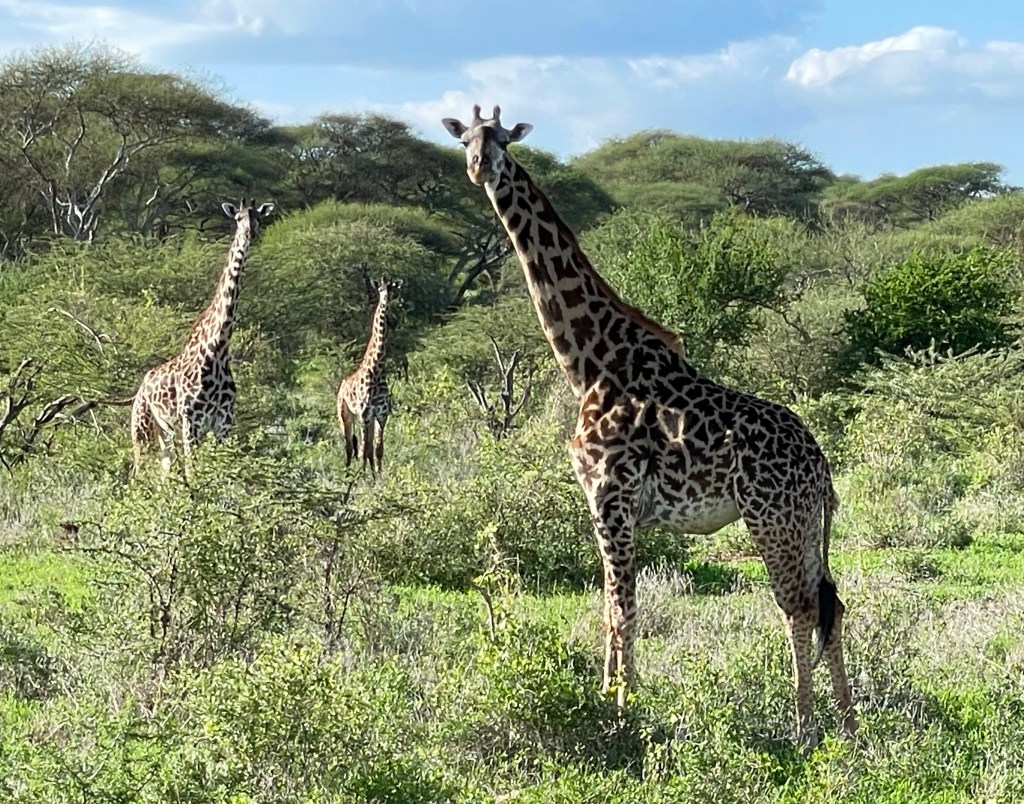
After a Kodachrome sunrise, our drive started and ended with giraffes (see below), but we’re leading off with this fine family of elephants captured by Rowan. (Perhaps they’re on their own expedition somewhere?)
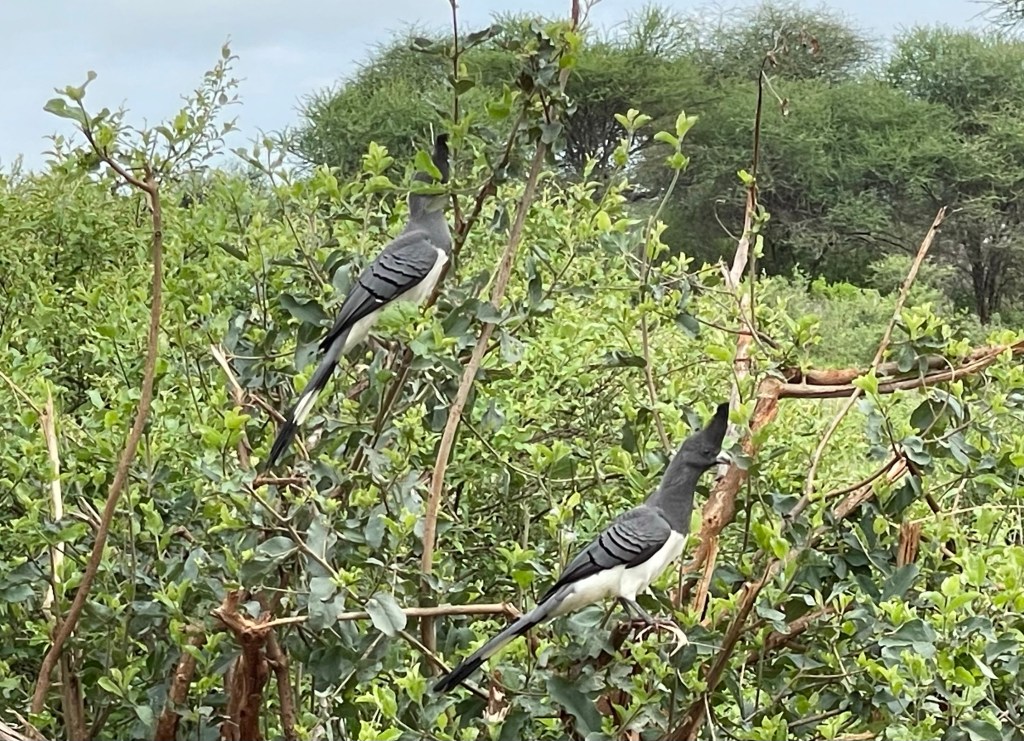
Charismatic megafauna aside, some of the most interesting stories of the day were the small ones. We were captivated for minutes by a squabbling trio of dung beetles fighting over their prize by the side of the road. (The drama was on such a small scale that we don’t have a photo for you, unfortunately.) There was also an incredible variety of birds. We’re far from experts but by the end of the day we could begin to identify many of the more common ones. Besides encountering four different types of eagle, we came across many other interesting and showy varieties including the goawy (pronounced “go away”) birds and the secretary bird.
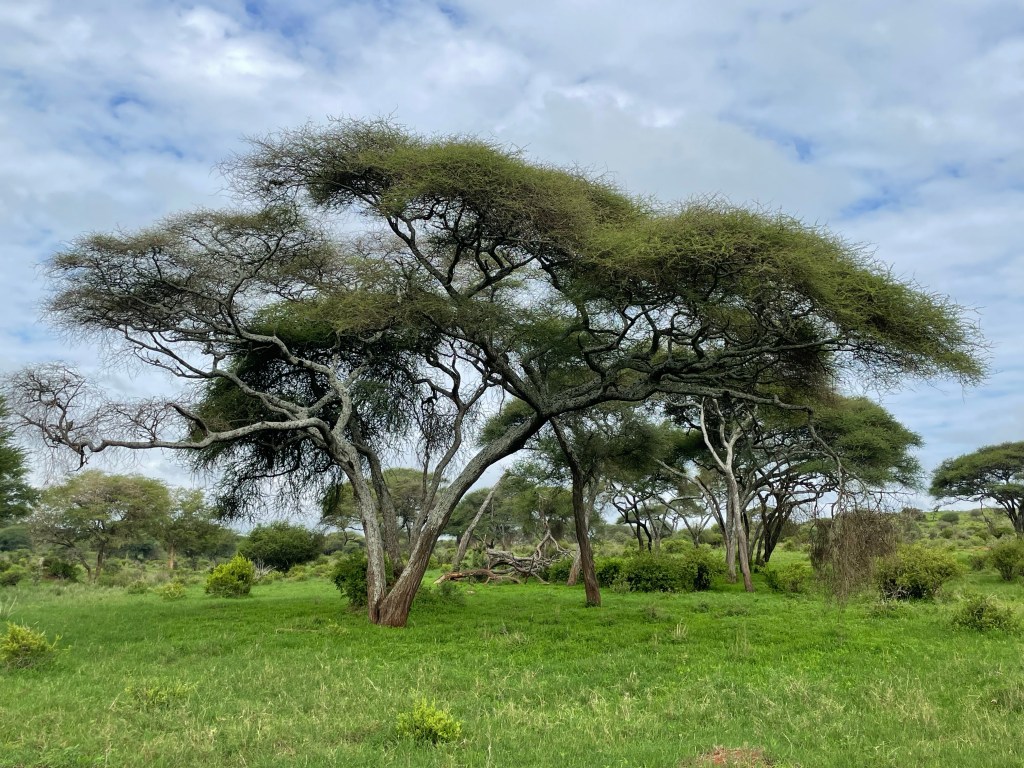
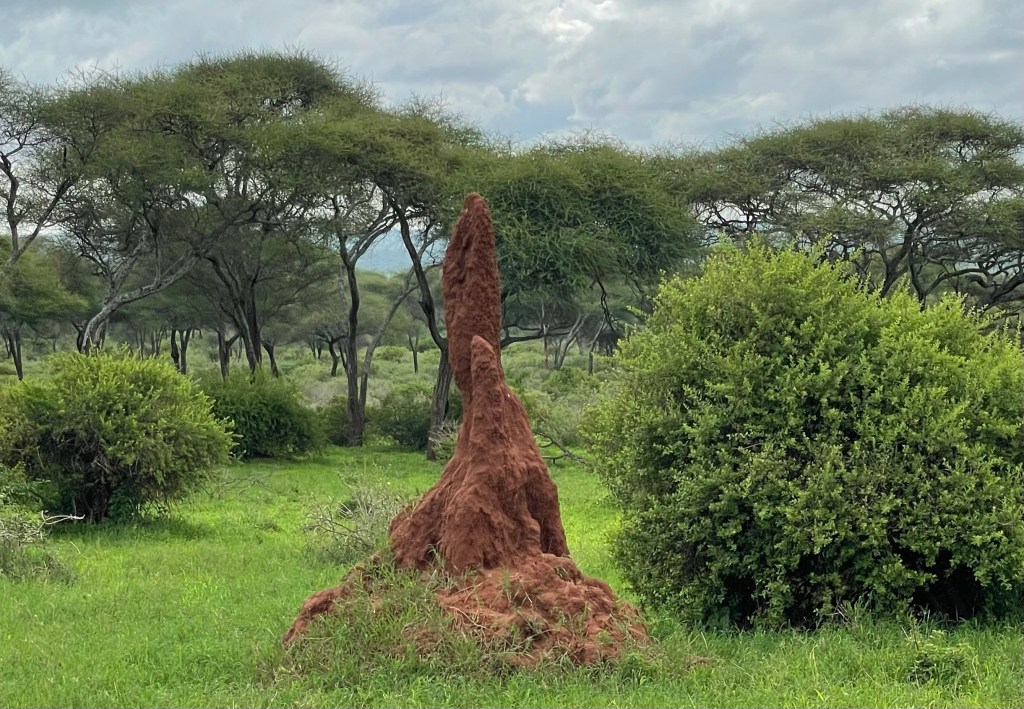
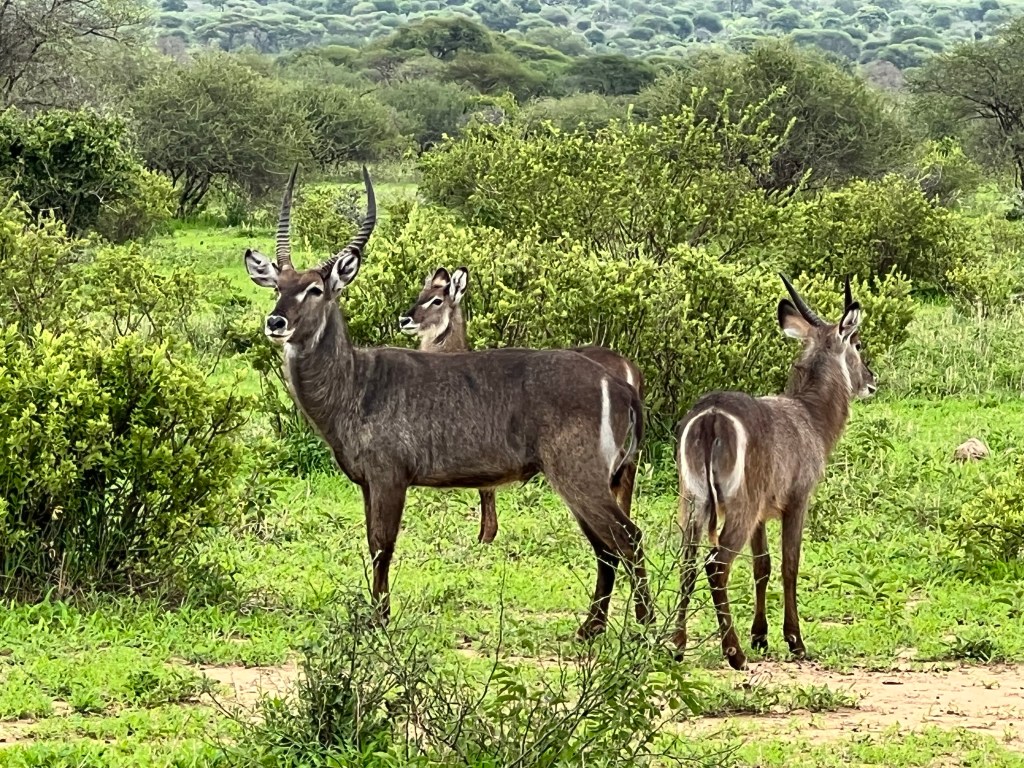
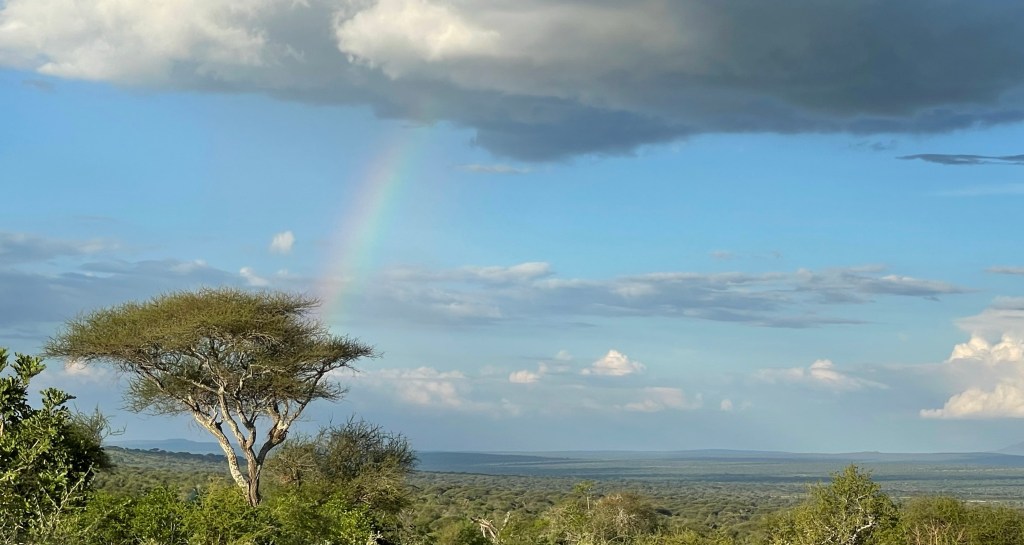
Our primary destination today was a vast lowland swamp (10 square km) some distance from our camp. It took quite a bit of driving to get there, and we thought we would share some of the striking scenic features along the way. The acacia trees dominate the landscape, and the rich red termite mounds also catch the eye. Many of the animals from yesterday made repeat appearances but we also met some new characters including the waterbuck antelope (and the dikdik, its smaller and not-pictured cousin).
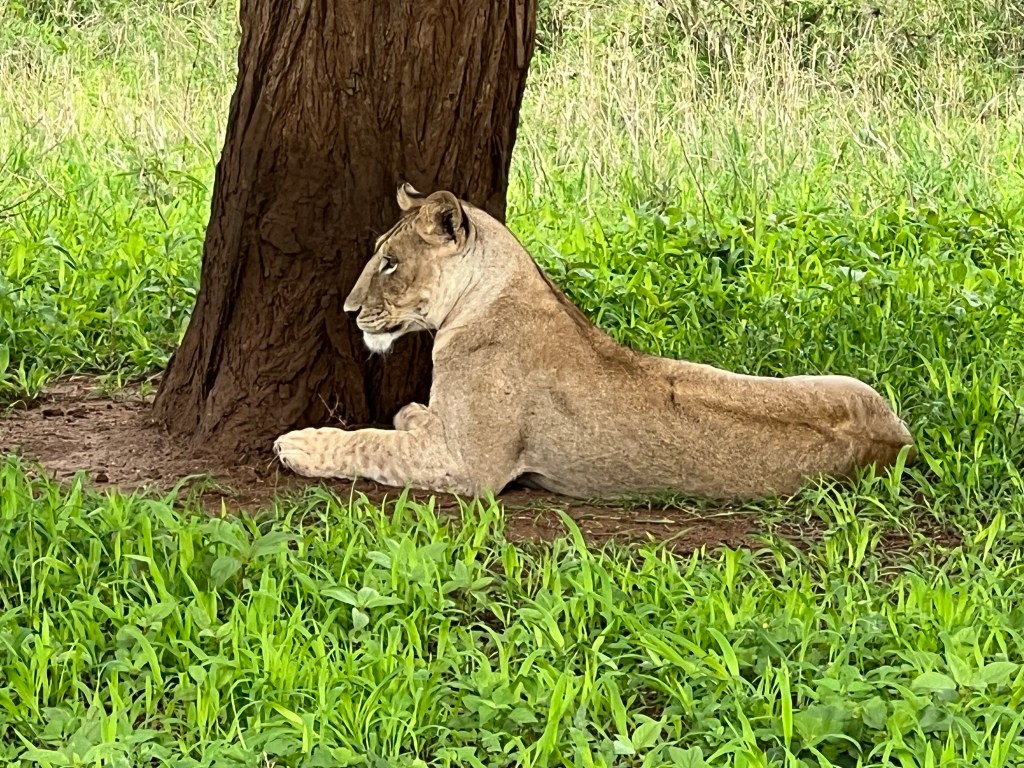
Our guide made a small detour from the planned route so we could we see a pride of lions napping around a water pan. Apparently, other guides had the same idea because there were nearly a dozen other safari vehicles jockeying for position. Fortunately the lions were supremely unimpressed by the human antics going on some 20 yards away from their napping site and they ignored us entirely. Thanks to Rowan for this excellent shot of the alpha female!
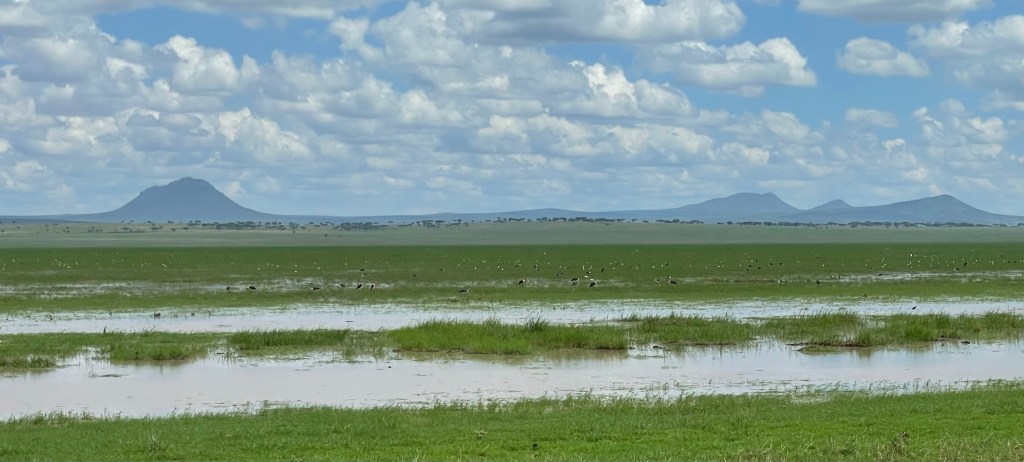
We eventually reached Silale swamp by lunchtime. The area feels vast and teeming with wildlife, much of which is hard to capture on film without a lens as big as one’s arm. You can get a bit of sense of it from the photo below – if you look very carefully you might see the Marabou stork, one of the “ugly five” (other esteemed members of this club include the hyena, vulture, warthog, and wildebeest).
Crossing the swamp was not possible due to risk of getting stuck in the mire, so our route home retraced the path from the morning. On the way, our guide told us the story of a time when he had rescued two tourists and their inexperienced driver who had become stuck and ended up stranded for two days without food or water and threatened by hyenas whenever they tried to leave their vehicle. Not for us, thank you – we’re in great hands with Isack and Sifuni on this trip!
Our driveway giraffes!
We arrived back at camp about nine hours after setting off. Prior to this trip, the idea of spending so long in a vehicle driving on bumpy unpaved roads seemed potentially unappealing but in our actual experience, the time flew by and we’re looking forward to more!









 Howes' Doings