Pisa Please-a

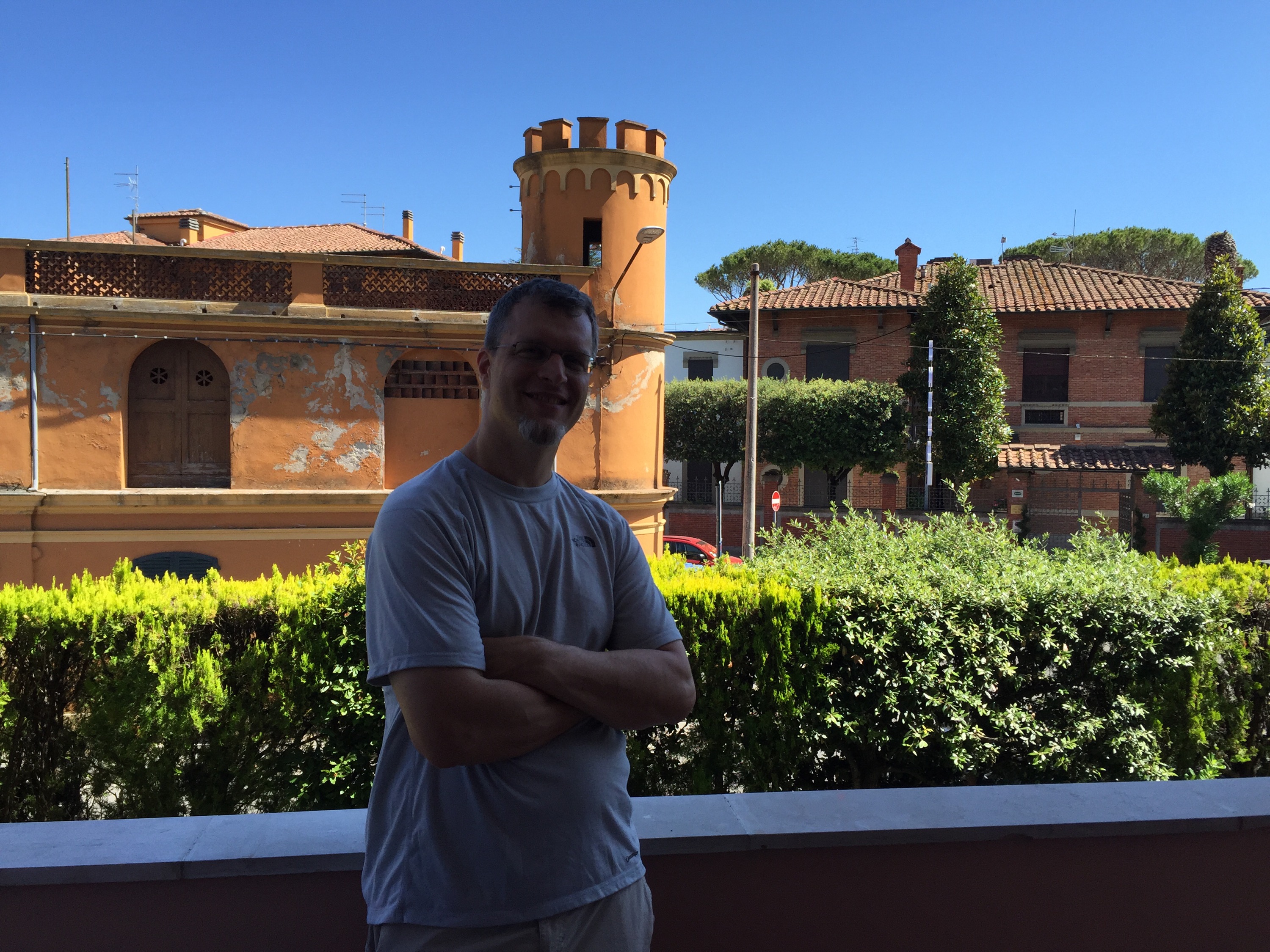
Our Italian adventure started in Pisa today!  We were pretty groggy after our red-eye flight through Munich, so we settled into the Hotel Pisa Tower for a little nap before seeing the sights.  We were pleased to discover that the hotel has a balcony and very comfortable rooms, in addition to the proximity to its namesake tourist site.

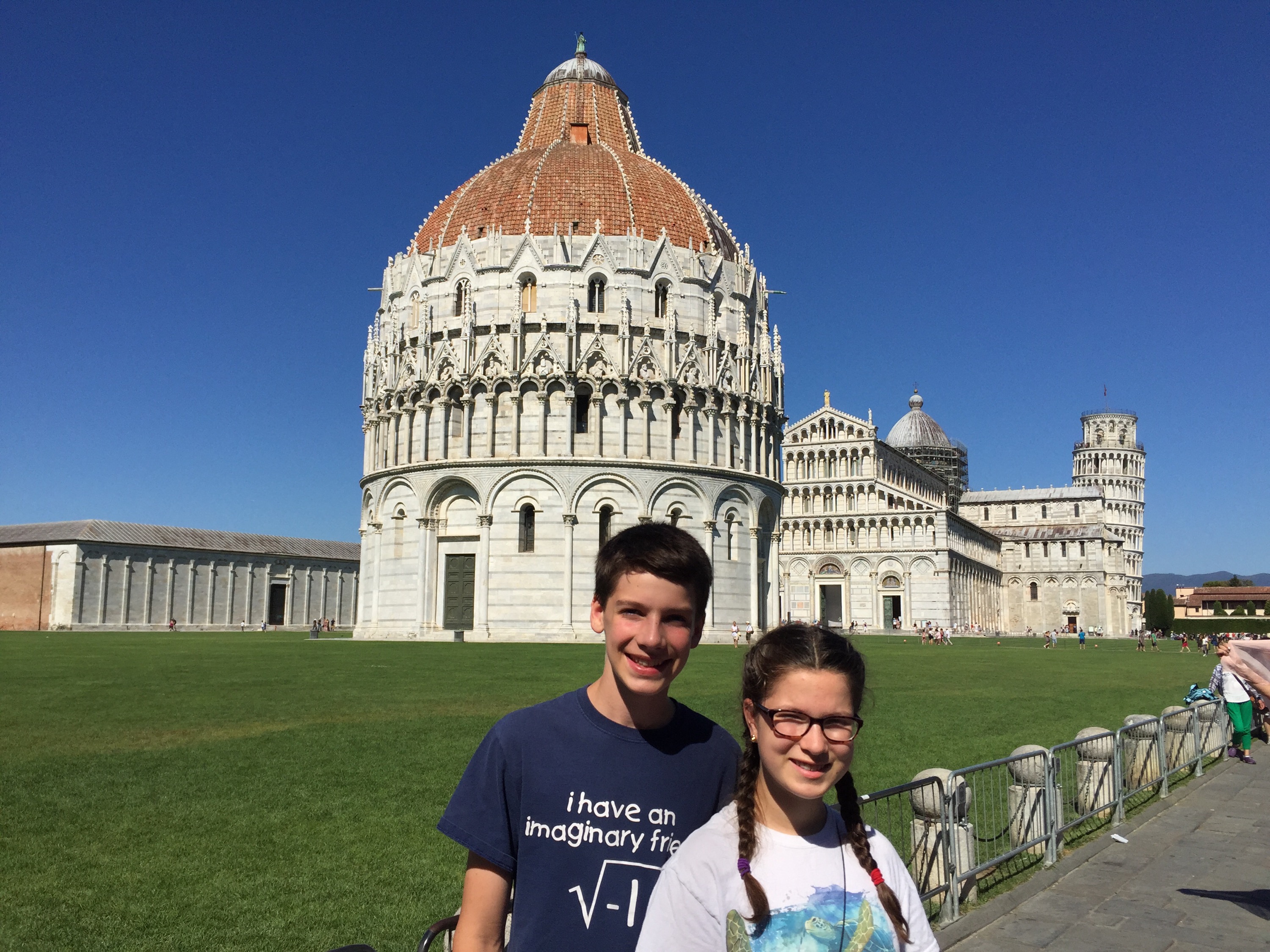
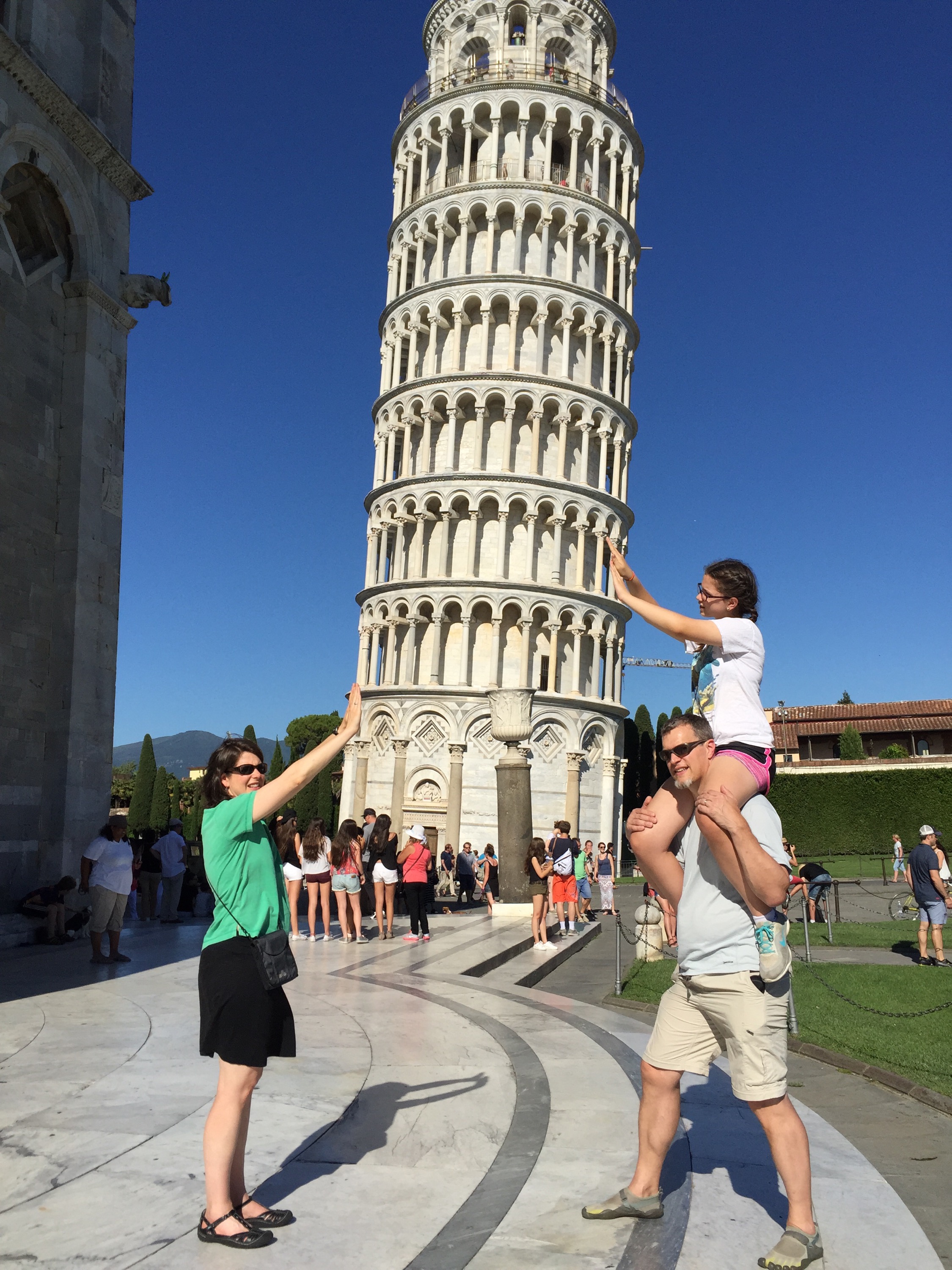
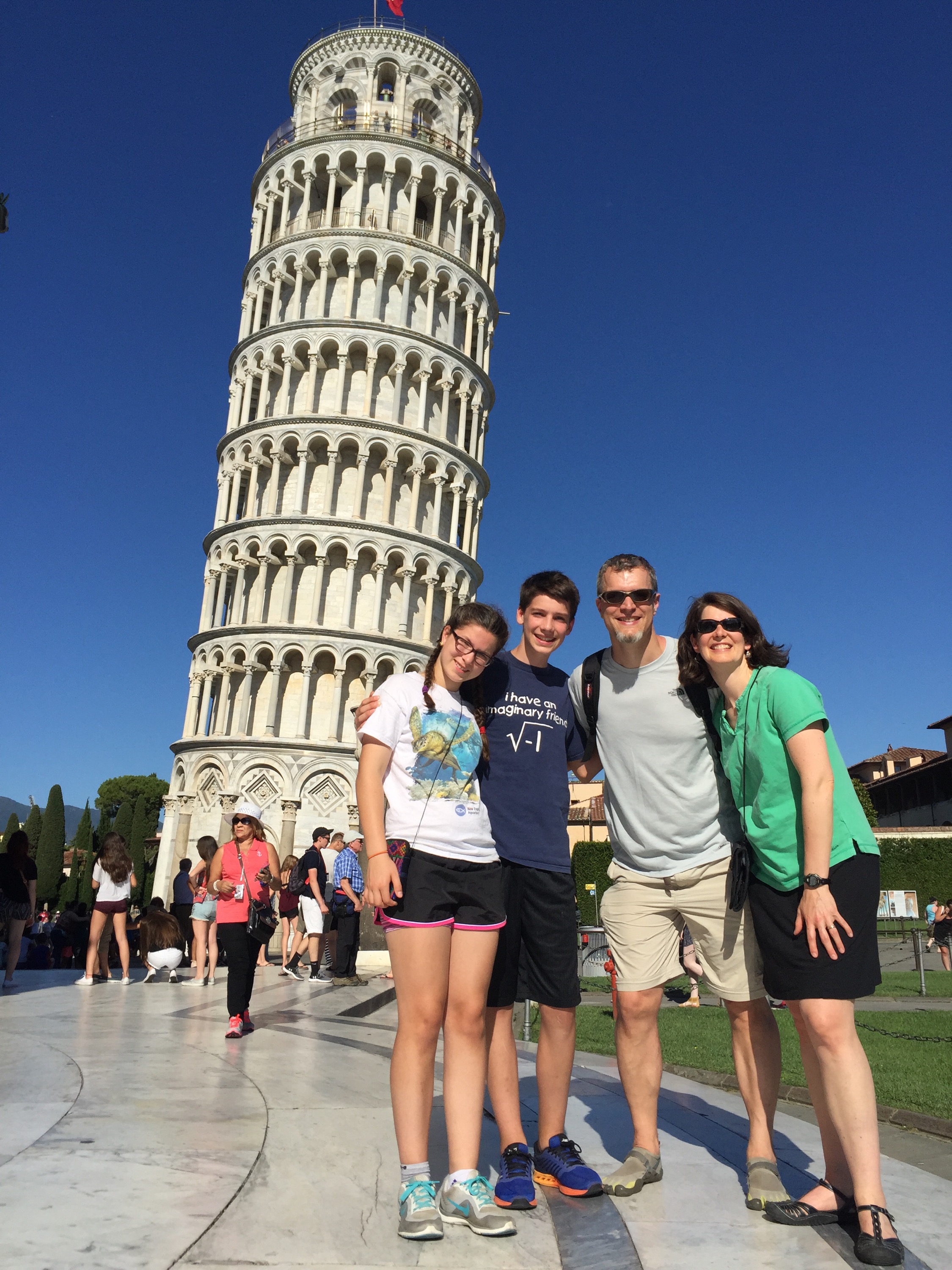
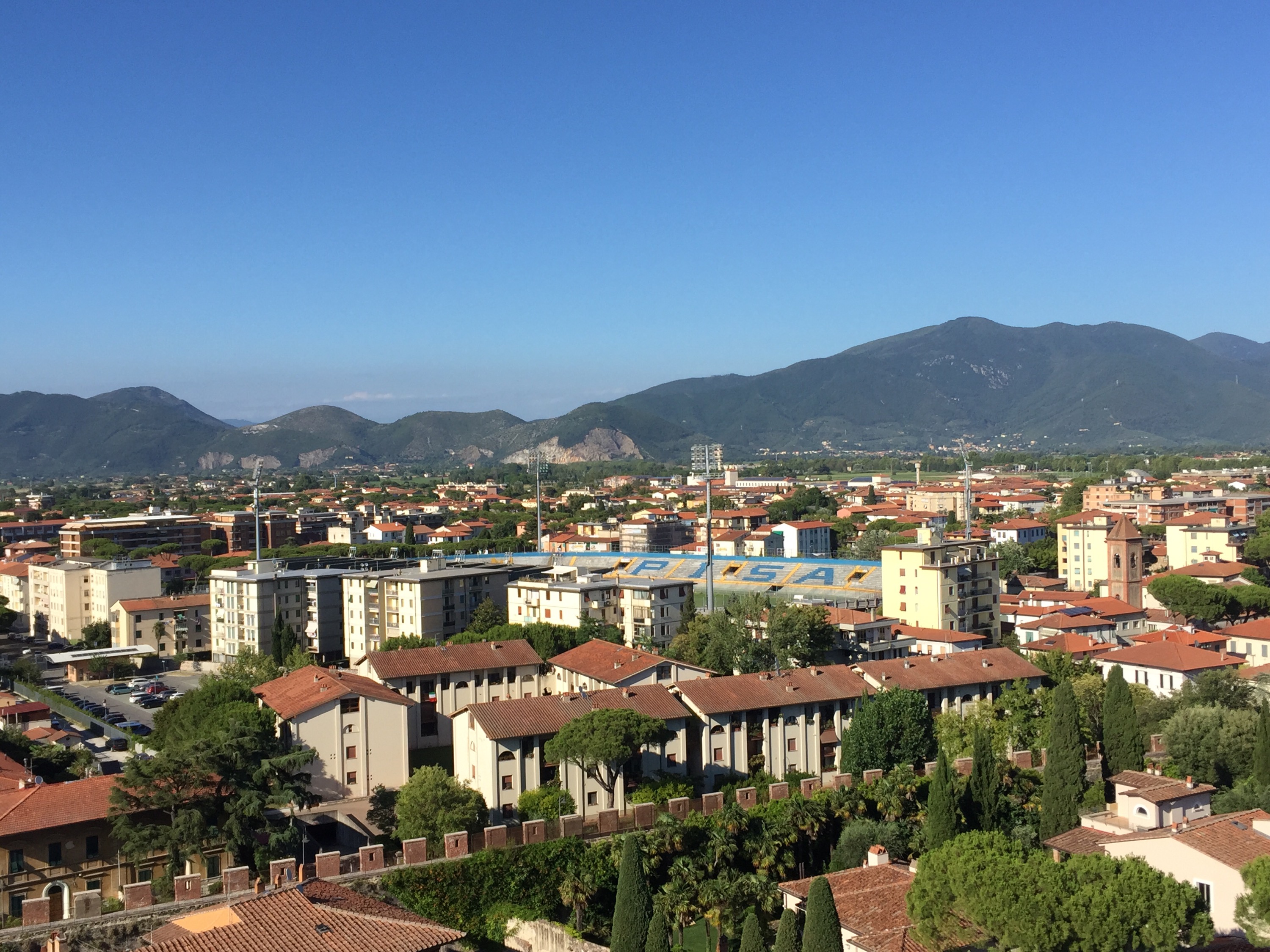
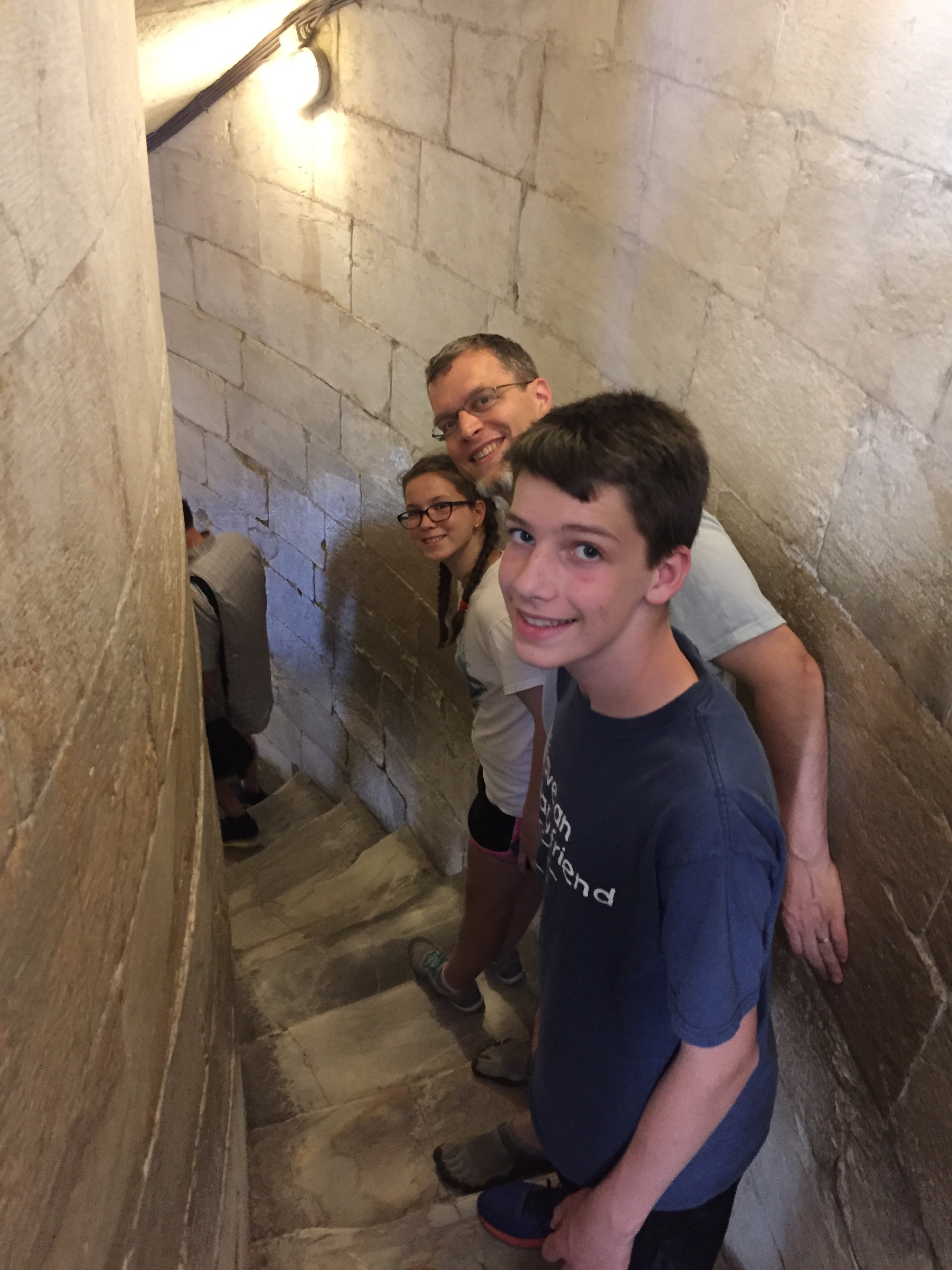
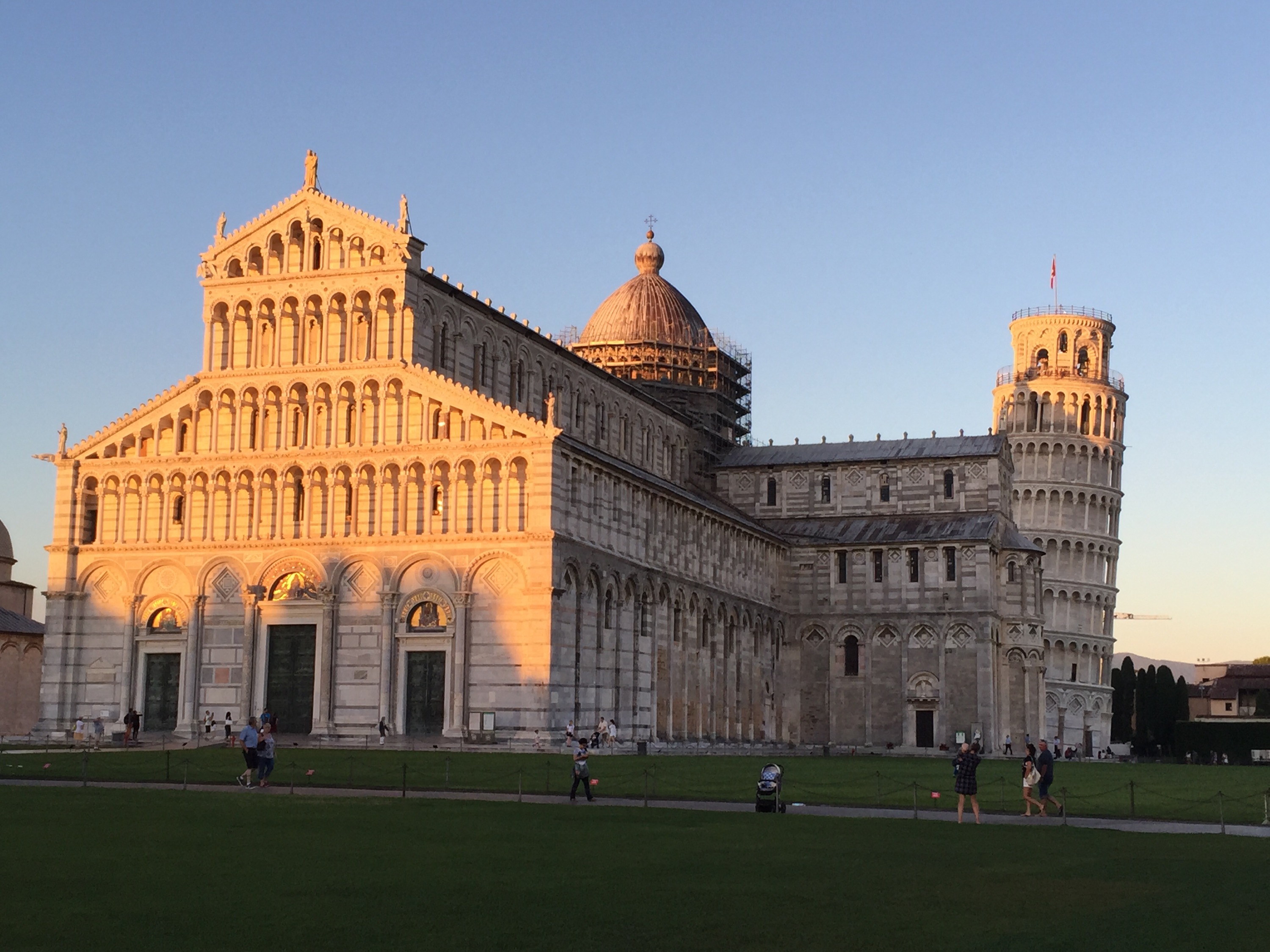
The late afternoon was dedicated to exploring the site in question.  After the obligatory adjusting of the tower’s angle, we explored around and up.  The views from the top are striking in all directions, but the leaning feeling one experiences especially on the stairs going up/down is definitely disorienting.

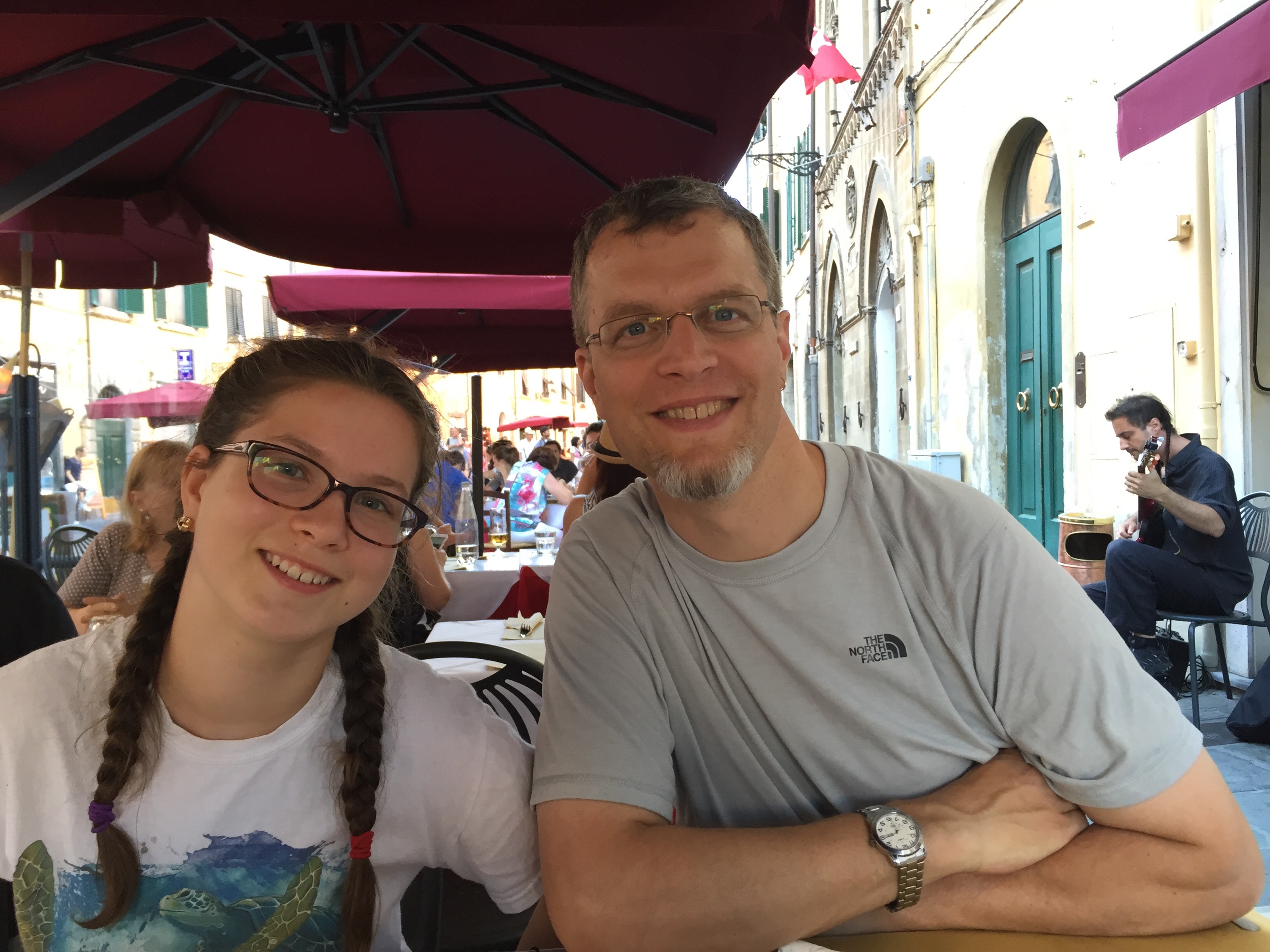
We explored a bit of Pisa on foot, including a trek to the River Arno (fueled by some delicious gelato and sorbet: plum = yum).  We dined al fresco to the lilting melodies of a serenading guitar, delighted by our pasta choices.

We caught the tower complex again on the way home, this time glowing from the light of the setting sun.  Today was a perfect amount of Pisa – we look forward to a good night sleep and continuing our adventure in smaller towns tomorrow.


All Aboard to Italy!

This summer, the Howe family is heading to the Cinque Terre region of Italy!  Susannah has always wanted to hike in Italy and now the kids are big enough to do so as well.  Stay tuned for our adventures starting in Pisa on July 3.

Dartmoor Finale: a Tour of Tors

For our final day, we engaged the services of expert guide Alex Graeme (Unique Devon Tours) to explore Dartmoor, which is nearly impossible to visit by bus. Alex was the perfect guide, taking us to a range of geologic and man-made structures across the moors, and providing engaging commentary throughout.

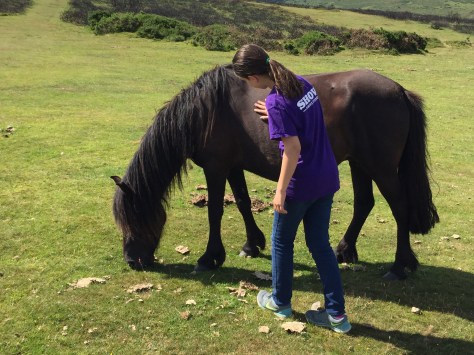
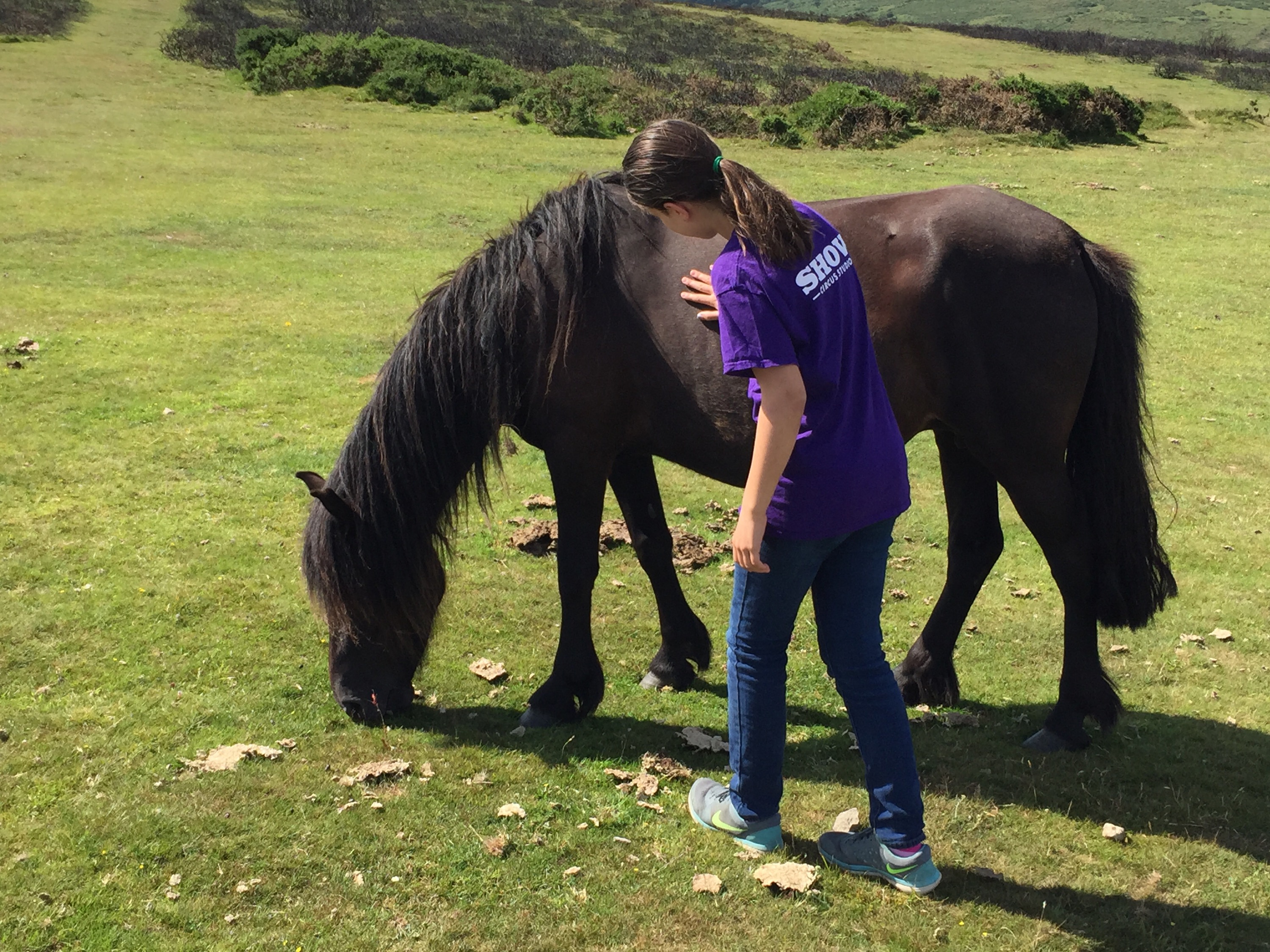
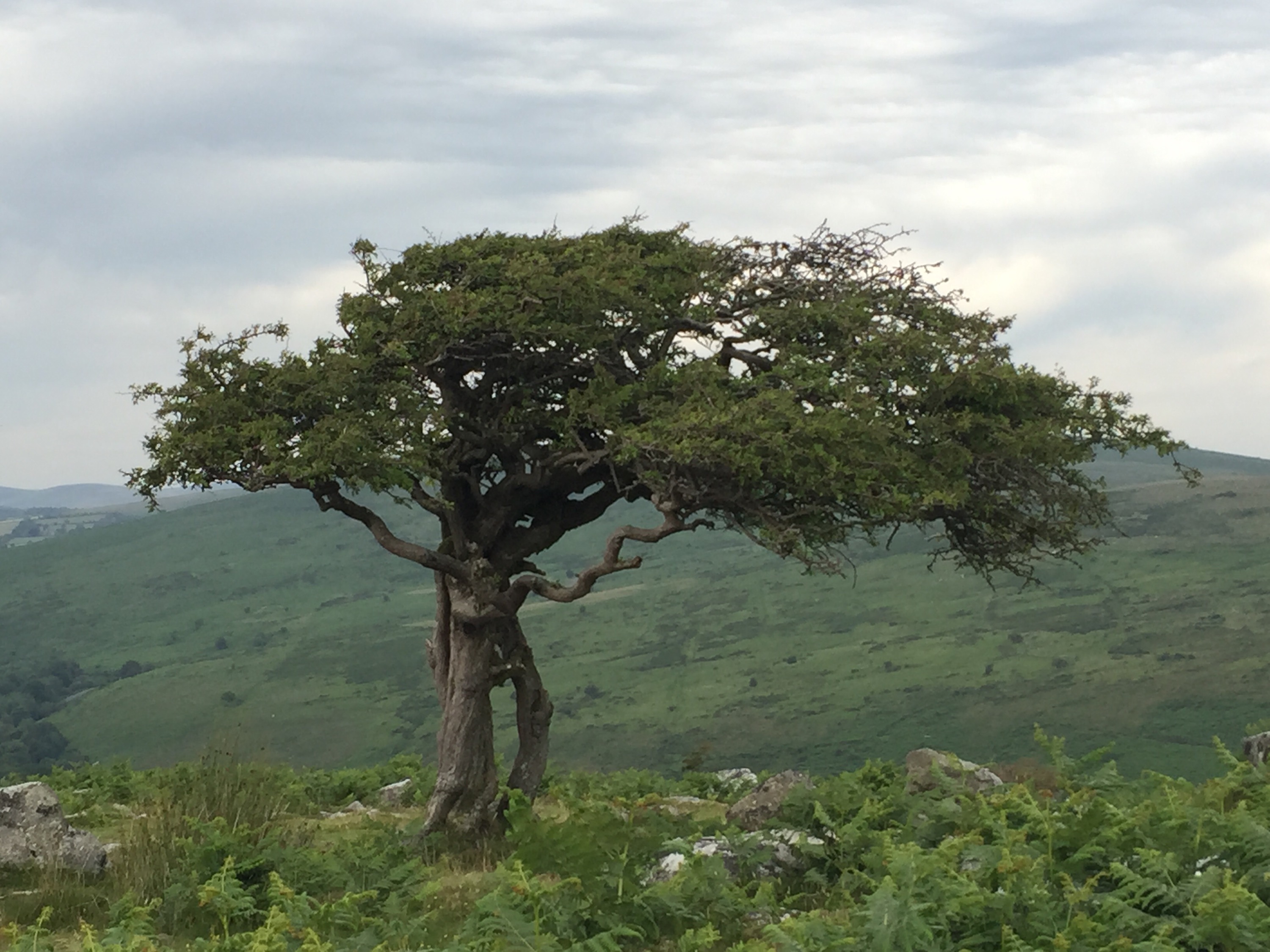
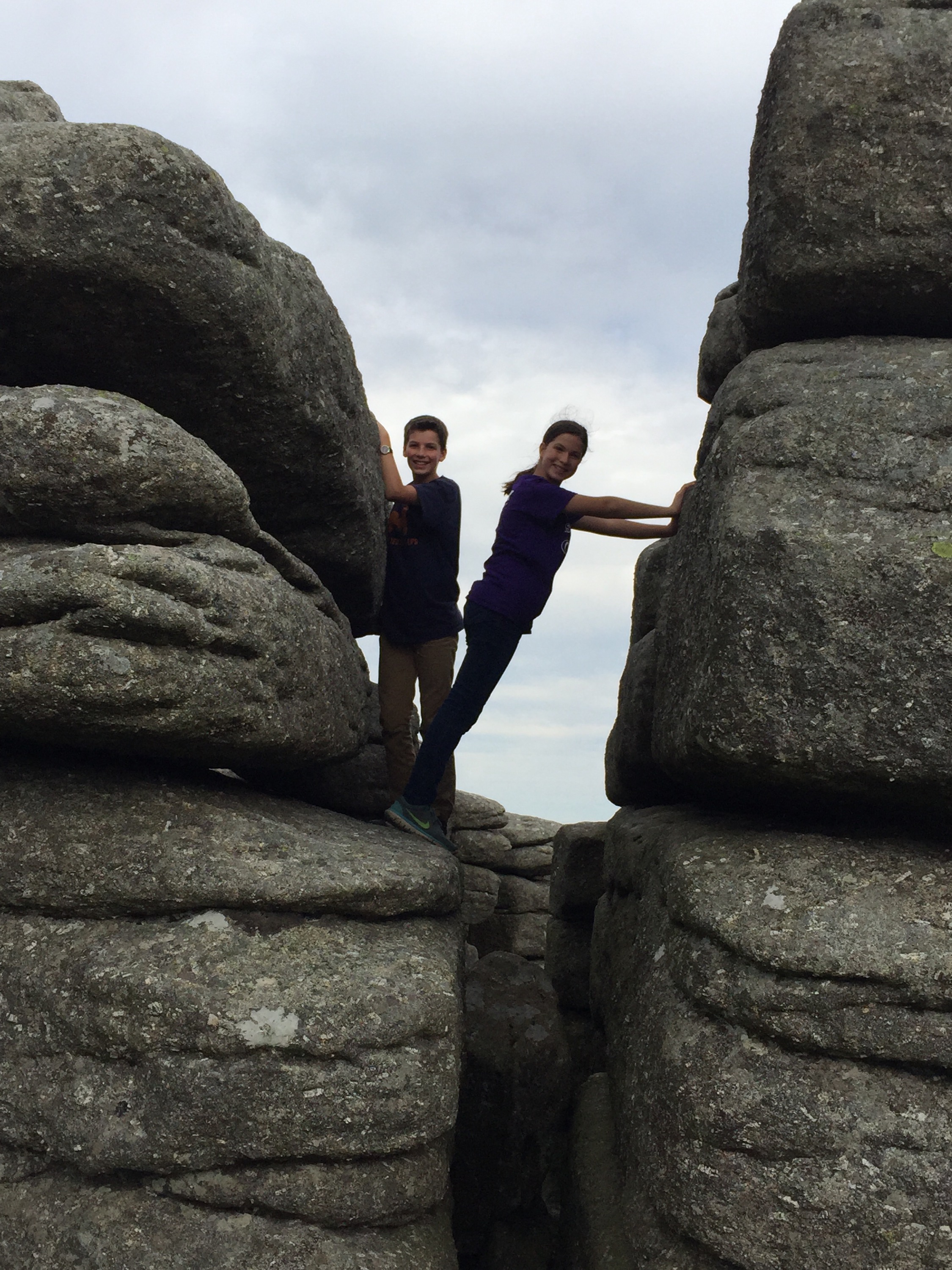
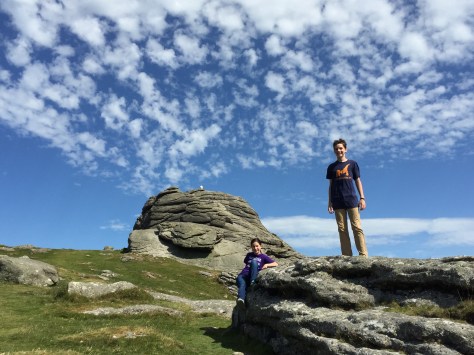
Our first stop was Haytor, an imposing granite mass with stellar views. There are over 200 tors on Dartmoor, but Haytor is one of the most visited due to its easy road access. In addition to climbing over the rocks, we did a little bit of letterboxing, finding three hidden caches, one of which included a stamp and ink pad to commemorate our find. Another treat across the car park was a group of Dartmoor ponies, which allowed us our first close-up view. They are semi-wild but this group seemed to be used to tourists and on the lookout for food.

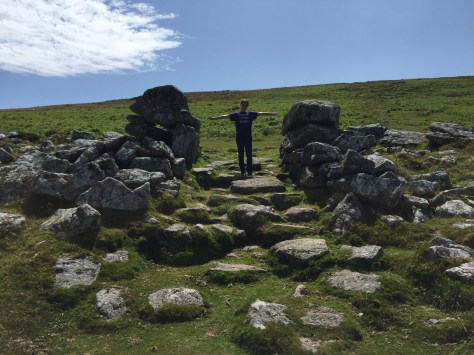
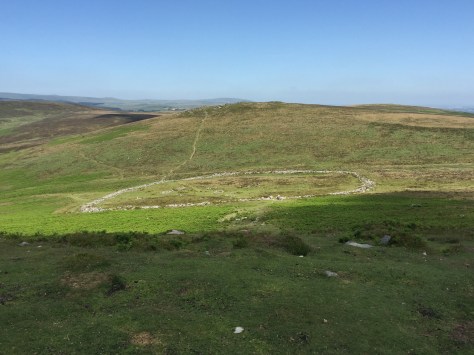
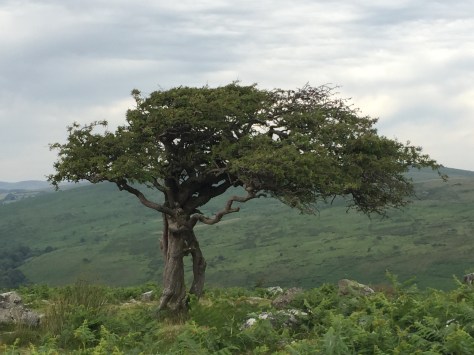
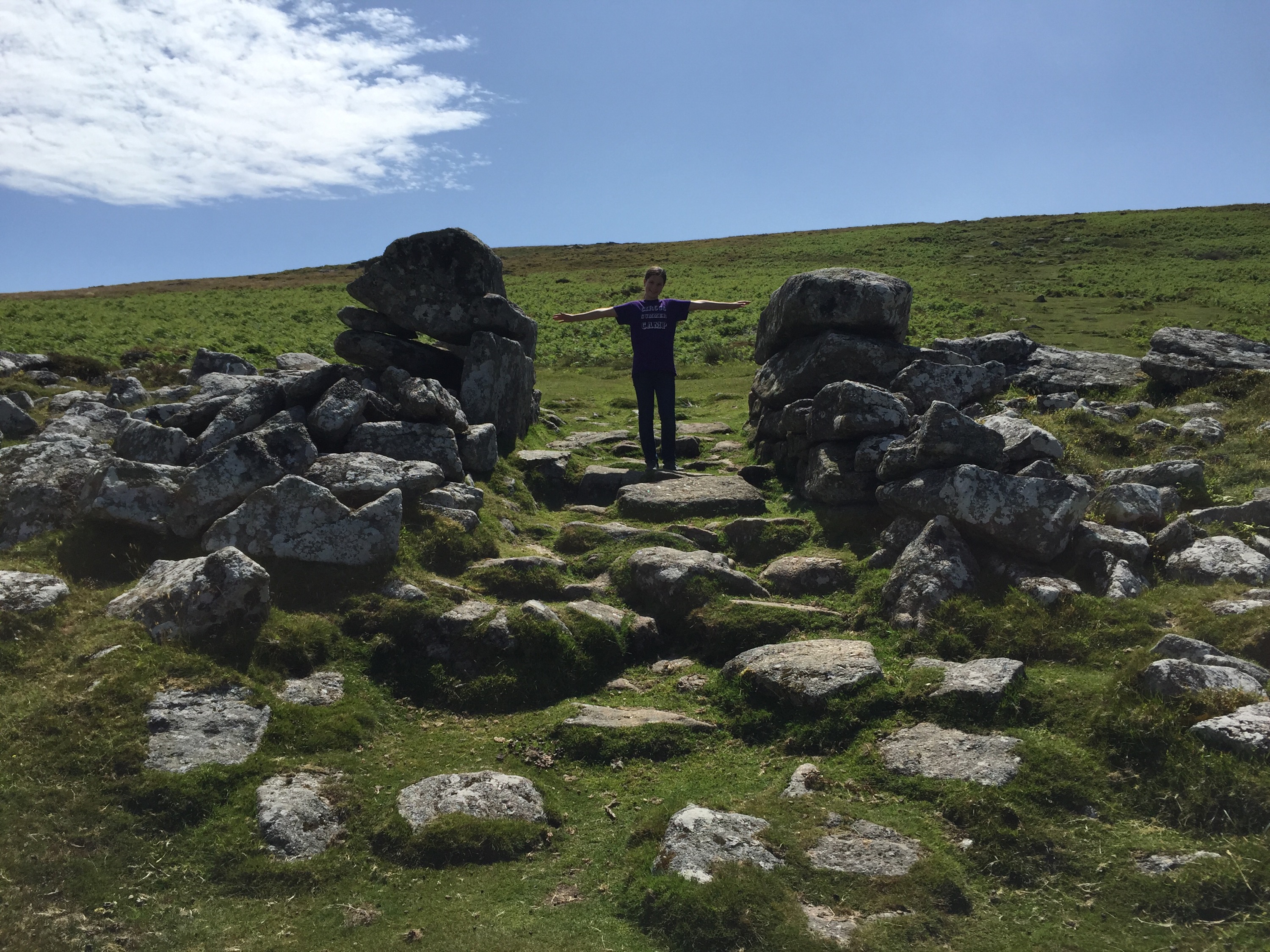
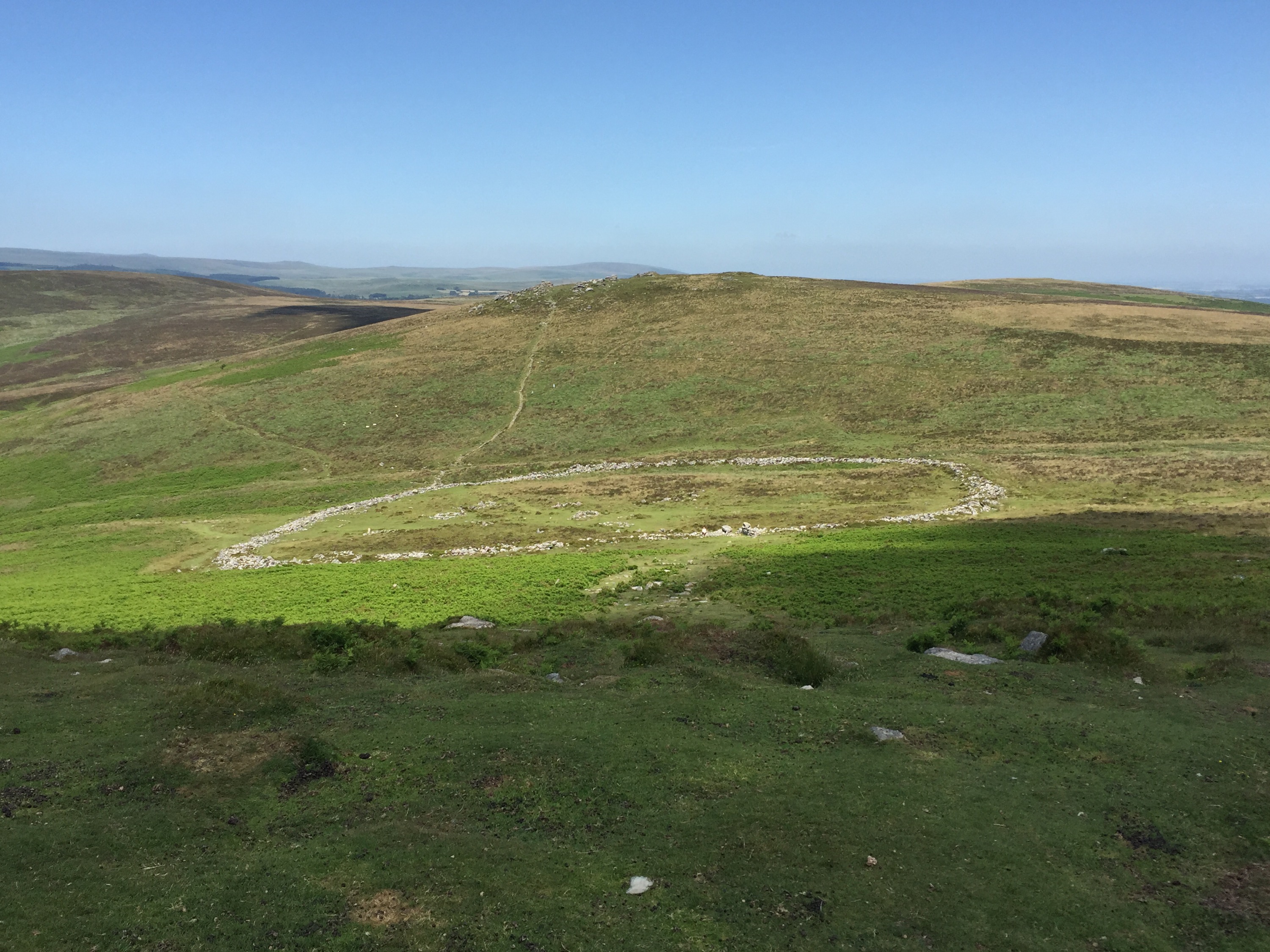
Dartmoor was settled in the Bronze Age and many remains are still visible across the landscape. Alex took us to Grimspound, a ring village with 24 house foundations. From it we hiked up a ridge to see one of three barrows at the top. On the way down we came across a group of hill ponies, more skittish than those we’d seen before.

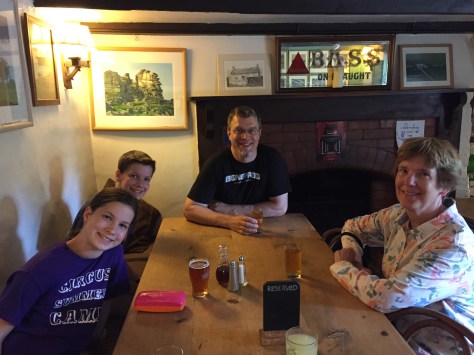
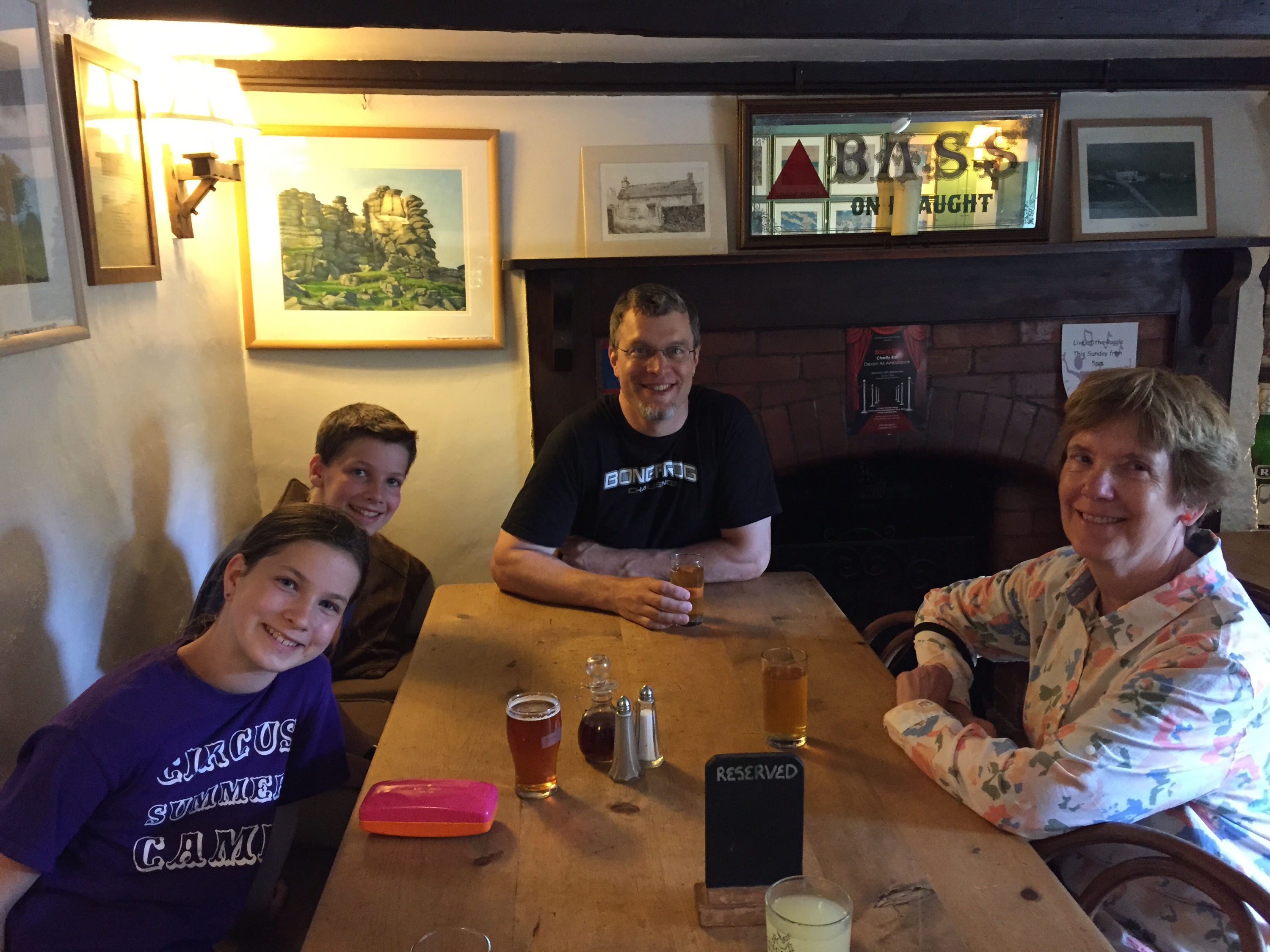
Nothing is very far apart in Dartmoor, but all travel is along winding lanes barely more than one car wide and often bounded by high hedgerows on both sides. We were glad not to be doing the driving ourselves! In the middle of the day we took one of the country lanes to the Rugglestone Inn, a picturesque pub in Widecombe-in-the-Moor, housed in a stone cottage with low ceilings and delicious cuisine.

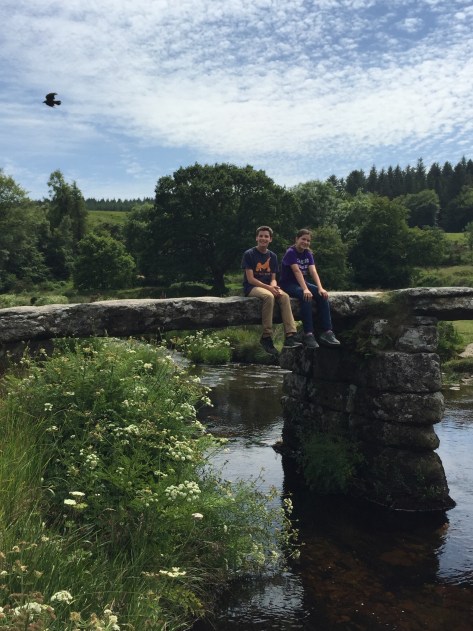
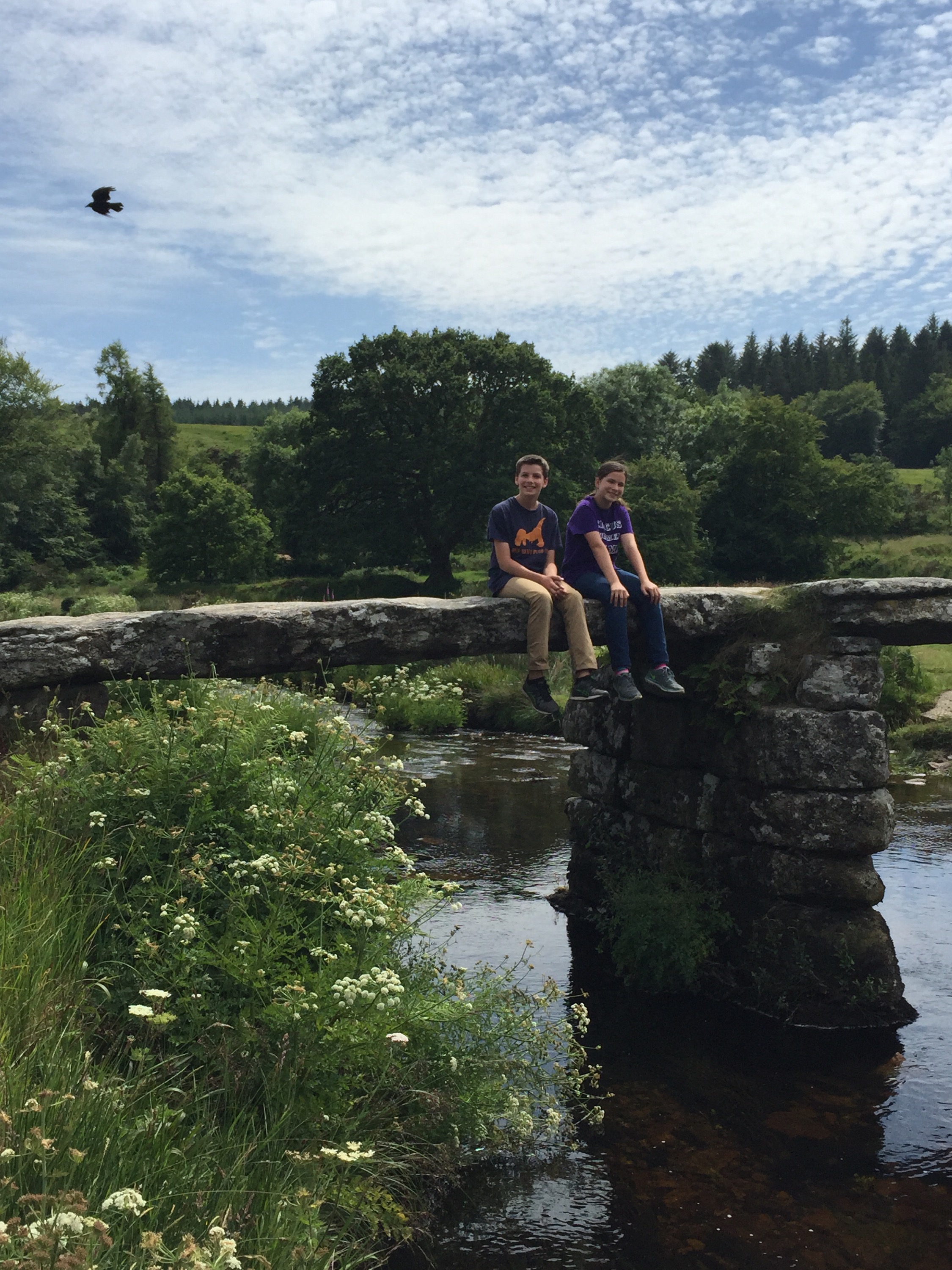
We stopped shortly after lunch in Postbridge to see a fine example of the clapper bridges found all over Dartmoor. It’s hard to imagine the effort required to move into place the giant granite slabs that span the river – and all this done some 800 years ago.

The weather was gorgeous (not always true of Dartmoor, which can be quite grey and bleak with cloud cover and wind), but we got a little sense of the potential desolation across the moors with a visit to the grim Dartmoor Prison (well, actually, we could only visit the prison museum because the prison is still in use – and we weren’t eager to become inmates!) U.S. and French prisoners of war were housed in the prison during the War of 1812.

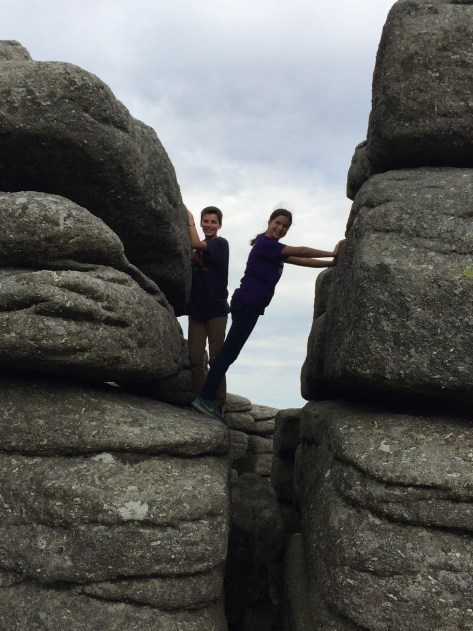
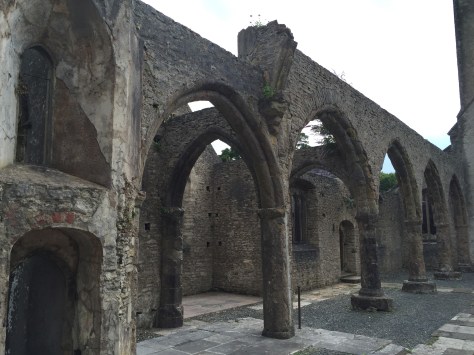
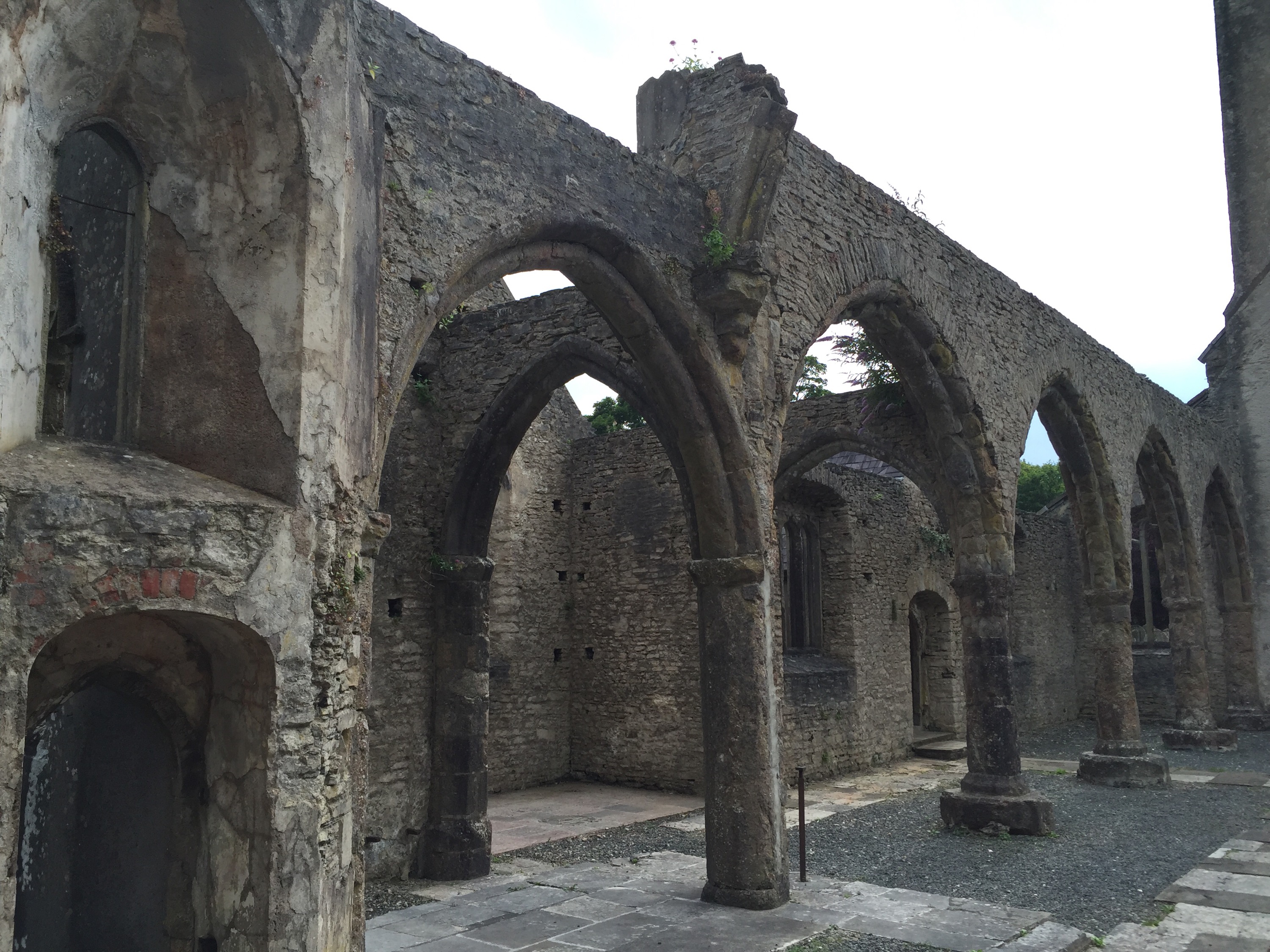
After a visit to (and obligatory climb on) Combestone Tor, we said goodbye to Dartmoor with a surprise visit to a haunted churchyard. Buried there lies an infamous nobleman who served as inspiration for Conan Doyle’s “Hound of the Basketvilles”; apparently the locals were concerned he might haunt them after death so took measures to ensure that his soul would stay put in the tomb. Nevertheless, the adjacent church has burned twice and was left in ruins after the most recent fire in 1992. Spooky…

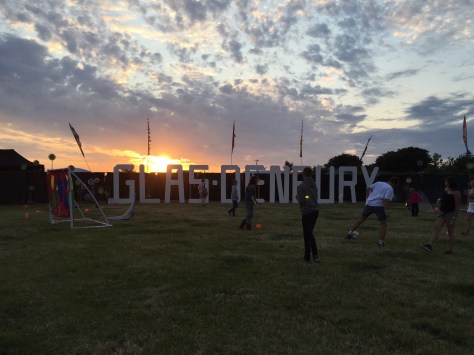
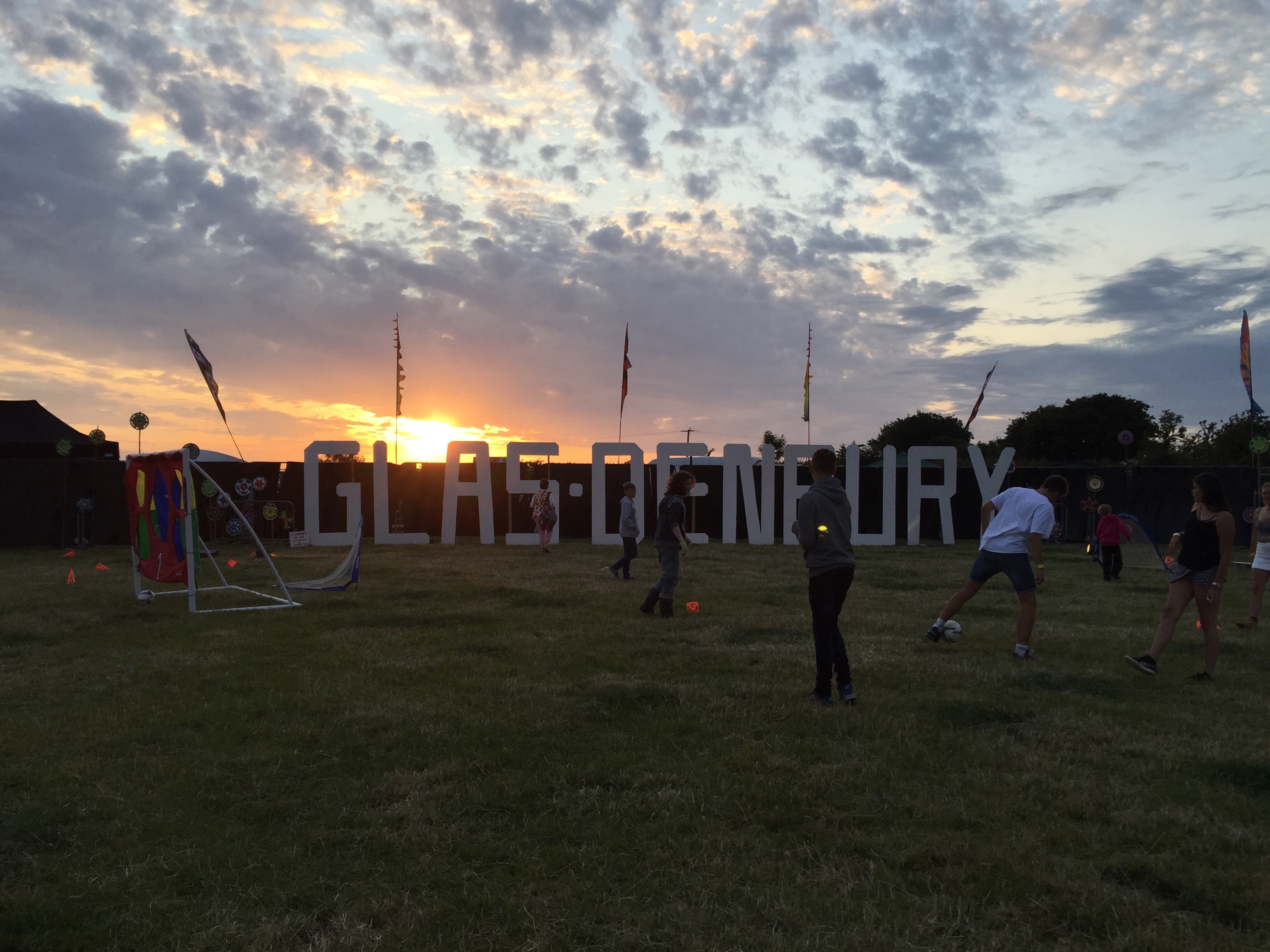
We capped off our day and our trip with another festival – this one located in the village of Denbury and called “Glas-Denbury” after the larger and more famous music shindig in Glastonbury. The festival featured a nice slice of vintage and local charm, including an imaginarium, flea circus, mechanical bull, and flame jugglers. It also had mouthwatering food, stalls with crafts, and four music tents going at once. Alex and his kids were wonderful hosts to our whole family. A fitting ending to our memorable fortnight in England! 


Train, Boat, Boat, Train, Train – all to end up where we started…

Tension was in the air due to strikes by railroad workers planned for today, since you can see by the title that trains featured large in our day. Luckily, our routes were unaffected so the day went without a hitch.

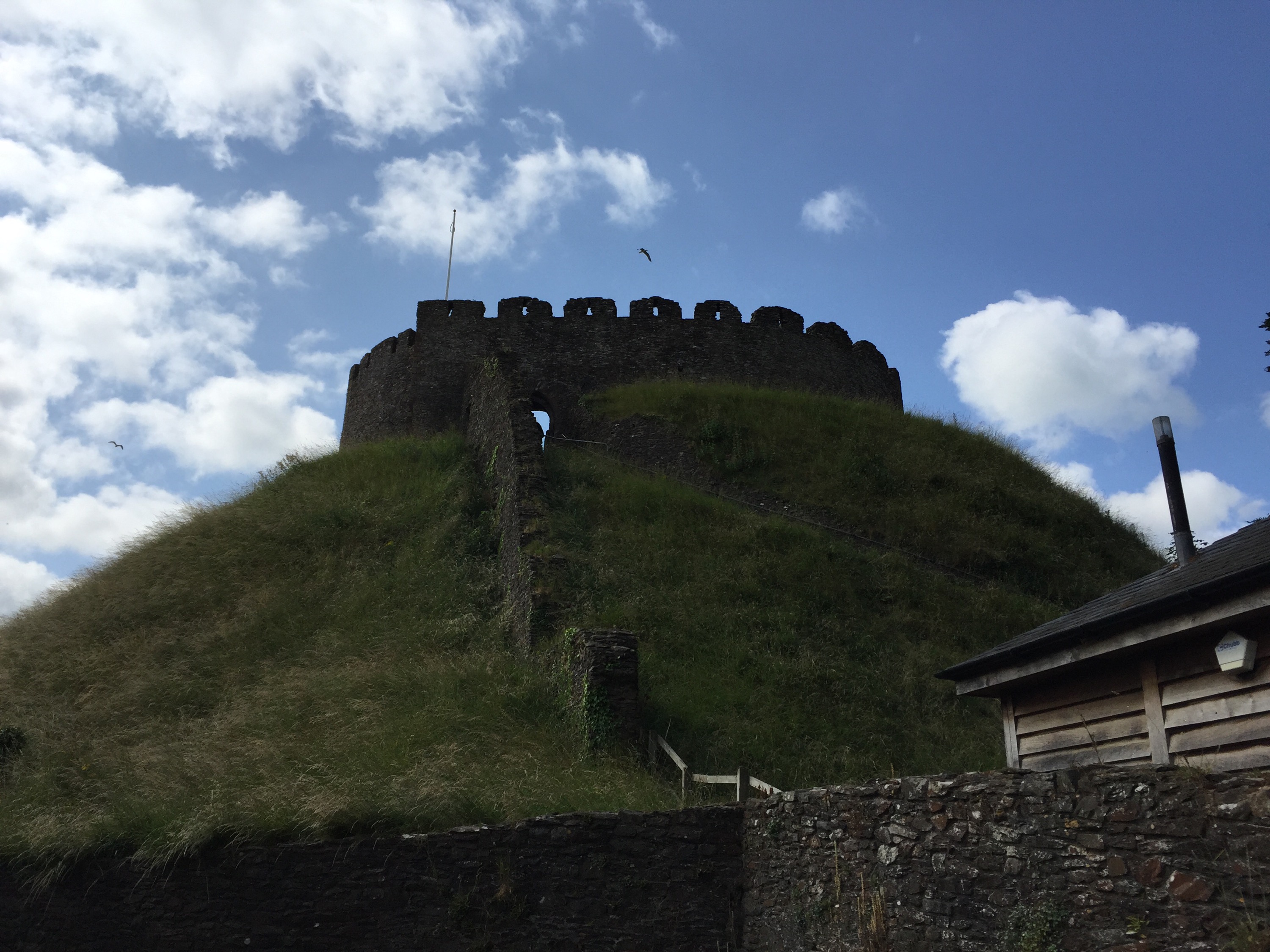
Train 1: Exeter to Totnes, a Saxon town overlooked by a Norman motte and bailey castle still in good condition. Only time for a glimpse of the town proper as we had a riverboat to catch.

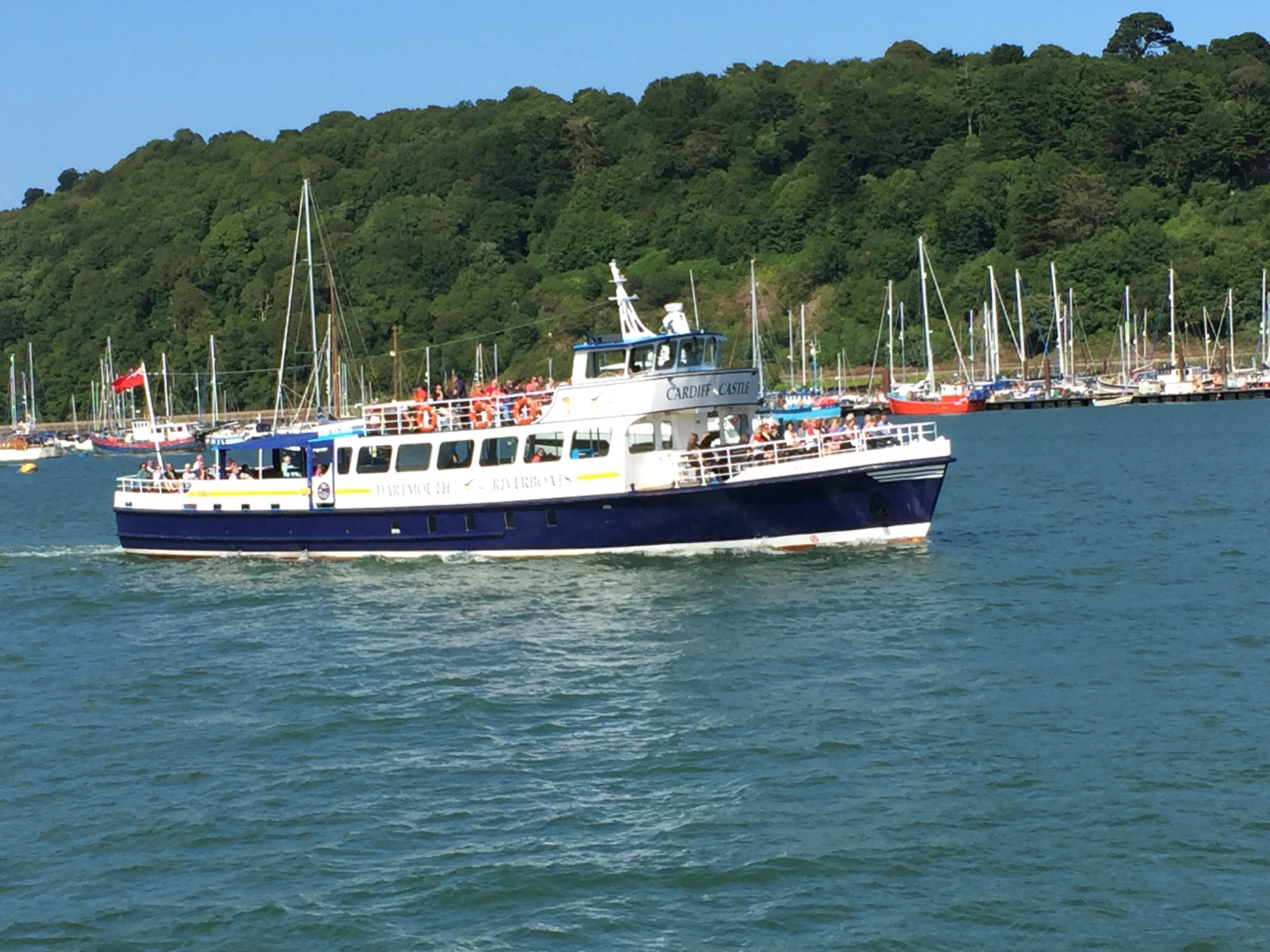
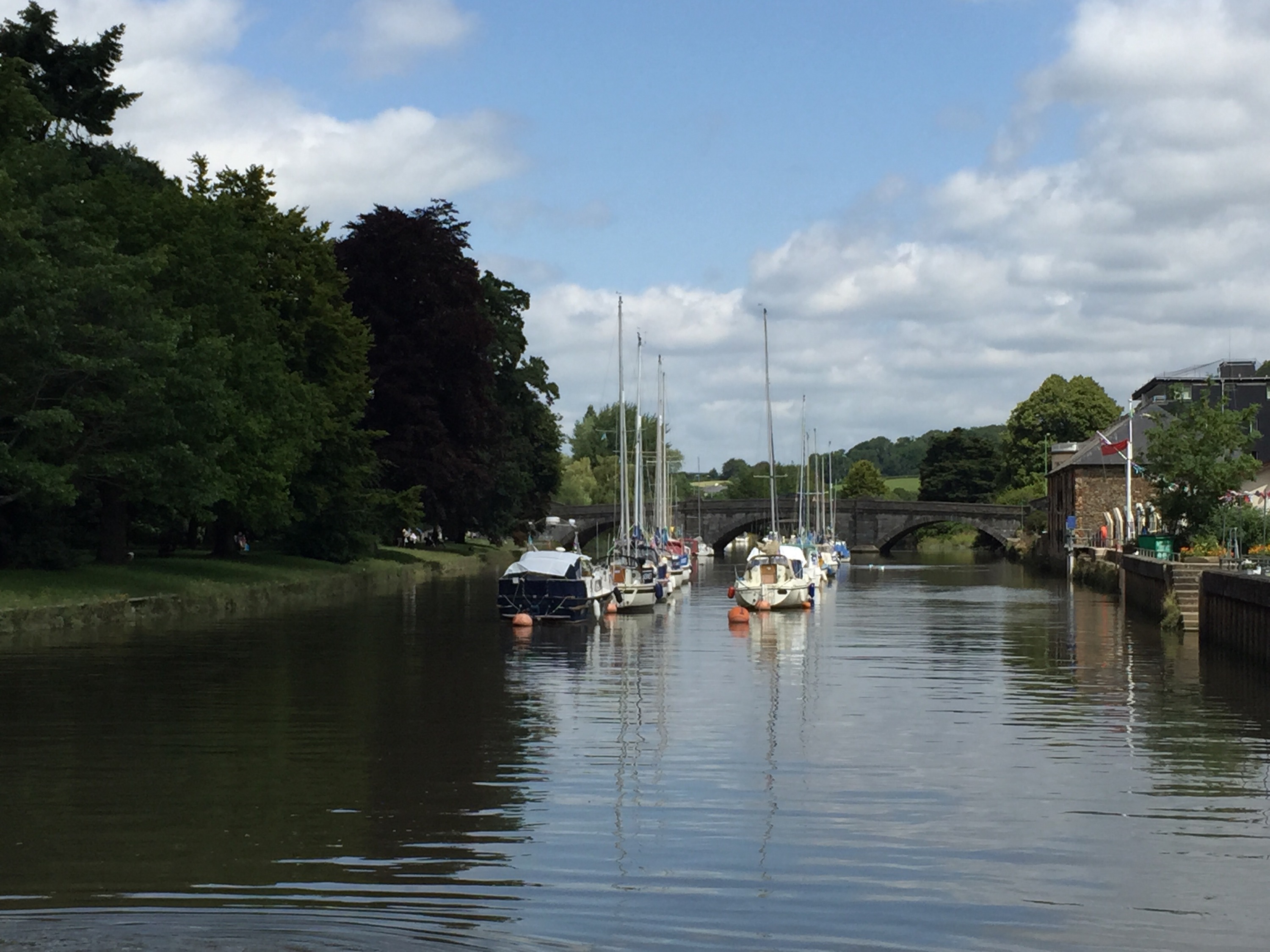
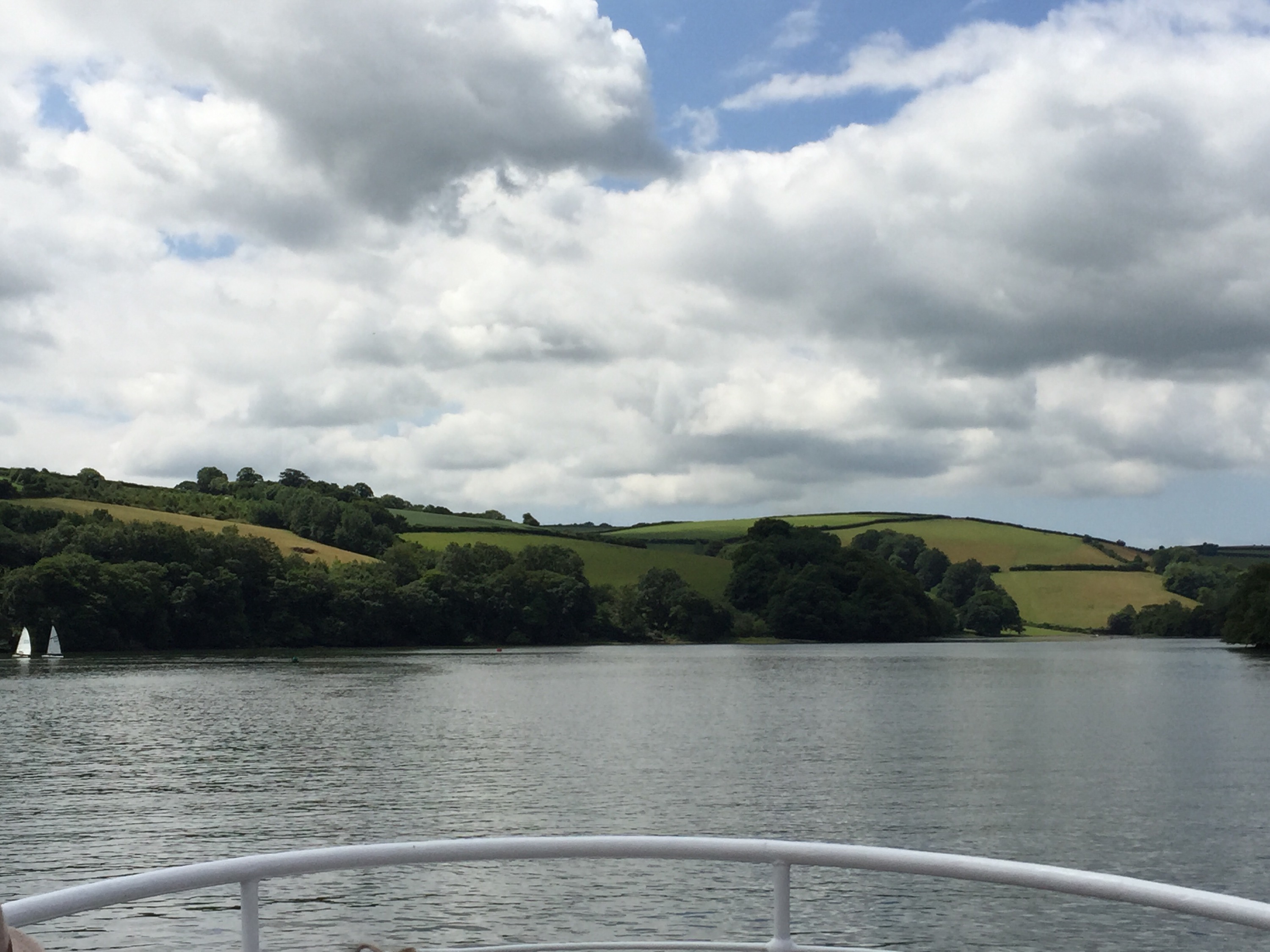
Boat 1: Totnes to Dartmouth via river ferry. Ever-changing views of the English countryside plus witty commentary by the captain (guaranteed to be mostly true!)

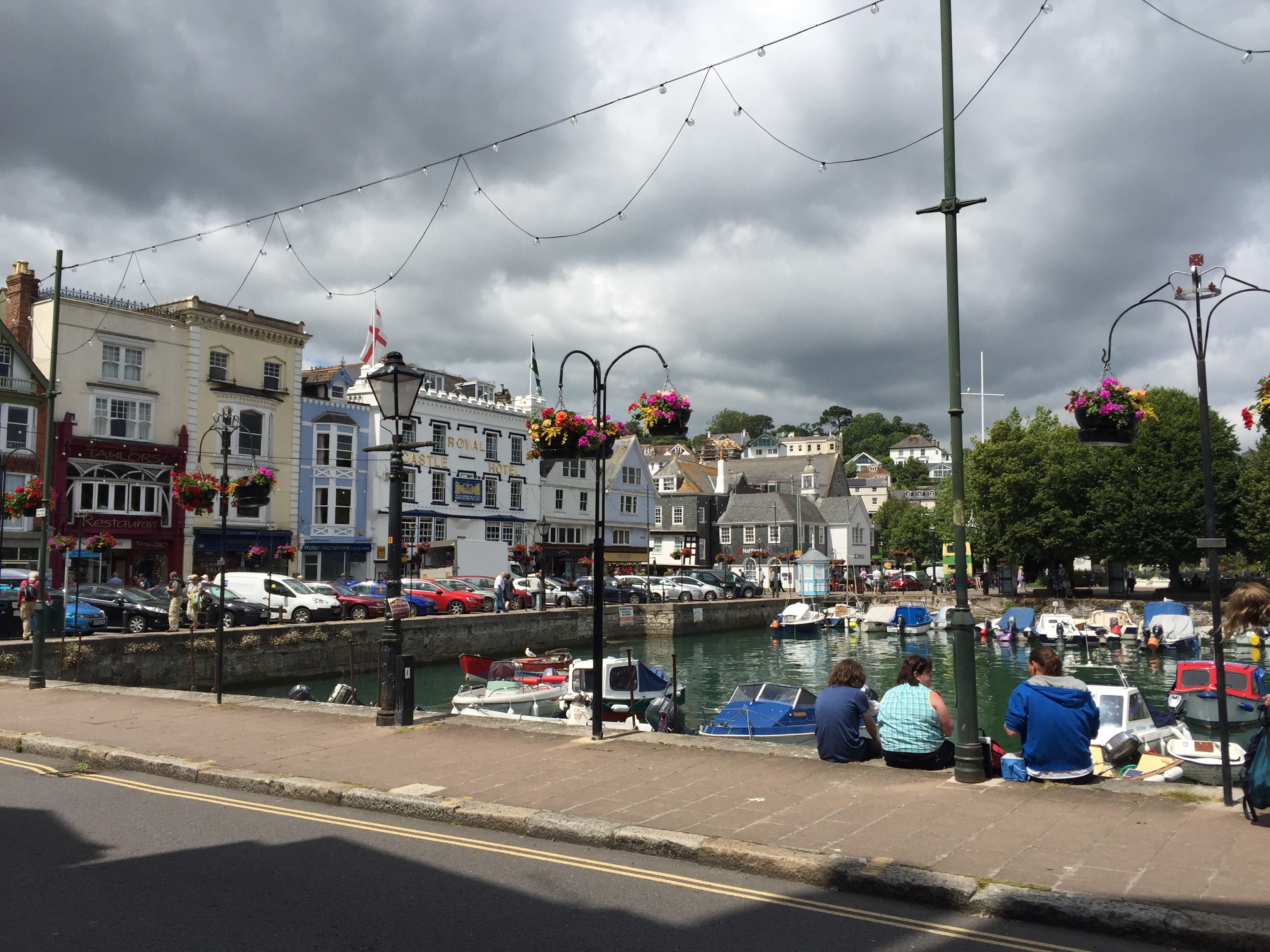
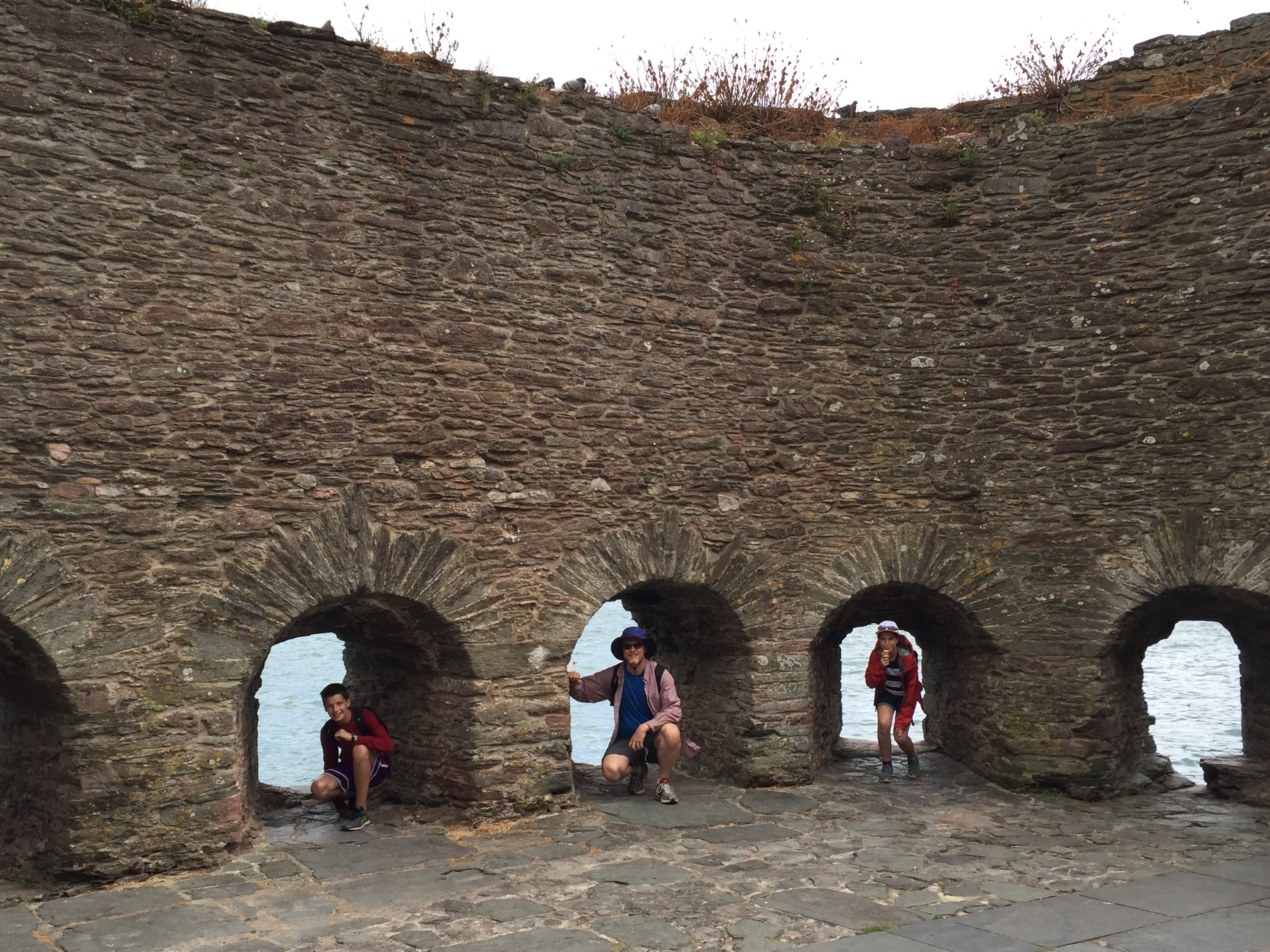
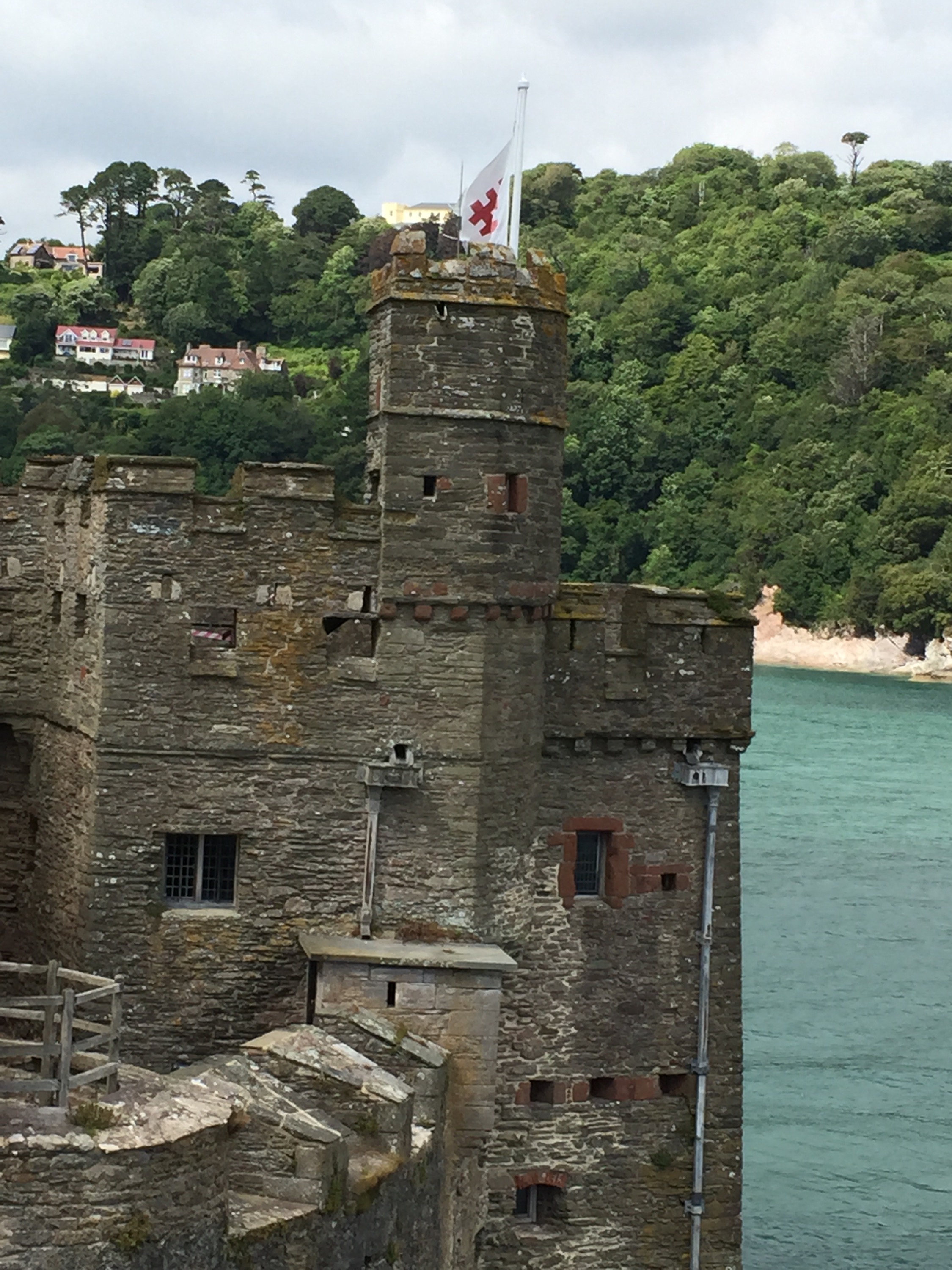
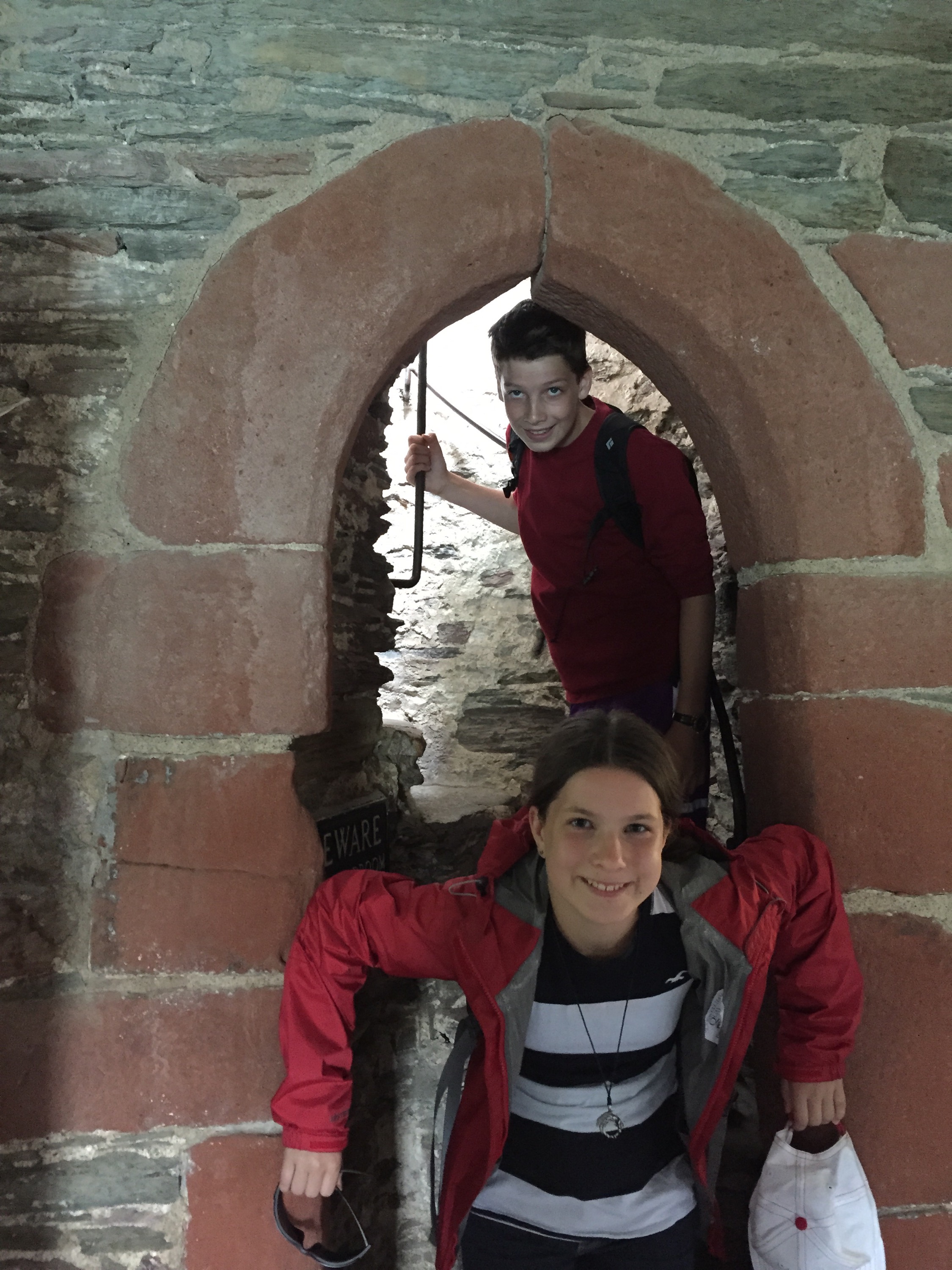
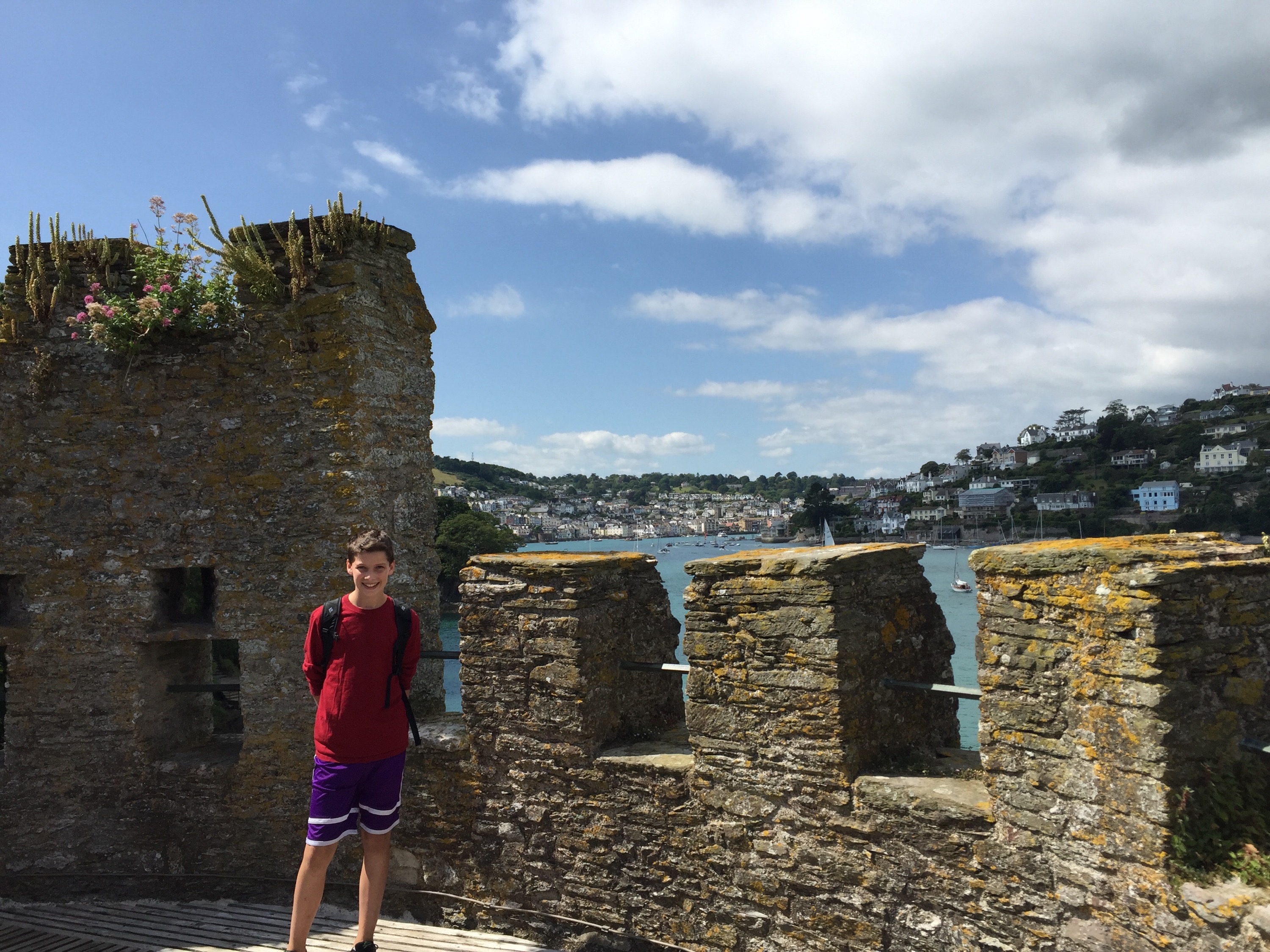
Dartmouth itself is a bustling tourist destination with gardens, a harbor, shops of all kinds, and – of course – a castle. Nick enjoyed the full-size Newcomen steam engine housed in the tourist information building. The family explored the coastal defenses in the area, representing a range of technology from the earliest cannons to WWII artillery. Dartmouth Castle was nicely restored with wooden floors on multiple levels and interpretive displays. It also afforded great views back to Dartmouth and Kingswear across the river.

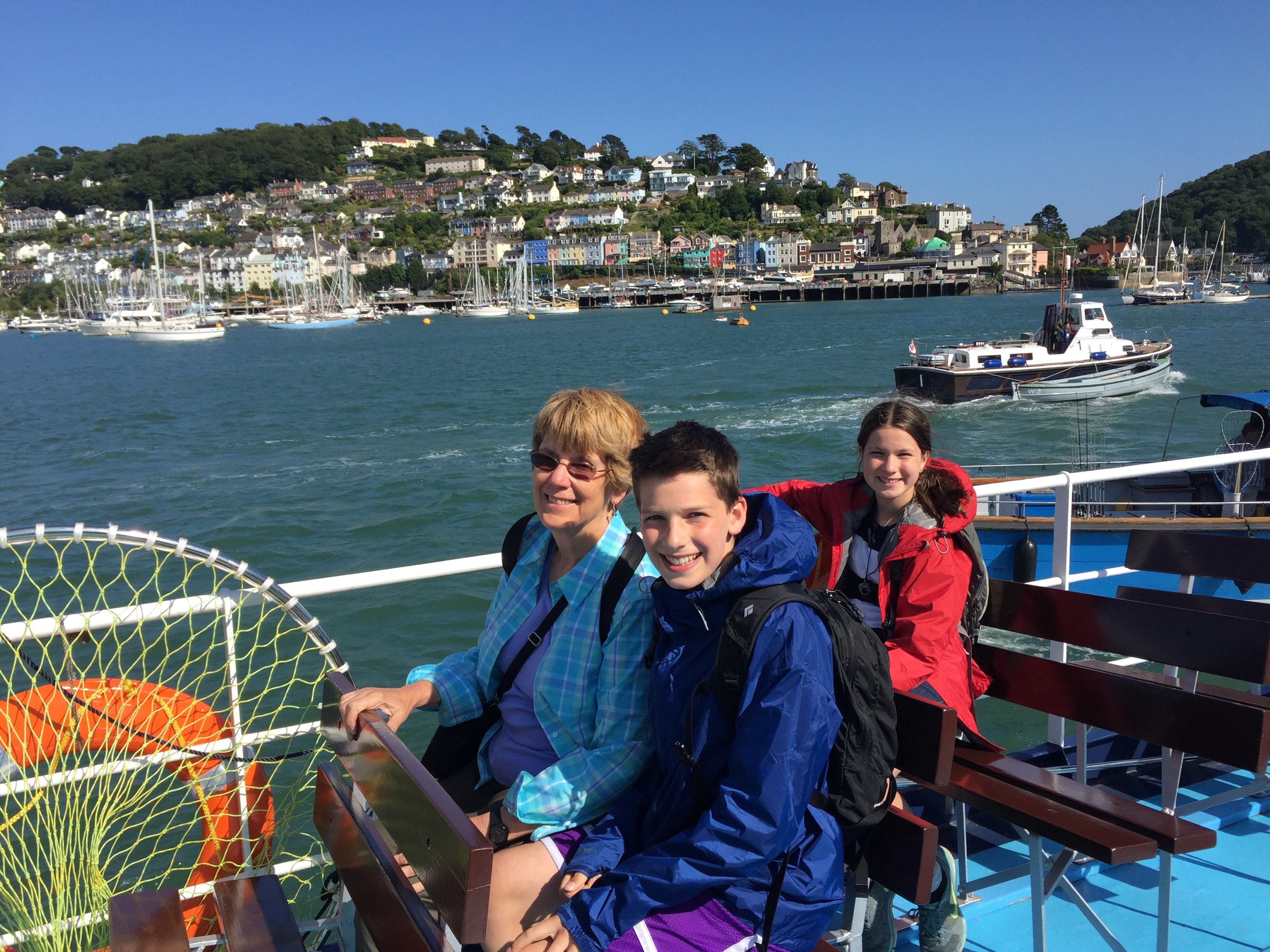
Boat 2: Dartmouth to Kingswear via ferry, a journey of under five minutes!
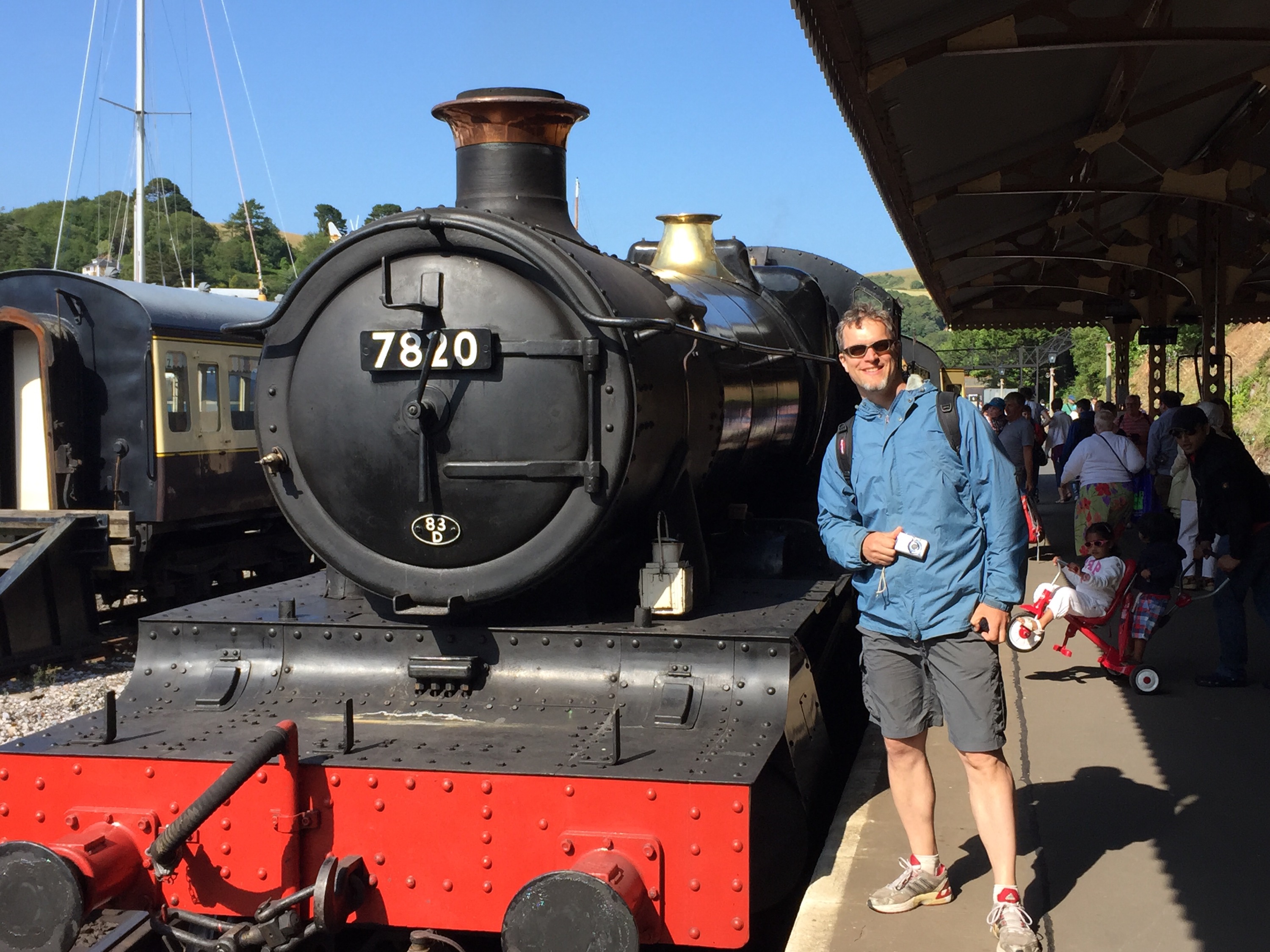
Train 2: Kingswear to Paignton by steam locomotive. From the inside it was hard to tell what was pulling the train except when tunnels trapped the steam and smoke and of course there was the characteristic chuff-chuff-chuff…

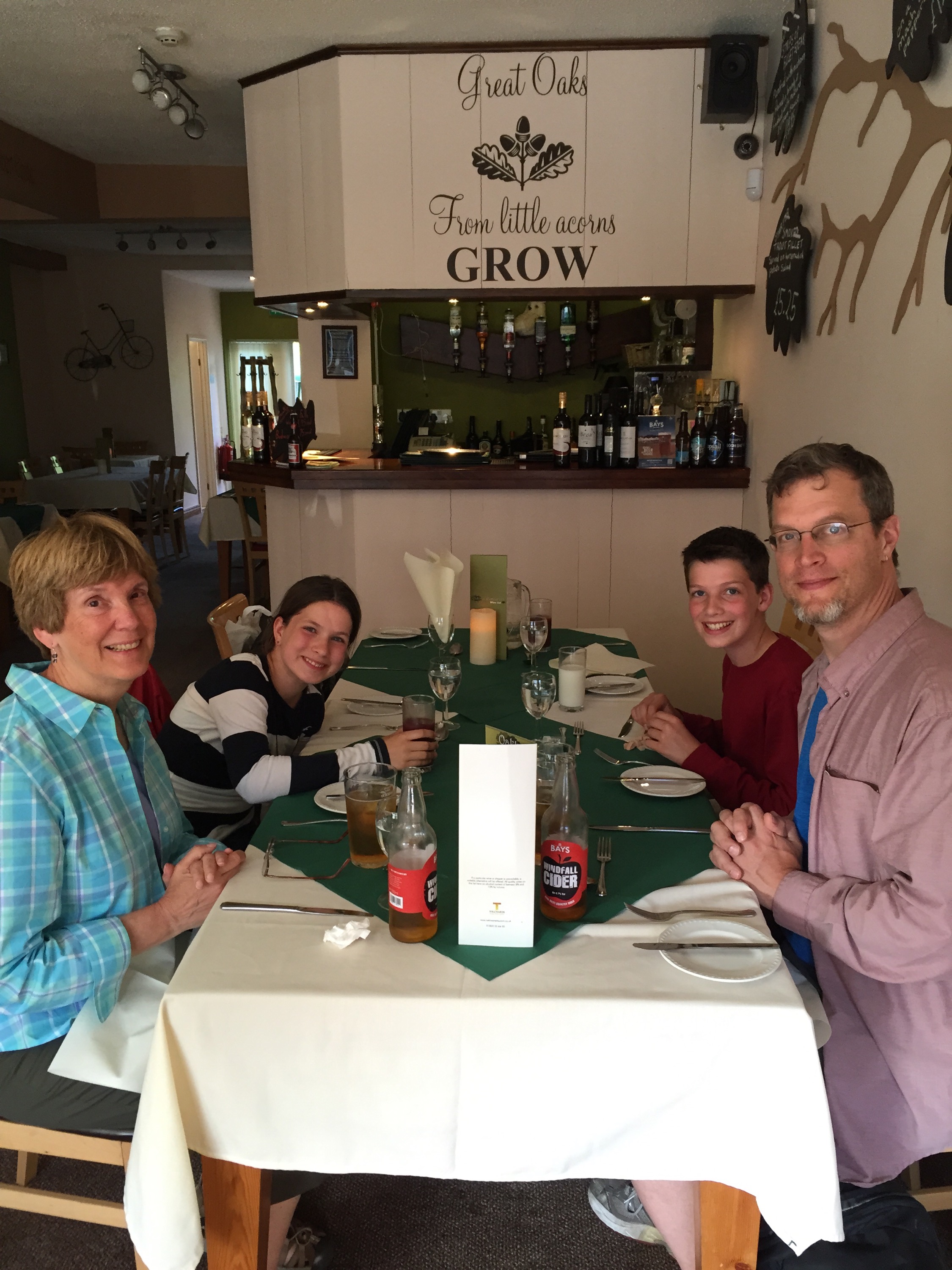
We didn’t see much in Paignton itself, but had a lovely family dinner at the newly-opened Oak Tree, based on a recommendation of a friendly gent at the train station.

Train 3: Paignton to Exeter, followed by a leisurely walk back along Howell Road (Exeter’s longest) back to our B&B.


Experiencing Exeter

We hopped aboard a morning train from Barnstaple to Exeter, and dropped our luggage at our final lodging for the trip, the Raffles Guest House, conveniently located near the city center.

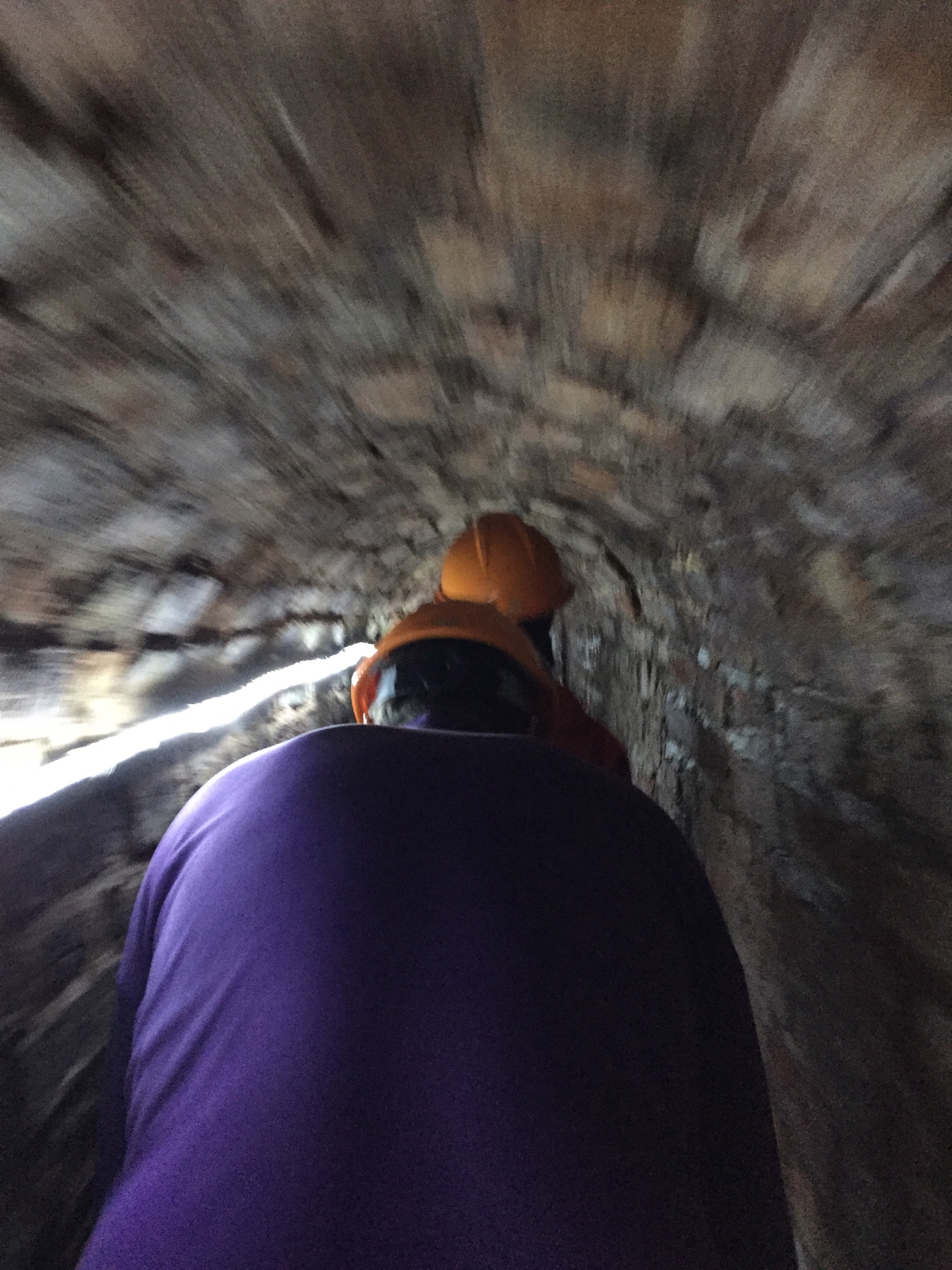
Exeter was a very  wealthy town in the Middle Ages from the wool trade and many structures still date from this time, although a lot was destroyed during WWII.  One interesting feature that was not affected is a network of underground water supply tunnels built to carry fresh water into the city.  These are now visitable in small groups for those not affected by claustrophobia!  The passages certainly made an unusual way to start a city tour.

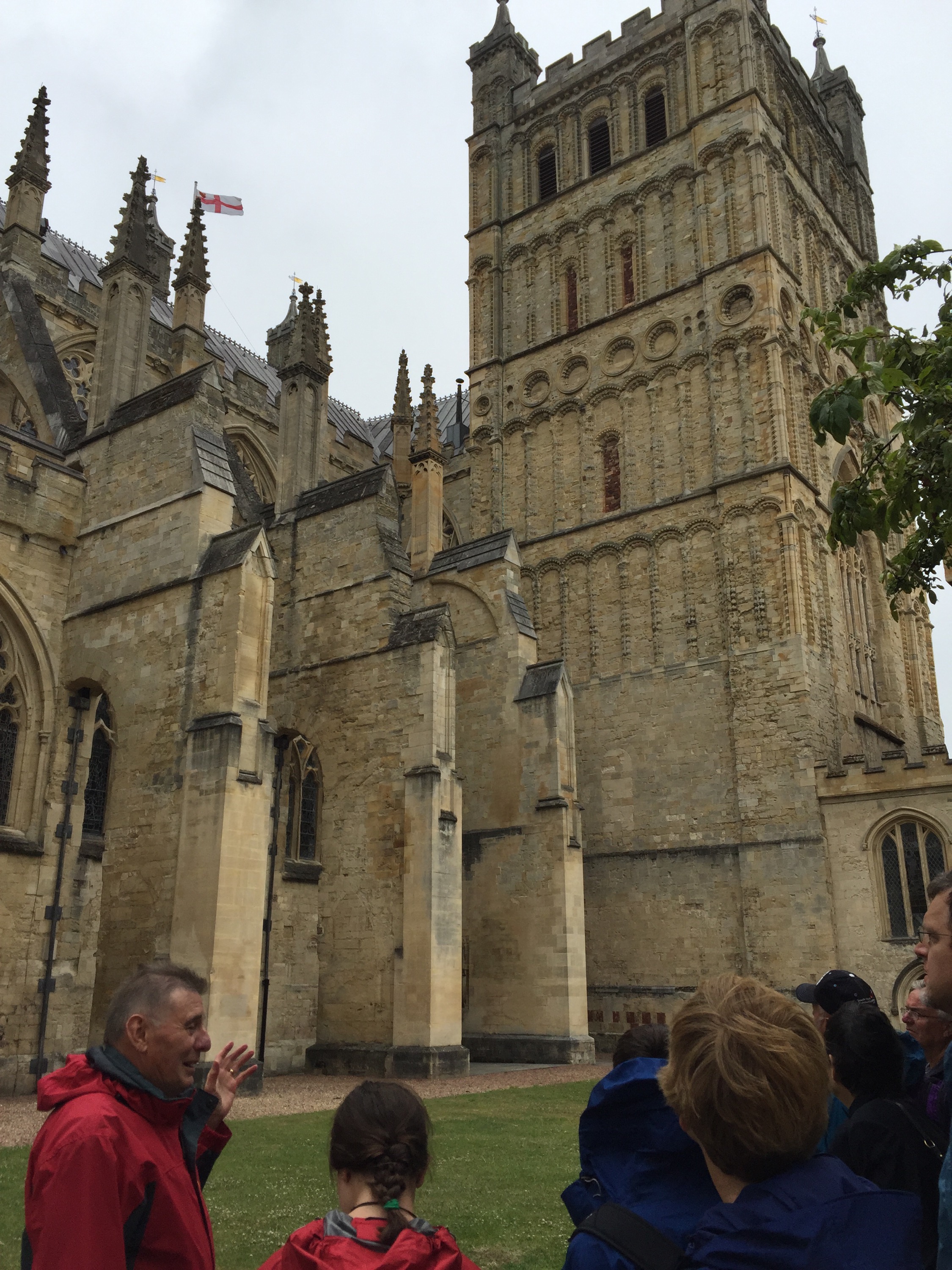
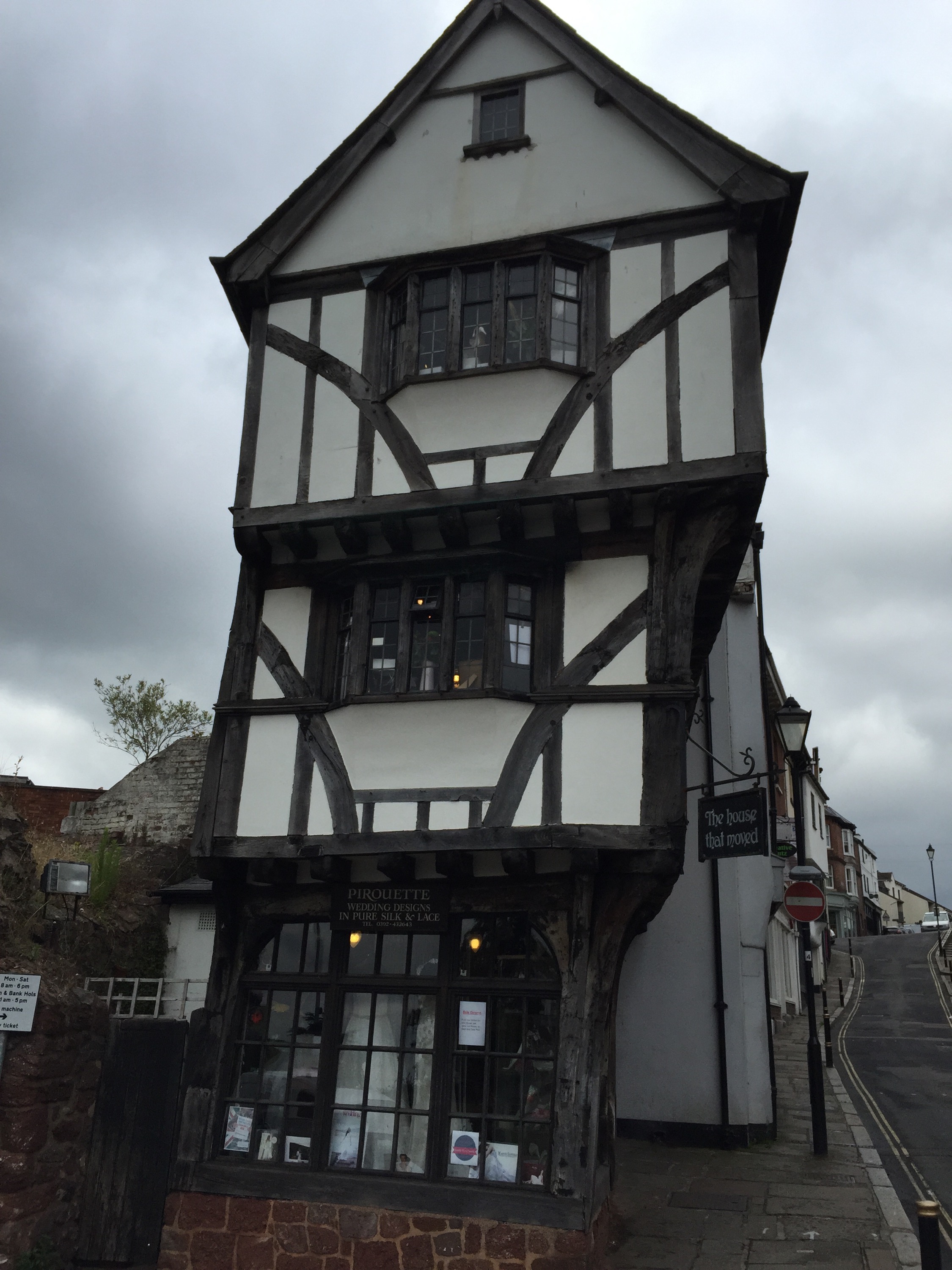
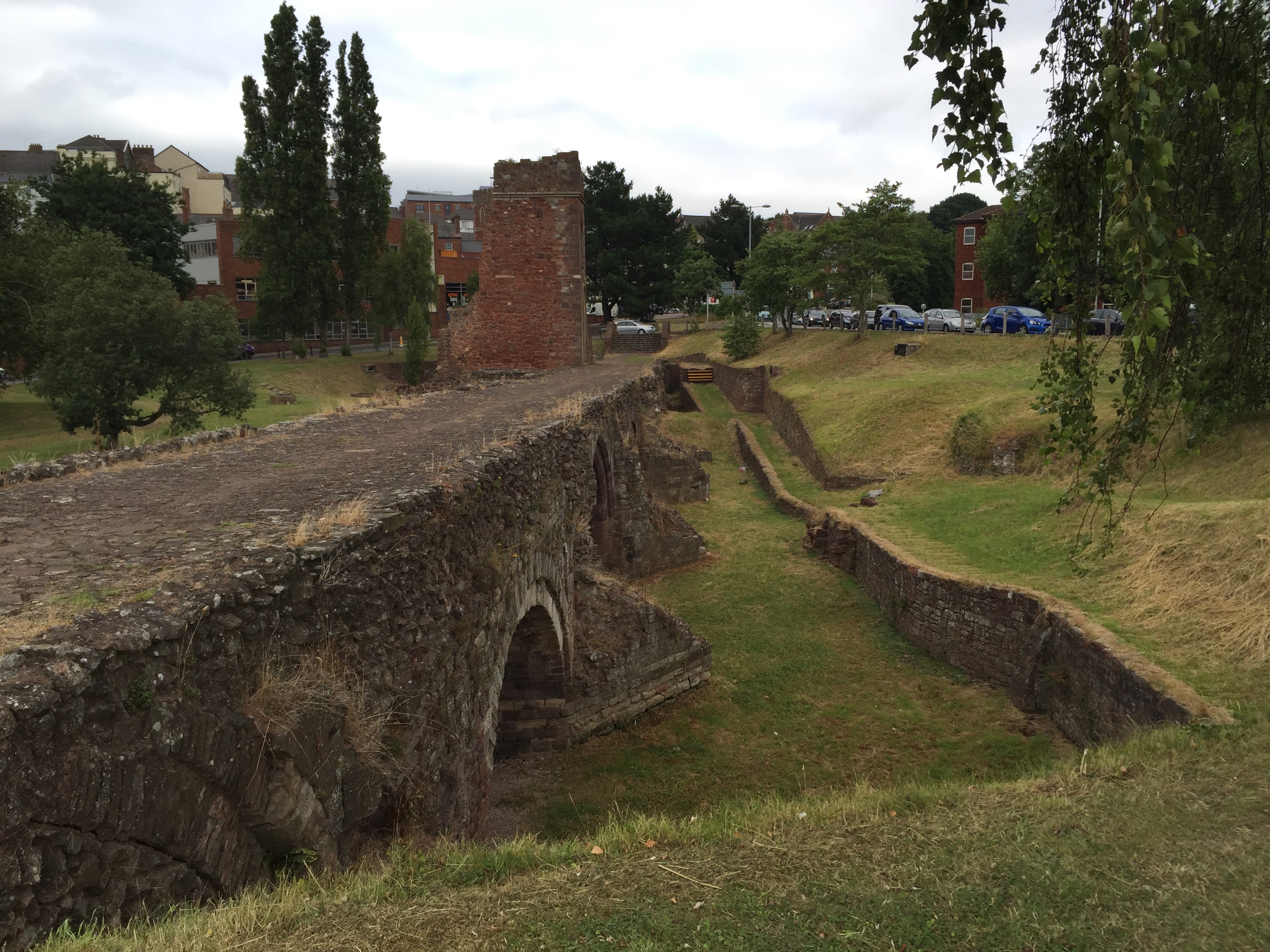
After lunch at a friendly crepe stand, we took a more traditional (“Red Coat”) walking tour above ground to learn more about medieval Exeter.  Besides a number of fine half-timbered buildings and the famous Exeter Cathedral, we saw the excavated remains of the first stone bridge built in the area.  It is contemporaneous with the original London bridge and was similarly garnished with shops and buildings when in use.  

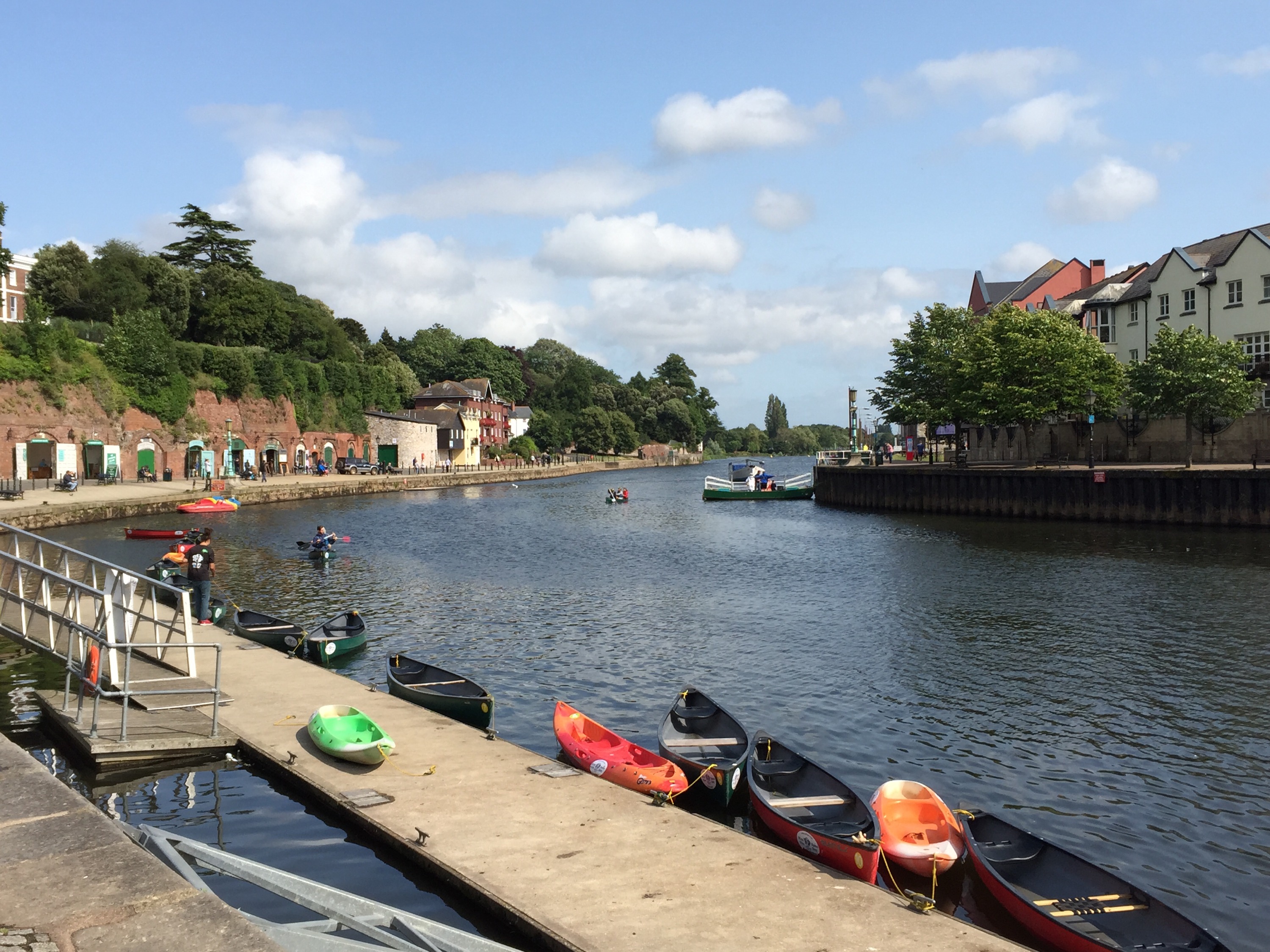
Post-tour, we stopped for tea along the quay, where we saw white swans and a hand-powered ferry.  The sun finally made an appearance, making the scene quite pleasant indeed. Afterwards we split up, with one group going to Marks and Sparks (bigger than the one in Barnstaple) while Nick made a self-guided circuit of the city walls.

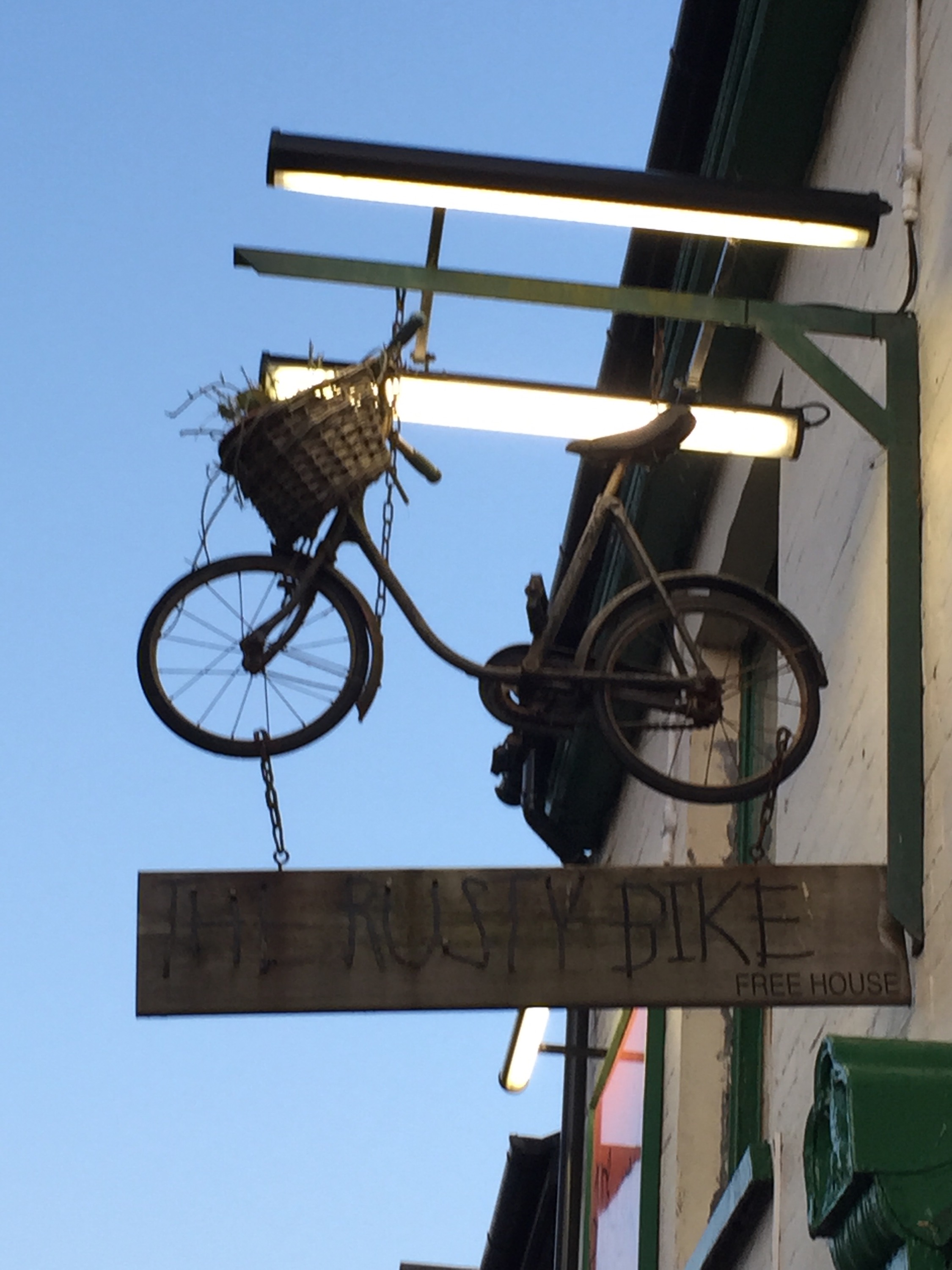
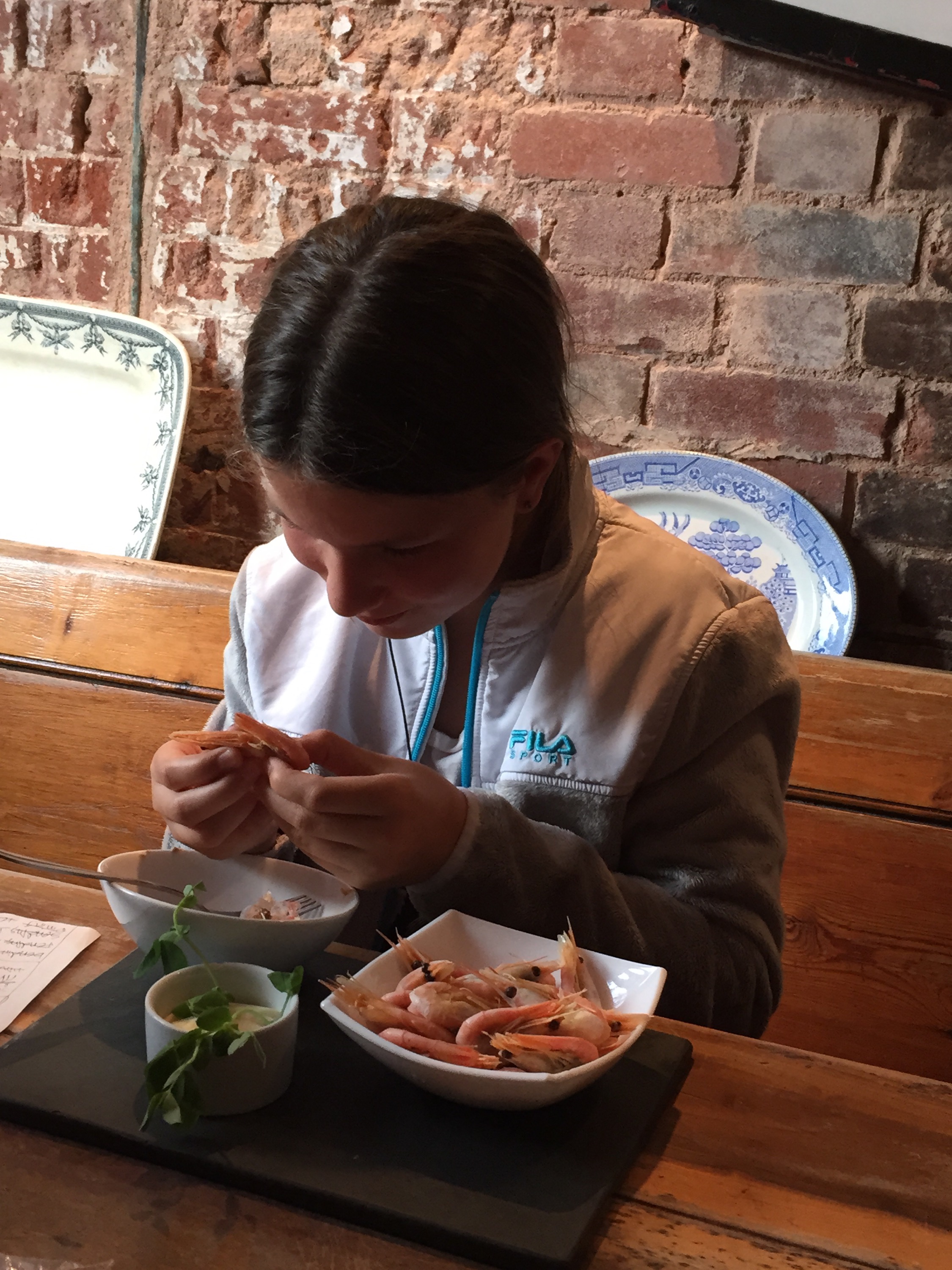
Our final stop was a highly-recommended pub called the Rusty Bike, right around the corner from our B&B.  The food was delicious; Rowan was a champion eater of shell-on prawns, but Nick was the only one to enjoy the “scrumpy” cider (a local specialty with an unusual nose).


Ben Turns Thirteen!

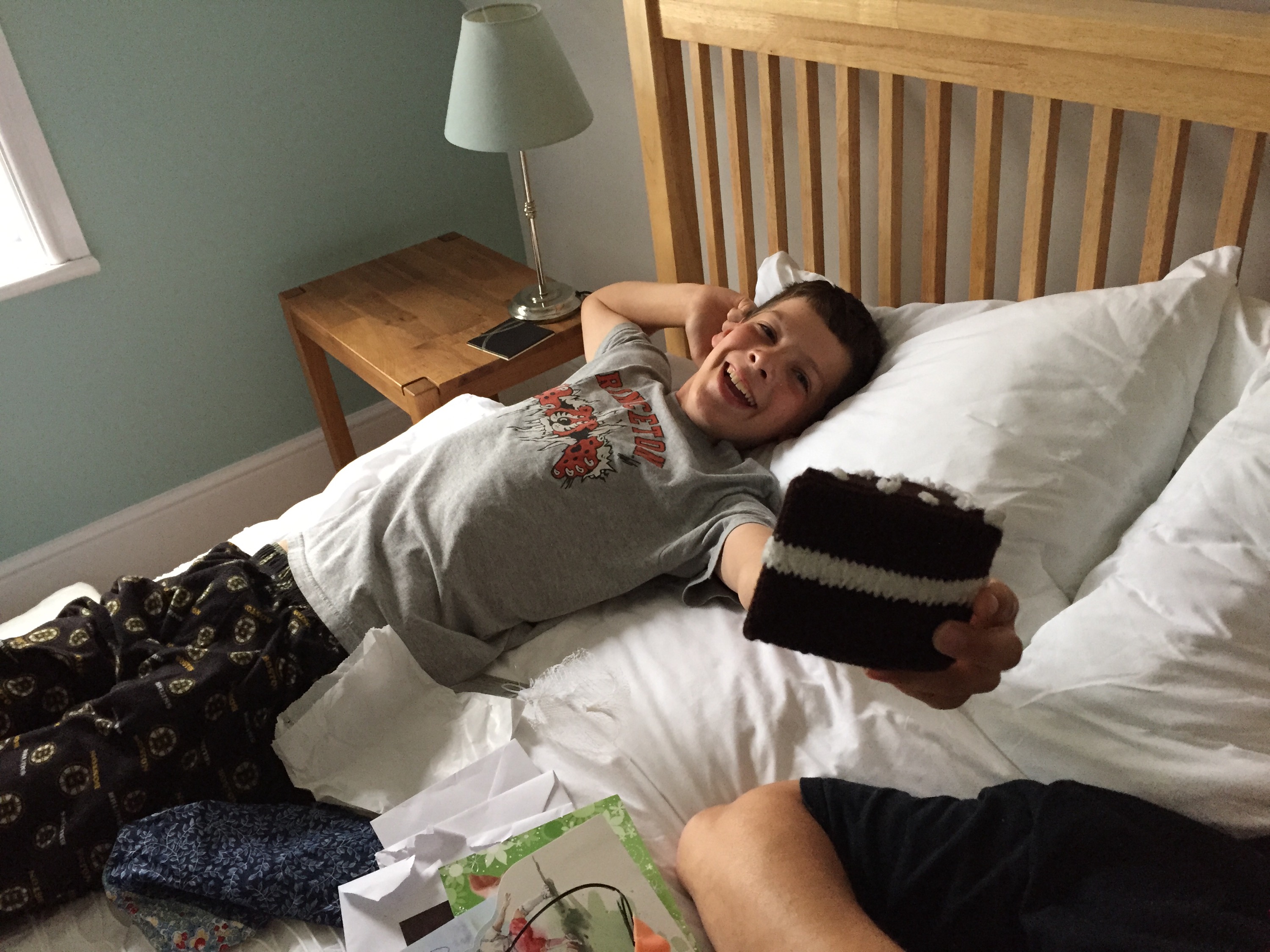
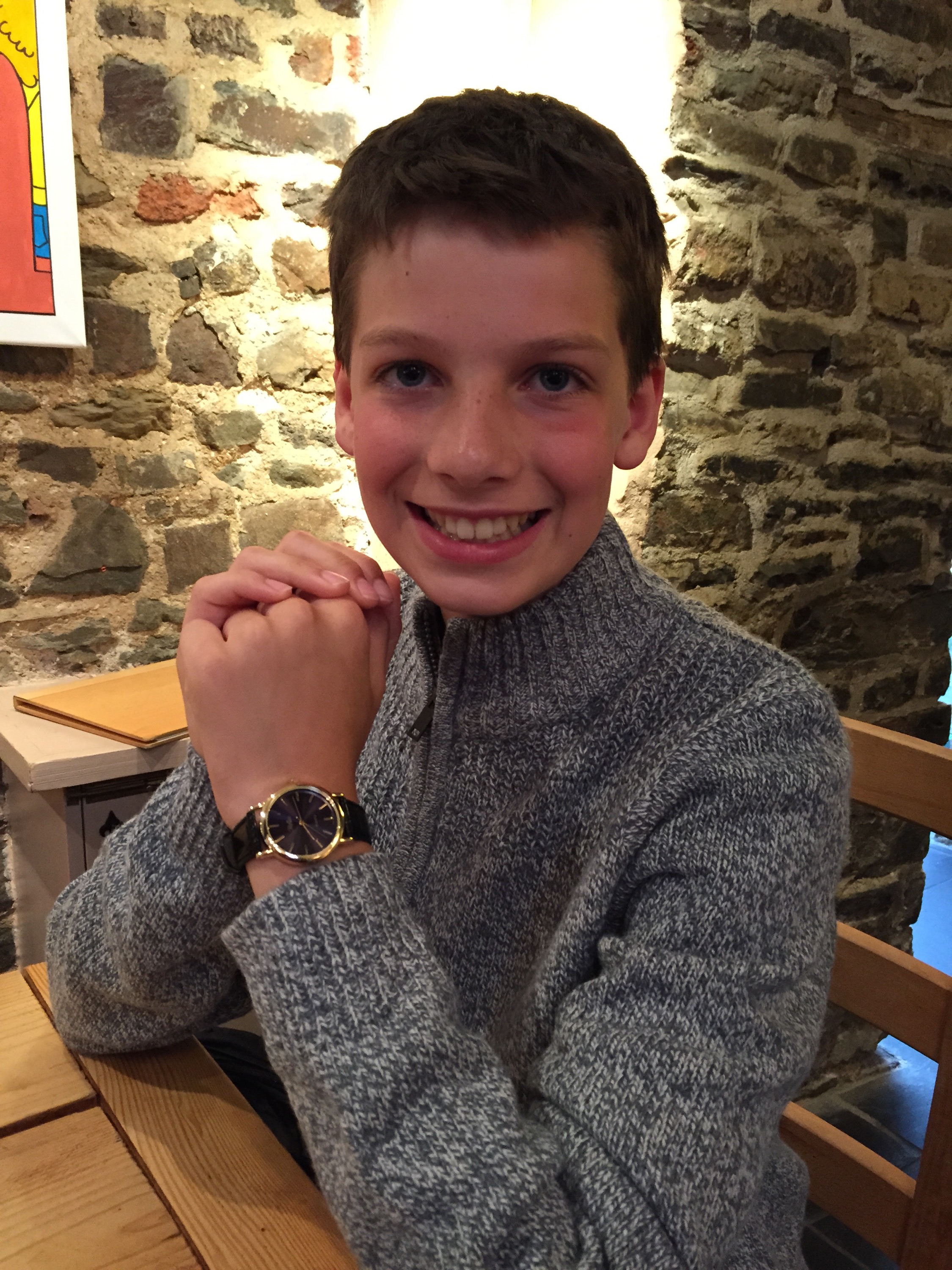
Where have all the years gone?  Ben turned 13 today so we now have a teenager in the family.

We started the morning with festive decorations and cake in bed (the knitted sort – good for travels), followed by real cake at breakfast.

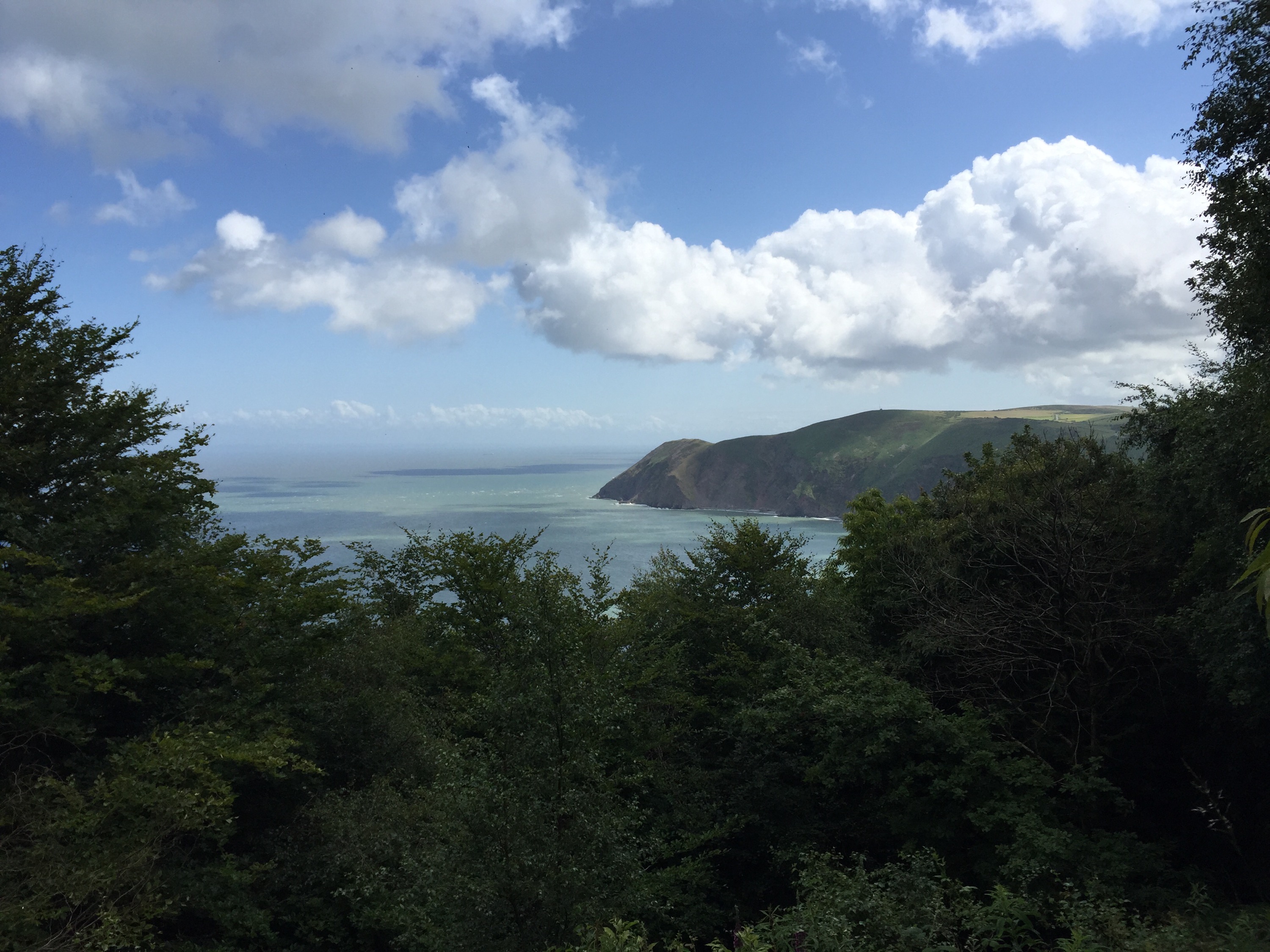
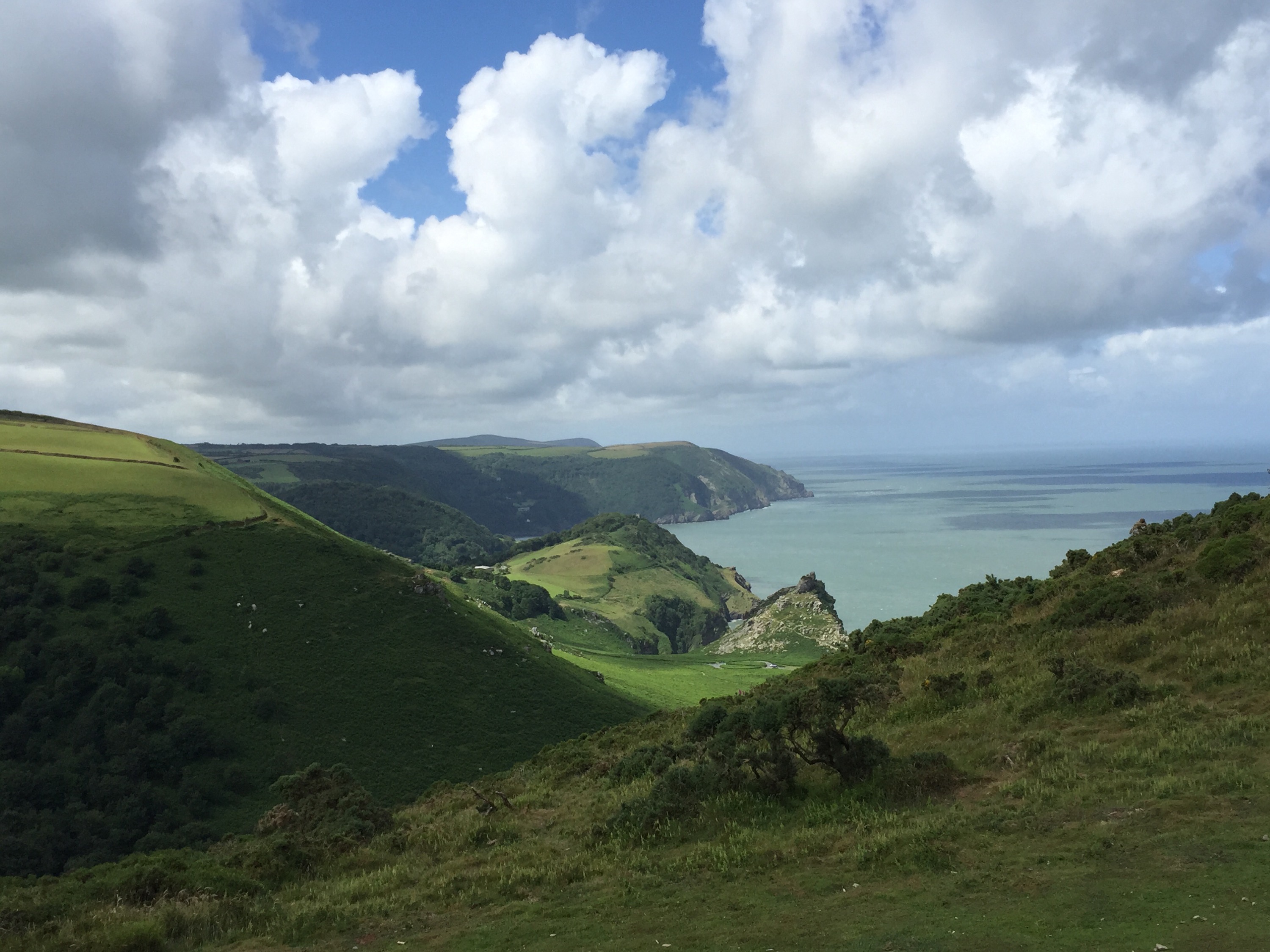
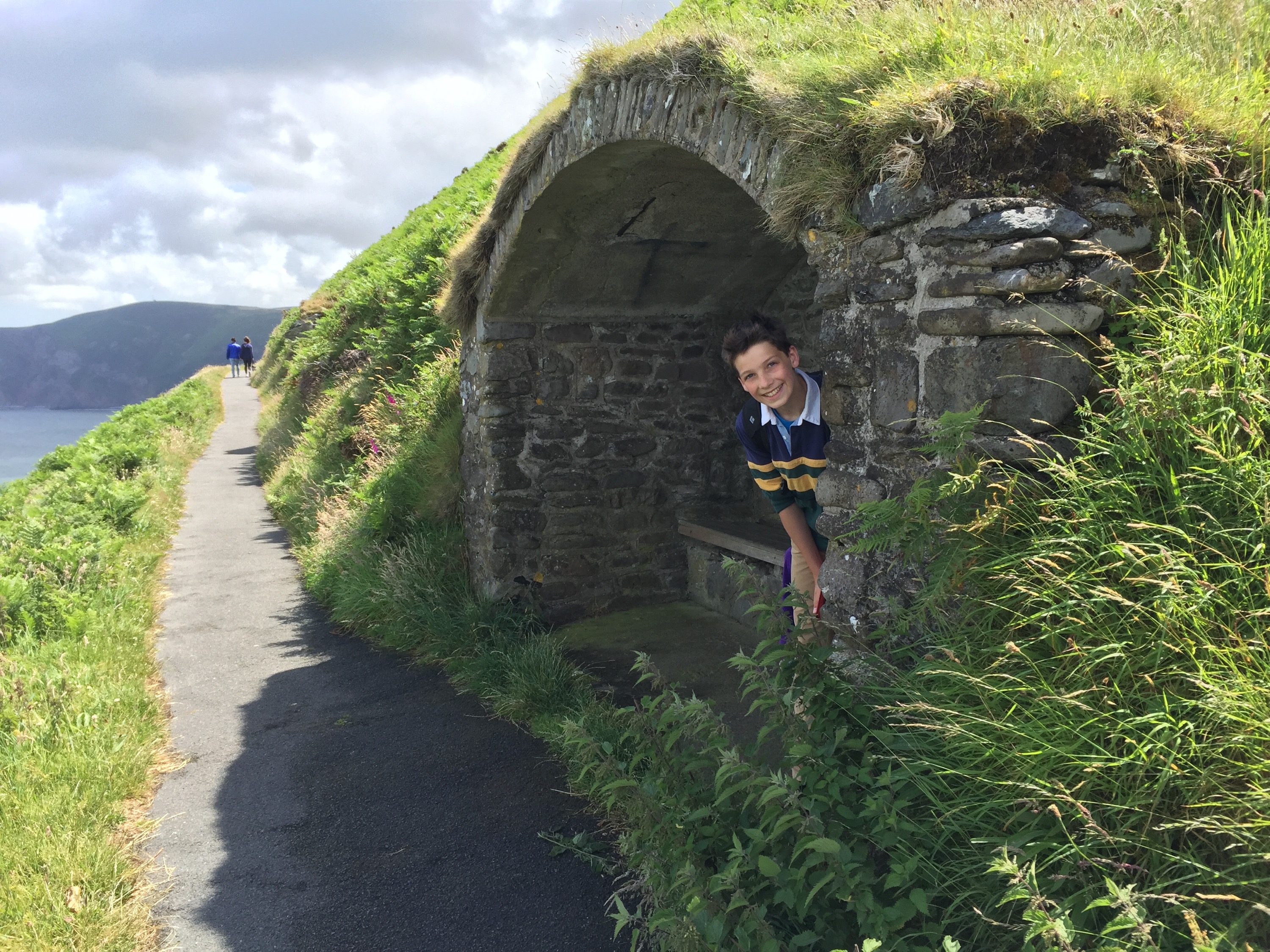
The plan for the day was to visit Devon’s north coast, in particular the twin villages of Lynton and Lynmouth, separated by a mere 500 feet of elevation.  The area is known for some of the best walks in North Devon and is adjacent to Exmoor National Park.  We chose to hike the coast path, but first paid a visit to the Valley of the Rocks via Hallerday Hill – pretty striking views in all directions and dramatic clouds to boot.  We could see Wales (not whales) to the north across the Bristol Channel.

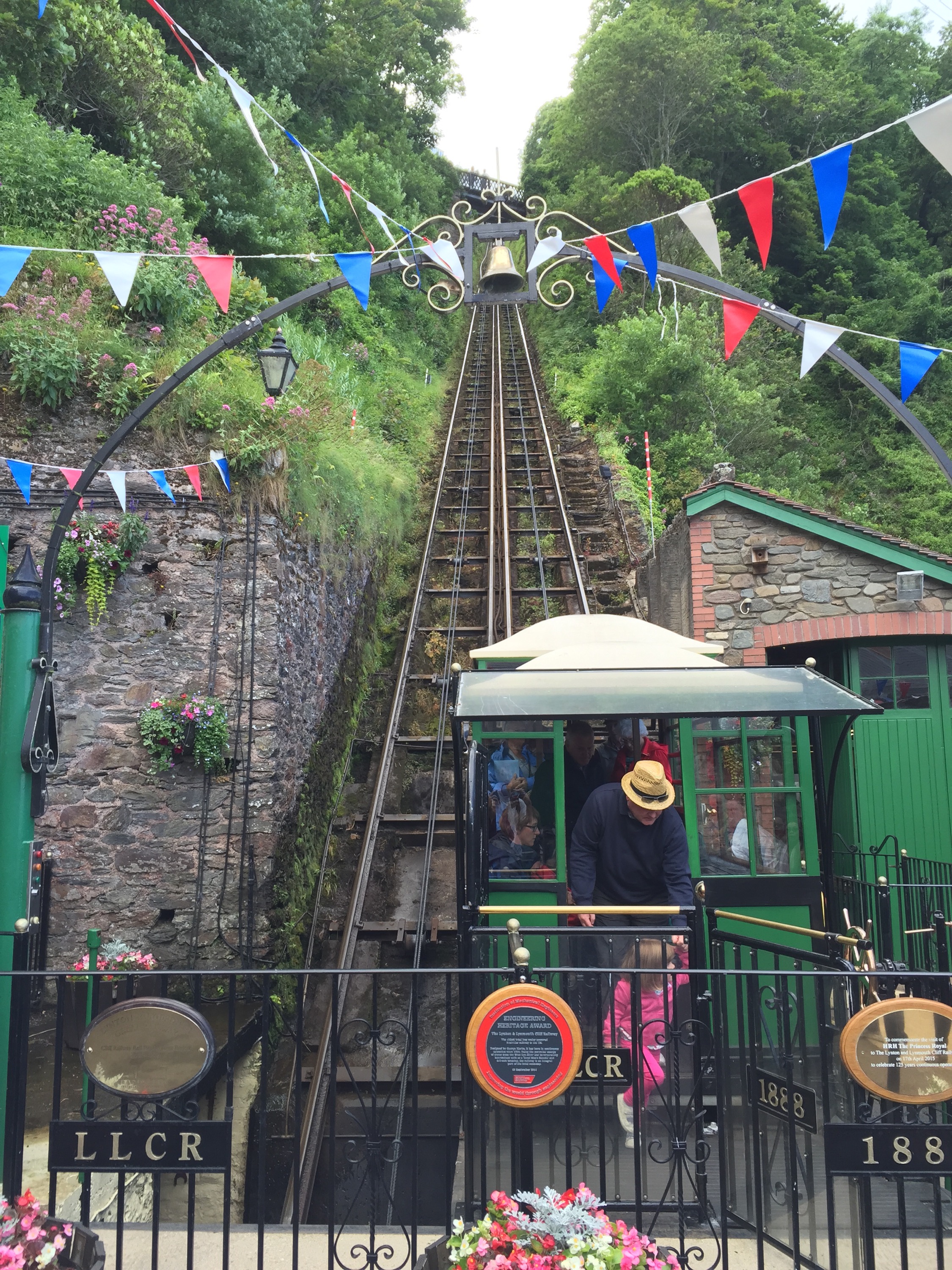
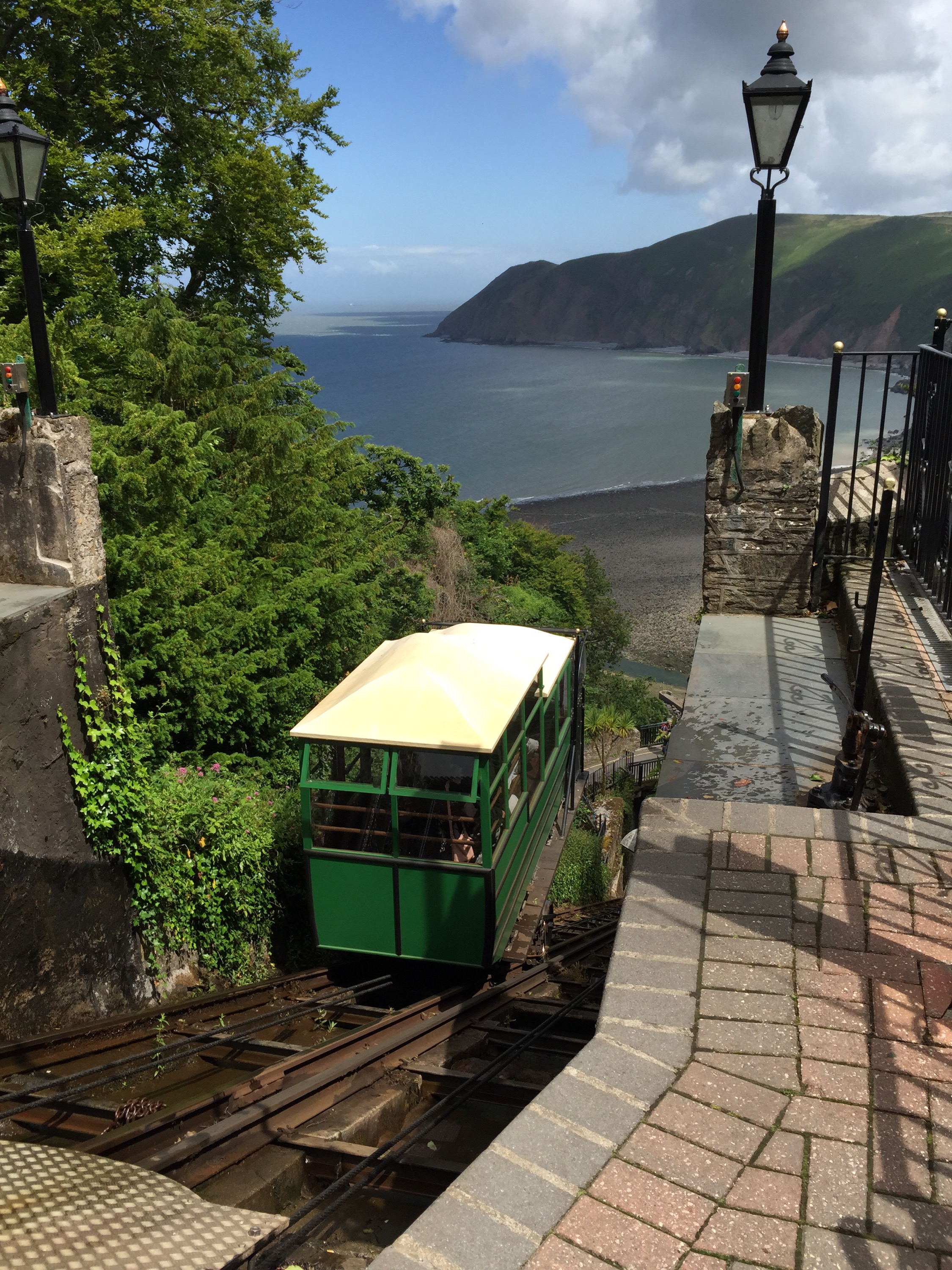
Our route took us to the sea at Lynmouth, which was a cute town in its own right, but the star attraction was the Cliff Railway, an entirely water-powered funicular that was built in 1890 and has been carrying passengers up and down the cliff ever since. 

Back in Barnstable, Ben had a small shopping trip at Marks and Spencer’s (“Marks and Sparks”, a British establishment) and the whole family went to see Jurassic World (Ben’s choice) before ending with a celebratory birthday dinner.  


Barnstorming Barnstable?

Well, not really barnstorming, but there were some rainstorms, well just showers really – it was that kind of day.

We started our day with another traveling morning (yes, you can get from Tavistock to Barnstaple by bus!) and we arrived in Barnstaple about noon and checked into our most welcoming B&B, The Old Vicarage.  Little did we know how welcoming – more on that below…

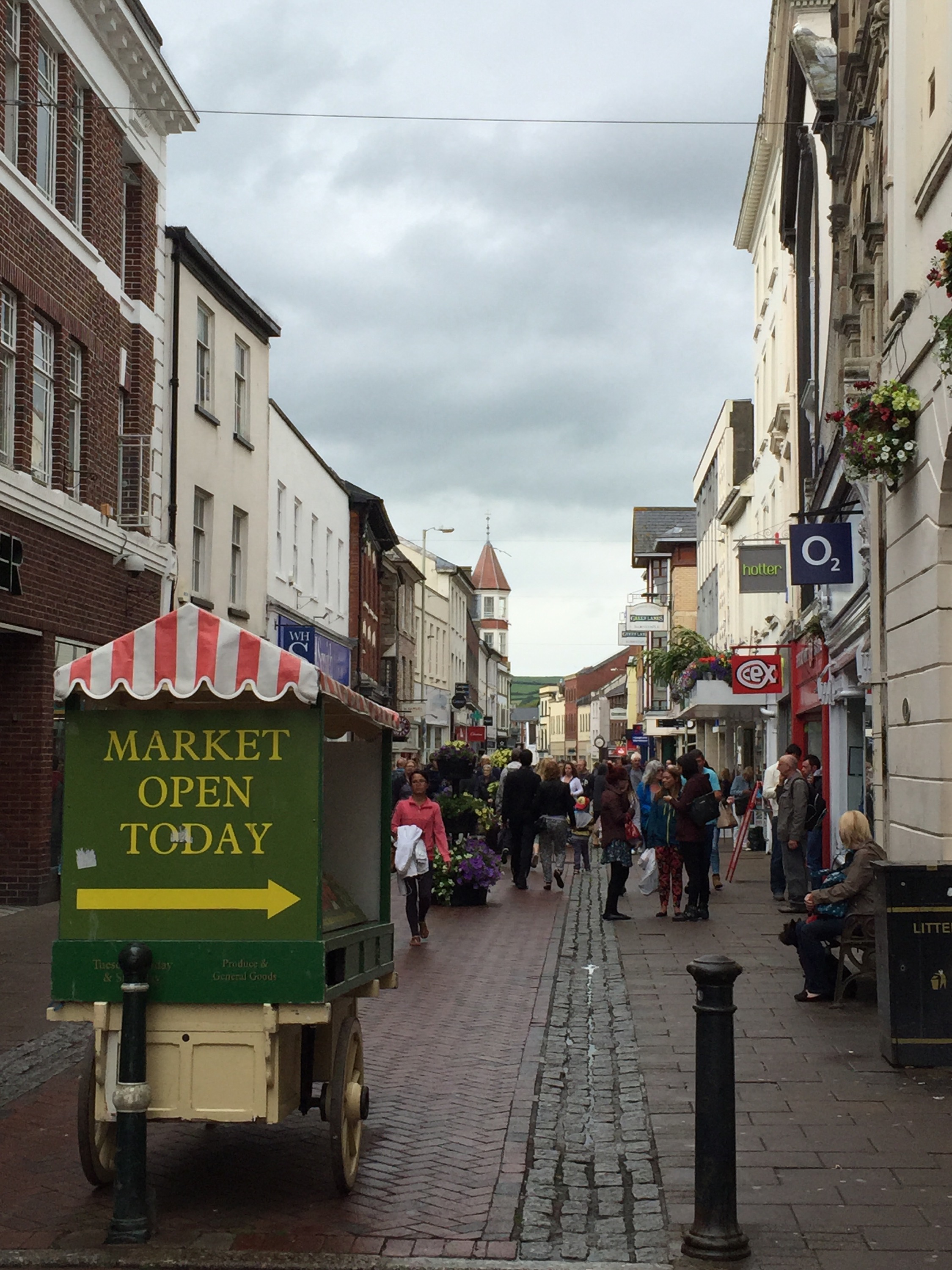
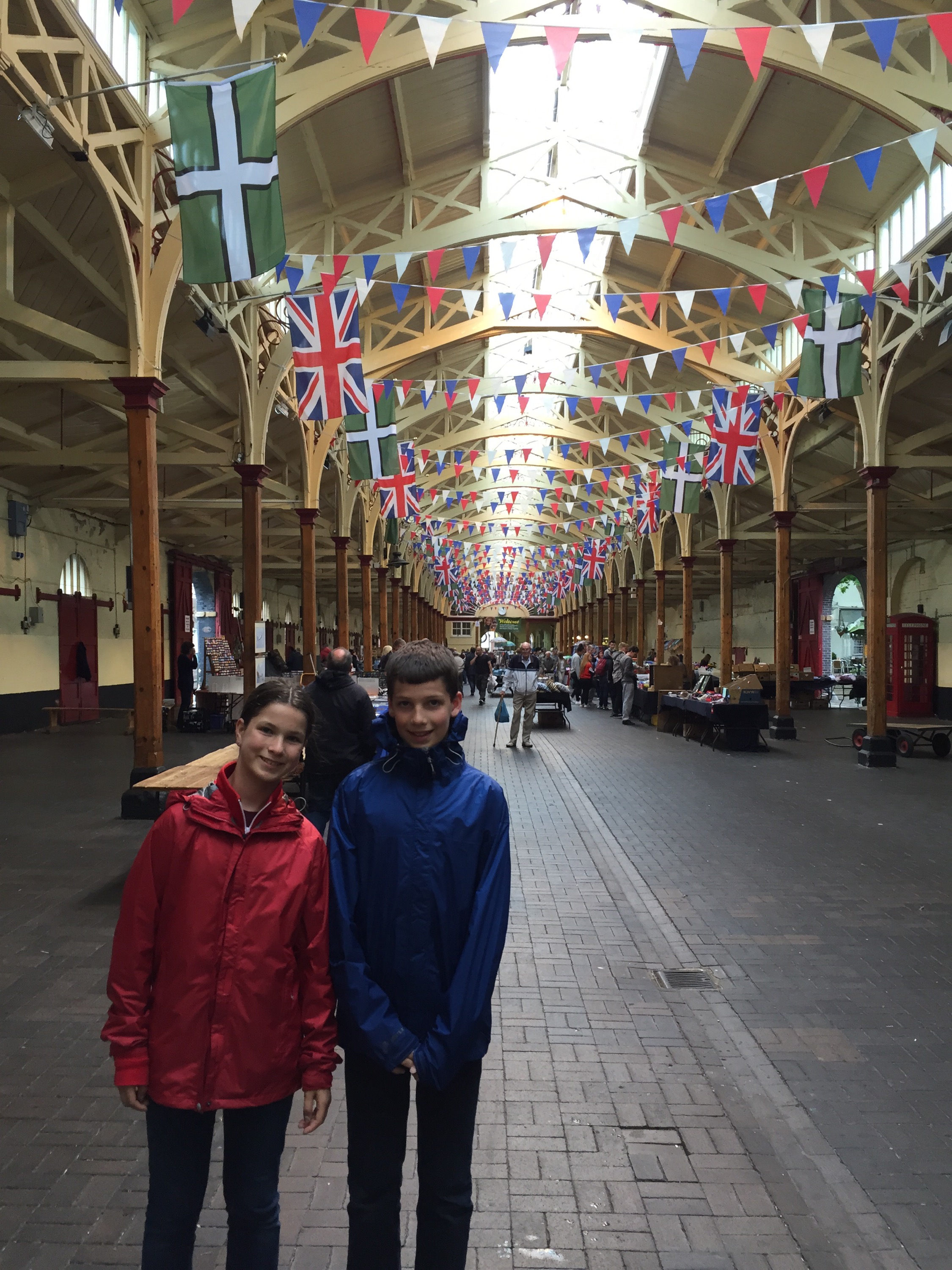
Our first stop in town was the Pannier Market, a daily market with rotating merchandise (Monday = crafts and general) in a grand hall.  We had lunch at a surprisingly gourmet tea shop called Tea by the Taw that offered river views and massive “toasties”.  We got a little flavor of the local area history at the Museum of North Devon, which offers excellent value for the price (free!).

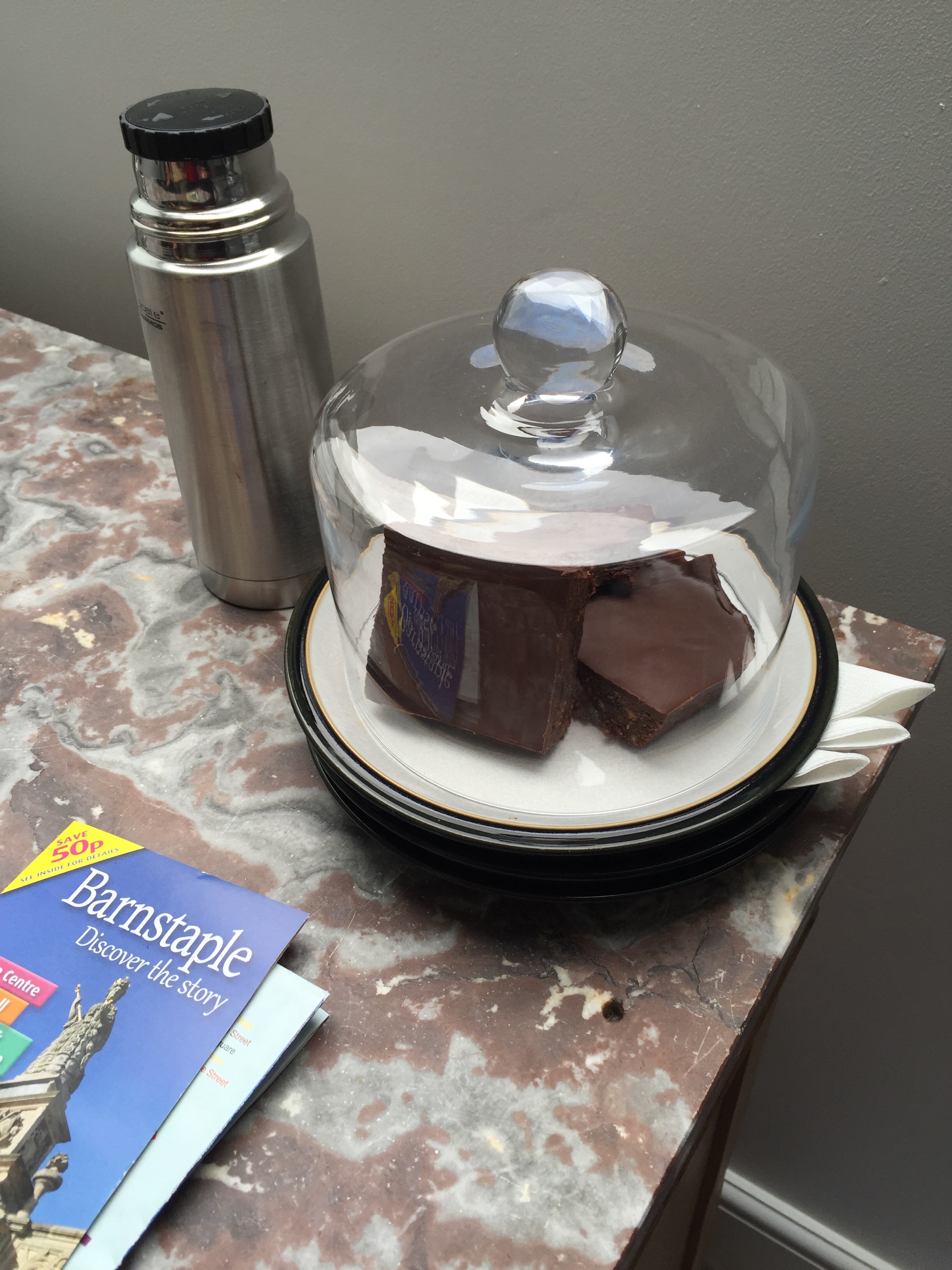
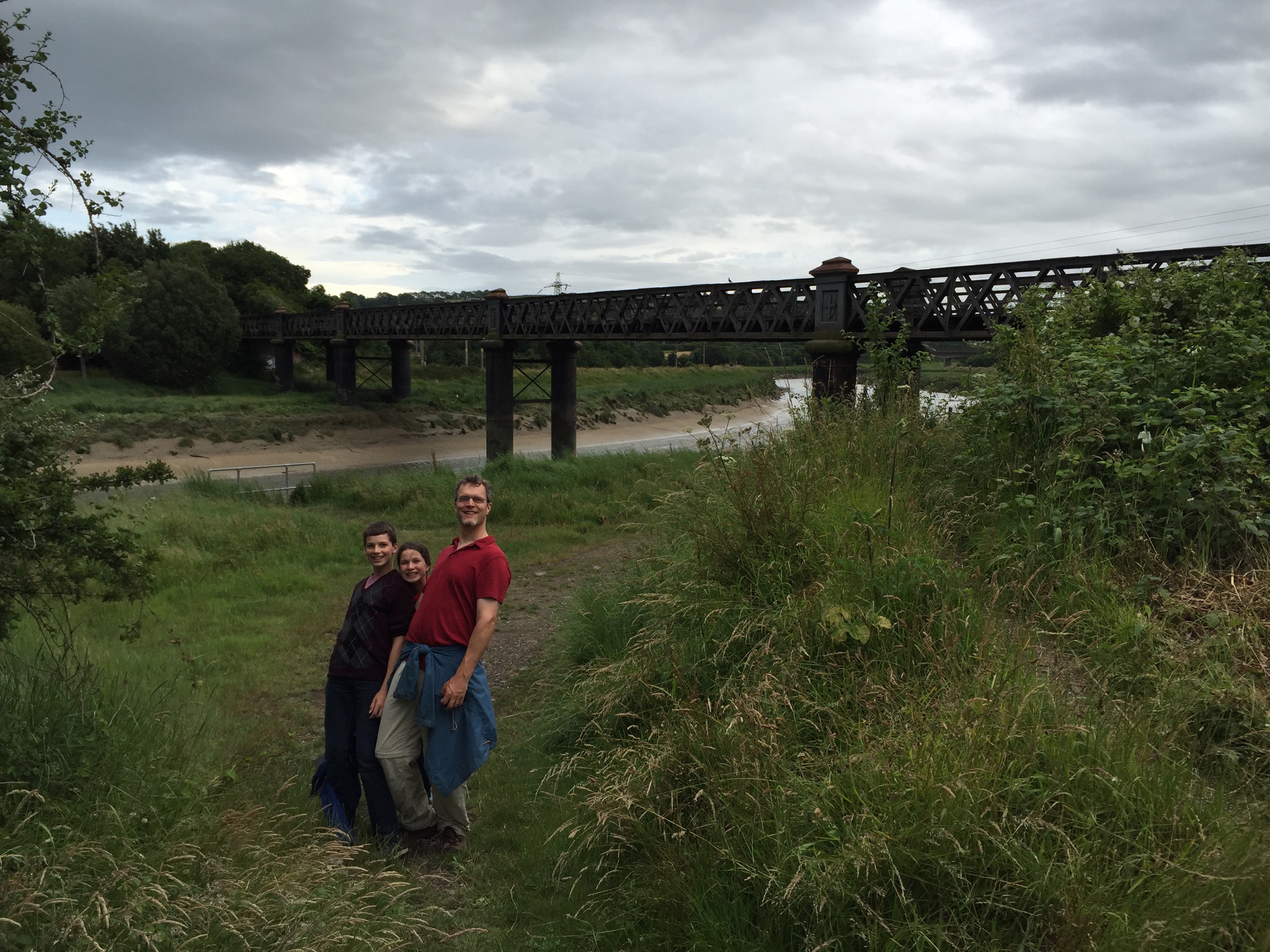
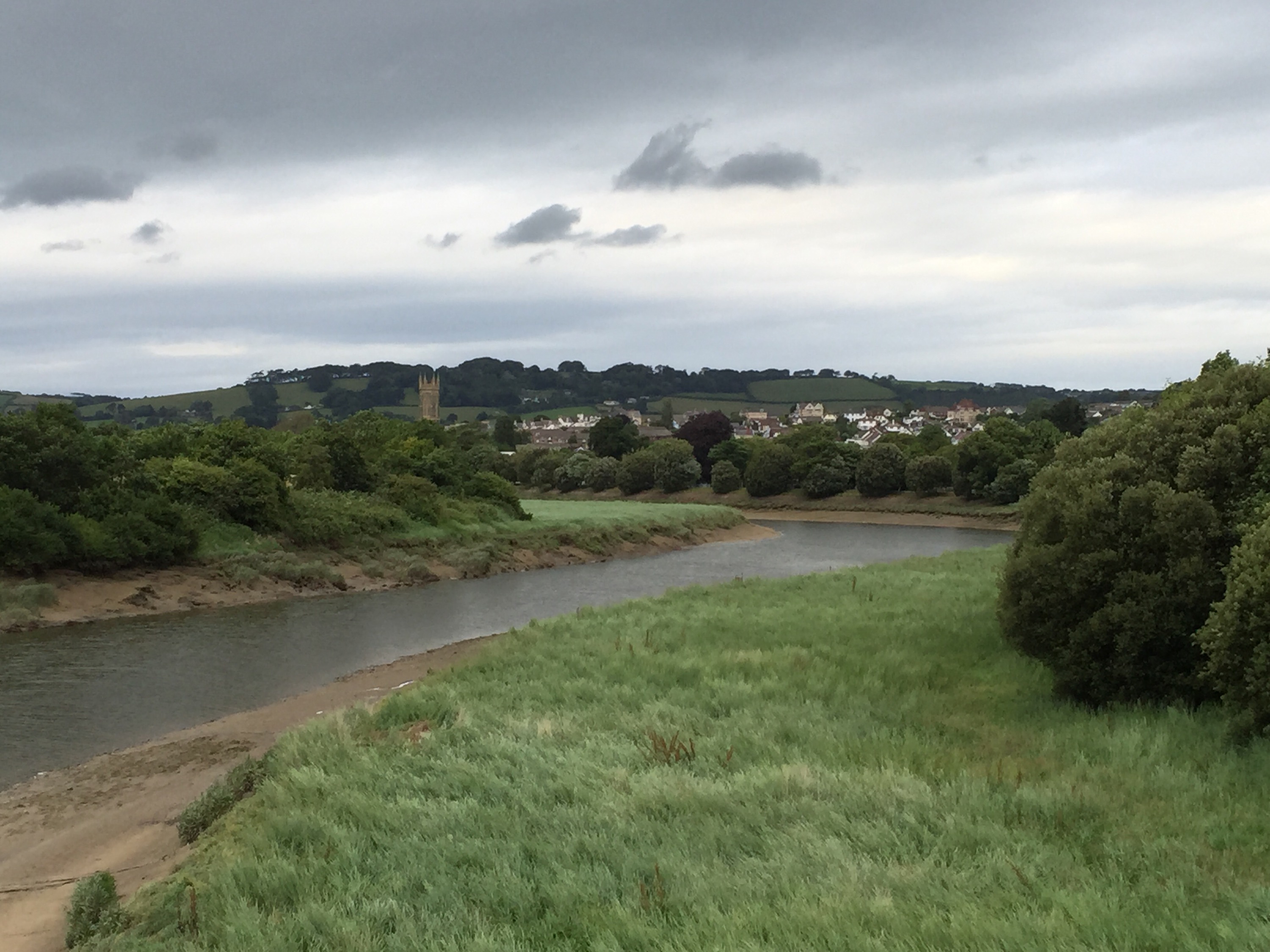
Back in our room we found tea waiting for us, accompanied by homemade chocolate cake under elegant glass cake domes – what a treat!  Refortified, we ventured back outside on a walk along the river, crossing on a Victorian era railroad bridge.  The day ended with a trip to see the movie Minions, an appropriate choice since most of the action takes place in England.  


Marvelous Morwhellam

Q: What is the definition of a mine?

A: A hole in the ground with a Cornishman at the bottom of it.

It seems that even in Devon they tell this joke!

It’s been a week since we last went underground, so it must be time again.  Our destination was Morwhellam Quay and the George and Charlotte Copper Mine, which is an amazing living history museum.  It felt like we had the place largely to ourselves (schools here are still in session) so we were able to see the whole village of Morwhellam and all the live exhibits in one full day.  Note, we were  well prepared for this visit, having seen the recent BBC documentary series “Edwardian Farm” featuring a historian and two archaeologists recreating and reviving the village.  Indeed, we had seen so much of the different places in Morwhellam, we felt a bit like we were coming home!

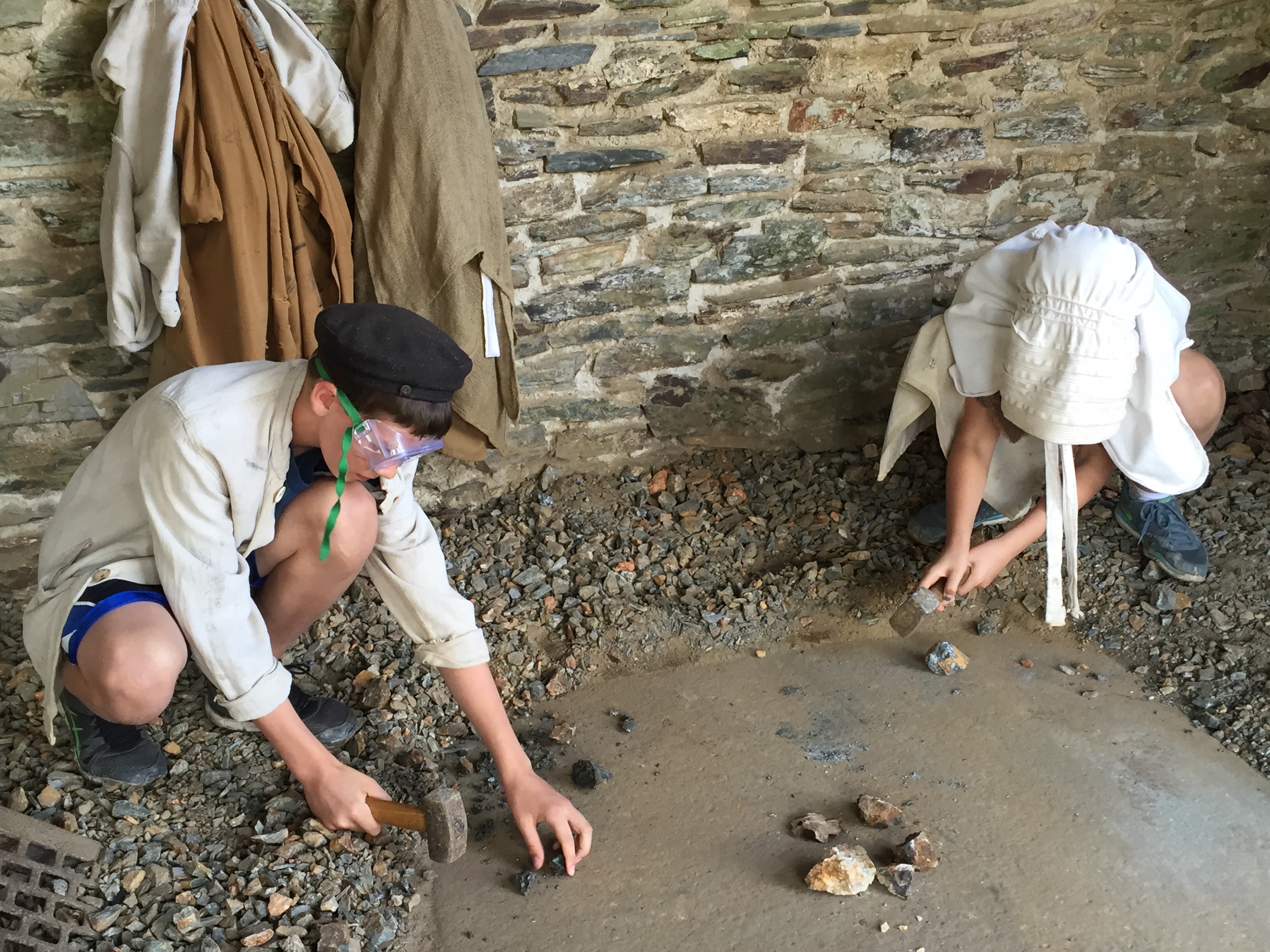
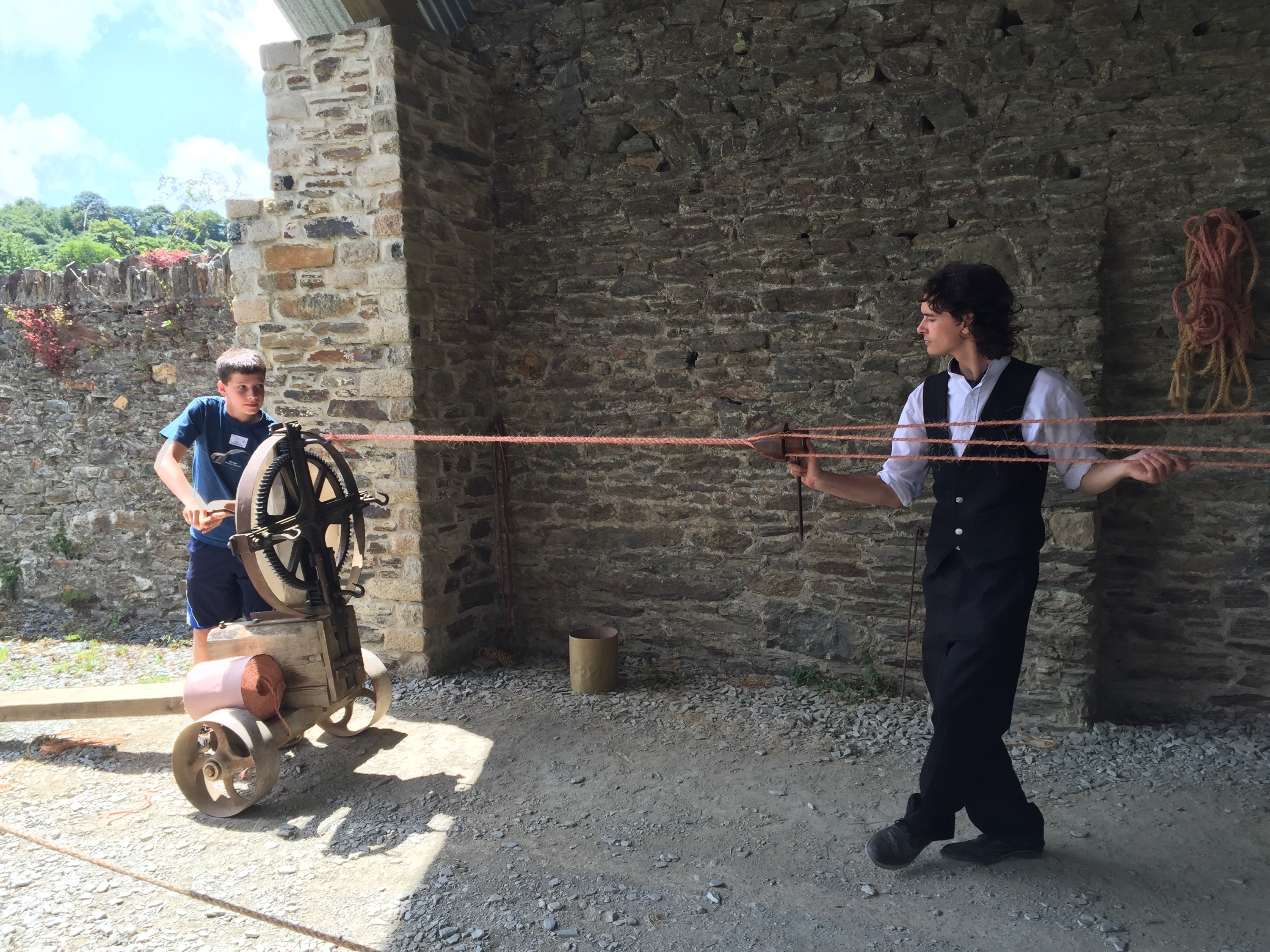
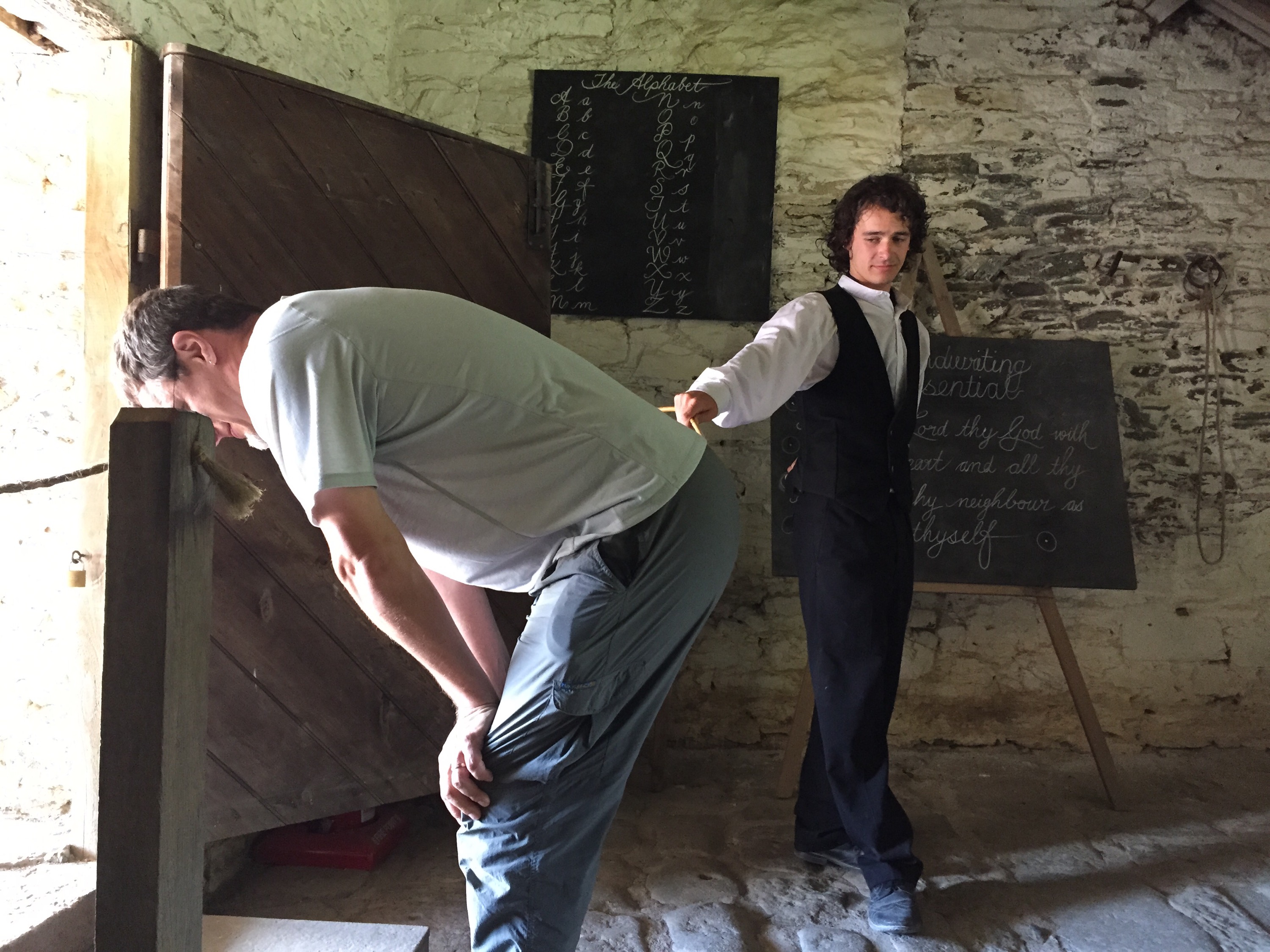
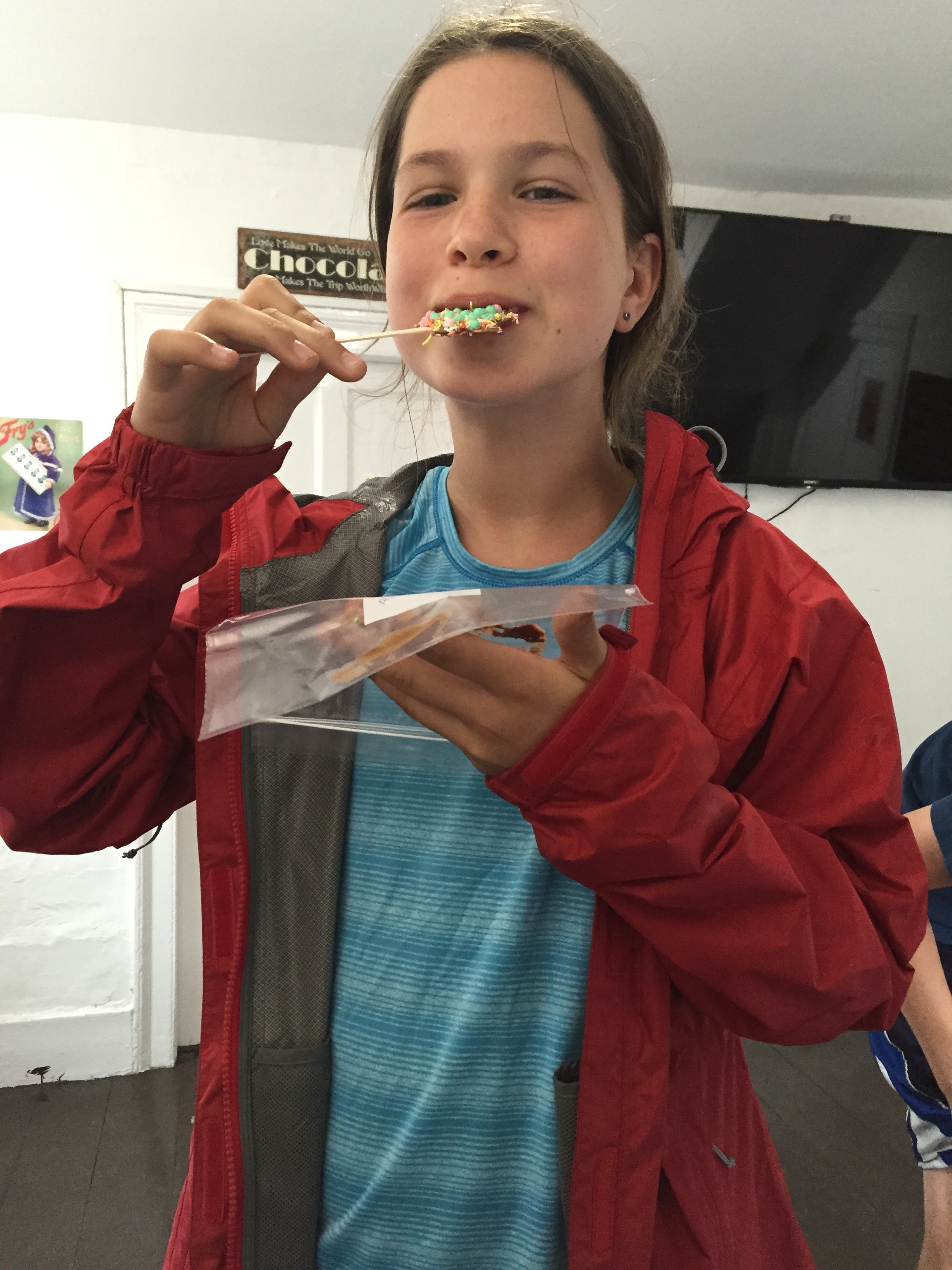
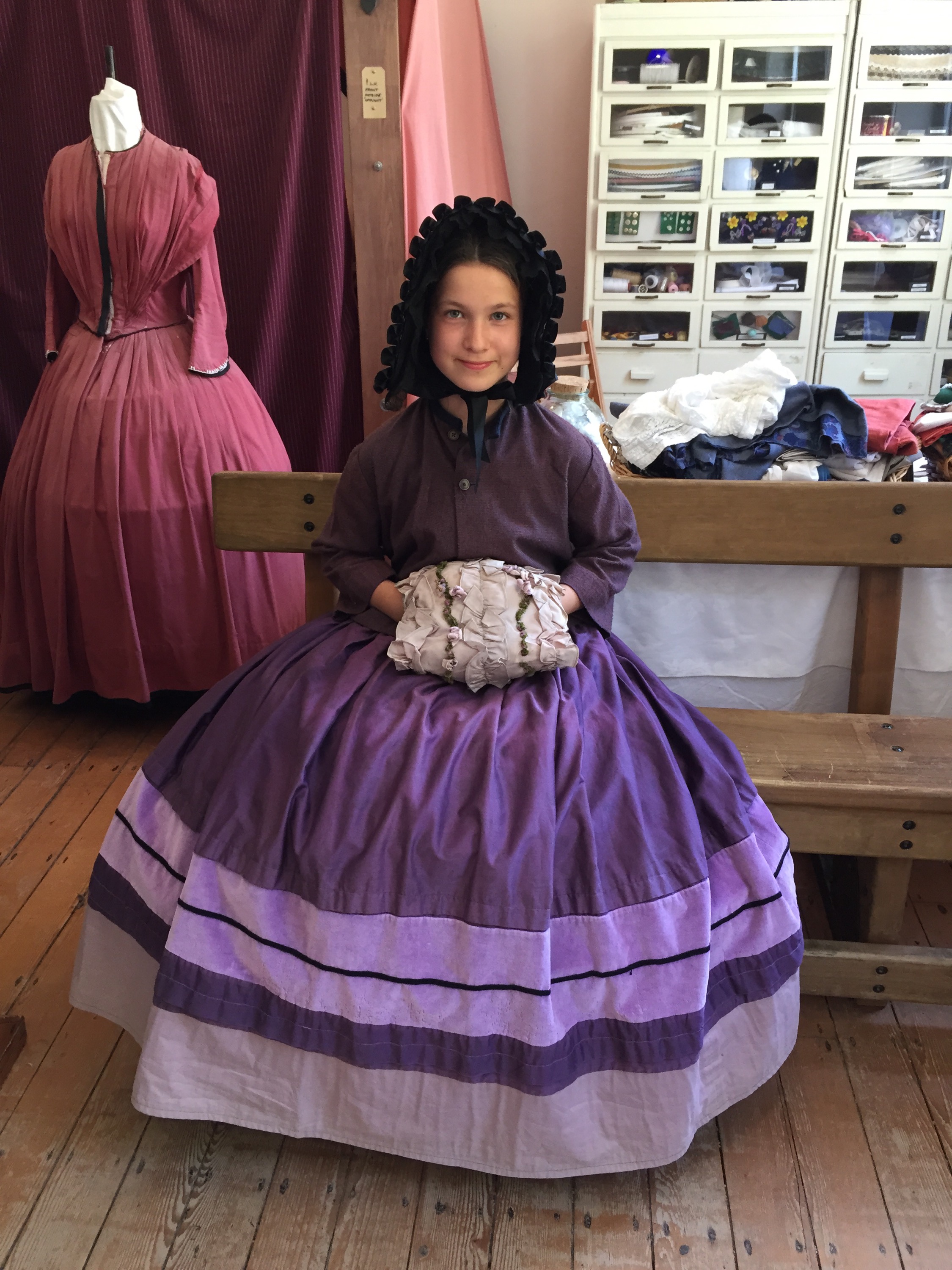
Highlights: riding a real mine train underground, putting the kids to work breaking up ore, making our own rope, attending a lesson at school (beware the cane for bad behavior!), making and eating chocolate lollies, and dressing up in period costume (with period expressions).

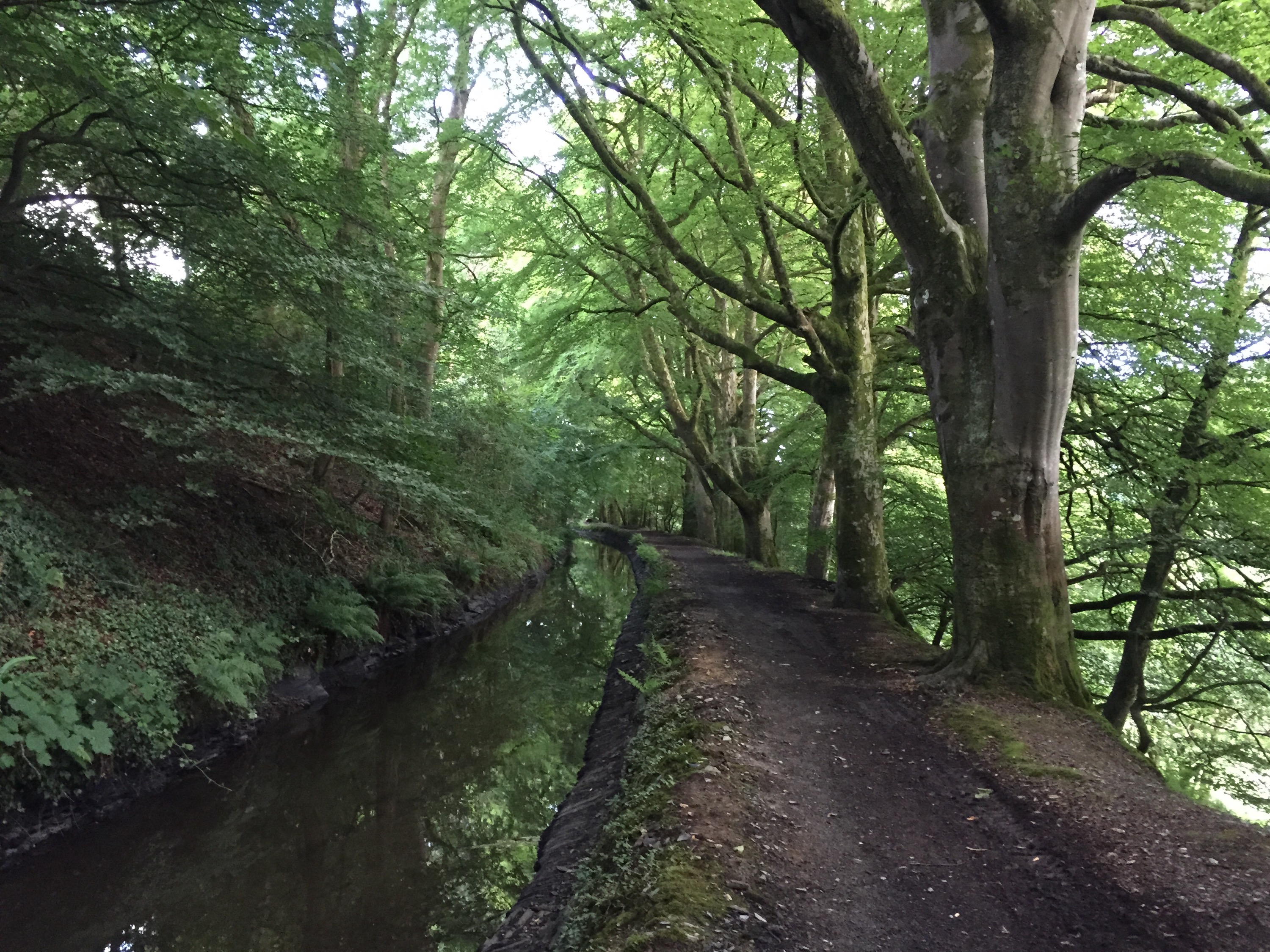
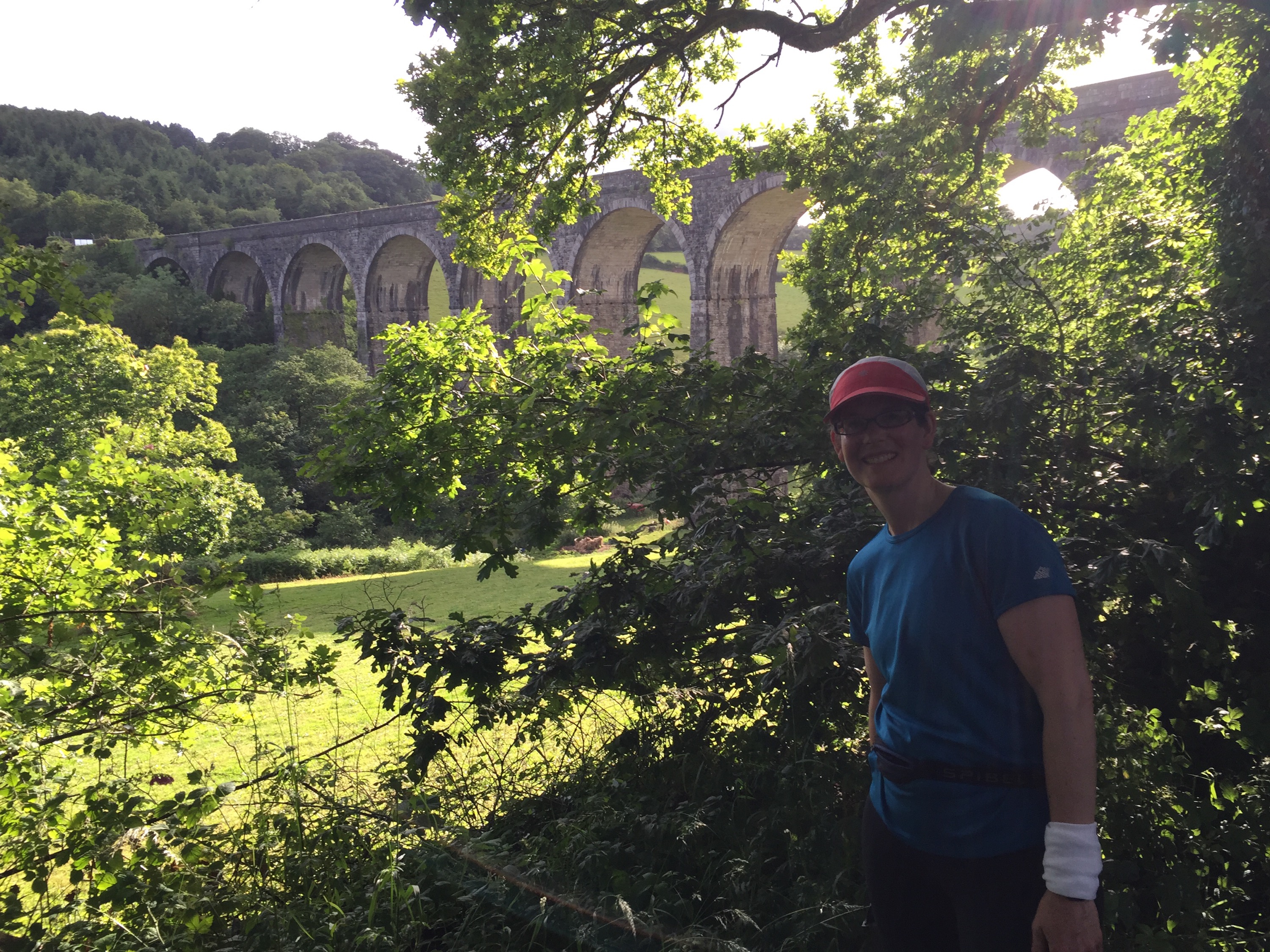
We took a taxi to Morwhellam, but we were delighted to discover that the once-a-week bus happens to run on Sundays, the day of our visit – so we continued our bus tradition and rode the bus home.  We took advantage of our self-catering-equipped B&B room to have a picnic ensuite, and Nick and Susannah fit in a run along the Tavistock Canal to see the majestic Shillamill Viaduct.


Liking Lydford

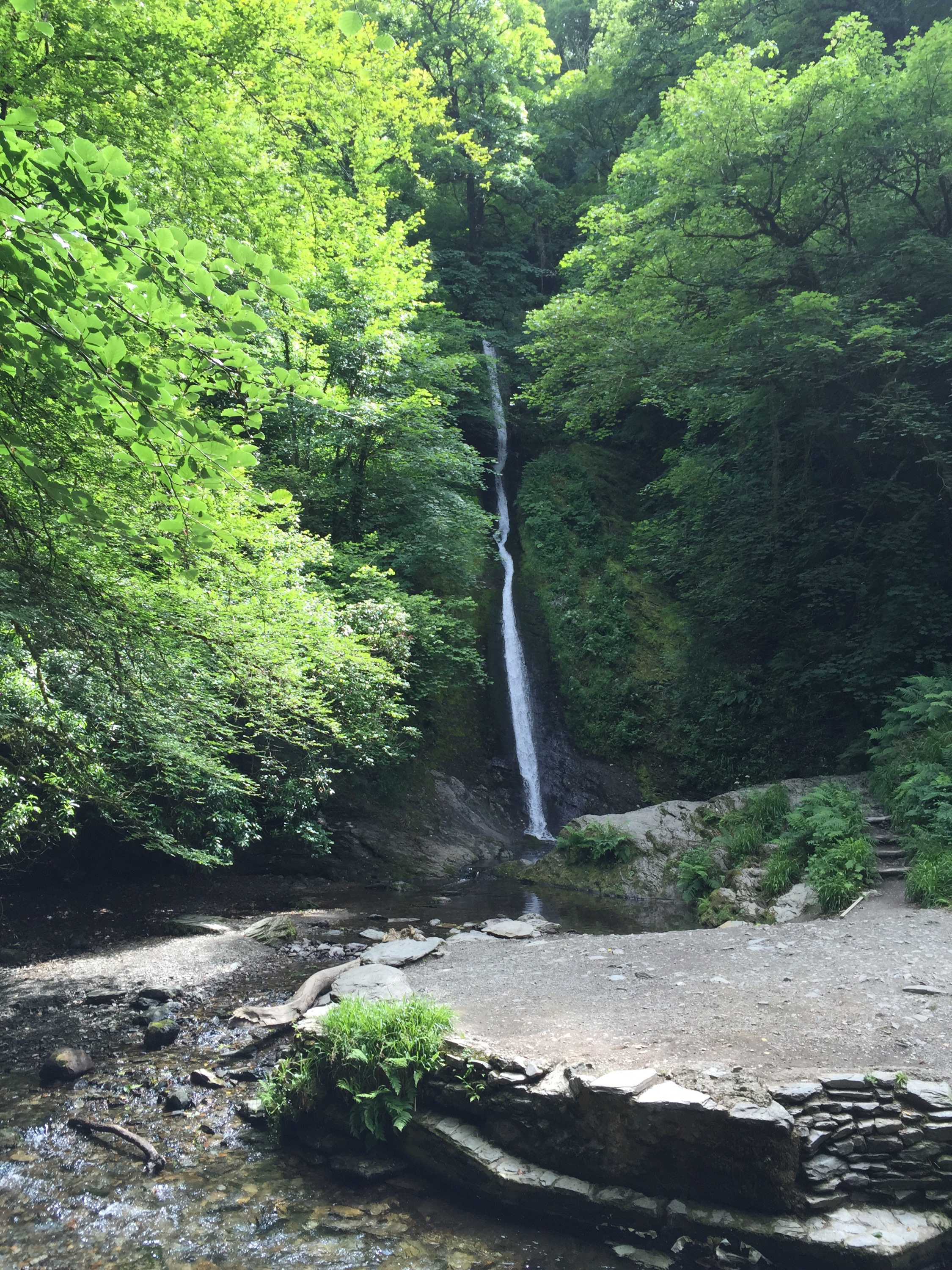
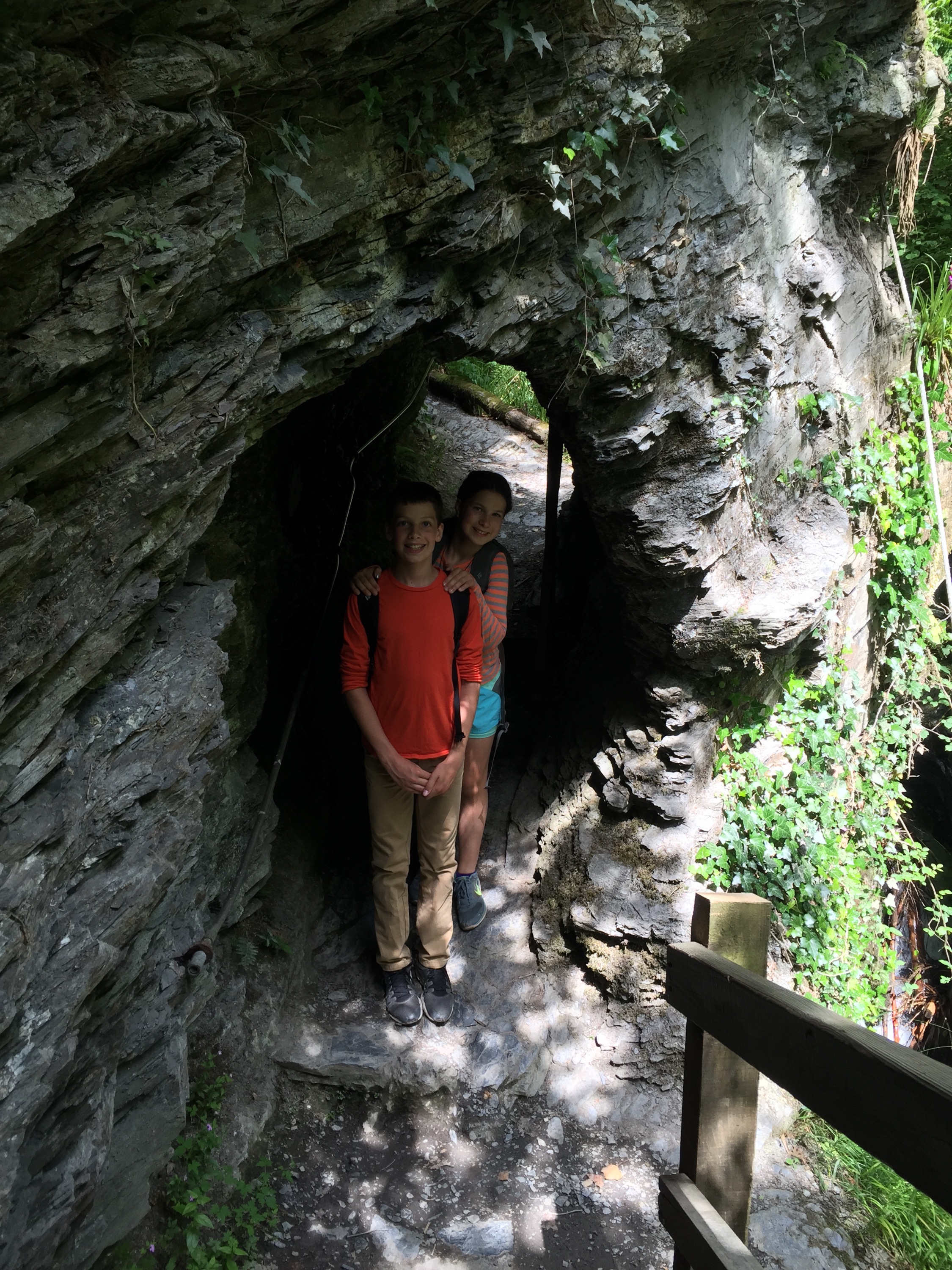
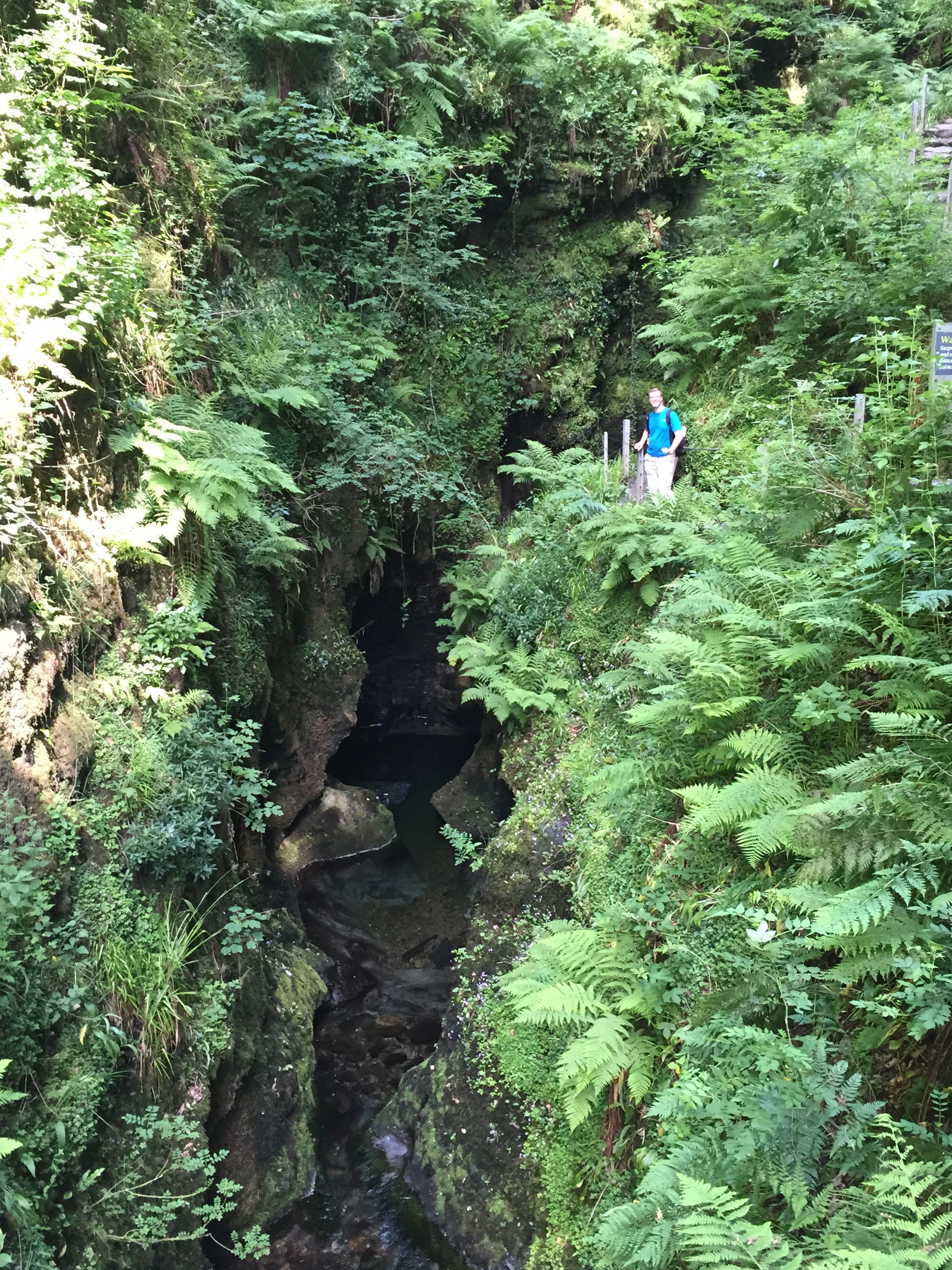
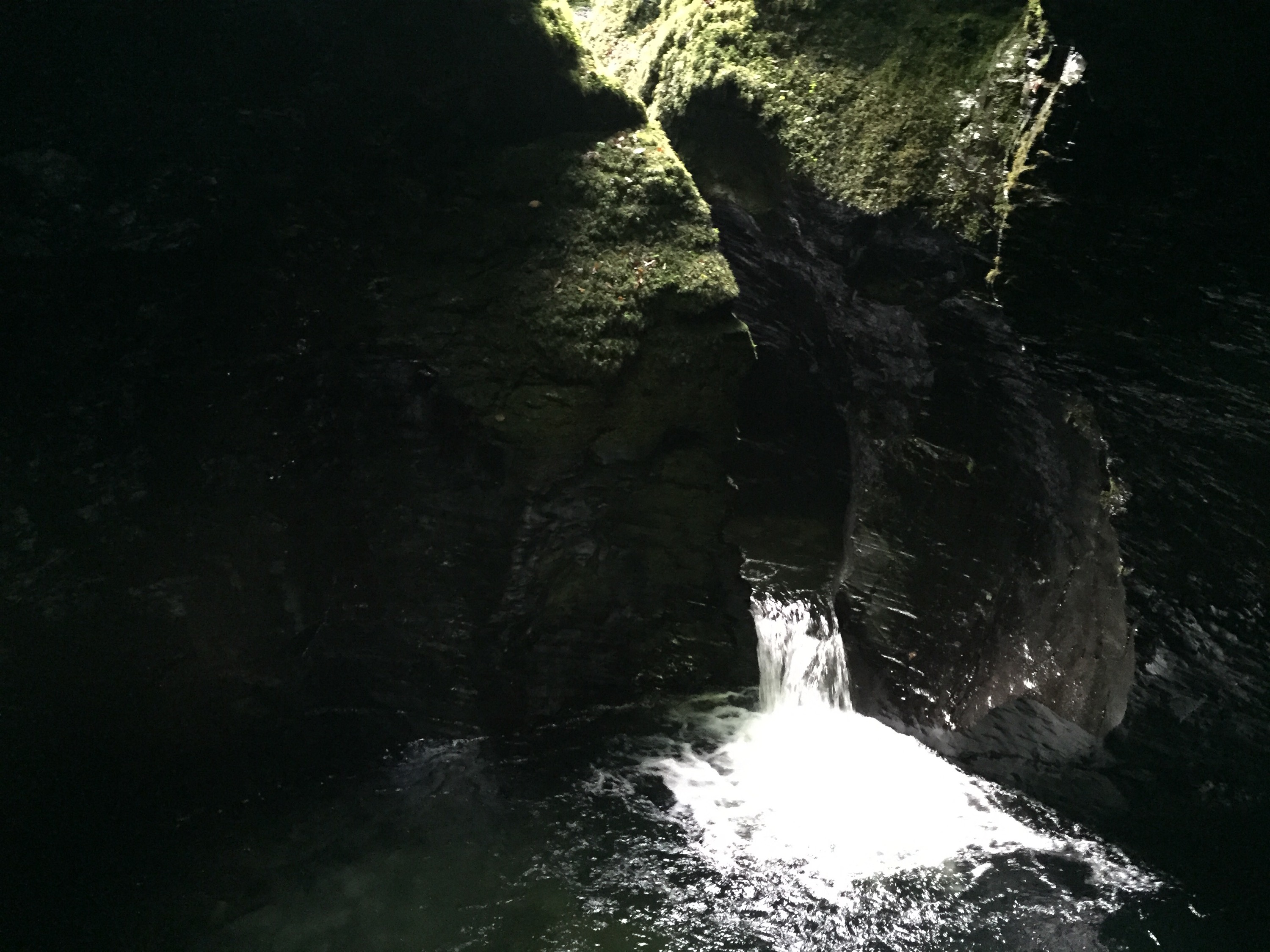
Most of our morning was spent traveling from Fowey to Tavistock (bus, train, bus, taxi – ’nuff said). We arrived in Tavistock in the midst of their pannier market but hopped back on the bus (really!?) for the short ride to Lydford Gorge. This is the deepest gorge in southwest England and its tallest cascade, White Lady Falls. We started at the waterfall end and hiked through terrain whose layered geology definitely reminded us of Ithaca. Approaching the fabled Devil’s Cauldron, we saw evidence of turbulence in years past, like a tunnel carved from a previous stream, now dry. The cauldron itself is narrow and dark, reachable only by a path without a safety railing in some places. The pictures don’t really do it justice – you’ll just have to visit!

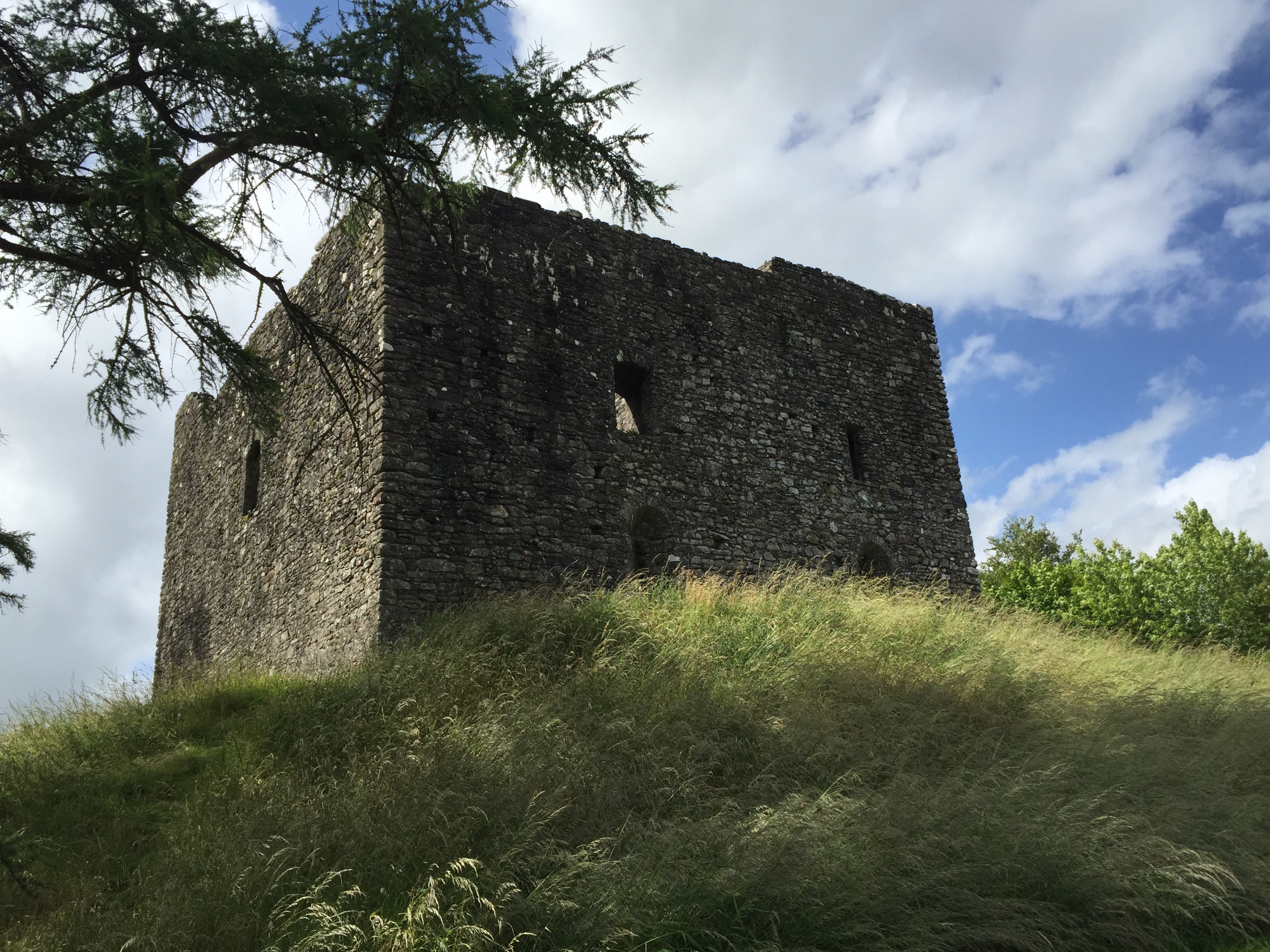
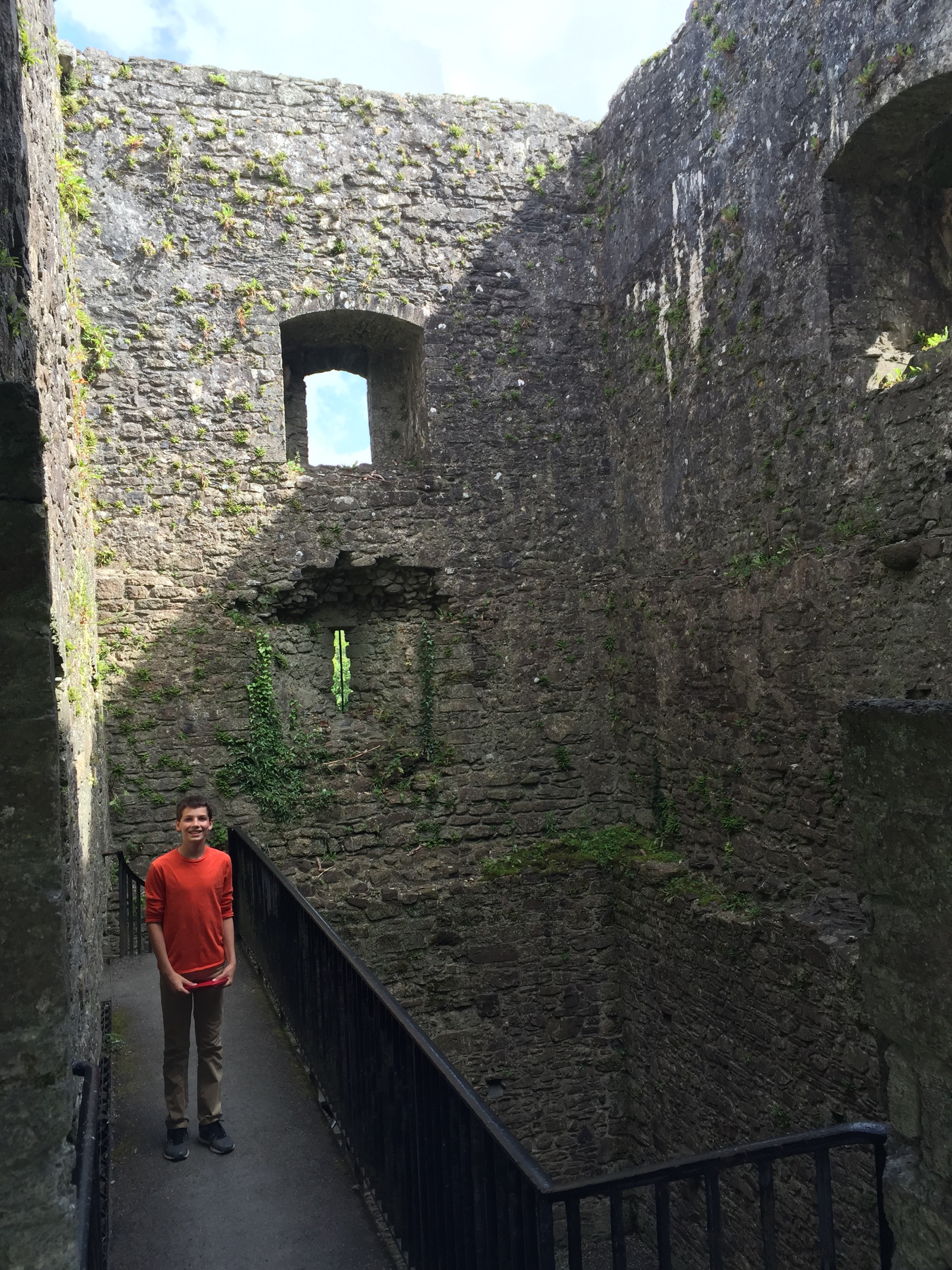
The gorge gets its name from the town of Lydford, whose history goes back at least to the time of the Danelaw and Alfred the Great (10th century AD). The town’s rather swift decline and stagnation thereafter means you can still see the defensive structures he put in place. The more recent stone building now called Lydford Castle was actually used as a courthouse and prison – the term “Lydford justice” was not used admiringly.  
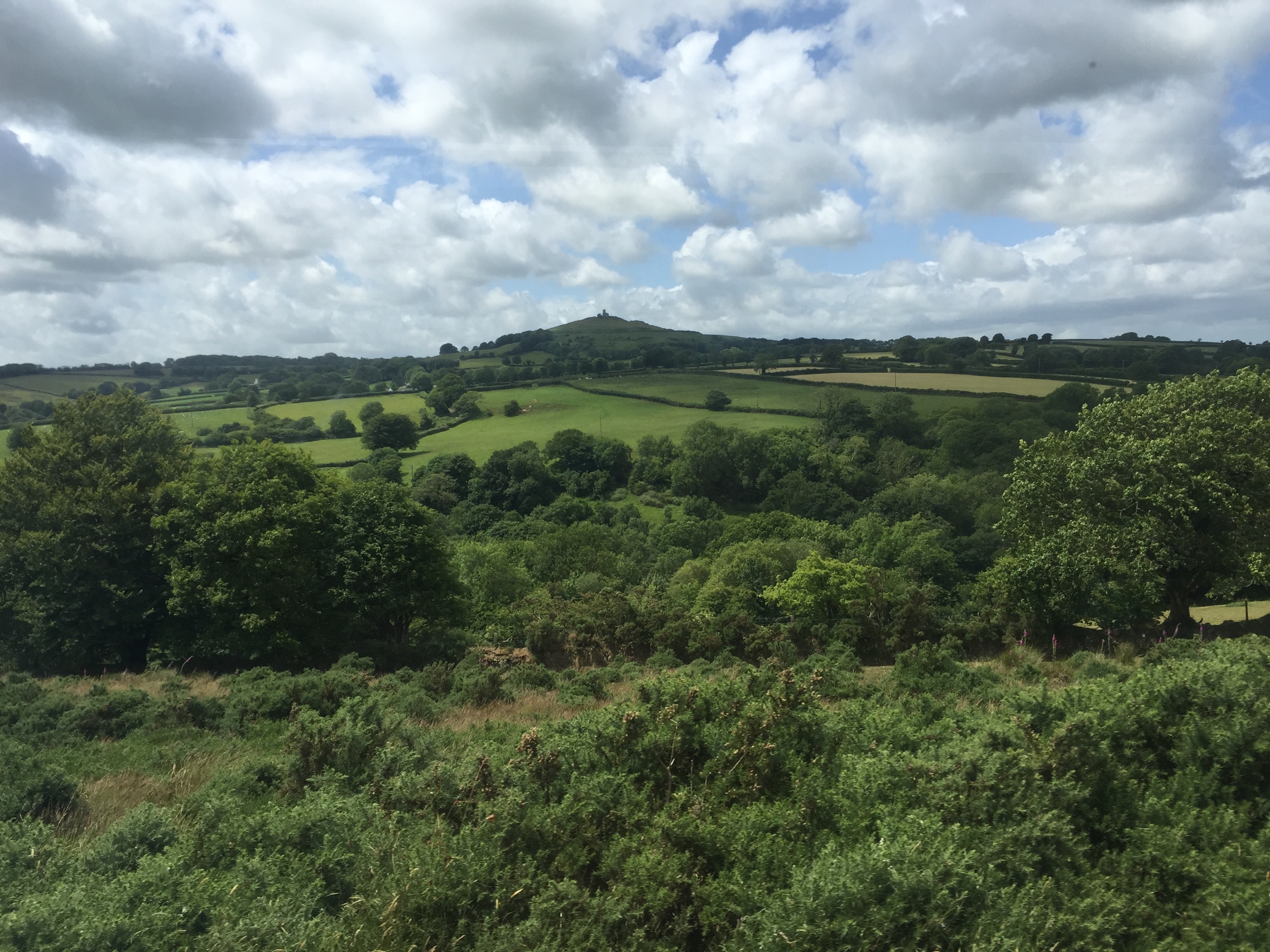
We came back Tavistock by bus (the kids have been great with all this bus travel) and saw expansive views of Dartmoor, including a nice panorama of Bren Tor – castle structure on a hill – our first glimpse of the famous Dartmoor Tors.

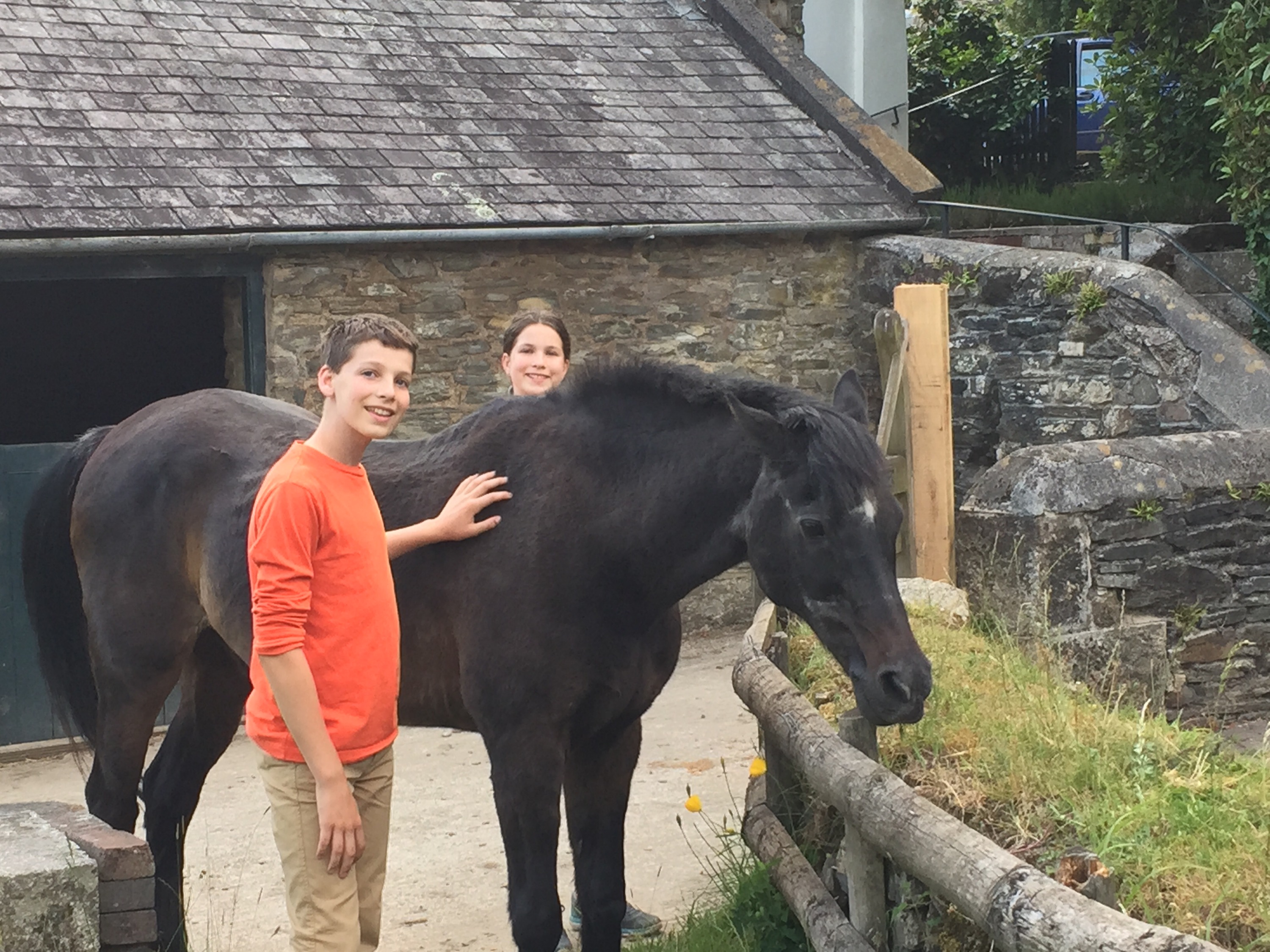
We dined in Tavistock on pizza and ice cream from the local coop grocery store, then walked the mile to our B&B (Mount Tavy Cottage) on the outskirts of town. The establishment is really like a small farm – the 10 acres includes a large garden plus 3 dogs, 2 cats, 1 horse, numerous guinea fowl, ducks, sheep, and a parrot; R was over the moon.
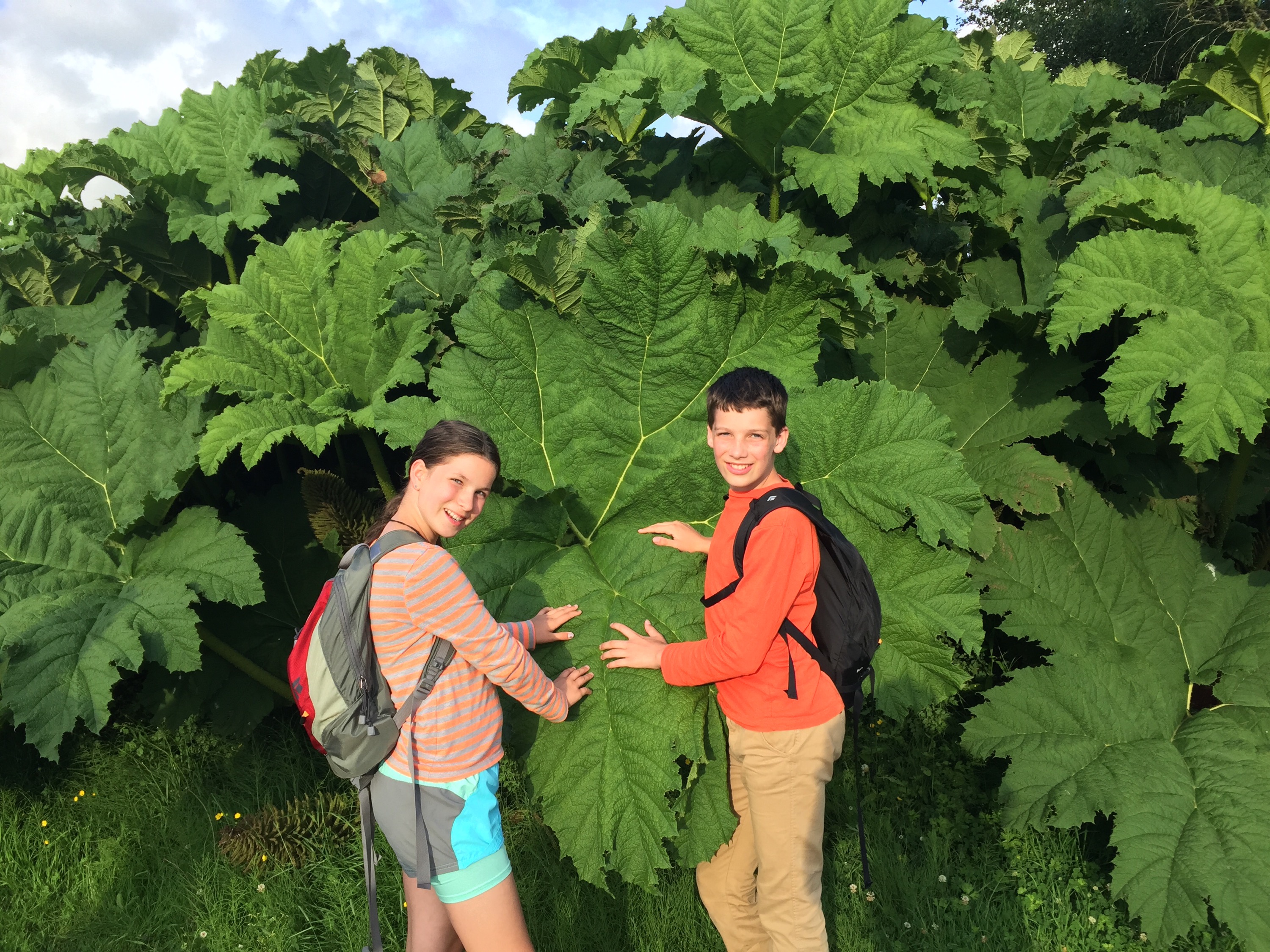
By the way, check out the crazy oversized rhubarb – honey, we shrunk the kids!

Of course, the Brits don’t celebrate the 4th of July, but Susannah did get to see some fireworks tonight while sitting on the porch to tap into the wifi connection.  Turns out the neighboring boarding school was having its end-of-term ball and threw in some fireworks for the festivities – perfect timing!


All About Fowey

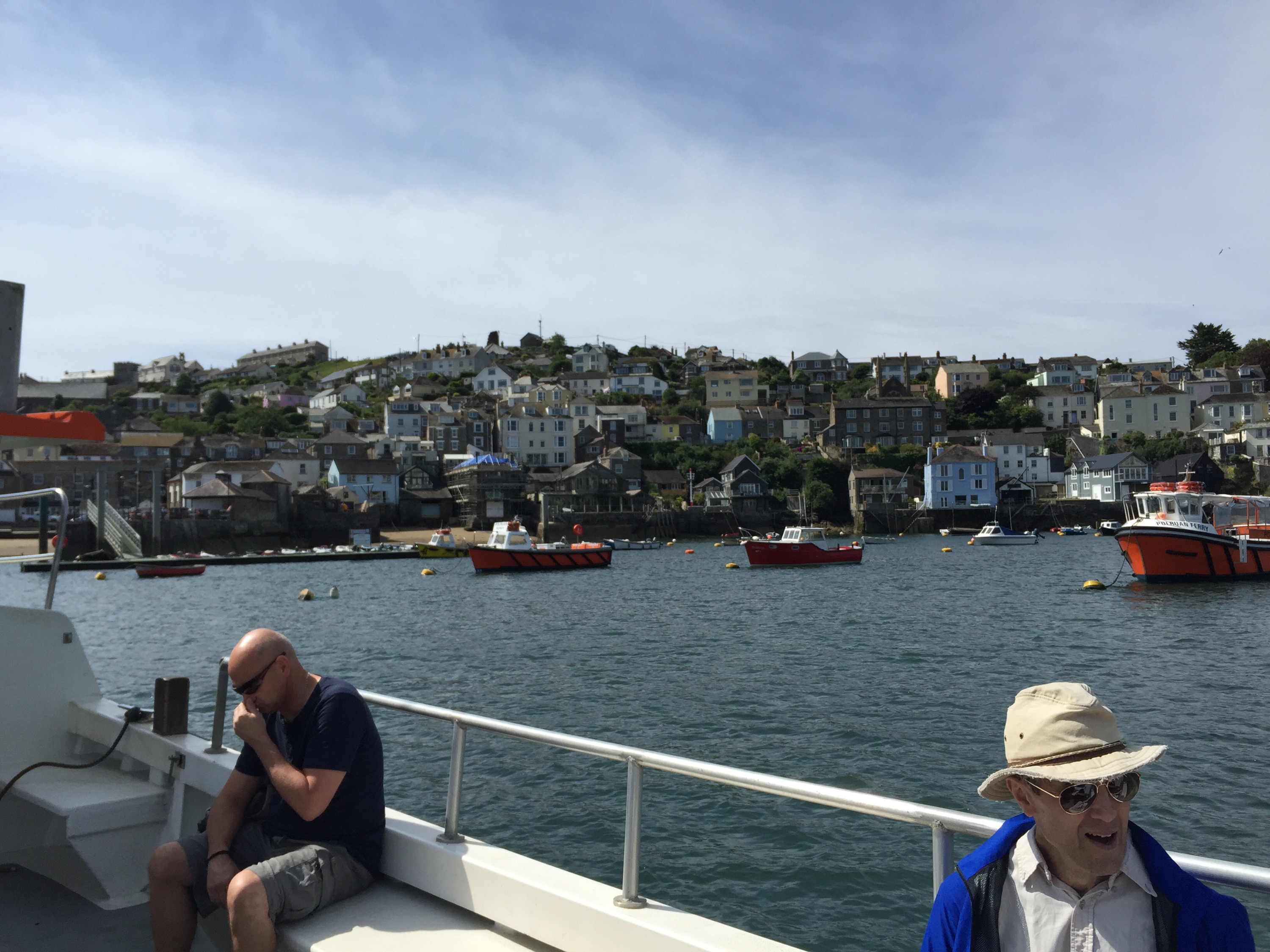
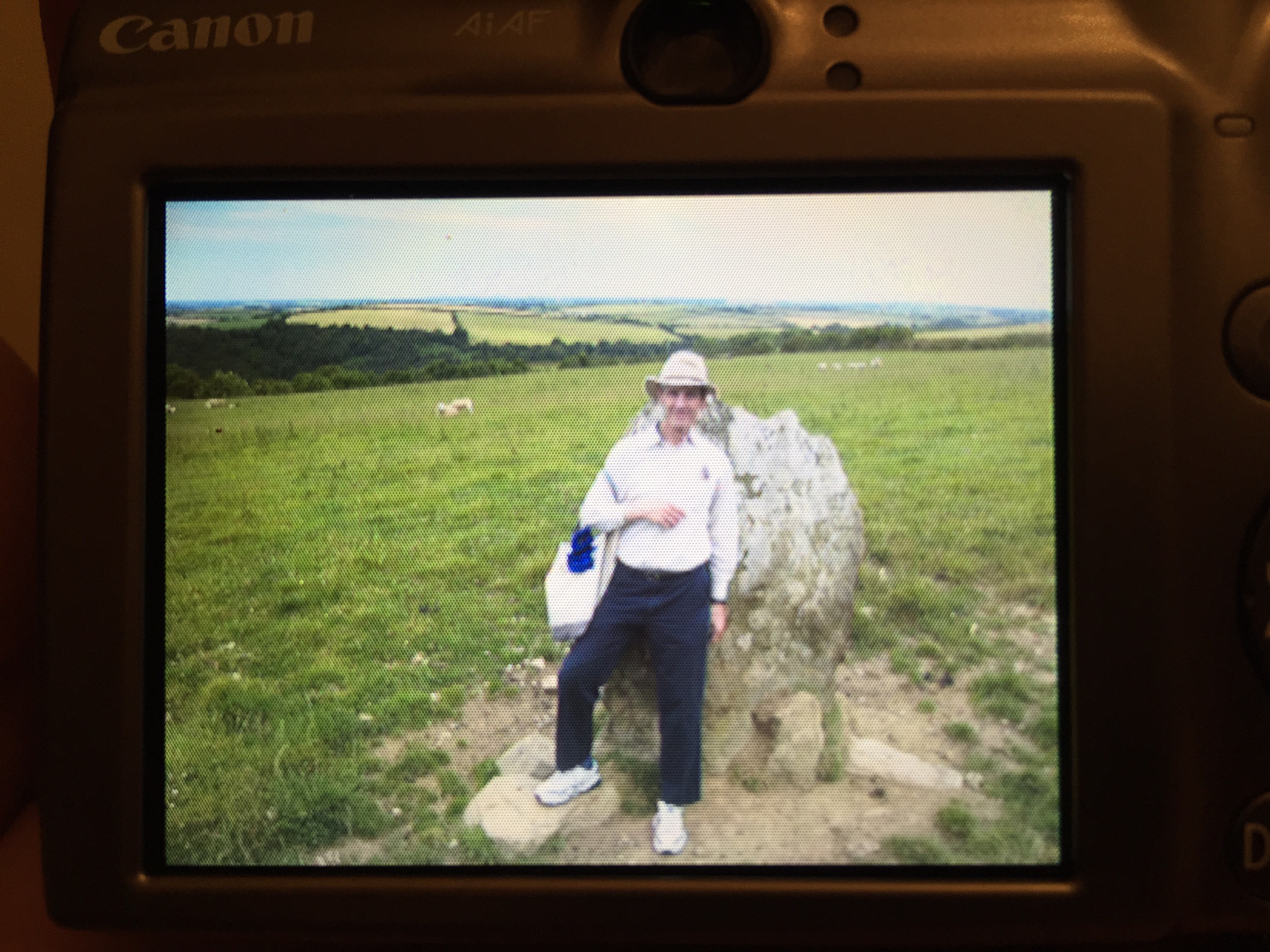
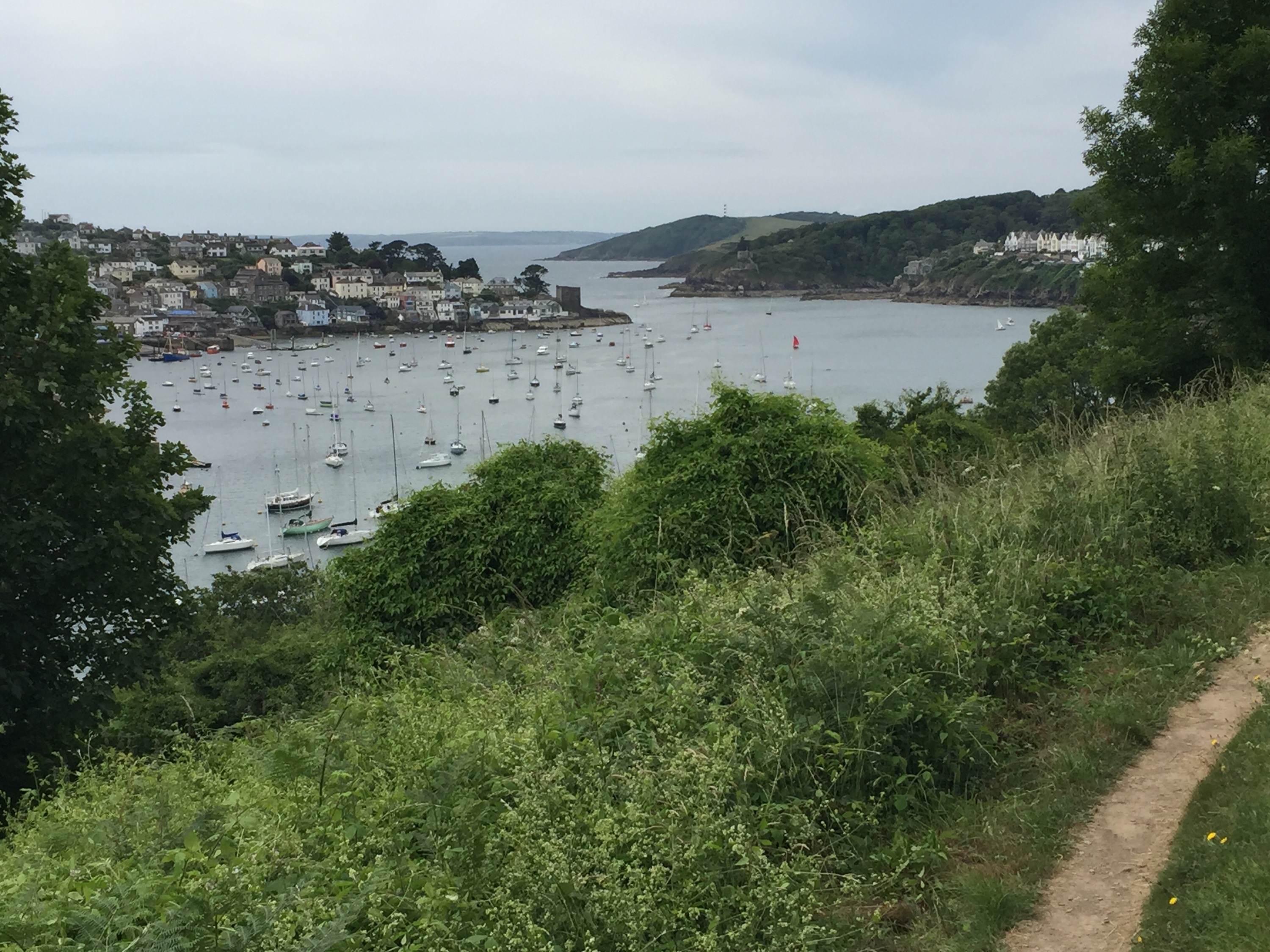
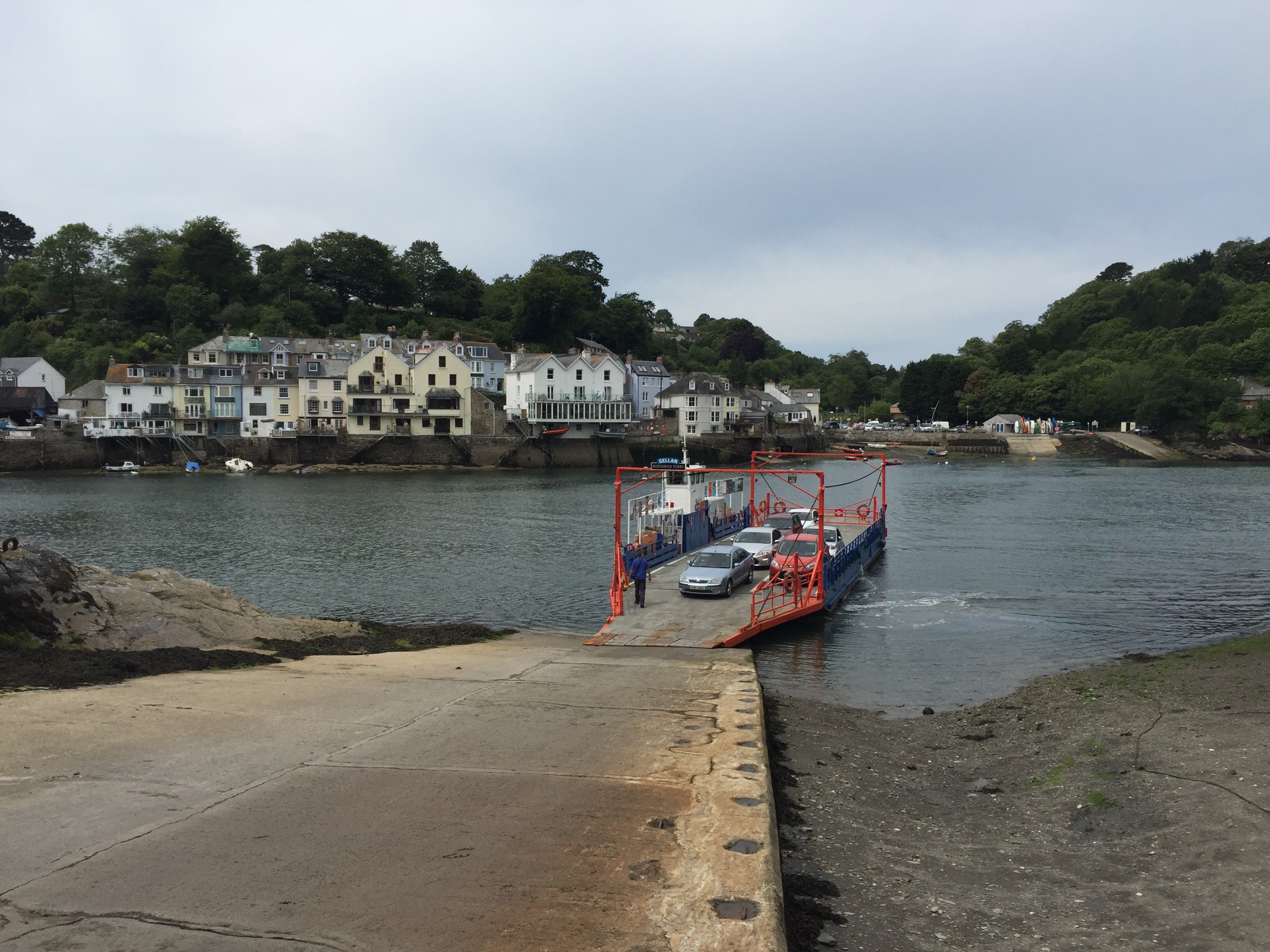
Today was our day to explore Fowey, which we did in smaller groups.  Plans to go to Mevigassey were scuppered when predictions of rough seas shut down the ferry service for the day.  Instead, all the adults hopped on the local ferry across the harbor to Polruan where several groups headed off in different directions. (The kids took the morning off, reading and drawing in the B&B.)  Nick and Roger went off in search of the Essa Stone, which they found standing in a field surrounded by bemused sheep.  Susannah tackled the Hall Walk, a 4-mile circular route that featured multiple views of Fowey and Polruan, a footbridge, and an upriver car ferry crossing.  The British thoughtfully place benches by all scenic vistas, leading to the Pavlovian hiker’s response: see bench, expect view!  Meanwhile, Lyn and Dianne poked around Polruan and Fowey before meeting the kids for lunch. 

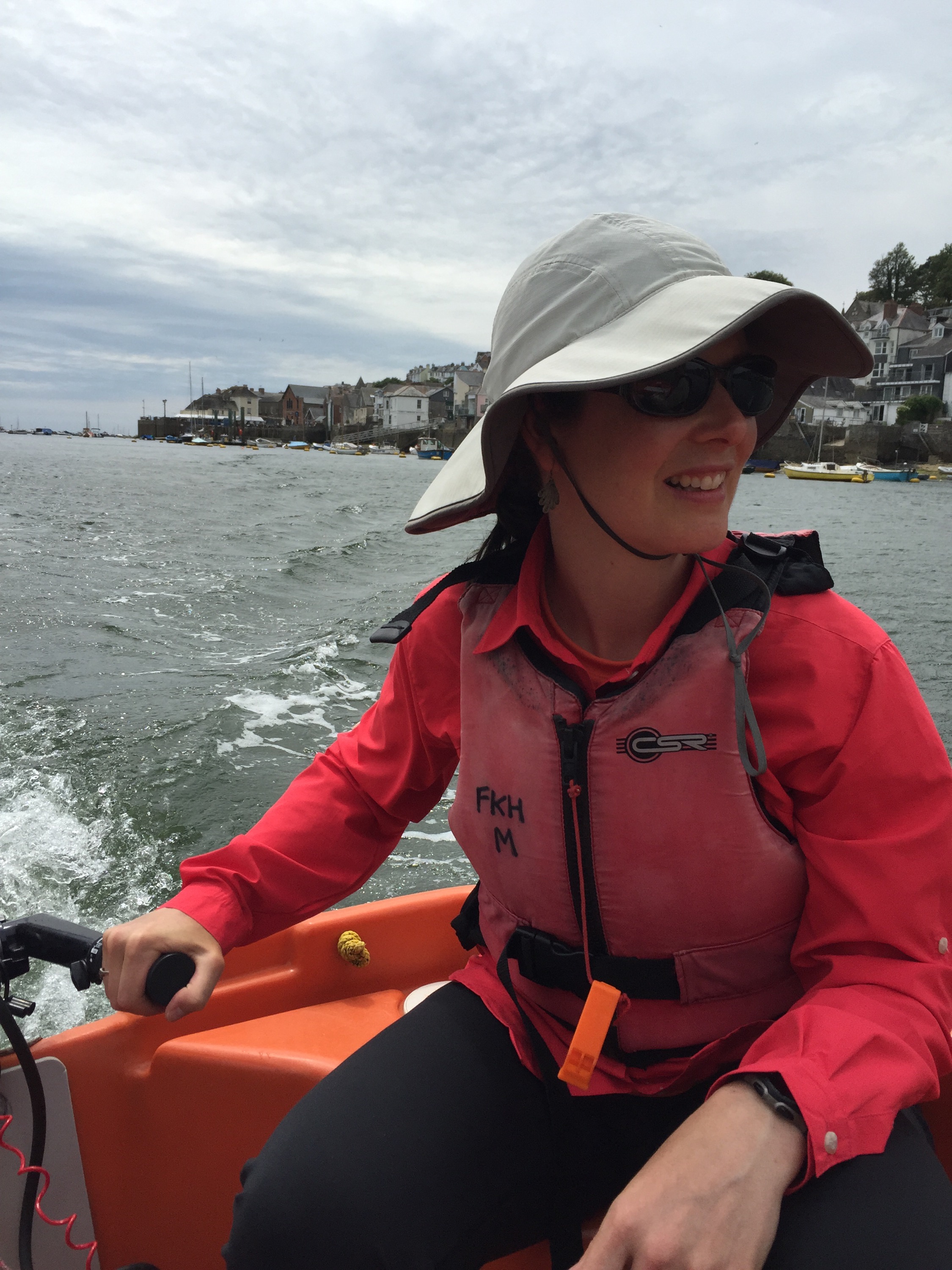
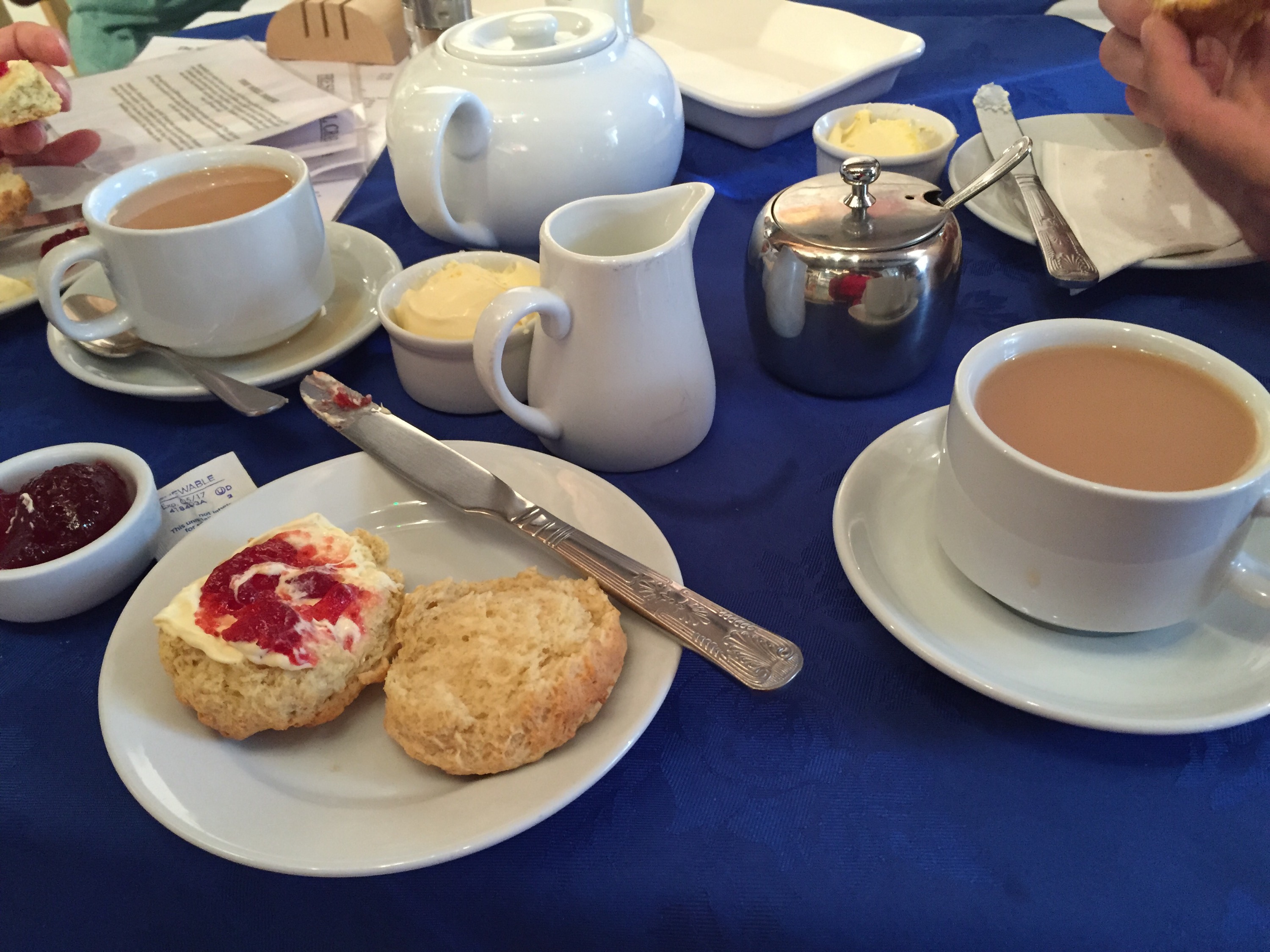
Bidding farewell to L&R (who were heading home via Exeter), the remaining party took to the water, hiring a motor launch to take a turn about the harbor.   We topped off the boat trip with a traditional Cornish cream tea at the Well House (built 1430) and had to admit our efforts were amateur when we only managed to consume a mere third of the clotted cream served to us.

Our final adventure of the day was a short hike to St. Catherine’s castle, which afforded more great views of both Fowey and Polruan.

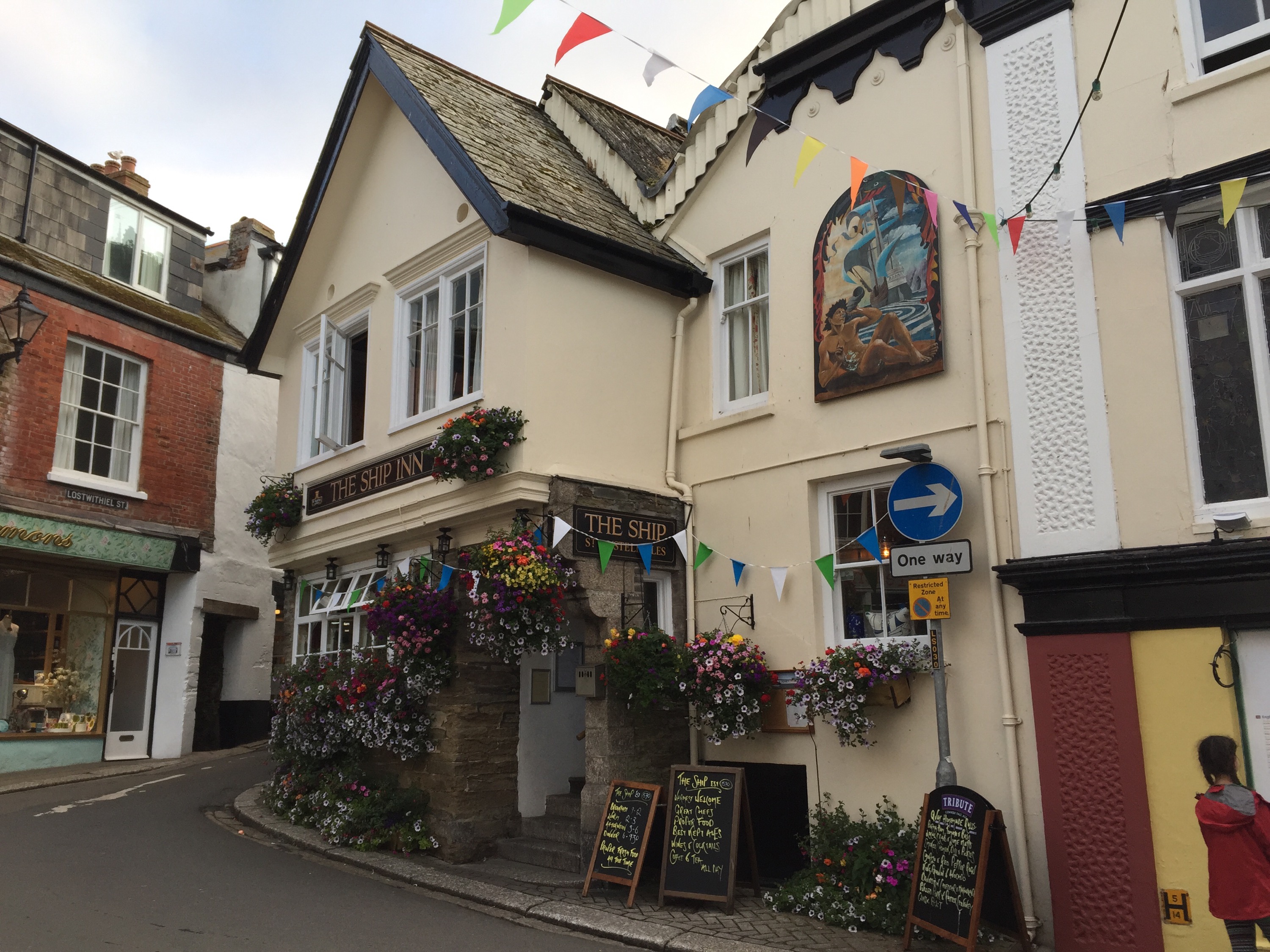
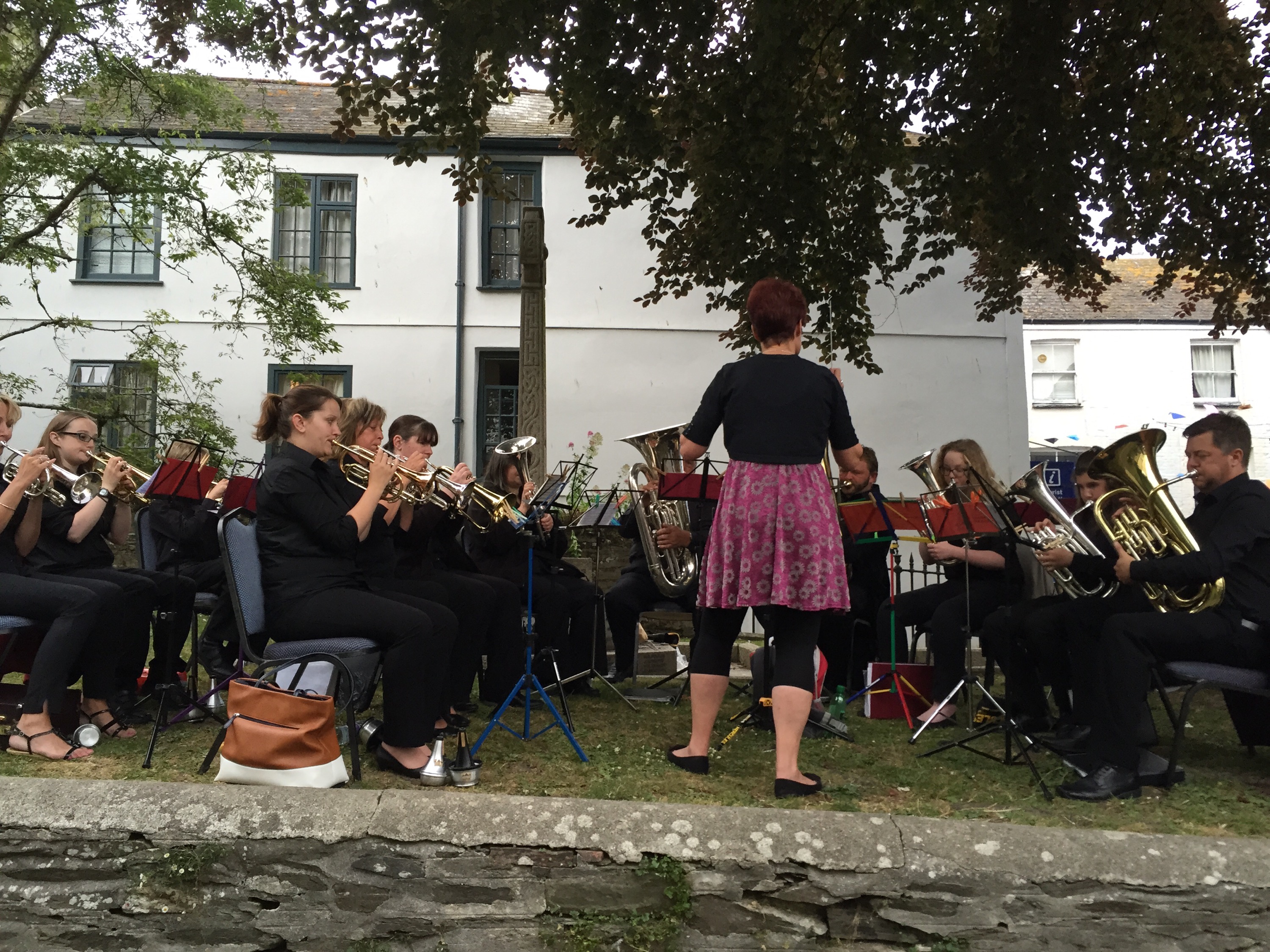
We dined in style at The Ship Inn (relatively new construction, being built in 1570) – if you ever have a chance to try their Famous Fowey Fish pie, come hungry!  Much to our delight, we were serenaded by the St Pinnock brass band, who were playing a pop-up concert in the churchyard right outside the window.