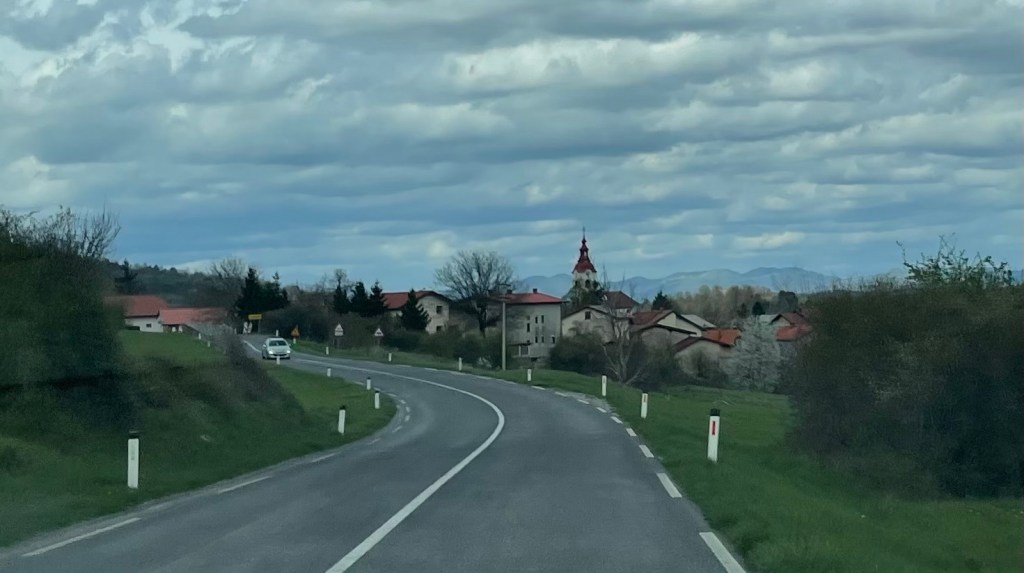
After a delicious breakfast at our B&B just outside the national park, we hit the road again. Destination: Slovenia. Our path took us cross country on tiny roads for the first part of the journey, as we made our way to the larger highway that crosses the border. The buildings in this region have an Austrian feel to them, at least from our perspective — perhaps the Slovenians imagine the influence goes the other way!
Today being Easter Sunday, we weren’t sure how many places would be open for business. We carefully saved some extra food from the day before, just in case. As it turned out, we needn’t have worried — the tourist business carries on regardless. Both of the major attractions we hoped to visit were operating, along with all the restaurants and souvenir shops surrounding them.
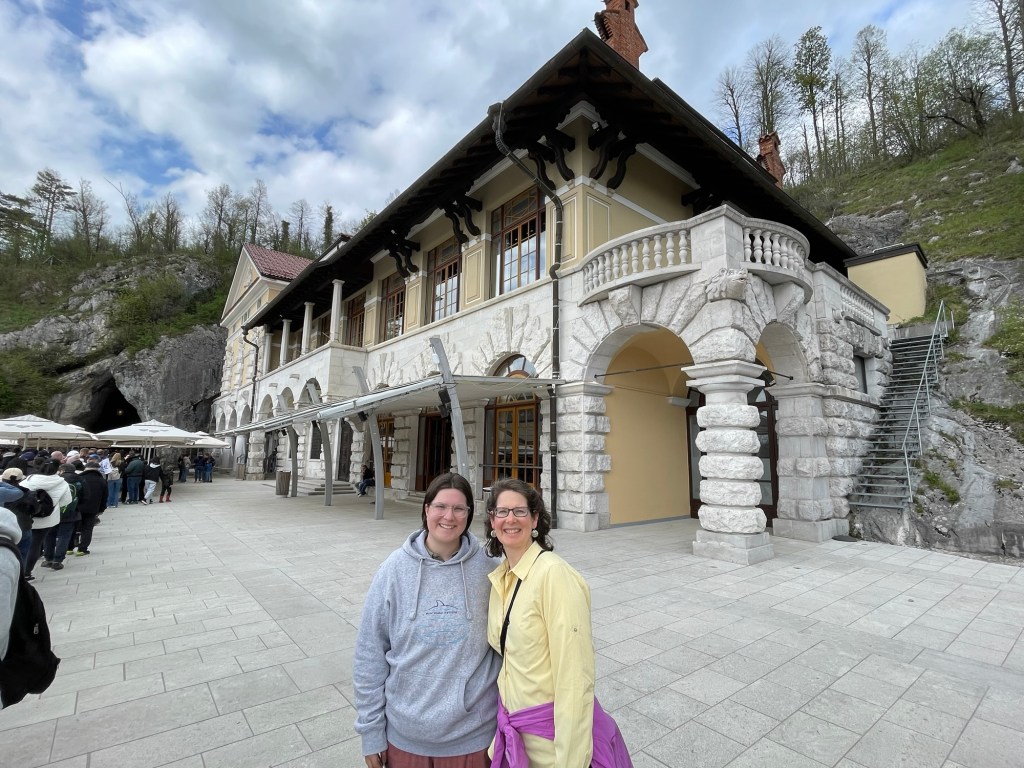
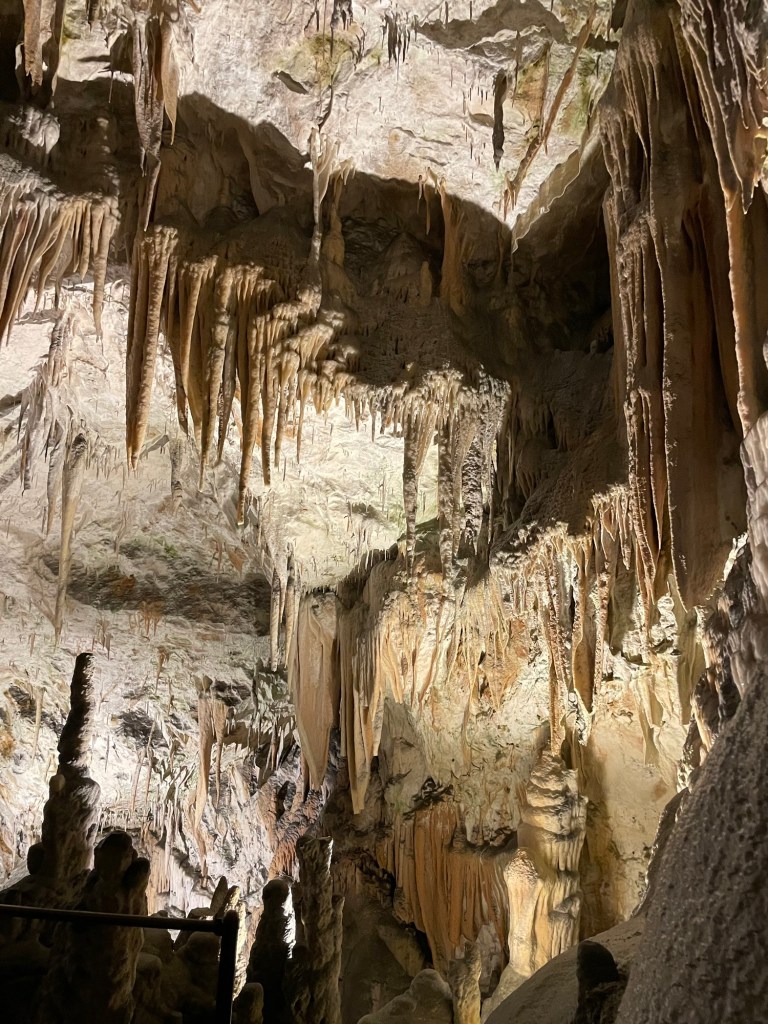
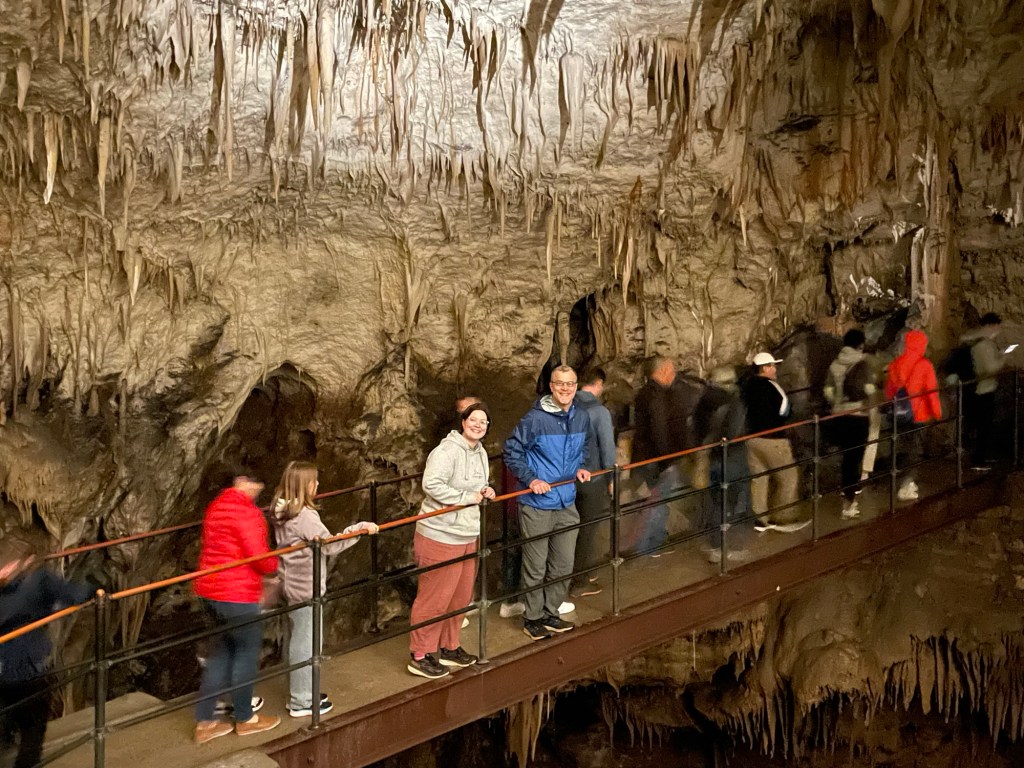
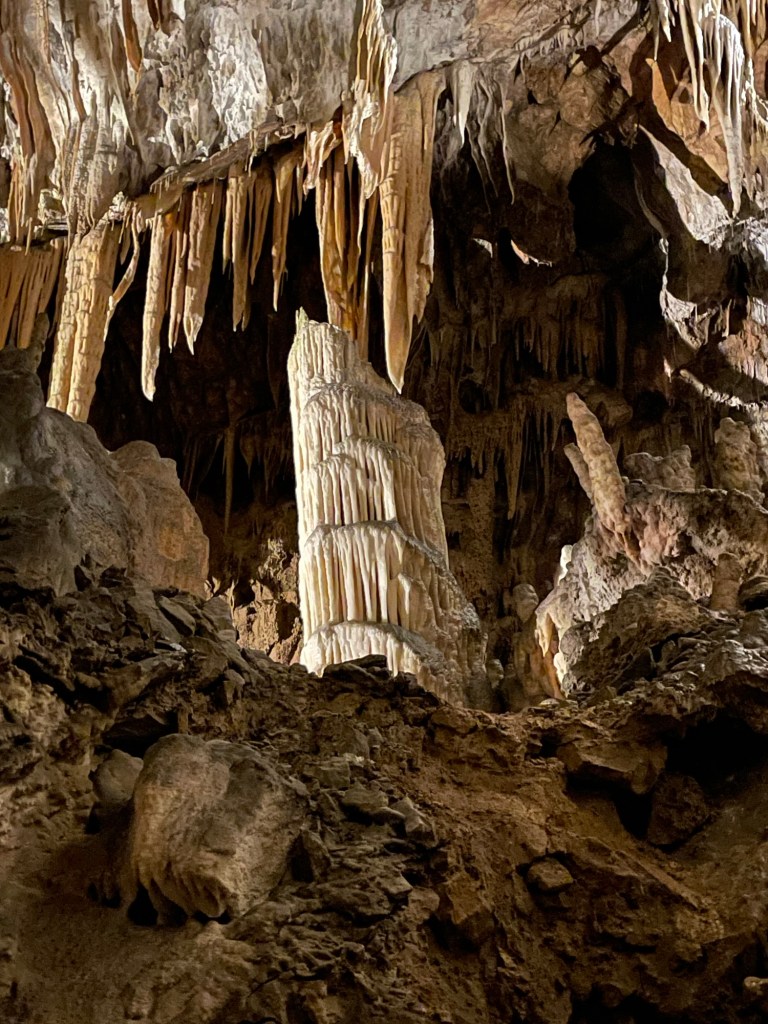
Our first destination was Postojna Jama (cave), carved out by the local river that disappears underground at this location. The entrance has the look of an old-fashioned train station, and in fact the first part of the visit is a 3.5 km ride on underground train cars, whizzing through gallery after gallery of impressive underground formations, mixed with the occasional connecting tunnel where the rock hangs down just barely overhead.

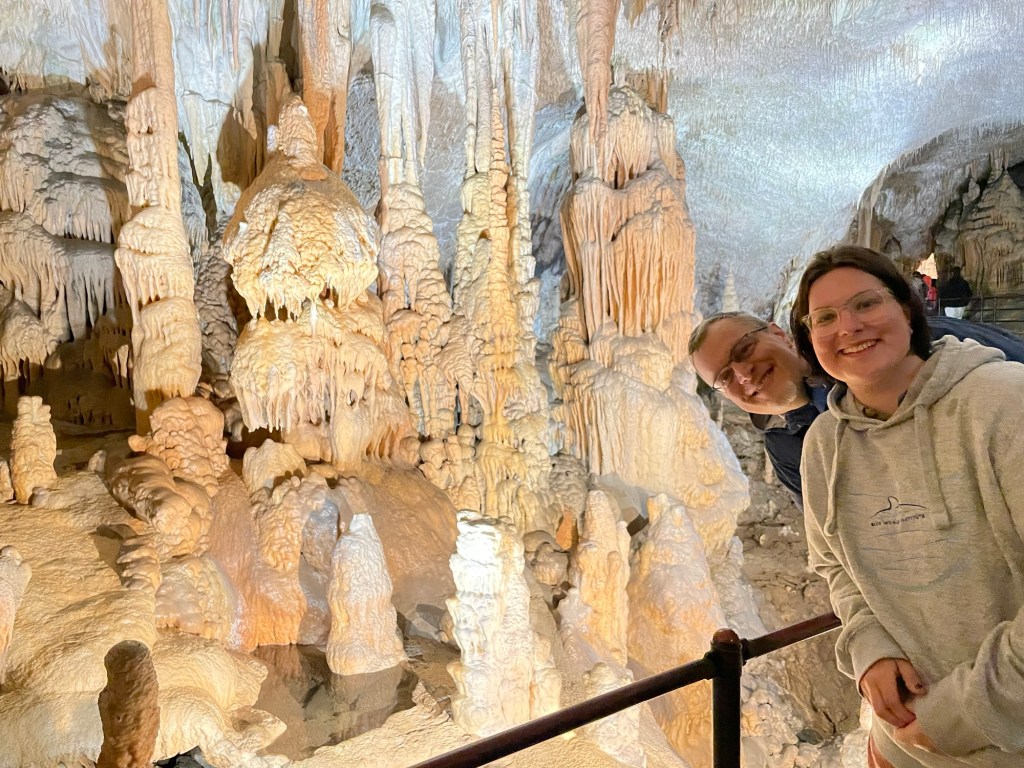
The cave has been known since the 1700s, and has drawn tourists for many years. Today the train is only the start of a smoothly functioning operation that shuttles hundreds of visitors through every hour. Perhaps the machine is too well oiled: although the underground sights were impressive, our English tour group was very large, and the guide walked quickly at the front. In order to have much chance of hearing her commentary, you had to hurry along to keep up. Not much time for lingering, but we did manage a few pictures!


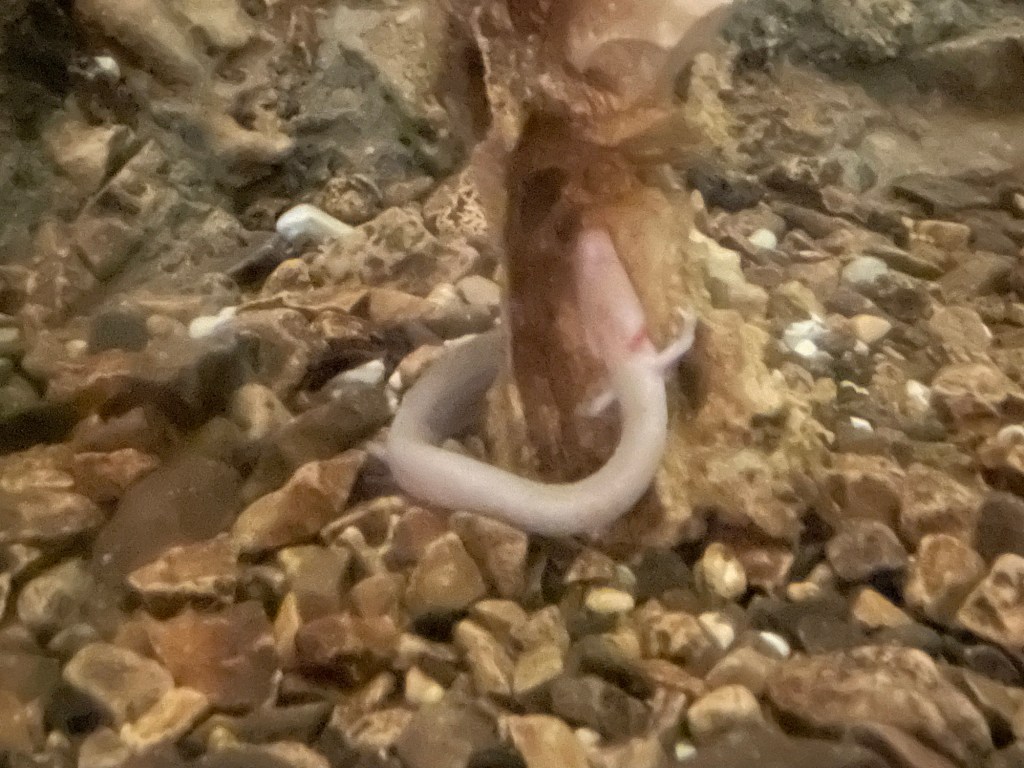
Besides its decorations in stone, this cave also boasts a zoological wonder. The olm has been known since at least the 1600s, when stormwaters occasionally washed dead specimens out of their subterranean homes. The first people to find them mistook them for dragon spawn, taking them as proof that larger mature beasts lived in the deep places underground. Today we know them as a type of cave salamander, related to the axolotl of Central America, which can live up to 100 years and show remarkable powers of regeneration when injured. Water pollution has unfortunately endangered their survival as a species, so the cave operators have begun a program to study, breed, and preserve the olm. We saw a tank where several of the creatures live as part of this effort.

Postojna Jama is host to yet another distinction: the world’s only post office 160 meters below ground, in operation since 1899. After a few tourists sent postcards bearing news of the sights they had seen there, the cave owners convinced the Slovenian postal service to set up a branch within the “Ballroom,” the largest open space in the cave system.

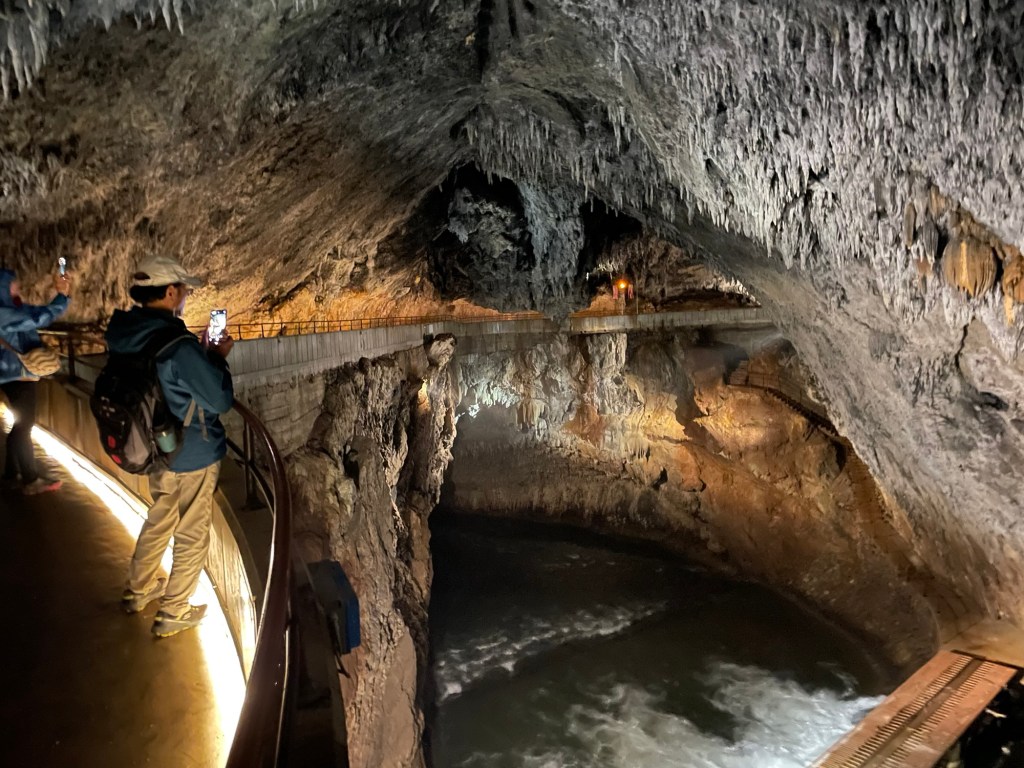
On our way out we passed above the course of the Pivka River, now running underground and excavating new caverns for future visitors to enjoy one day.
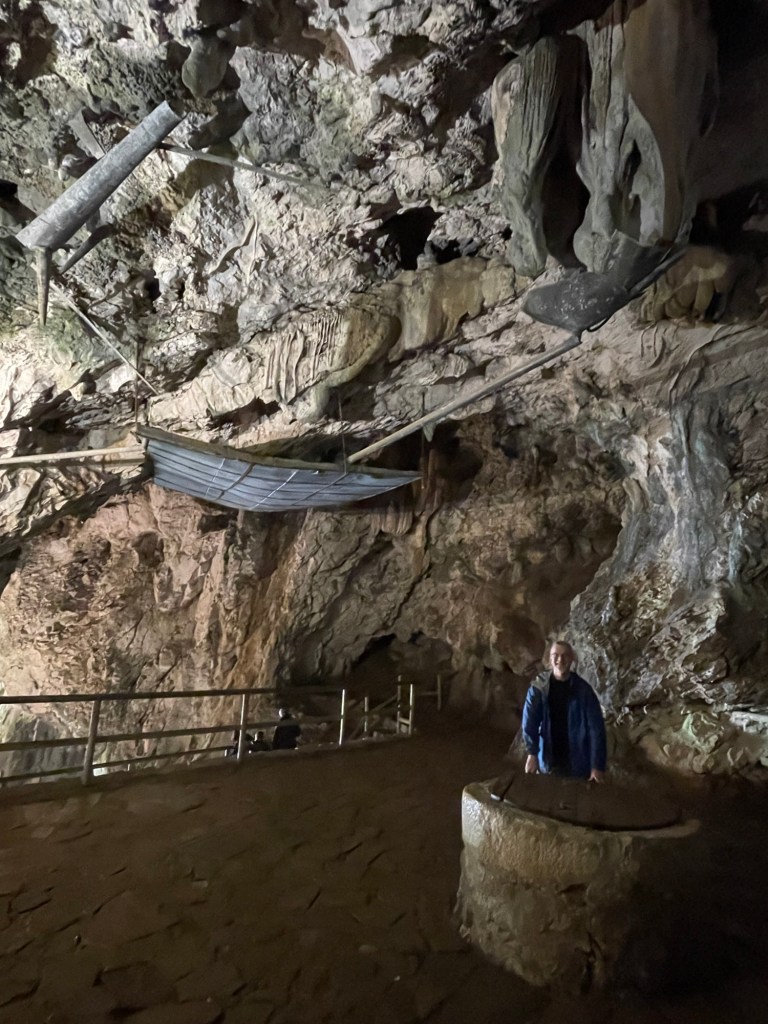
Not far from underground post office there can be found another unusual sight: a stone castle built into a cave. Predjama Castle has been fortified since at least the 13th century, although the current structure dates only to the 1500s. It stands at the mouth of a cave system that provides not only extra space for storage and housing but a secret exit used to bring supplies in during sieges.
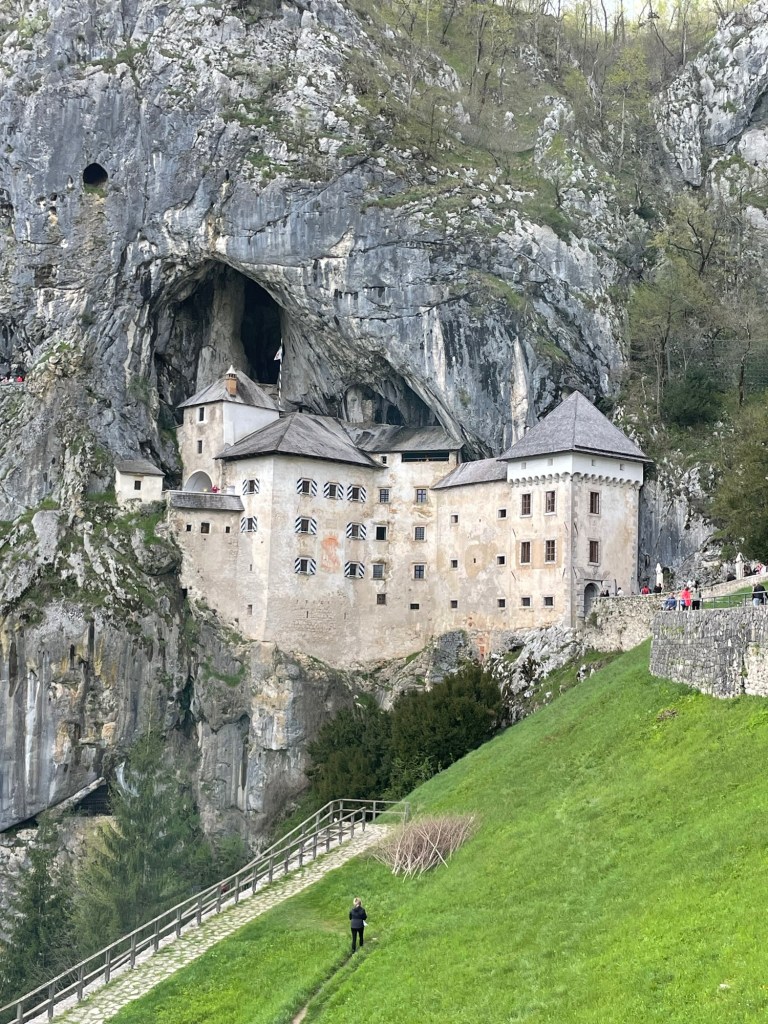
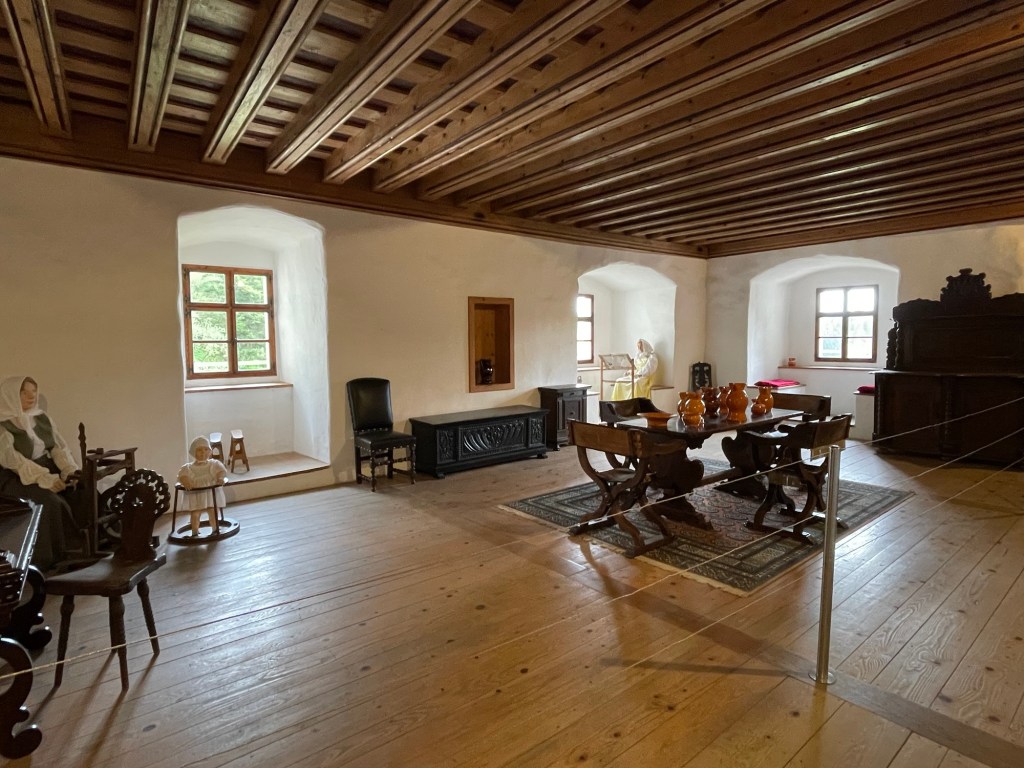
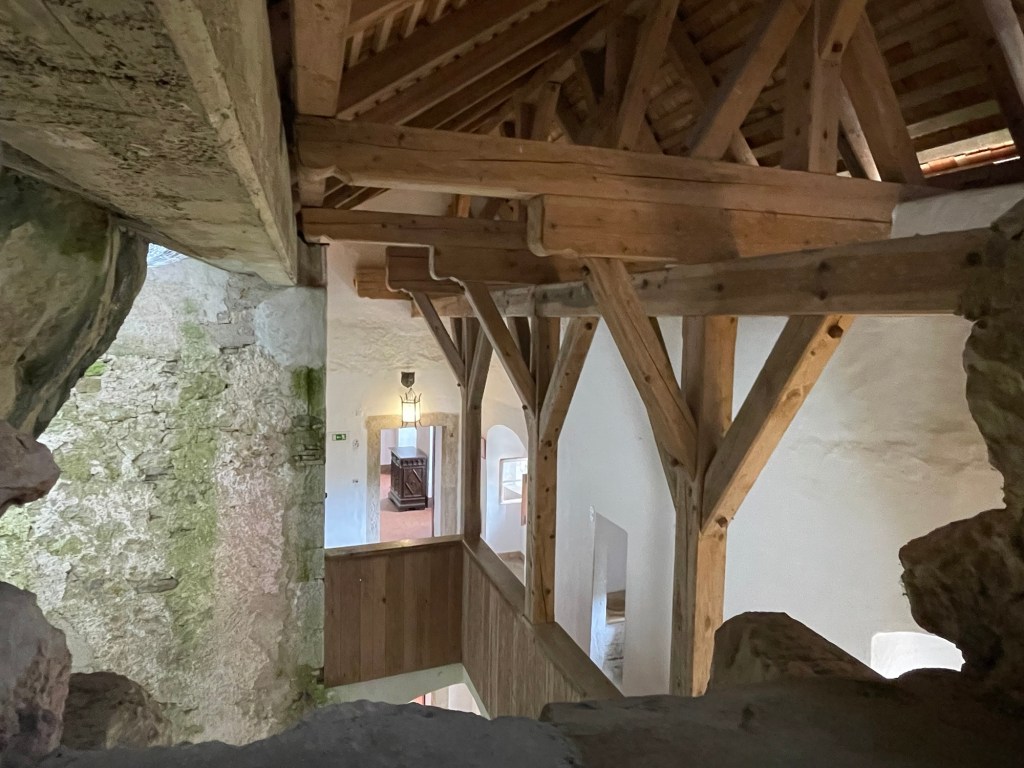
The castle layout is delightfully quirky inside, making the most of the combination of natural and manmade features. The kitchen fireplace is vented through a natural chimney in the stone, while the living areas feature large window seats for light and air. To ensure an unlimited supply of fresh water, the builders rigged up a seemingly precarious system of drip pans and piping to gather natural seepage within the cave. Thus collected, the water is routed throughout the castle via carved stone channels that presage modern plumbing. The castle also features beautifully restored post and beam roofing, a collection of arms and armor, and scenes reenacting earlier life within the castle.

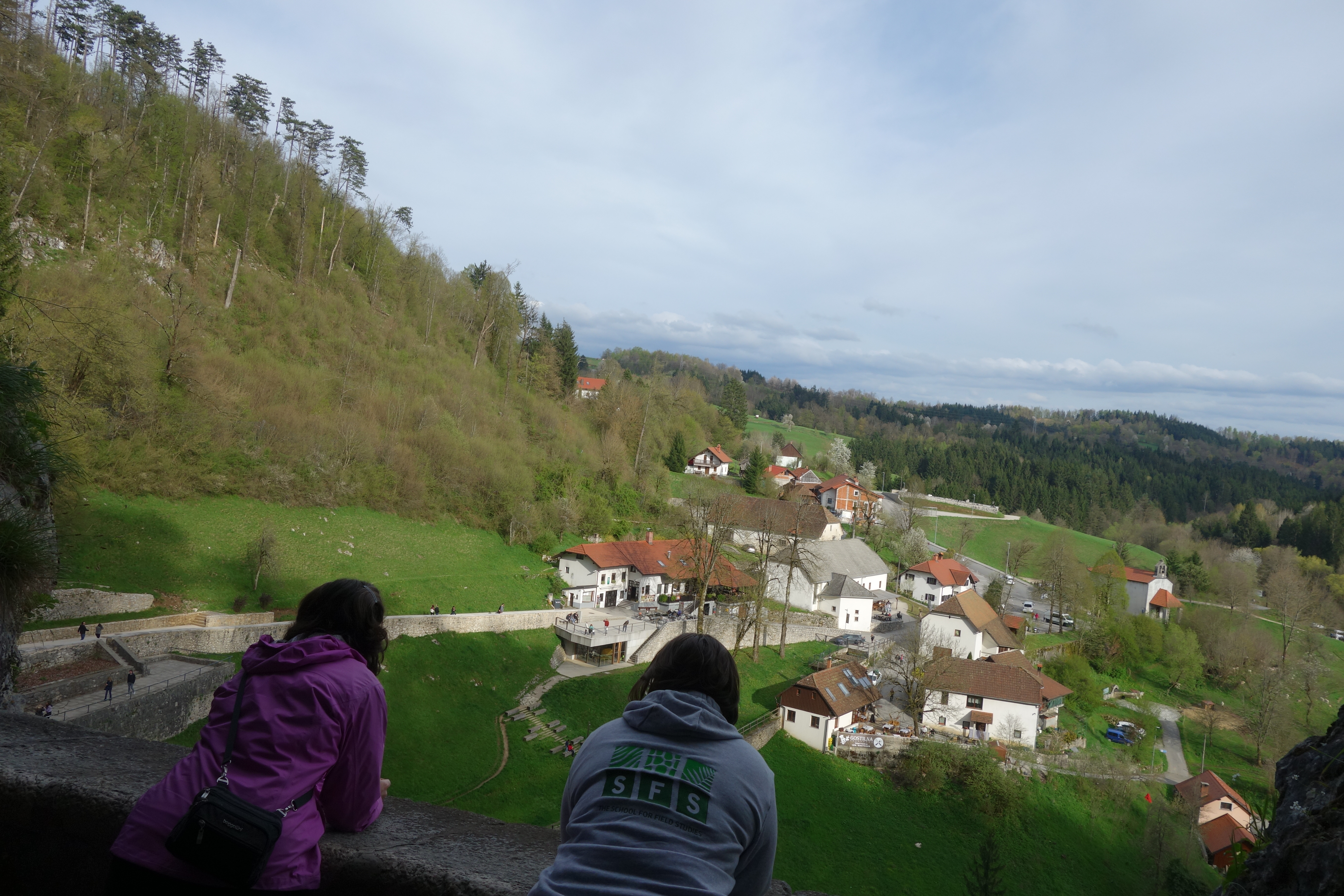




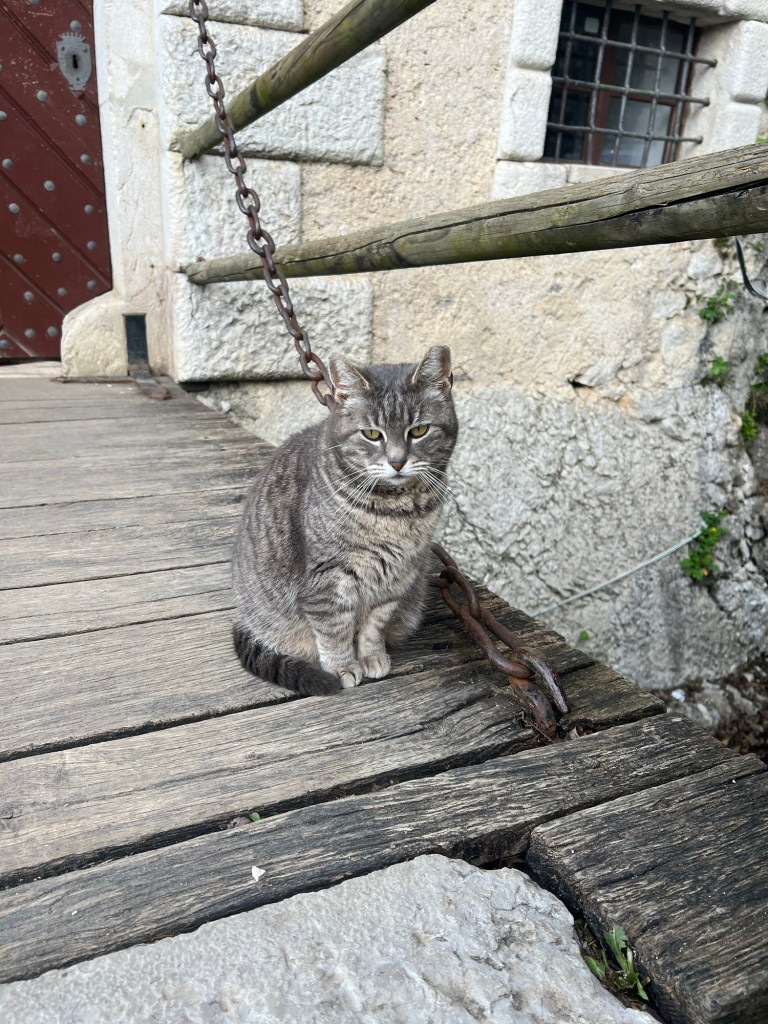
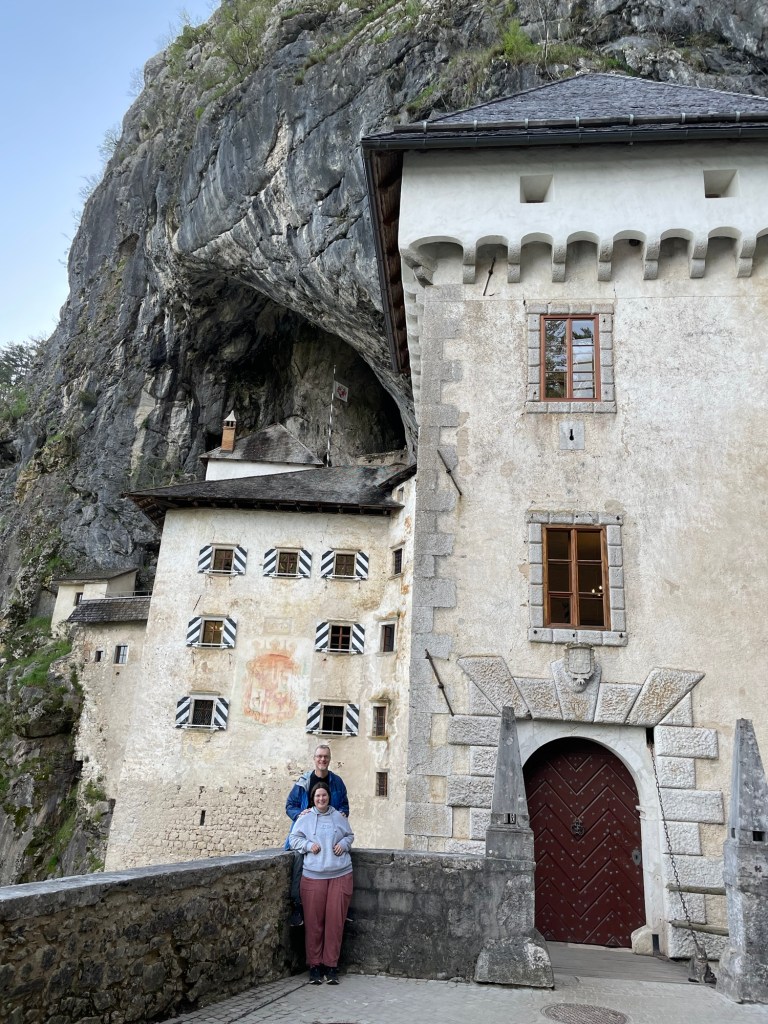


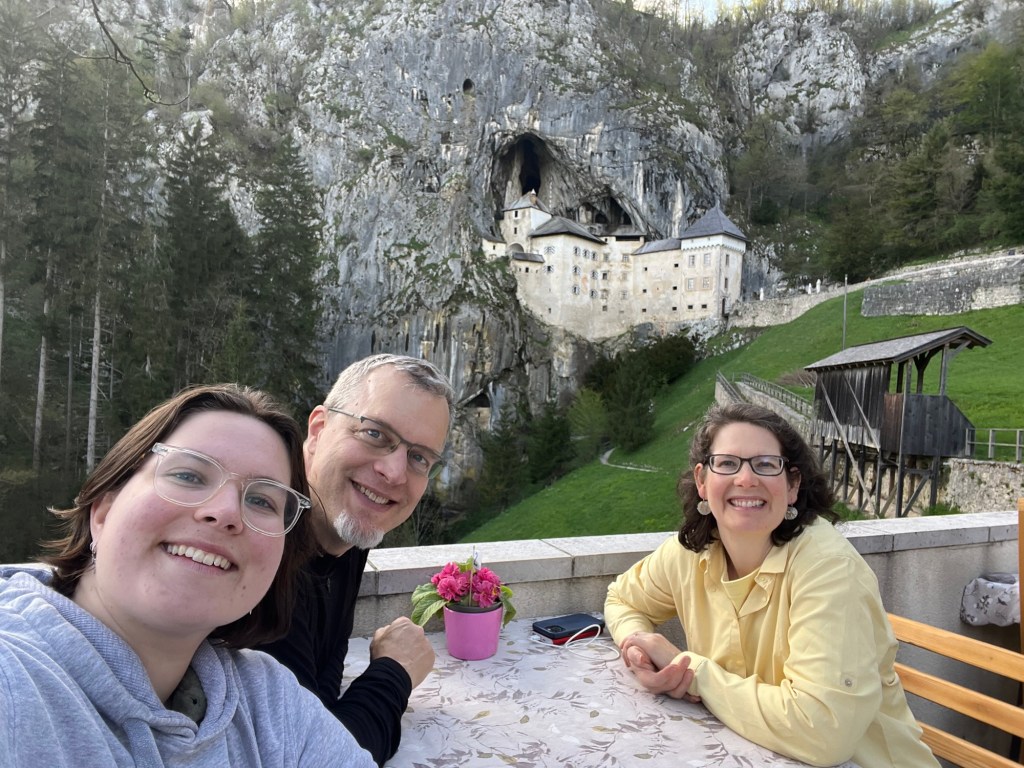
Although we had intended to travel onwards immediately after concluding our castle visit, we could not help but be drawn in by the local restaurant with the fabulous view. So we stayed for dinner, and dined on local fare including traditional Slovenian dumplings and a layered dessert cake made with poppy seed paste and served warm, called gibanica.


 Howes' Doings