Today we journeyed north to the very tip of Jutland, where the waters of the Skagerrak on the west and those of the Kattegat to the east meet and mingle. The peninsula ends in a long sandy spit, and at the tip you can actually see the waves coming from each side and crossing each other. The tradition is to stand in the waters at the point with a foot on each side.
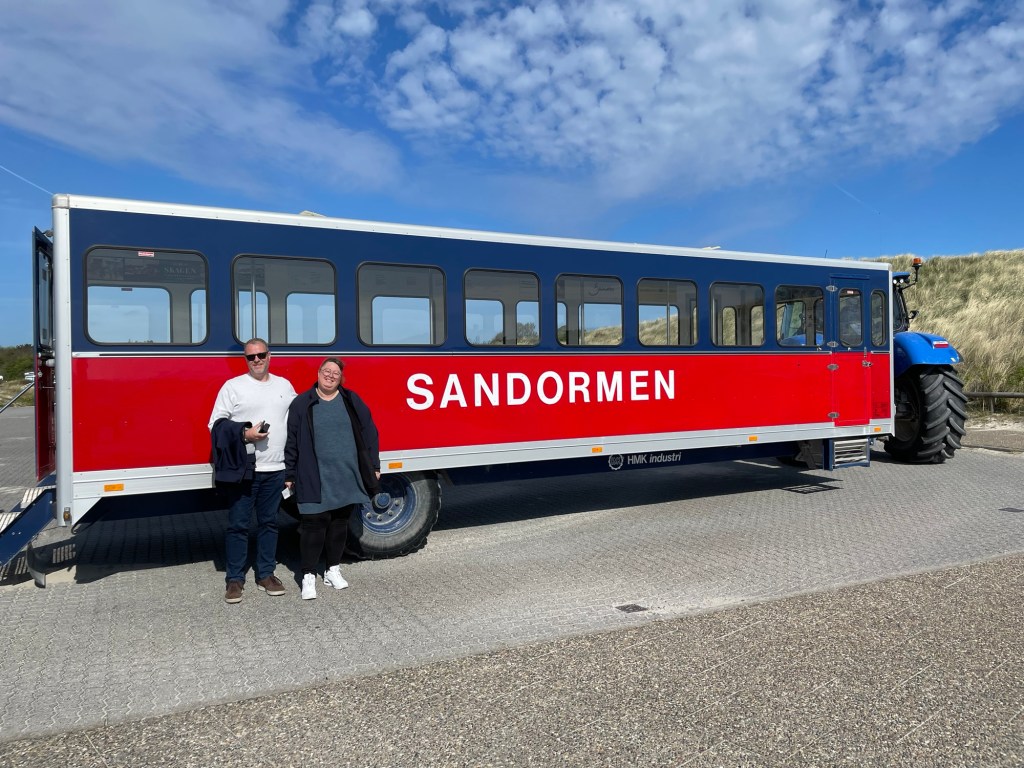
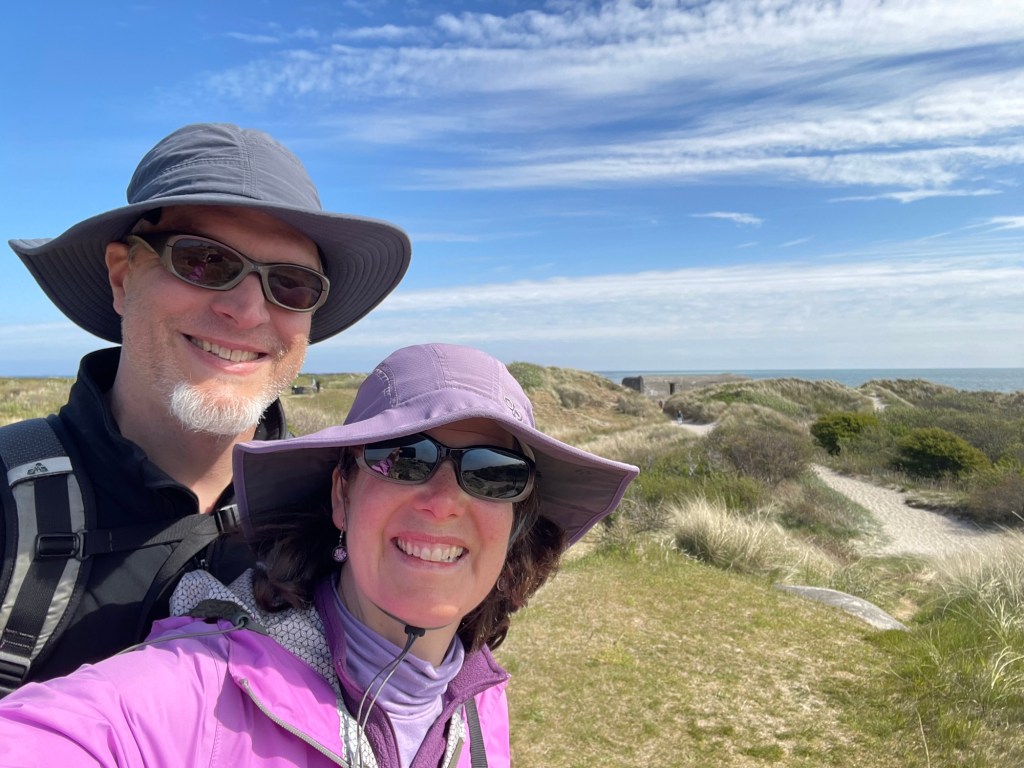
The “Sand Worm” takes visitors most of the way to the point.The water temperature is bracingFeet in the waterTourists congregating at the tipWe chose to take the long walk along the beach back to the parking lot. In the distance, notice all of the ships lined up waiting to get into the harbor.Beyond the beach there are grassy dunes, dotted with concrete bunkers left behind by the German occupationThis lighthouse warns ships away from the 4km offshore reef. In the distance you can see a cruise ship that was responsible for a lot of the tourists in the area.
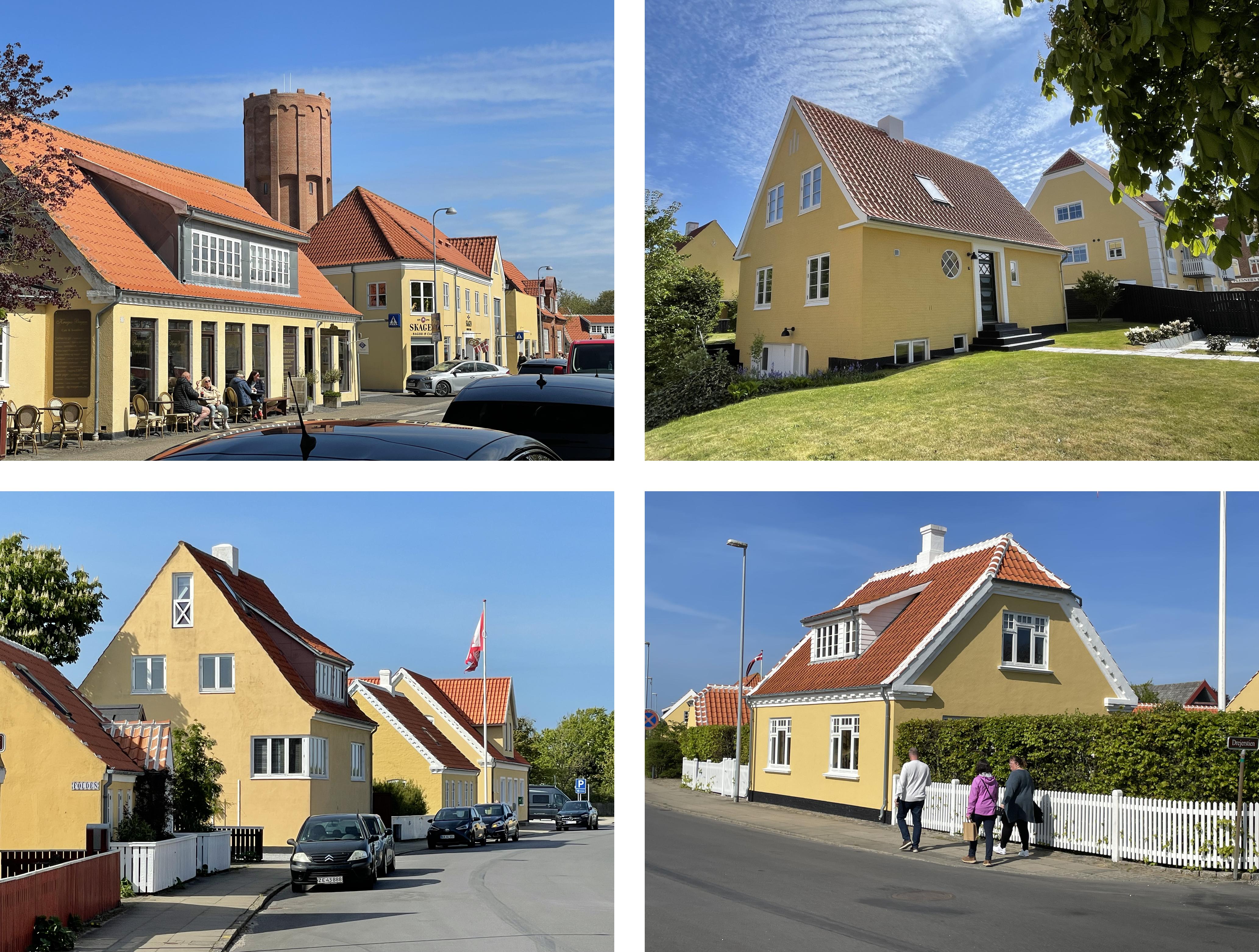
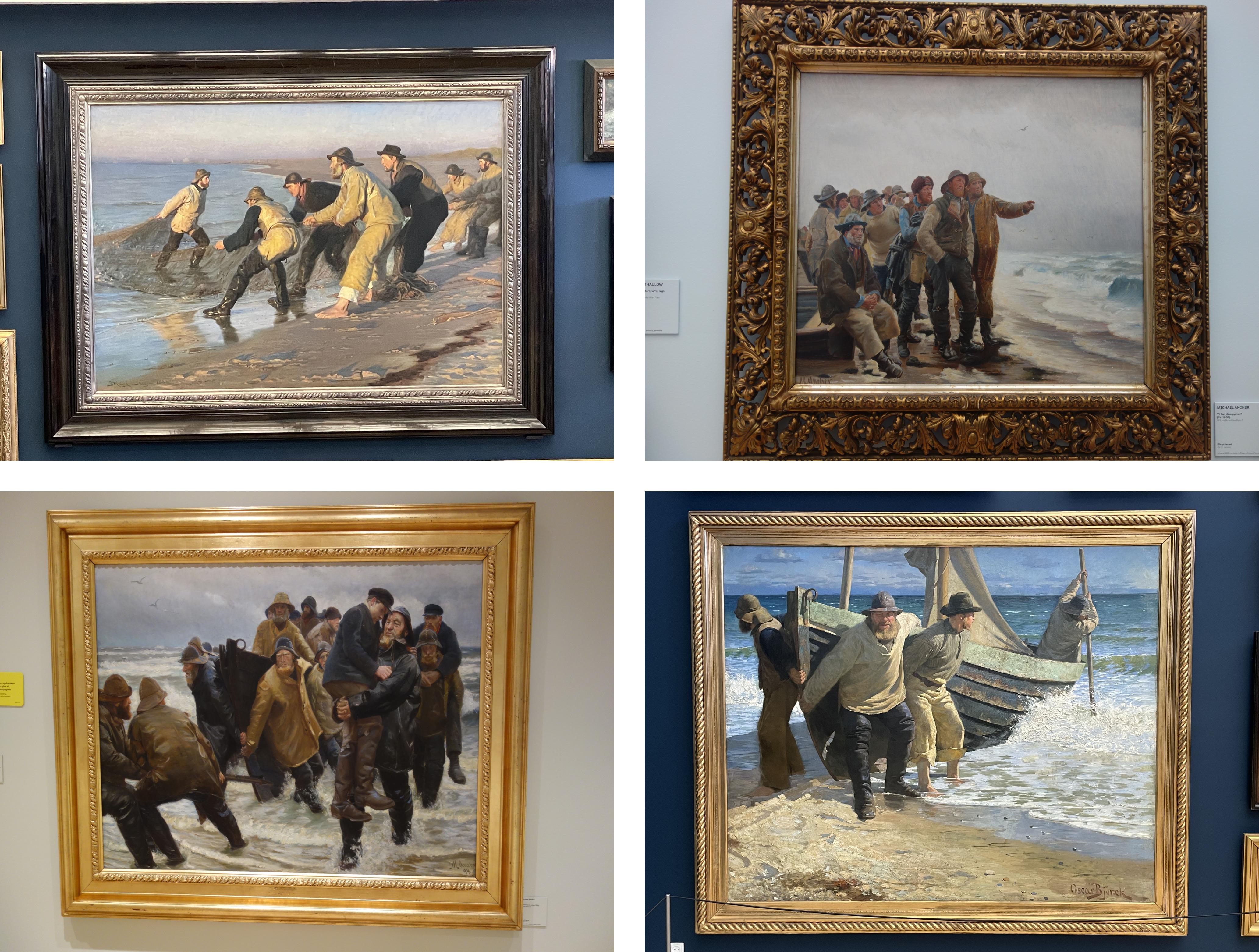
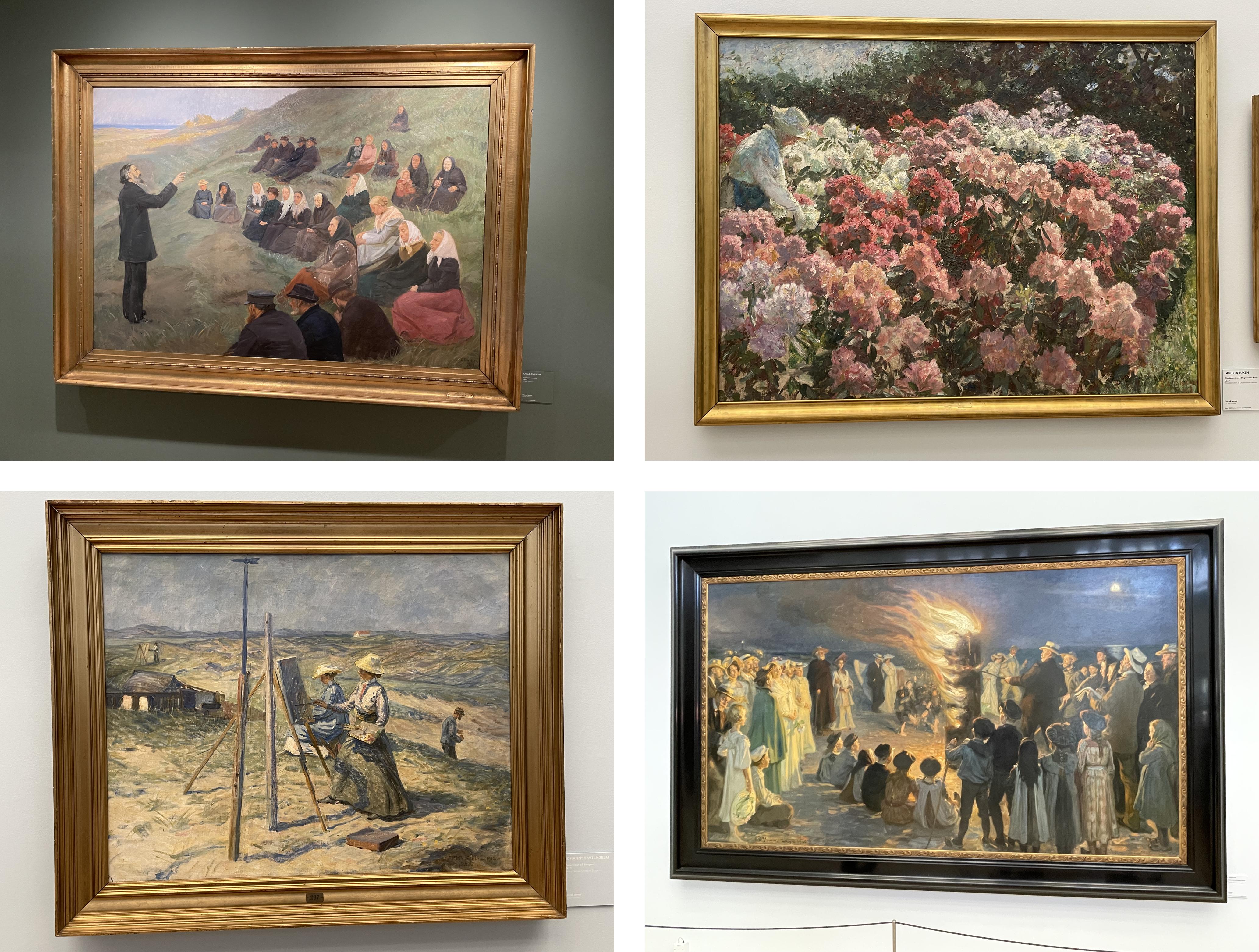
Following our walk on the beach, we headed for the nearby town of Skagen, marked by cozy yellow cottages with small gardens. A little more than a century ago the area became known as an artist colony when a small group of artists settled here. They were all friends and compatriots, included both men and women in their number, and painted many pictures of each other, the local life and scenery, plus their various pastimes. The Skagen Museum displays a large collection of their works, and the home of one artist couple has been preserved and includes many more paintings. By the end of our visit, we felt a certain familiarity with the artists and their families — seeing so many of their paintings was like viewing a family photo album, and we could pick out the distinctive features and mannerisms of many individuals.
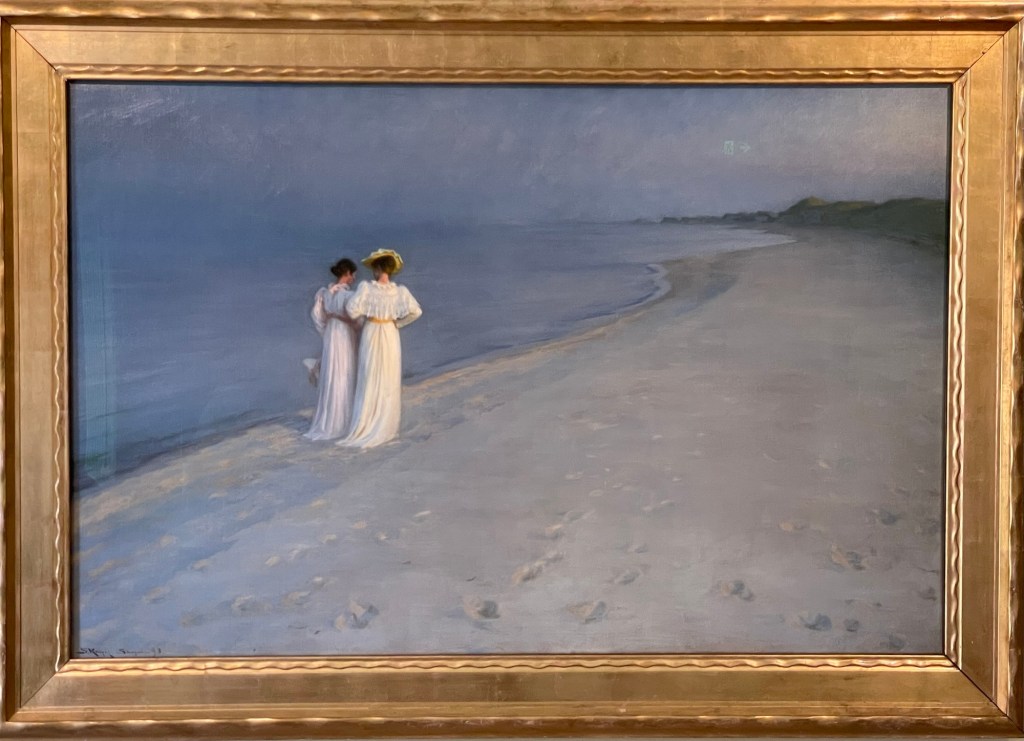
The houses are yellow due to an inexpensive ochre pigment mixed into the limewashP.S. Krøyer’s painting of Anna Ancher and Marie Krøyer walking on the beach – perhaps the most famous work from the Skagen paintersFishermen were a popular subjectOther scenes are drawn from local life and scenery
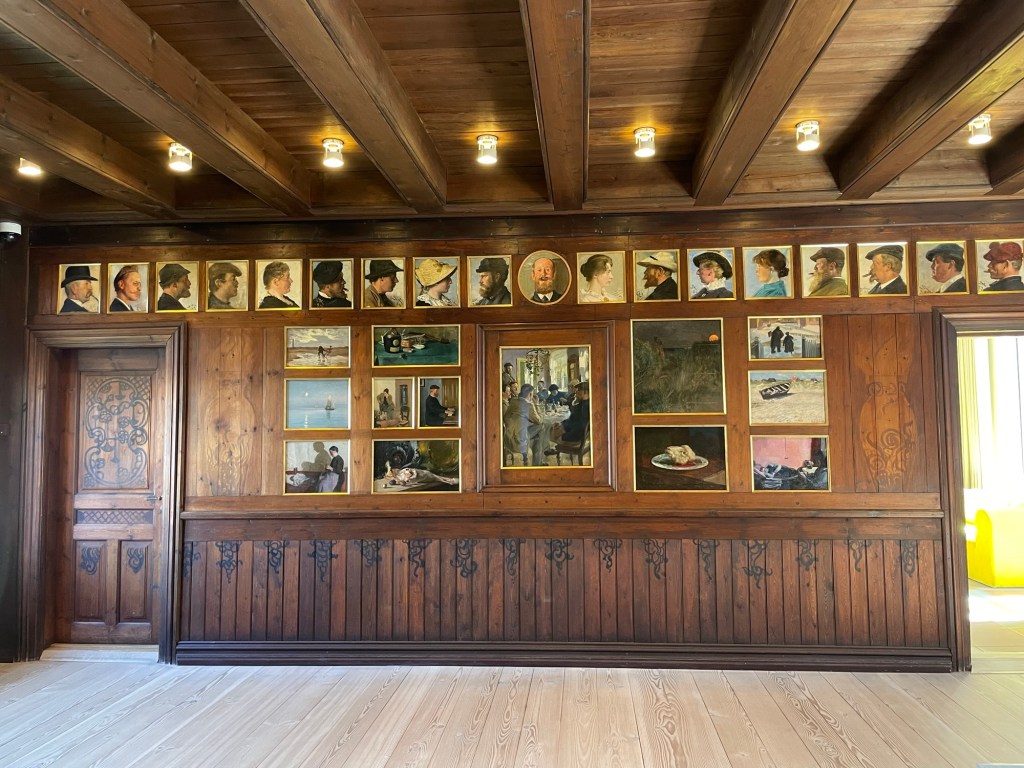
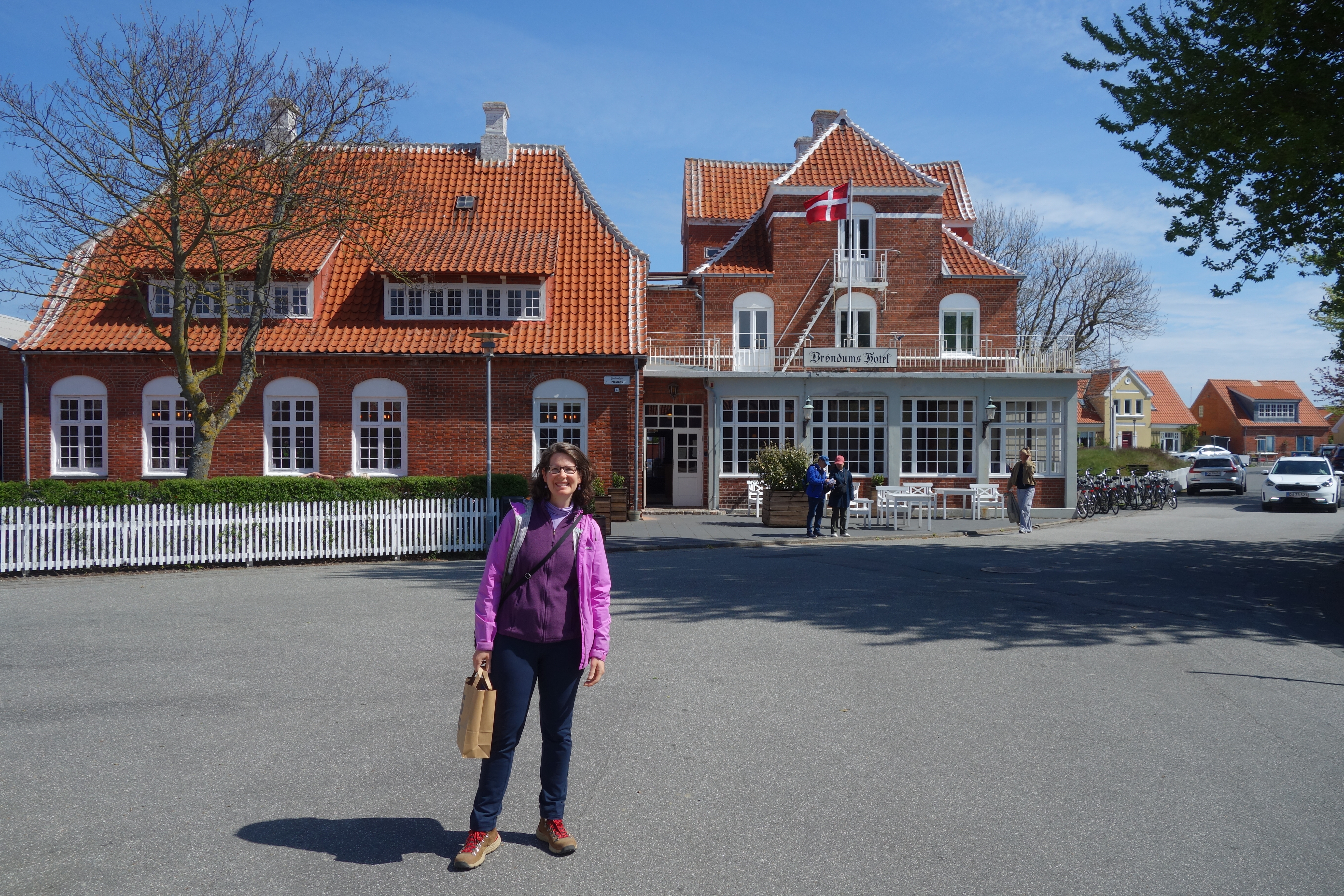
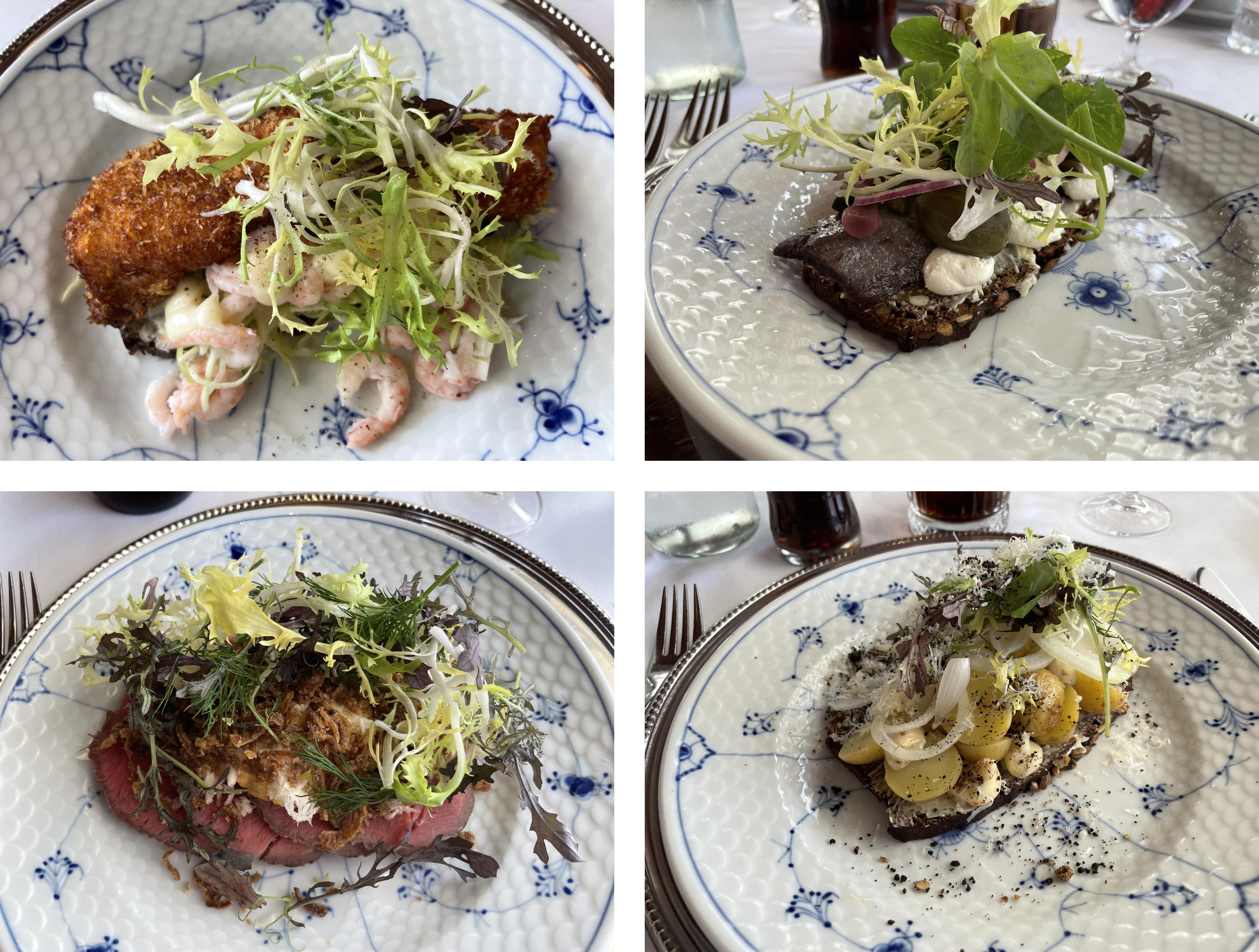
Many meetings of the Skagen painters took place in the dining room of Brøndums Hotel. To mark it as their own, the artists decorated the room with paintings and portraits inlaid within the wood paneling. In later years the original decor was preserved and transferred to the Skagen Museum so that visitors can see the room as it existed then. Meanwhile the Brøndums Hotel still stands, and it is possible to order lunch as we did in its now modernized dining room. One specialty of the house is a Danish treat: smørrebrød.
One wall of the dining room from Brøndums Hotel, as preserved at the museumBrøndums Hotel as it looks todaySmørrebrød, essentially an open-faced sandwich with fancy toppings
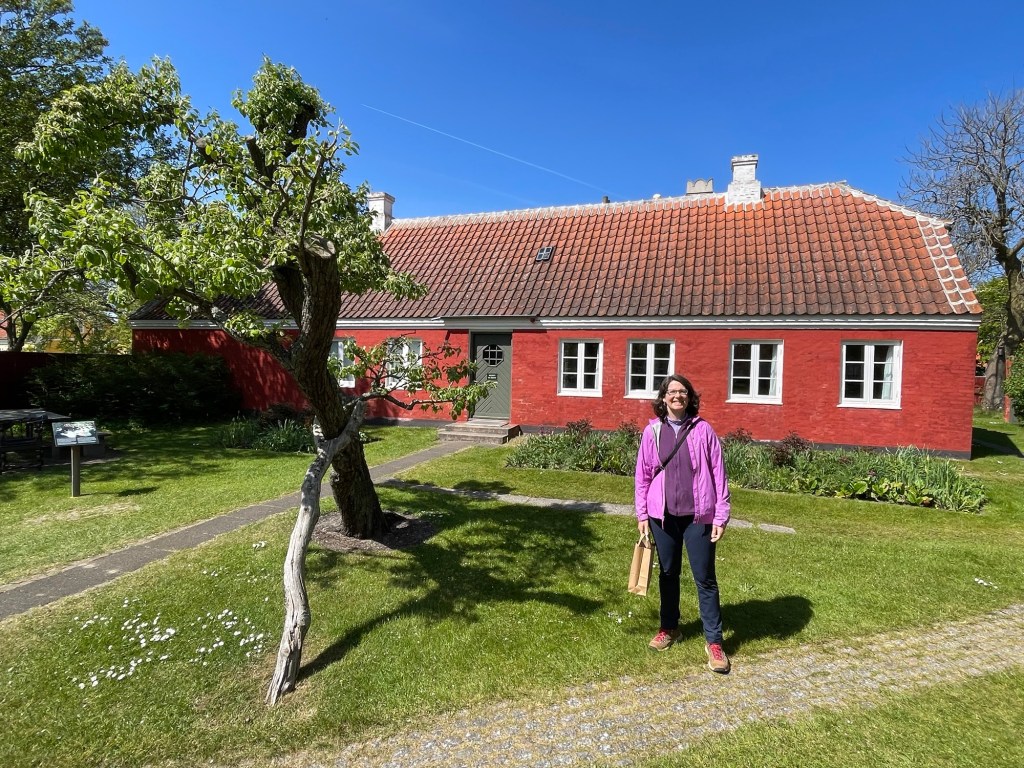
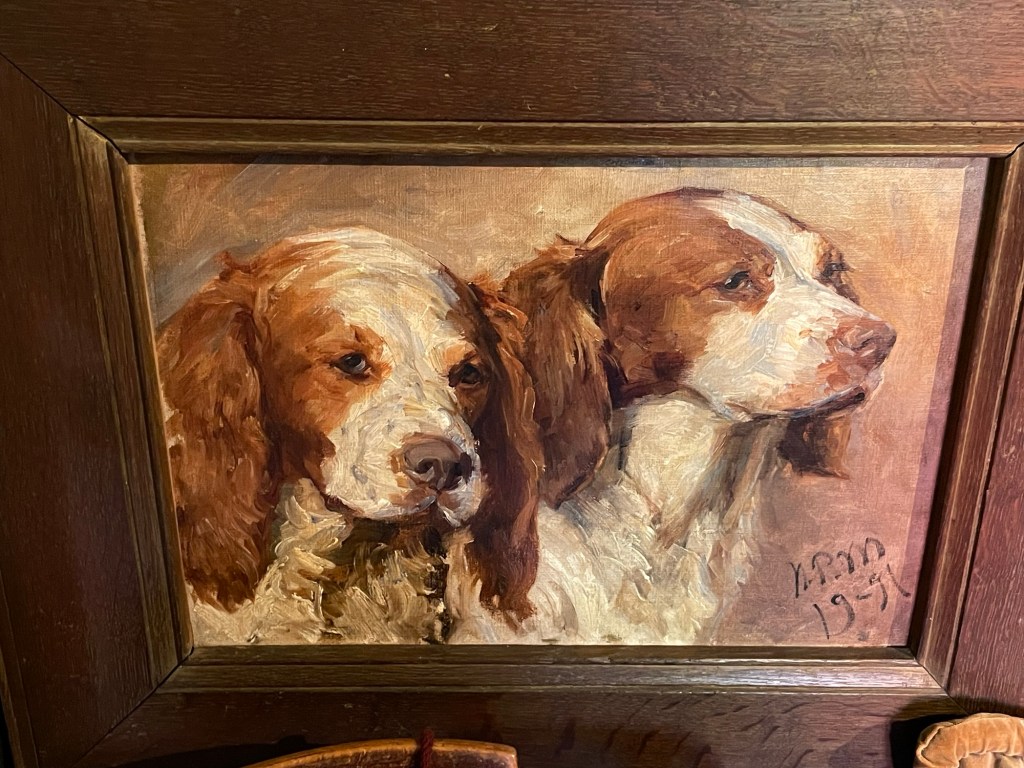
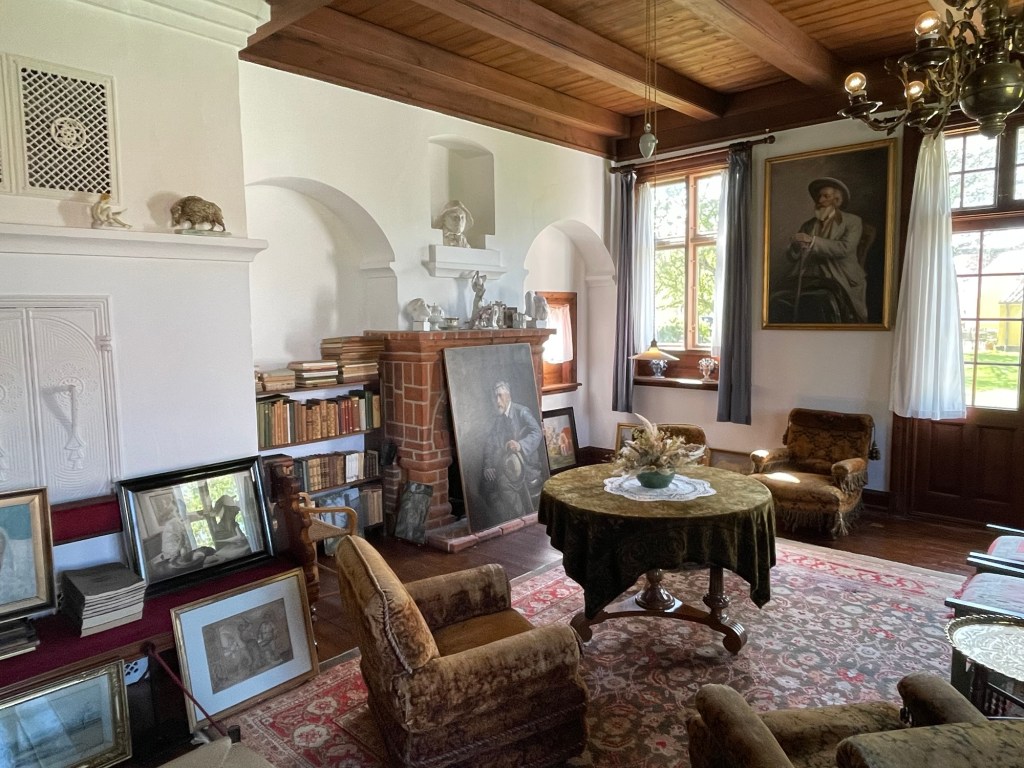
Anna and Michael Ancher and their daughter Helga all painted. When her parents died, Helga closed up their house and eventually it was donated to the museum. Visitors can see the house as they left it, including their individual studios in the rear. Everyone is asked to wear fabric overshoes in order to protect the floors from damage.
In front of the Ancher’s houseBooties!Family portraits in the parlorFamily dogsMichael’s studio is larger than Anna’s, but not as well lit
After getting to know the artists of Skagen, we turned our attention to features in the surrounding countryside. One curious structure that caught our eye had appeared to be a sort of trebuchet. On closer inspection it turned out to be a primitive form of lighthouse. On the end of the long arm is a metal basket, in which a fire can be built. The arm with its burning basket is then raised into the air so that it is visible to ships at sea.
The early lighthouseToday’s ships rely on more advanced means of navigation
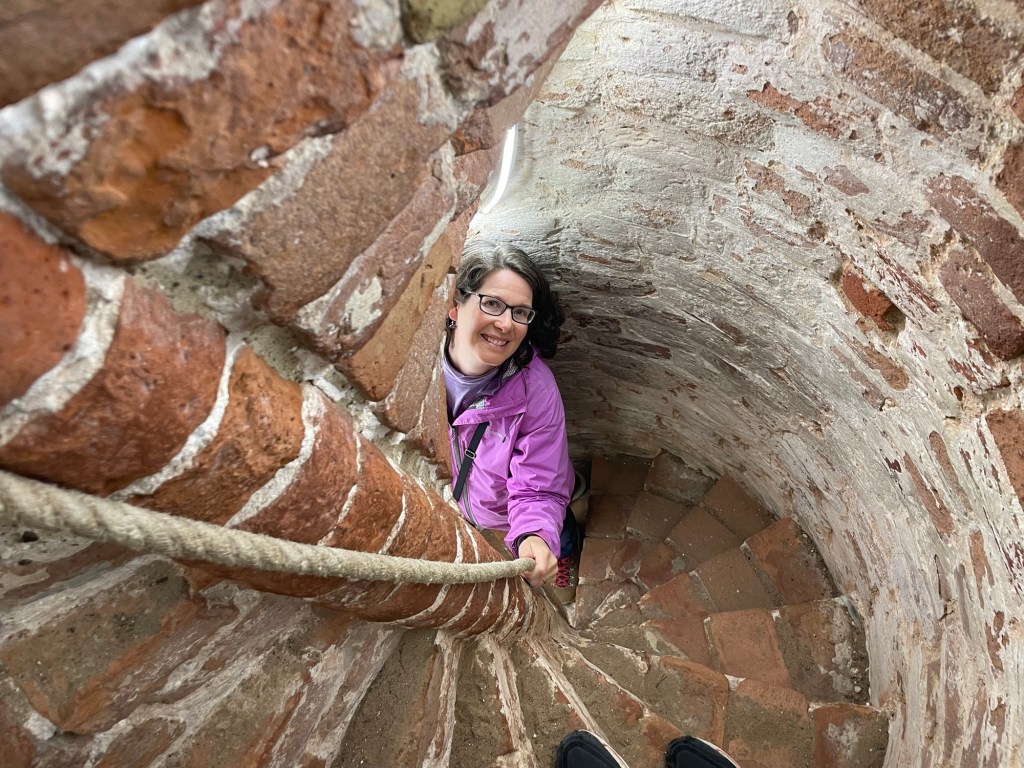
The sea and sand are always part of the conversation here. Yesterday we saw a village that had been abandoned due to sand infiltration. Today, we saw a whole church that was swallowed by sand. All that remains visible today is the upper part of the tower, since the rest of the structure was pulled down when it was abandoned. The tower was left standing and painted white to serve as a navigational aid for sailors.
The sand-buried churchAccess to the tower was via a very steep and narrow spiral staircaseThe roof truss was a work of art in itself
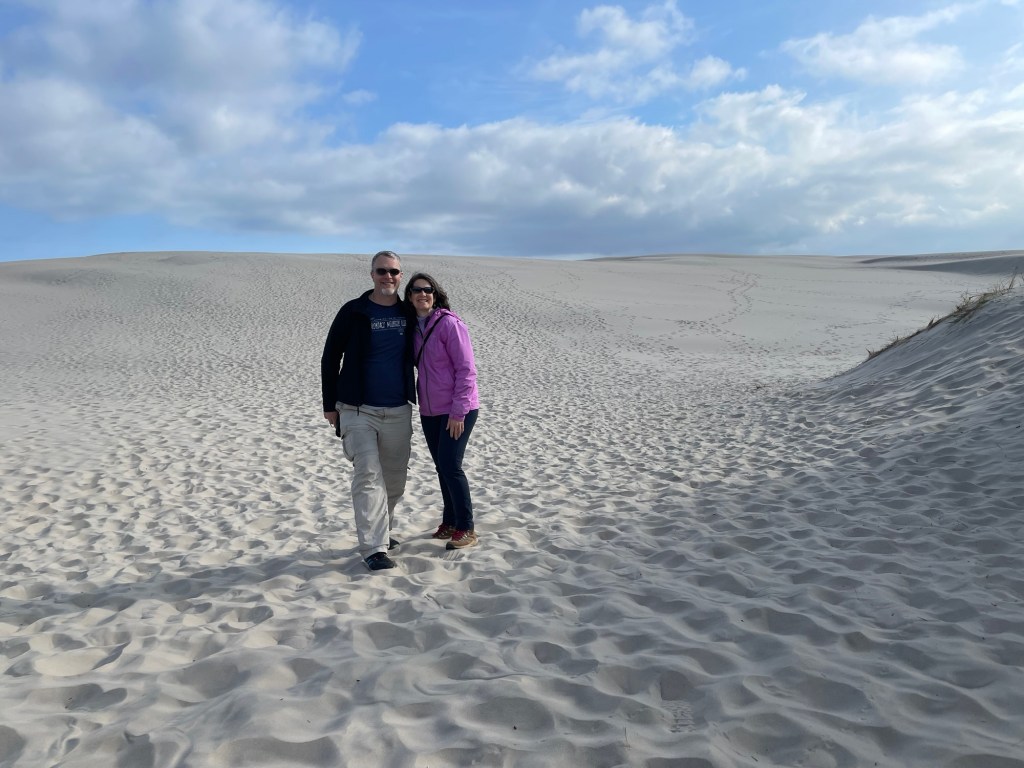
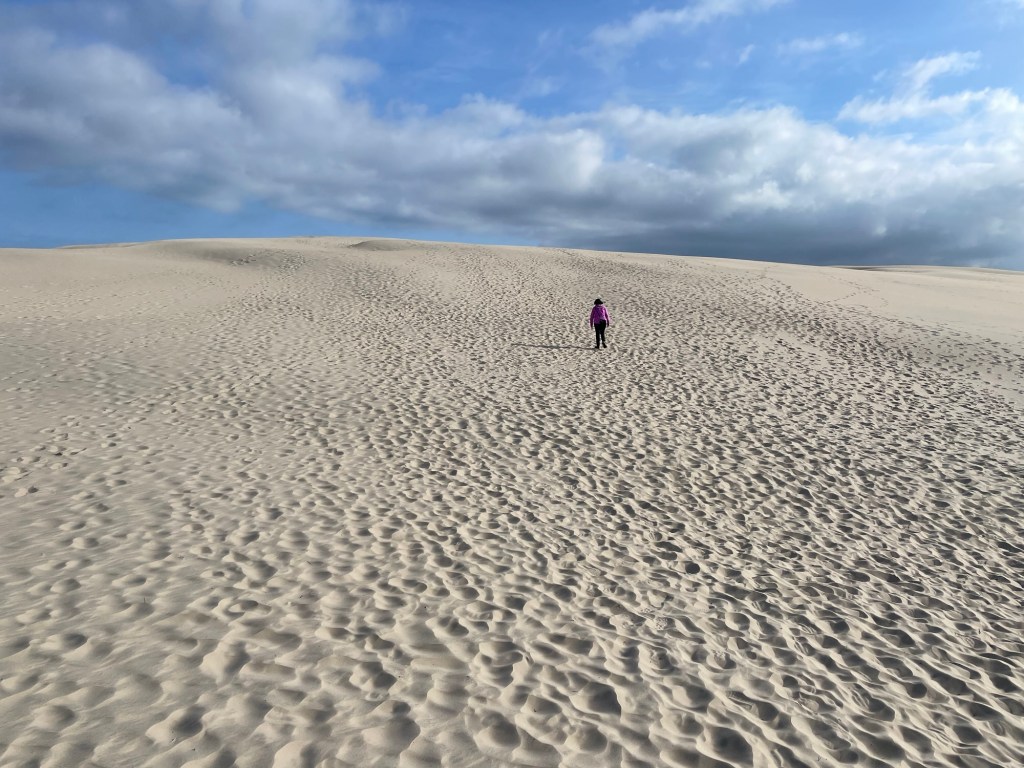
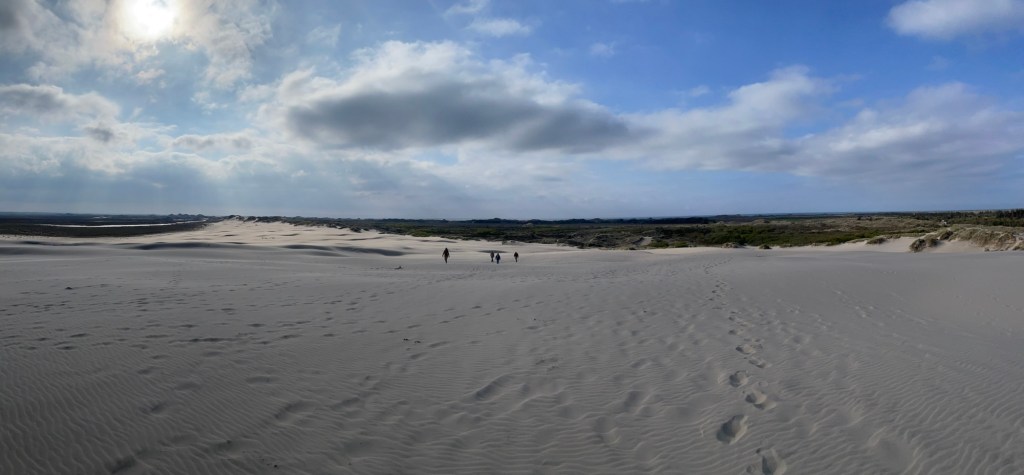
Following the church, we paid a visit to a moving sand dune that is swallowing up new ground even today. Called Råbjerg Mile, the two-square-kilometer dune moves eastward by about 15 meters per year. Though surrounded by green forests and waterways, the dune itself feels like a sort of pocket desert wasteland. Although we could see the footsteps of other visitors who had come before us, the wind was already erasing their traces.
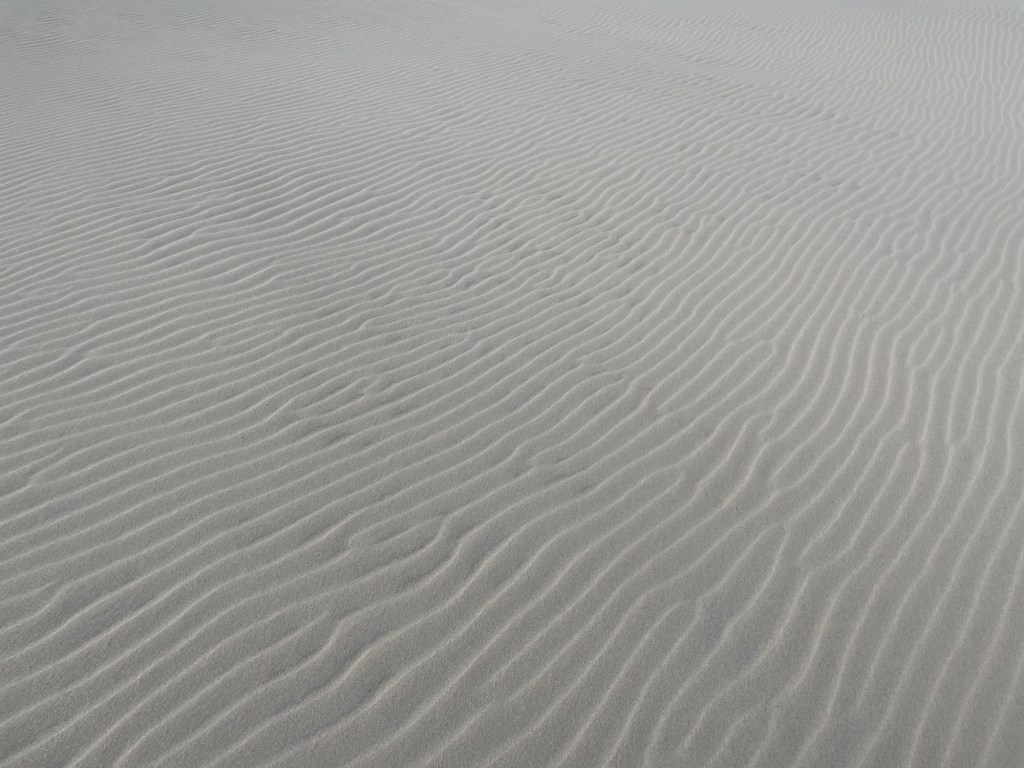
At the base of the duneThe highest point of the dune is 40m above the surrounding terrainLooking back from the top of the riseWind-sculpted ripplesWe stopped for groceries in Hals harbor, on the north side of the Limfjord, on the way back to the summer cottage
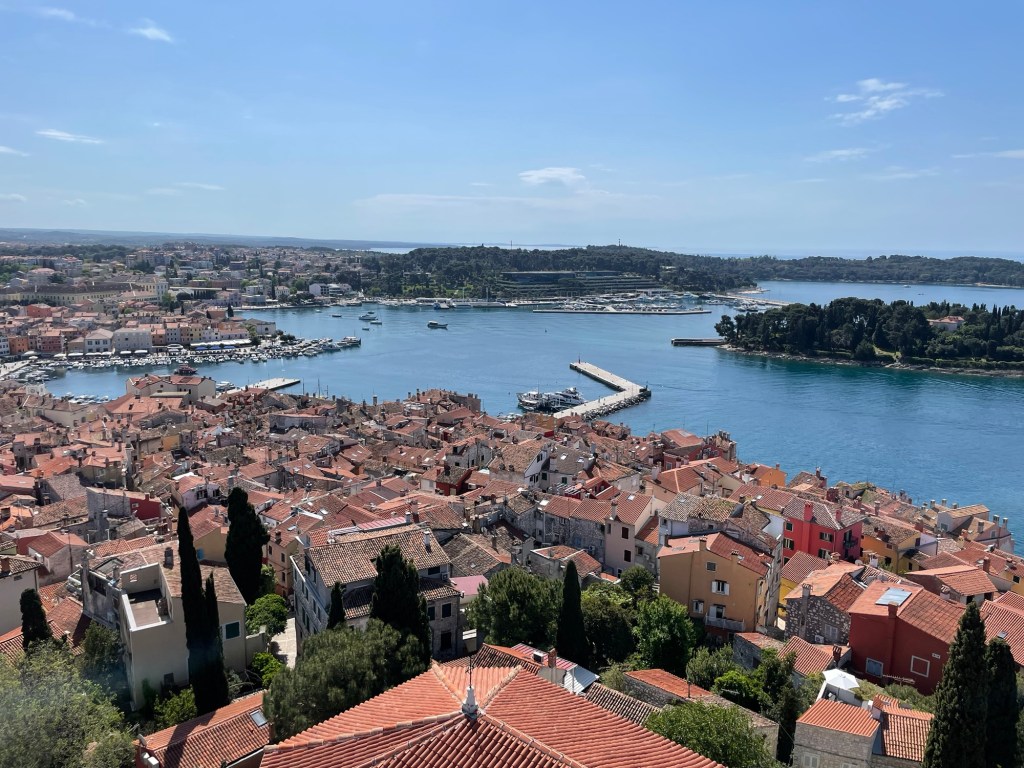
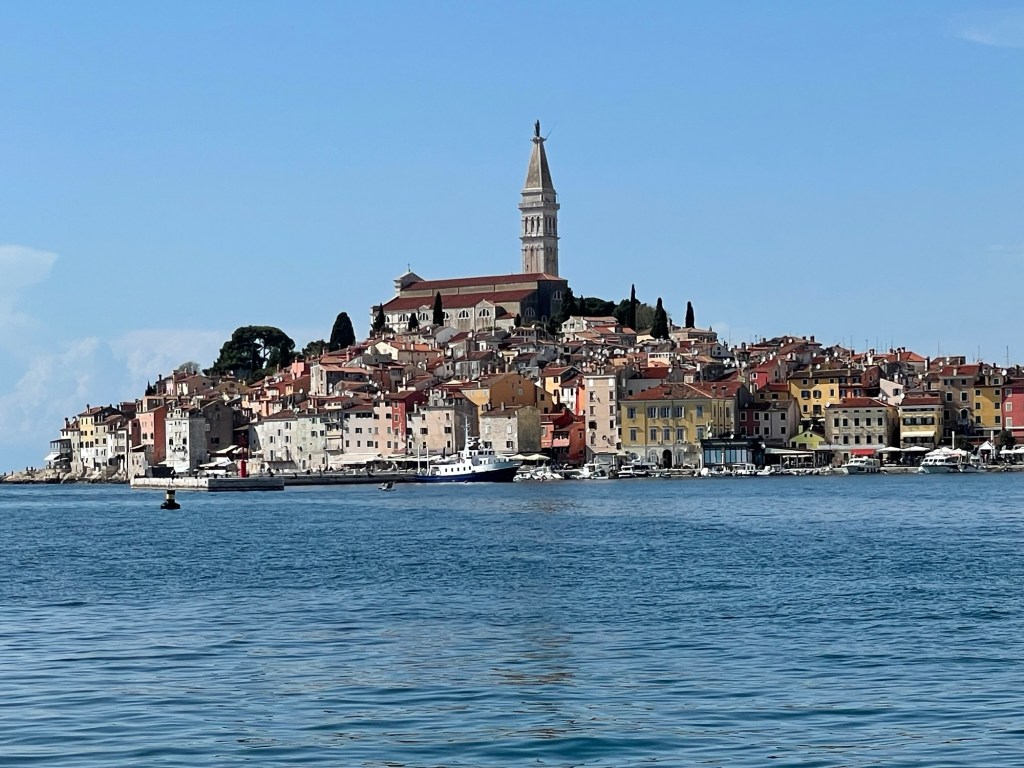
Today we spent exploring Rovinj and its environs on foot. Walking is a good way to get around here, because most of the old city is pedestrian only. The town developed in stages; the oldest settlement was on an oval island just off the coast, where the street plan was designed so that the houses on the outer edge provide a solid wall defending against attacks. In more recent centuries, when threats from the water had subsided, some narrow openings were made in these defenses for easier access to the sea. As the town grew, the island became overcrowded and buildings spilled onto the mainland, with a bridge connecting the two districts over a narrow canal. Ultimately the canal itself was filled in to make a new street, and the onetime island became a peninsula.
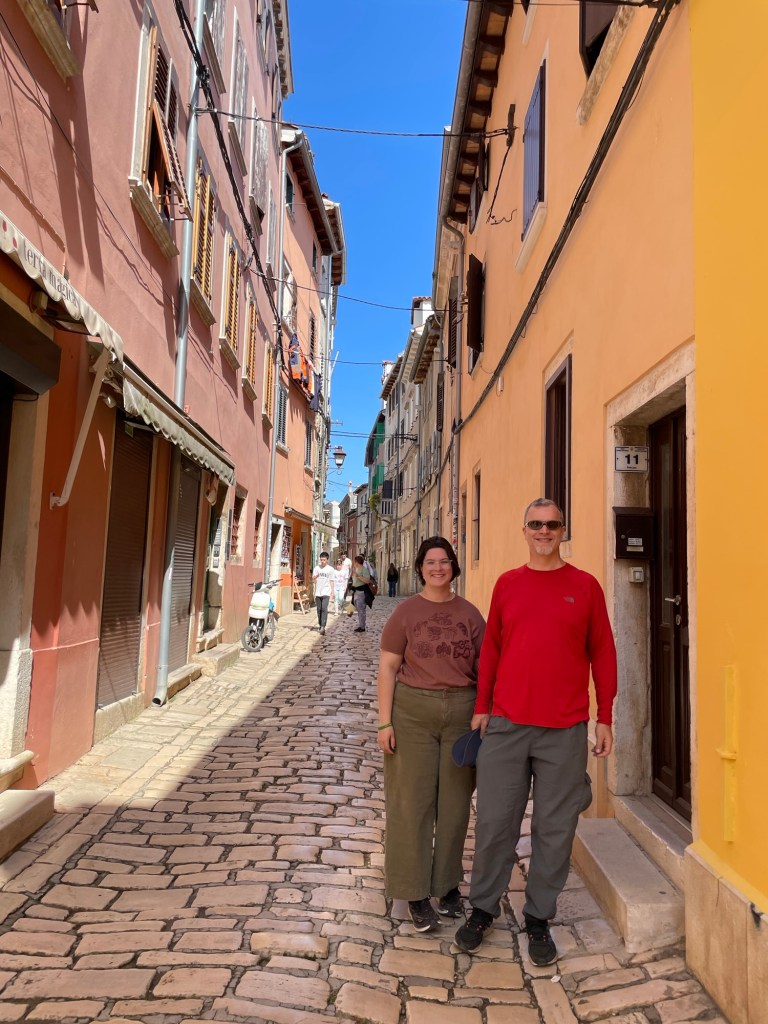
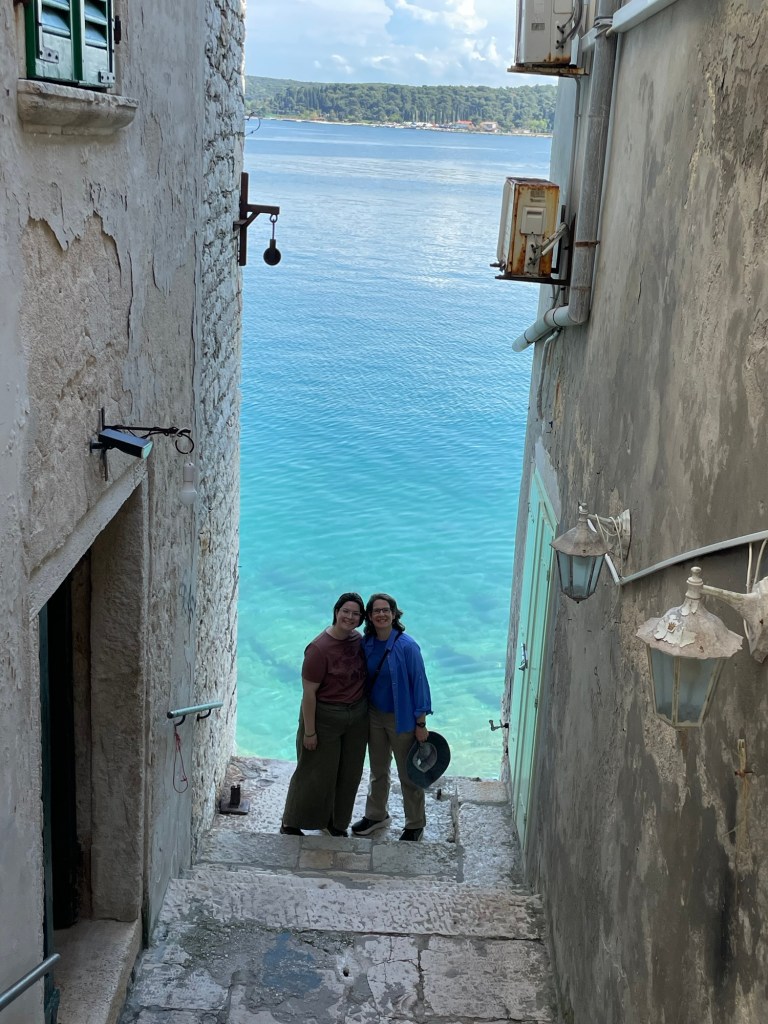
The street outside our house. We’re staying in the newer part of the old city, where the streets are (slightly) broader.Alleyway to the AdriaticIn this view you can see a narrow isthmus where a band of water once separated Rovinj island from the mainland.Part of the old cityA secluded alcoveAccess to the marina was once controlled by a gate
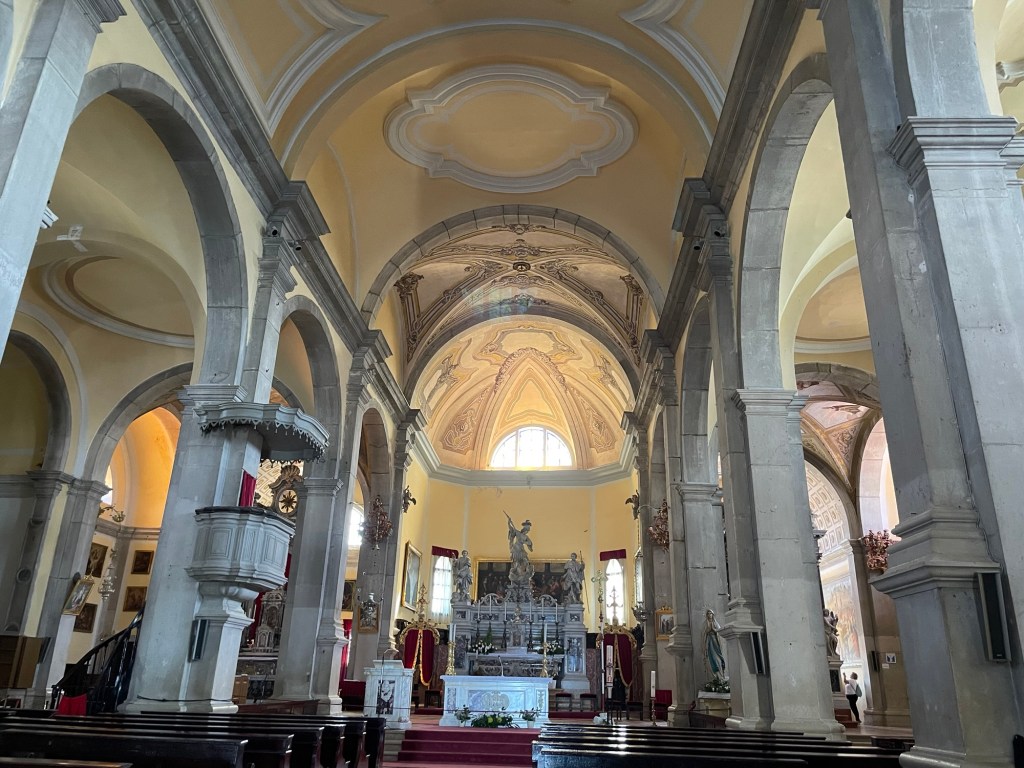
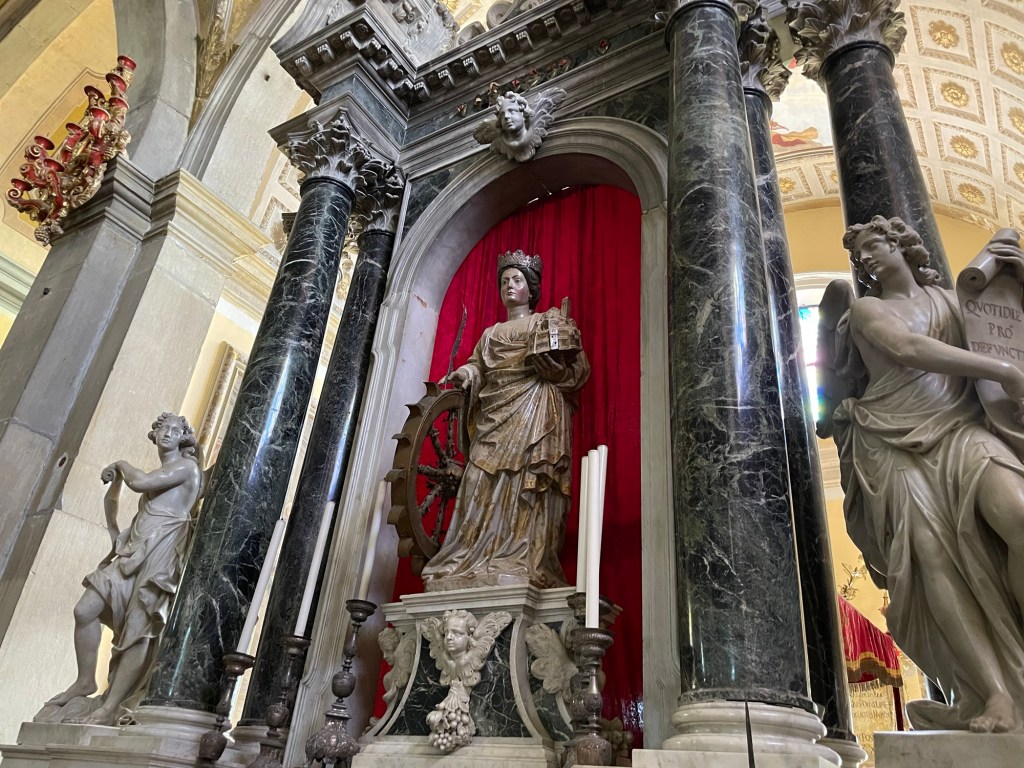
The beautiful campanile at the center of old Rovinj is attached to the Church of St. Euphemia. An early Christian martyr who lived in the vicinity of Constantinople, Euphemia is the patron saint of Rovinj. Why, you might ask? Apparently local fishermen discovered her remains nearby in a giant stone sarcophagus, which had miraculously floated from her original burial place all the way to Rovinj harbor. She now lies at rest within the church inside the very same vessel that sailed her all the way from Greece. Atop the campanile, a statue in her image serves as a weathervane: when she faces the sea, the winds bring good weather. If she turns inland however, one can expect a storm. Luckily for us, today she was looking outwards.
The stained glass is beautiful, all in a similar modern style.The shrine to St. Euphemia. The city held in her left hand represents Rovinj, to which she gives her protection. The torture wheel on her right recalls her martyrdom.
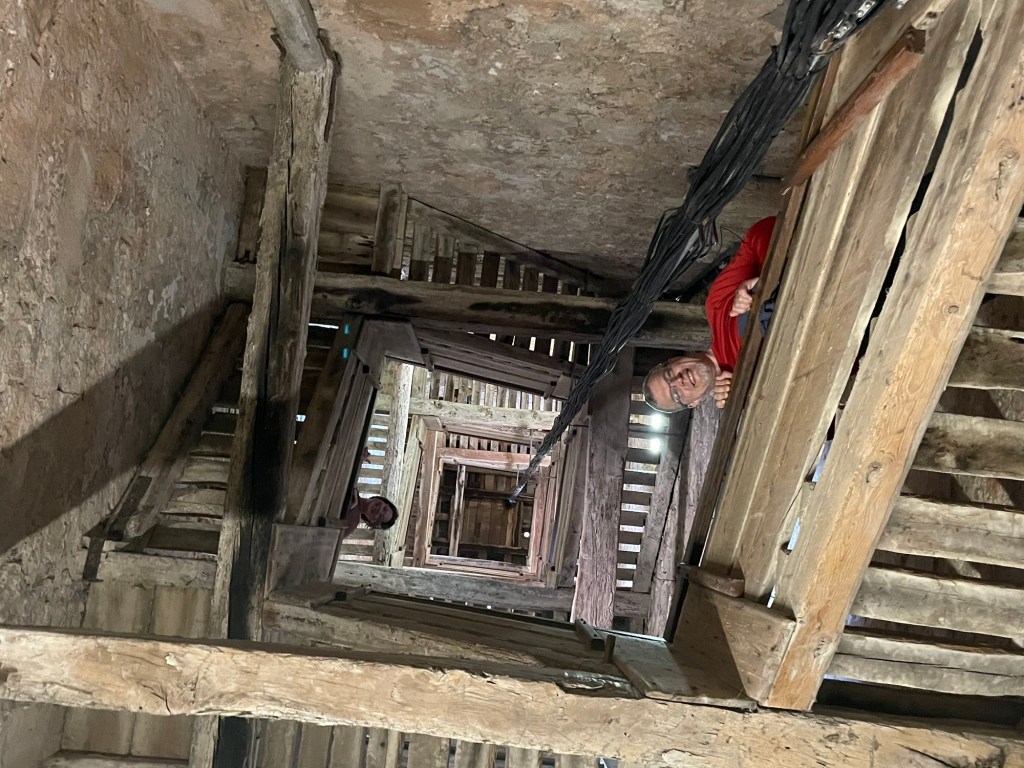
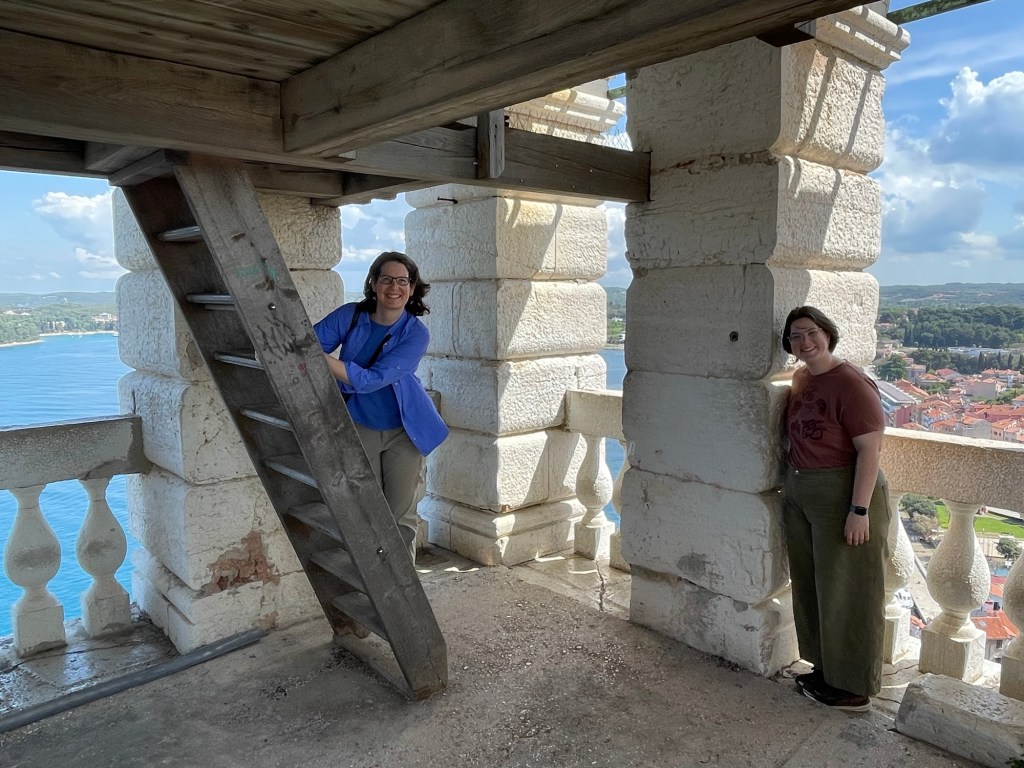
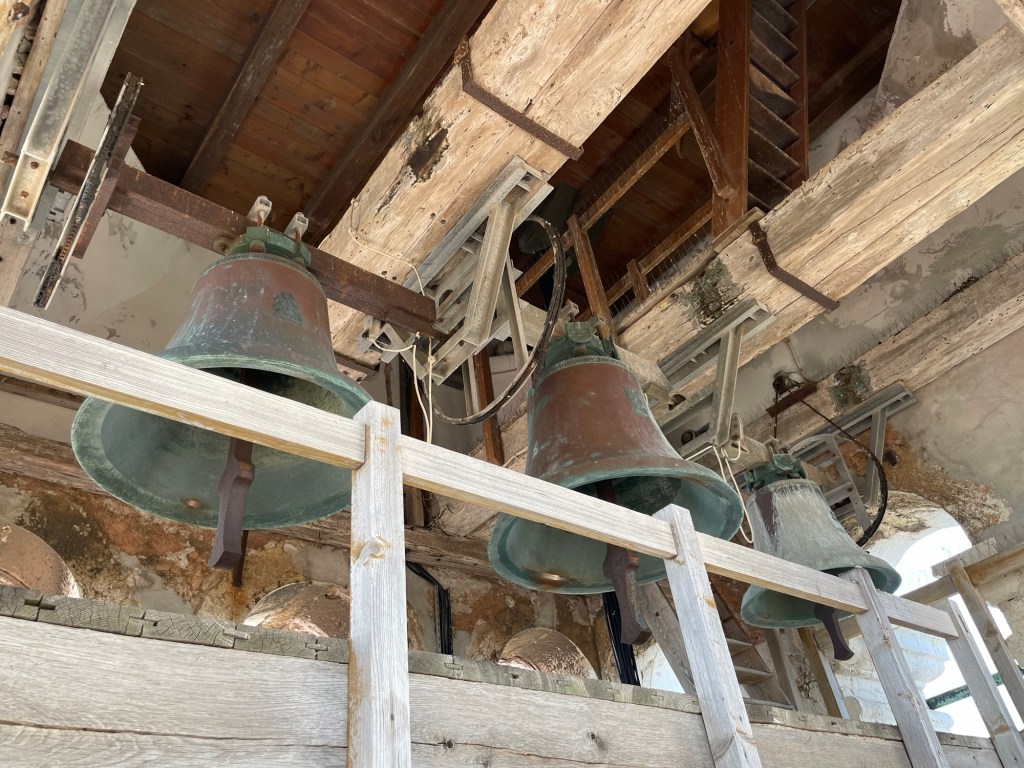
Visitors to the church can climb the campanile as far as the bell platform, so of course we wanted to see it. A rather impressive and rickety set of wooden steps led up to the top, where we had excellent views of the city and its environs.
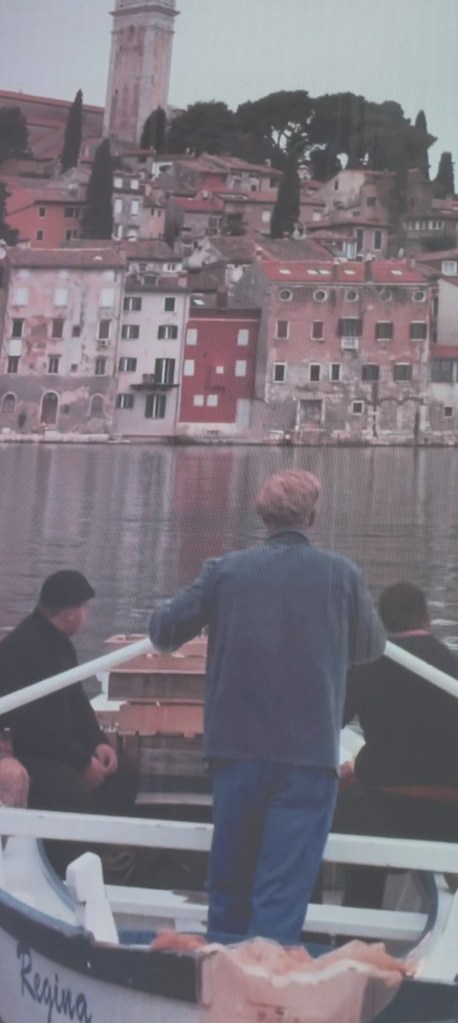
After spending some delightful hours wandering the city, we came across a small museum dedicated to local culture. Focusing particularly on the batana, which is the local flat-bottomed fishing boat, it showed how they were constructed and their significance to the people of the region. The sails were decorated, and each family had its own distinctive design.
We watched a time-lapse video showing the construction processAnother video followed a crew of fishermen as the went to sea and returned with their catchWhile unloading fish at the pier, men and women sang a traditional song in polyphonic harmony.A book of sails associated with different families
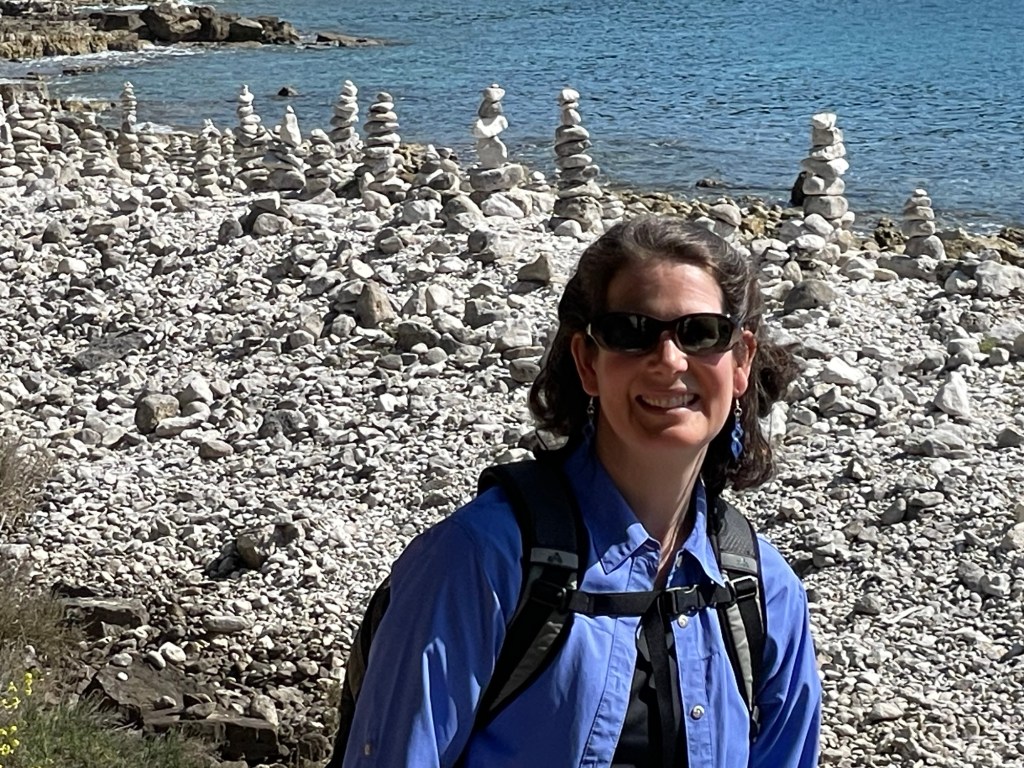
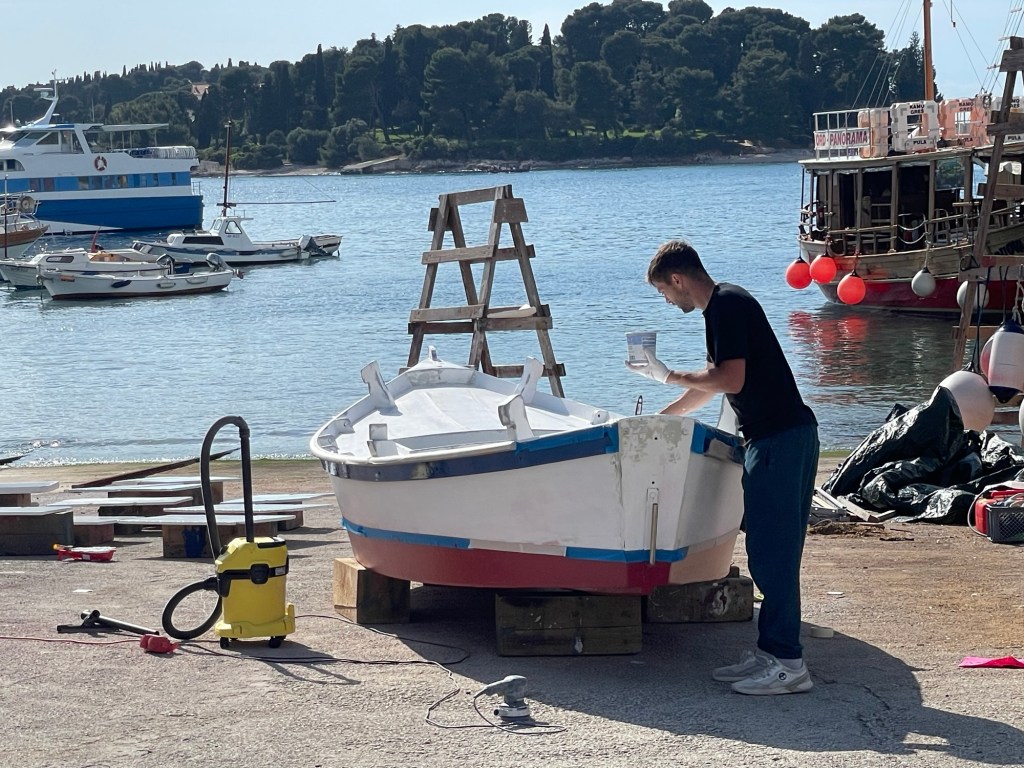
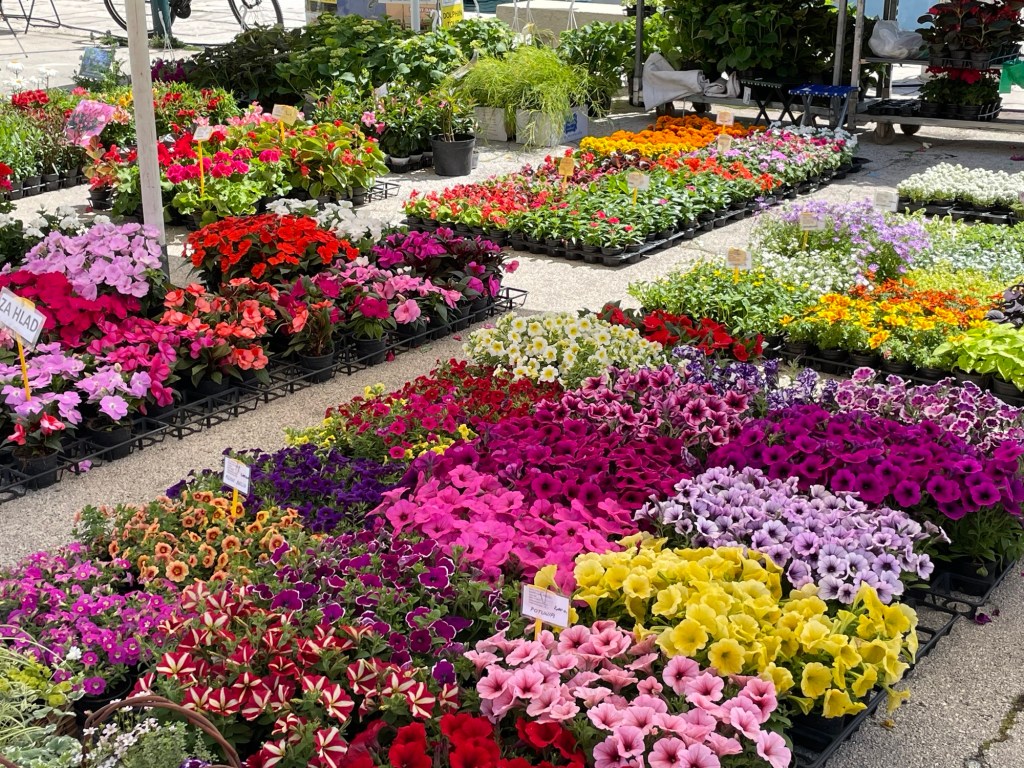
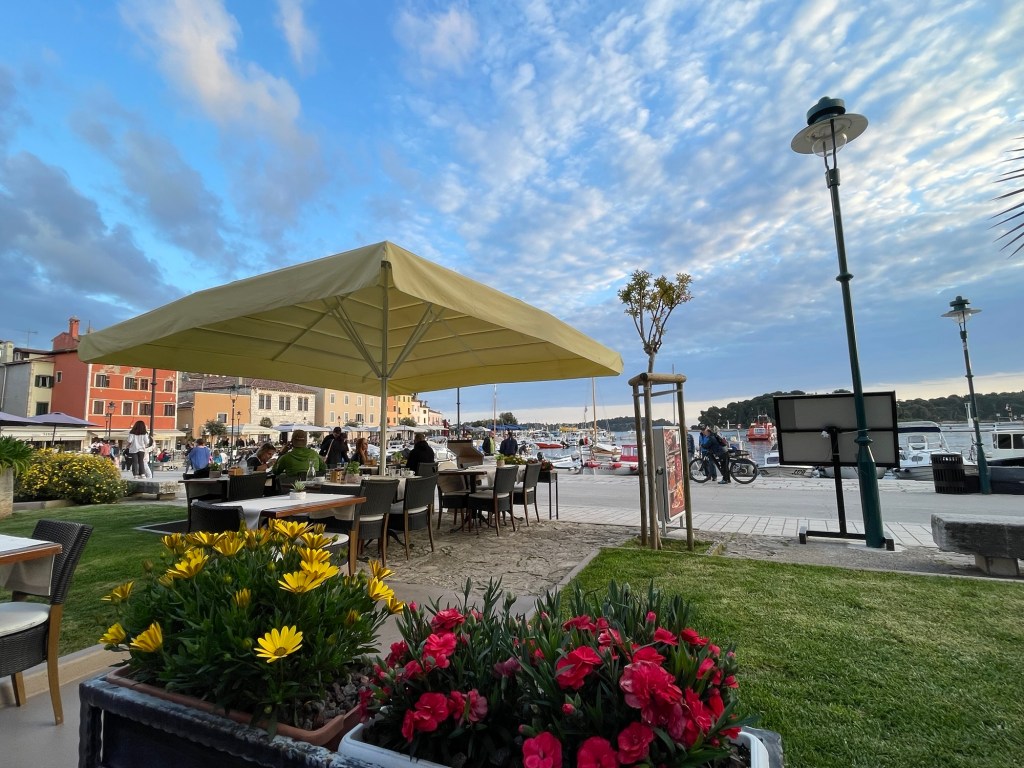
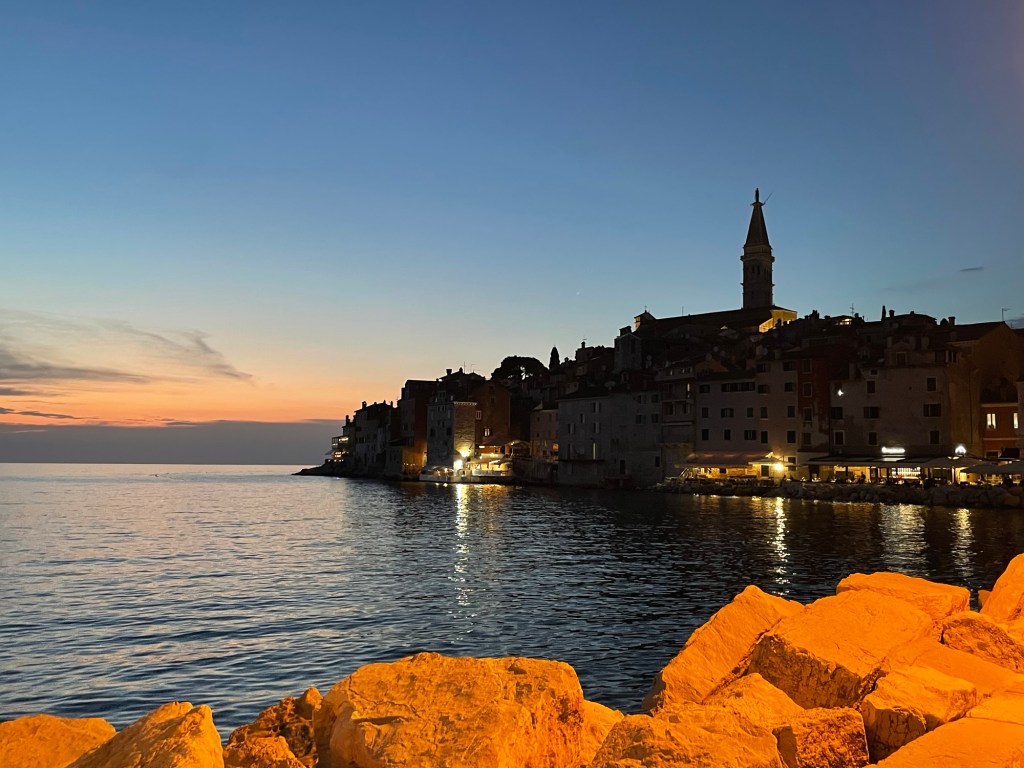
Later in the afternoon we went for a walk down the coastline to the Golden Cape, a park with views of the city. This area has no sand, but there are rocky coves with pebble beaches. Sheer cliffs at the end of the cape are also popular with rock climbers. On our way back, we had some great views of the city from a distance. We also saw a shipyard where someone was repainting a batana, stopped for some dark chocolate gelato, and marveled at the display of flowers for sale by the marina. After another seaside dinner, we took a stroll to the end of the pier for some photographs in the dusk.
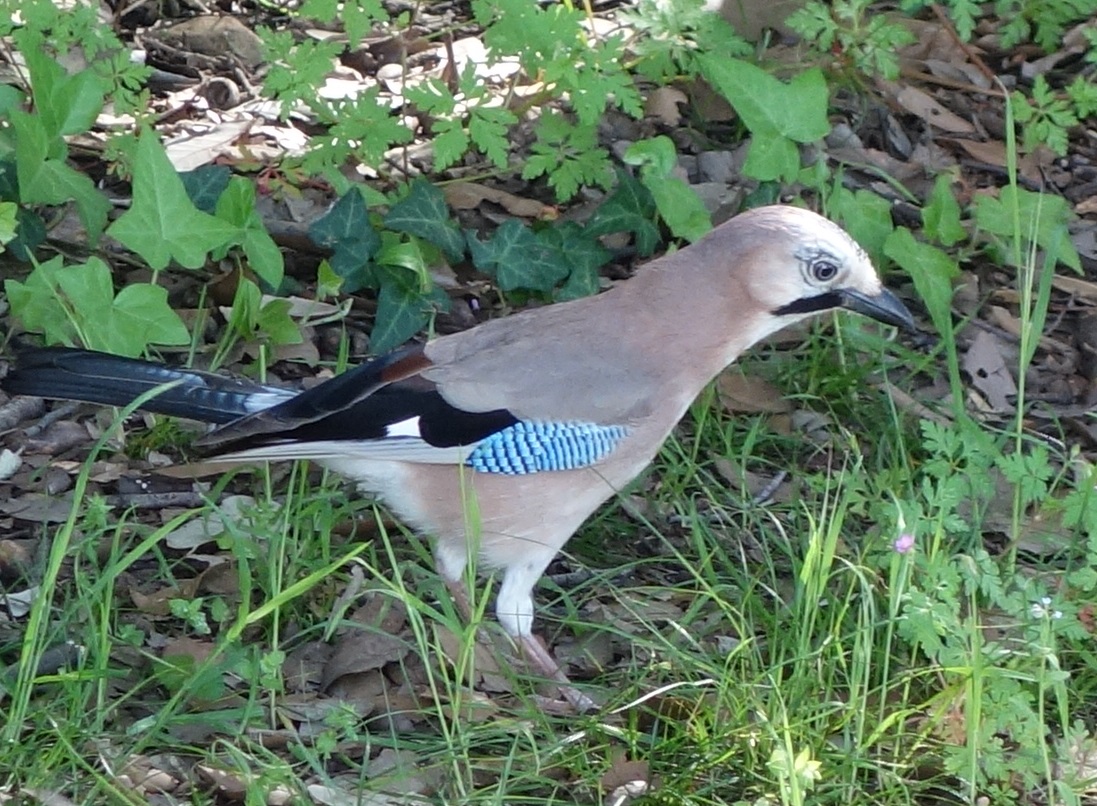
Vegan dark chocolate gelato in a chocolate cone!Almost harborside restaurantRowan has learned a lot about boats on their study abroad program – this one is used for purse seine fishingConveniently, a sign in the harbor marked this specific “photo spot”Bird of the day: We saw this European Jay while out on our walk.
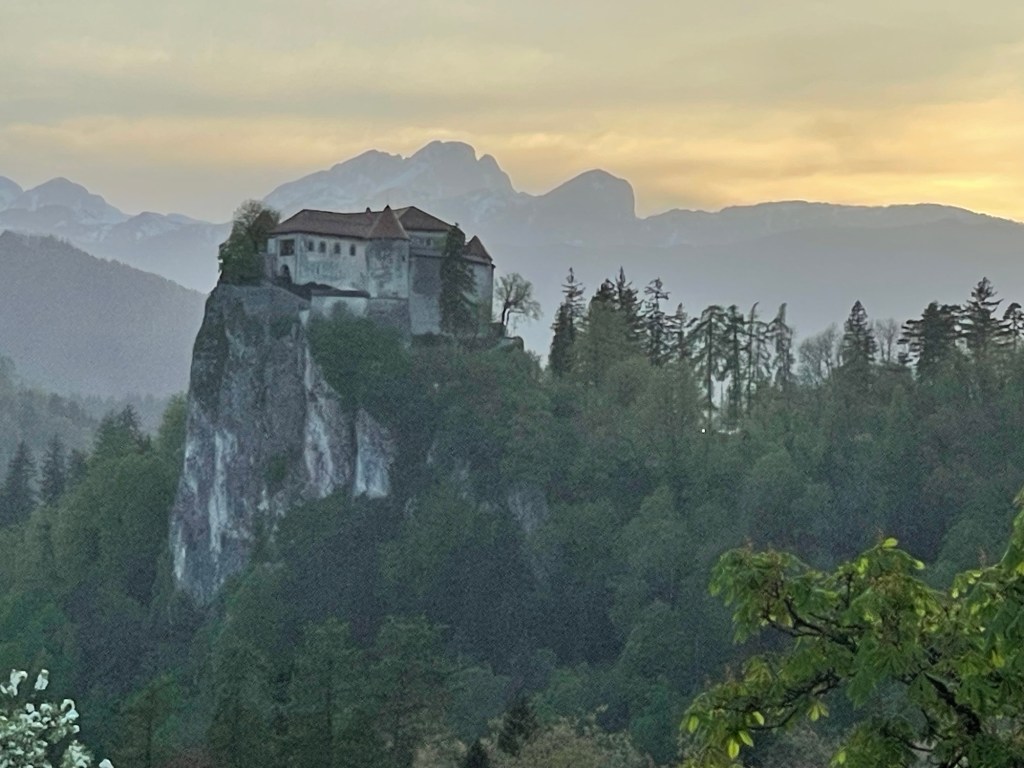
After our castle-view dinner yesterday, we continued our drive into the evening to arrive in the town of Bled after dark. Although we could see Bled’s eponymous castle lit up by floodlights from the window of our lodging, we didn’t truly get a sense of the place until dawn the following morning. It perches on a rocky bluff, overlooking the lake and the town below.
Bled Castle seen from our balcony
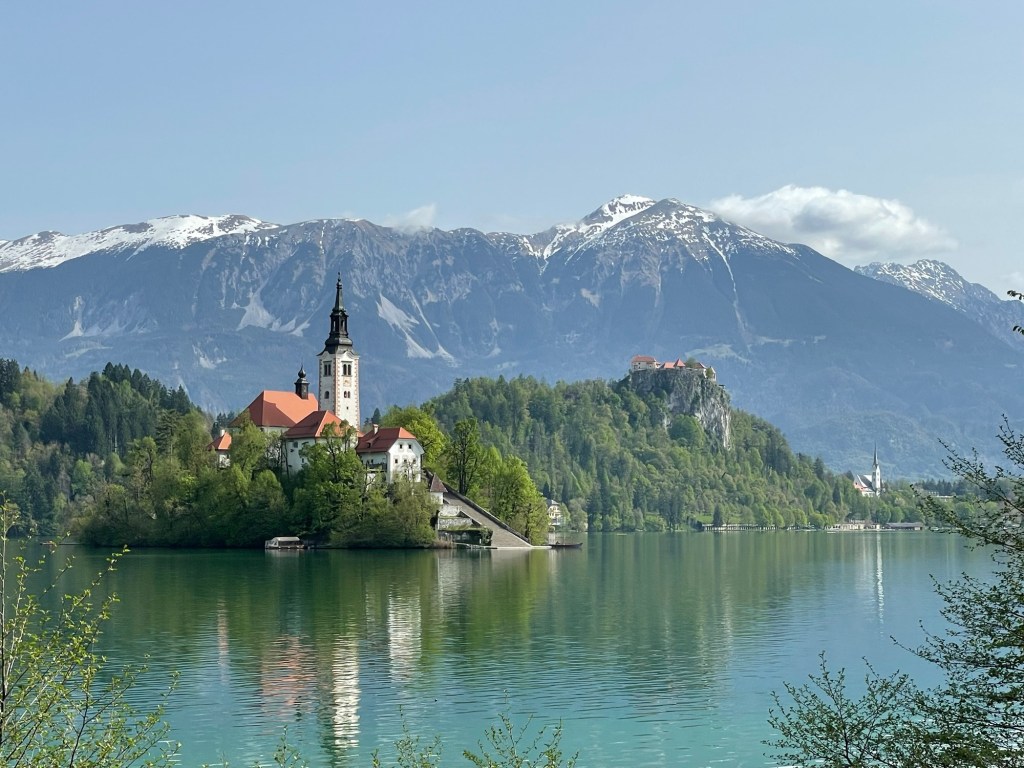
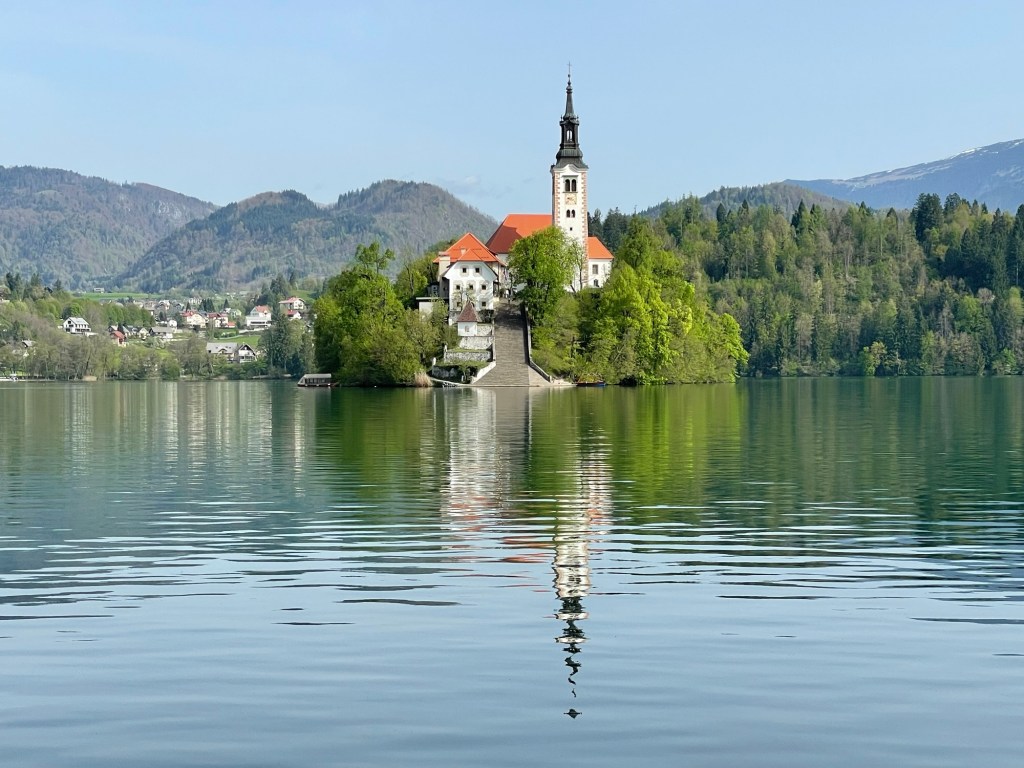
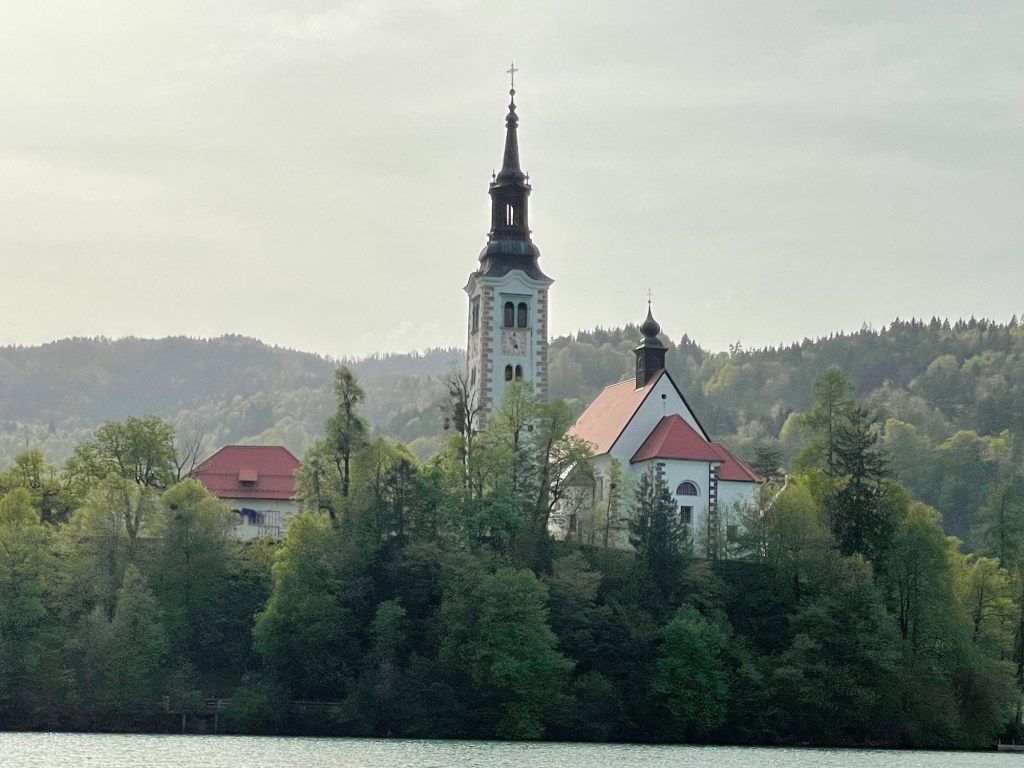
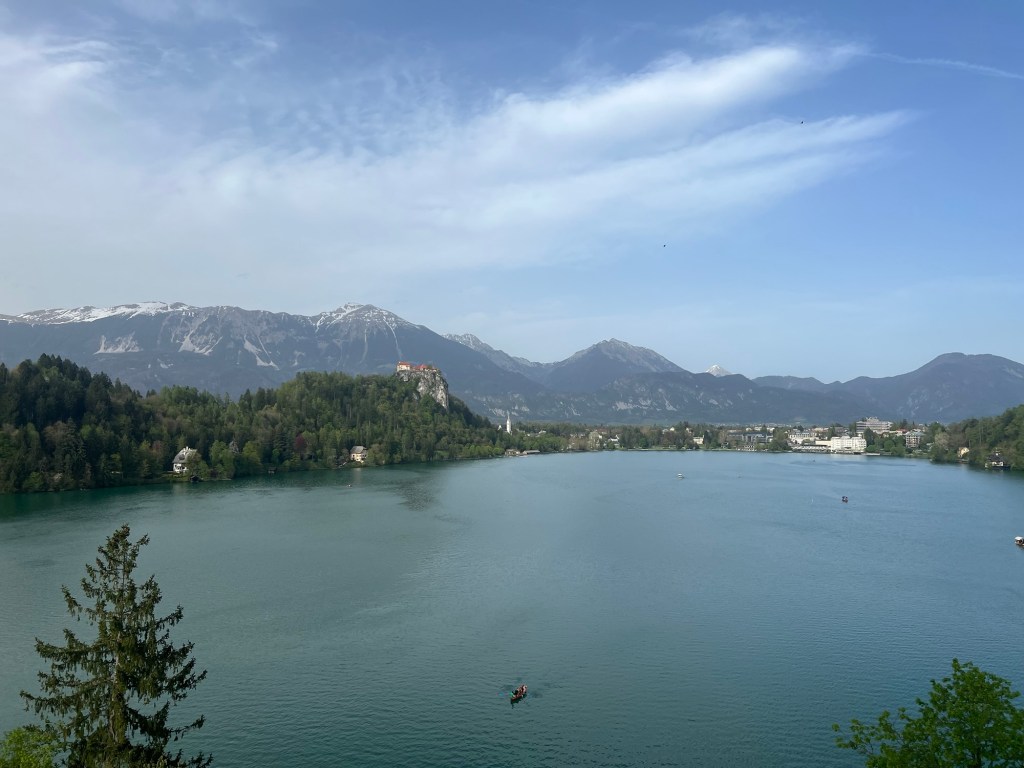
Bled is blessed with a combination of natural beauty and manmade enhancements that blend seamlessly into a harmonious whole. Archaeological excavations reveal that it has been drawing visitors for millennia, offering a valley of fertile flat land with the castle mount in the center to provide both early warning and a place of safety in case of threat. The island that rises from the lake also attracted visitors, with evidence that it was a site for pagan gatherings in early days. Since the spread of Christianity it has served as a pilgrimage site sacred to St. Mary. You can see the layout of the region in the bronze relief map below. The town lies at the bottom end of the lake, the castle is to the right, and the island lies at the top. Behind it all, the foothills of the Julian Alps keep silent watch.
With the promise of a bright and balmy day, Nick & Susannah decided to go for a jog around the lake first thing in the morning. This proved to be a popular choice, as we saw many other runners. There are paths running the full way around, and each new stretch offered different views that demanded to be photographed, so that we made slower progress than we had intended.
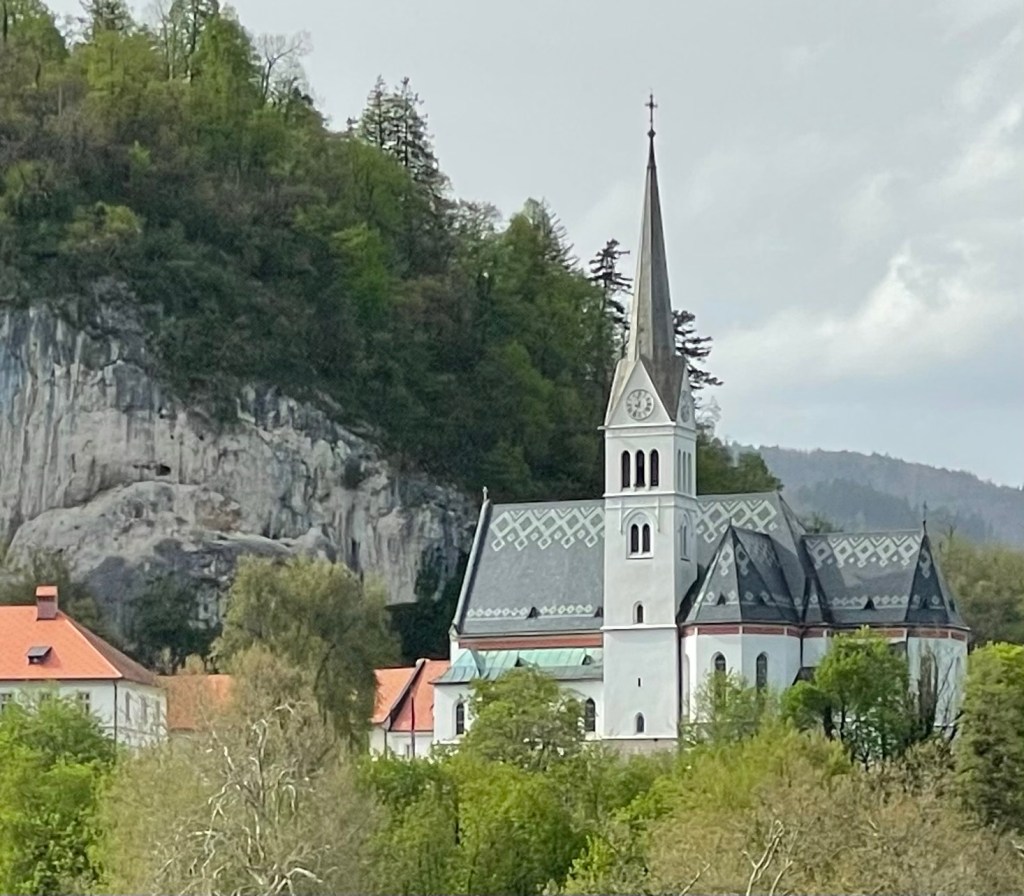
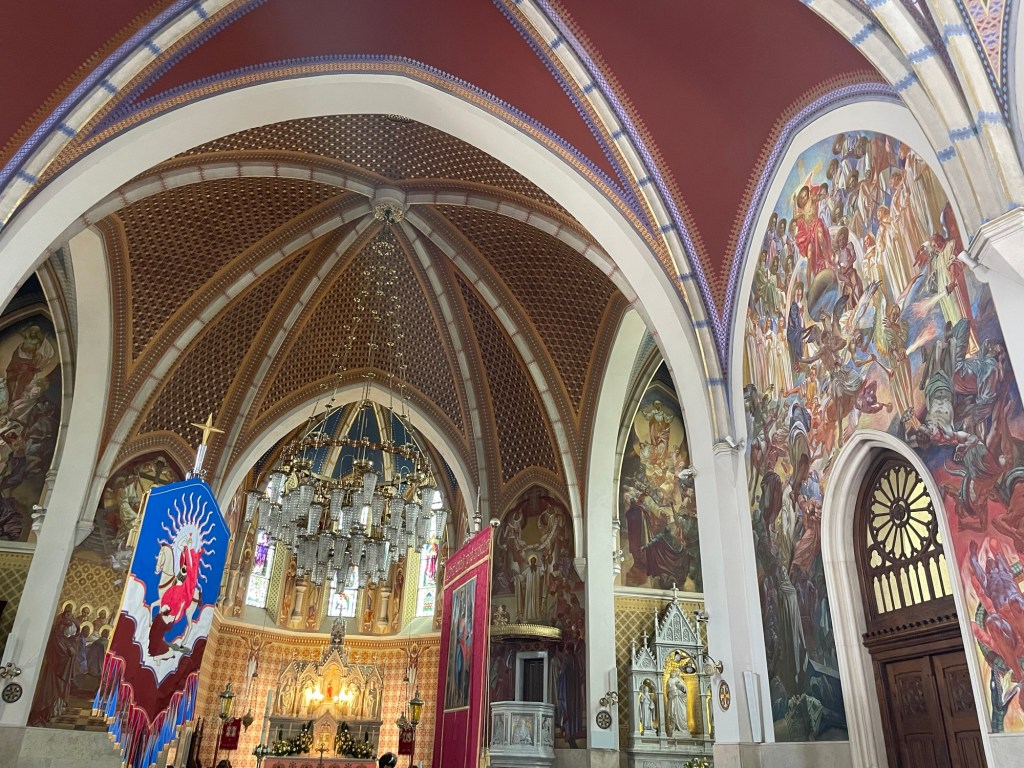
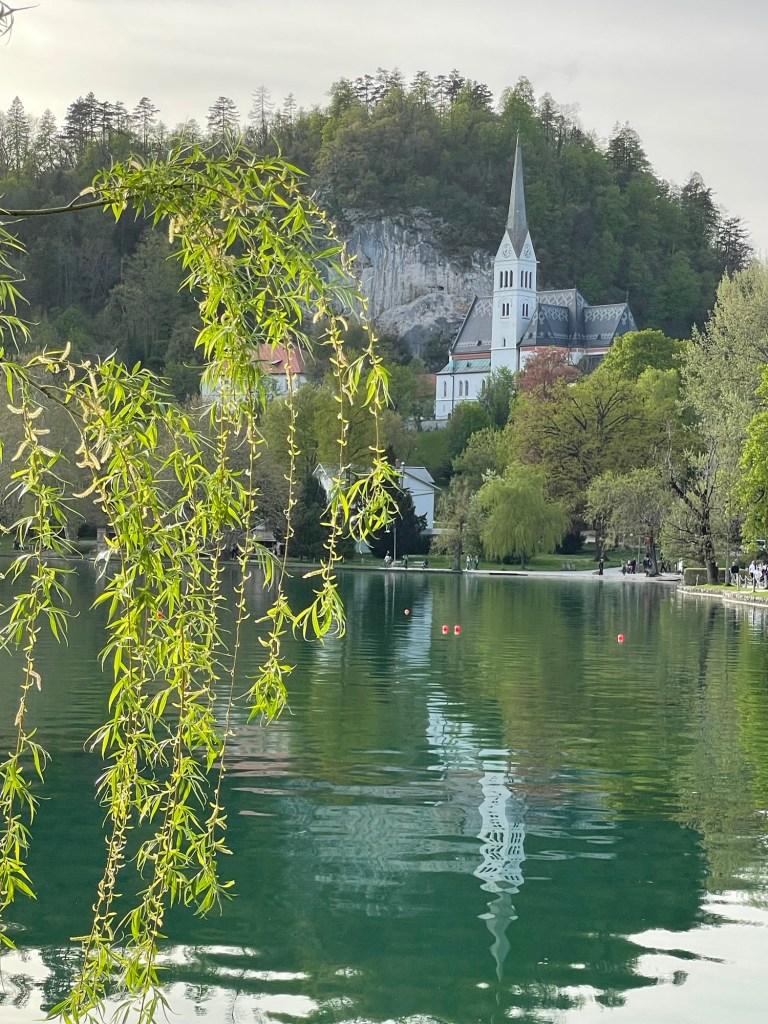
After breakfast at our lodging, we set out to see the first of the town’s famous landmarks: Blejski Grad, a.k.a. Bled Castle. Along the way we passed by St. Martin’s church, a fine specimen of local religious architecture with an intricately patterned slate roof. Although the windows are decorated with stained glass, the real stars of the interior decor are the many colorful frescoes that cover the walls. Among other themes, they depicted each of the phrases from the Lord’s Prayer. The aisles also held colorful banners suspended from poles.
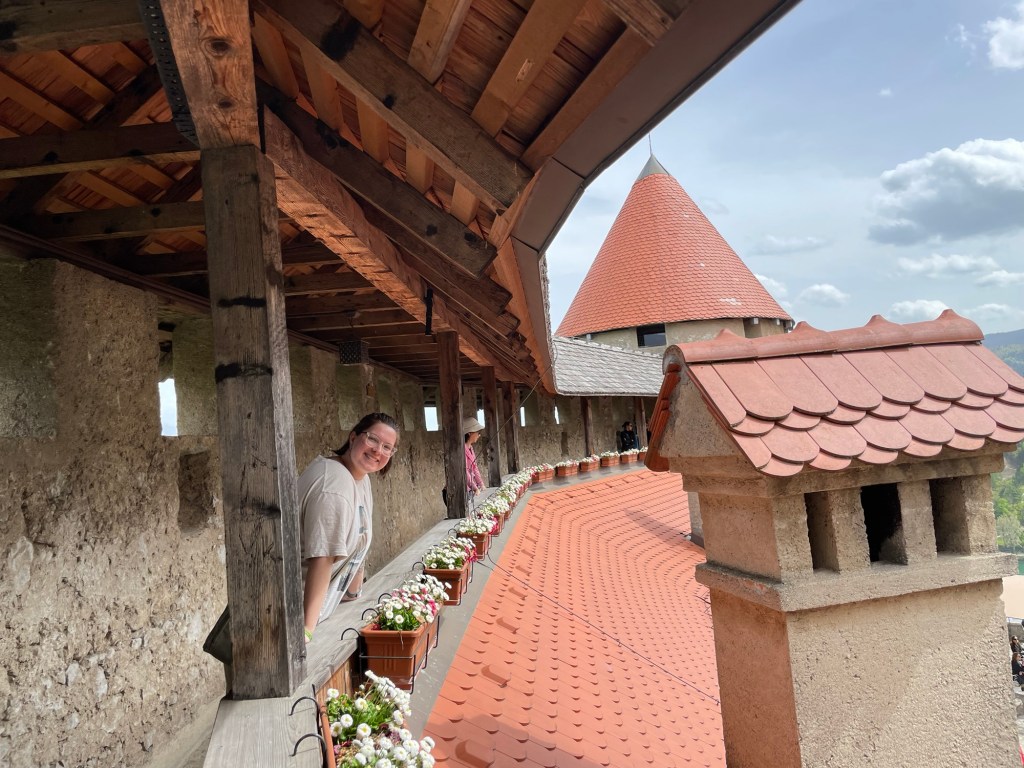
From the church, a short but steep hike brought us to the castle gates. Although there have been fortified settlements on the promontory since prehistory, credit for the building of Bled Castle in 1011 goes to Bishop Albuin of Brixen, who had had been granted feudal ownership of the region seven years prior and wished to consolidate his holdings. His success is attested to by the fact that the bishop’s successors continued to rule over the area for the next eight centuries. The castle was remodeled multiple times over that period; the current incarnation is in the Baroque style with some modern embellishments. The views remain fantastic in all directions, but particularly out over the lake.
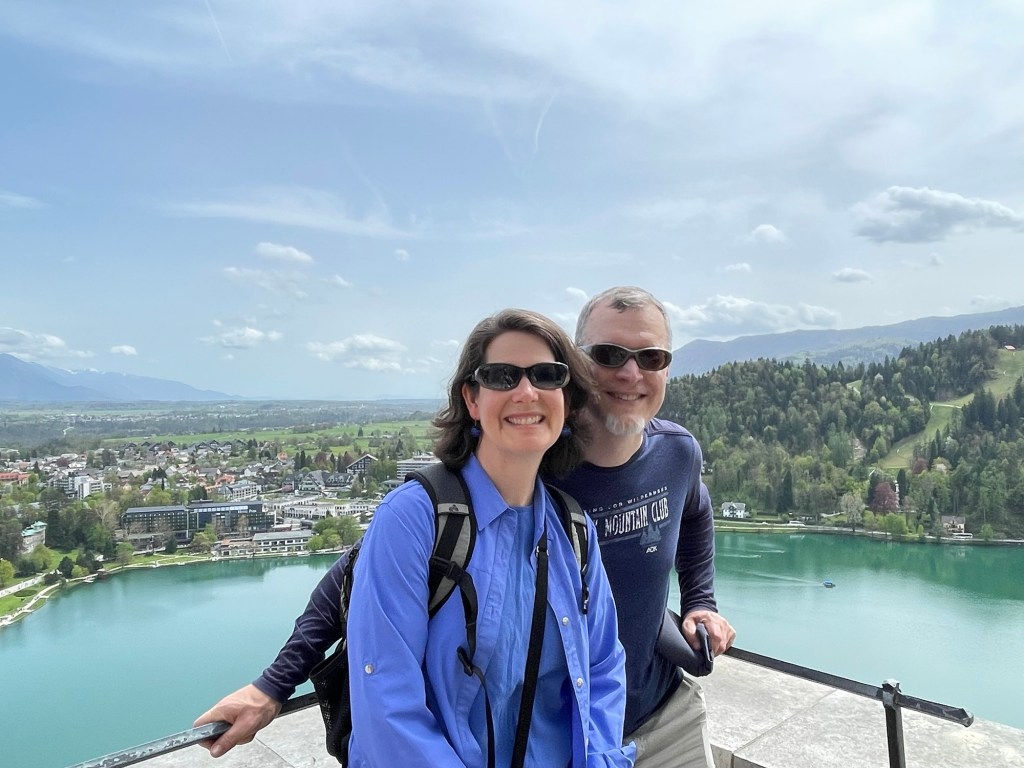
Can you find Nick in this picture?Read below for more about the boats on this lake…
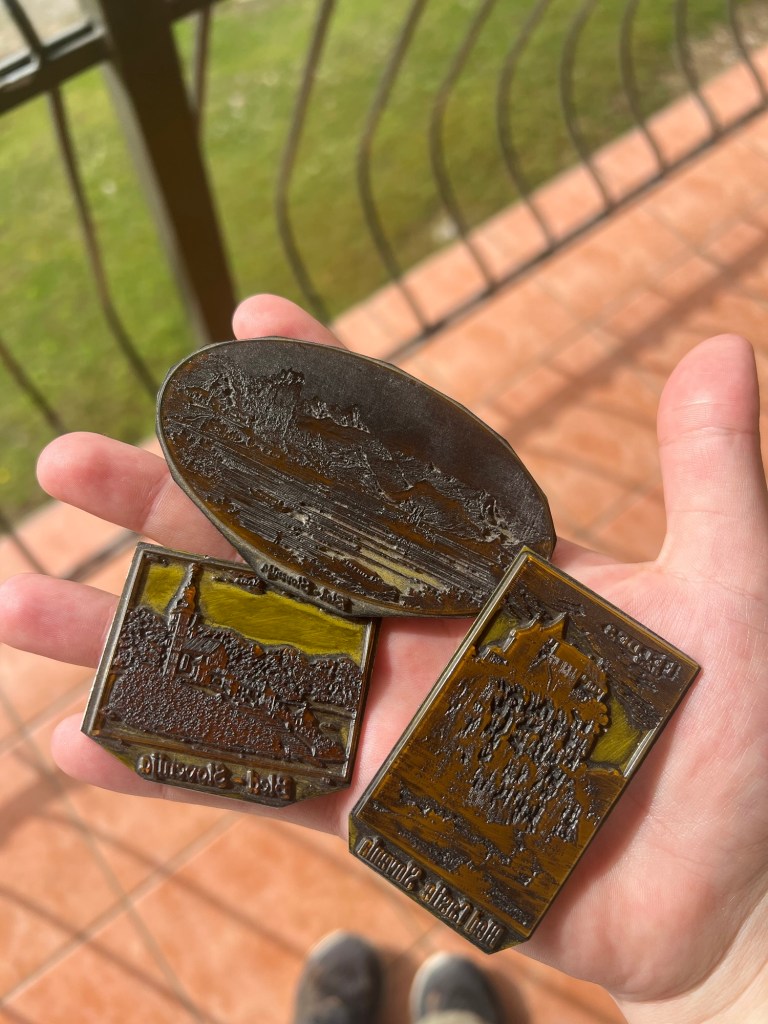
Unlike Predjama Castle, at Bled there has been little attempt to portray the lives lived by former inhabitants. Rather, the buildings have been adapted as a sort of combination museum and mini-mall, with a restaurant, cafe, and several small businesses. Our favorite was the print shop, which offered replicas of famous early works published in Slovenian, in addition to bookmarks, woodcuts, and other items. The printer there was very friendly, and at our special request shared with us a few of the older worn-out plates that had been retired from active use.
First book printed in the Slovenian language
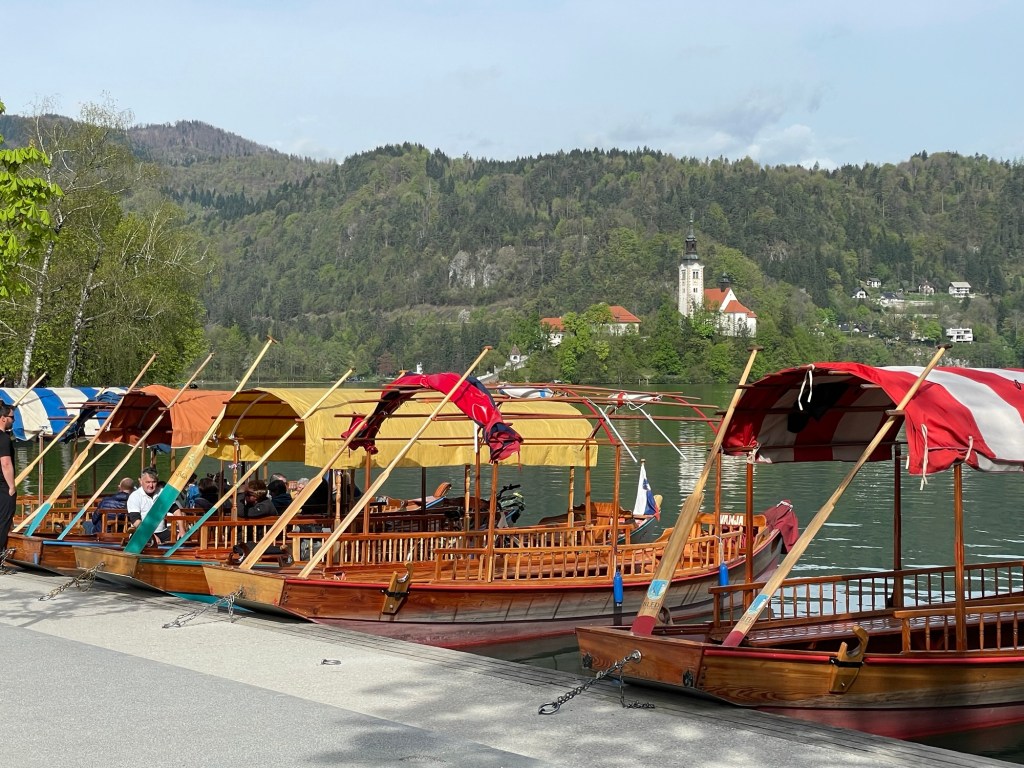
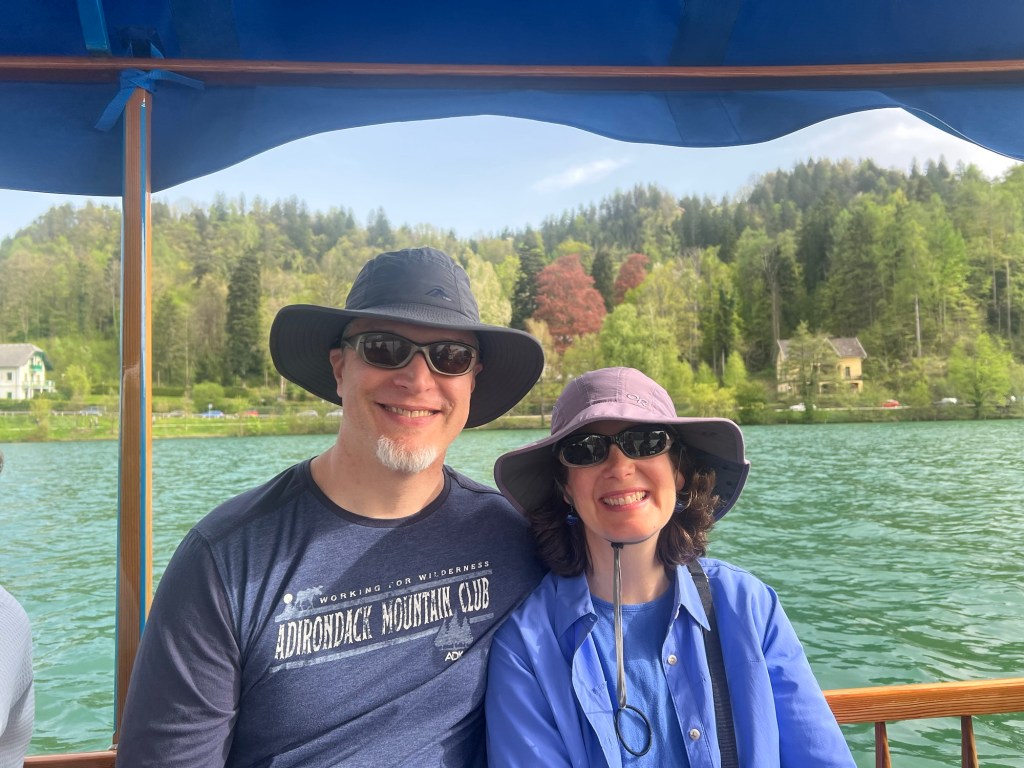
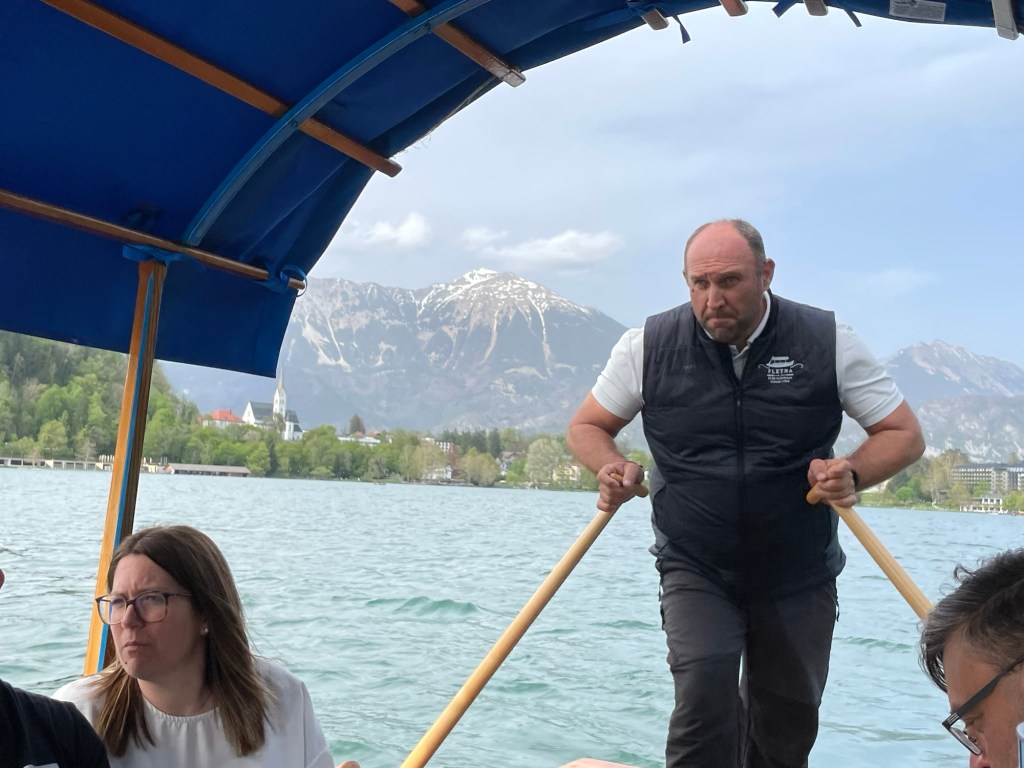
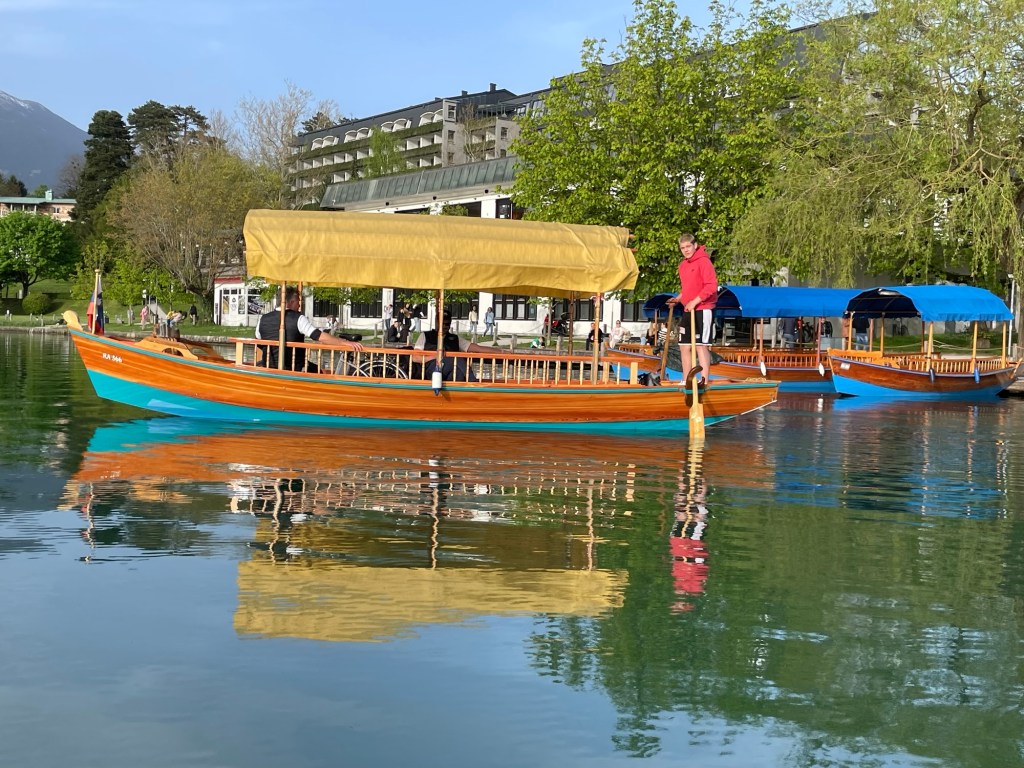
Our visit to the castle took into the early afternoon, so after a late lunch we headed back into town for our last essential Bled experience of the day: a trip to the island where the Church of the Mother of God on the Lake stands overlooking the waters. Traffic on the lake is strictly controlled: during the middle ages twenty-three families were granted the right to ferry pilgrims across the water to the island, and their descendants remain in charge of the business to this day. Gasoline motors are not allowed. Although you can rent your own rowboat by the hour, the majority of visitors take the pletna. These are rowed boats of a specialized design endemic to the area, able to carry up to eighteen passengers at a time and propelled by a single oarsman using double sculls. Though it seems awkward to look at, they move surprisingly fast using this system. The boats have no schedule; instead they take passengers until they are full and then depart. Ours sported at least four or five native languages amongst its passengers: we heard English, Italian, Croatian, German, and Slovenian. From the water, we had excellent views of all the local sights as we traveled the length of the lake.
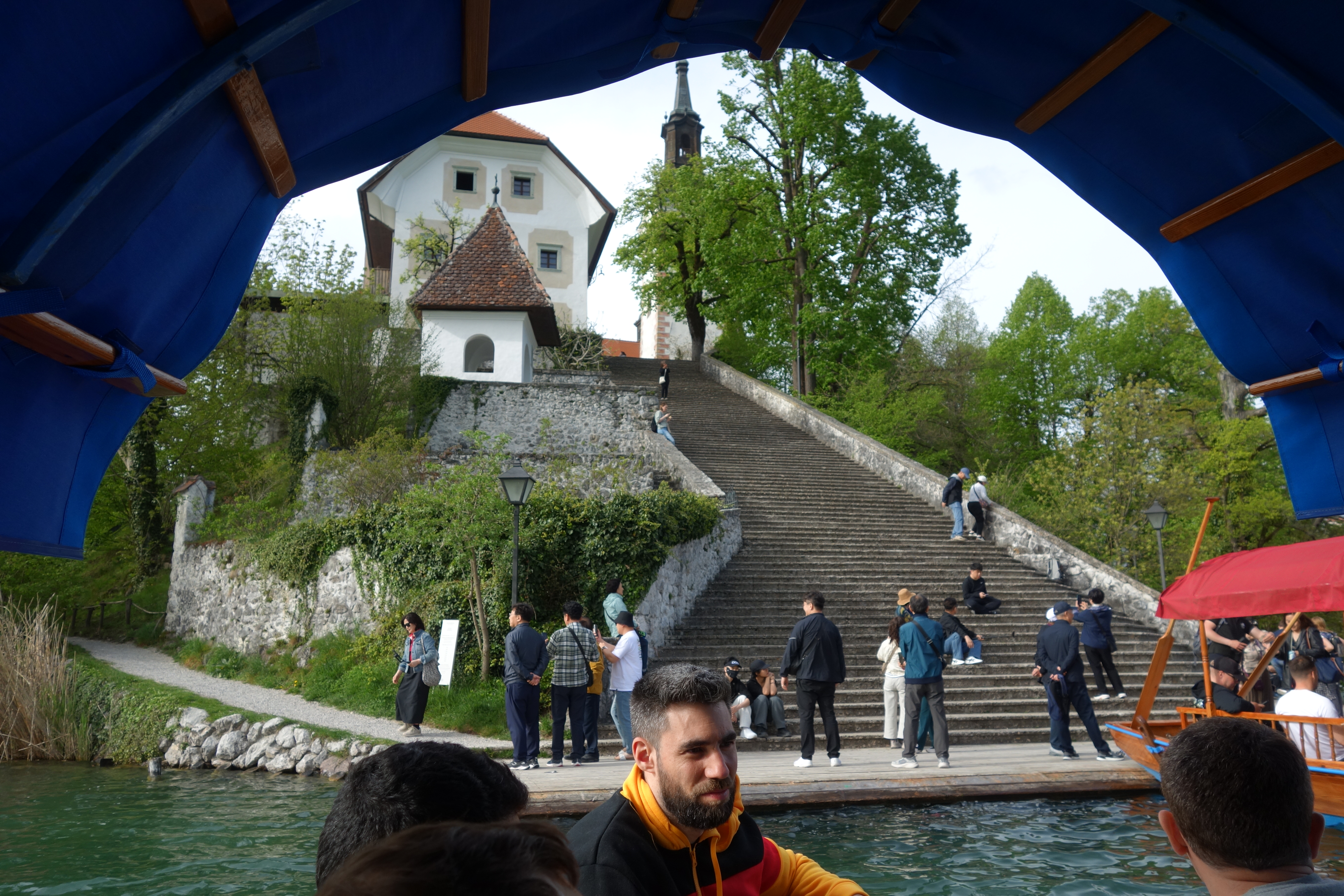
A line of pletna boats waiting for passengersView down the lake toward Bled townClosing in on the islandBoats wait at the island landing while passengers explore
The pletna land on the island at the base of a dramatic series of stone steps leading up to the church and clocktower. Climbing the steps is supposed to bring good luck, or perhaps it is ringing the bell of the church — we heard different stories. A popular local legend tells that a lady of the castle, in mourning for her husband killed by bandits, commissioned a large bell to be cast and placed in the church. However, tragedy struck as the bell was being transported to the island: the boat capsized, and the bell sank to the bottom of the lake, where it can still at times be heard tolling away in mourning for the lost husband. This sad story somehow made its way to the ear of the Pope, who commissioned a new bell and had it installed to replace the one that was lost. Today, those who ring the bell and make a prayer to St. Mary may have their wishes granted. Not wanting to miss our chance, we all took a turn on the rope.
Susannah’s training in change ringing back at Smith served her well today!
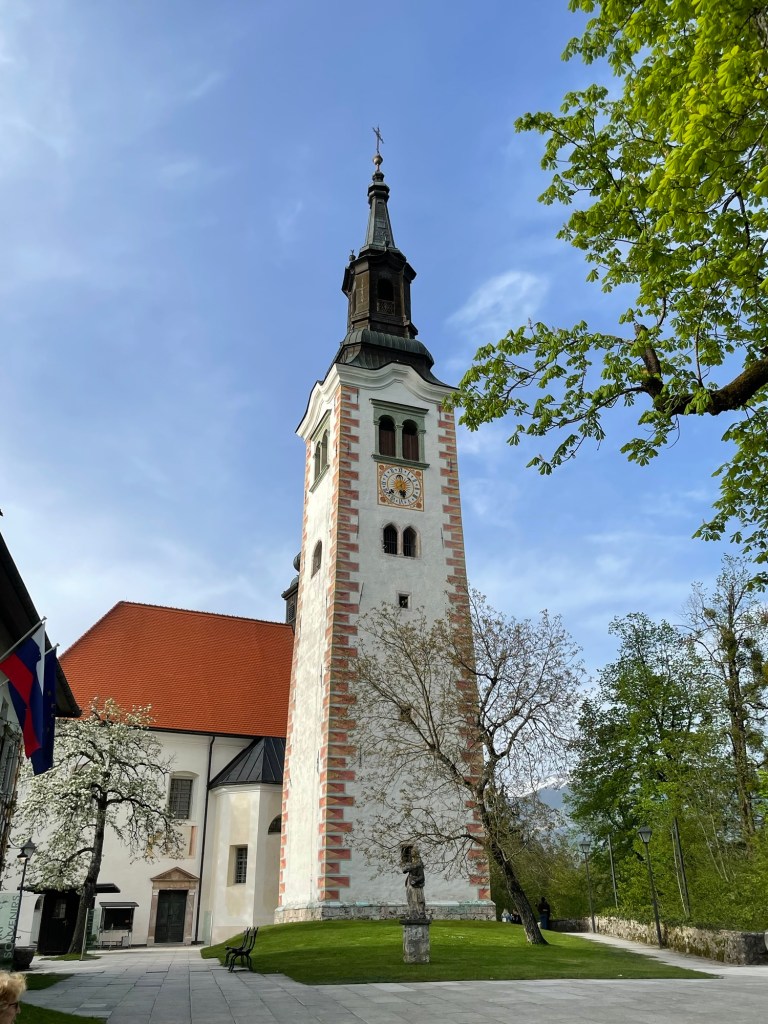
The tall tower next to the church holds a mechanical pendulum clock with a complex mechanism that tools the quarter hours, half hour, and hours, each with a different ring. It had grown rusty and inoperable, and was only recently refurbished within the last ten years. Climbing the tower allowed us to see the workings, and also gave elevated views across the lake.
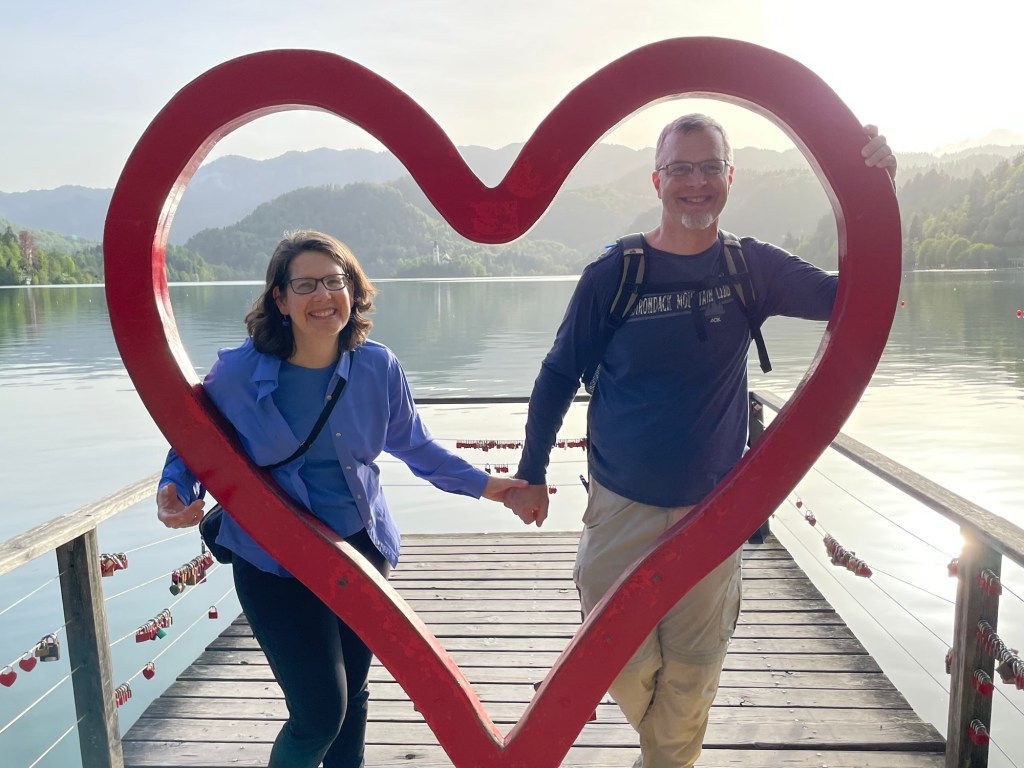
Besides the church and tower, we also visited a small museum and made the short circuit of the island’s shores. The building that now houses the museum was originally built to accommodate the many pilgrims who used to flock to the island for the Feast of the Assumption in mid-August. These days pilgrims may still visit, but nobody stays on the island overnight. Our own time was limited because our boat operator was waiting to take us home, so we boarded the pletna once more for the trip back to town. The day was near to ending by then, so we spent some time on the waterfront admiring the beauty of the landscape in the late afternoon sunlight.
Sunset over the Alps — still the view from our balcony









































 Howes' Doings