All About Relationships

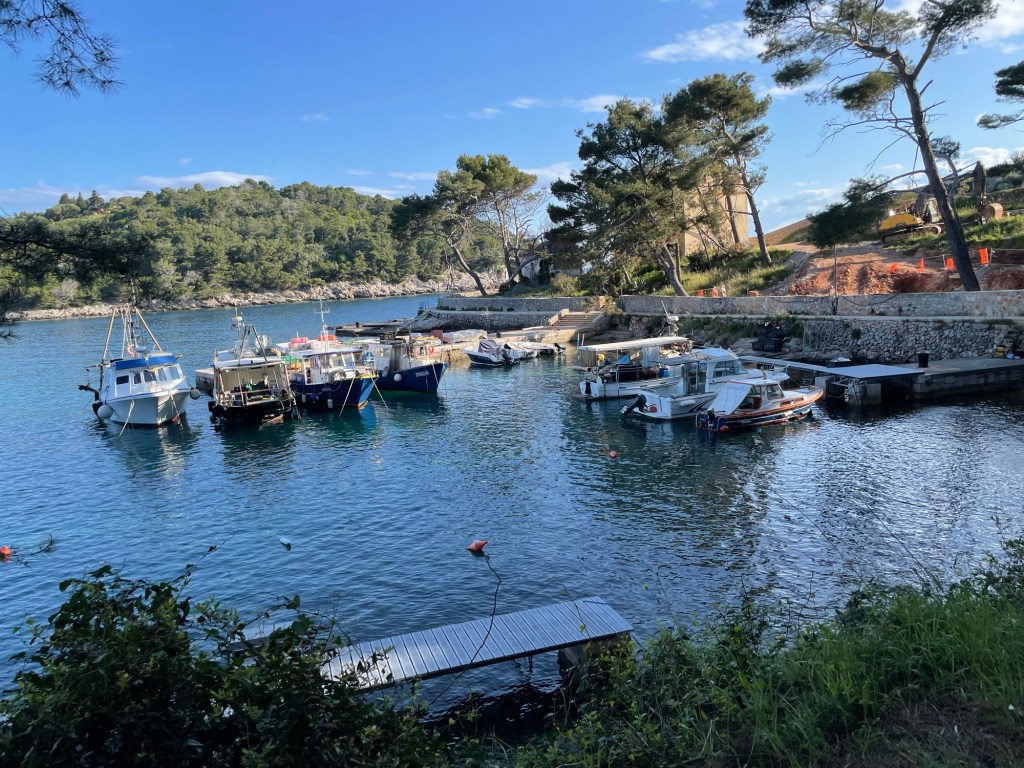
Today was our last day with Rowan on this trip, and we saw a little more of Lošinj (“the island of vitality”) before saying goodbye. The road connecting Mali Lošinj to Veli Lošinj is scenic in its own right (minus the infrastructure improvements in process) but the walking path along the water is especially charming. This is the footpath Rowan uses to get to “the big town”, so Nick and Susannah jumped on the chance to experience it firsthand during a morning jog.
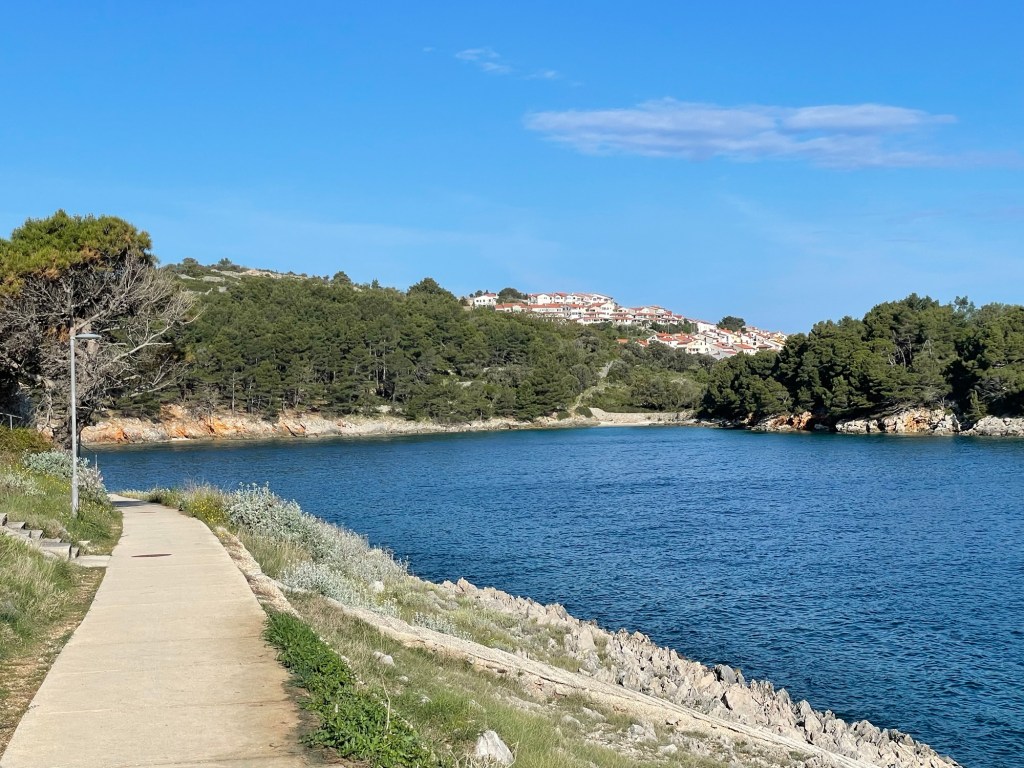
View looking toward Mali Lošinj

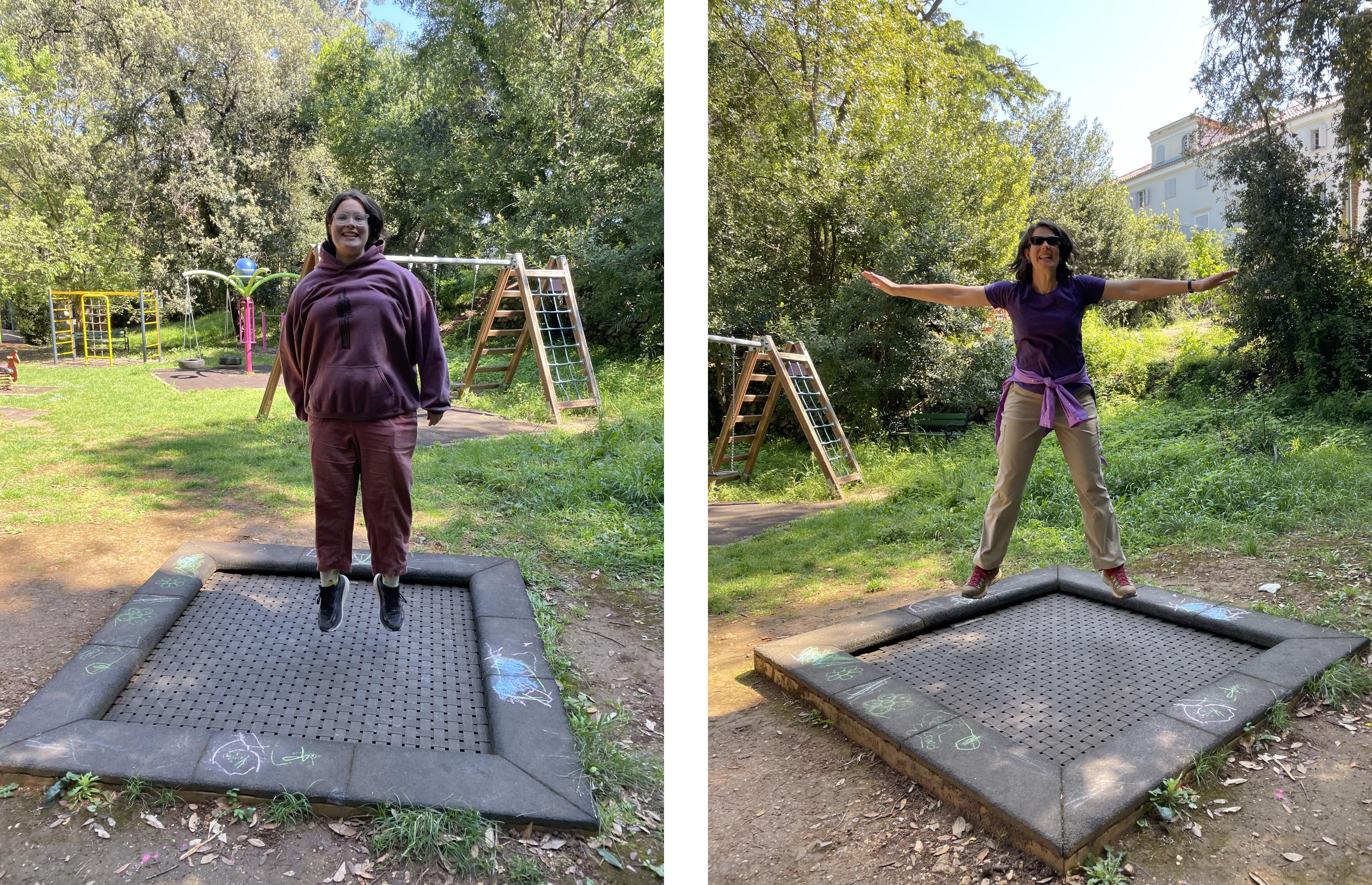
After departing our lodging in Mali Lošinj, we returned to Veli to drop off Rowan’s belongings and get a tour of their study abroad facilities. The program is housed in part of a health-focused hotel, situated on the edge of a healing forest. With a large classroom and lab space, dorm-style bedrooms, a common space with couches, and a kitchen and dining area, the students are well set up for learning and fun. Rowan showed us the wall where they will be painting a mural that depicts sea life at different depths, and we all enjoyed trying out the trampoline in the playground outside.

Blank wall, ready for mural!

Rowan returns to their studies and we continue on to more European adventures, including a quick stop in Zagreb before we leave Croatia. The road to Zagreb requires another ferry crossing, this time from the island of Cres to the island of Krk (the latter is connected to the mainland by bridges). This time we didn’t need to worry whether we would make it on the ferry because we passed a helpful sign by the side of the road saying that all vehicles beyond this point would fit on a single ferry trip!

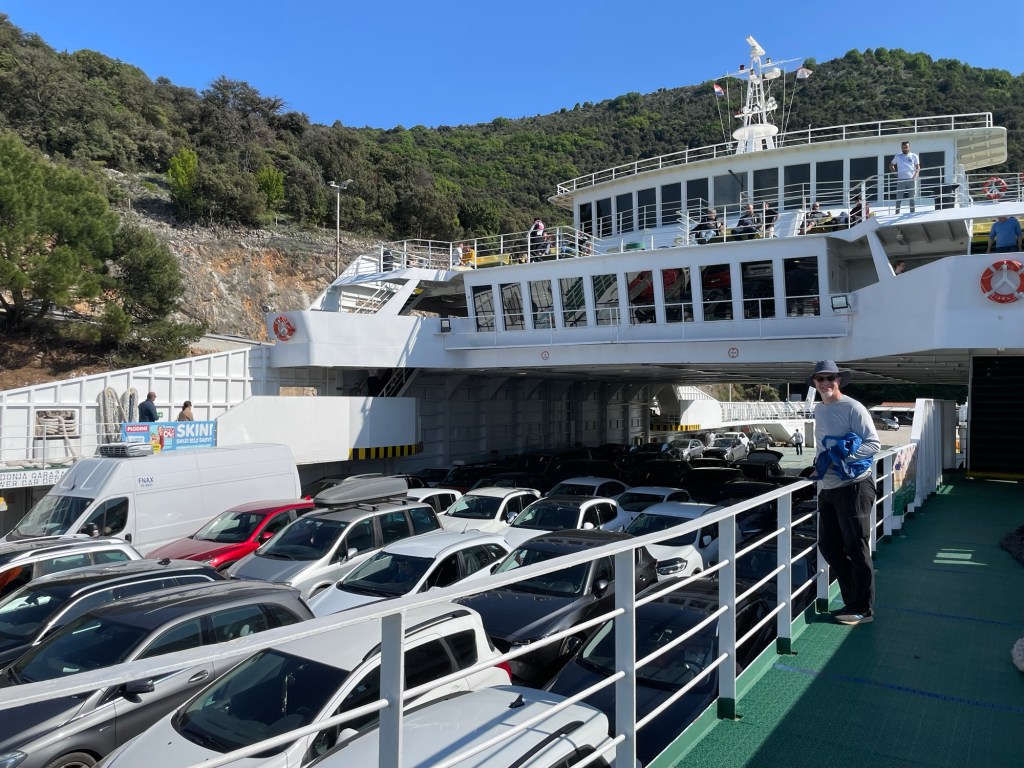
In a much better place in line this time
Bumper to bumper, in a good way

The terrain in Croatia is quite hilly, and there are a lot of tunnels on the roadways, even in places that would be cuts in the U.S. Besides standard tunnels that go through mountains, the Croatians have also created additional ones specifically for wildlife passage above. These have a distinctive look and often include tree plantings.

The journey to Zagreb took several hours (it’s never quick getting to and from an island paradise!) so we didn’t arrive at our new lodging until the evening. We had time for just one sight. Based on several positive recommendations from friends, Susannah particularly wanted to visit the Museum of Broken Relationships. Conveniently, it stays open until 9 PM even on Sundays, so we were in business. We even managed to catch a bit of the feel of Zagreb while walking to and from the museum, through parts of the Lower Town and Upper Town.

View of Zagreb from the top of the staircase between Lower Town and Upper Town

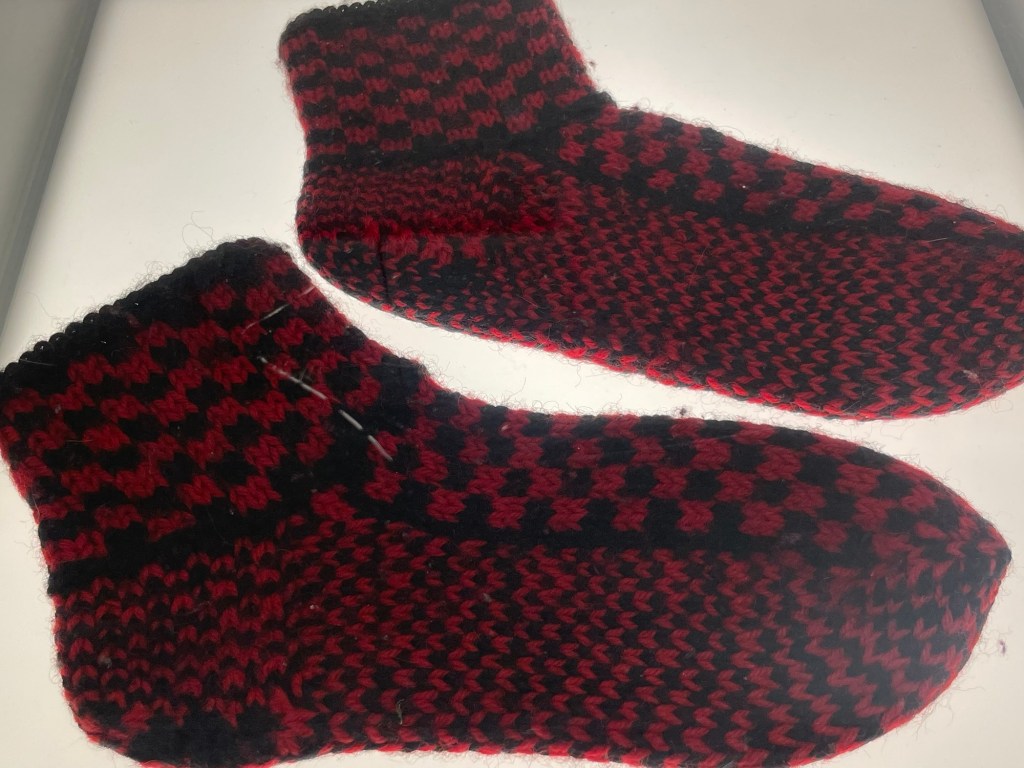
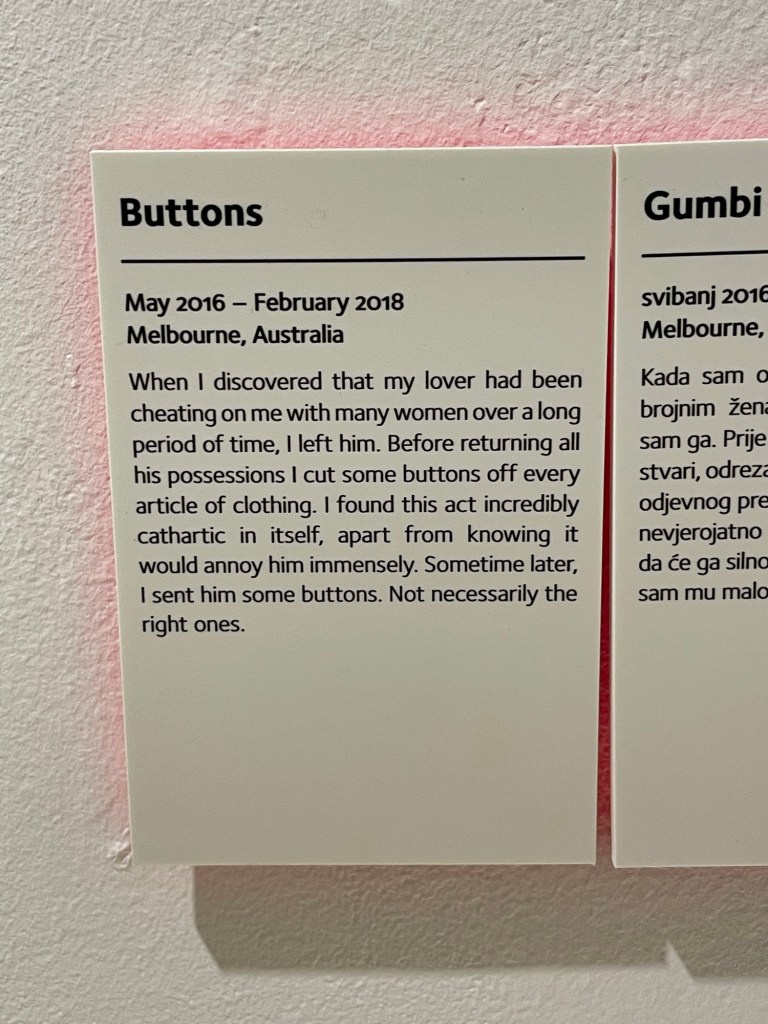
The Museum of Broken Relationships is a quirky museum, a bit like an inverse of the Modern Love column in the New York Times. It features items representing broken relationships, together with a story about their meaning, donated by ordinary people. Most of the relationships involve other people, but occasionally things or situations instead. Not all concern romantic love; some feature familial relationships and friendships. Many exhibits were sad, others poignant, some angry, a few hopeful or funny. Susannah’s favorite was about a pair of woolen socks knitted with love by the donor’s grandmother, to help them become safe, brave, and strong; the donor has given them away because they now feel ready to stand on their own two feet. Nick appreciated the sense of humor in a story about buttons (see below).
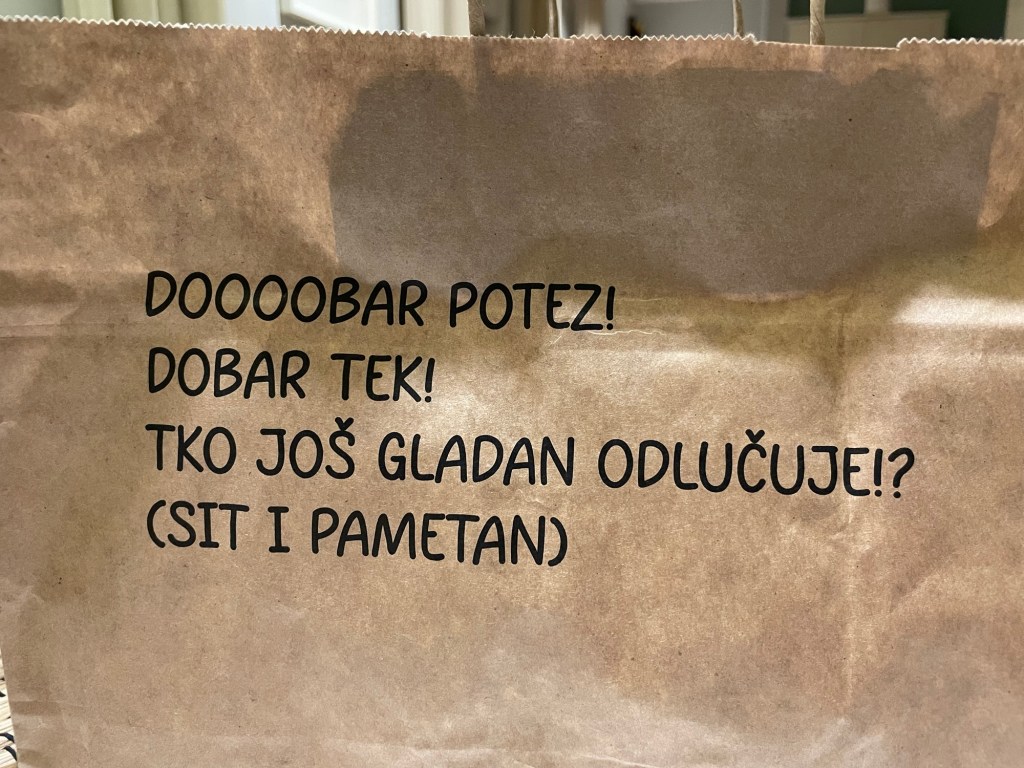
For dinner, we happened upon a promisingly named establishment: Good Food. We can attest that it lives up to its name. We were intrigued by the messaging on their takeout bags, which we think translates to “Good move! Bon Appetit! Who could be hungry after this choice? (Full and smart!)” At least, that’s the best we could gather from Google translate. Any native Croatian speakers want to help us out?
Local in Lošinj

Rowan’s spring break is coming to an end, and tomorrow they will rejoin the rest of their cohort for the final month of the semester. In order to have some time to see the town where they have been living, we decided to travel there a day early and stay the night. Lošinj (low-SHEEN) is an island in the Adriatic, fairly large but not connected to the mainland, so the only way to get there with our car is by ferry. The ferry schedule runs every two hours. We had hoped to catch the 11:30 AM sailing after our scenic drive across the southern part of Istria, but when we arrived a little after 11 there was already a long line of cars waiting in line. The incoming ferry discharged 37 cars, and there were nearly 100 ahead of us, so we grimly imagined waiting around for four hours to get on the 3:30 boat.

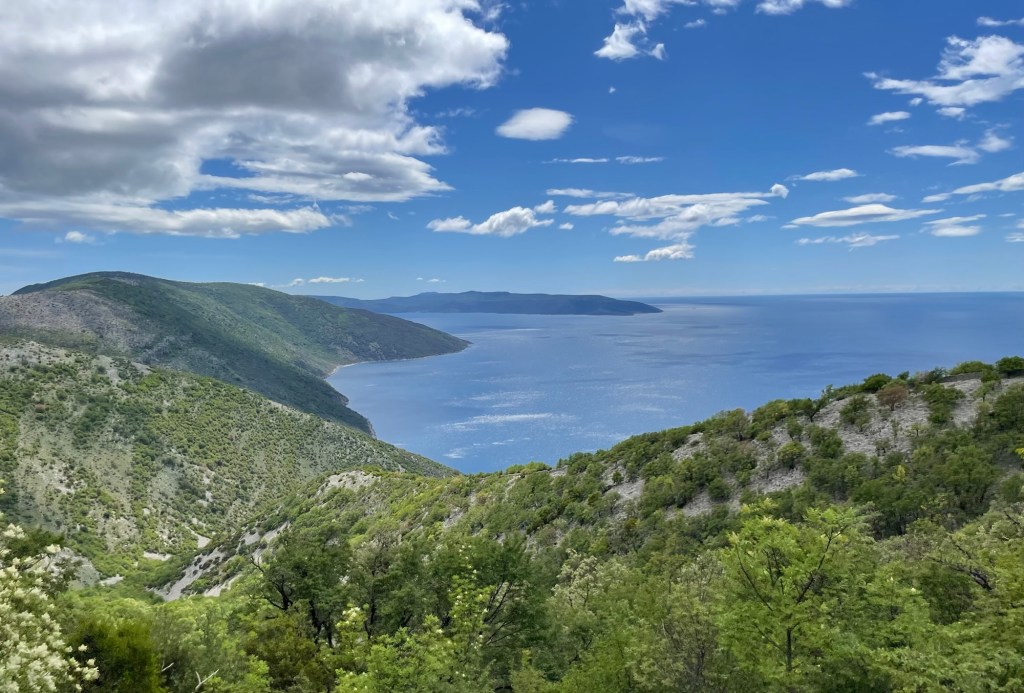
On the road to the ferry at the southern tip of Istria – nice view!
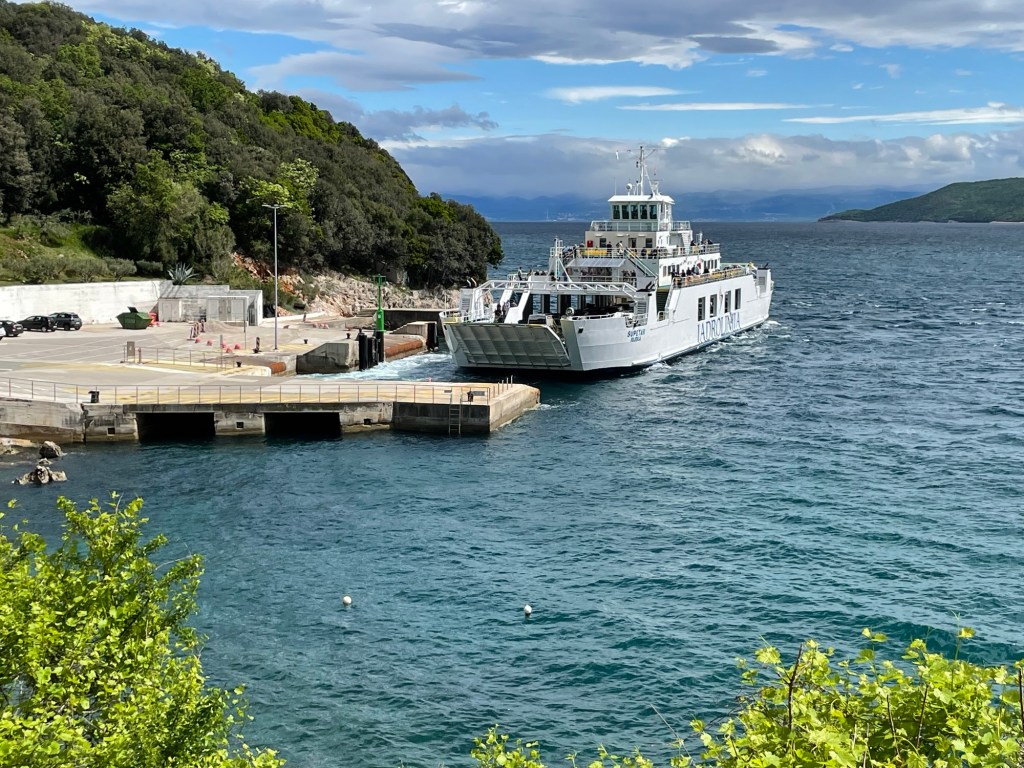
The 11:30 ferry preparing to make landing
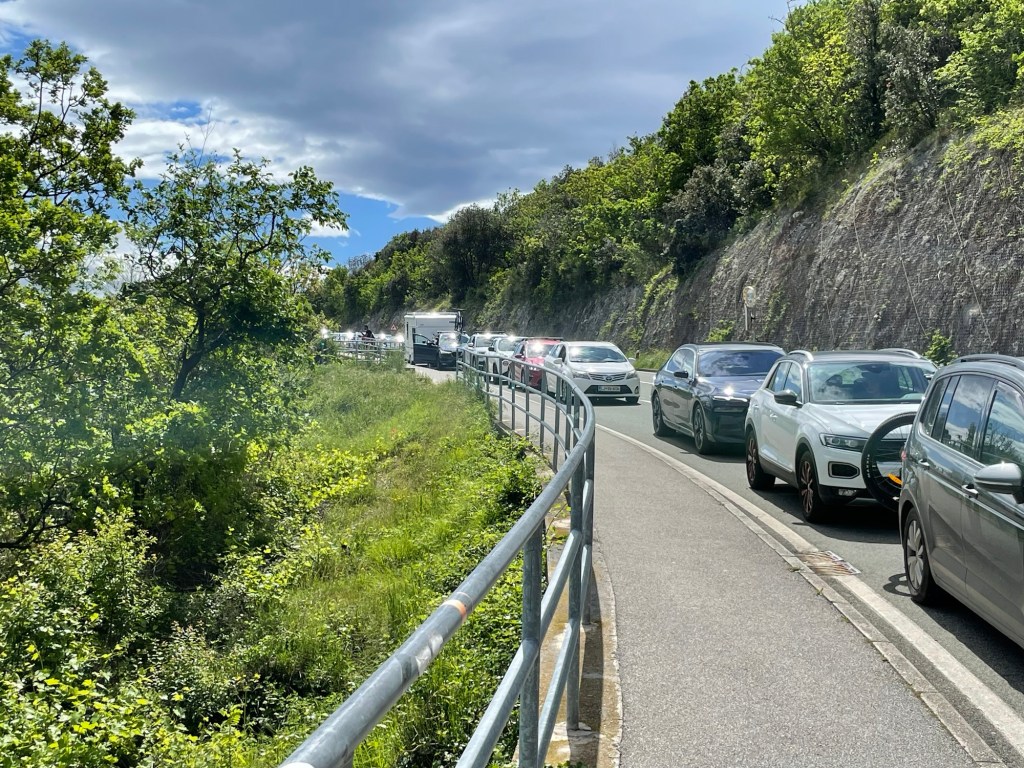
The line of waiting cars stretches back way up the hill

Fortunately for us, things turned out much better than we had feared. First, it turned out that the incoming ferry had not been completely full, and the true capacity is far more than 37 cars. Second, since there were so many cars waiting in line, the ferry returned right away after making one trip to get the rest. In the end we made it onto an unscheduled 12:30 sailing, having just enough time for a light picnic lunch while waiting.

We made it on board! Our rental car tucked in on the left
The 12:30 sailing was also completely full. The ferry wasted no time, leaving as soon as the last car was on board, before the ramp had even been raised up.
The ferry goes to Cres, an island north of Lošinj that is connected to it by a bridge. We had to drive the length of Cres and most of the way down Lošinj.

Rowan has been living in Veli Lošinj, the smaller of two nearby towns in the southern part of the island. Mali Lošinj, the larger of the two, is a short walk away. (Ironically, “veli” means big in Croatian, and “mali” means small — the names once matched the populations, but no longer do.)

Our lodging in Mali Lošinj, with a view of the sea
Rowan by the harbor in Mali Lošinj
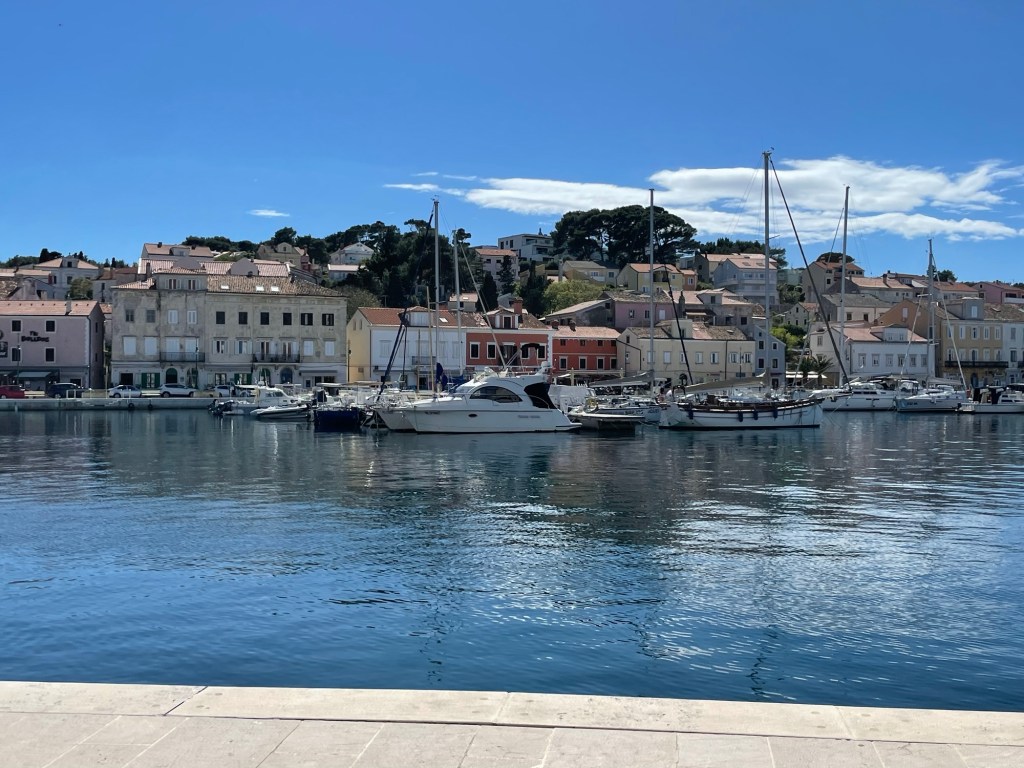
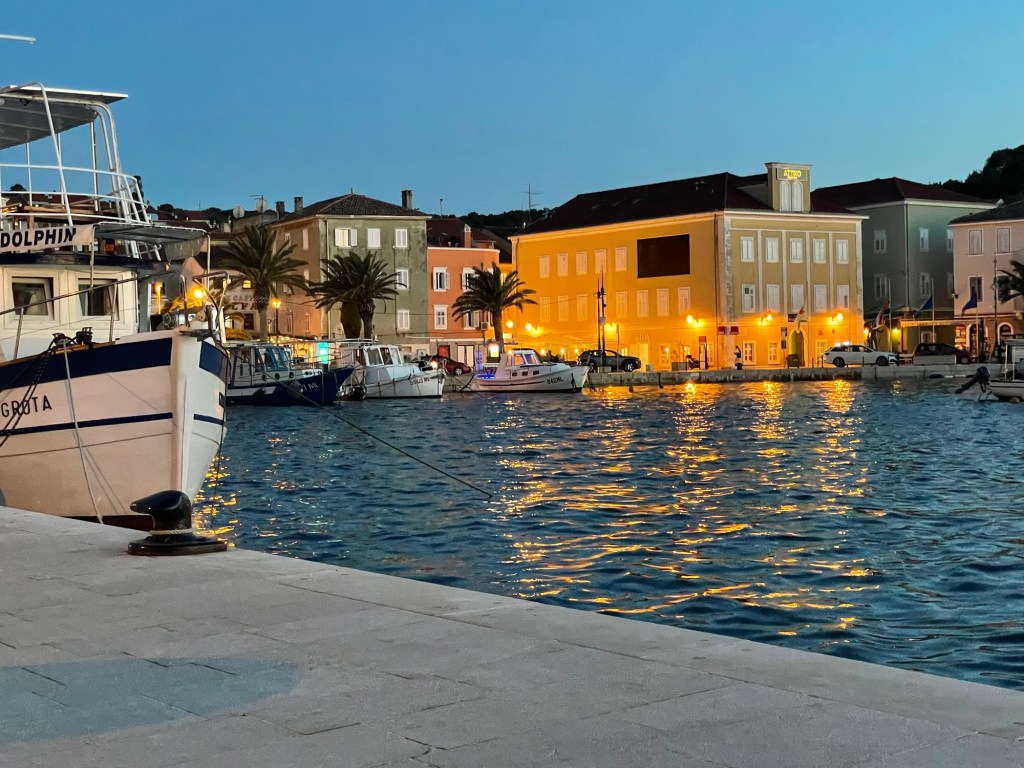
Mali Lošinj harbor

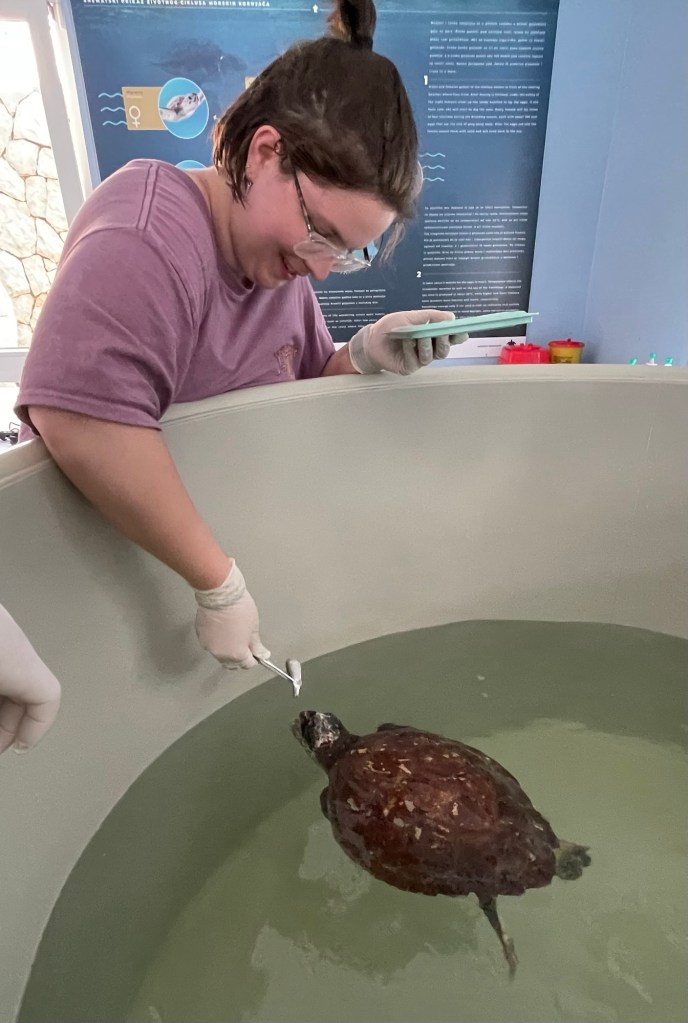
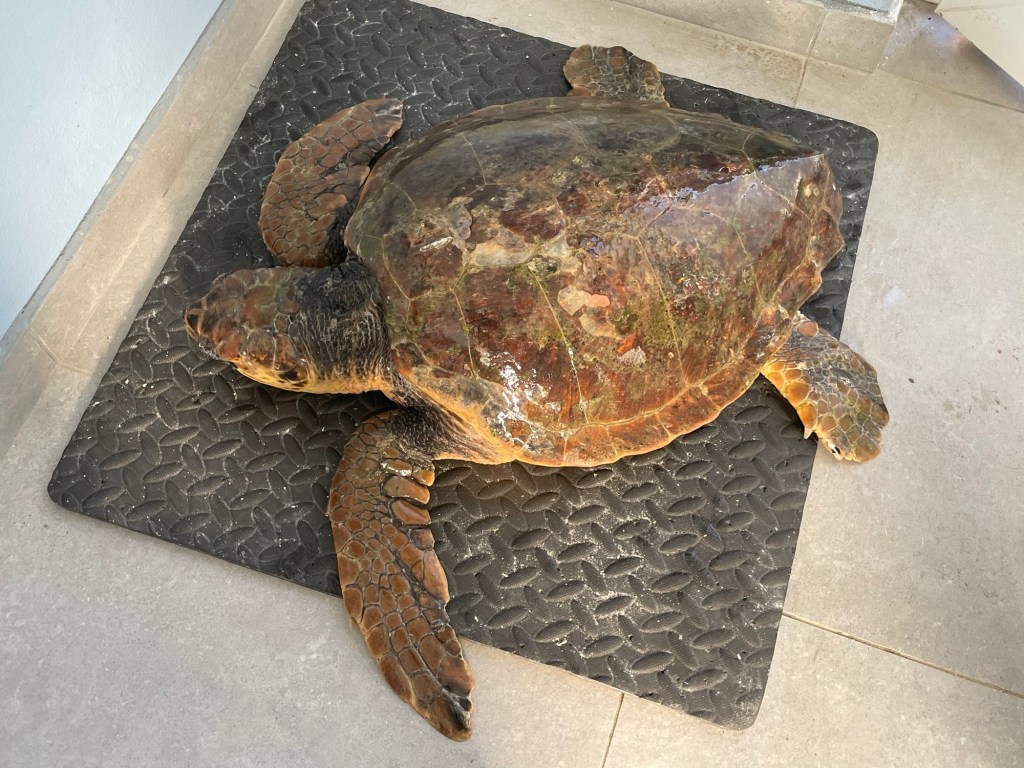
We arrived in time for a special treat: at the sea turtle rescue organization that Rowan has been working with, feeding happens daily around 5 PM. We even had a chance to feed some of the turtles ourselves. One of the turtles had to be taken out of her tank while it was cleaned, and Rowan got to put her back in afterwards.

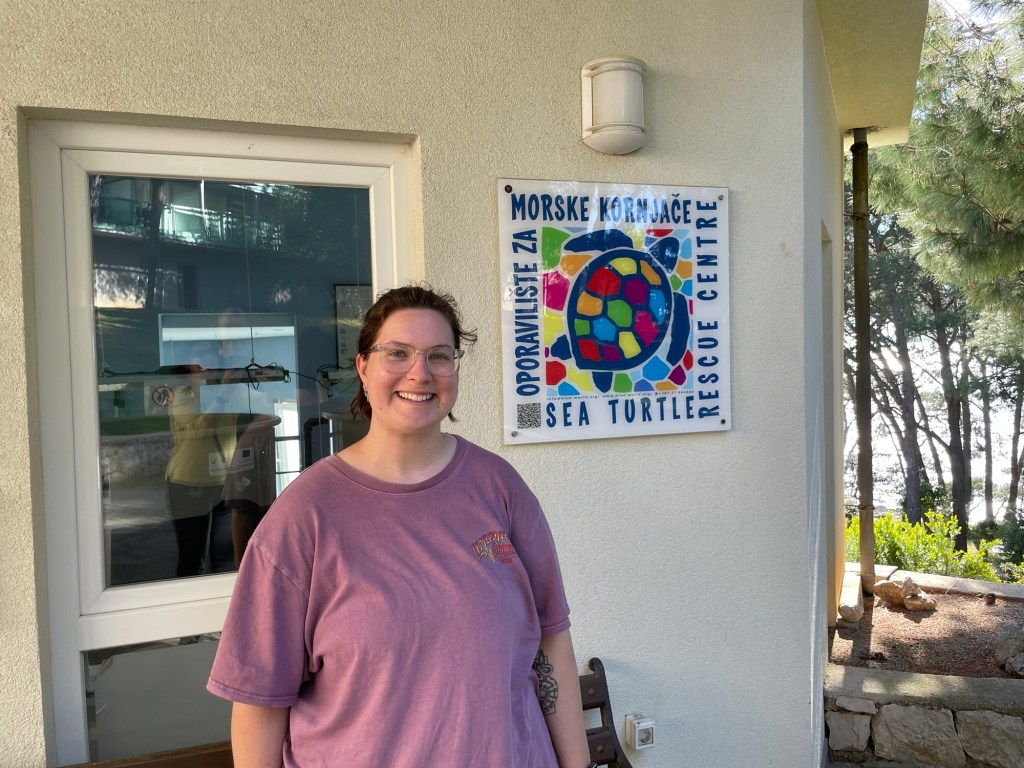
At the sea turtle rescue facility
Feeding Polo
Feeding Cvita. She has no front flippers.
Višnja rests on a mat outside her tank while it is cleaned
Rowan holding Višnja
Višnja returns to her tank

After our turtle visit, we drove to central Veli Lošinj to see the place Rowan currently calls home. When Rowan arrived in February, few stores or restaurants were open in either Veli or Mali, but now with the start of the tourist season, a lot more places are starting to open up.

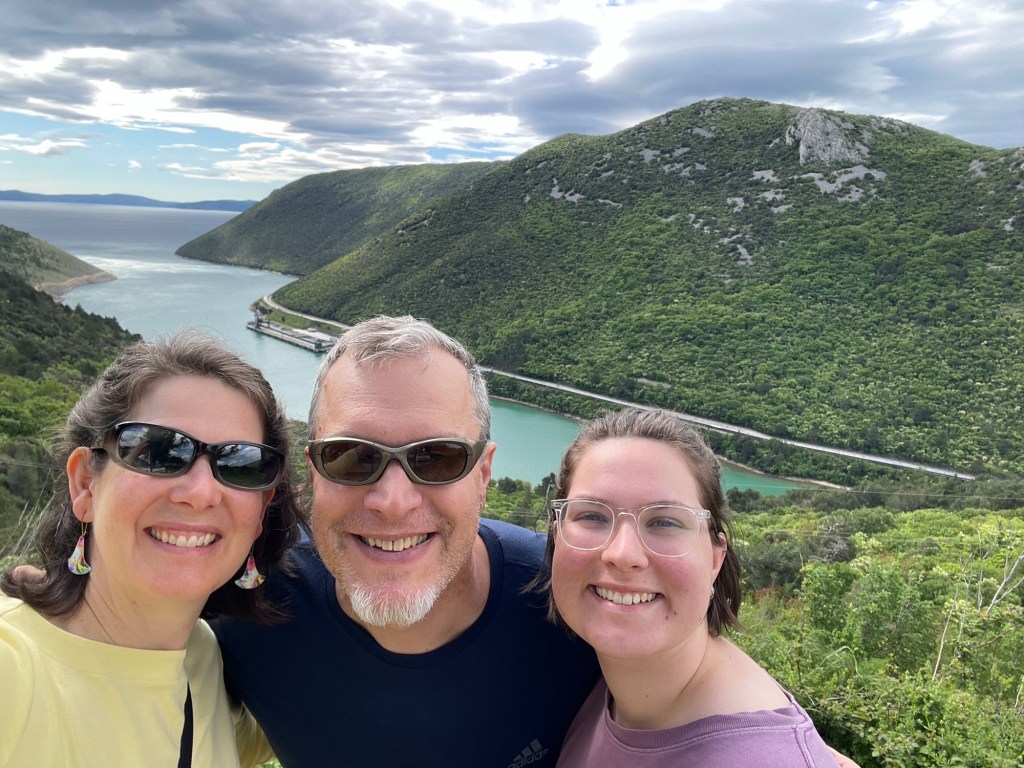
Selfie by the harbor in Veli Lošinj
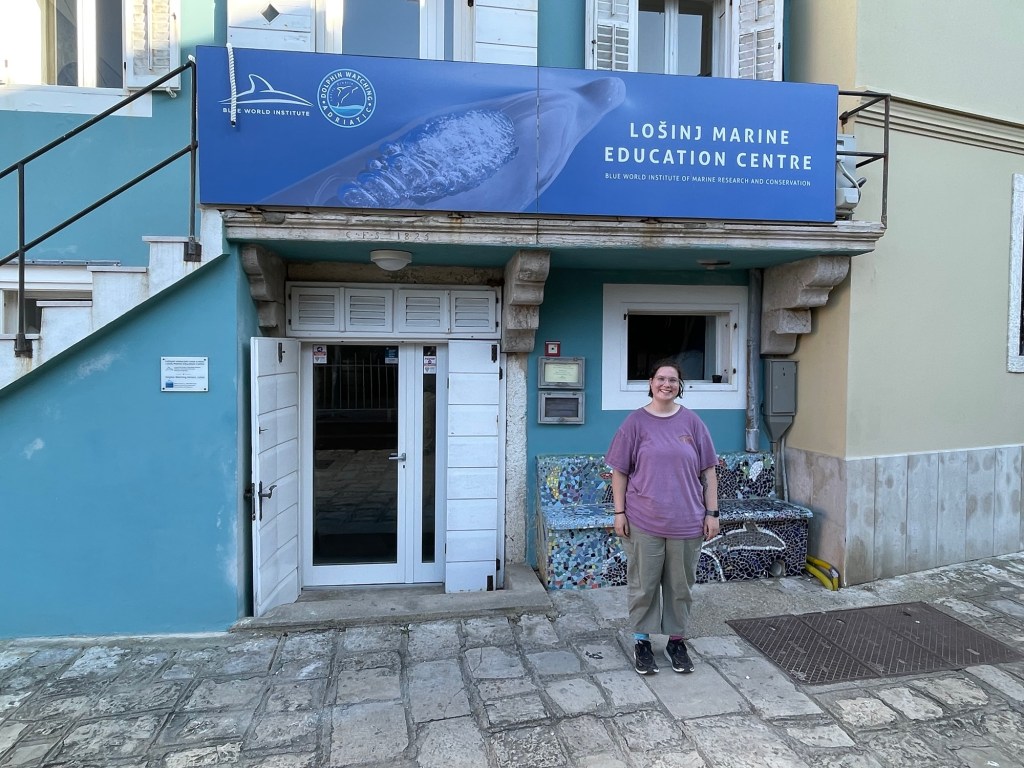
Dolphin research facility in Veli Lošinj — Rowan’s study program also partners with this organization
Harbor of Veli Lošinj
Rovenska harbor, next door to Veli Lošinj
Back to Mali Lošinj in the evening

Istrian Road Trip

This morning when we woke up, Saint Euphemia was facing towards the land. Sure enough, the weather was gray and rainy — not a good day for walking around, but not so bad for driving in a car. Which was fortunate for us, because today we planned to visit several sites on the Istrian peninsula in the vicinity of Rovinj. Time for a road trip!

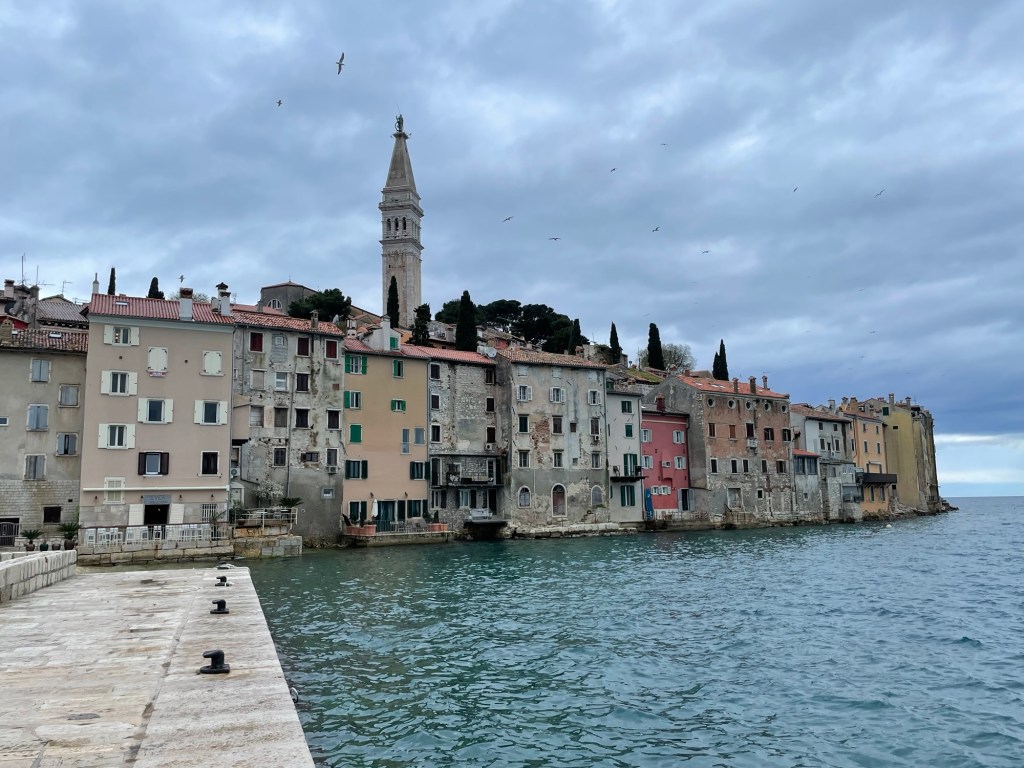
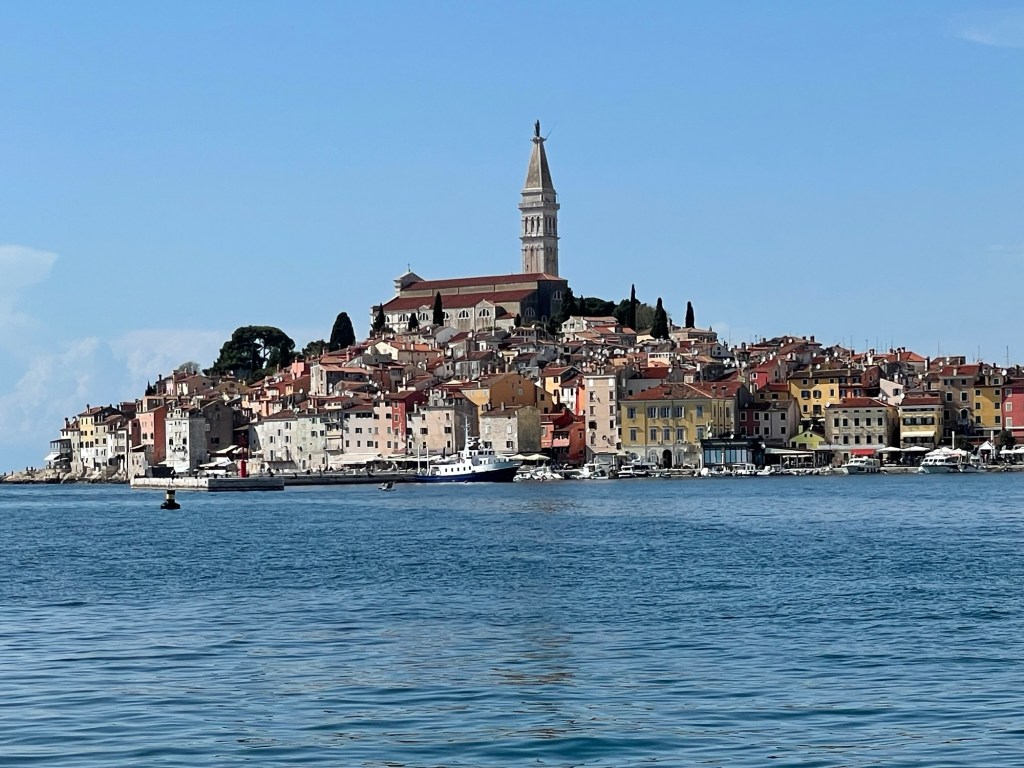
Rovinj seen from the north, with Saint Euphemia facing inland atop the steeple

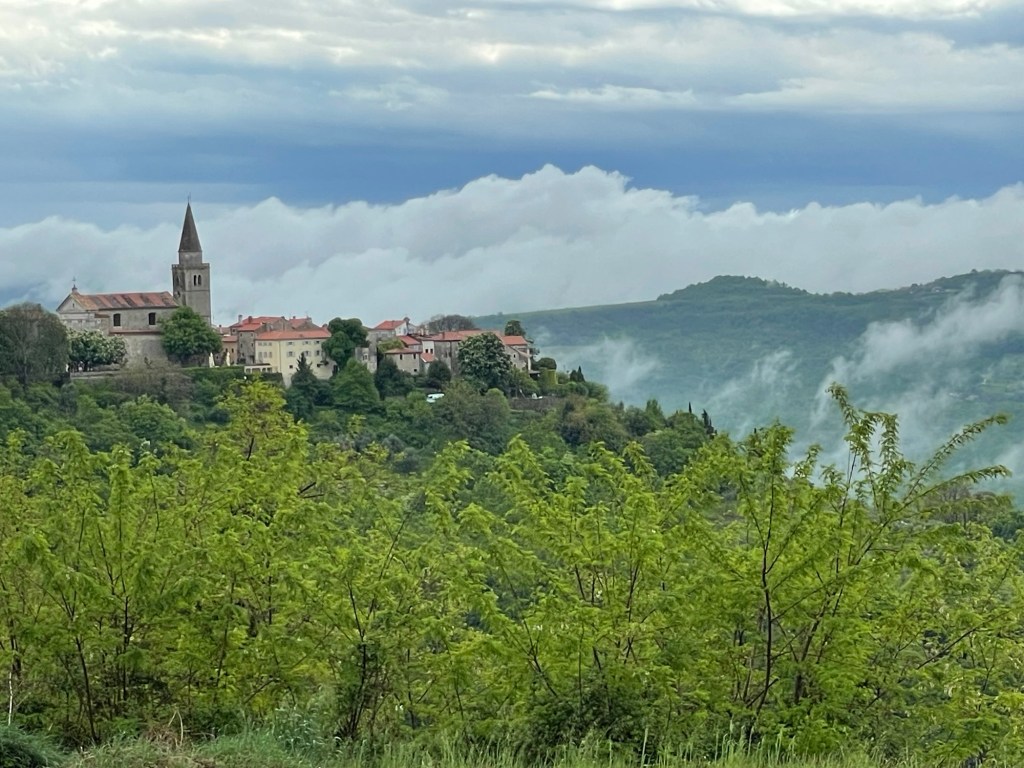
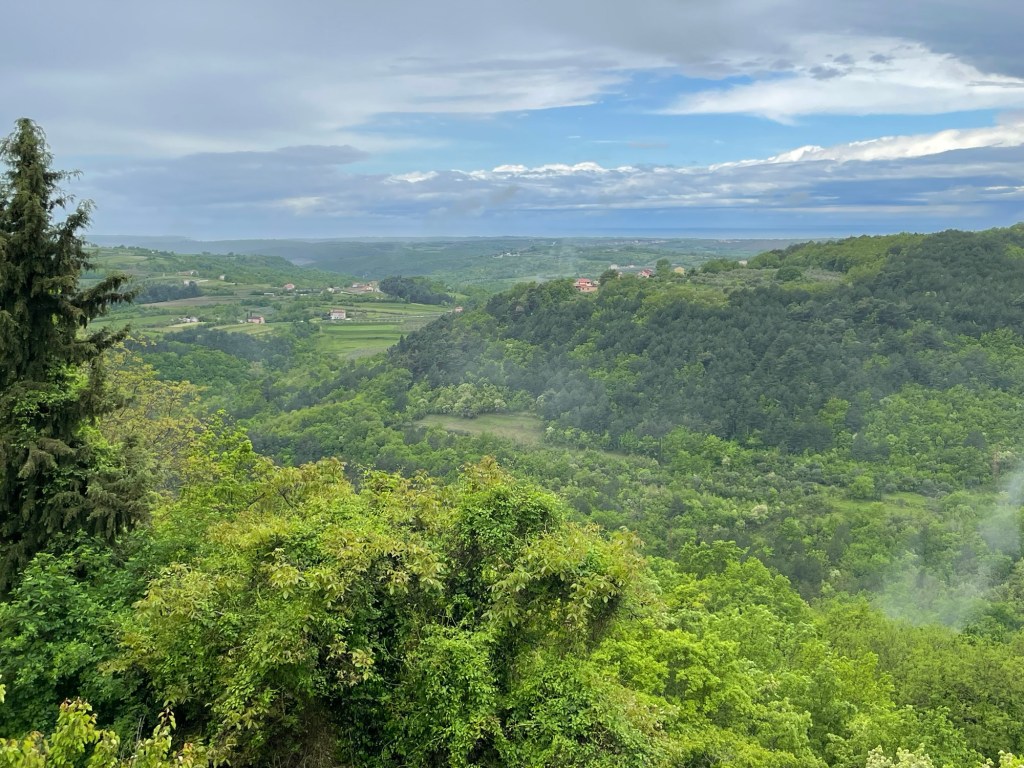
Our first two destinations were old hill towns to the north. Grožnjan is known as an artistic center, and features dozens of shops selling all manner of different art pieces — painting, glass, metalwork, jewelry, sewn crafts, etc., plus a handful of the usual tourist souvenir shops thrown in for good measure. We could tell that on a clear day there would have been excellent views in all directions, but today we were lucky to get enough of a break in the clouds to see the line of the next ridge. At least the rain mostly held back while we explored the town.

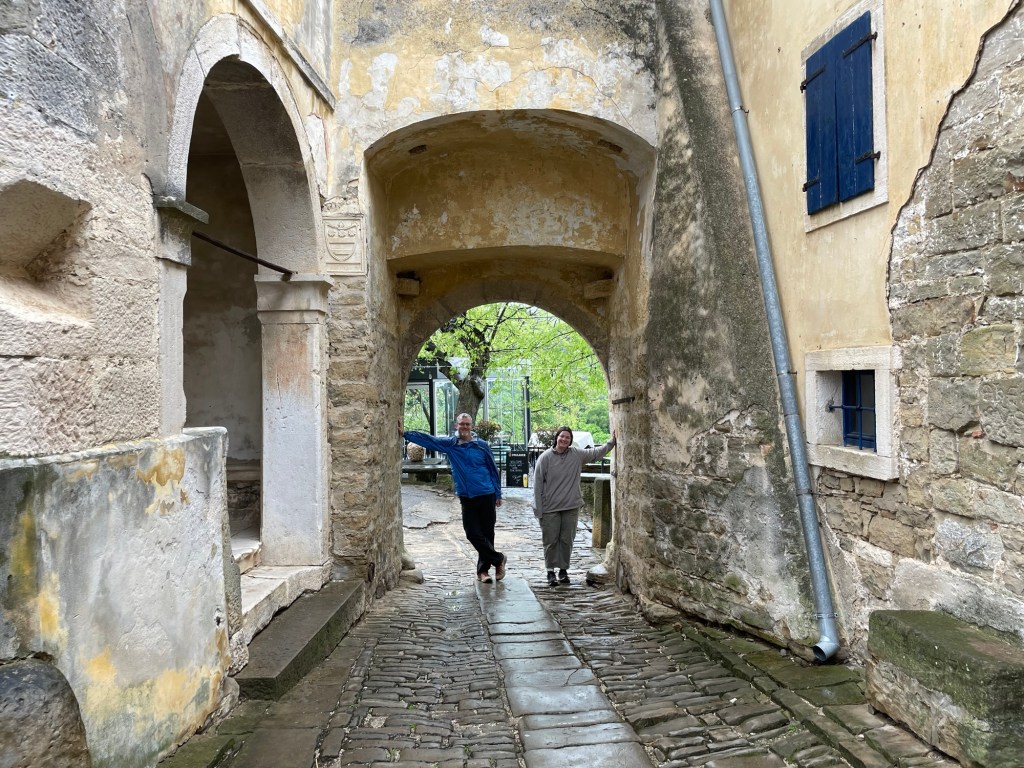
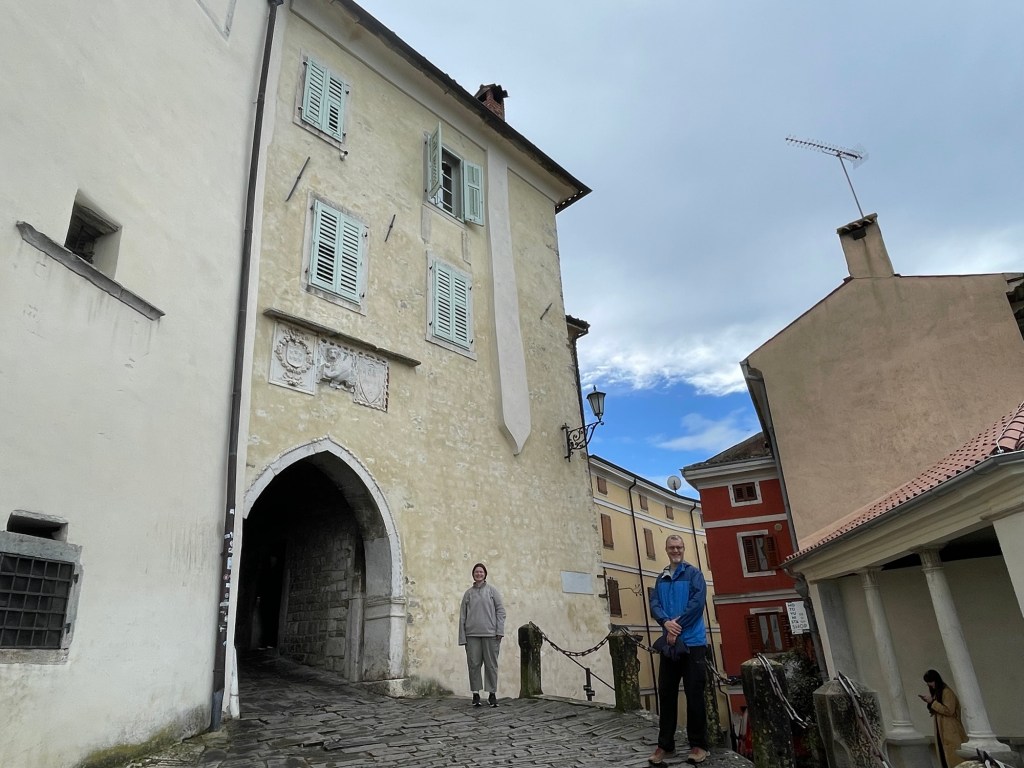
The village gate

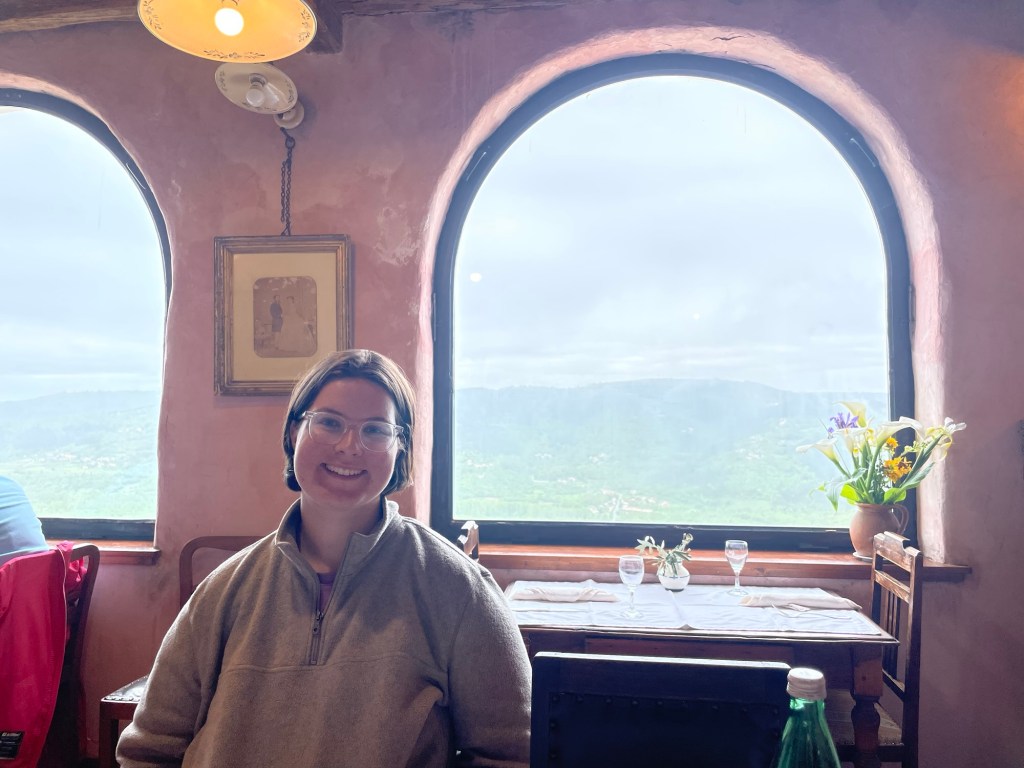
By the time we reached our second hill town, named Motovun, the rain had set in and the fog had grown denser. It was around lunchtime, so after parking we found ourselves a restaurant with indoor seating and ordered a meal. One of the specialties of this region is the wild truffle, and in restaurants many of the dishes feature this ingredient. They come in two varieties, white and black. We decided to share a plate of pasta with black truffles, so that everyone could have a taste.

By the end of lunch, the skies had cleared a bit and it was no longer raining. Motovun retains its medieval fortifications, and they are something fierce: a high wall with multiple gatehouses, and even the houses below the walls are built for defense, standing close together with limited points of entry. Once inside, a walk around the walls offers great views in every direction.

Outer gate
Inner gate
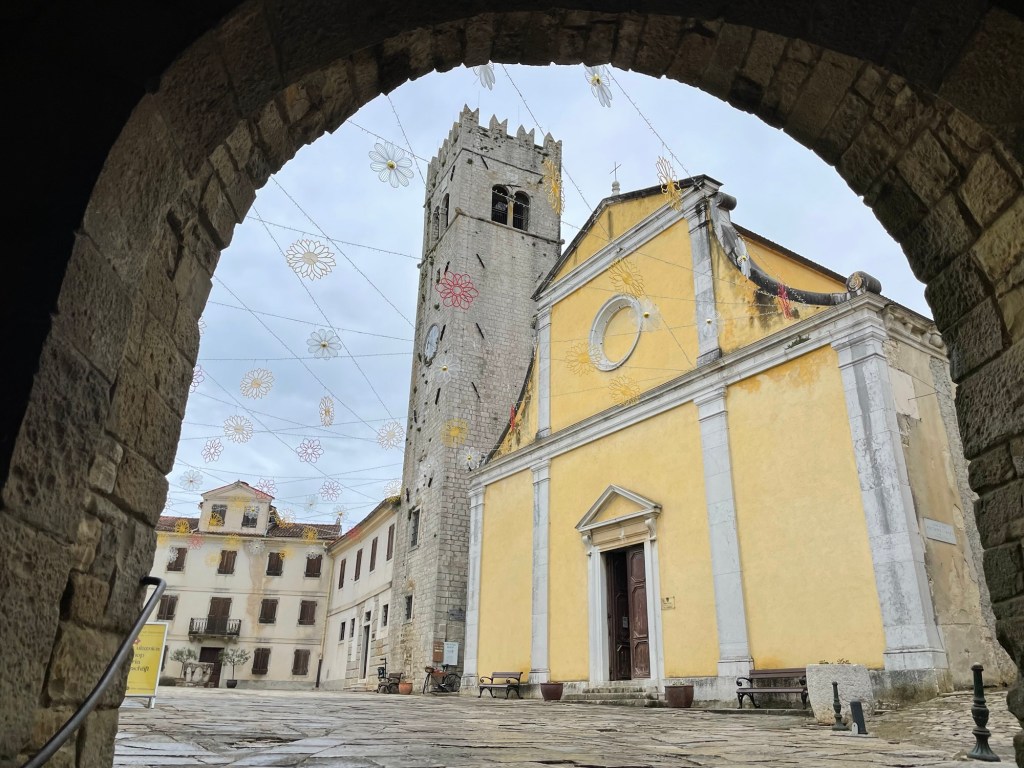
Main square by the church
Along the walls
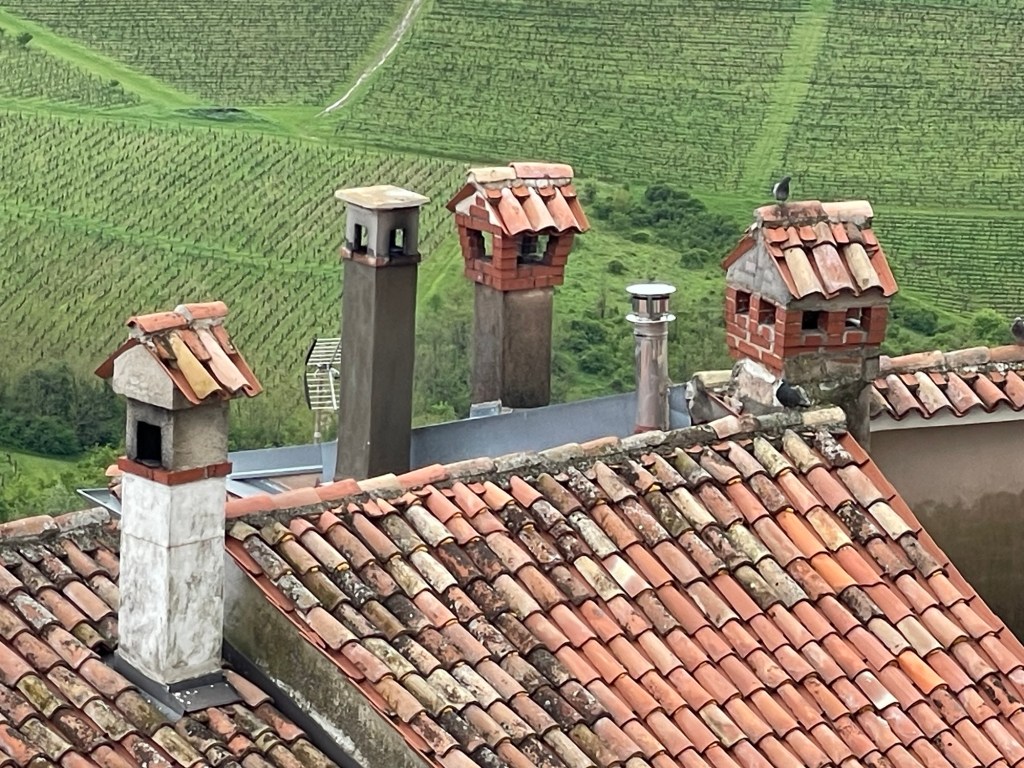
A collection of fanciful chimneys, with vineyards in the fields below
Part of Motovun below the city walls
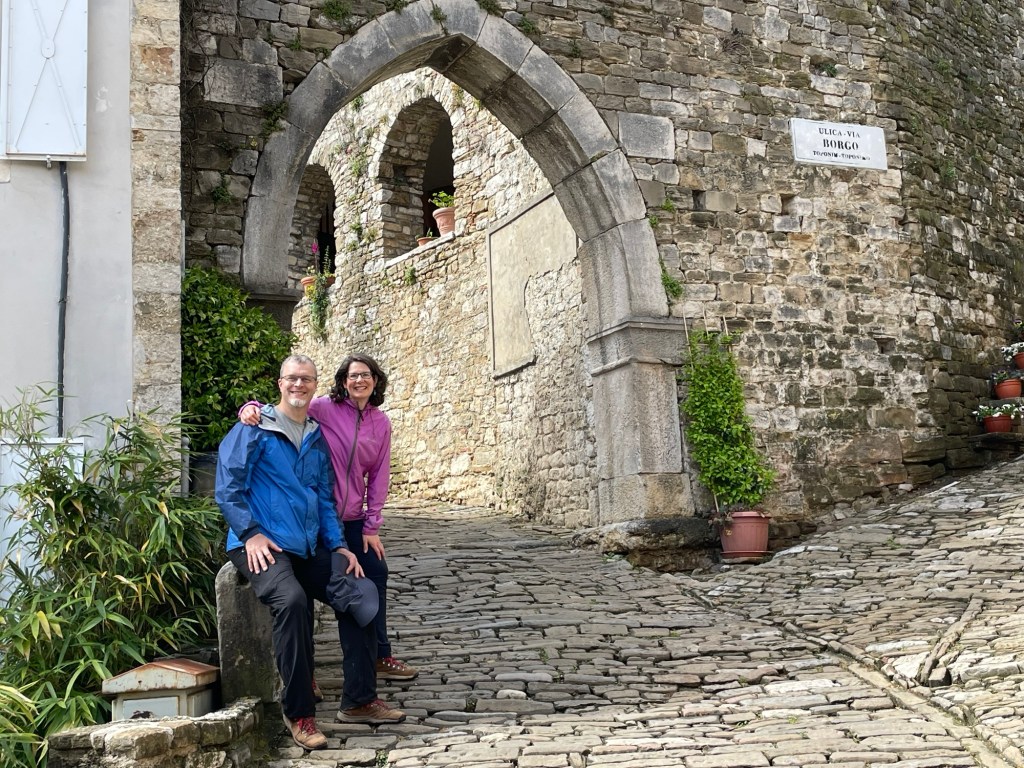
An outer gate
On the way out of town, we had a great view of the full town of Motovun, no longer hidden by clouds

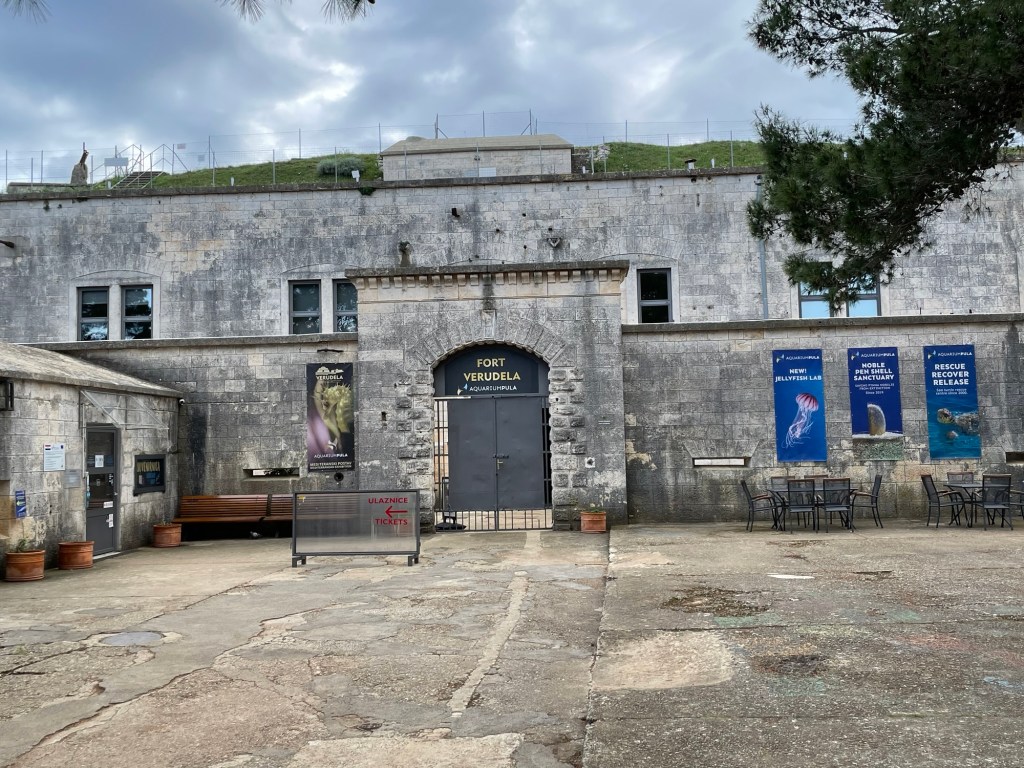
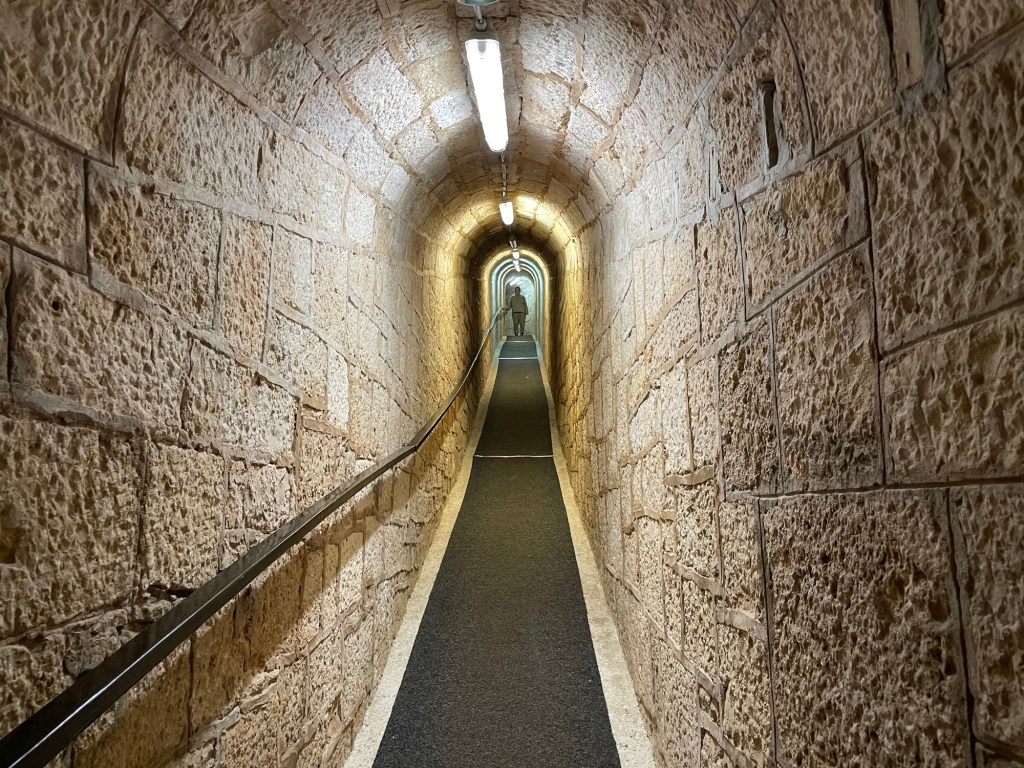
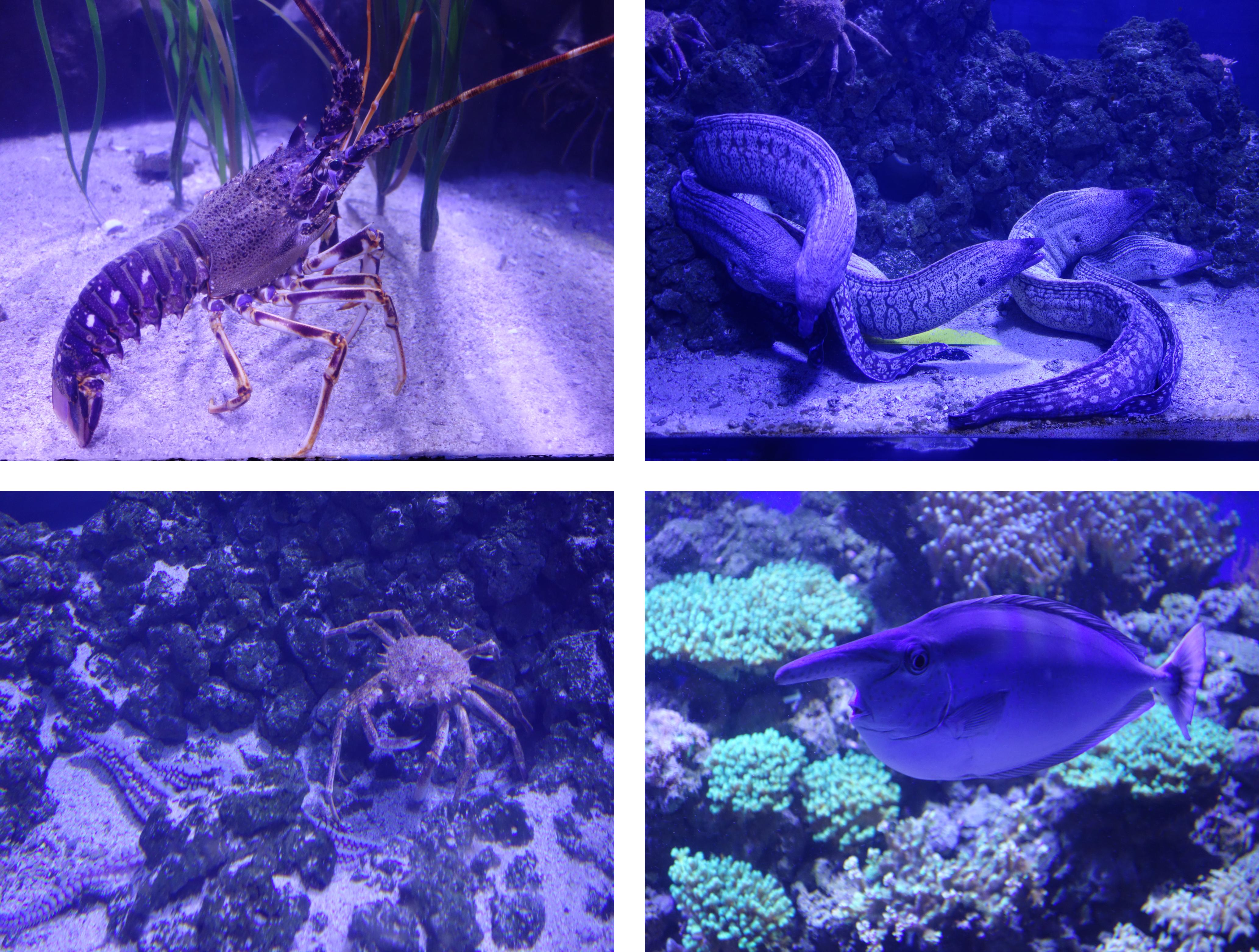
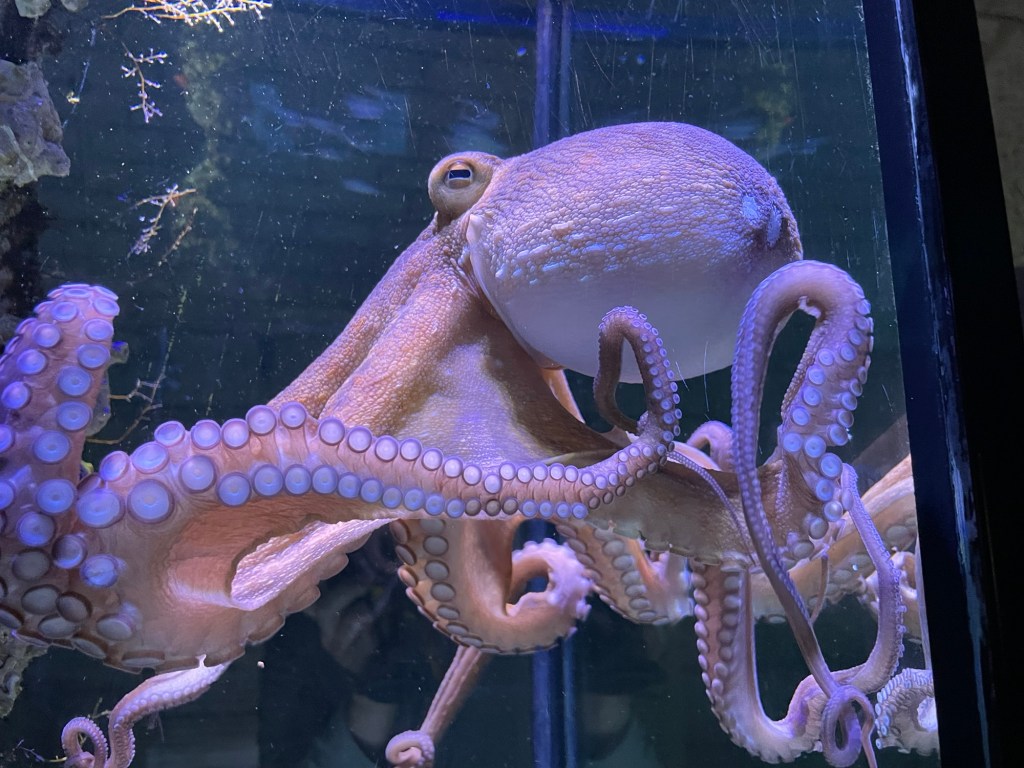
Bidding farewell to the hills, we next drove south to Pula. This coastal town once served as the chief naval base of the Austro-Hungarian Empire, and as a result is surrounded by extensive fortifications meant to protect the town and its shipyards. Now superfluous, the old forts have been stripped of their armaments and are mostly fallen into ruin. The military style of architecture doesn’t lend itself well to reuse, but here in Pula they have come up with a clever idea: one of the forts has been repurposed as an aquarium, with different tanks installed in each of the vaulted chambers inside. It works remarkably well, given that most fish prefer a constant temperature and dim lighting. We saw lots of fascinating creatures, and enjoyed our visit immensely. The octopi were our favorite characters, spending most of their time actively exploring their environments. (We’re also quite partial to the Rowan-turtle!)

The former fort, now aquarium – quite the distinctive entrance!
Steep hallway to a barbican, now in use as the aquarium’s movie theatre
Newly hatched dogfish and protective casings (known as “mermaid purses”) around other developing embryos
Is this a permanent installation? 🙂
Inquisitive octopus #1
Inquisitive octopus #2 (different tank)
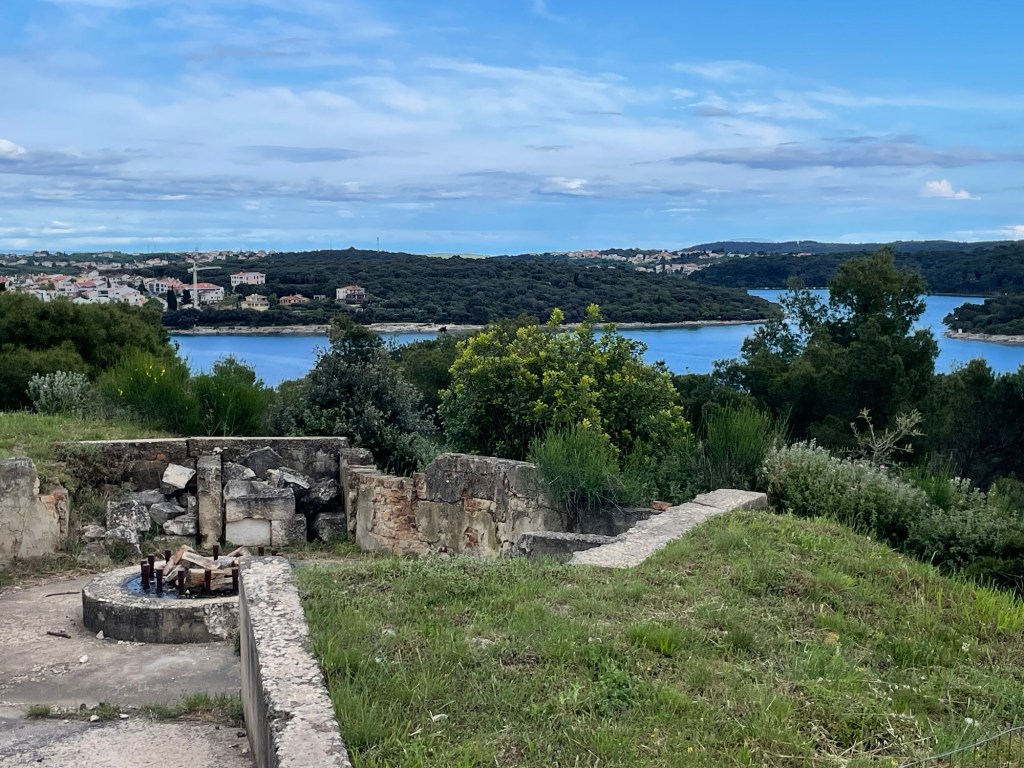
The roof of the (aquarium) fort offers views over Pula’s harbor

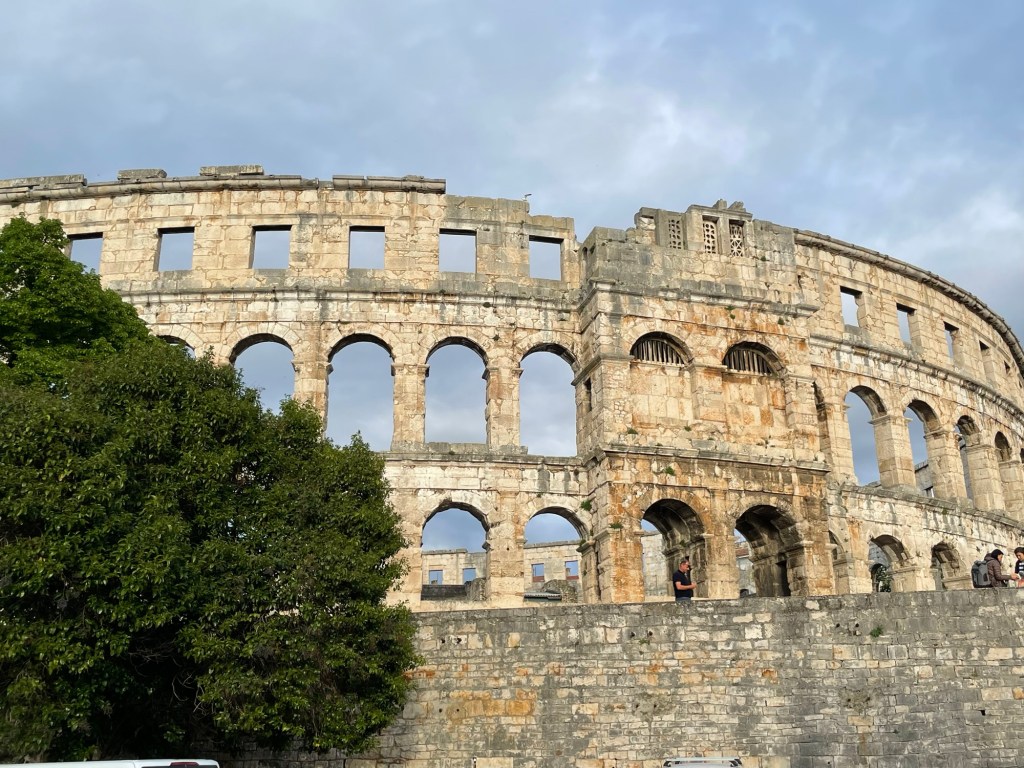
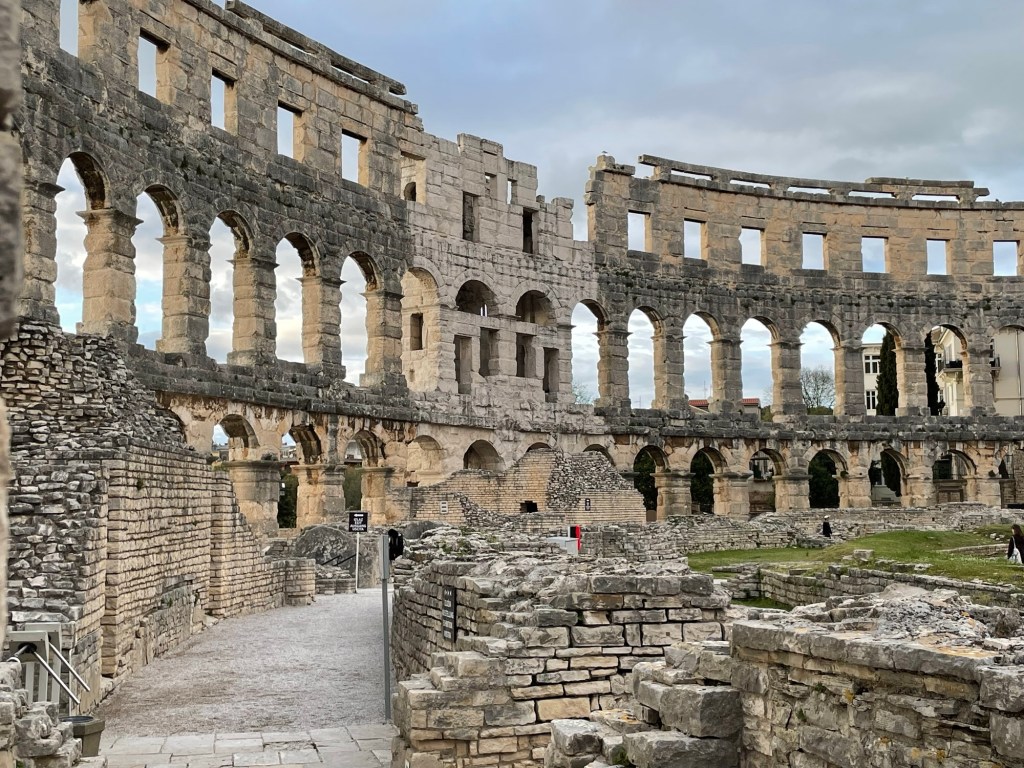
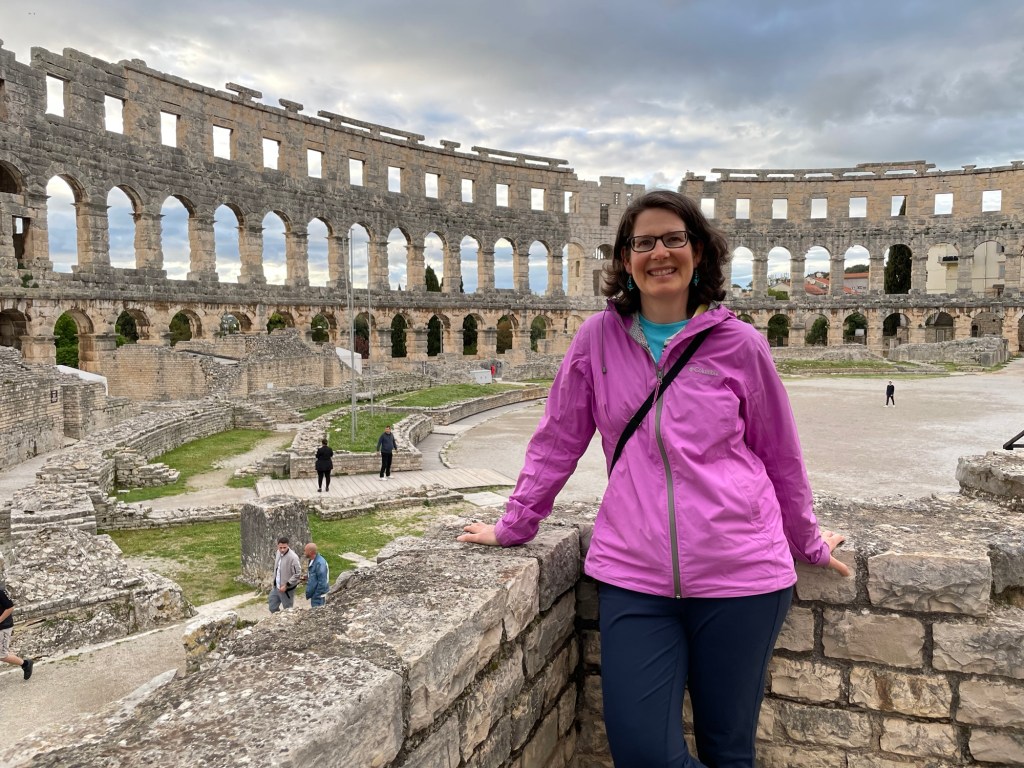
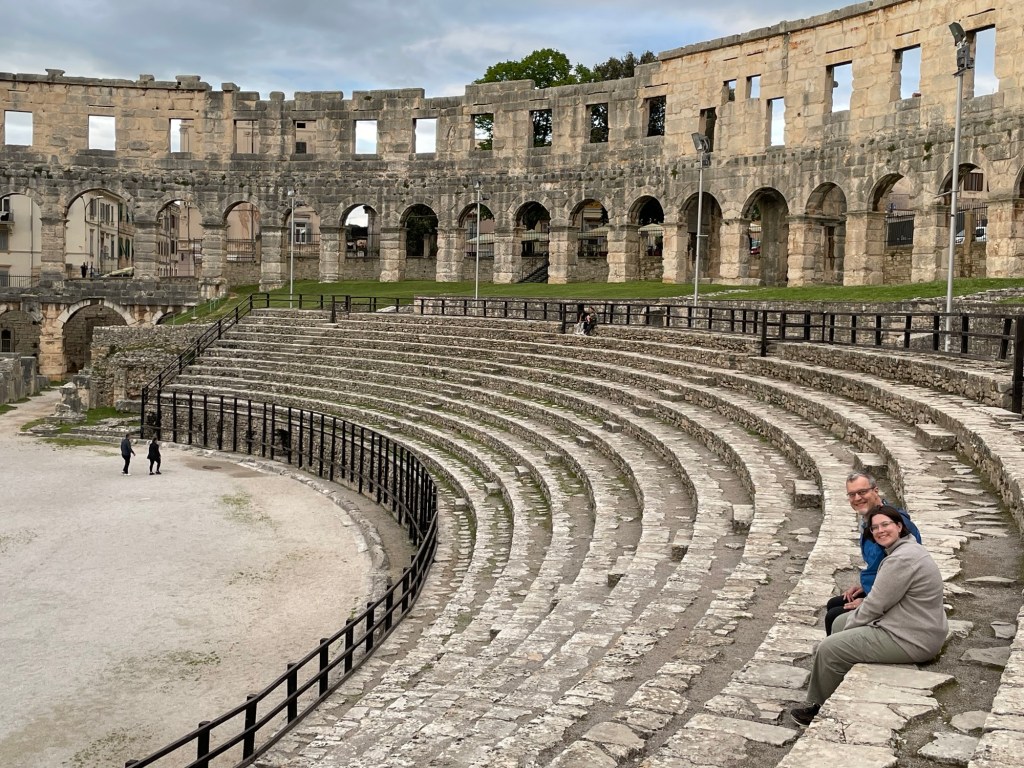
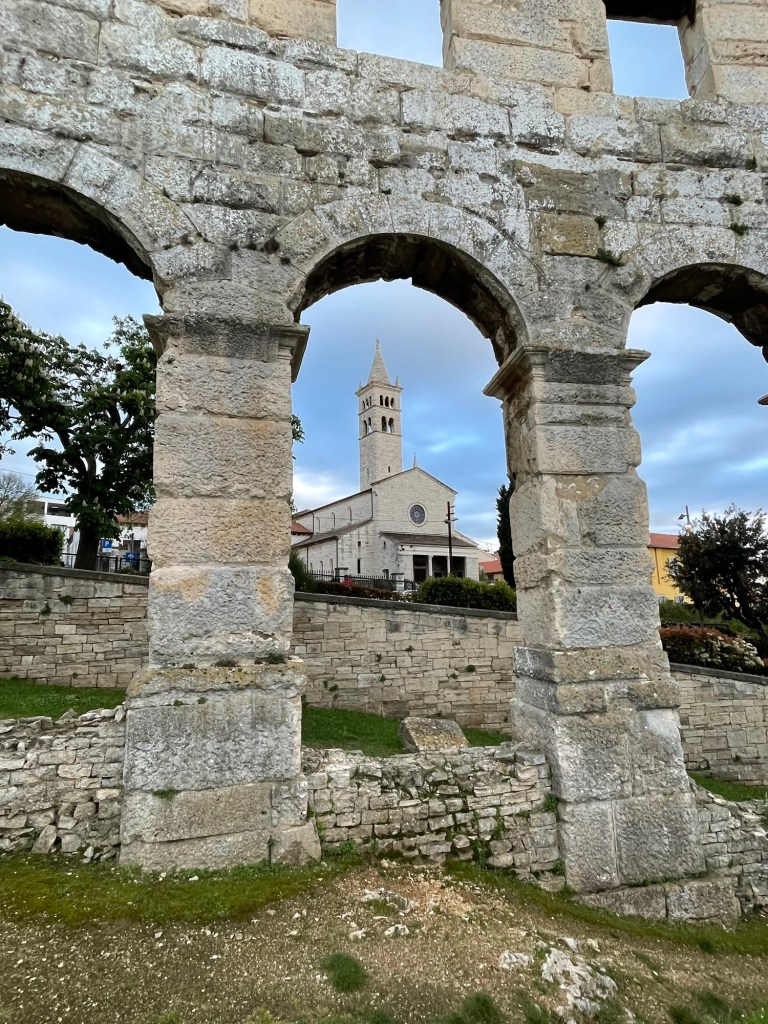
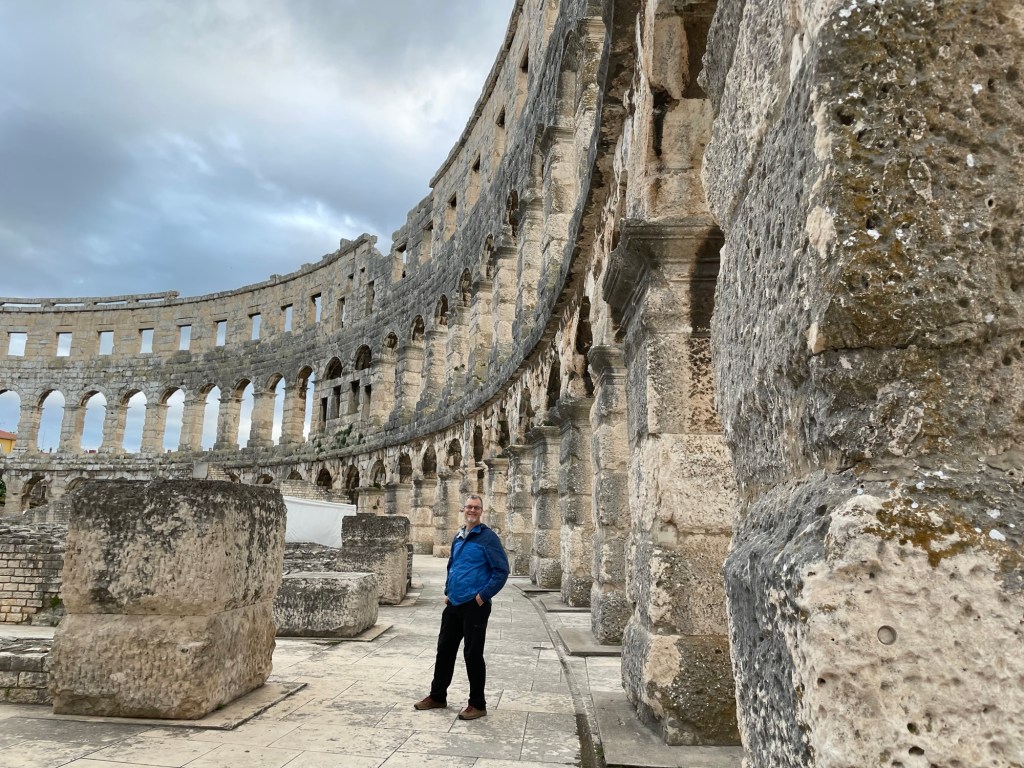
Our other reason for driving to Pula, and our last sight of the day, was an enormous stone amphitheater built by the Romans. It’s not as large as the Colosseum in Rome, of course, but was among the ranks of the next largest in the empire and could hold 23,000 spectators when full. In many ways, stadium design hasn’t changed all that much in the last two millenia: like today’s arenas, the amphitheater consisted of a central performance area surrounded by seating (each spectator was allocated 44 centimeters of bench space) with ramps and concourses below to allow for access and concessions. Today most of the interior structure is gone, with the stone repurposed over many centuries for other building projects in the area. Luckily for us, the immense blocks of the outer wall were too big to easily remove and so their ring remains mostly intact. We spent a happy hour scrambling amongst the ruins and exploring the space, guided by numbered QR codes that linked to explanations of the history and architecture. When dusk fell, it was time to head back to our lodging in Rovinj, feasting along the way on sandwiches from a kebab shop picked up just outside the arena.

A portion of the seating was rebuilt in the 20th century.
The church seen here was built in part using stone taken from the amphitheater seating

All Around Rovinj

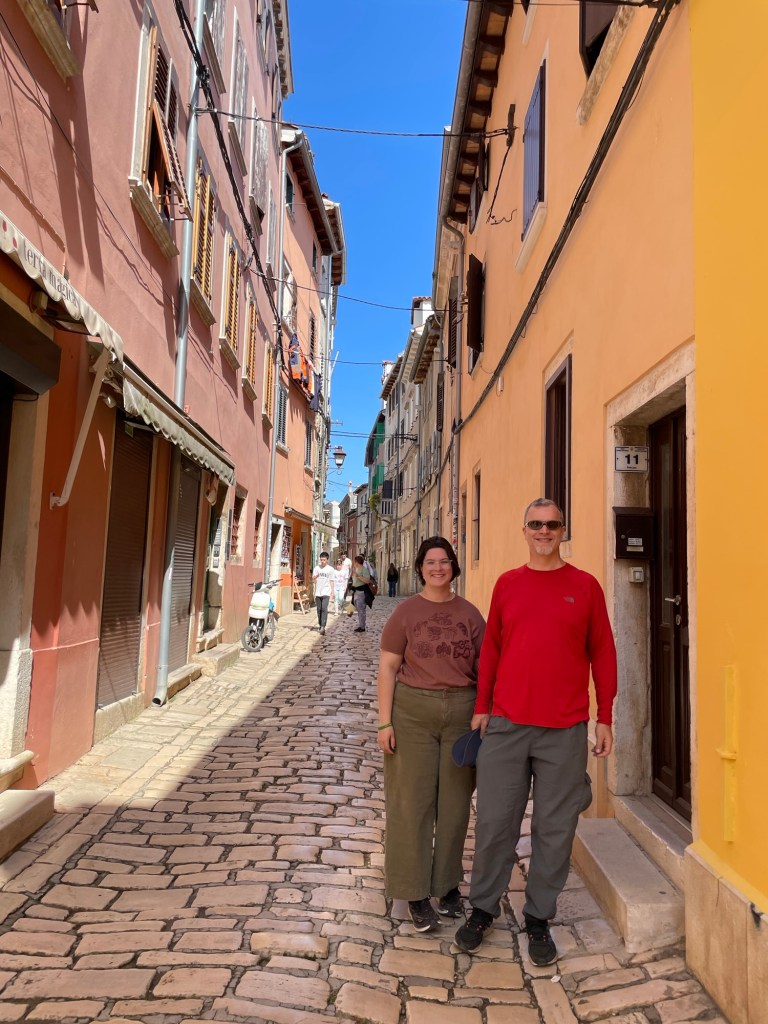
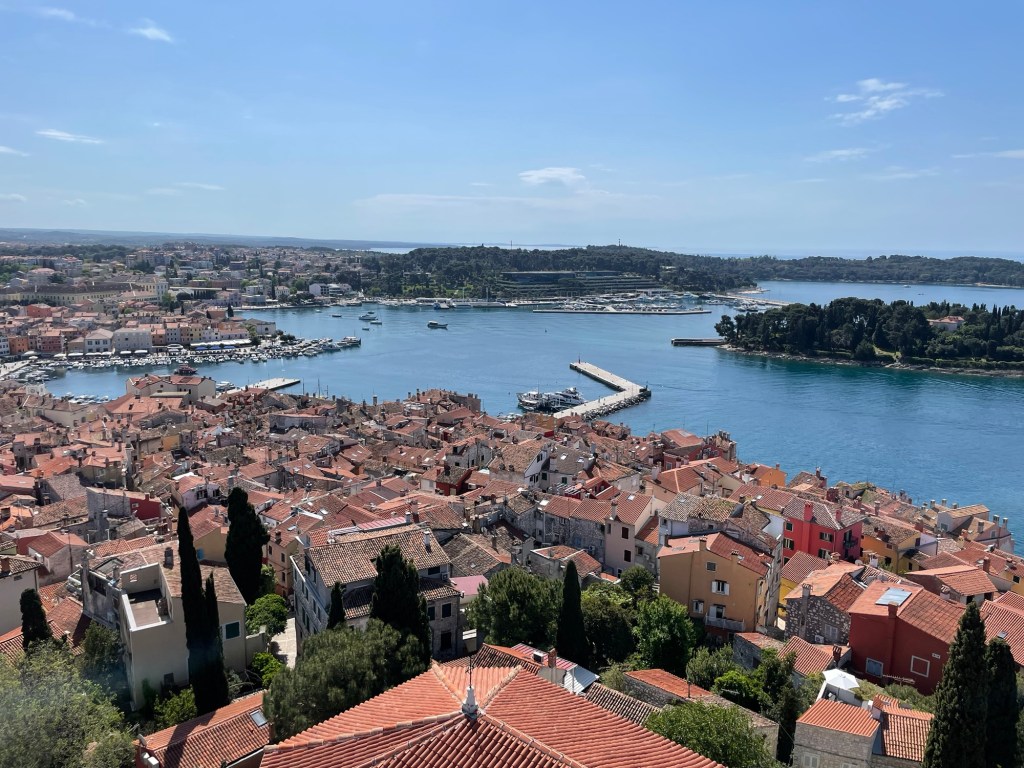
Today we spent exploring Rovinj and its environs on foot. Walking is a good way to get around here, because most of the old city is pedestrian only. The town developed in stages; the oldest settlement was on an oval island just off the coast, where the street plan was designed so that the houses on the outer edge provide a solid wall defending against attacks. In more recent centuries, when threats from the water had subsided, some narrow openings were made in these defenses for easier access to the sea. As the town grew, the island became overcrowded and buildings spilled onto the mainland, with a bridge connecting the two districts over a narrow canal. Ultimately the canal itself was filled in to make a new street, and the onetime island became a peninsula.

The street outside our house. We’re staying in the newer part of the old city, where the streets are (slightly) broader.
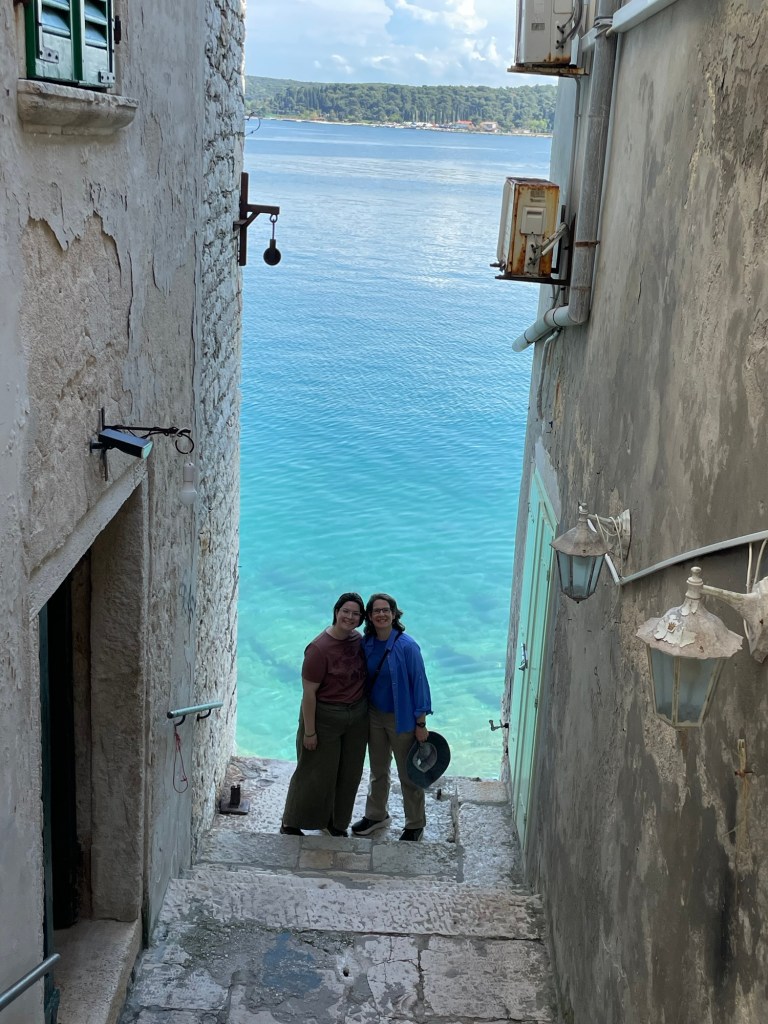
Alleyway to the Adriatic
In this view you can see a narrow isthmus where a band of water once separated Rovinj island from the mainland.
Part of the old city
A secluded alcove
Access to the marina was once controlled by a gate

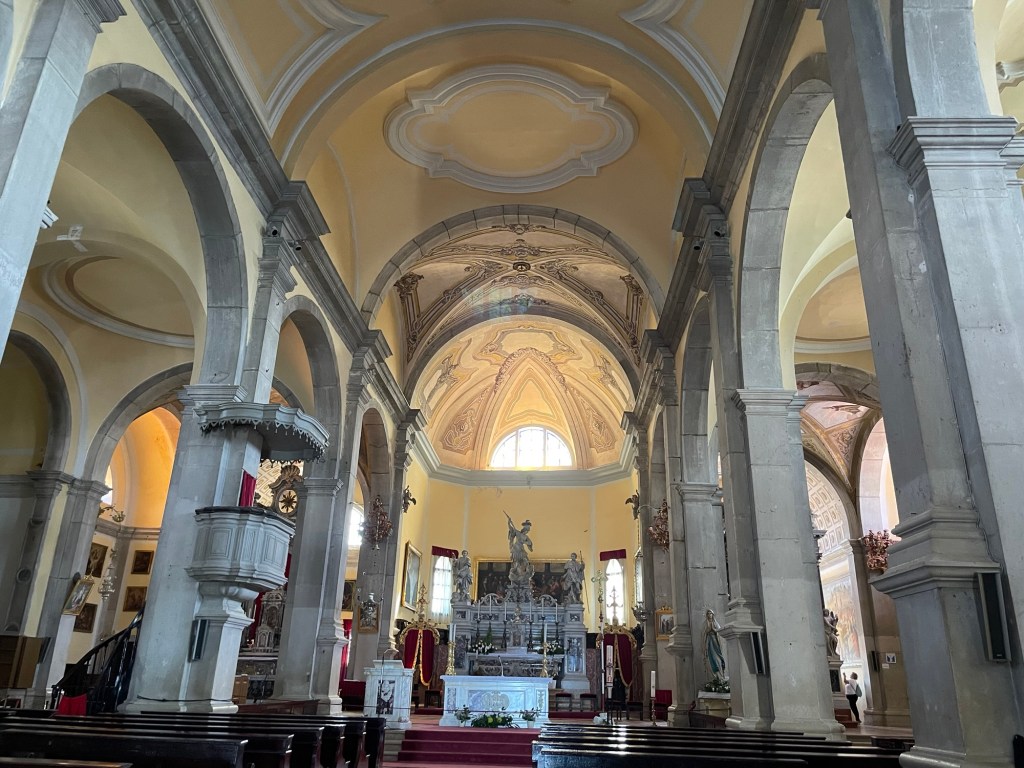
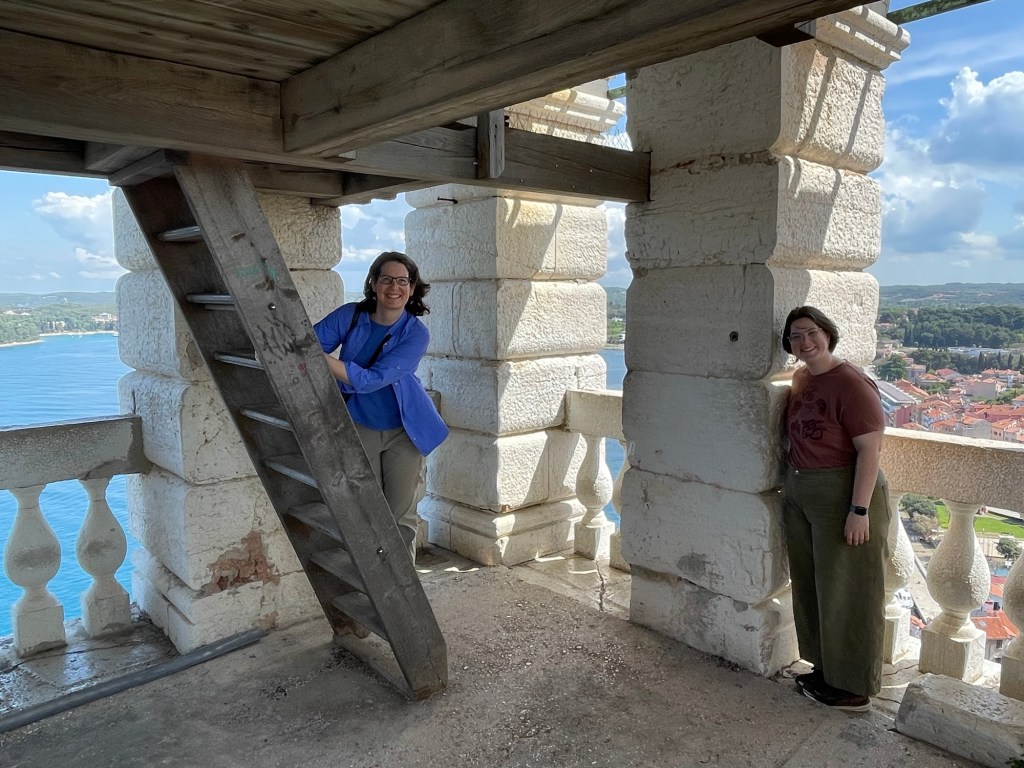
The beautiful campanile at the center of old Rovinj is attached to the Church of St. Euphemia. An early Christian martyr who lived in the vicinity of Constantinople, Euphemia is the patron saint of Rovinj. Why, you might ask? Apparently local fishermen discovered her remains nearby in a giant stone sarcophagus, which had miraculously floated from her original burial place all the way to Rovinj harbor. She now lies at rest within the church inside the very same vessel that sailed her all the way from Greece. Atop the campanile, a statue in her image serves as a weathervane: when she faces the sea, the winds bring good weather. If she turns inland however, one can expect a storm. Luckily for us, today she was looking outwards.

The stained glass is beautiful, all in a similar modern style.
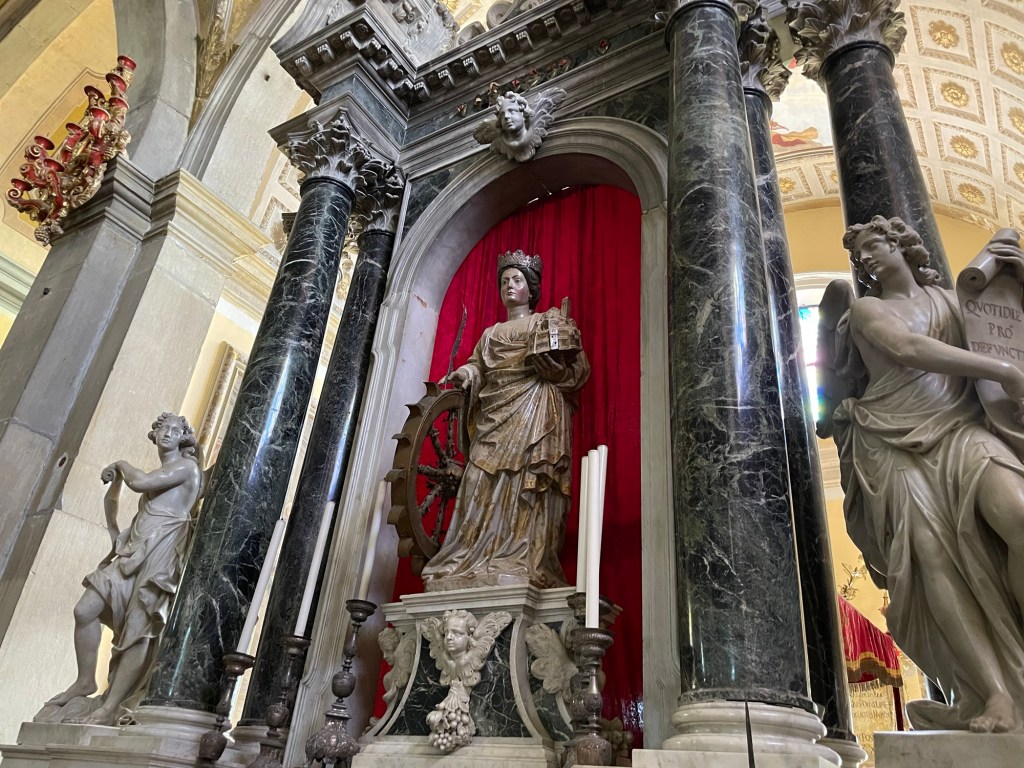
The shrine to St. Euphemia. The city held in her left hand represents Rovinj, to which she gives her protection. The torture wheel on her right recalls her martyrdom.

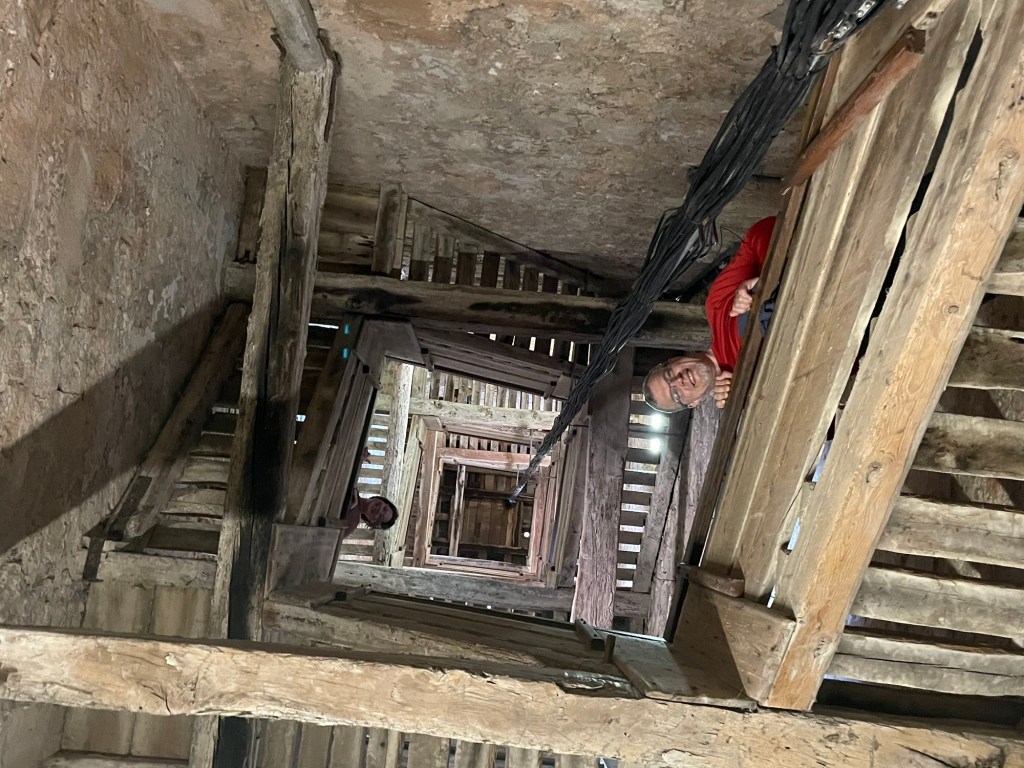
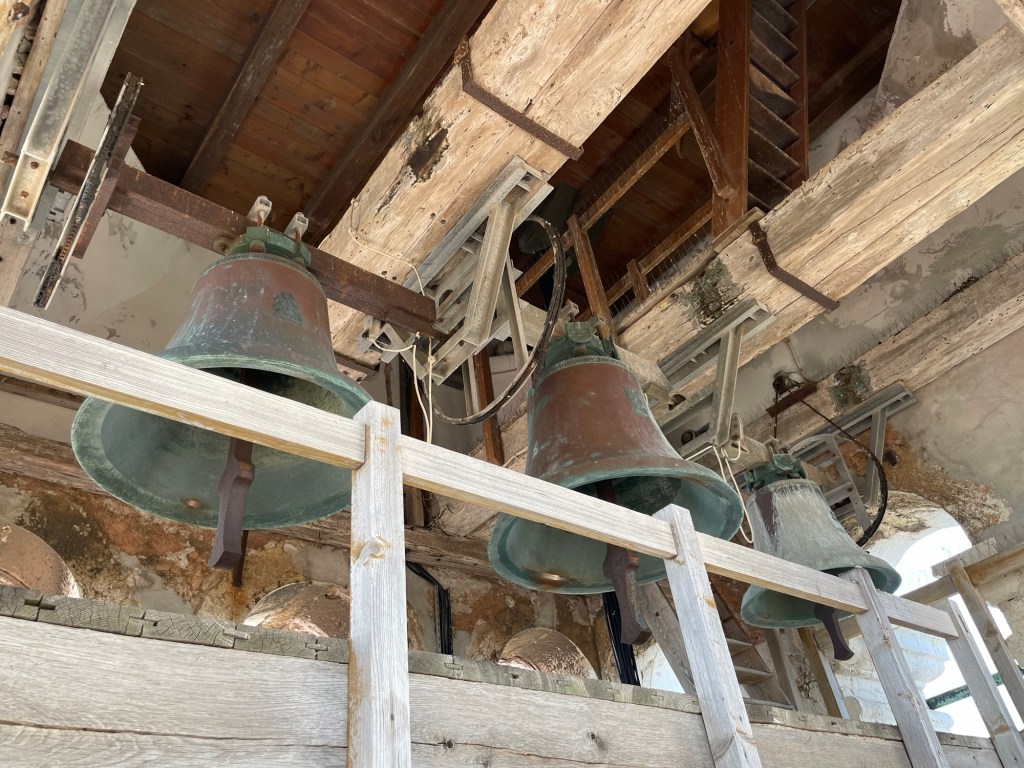
Visitors to the church can climb the campanile as far as the bell platform, so of course we wanted to see it. A rather impressive and rickety set of wooden steps led up to the top, where we had excellent views of the city and its environs.

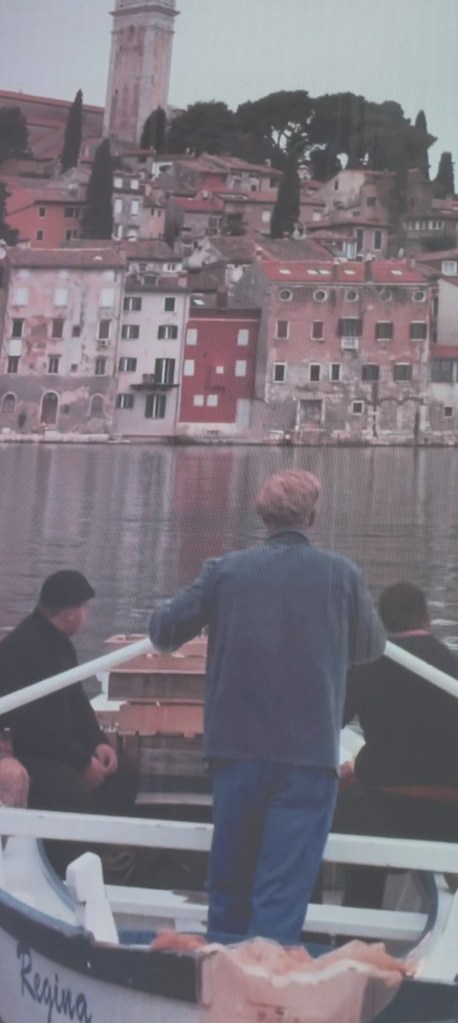
After spending some delightful hours wandering the city, we came across a small museum dedicated to local culture. Focusing particularly on the batana, which is the local flat-bottomed fishing boat, it showed how they were constructed and their significance to the people of the region. The sails were decorated, and each family had its own distinctive design.

We watched a time-lapse video showing the construction process
Another video followed a crew of fishermen as the went to sea and returned with their catch
While unloading fish at the pier, men and women sang a traditional song in polyphonic harmony.
A book of sails associated with different families

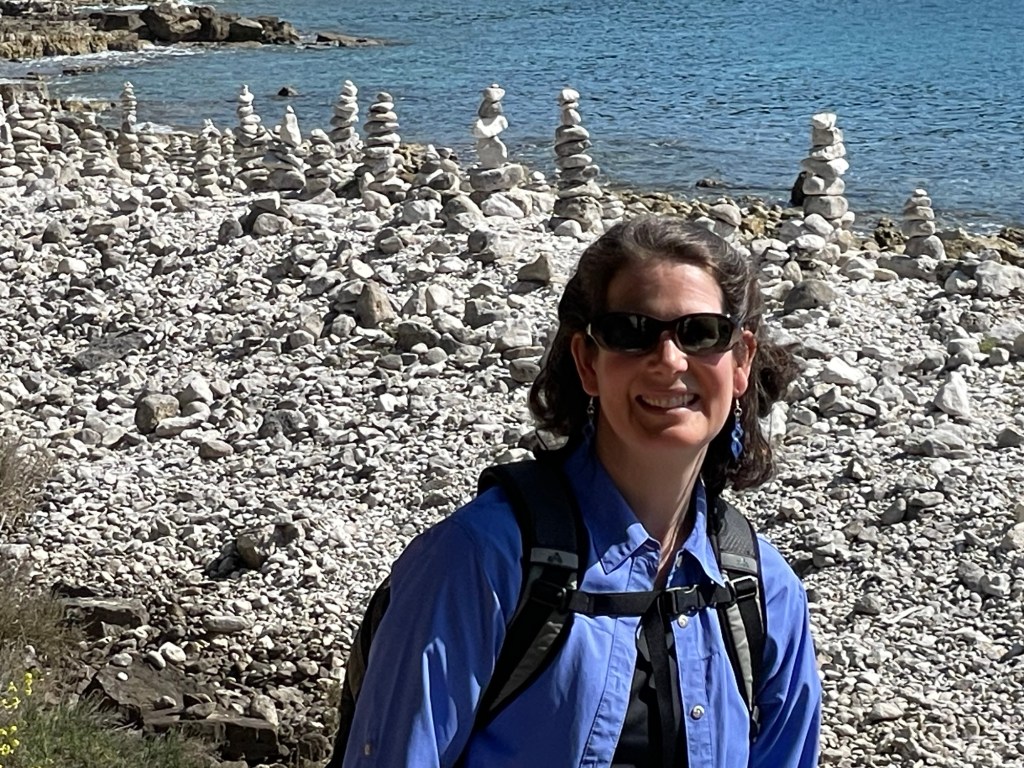
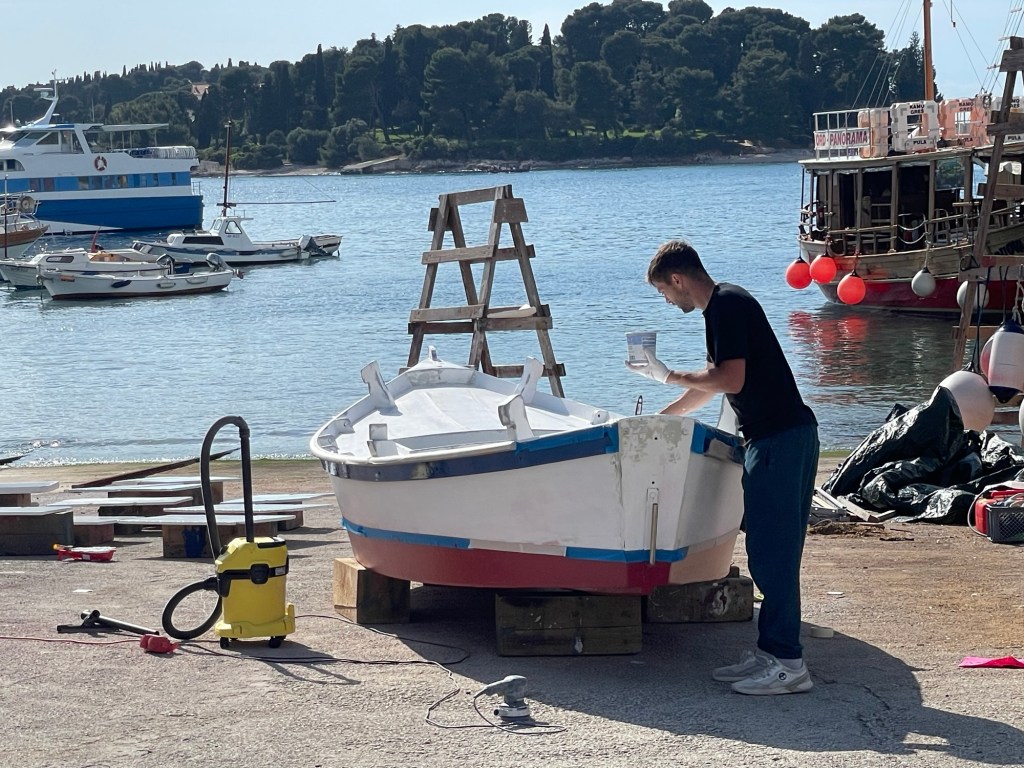
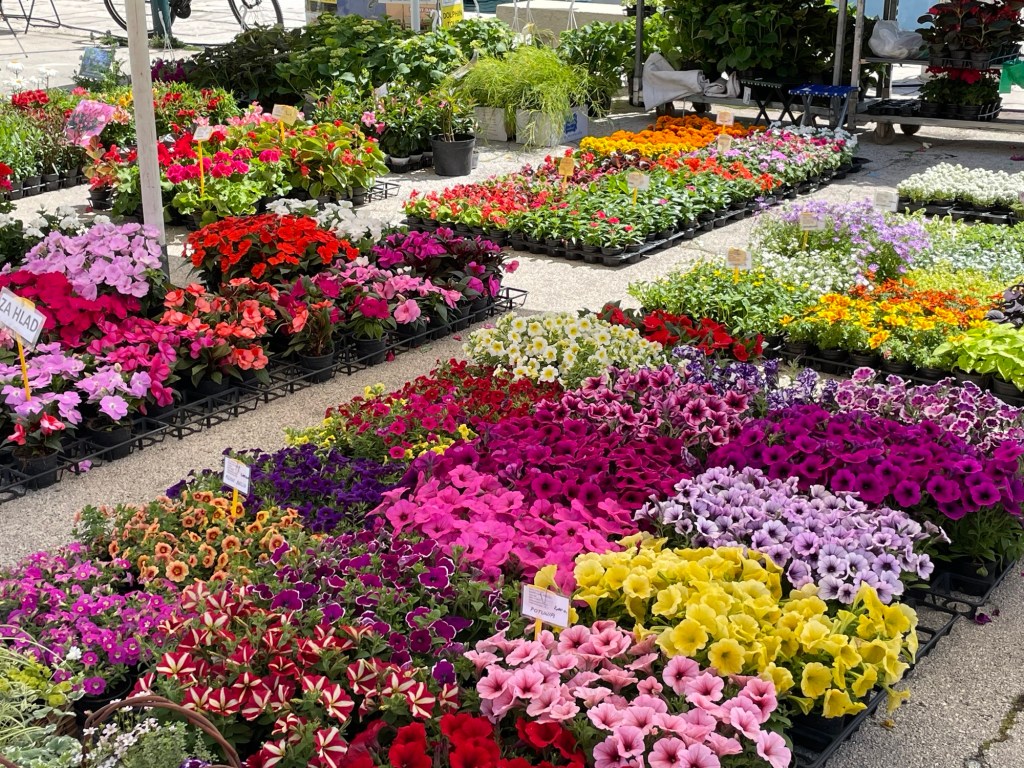
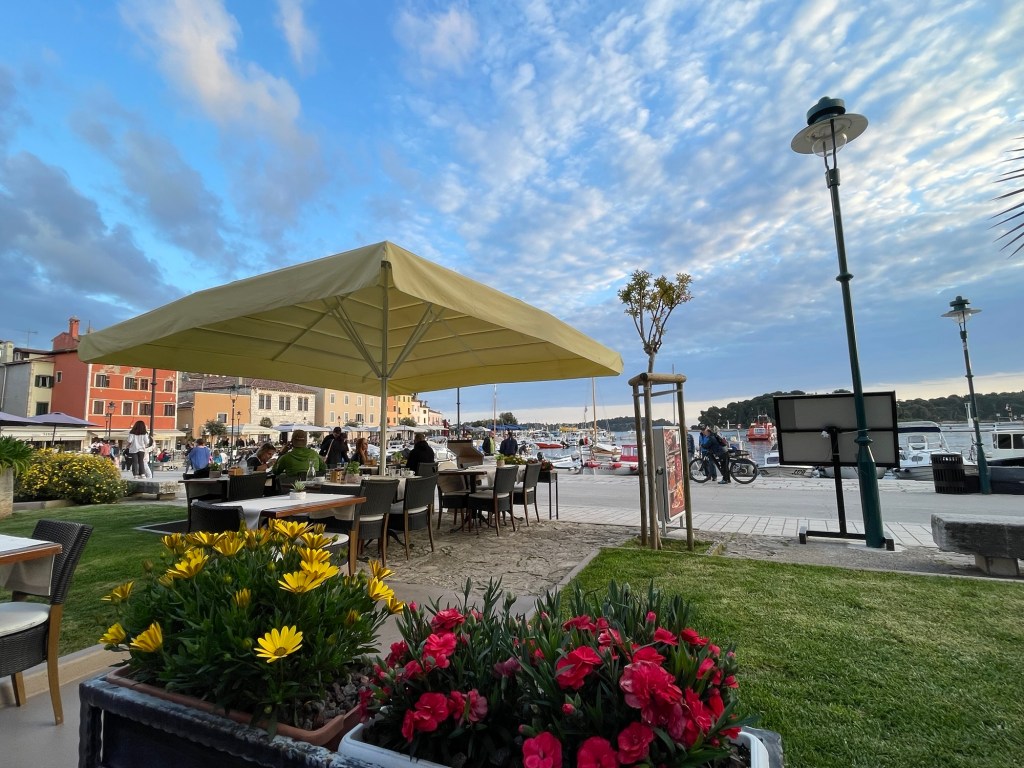
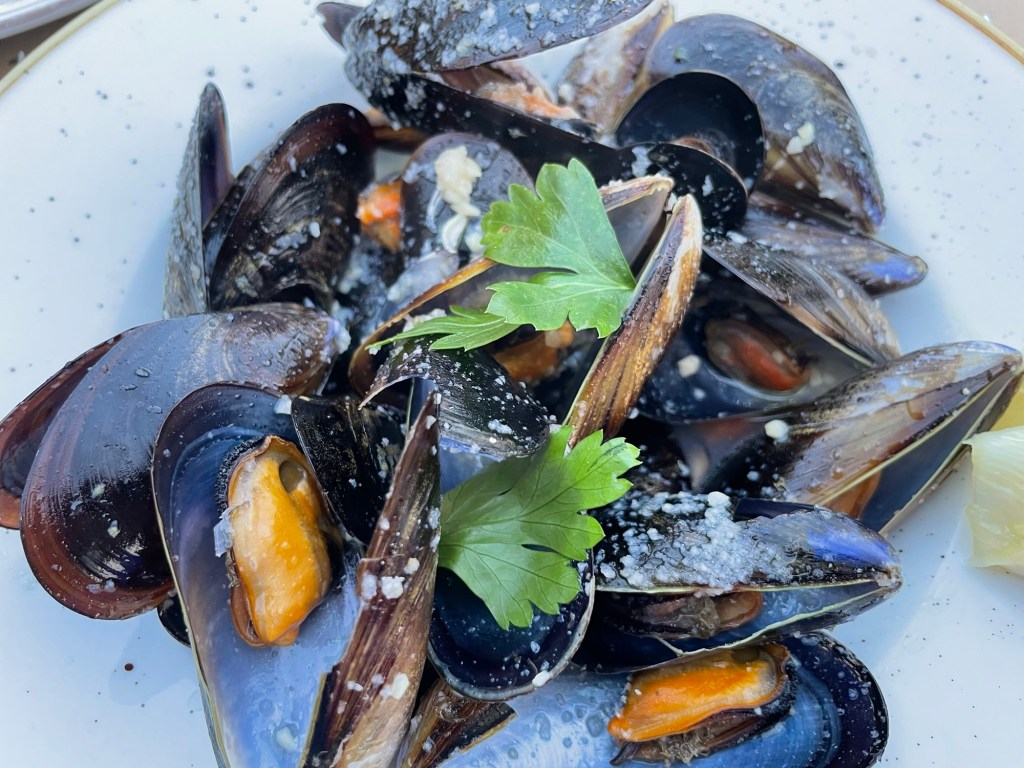
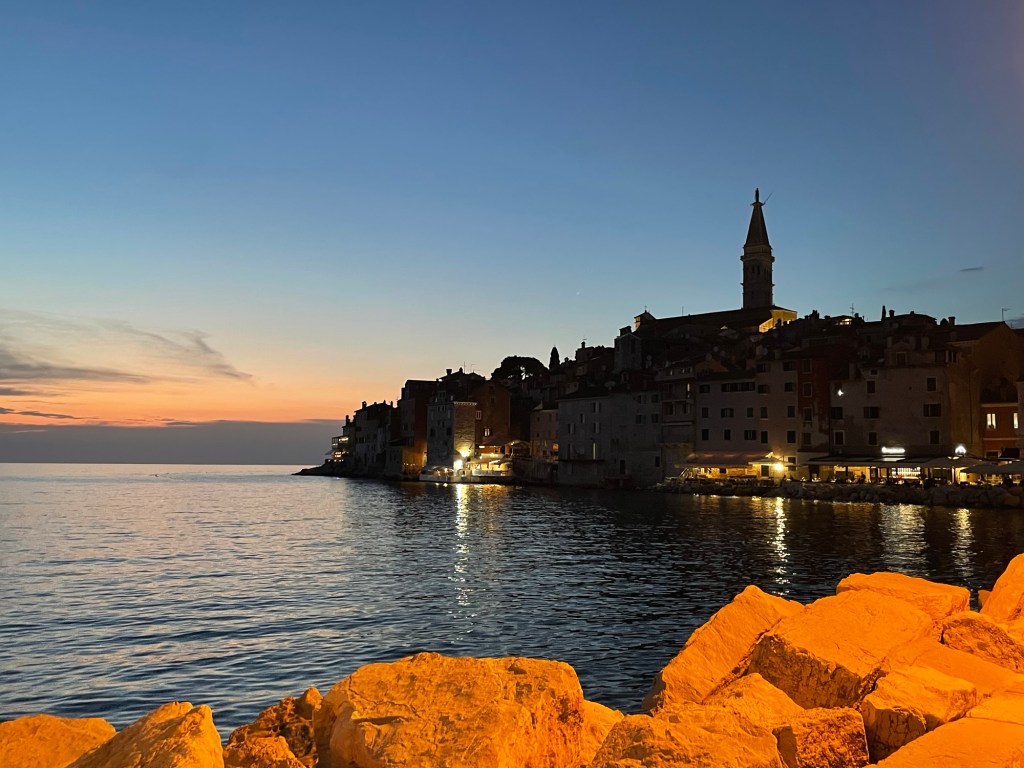
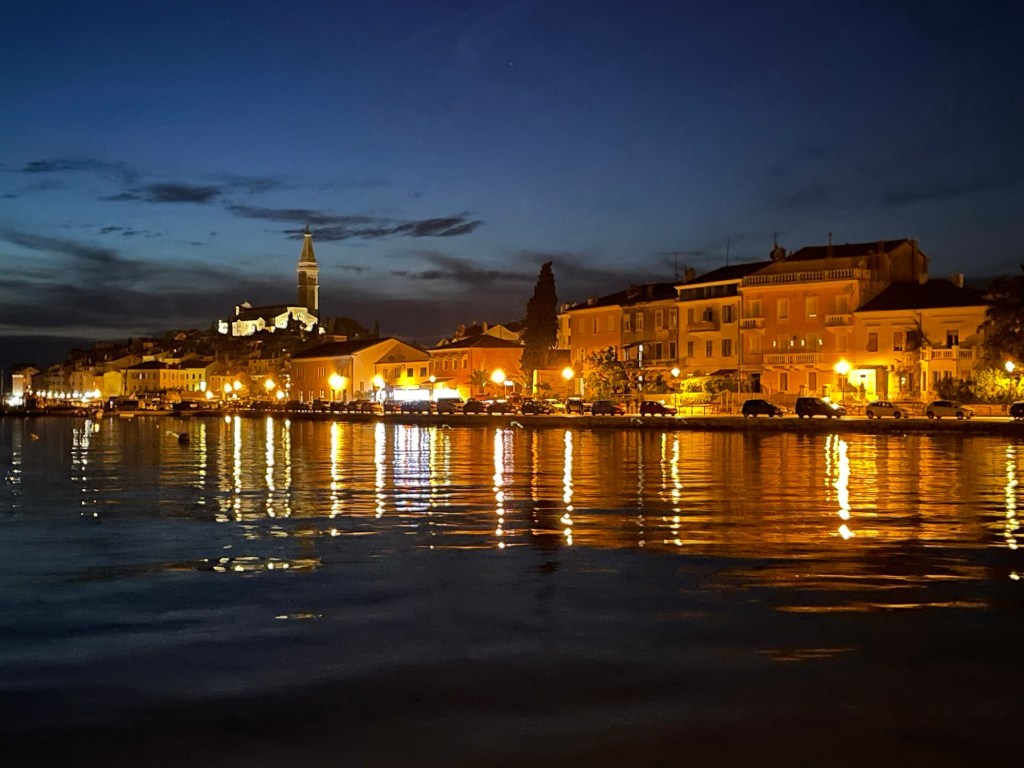
Later in the afternoon we went for a walk down the coastline to the Golden Cape, a park with views of the city. This area has no sand, but there are rocky coves with pebble beaches. Sheer cliffs at the end of the cape are also popular with rock climbers. On our way back, we had some great views of the city from a distance. We also saw a shipyard where someone was repainting a batana, stopped for some dark chocolate gelato, and marveled at the display of flowers for sale by the marina. After another seaside dinner, we took a stroll to the end of the pier for some photographs in the dusk.

Vegan dark chocolate gelato in a chocolate cone!
Almost harborside restaurant
Rowan has learned a lot about boats on their study abroad program – this one is used for purse seine fishing
Conveniently, a sign in the harbor marked this specific “photo spot”
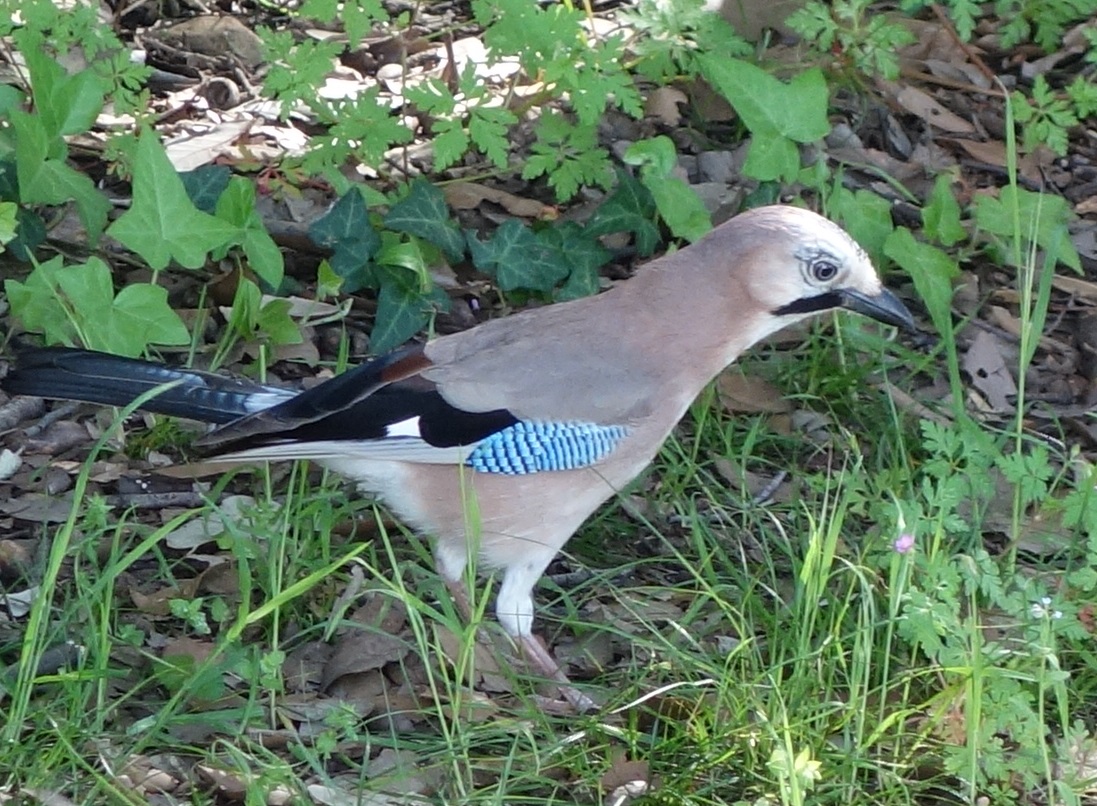
Bird of the day: We saw this European Jay while out on our walk.

Ljovely Ljubljana!

Slovenia’s capital city

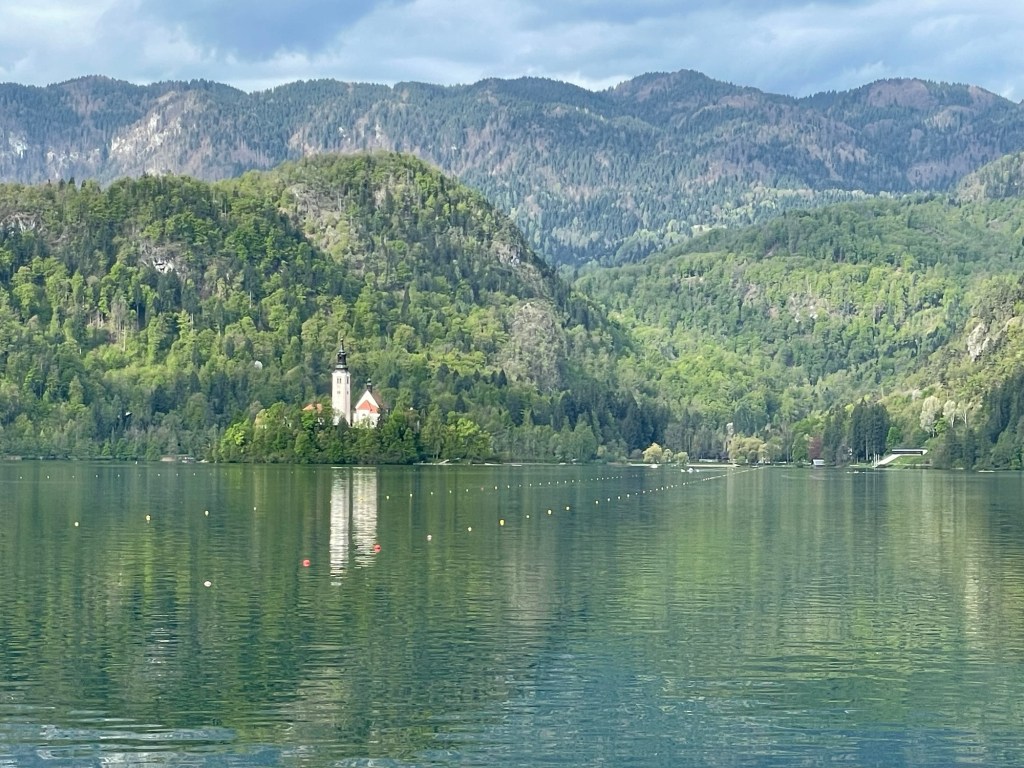
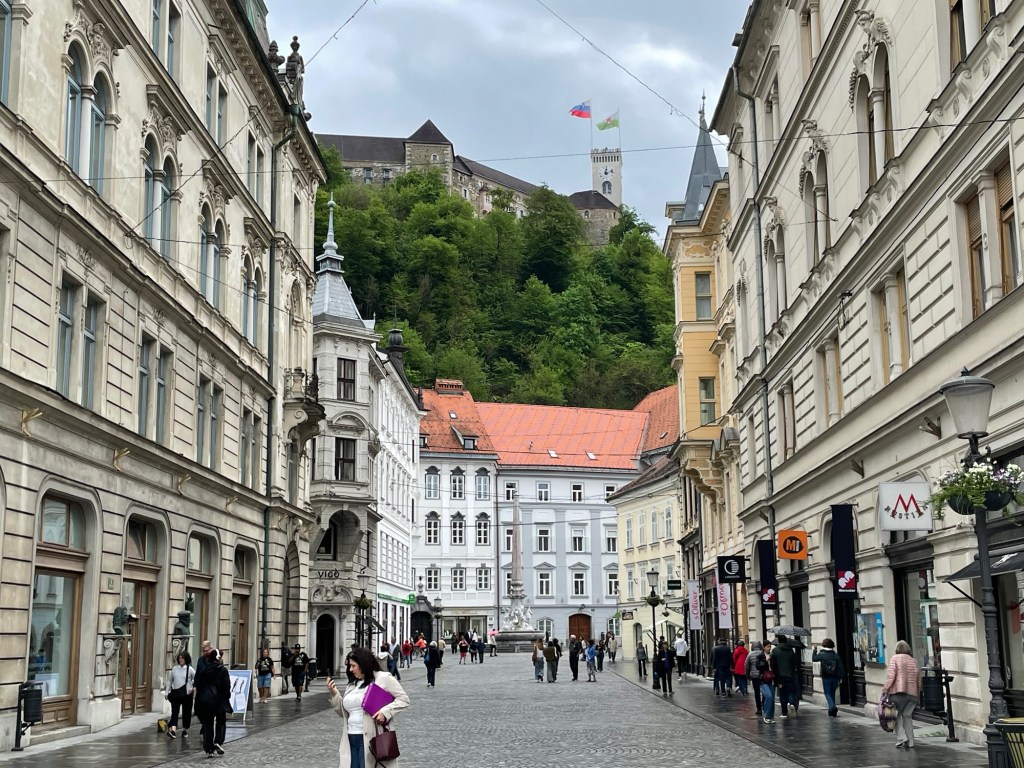
After a final morning walk around Lake Bled, we bid a reluctant farewell to its town and hit the road en route to Slovenia’s capital, Ljubljana. Rowan had previously visited the city with their study abroad group, and was able to guide us to their favorite sites and experiences. Although the castle that stands at the high point of the city looks picturesque from a distance, apparently there’s not much to see inside. Most of the interesting sights are instead centered around the river below.

Rowing course on Lake Bled – at the far end there are stands for spectators
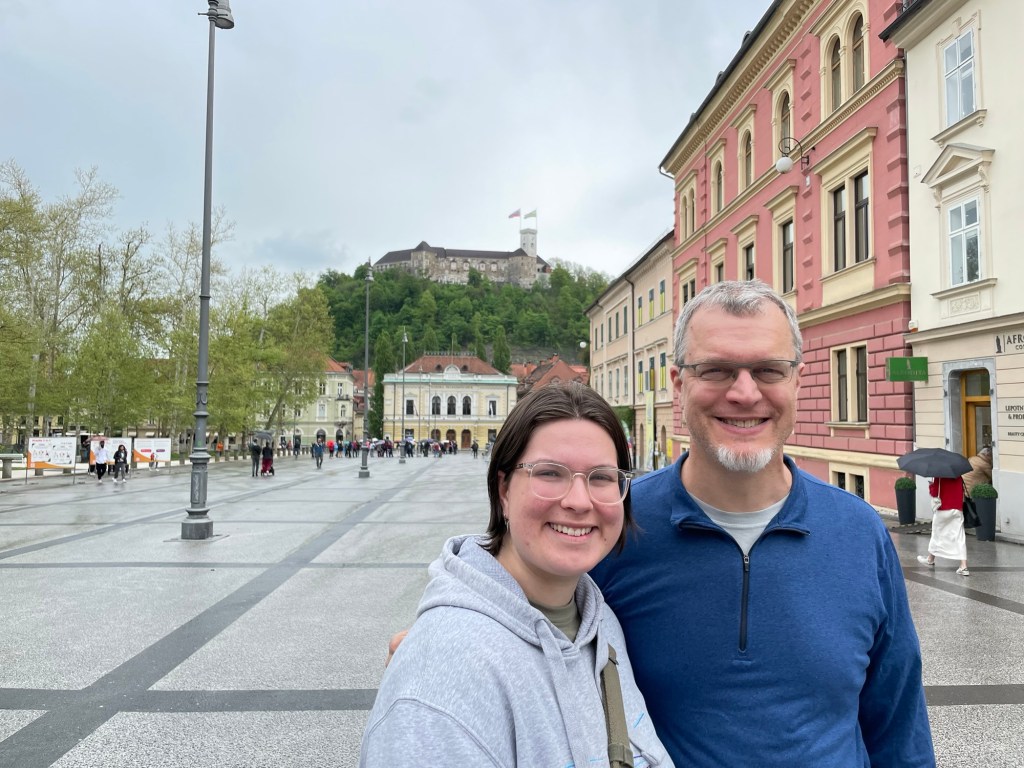
Congress Square in Ljubljana – our starting point in the city
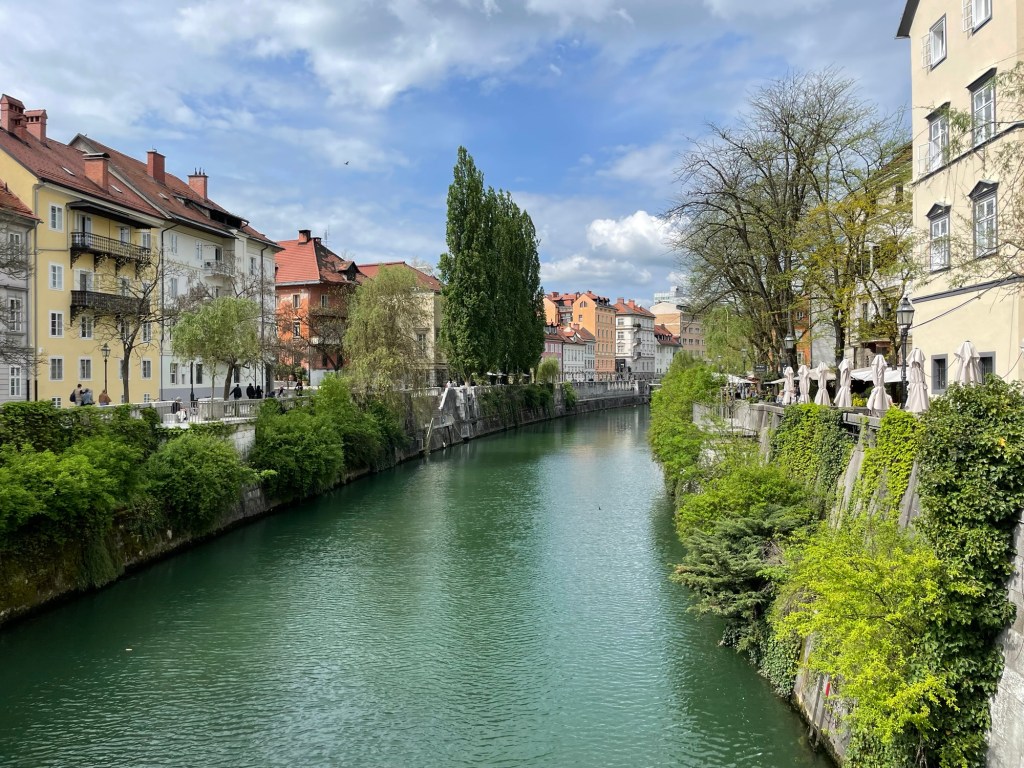
The Ljubljanica River runs through the old city

Ljubljana is known as the city of dragons due to a tradition that Jason (of Argonauts fame) came here in antiquity and slew one of the beasts. Over time, the association changed and the dragon came to be seen as the defender of the city. Dragons are celebrated in all the souvenir shops of the city, and have even been celebrated in the architecture: one of the city’s river crossings features four of the beasts in bronze, perched atop the bridge abutments.

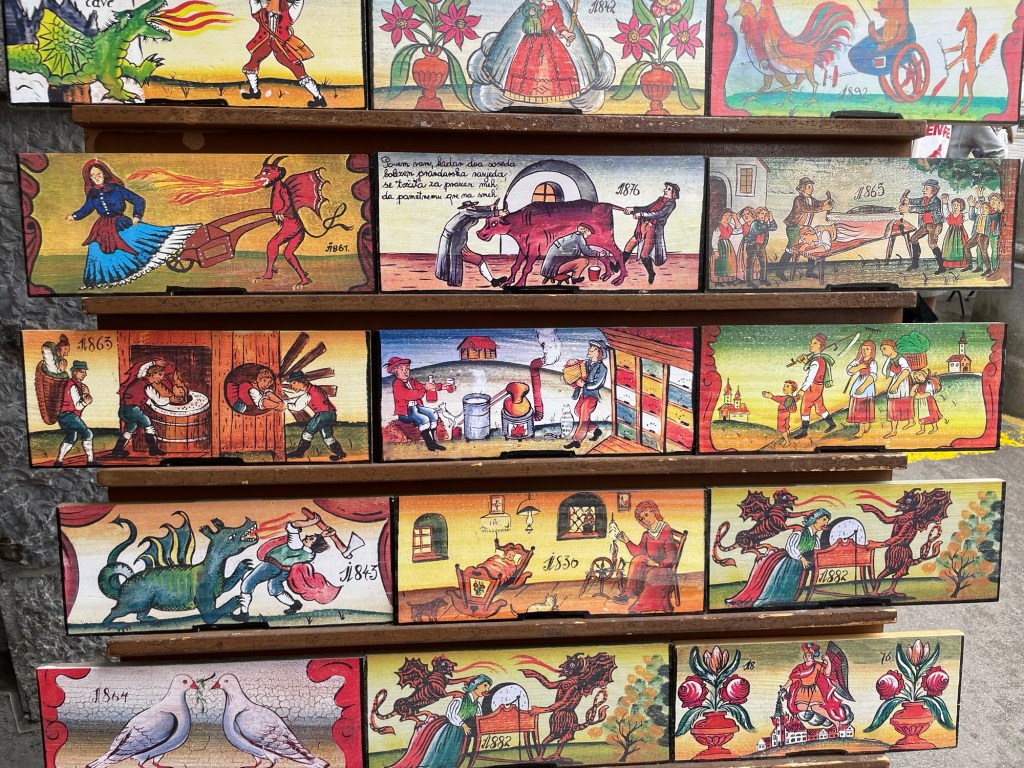
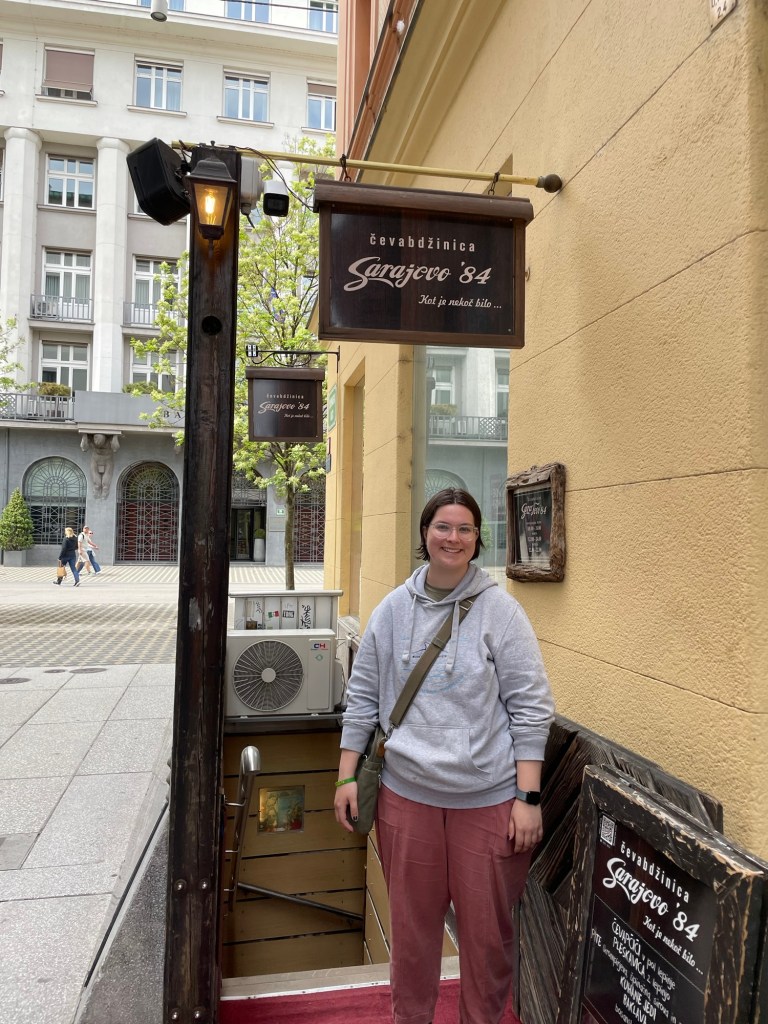
We include here a few other pictures from our visit. In a riverfront stall we came across this display of replica souvenir bee boards, which we photographed to make up for yesterday’s lack. (Alas, we still have no image of the “Snail chasing Tailors”!) On Rowan’s recommendation we also visited the popular restaurant Sarajevo ’84, which specializes in ćevapčići, a dish of grilled fingerlike meatballs served on pita-like bread, often with a soft cheese.

We could only stay in Ljubljana through mid-afternoon, as we still had further driving ahead of us to reach our lodgings for the night in Rovinj, Croatia. The route passes not far from the Italian border, and somewhat on a whim we decided to make a detour in order to see a bit of the city of Trieste. In hindsight this was not the wisest of plans; the roads around Trieste proved to be a lot like those around New York City — confusing, inconsistently marked, and arranged in such a way that any mistakes are very hard to correct. So in the end, we did see a bit of Trieste — only from the distant heights above the city as we drove along a highway filled with trucks, rather than strolling around the grand canal after popping briefly into the city center, as we had fondly imagined. Live and learn. In the end we crossed three international borders during our trip — from Slovenia into Italy, Italy back to Slovenia, and then from Slovenia into Croatia. Sadly, nobody stamps passports any more when you cross borders in Europe these days — good for efficiency, less good for sentimental collectibles.

Border station heading into Croatia

When we finally arrived in Rovinj, our host Francesca had to meet us at a parking lot outside the old city because cars are not allowed anywhere near the street where we are staying. She kindly brought an electric cart to help shuttle our luggage, and off we went. Our rooms overlook the marina, and are located on the street next door, with access to the sea via an arched alleyway. We had dinner at one of the waterfront restaurants, across from the old city center with its tall tower. After dinner we wandered around for a bit until it began to get dark. Tomorrow, our real exploration of the city will begin.

View from our living room window
Our address on Carera Ulica
Our local gateway to the Adriatic
Pricey but delicious dinner along the waterfront – and the restaurant even has its own wine label!
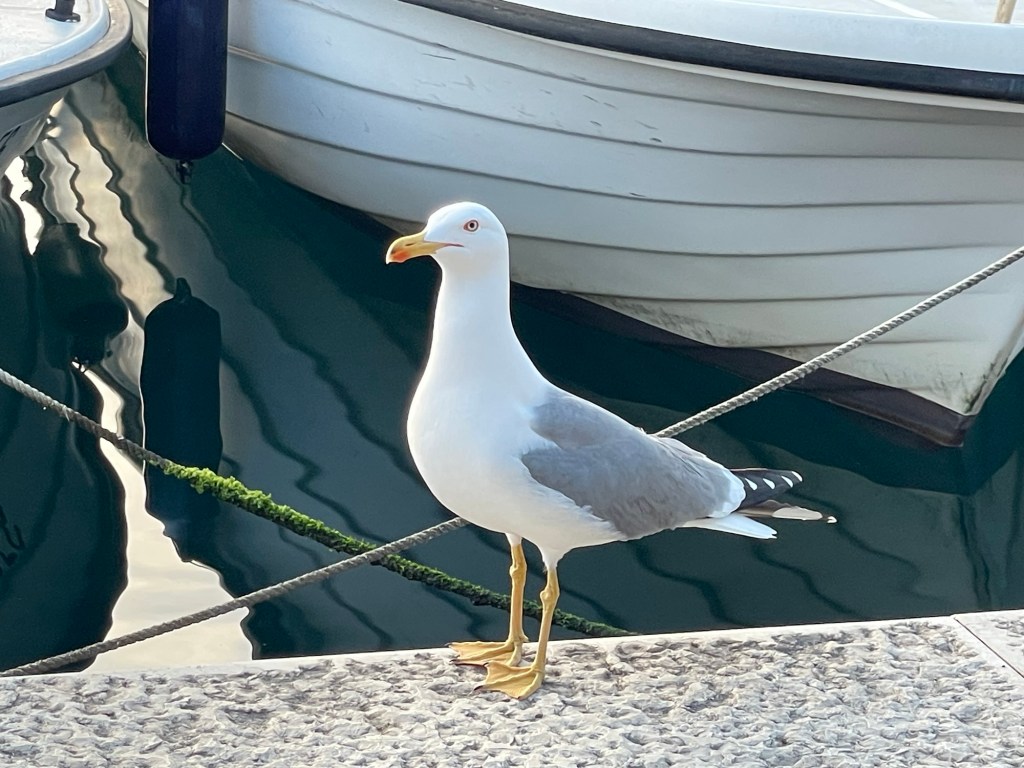
Bird of the day – we’re by the sea, after all!

Wonderland of Waterfalls

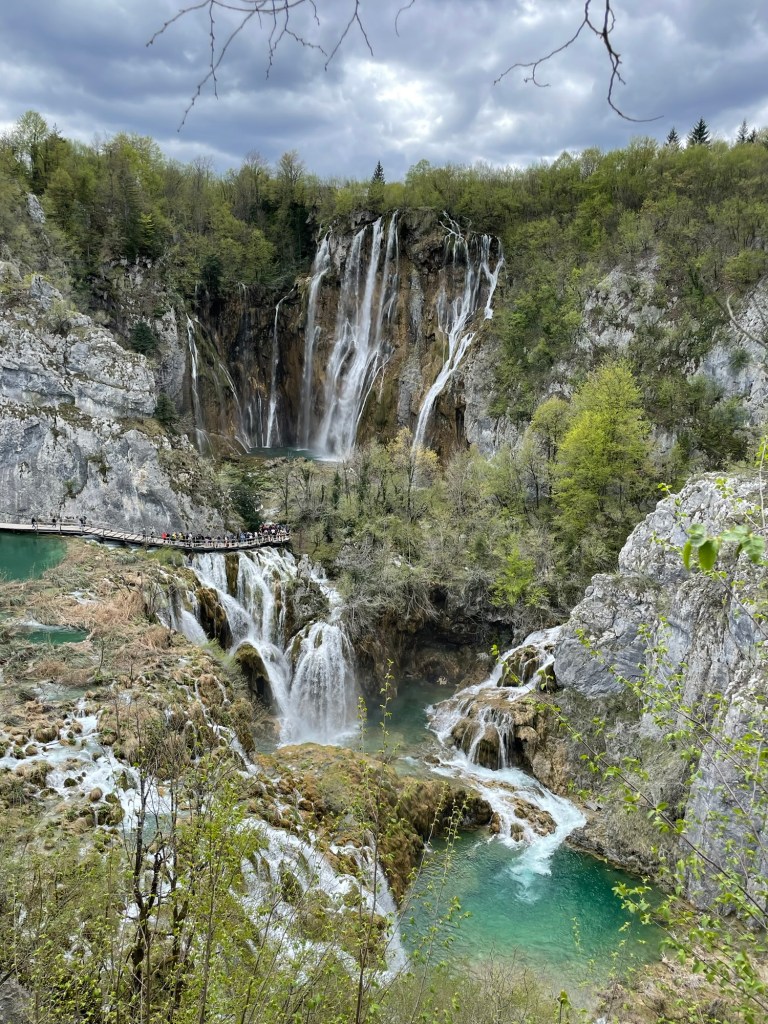
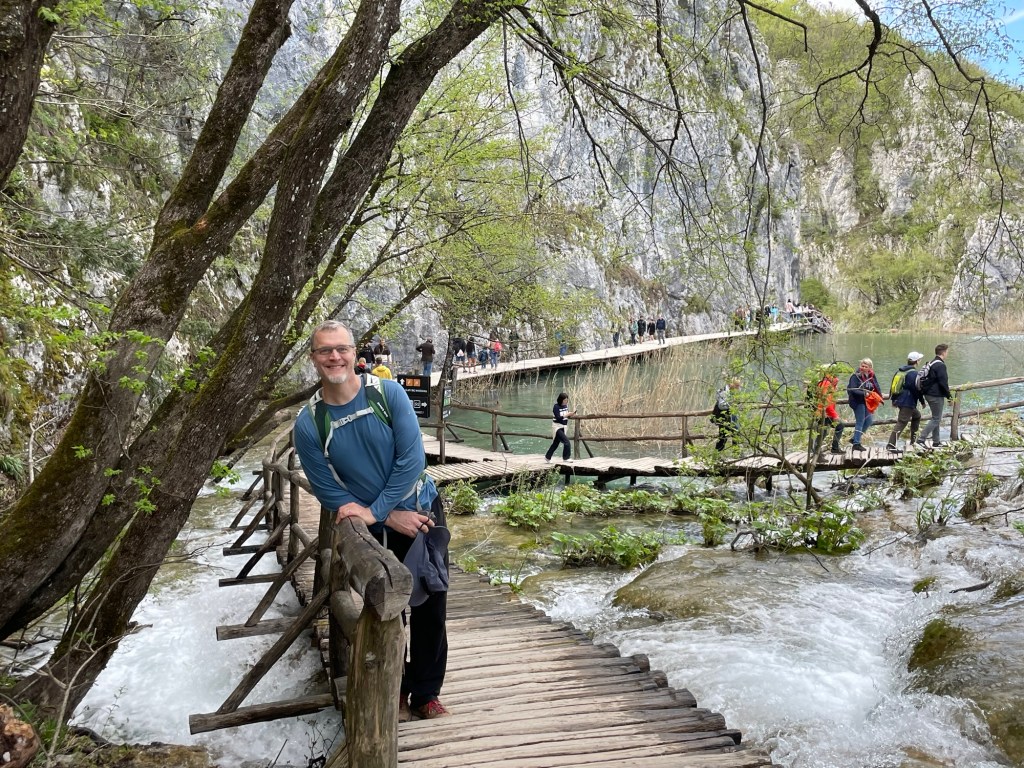
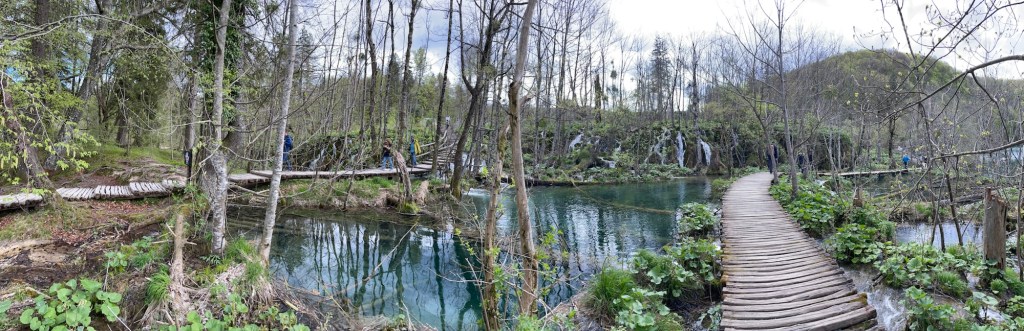
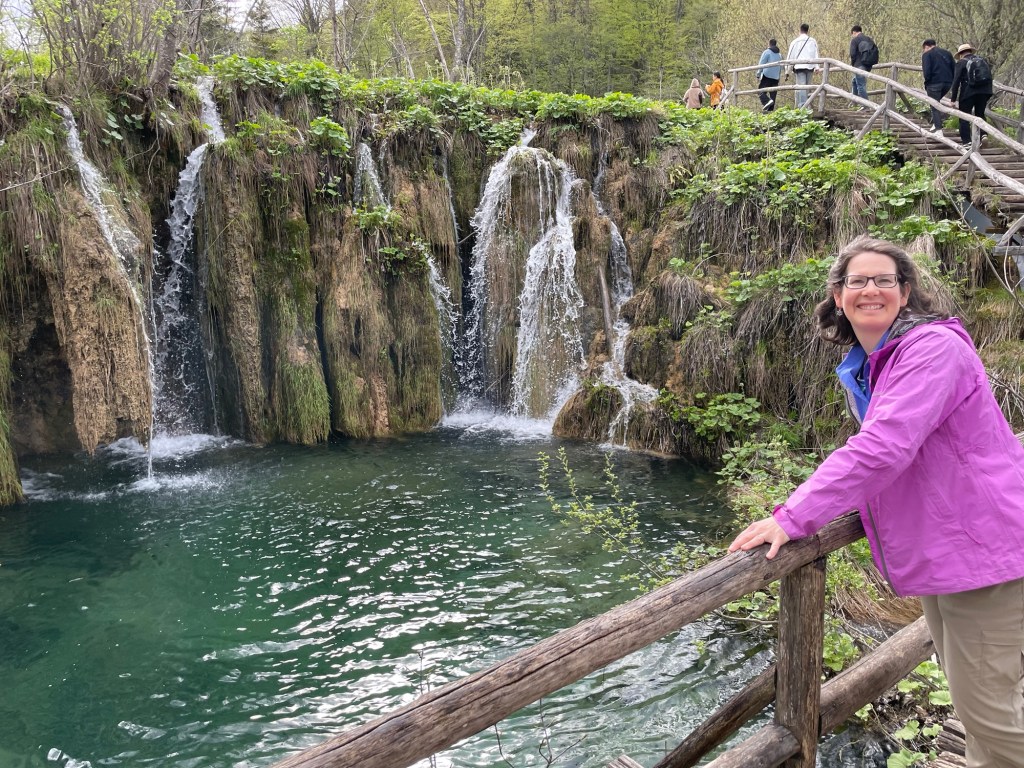
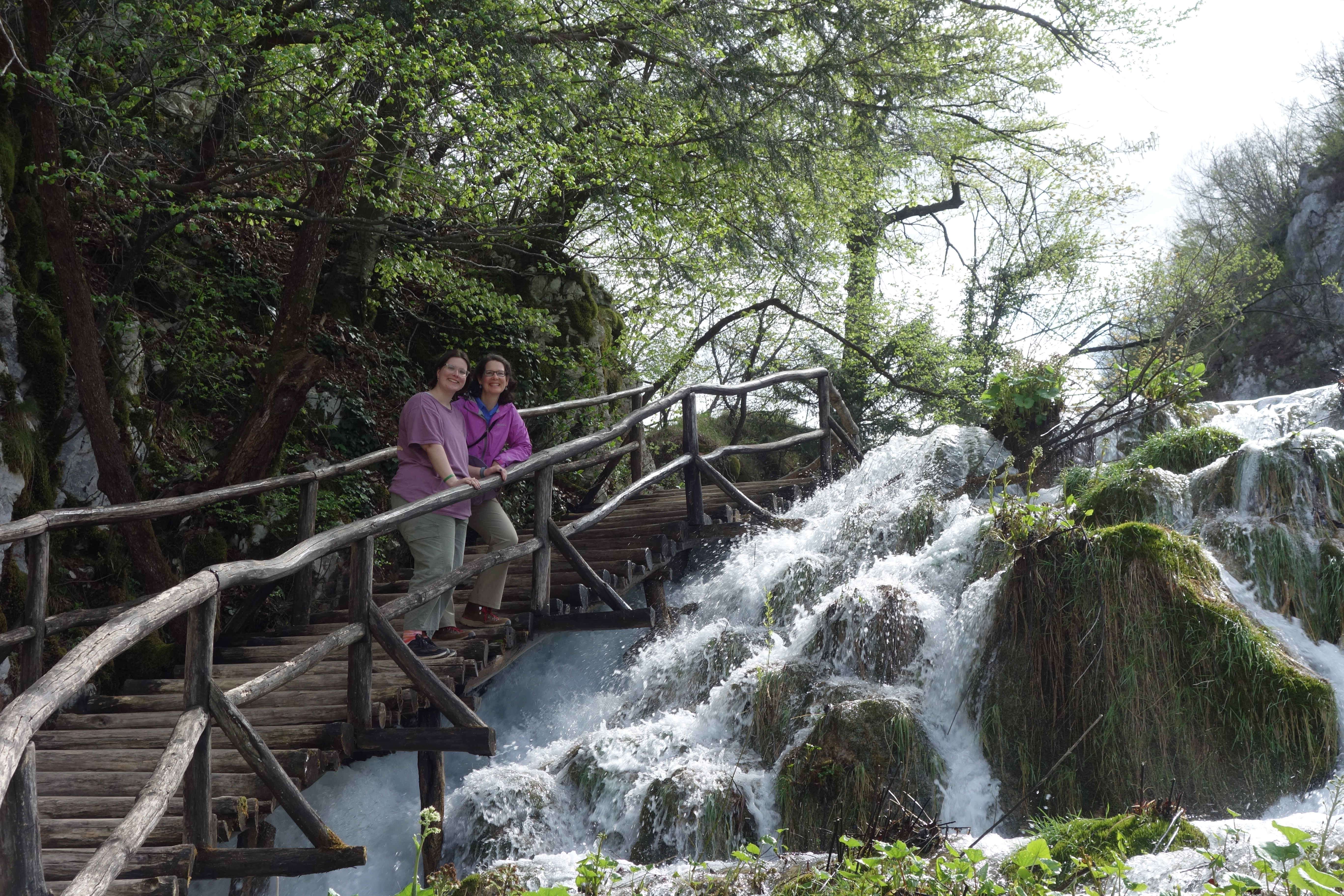
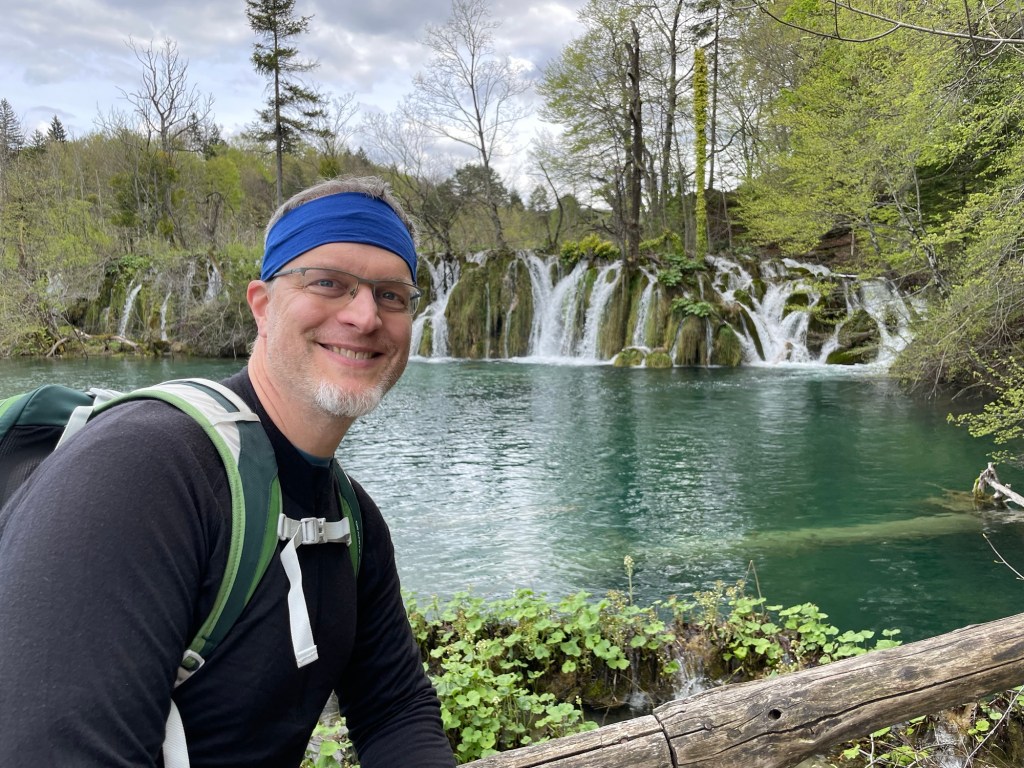
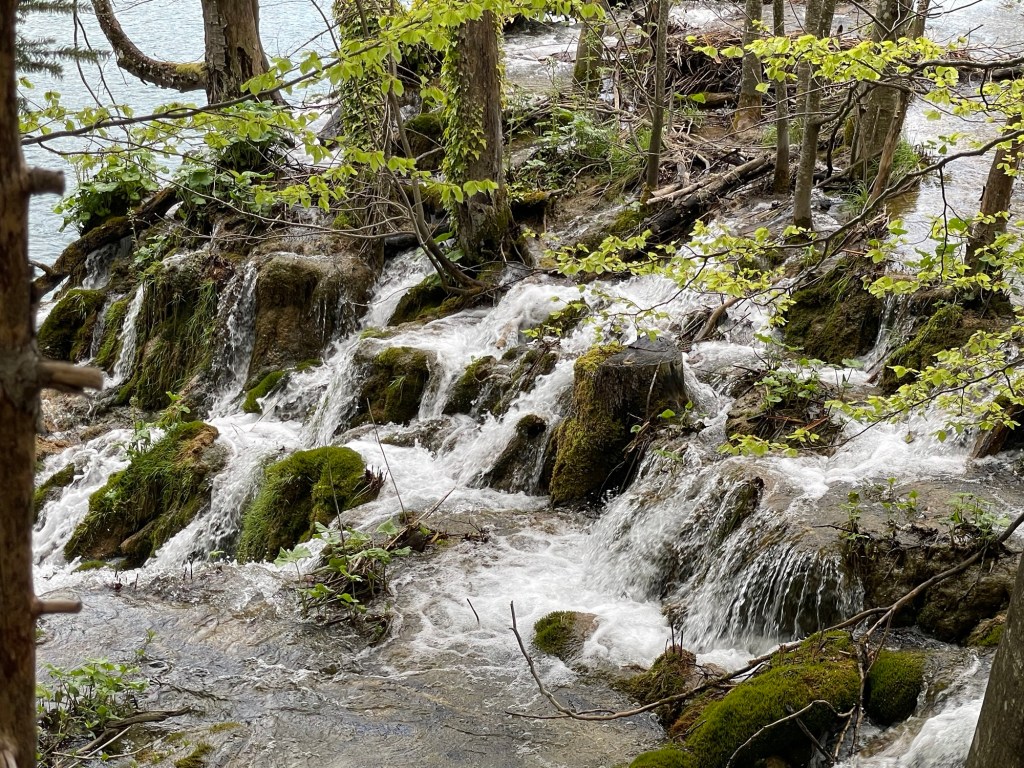
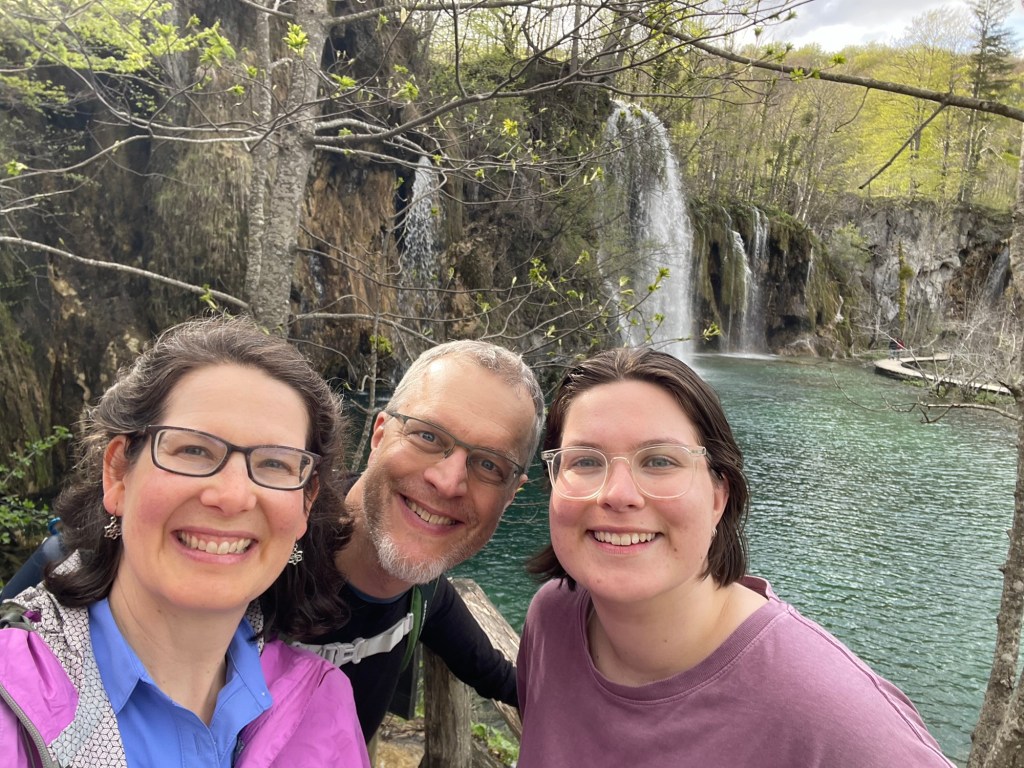
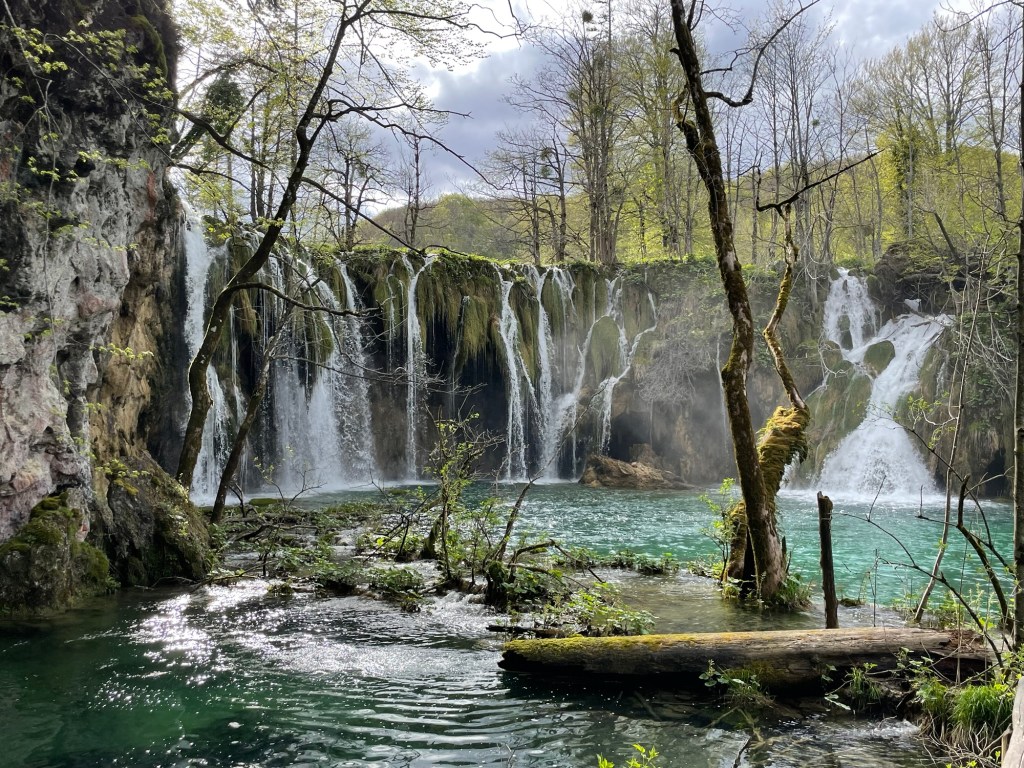
You’ve probably visited a waterfall before. So you know more or less what to expect: it may be taller or shorter, wider or thin. There’s probably a large main cascade, and sometimes a few extras above, below, or to the side. You hike up to it, spend a little while marveling at the spectacle, and then head back. That’s how it’s been for most of the waterfalls we’ve seen. So we were completely unprepared for the delightful experience of Plitvička Jezera National Park, which boasts at least hundreds or, depending how you count, more like thousands of cascades spread over a 9km stretch of lakes and streams.

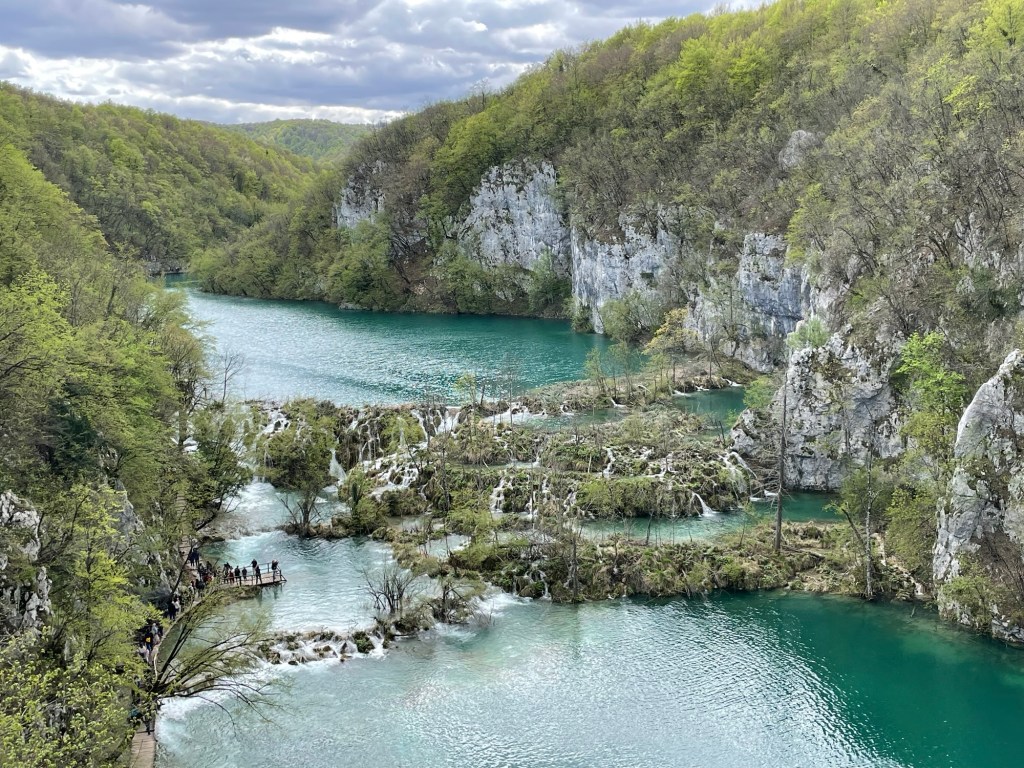
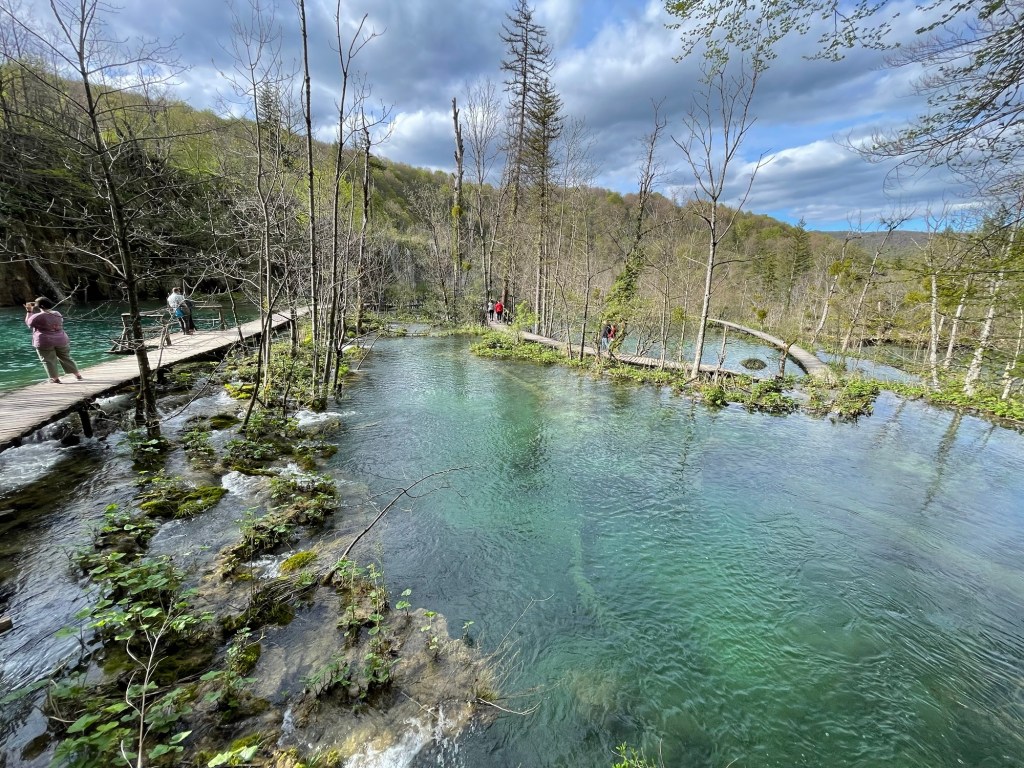
The setting is a limestone karst terrain dotted with sinkholes everywhere you look. Through this landscape, a relatively small river carved out a deep canyon reaching down to a watertight dolomite base. More recently, the flowing water has deposited a series of tufa terraces which spread the water into a latticework of braided cascades that diverge and intersect endlessly as they descend. Vegetation ranging from small grasses to mature trees has established itself on the terrace edges and tussocks between the streamlets, giving the sense that you are walking through forest grown over natural miniature canals. Water, earth and air all combine in a unique combination, and through it an extensive network of curving boardwalks elevated just above the rushing water allows visitors to experience this wonderland seemingly from every possible viewpoint.

It is difficult to find the words to describe this experience, so we will tell the story below mostly through pictures.

Lunch at the parking area
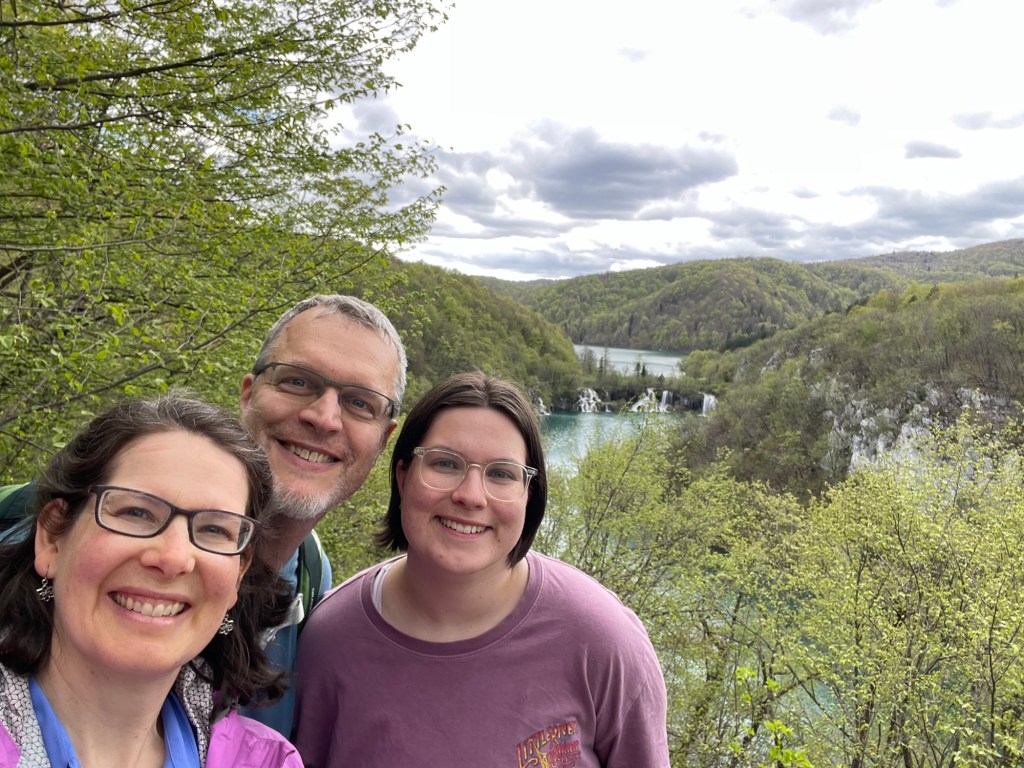
Our first glimpse of cascades
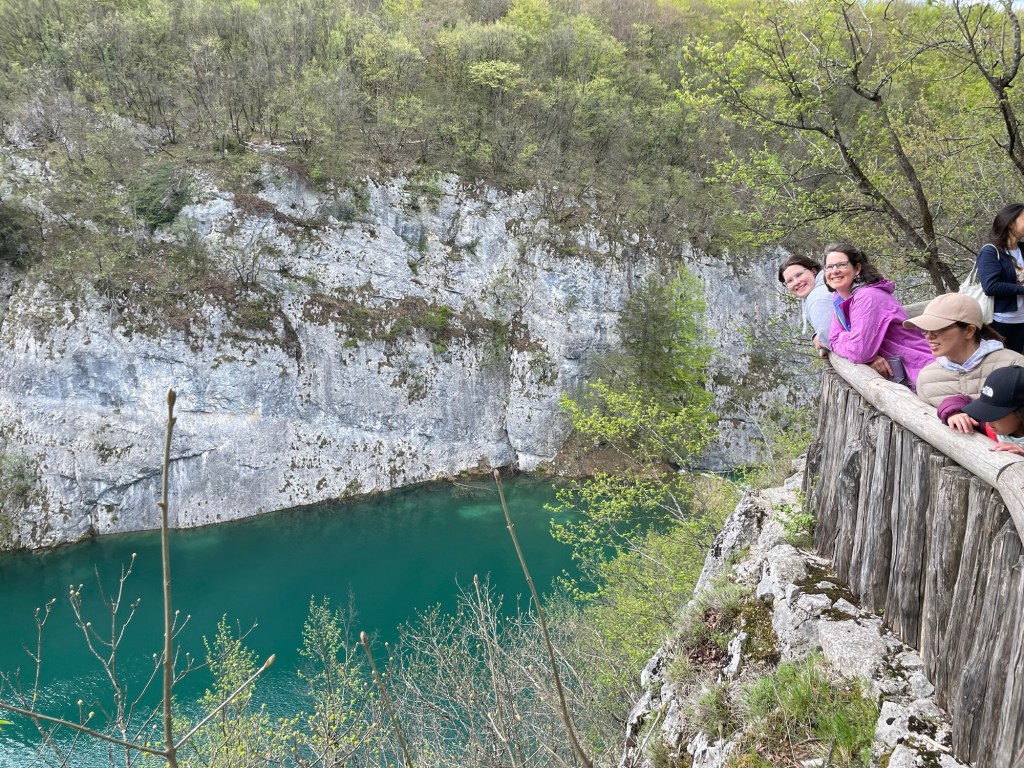
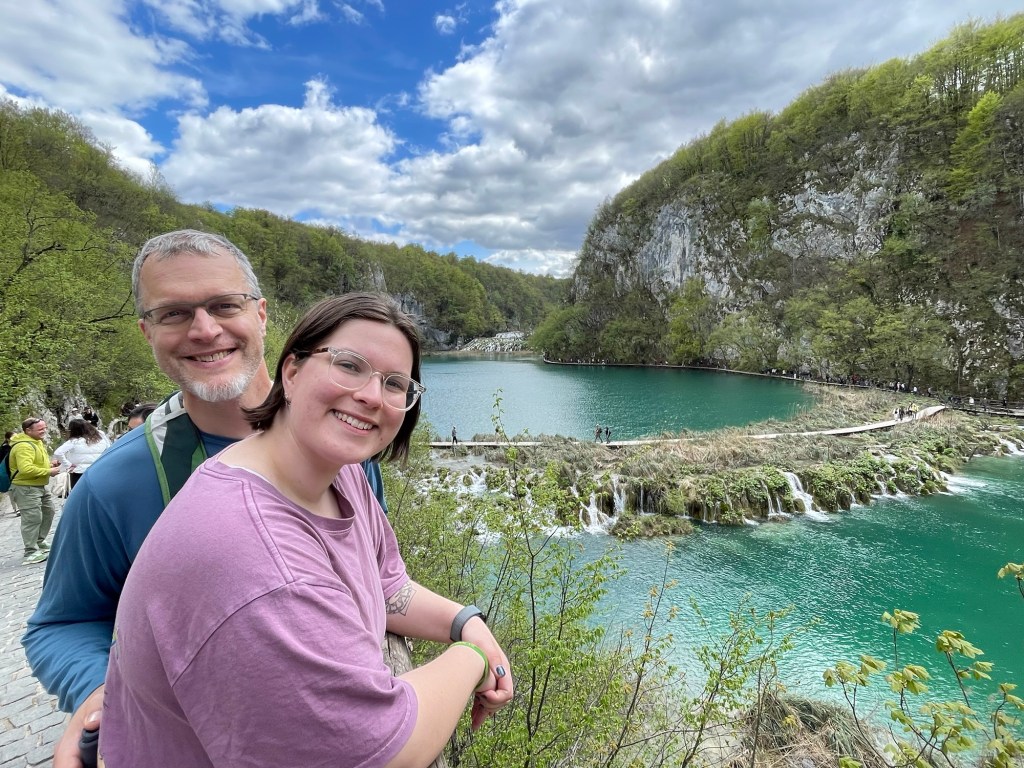
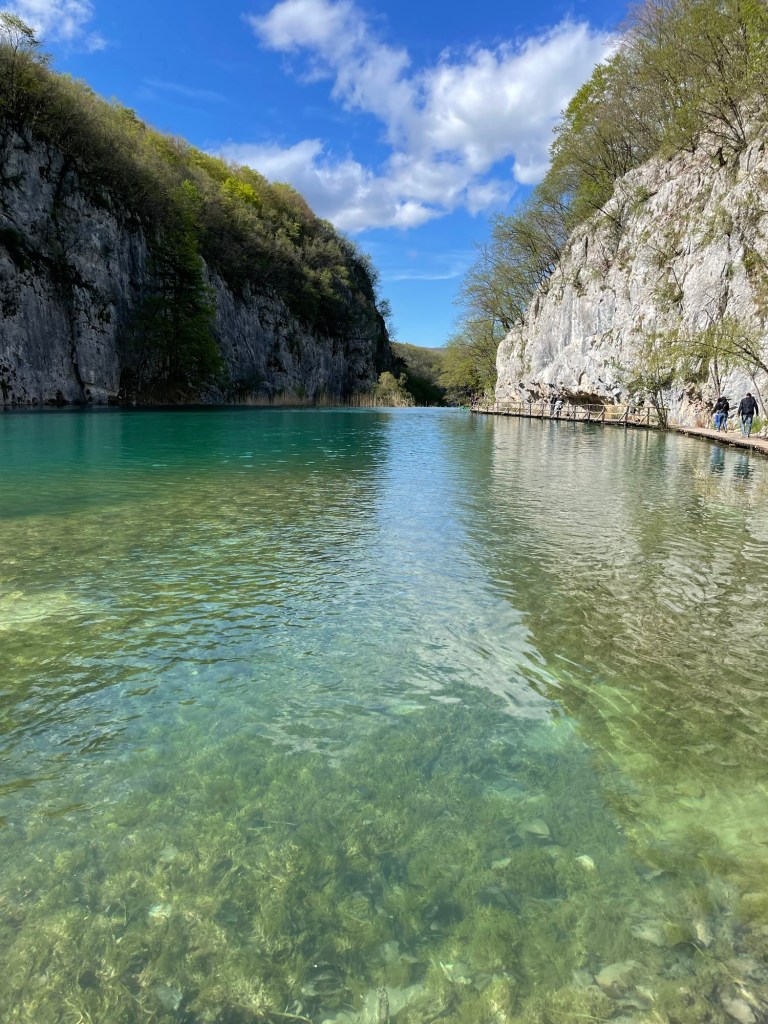
The lower lakes lie in a canyon some 40 m tall, and descend half again that much below the surface.
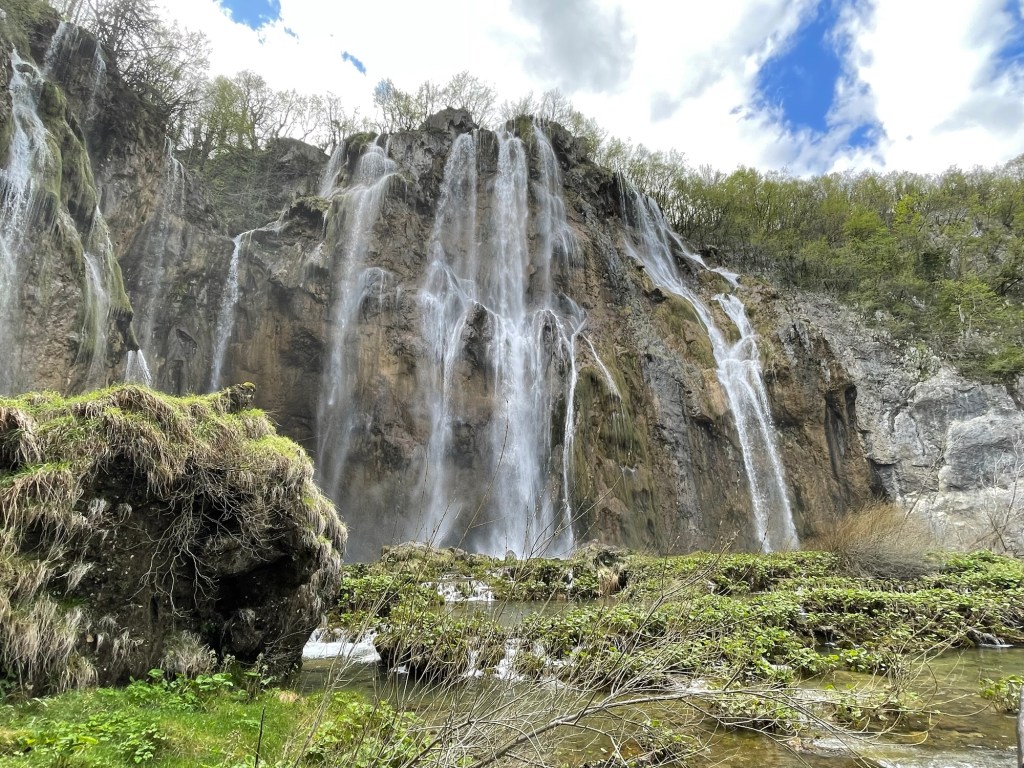
Visitors on their way to see Veliki Slap, or the Big Falls. (Slap is the Croatian word for waterfall, which felt quite onomatopoetic at times.)
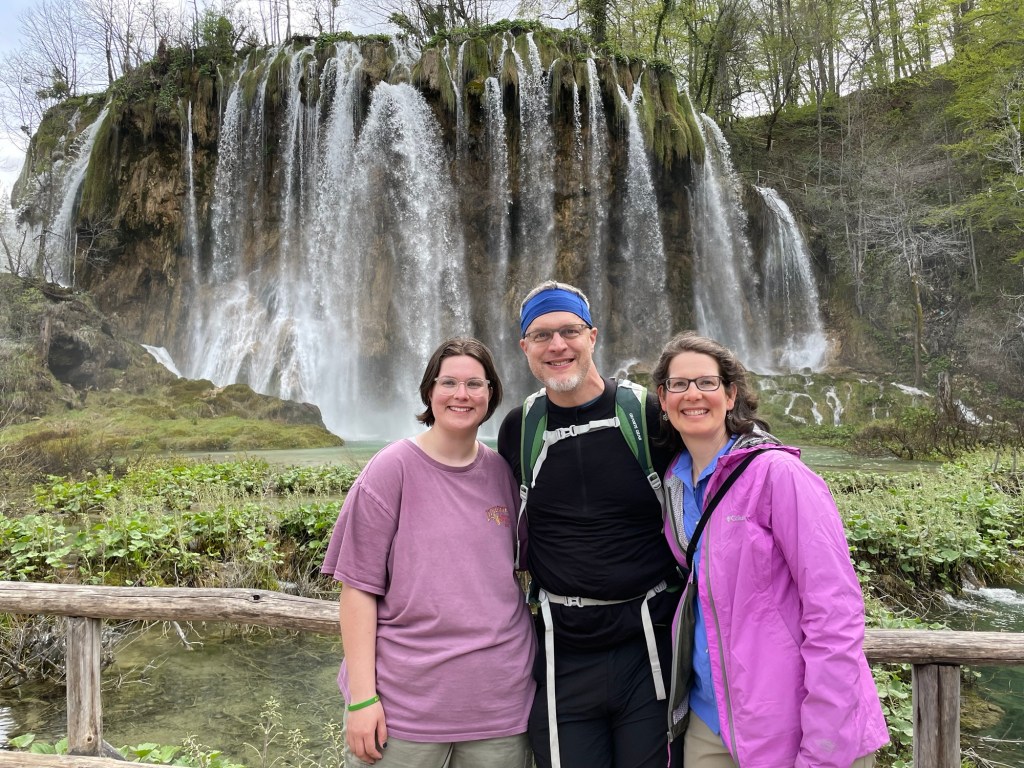
Veliki Slap in all its glory
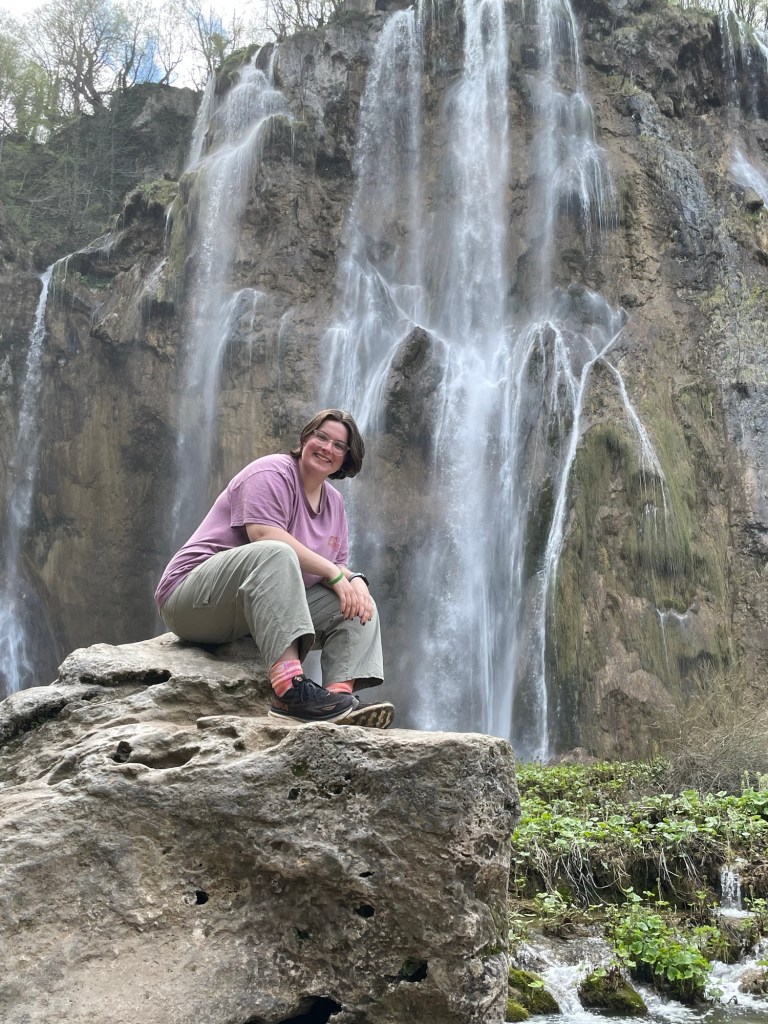
Perched on a rock below Veliki Slap
Boardwalks were often built right over the fastest rushing waters.
Besides the lake system, the area is also home to an extensive underground cave system (sadly, not open to visits at the moment)
The water was very clear but the depths took on an enigmatic blue-green hue
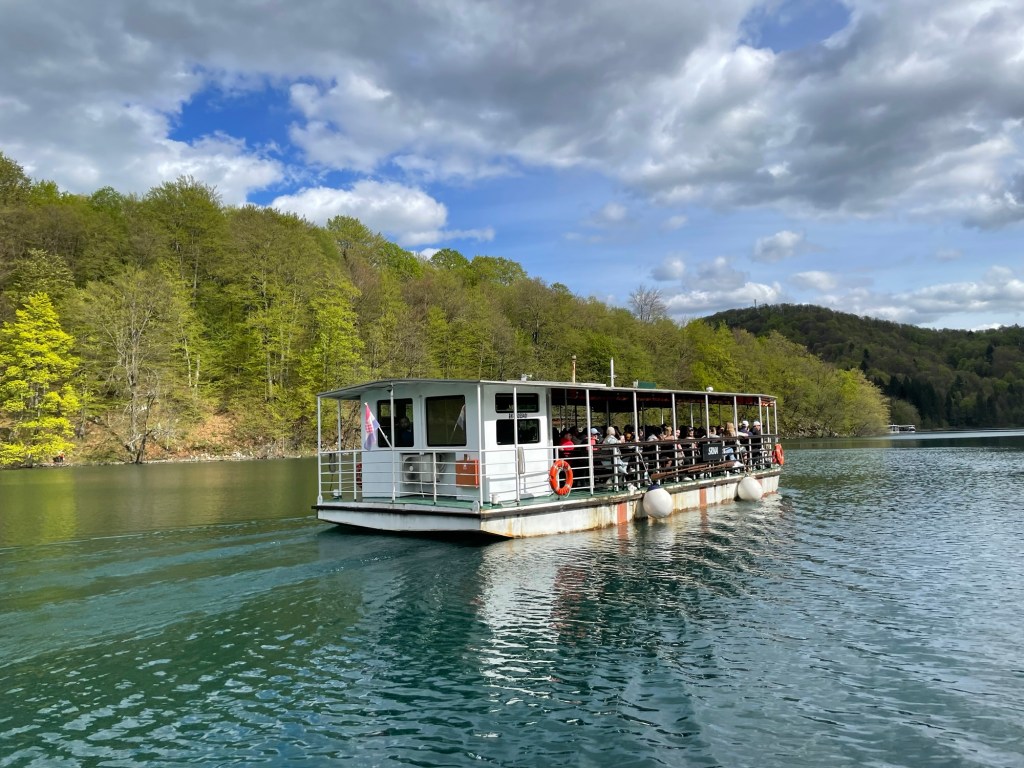
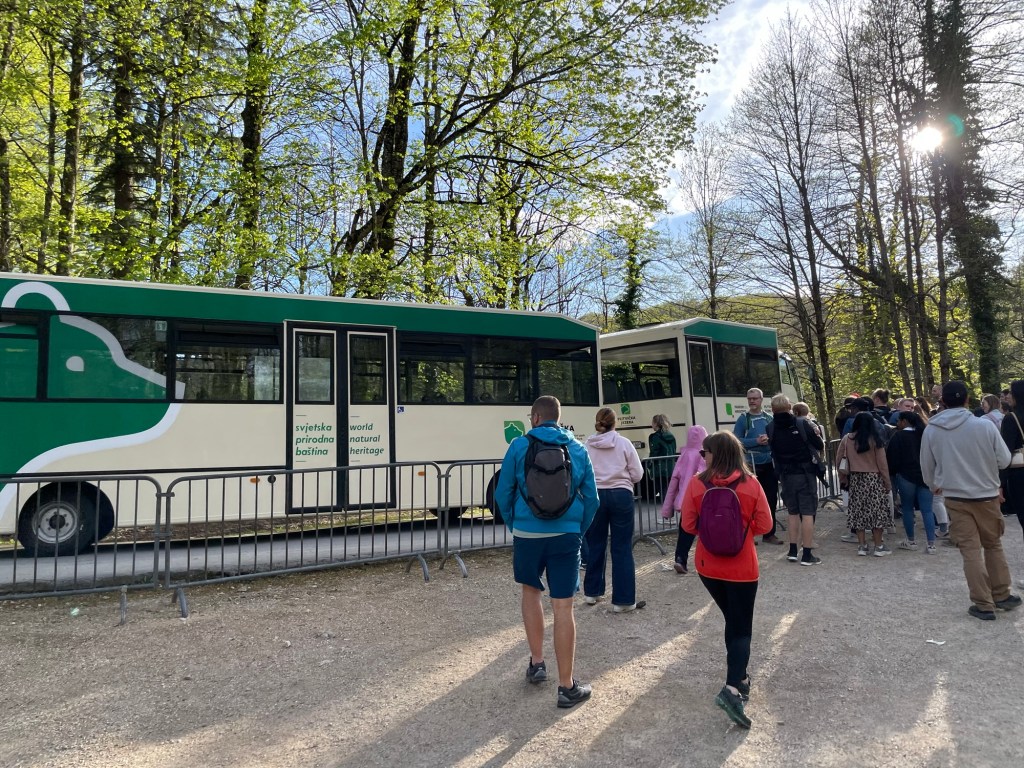
About halfway through the park, a ferry shuttles visitors between opposite ends of the largest lake.
Things are growing everywhere! The setting feels like a great place for fairies…
The park includes 16 major lakes (and innumerable smaller pools). Each major lake has a sign showing its depth and location within the chain.
You can see the loop of the boardwalk as it snakes through this wonderland. Water cascades from tier to tier at every level.
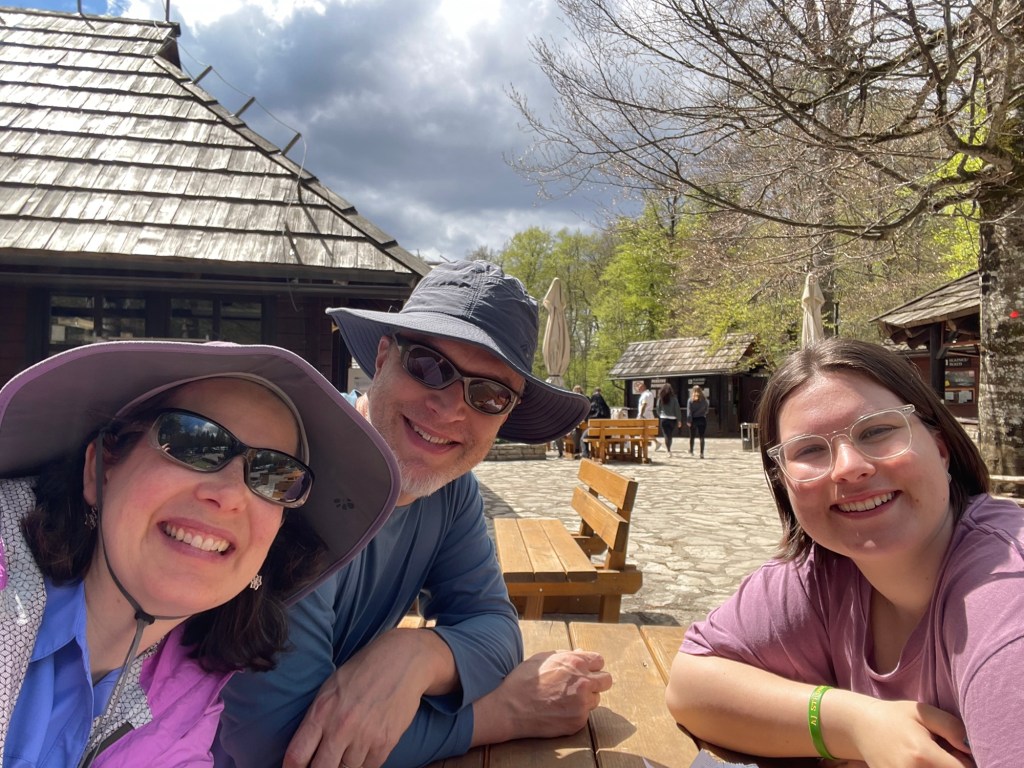
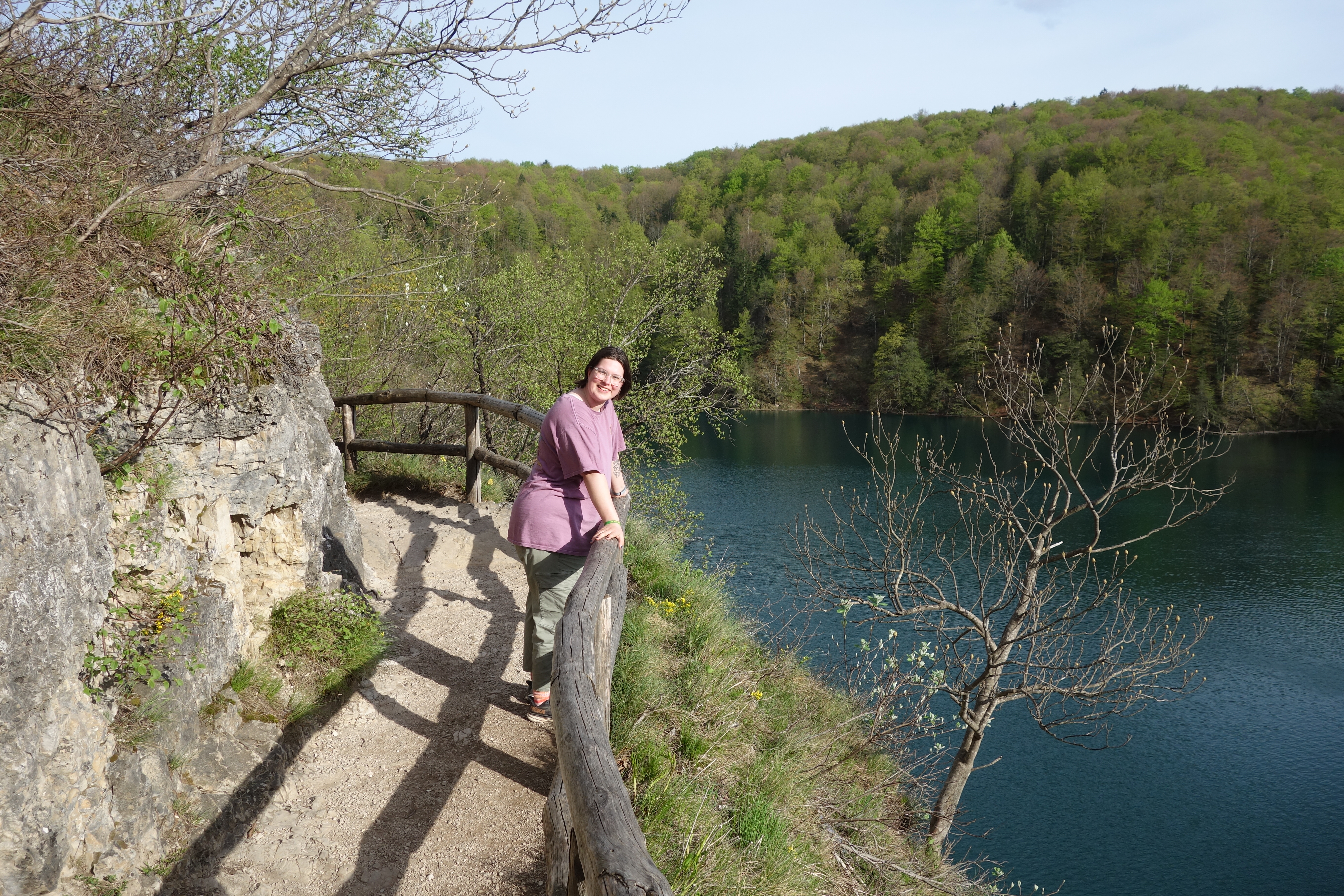
We hiked upwards from the lower lakes, and were happy to take the shuttle back to our parking lot when we reached the top.
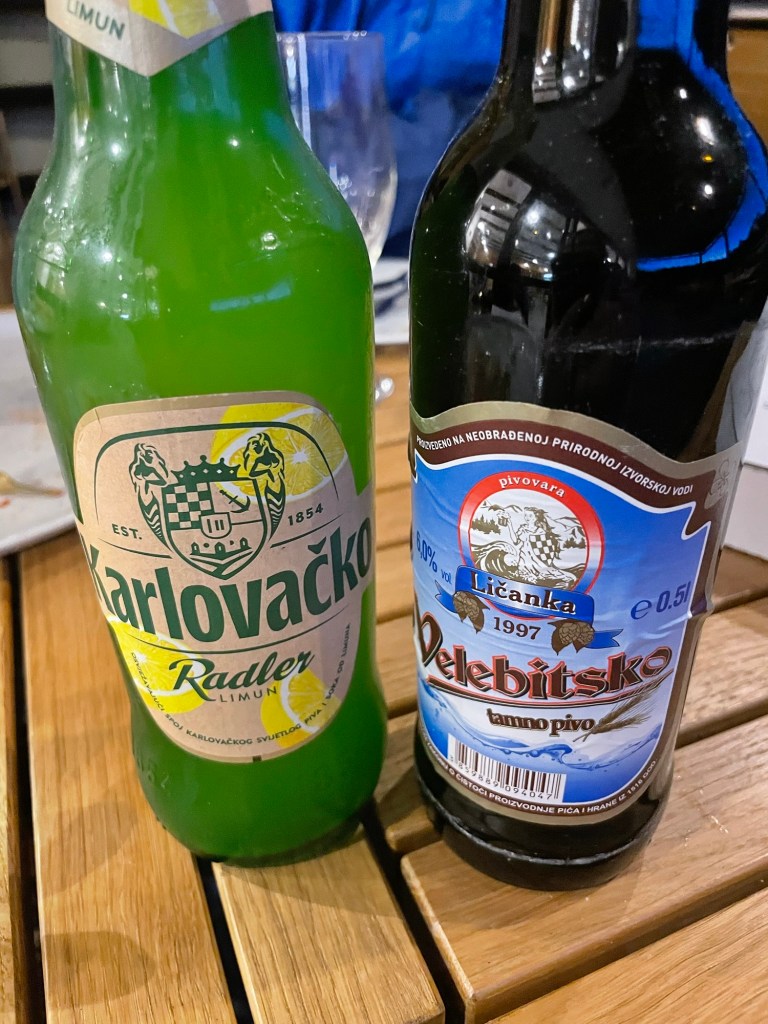
This early in the season there aren’t many restaurants serving customers. Luckily the local pizza parlor was open, and doing a brisk business. We sat on the porch overlooking a soccer field and the local ski slope, serviced by a single J-bar lift. The food hit the spot perfectly after our long day hiking, and we washed it down with the local dark pilsner and lemon-beer.
Oh yes! This morning, before leaving Zadar we took time to visit the Sea Organ located at the tip of the old city. Beneath the concrete steps, wave action forces air through an array of tubes to generate a medley of overlapping notes. The sound emerges from the small slots on the top step, producing an effect somewhat reminiscent of wind chimes yet more breathy and muted. Clearly this was a day full of water’s wonders for us!

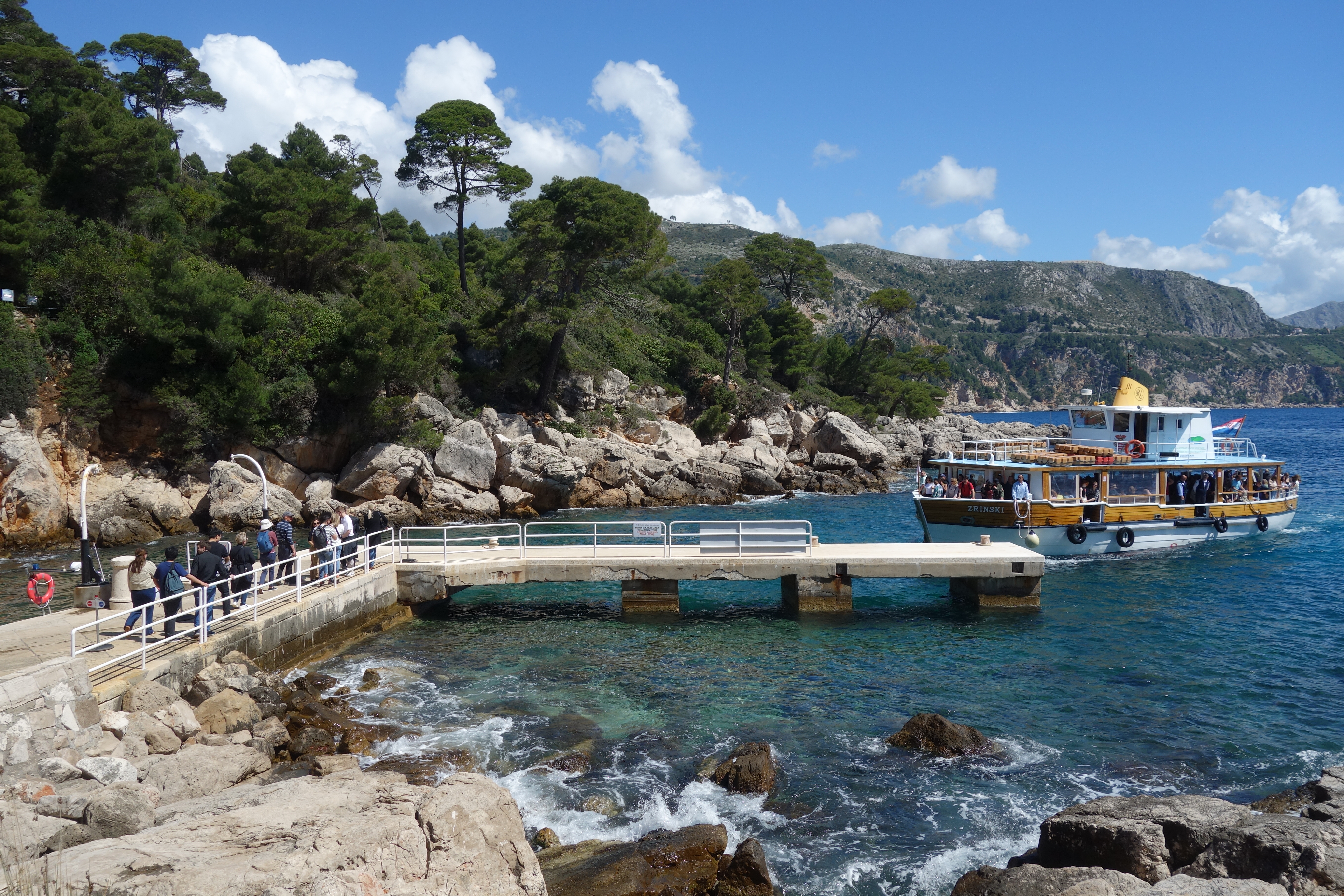
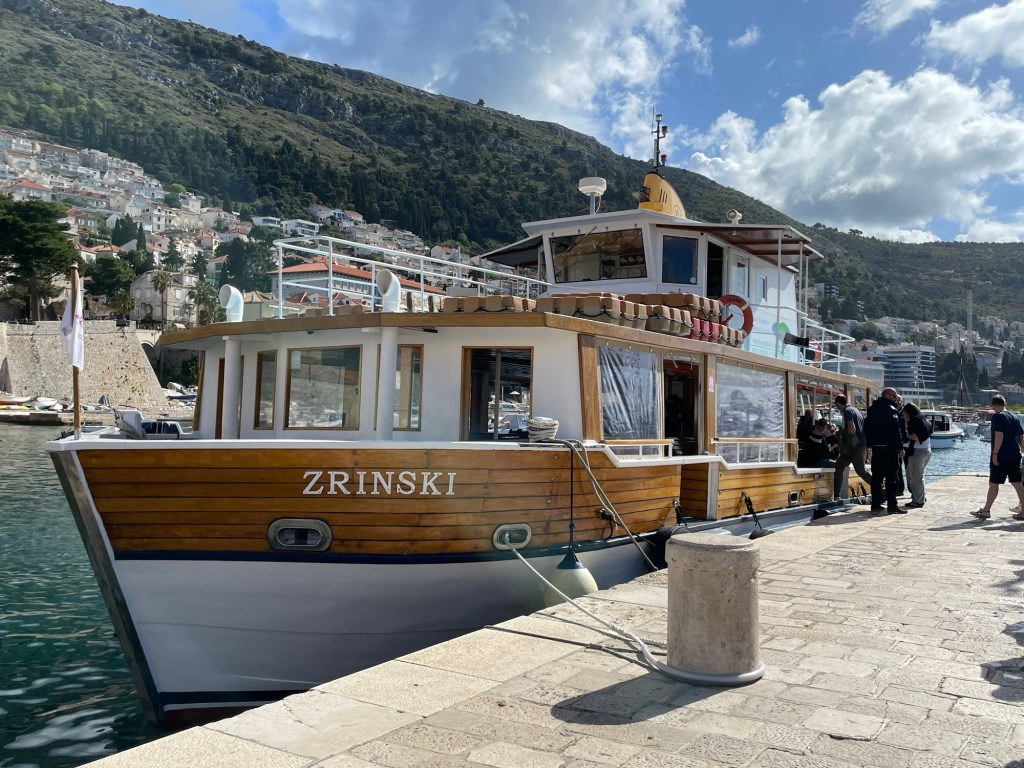
Boat to Lokrum

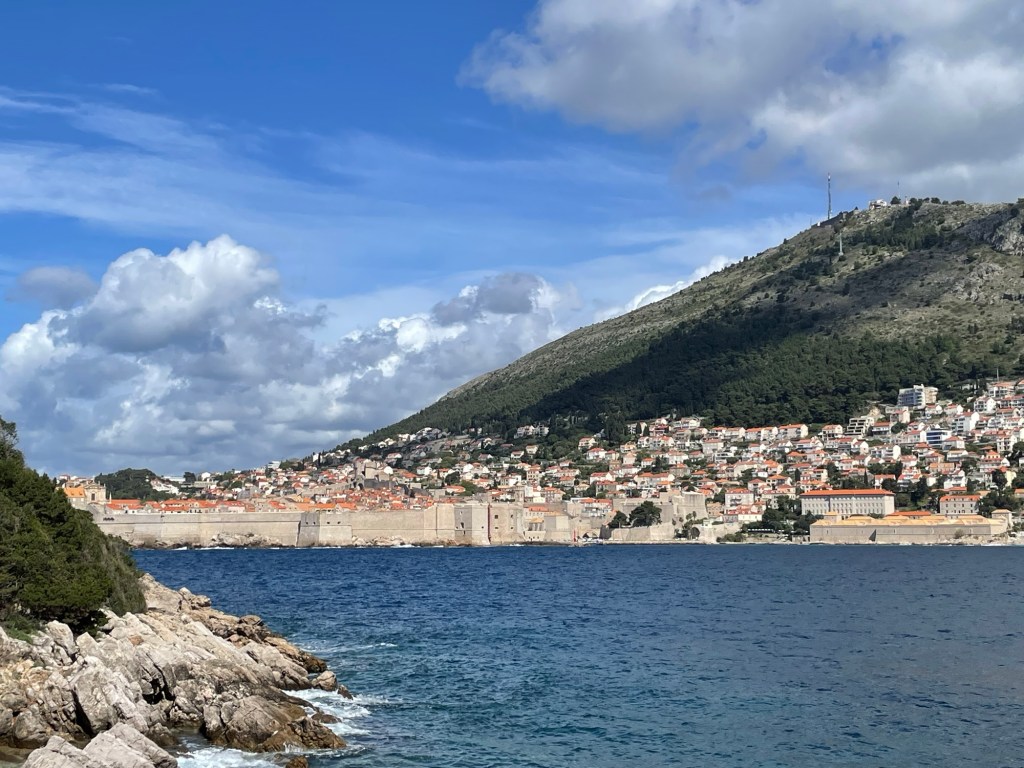
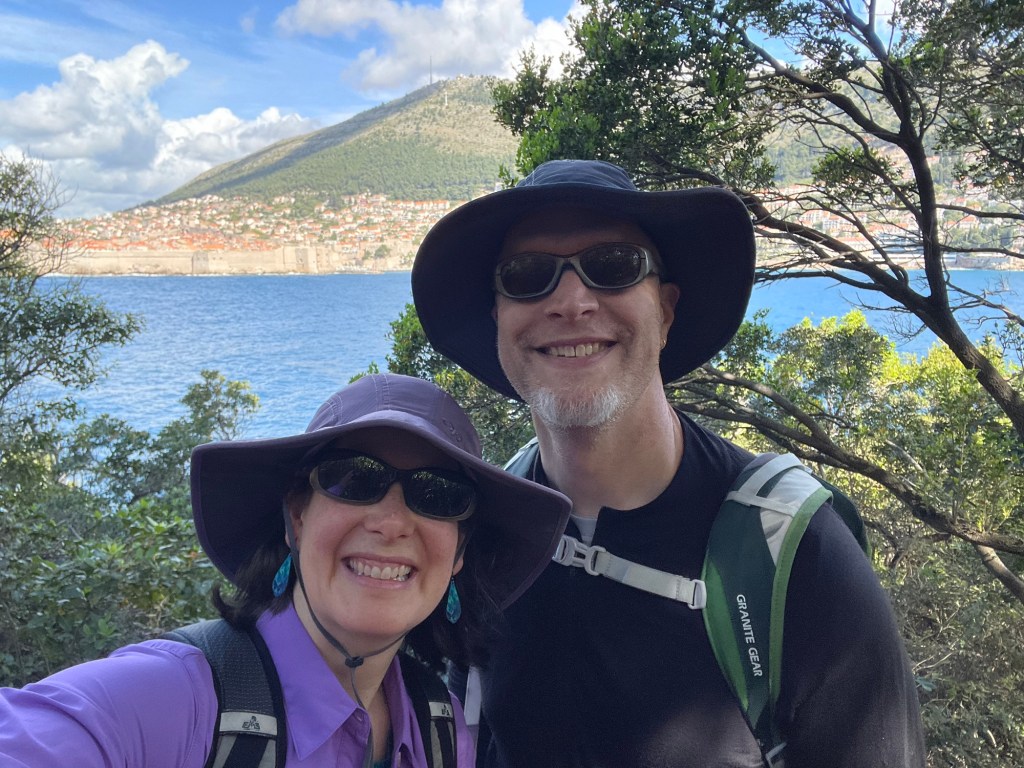
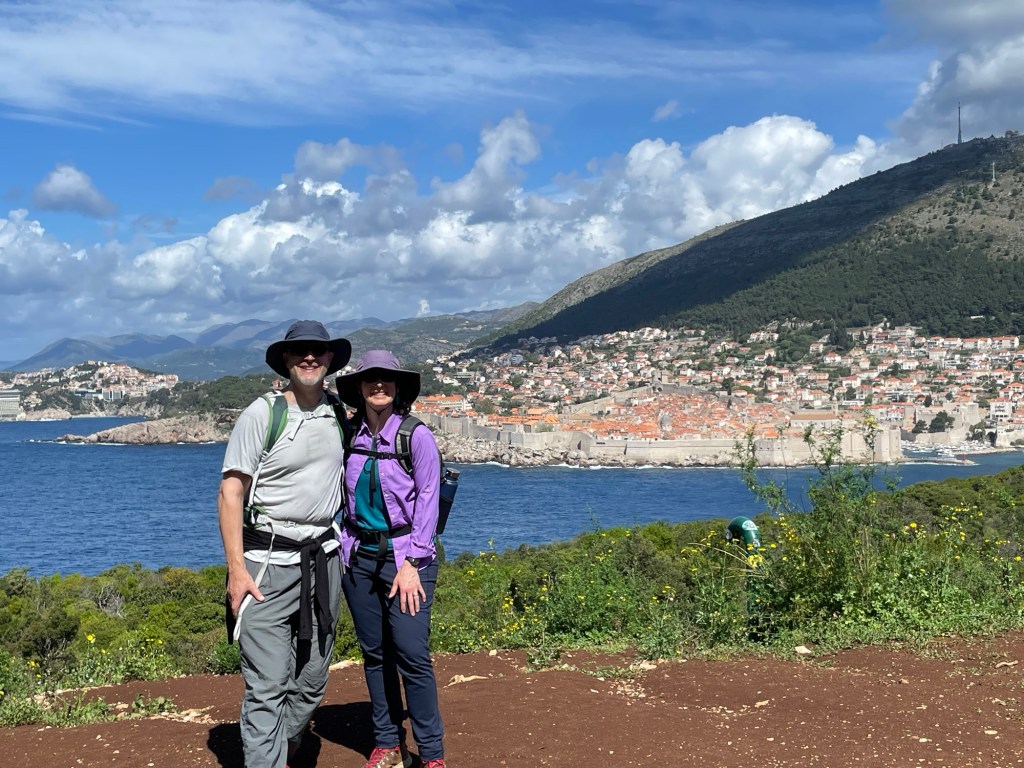
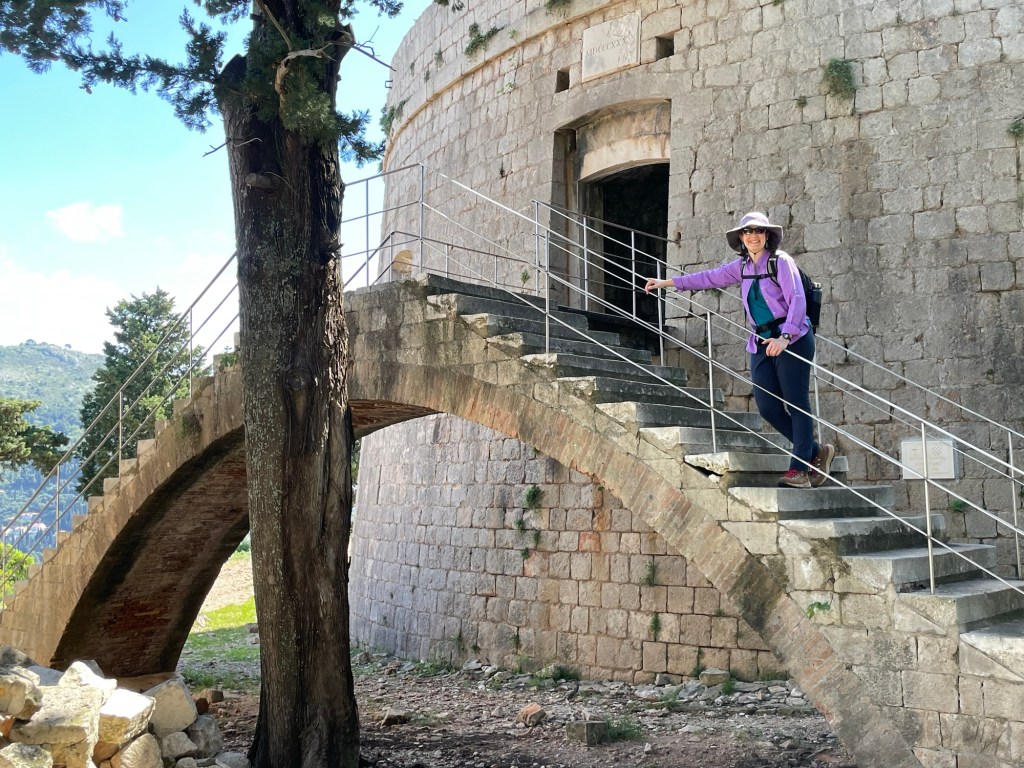
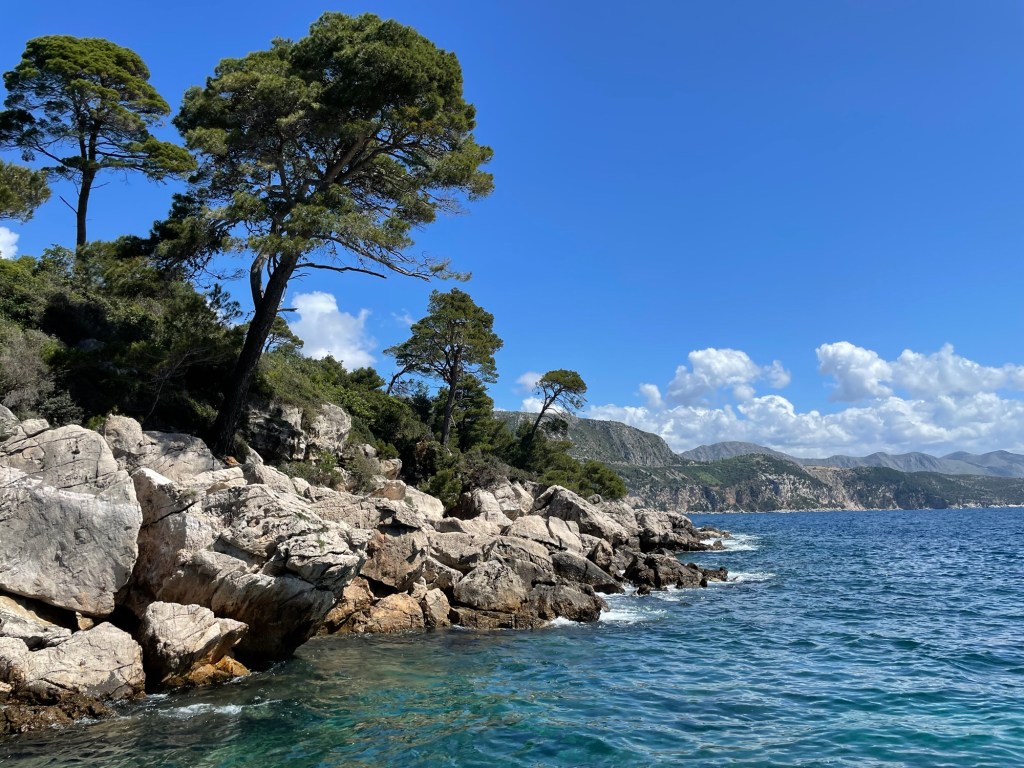
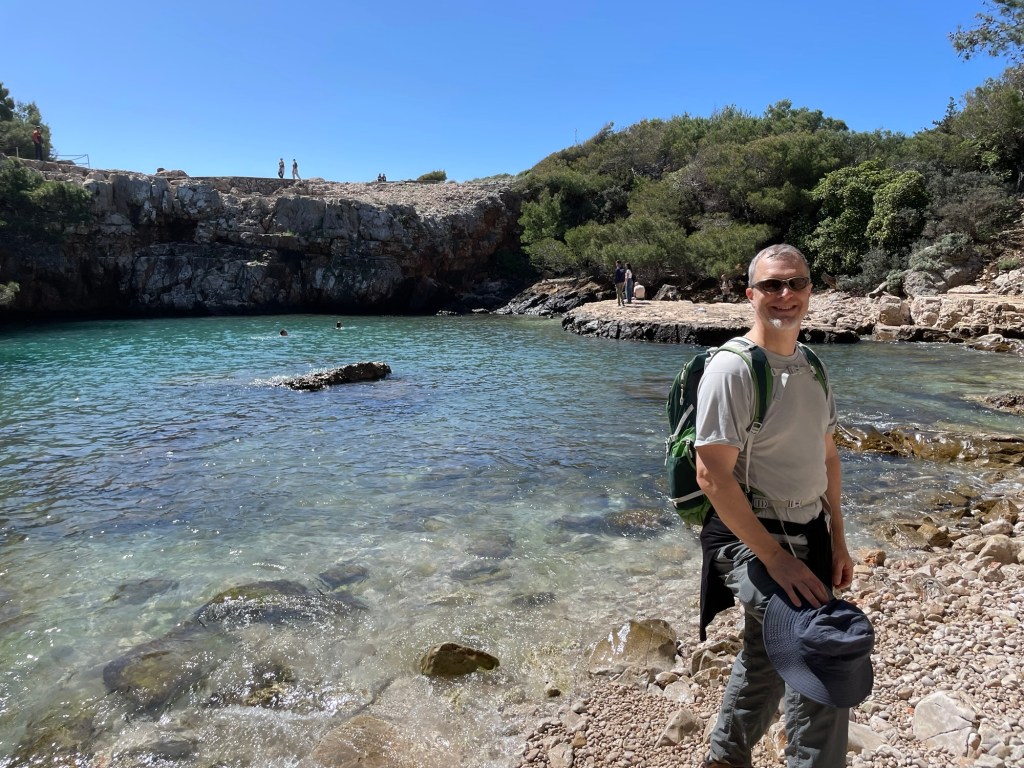
Today we had a final morning to explore the Dubrovnik area before heading north to meet up with Rowan. Unlike our previous two days, the weather was clear and sunny — a perfect day to visit Lokrum Island just off the coast. Once the personal property of Archduke Maximilian of Austria-Hungary, the island is now set aside as a tree preserve. As a result, the hiking trails on the island are marked every hundred meters or so by a blue hydrant standing ready just in case of fire.

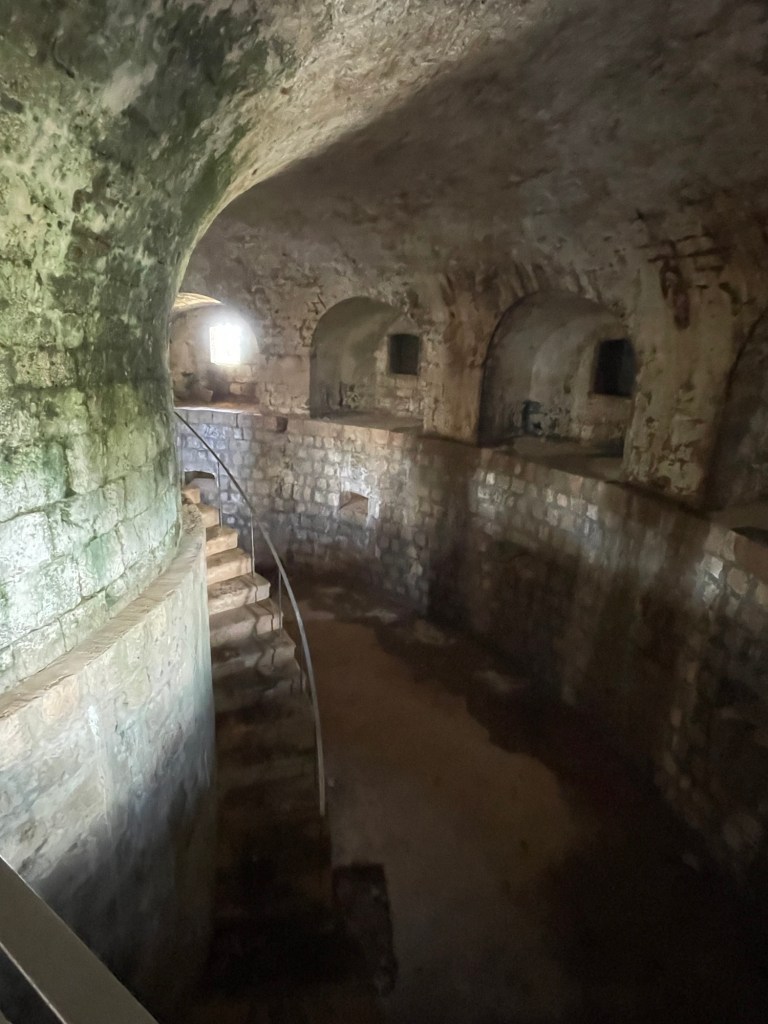
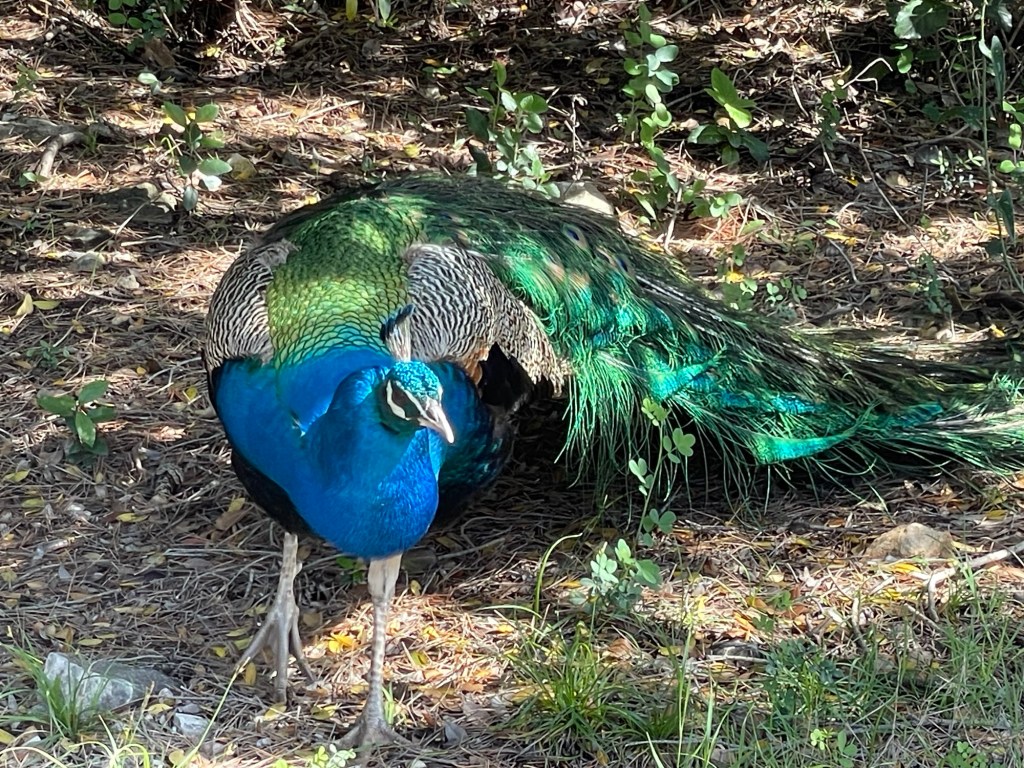
Besides clear views of the city itself and southeast along the coastline, the island boasts a military installation at its highest point, plus the ruins of a former monastery. Its inhabitants include a range of bird life, the largest of which are a flock of peafowl that must be a relic of the onetime royal occupation.

The rocky coastline includes a number of unusual rock formations, and towards the southern tip is an enclosed lagoon entirely separate from the ocean, yet connected to it via some sort of subterranean plumbing system. Normally it is perfectly calm, but today the waves were active enough that the surface of the pool also rose and fell in time with the swells of the open sea.

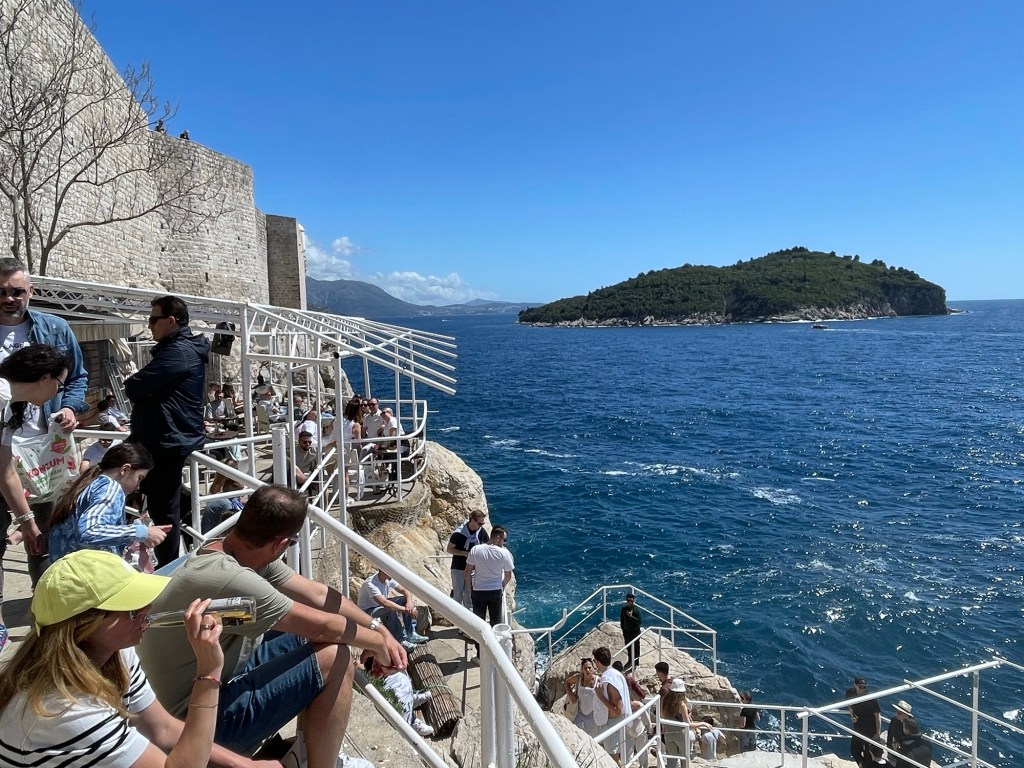
After seeing all that Lokrum had to offer, we made our way back to Dubrovnik for a quick lunch before catching the airport bus. We had a few more moments to explore the maze of alleyways in the city and a few more of its hidden secrets, like the tiny door in the wall that opens onto a cliffside bar.

For reasons not worth relating here, the last part of our day involved a somewhat convoluted sequence of travel: bus to airport, hopper flight from Dubrovnik to Zagreb, rental car at the airport, then a 300km drive to Zadar. The highway passed through some beautiful mountainous terrain, and featured a series of long tunnels, one more than 5km. All the travel was worth it in the end, as we reached the apartment where we will stay tonight, and were greeted there by Rowan, who is on break this week from their study abroad program. Reunited at last!

Three Fort Day

Dubrovnik functioned as an independent city state for centuries, building heavy fortifications to protect itself from Venice and other nearby powers. Continuing our tour of the local military infrastructure, we planned to visit several of the outlying structures that helped keep enemies at bay. First up was Fort Imperial, perched on the summit of Mount Srd overlooking the old city. There is a cable car that was out of commission today due to high winds. Luckily we had planned to take the hiking trail anyway.

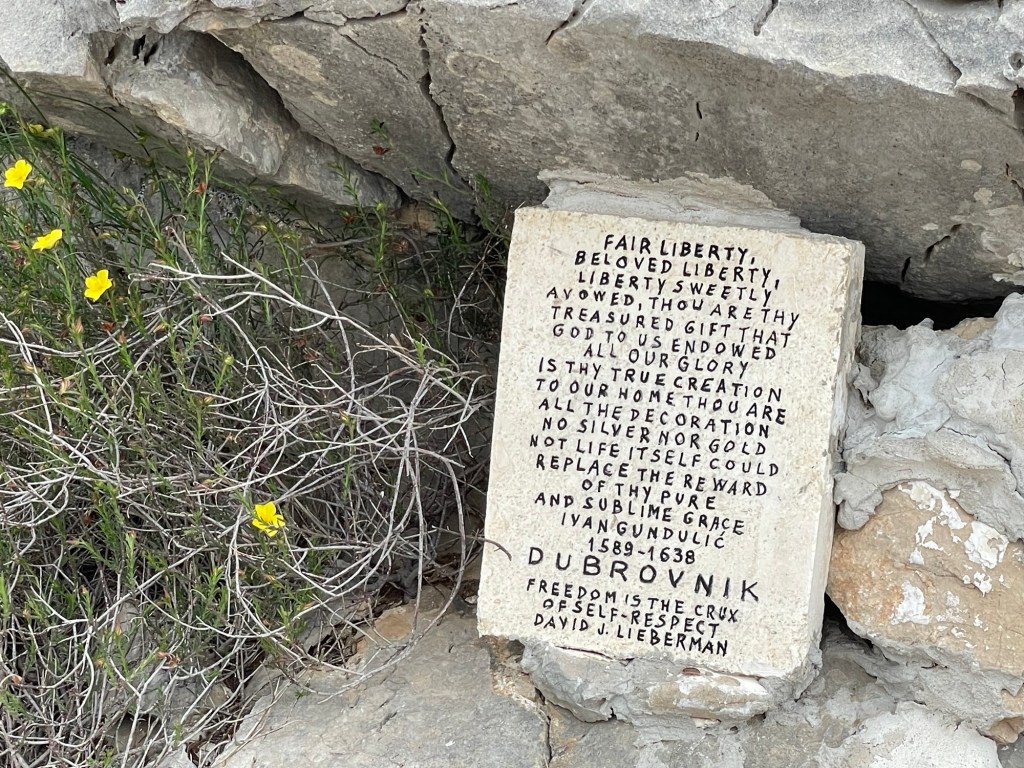
In concordance with its long independent streak, Dubrovnik’s official city motto is “Libertas”. One can still find small odes to liberty and independence displayed around the city, like these trailside pieces.

We

The trail to Fort Imperial features numerous switchbacks on the way up. Around 15 years ago they installed a series of bronze panels depicting the 14 stations of the cross, one at each turnaround.

As we gained altitude, we could see the newer parts of Dubrovnik and islands farther to the north. From the top, we could also see the ranges of mountains further inland.

Fort Imperial is quite new by local standards, built by the French in just a few years after Napoleon’s armies ended the city-state’s centuries of independence. With powerful modern artillery, massive city walls became less important and instead it was necessary to control the higher ground nearby. This truth was confirmed anew during the 1991-92 Balkan war. Local residents had assumed that their status as a UNESCO heritage site would protect them from any aggression, and were unprepared for war. This confidence proved hollow when Serbian army units moved into the area, pursuing their dream of a “Greater Serbia”. A small band of just a few dozen men managed to hold Fort Imperial in the face of their attacks, stopping their advance outside the city and turning the invasion into a siege. You can still see the craters left in the fort’s walls by modern high-explosive shells. Cut off from the outside by both land and sea and under fire from the opposing forces, the city’s residents endured a difficult year before negotiations brought an end to fighting in the region. Information boards in the old city detail all the structures that were damaged during this period.

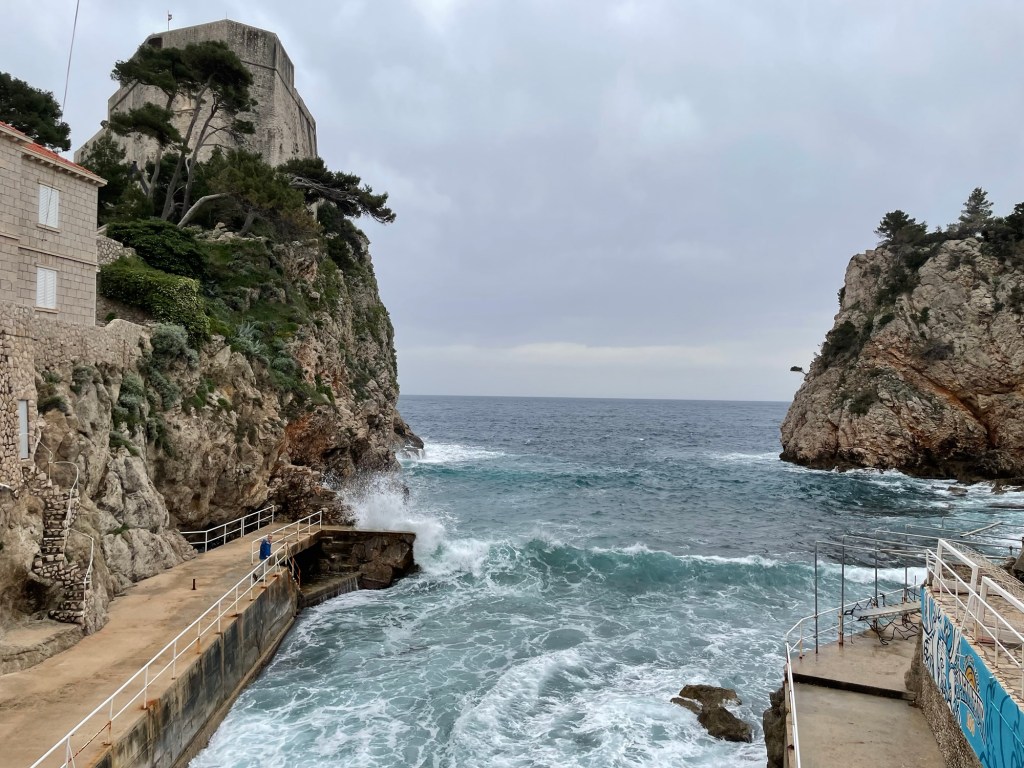
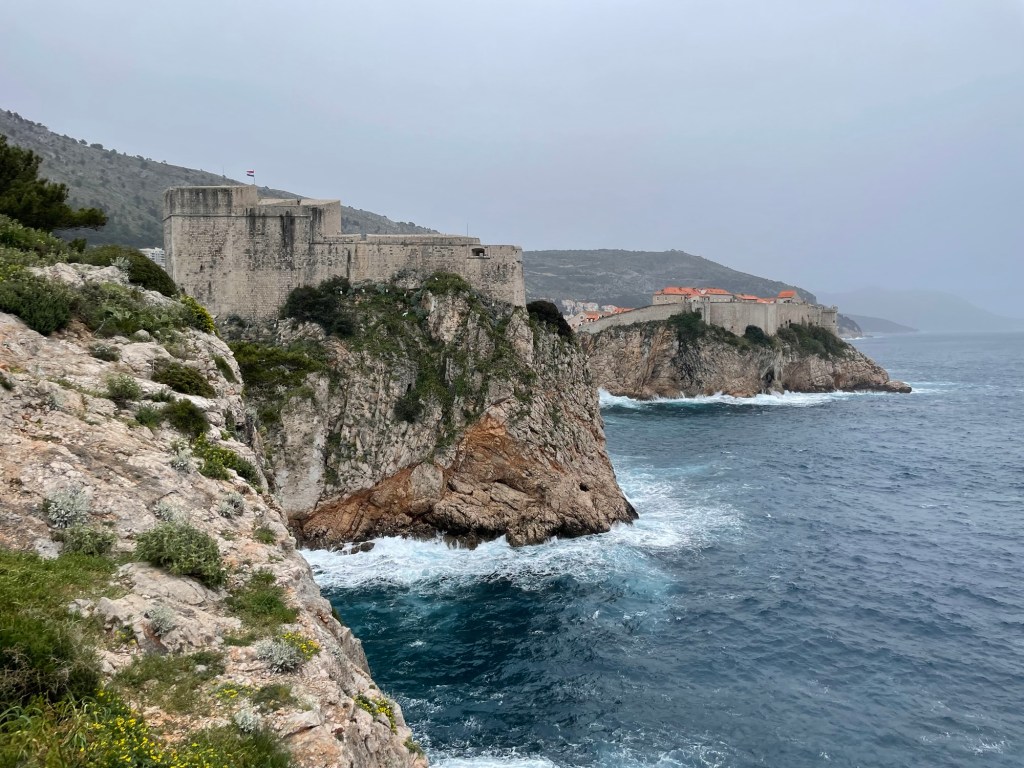
Our second fort of the day is named Tvrdava Lovrijenac (or the Fort of St. Lawrence in English). It sits on the coast next to the city, separated from it by a small rocky cove. Originally built in the 11th century, the structure as it stands today is a massive bastion built to support heavy cannon. From the parapets at its top you can find excellent views of the seaward city walls — but the best views are to be had from still one more headland over, where you can see both the fort and the city in one sweeping vista.

Note Nick on the walkway in the bottom left (blue coat)

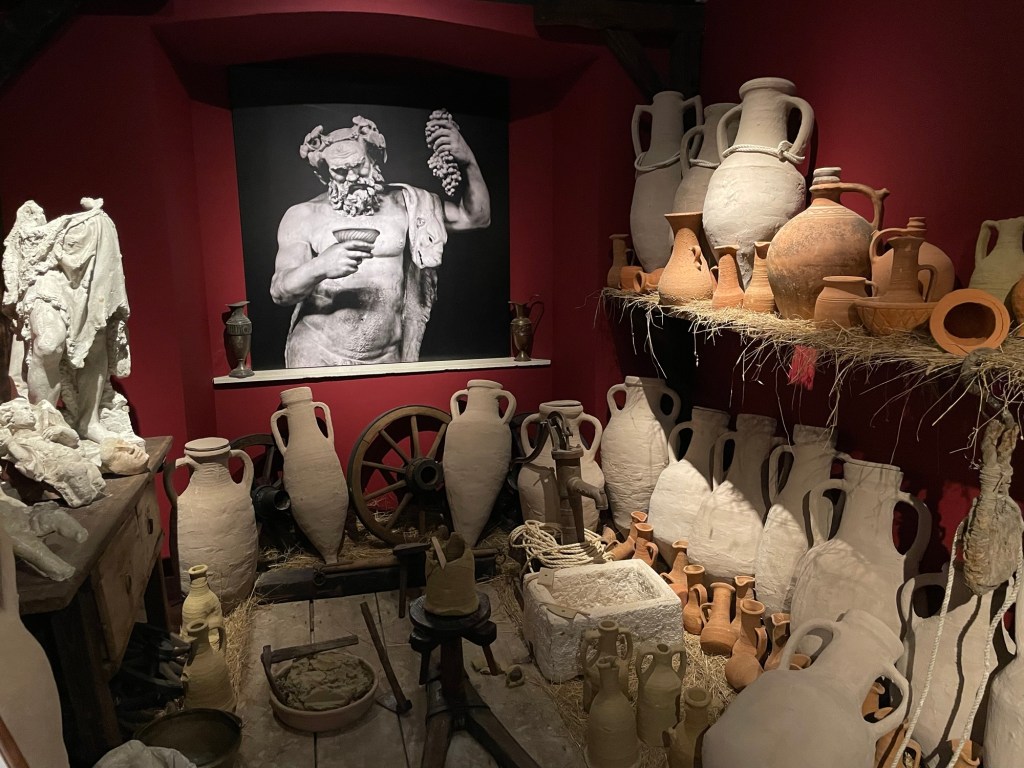
On our way back we stopped at the Wine Museum located just outside the Pile gate. It contained informative exhibits on local winegrowing, including the many grape varietals native to the region (including the once-unknown ancestor of Zinfandel grapes in California) and all the traditional machinery used to harvest grapes, process them into wine, and transport the final product.

A local company makes wine called “Navis Mysterium” that they age in either bottles or amphorae for several years under the surface of the Adriatic Sea. They come out covered with picturesque debris, and (reportedly at least) perfectly aged in a constant temperature environment.

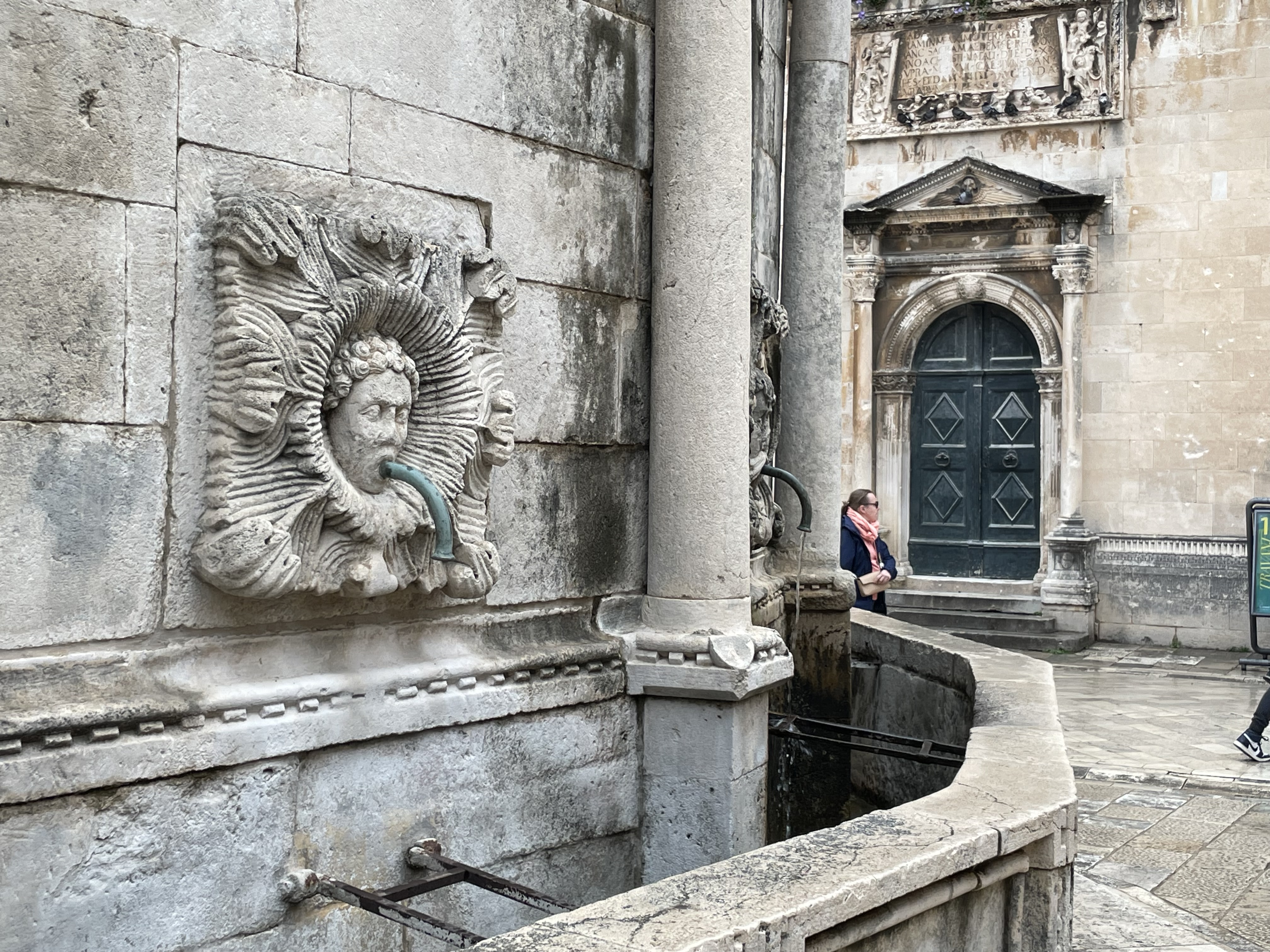
On our way just inside the Pile gate is a sight that Nick especially liked: the city fountain, a circular structure with spouts around on all sides.

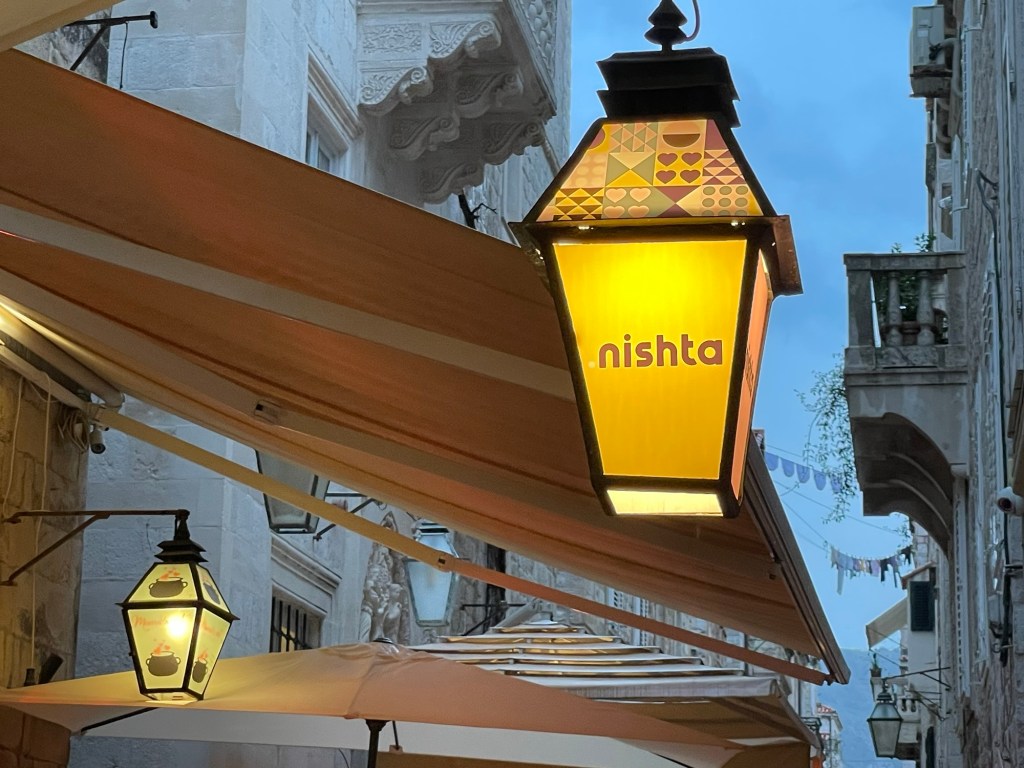
We had a nice dinner with local wine at a vegetarian restaurant not far from our lodging (on a picturesque pedestrian street replete with outdoor seating protected by retractable awnings and dotted with lanterns, before walking to our third fort of the day. For the evening, we had tickets to the Dubrovnik Symphony Orchestra concert held within Fort Revelin overlooking the city harbor. The concert hall was a massive vault within the structure. We had bought two of the last four seats available, numbered 99 and 100, assuming they were all the way at the back. Imagine our surprise to find that we were in the second row, with a clear view of the players! The symphony here has a tradition dating back seven centuries, and the music was quite enjoyable.