
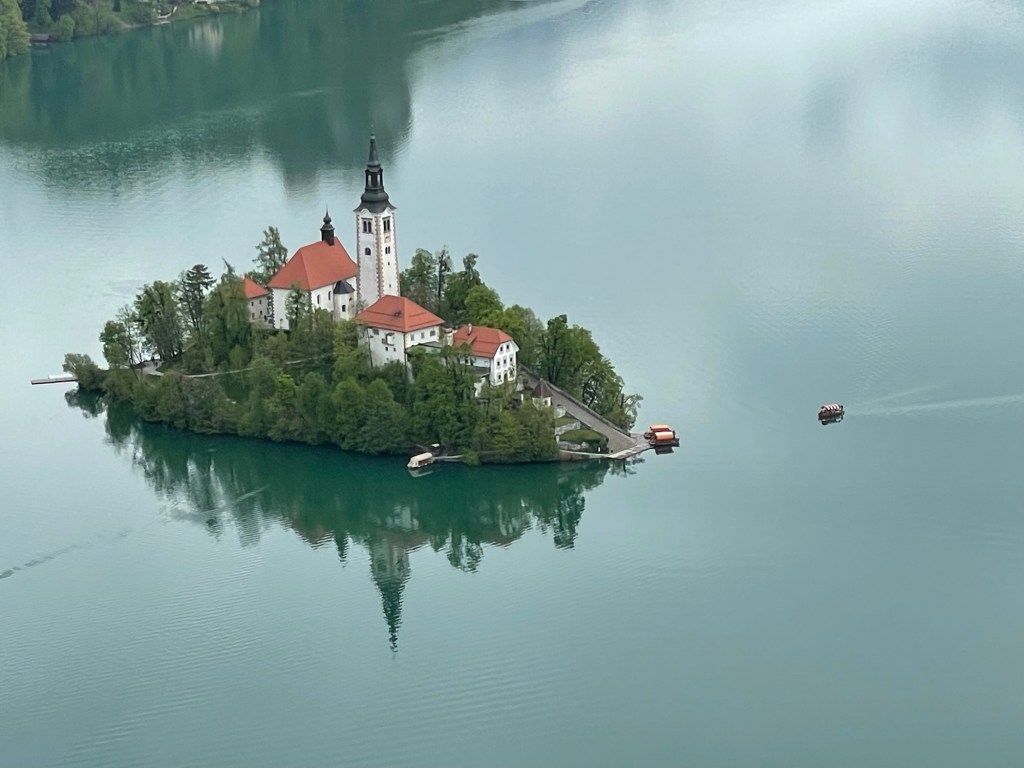
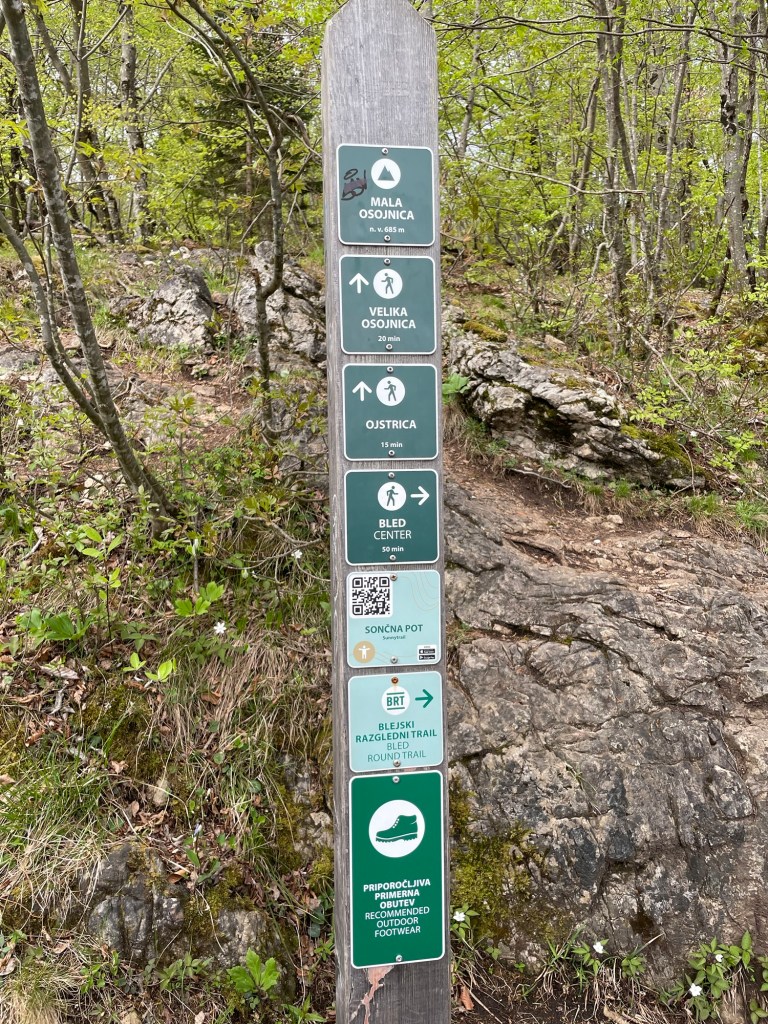
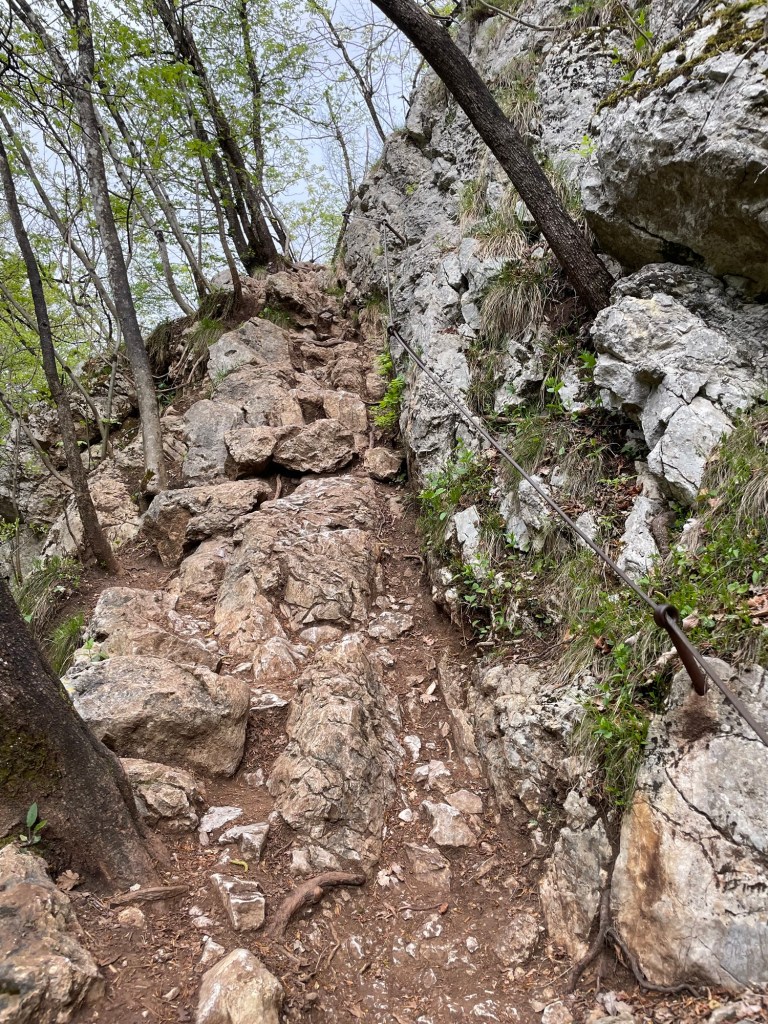
Today we planned a more relaxed pace than yesterday’s blitz of all the main Bled attractions. We decided to visit some of the local museums in the surrounding towns, focusing on aspects of life in times past. But before all that we did take time for a small morning hike up one of the hills at the end of the lake, just to see everything from another viewpoint. We actually ended up at two different lookouts, since we originally missed the turnoff for our intended destination (Ojstrica) and instead found ourselves at Mala Osojnica. With sharper eyes out on the way down, we found the missed trail and climbed Ojstrica as well. Which view do you like the best?


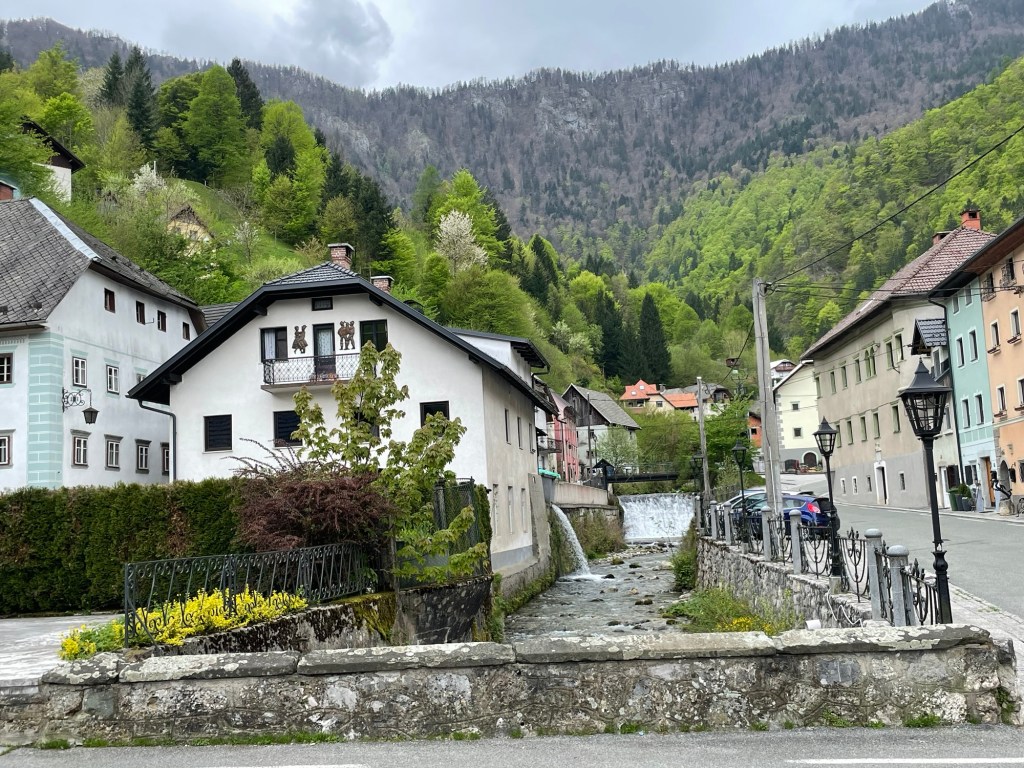
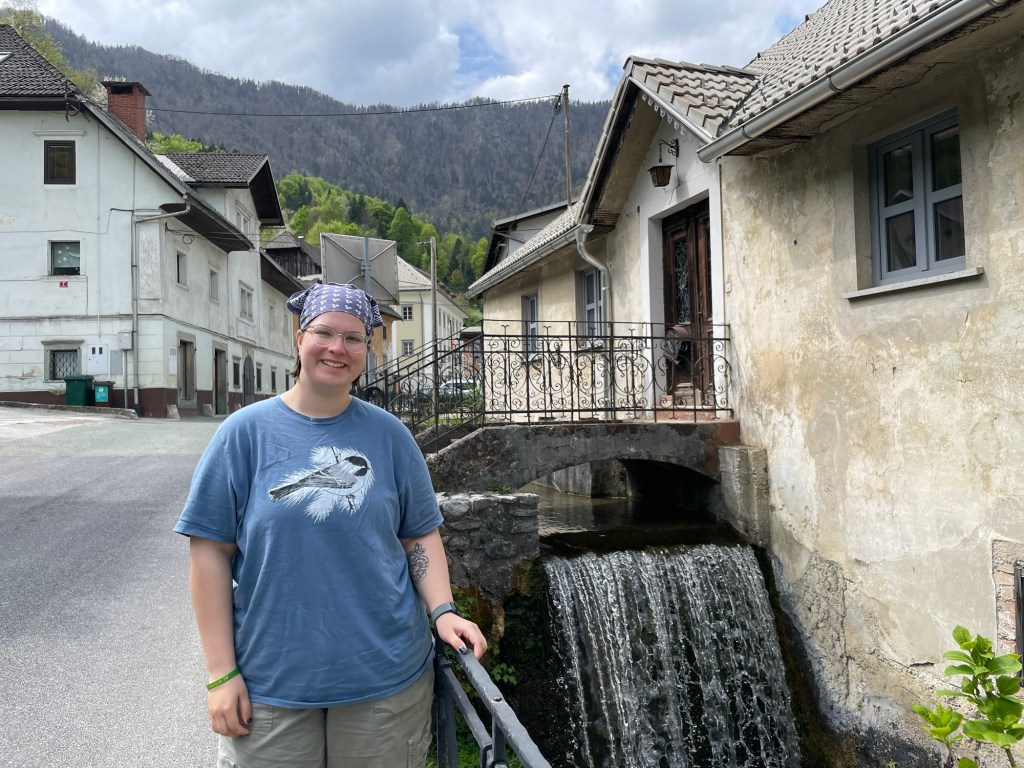
Taking once more to our rental car, we set out for the village of Kropa, which had long been at the center of the local iron mining industry. The buildings here are clustered closely around a fast-moving mountain stream, which provided power for the smelting and ore processing operations. The importance of mining gave those involved with the trade special rights by royal charter, and allowed for a relatively prosperous middle class to grow up in the region. Even within this area of relative freedom there was a pecking order, of course. The prosperous iron traders owned the houses, living on the upper stories while the ground floor was given over to business. The smelters were a step down in rank, and those who worked as blacksmiths were at the bottom of the social ladder, forced into shared accommodations where each family was allocated just a single table for living space, and had to use a shared kitchen.

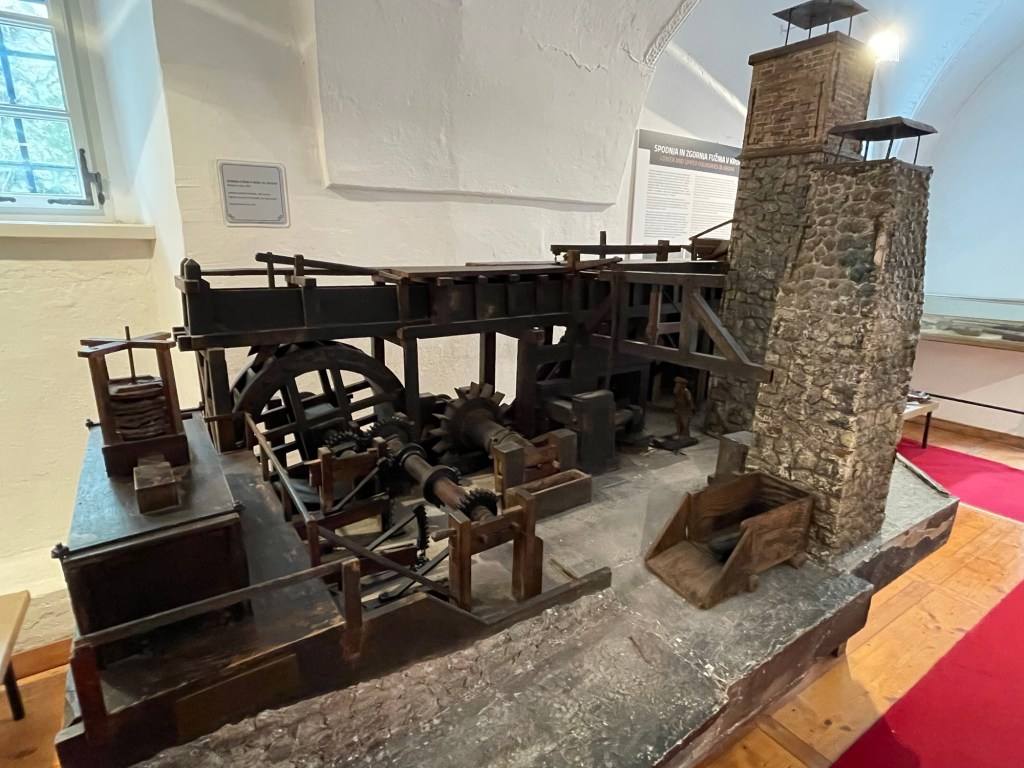
Inside one of the buildings in Kropa we found a museum (not without difficulty since it was hardly advertised from the outside) dedicated to the local history of ironworking. Iron goods were traded southwards into Italy, helping to support the needs of the Venetian navy. Over time, the area became particularly known for producing nails of high quality, used for everything from boots to railroad ties. They were produced in a wide range of standard sizes, with defined prices for each. A skilled smith could make as many as 2000 nails per day.


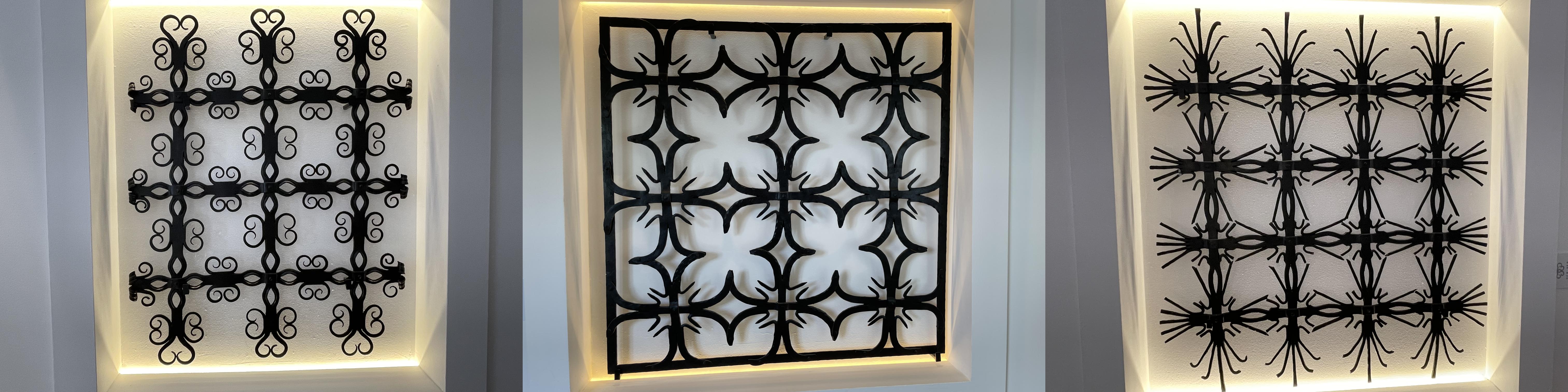
The iron trade collapsed in the mid-1800s as the local ore deposits ran out and the beech forests (used to make charcoal) were all cut down. The ironworking knowledge rooted in the area began to die out. However, efforts to establish a new specialization in ornamental and artistic ironwork have borne fruit, and now artists from the area are known for working in the medium.
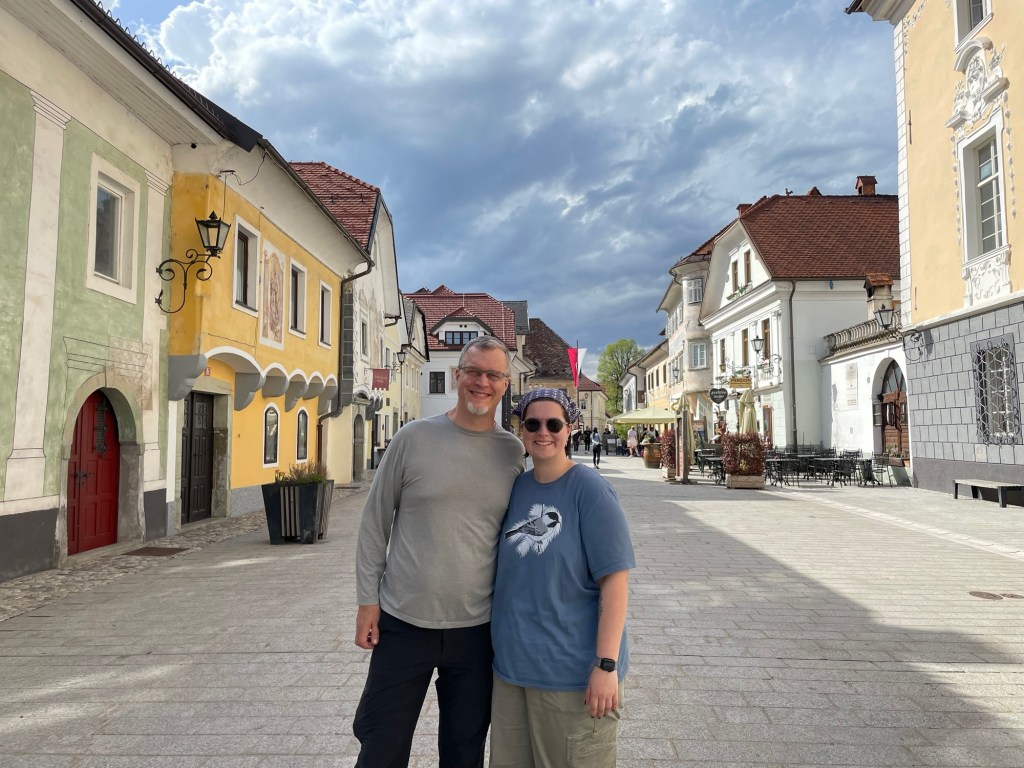
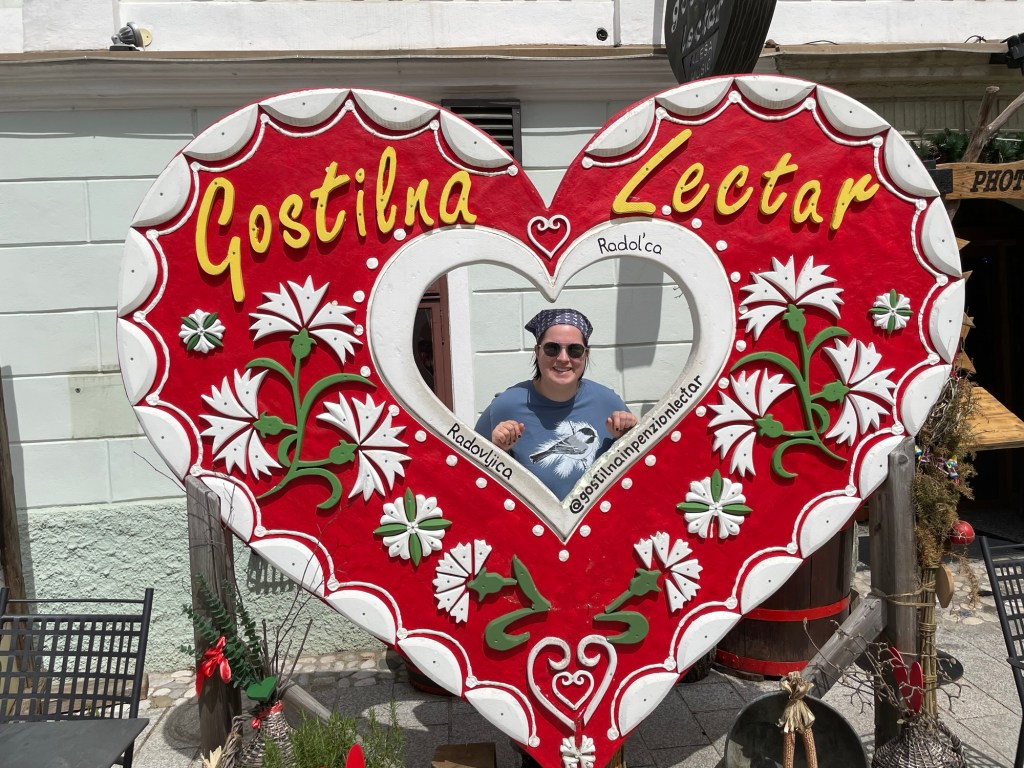
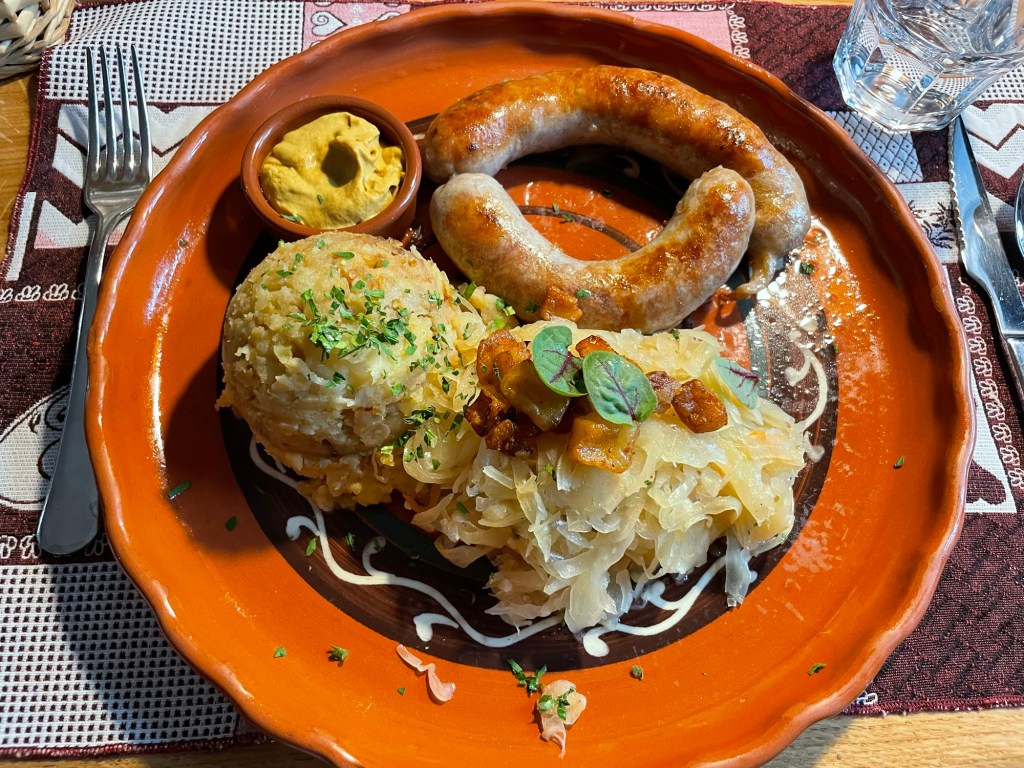
Leaving Kropa behind, we made our way via winding roads to the market town of Radovljica. The town square here featured old houses decorated with frescoes, featuring both religious themes and trompe l’oeil. They were a little faded, which along with the grandly proportioned yet oddly empty village hall gave the impression that the town’s best days were perhaps behind it. That didn’t stop us from enjoying a delicious meal of local specialties, including sausage, sauerkraut, and potatoes. The food and decor would be at home in any Alpine country, and the restaurant played music by a polka band all through our lunch.
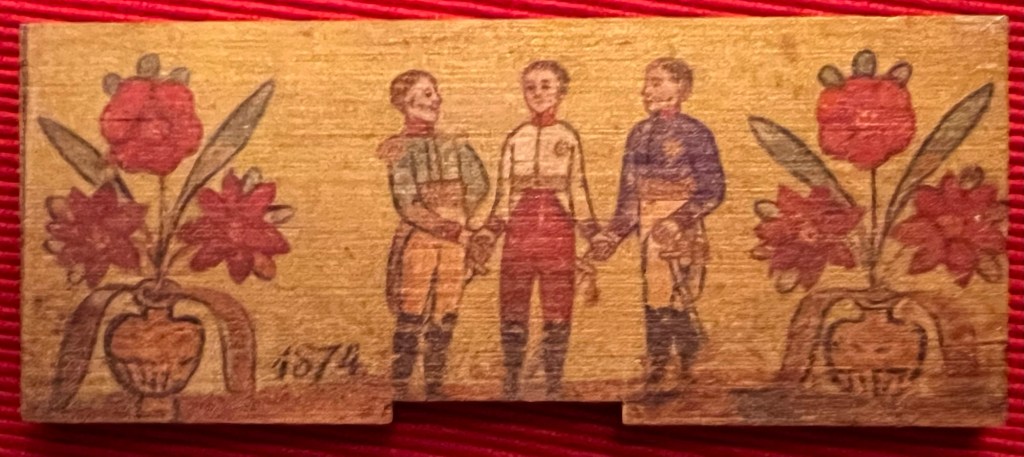
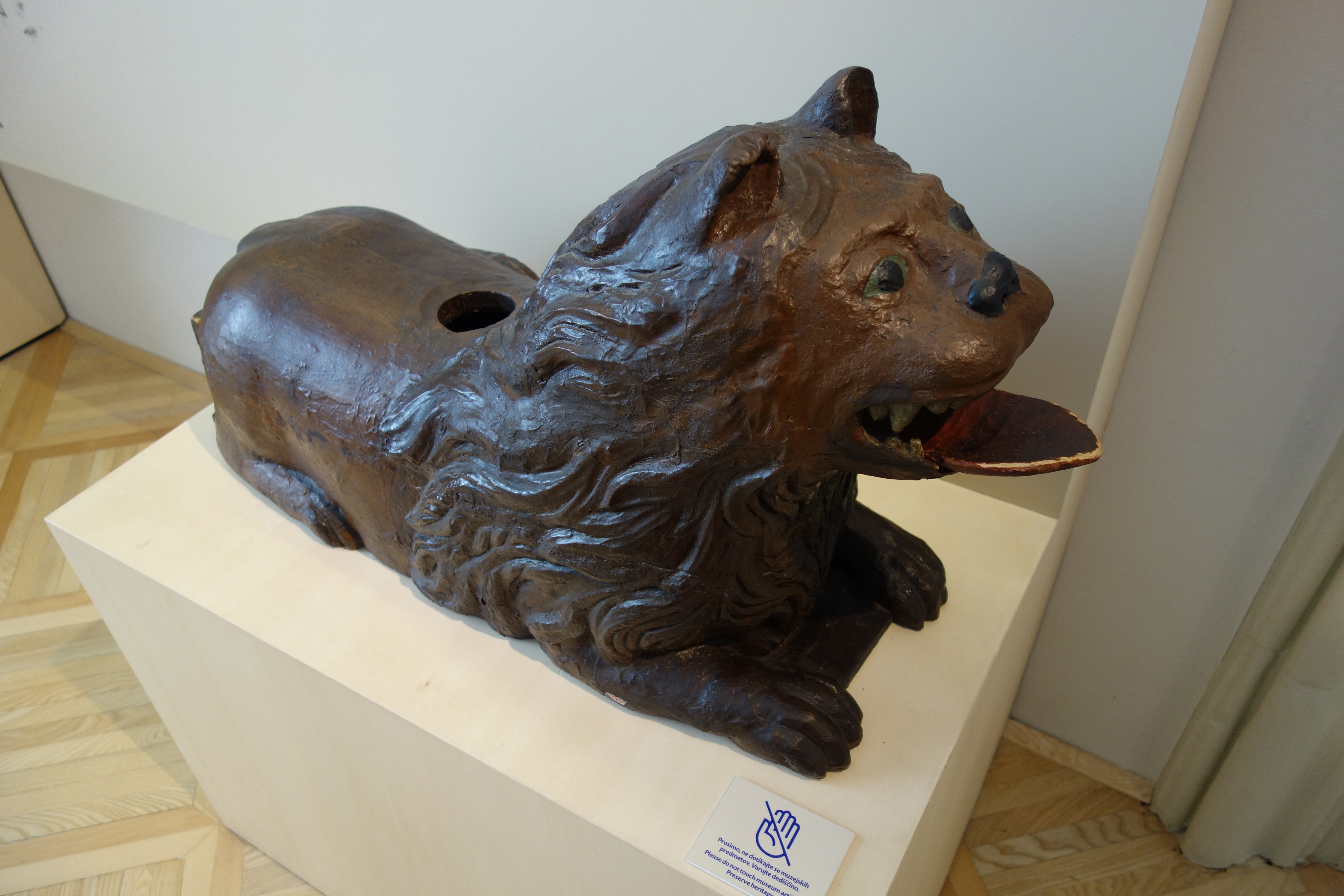
The main attraction we were here to see was the Museum of Apiculture. Beekeeping is a local specialty, based on the Carniolan honeybee, a biddable local subspecies. The hives here are kept in flat boxes that can be stacked on top of and next to each other. To help the bees to identify their homes amongst all the neighboring hives, a tradition has developed of installing artistic bee boards for the front of the hives. These are covered with painted scenes, often whimsical, sometimes depicting historical events or scenes from fairy tales. Nick’s favorite was “A snail chasing tailors,” featuring a giant snail pursuing a man with shears up a tree — sadly we did not get a picture of this one. (We would love to hear the story behind it!) Below you can see another sample depicting the 1815 “holy alliance” between Russia, Prussia, and Austria. Much rarer are hives disguised as sculpture, such as the lion we saw in the museum. Bees fly out through the hole in its back, and possibly also through the open mouth.
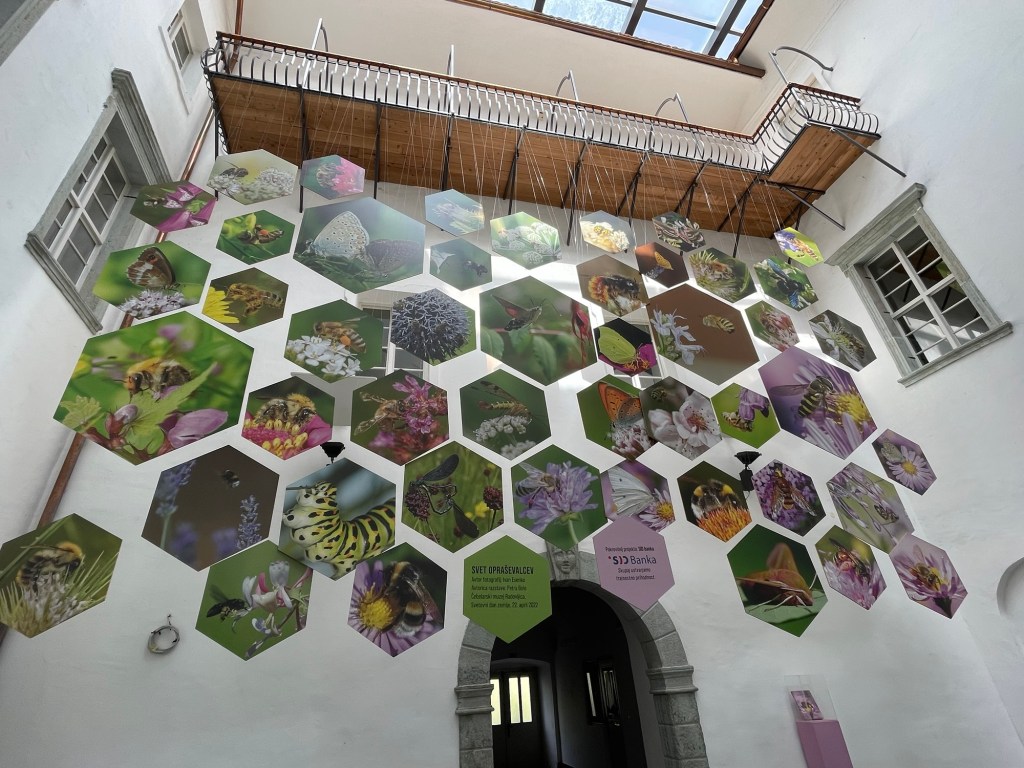

We close out today’s entry with a few bonus pictures featuring items we thought might be of interest.


 Howes' Doings