Planes, Trains, and Automobiles – plus a Bus and a Ferry

Today after a quick breakfast at the local natural food store (80% discount off the hotel breakfast!), we took an early taxi across the Elbe River to Finkenwerder, where Airbus has a large assembly facility. The tour lasted for two and a half hours, during which we visited three different hangars where different steps of the process occur — first the sections of fuselage are mated together, then the inside wiring and ductwork is added, before they are painted and given engines. The various pieces come from different countries: tails from Spain, nose and forward section from France, and the back and middle are made here in Hamburg. (As a pan-European project, Airbus has to distribute its production to maintain political support in the major nations of the E.U.) Unfortunately we cannot show you any pictures because cameras are strictly forbidden during the tour. Since the tail and wing sections come pre-painted, they create a strange contrast with fuselages in only green or brown primer coat.
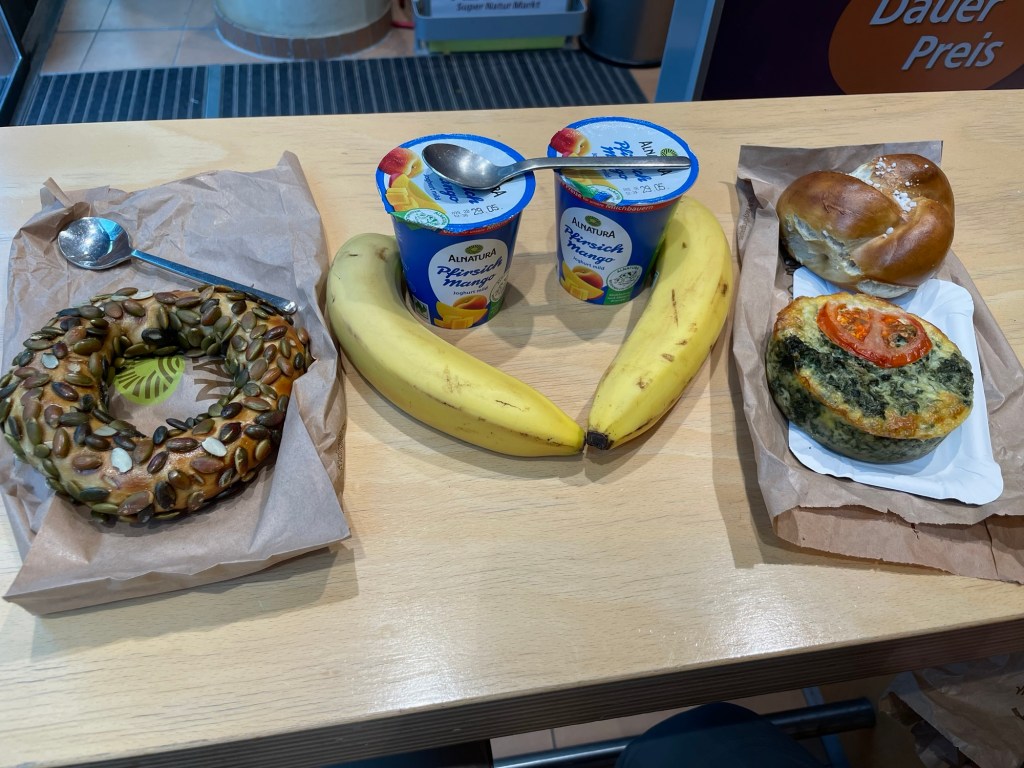
Love that natural grocery store breakfast!
Our only photo, taken outside the gates

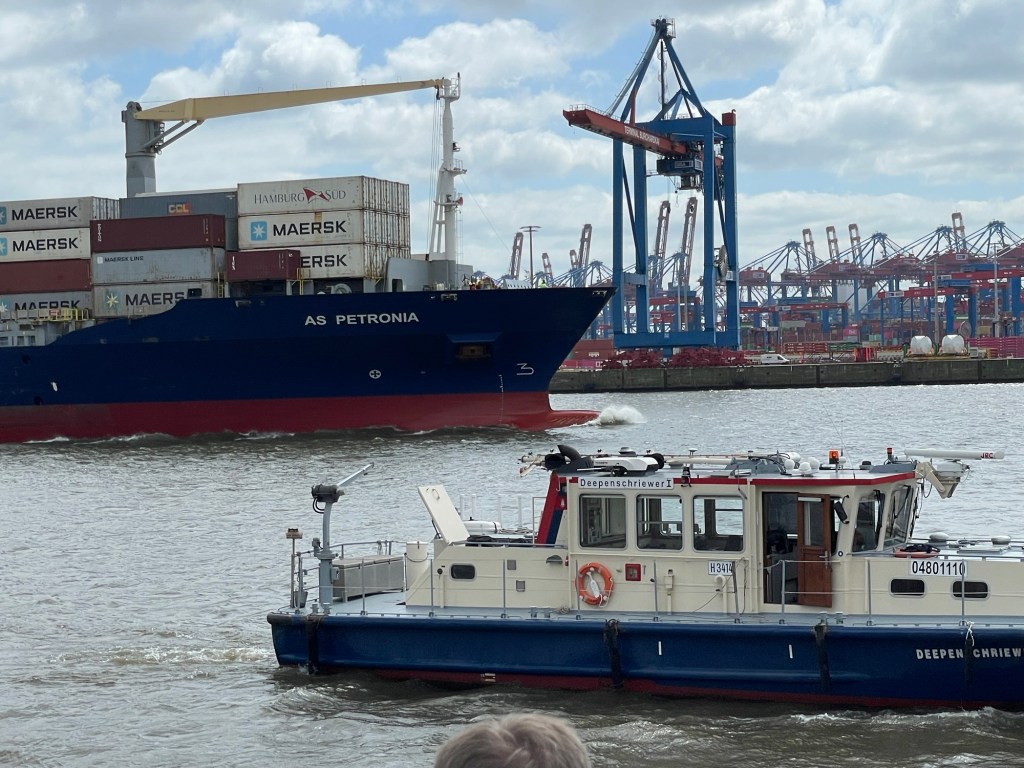
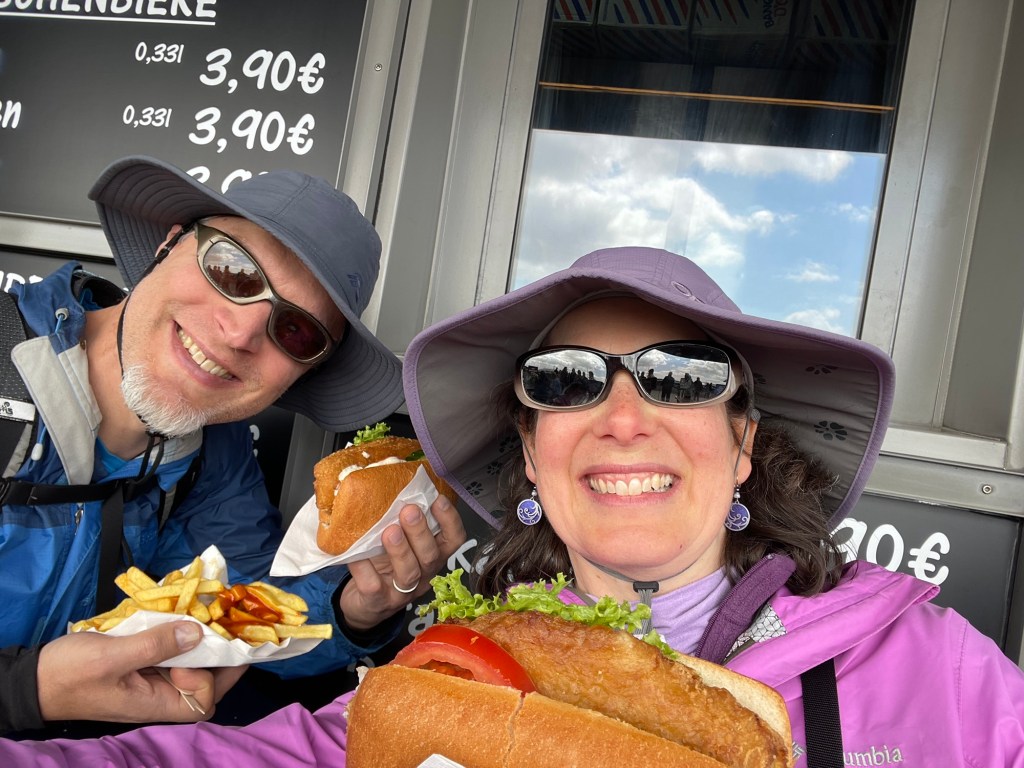
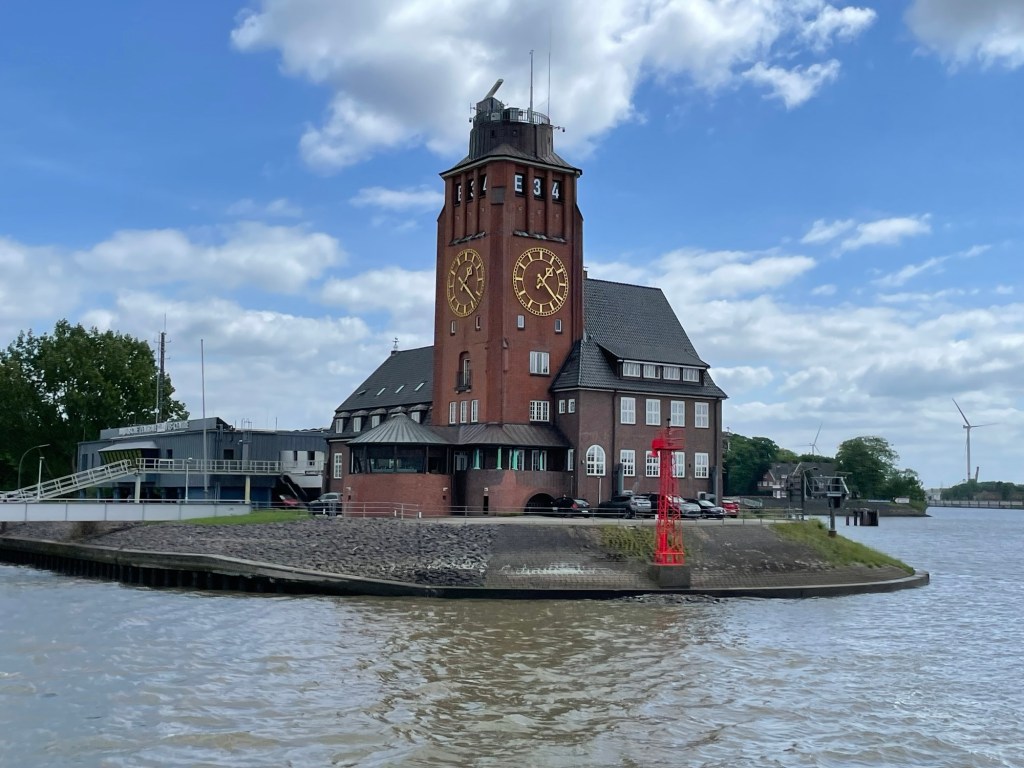
Heading back to the main part of the city, we were in a little bit less of a hurry so we opted to take the ferry and sit on the top deck, since the weather had turned for the better. Hamburg is a very busy industrial port, so we saw many cargo barges, tugboats, and even a large container ship or two going by. Upon landing we picked up lunch from a waterfront establishment that sold fish and seafood sandwiches.

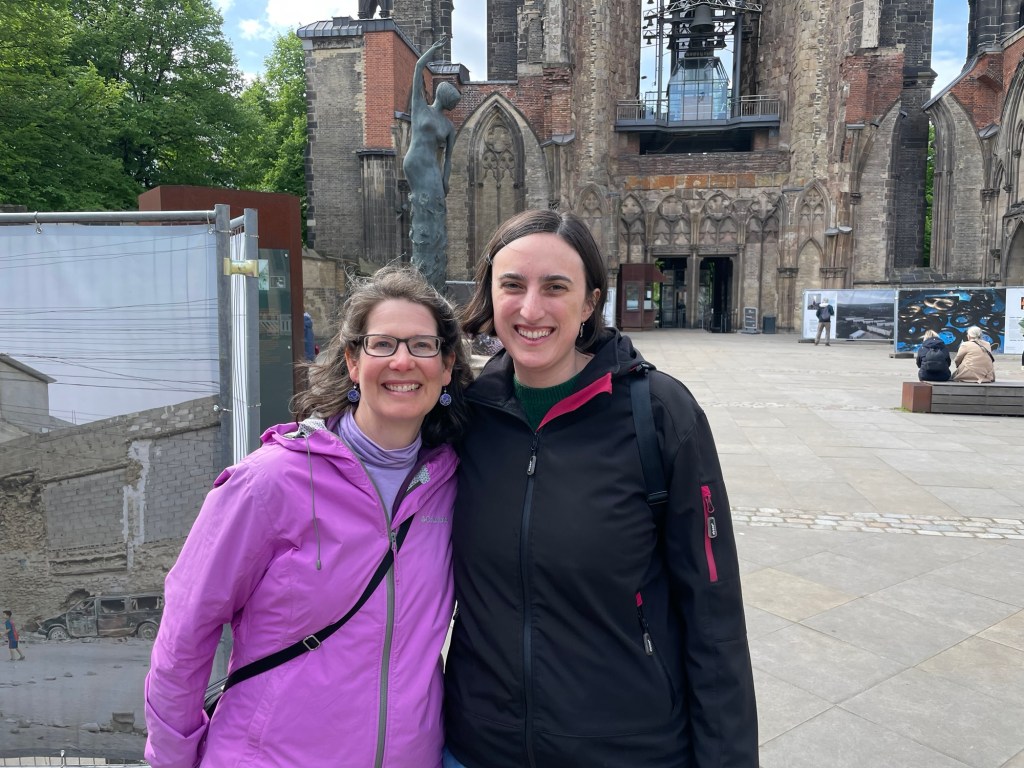
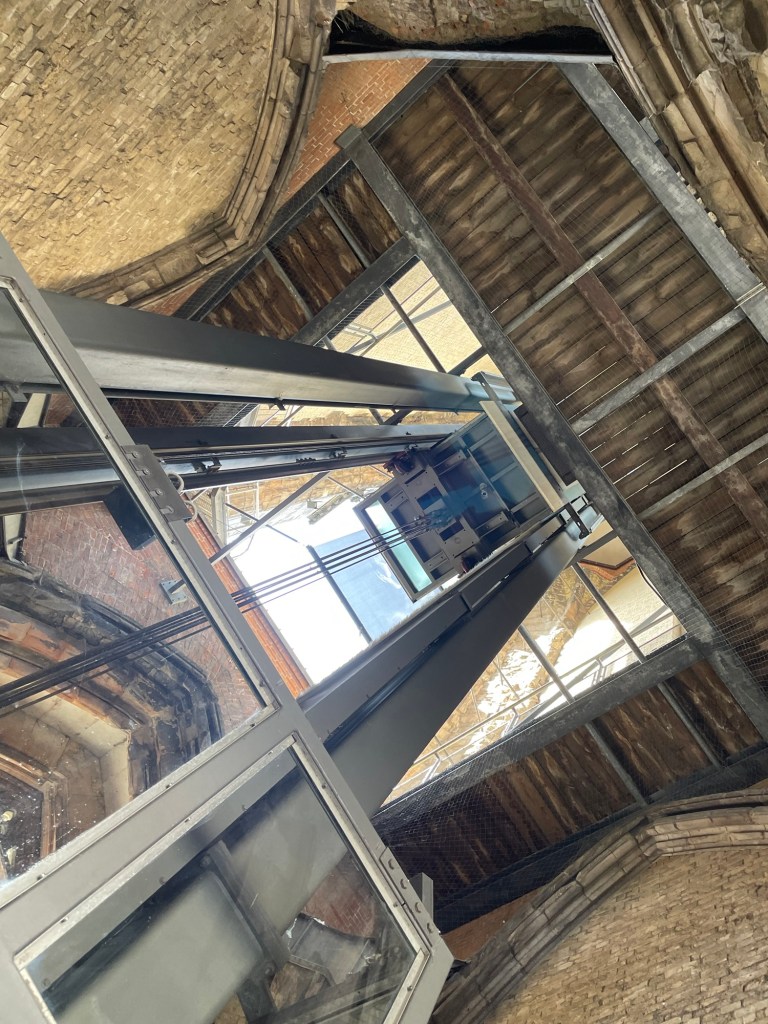
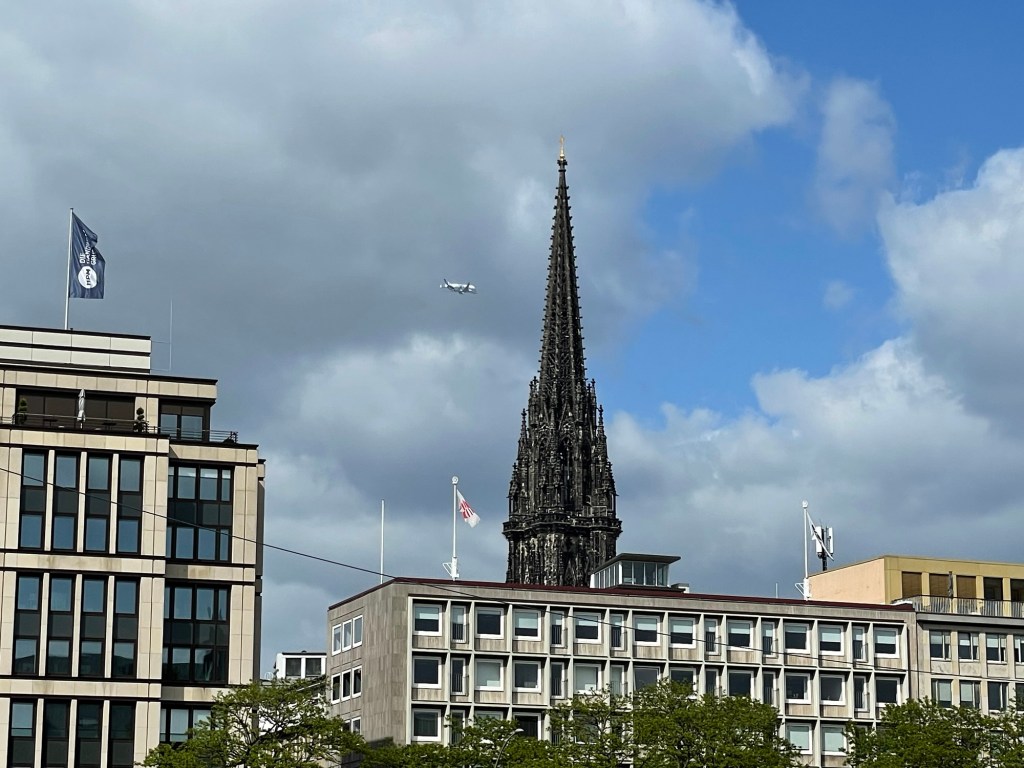
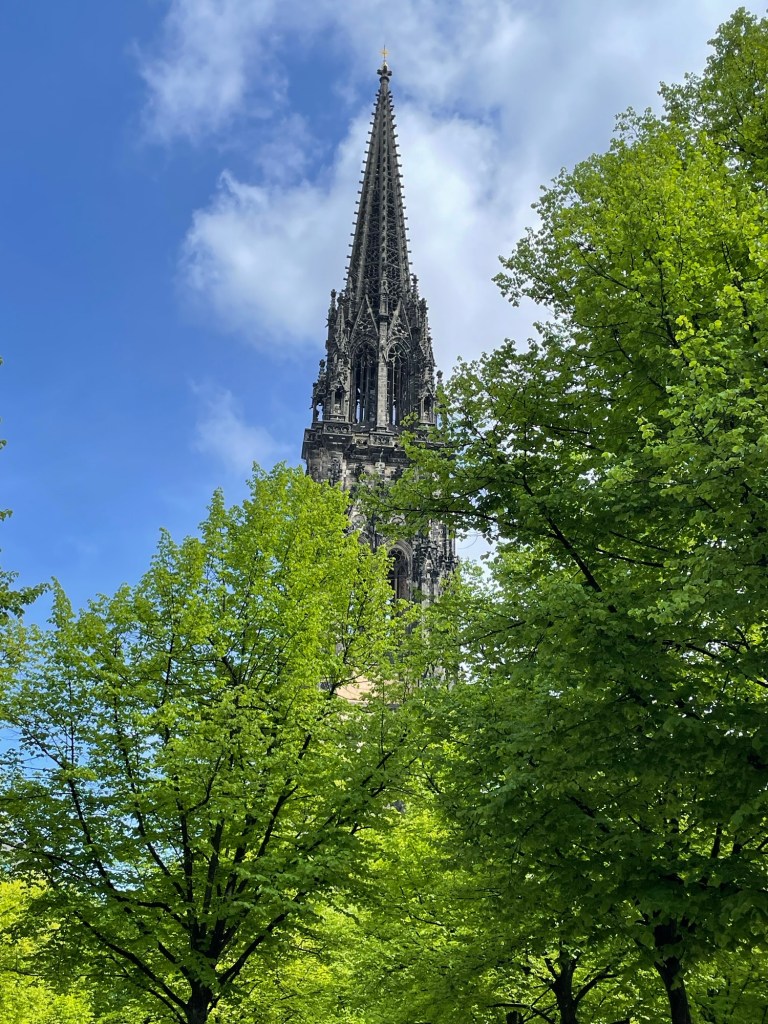
From the waterfront it was a short walk through the city’s canal zone to St. Nikolai’s church, where we were meeting Susannah’s former student Taylor Beall. The church was burned out during the Allied incendiary bombing raids in 1943, and has been left in ruins as a memorial to the many people killed. Its tall spire was left intact because the bomber crews used it for navigational purposes. It stands to this day still covered in soot, and a recently installed elevator takes you up to a level with views of the city. In the crypt below the former church, a small museum holds an exhibit about the bombing and its aftermath, which killed tens of thousands (and was seen as a response to earlier German bombing campaigns during the Blitz).
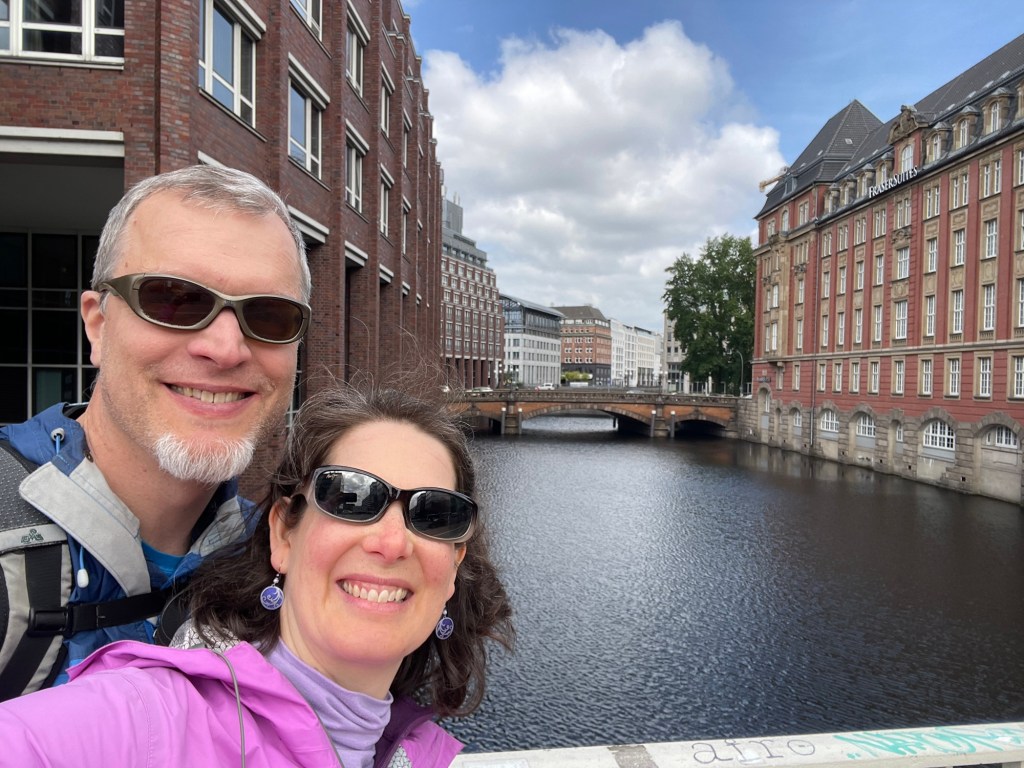
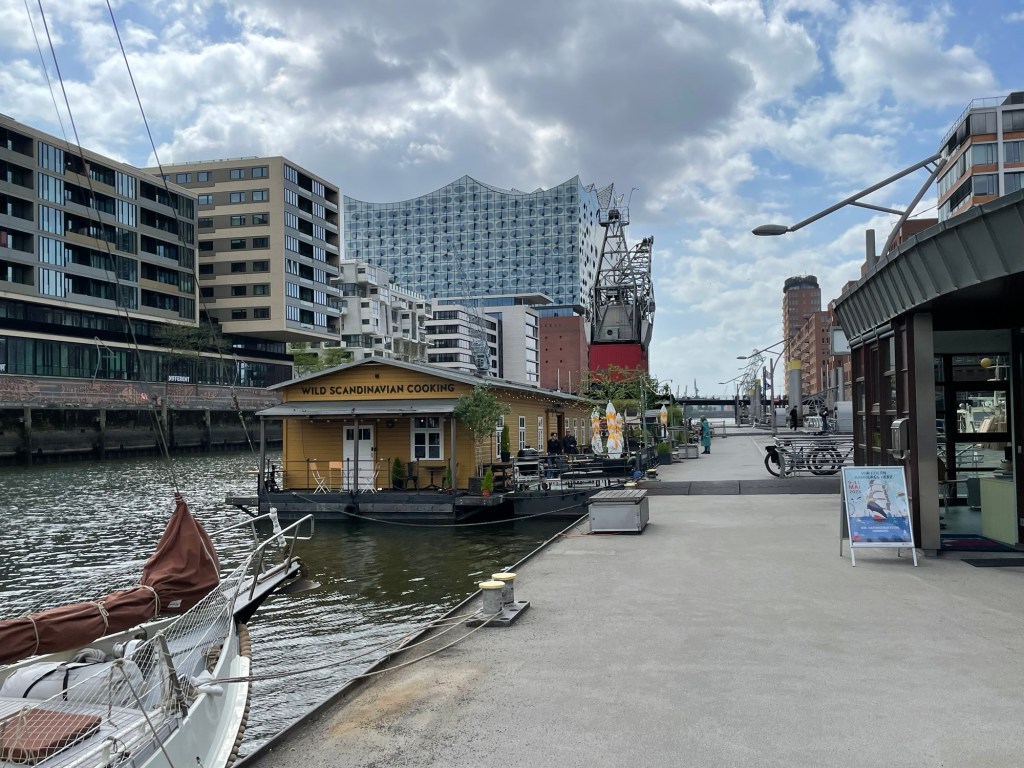
The canal district is prone to flooding, whenever a storm surge from the North Sea combines with high flow in the Elbe river. Knowing this, the lowest levels are used for car parks and other functions that can be temporarily suspended. The walkways that connect across the canals have multiple levels so that the buildings will still be connected even when the water is high. Some of the buildings overlooking the water have interesting architectural styles, cantilevering out for the best views.
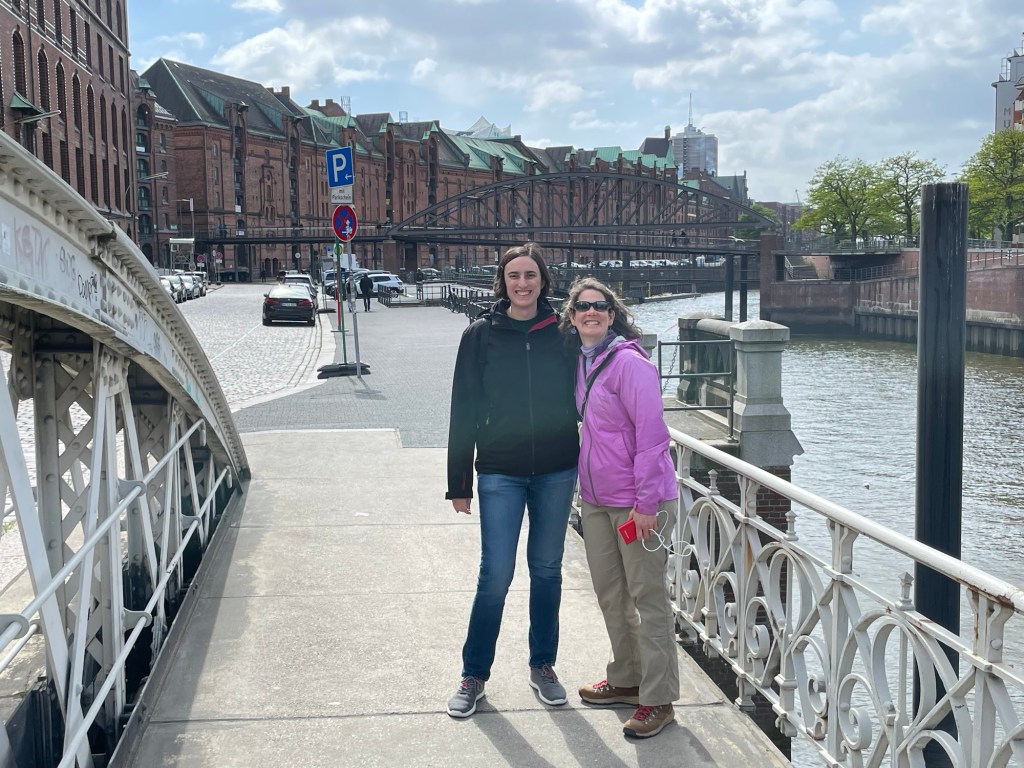
Upper walkway for high-water use
The building with the scalloped roof is the Elbphilharmonie, completed at great expense but apparently offering excellent sound quality.
During the Airbus tour they told us about the Beluga aircraft, used to ferry normal airplane parts inside its giant bulbous enclosure. We happened to see one over the city later in the day.

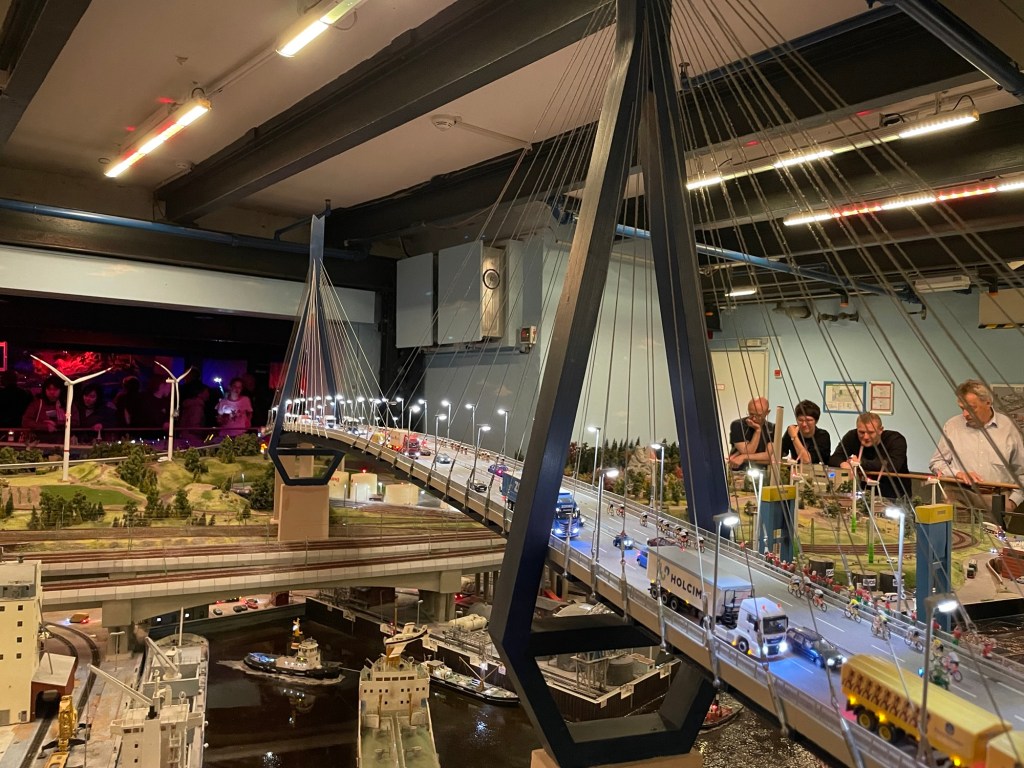
Our last sight of the day was the Miniatur Wunderland, housed in one of the old warehouses in the canal district. This museum began as a project to create the largest model railroad layout in the world. Twenty years later, it now covers multiple floors of the building and represents more than a million hours of construction work. In places, visitors could press buttons that activated certain parts of the display: operating cranes, chairlifts, drawbridges, etc. Other parts were run automatically or operated by staff from a control room.

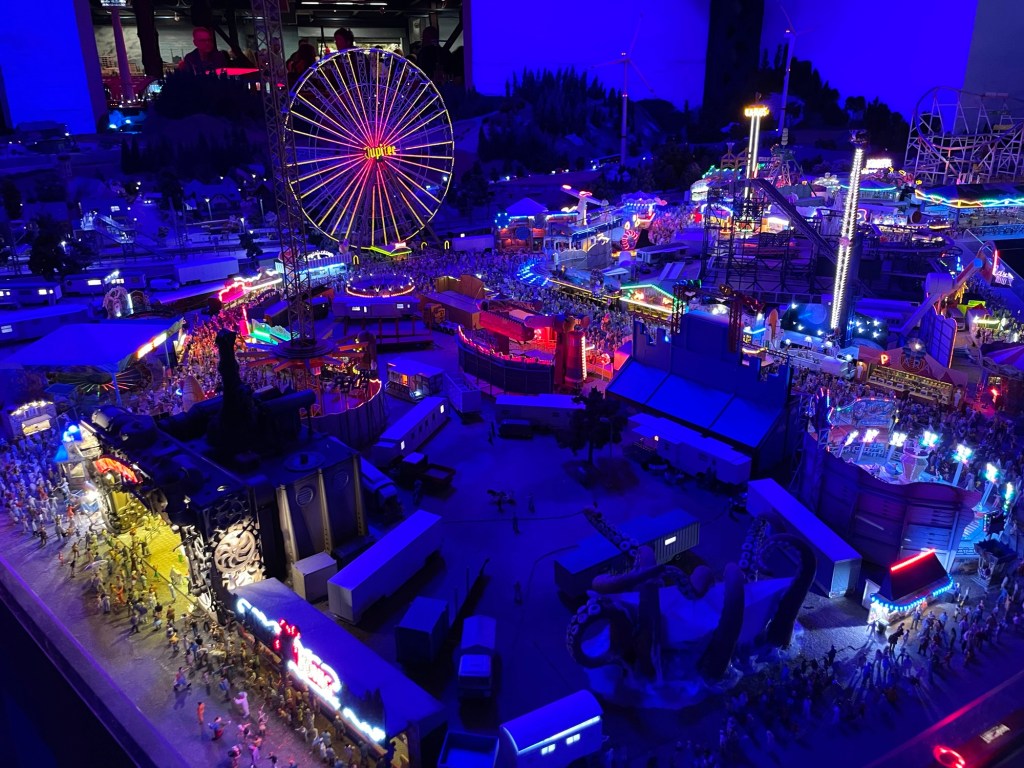
Here is the miniature version of the Elbphilharmonie. Note heads in the background for scale.
The Miniatur Wunderland world cycles from day to night every fifteen minutes. During the night, hundreds of thousands of LED lights come on.
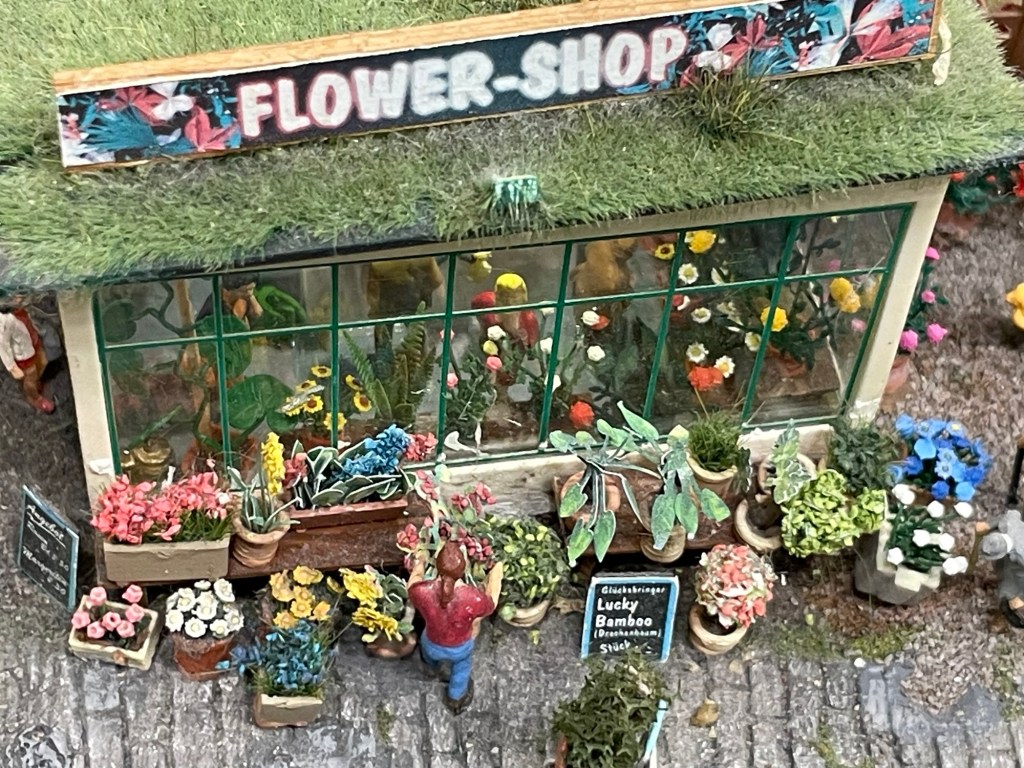
The layout was filled with tiny scenes constructed with great care.
A medieval tournament is taking place below this castle.
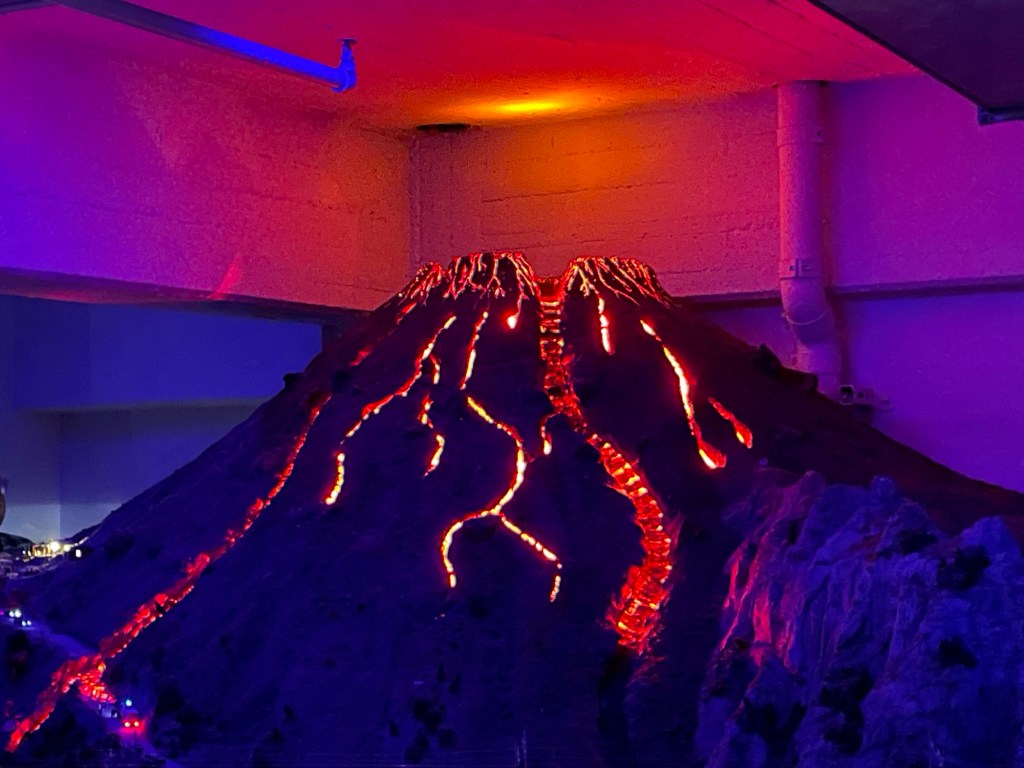
The volcano eruption is impressive, with glowing lava spreading slowly down the mountain while accompanied by a deep rumbling sound.
This marble quarrying operation was incredibly detailed.
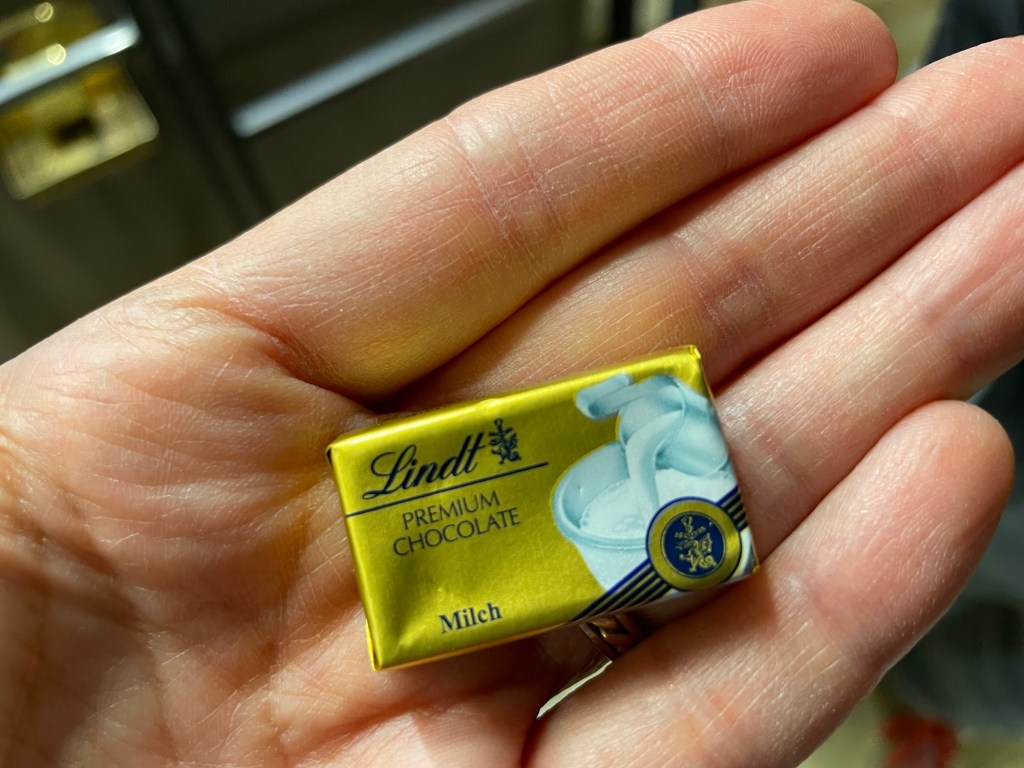
The chocolate factory…
…produces real samples – yum!
The airport layout obeys all the operational guidelines of a real airport. Planes take off and land at regular intervals. Here, one plane is coming in for a landing, while others wait in the taxi lane for their turn to take off. Just for fun, a model Millenium Falcon was one of the craft using the runway today.
Venice
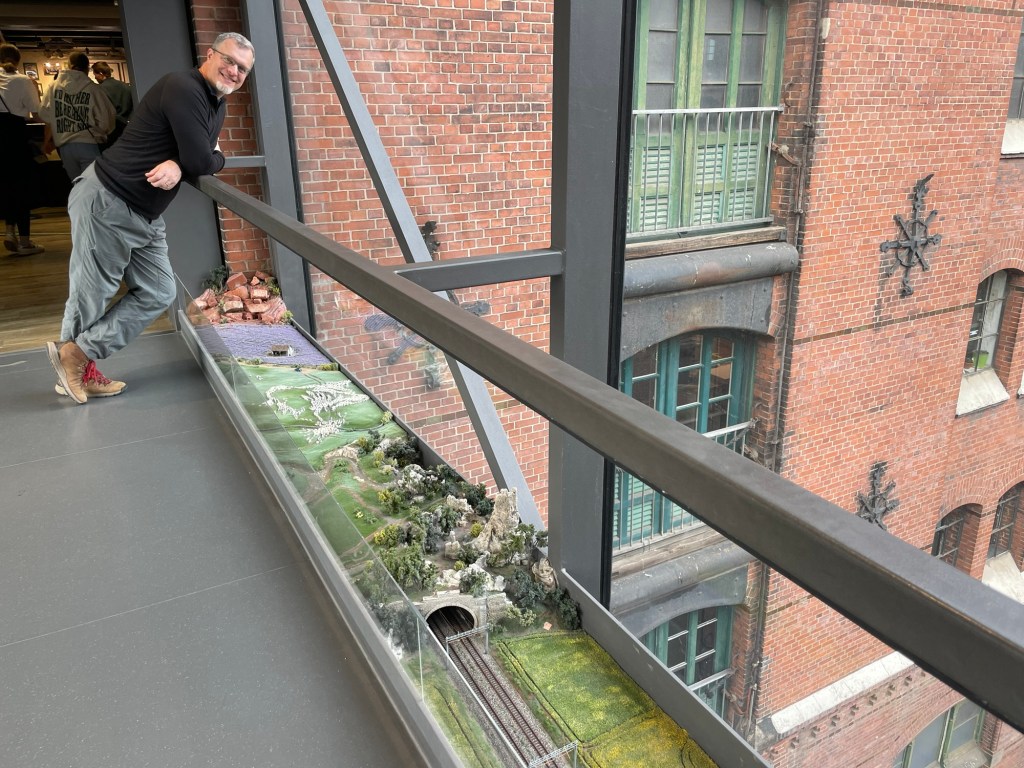
The exhibition crosses a skybridge into another neighboring building. The train layout also continues…
The displays include a number of sites previously featured in this blog: the Arctic Cathedral in Tromso, Cadillac Ranch in Texas, Mt. Rushmore in South Dakota, and Riomaggiore in Italy.
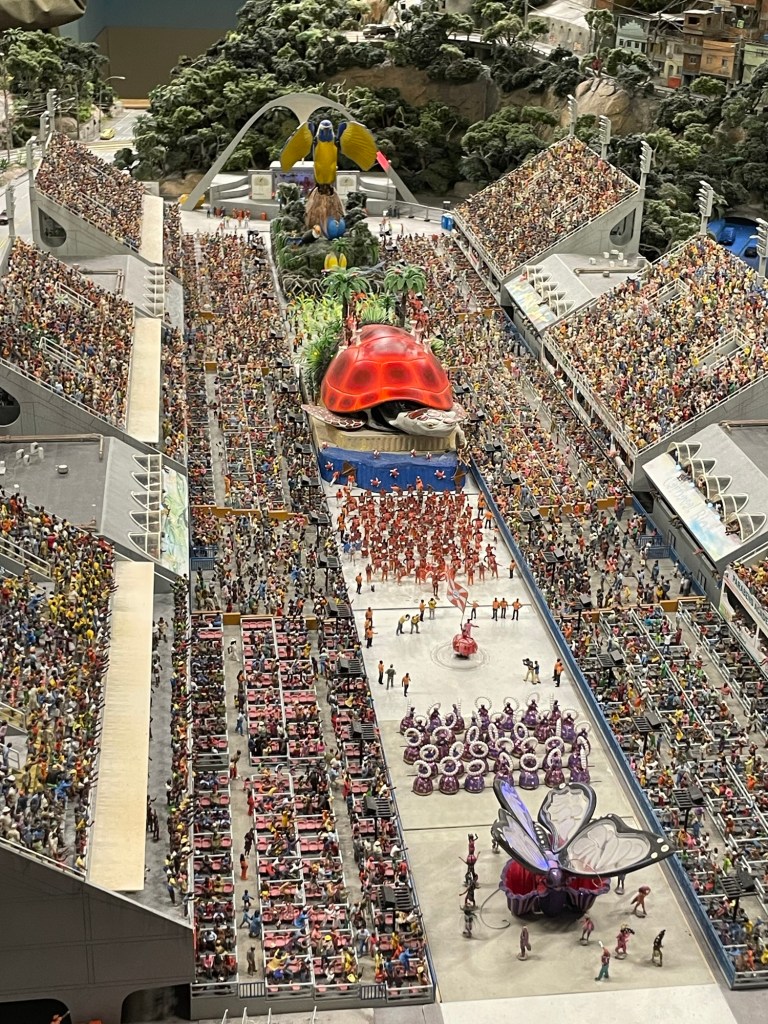
This animated scene from Carnival in Rio was truly amazing.
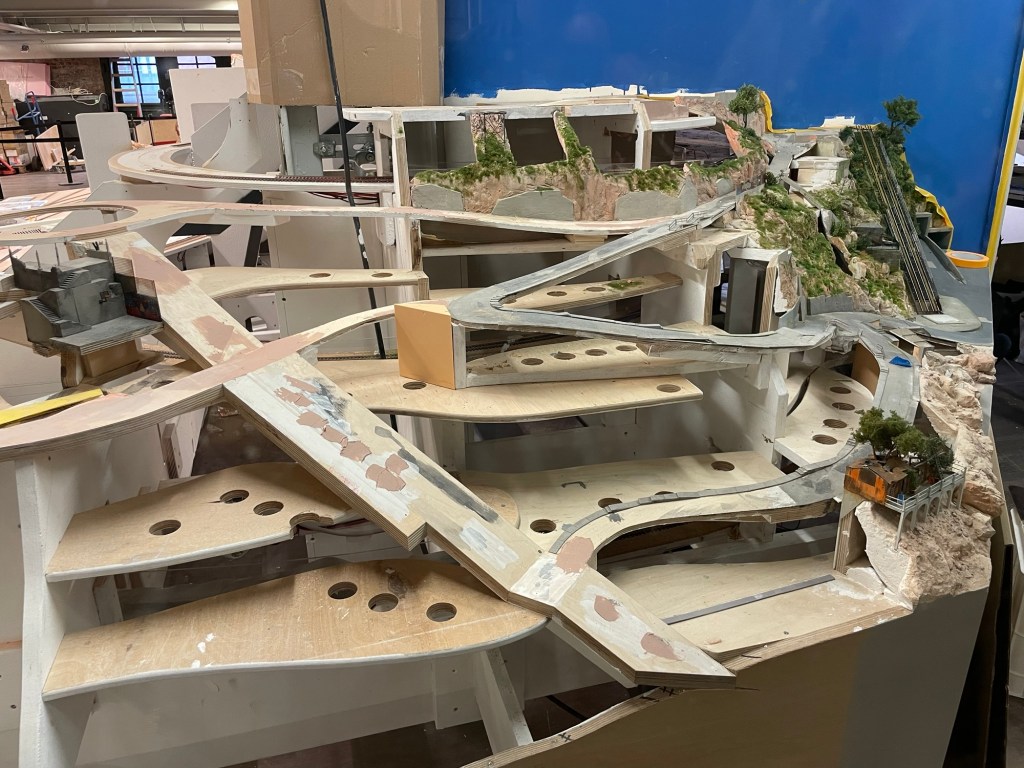
At the end, they showed a glimpse of the workshop where they are building future additions to the exhibit. We’ll have to return again some time to see what has been added!

Walls and Water Features

We said goodbye to Switzerland this morning and boarded the train to Germany. We are stopping in a few places where Susannah can meet up with former students and shadow them at their work. Our destination today was Darmstadt, a city slightly south of Frankfurt. Our hotel there is called the Moxy.

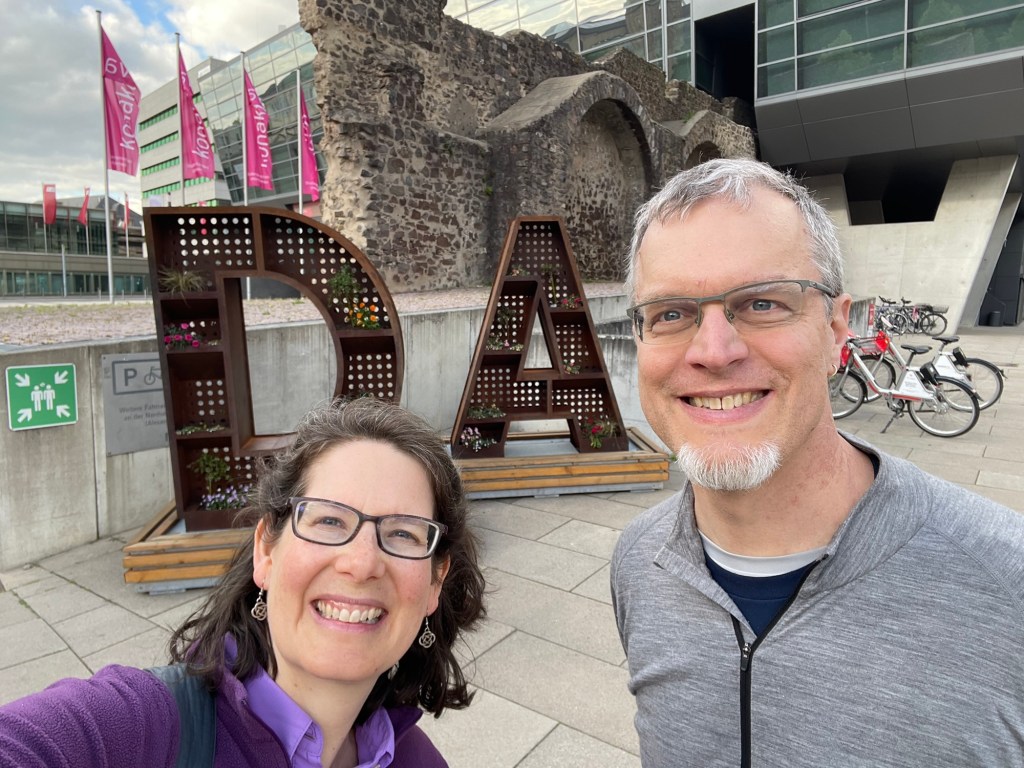
Some might accuse Darmstadt of being an unlovely place, and we might be a little hard-pressed to repudiate that claim. (Blame the Allied bombing campaign in WWII for its lack of many old buildings.) Be that as it may, we went for a walk after arriving in the late afternoon and managed to discover a few interesting and even charming features.

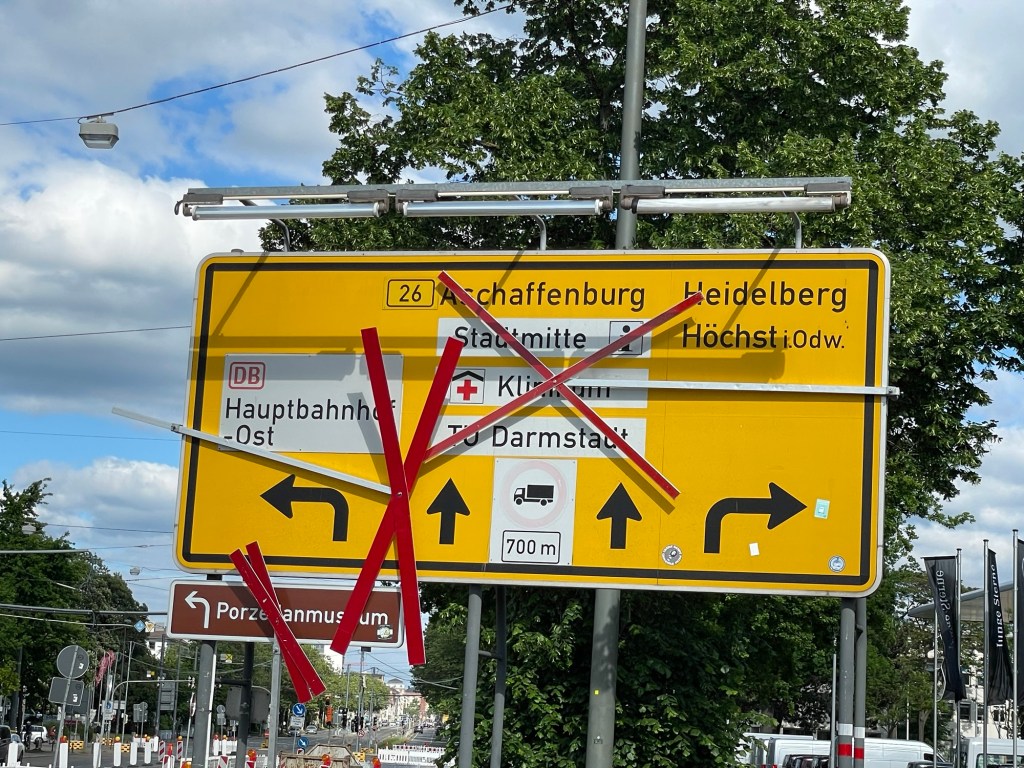
While this road is under construction, apparently it is important to keep the information on signage up to date.
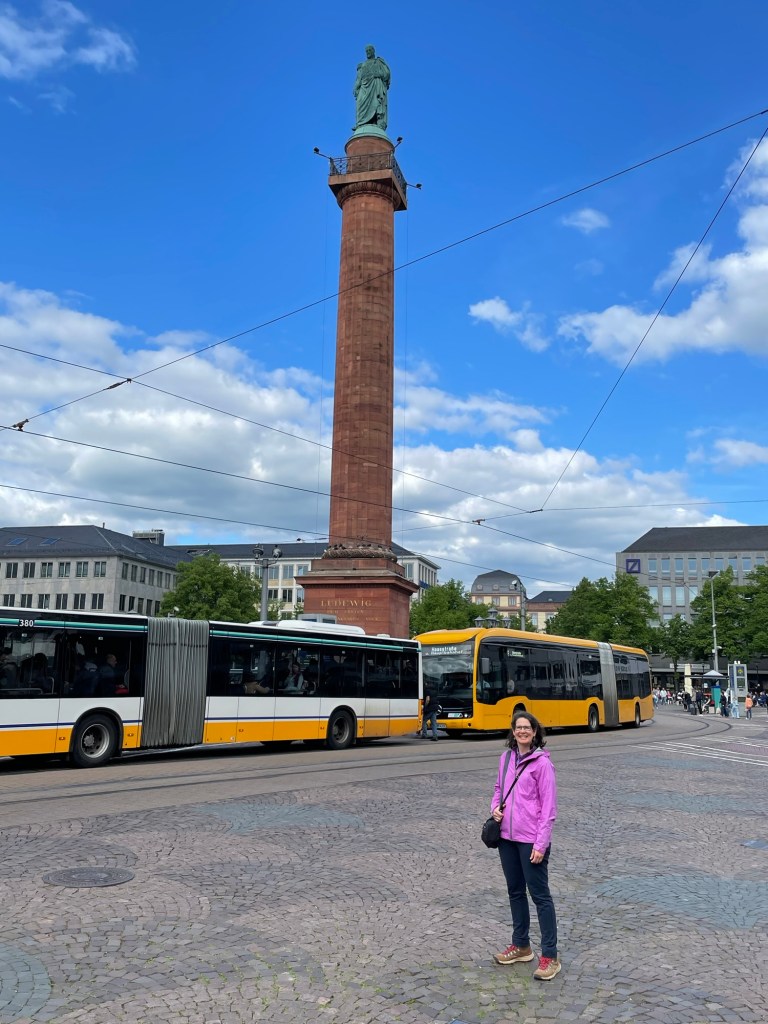
A pillar erected to honor Ludwig the First, Grand Duke of Hesse-Darmstadt, ostensibly as a tribute from his loyal subjects

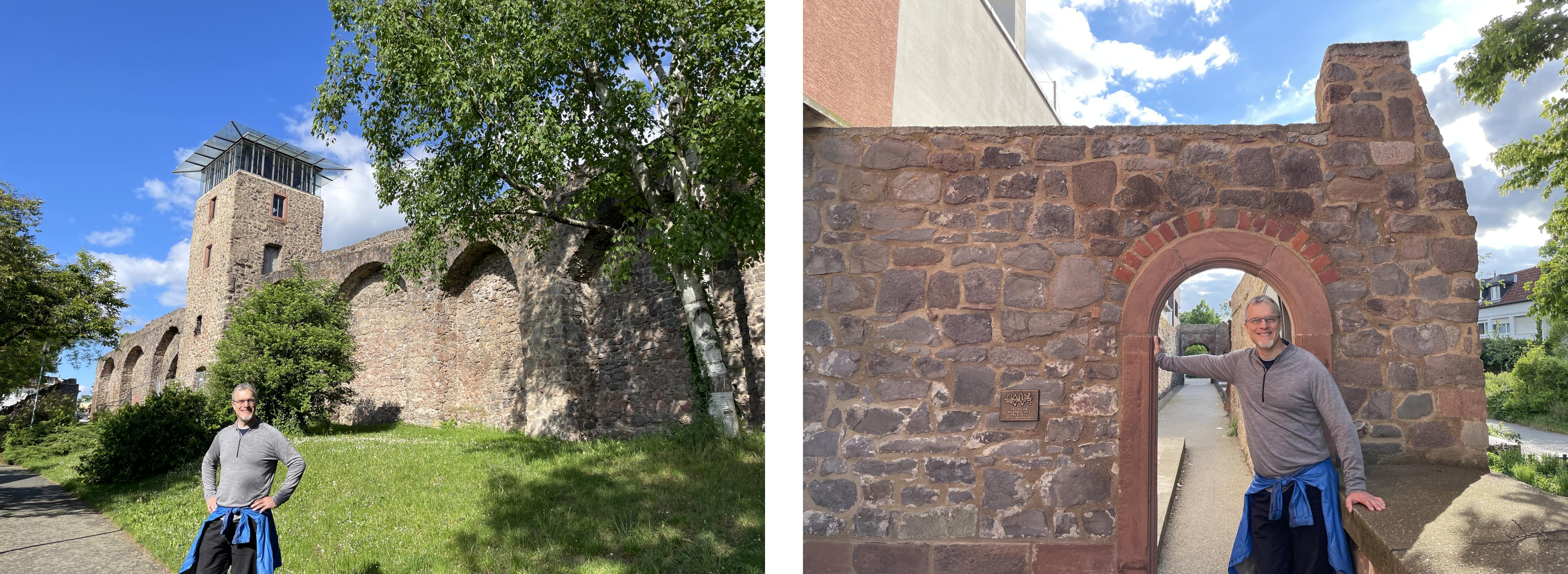
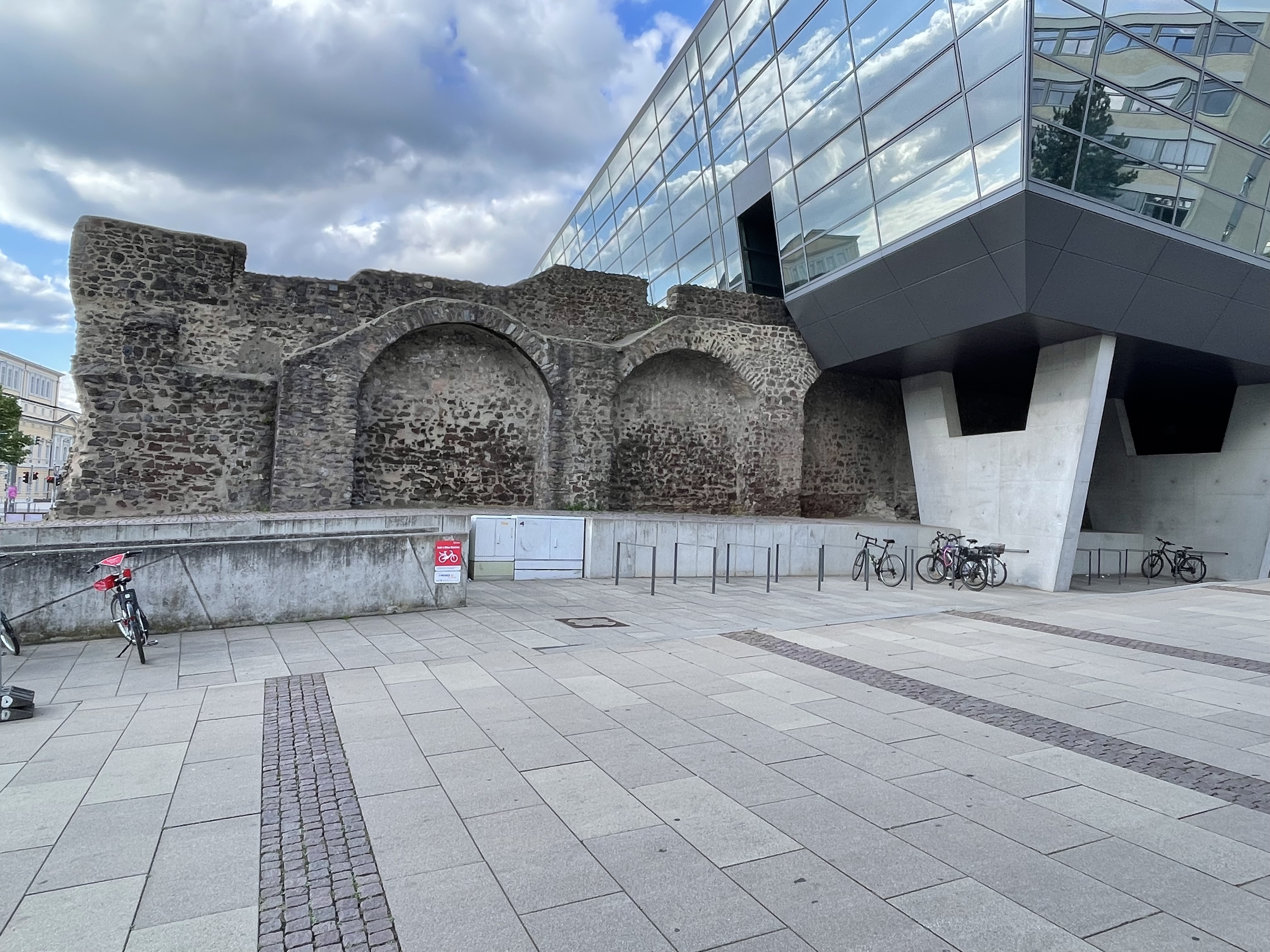
We were pleased to discover here and there some remnants of the old city walls that still survive despite the devastation of war. The locals clearly value them as well, since they designed a whole building to accommodate one such relic.

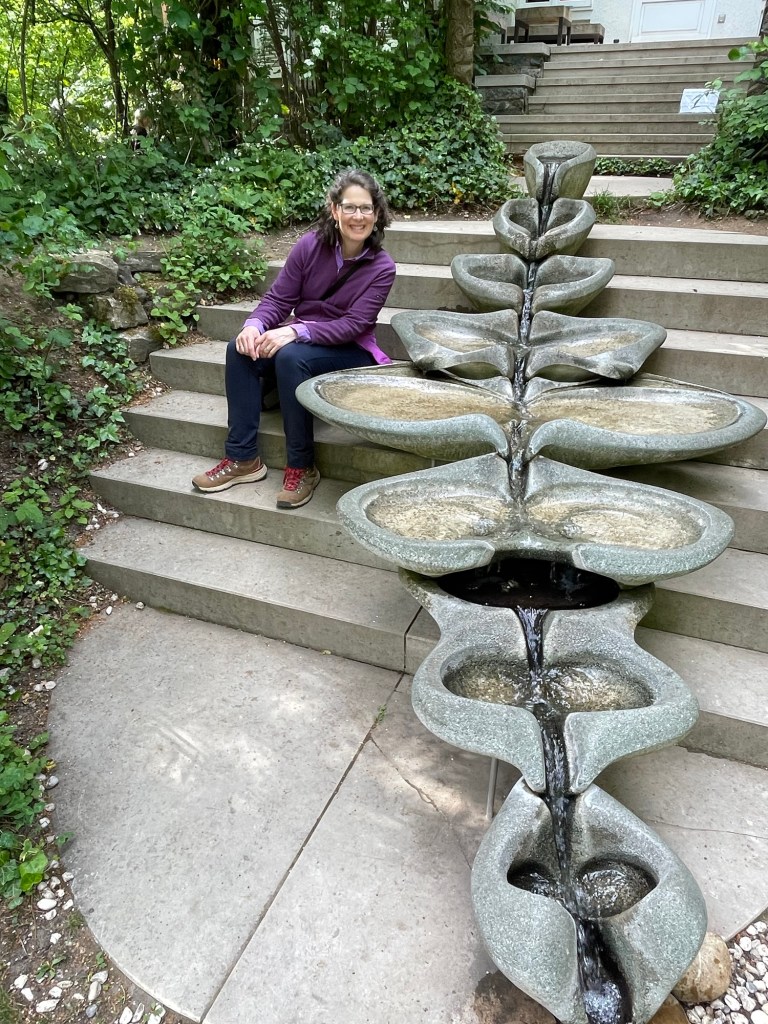
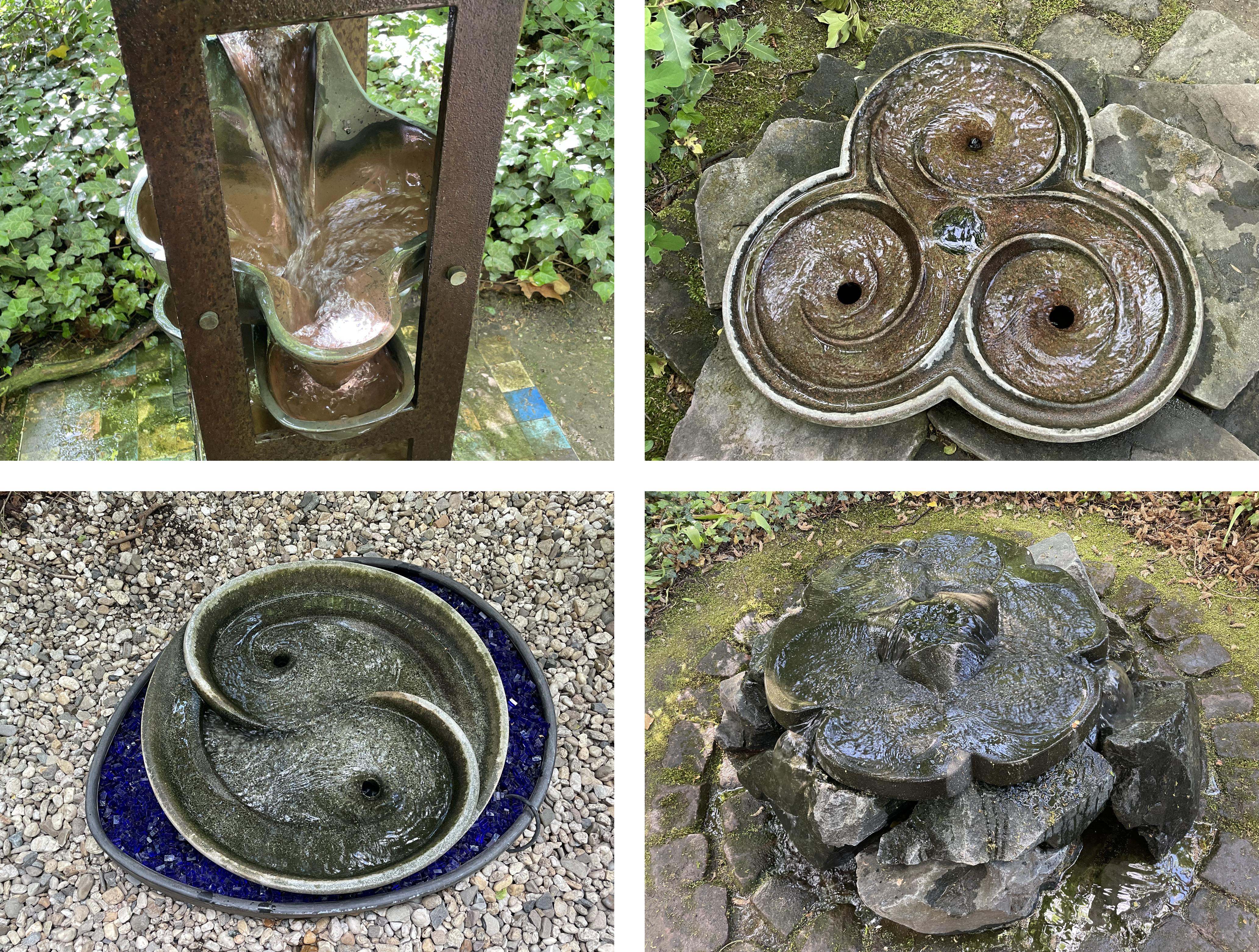
We also discovered a small but lovely garden, privately owned but open to the public, with a warren of cozily meandering paths punctuated by interesting and quirky sculptures. Many of these featured a theme of swirling water, and thus the whole place was called the Vortex Garden.

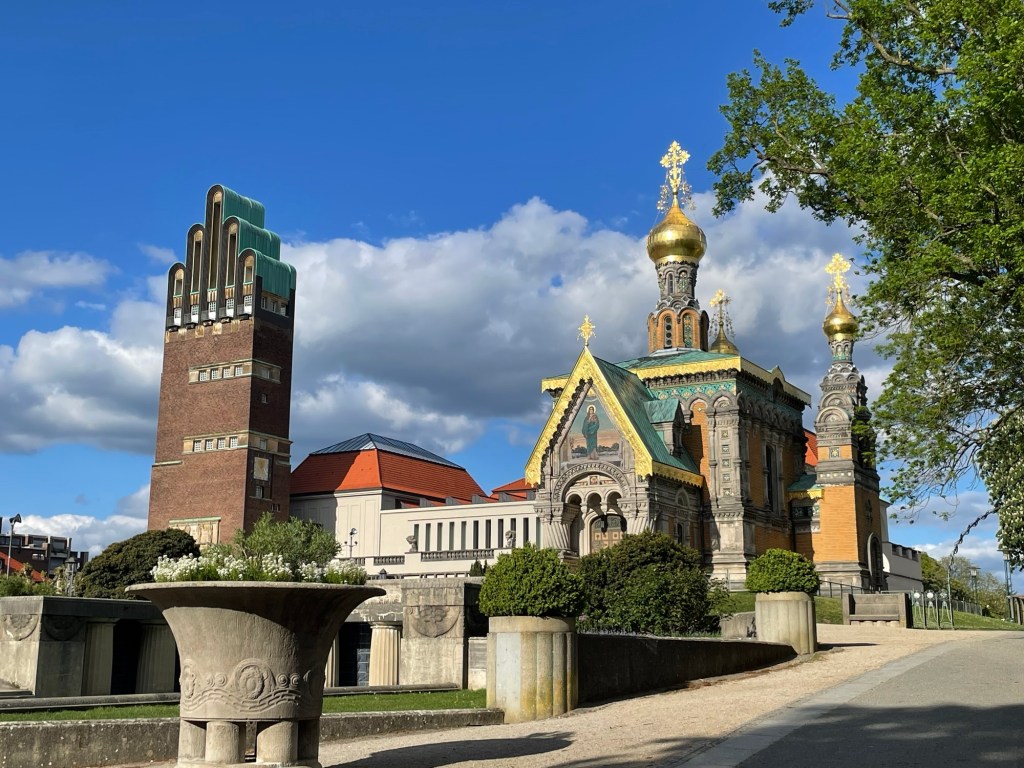
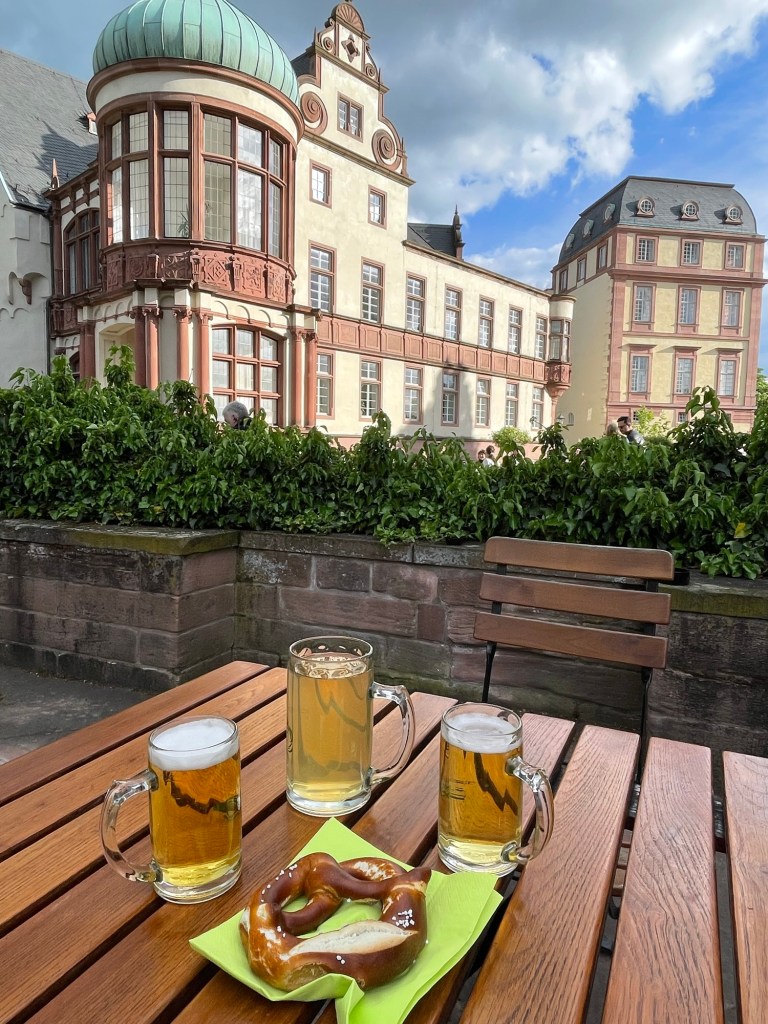
We also came across a number of interesting water features in the city outside the garden. Besides these, we saw the buildings of Mathildenhöhe and the Darmstadt Palace. The latter hosts a pleasant beer garden on its grounds, where we had a fresh pretzel with a toothsome crispy crust and a few half-glasses of different beverages. Nick tried the cider, which according to local custom is mixed with sparkling water for a refreshing treat. Finally, after we had finished our exploration we went for dinner at a restaurant with a Mongolian grill, which are hard to find where we’re from. All in all, a satisfactory day!

Clockwise from top left: surprise fountain in a pedestrian underpass, public lake with swimming and diving areas, fountains in city squares
Mathildenhöhe
Beer (small steins!), cider, and pretzels in the shadow of the Darmstadt Palace
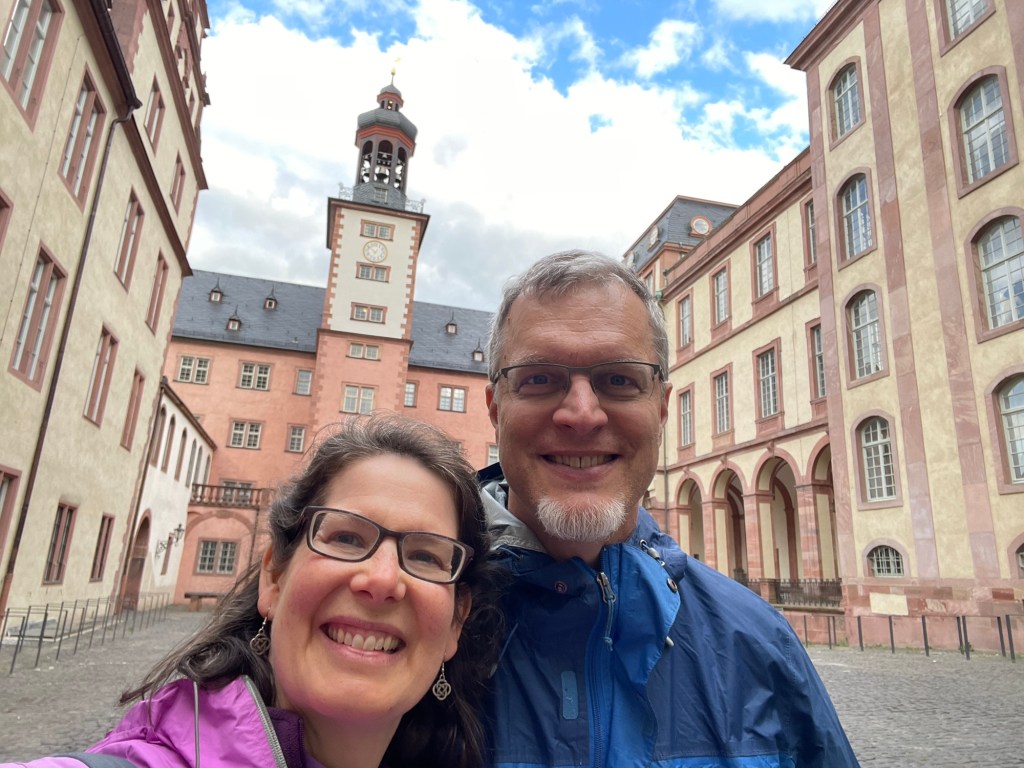
Courtyard of the Darmstadt Palace. We could imagine carriages drawing up here for a nobles’ ball.