Where the Waters Meet

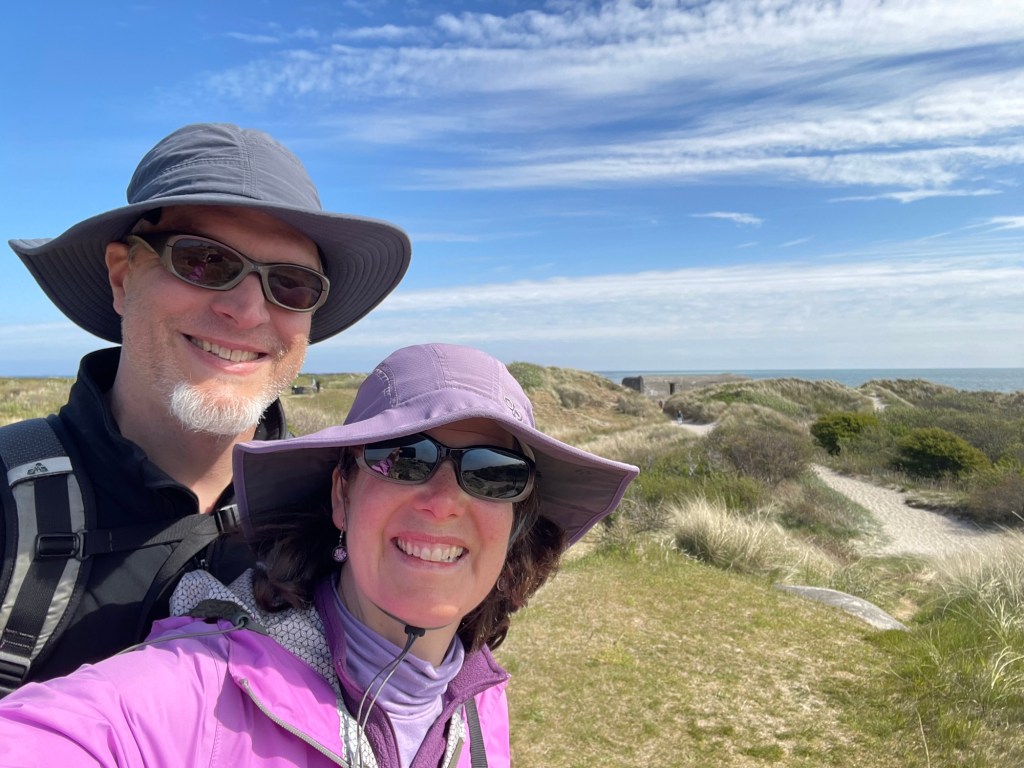
Today we journeyed north to the very tip of Jutland, where the waters of the Skagerrak on the west and those of the Kattegat to the east meet and mingle. The peninsula ends in a long sandy spit, and at the tip you can actually see the waves coming from each side and crossing each other. The tradition is to stand in the waters at the point with a foot on each side.
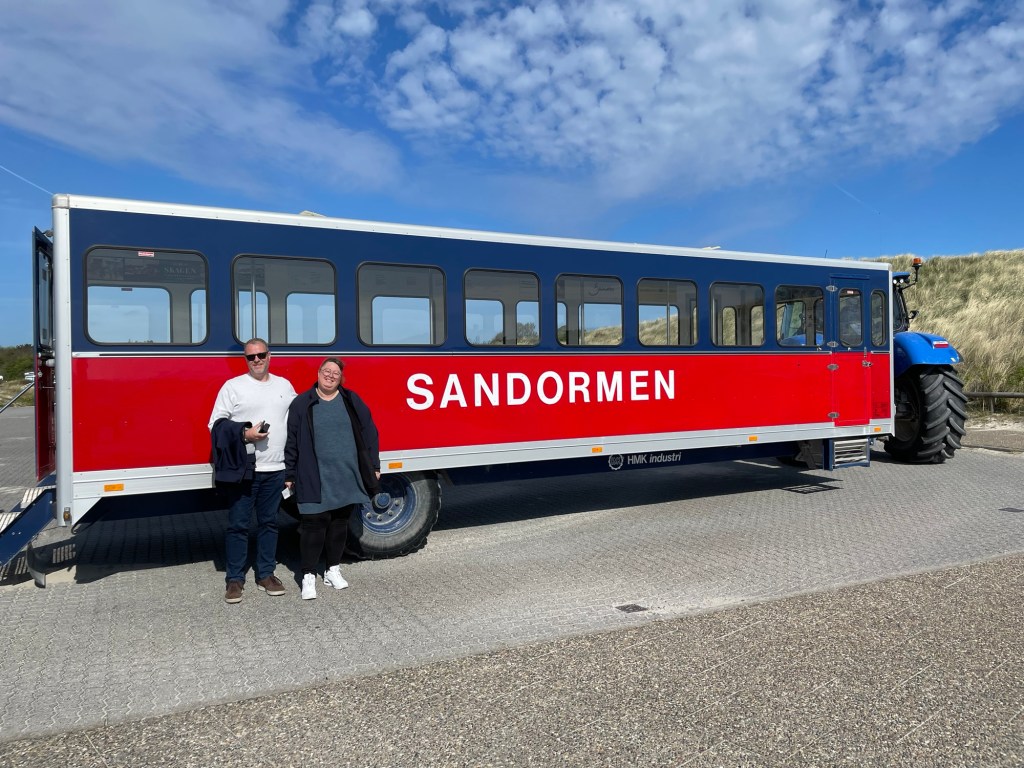
The “Sand Worm” takes visitors most of the way to the point.
The water temperature is bracing
Feet in the water
Tourists congregating at the tip
We chose to take the long walk along the beach back to the parking lot. In the distance, notice all of the ships lined up waiting to get into the harbor.
Beyond the beach there are grassy dunes, dotted with concrete bunkers left behind by the German occupation
This lighthouse warns ships away from the 4km offshore reef. In the distance you can see a cruise ship that was responsible for a lot of the tourists in the area.

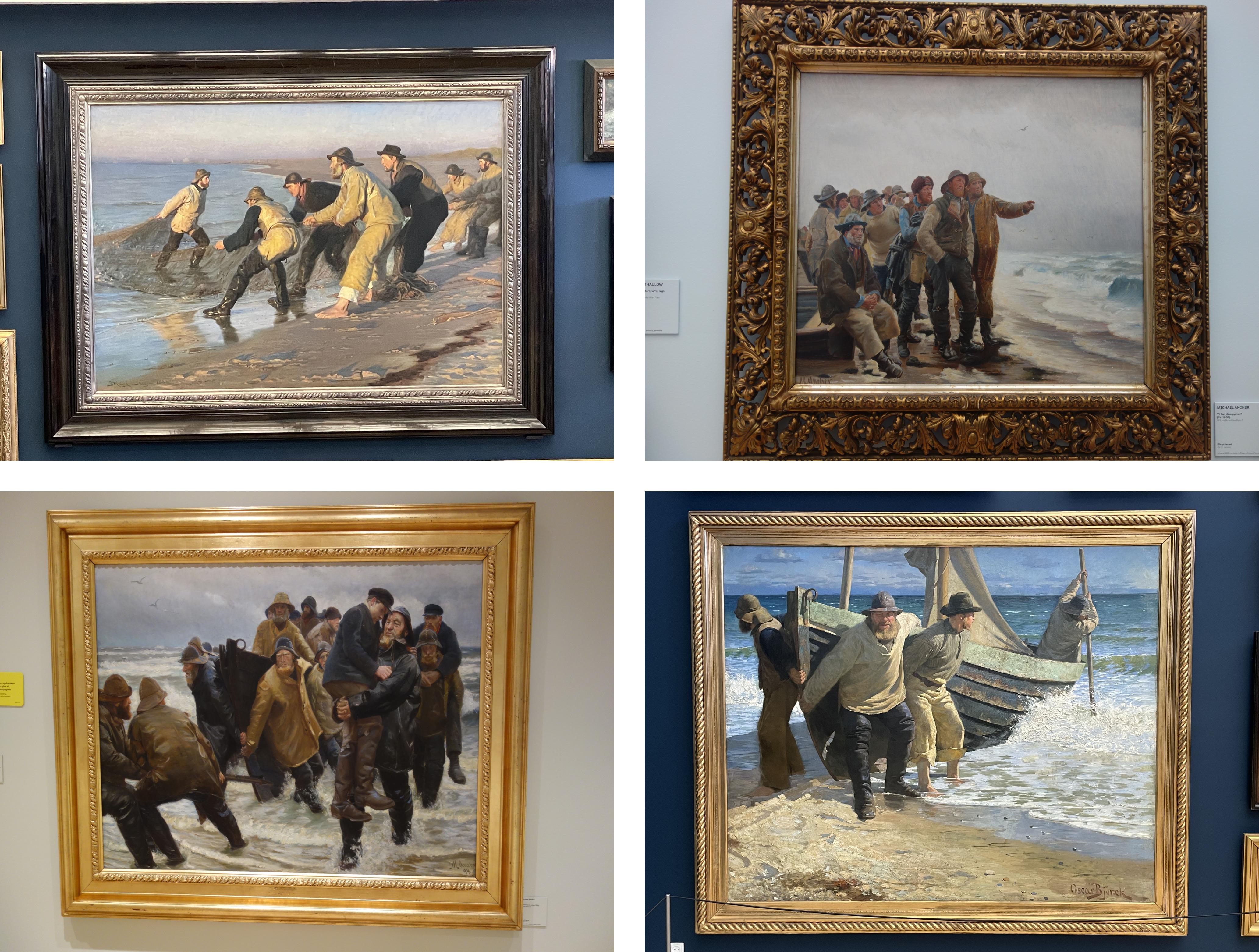
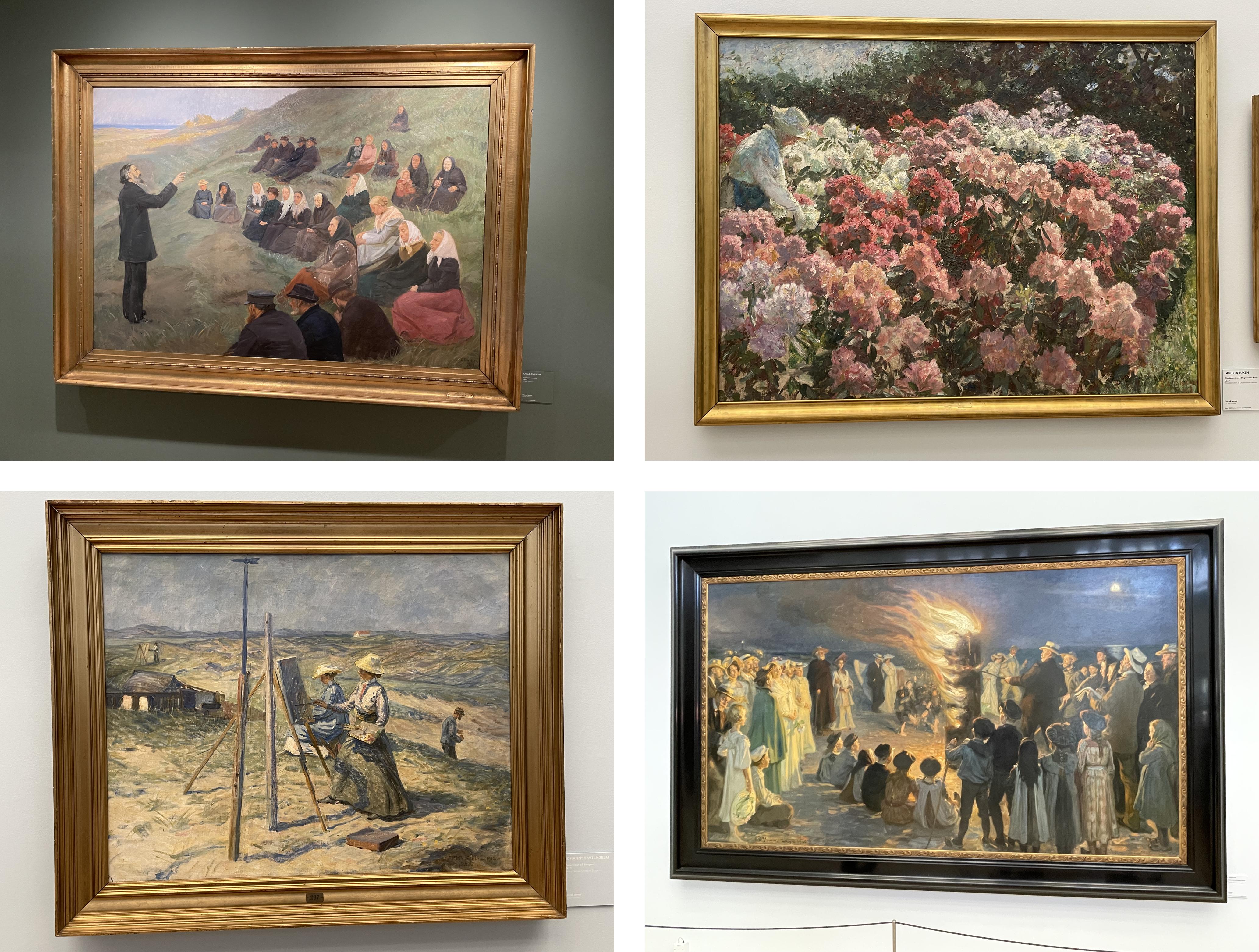
Following our walk on the beach, we headed for the nearby town of Skagen, marked by cozy yellow cottages with small gardens. A little more than a century ago the area became known as an artist colony when a small group of artists settled here. They were all friends and compatriots, included both men and women in their number, and painted many pictures of each other, the local life and scenery, plus their various pastimes. The Skagen Museum displays a large collection of their works, and the home of one artist couple has been preserved and includes many more paintings. By the end of our visit, we felt a certain familiarity with the artists and their families — seeing so many of their paintings was like viewing a family photo album, and we could pick out the distinctive features and mannerisms of many individuals.
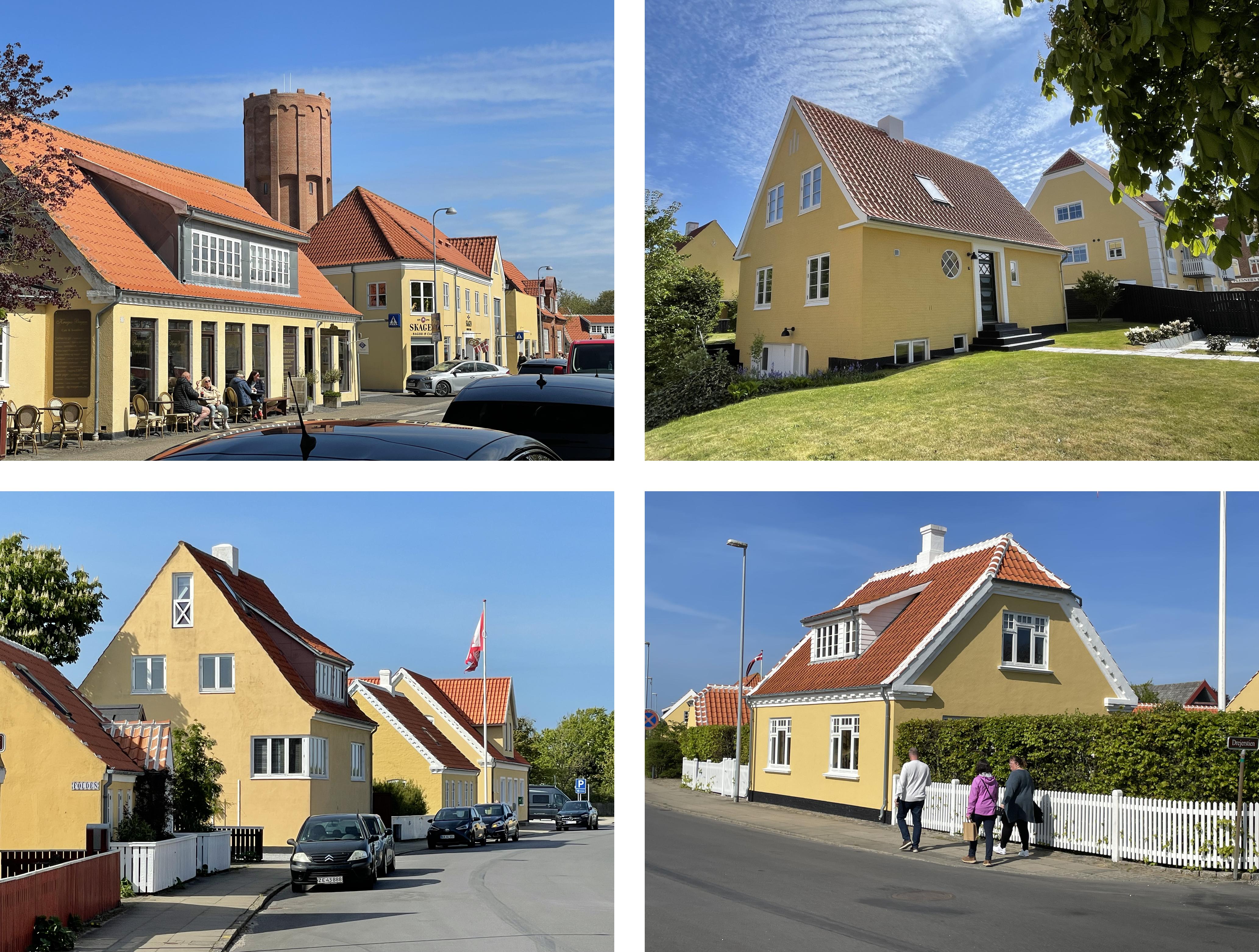
The houses are yellow due to an inexpensive ochre pigment mixed into the limewash
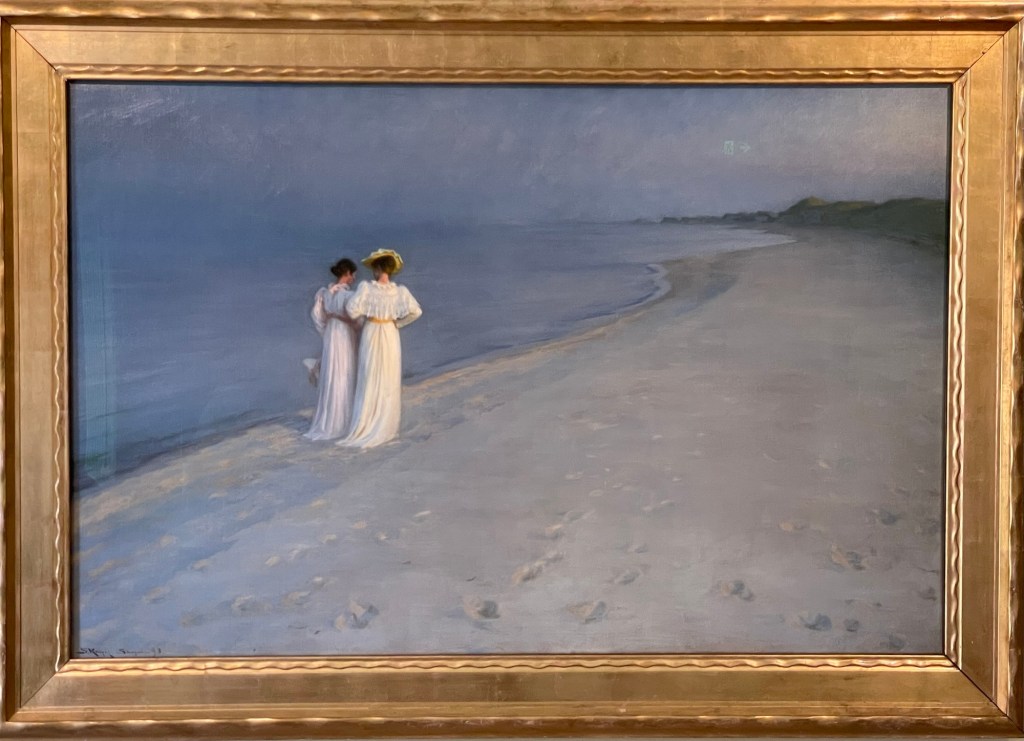
P.S. Krøyer’s painting of Anna Ancher and Marie Krøyer walking on the beach – perhaps the most famous work from the Skagen painters
Fishermen were a popular subject
Other scenes are drawn from local life and scenery

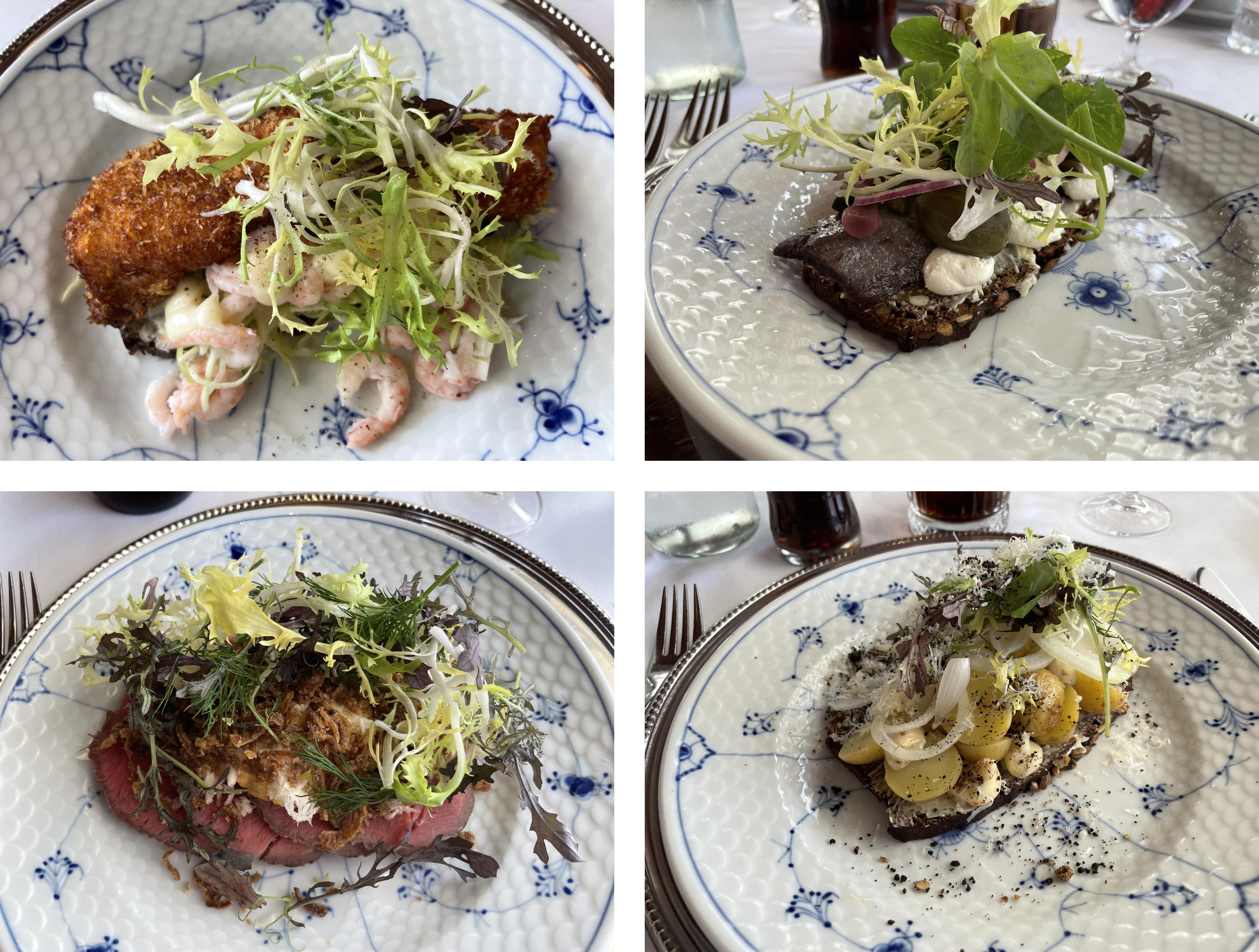
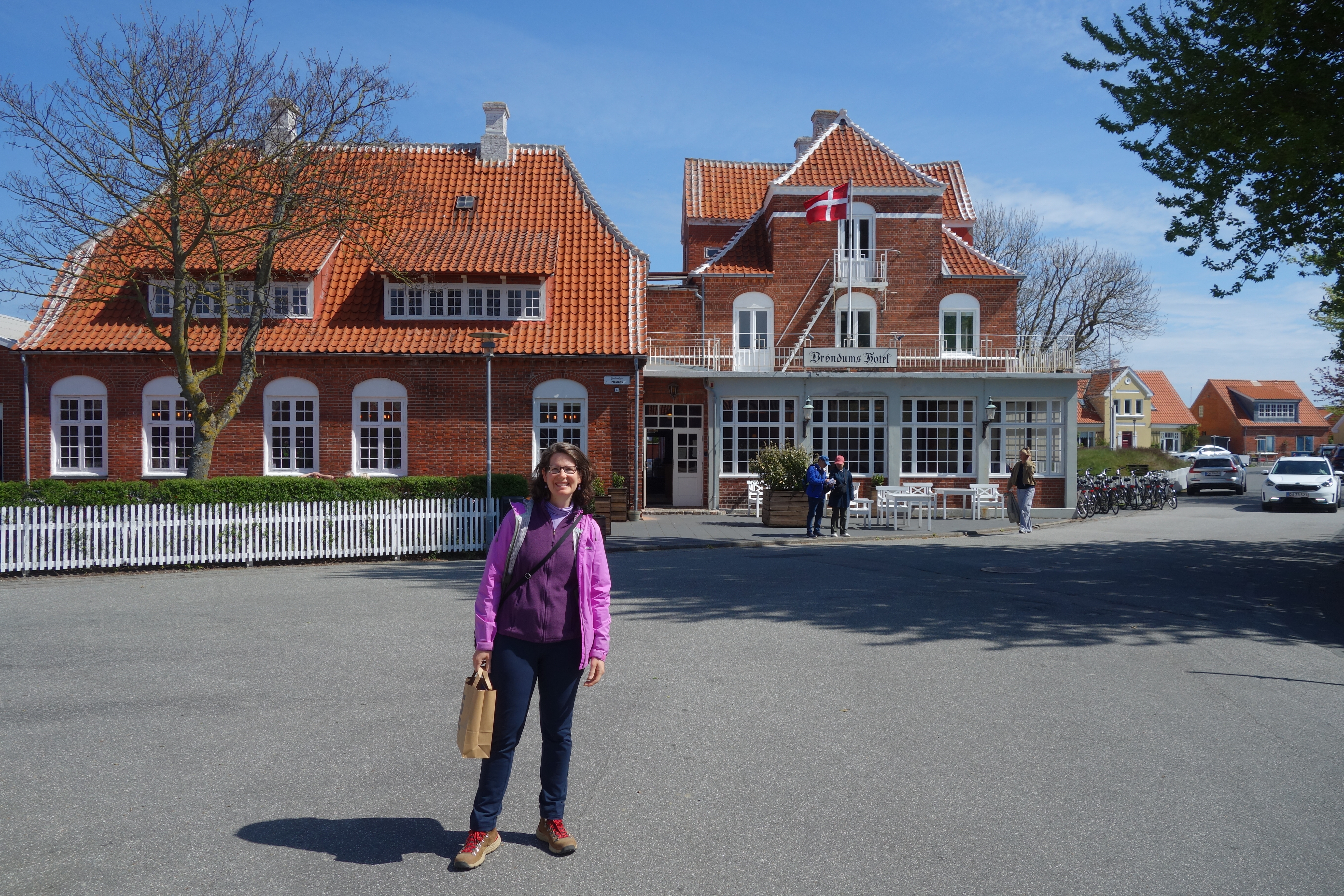
Many meetings of the Skagen painters took place in the dining room of Brøndums Hotel. To mark it as their own, the artists decorated the room with paintings and portraits inlaid within the wood paneling. In later years the original decor was preserved and transferred to the Skagen Museum so that visitors can see the room as it existed then. Meanwhile the Brøndums Hotel still stands, and it is possible to order lunch as we did in its now modernized dining room. One specialty of the house is a Danish treat: smørrebrød.
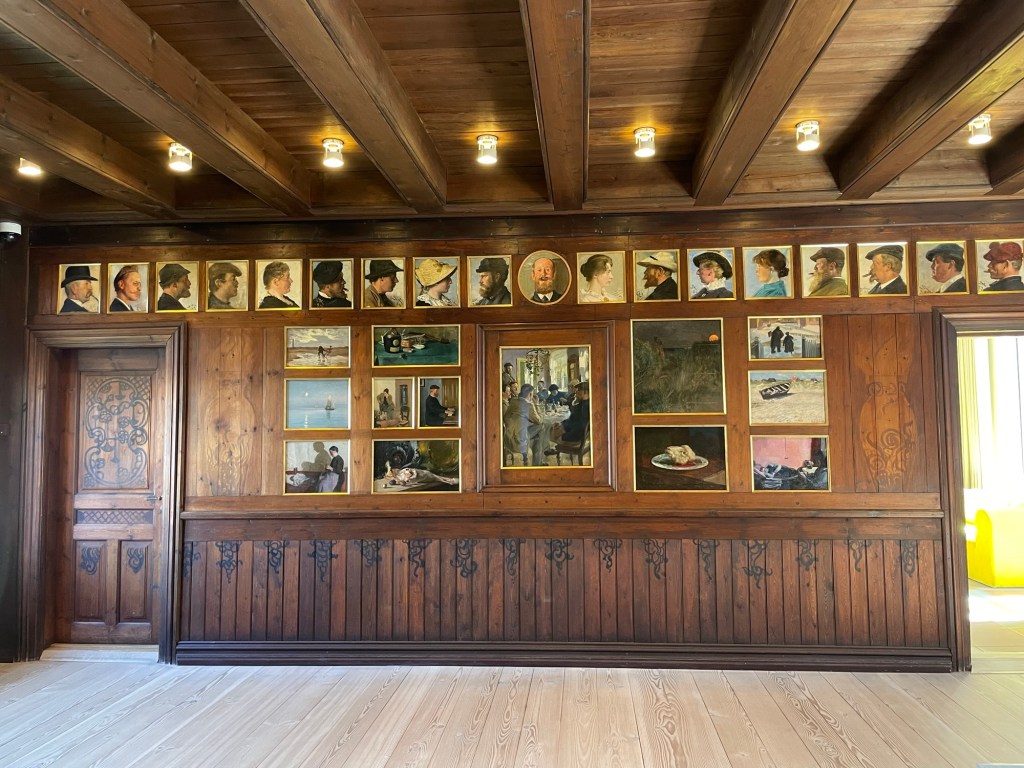
One wall of the dining room from Brøndums Hotel, as preserved at the museum
Brøndums Hotel as it looks today
Smørrebrød, essentially an open-faced sandwich with fancy toppings

Anna and Michael Ancher and their daughter Helga all painted. When her parents died, Helga closed up their house and eventually it was donated to the museum. Visitors can see the house as they left it, including their individual studios in the rear. Everyone is asked to wear fabric overshoes in order to protect the floors from damage.
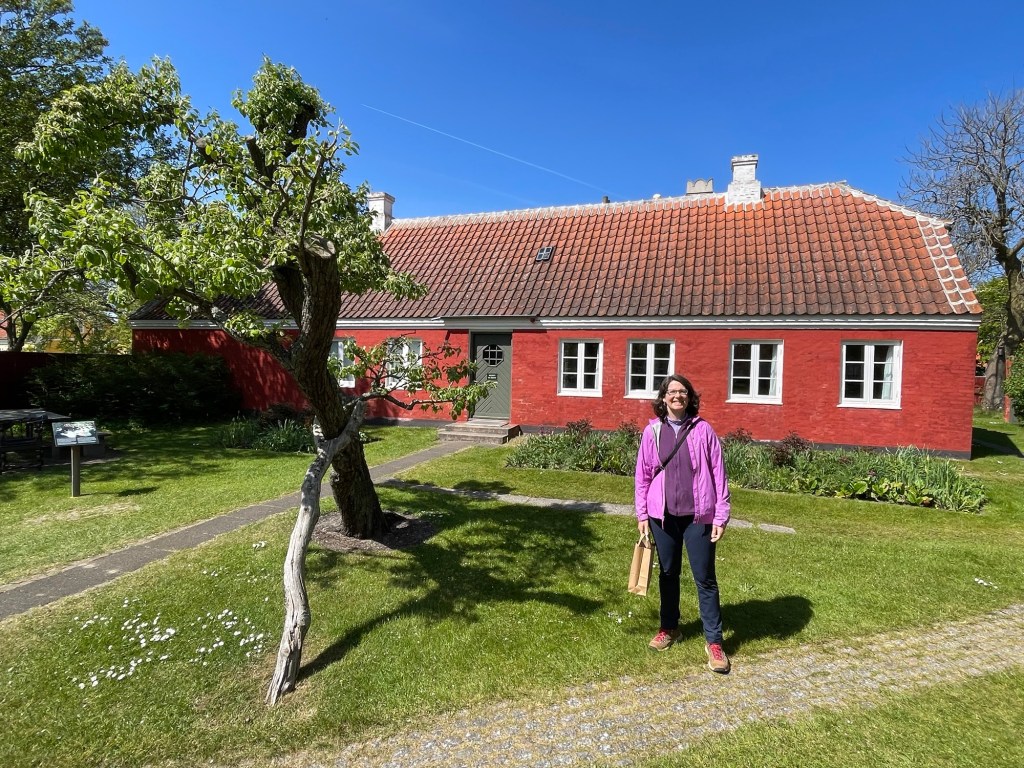
In front of the Ancher’s house
Booties!
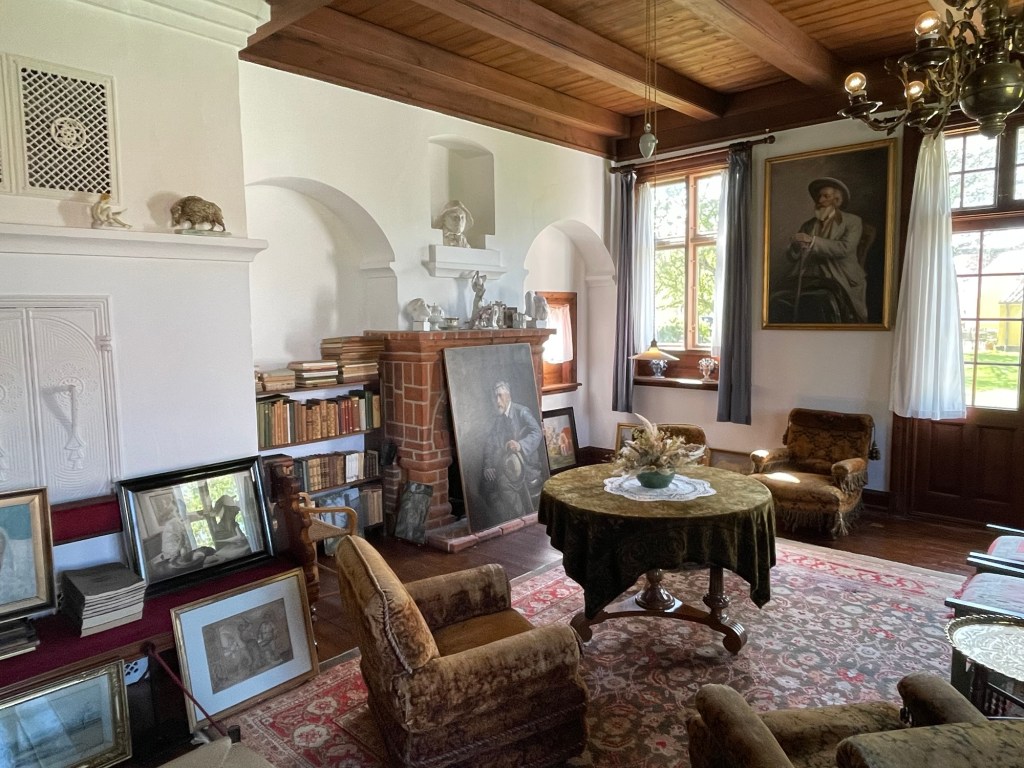
Family portraits in the parlor
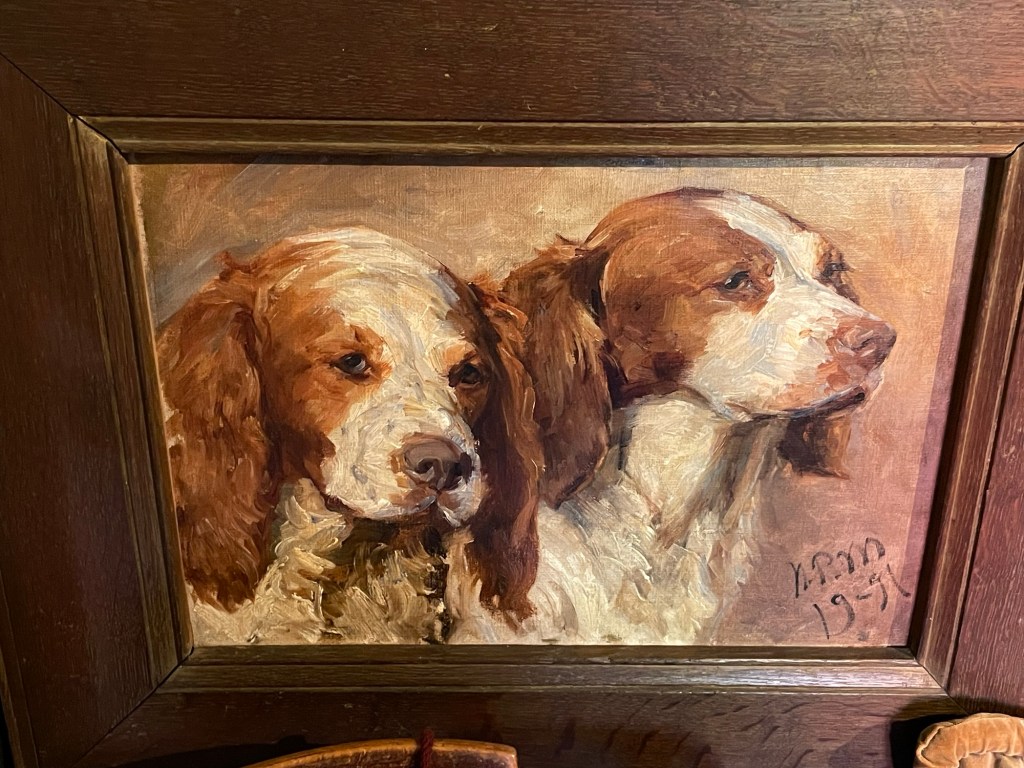
Family dogs
Michael’s studio is larger than Anna’s, but not as well lit

After getting to know the artists of Skagen, we turned our attention to features in the surrounding countryside. One curious structure that caught our eye had appeared to be a sort of trebuchet. On closer inspection it turned out to be a primitive form of lighthouse. On the end of the long arm is a metal basket, in which a fire can be built. The arm with its burning basket is then raised into the air so that it is visible to ships at sea.

The early lighthouse
Today’s ships rely on more advanced means of navigation

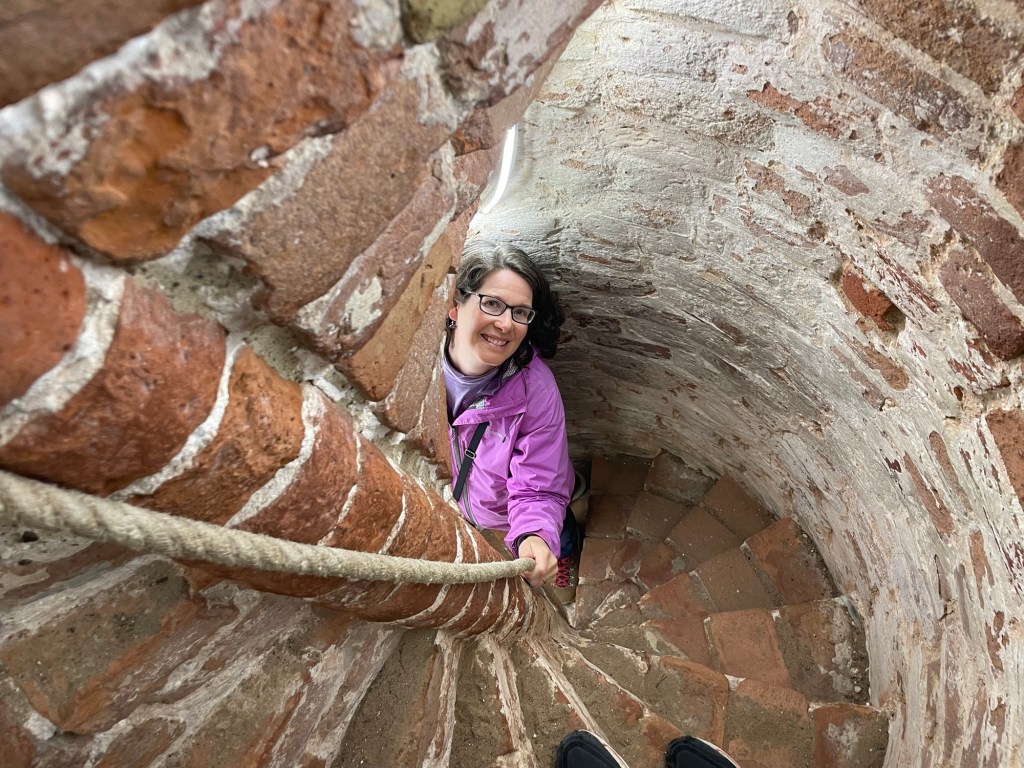
The sea and sand are always part of the conversation here. Yesterday we saw a village that had been abandoned due to sand infiltration. Today, we saw a whole church that was swallowed by sand. All that remains visible today is the upper part of the tower, since the rest of the structure was pulled down when it was abandoned. The tower was left standing and painted white to serve as a navigational aid for sailors.

The sand-buried church
Access to the tower was via a very steep and narrow spiral staircase
The roof truss was a work of art in itself

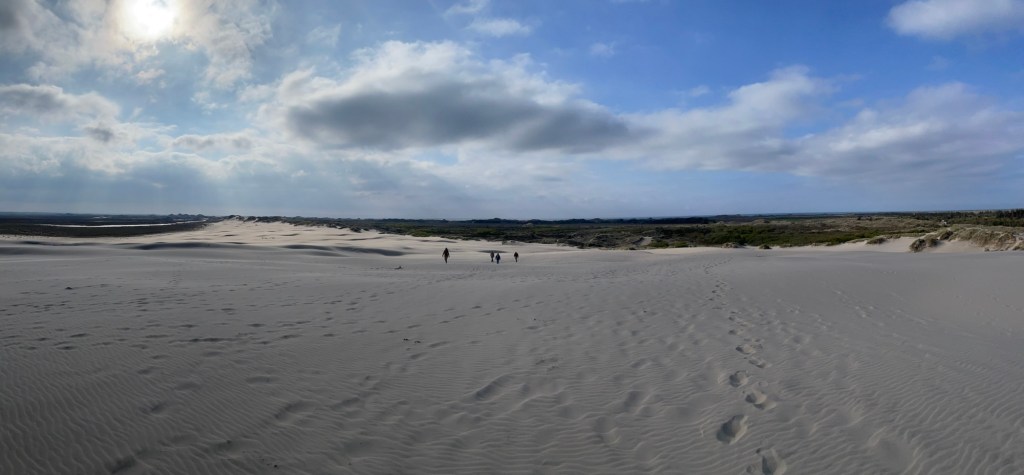
Following the church, we paid a visit to a moving sand dune that is swallowing up new ground even today. Called Råbjerg Mile, the two-square-kilometer dune moves eastward by about 15 meters per year. Though surrounded by green forests and waterways, the dune itself feels like a sort of pocket desert wasteland. Although we could see the footsteps of other visitors who had come before us, the wind was already erasing their traces.
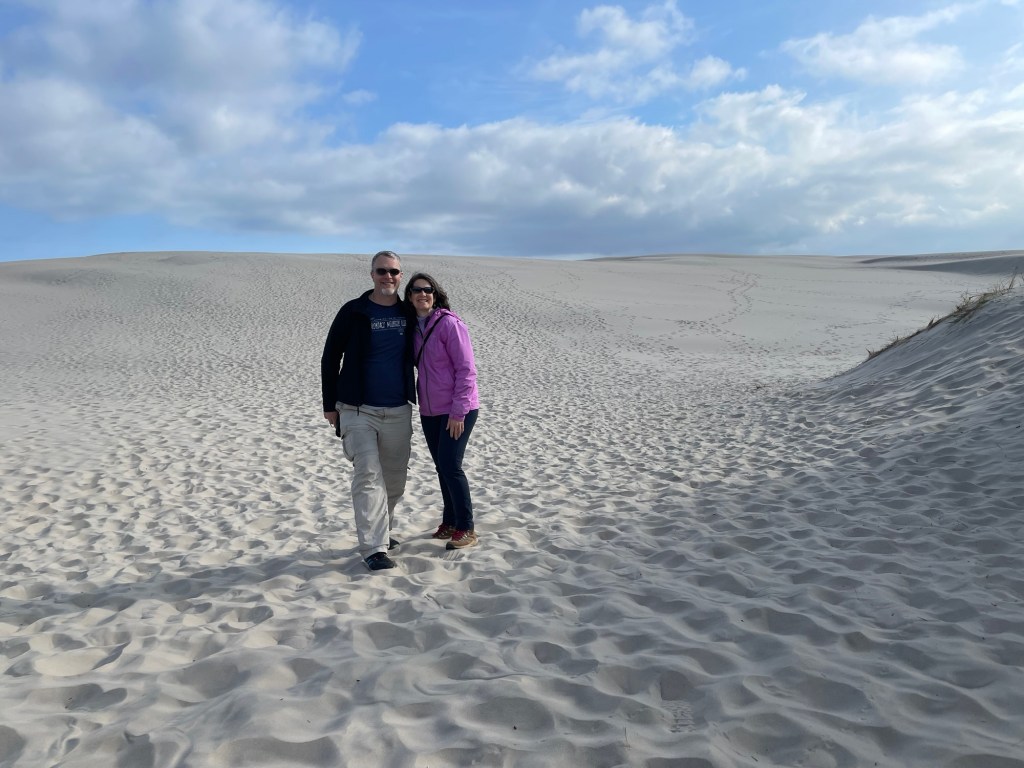
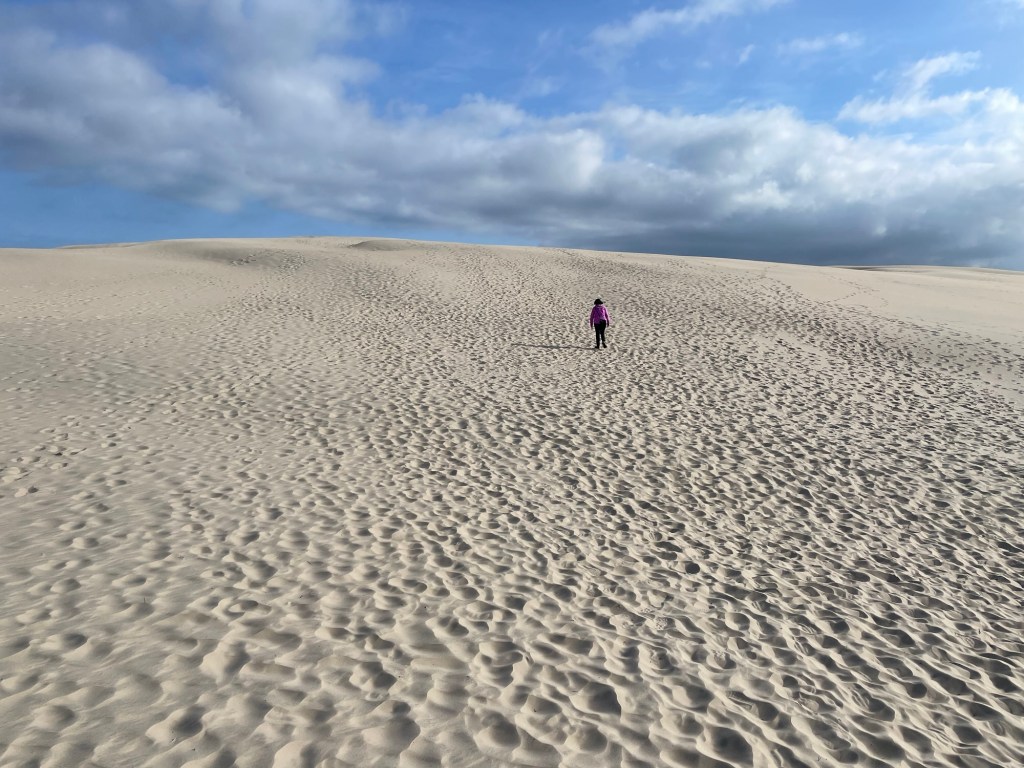
At the base of the dune
The highest point of the dune is 40m above the surrounding terrain
Looking back from the top of the rise
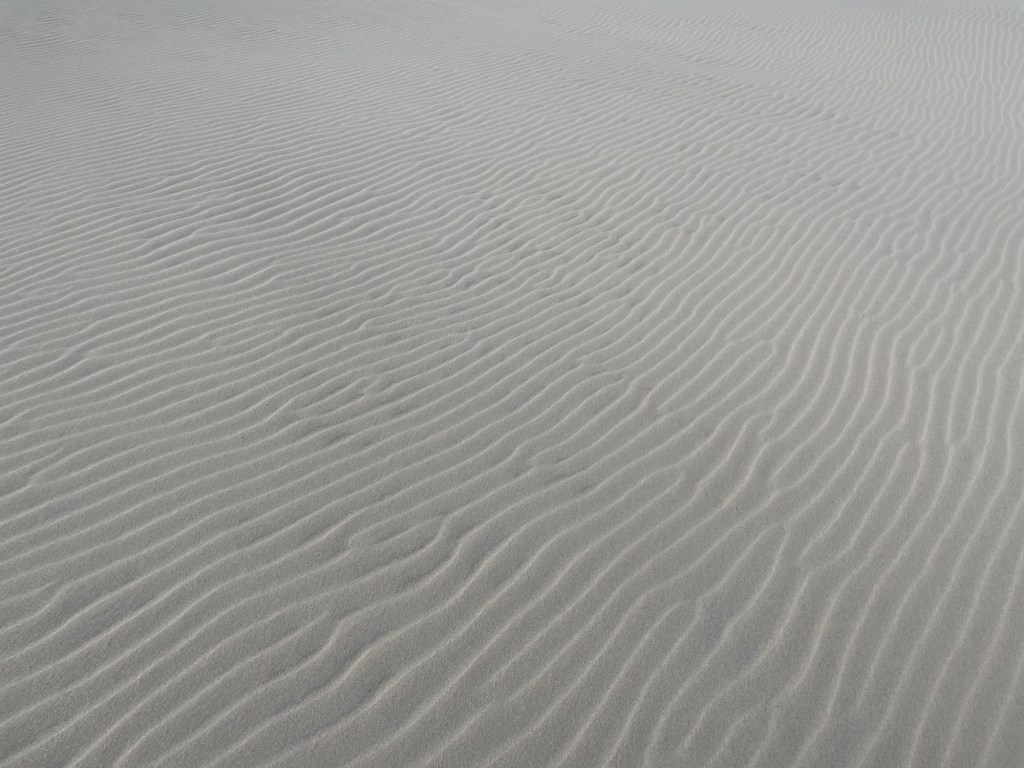
Wind-sculpted ripples
We stopped for groceries in Hals harbor, on the north side of the Limfjord, on the way back to the summer cottage

Planes, Trains, and Automobiles – plus a Bus and a Ferry

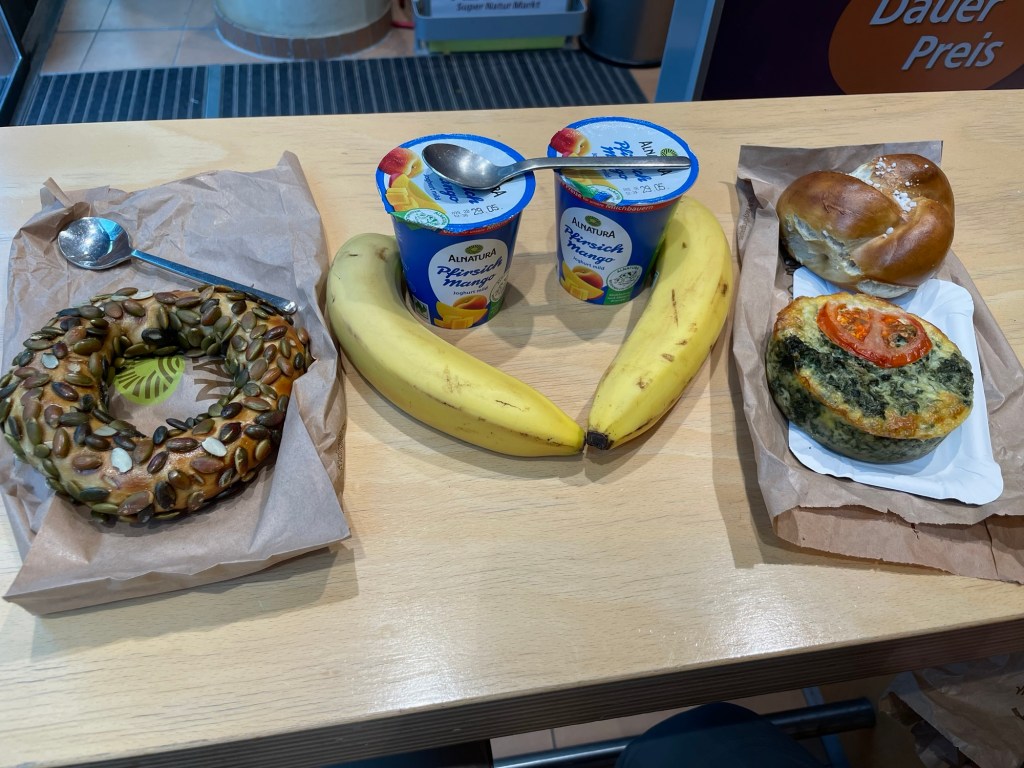
Today after a quick breakfast at the local natural food store (80% discount off the hotel breakfast!), we took an early taxi across the Elbe River to Finkenwerder, where Airbus has a large assembly facility. The tour lasted for two and a half hours, during which we visited three different hangars where different steps of the process occur — first the sections of fuselage are mated together, then the inside wiring and ductwork is added, before they are painted and given engines. The various pieces come from different countries: tails from Spain, nose and forward section from France, and the back and middle are made here in Hamburg. (As a pan-European project, Airbus has to distribute its production to maintain political support in the major nations of the E.U.) Unfortunately we cannot show you any pictures because cameras are strictly forbidden during the tour. Since the tail and wing sections come pre-painted, they create a strange contrast with fuselages in only green or brown primer coat.

Love that natural grocery store breakfast!
Our only photo, taken outside the gates

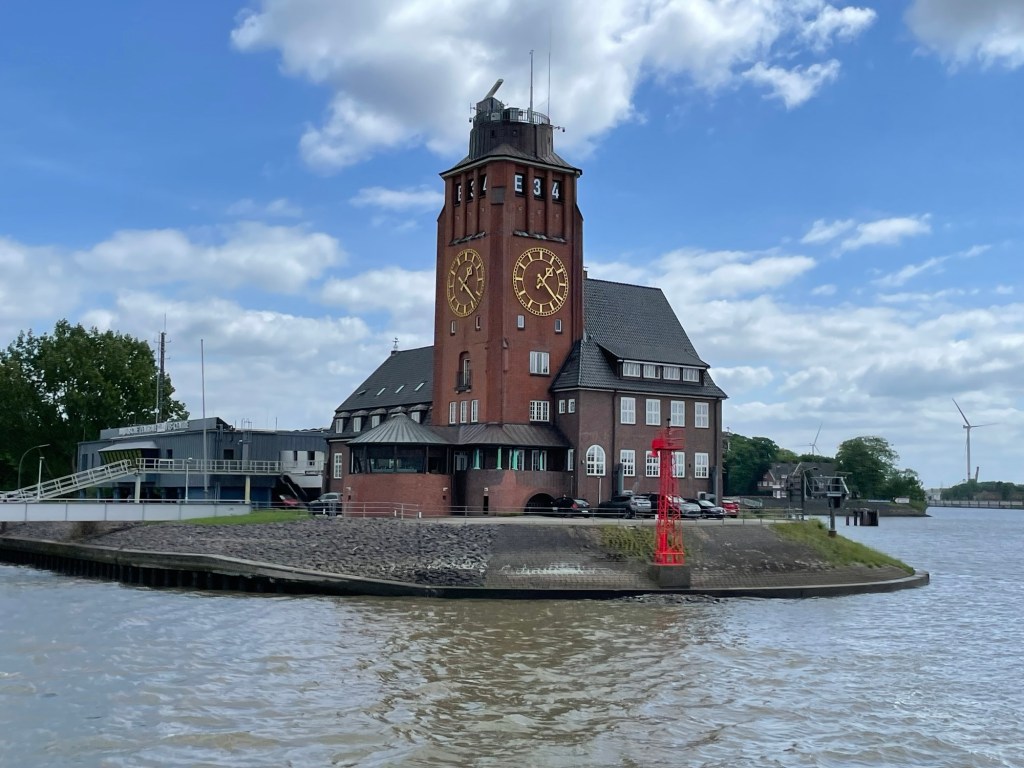
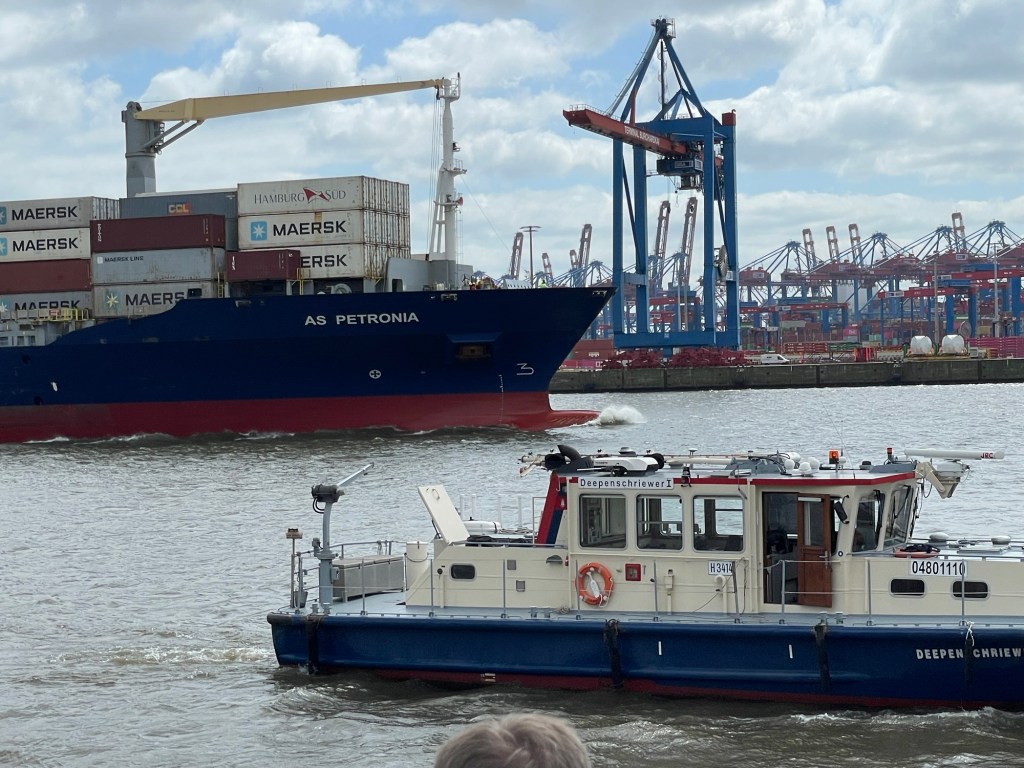
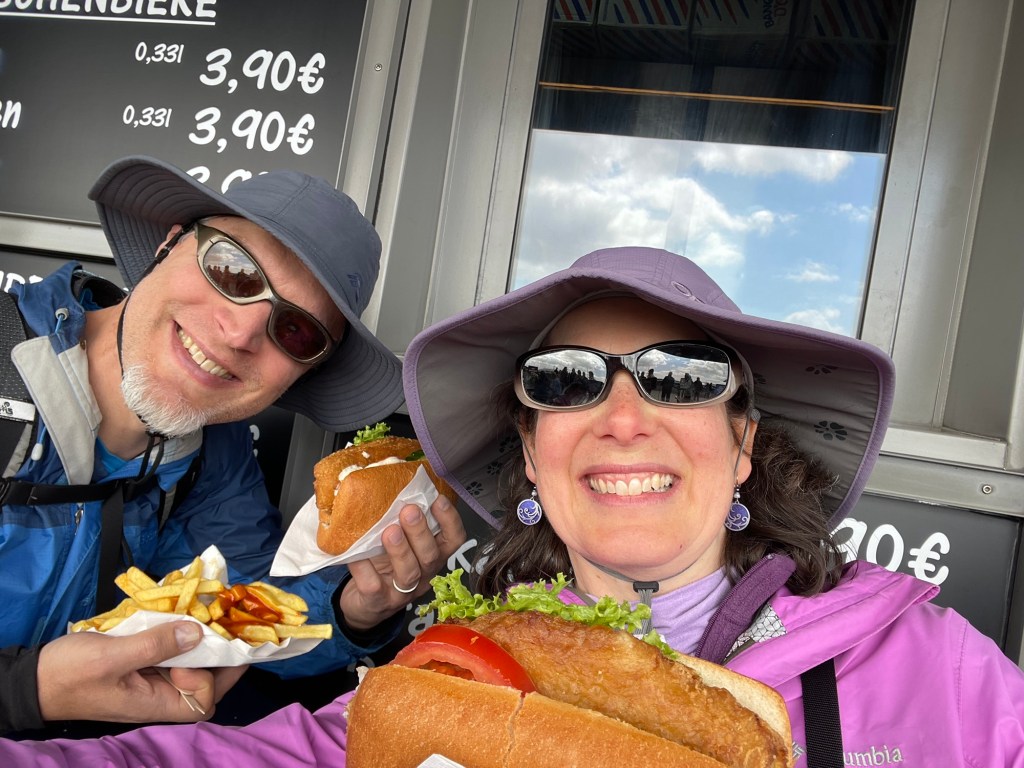
Heading back to the main part of the city, we were in a little bit less of a hurry so we opted to take the ferry and sit on the top deck, since the weather had turned for the better. Hamburg is a very busy industrial port, so we saw many cargo barges, tugboats, and even a large container ship or two going by. Upon landing we picked up lunch from a waterfront establishment that sold fish and seafood sandwiches.

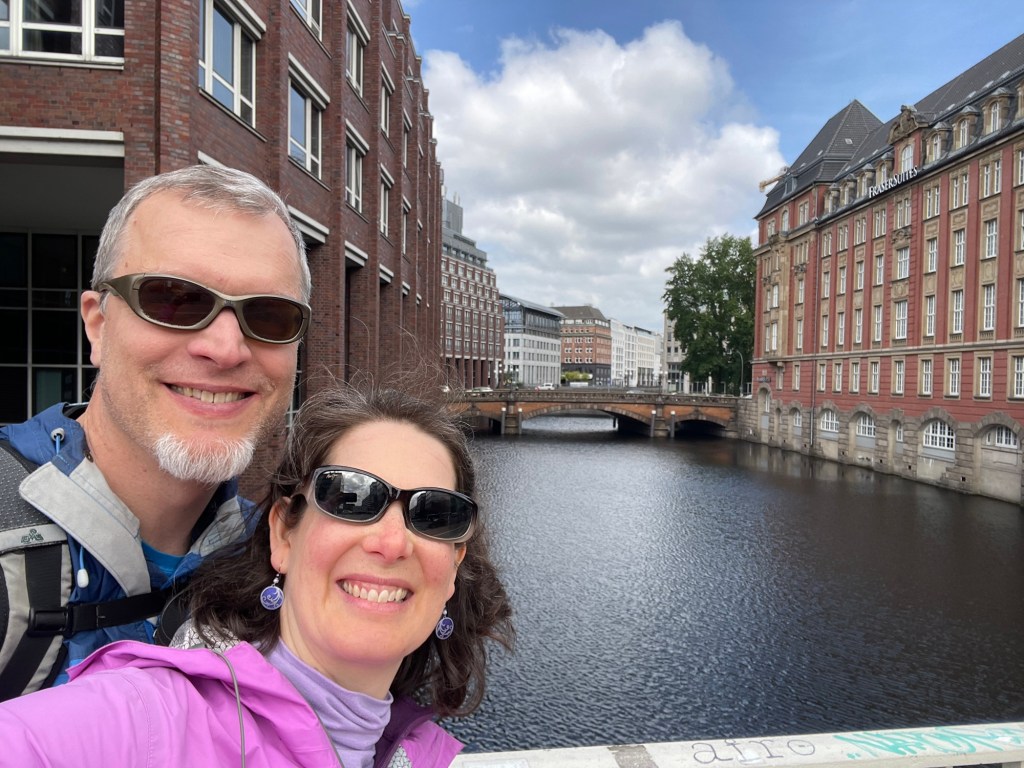
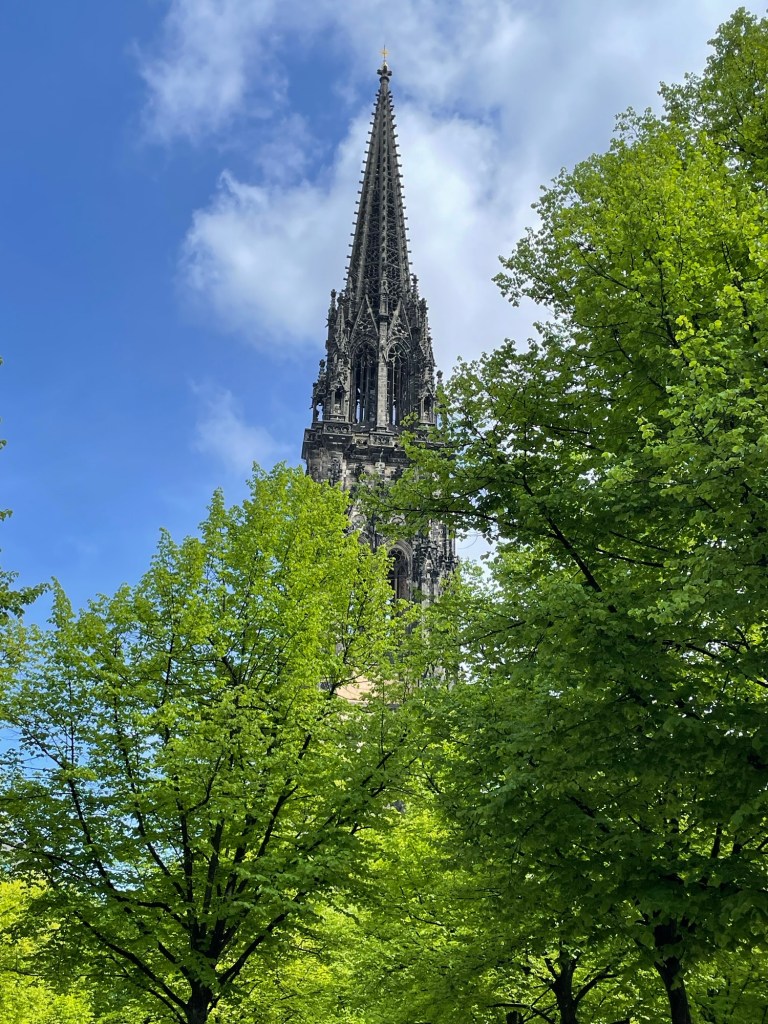
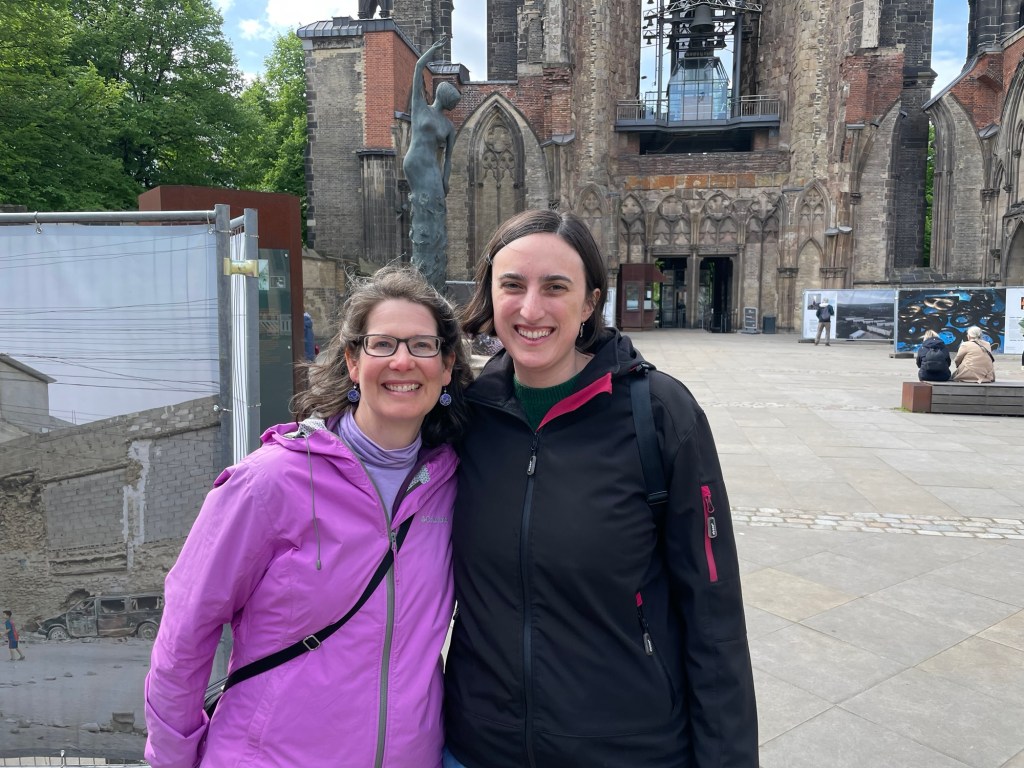
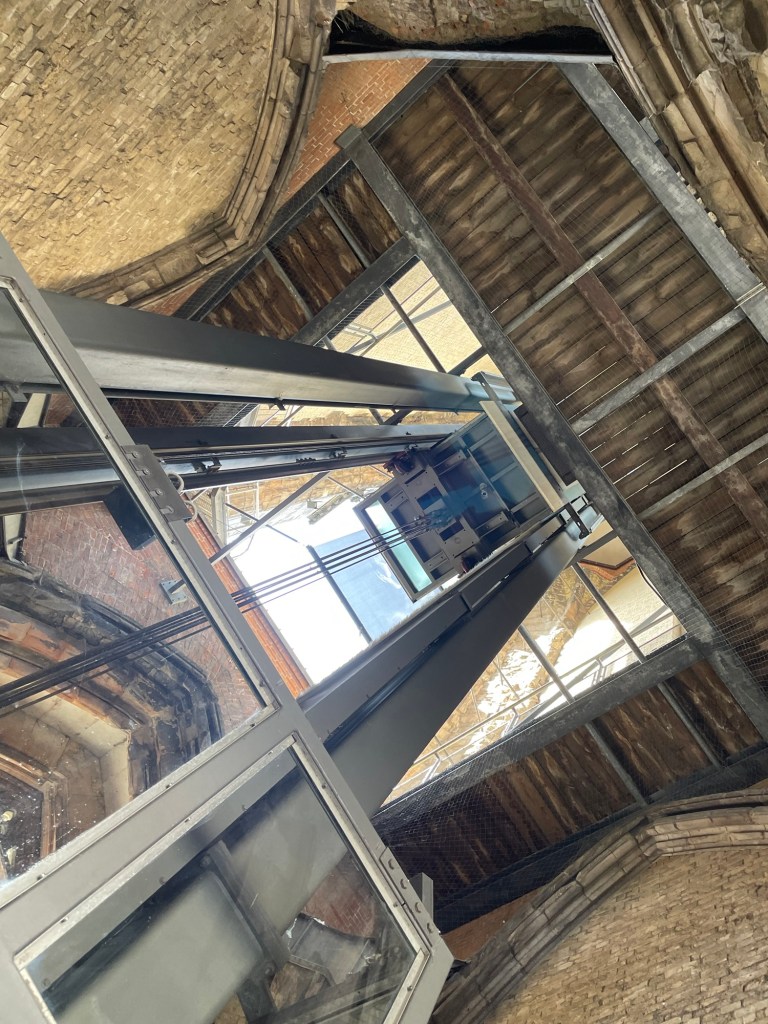
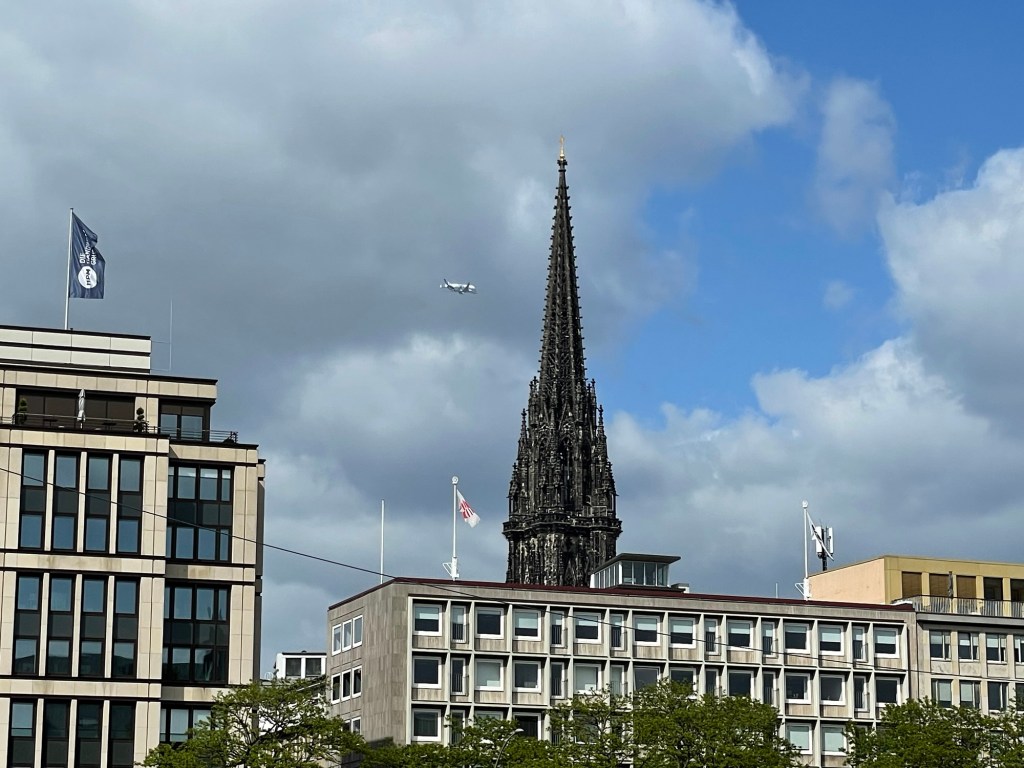
From the waterfront it was a short walk through the city’s canal zone to St. Nikolai’s church, where we were meeting Susannah’s former student Taylor Beall. The church was burned out during the Allied incendiary bombing raids in 1943, and has been left in ruins as a memorial to the many people killed. Its tall spire was left intact because the bomber crews used it for navigational purposes. It stands to this day still covered in soot, and a recently installed elevator takes you up to a level with views of the city. In the crypt below the former church, a small museum holds an exhibit about the bombing and its aftermath, which killed tens of thousands (and was seen as a response to earlier German bombing campaigns during the Blitz).

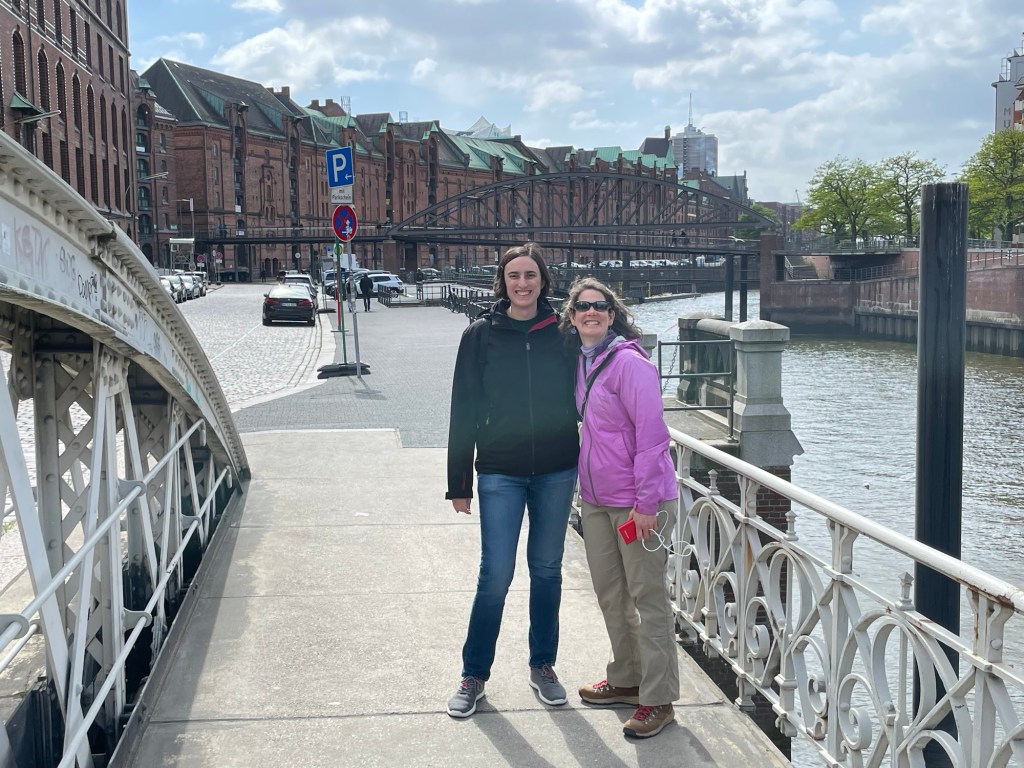
The canal district is prone to flooding, whenever a storm surge from the North Sea combines with high flow in the Elbe river. Knowing this, the lowest levels are used for car parks and other functions that can be temporarily suspended. The walkways that connect across the canals have multiple levels so that the buildings will still be connected even when the water is high. Some of the buildings overlooking the water have interesting architectural styles, cantilevering out for the best views.

Upper walkway for high-water use
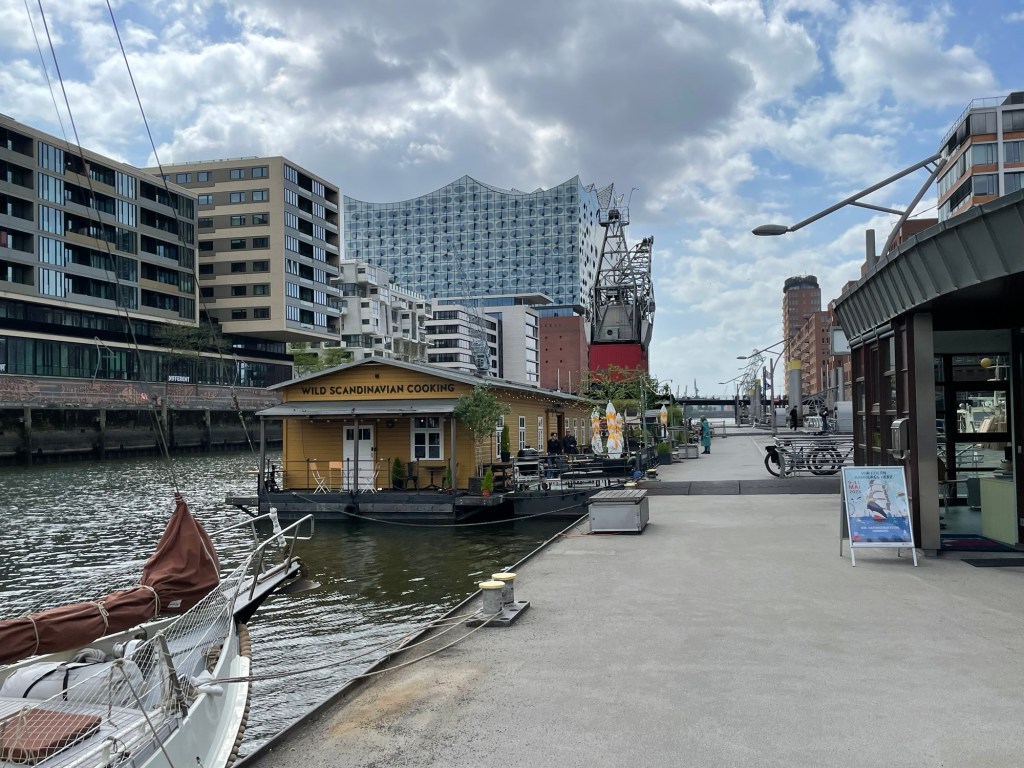
The building with the scalloped roof is the Elbphilharmonie, completed at great expense but apparently offering excellent sound quality.
During the Airbus tour they told us about the Beluga aircraft, used to ferry normal airplane parts inside its giant bulbous enclosure. We happened to see one over the city later in the day.

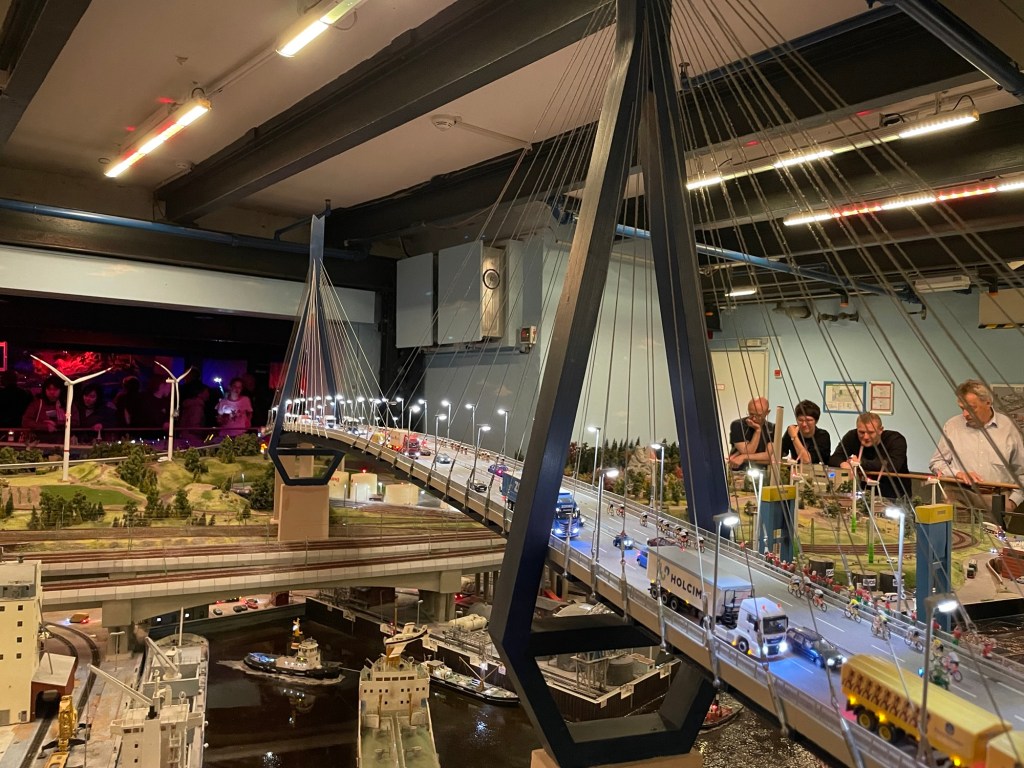
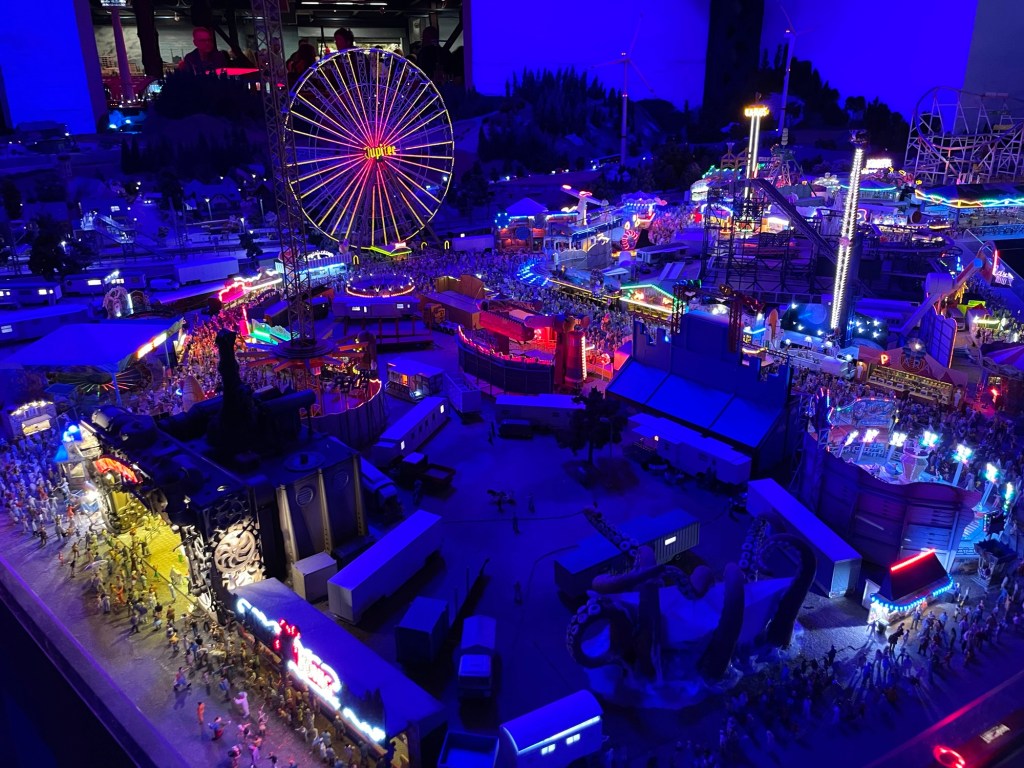
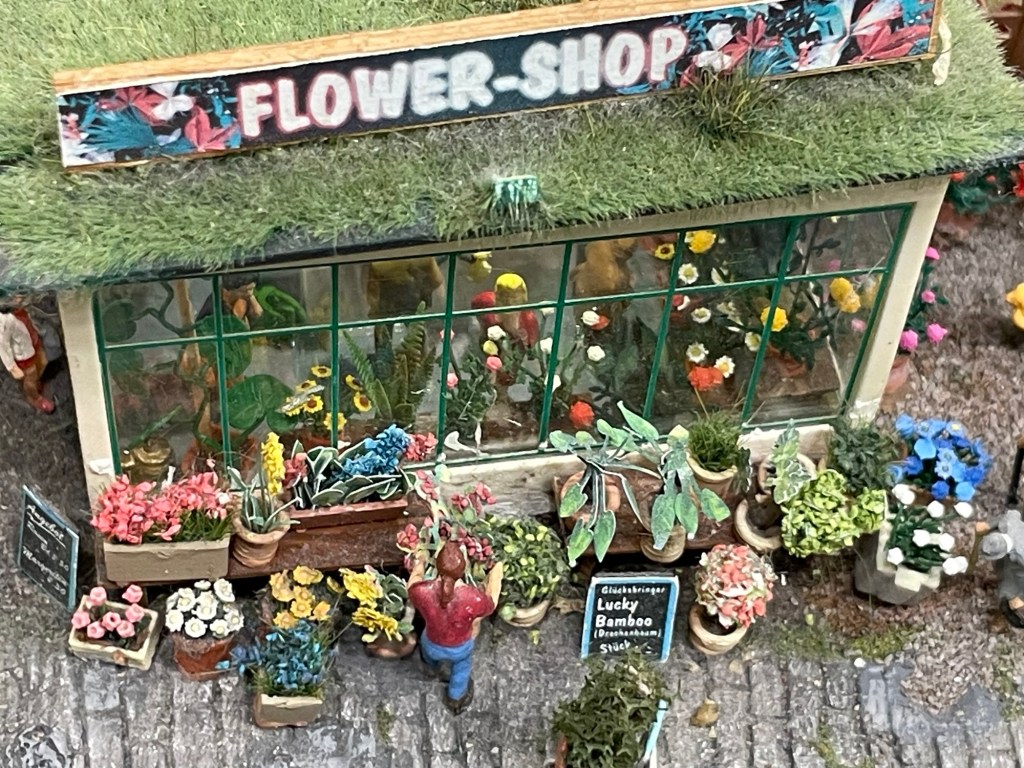
Our last sight of the day was the Miniatur Wunderland, housed in one of the old warehouses in the canal district. This museum began as a project to create the largest model railroad layout in the world. Twenty years later, it now covers multiple floors of the building and represents more than a million hours of construction work. In places, visitors could press buttons that activated certain parts of the display: operating cranes, chairlifts, drawbridges, etc. Other parts were run automatically or operated by staff from a control room.

Here is the miniature version of the Elbphilharmonie. Note heads in the background for scale.
The Miniatur Wunderland world cycles from day to night every fifteen minutes. During the night, hundreds of thousands of LED lights come on.
The layout was filled with tiny scenes constructed with great care.
A medieval tournament is taking place below this castle.
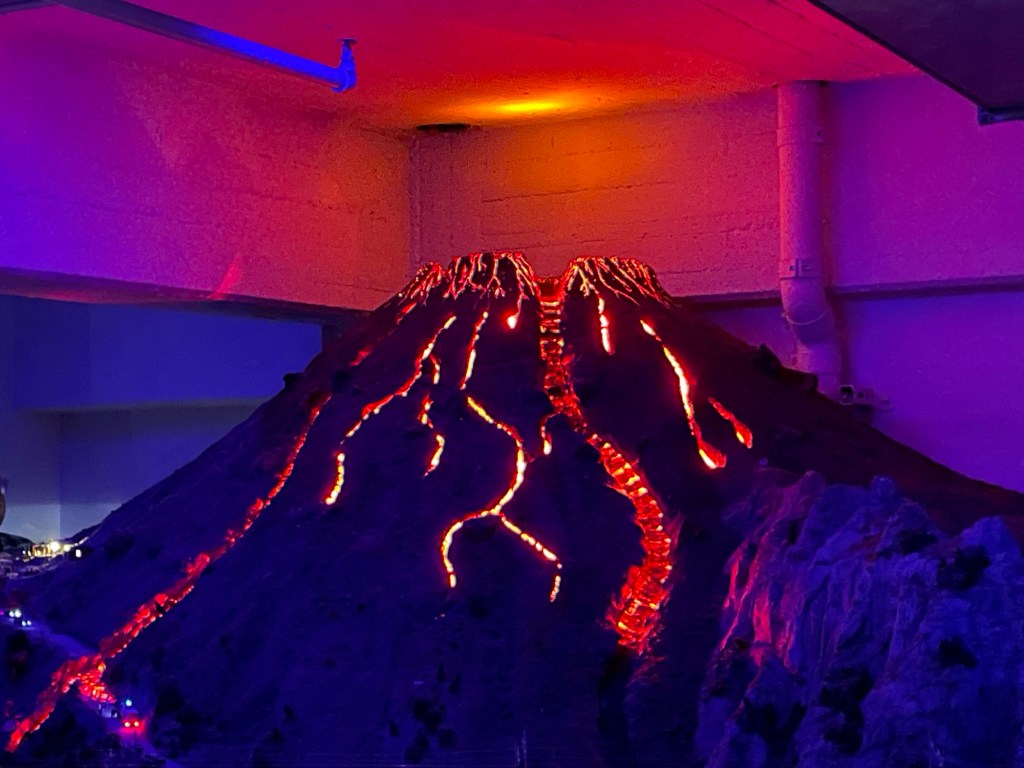
The volcano eruption is impressive, with glowing lava spreading slowly down the mountain while accompanied by a deep rumbling sound.
This marble quarrying operation was incredibly detailed.
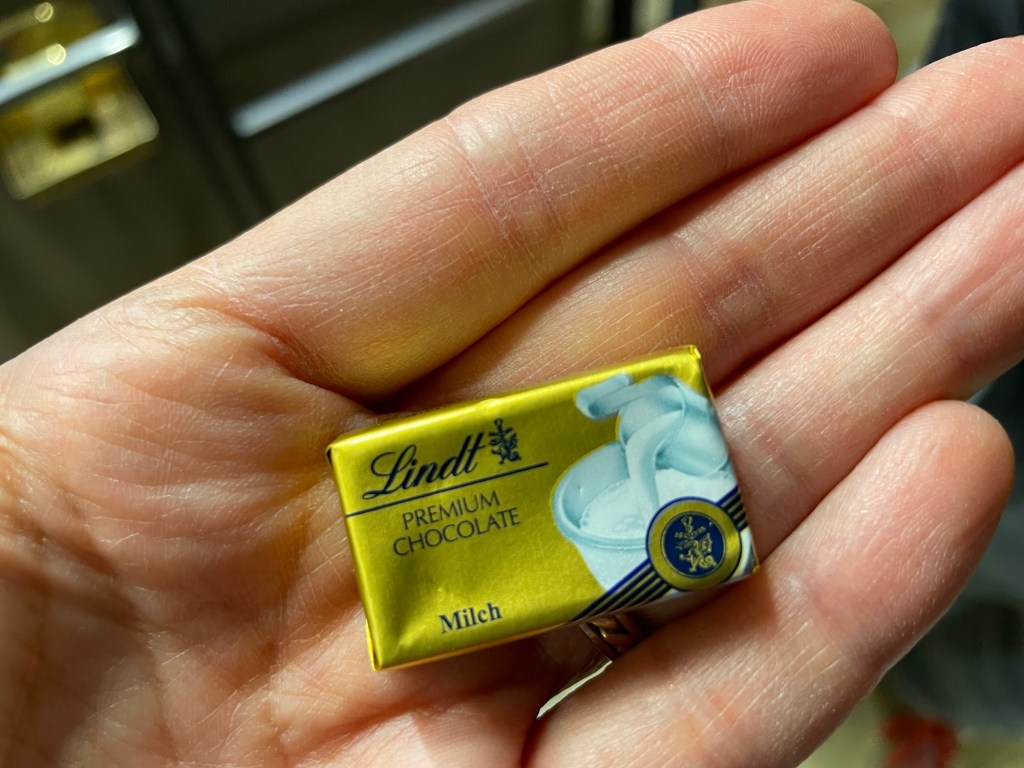
The chocolate factory…
…produces real samples – yum!
The airport layout obeys all the operational guidelines of a real airport. Planes take off and land at regular intervals. Here, one plane is coming in for a landing, while others wait in the taxi lane for their turn to take off. Just for fun, a model Millenium Falcon was one of the craft using the runway today.
Venice
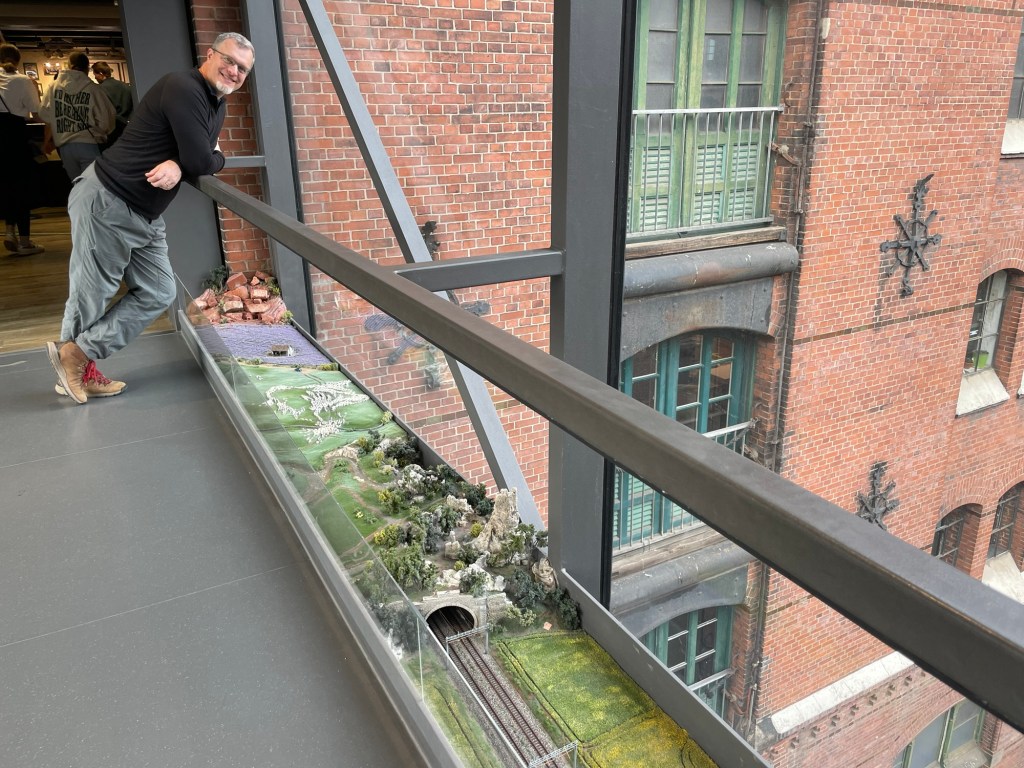
The exhibition crosses a skybridge into another neighboring building. The train layout also continues…
The displays include a number of sites previously featured in this blog: the Arctic Cathedral in Tromso, Cadillac Ranch in Texas, Mt. Rushmore in South Dakota, and Riomaggiore in Italy.
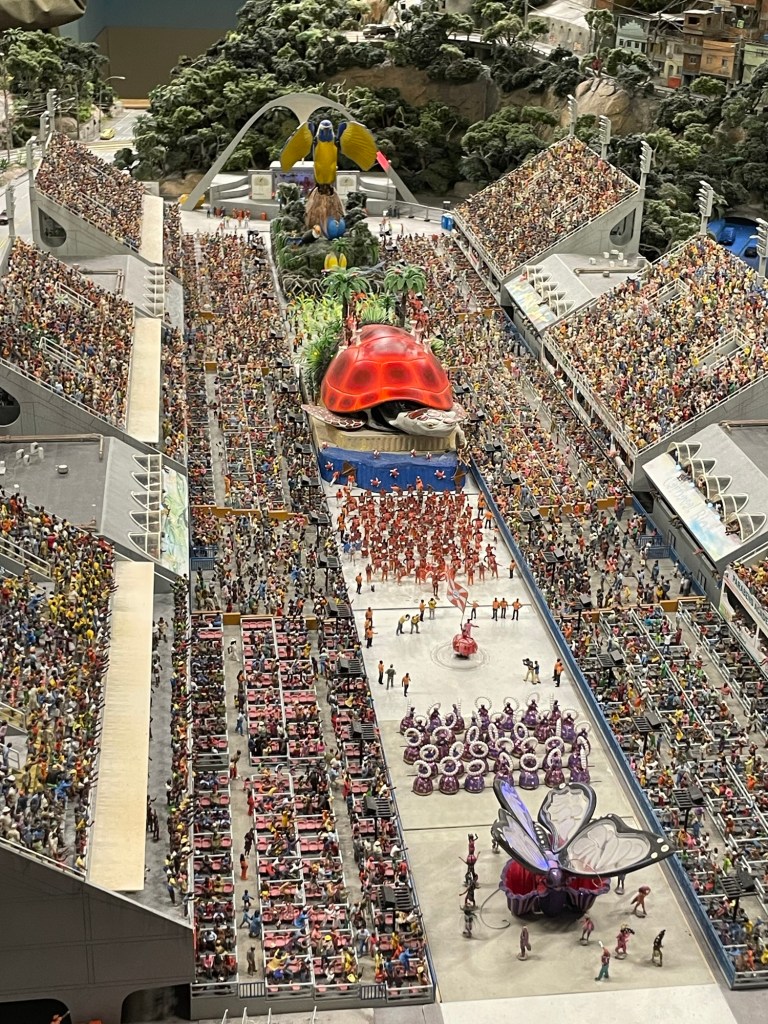
This animated scene from Carnival in Rio was truly amazing.
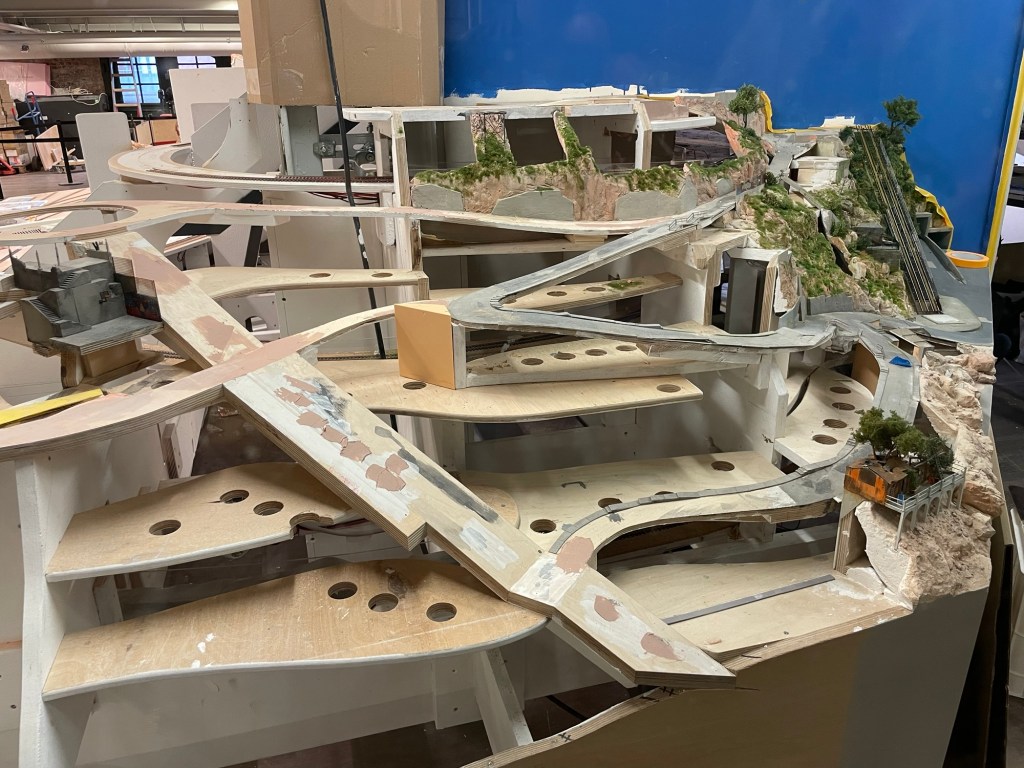
At the end, they showed a glimpse of the workshop where they are building future additions to the exhibit. We’ll have to return again some time to see what has been added!

Dabbling in Darmstadt

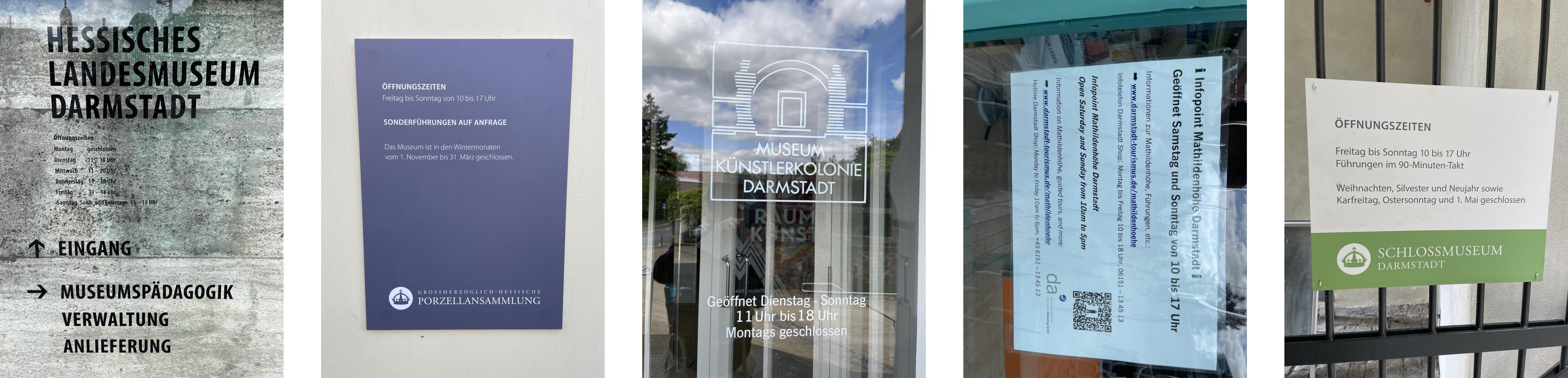
For our day in Darmstadt we split up once again, with Susannah planning a visit with former student Tiffany Liu at Energy Robotics. Meanwhile Nick planned to go sightseeing — until the woman in the tourist information office told him that no museums in Darmstadt were open on Mondays. Surely that couldn’t be the case? Unfortunately, she was completely correct. In lieu of museums, Nick spent the day exploring the city on foot. Armed with a tourist map of all the sights, he visited any that seemed remotely interesting. Some of the highlights appear in the captions below.

Everything is closed on Mondays
The German post delivers mail in the city using specially built bicycles
Bird of the day: A number of Egyptian geese could be found on the park lawns. Although native to Africa, they have been introduced to Europe as an ornamental bird.
This pillar in a geometric garden had sundials on all four sides. (Each was different from the others, due to its differing orientation.)
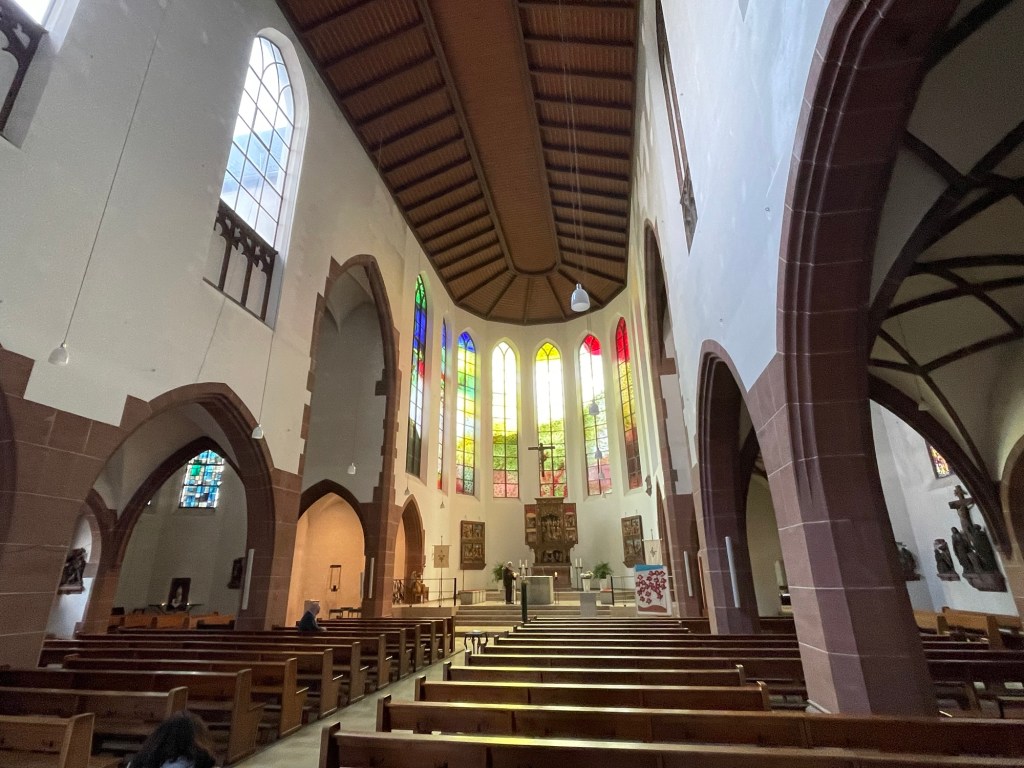
Although the porcelain museum nearby was closed, this church had its doors open
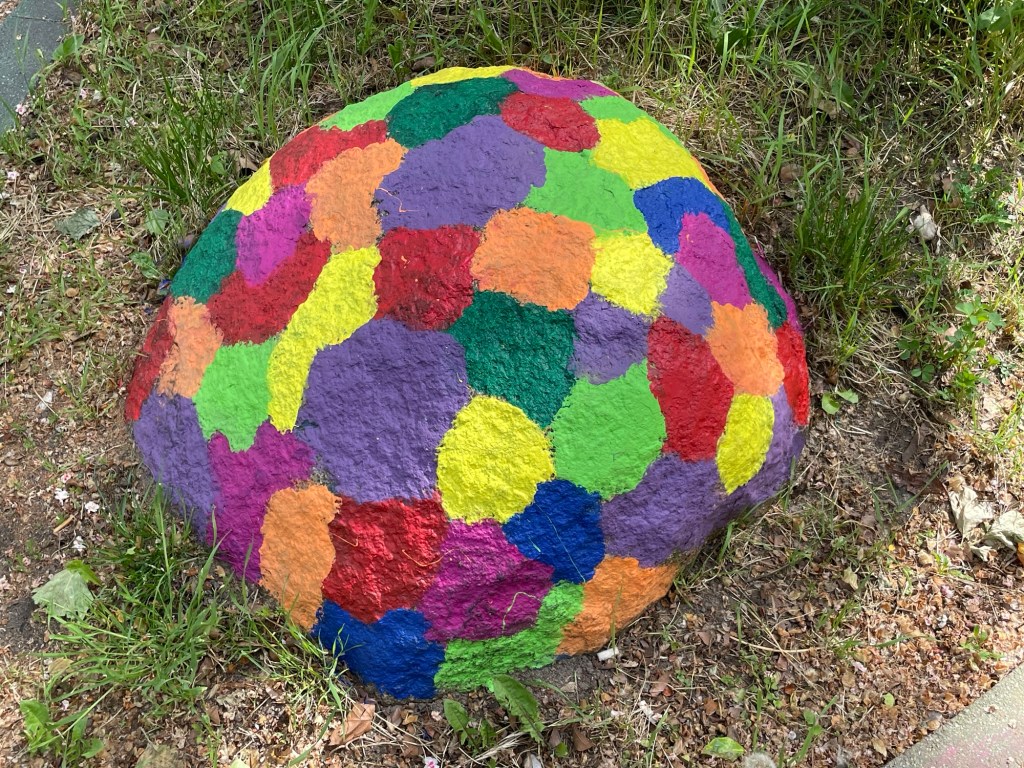
Someone painted this colorful rock by the side of the road
When we visited Mathildenhöhe the day before, we didn’t notice the sculpture behind the chapel
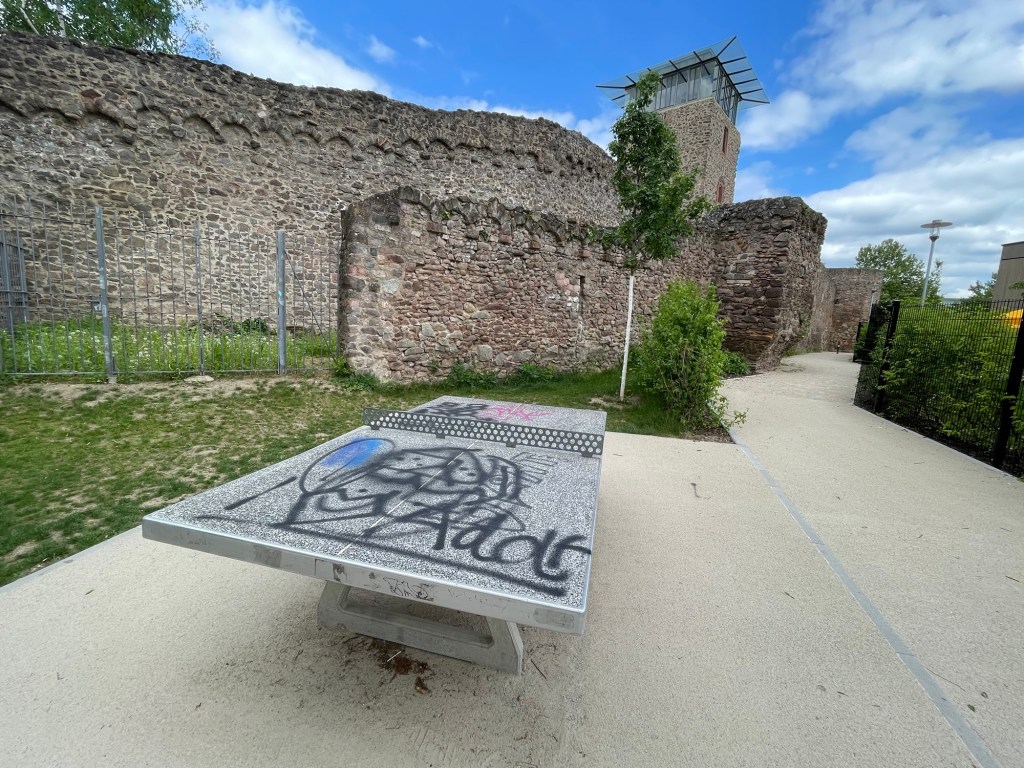
In the shadow of the city wall is this pingpong table with a metal net
The moat of the palace serves as a sculpture garden. This piece is entitled “Out Of Service”.
This sculpture is constructed out of stacks of gasoline cans
The city’s oldest church dates from the 14th century and has interesting roof details
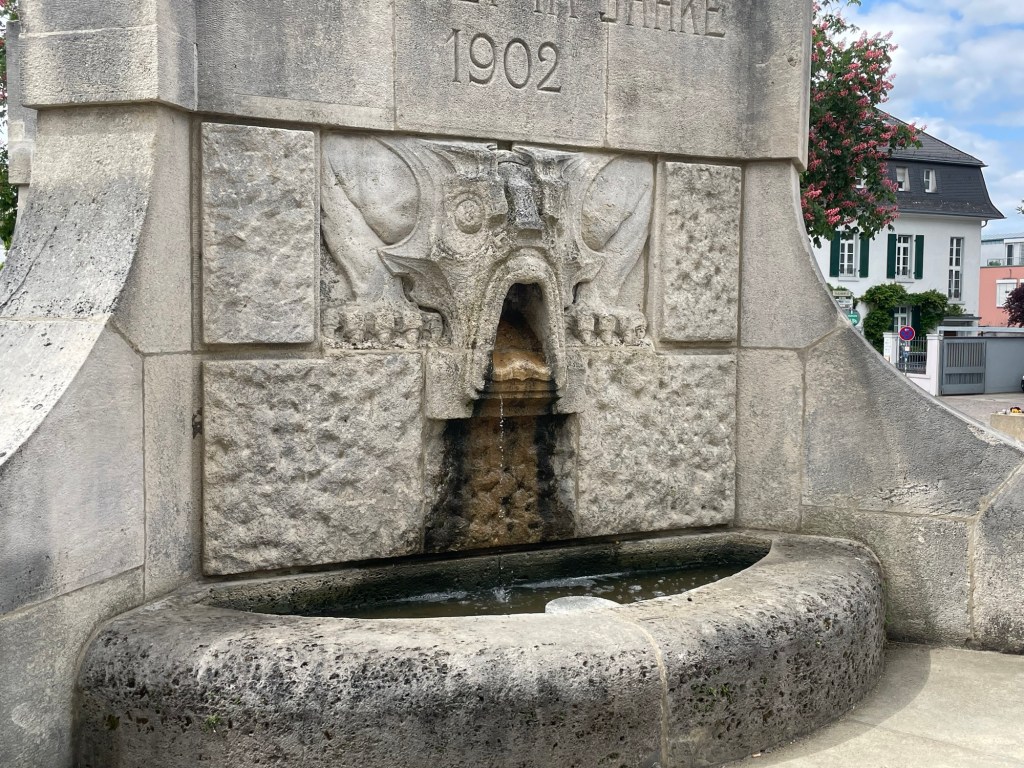
Nick liked the expression on this stone creature

Meeting up at the end of the day, we picked up a portable dinner before heading to the train station for the 3.5 hour ride to Hamburg. Our lodging for the next two days is somewhat unusual: we’re in a small RV camper that is parked on a hotel’s rooftop terrace. Seemed like an experience worth trying…

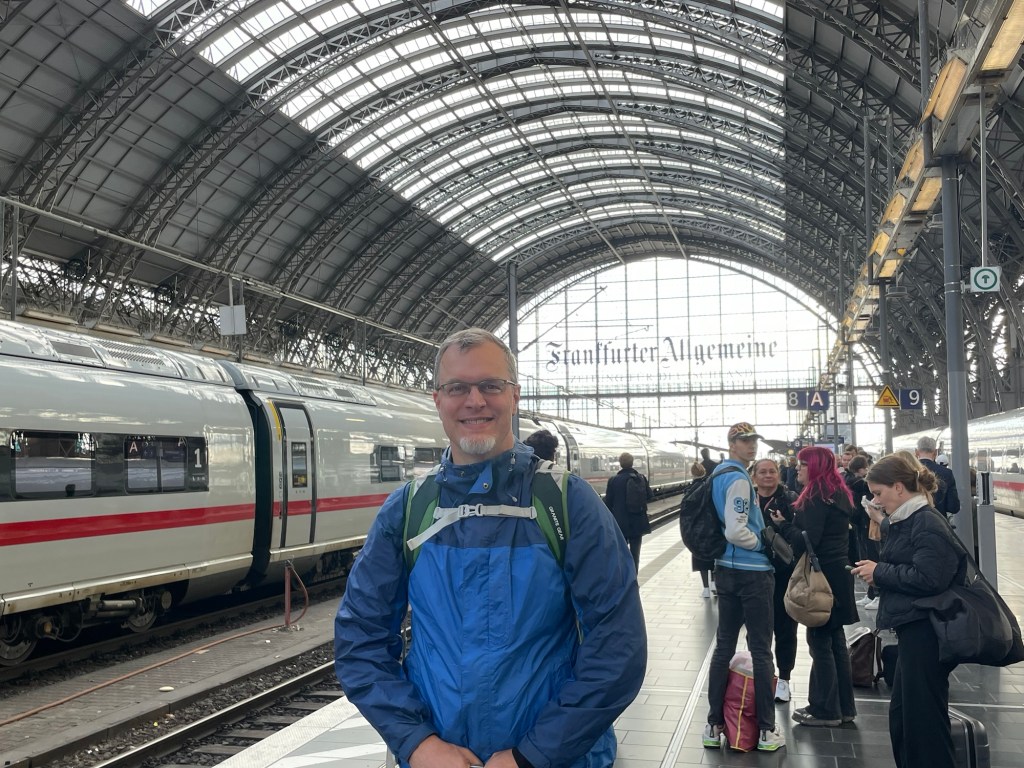
Changing trains in Frankfurt
We arrived in Hamburg after dark
Our camper is Peace & Love, on the right
How cozy! (It even comes with a guitar, a record player, and an assortment of 1960s records)

Golden Treasure

For our last full day in Zürich we split up to visit a variety of sights before coming together in the evening for a festive dinner.

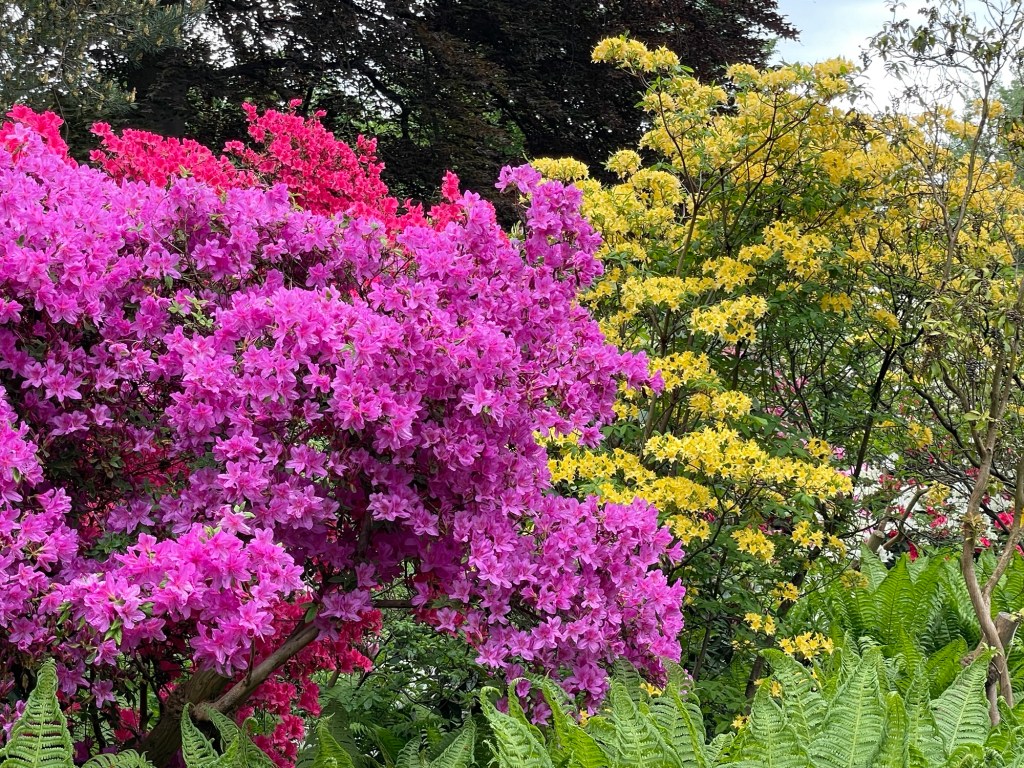
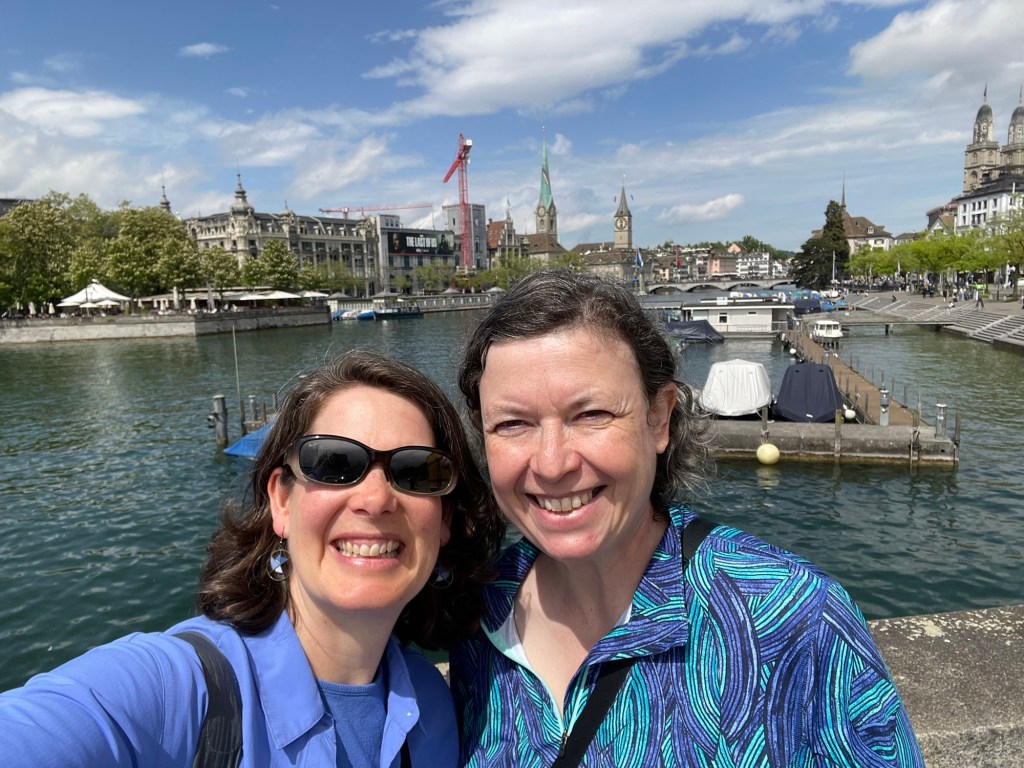
We began with a walk by the lake, where there were many flowering bushes in bloom
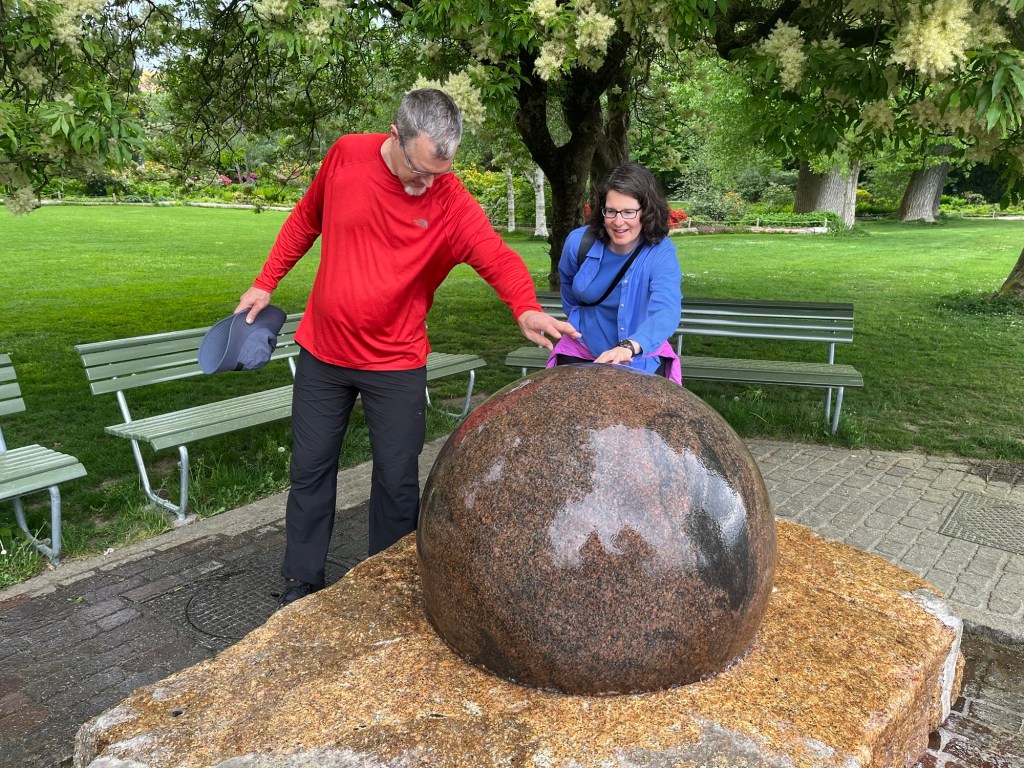
Always fun to play with a floating stone sphere
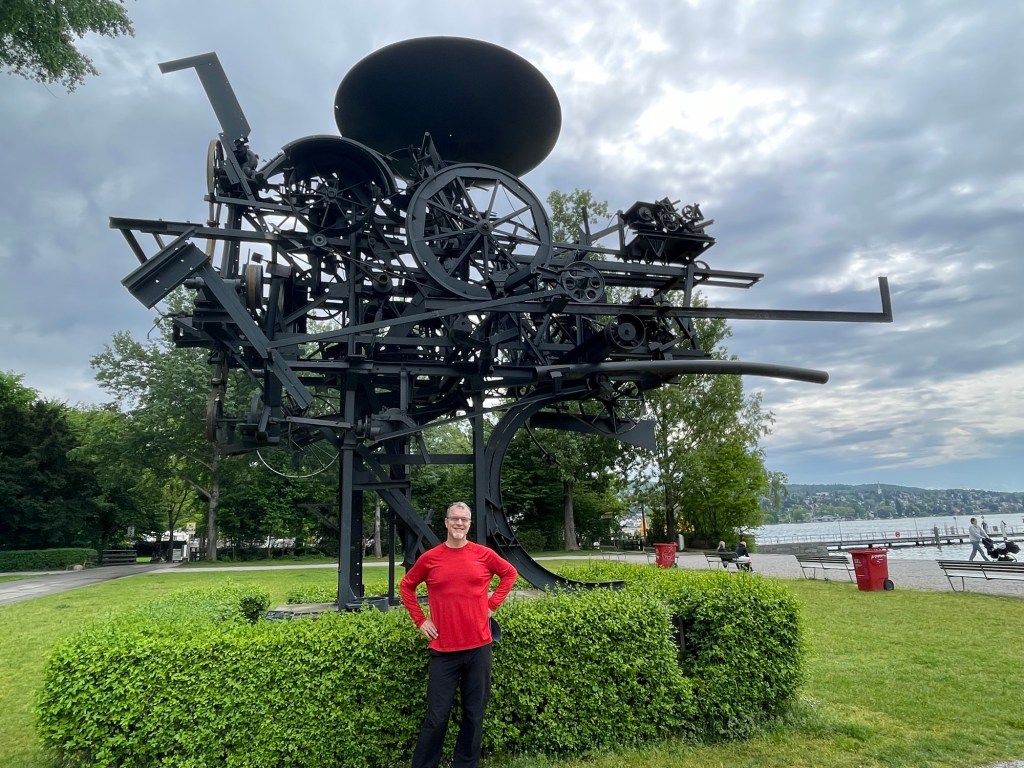
This sculpture springs into motion three times a day, rotating and oscillating in a variety of ways
We toured the Chinese garden

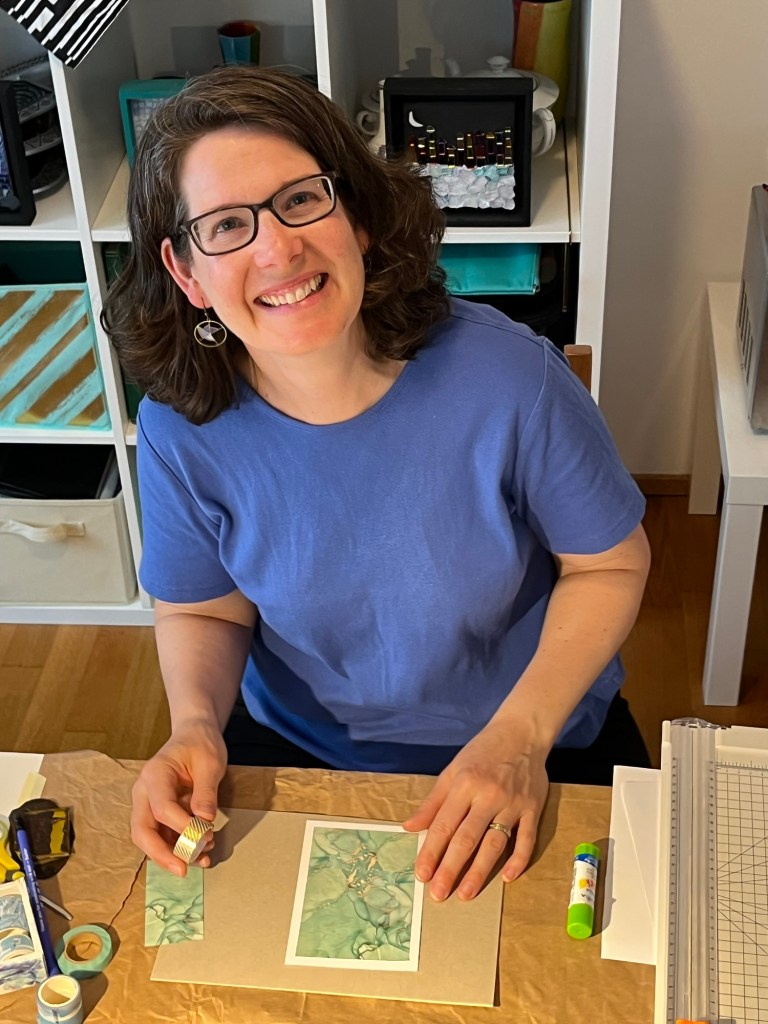
Eszter and Susannah split off to visit a flea market and some other stores (including more chocolate!), before coming home for an afternoon of paper crafting.

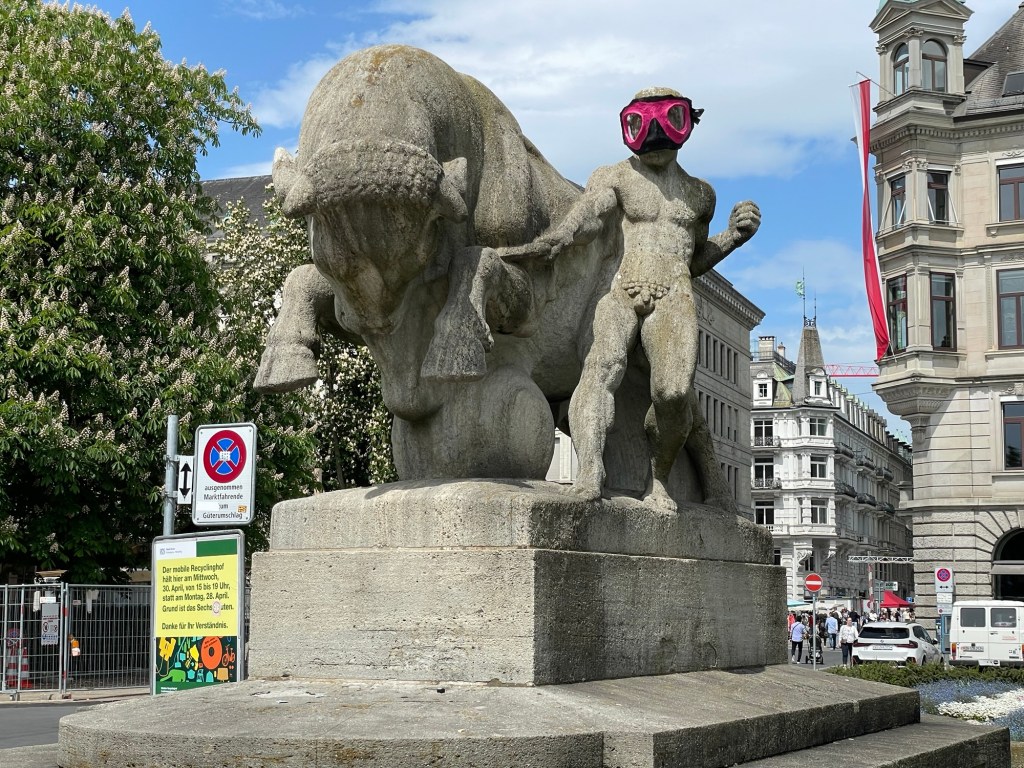
What’s going on with this statue? We suspect a guild prank. Or maybe a celebration of the summer-like weather in Zürich!
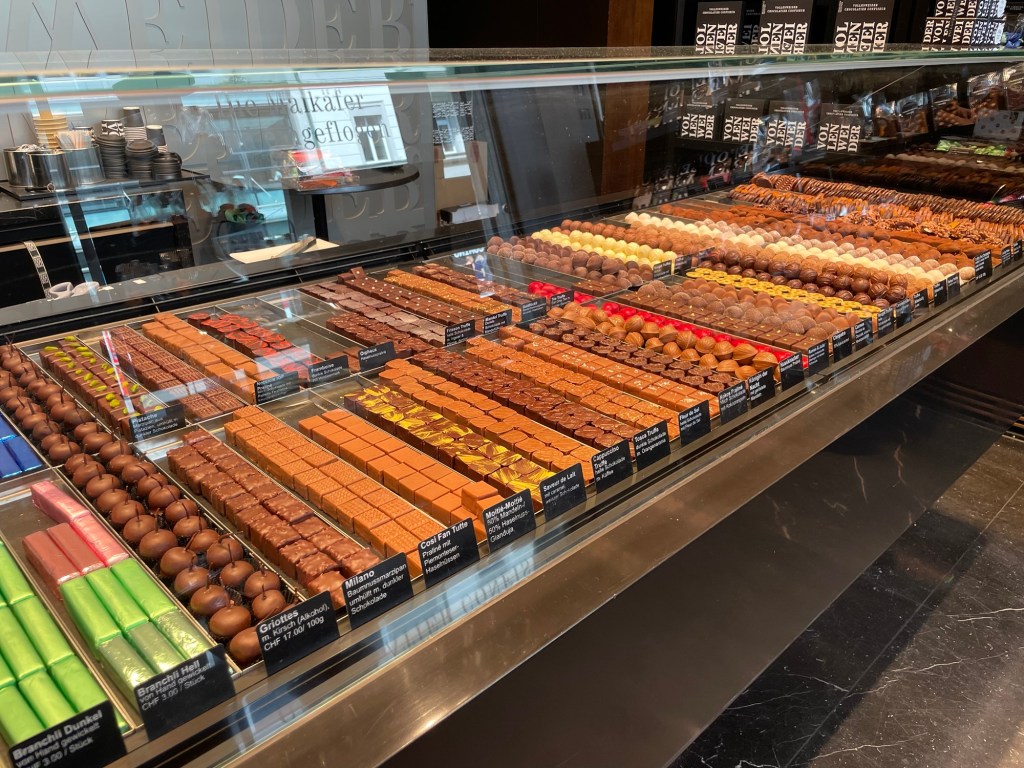
So much chocolate, so little time…
Trying out washi tape for the first time – Eszter has an extensive collection of patterns
Finished cards – all with Washi tape in some way

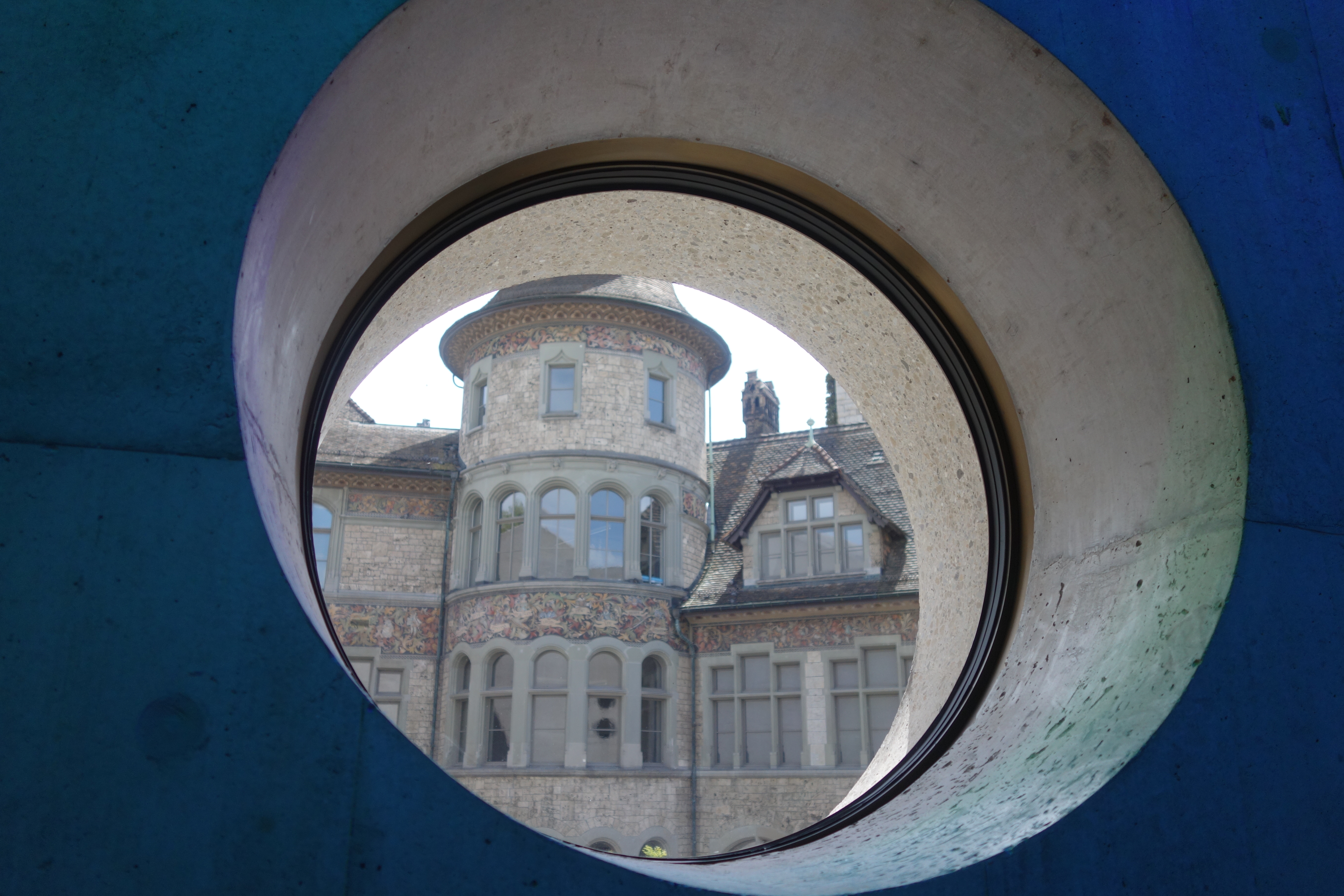
Meanwhile Nick paid a visit to the Landesmuseum, which has exhibits on Swiss culture and history.

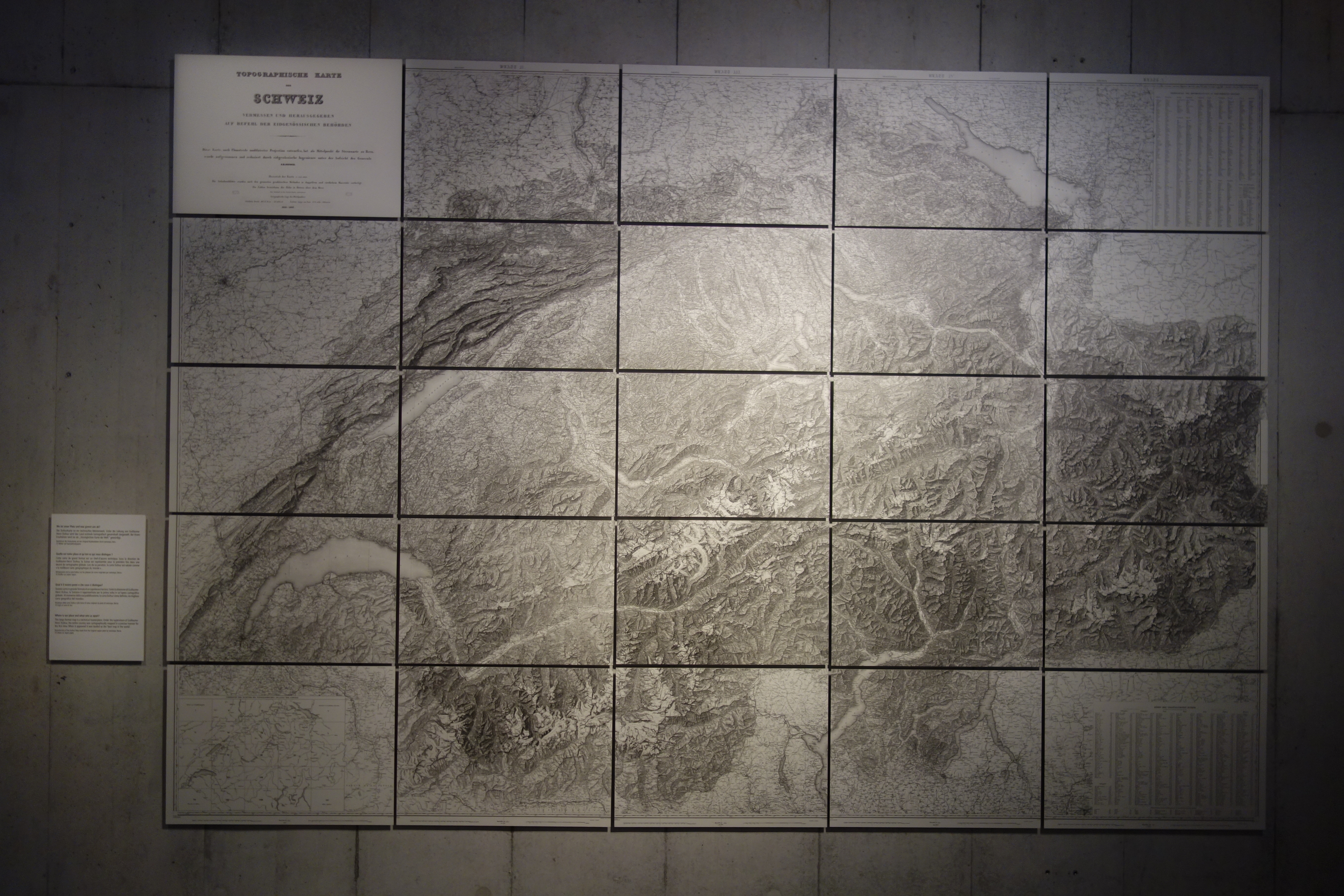
This topographical map of Switzerland, printed from 24 large copper plates, was considered a masterpiece of its time and won many awards.
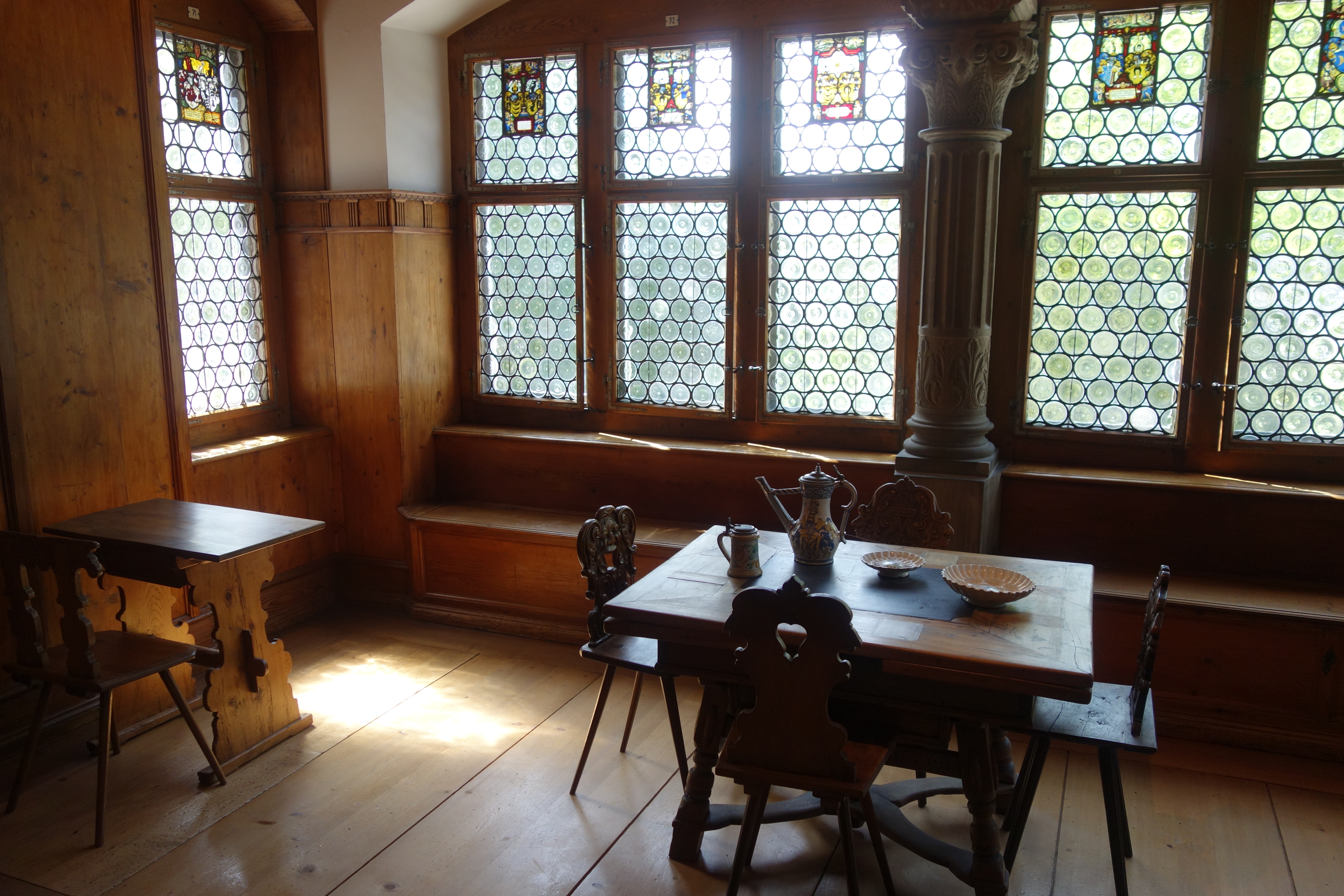
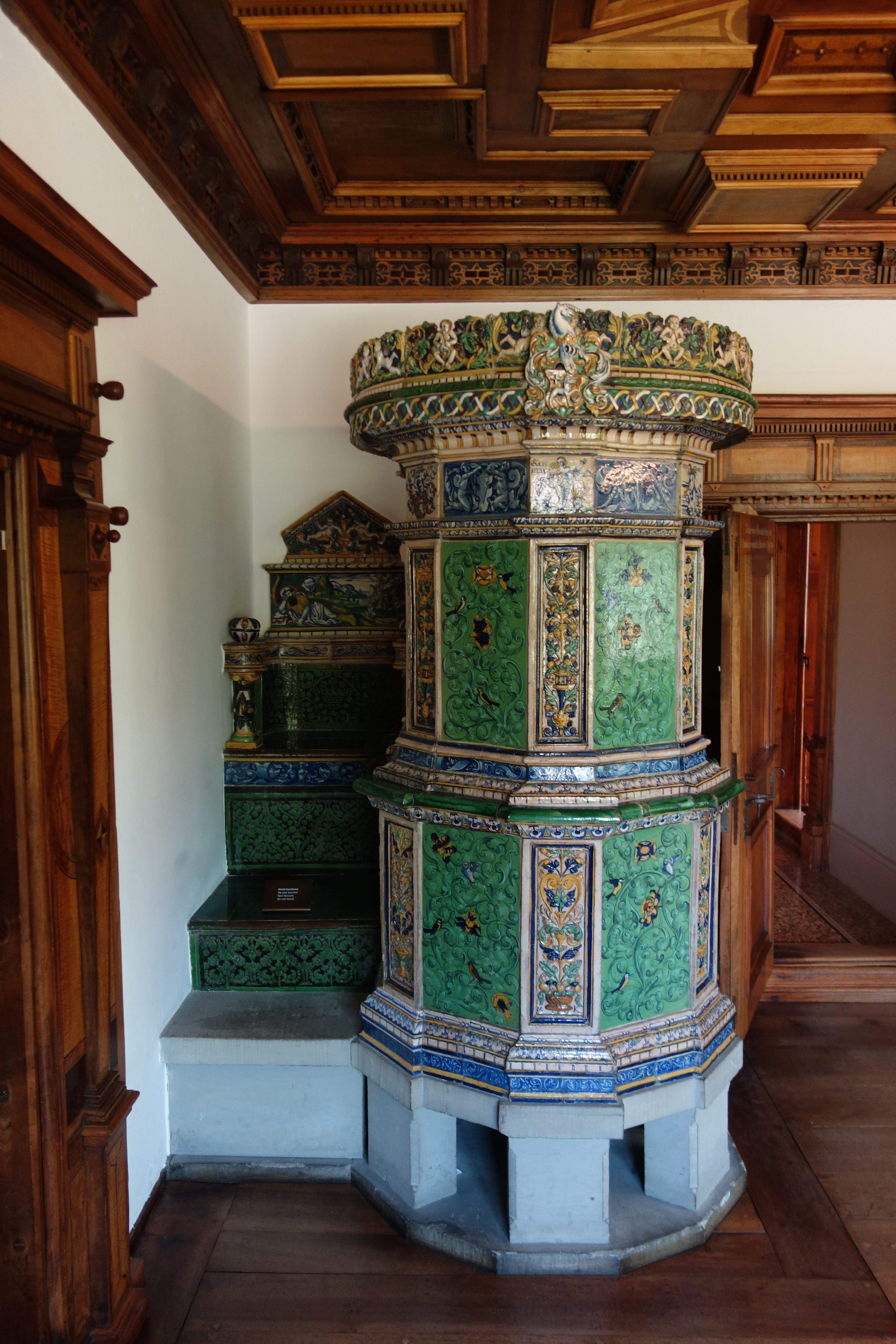
One section of the Landesmuseum had wood-paneled rooms that had been taken from historic castles and homes and reinstalled in the museum.
Nearly every room had a large tiled stove in it for heat.
Built-on desks and sinks were also common, and the woodwork was extremely intricate.
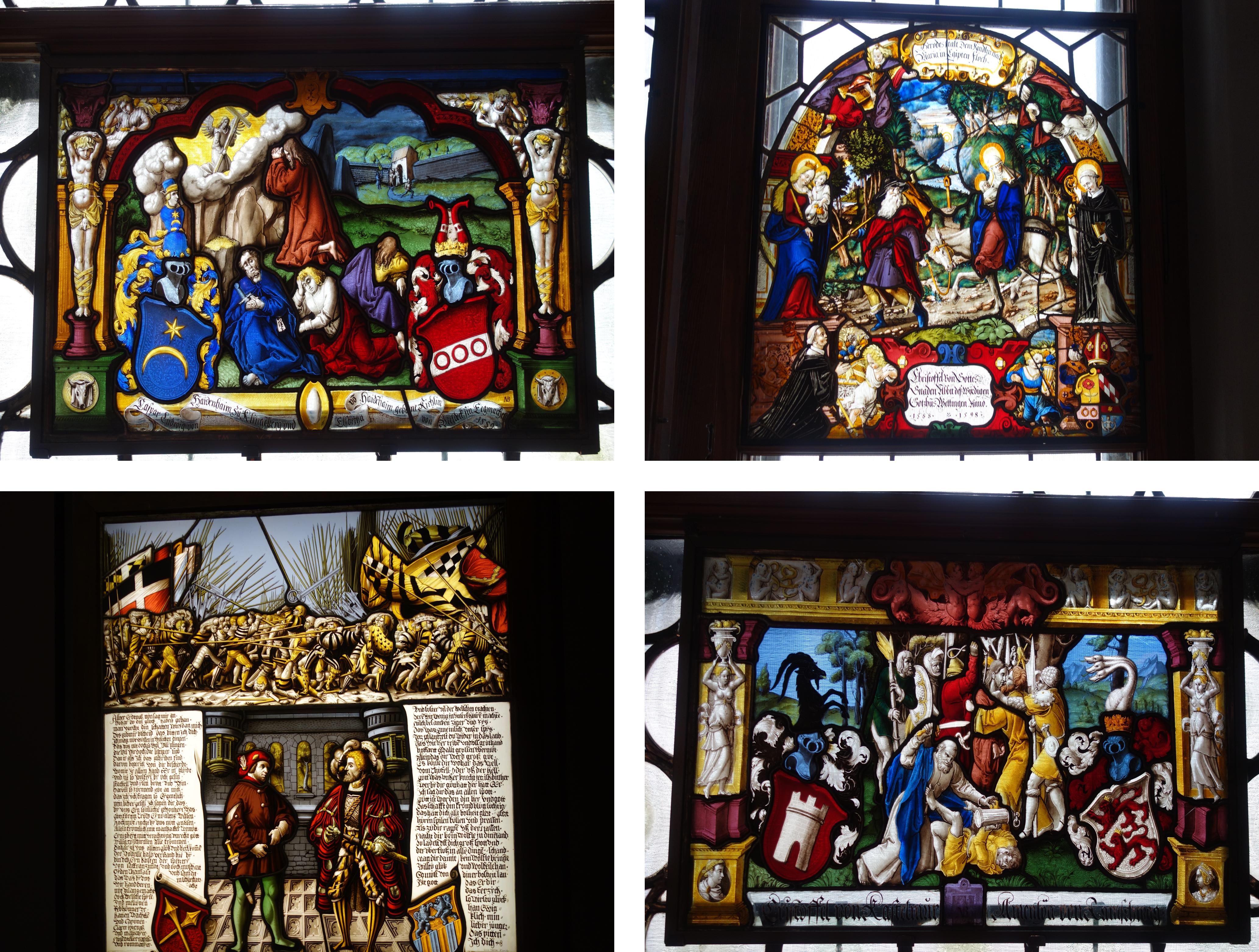
The whole museum included colorful and detailed stained glass panels, usually depicting either a religious or historical theme.

After the museum, Nick took a walk along the river past the area we had explored previously. It must have been a good day for spray painting, because he encountered no fewer than three different groups working on their graffiti masterpieces.

The rail viaduct, from nearby rail trail

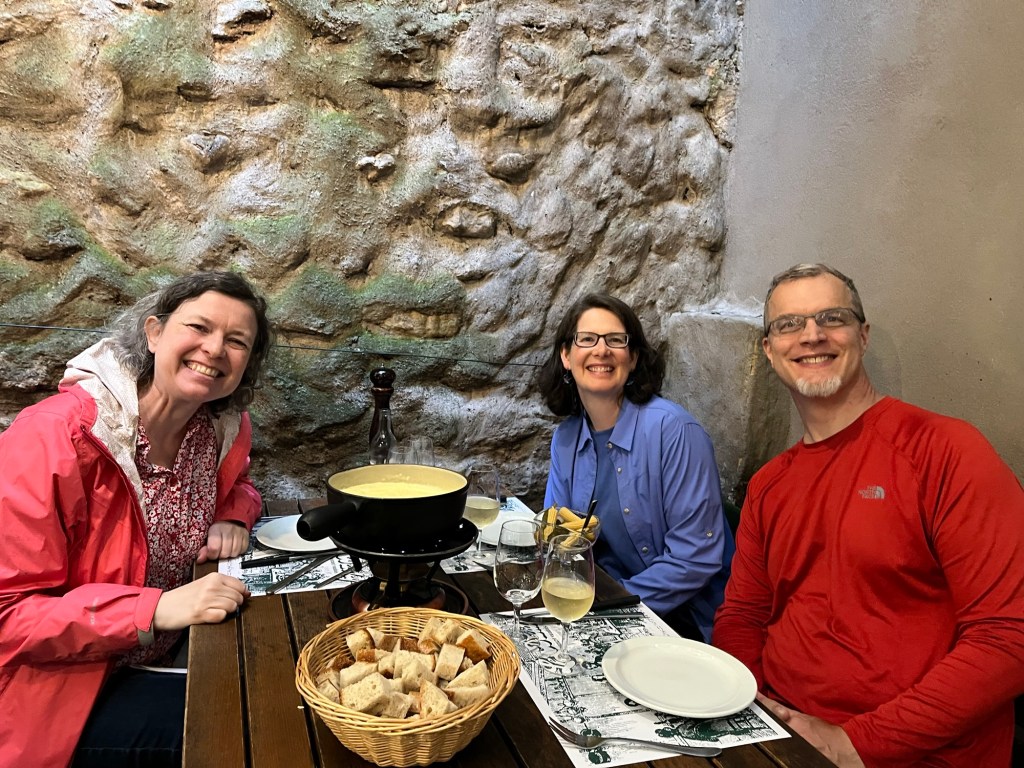
In the evening we all met up for fondue at a restaurant near the Grossmunster (cathedral). Somehow we managed to finish the whole pot! Afterwards we took a stroll through the old city, where guild banners were still hanging in the streets. We ended our evening out with a pirate-themed escape room, which we only completed in the nick of time (less than four minutes left!)

Found the treasure – just in time!

Postcards from Lucerne

Today we had a scheduled afternoon event in Lucerne: Eszter had organized a postcrossing mini-meetup, with the commemorative card she designed shown above. Postcrossing is a hobby where people exchange postcards from different parts of the world, and occasionally postcrossers will get together to sign and write postcards together. Often, the organizer will design a postcard for the event, as in the one shown above. (The inspiration for this card came from Susannah’s recent interest in quilling and the scenery in Lucerne, which led to an intriguing AI-generated image.) Since the meetup didn’t start until later, we had the morning to explore Zürich a bit more before heading to Lucerne. We took a walk through the University of Zürich’s botanic gardens before meeting up with Eszter for lunch at Hiltl, the oldest vegetarian restaurant in the world (established 1898). Its buffet style allows the chance to try lots of different dishes.
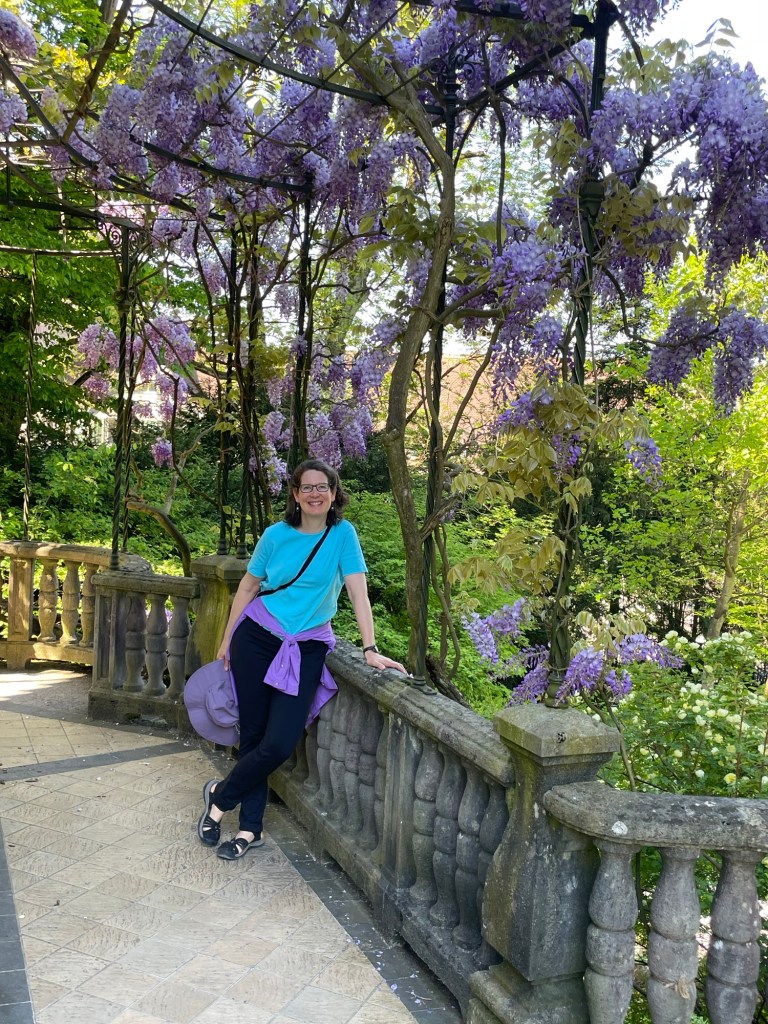
Wisteria gazebo
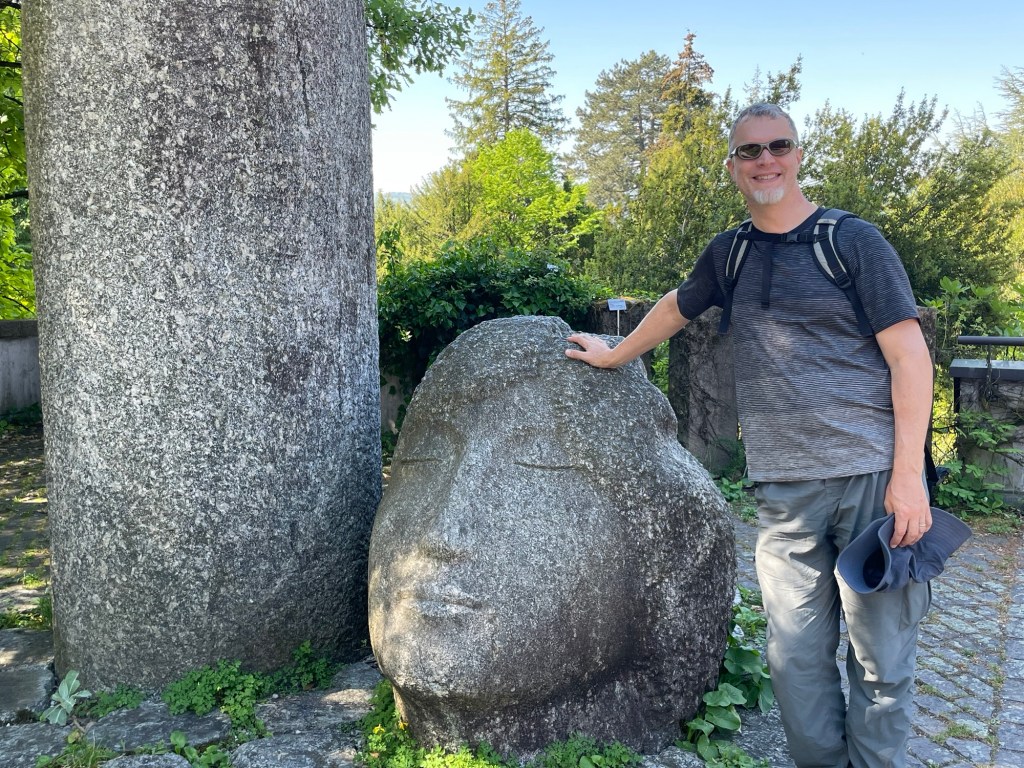
Ozymandias?
Greenhouse bubbles
Closeup blooms
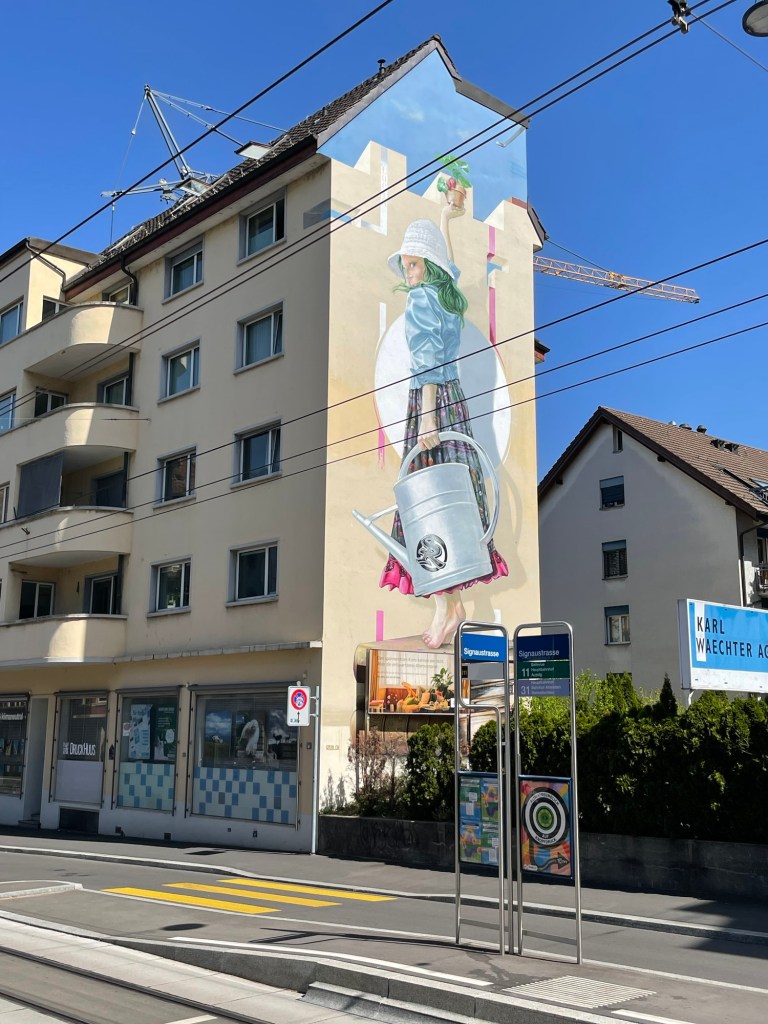
Street art
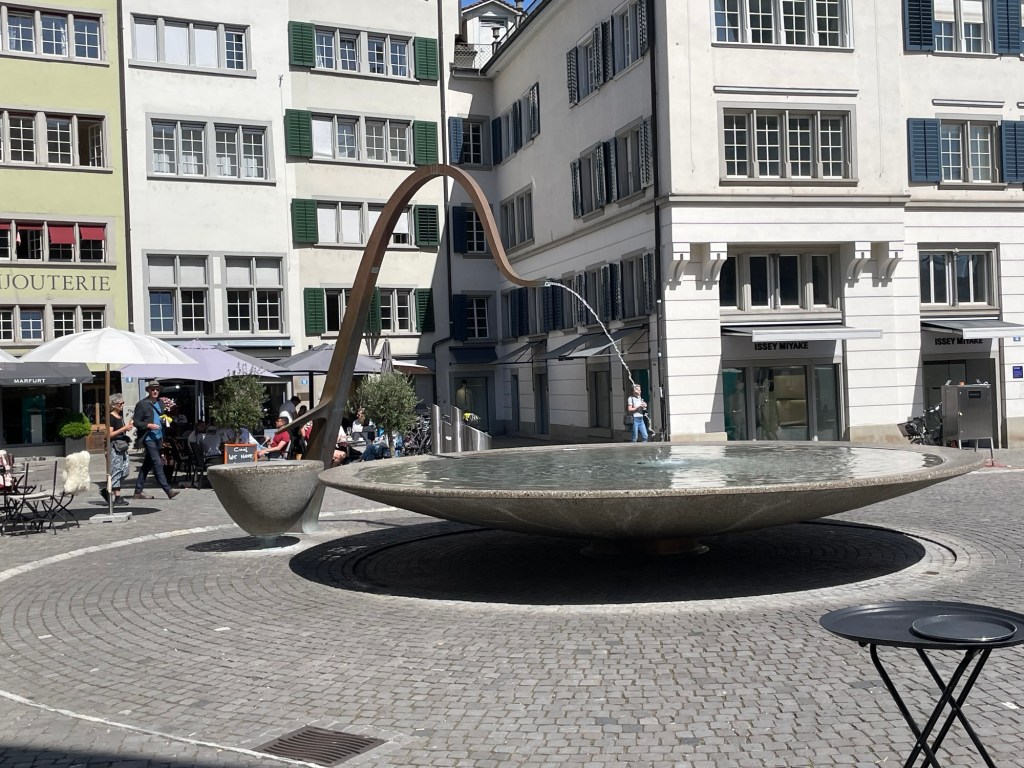
Münsterhof fountain, on our way to the restaurant
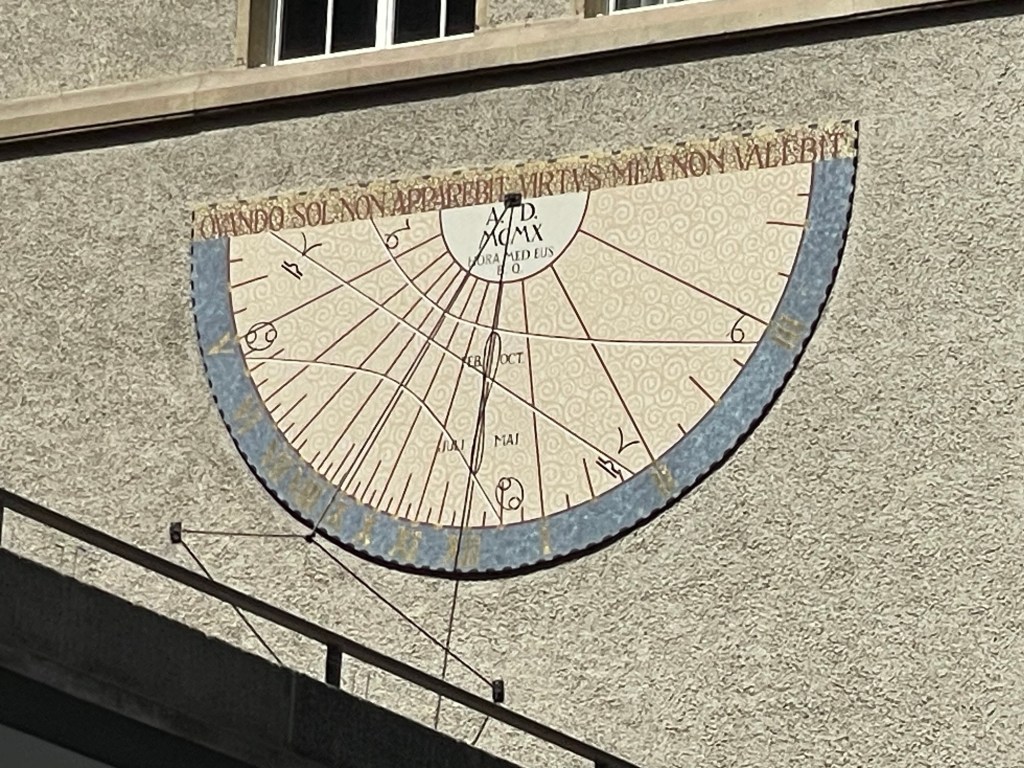
Sundial on the side of a building in the old city
Wall of Swiss chocolate at a local supermarket – this doesn’t even capture the full selection!

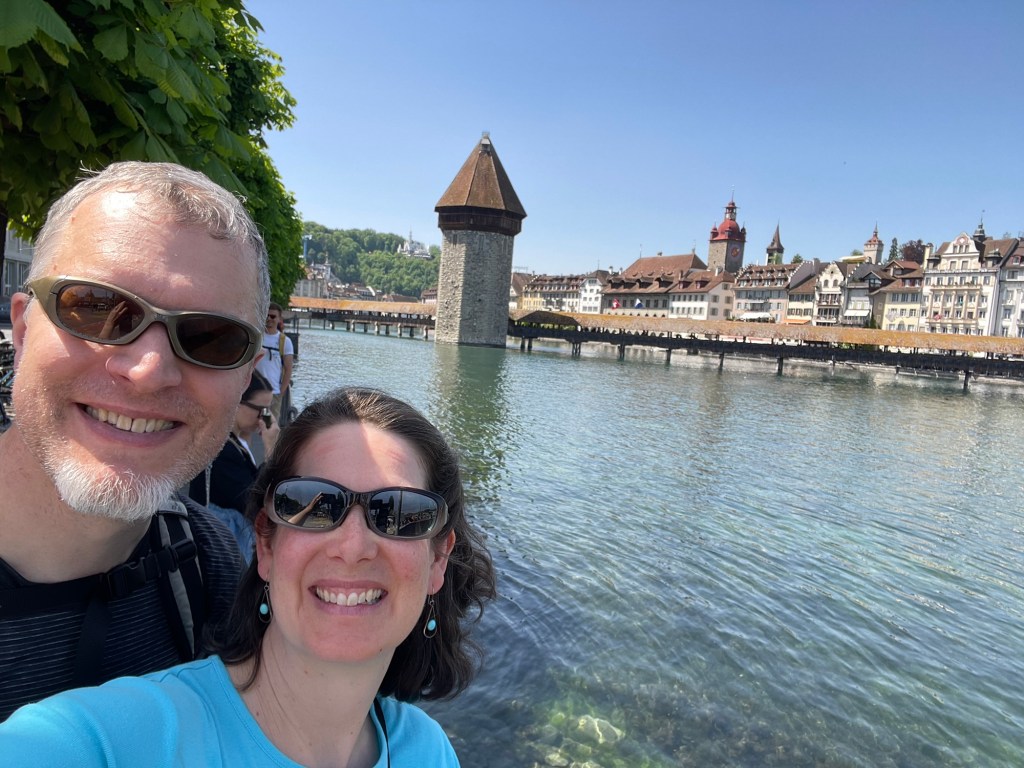
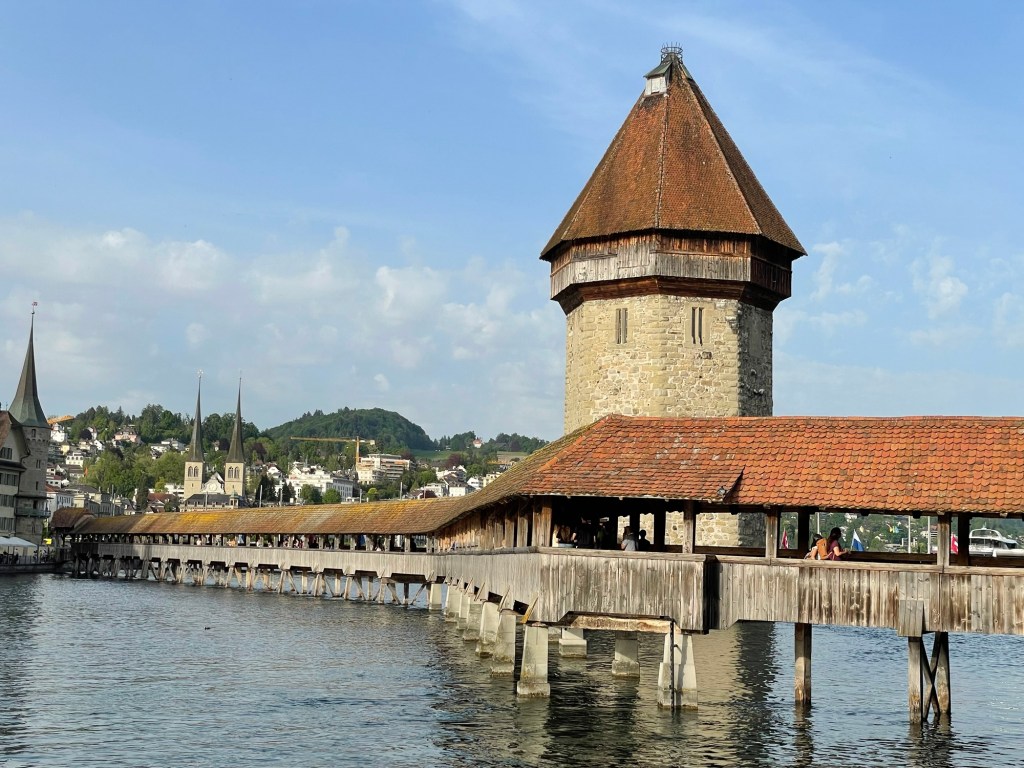
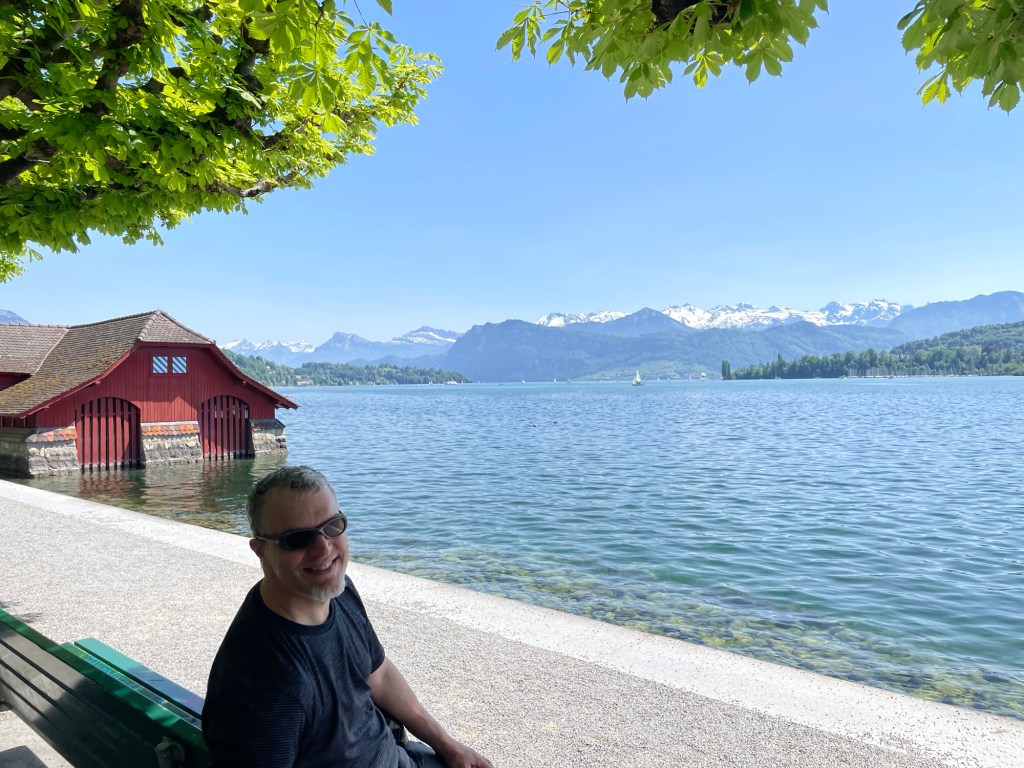
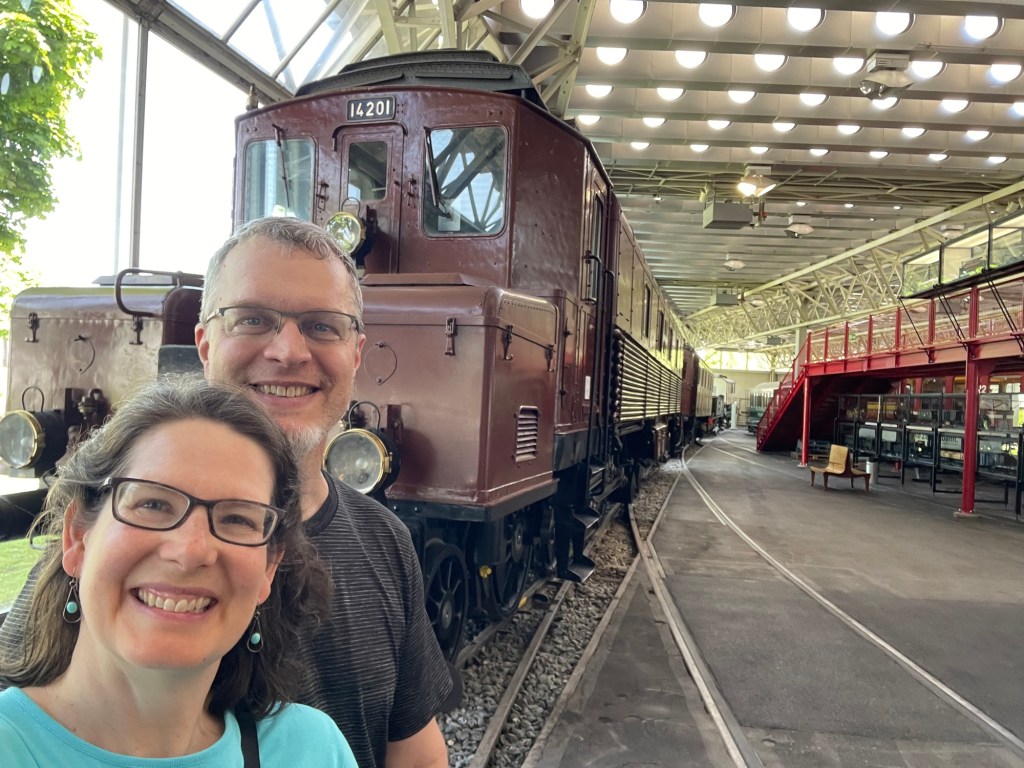
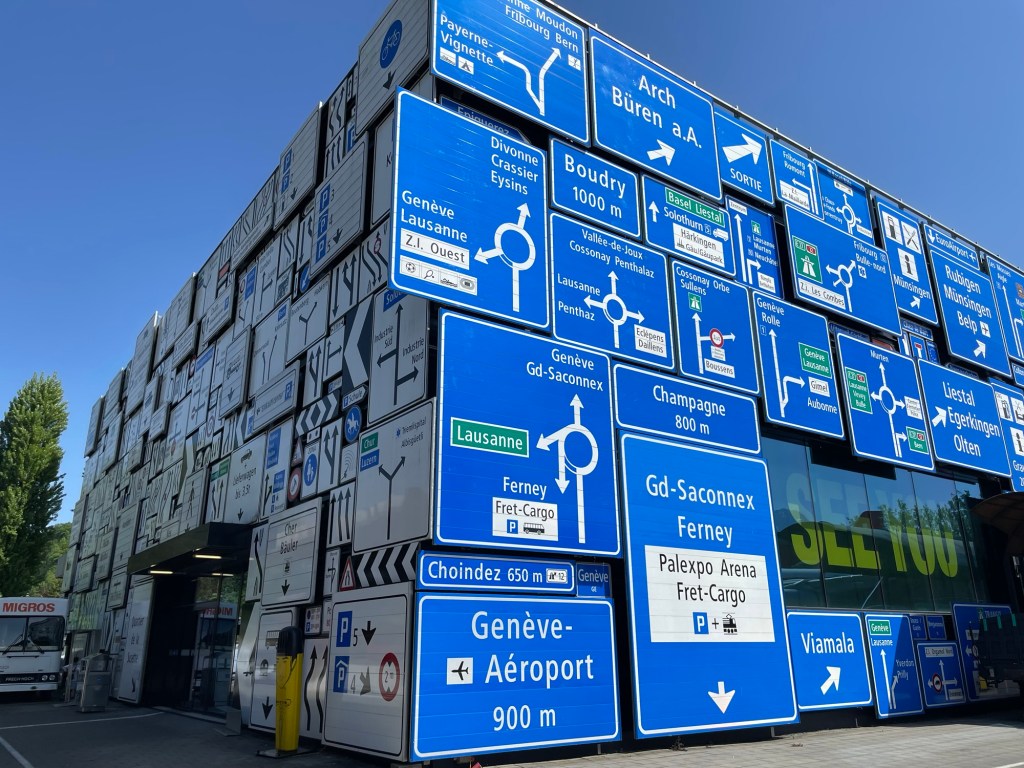
After lunch we hopped on a train to Lucerne, where we visited its landmark wooden bridge before taking a stroll along the lake. Our route happened to take us past the Swiss Transport Museum (Verkehrshaus), reputedly one of the best museums in the country — so we decided to visit. It’s sort of like the Smithsonian’s Air and Space Museum, except that it’s Air and Space and Water and Road and Rail and Energy all in one ticket. There’s something for all ages, with real working machines in some exhibits and miniature trucks, boats, and trains for kids to ride and play on.

We’ve arrived in Lucerne!
Lucerne’s famous Wooden Bridge plus the Water Tower were part of the city’s defense system
Inside the bridge are paintings depicting the city’s role in the Counter-Reformation
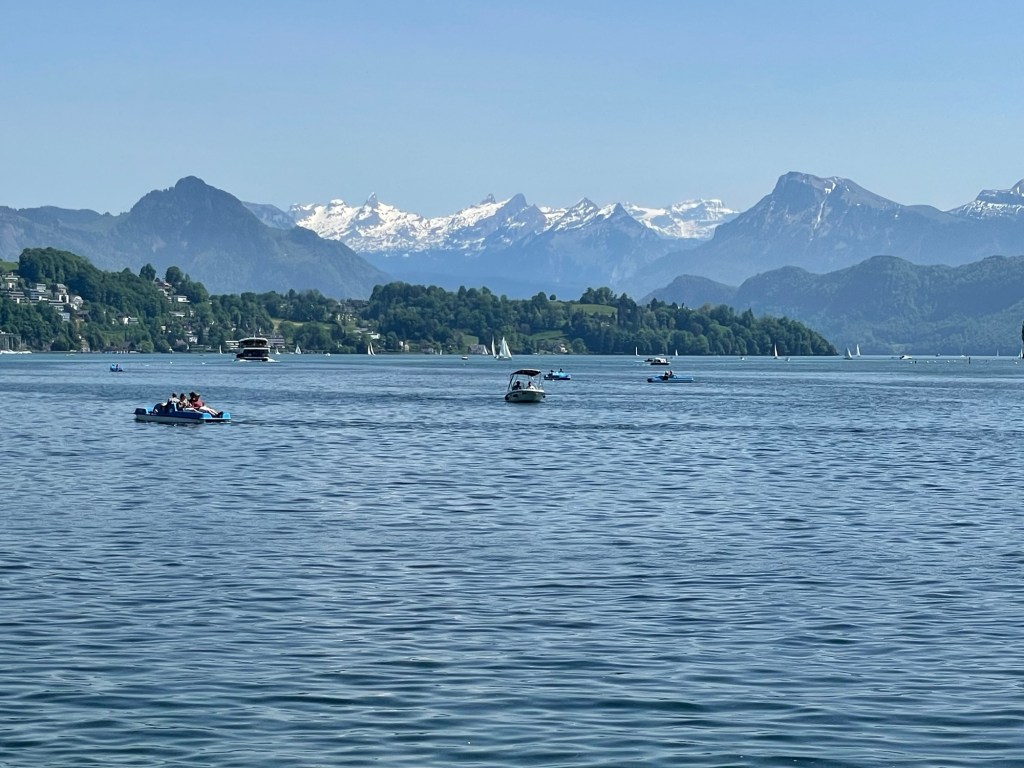
Lake Lucerne
Tunnel boring device outside the Swiss Transport Museum – not boring at all!
Train hall
You could pump the handle on this exhibit and it would slowly speed up, with a sound just like a steam locomotive.
Highway signs outside the road exhibit
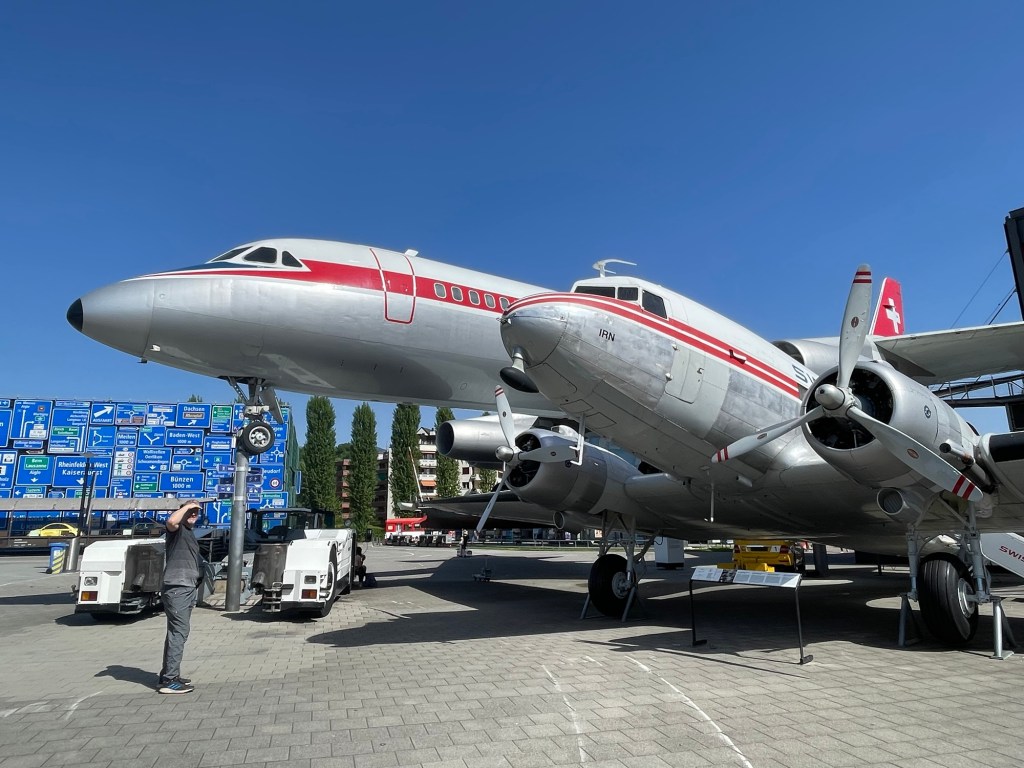
Historic Swissair planes. The one in front is a DC-3.
One building had a booth that would take Matrix-style video that would pan around you while frozen in an action shot. Hard to capture in a still image!
The Swiss mountain rescue service sometimes parachutes in with a dog on its own rope so it can land separately
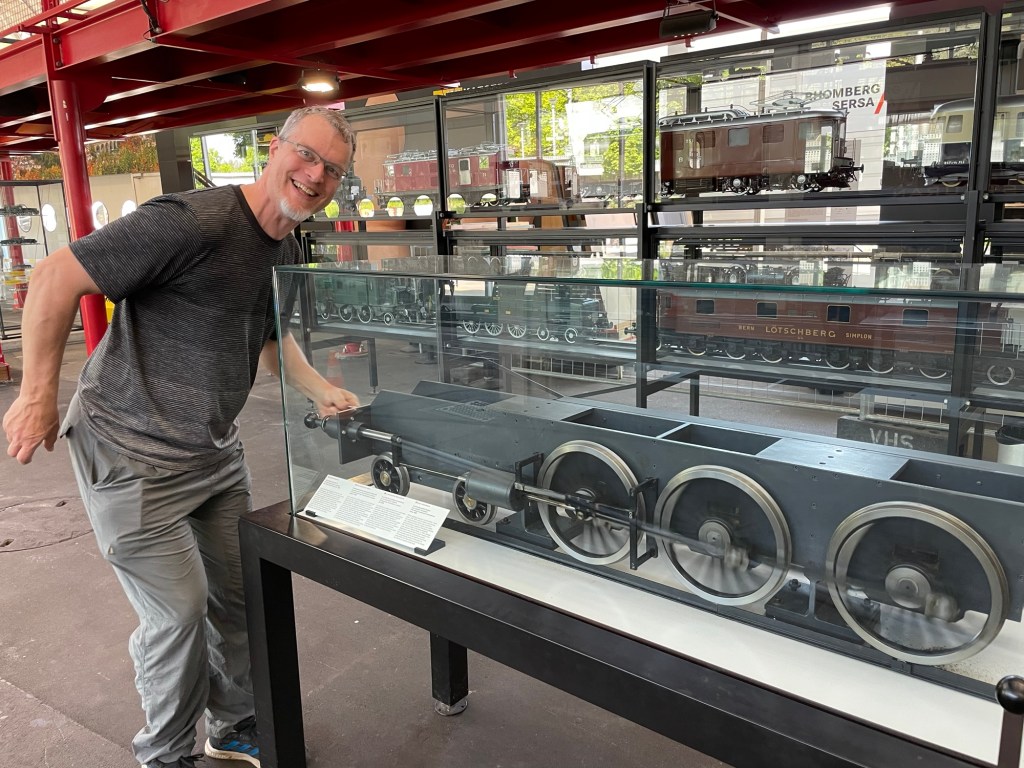
This lifesize steam engine once powered a ferry. When you press the button, the machinery swings into action.
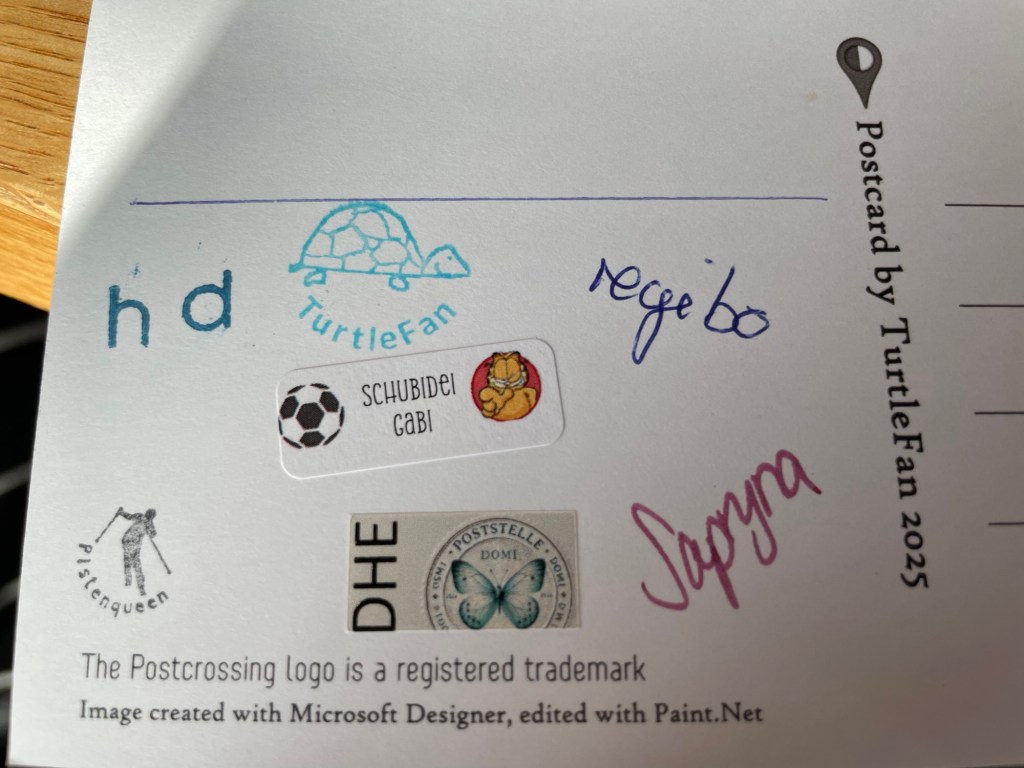
Postcard back signed by all the participants at the meetup
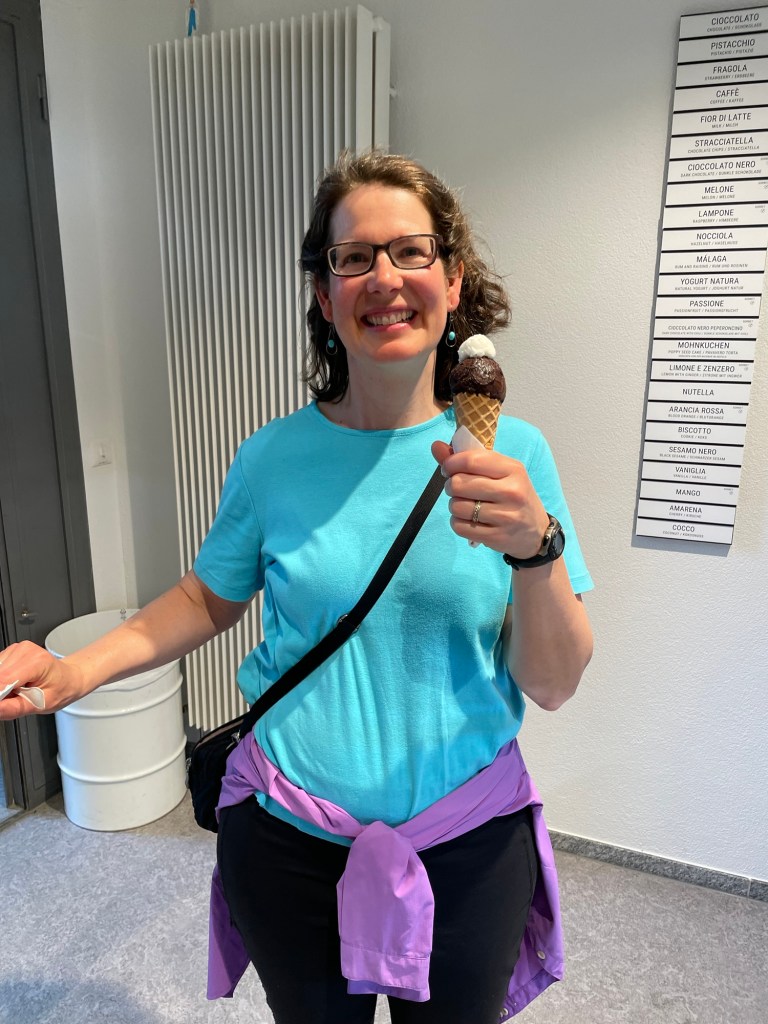
Gelato at the end of the day. This shop offered a free “taster” scoop on top of the main cone. Yum!
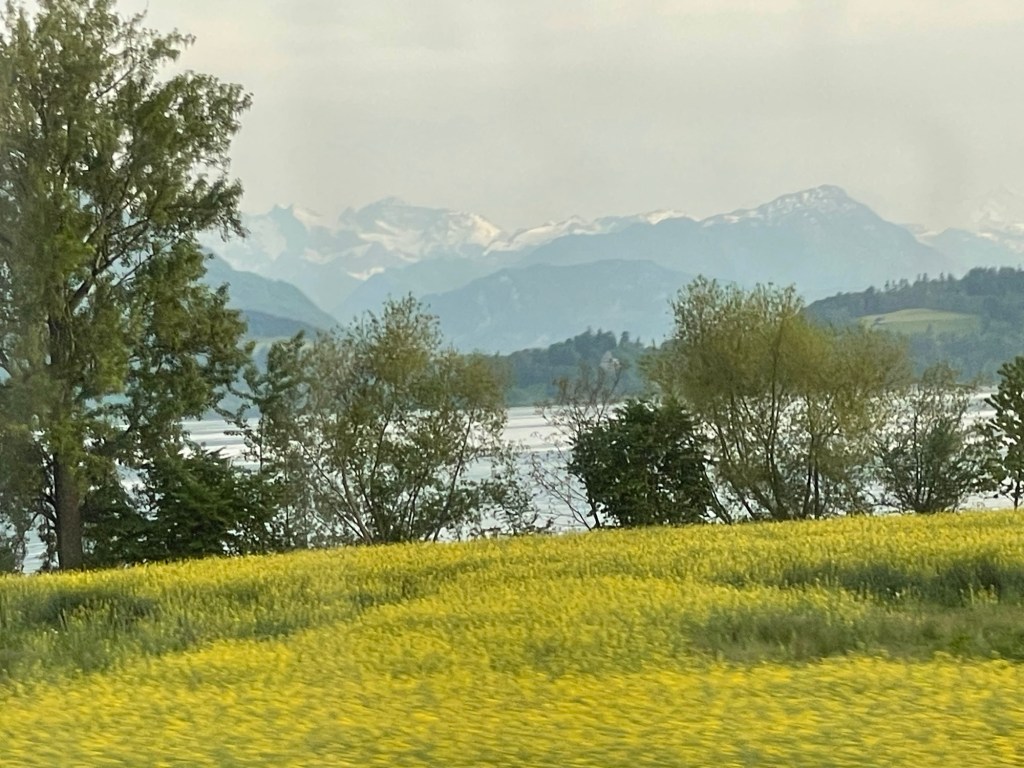
View of the Alps from the train back to Zürich

Zipping around Zürich

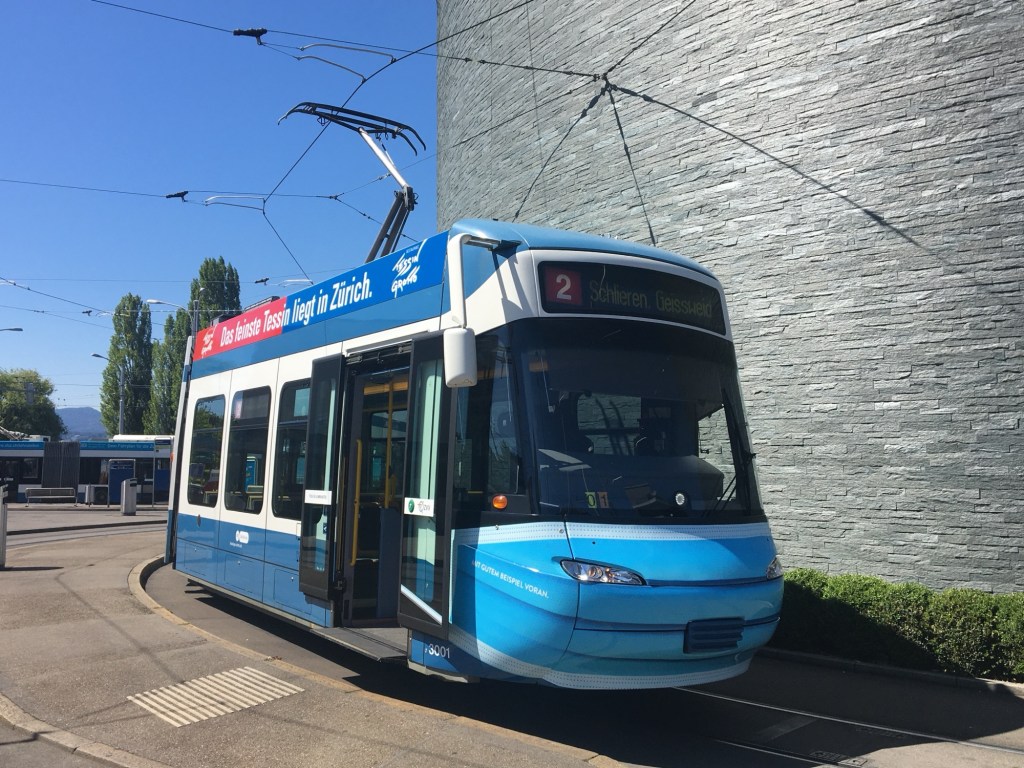
Zürich is served by a ubiquitous surface tram network that moves people efficiently around the city. On many lines the wait is no more than five minutes between trams. Today we purchased a 24-hour pass so that we could move around the city quickly and see the sights.

Photo credit to Eszter (this picture was taken during COVID when the tram was wearing a mask!)

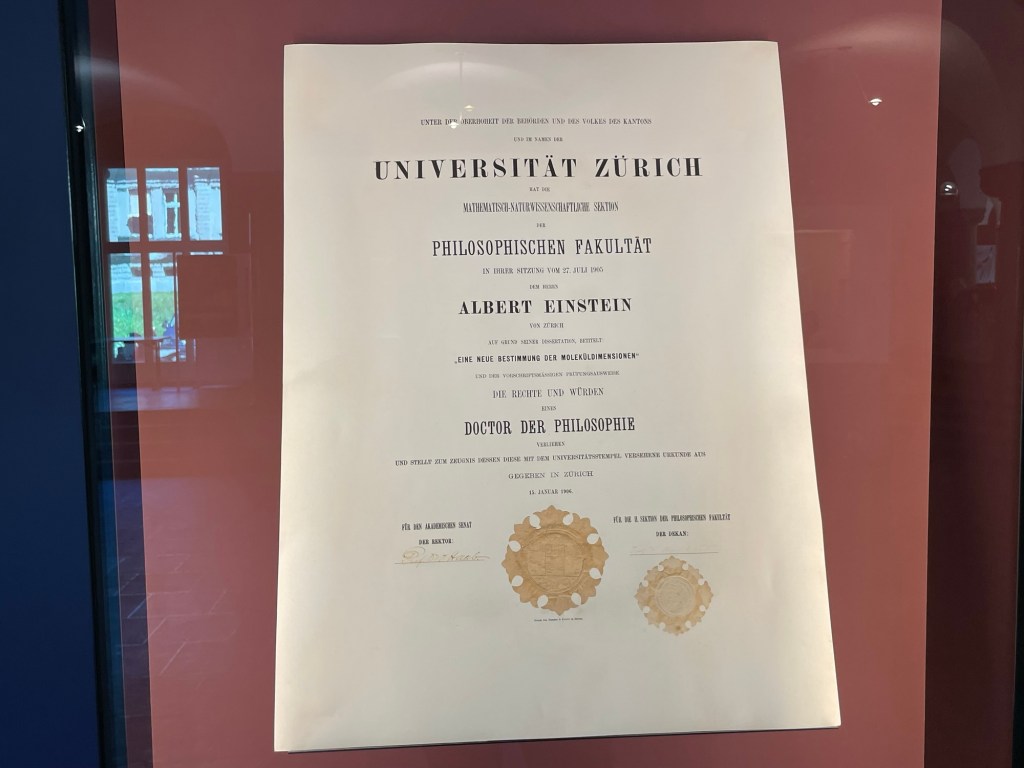
After a morning catching up on some work obligations, we began with lunch with Eszter at the faculty lunchroom of ETH Zürich, which has an open-air terrace with a view out over the city (see top photo). The facilities of ETH Zürich (a well-known technical school) and University of Zürich are close together at this location, so we saw a little bit of both schools. On display inside one of the U. of Z. buildings is a copy of Einstein’s Ph.D. diploma, granted in 1906.

Following lunch, we walked down the hill to the Zürich art museum (Kunsthaus), which offers free admission on Wednesdays. We spent several happy hours exploring their collection, which ranges from old masters to contemporary digital works and installations.

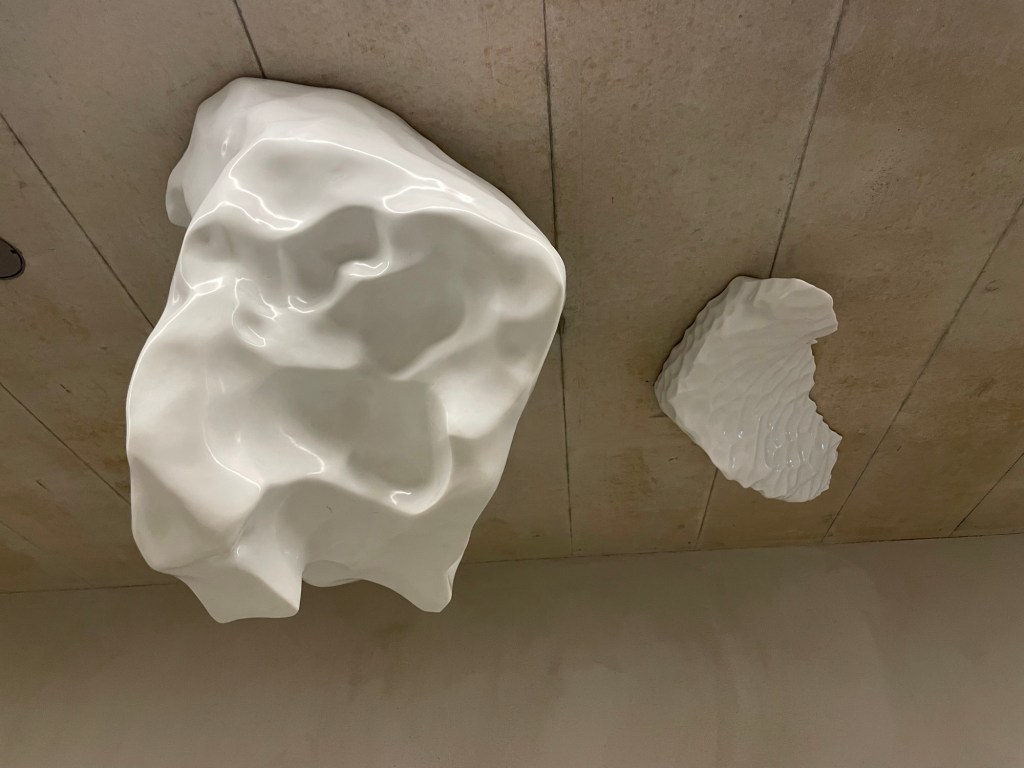
Icebergs sculpted in marble by Olafur Eliasson
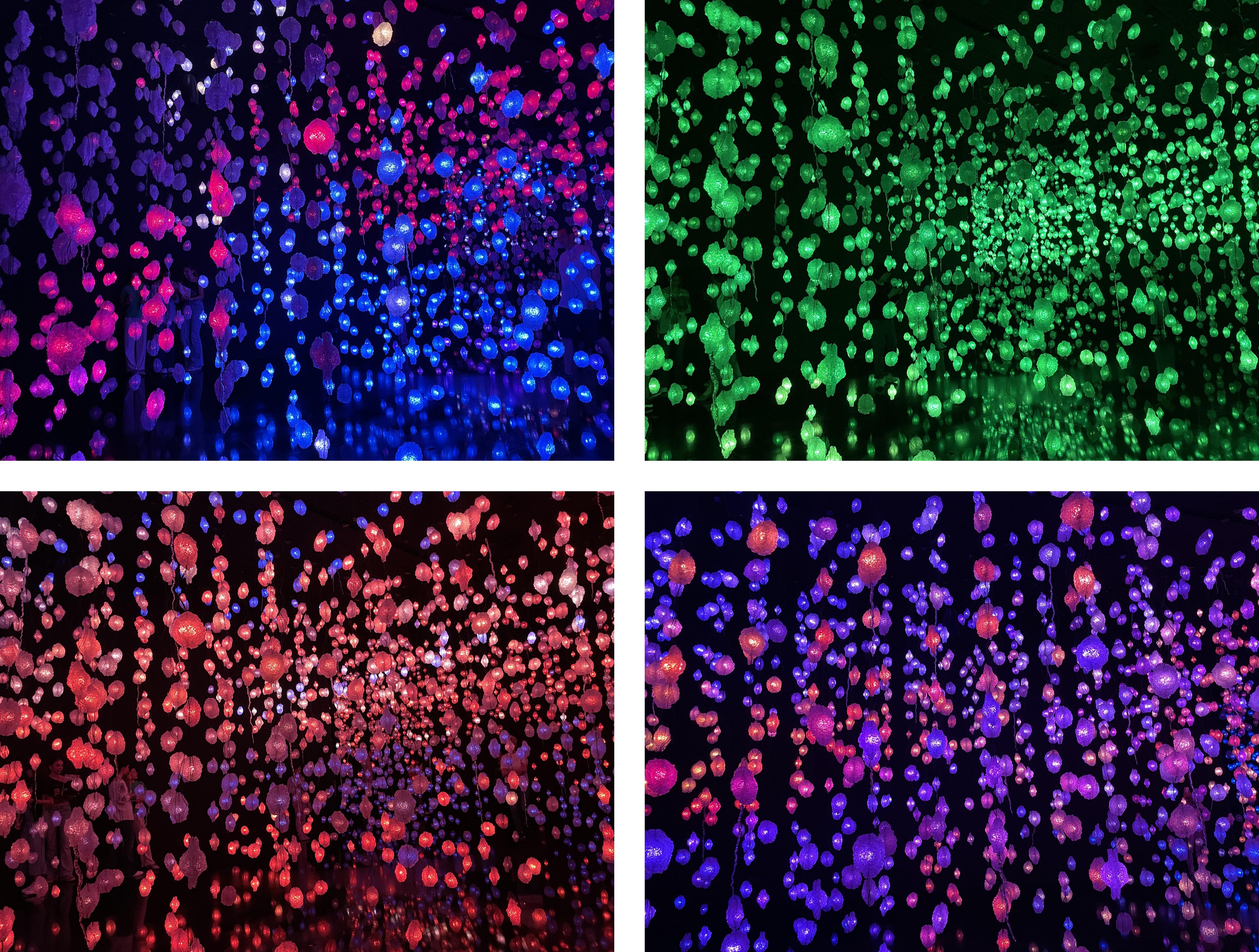
An interactive light and music display installation: “Turicum Pixelwald” by Pipilotti Rist
Another interactive installation: “The Warriors” by Rebecca Horn
This huge concrete ring by Bruce Nauman filled most of one of the galleries. The cross-section transitions from triangular to square.
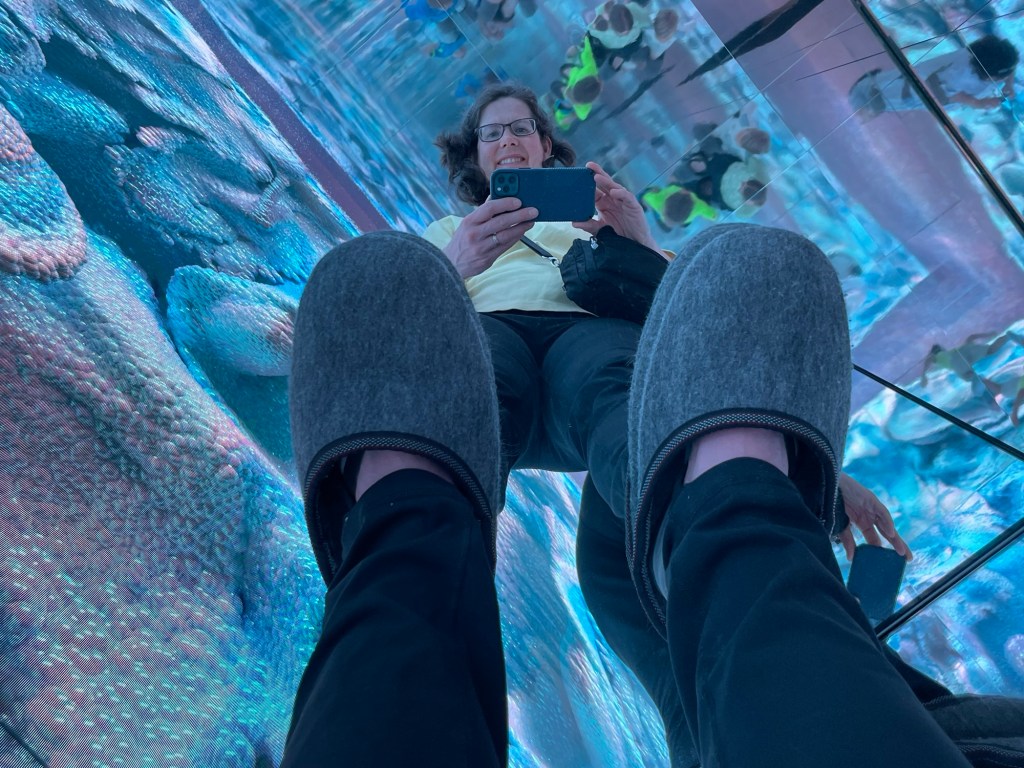
Susannah inside a digital multimedia installation, which required (and provided) slippers because the floor was mirrored
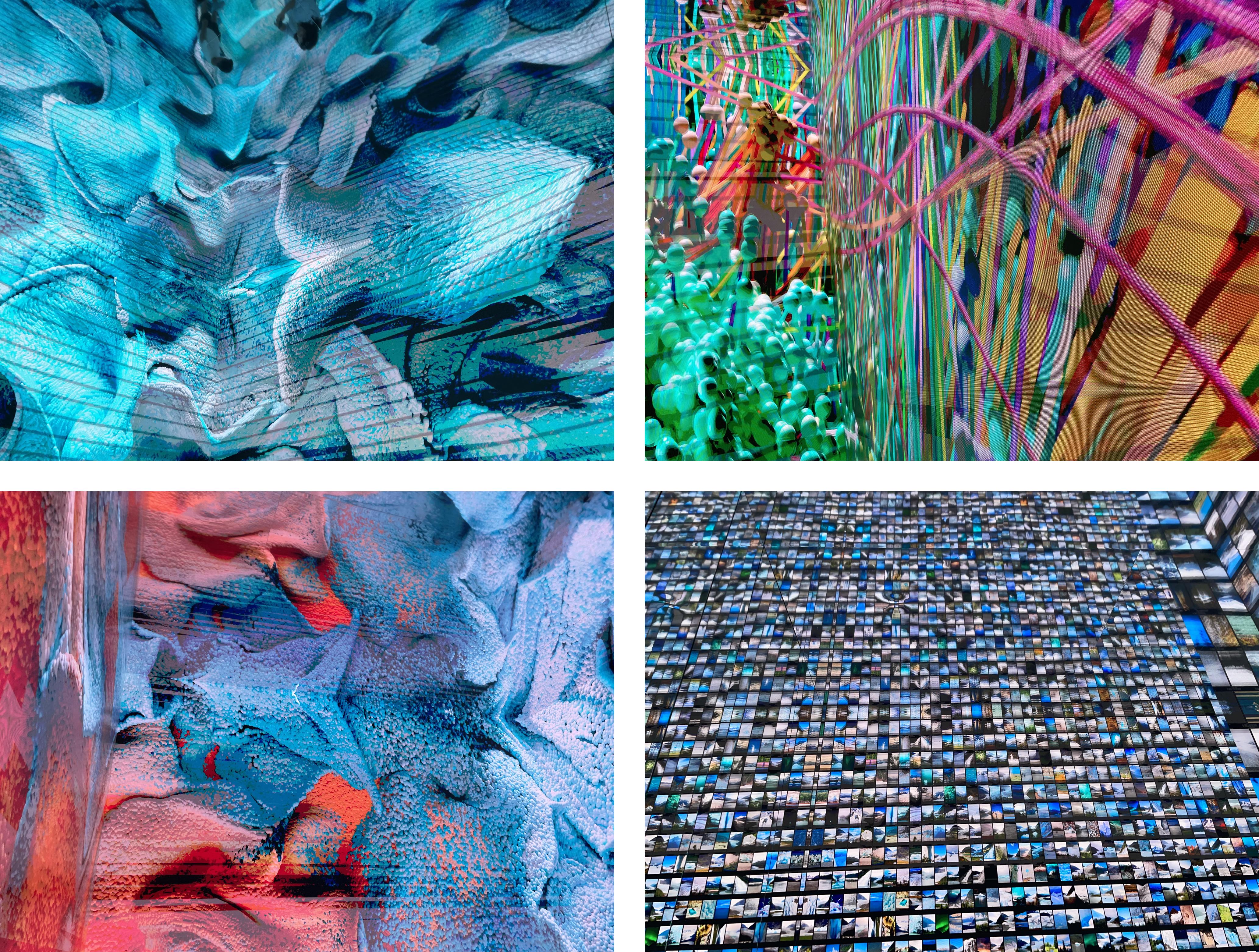
More scenes from the same digital installation: “Glacier Dreams” by Rafik Anadol

Besides the trams, our public transit pass also gave us access to the water shuttle, which travels along the river and part of the lakeshore. We jumped on the opportunity to take a little cruise and see the city from the water. The approved stops have a little pier marked by striped poles, and if you wait there long enough the boat will come and pick you up.

Our water taxi landing
While we were waiting, we saw a troop of Swiss citizen-soldiers marching around as part of their military training.
The boat has a flat profile so that it can fit under the low bridges.
Out on the lake – what a beautiful day!

Towards the end of the day, we walked to the industrial section of town to meet a former student of Susannah’s for drinks and dinner. Along the way we walked along the banks of the Limmat River, which on days with gorgeous weather like today attracts throngs of people to the waterfront to tan, be seen, and occasionally swim. (We did see a few people in the water, but most were sitting along the edge in bikinis and board shorts.) We also passed this high stone viaduct, which has been creatively repurposed as a shopping mall with small establishments in each bay.
Under the viaduct
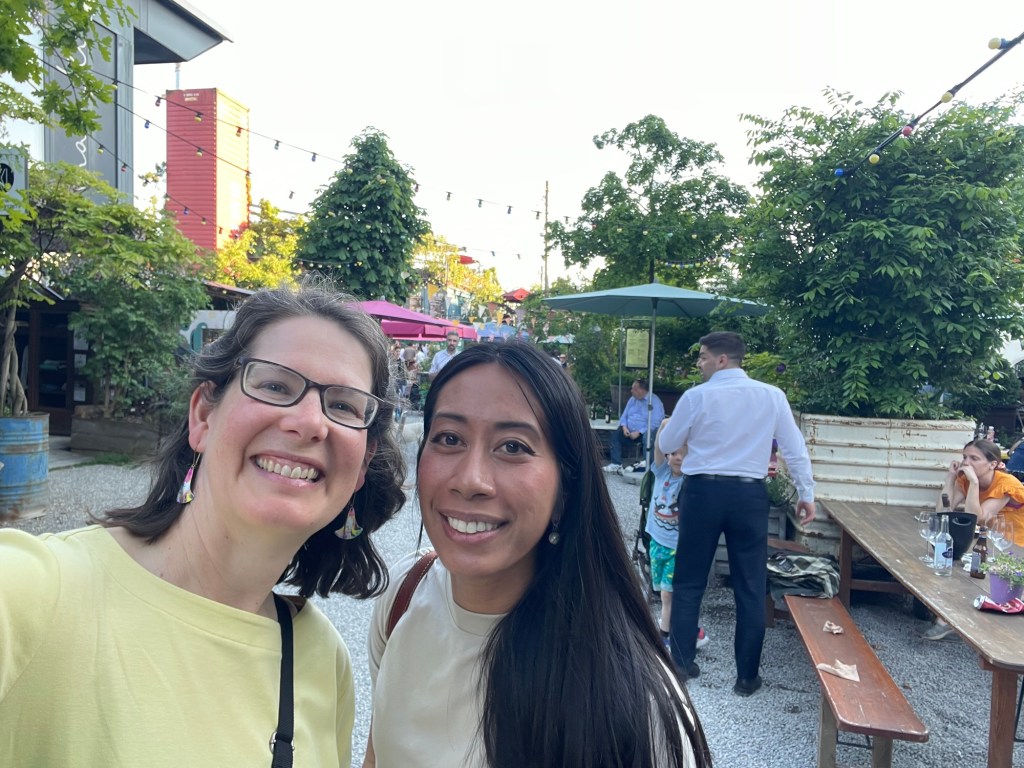
Outdoor beer garden with Susannah’s former student Marni. All the 30-somethings in Zürich seemingly head here for drinks after work.

All About Relationships

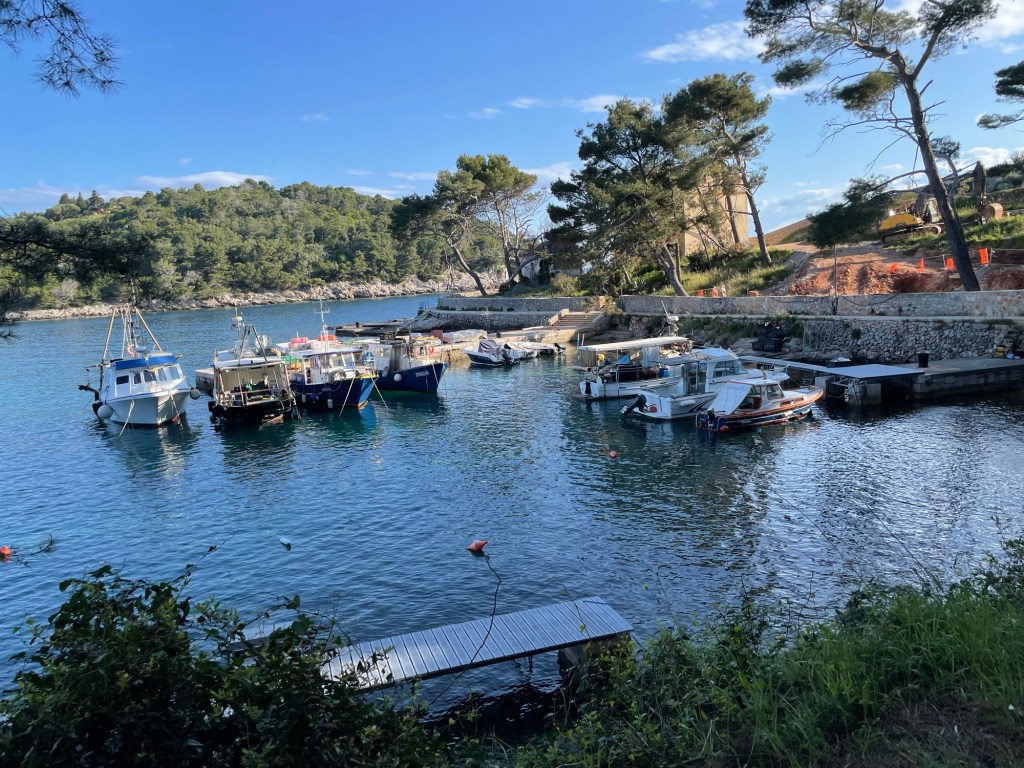
Today was our last day with Rowan on this trip, and we saw a little more of Lošinj (“the island of vitality”) before saying goodbye. The road connecting Mali Lošinj to Veli Lošinj is scenic in its own right (minus the infrastructure improvements in process) but the walking path along the water is especially charming. This is the footpath Rowan uses to get to “the big town”, so Nick and Susannah jumped on the chance to experience it firsthand during a morning jog.

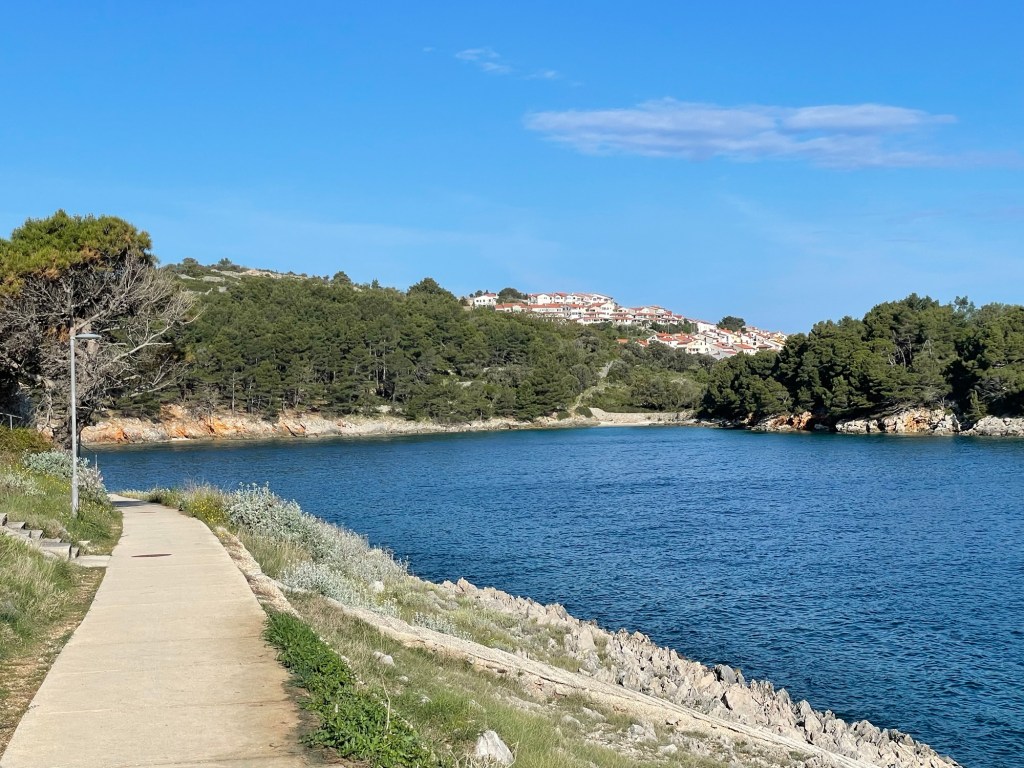
View looking toward Mali Lošinj

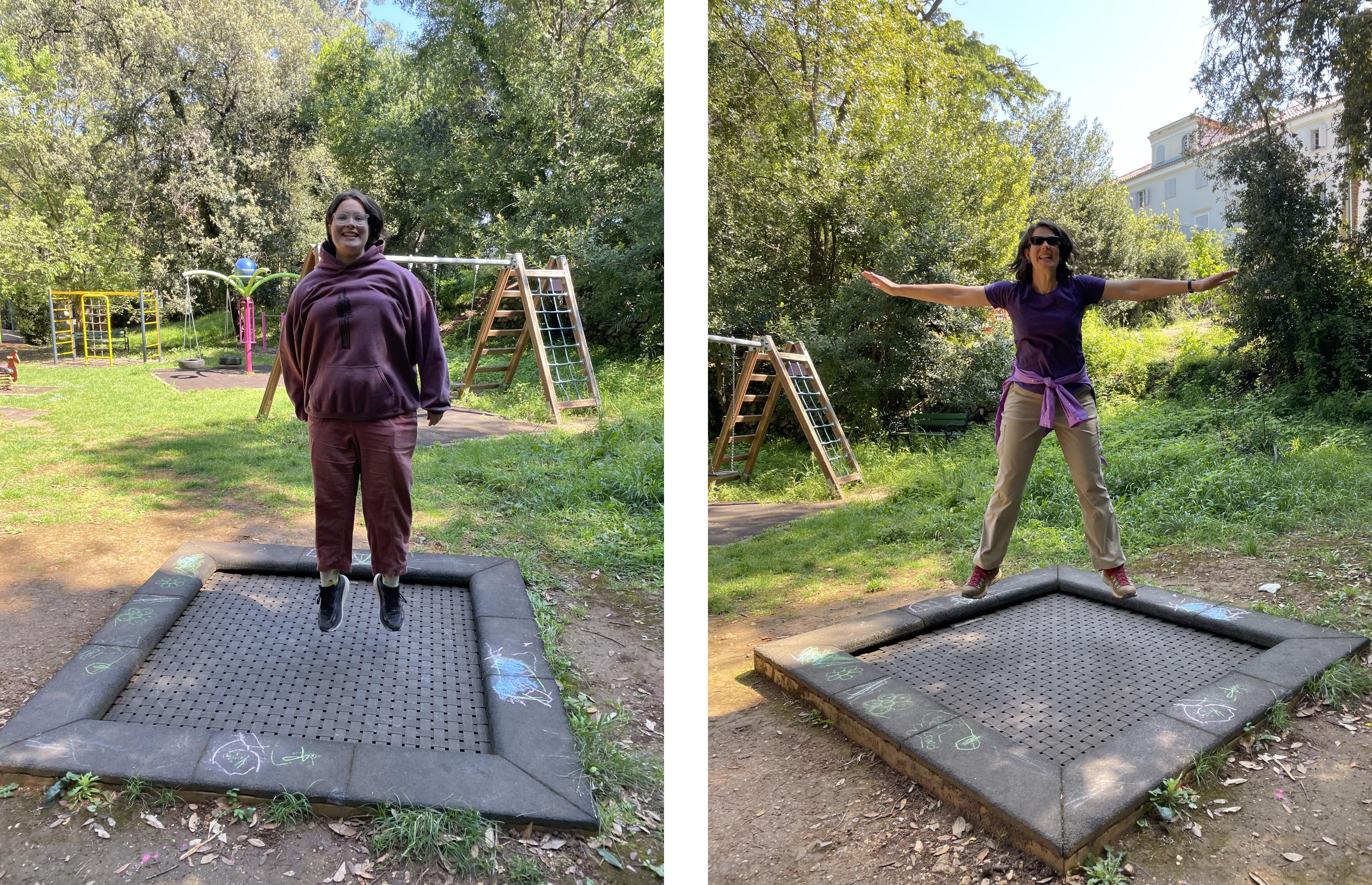
After departing our lodging in Mali Lošinj, we returned to Veli to drop off Rowan’s belongings and get a tour of their study abroad facilities. The program is housed in part of a health-focused hotel, situated on the edge of a healing forest. With a large classroom and lab space, dorm-style bedrooms, a common space with couches, and a kitchen and dining area, the students are well set up for learning and fun. Rowan showed us the wall where they will be painting a mural that depicts sea life at different depths, and we all enjoyed trying out the trampoline in the playground outside.

Blank wall, ready for mural!

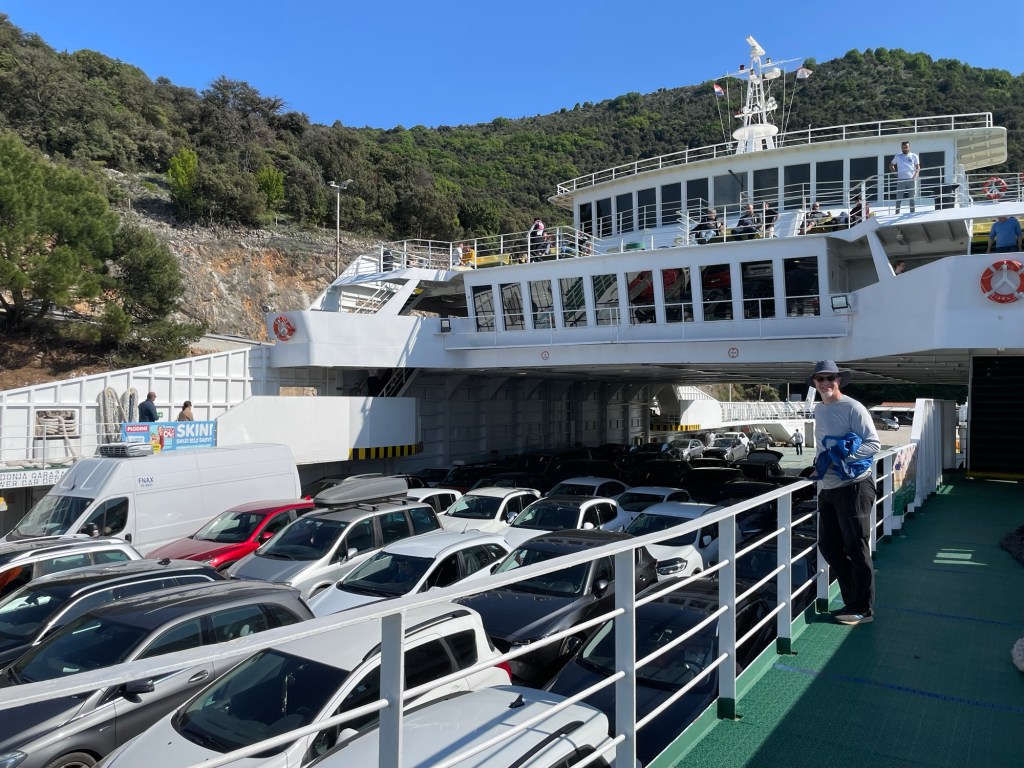
Rowan returns to their studies and we continue on to more European adventures, including a quick stop in Zagreb before we leave Croatia. The road to Zagreb requires another ferry crossing, this time from the island of Cres to the island of Krk (the latter is connected to the mainland by bridges). This time we didn’t need to worry whether we would make it on the ferry because we passed a helpful sign by the side of the road saying that all vehicles beyond this point would fit on a single ferry trip!

In a much better place in line this time
Bumper to bumper, in a good way

The terrain in Croatia is quite hilly, and there are a lot of tunnels on the roadways, even in places that would be cuts in the U.S. Besides standard tunnels that go through mountains, the Croatians have also created additional ones specifically for wildlife passage above. These have a distinctive look and often include tree plantings.

The journey to Zagreb took several hours (it’s never quick getting to and from an island paradise!) so we didn’t arrive at our new lodging until the evening. We had time for just one sight. Based on several positive recommendations from friends, Susannah particularly wanted to visit the Museum of Broken Relationships. Conveniently, it stays open until 9 PM even on Sundays, so we were in business. We even managed to catch a bit of the feel of Zagreb while walking to and from the museum, through parts of the Lower Town and Upper Town.

View of Zagreb from the top of the staircase between Lower Town and Upper Town

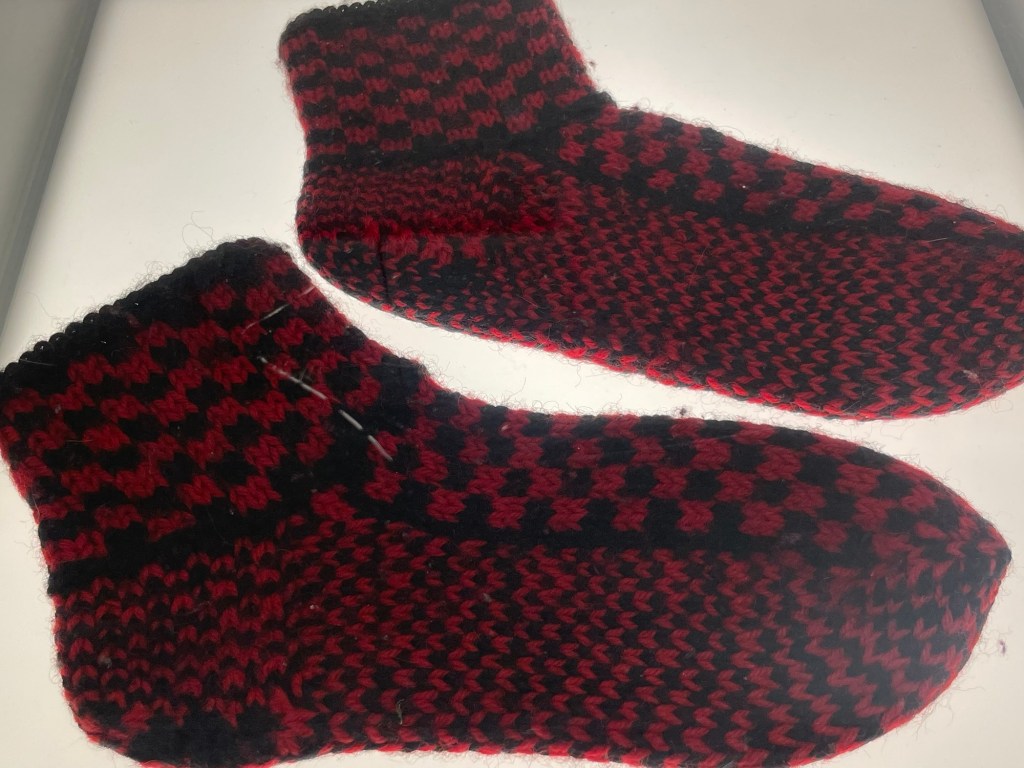
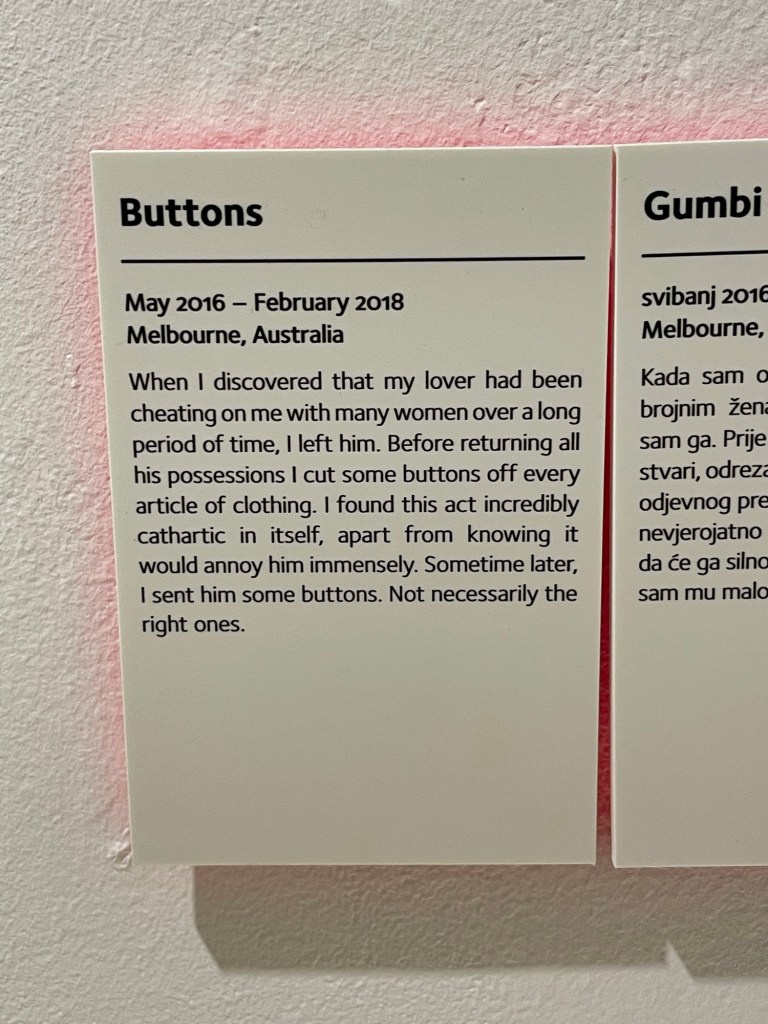
The Museum of Broken Relationships is a quirky museum, a bit like an inverse of the Modern Love column in the New York Times. It features items representing broken relationships, together with a story about their meaning, donated by ordinary people. Most of the relationships involve other people, but occasionally things or situations instead. Not all concern romantic love; some feature familial relationships and friendships. Many exhibits were sad, others poignant, some angry, a few hopeful or funny. Susannah’s favorite was about a pair of woolen socks knitted with love by the donor’s grandmother, to help them become safe, brave, and strong; the donor has given them away because they now feel ready to stand on their own two feet. Nick appreciated the sense of humor in a story about buttons (see below).

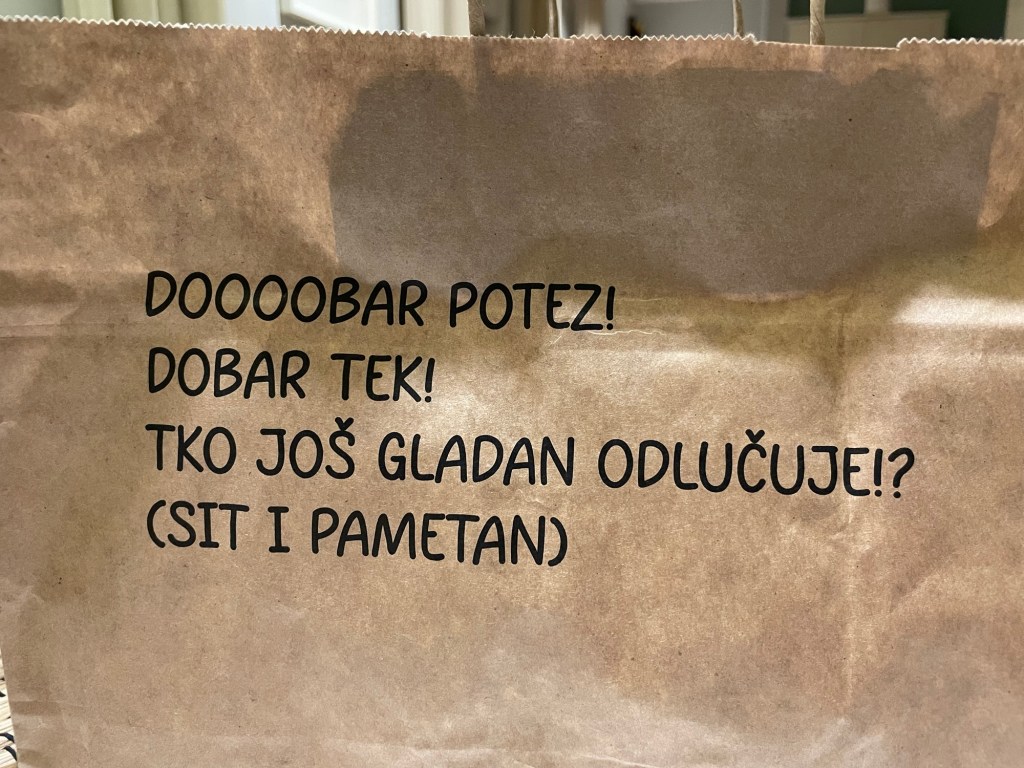
For dinner, we happened upon a promisingly named establishment: Good Food. We can attest that it lives up to its name. We were intrigued by the messaging on their takeout bags, which we think translates to “Good move! Bon Appetit! Who could be hungry after this choice? (Full and smart!)” At least, that’s the best we could gather from Google translate. Any native Croatian speakers want to help us out?

Iron and Bees

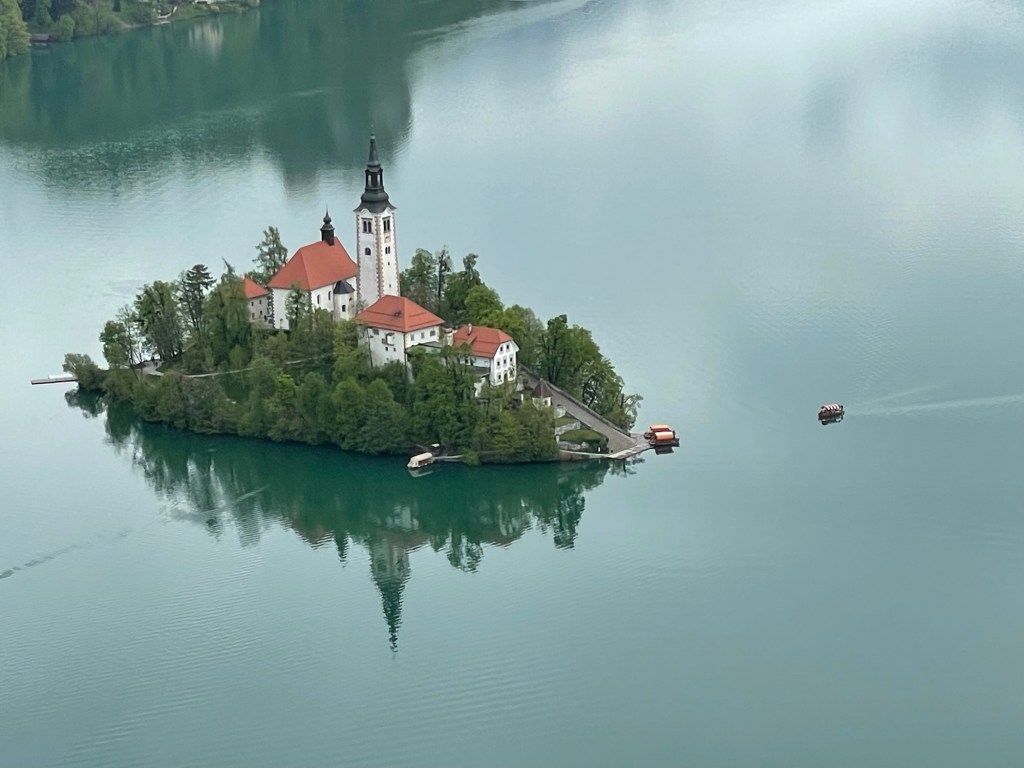
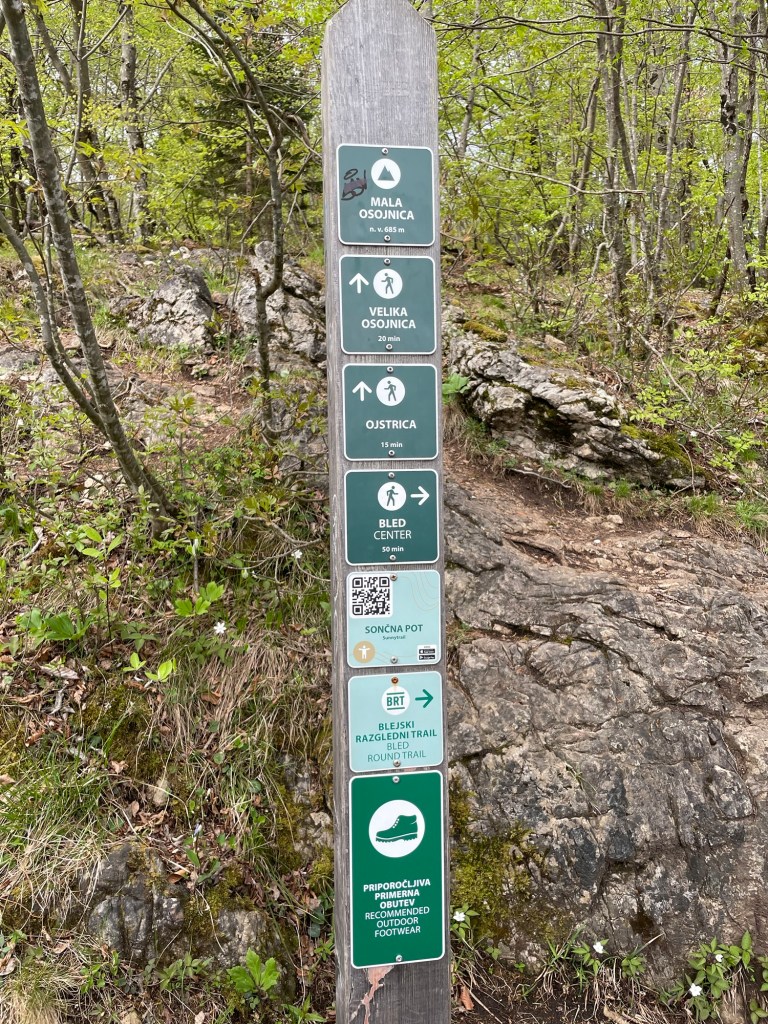
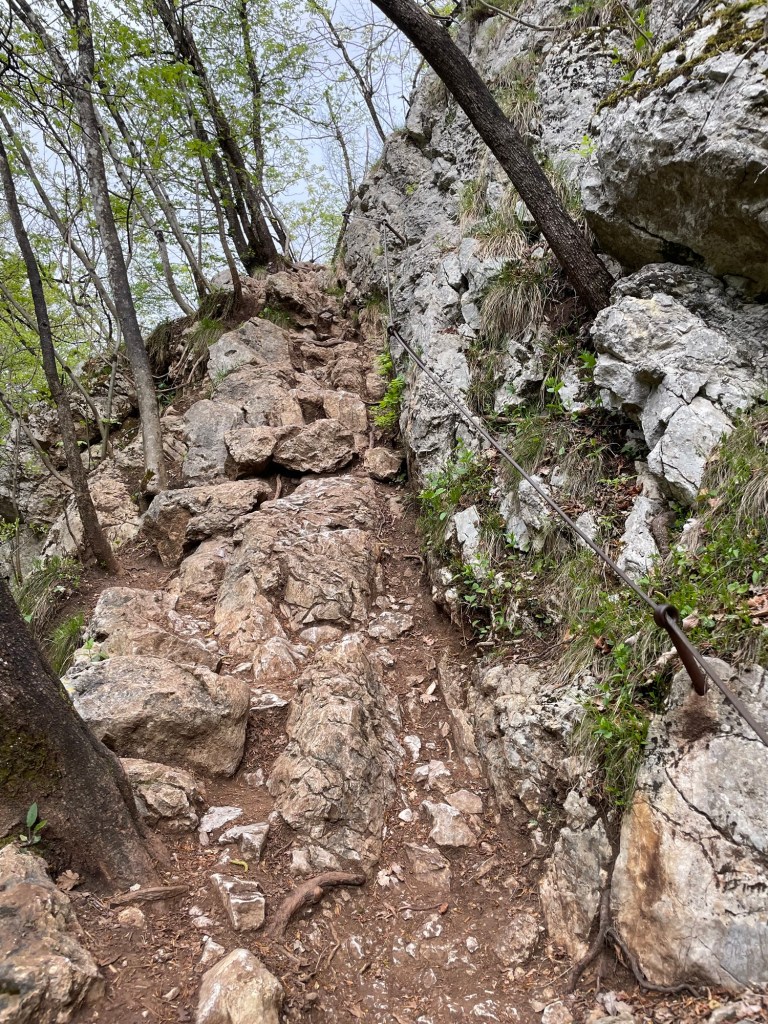
Today we planned a more relaxed pace than yesterday’s blitz of all the main Bled attractions. We decided to visit some of the local museums in the surrounding towns, focusing on aspects of life in times past. But before all that we did take time for a small morning hike up one of the hills at the end of the lake, just to see everything from another viewpoint. We actually ended up at two different lookouts, since we originally missed the turnoff for our intended destination (Ojstrica) and instead found ourselves at Mala Osojnica. With sharper eyes out on the way down, we found the missed trail and climbed Ojstrica as well. Which view do you like the best?

Bled Island from Mala Osojnica
More view from Mala Osojnica
The view from Ojstrica
Good thing we brought our hiking boots – would be hard to imagine doing this hike in slippers!
The trail we missed on the way up, much easier to find as we descended

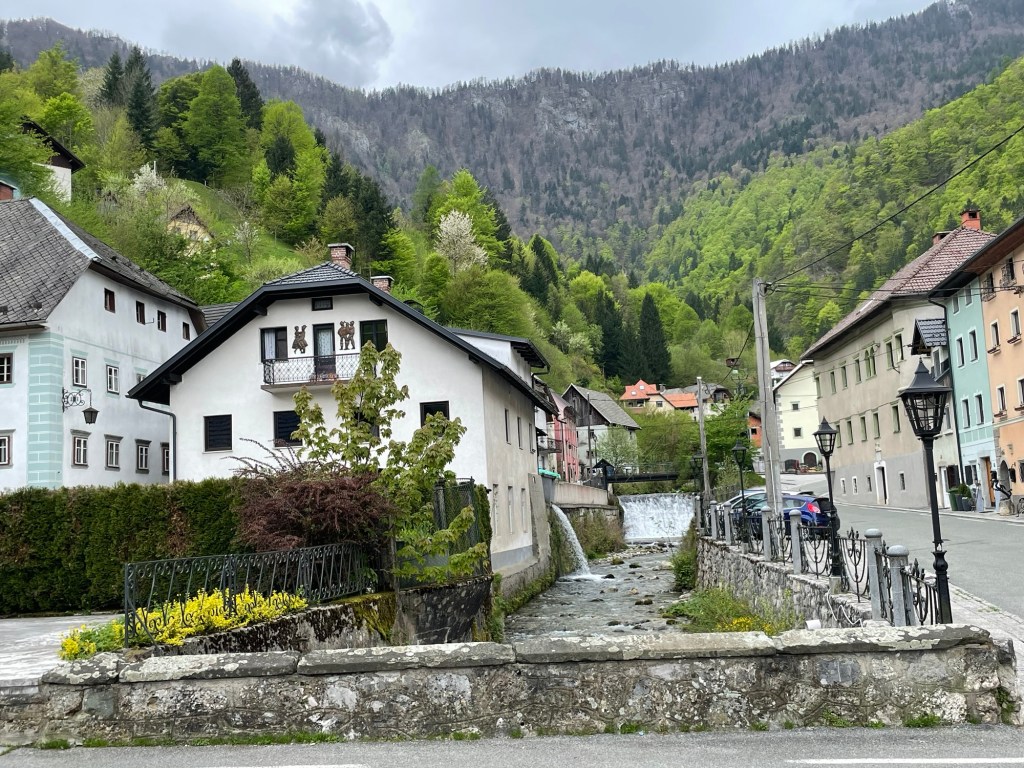
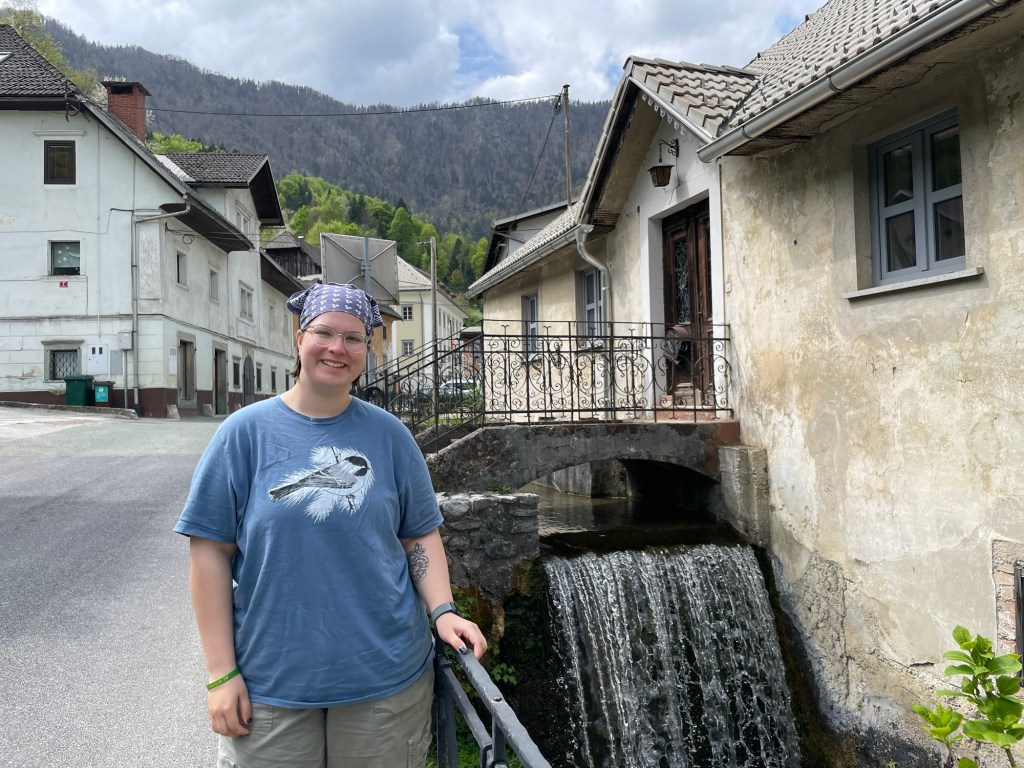
Taking once more to our rental car, we set out for the village of Kropa, which had long been at the center of the local iron mining industry. The buildings here are clustered closely around a fast-moving mountain stream, which provided power for the smelting and ore processing operations. The importance of mining gave those involved with the trade special rights by royal charter, and allowed for a relatively prosperous middle class to grow up in the region. Even within this area of relative freedom there was a pecking order, of course. The prosperous iron traders owned the houses, living on the upper stories while the ground floor was given over to business. The smelters were a step down in rank, and those who worked as blacksmiths were at the bottom of the social ladder, forced into shared accommodations where each family was allocated just a single table for living space, and had to use a shared kitchen.

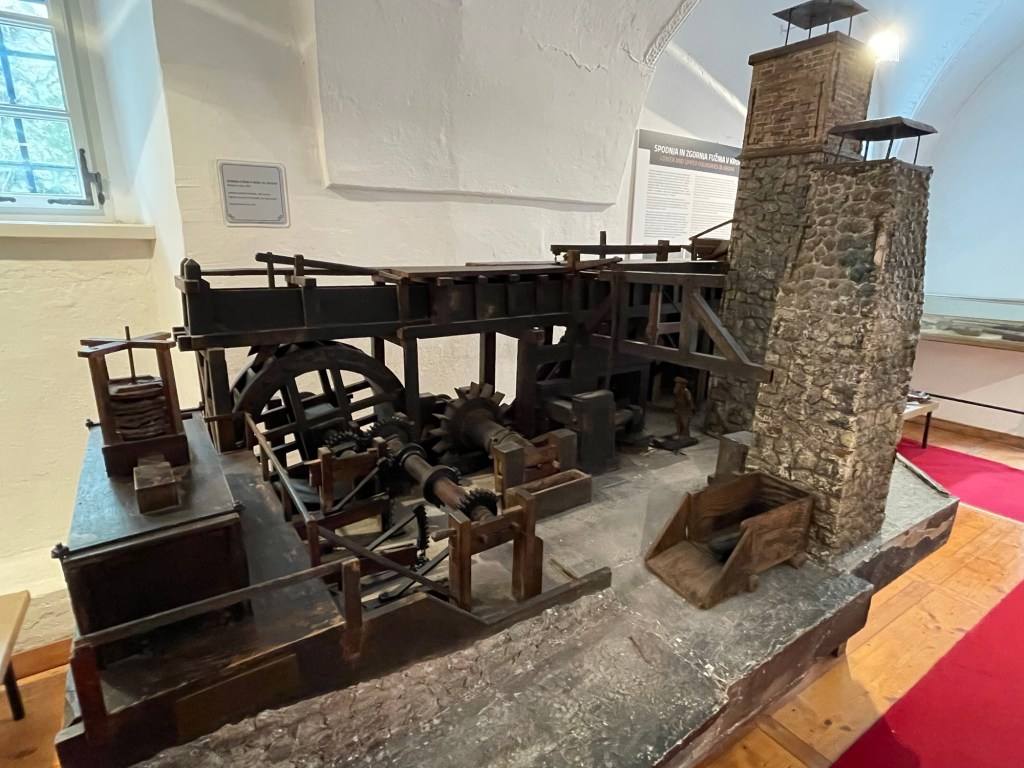
Inside one of the buildings in Kropa we found a museum (not without difficulty since it was hardly advertised from the outside) dedicated to the local history of ironworking. Iron goods were traded southwards into Italy, helping to support the needs of the Venetian navy. Over time, the area became particularly known for producing nails of high quality, used for everything from boots to railroad ties. They were produced in a wide range of standard sizes, with defined prices for each. A skilled smith could make as many as 2000 nails per day.

Diorama showing early iron smelting
A more advanced smelting operation with a blast furnace

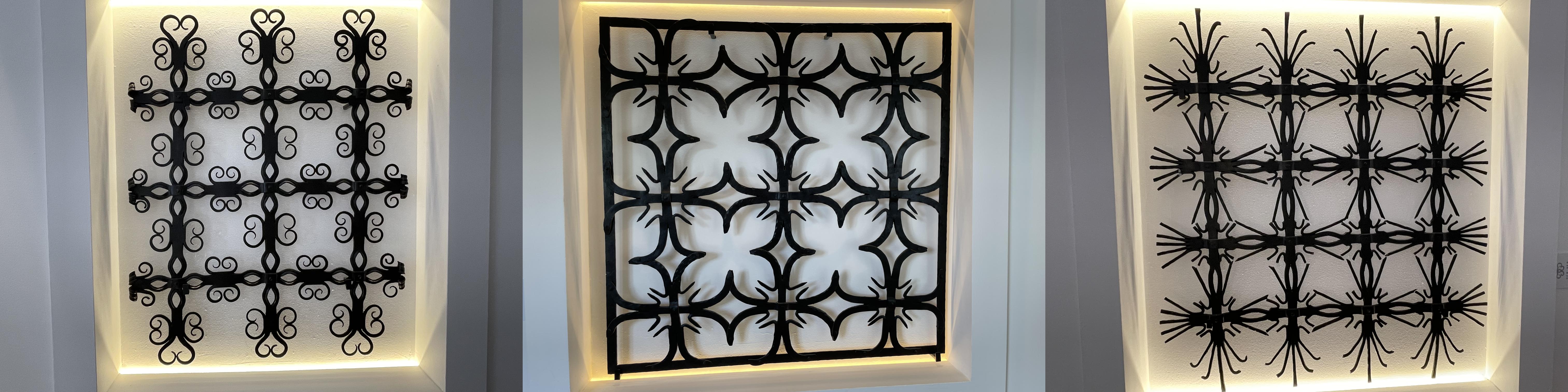
The iron trade collapsed in the mid-1800s as the local ore deposits ran out and the beech forests (used to make charcoal) were all cut down. The ironworking knowledge rooted in the area began to die out. However, efforts to establish a new specialization in ornamental and artistic ironwork have borne fruit, and now artists from the area are known for working in the medium.

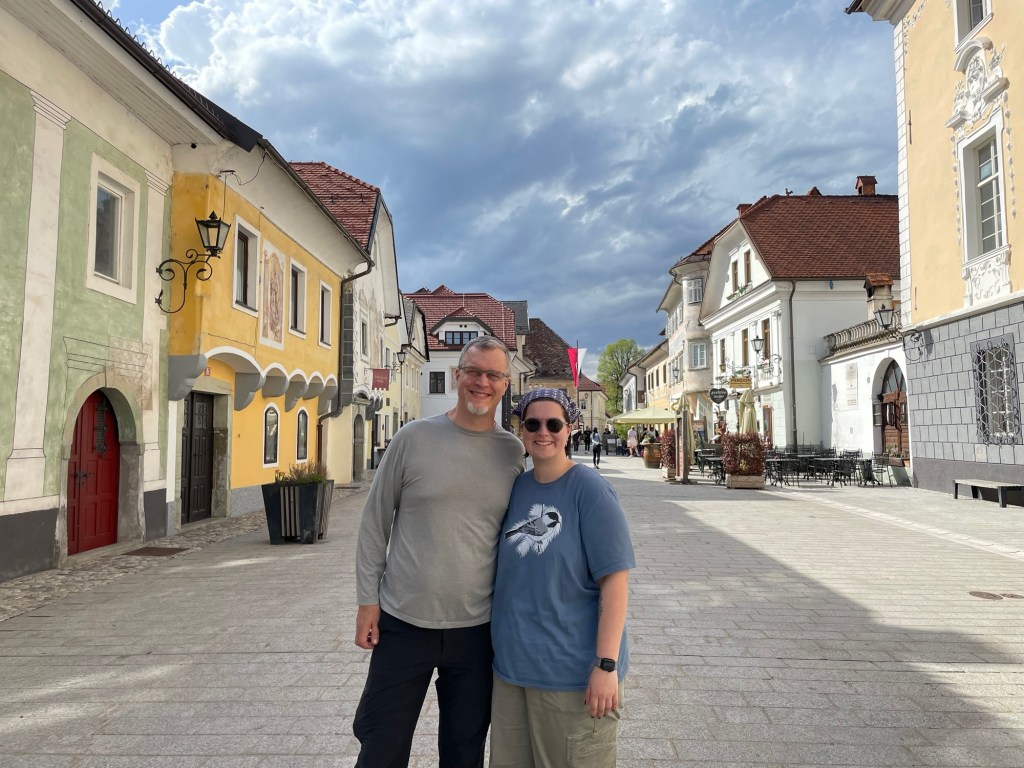
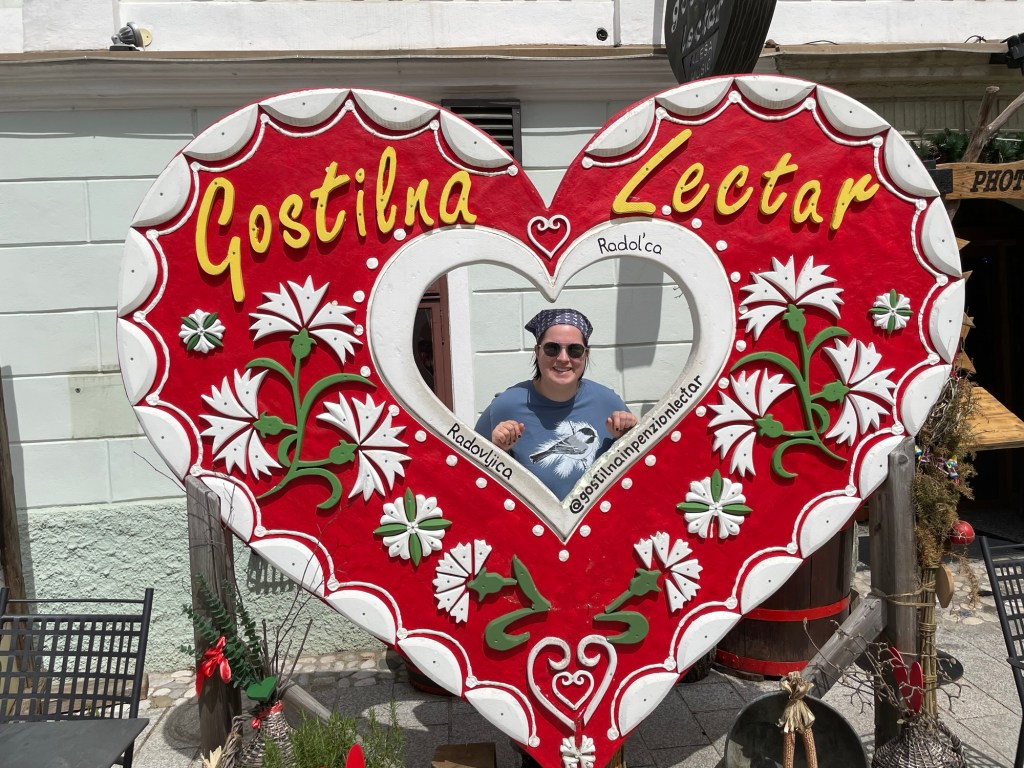
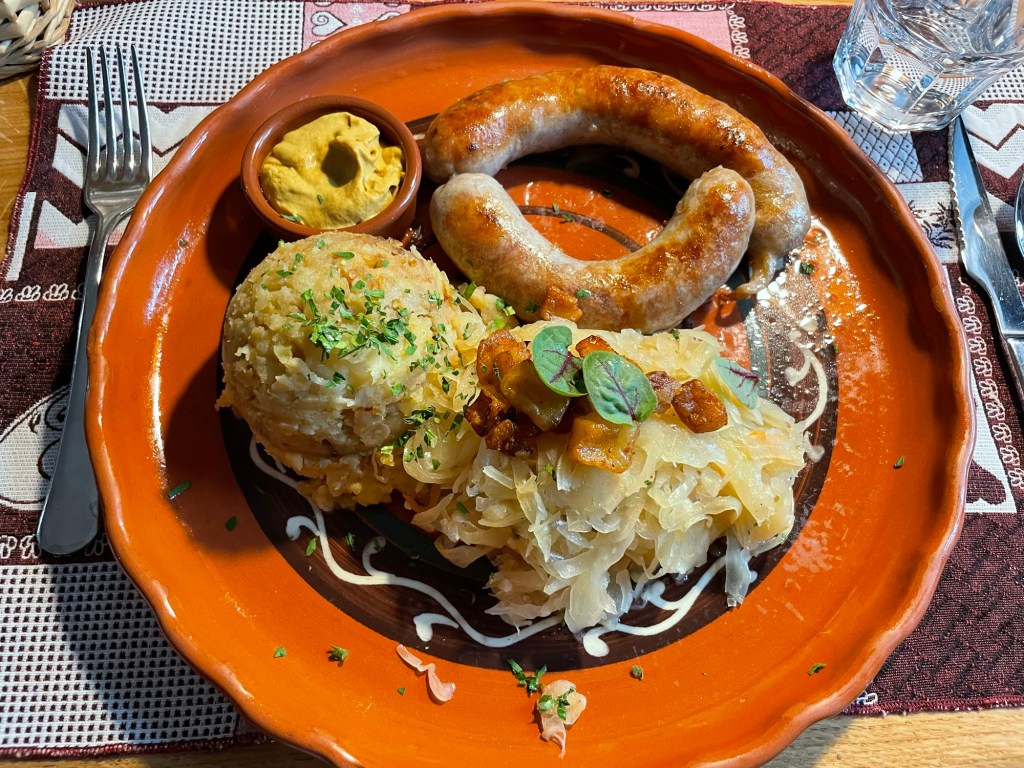
Leaving Kropa behind, we made our way via winding roads to the market town of Radovljica. The town square here featured old houses decorated with frescoes, featuring both religious themes and trompe l’oeil. They were a little faded, which along with the grandly proportioned yet oddly empty village hall gave the impression that the town’s best days were perhaps behind it. That didn’t stop us from enjoying a delicious meal of local specialties, including sausage, sauerkraut, and potatoes. The food and decor would be at home in any Alpine country, and the restaurant played music by a polka band all through our lunch.

Photo op outside the lunch restaurant, also known for its gingerbread heart-shaped cookies

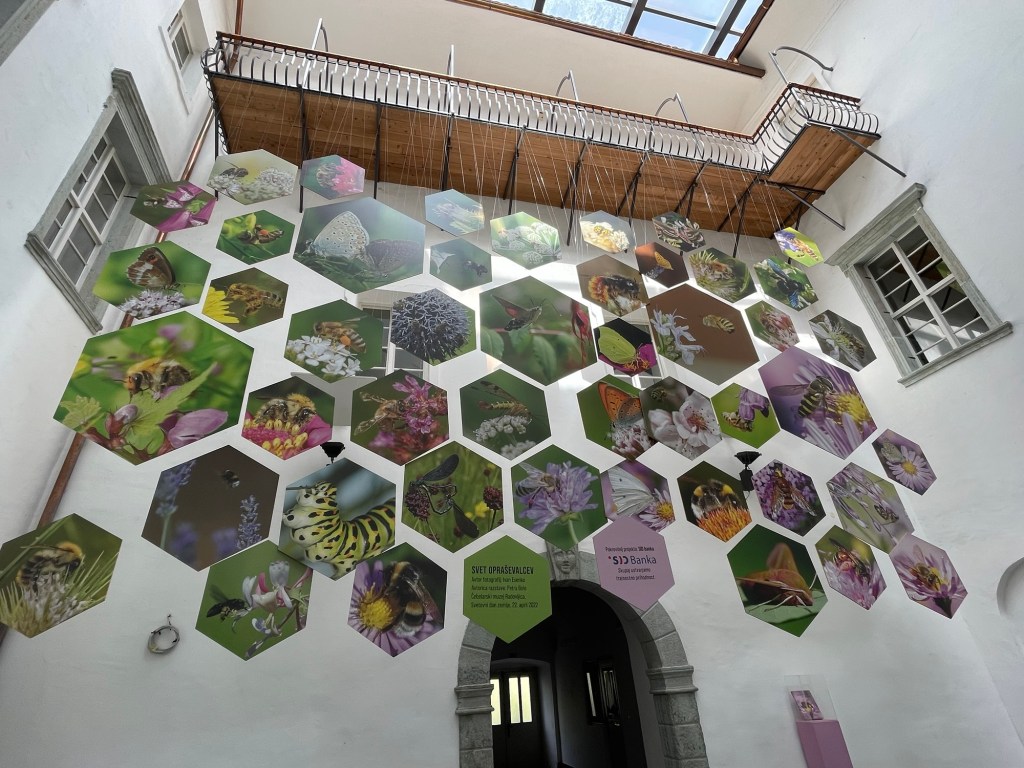
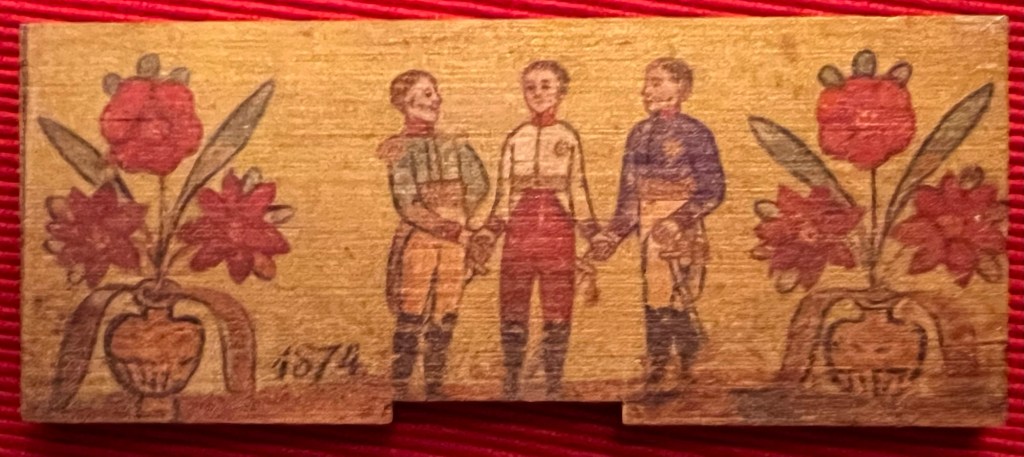
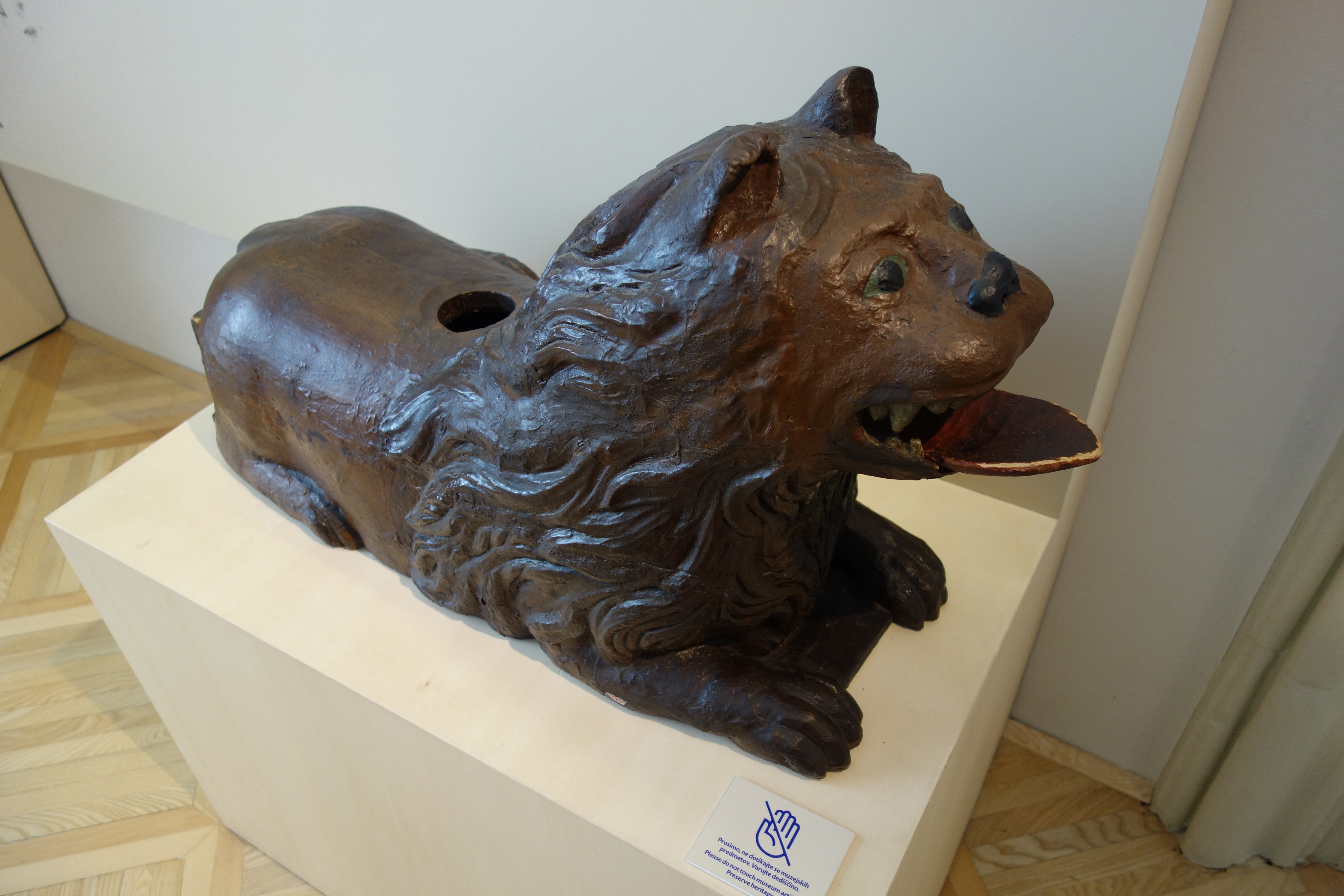
The main attraction we were here to see was the Museum of Apiculture. Beekeeping is a local specialty, based on the Carniolan honeybee, a biddable local subspecies. The hives here are kept in flat boxes that can be stacked on top of and next to each other. To help the bees to identify their homes amongst all the neighboring hives, a tradition has developed of installing artistic bee boards for the front of the hives. These are covered with painted scenes, often whimsical, sometimes depicting historical events or scenes from fairy tales. Nick’s favorite was “A snail chasing tailors,” featuring a giant snail pursuing a man with shears up a tree — sadly we did not get a picture of this one. (We would love to hear the story behind it!) Below you can see another sample depicting the 1815 “holy alliance” between Russia, Prussia, and Austria. Much rarer are hives disguised as sculpture, such as the lion we saw in the museum. Bees fly out through the hole in its back, and possibly also through the open mouth.

We close out today’s entry with a few bonus pictures featuring items we thought might be of interest.

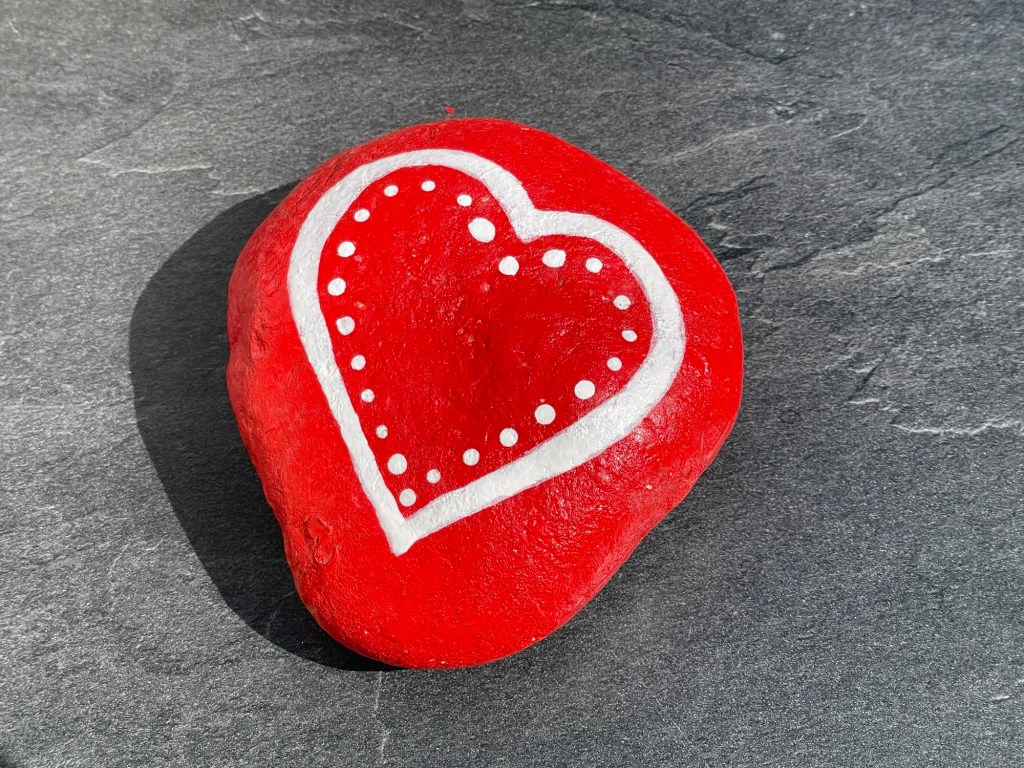
Hearts abound in Slovenia, typically in red. The English word “love” is part of the country’s name, and is often highlighted in a different color on signs.
Rowan’s elderflower lemonade from dinner. Slovenia lemonade is not very sweet and often seems to feature additional flavors mixed in. (Note the red and white hearts again)
Snail of the day — we found this fellow clinging to our car windshield in the morning. (Lucky thing we’re not tailors!)