All Around Rovinj

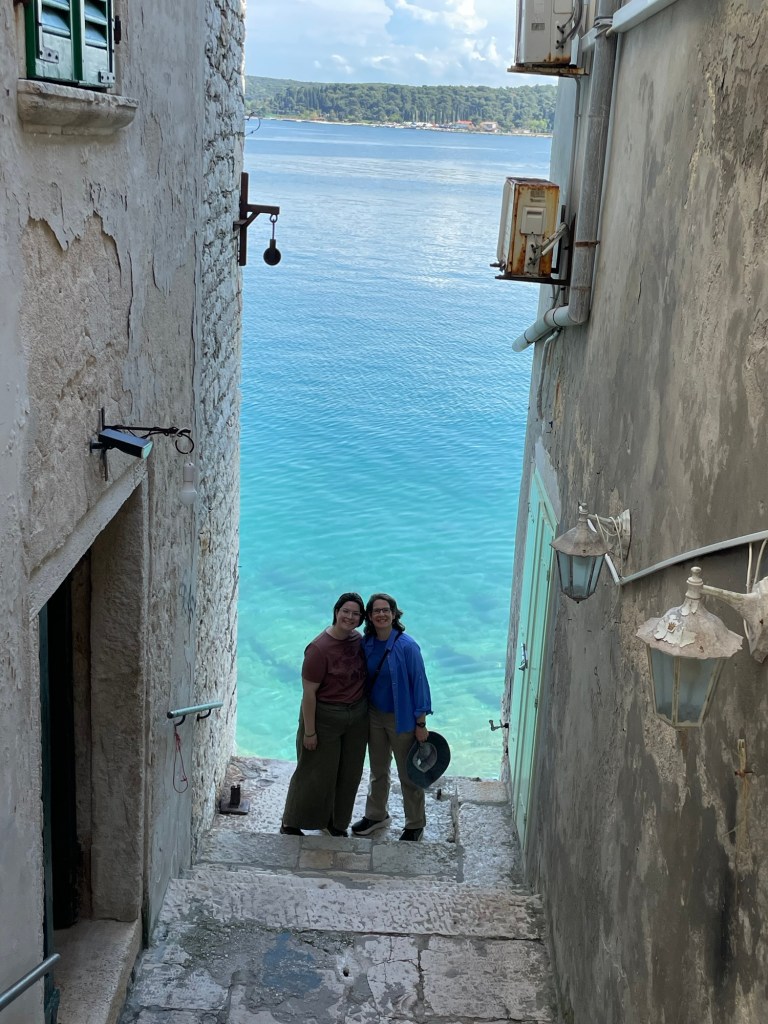
Today we spent exploring Rovinj and its environs on foot. Walking is a good way to get around here, because most of the old city is pedestrian only. The town developed in stages; the oldest settlement was on an oval island just off the coast, where the street plan was designed so that the houses on the outer edge provide a solid wall defending against attacks. In more recent centuries, when threats from the water had subsided, some narrow openings were made in these defenses for easier access to the sea. As the town grew, the island became overcrowded and buildings spilled onto the mainland, with a bridge connecting the two districts over a narrow canal. Ultimately the canal itself was filled in to make a new street, and the onetime island became a peninsula.
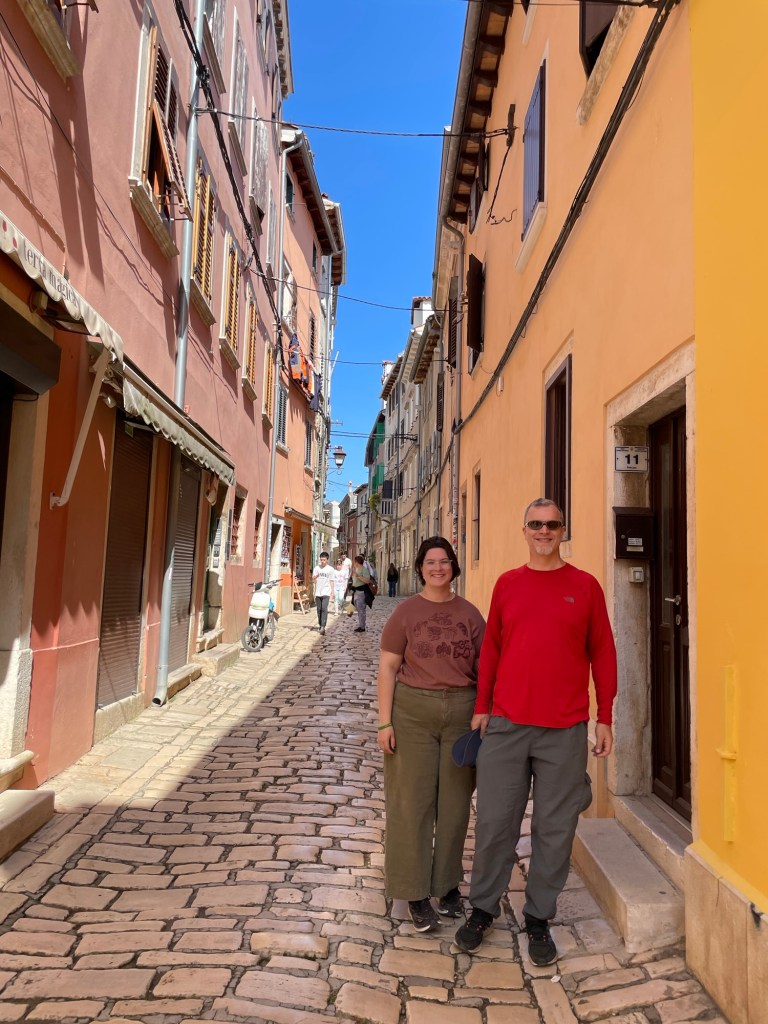
The street outside our house. We’re staying in the newer part of the old city, where the streets are (slightly) broader.
Alleyway to the Adriatic
In this view you can see a narrow isthmus where a band of water once separated Rovinj island from the mainland.
Part of the old city
A secluded alcove
Access to the marina was once controlled by a gate

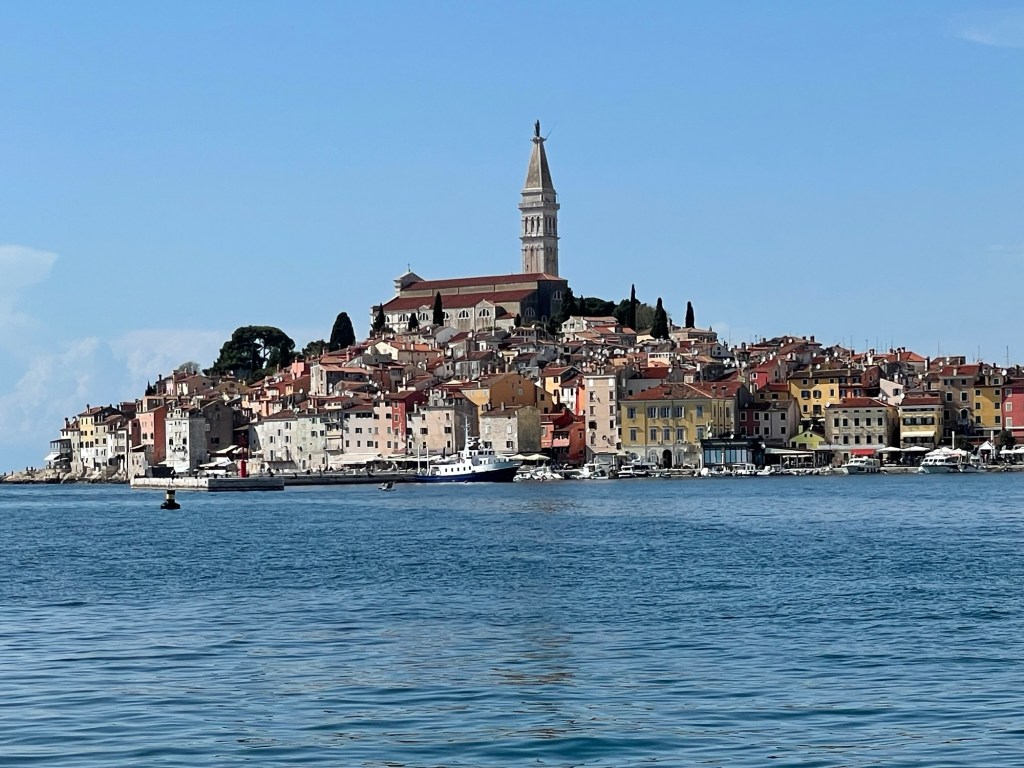
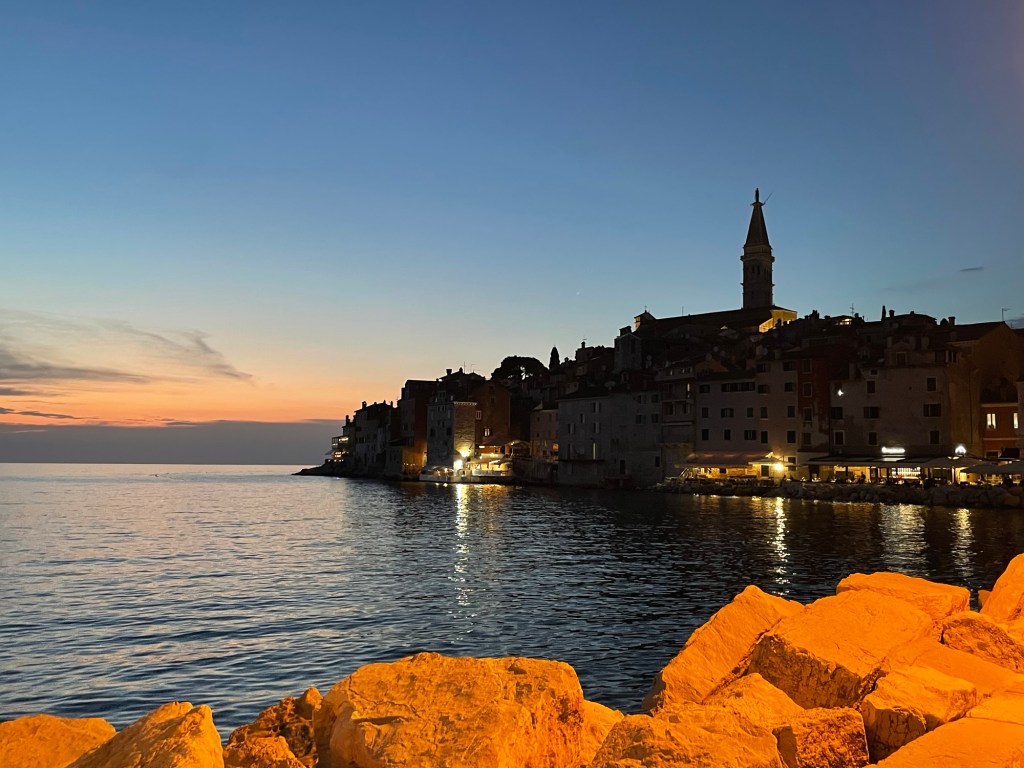
The beautiful campanile at the center of old Rovinj is attached to the Church of St. Euphemia. An early Christian martyr who lived in the vicinity of Constantinople, Euphemia is the patron saint of Rovinj. Why, you might ask? Apparently local fishermen discovered her remains nearby in a giant stone sarcophagus, which had miraculously floated from her original burial place all the way to Rovinj harbor. She now lies at rest within the church inside the very same vessel that sailed her all the way from Greece. Atop the campanile, a statue in her image serves as a weathervane: when she faces the sea, the winds bring good weather. If she turns inland however, one can expect a storm. Luckily for us, today she was looking outwards.

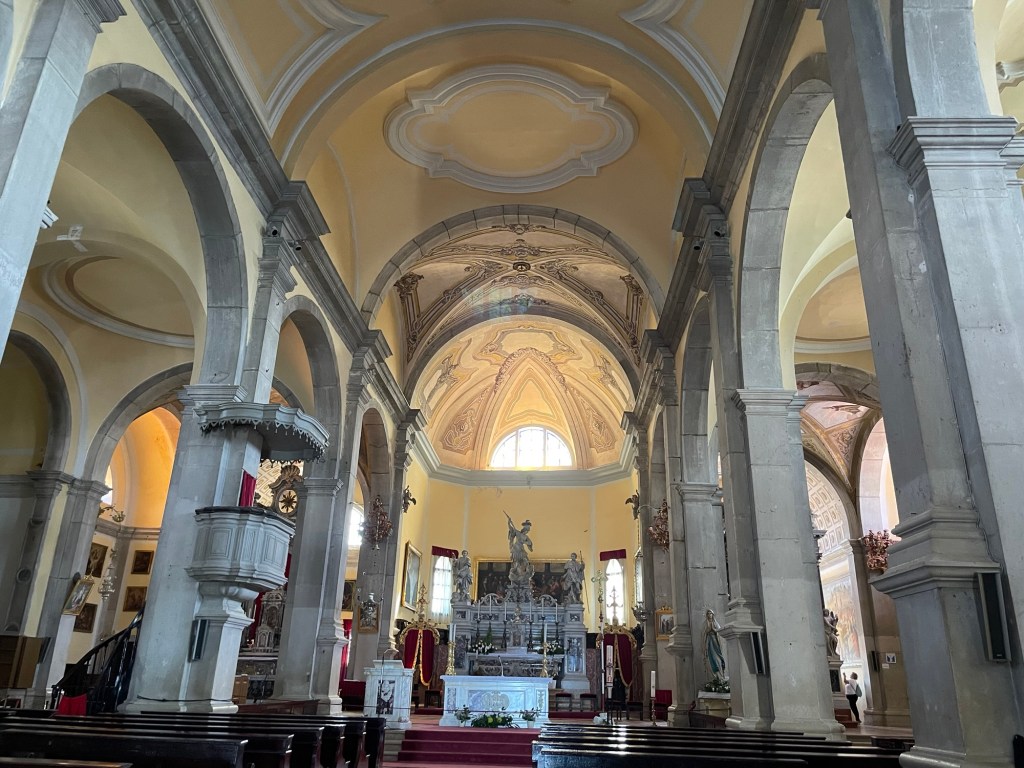
The stained glass is beautiful, all in a similar modern style.
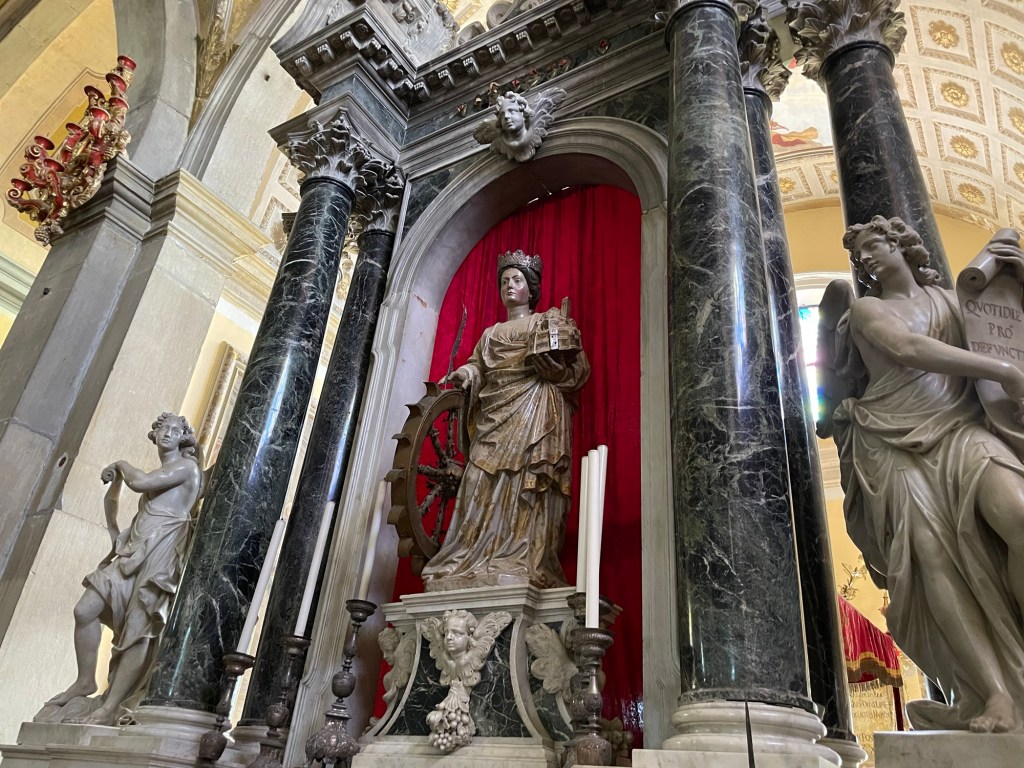
The shrine to St. Euphemia. The city held in her left hand represents Rovinj, to which she gives her protection. The torture wheel on her right recalls her martyrdom.

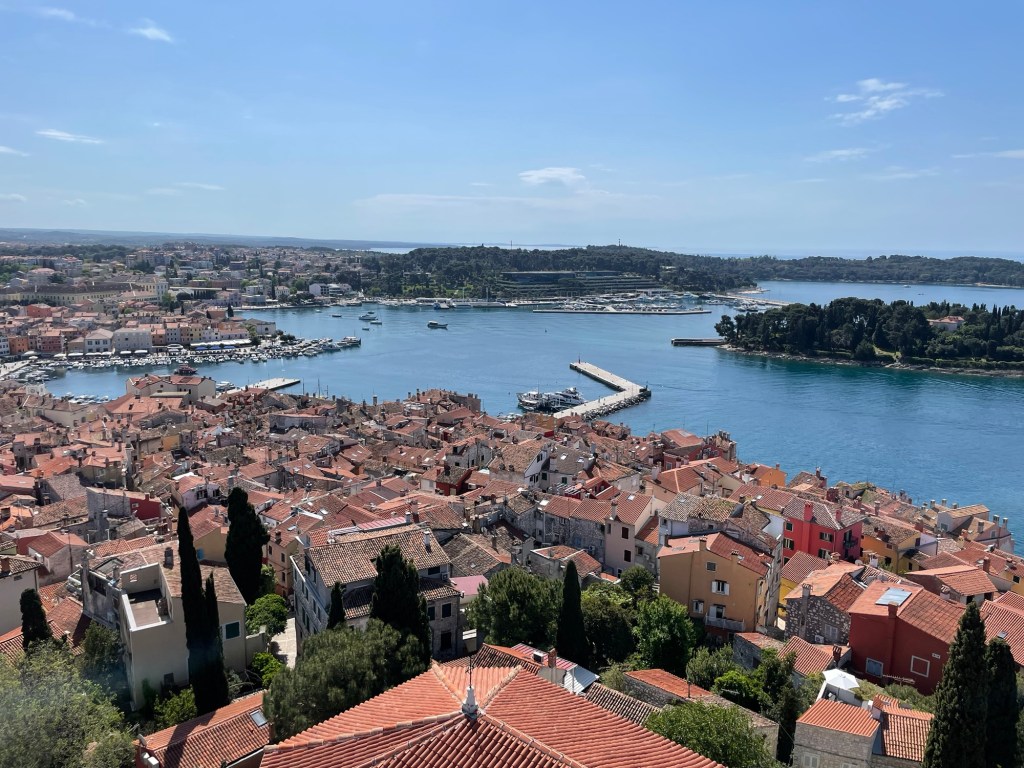
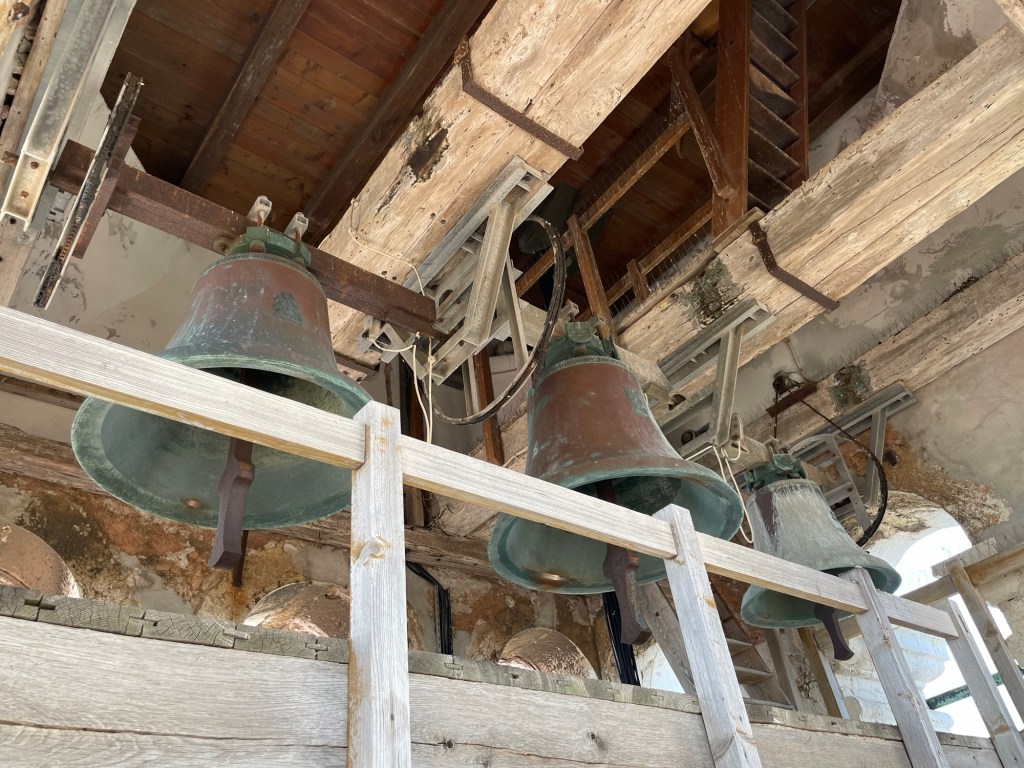
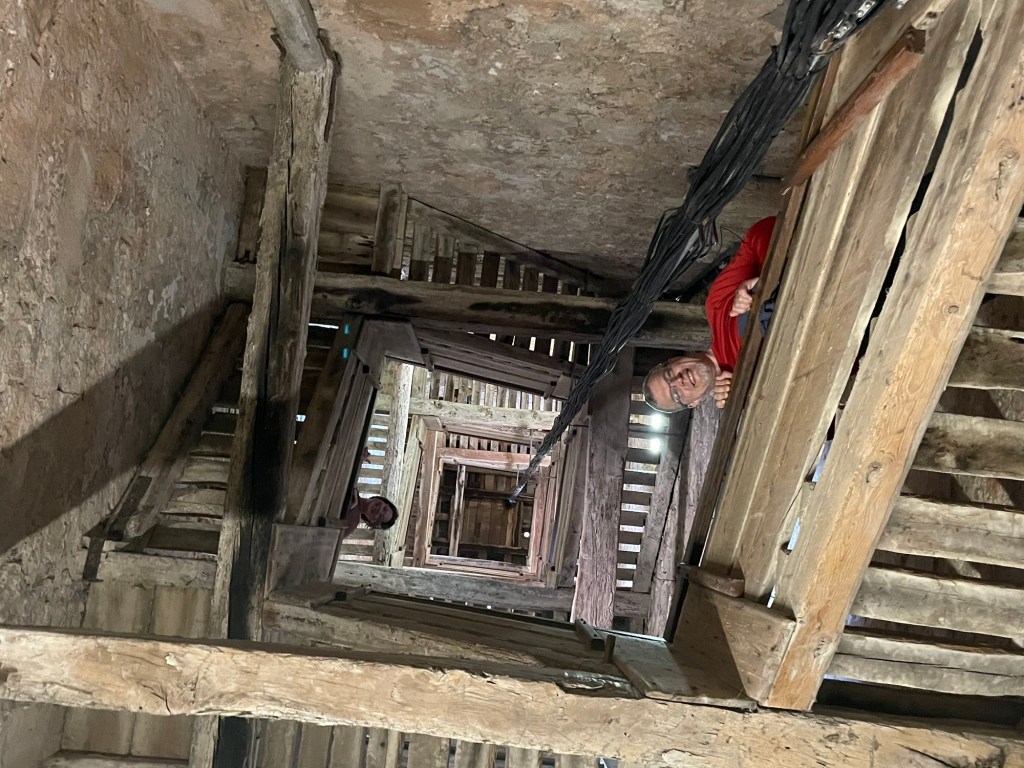
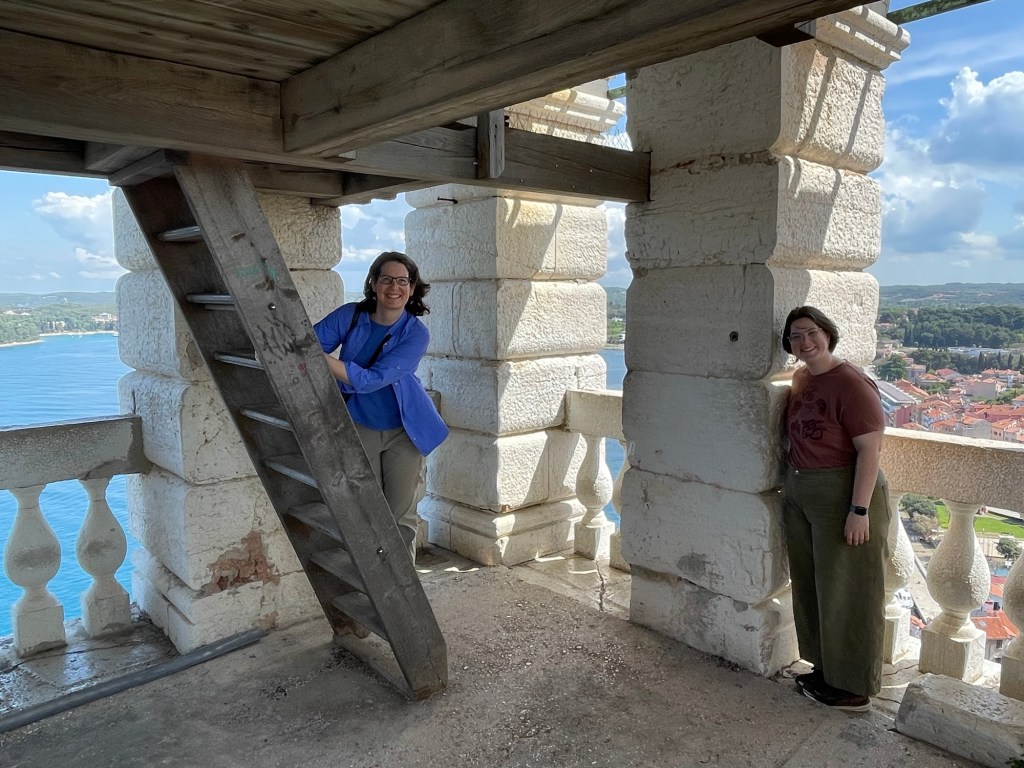
Visitors to the church can climb the campanile as far as the bell platform, so of course we wanted to see it. A rather impressive and rickety set of wooden steps led up to the top, where we had excellent views of the city and its environs.
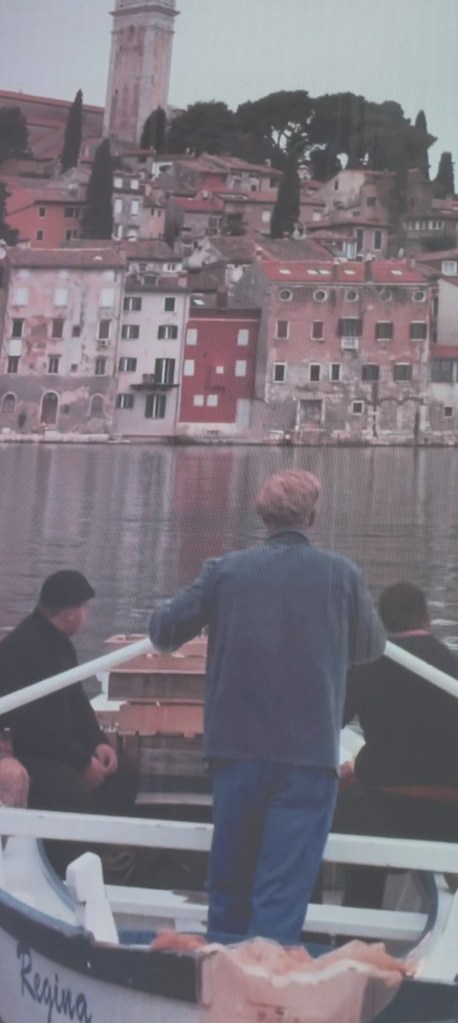
After spending some delightful hours wandering the city, we came across a small museum dedicated to local culture. Focusing particularly on the batana, which is the local flat-bottomed fishing boat, it showed how they were constructed and their significance to the people of the region. The sails were decorated, and each family had its own distinctive design.

We watched a time-lapse video showing the construction process
Another video followed a crew of fishermen as the went to sea and returned with their catch
While unloading fish at the pier, men and women sang a traditional song in polyphonic harmony.
A book of sails associated with different families

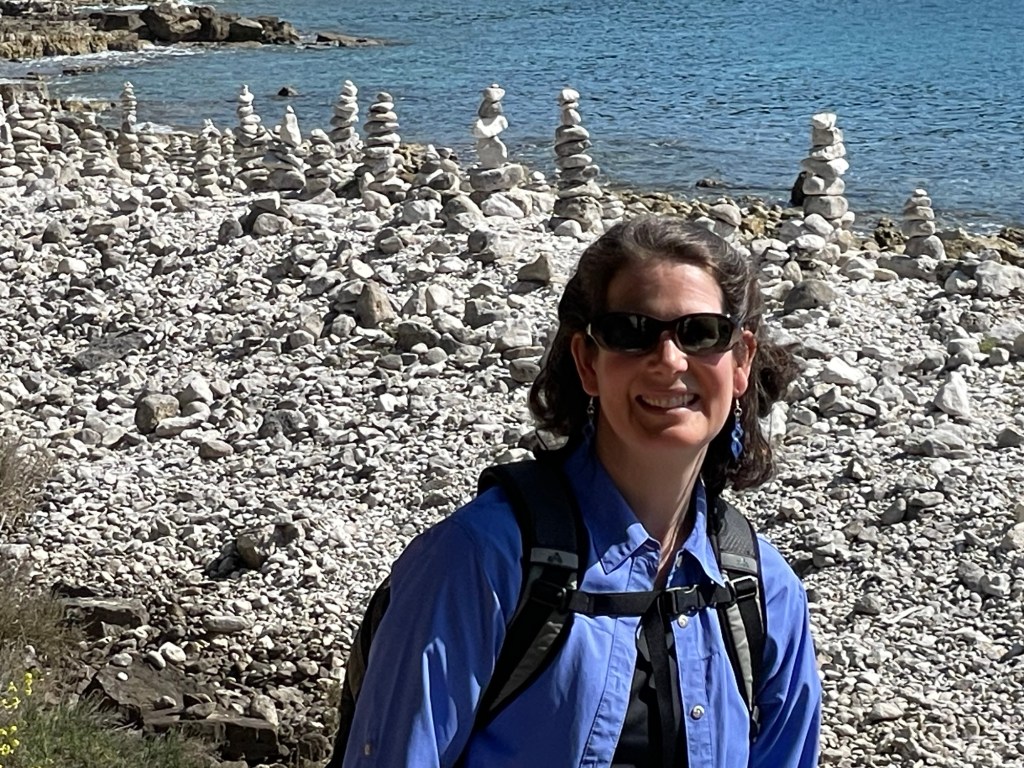
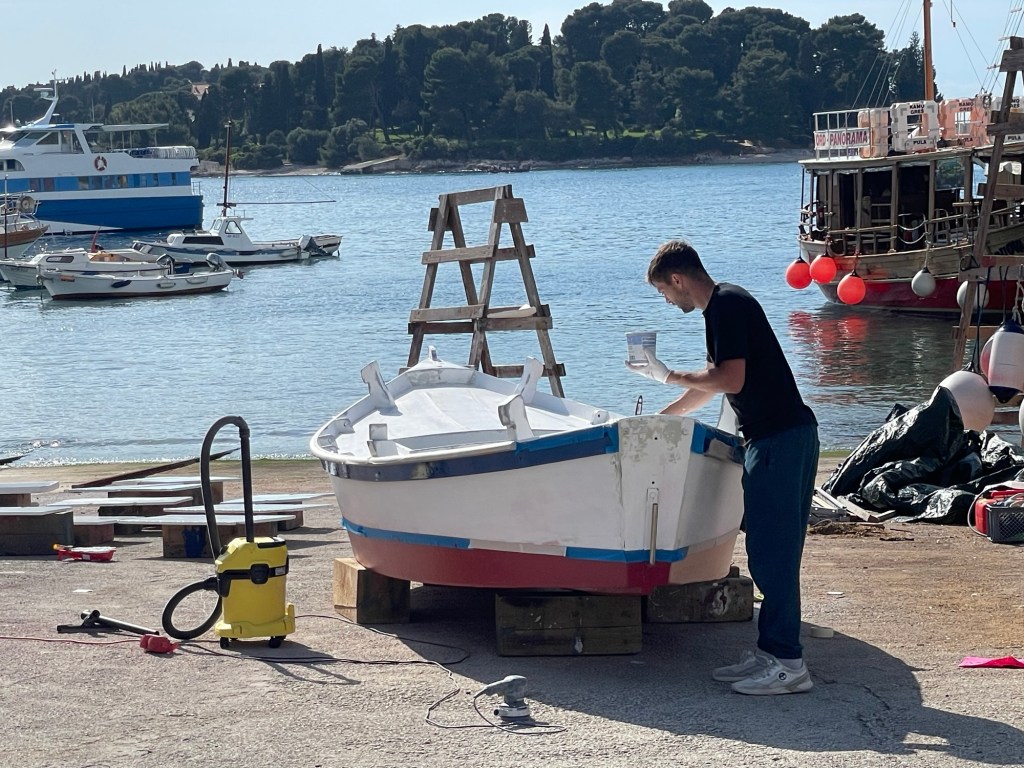
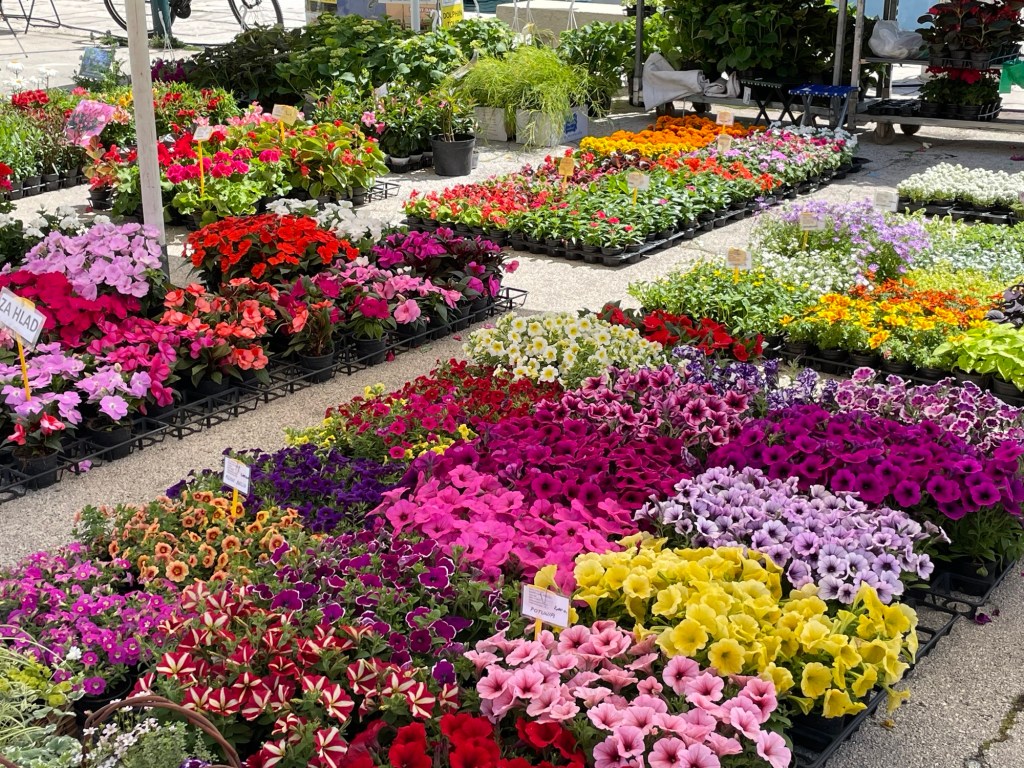
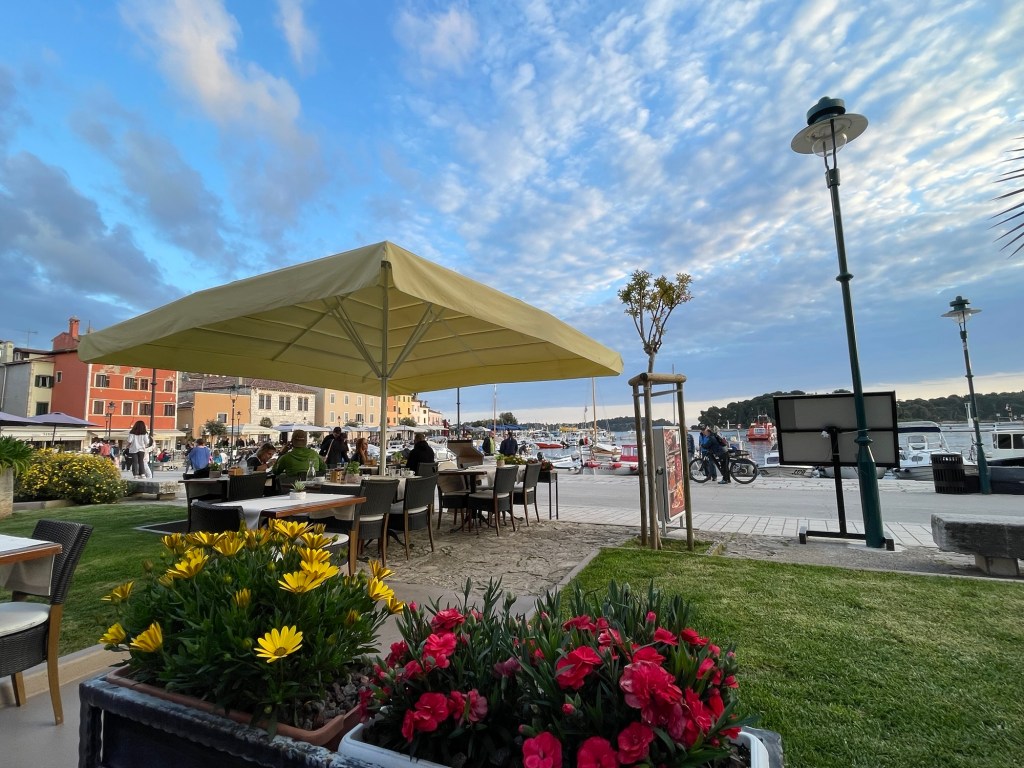
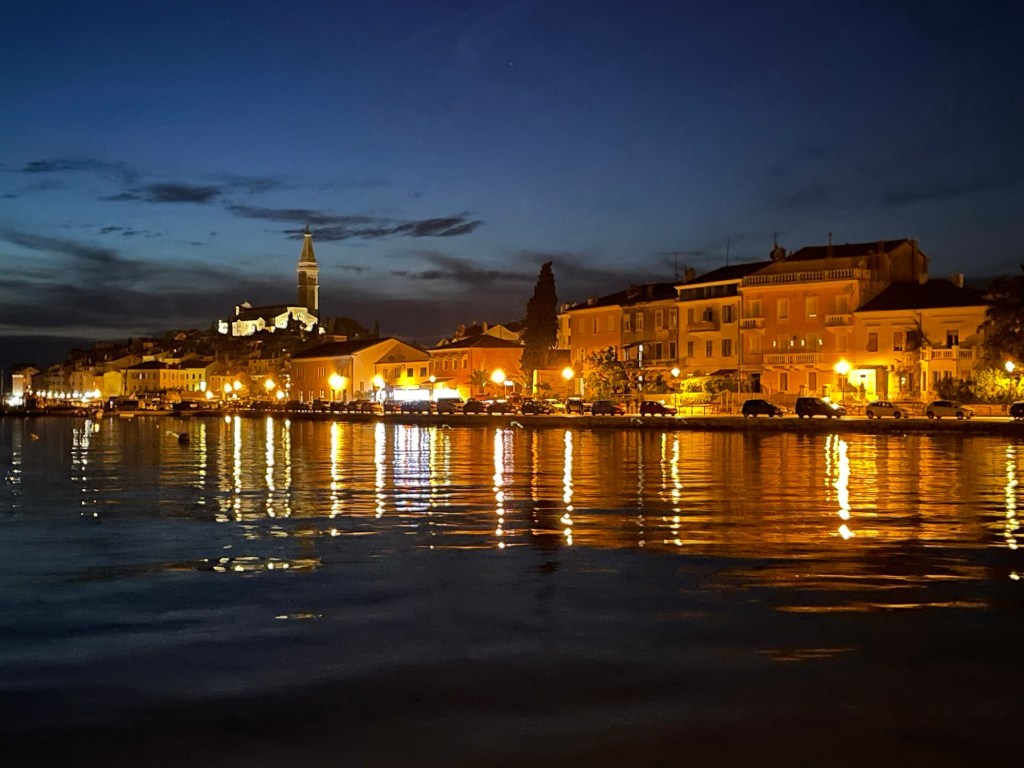
Later in the afternoon we went for a walk down the coastline to the Golden Cape, a park with views of the city. This area has no sand, but there are rocky coves with pebble beaches. Sheer cliffs at the end of the cape are also popular with rock climbers. On our way back, we had some great views of the city from a distance. We also saw a shipyard where someone was repainting a batana, stopped for some dark chocolate gelato, and marveled at the display of flowers for sale by the marina. After another seaside dinner, we took a stroll to the end of the pier for some photographs in the dusk.

Vegan dark chocolate gelato in a chocolate cone!
Almost harborside restaurant
Rowan has learned a lot about boats on their study abroad program – this one is used for purse seine fishing
Conveniently, a sign in the harbor marked this specific “photo spot”
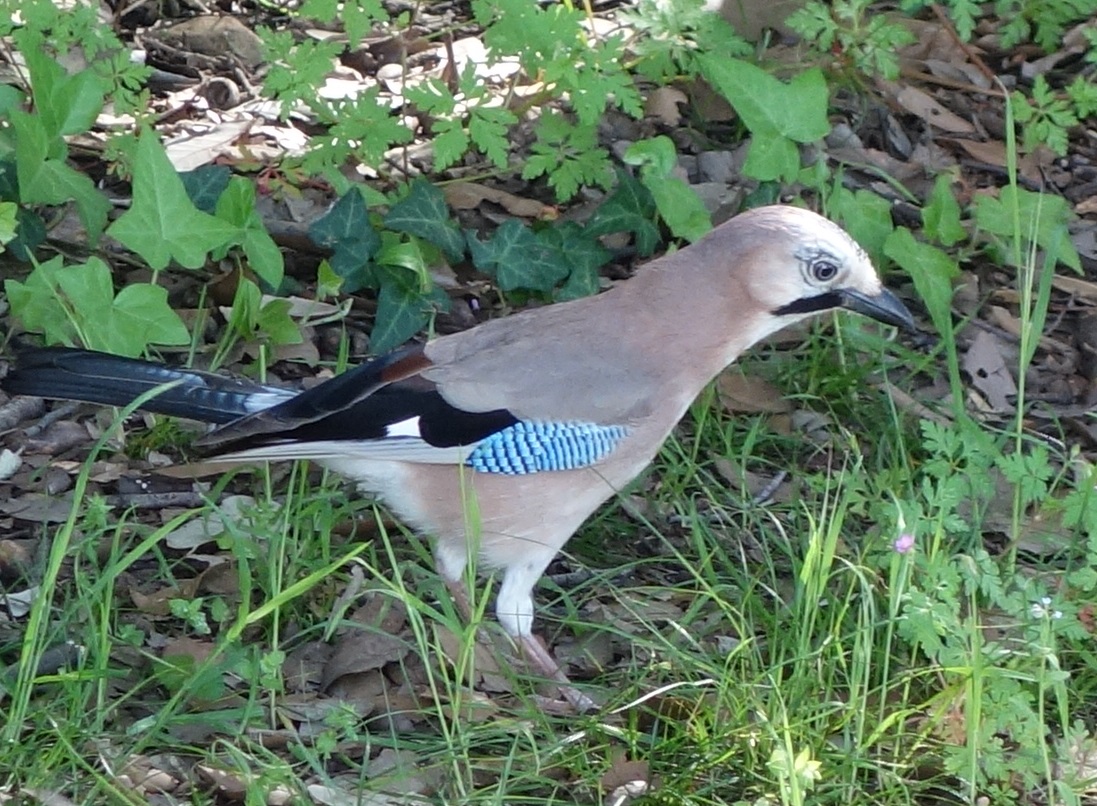
Bird of the day: We saw this European Jay while out on our walk.

Ljovely Ljubljana!

Slovenia’s capital city

After a final morning walk around Lake Bled, we bid a reluctant farewell to its town and hit the road en route to Slovenia’s capital, Ljubljana. Rowan had previously visited the city with their study abroad group, and was able to guide us to their favorite sites and experiences. Although the castle that stands at the high point of the city looks picturesque from a distance, apparently there’s not much to see inside. Most of the interesting sights are instead centered around the river below.

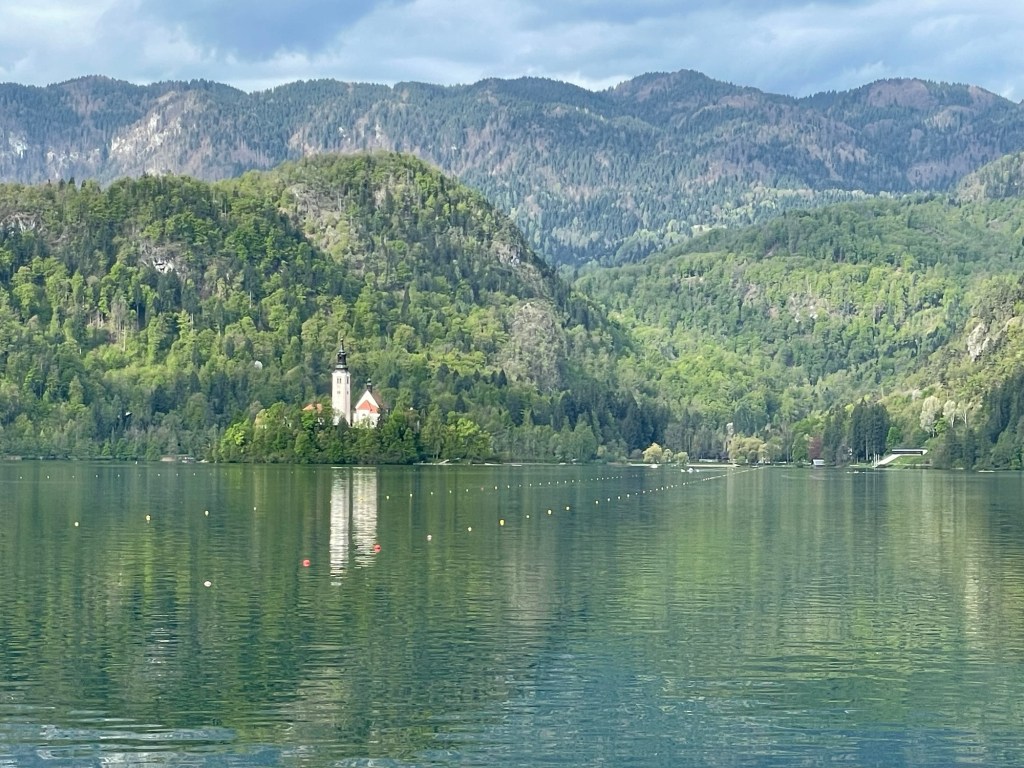
Rowing course on Lake Bled – at the far end there are stands for spectators
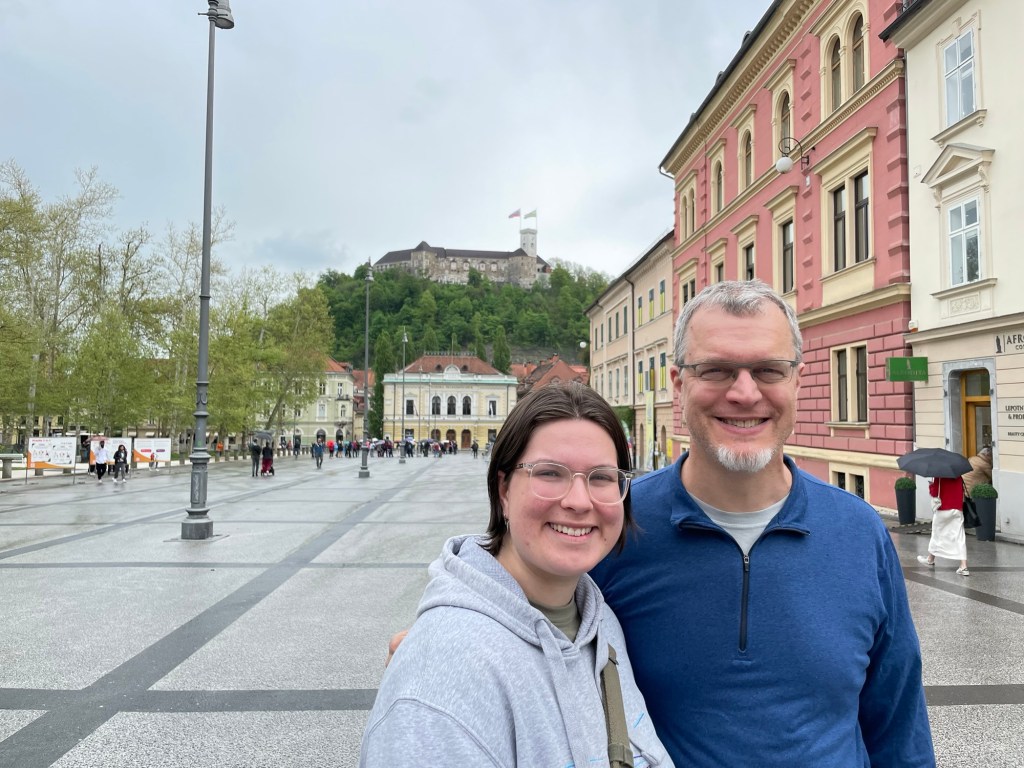
Congress Square in Ljubljana – our starting point in the city
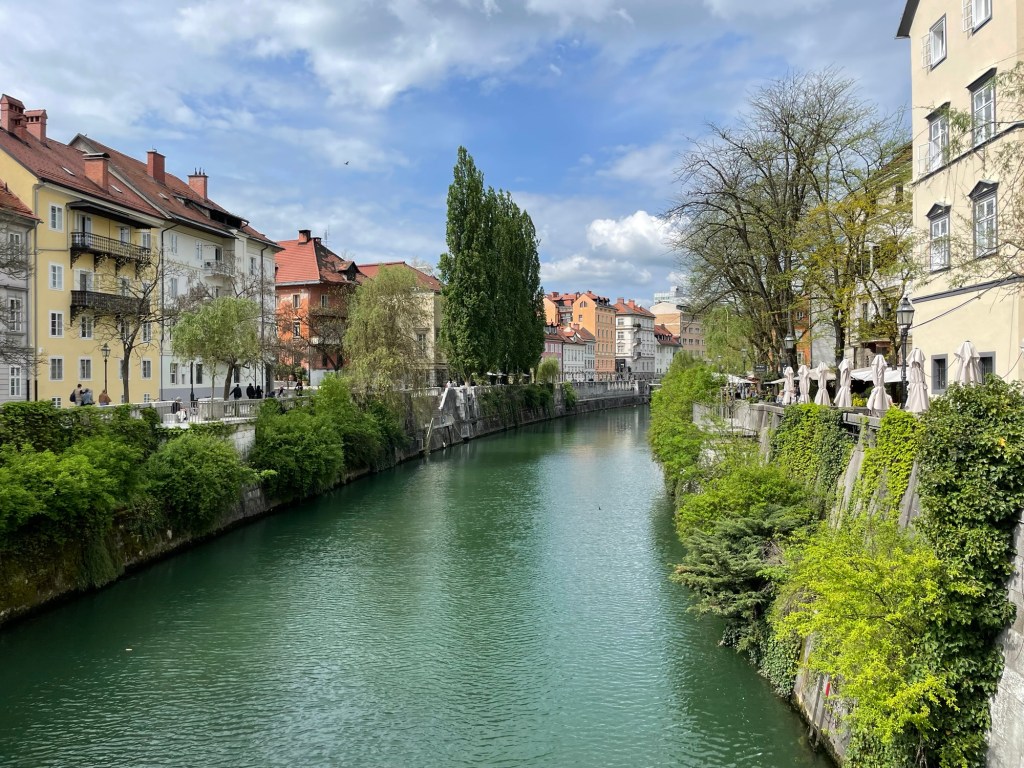
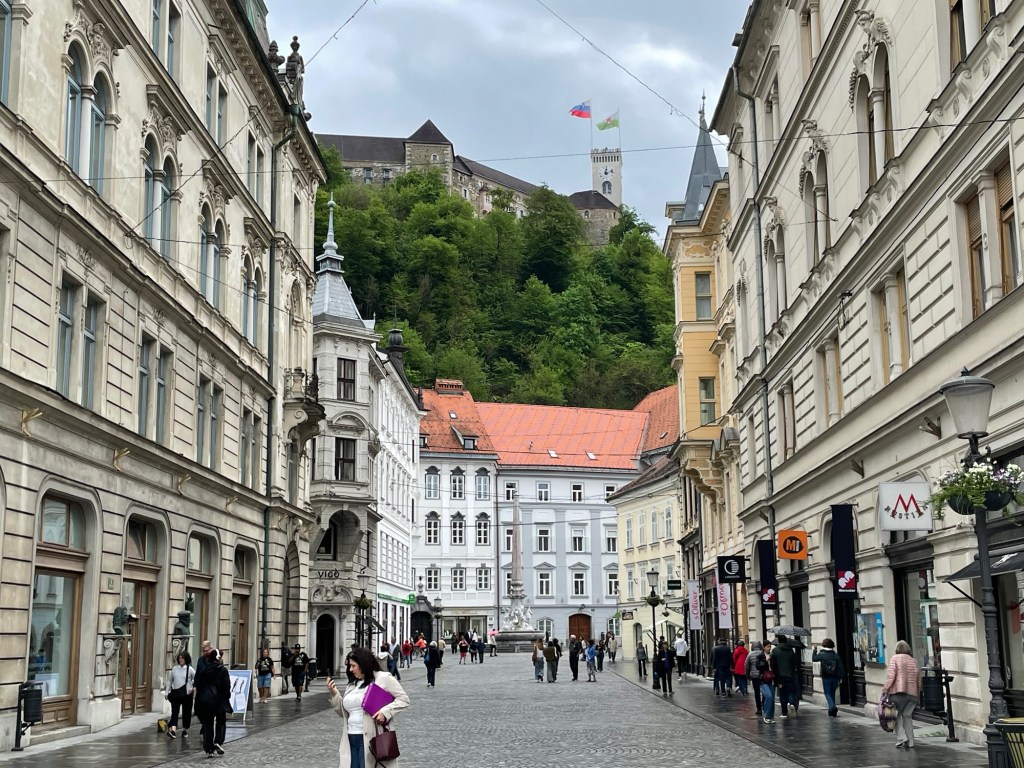
The Ljubljanica River runs through the old city

Ljubljana is known as the city of dragons due to a tradition that Jason (of Argonauts fame) came here in antiquity and slew one of the beasts. Over time, the association changed and the dragon came to be seen as the defender of the city. Dragons are celebrated in all the souvenir shops of the city, and have even been celebrated in the architecture: one of the city’s river crossings features four of the beasts in bronze, perched atop the bridge abutments.

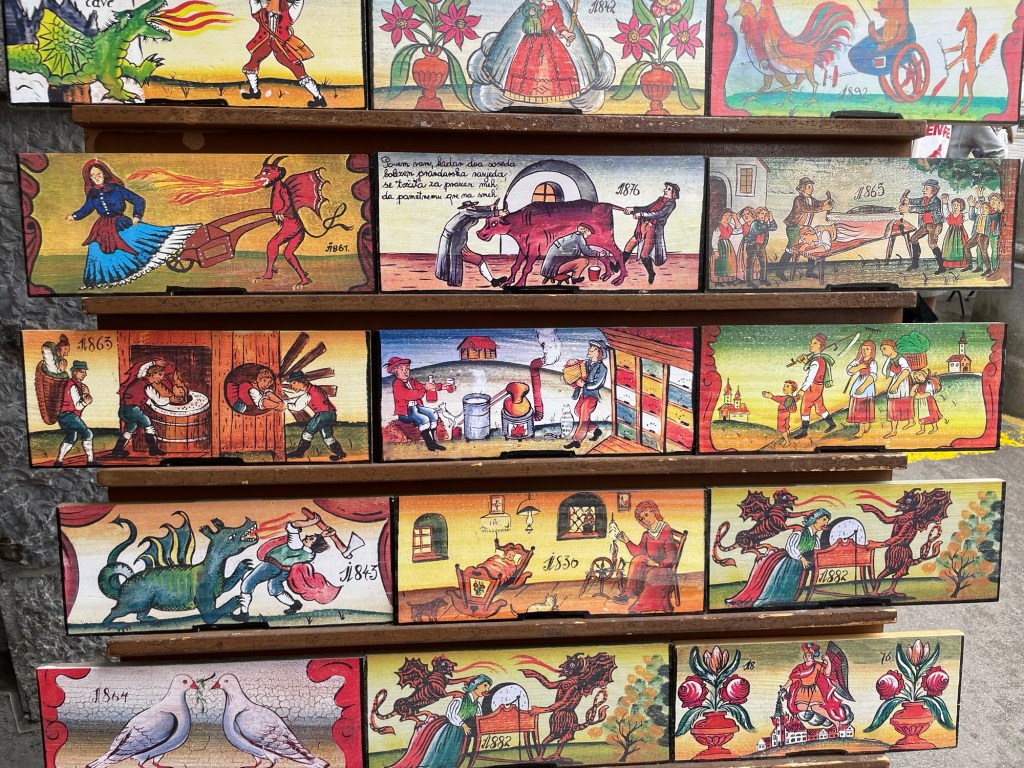
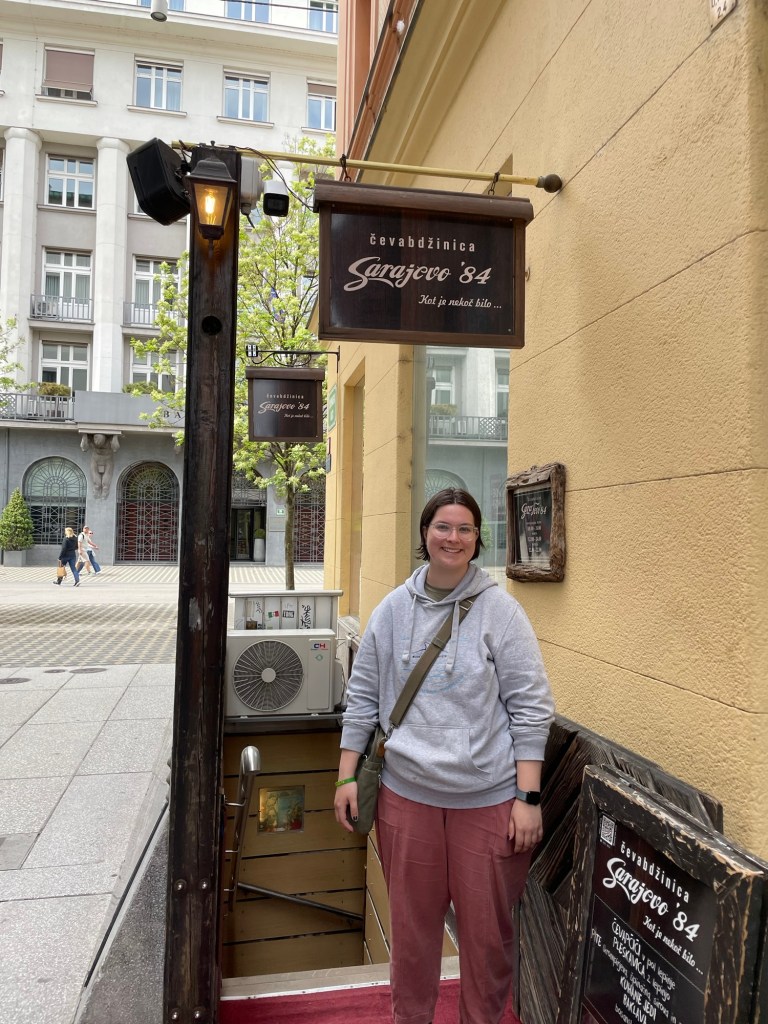
We include here a few other pictures from our visit. In a riverfront stall we came across this display of replica souvenir bee boards, which we photographed to make up for yesterday’s lack. (Alas, we still have no image of the “Snail chasing Tailors”!) On Rowan’s recommendation we also visited the popular restaurant Sarajevo ’84, which specializes in ćevapčići, a dish of grilled fingerlike meatballs served on pita-like bread, often with a soft cheese.

We could only stay in Ljubljana through mid-afternoon, as we still had further driving ahead of us to reach our lodgings for the night in Rovinj, Croatia. The route passes not far from the Italian border, and somewhat on a whim we decided to make a detour in order to see a bit of the city of Trieste. In hindsight this was not the wisest of plans; the roads around Trieste proved to be a lot like those around New York City — confusing, inconsistently marked, and arranged in such a way that any mistakes are very hard to correct. So in the end, we did see a bit of Trieste — only from the distant heights above the city as we drove along a highway filled with trucks, rather than strolling around the grand canal after popping briefly into the city center, as we had fondly imagined. Live and learn. In the end we crossed three international borders during our trip — from Slovenia into Italy, Italy back to Slovenia, and then from Slovenia into Croatia. Sadly, nobody stamps passports any more when you cross borders in Europe these days — good for efficiency, less good for sentimental collectibles.

Border station heading into Croatia

When we finally arrived in Rovinj, our host Francesca had to meet us at a parking lot outside the old city because cars are not allowed anywhere near the street where we are staying. She kindly brought an electric cart to help shuttle our luggage, and off we went. Our rooms overlook the marina, and are located on the street next door, with access to the sea via an arched alleyway. We had dinner at one of the waterfront restaurants, across from the old city center with its tall tower. After dinner we wandered around for a bit until it began to get dark. Tomorrow, our real exploration of the city will begin.

View from our living room window
Our address on Carera Ulica
Our local gateway to the Adriatic
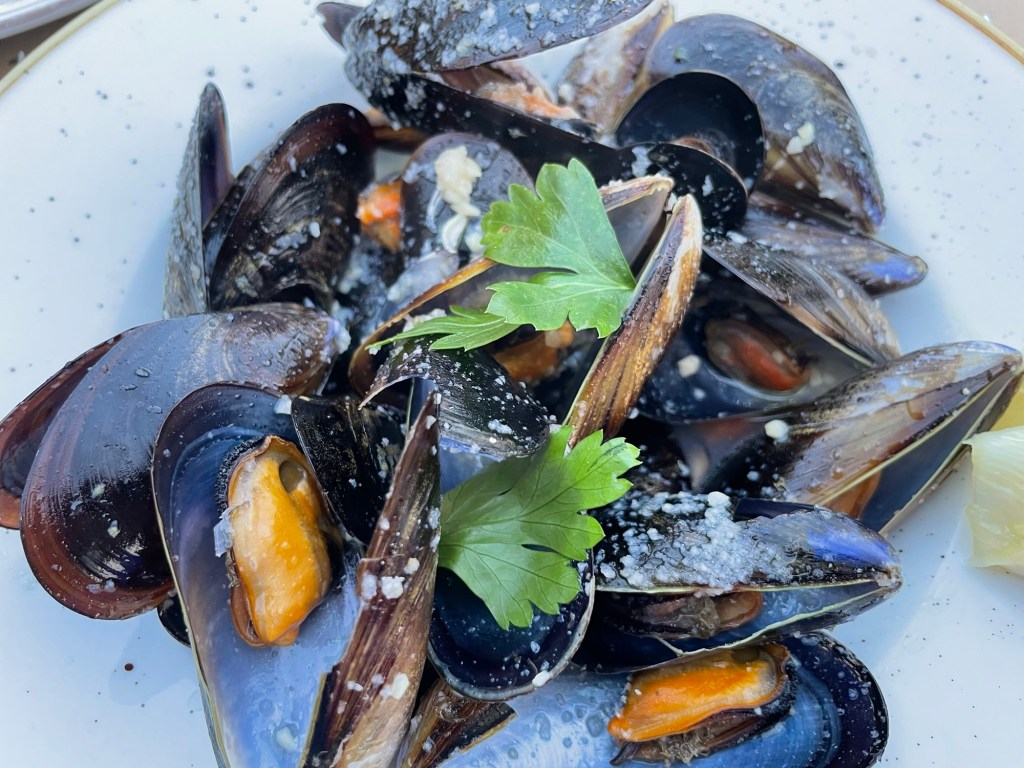
Pricey but delicious dinner along the waterfront – and the restaurant even has its own wine label!
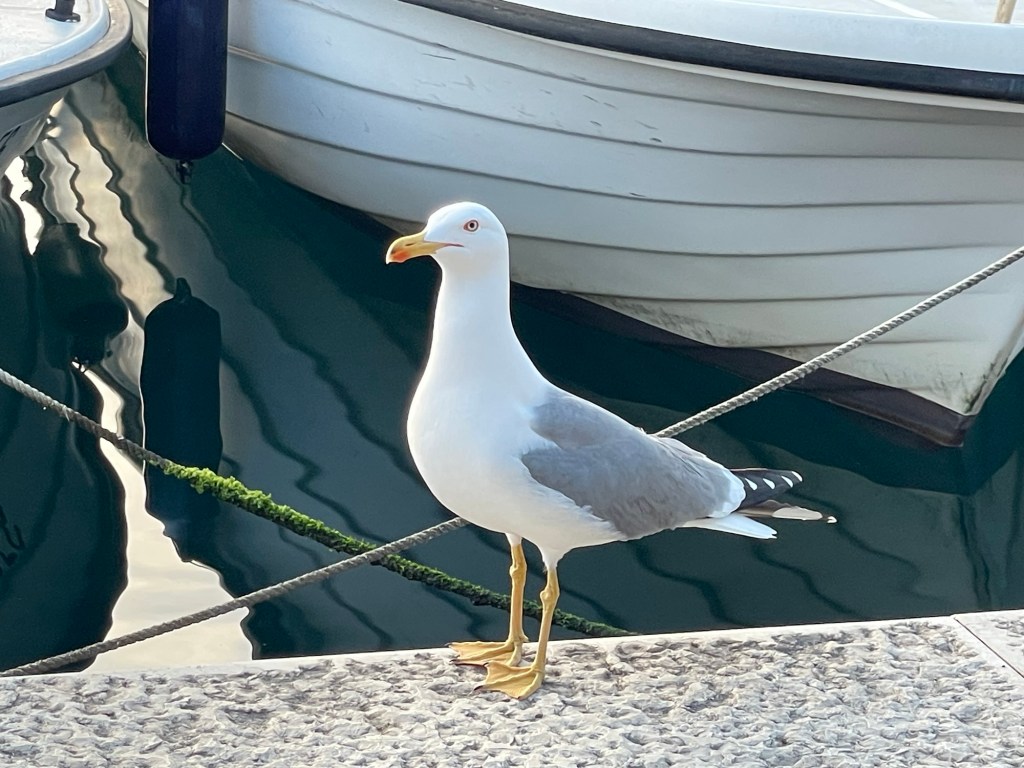
Bird of the day – we’re by the sea, after all!