For our last full day in Zürich we split up to visit a variety of sights before coming together in the evening for a festive dinner.
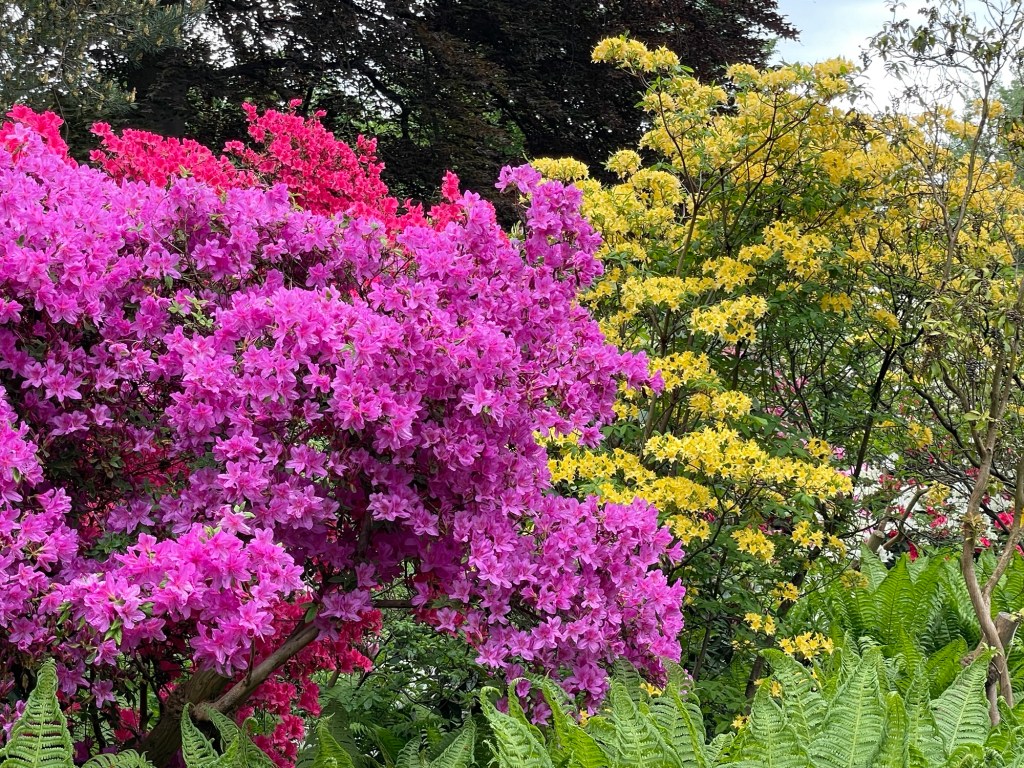
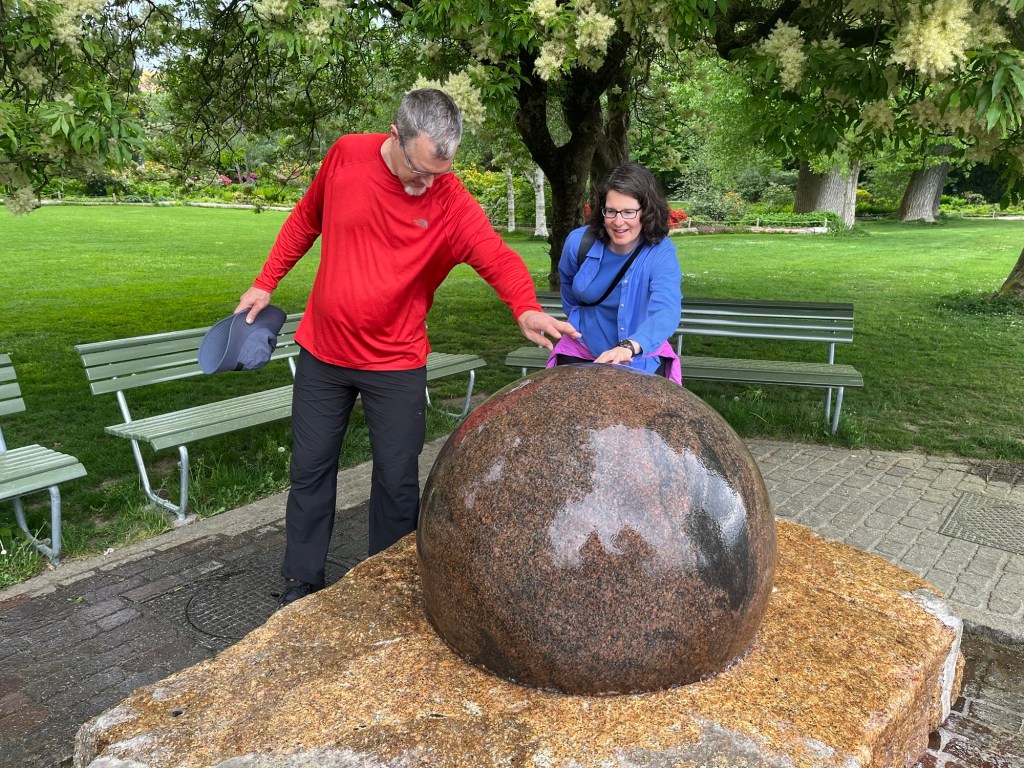
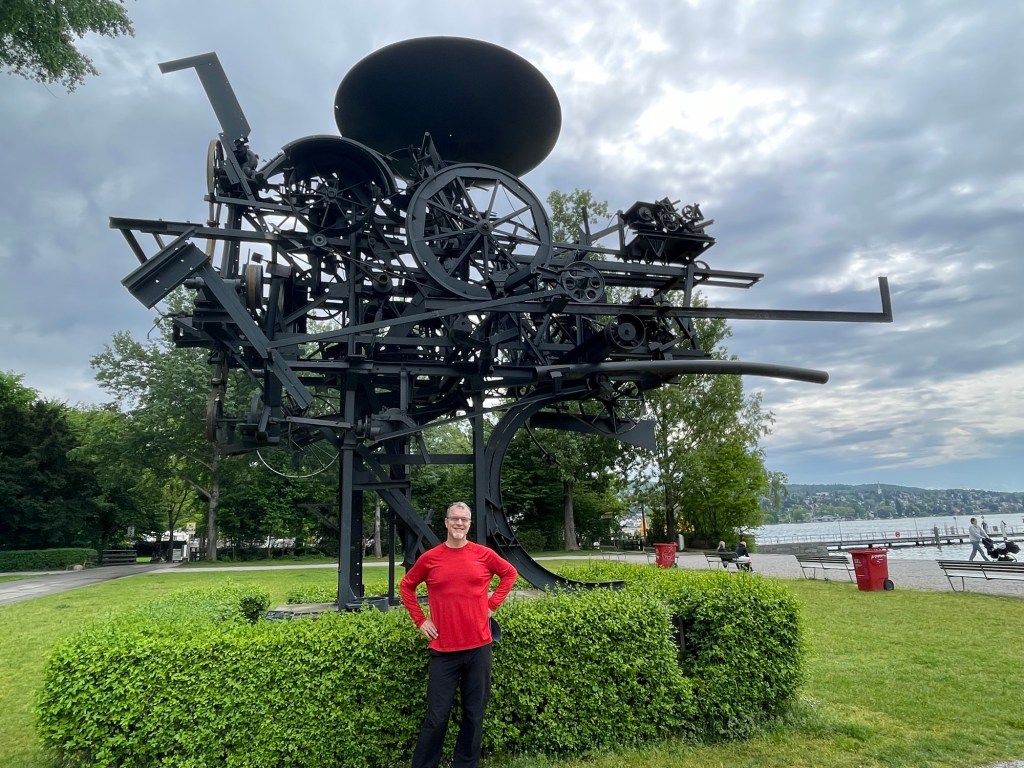
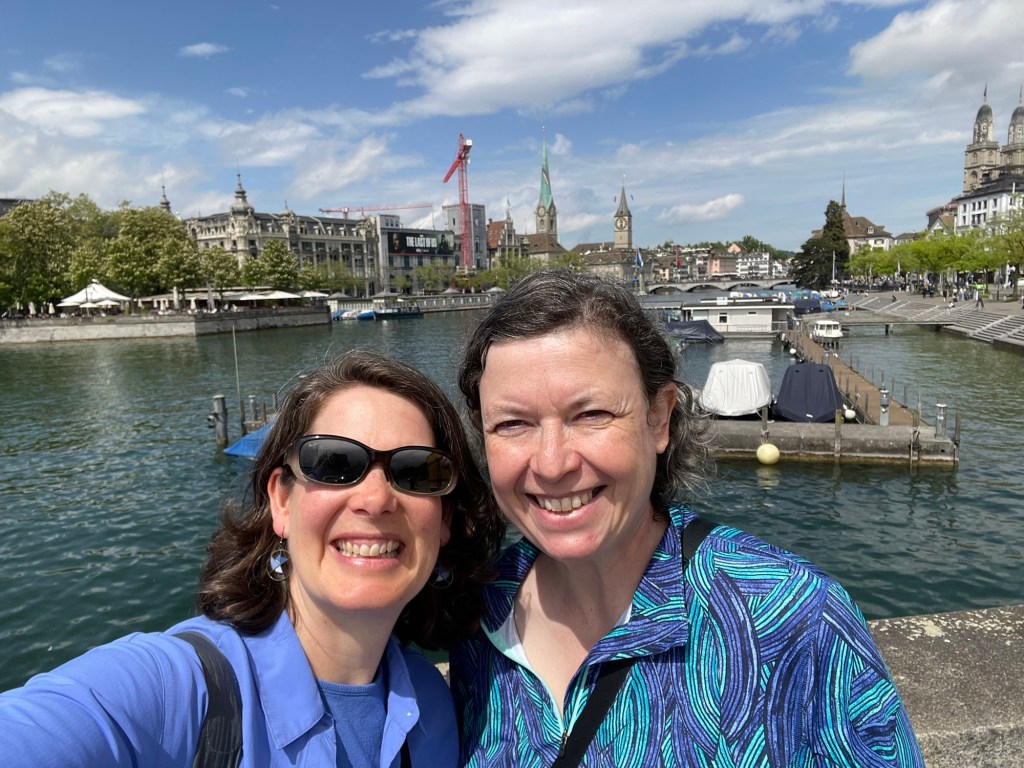
We began with a walk by the lake, where there were many flowering bushes in bloomAlways fun to play with a floating stone sphereThis sculpture springs into motion three times a day, rotating and oscillating in a variety of waysWe toured the Chinese garden
Eszter and Susannah split off to visit a flea market and some other stores (including more chocolate!), before coming home for an afternoon of paper crafting.
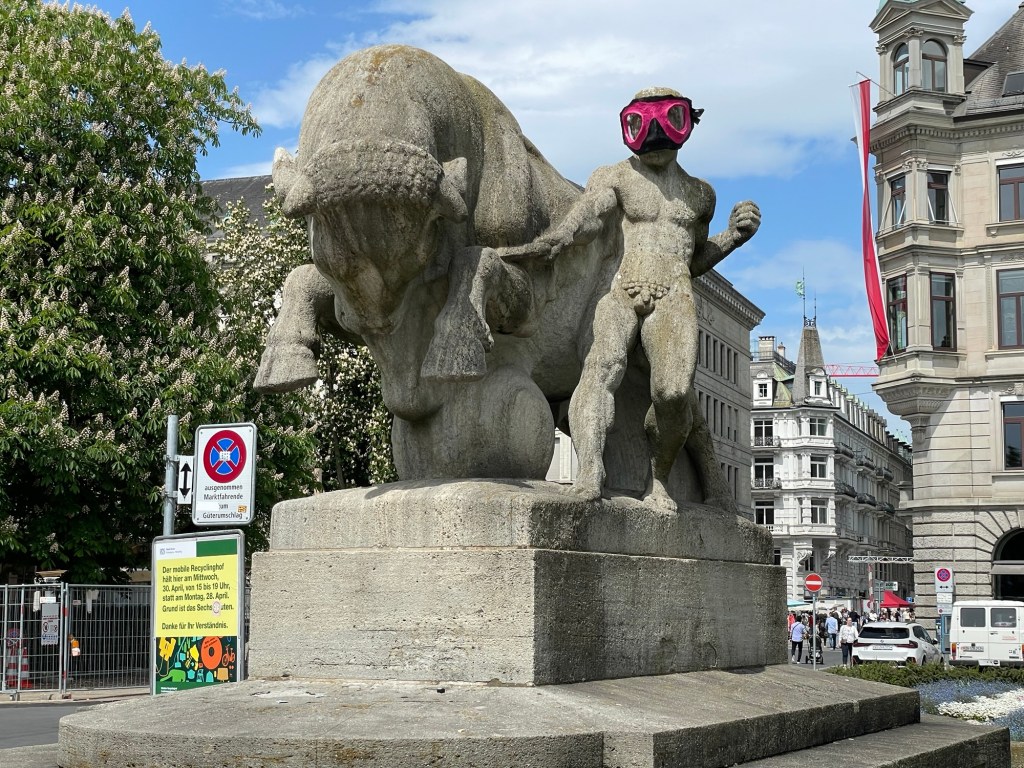
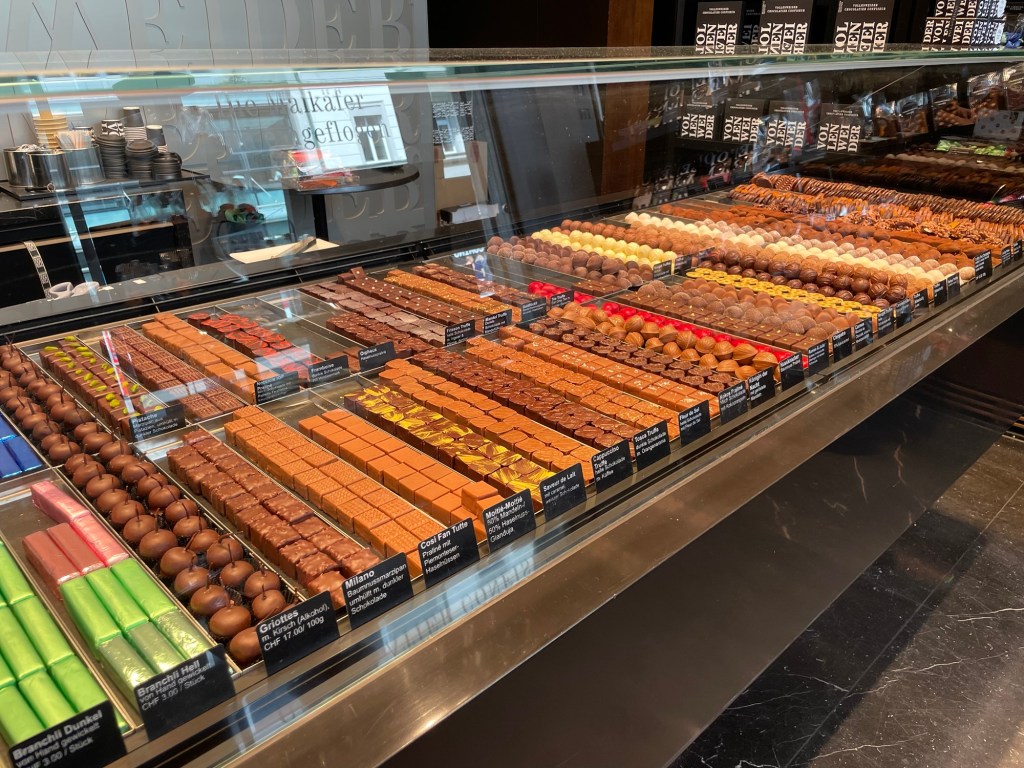
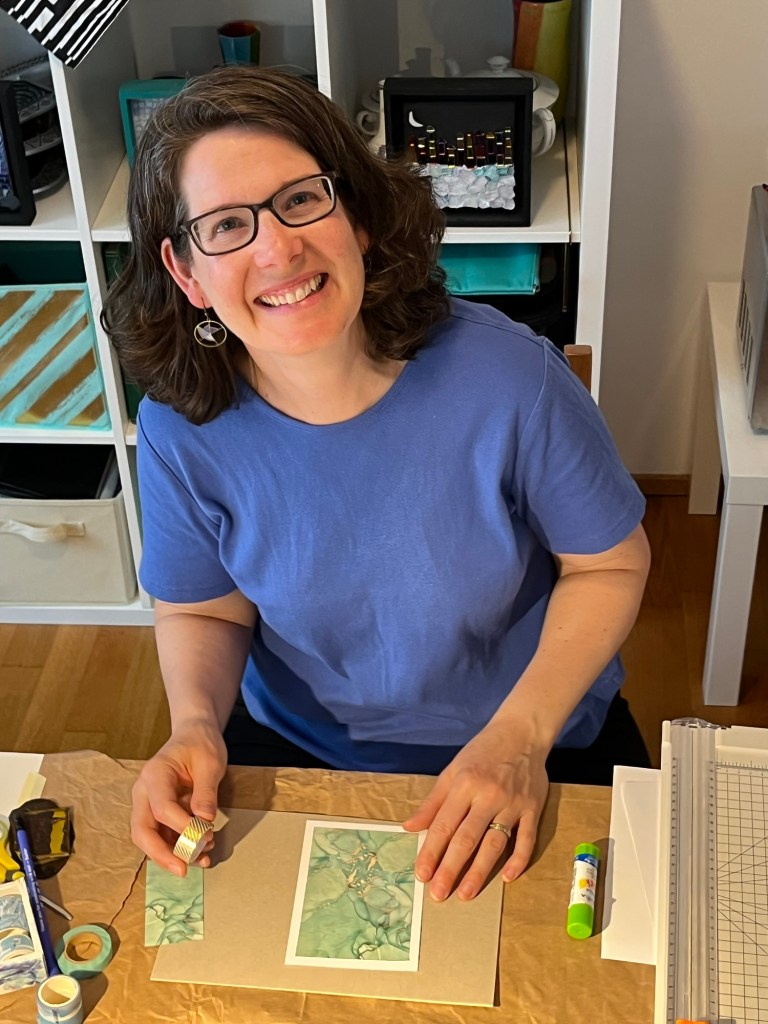
What’s going on with this statue? We suspect a guild prank. Or maybe a celebration of the summer-like weather in Zürich!So much chocolate, so little time…Trying out washi tape for the first time – Eszter has an extensive collection of patternsFinished cards – all with Washi tape in some way
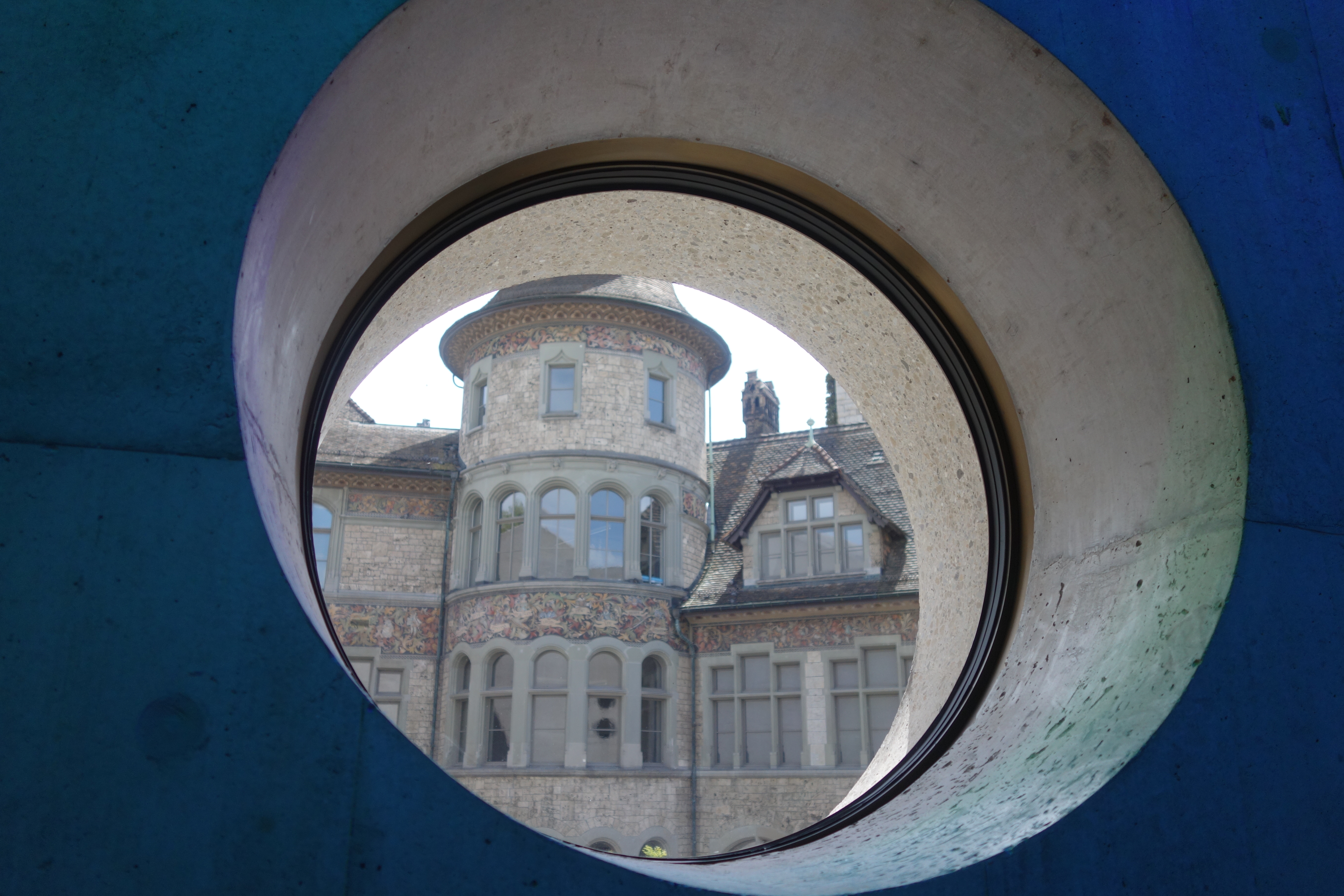
Meanwhile Nick paid a visit to the Landesmuseum, which has exhibits on Swiss culture and history.
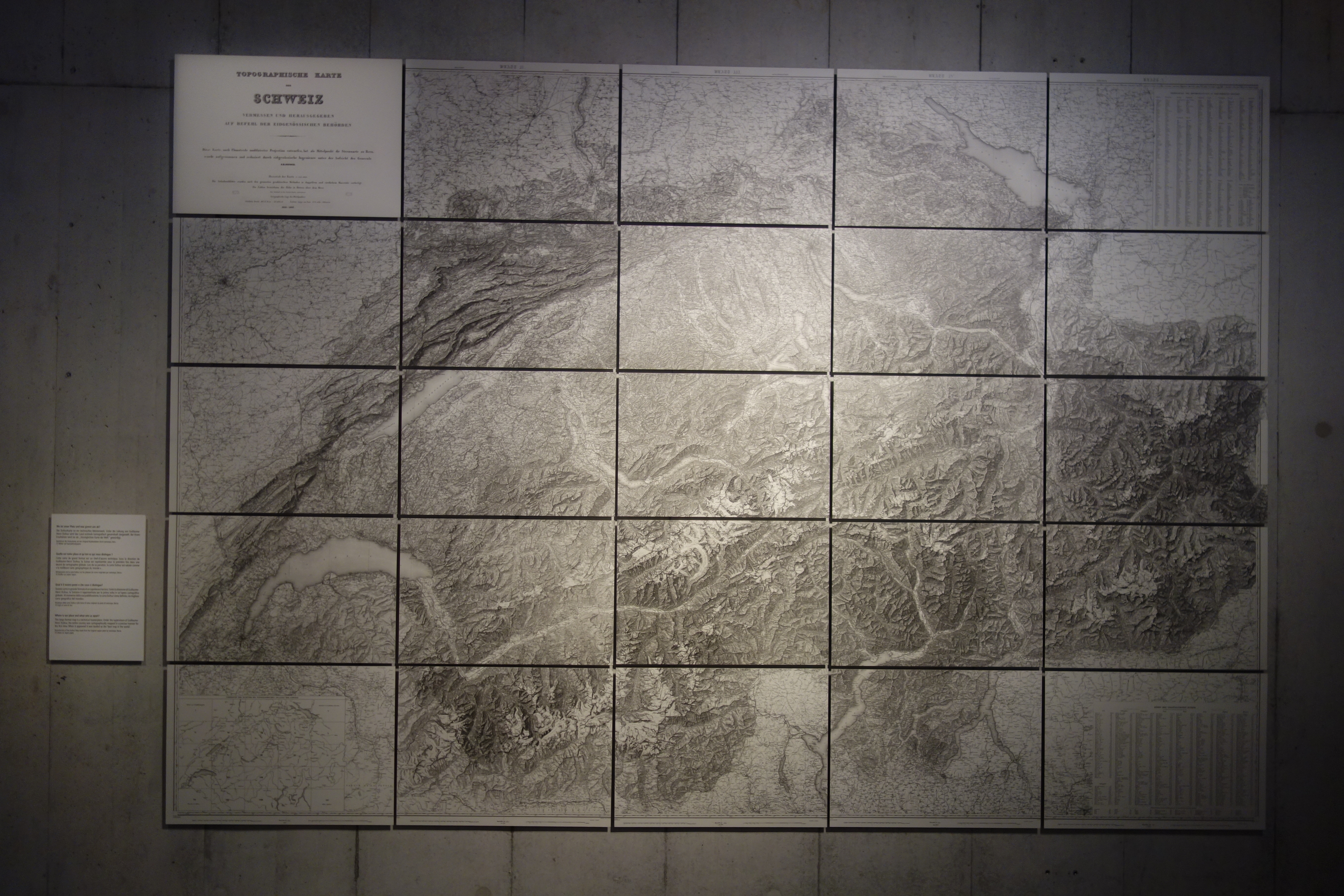
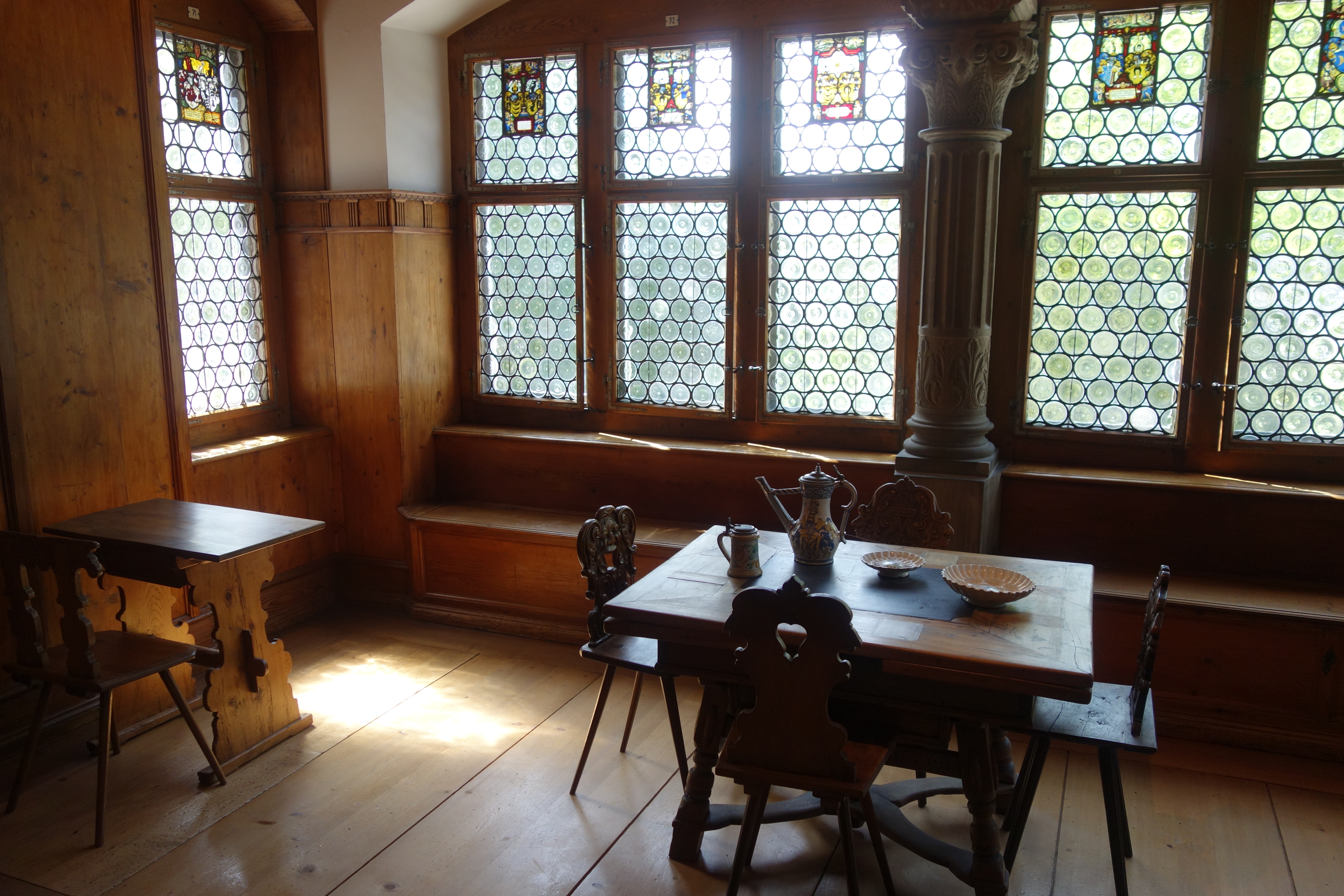
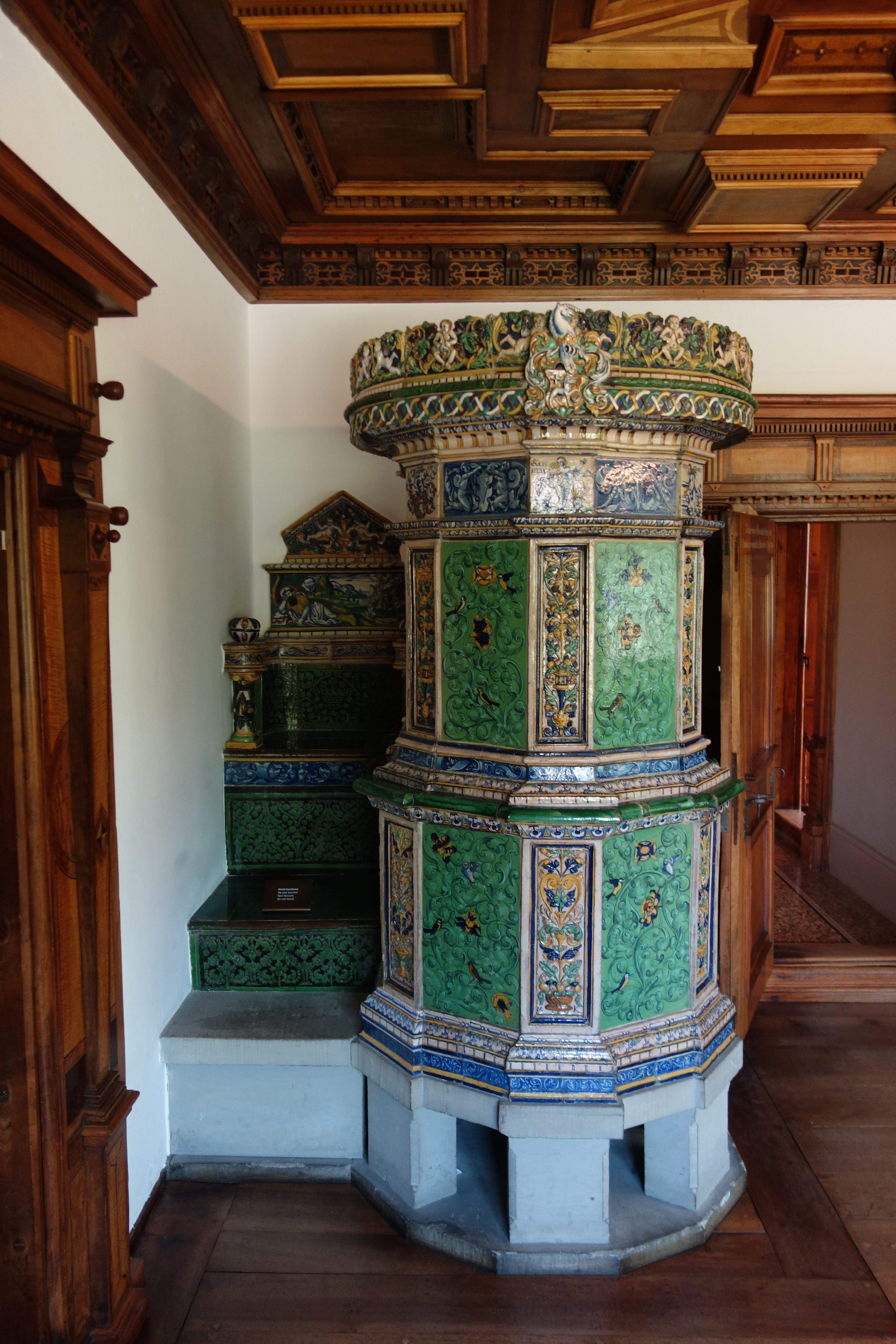
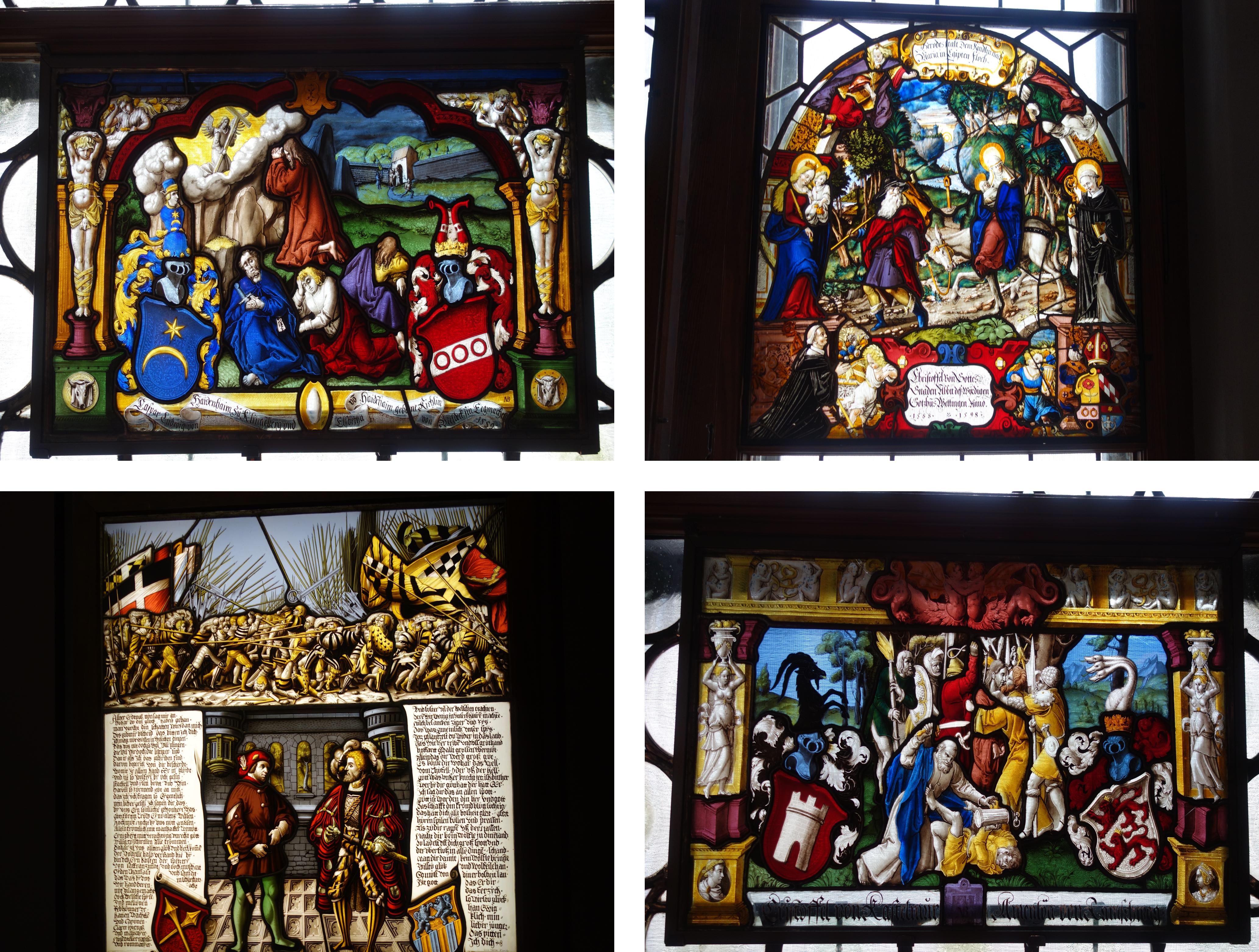
This topographical map of Switzerland, printed from 24 large copper plates, was considered a masterpiece of its time and won many awards.One section of the Landesmuseum had wood-paneled rooms that had been taken from historic castles and homes and reinstalled in the museum.Nearly every room had a large tiled stove in it for heat.Built-on desks and sinks were also common, and the woodwork was extremely intricate.The whole museum included colorful and detailed stained glass panels, usually depicting either a religious or historical theme.
After the museum, Nick took a walk along the river past the area we had explored previously. It must have been a good day for spray painting, because he encountered no fewer than three different groups working on their graffiti masterpieces.
The rail viaduct, from nearby rail trail
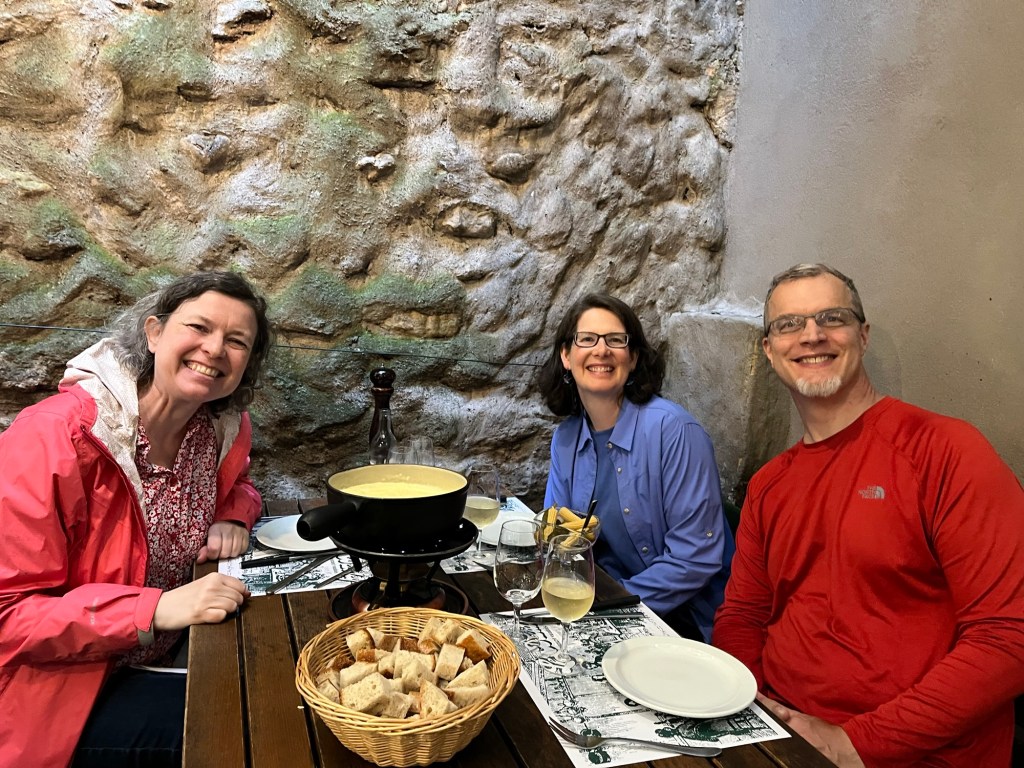
In the evening we all met up for fondue at a restaurant near the Grossmunster (cathedral). Somehow we managed to finish the whole pot! Afterwards we took a stroll through the old city, where guild banners were still hanging in the streets. We ended our evening out with a pirate-themed escape room, which we only completed in the nick of time (less than four minutes left!)
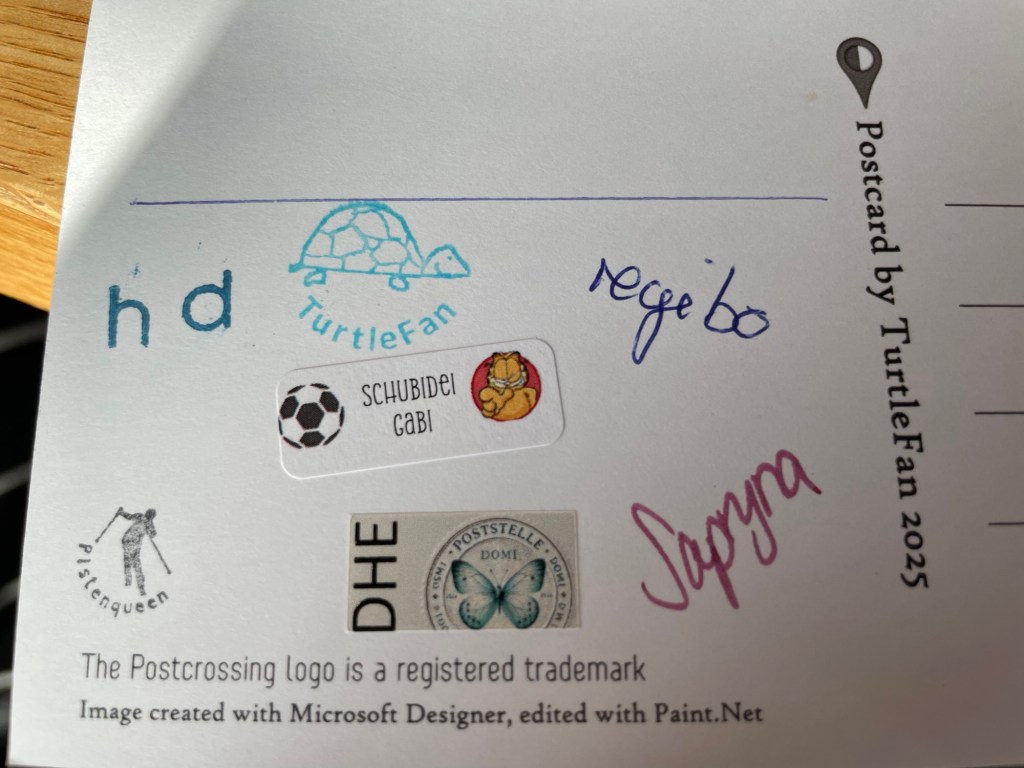
Today we had a scheduled afternoon event in Lucerne: Eszter had organized a postcrossing mini-meetup, with the commemorative card she designed shown above. Postcrossing is a hobby where people exchange postcards from different parts of the world, and occasionally postcrossers will get together to sign and write postcards together. Often, the organizer will design a postcard for the event, as in the one shown above. (The inspiration for this card came from Susannah’s recent interest in quilling and the scenery in Lucerne, which led to an intriguing AI-generated image.) Since the meetup didn’t start until later, we had the morning to explore Zürich a bit more before heading to Lucerne. We took a walk through the University of Zürich’s botanic gardens before meeting up with Eszter for lunch at Hiltl, the oldest vegetarian restaurant in the world (established 1898). Its buffet style allows the chance to try lots of different dishes.
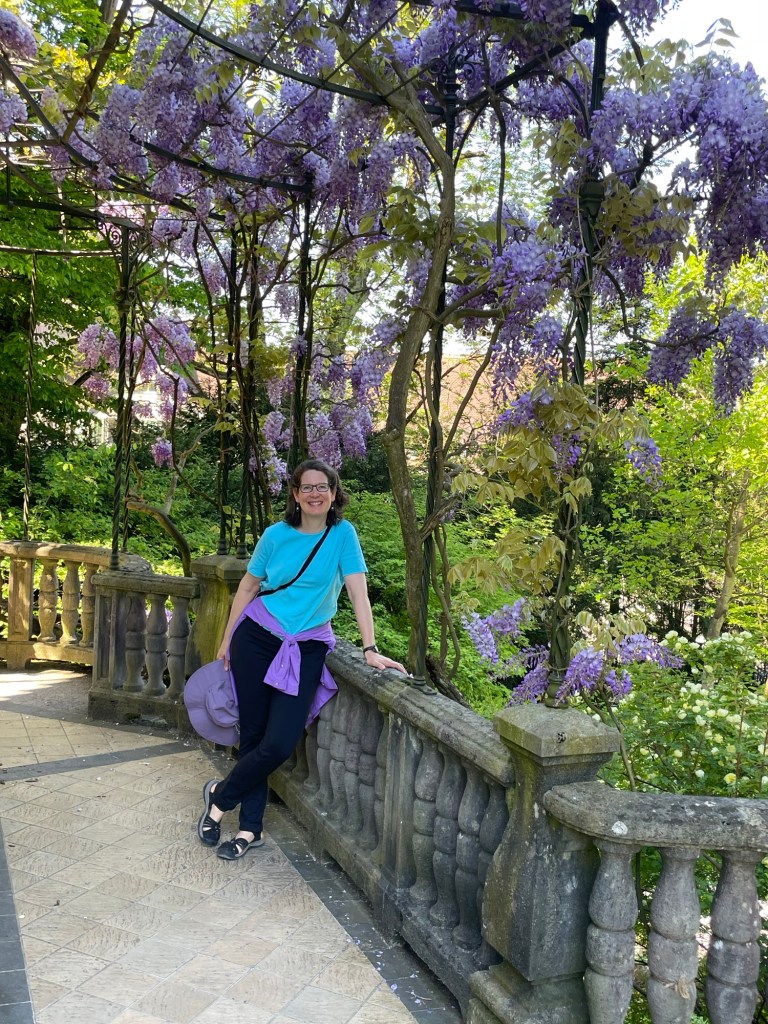
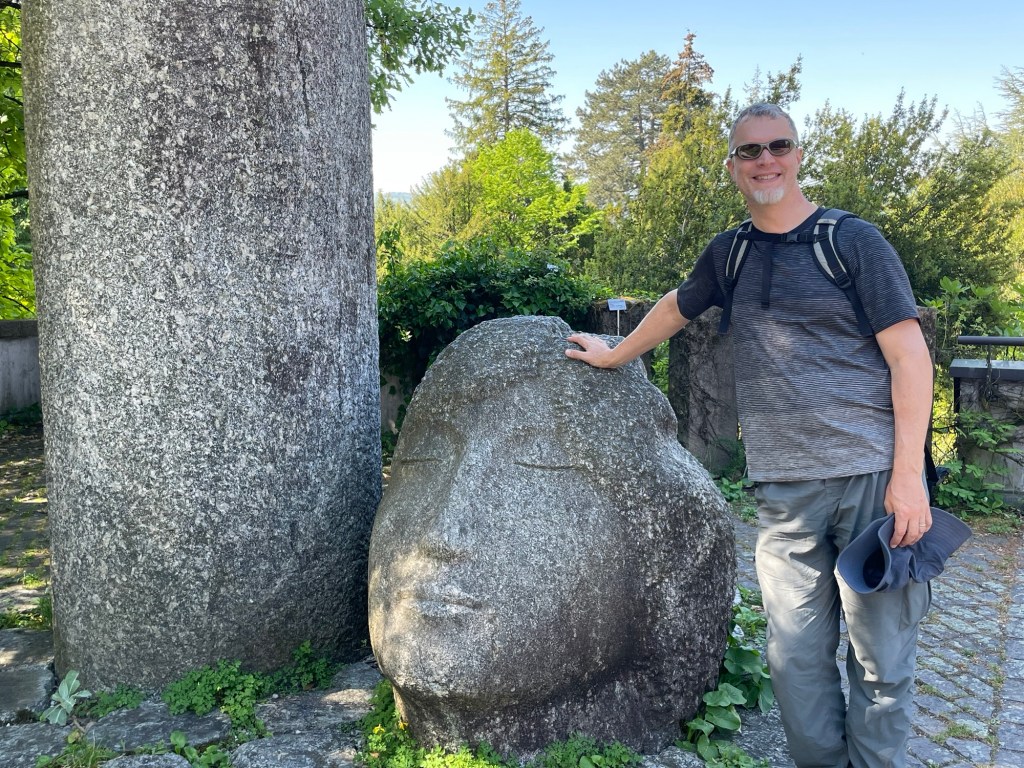
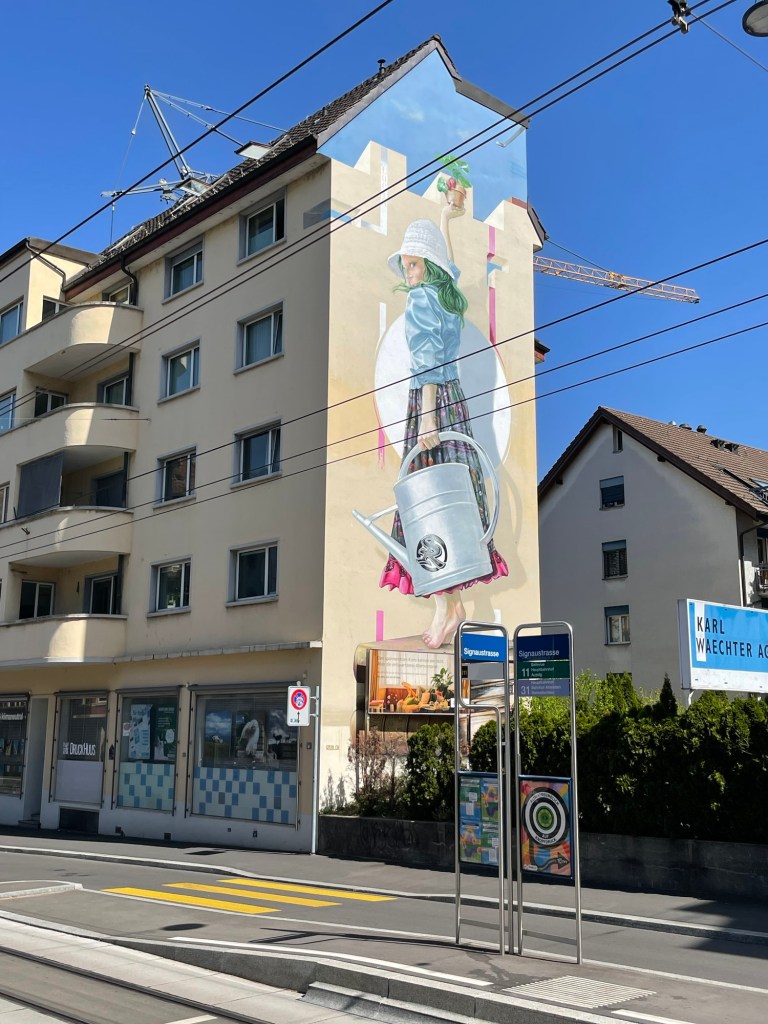
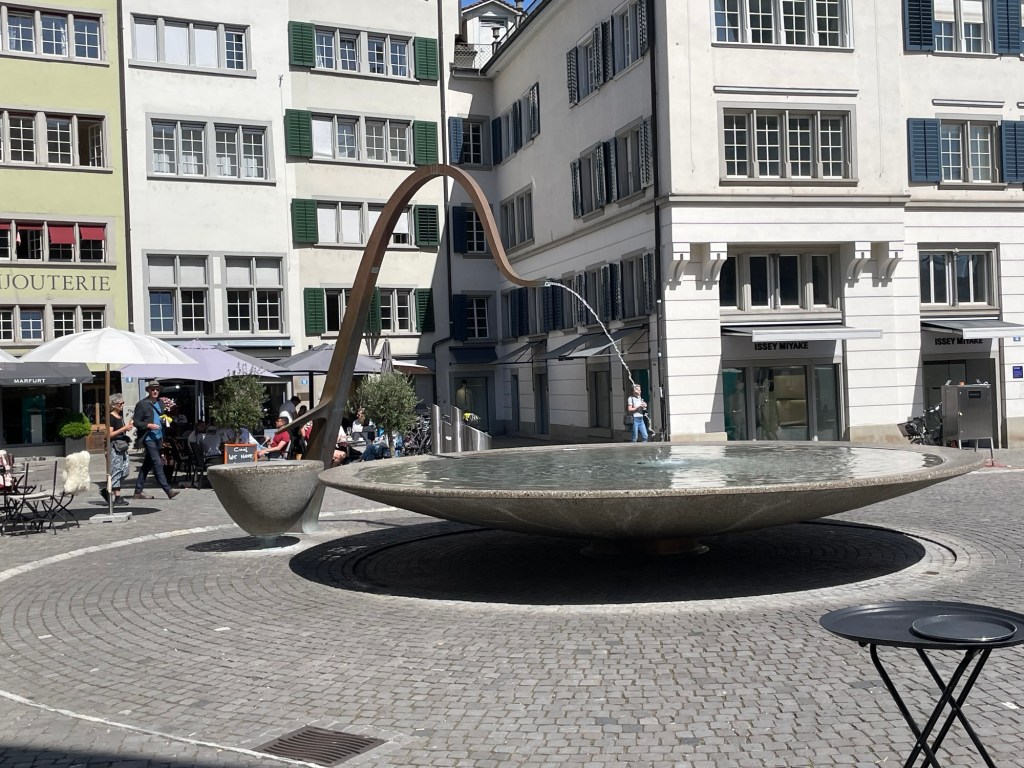
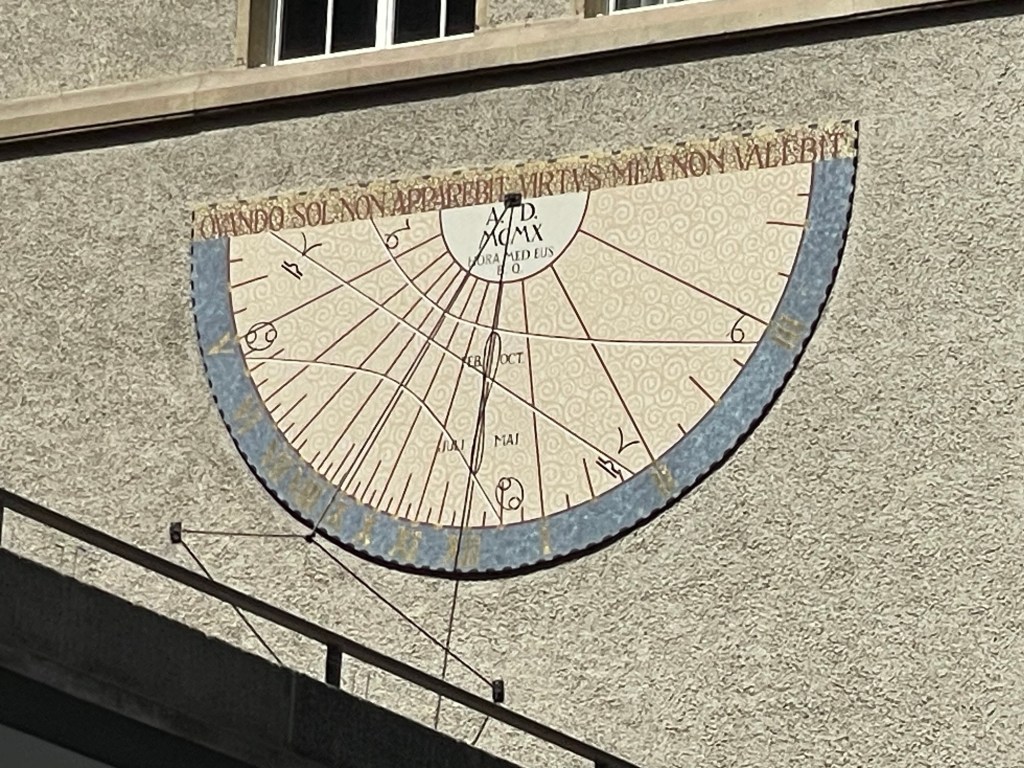
Wisteria gazeboOzymandias?Greenhouse bubblesCloseup bloomsStreet artMünsterhof fountain, on our way to the restaurantSundial on the side of a building in the old cityWall of Swiss chocolate at a local supermarket – this doesn’t even capture the full selection!
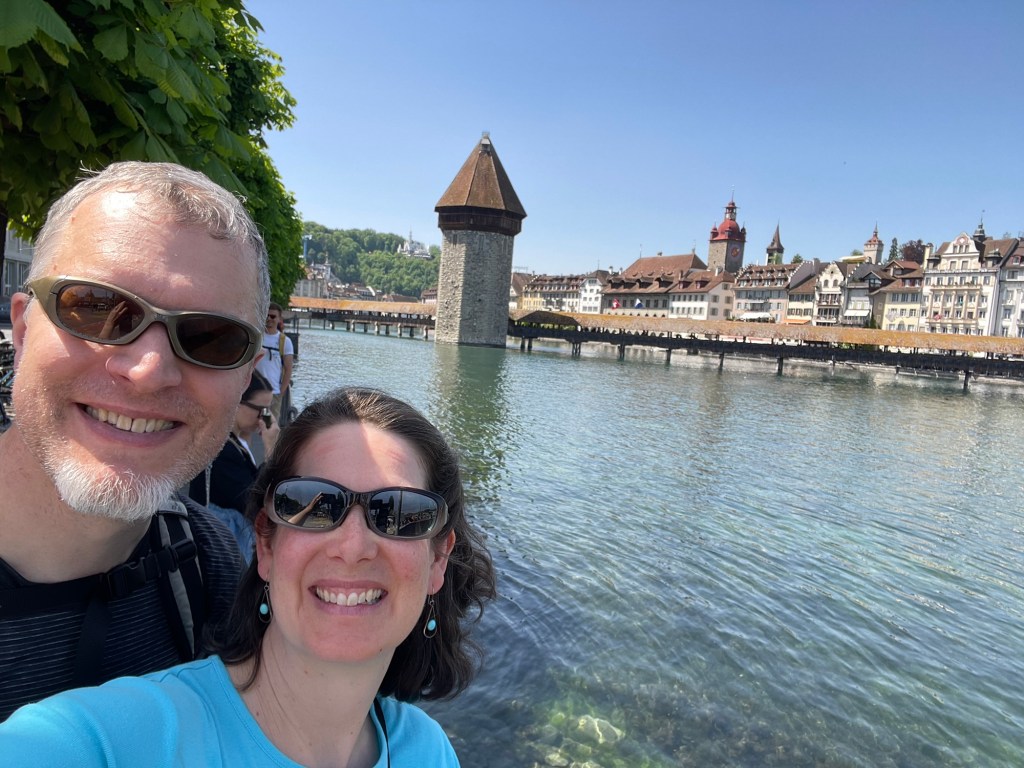
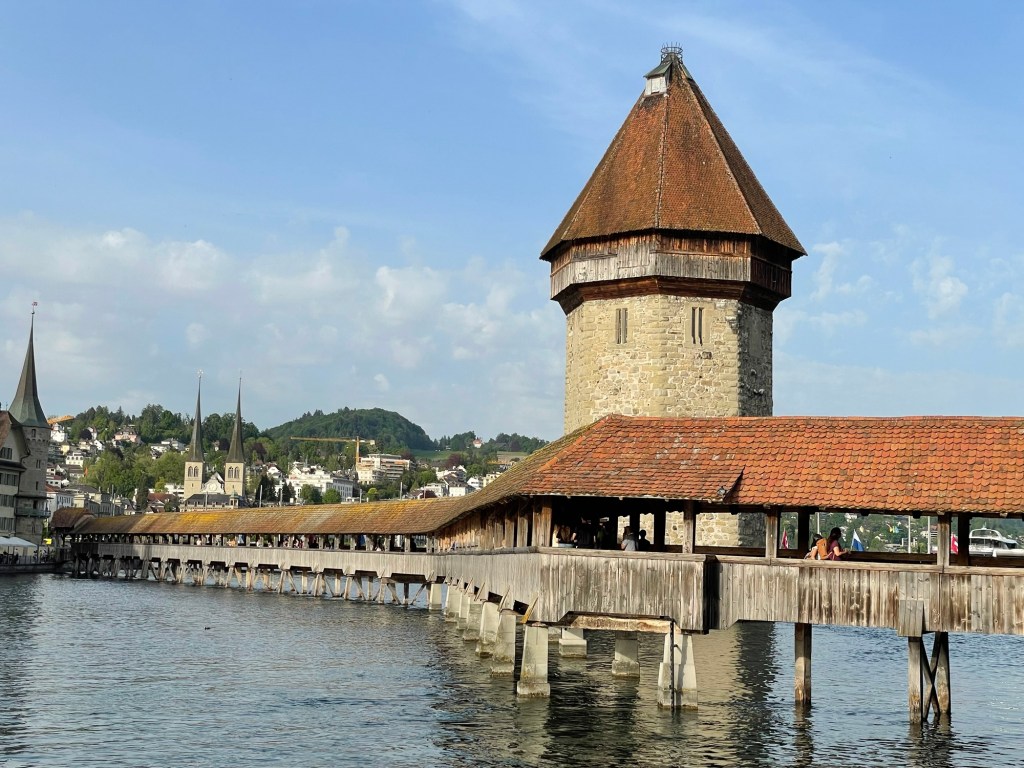
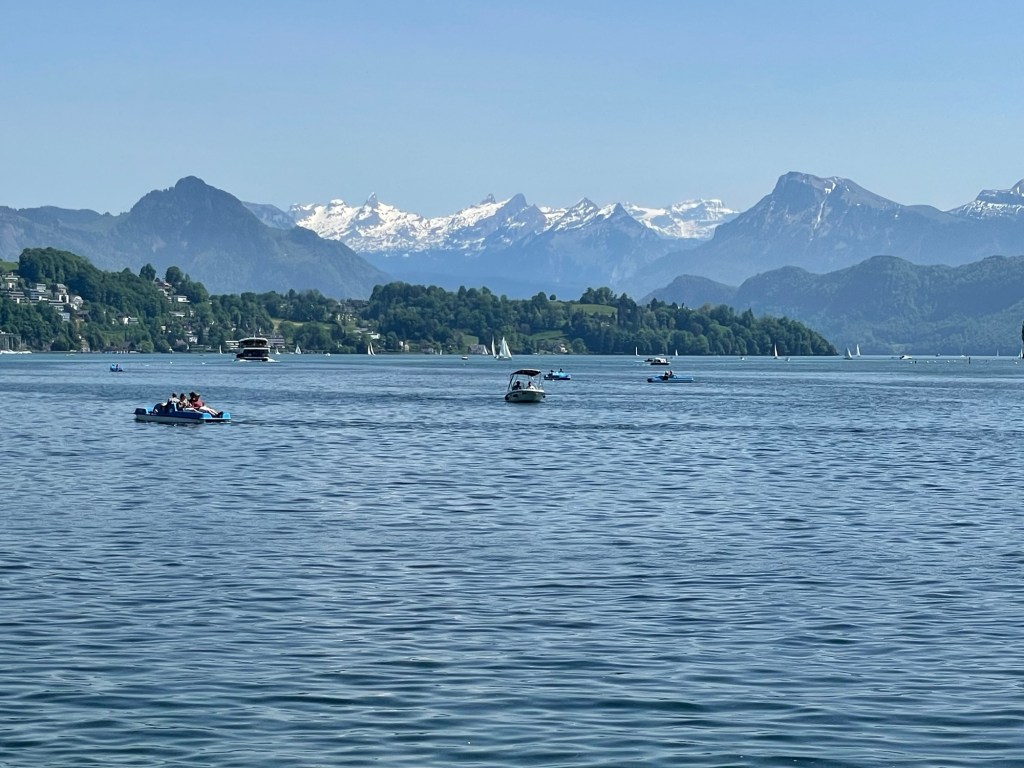
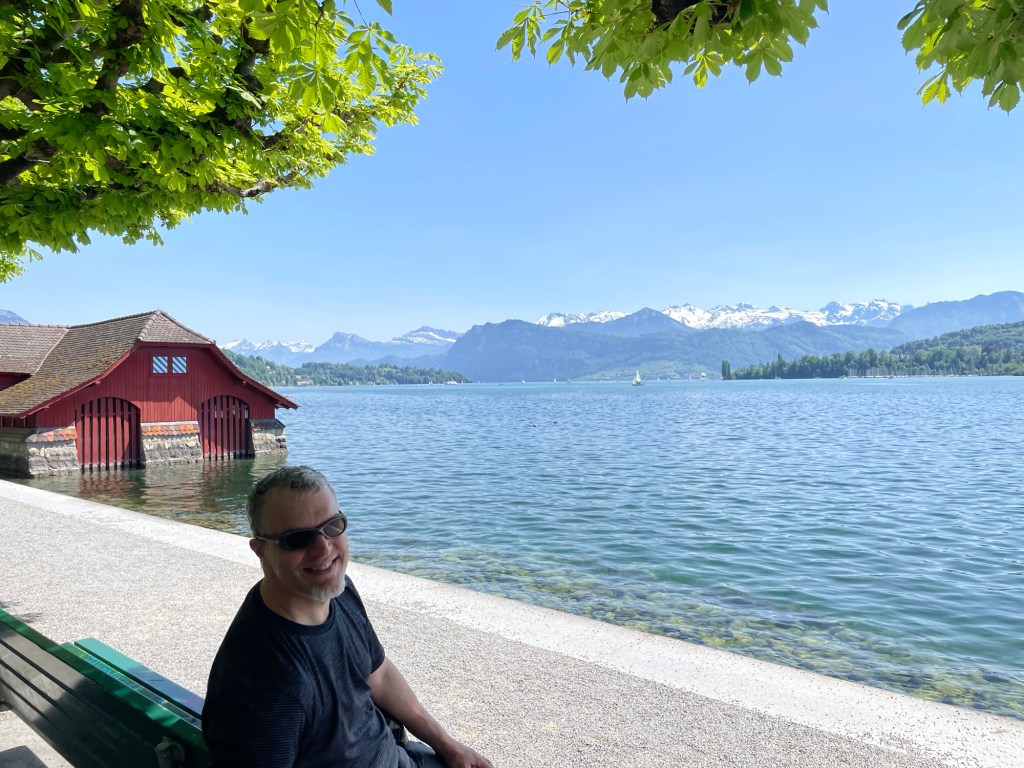
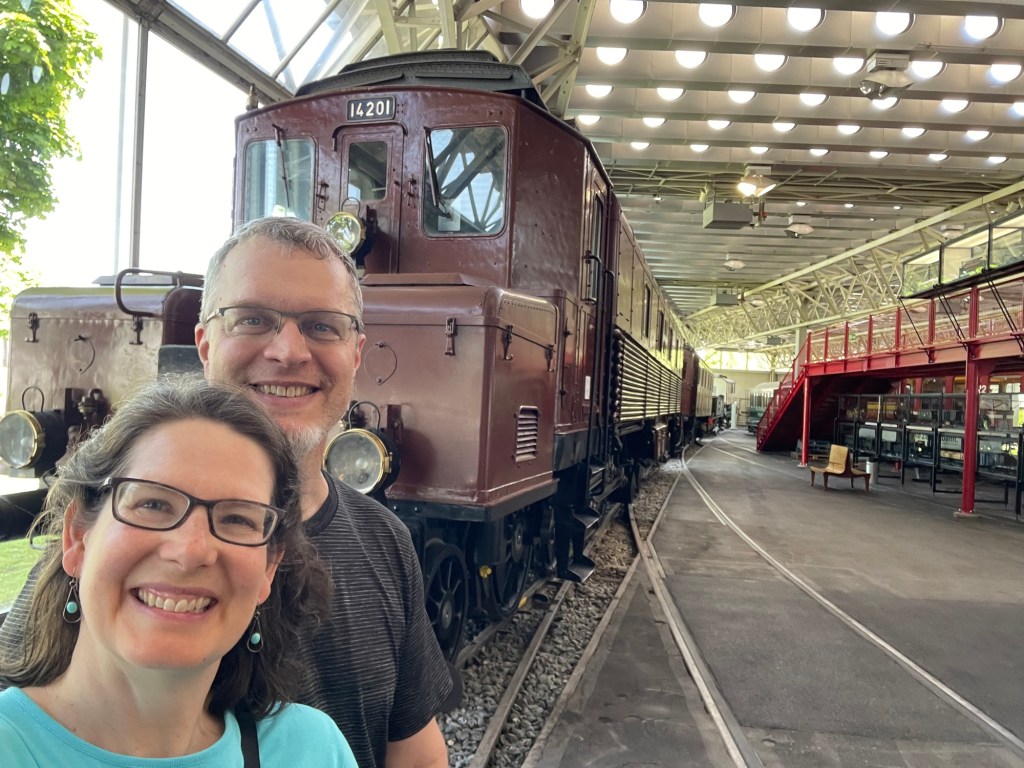
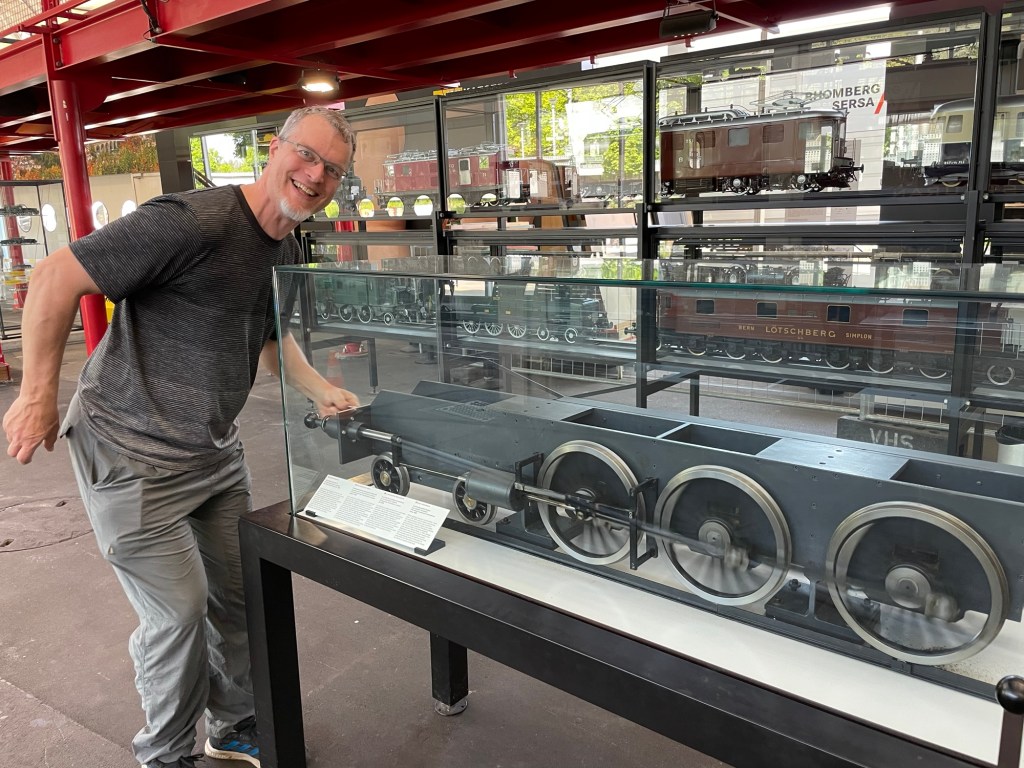
After lunch we hopped on a train to Lucerne, where we visited its landmark wooden bridge before taking a stroll along the lake. Our route happened to take us past the Swiss Transport Museum (Verkehrshaus), reputedly one of the best museums in the country — so we decided to visit. It’s sort of like the Smithsonian’s Air and Space Museum, except that it’s Air and Space and Water and Road and Rail and Energy all in one ticket. There’s something for all ages, with real working machines in some exhibits and miniature trucks, boats, and trains for kids to ride and play on.
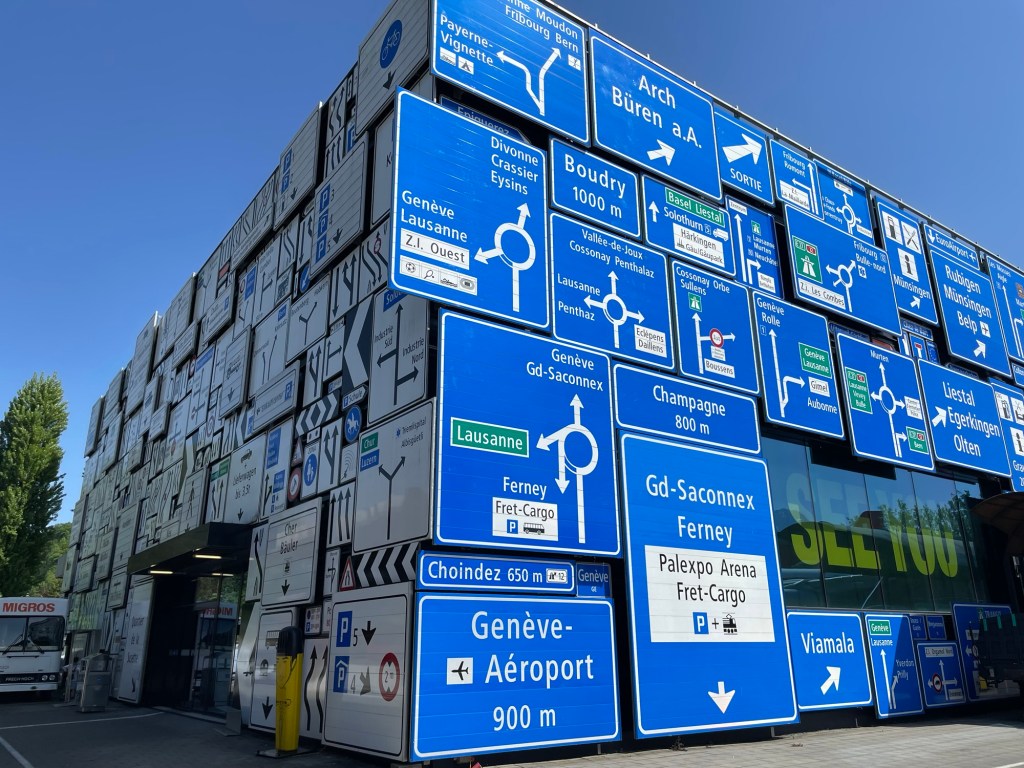
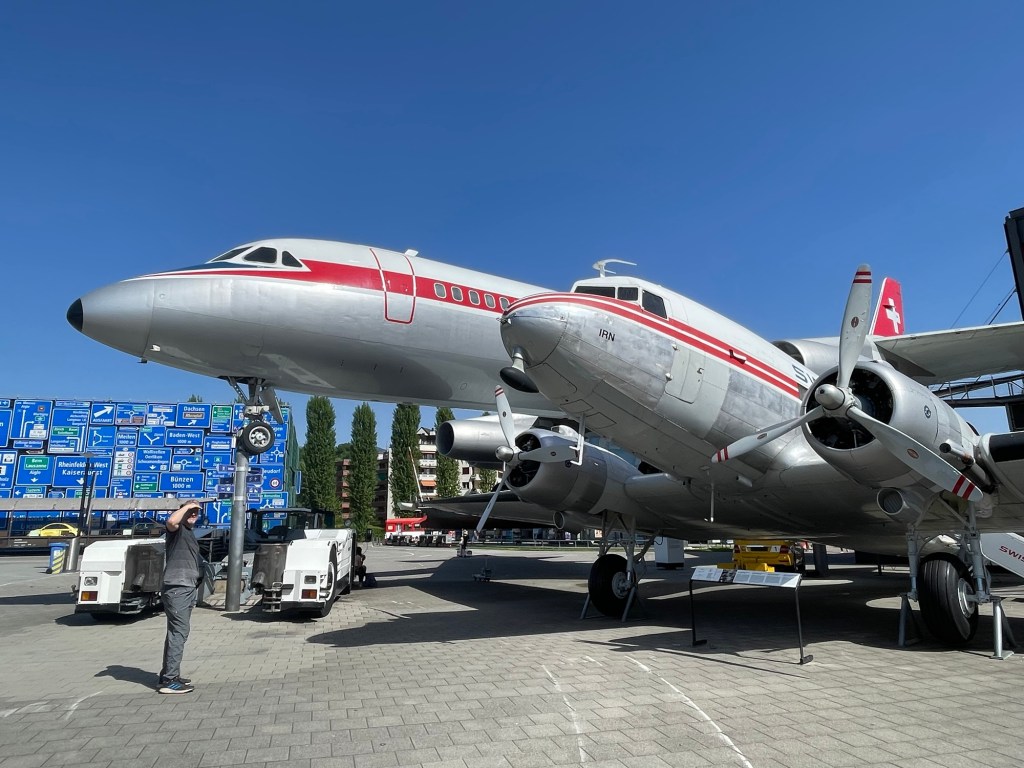
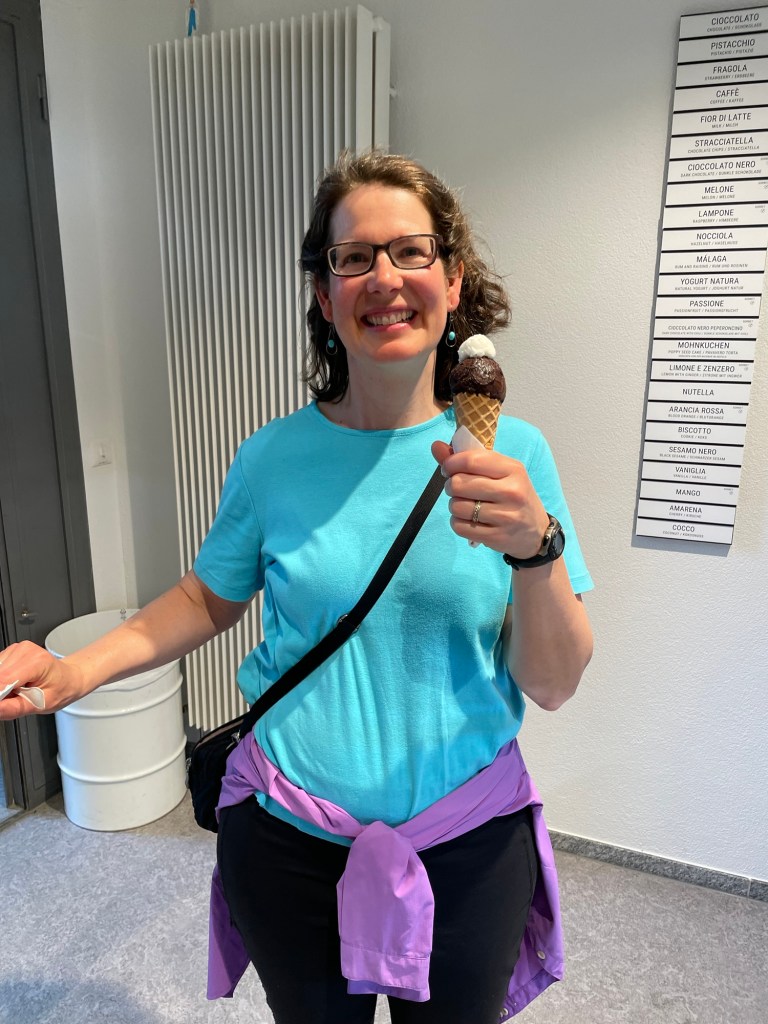
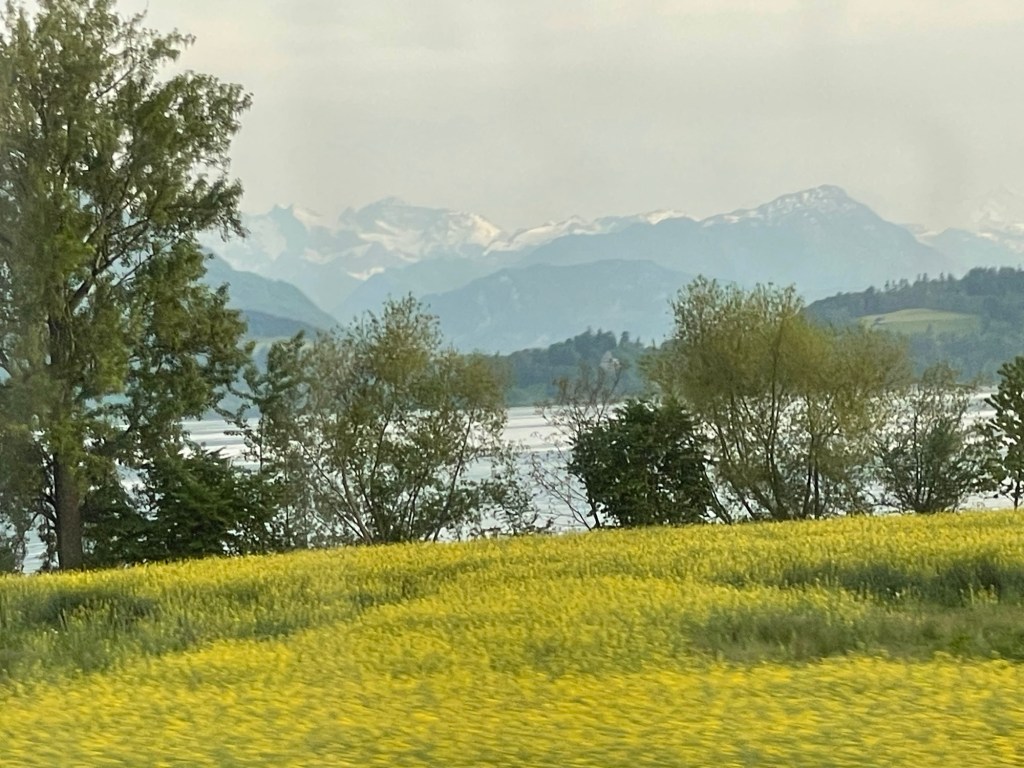
We’ve arrived in Lucerne!Lucerne’s famous Wooden Bridge plus the Water Tower were part of the city’s defense systemInside the bridge are paintings depicting the city’s role in the Counter-ReformationLake LucerneTunnel boring device outside the Swiss Transport Museum – not boring at all!Train hallYou could pump the handle on this exhibit and it would slowly speed up, with a sound just like a steam locomotive.Highway signs outside the road exhibitHistoric Swissair planes. The one in front is a DC-3. One building had a booth that would take Matrix-style video that would pan around you while frozen in an action shot. Hard to capture in a still image!The Swiss mountain rescue service sometimes parachutes in with a dog on its own rope so it can land separatelyThis lifesize steam engine once powered a ferry. When you press the button, the machinery swings into action.Postcard back signed by all the participants at the meetupGelato at the end of the day. This shop offered a free “taster” scoop on top of the main cone. Yum!View of the Alps from the train back to Zürich
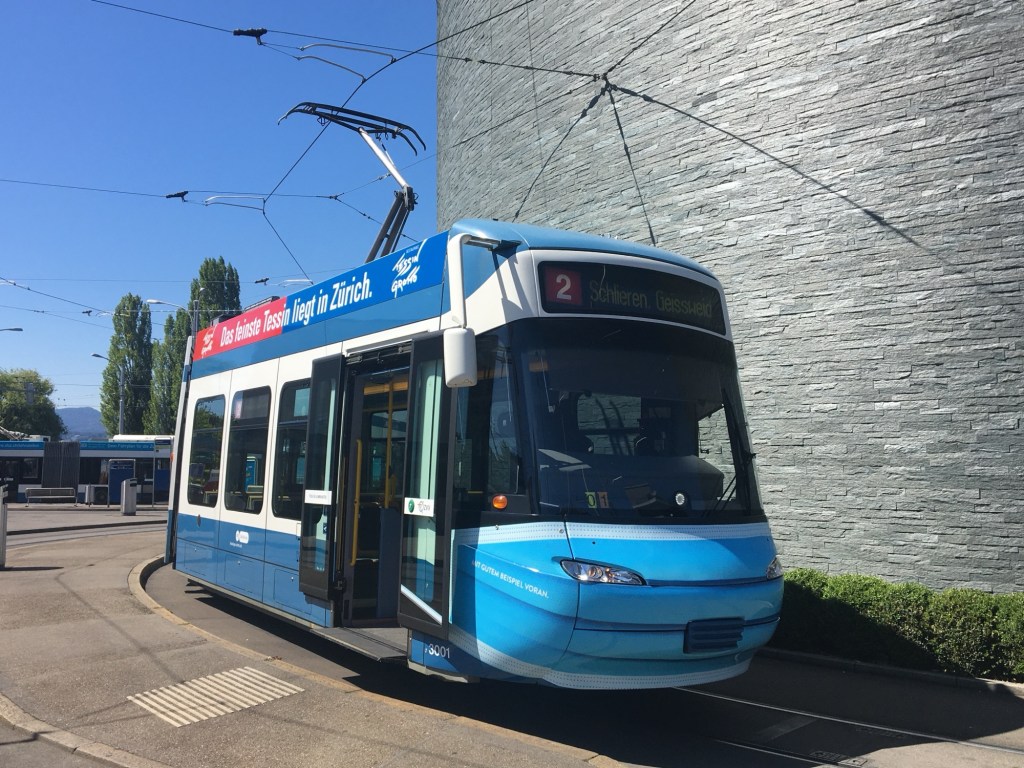
Zürich is served by a ubiquitous surface tram network that moves people efficiently around the city. On many lines the wait is no more than five minutes between trams. Today we purchased a 24-hour pass so that we could move around the city quickly and see the sights.
Photo credit to Eszter (this picture was taken during COVID when the tram was wearing a mask!)
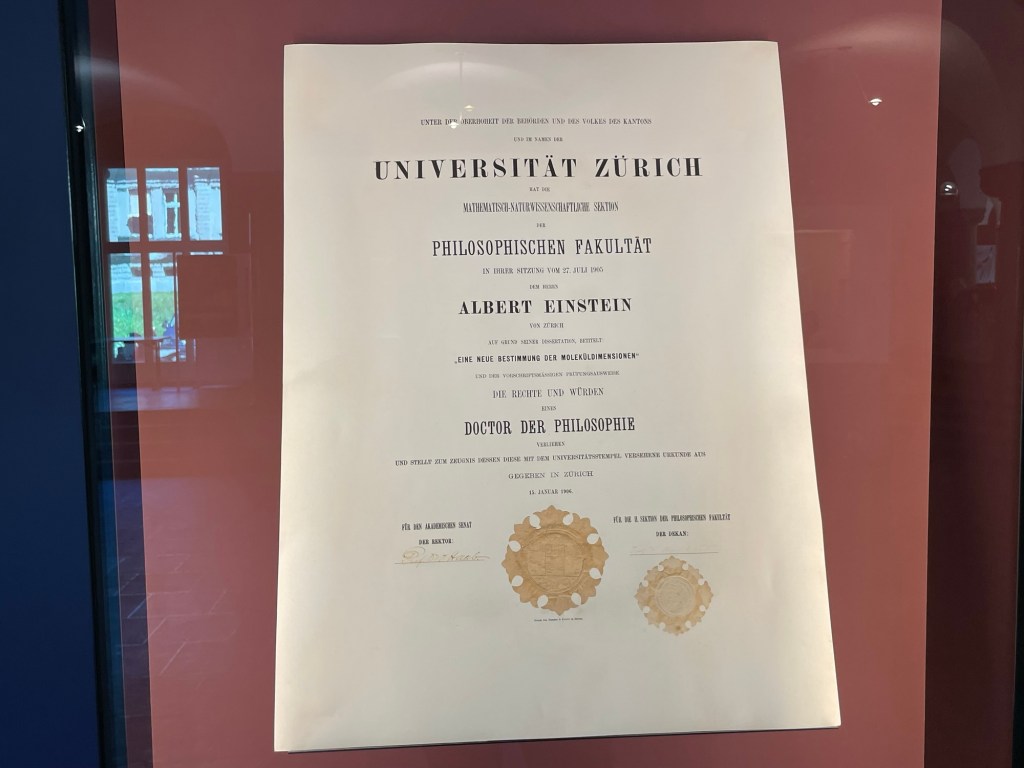
After a morning catching up on some work obligations, we began with lunch with Eszter at the faculty lunchroom of ETH Zürich, which has an open-air terrace with a view out over the city (see top photo). The facilities of ETH Zürich (a well-known technical school) and University of Zürich are close together at this location, so we saw a little bit of both schools. On display inside one of the U. of Z. buildings is a copy of Einstein’s Ph.D. diploma, granted in 1906.
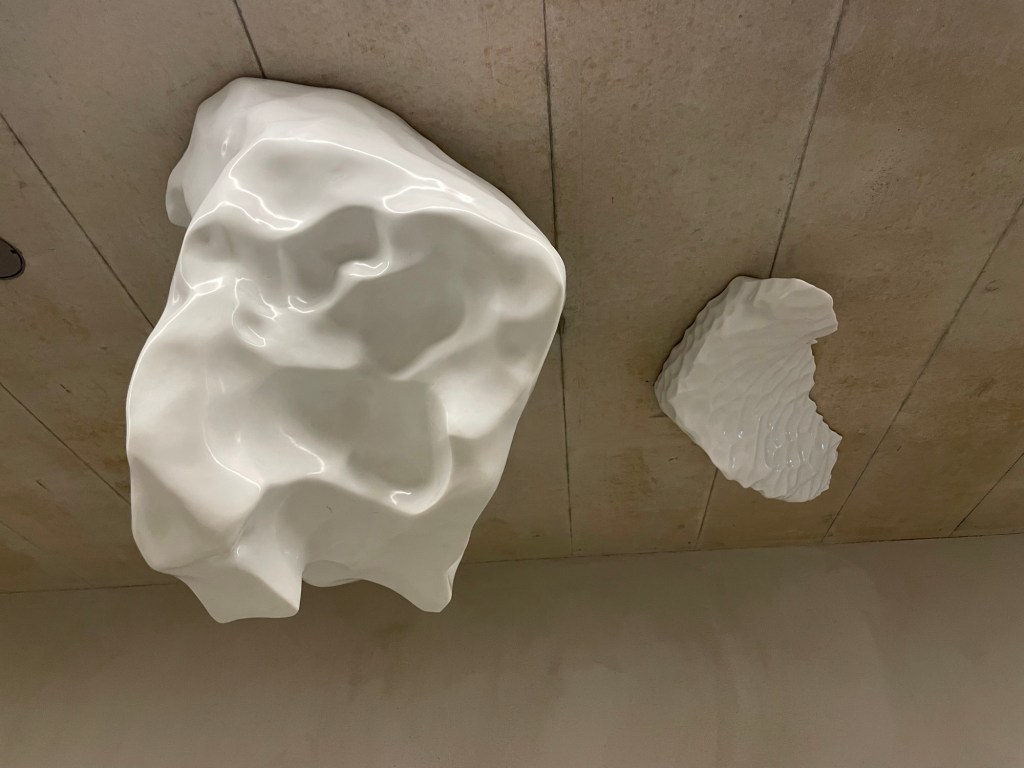
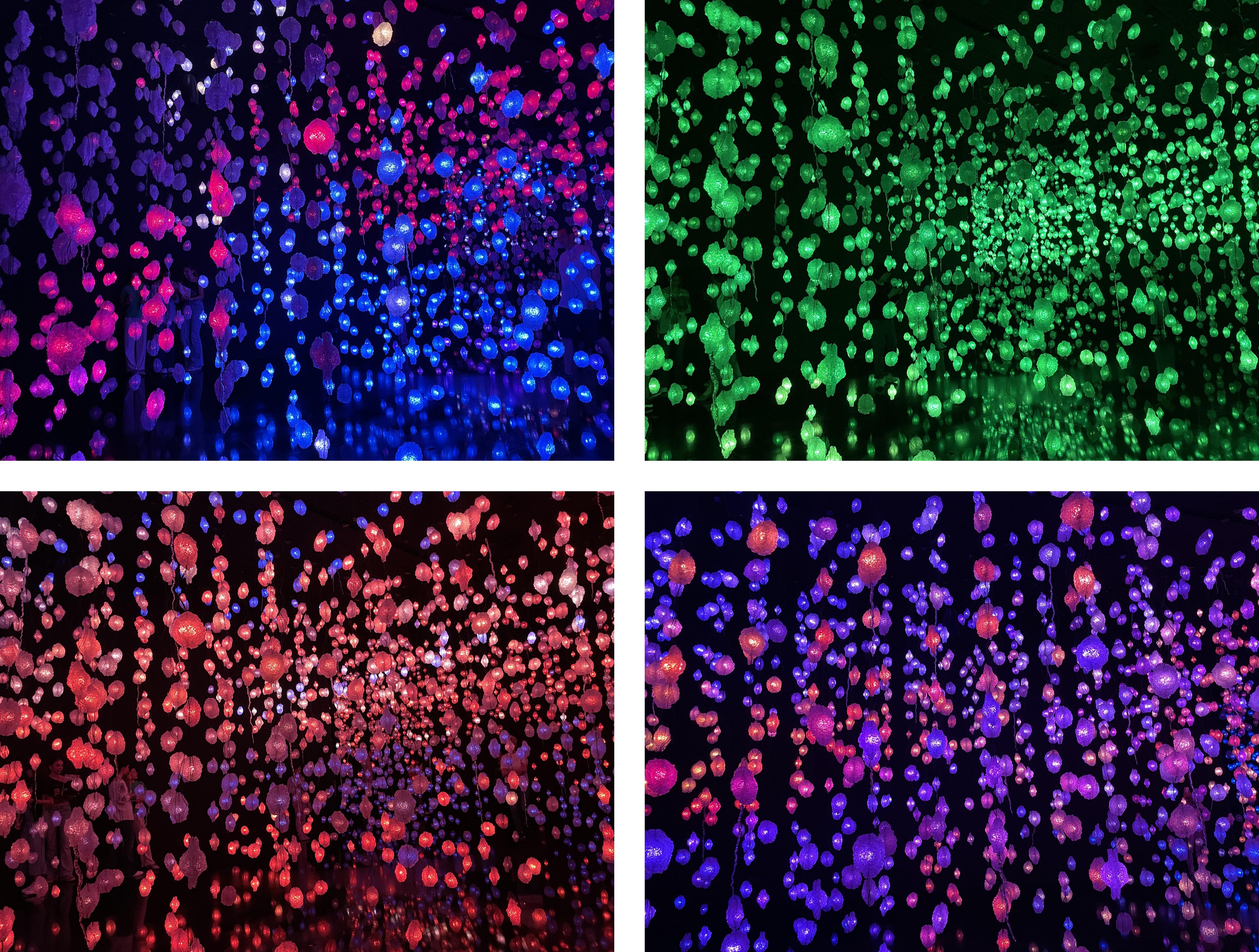
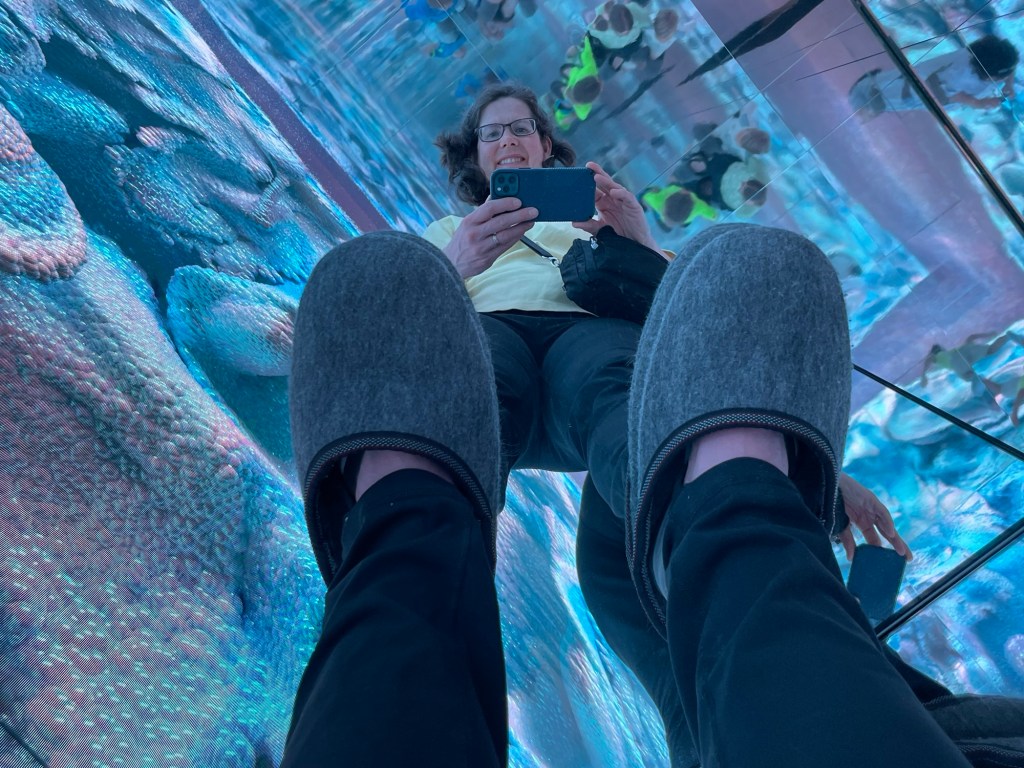
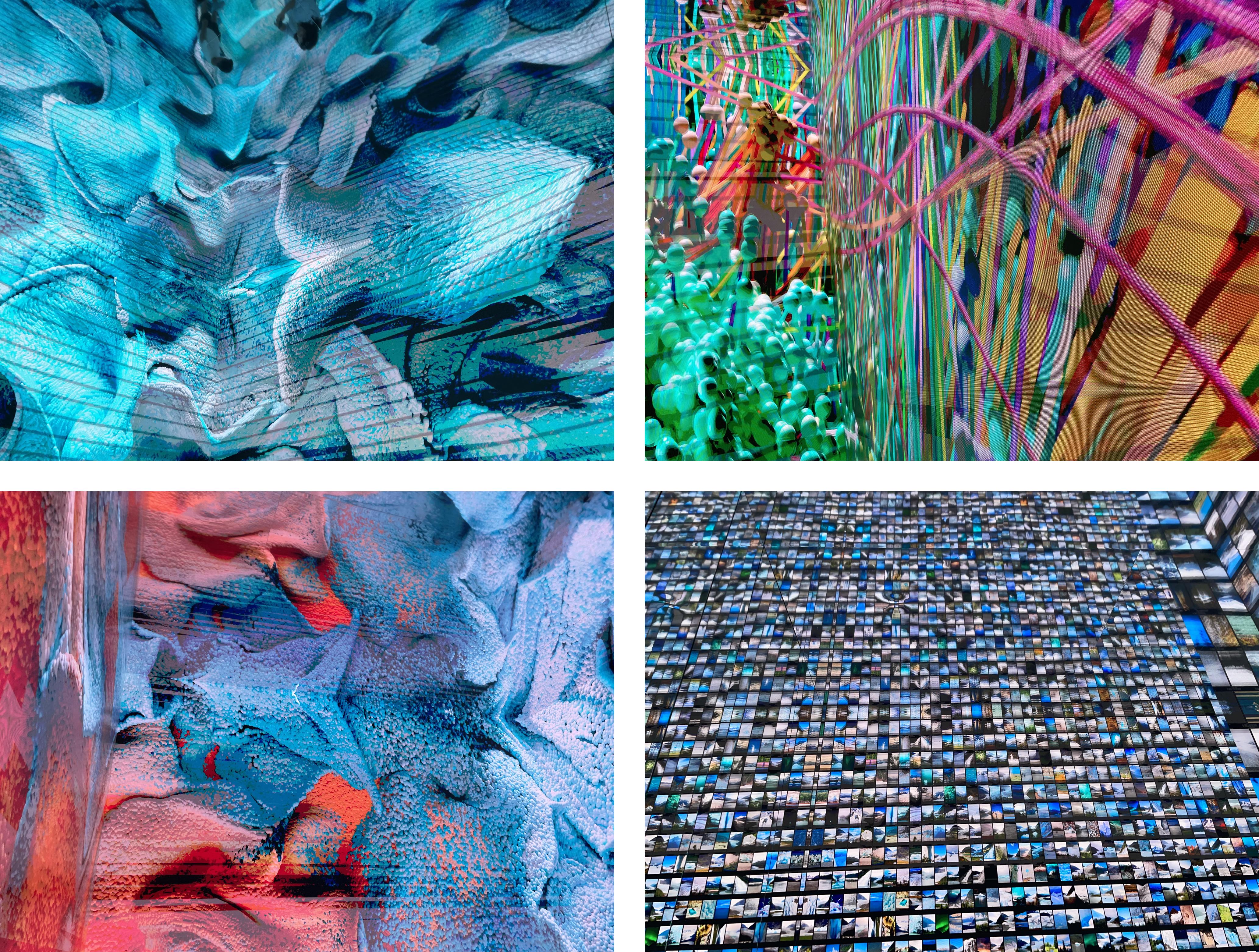
Following lunch, we walked down the hill to the Zürich art museum (Kunsthaus), which offers free admission on Wednesdays. We spent several happy hours exploring their collection, which ranges from old masters to contemporary digital works and installations.
Icebergs sculpted in marble by Olafur EliassonAn interactive light and music display installation: “Turicum Pixelwald” by Pipilotti RistAnother interactive installation: “The Warriors” by Rebecca HornThis huge concrete ring by Bruce Nauman filled most of one of the galleries. The cross-section transitions from triangular to square.Susannah inside a digital multimedia installation, which required (and provided) slippers because the floor was mirroredMore scenes from the same digital installation: “Glacier Dreams” by Rafik Anadol
Besides the trams, our public transit pass also gave us access to the water shuttle, which travels along the river and part of the lakeshore. We jumped on the opportunity to take a little cruise and see the city from the water. The approved stops have a little pier marked by striped poles, and if you wait there long enough the boat will come and pick you up.
Our water taxi landingWhile we were waiting, we saw a troop of Swiss citizen-soldiers marching around as part of their military training.The boat has a flat profile so that it can fit under the low bridges.Out on the lake – what a beautiful day!
Towards the end of the day, we walked to the industrial section of town to meet a former student of Susannah’s for drinks and dinner. Along the way we walked along the banks of the Limmat River, which on days with gorgeous weather like today attracts throngs of people to the waterfront to tan, be seen, and occasionally swim. (We did see a few people in the water, but most were sitting along the edge in bikinis and board shorts.) We also passed this high stone viaduct, which has been creatively repurposed as a shopping mall with small establishments in each bay.
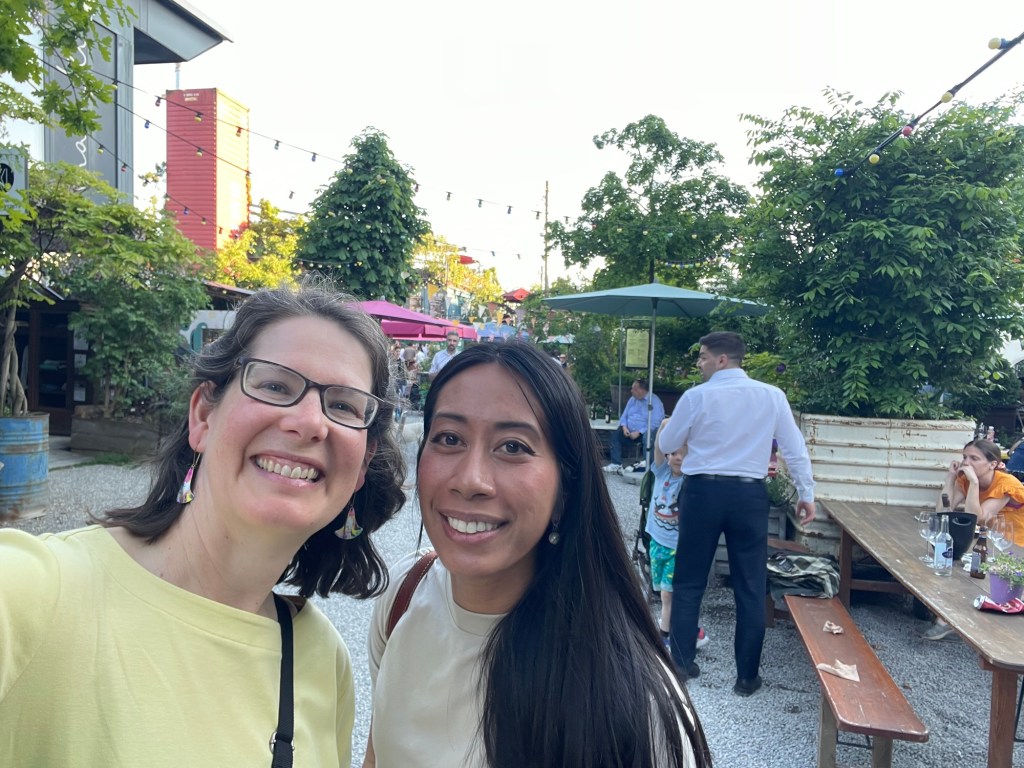
Under the viaductOutdoor beer garden with Susannah’s former student Marni. All the 30-somethings in Zürich seemingly head here for drinks after work.
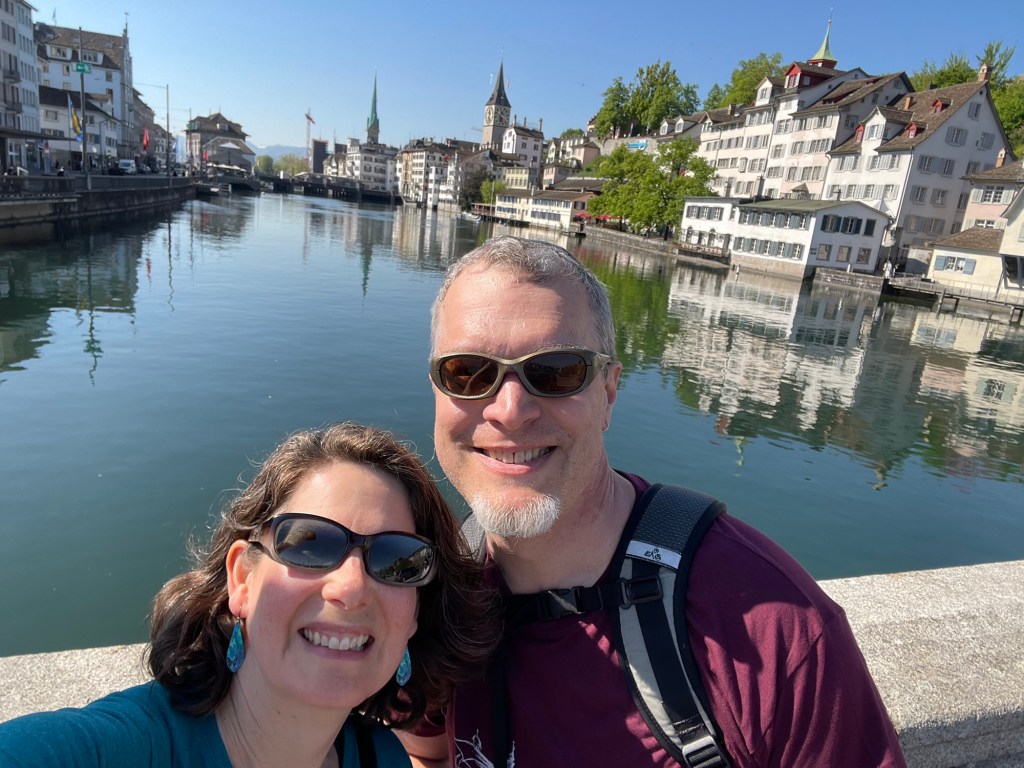
Zürich is in the north of Switzerland, not all that far from the border with Austria. And between the two lies the Principality of Liechtenstein. With our rail passes, it is quite easy to make a day trip there — so that’s what we decided to do. (For Nick, this marks his penultimate stop on the tour of Small European Countries. Only San Marino left to go…) We began with a nice walk through the center of Zürich to the Hauptbahnhof to catch our train, which ran along the southeast edge of Lake Zürich for the start of the trip. Soon enough we were traveling down glacial valleys with mountains towering overhead on either side. The only tricky part of the trip was that we had to make several transfers, and were having trouble deciphering the meaning of the various schedules and indicators on our itinerary. Everything became easier when we realized that one of the “transfers” involved sitting on the same train as it changed numbers from one route to another!
On the way to the HauptbahnhofView of Lake Walen from the train windowView of Sargans Castle from the train window
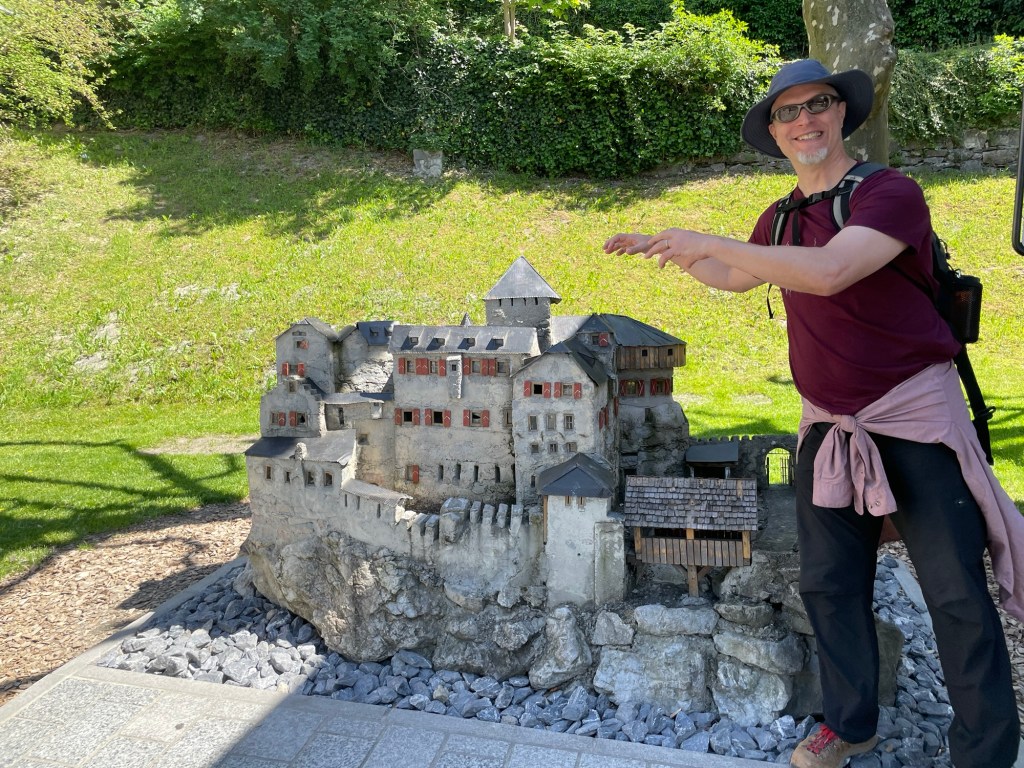
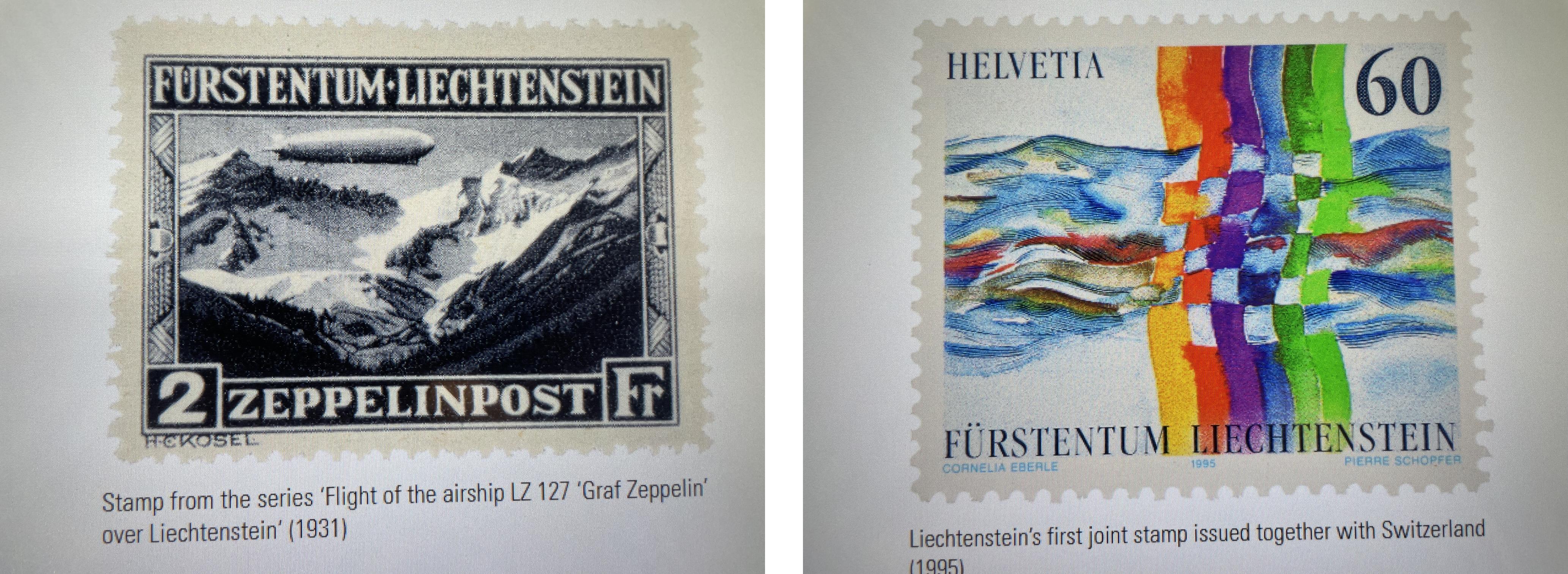
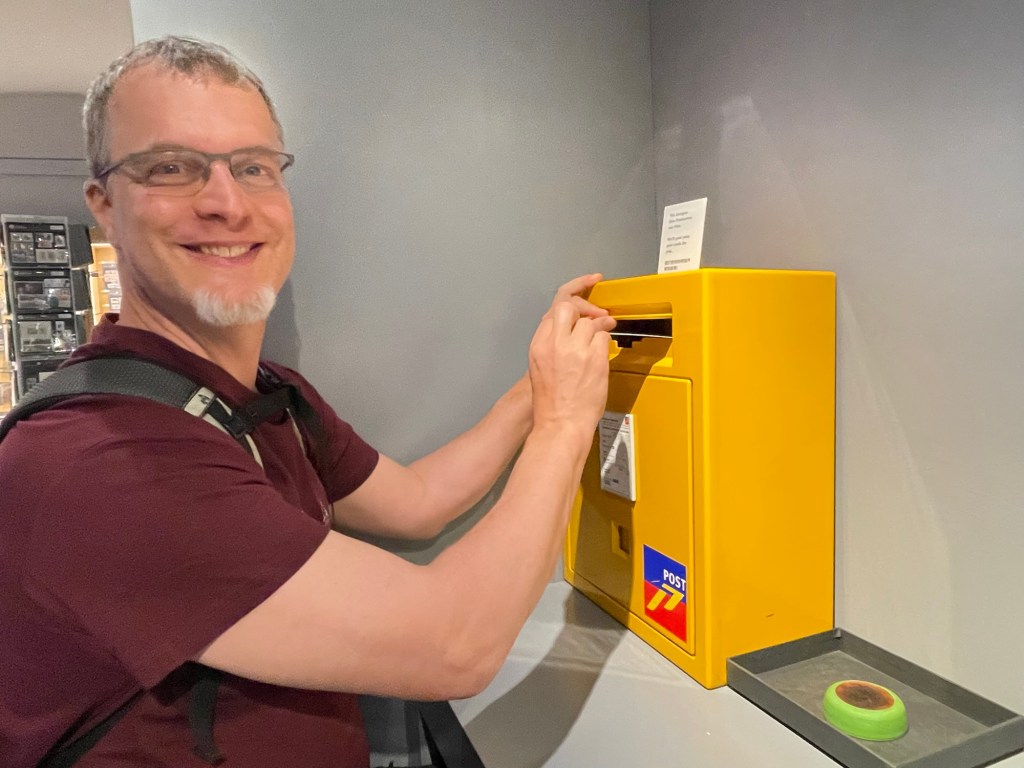
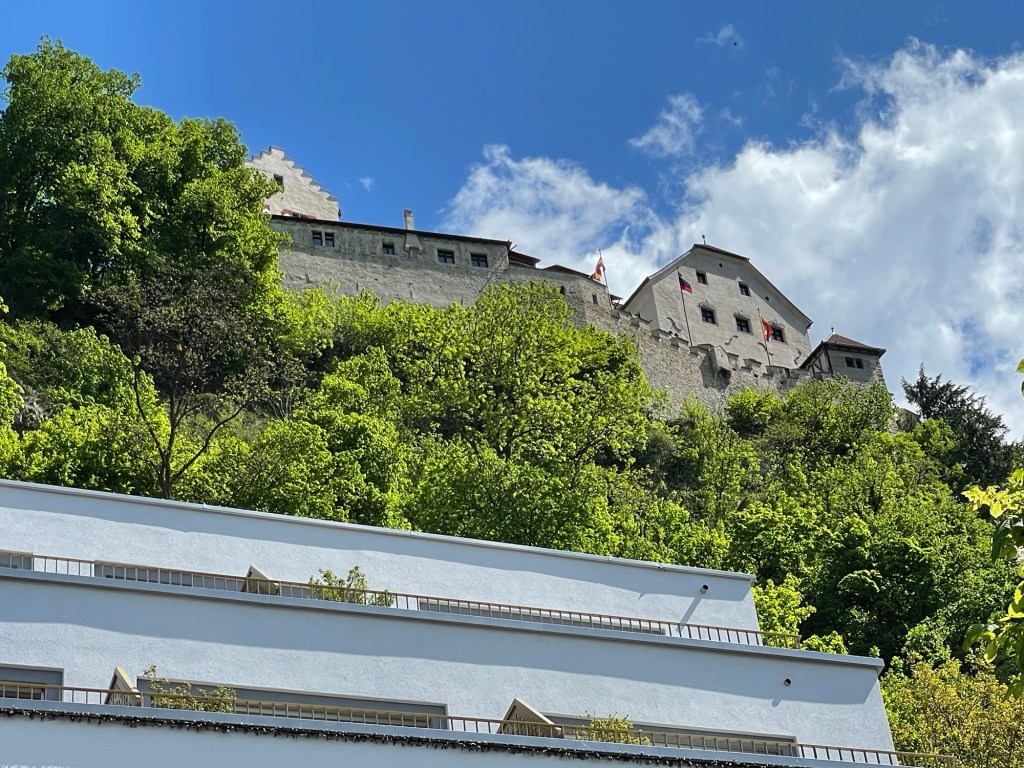
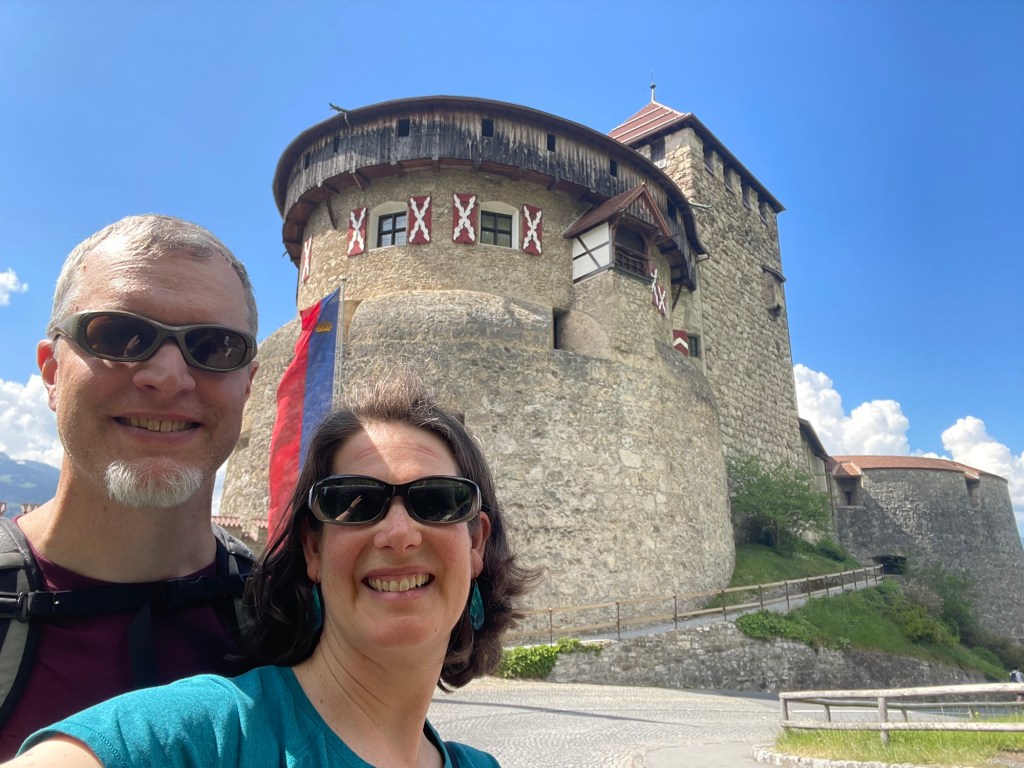
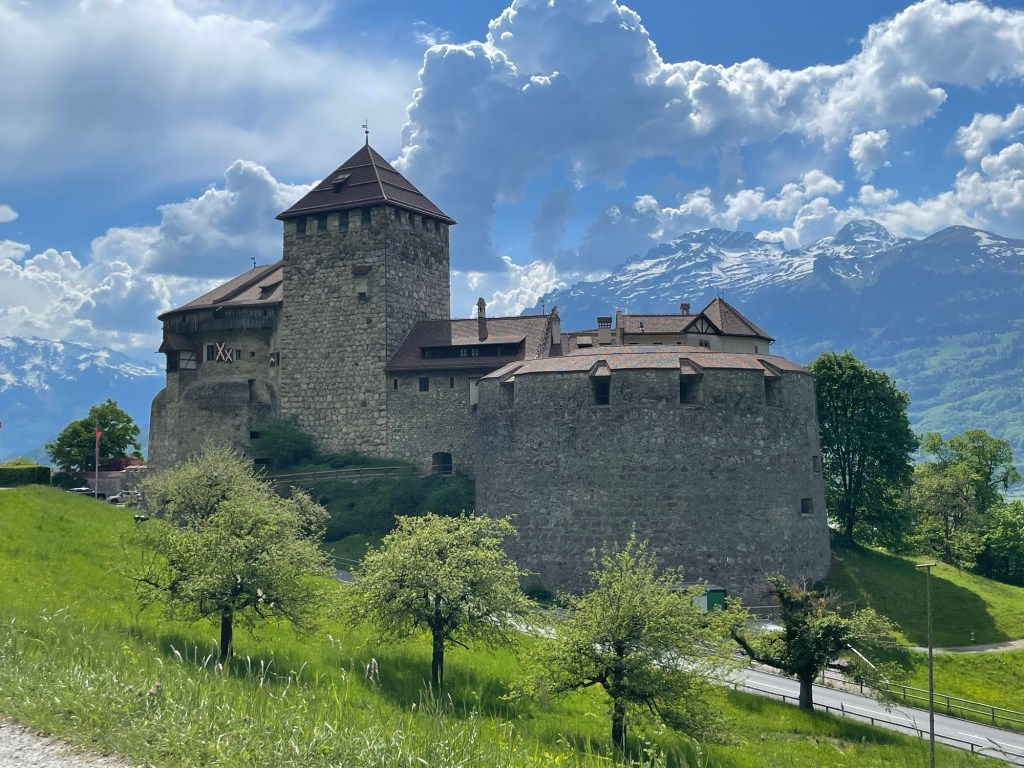
After one more transfer and a bus ride, we finally made it to Vaduz, capital of Liechtenstein. Vaduz Castle sits on a height above the city, home to the royal family and off-limits to visitors. A scale model stands next to the tourist office, and for those curious about the place they offer a VR tour (which we did not take). Also in Vaduz is an excellent Postal Museum, where along with various pieces of postal memorabilia they keep a collection of all the commemorative stamps the country has ever issued. There are quite a lot of them, since issuing high-quality stamps that are snapped up by collectors is a source of revenue for the country. The museum itself is free, but sending a postcard from it costs around $5 for the card and stamp together.
Slide-out panels house stamps organized by theme
Above the postal museum was a small art gallery that contained just a single work of art: a massive satellite-like structure made of wood and glue. It contained multimedia elements that interacted with visitors as they explored the piece.
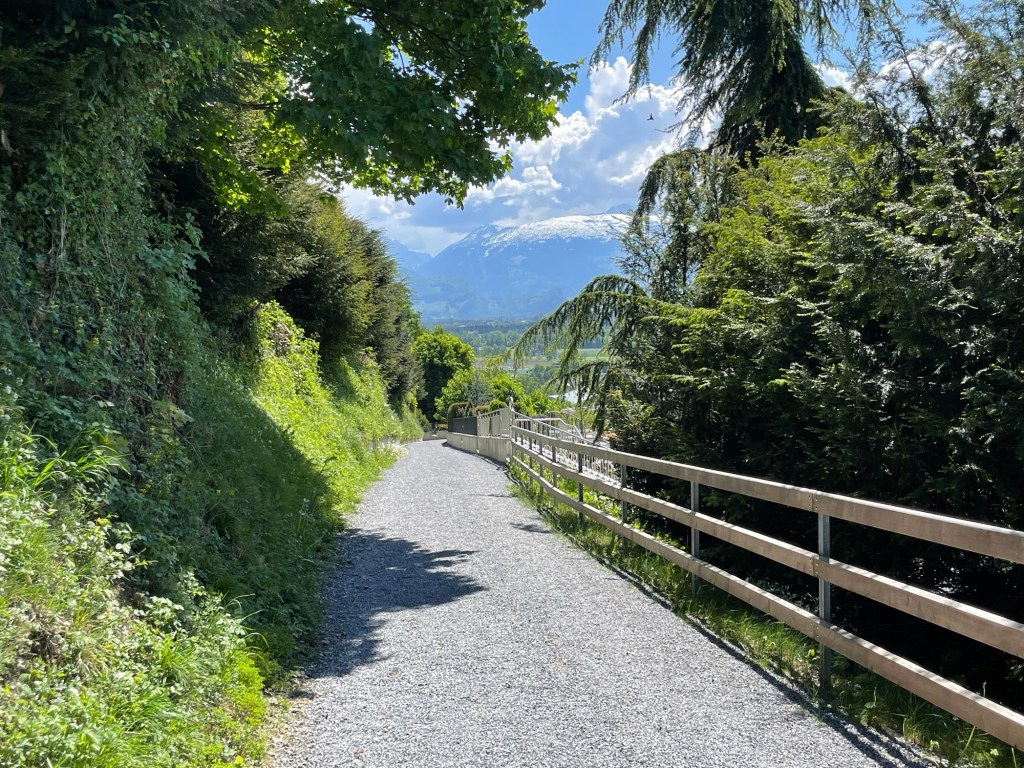
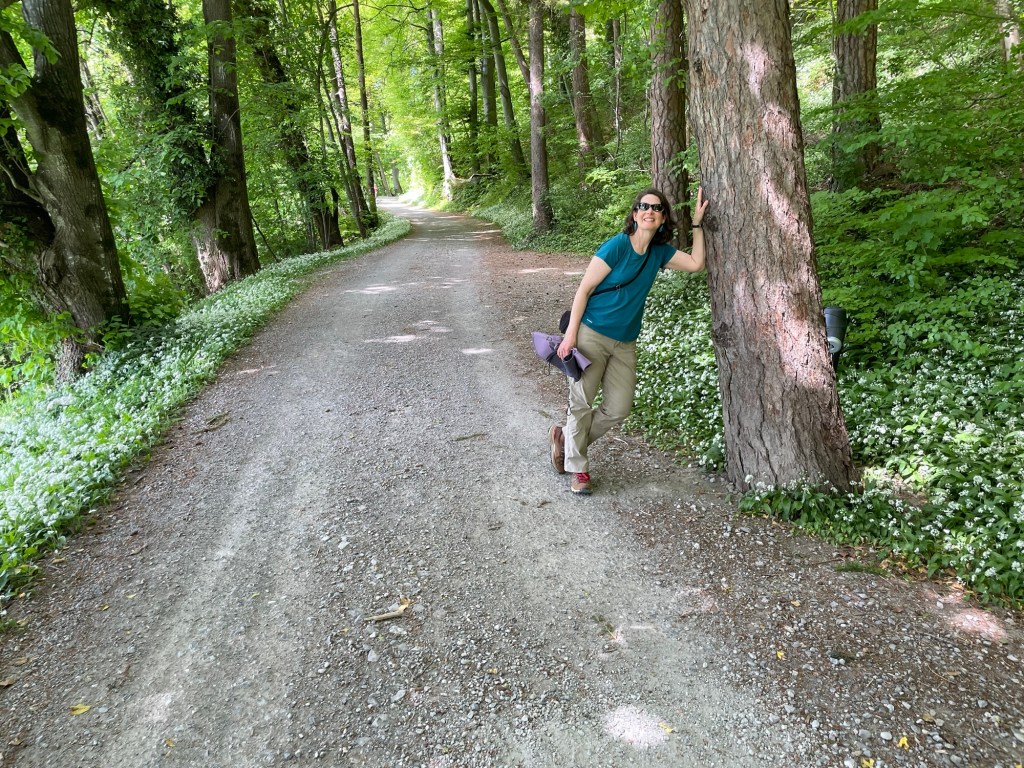
After the museum and an outdoor lunch right in the figurative shadow of the castle, we decided to take a walk up the hillside to see it as close as possible. A network of hiking paths (Wanderwege) crisscrosses the country, and our route took us along one.
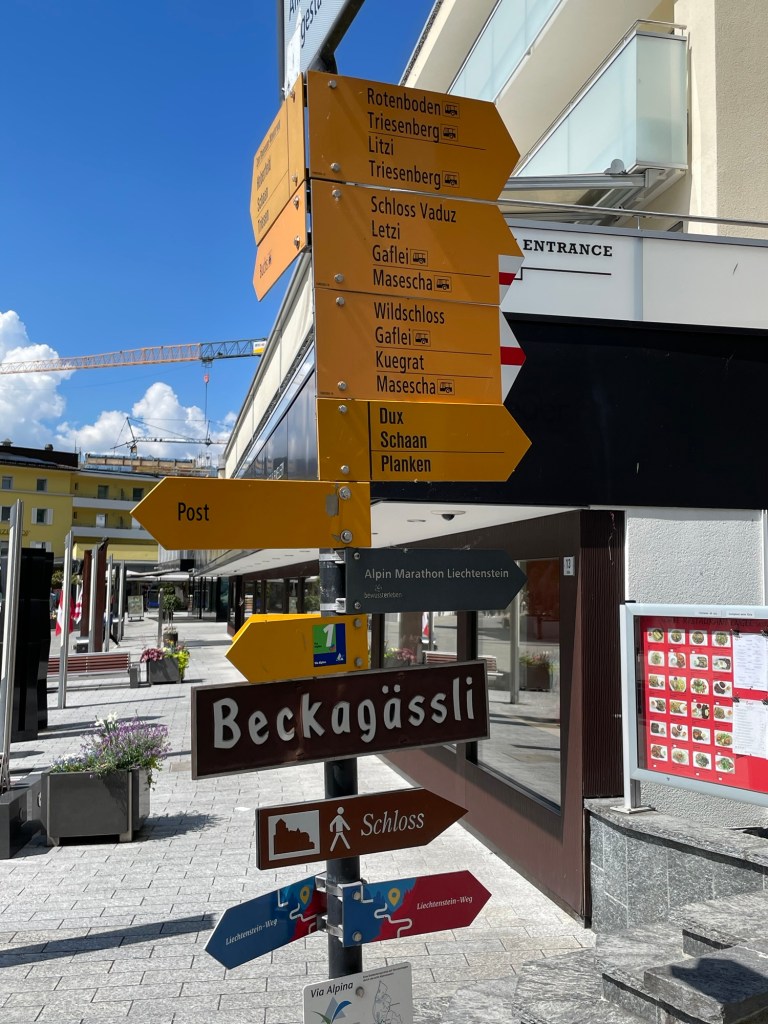
View of the castle from our lunch spotA signpost at the start of our walkThe WanderwegOutside Vaduz Castle. While we were there, another couple wandered into forbidden territory and were chased away by a loud voice announcing that they were trespassing and had been caught on camera.Best view of the castle from up close, with the Alps in the background.
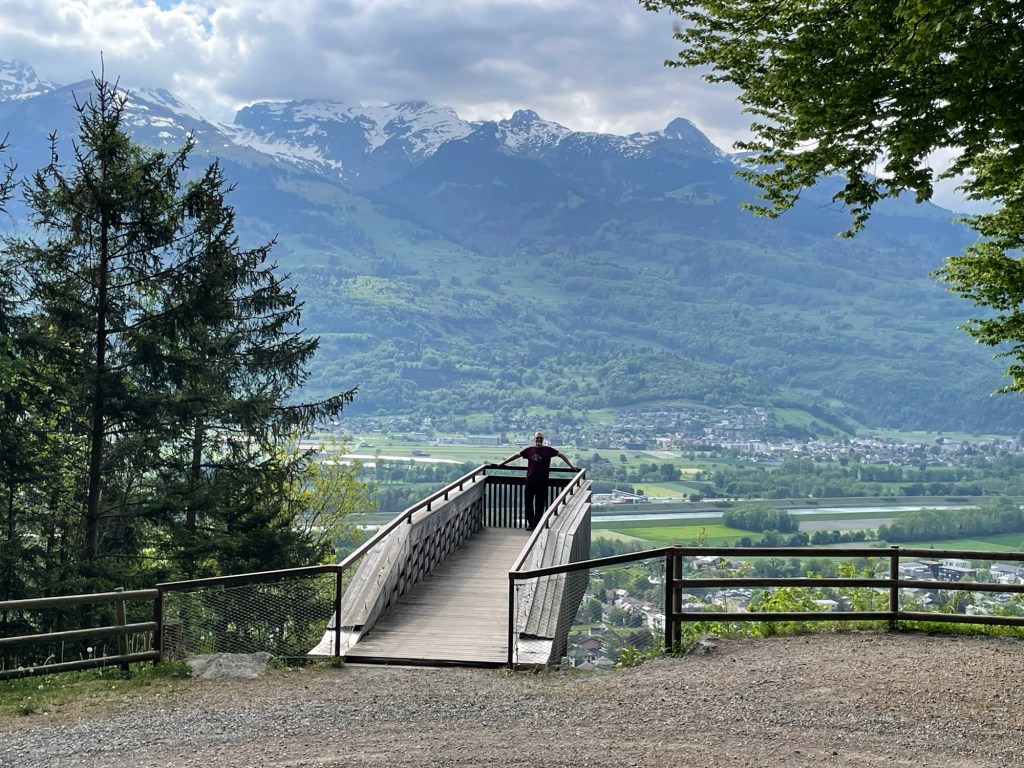
From the castle, we continued further on the Wanderweg towards some viewpoints shown on our map. There were castle ruins marked a bit farther along, but alas we didn’t have the time to visit them. Maybe on our next trip…
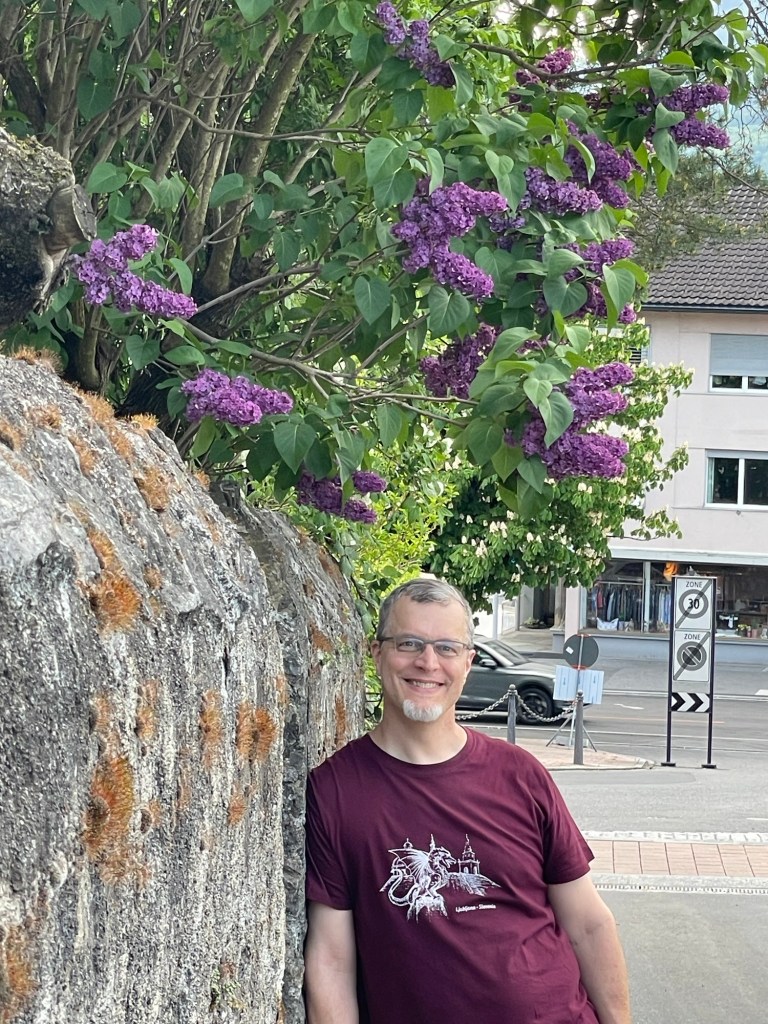
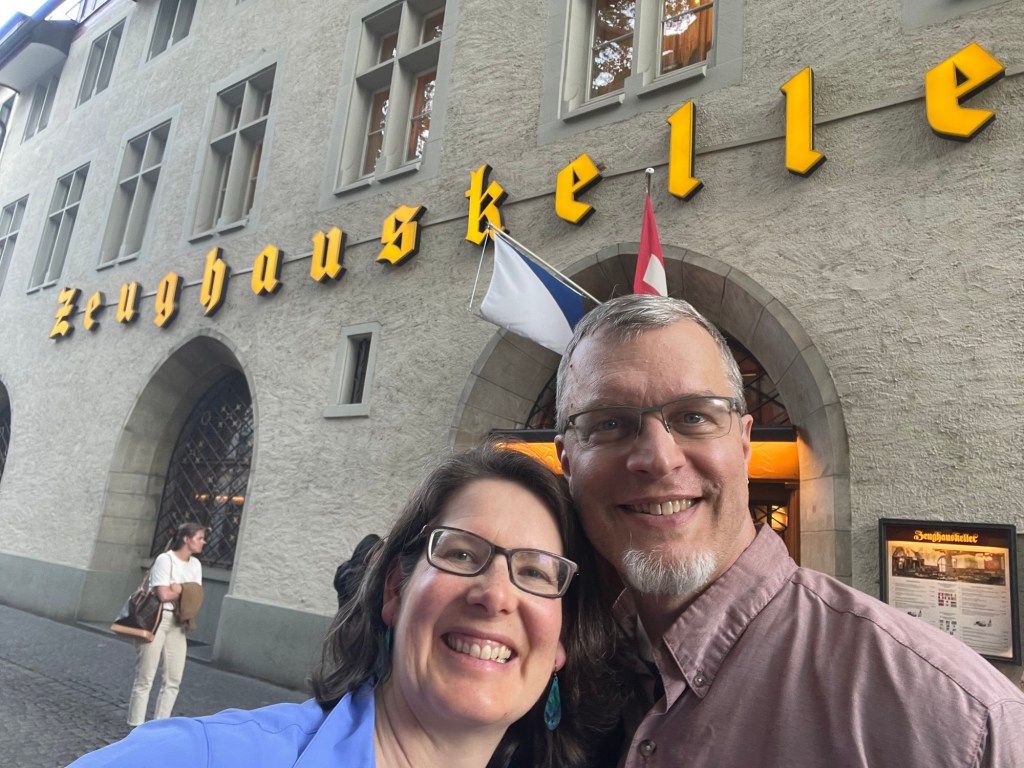
The first viewpoint, cantilevered out from the edge of the slope. View from the second viewpoint – turns out the “view” was of the forest – 300 years of Liechtenstein tree growth, to be precise. The spot was conveniently marked with a reclining wooden bench, so we put our feet up to fully appreciate the view!One of the sights of Vaduz is the Rote House, built in 1338.The Rote House up close. It’s also a residence and only visitable from the outside.Purple lilacs on the way to catch the busChurch in Schaan (north of Vaduz). We had a few minutes to poke around before hopping on the train back to Switzerland.Our dinner spot back in Zürich, recommended by Eszter. The building was built in 1487 for use as an armory, and is now a restaurant with weapon-themed decoration.This seemed like an appropriate time to order sausage!Pretty skies over Lake Zürich in the evening. Seemingly the whole city was out for a stroll on the lakefront. We can understand why…
Today we woke up early to catch a plane to Zurich, where we will be staying for about a week with our good friend Eszter. Although we didn’t get to see much of Zagreb, our timing was dictated by a desire to see a local festival set to take place in Zurich later in the day. Sächsilüüte (or Sechseläuten) is a festival to celebrate the coming of spring, and the city’s inhabitants do it up in style. (The name literally means “6 o’clock ringing of the bells,” which announced an earlier end to the work day during the summer months. Friends, this is a festival in honor of daylight savings time.)
Waiting for the parade to start
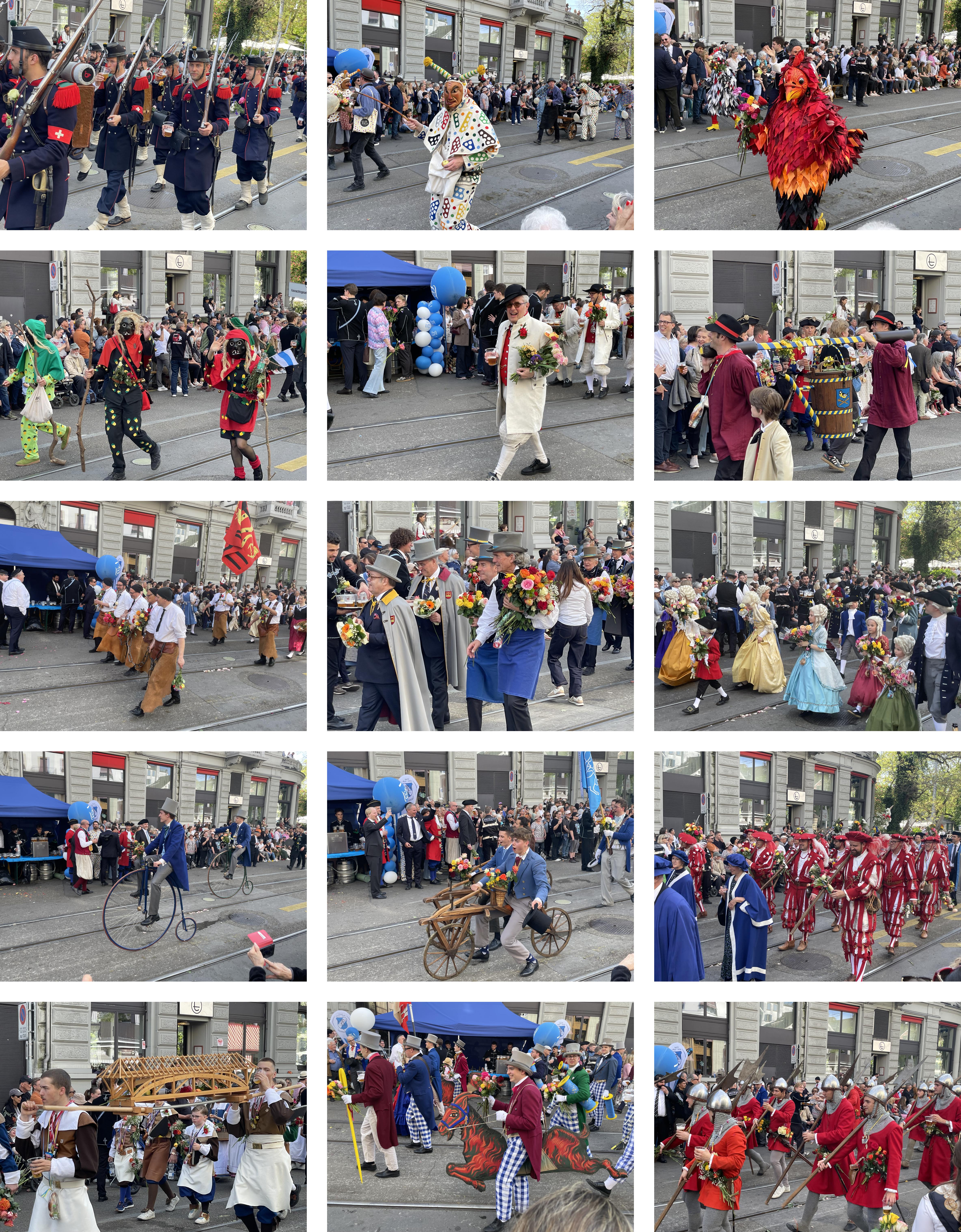
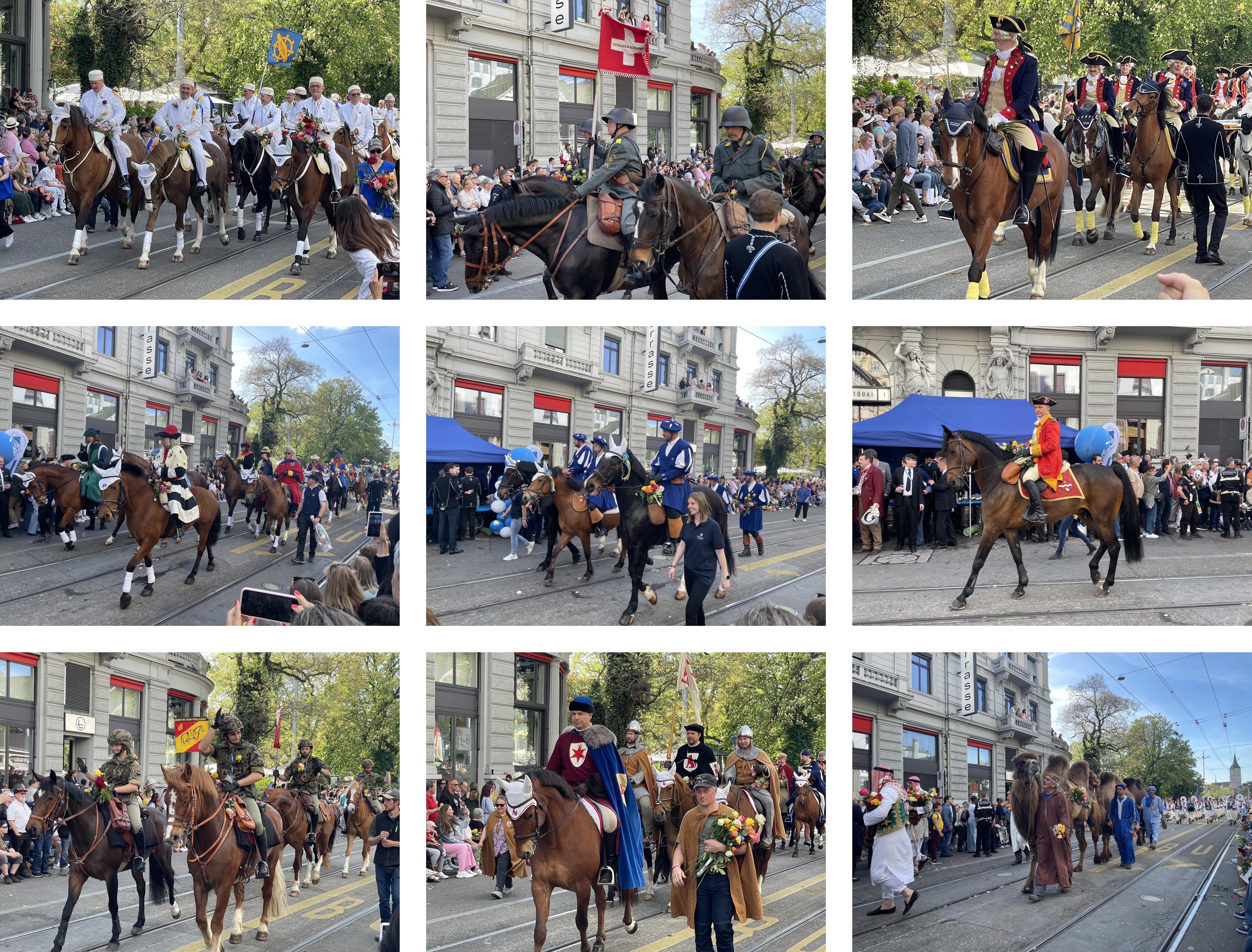
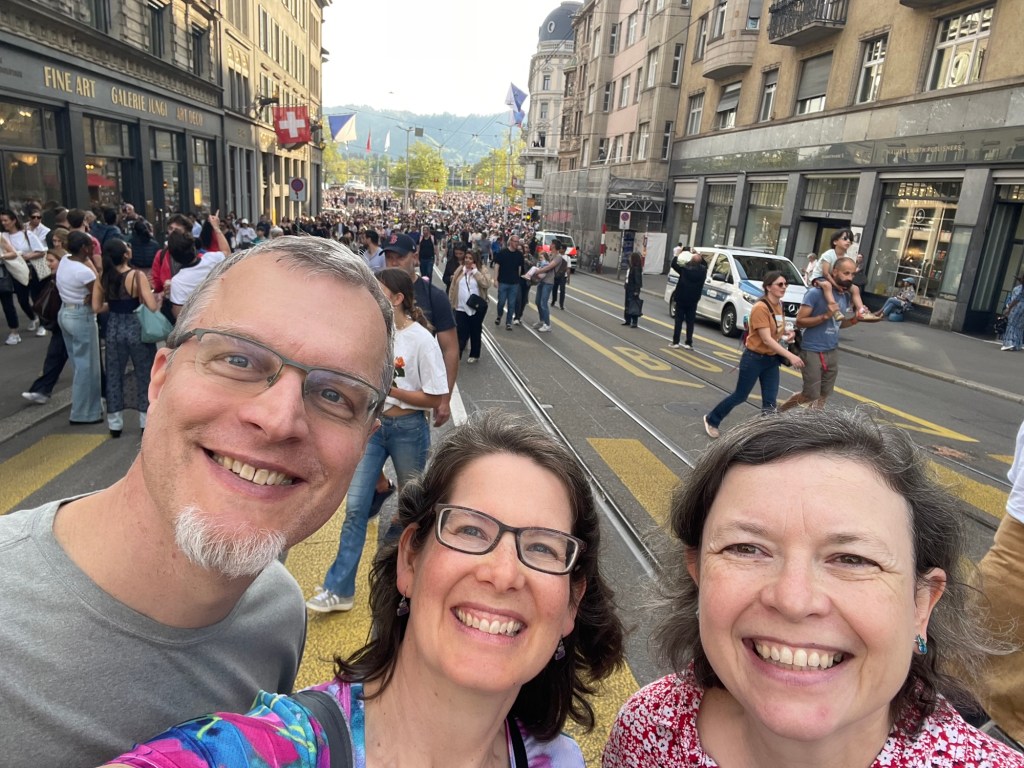
The festival begins with a parade — and such a parade, full of colorful costumes and revelry. Each of the city’s 26 extant hereditary craft guilds marches in historical costumes, together with bands, floats, and horses. Lots of horses — there were no motor vehicles in this parade; every single float was pulled by a team of draft horses. We took sooo many pictures — the ones below are just a sample. We wanted to share as many as possible to give a sense of the variety and richness of the event.
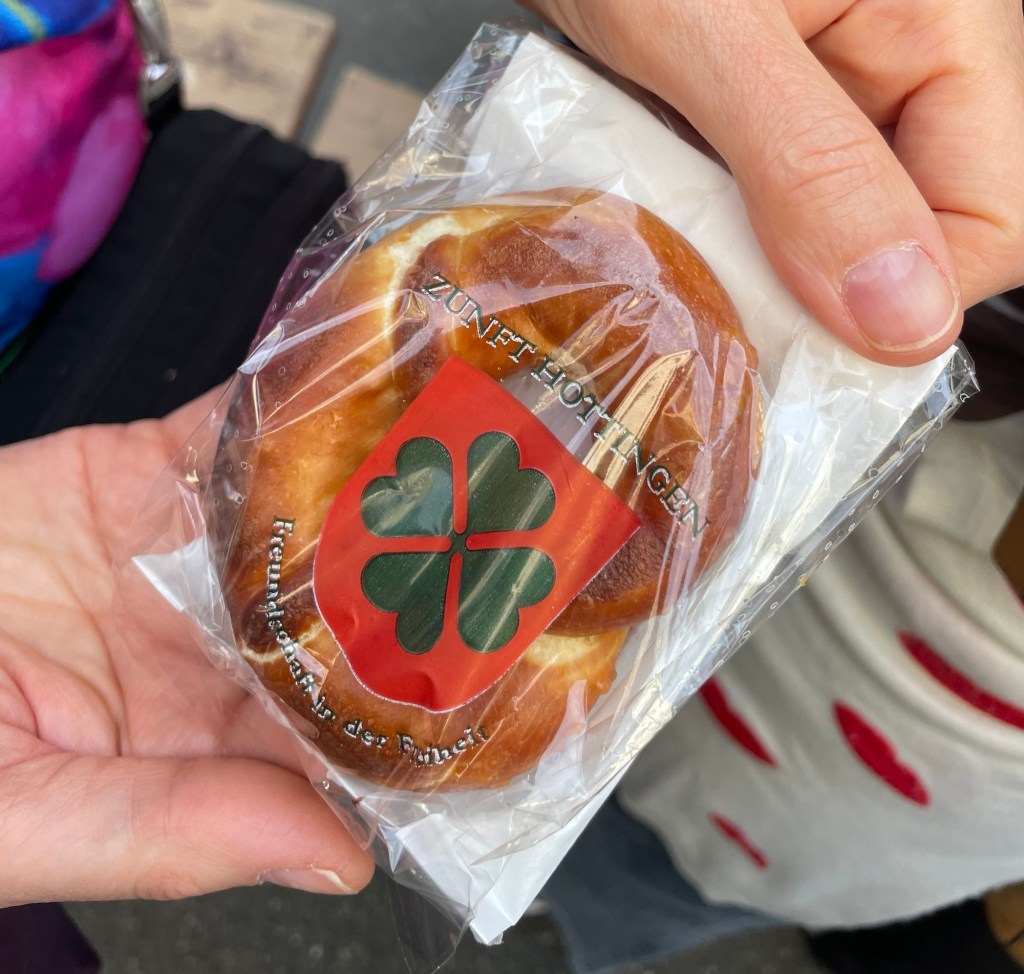
As all this parading is taking place, the spectators run out from time to time and present flowers to marchers they know or especially admire. As a result, by the end of it almost every single one is carrying a large bouquet, and some guilds even had extra carts where the flowers were piled to overflowing. (Susannah suspects that the entire festival was secretly organized by the flower merchants to promote their wares.) The other thing that is happening throughout is festive drinking. Many of the marchers carried glasses of beer, and our viewing location happened to be across from a beer tent where servers circulated carrying trays of beer for the participants. The spectators also received gifts: some of the guilds distributed rolls, or pretzels, or small cookies as they passed by.
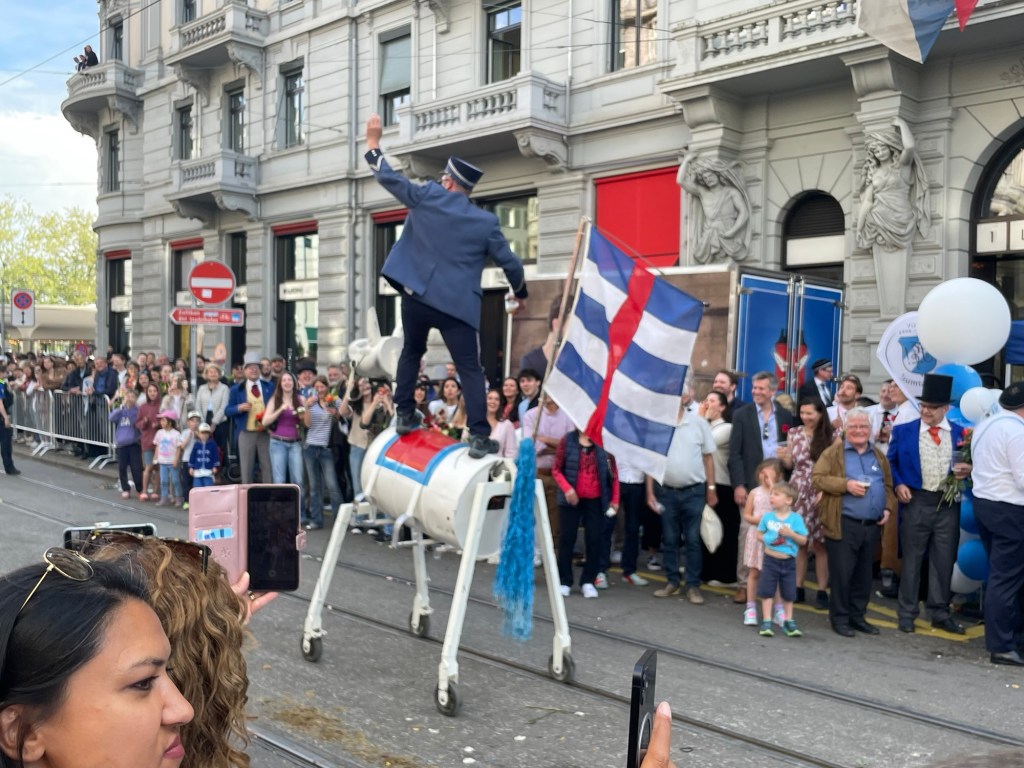
These mechanical horses move forward by spring action when the riders bounce up and down. This particular rider was especially fearless (and fell off shortly after this picture was taken, but climbed back on again unharmed).Susannah caught a pretzel tossed to the crowd
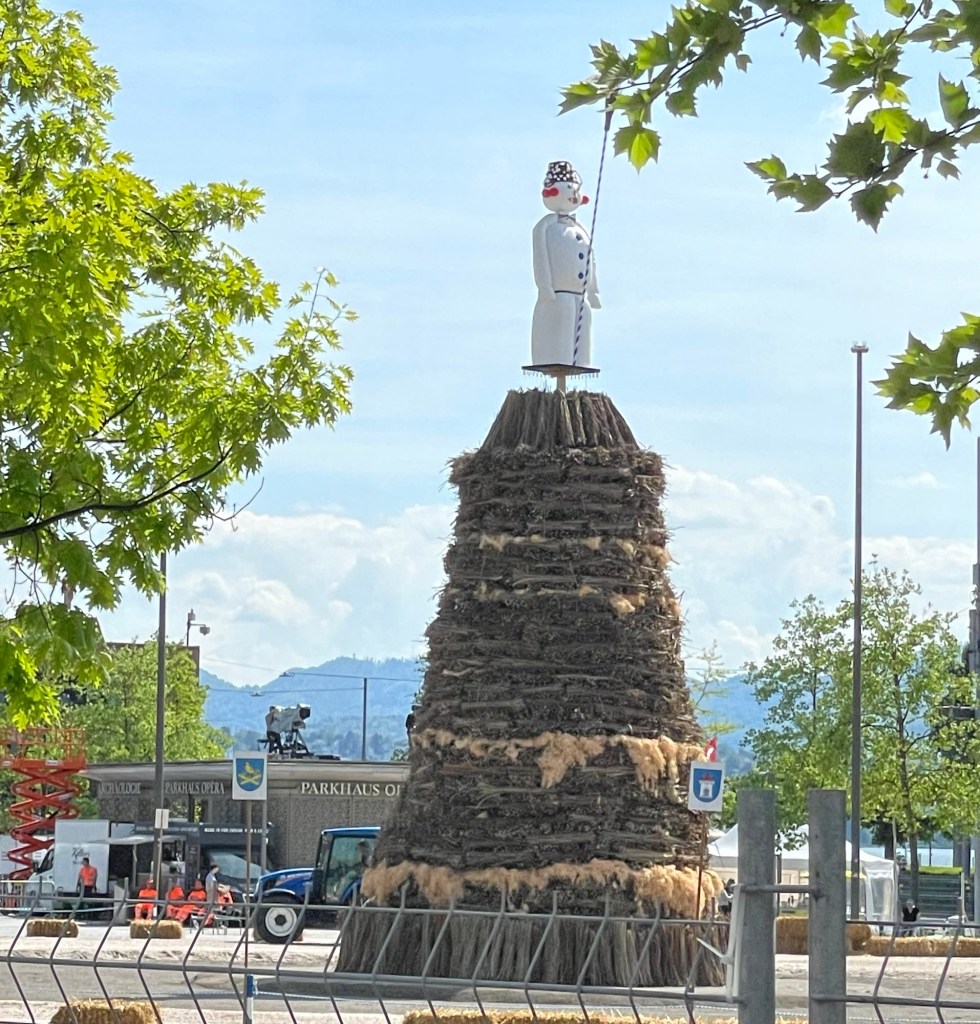
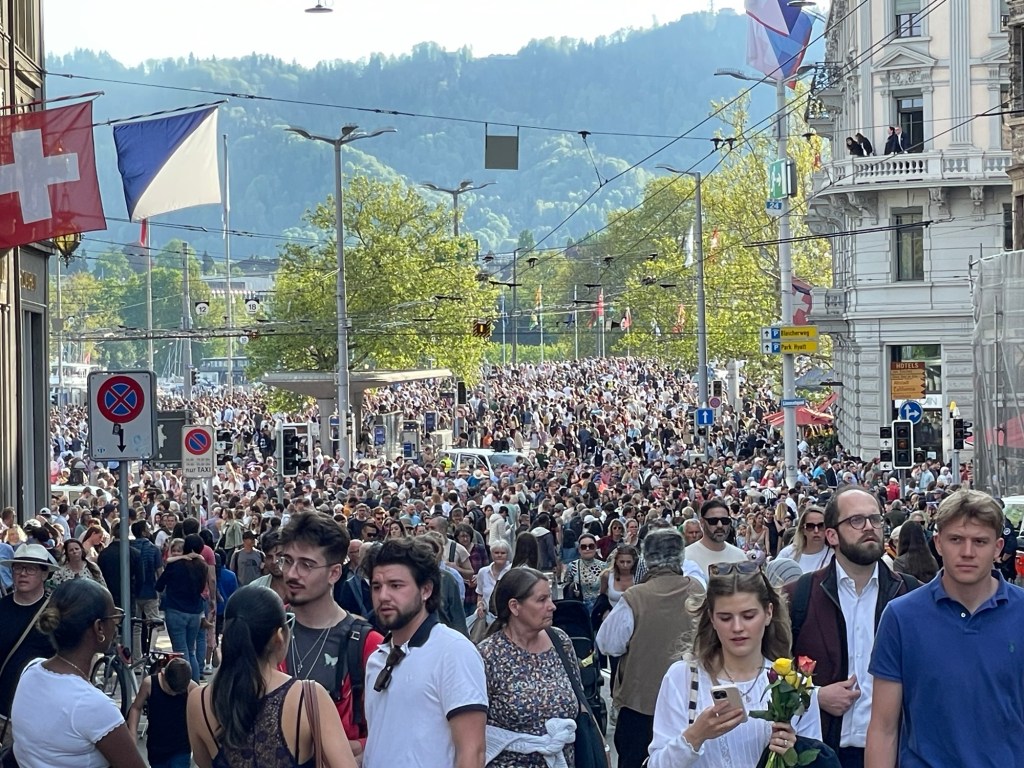
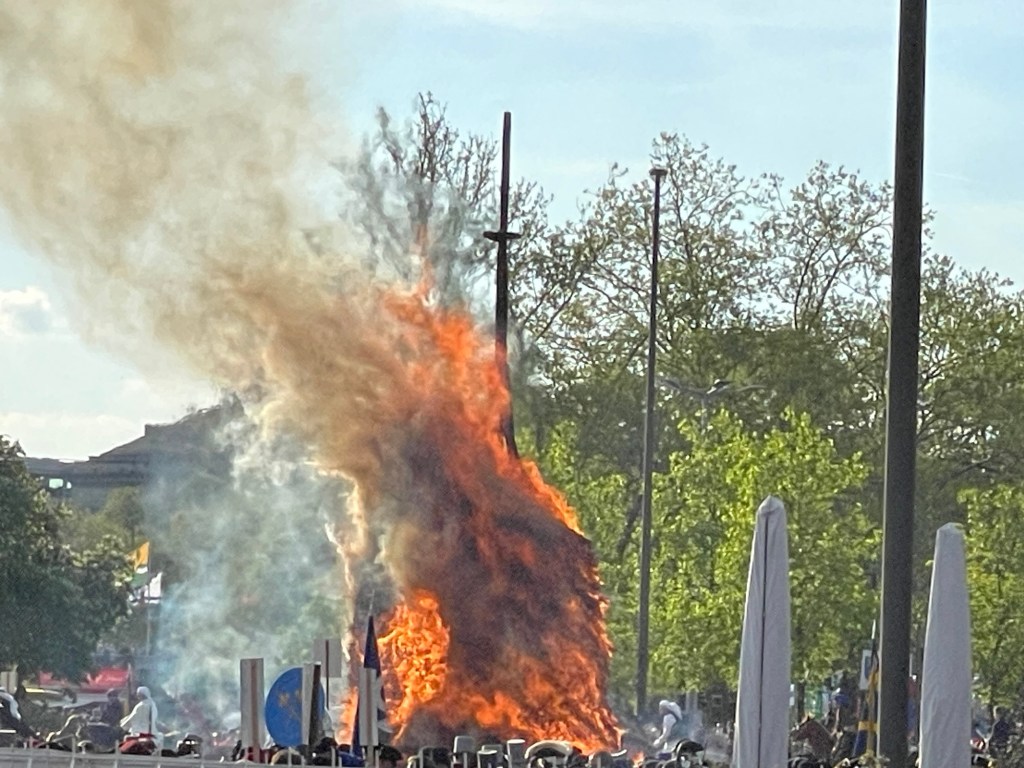
The crowd was impressively large, although we stayed away from the densest areas. The culmination of the day is the burning of the Böögg, an effigy installed atop a large pyre (with fencing to keep the crowd safely back). The Böögg is laced with fireworks, so that as it burns there are occasional explosions to keep you on your toes. Supposedly the speed at which he burns is predictive of the intensity of the coming summer.
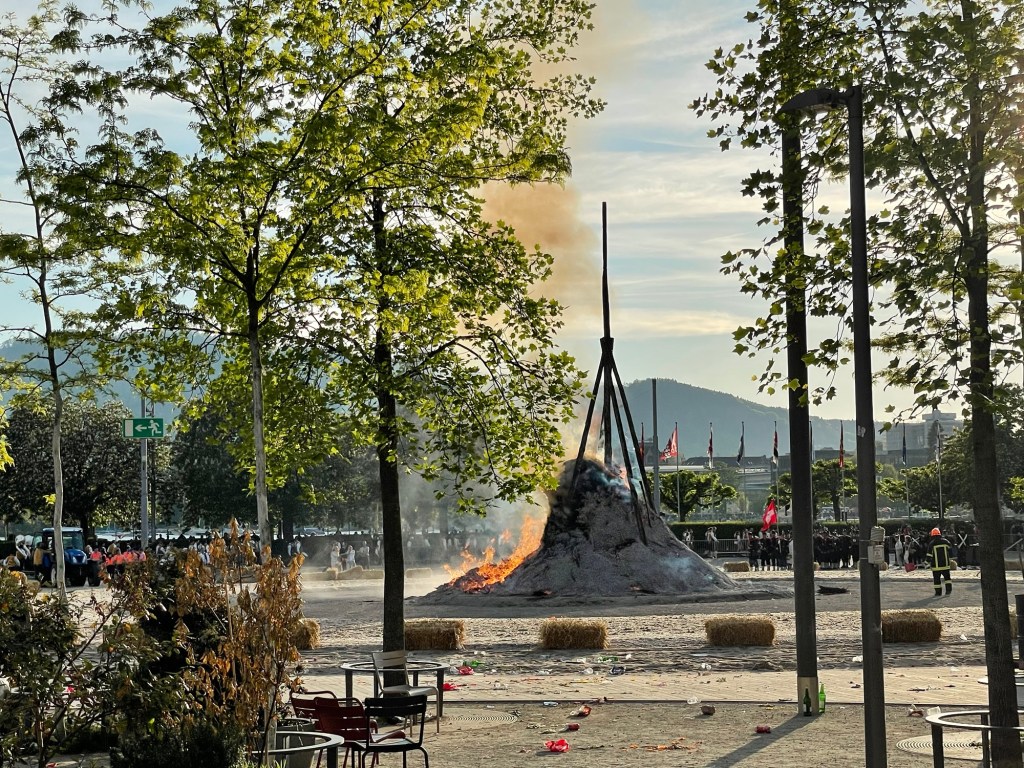
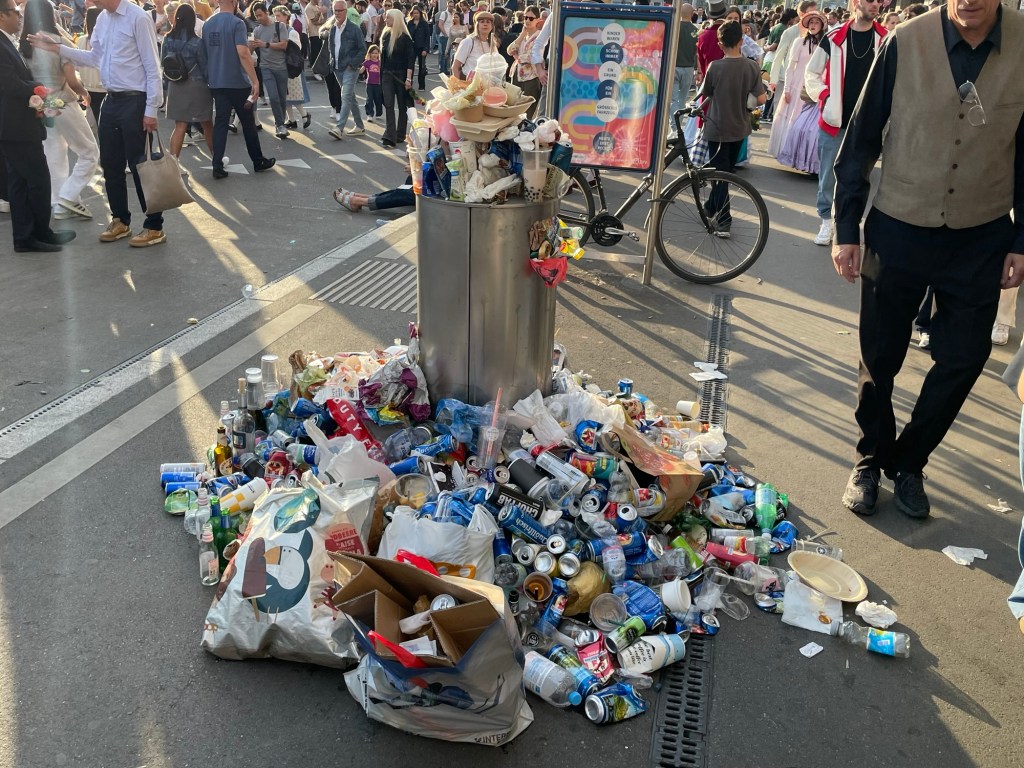
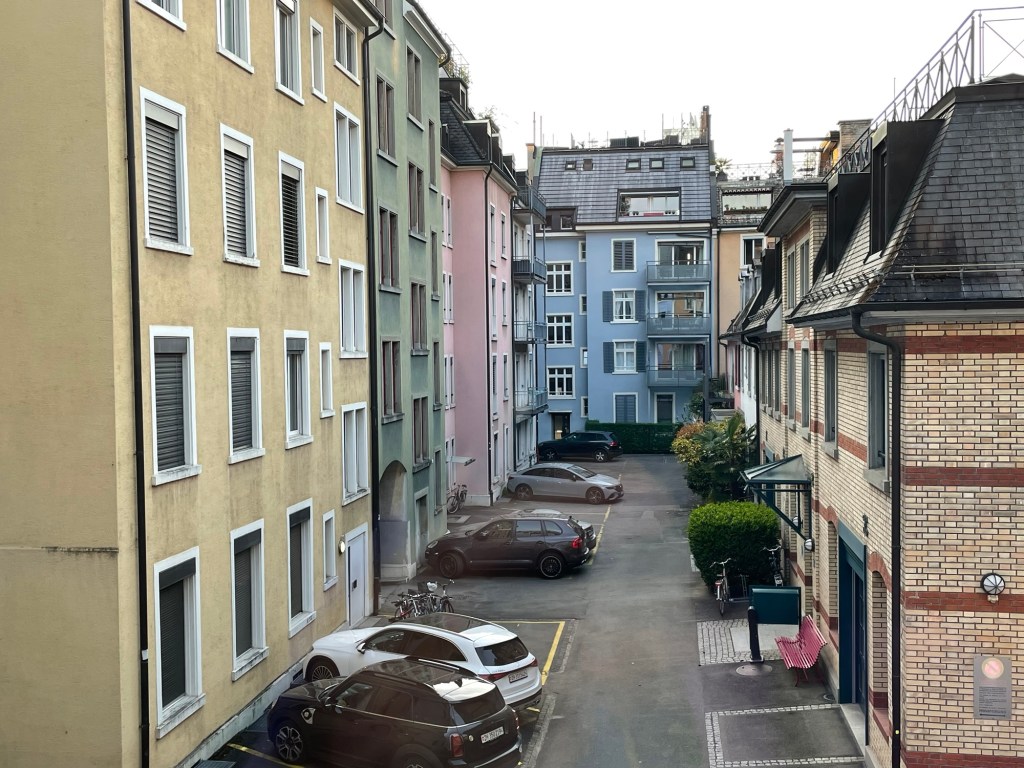
The burning pyreAftermath. Coals from the fire are traditionally used by the local residents to grill sausages.People are very polite with their trash, although the facilities were quite overloadedCourtyard behind the apartment where we are staying. We like the cheerful colors.




































 Howes' Doings