
Today we journeyed north to the very tip of Jutland, where the waters of the Skagerrak on the west and those of the Kattegat to the east meet and mingle. The peninsula ends in a long sandy spit, and at the tip you can actually see the waves coming from each side and crossing each other. The tradition is to stand in the waters at the point with a foot on each side.



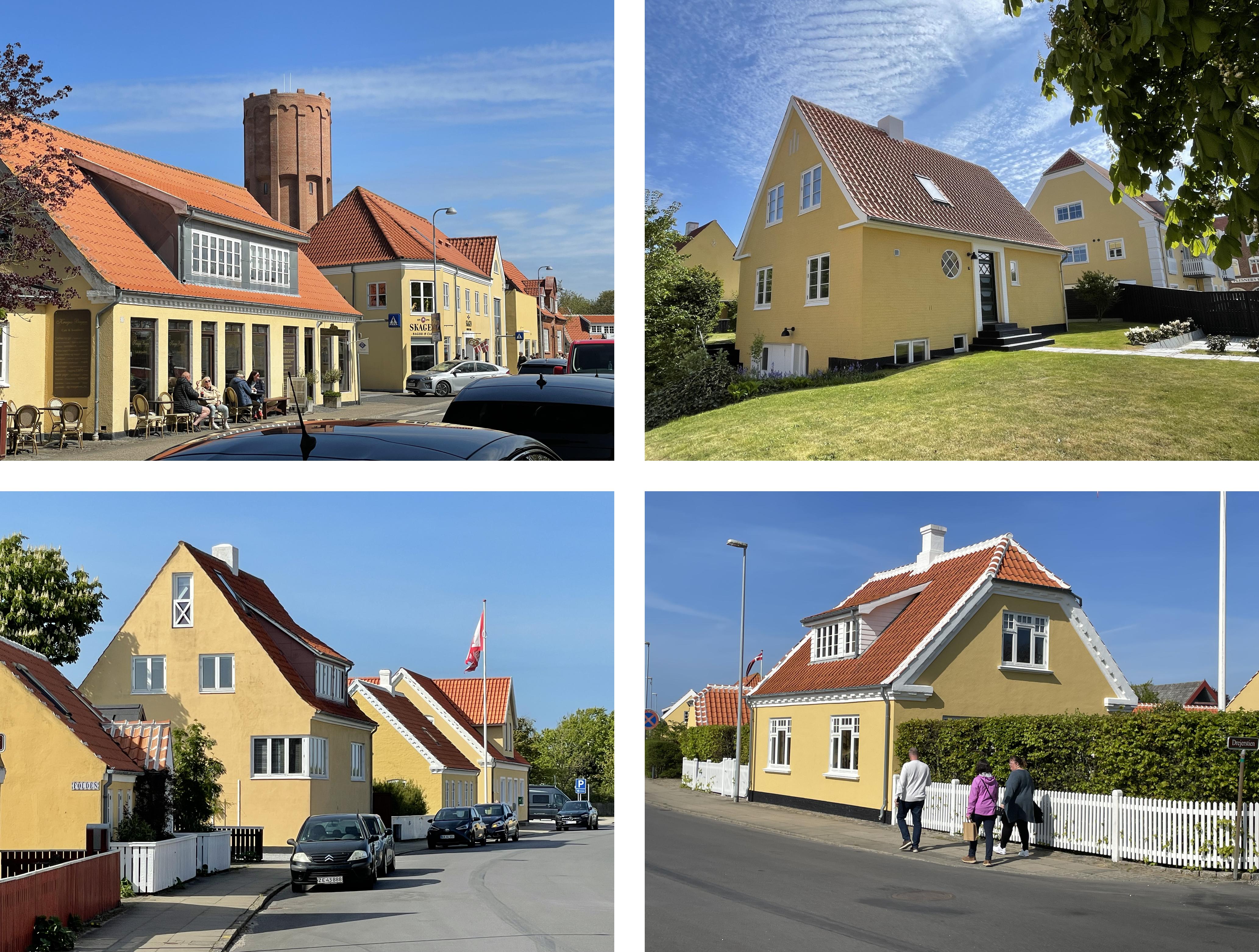
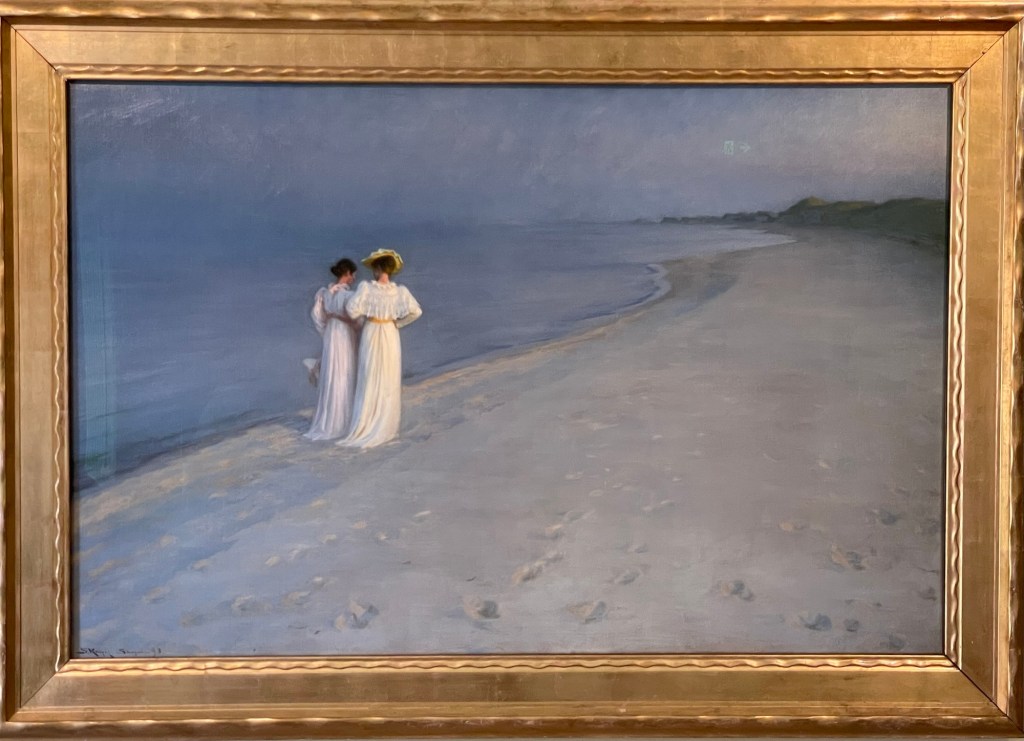
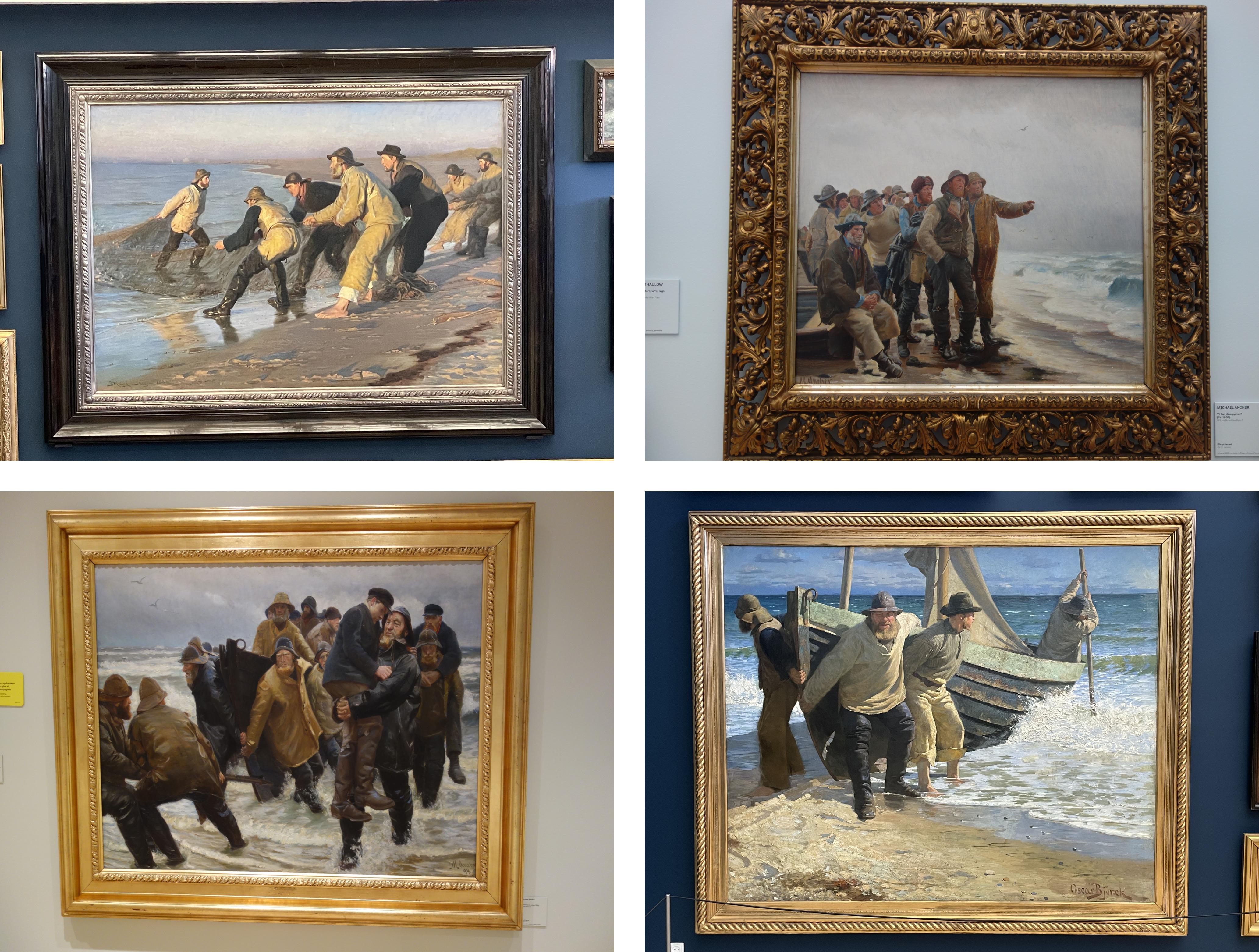
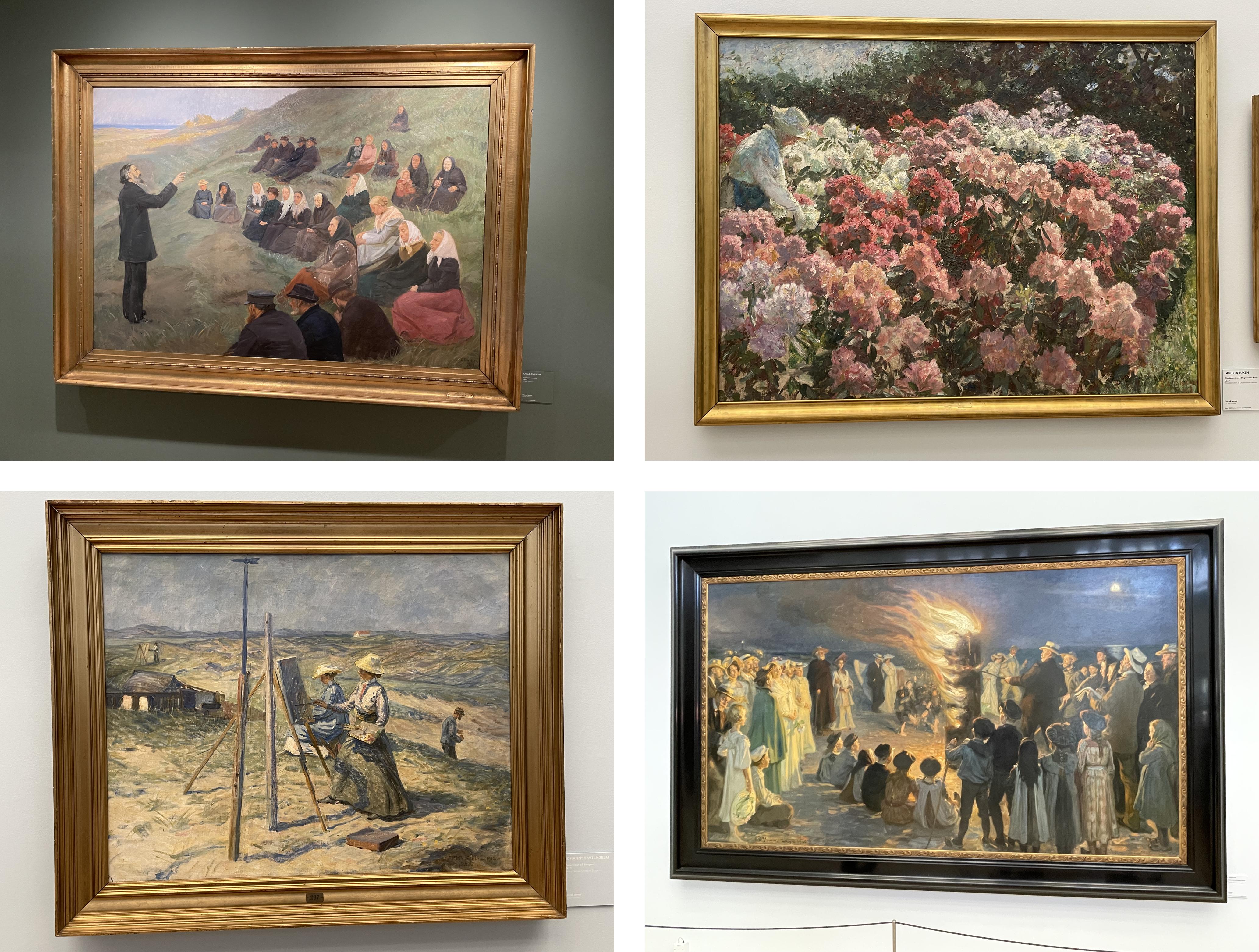
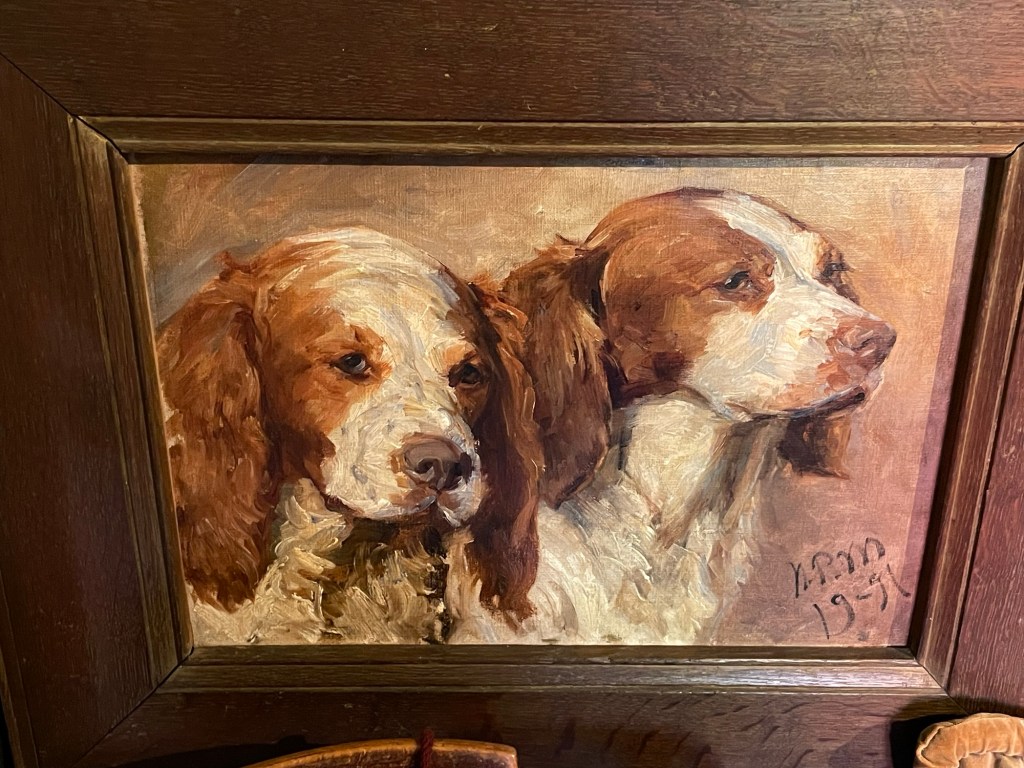
Following our walk on the beach, we headed for the nearby town of Skagen, marked by cozy yellow cottages with small gardens. A little more than a century ago the area became known as an artist colony when a small group of artists settled here. They were all friends and compatriots, included both men and women in their number, and painted many pictures of each other, the local life and scenery, plus their various pastimes. The Skagen Museum displays a large collection of their works, and the home of one artist couple has been preserved and includes many more paintings. By the end of our visit, we felt a certain familiarity with the artists and their families — seeing so many of their paintings was like viewing a family photo album, and we could pick out the distinctive features and mannerisms of many individuals.
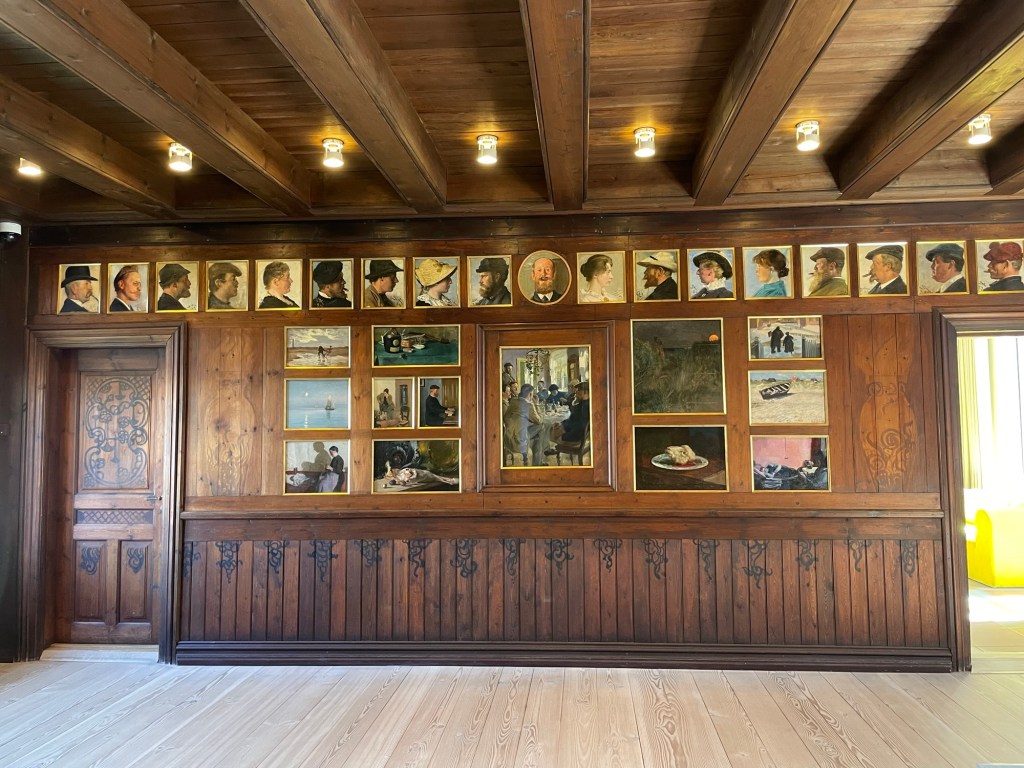
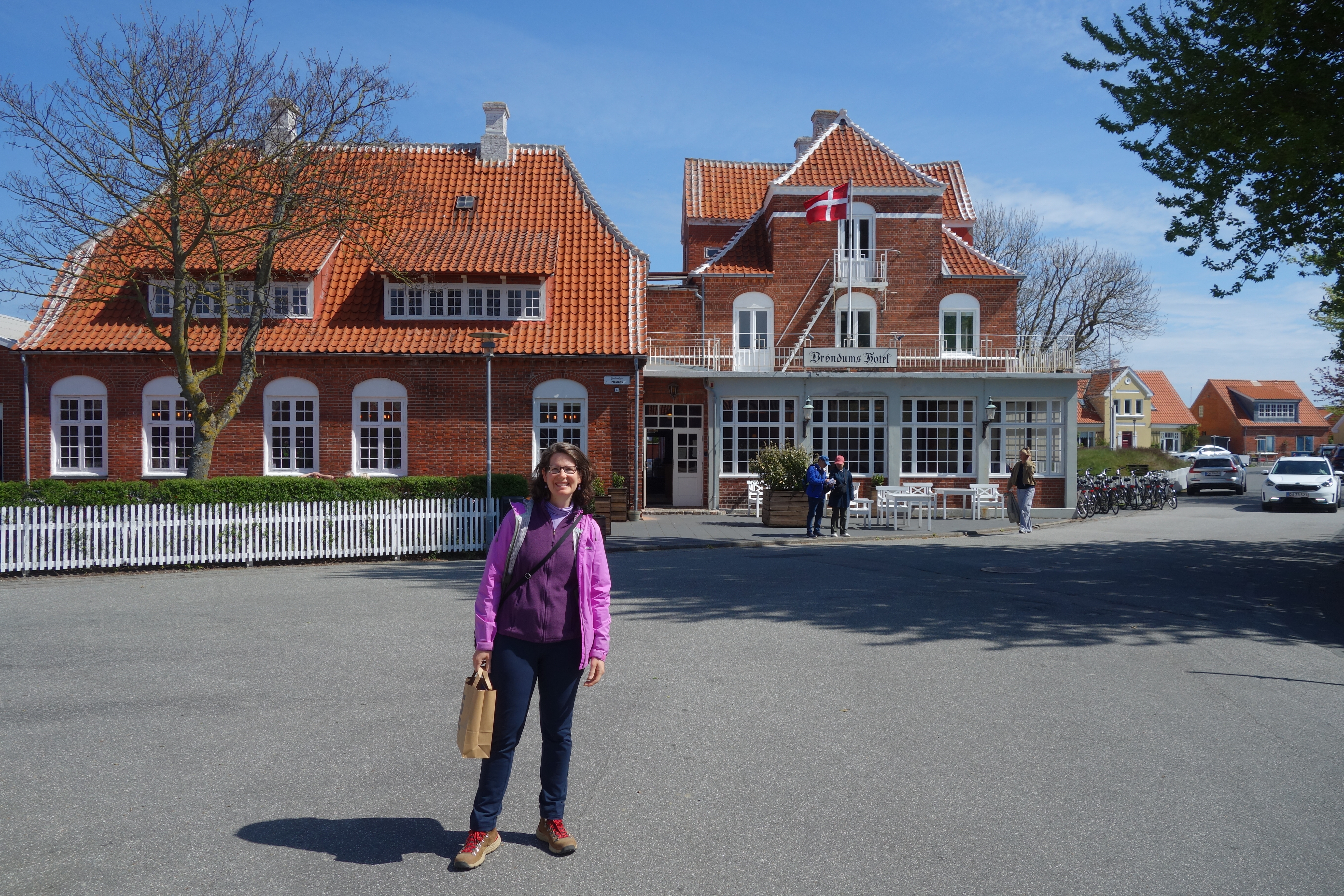
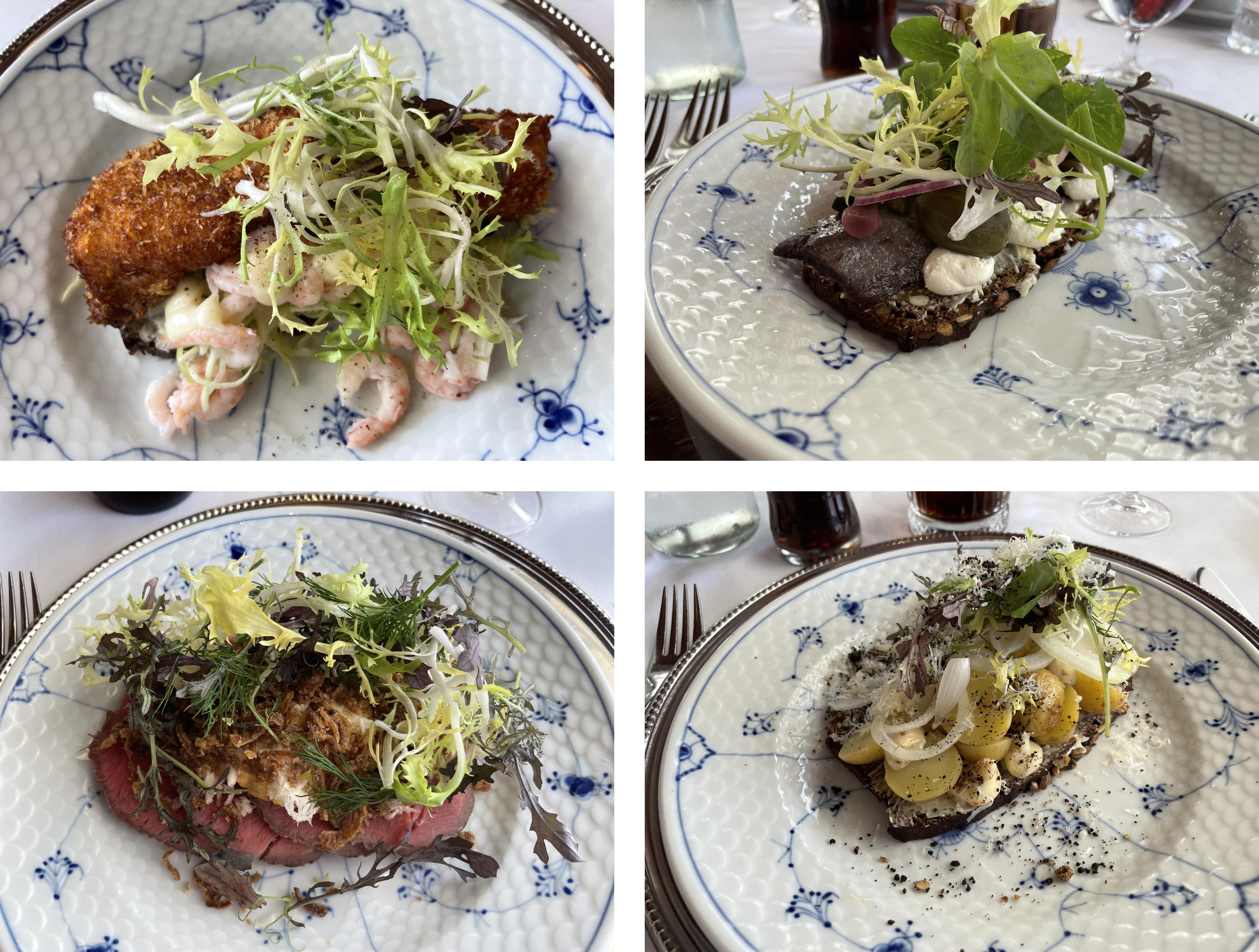
Many meetings of the Skagen painters took place in the dining room of Brøndums Hotel. To mark it as their own, the artists decorated the room with paintings and portraits inlaid within the wood paneling. In later years the original decor was preserved and transferred to the Skagen Museum so that visitors can see the room as it existed then. Meanwhile the Brøndums Hotel still stands, and it is possible to order lunch as we did in its now modernized dining room. One specialty of the house is a Danish treat: smørrebrød.
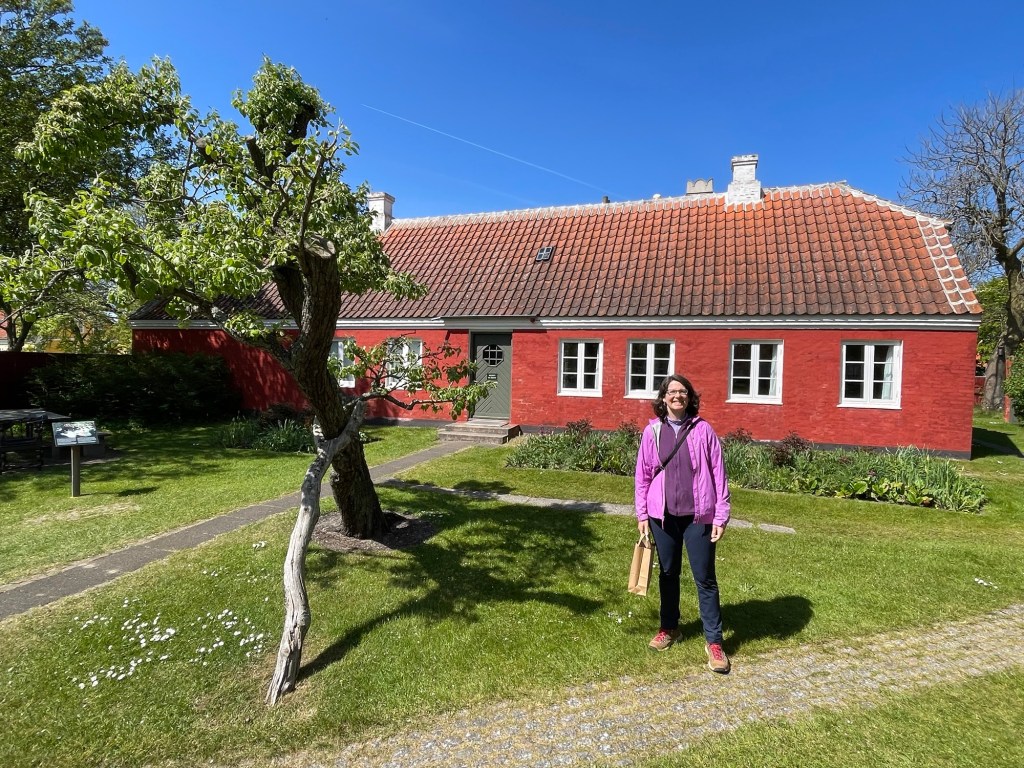
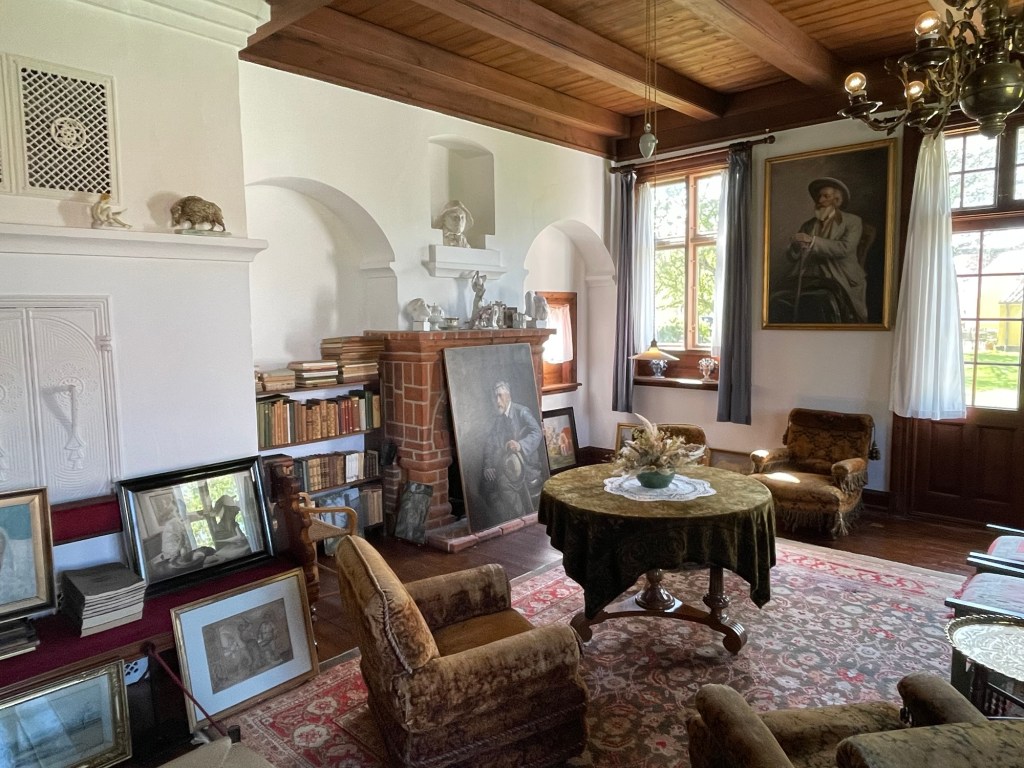
Anna and Michael Ancher and their daughter Helga all painted. When her parents died, Helga closed up their house and eventually it was donated to the museum. Visitors can see the house as they left it, including their individual studios in the rear. Everyone is asked to wear fabric overshoes in order to protect the floors from damage.


After getting to know the artists of Skagen, we turned our attention to features in the surrounding countryside. One curious structure that caught our eye had appeared to be a sort of trebuchet. On closer inspection it turned out to be a primitive form of lighthouse. On the end of the long arm is a metal basket, in which a fire can be built. The arm with its burning basket is then raised into the air so that it is visible to ships at sea.


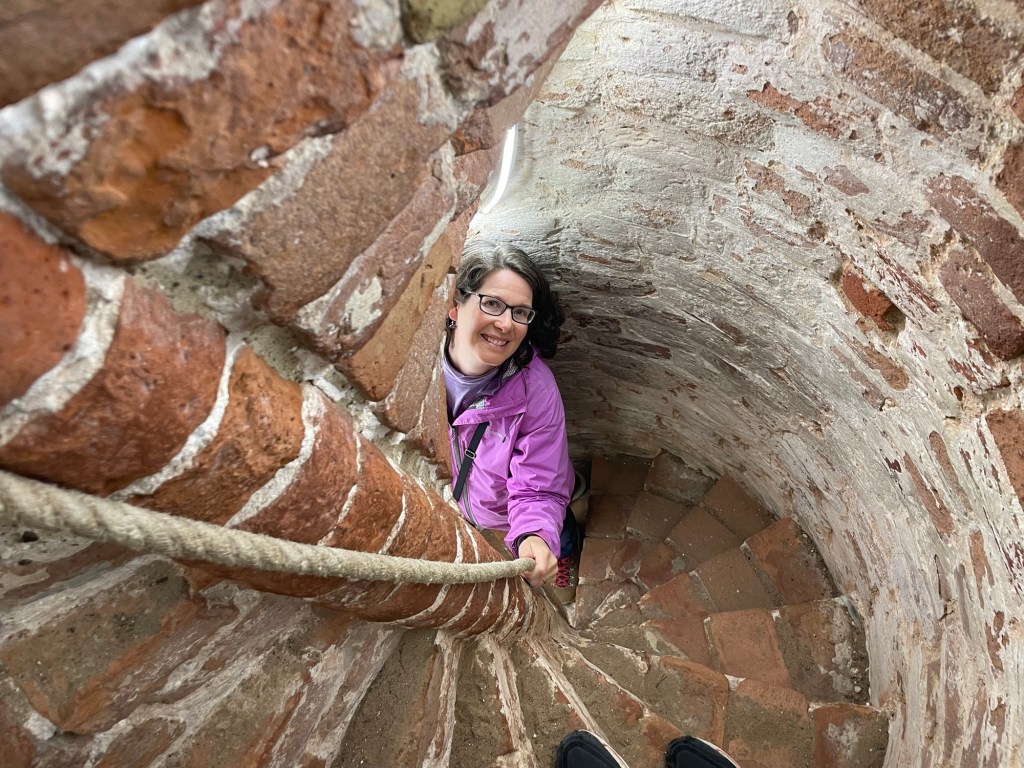
The sea and sand are always part of the conversation here. Yesterday we saw a village that had been abandoned due to sand infiltration. Today, we saw a whole church that was swallowed by sand. All that remains visible today is the upper part of the tower, since the rest of the structure was pulled down when it was abandoned. The tower was left standing and painted white to serve as a navigational aid for sailors.


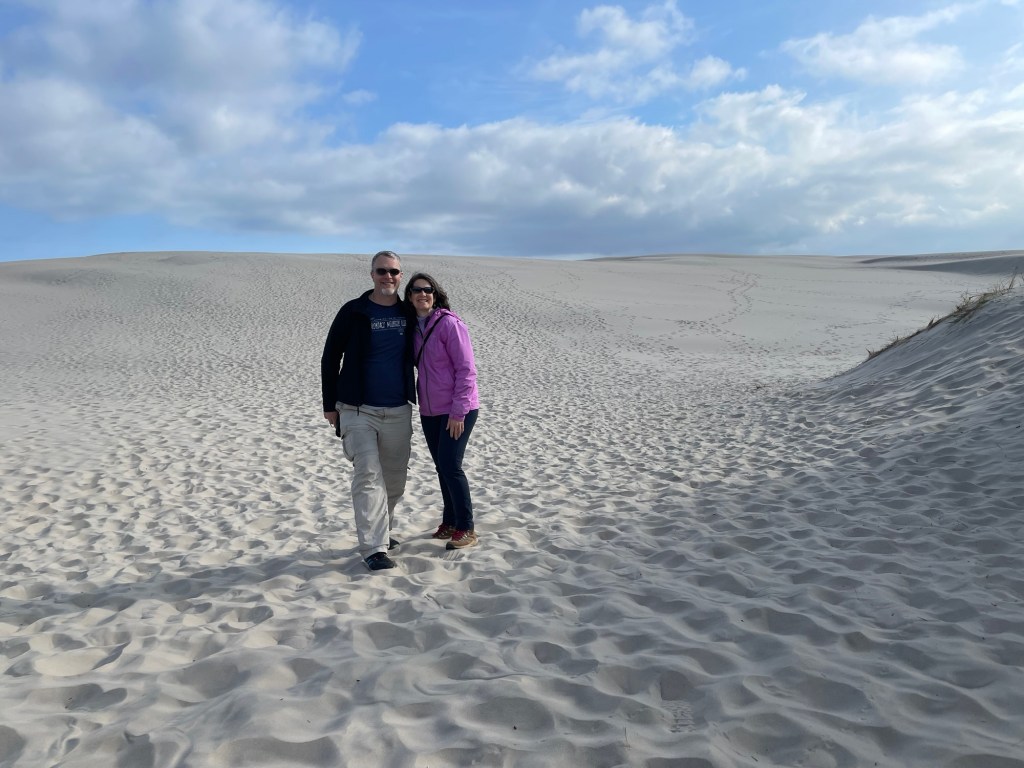
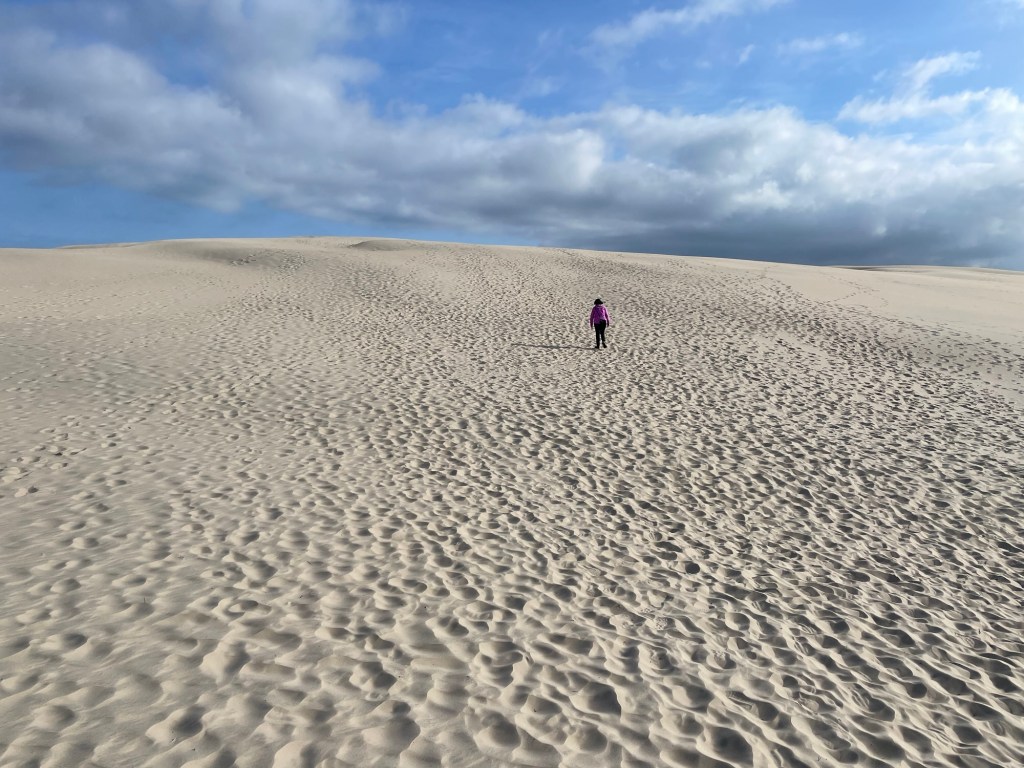
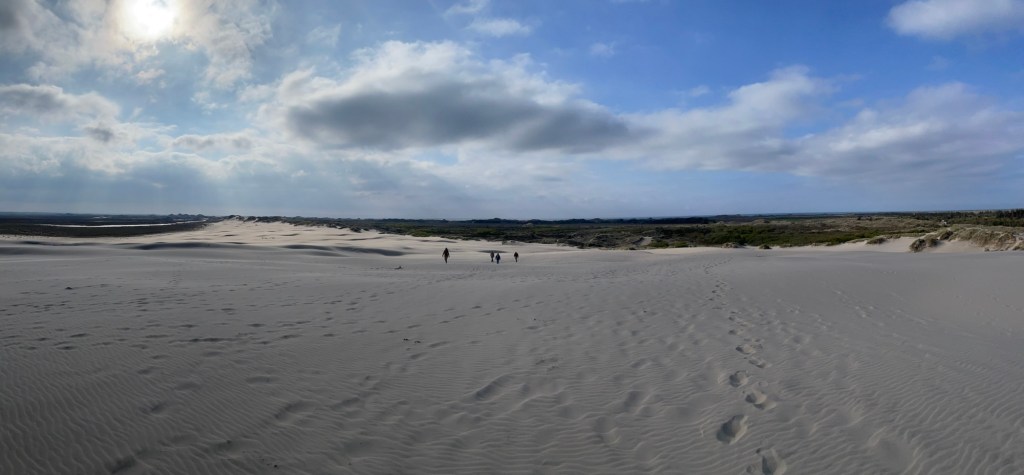
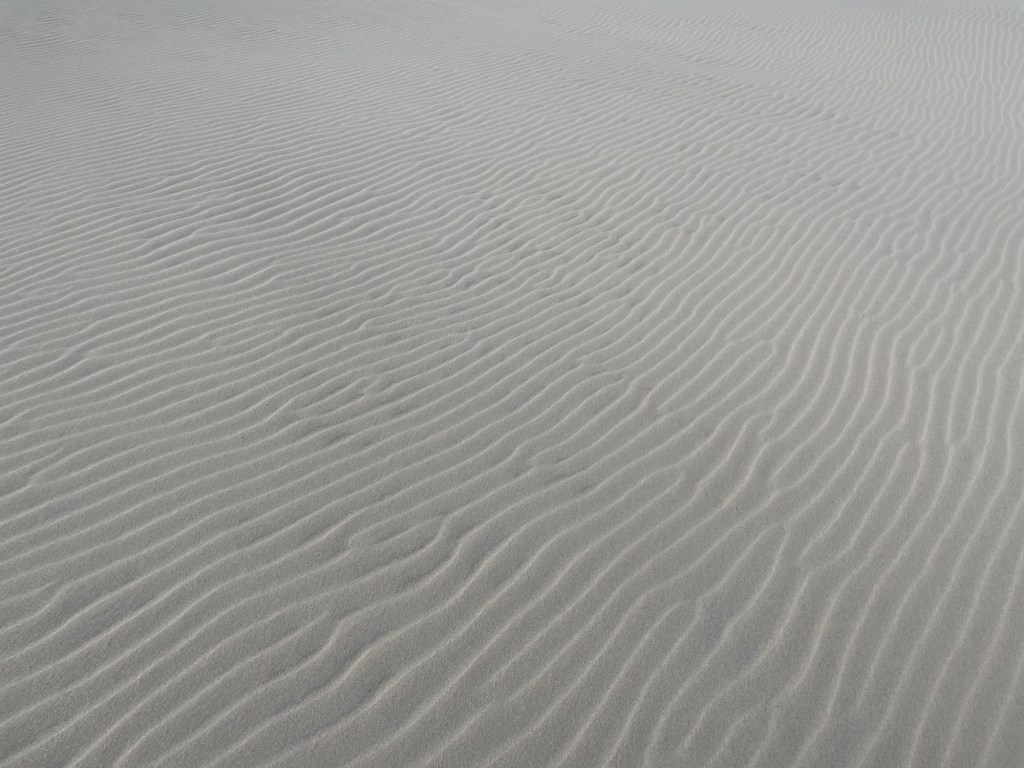
Following the church, we paid a visit to a moving sand dune that is swallowing up new ground even today. Called Råbjerg Mile, the two-square-kilometer dune moves eastward by about 15 meters per year. Though surrounded by green forests and waterways, the dune itself feels like a sort of pocket desert wasteland. Although we could see the footsteps of other visitors who had come before us, the wind was already erasing their traces.
 Howes' Doings
The artistic quality of the Skagen artists’ paintings is extremely high!! Sort of a cross between Winslow Homer and French impressionists!
Indeed! It’s hard to tell from our camera photos, but the light in Skagen has an almost ethereal quality, and the painters were masterful in capturing it.
…with a little of the pre-Raphaelite groupie-ness thrown in.