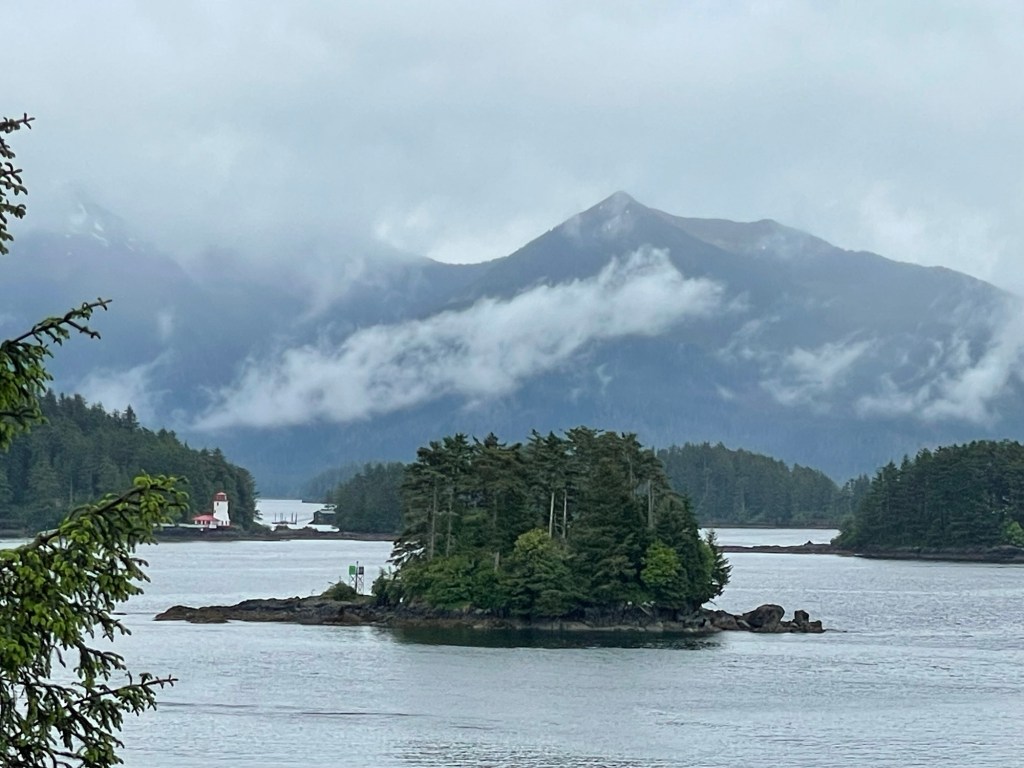
Air and sea travel are far more important in Alaska than elsewhere in the United States, because there are many places that the roads won’t take you. Case in point: this morning, we shared our flight to Sitka with about a hundred teens and preteens who were all traveling together on their way to the summer fine arts camp. What would likely have been a bus in Massachusetts (if not individual family cars) was instead a jet airplane. We don’t envy the adults responsible for shepherding that many kids through the air travel gauntlet!
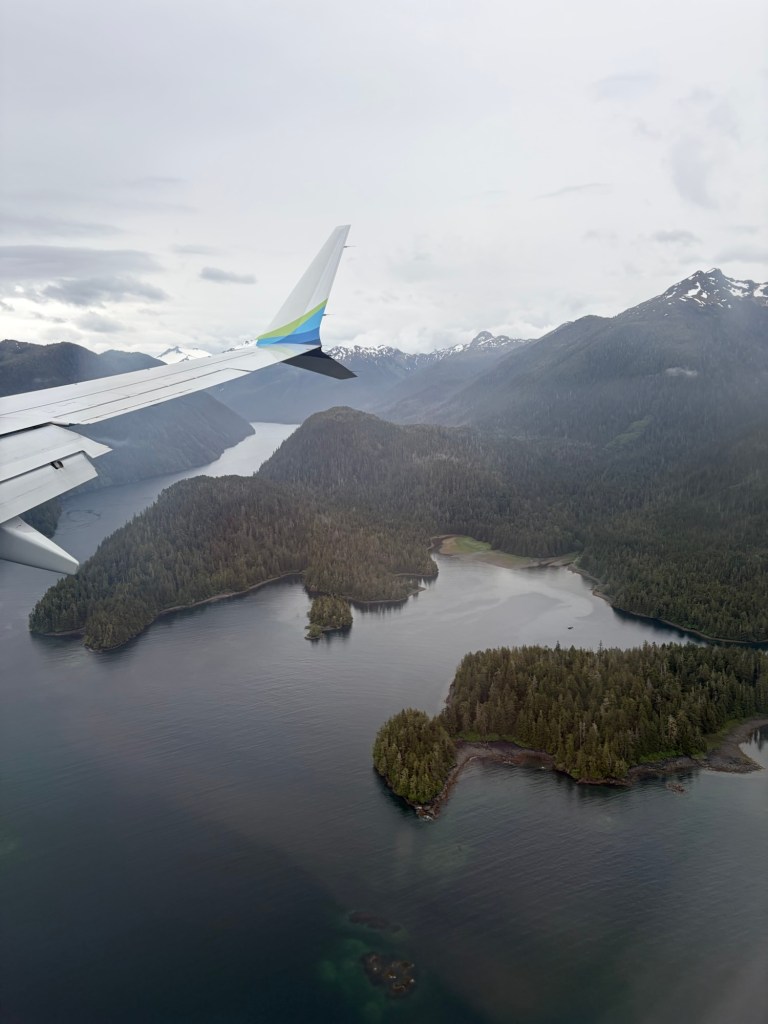
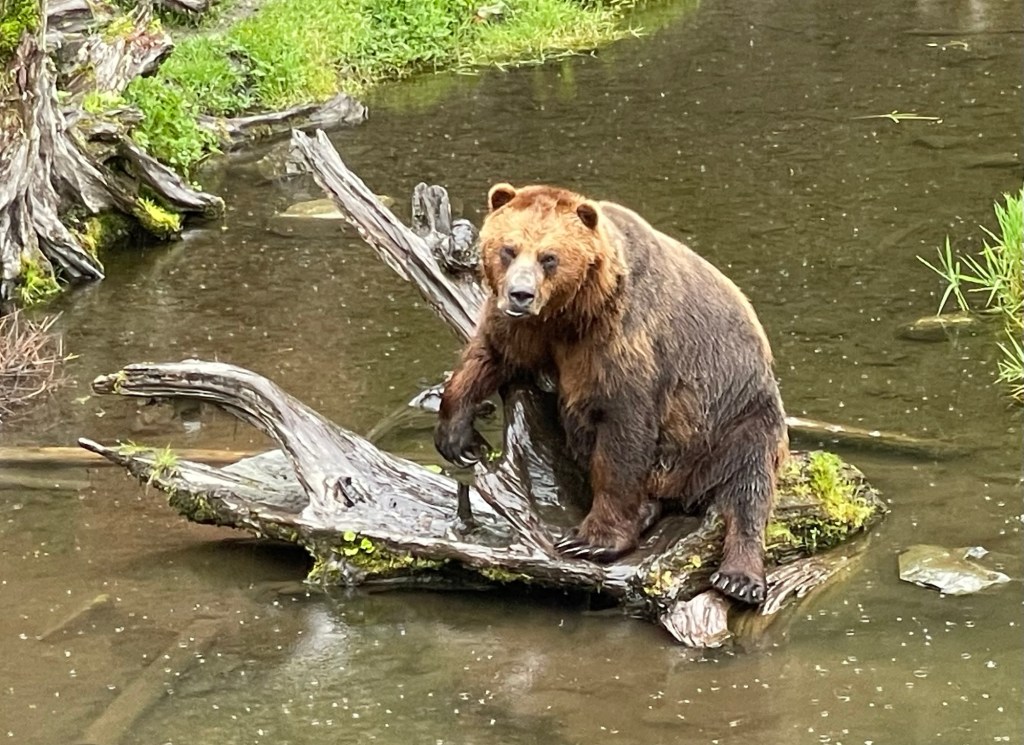
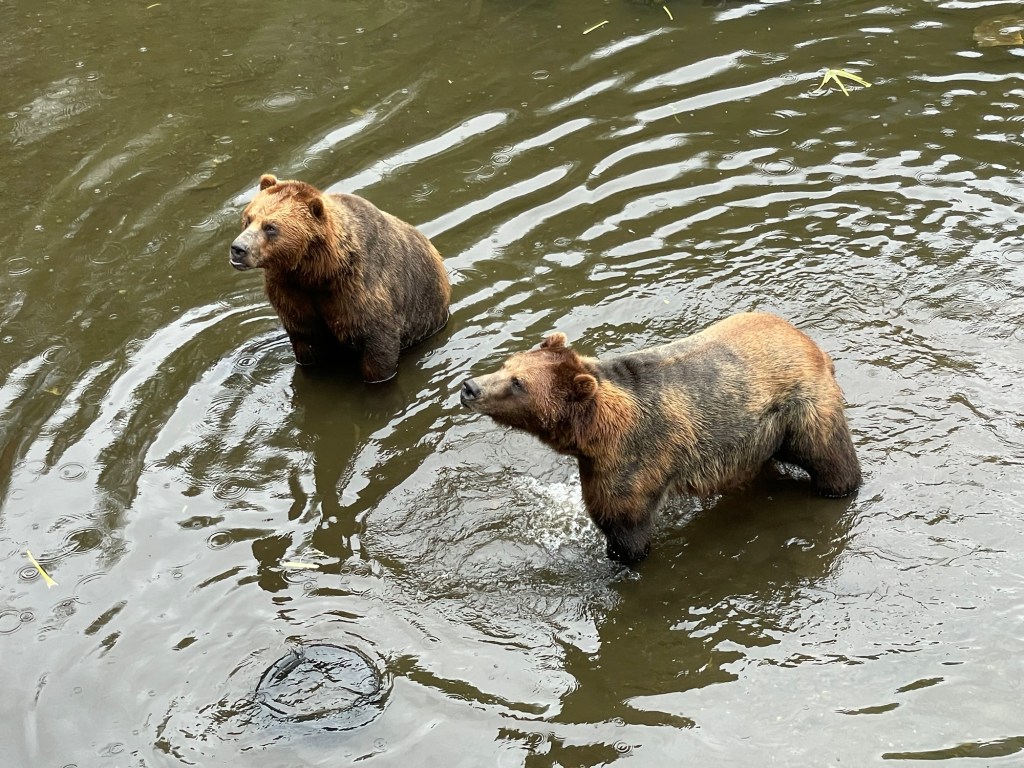
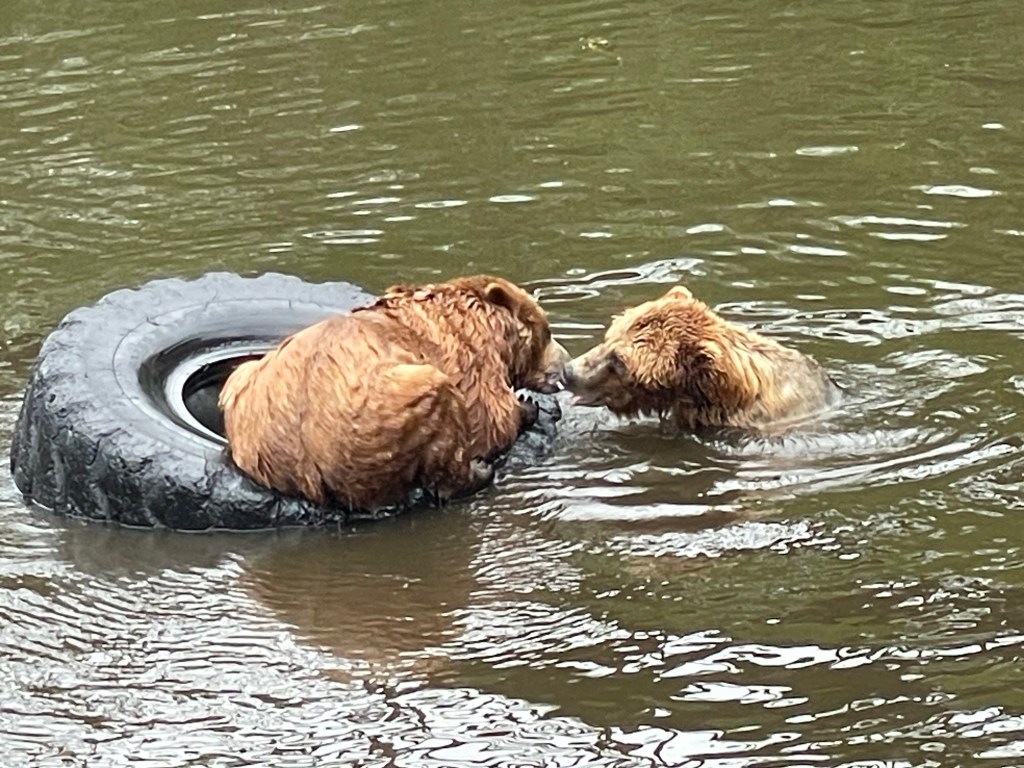
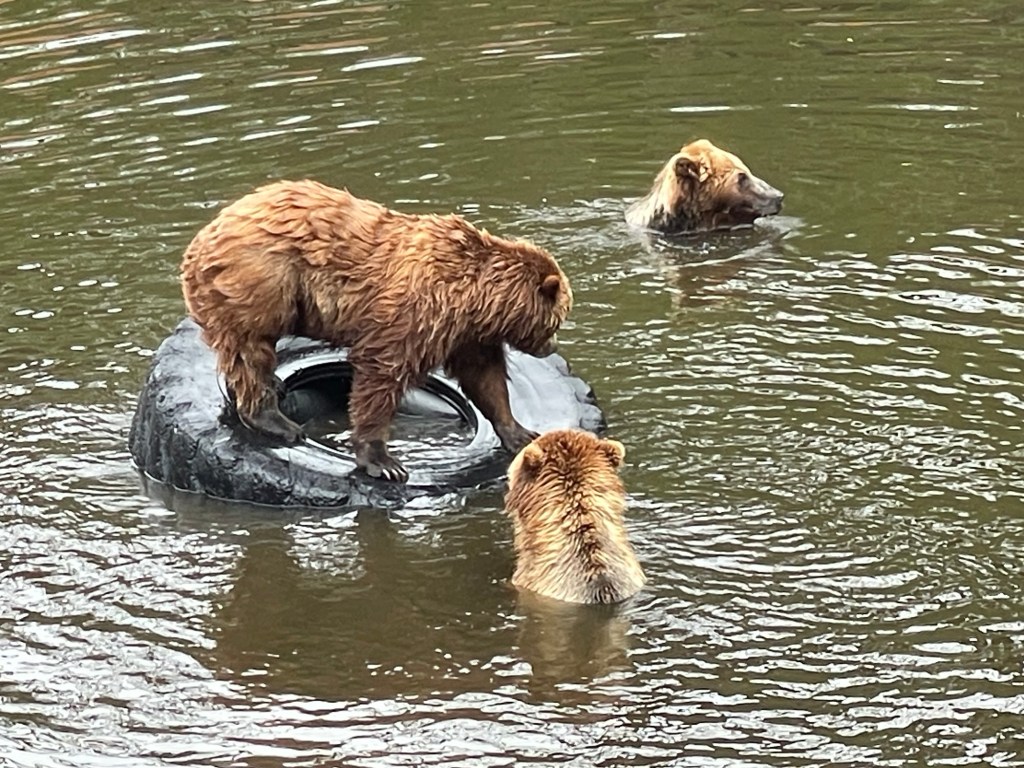
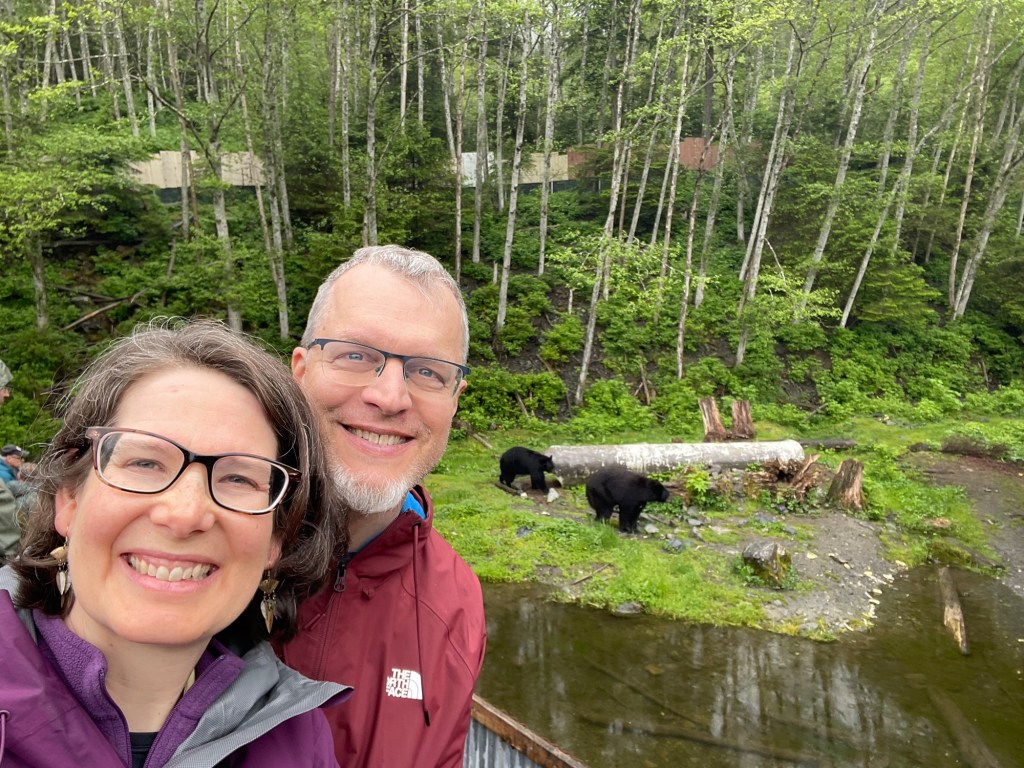
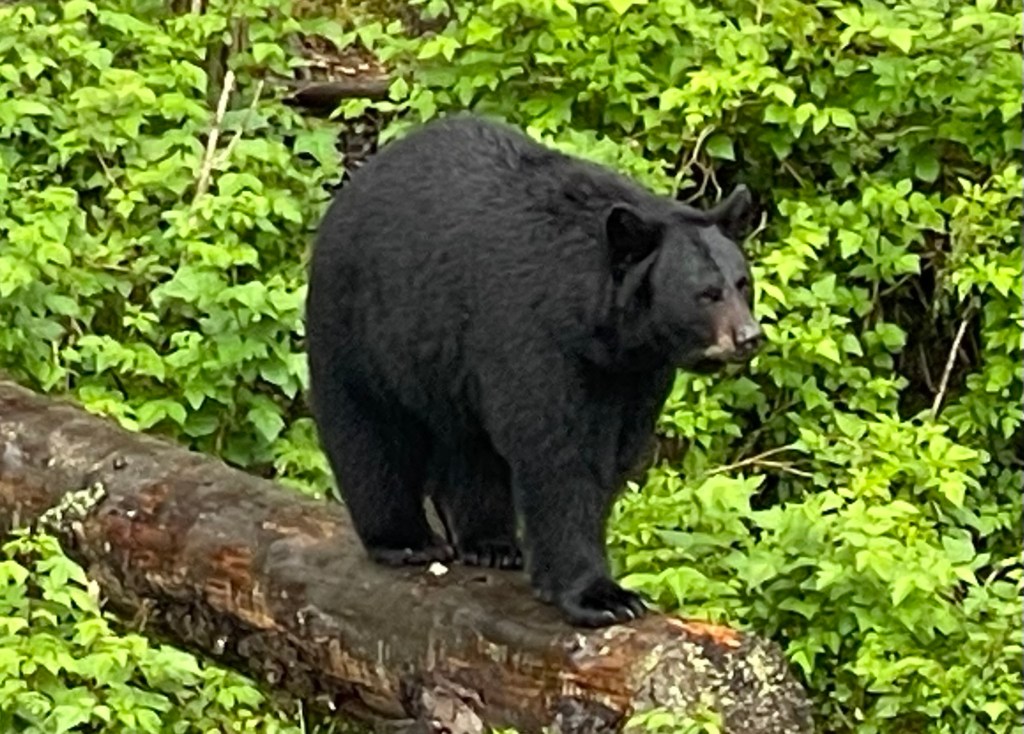
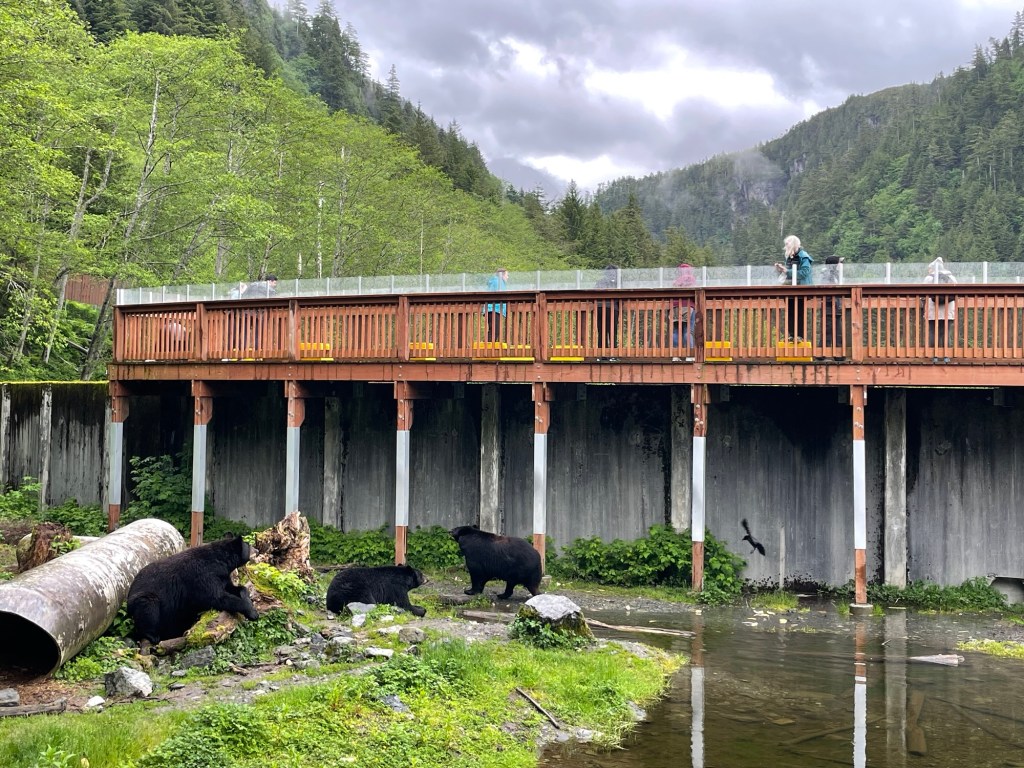
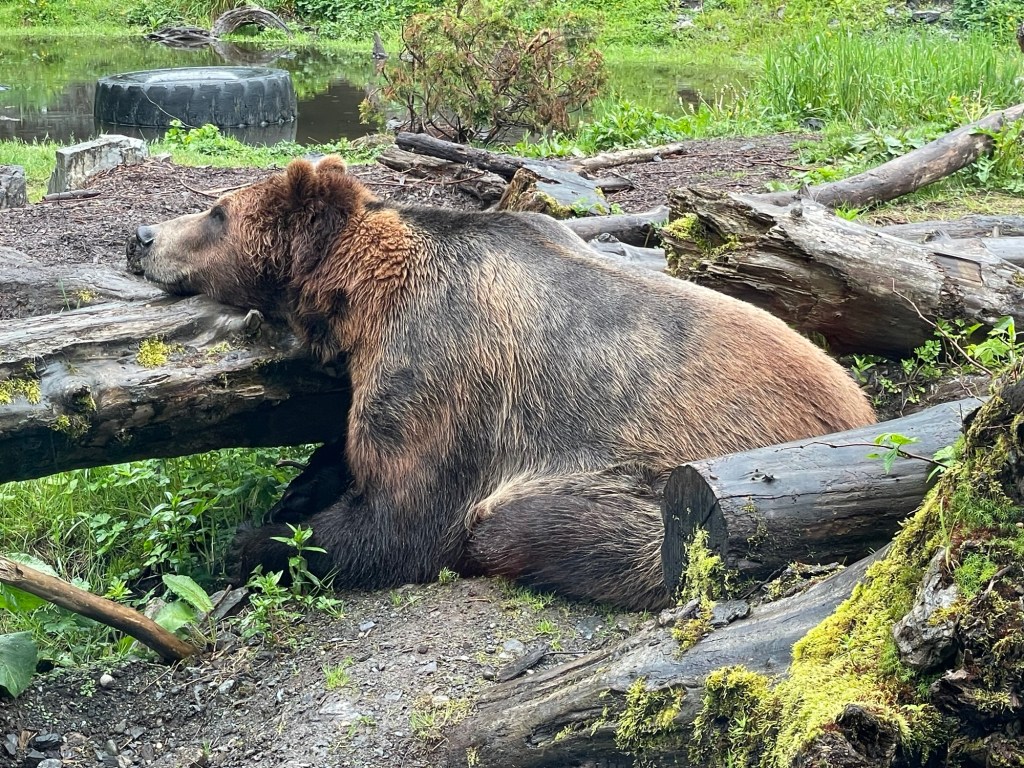
Our time in Sitka is limited, so we tried to make the most of it, guided by local tips from Susannah’s former student Hannah. Our first point of call was the dramatically named Fortress of the Bear, which is actually a bear sanctuary catering mostly to raising cubs who have lost their mothers. Because it is illegal under Alaska state law to release a bear into the wild once it has been in captivity, the bears in the sanctuary must stay there for life if they are not transferred to a zoo out of state. The bears are housed in giant circular enclosures that were originally built as part of the local paper pulp mill and have now been repurposed. Unlike captive bears we have seen elsewhere, these animals did not seem bored or depressed: they were always active, exploring their enclosures and the toys within them, playing with each other, and periodically asking for food. Several of the bears were swimming in the water, and at one point one climbed into a floating tire much as a human might ride an inner tube.
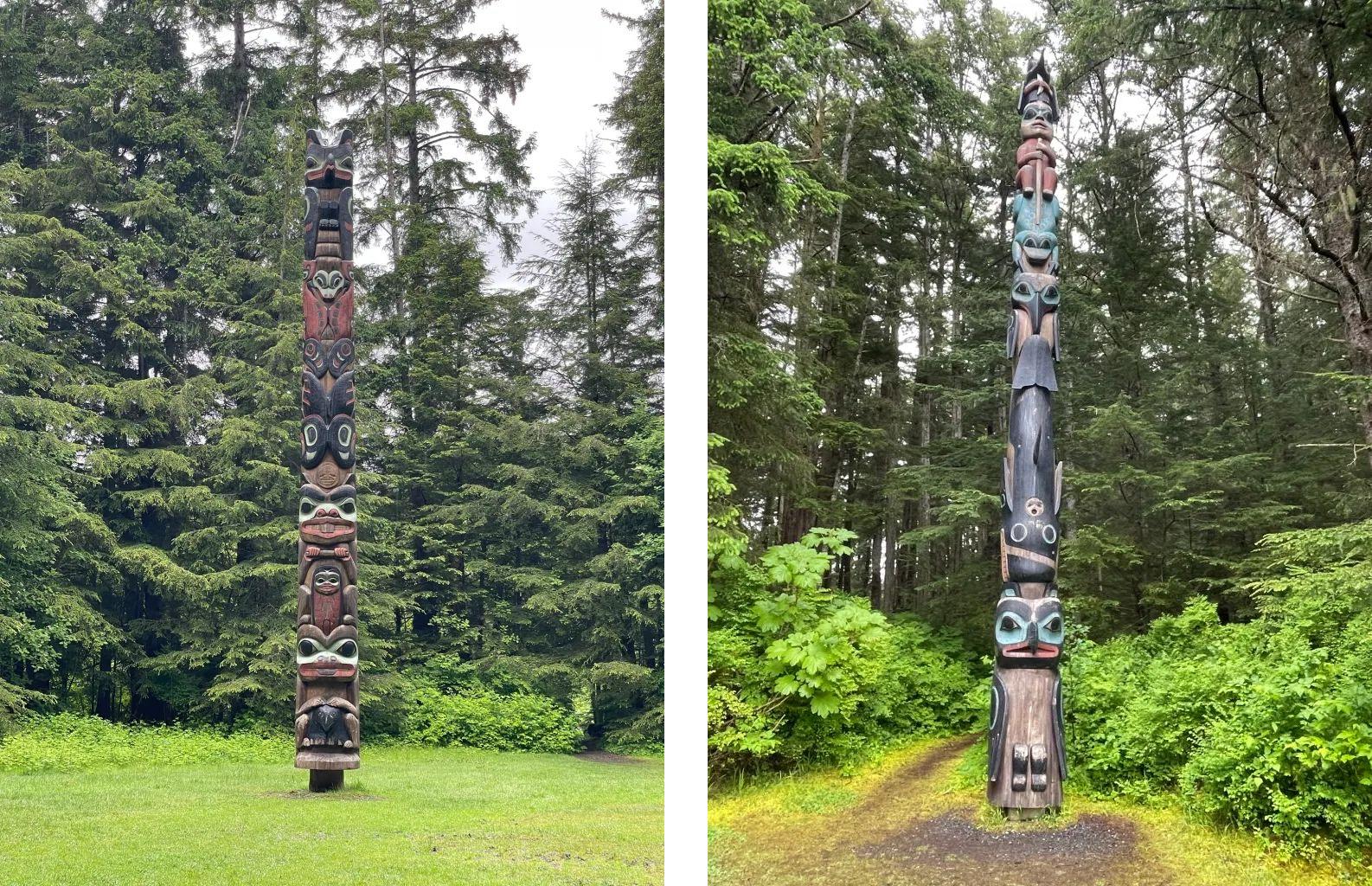
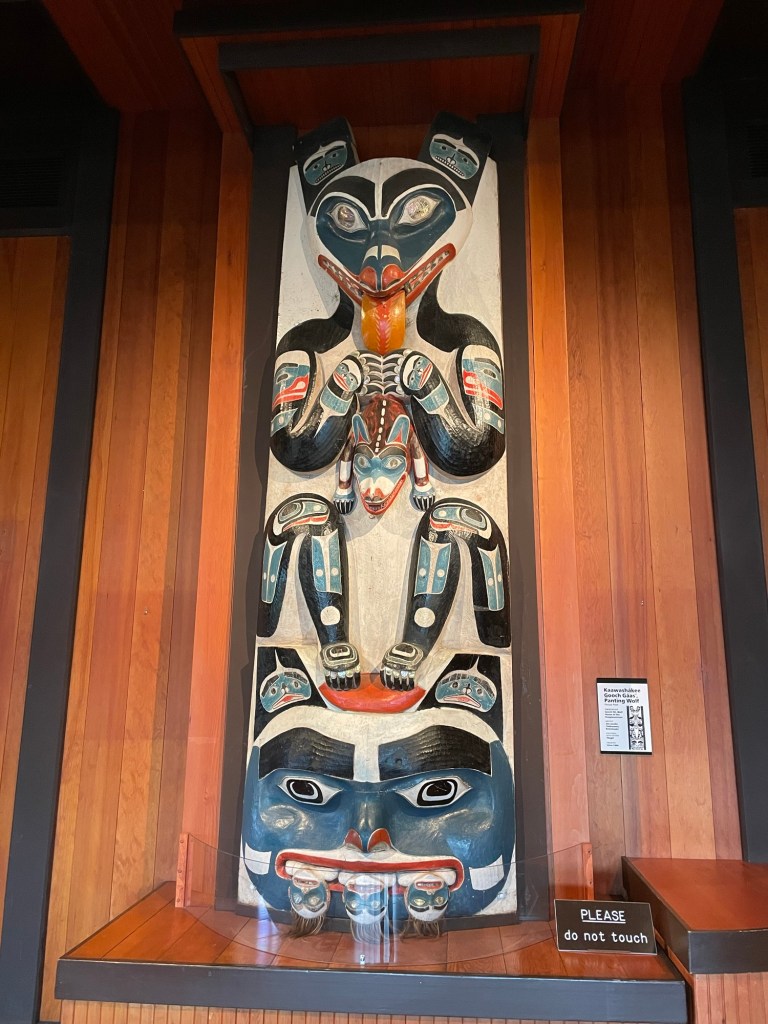
From the Fortress we traveled to the Sitka National Historic Park, which commemorates a pivotal battle between the local Tlingit people and the Russian colonists intent on controlling the local fur trade. Despite preparing carefully and fighting bravely, the Tlingit were forced to retreat when their store of gunpowder and ammunition was blown up. The Russians capitalized on their victory by building a fort overlooking the settlement they called New Archangel, now the city of Sitka. (Fun trivia fact: Technically, Sitka is the largest city in the United States by area, because its municipal boundaries include the entirety of Baranof Island. Most is undeveloped, since the main coastal road is only about 14 miles or so end to end.) Also on display at this site are dozens of totem poles and other carved wooden artifacts. Although the creation of totem poles originated in areas farther to the south, many were collected here as a way of preserving and displaying cultural traditions of the Pacific Northwest.
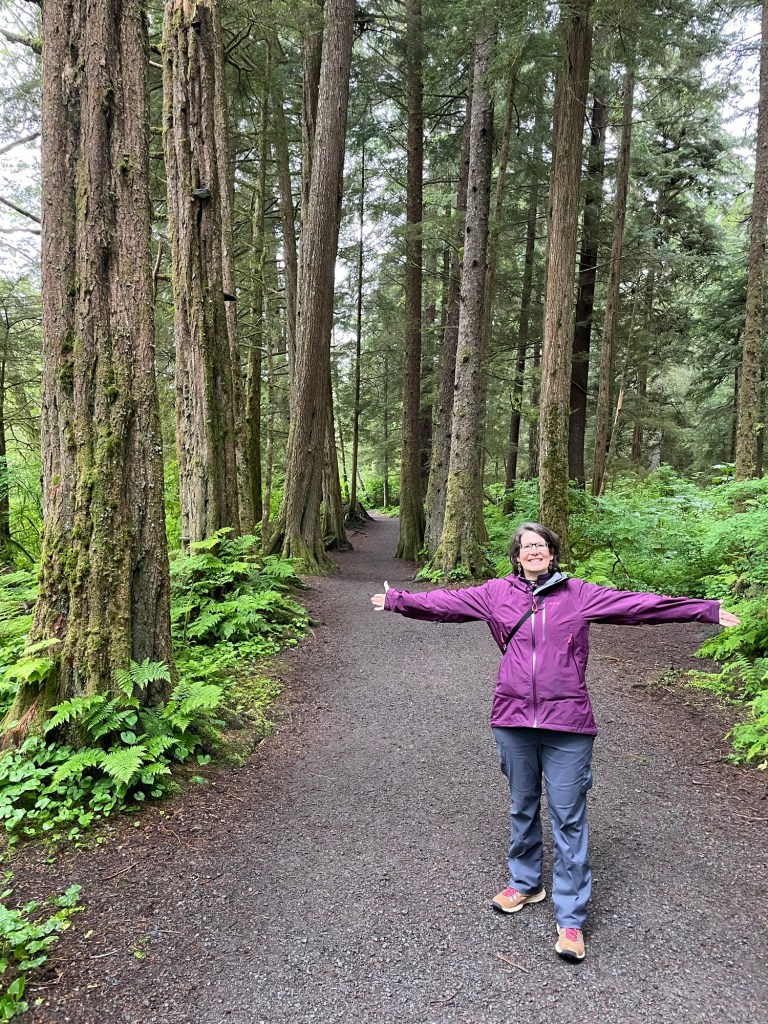
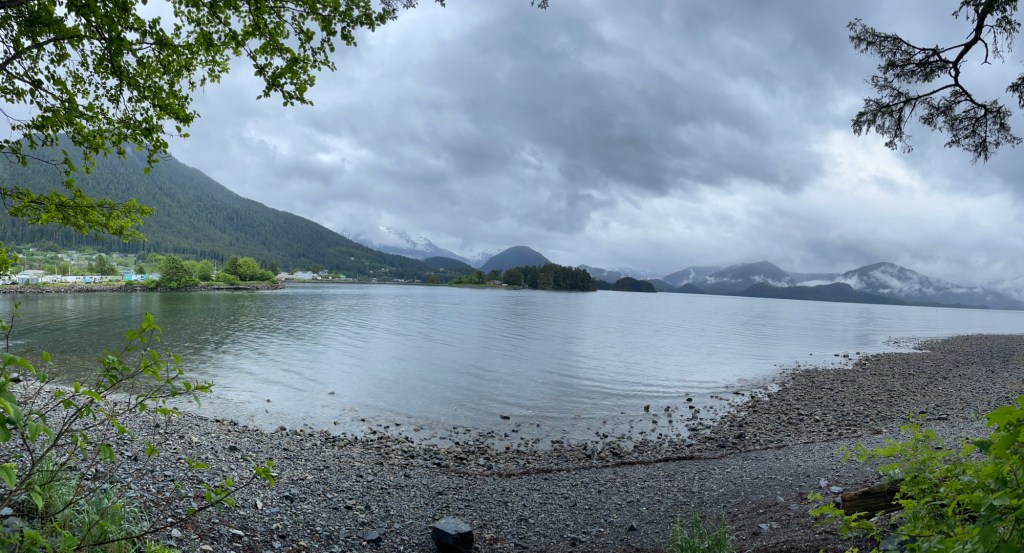
Hannah met us at the park and took us on a scenic tour of Sitka, past the new deep-water pier that handles larger cruise ships, past her house, and to the end of the paved road and the site of an earlier conflict between the Tlingit and the Russians. (This one was won by the Tlingit, thus setting up the later battle mentioned above.) There was only one ship currently in port today, but the schedule for tomorrow will be the busiest day of the whole year, with more than 9000 cruise passengers scheduled to visit. Given that is more than the entire year-round population of Sitka, the character of the town is greatly changed by the influx. Either way, we won’t be there to see it: we leave for the airport early in the morning for our flight home.
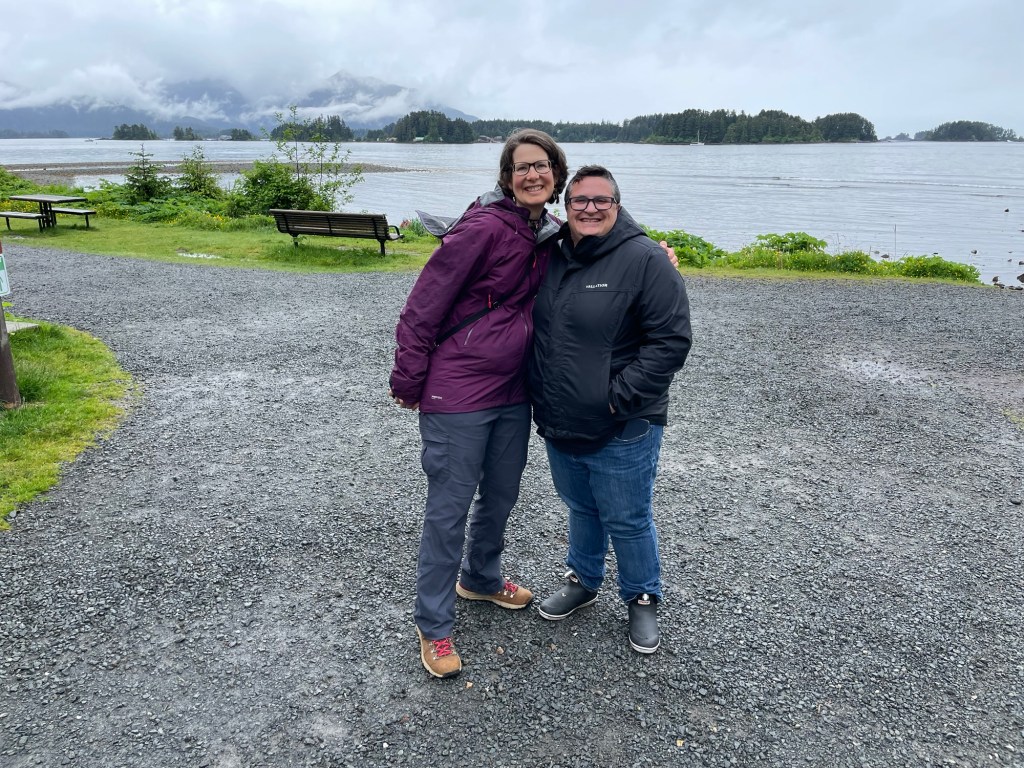
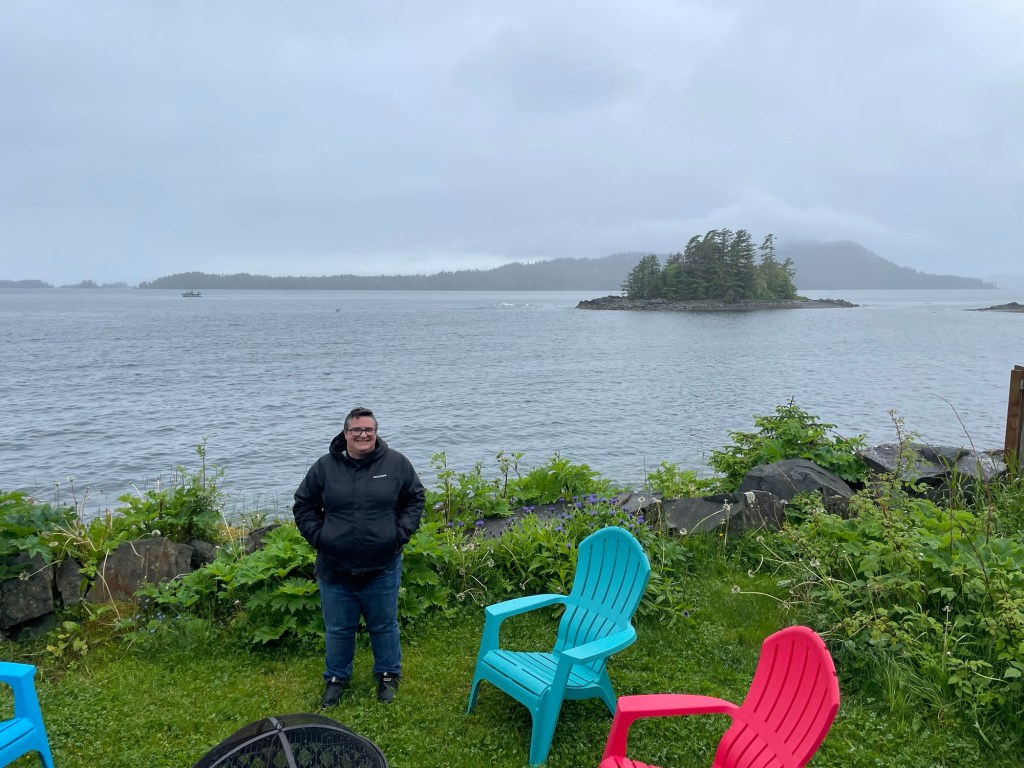
We closed out our day at dinner with Hannah and her family, where we enjoyed catching up and learning a little more about life in Sitka. This marks the end of our Alaskan adventure: one cruise, two cities, four glaciers, six travelers, nine days, infinite fun!

