
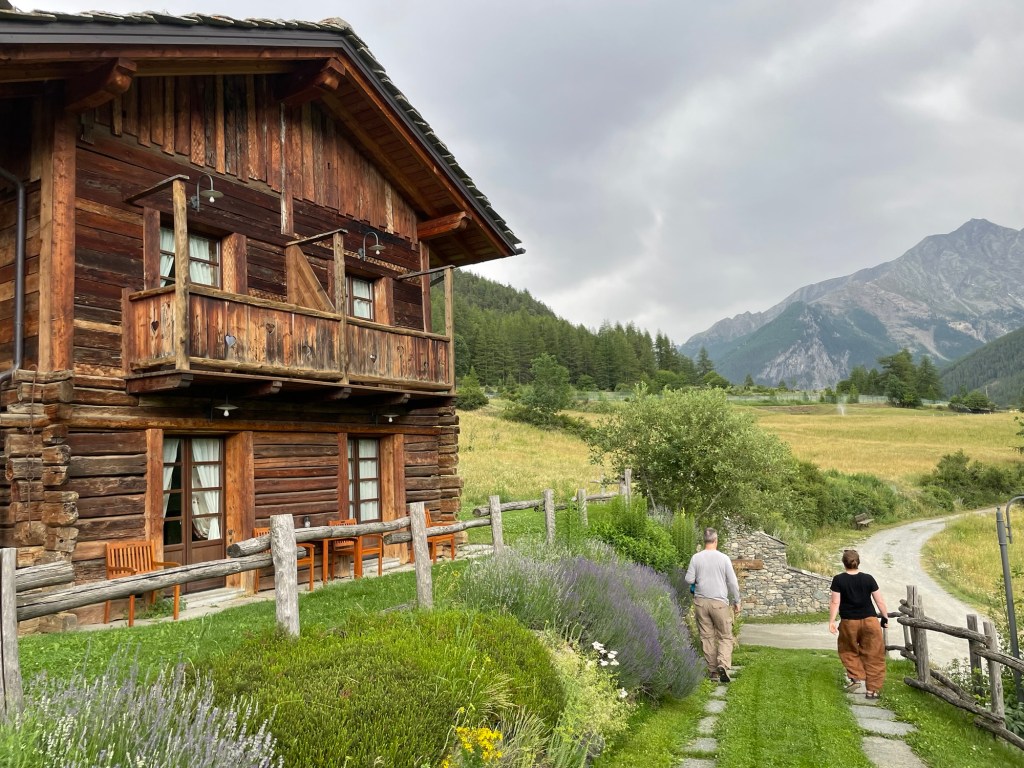
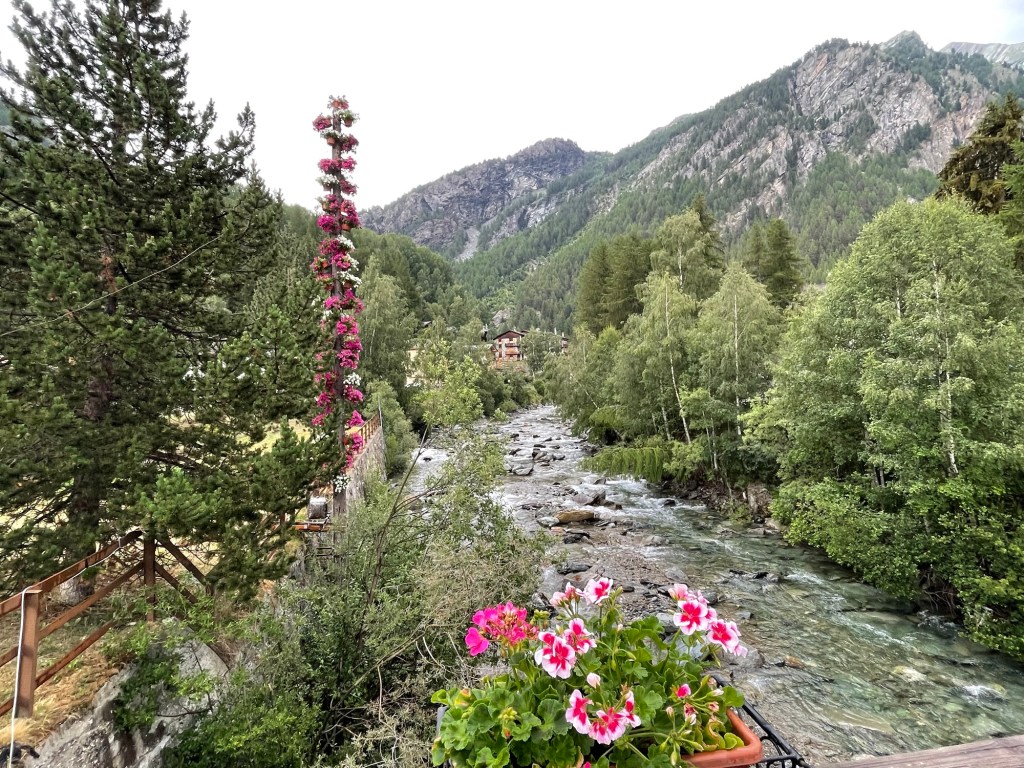
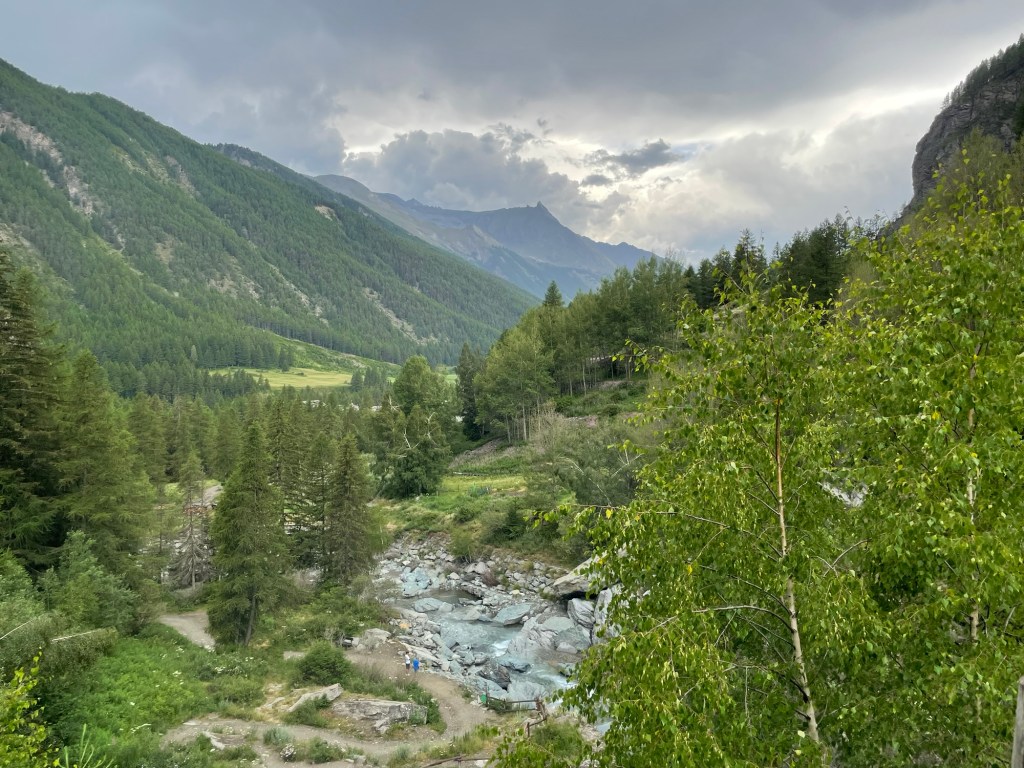
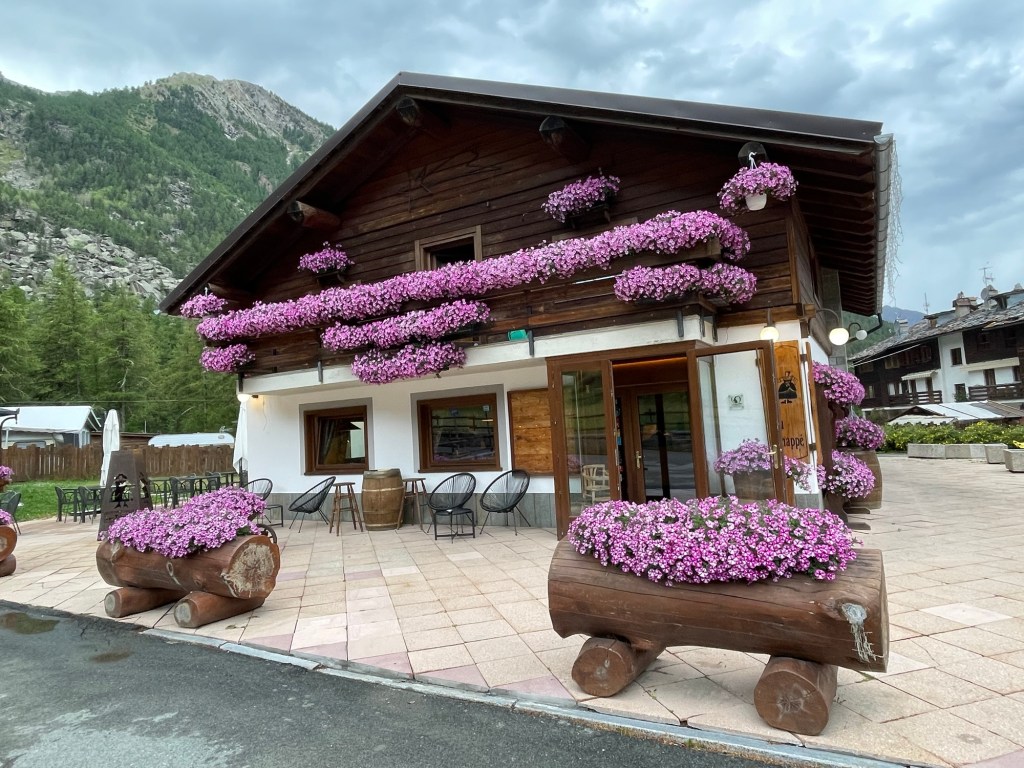
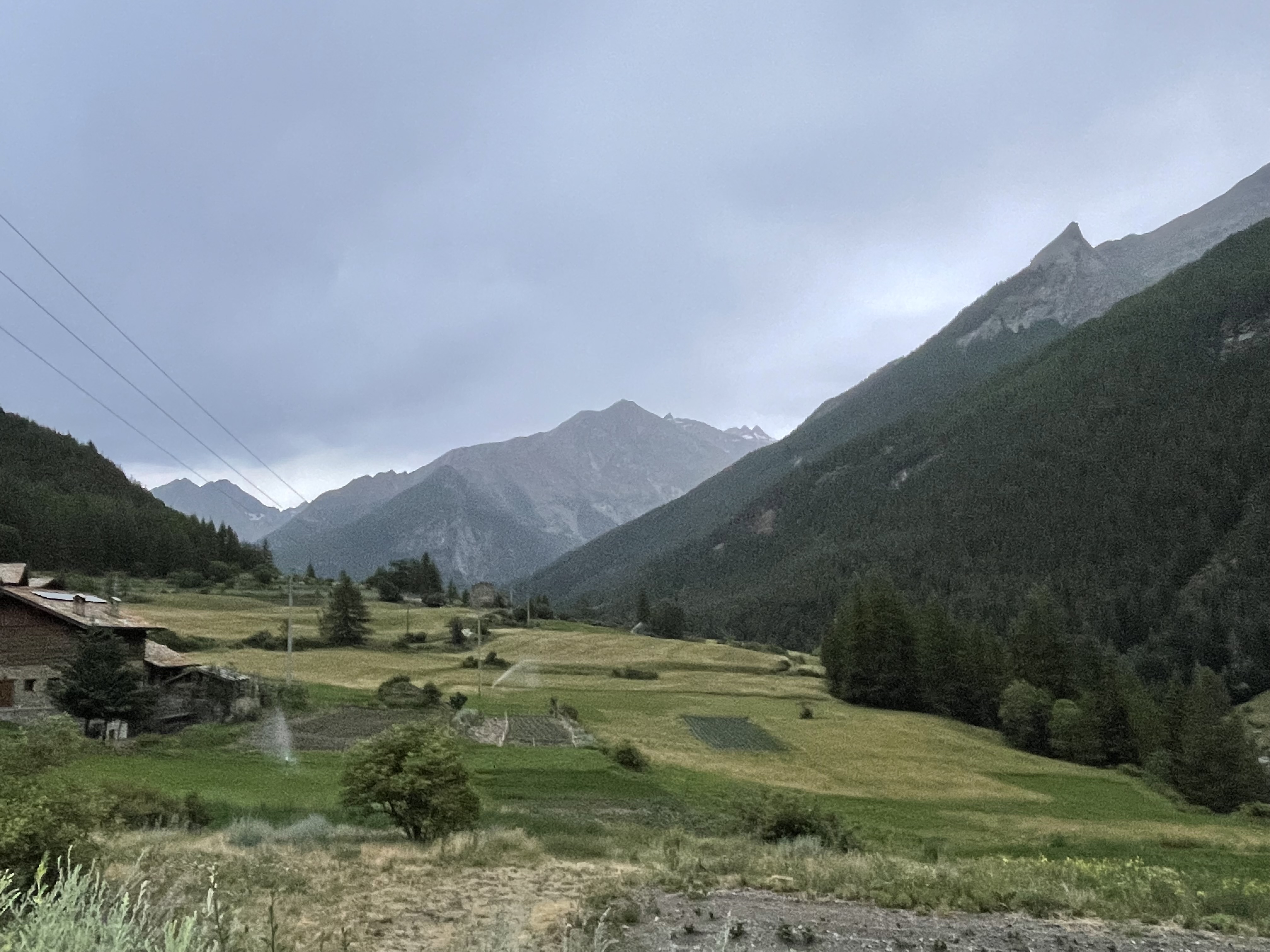
Today was a day of contrasts: starting the day in the heat, ending it in coolness. Beginning in a city, going to sleep in a small village. From the plain to the mountains: we are now in Cogne, adjacent to the Gran Paradiso National Park. Our water comes from the glaciers.
Breakfast was the scene of further farewells, as our choir began to go their separate ways. We are taking a bit of it with us for a while, in the form of our new friend Karen, whose plans matched our own well enough that we decided to travel together.
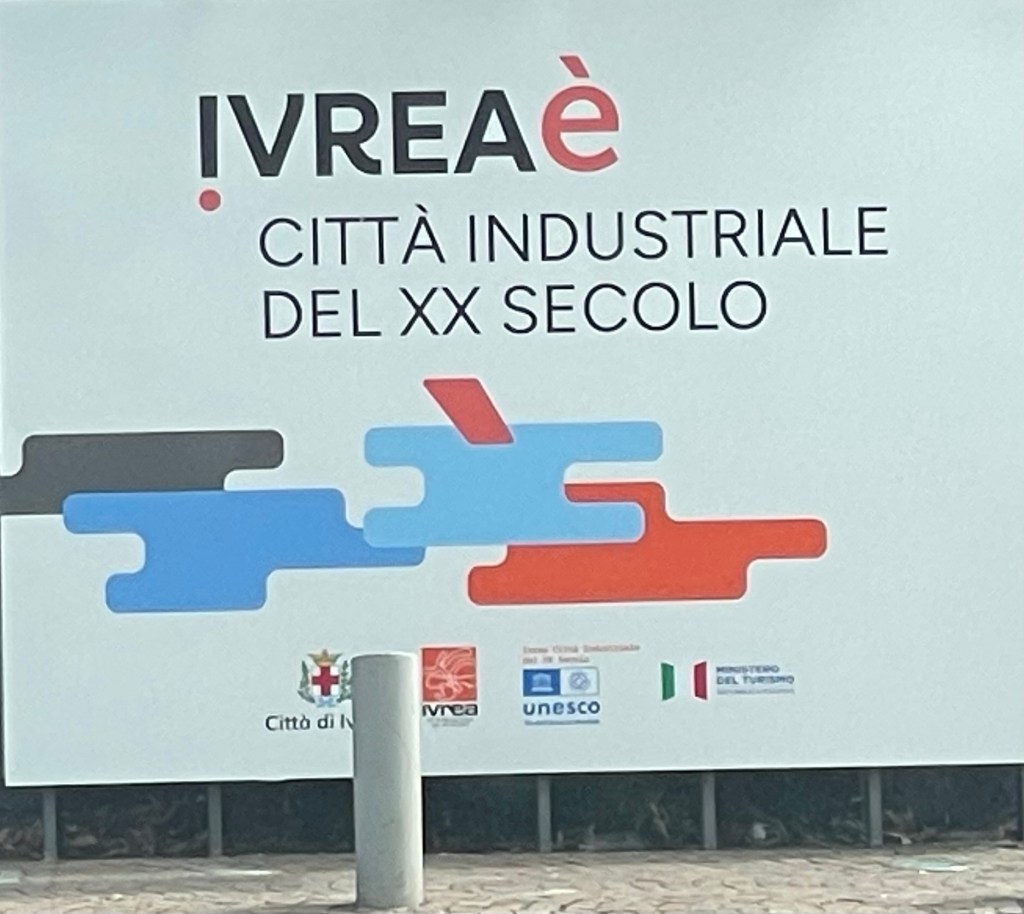
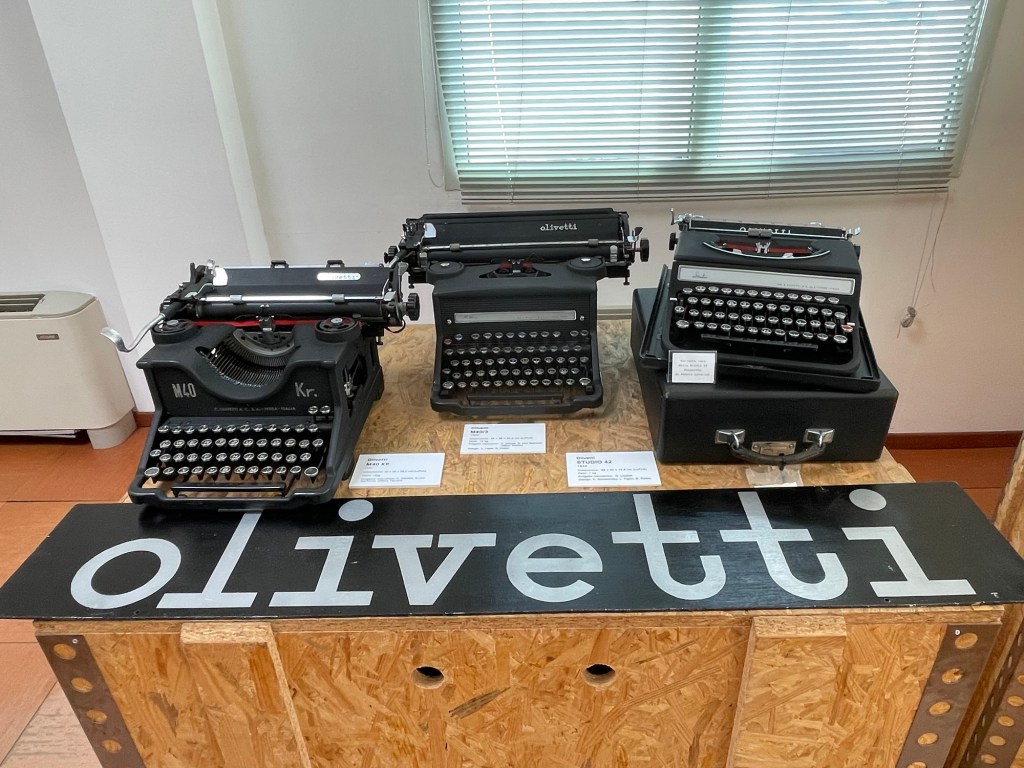
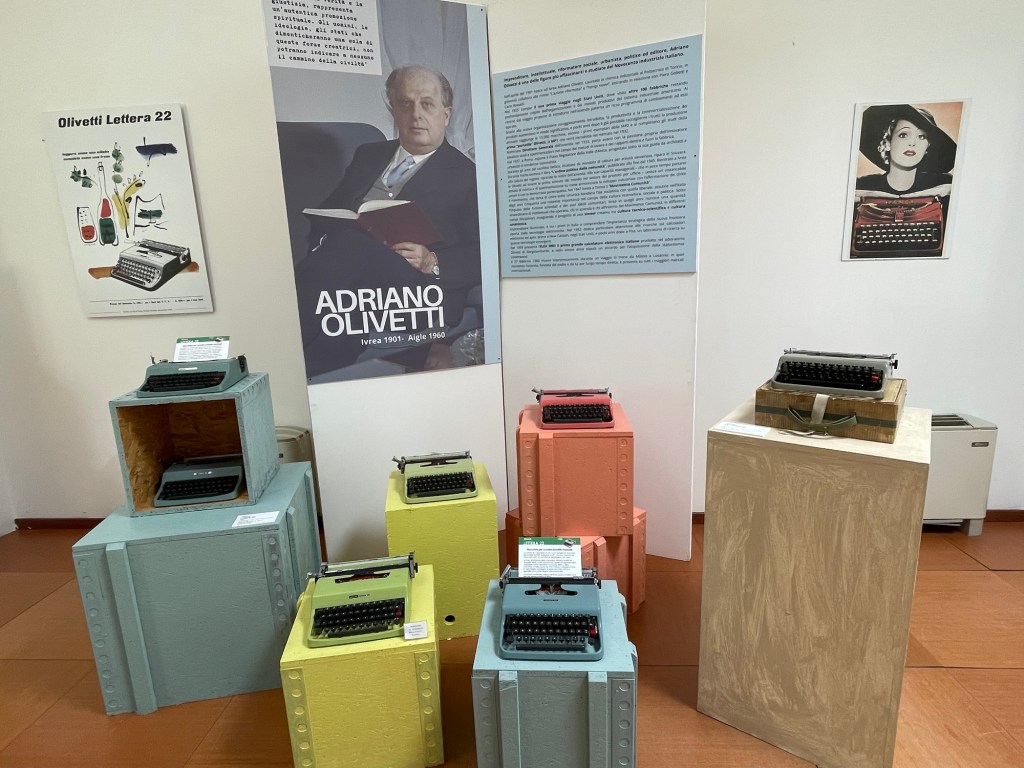
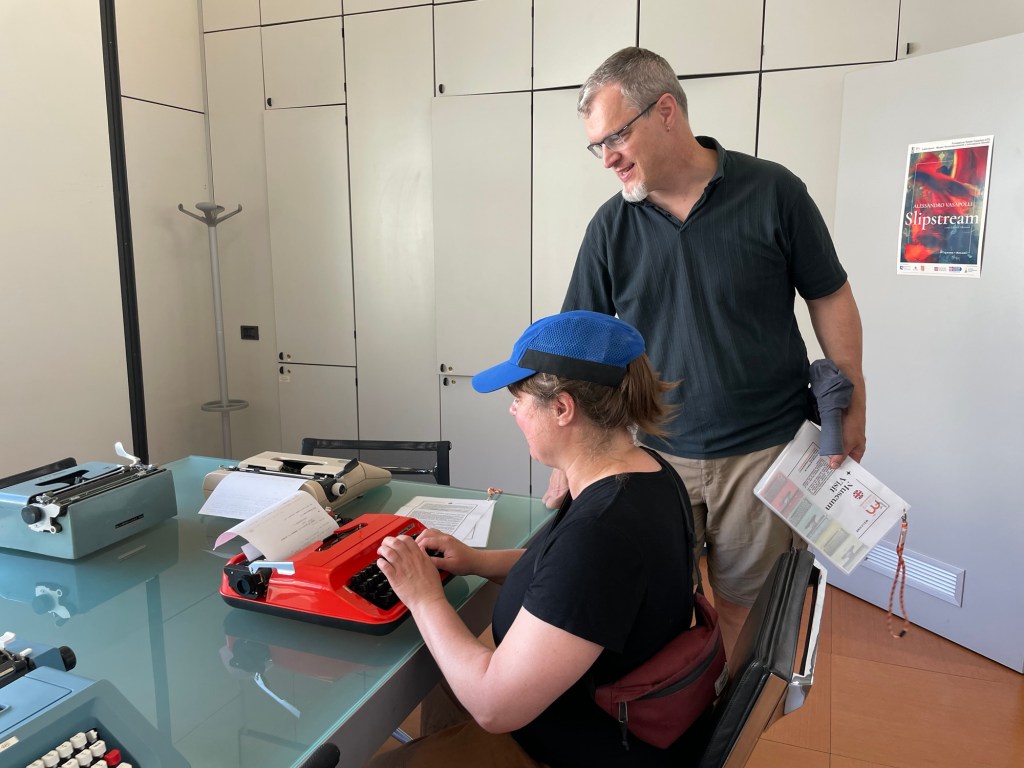
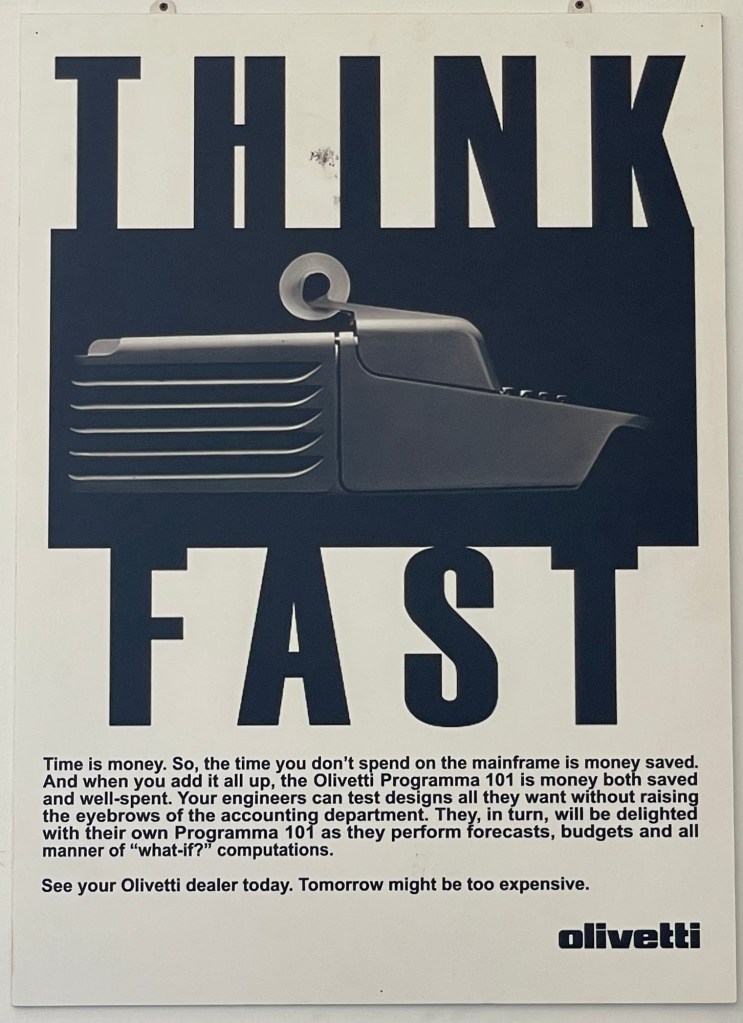
Before leaving Ivrea we wanted to see the Laboratorio Museo Tecnologicamente (otherwise known as the Olivetti Museum). During the 20th century Olivetti was known for manufacturing typewriters, adding machines, and eventually personal computers. Adriano Olivetti, the son of the original founder, was an interesting character and responsible for much of the company’s early success. A sort of mixture of Henry Ford and Steve Jobs, Olivetti pushed innovative and clever design in its products, while also attempting to create a utopian environment for his workers. Ivrea is thus the site of one of the major social industrial experiments of the 20th century. We were not able to get a tour of the workers’ quarters, but the museum showcasing the Olivetti’s products was open and we went to see it. It proved much more interesting than you might imagine a typewriter museum to be: the collection covers many decades of products both from Olivetti and other companies as well, so that you can see the progression of the technology and many of its milestones — from early typewriters where you cannot see what is being typed until the paper is finally removed from the machine, through keyed machines with different keyboard arrangements (QUERTZ was used in Germany and had keys with umlauts, while QZERTY was the French version with accented characters), on to newer technology like the IBM Selectrix ball typewriter and the daisy wheel. One room had typewriters from different eras that were supplied with ink and paper for guests to type on. Many younger visitors to the museum may never have had the chance to use such a machine before!
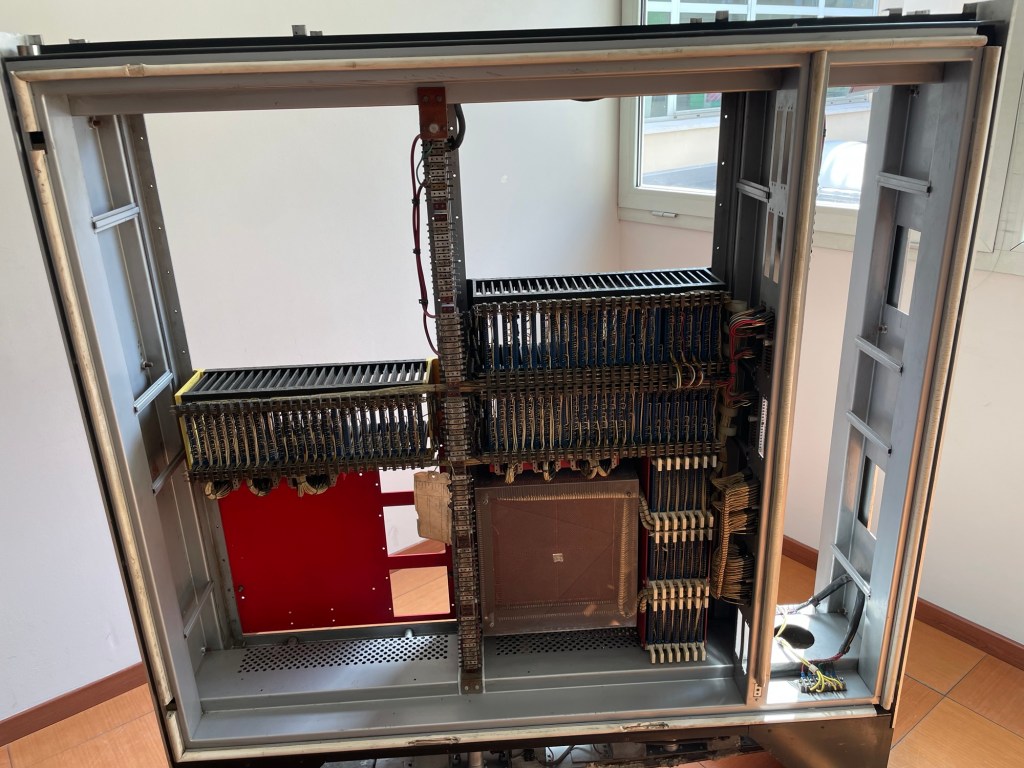
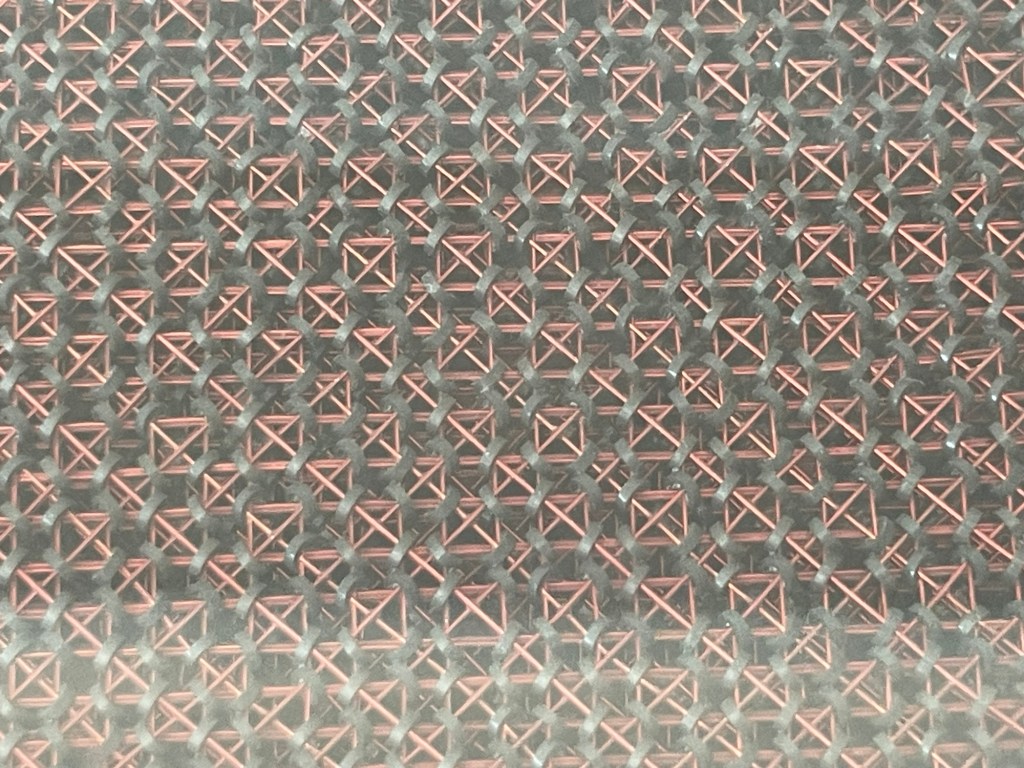
In later years Olivetti got into computer manufacturing, and produced one of the world’s first commercial transistor computers, the Eleo 9003. To Nick’s delight they had portions of it on display, including several examples of an iron core memory unit.
From the museum we got in the car to head northeast into the Alps, but we still had a few pieces of unfinished business before leaving our old haunts. Although nobody we knew was still inhabiting the Montestrutto castle, we wanted to explore the staircase on the northern side that we had not yet taken. It’s a steeper climb at 227 steps, but has a handrail and a nice view.


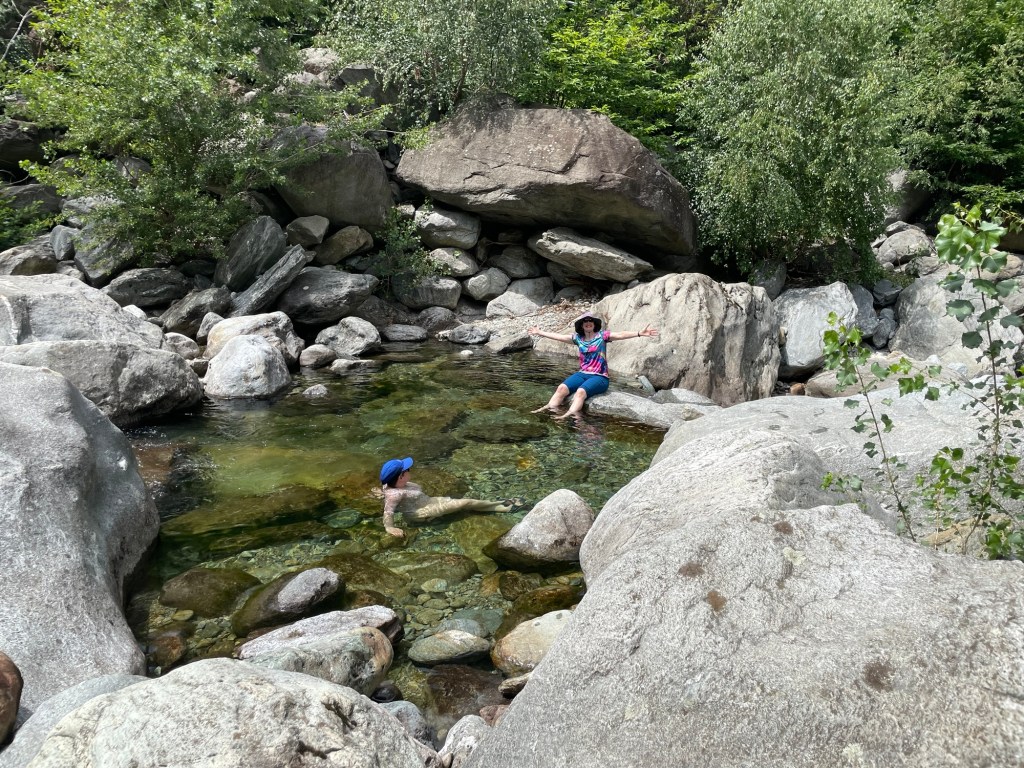
Following our (final) jaunt up and down the stairs to the castle, we were feeling the heat, and a plan began to form that we should visit the swimming hole by the mountain stream one more time. That’s exactly what we did, and this time (it being a weekday) we had the place nearly all to ourselves. We ate a picnic on the rocks while using the water to cool off.

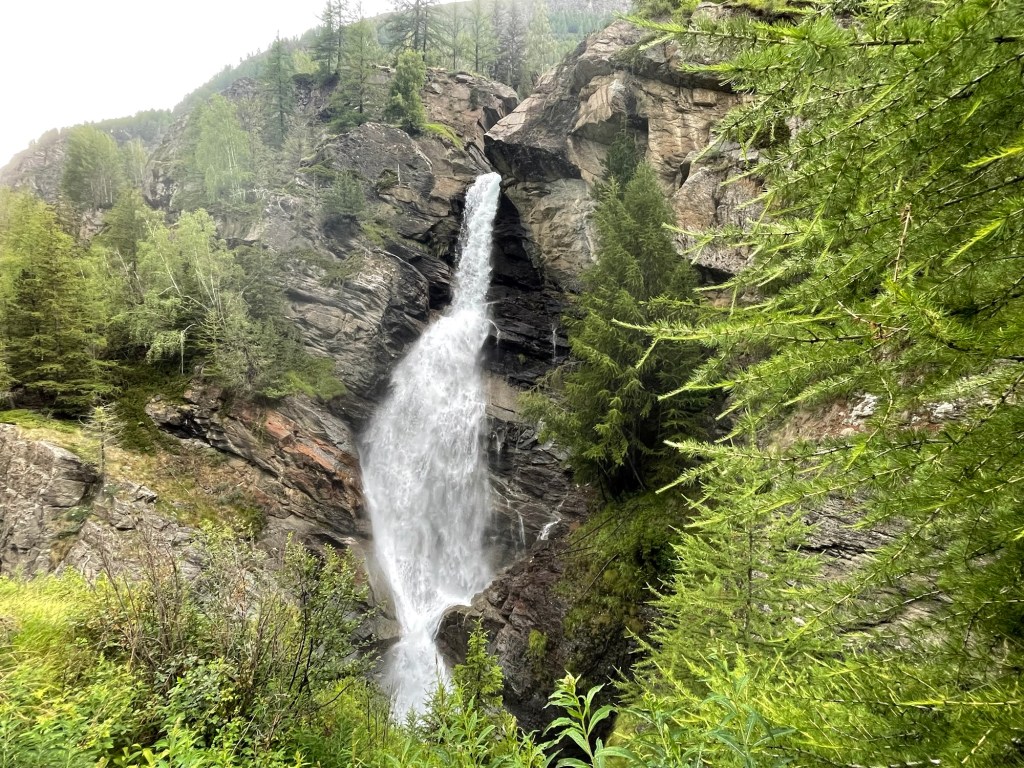
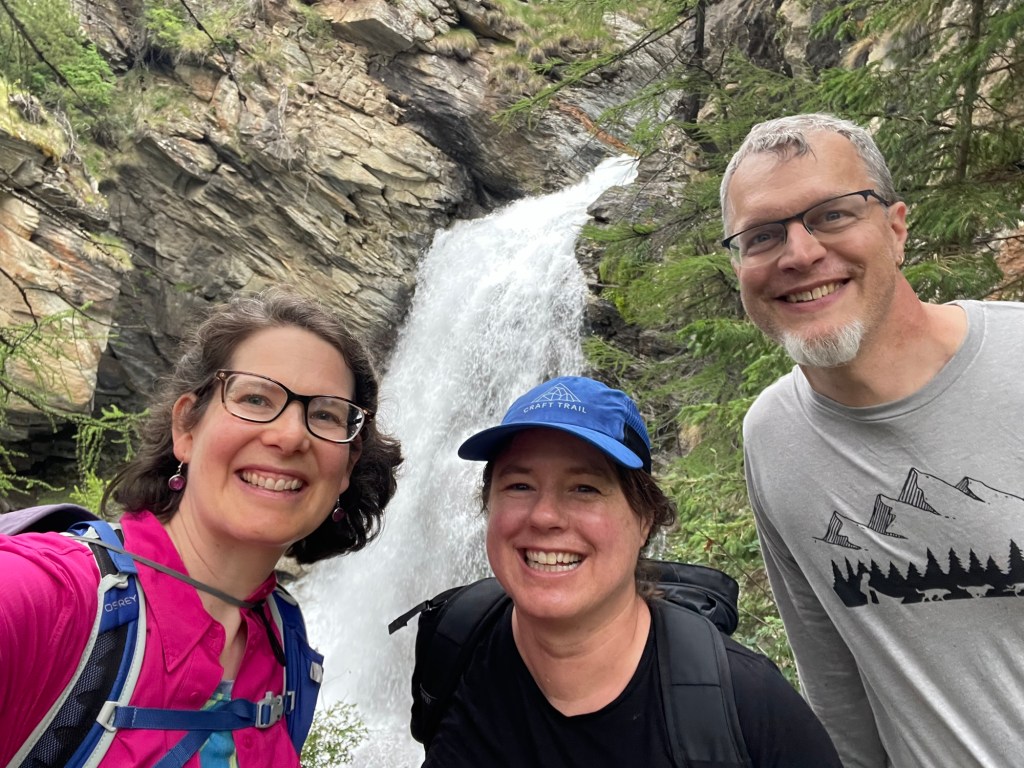
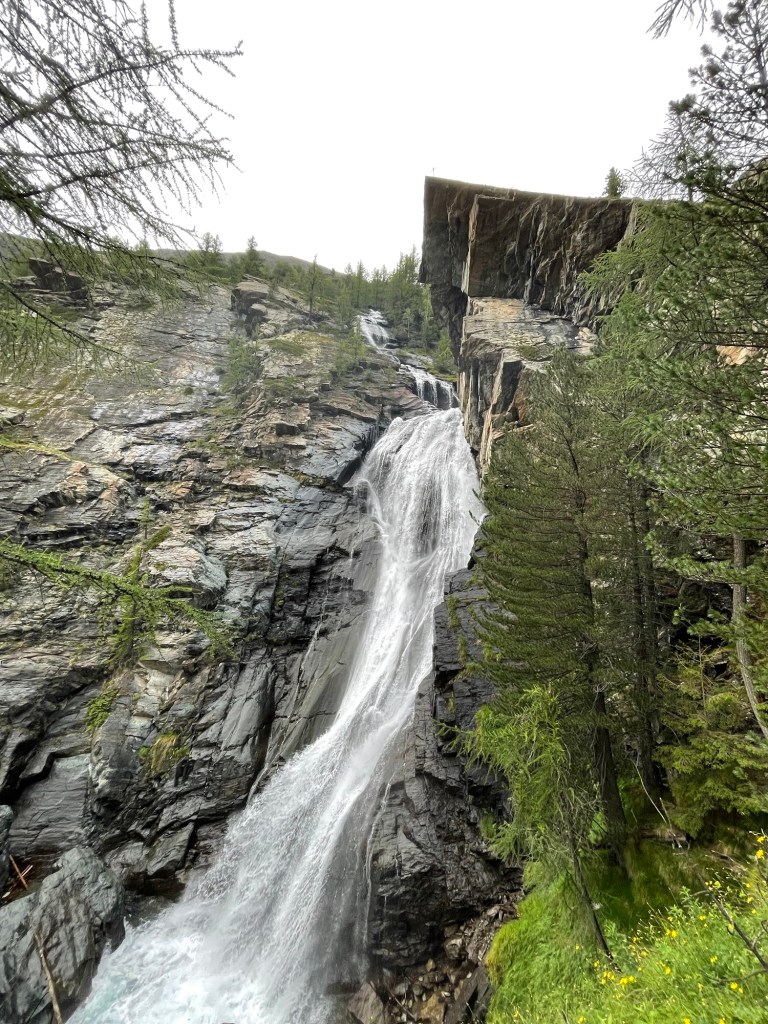
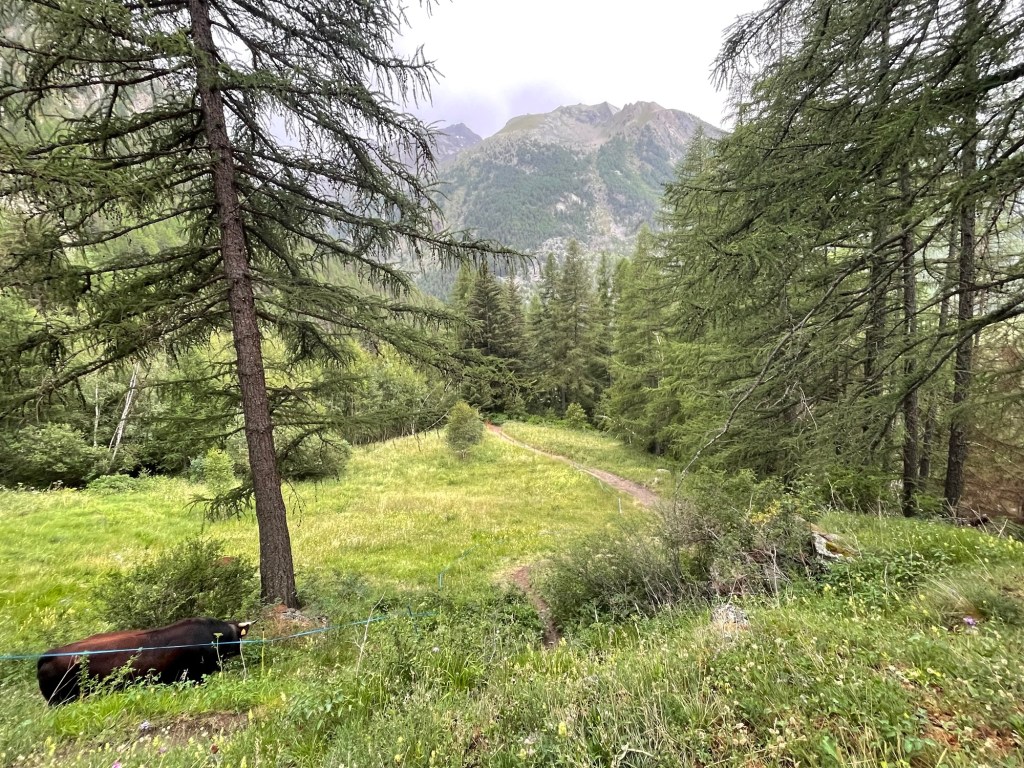
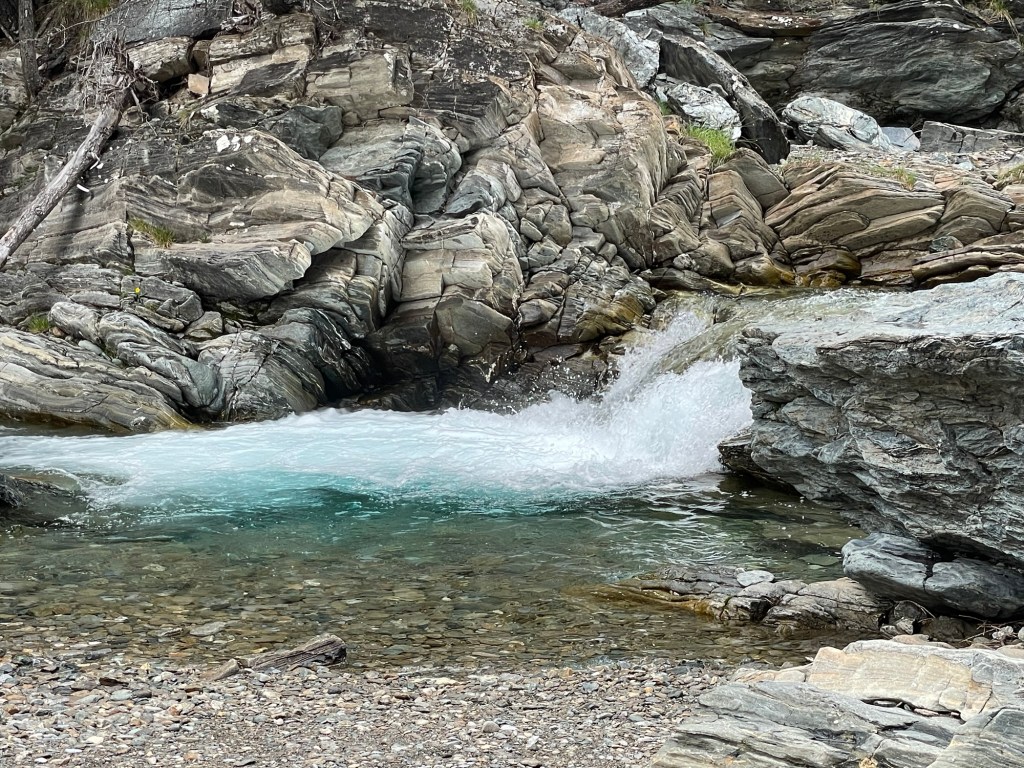
The rest of our drive took us farther into the valley than any of our previous jaunts. We passed through Aosta (tragically somehow managing to blunder onto the autoroute where we were charged a 12 euro toll for 10 km of travel) and up onto the valley of Cogne. After checking in at our farm-to-table B&B, we followed the road to its end at Lillaz further up the valley. Here we took a short but pleasant hike on a loop trail to see several waterfalls, which was about all we had time for in what remained of the day. The clink of cowbells sounded along our route. The waterfalls plunged dramatically down huge rock formations into foamy pools. The water had a slight blue tinge to it — Nick joked that it was the blue dye from the glaciers leaking out, but really we’re not sure. Maybe there’s dissolved copper in it — there was some copper mining here in the early years, in addition to silver and iron.




We had dinner at a restaurant recommended by our lodging host. It included a number of dishes said to be local in character, including a soup of cheese, cabbage, and old bread, flavored with cinnamon called Zuppa alla Valpellinese. We also ordered a dessert grandly called Creme de Cogne, described as a “combination of cocoa, cream, sugar, and eggs” which arrived looking suspiciously like a bowl of chocolate pudding. (It was very good chocolate pudding, however!)



Hi Susannah and Nick.
Thanks so much for your wonderful reporting and pictures. Enjoy the rest of your travels! I hope we have a chance to meet up again somewhere!
Nancy Hirschhorn