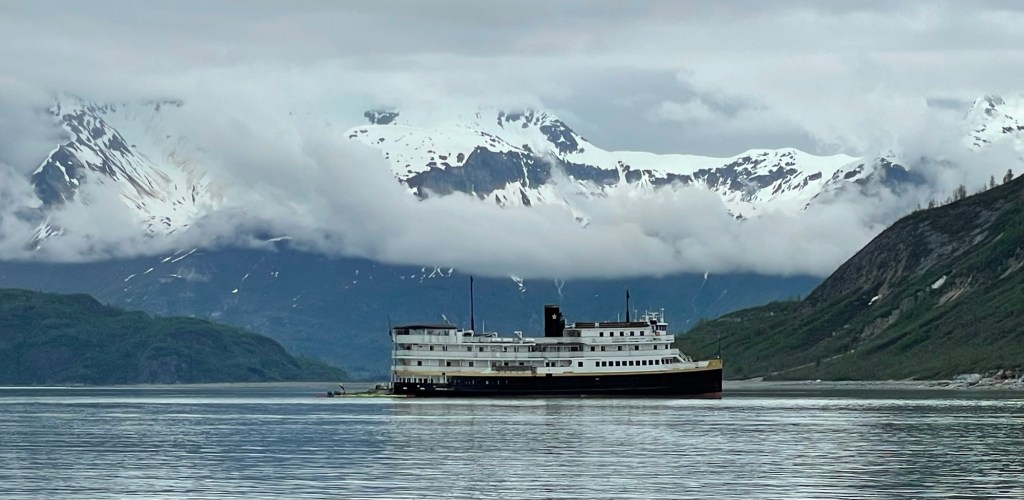
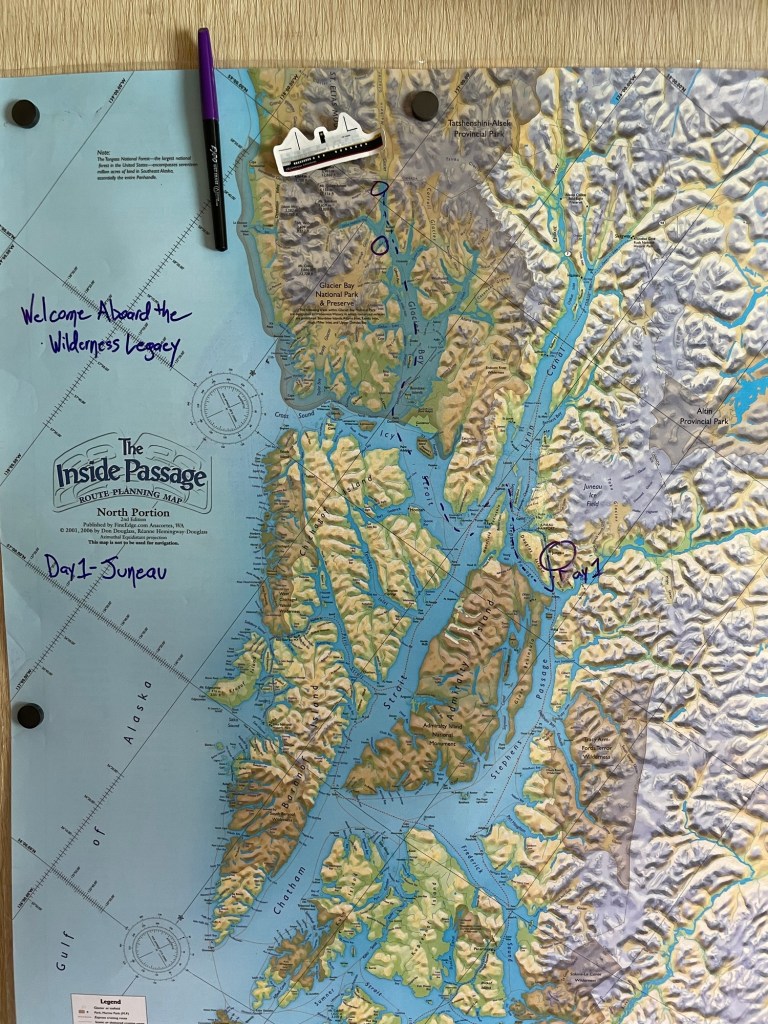
Our voyage began with some very good news: our ship had received a permit to sail into the heart of Glacier Bay National Park. The park service imposes strict limitations and only two ships per day of our size may enter this environmentally sensitive area. So our excursion coordinators happily scrapped our original plans of poking around the outskirts of the park and instead brought us to some of the richest sites this part of the world has to offer.
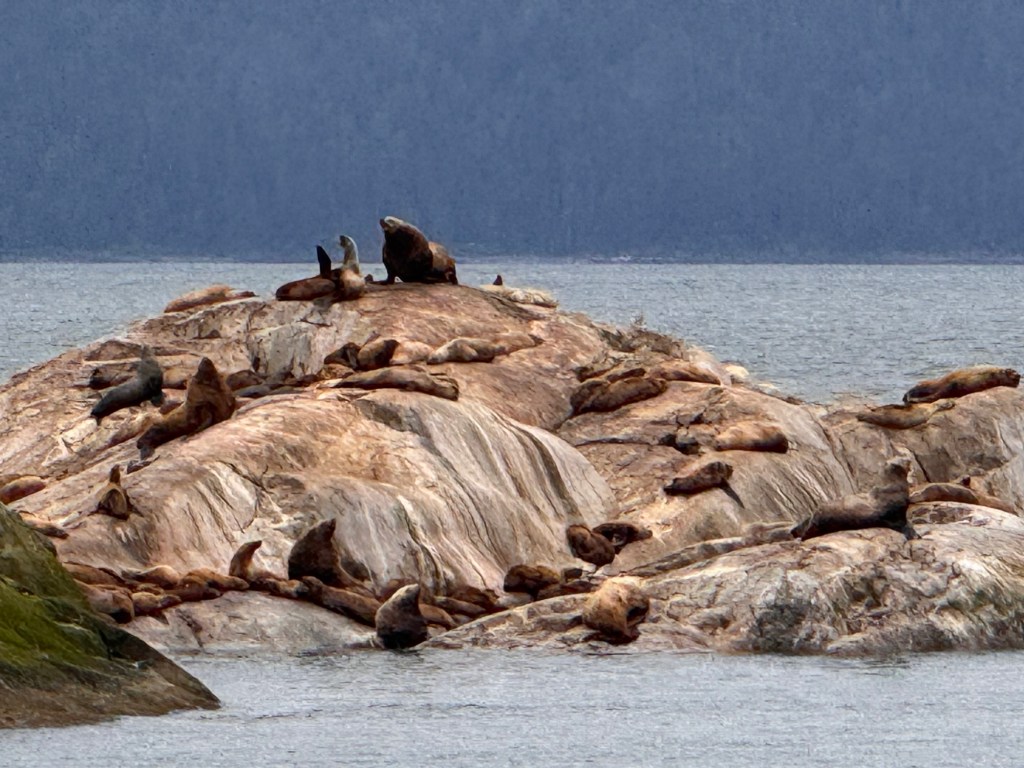
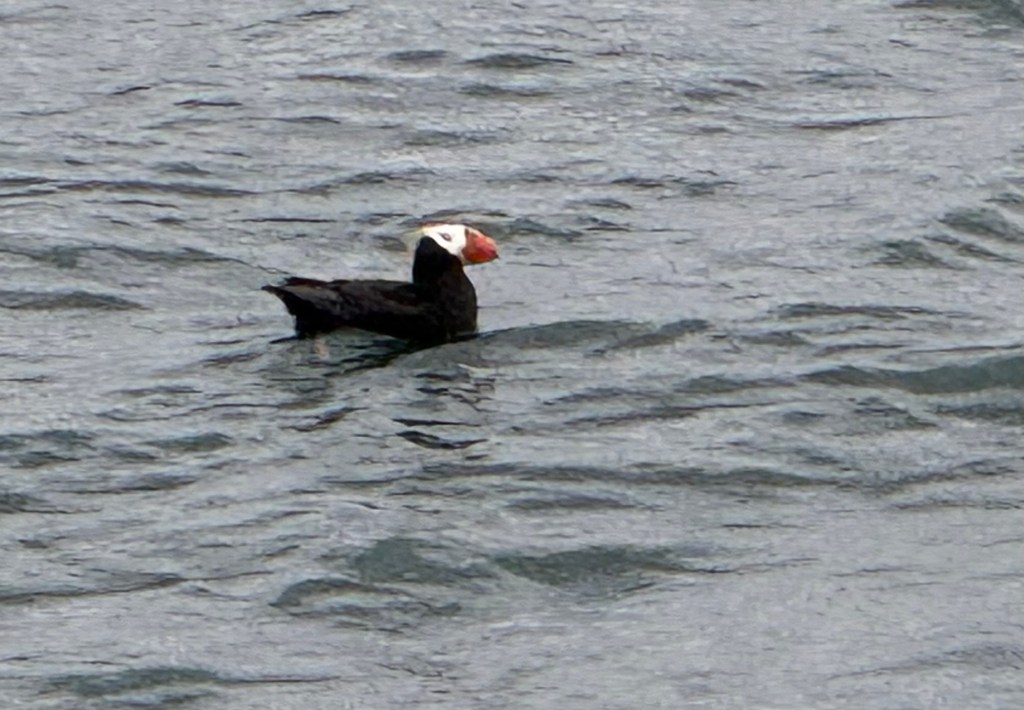
Early in the morning we had a 6 am wakeup call to view South Marble Island pass by on our port side. We found the island teeming with wildlife — sea lions basking on low rocks, sea otters paddling in the water, flocks of seagulls circling overhead and a bald eagle swooping from the clifftops. And puffins! We were fortunate to witness several puffins paddling near our ship.
By midmorning we had reached the farthest extent of our journey, some 60+ miles from the mouth of the bay. Directly ahead of us stood the edge of the Margerie Glacier, one of the few remaining tidewater glaciers in the park. 300 years ago, the entire stretch of water we traversed would have been covered in ice, yet now most of the ice fronts have retreated back to dry land. Photographs fail to convey the massive size of this wall of ice: guides told us that it measures a mile across, and extends 21 miles back to its source in the mountains.
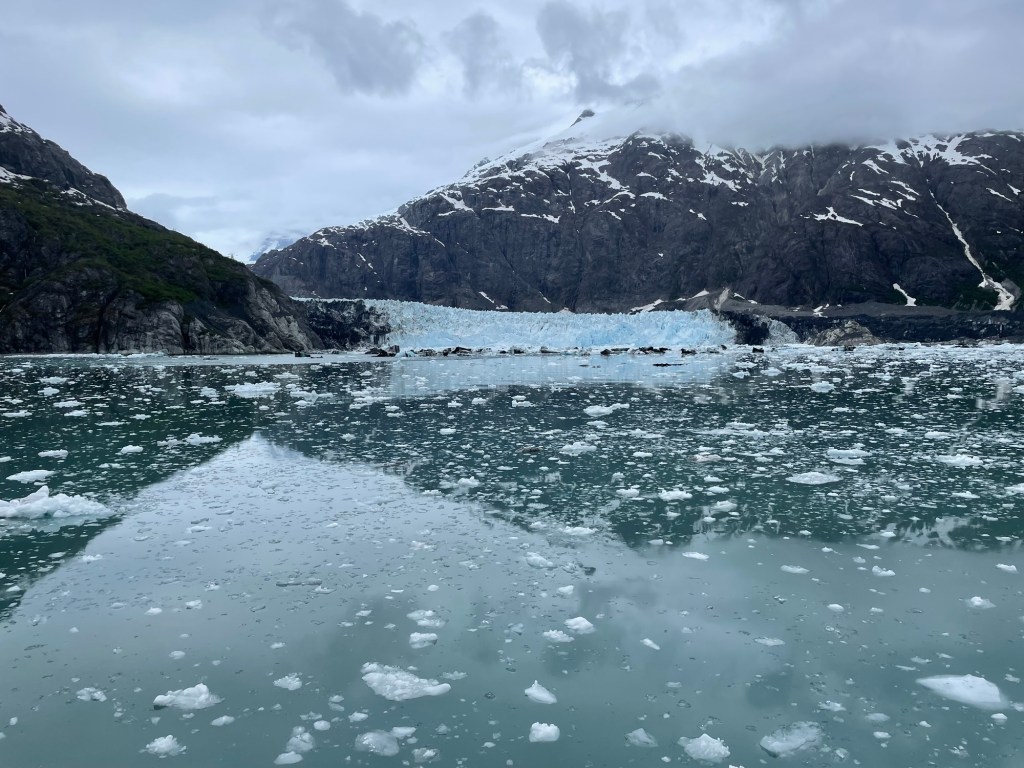
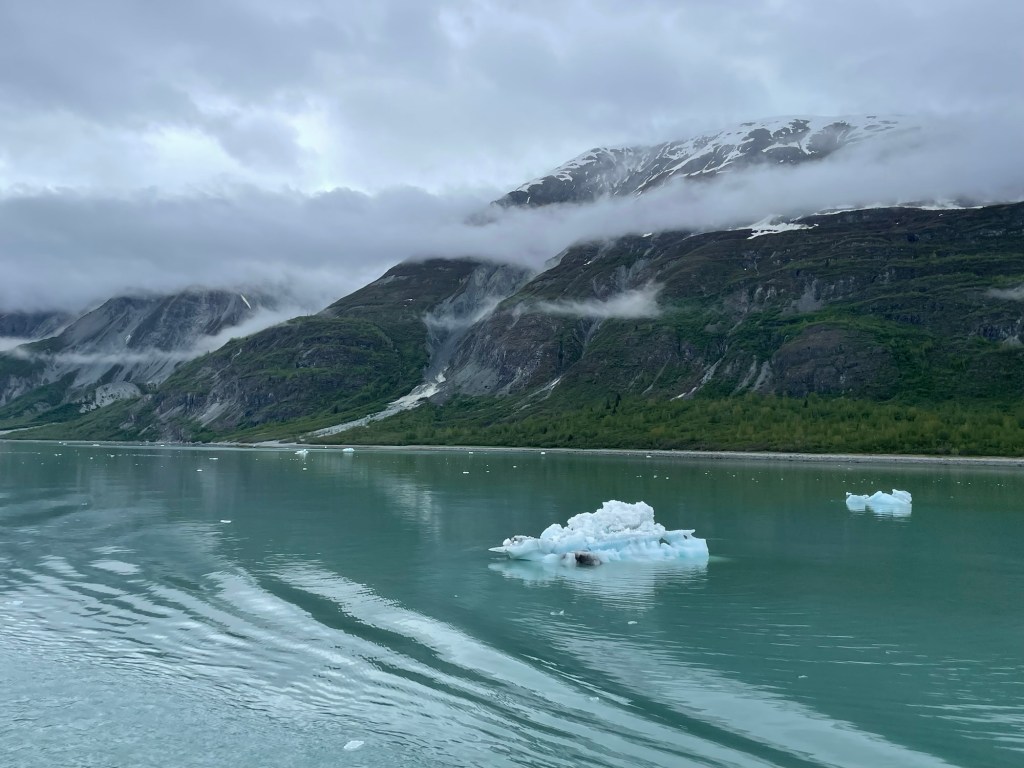
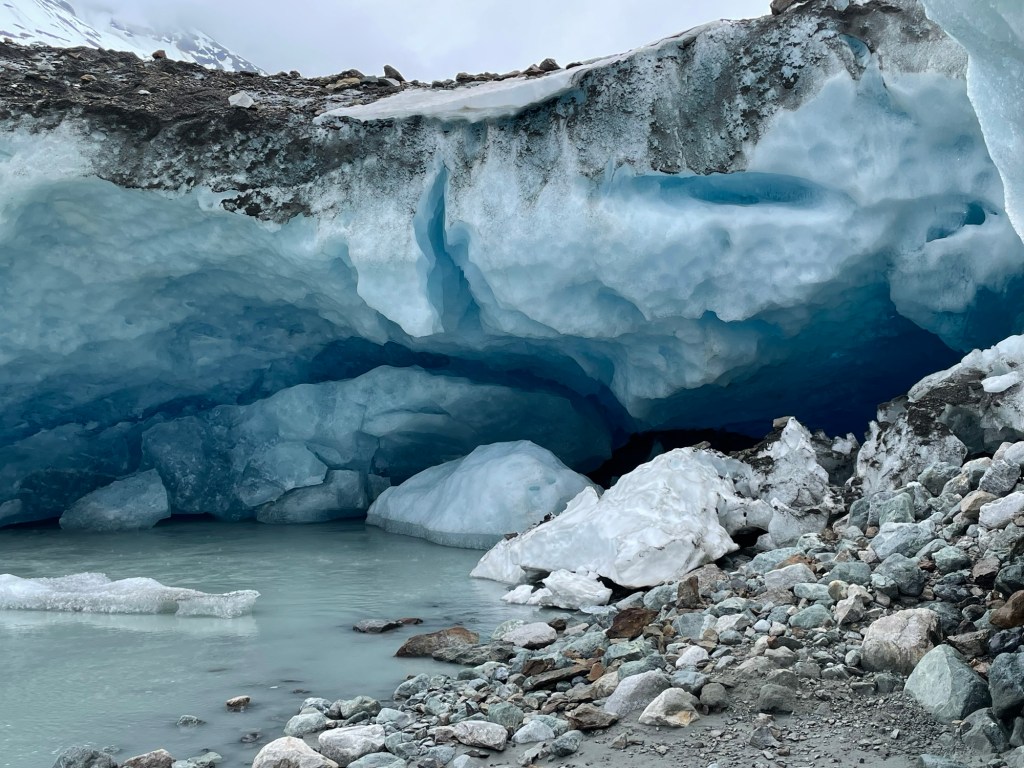
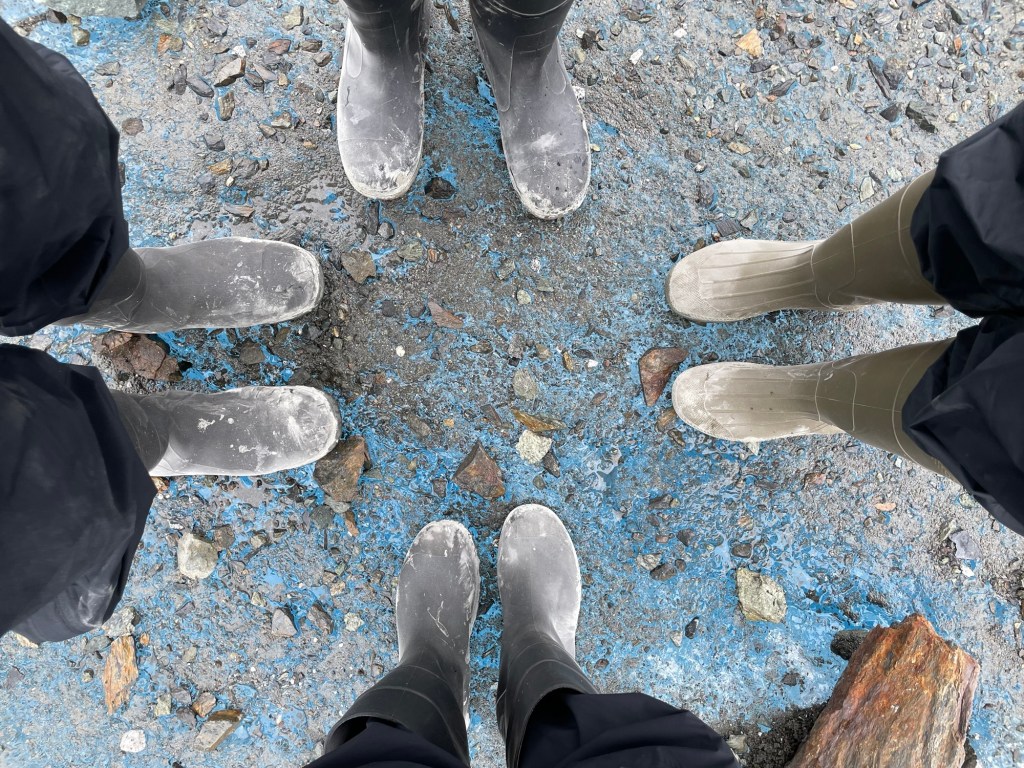
Leaving Margerie behind us, we sailed back through water littered with floes and bergs she had calved. Our destination was the slightly smaller Reid Glacier a few miles away. Unlike Margerie, Reid no longer reaches the water, which made it much easier to land boats beneath it. Or a boat, to be precise: park rules limited our operation to just one spinning propeller at a time, so passengers going ashore were ferried across one skiff at a time in small groups. Because there are no docks, and the skiff cannot operate in water that is too shallow, wet feet are unavoidable during the landing process. The solution adopted by our cruise operators is to issue every passenger a pair of rubber boots, which we are encouraged to wear at all times for shore excursions.
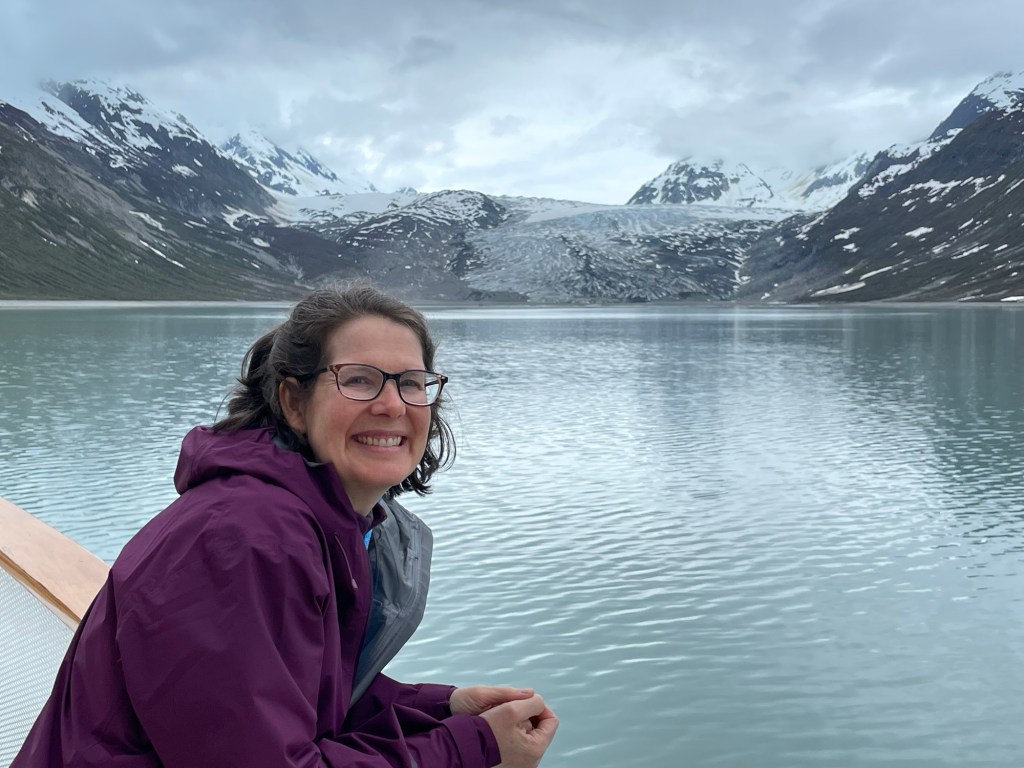
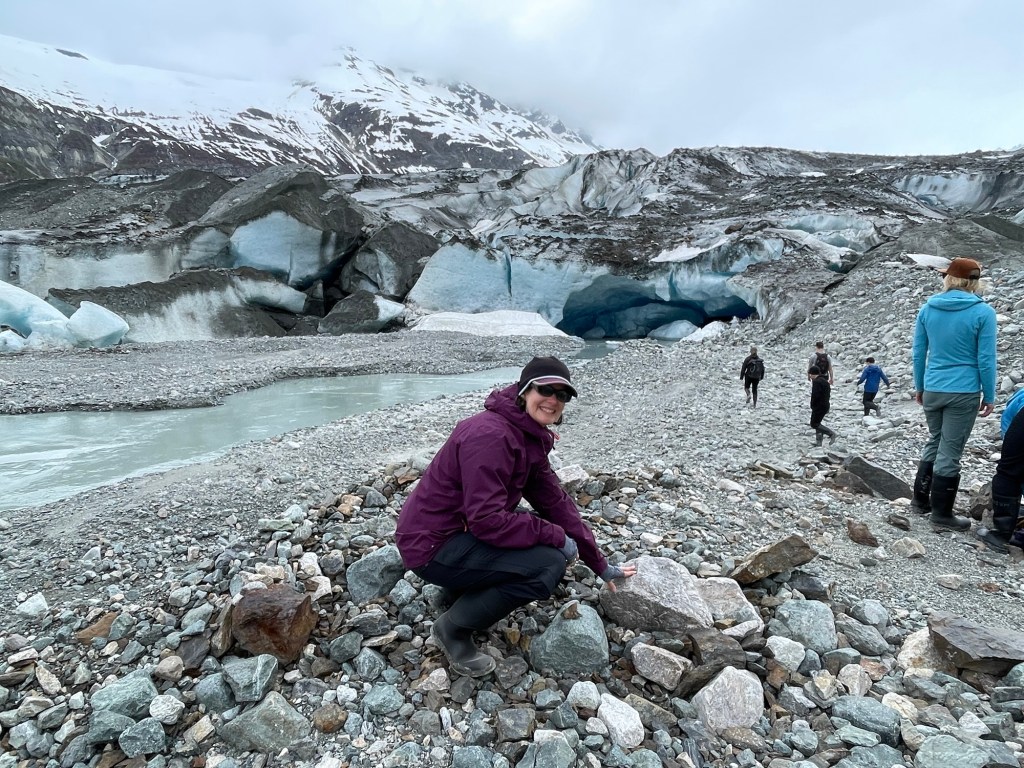
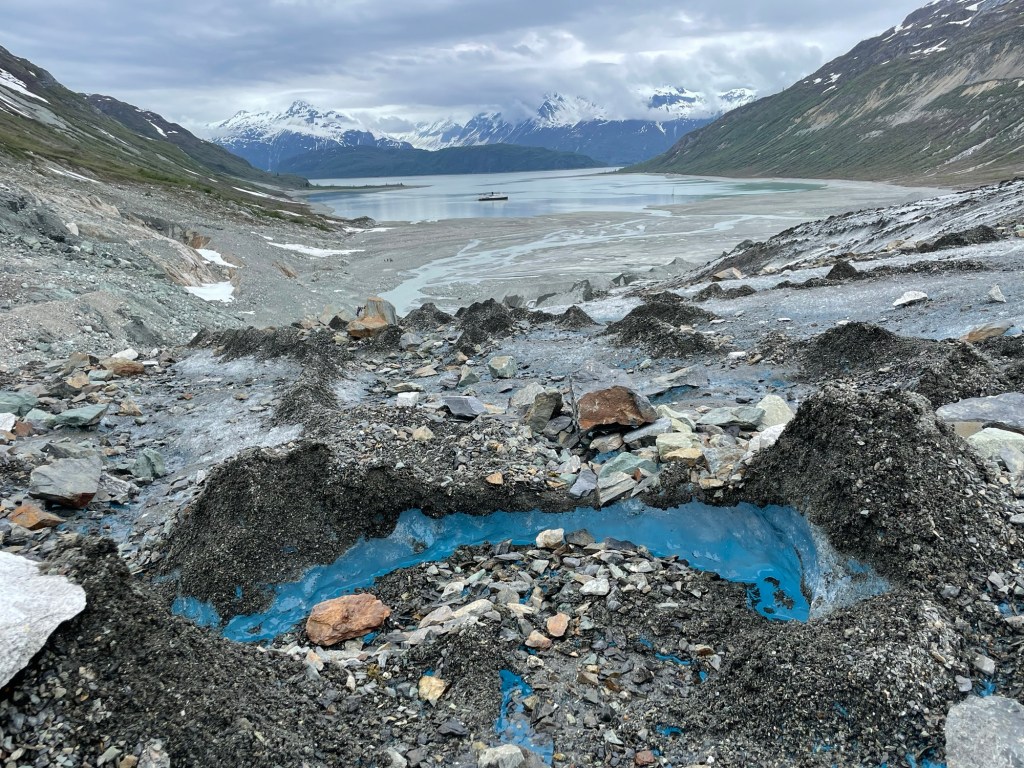
Of the several afternoon activity options, we had chosen the Ridge Walk, which took us over uneven and rocky terrain up the lateral moraine of the glacier. When we had reached a sufficient height, our guide led us onto the glacier itself after a strict caution to follow her path closely lest we fall into a hidden crevasse. Of course we were all still wearing our rubber boots as we did so! You might think that rubber boots on an icy glacier would be slippery, but in fact the boots gripped quite well — aided no doubt by the many rocks embedded in the surface. These rocks were spaced out sufficiently that one could see the eerie blue of the glacial ice glowing between them, like divine grout in an otherworldly mosaic.
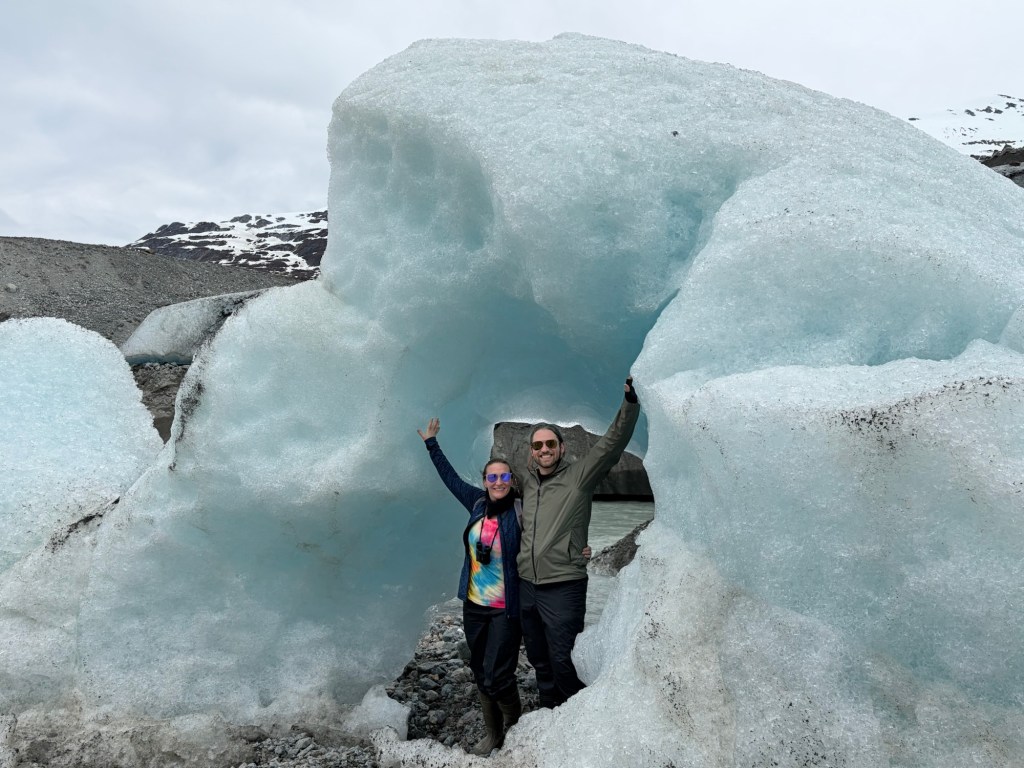
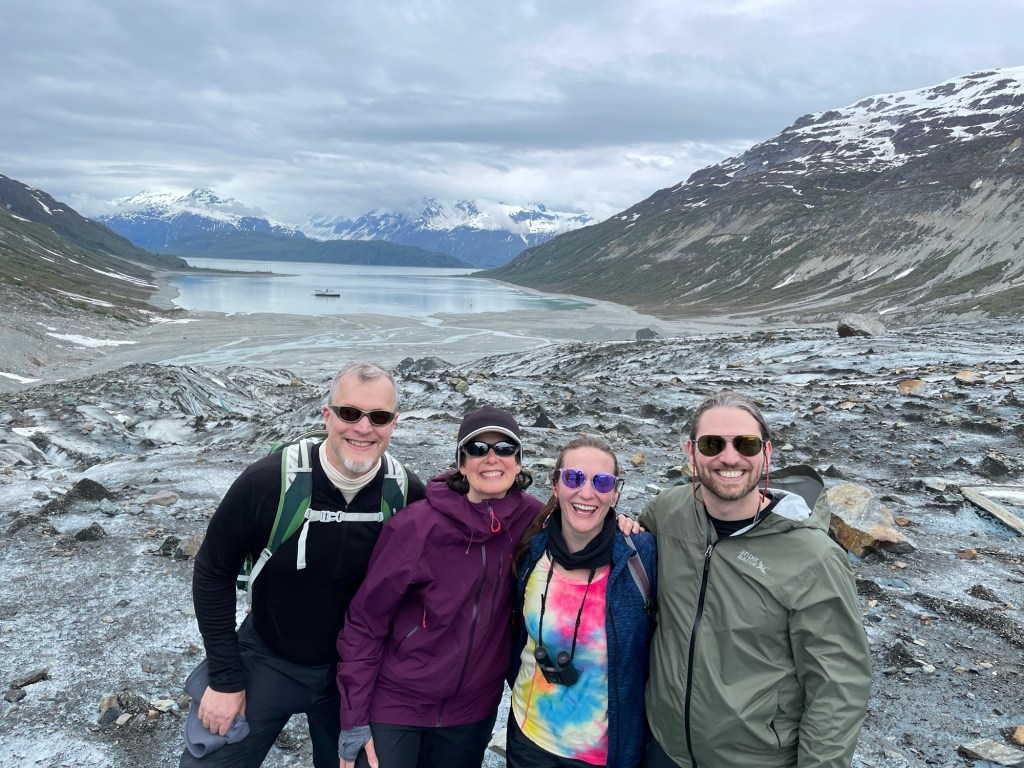
Looking out from atop the glacier’s back, we had sweeping views of the inlet below and our ship lying at anchor. The Wilderness Legacy was built in 1984 and served for a time on the east coast before somehow finding her way to southeast Alaska. Our complement of 76 passengers doesn’t quite fill to her capacity of 86.
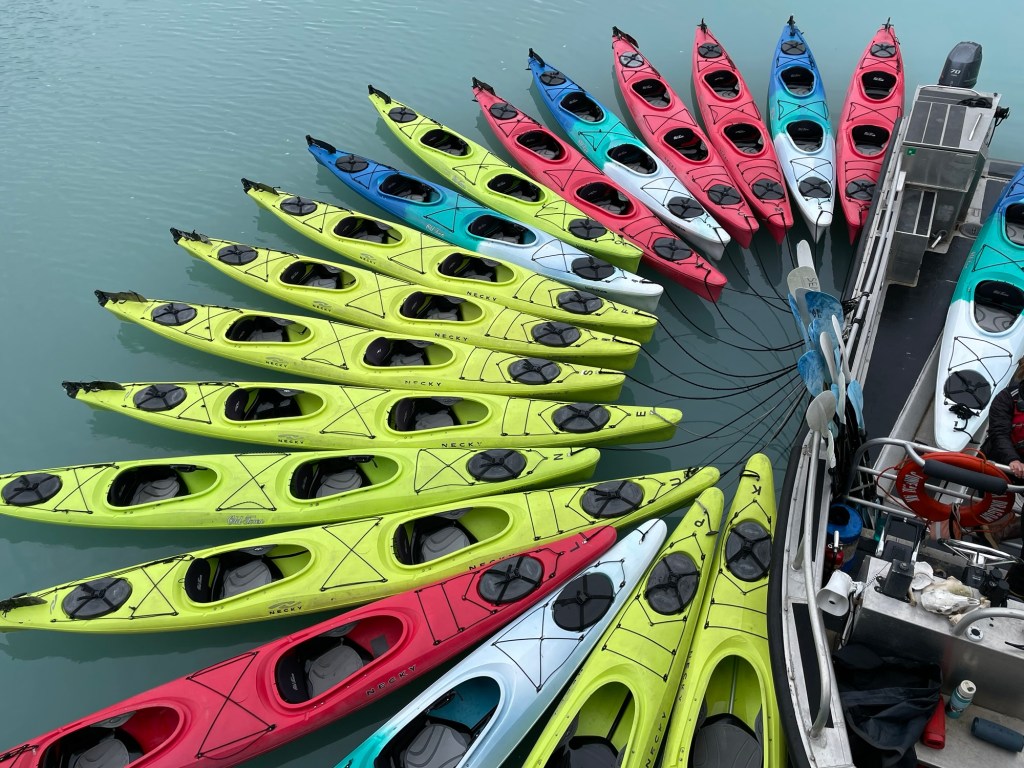
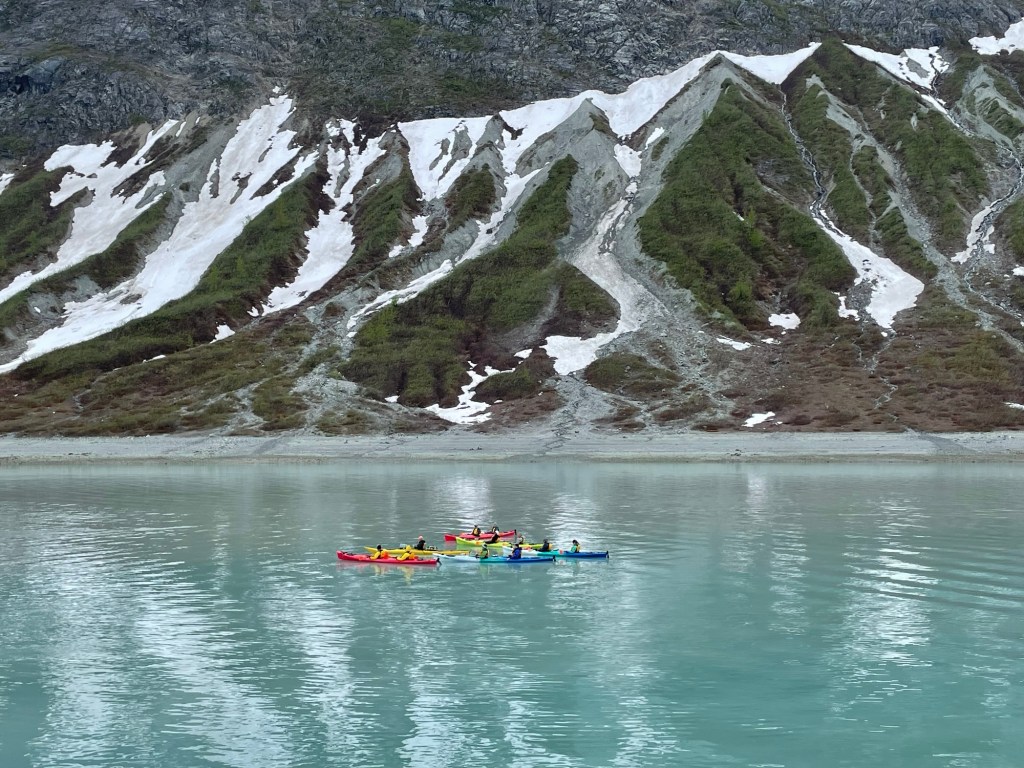
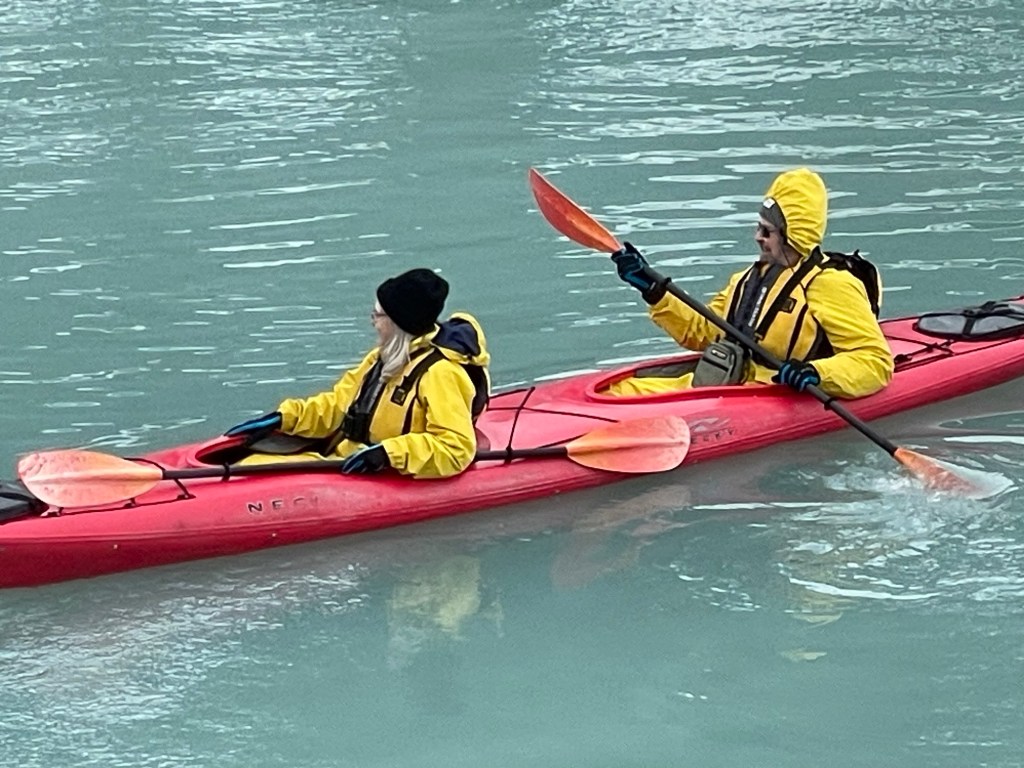
Because the Wilderness Legacy wasn’t exactly designed for adventure touring, its owners had to be creative in outfitting her for such work. Throughout our voyage we are tailed by a small tender, named the Sea Dragon (because it is dragged behind us through the sea — get it?). The Sea Dragon houses all the kayaks and also doubles as a launch platform. When deployed in the water the kayaks make a colorful array. A number of passengers had chosen kayaking for their activity, and could be seen practicing their moves in the water below.
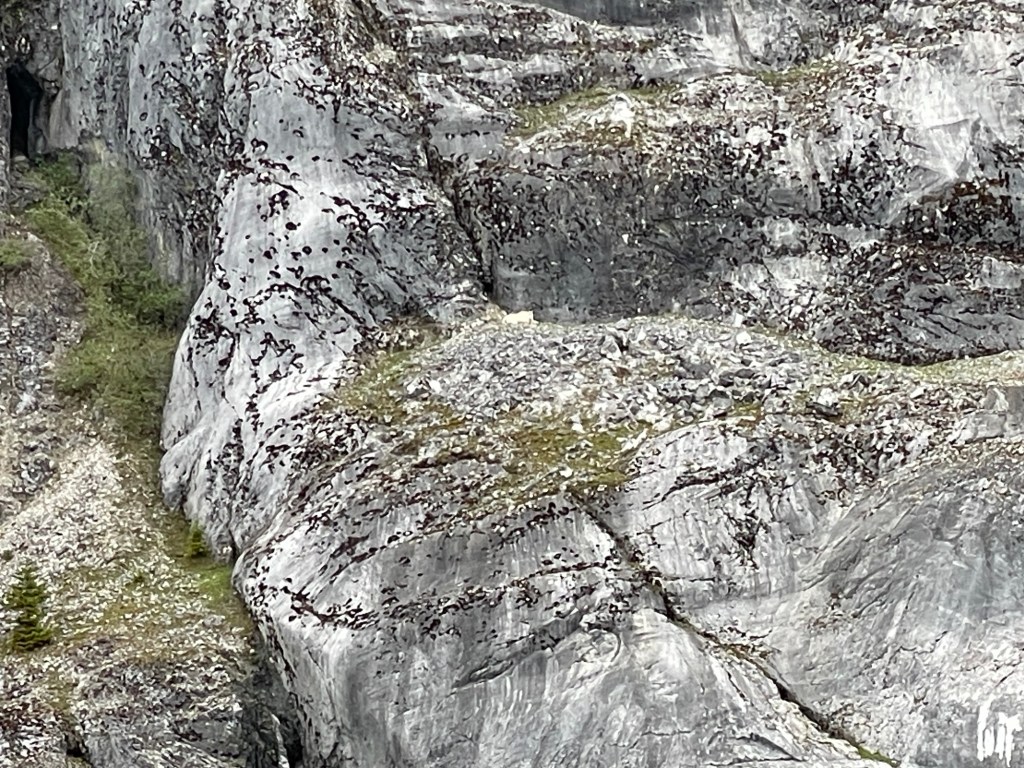
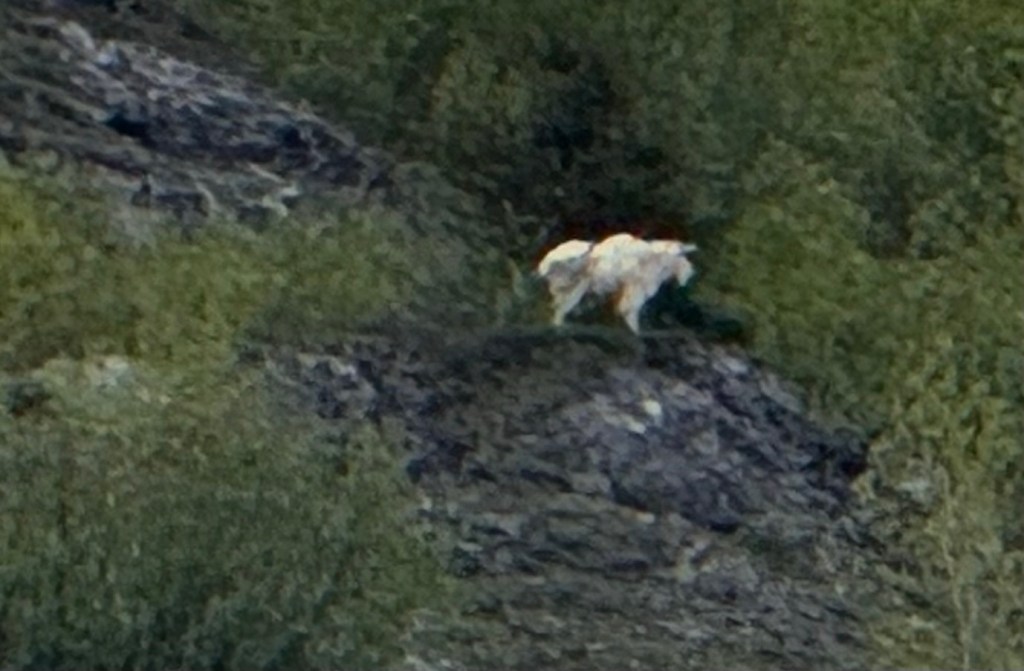
We all returned to the ship in time to sample the cookie of the day as the crew weighed anchor and prepared to sail again. Our dinner later that evening was delayed as we passed by the so-called Gloomy Knob — which was anything but in our case. This particular peak stands out as the home of a herd of mountain goats, who could be seen dotting the rocky cliff face as blobs of furry white here and there amid the gray stone. (Nick could not help observing how much the landscape brought to mind certain biomes in the game Minecraft, with steep rocky headlands topped with sparse trees and small white animals roaming the slopes.) The last to be seen was a mother and child pair. Our guide guessed that the kid was no more than two weeks old, and it sprang and gamboled around its mother as we watched. Plenty good reason to be late to dinner!
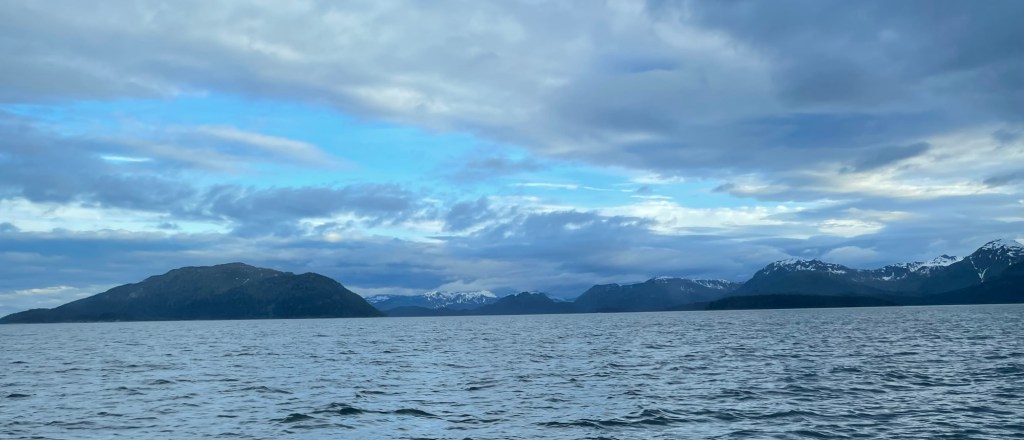
The day ended with an auspicious patch of blue sky as we sailed out the mouth of Glacier Bay. What a special, beautiful place!


WOW. What a great adventure.