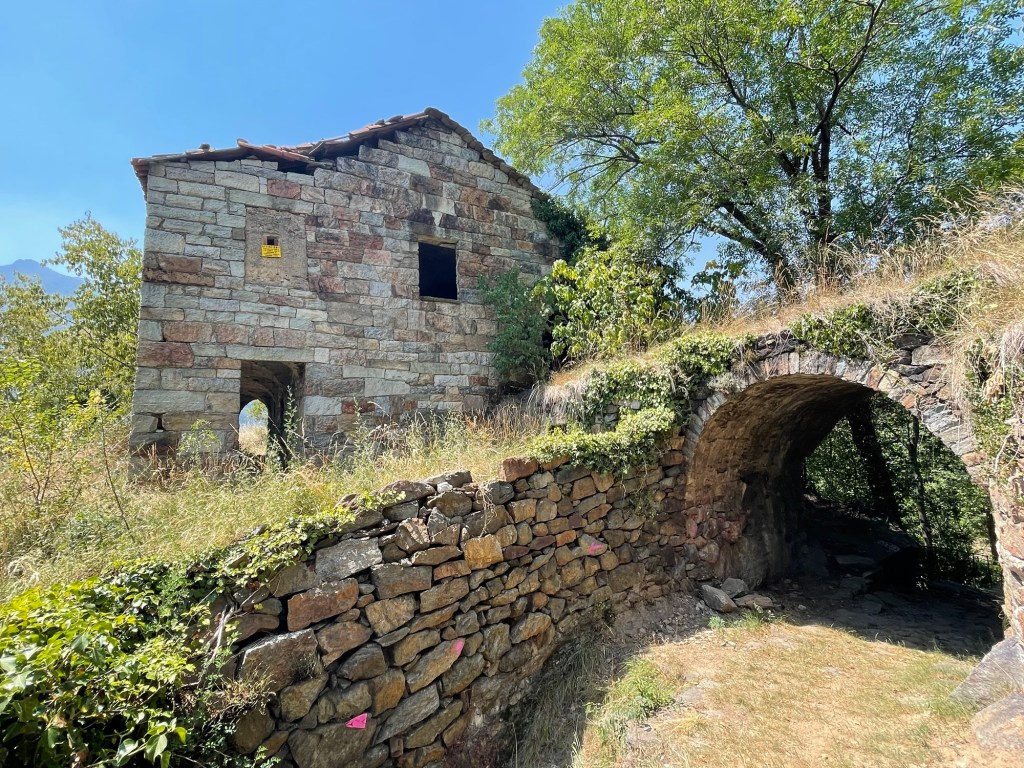
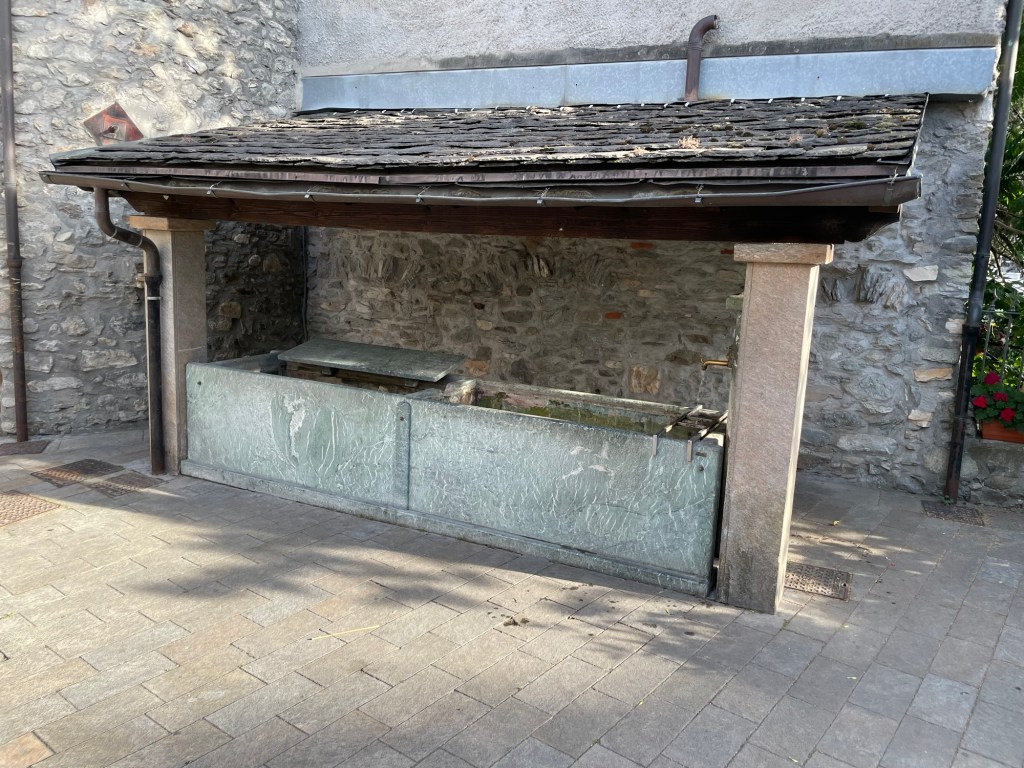
Today our day was once again split between learning new madrigals and an afternoon/evening of tourism. At lunch Susannah opted (despite the heat) to do a little more exploration of the Via Francigena in the vicinity of our castle, and came across some attractive stone structures during the walk.
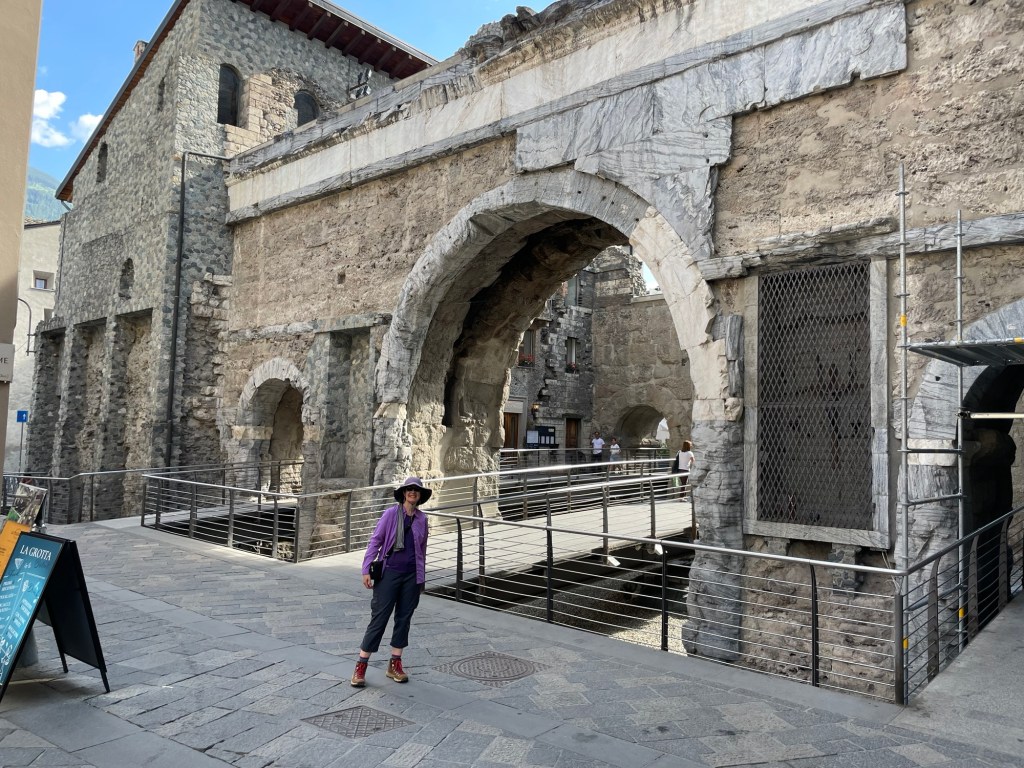
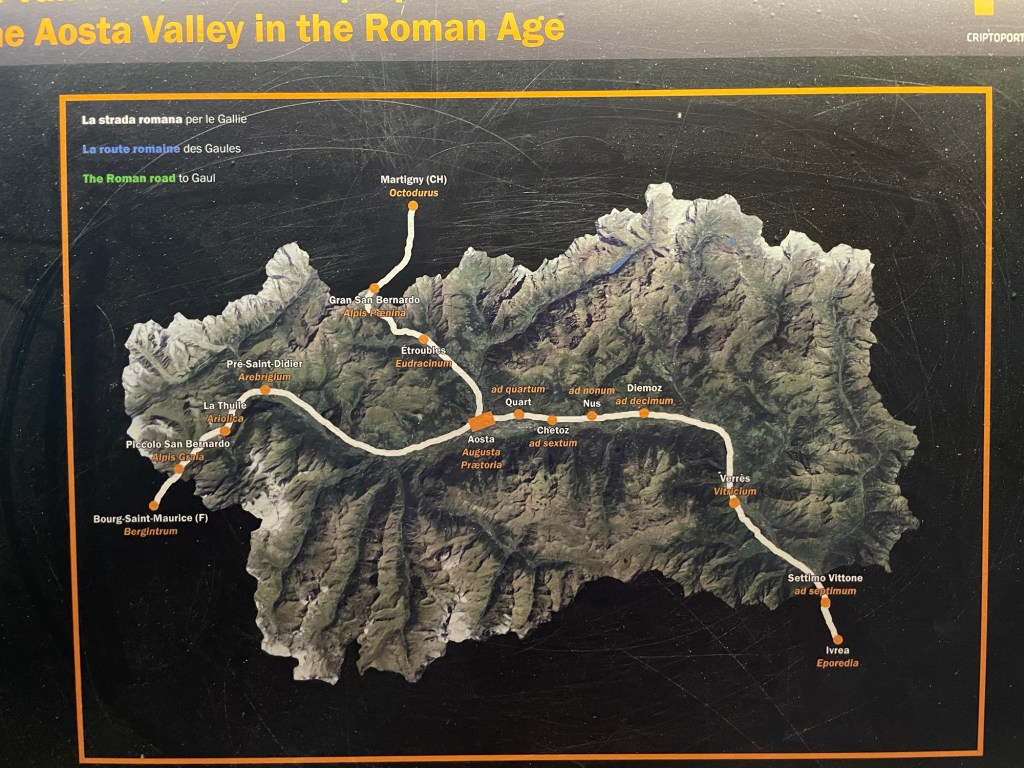
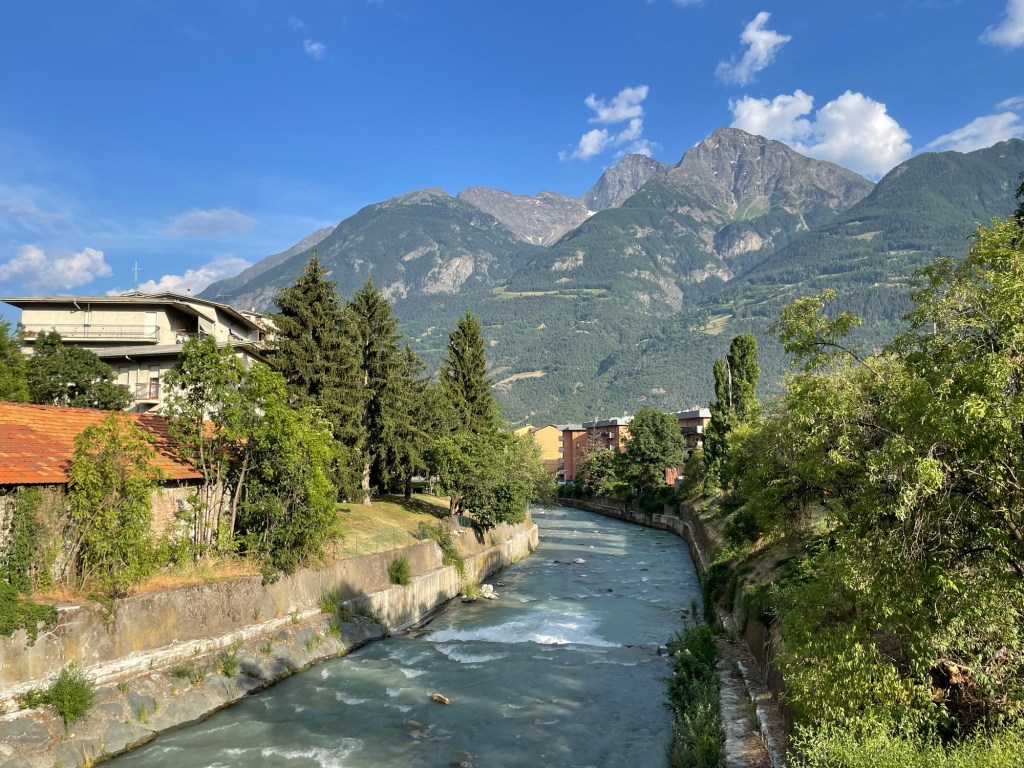
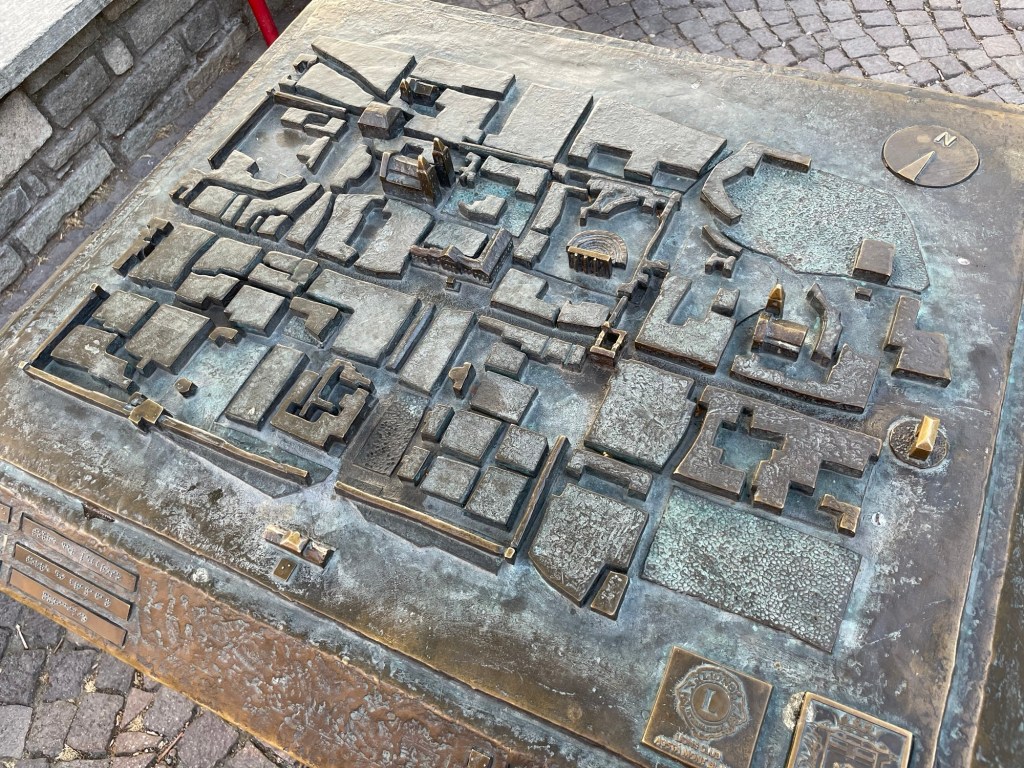
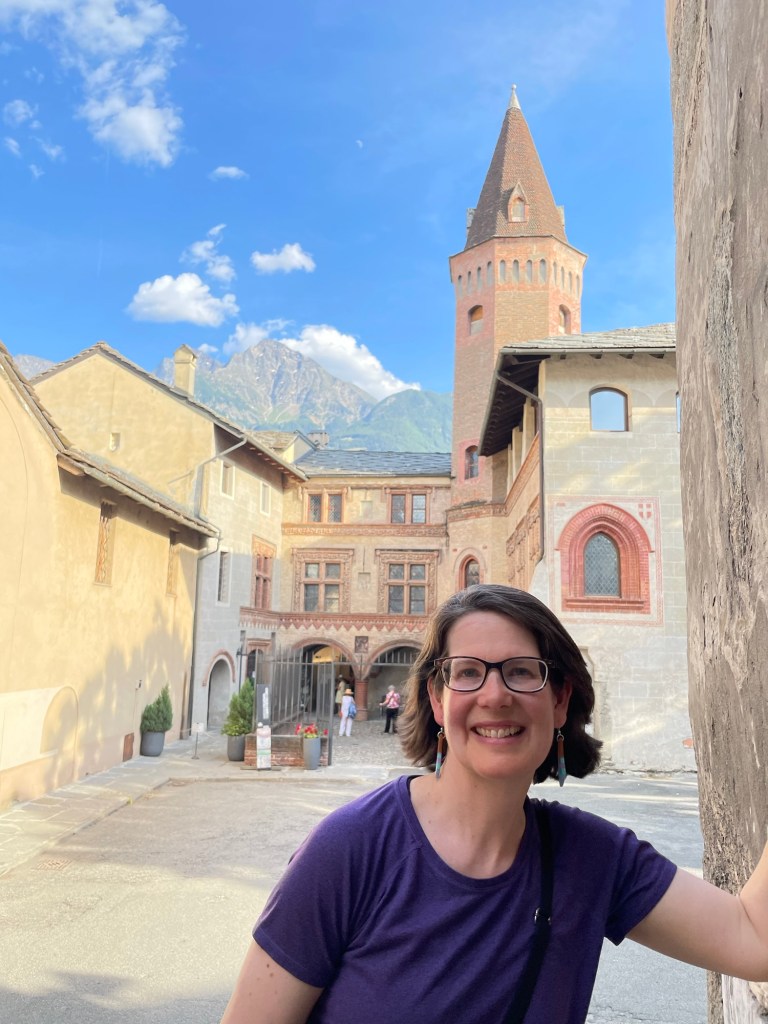
In the early afternoon we all left piled into vehicles for the hour+ drive up the valley to Aosta. This is the capital city of the region, and sits strategically at the junction of three mountain passes — one way leads to Italy, one to France, and the last into Switzerland. The city plan was laid out by the Romans in a big rectangle, with roads running east to west and north to south. The biggest trade routes over the passes meet in the middle of the city. Although much of the Roman remains are not in great shape, a part of the ancient theater still stands, as do many of the walls and the most important of the four ancient city gates.
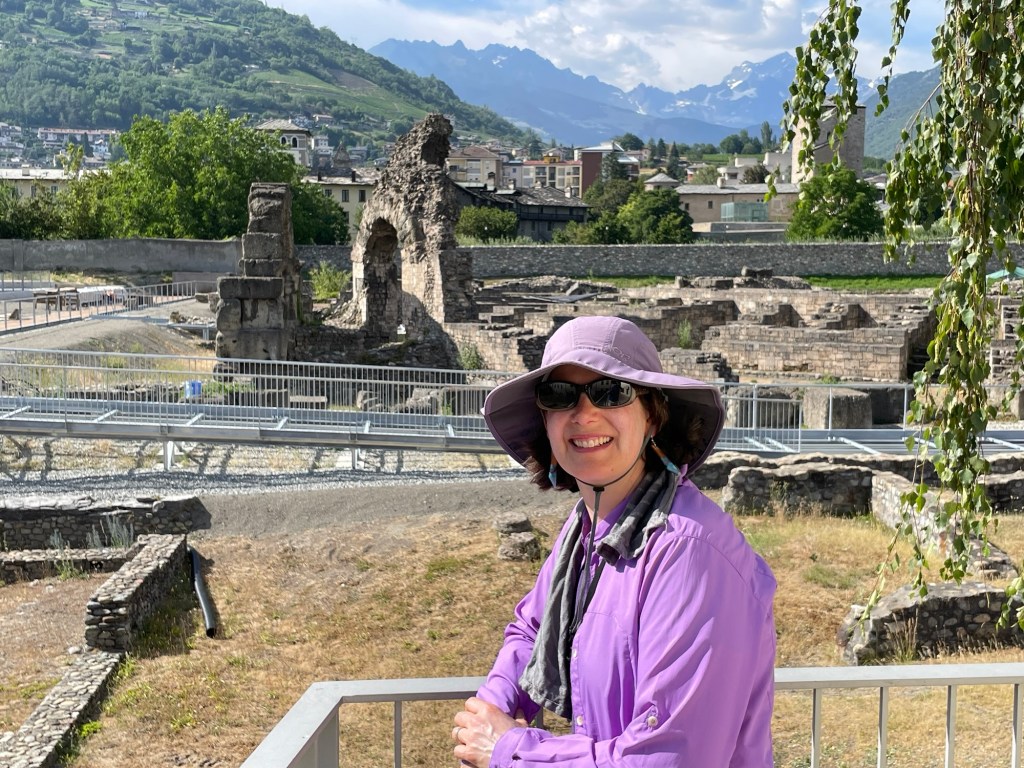
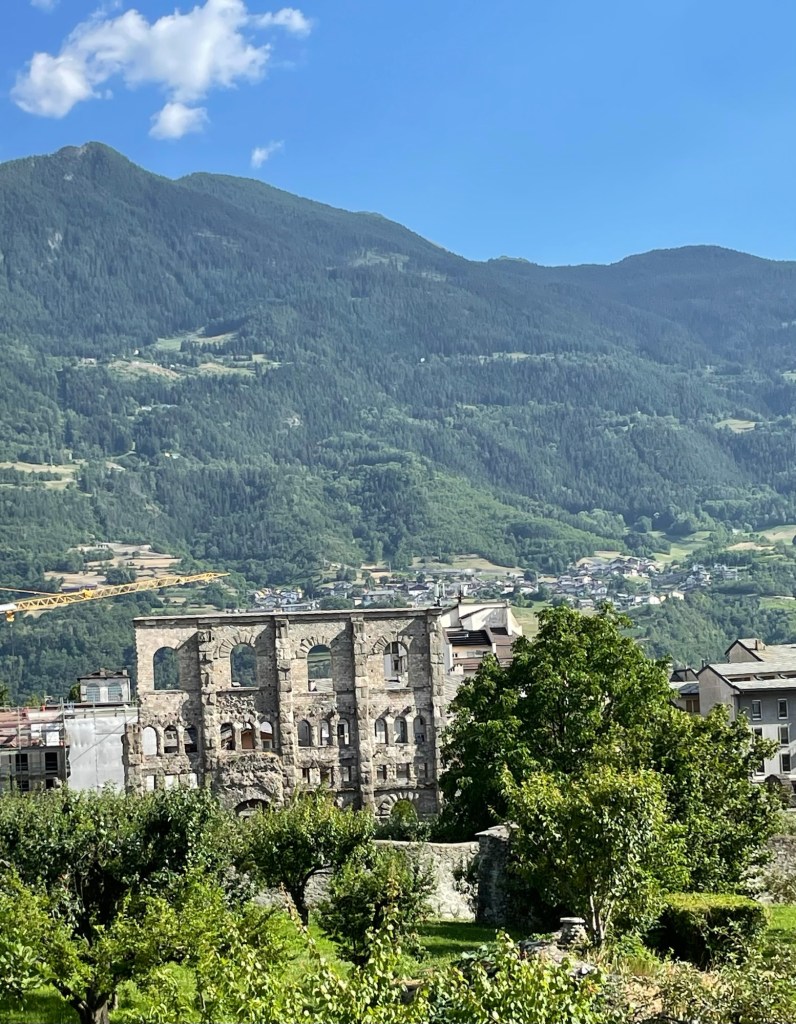
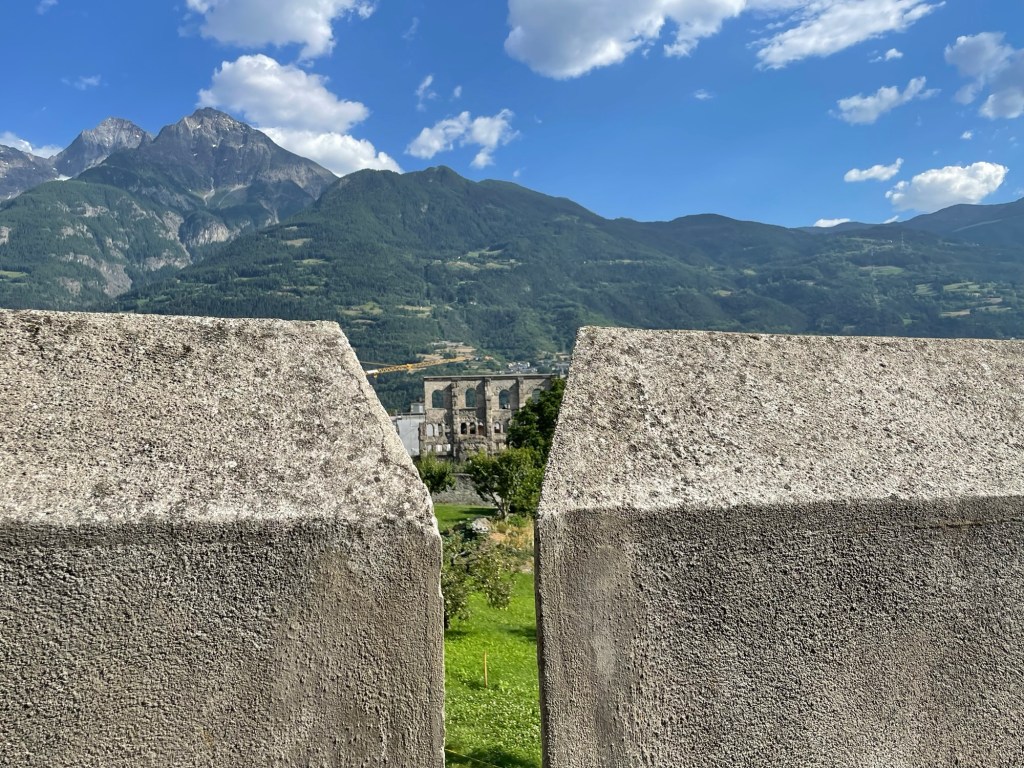
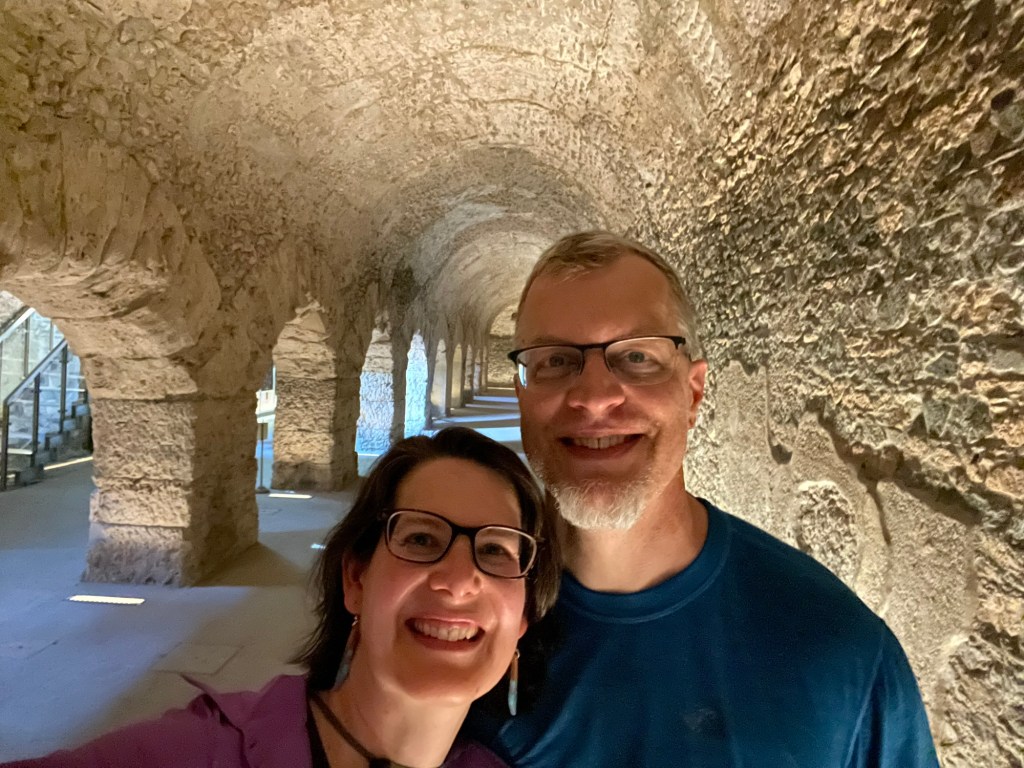
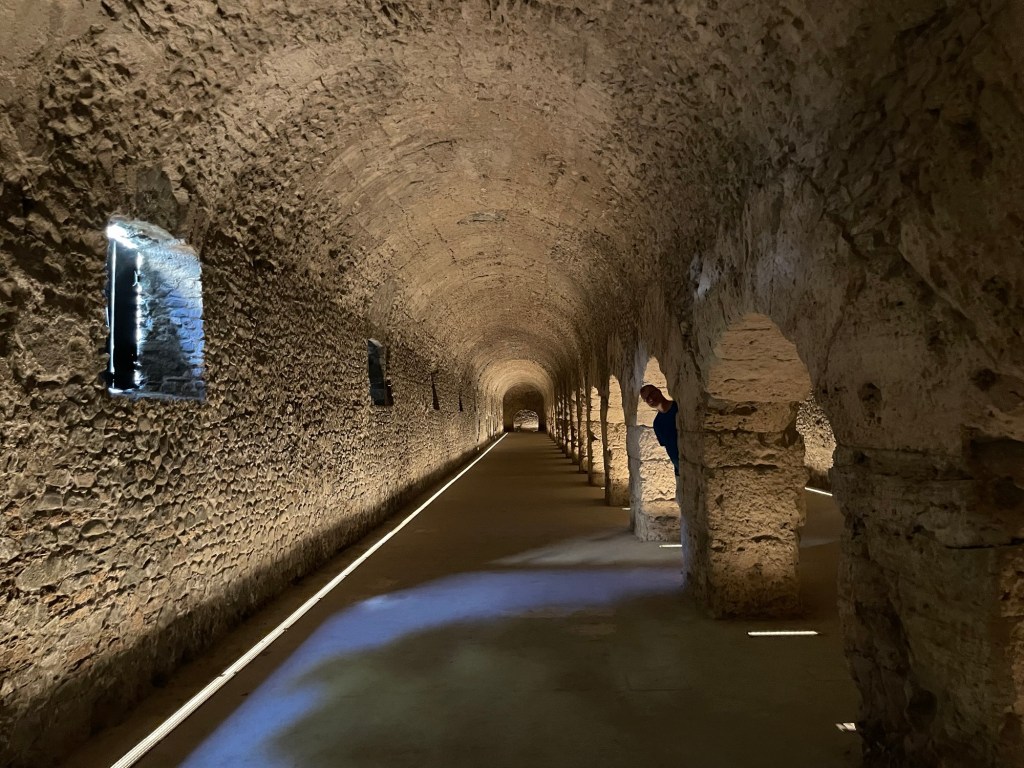
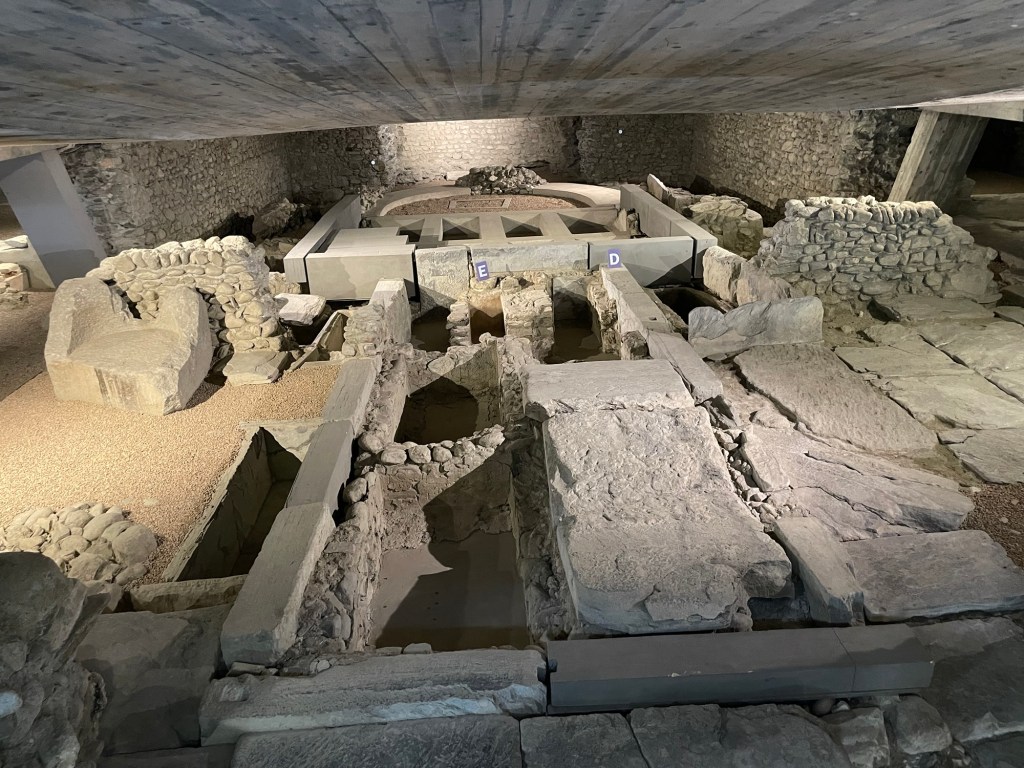
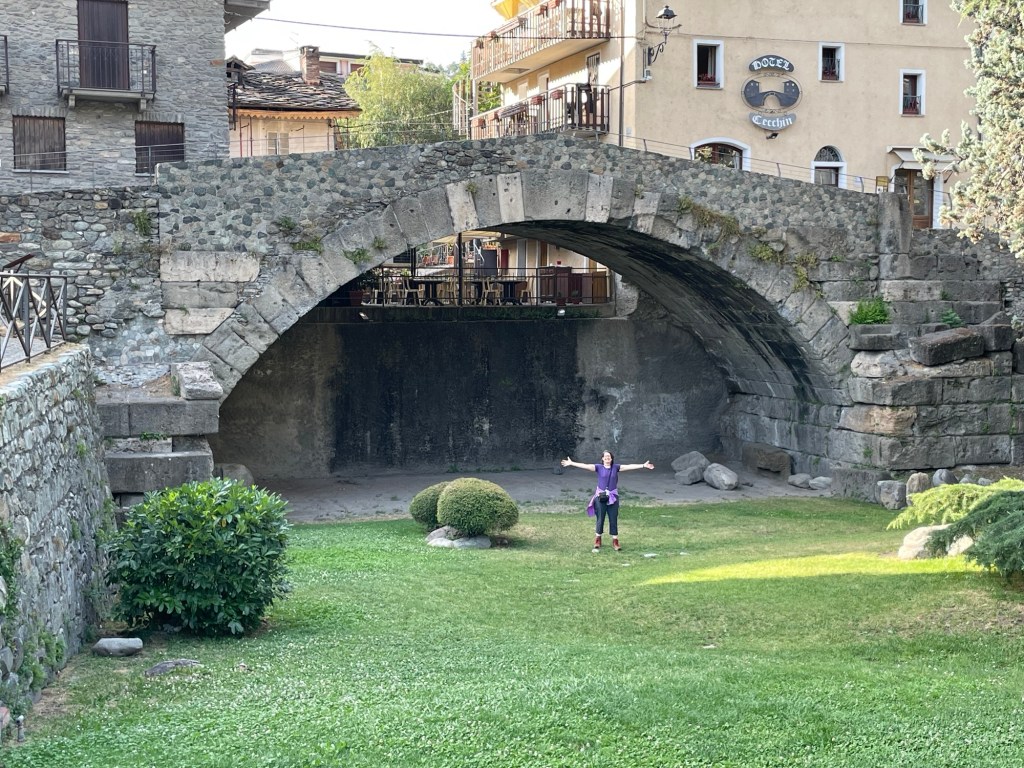
Additional ruins lie hidden below the surface if you know where to look. About two centuries ago, an archeologist uncovered an extensive underground arcade, still intact under the buildings above it. This turned out to be part of the old Roman forum surrounding the square that held the two temples of the holy precinct. In another sector of the city (conveniently accessible on the same ticket) are the excavated foundations of the first Christian basilica built in the city around the 4th century. Perhaps our favorite Roman remain actually predates the city itself: a bridge built more than two millenia ago that once spanned the river Buthier. It may have survived this long in part because the river shifted its channel a few centuries in, so that it now spans a dry channel.
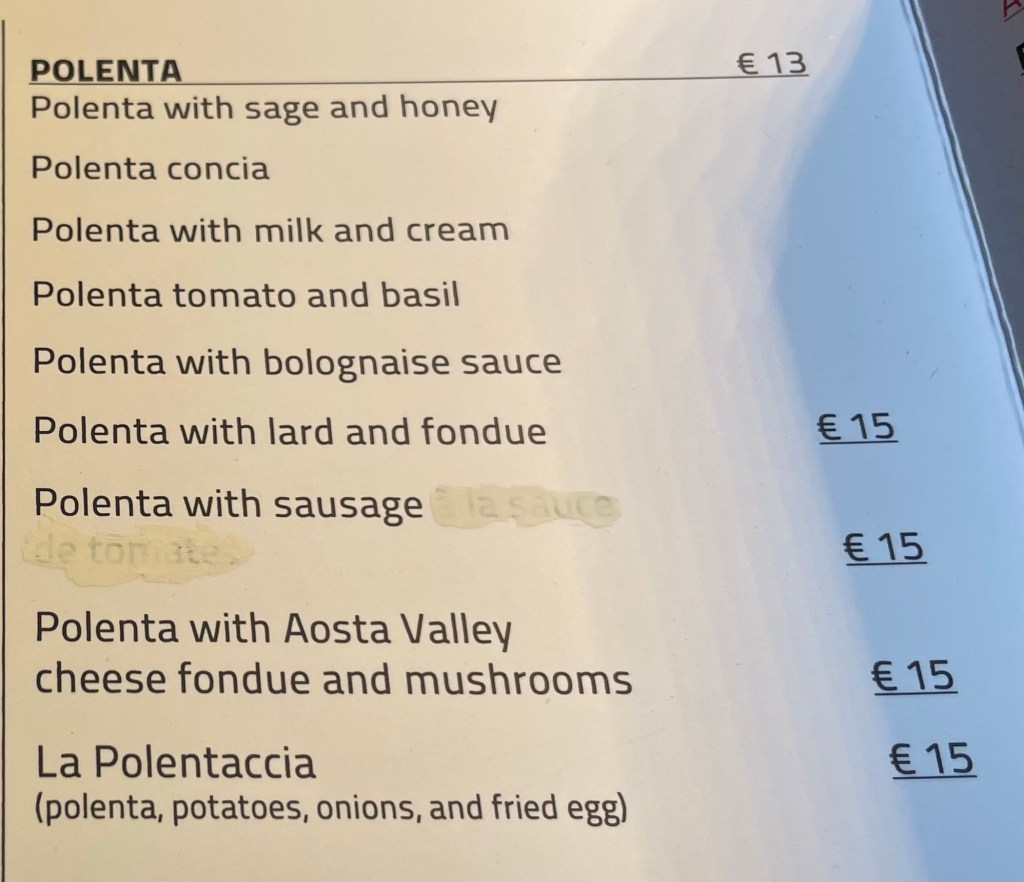
We ate at a restaurant that specialized in local dishes, which had a whole section of polenta, go figure! We each ordered a different selection (sage&honey and La Polentaccia) – both very different and very delicious.
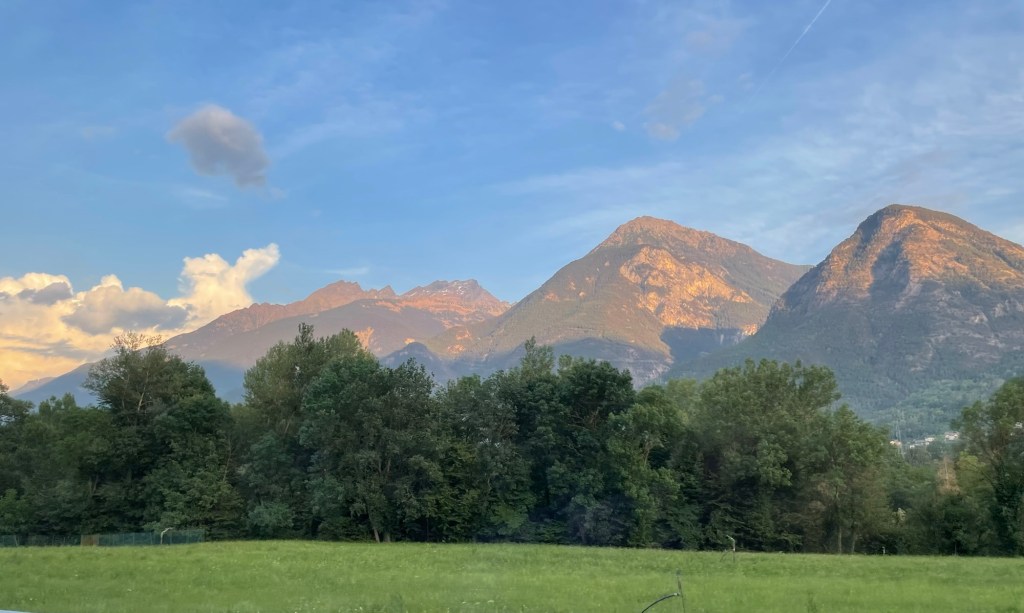
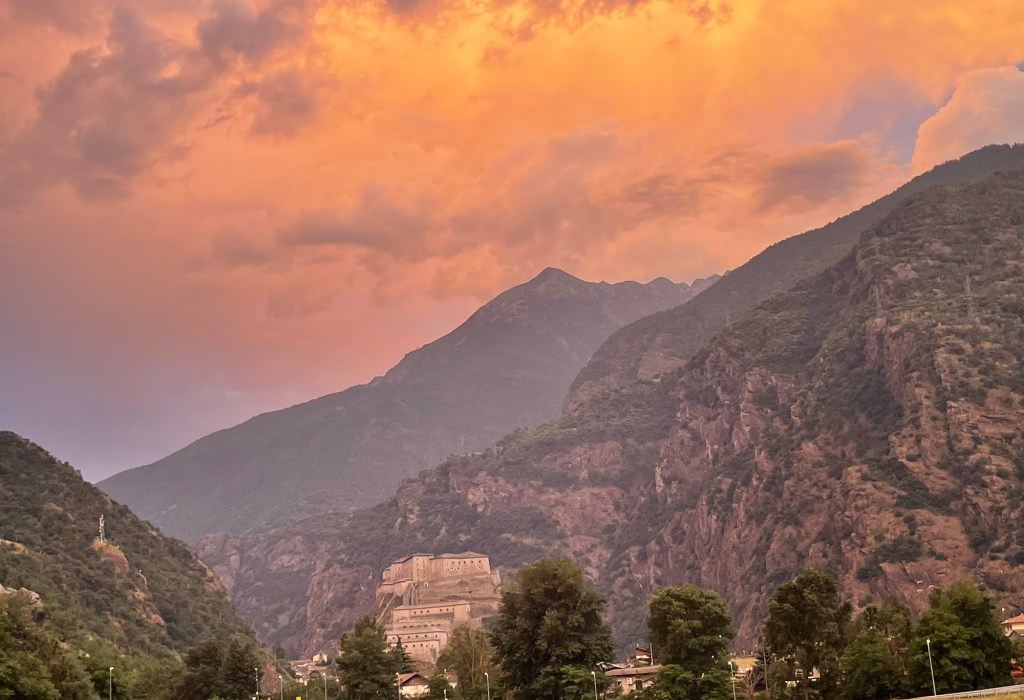
On our way home, we opted for the scenic highway (despite both Google Maps and all the traffic signs wanting us to take the faster Autoroute with tolls), which afforded delightful views of the surrounding mountains and the towns along the valley. We also passed by Bard Fortress as the sunset was in full bloom.
 Howes' Doings
The picture of the stone washing station you passed reminded me of a special feature down in the dungeon of the Palazzone where we stayed with you kids when we were following Dad to his math conference in Cortona. The dungeon there had a stream running through it- I figured they arranged it like that cleverly, to have a water supply in case of a prolonged seige. Anyway, it was practically set up, to provide a basin for washing, and next to that there was a stone rubbing board with ridges like the one you saw. I used it for our clothes, just to have the experience – a home laundry in the darkest dungeon.
I hadn’t remembered that story until you brought it up. Thank you for sharing it!