Today was an all singing day, with no planned tour. The songs began at breakfast: it was the birthday of one of our group members, and the rendition of Happy Birthday spontaneously broke into glorious four-part harmony. Then people sang several other birthday songs, including at least one we had never heard before.
Those of you who are not particularly musical may wonder what it is like to practice madrigals in an Italian castle (or anywhere else, for that matter). The music we are learning comes from the 14th to the 17th centuries, mostly by Italian composers but also a few others. Some of it is achingly beautiful, even when performed by less-than-perfect amateurs. Being part of the production gives one a unique perspective: one is closest to one’s own part, yet also aware of all the other singing. When one comes to a particularly beautiful figure there is a rich relish in creating a special moment.
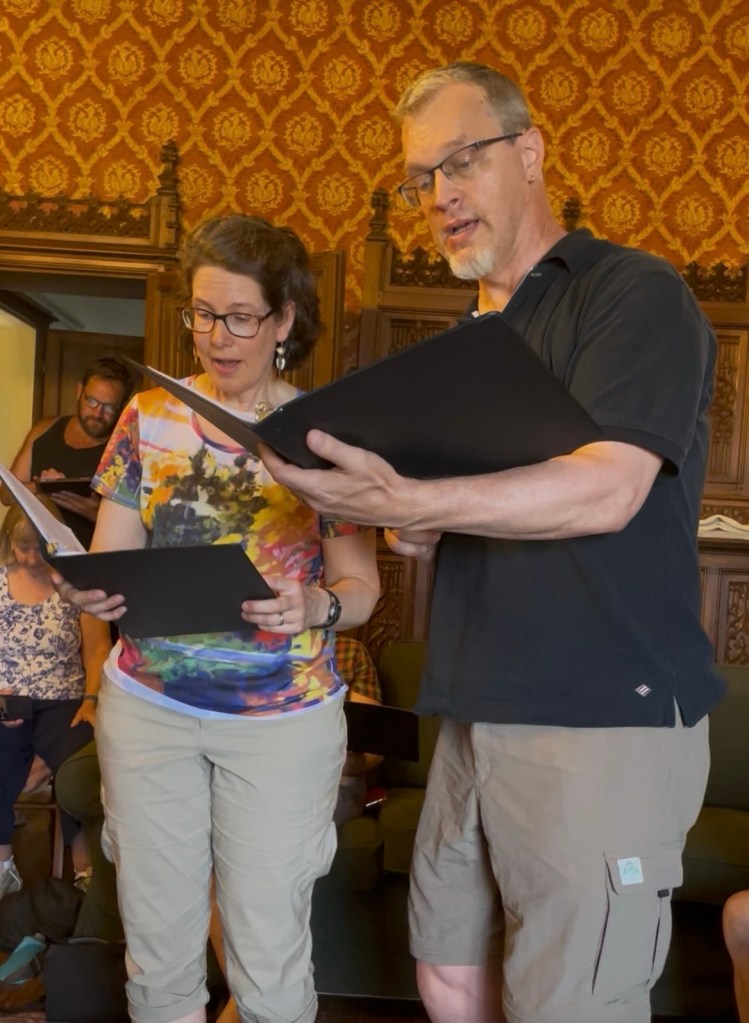
Our instructors have selected a diverse collection of songs, including some of the great stars (Monteverde, for example), and also including several women composers who are less well known (Vittoria Aliotti and Barbara Strozzi). In their time, the women faced a struggle to be recognized, yet their work is some of the most interesting. The music ranges from love songs and odes to spring to gloomy laments and meditations on death — passionate stuff, in other words.
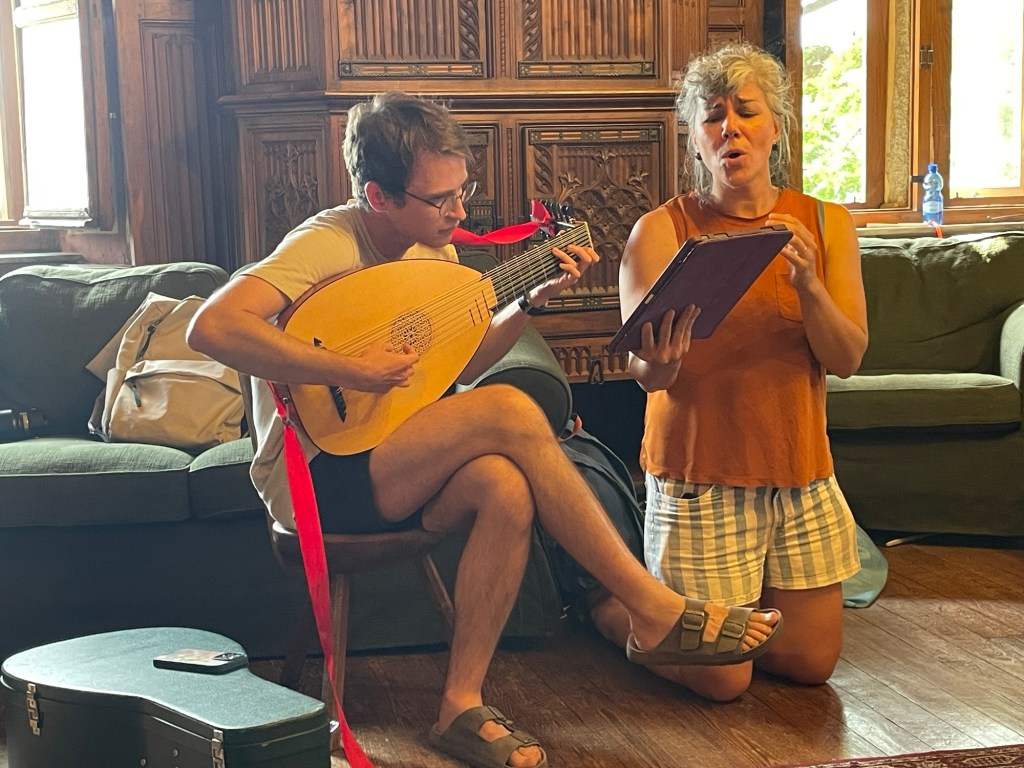
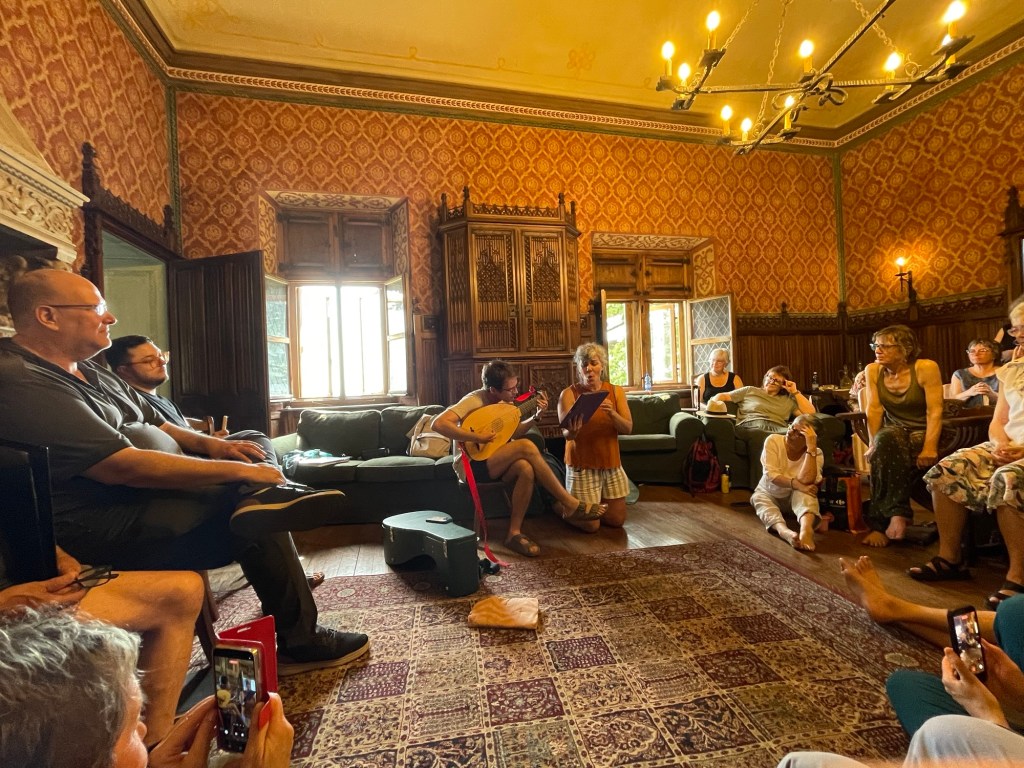
After practicing all morning, in the afternoon we had an unexpected treat in the form of a visiting lutist. He played several songs for us on his own and with accompaniment by one of our teachers, and also played alongside our ensemble singing. He also told us a little bit about the lute and its history, and the complicated systems for notating lute music. (Most of it is written in tablature, but depending on whether you follow the Italian or French tradition the string notation may be right side up or upside down and use either letters or numbers for identification.)
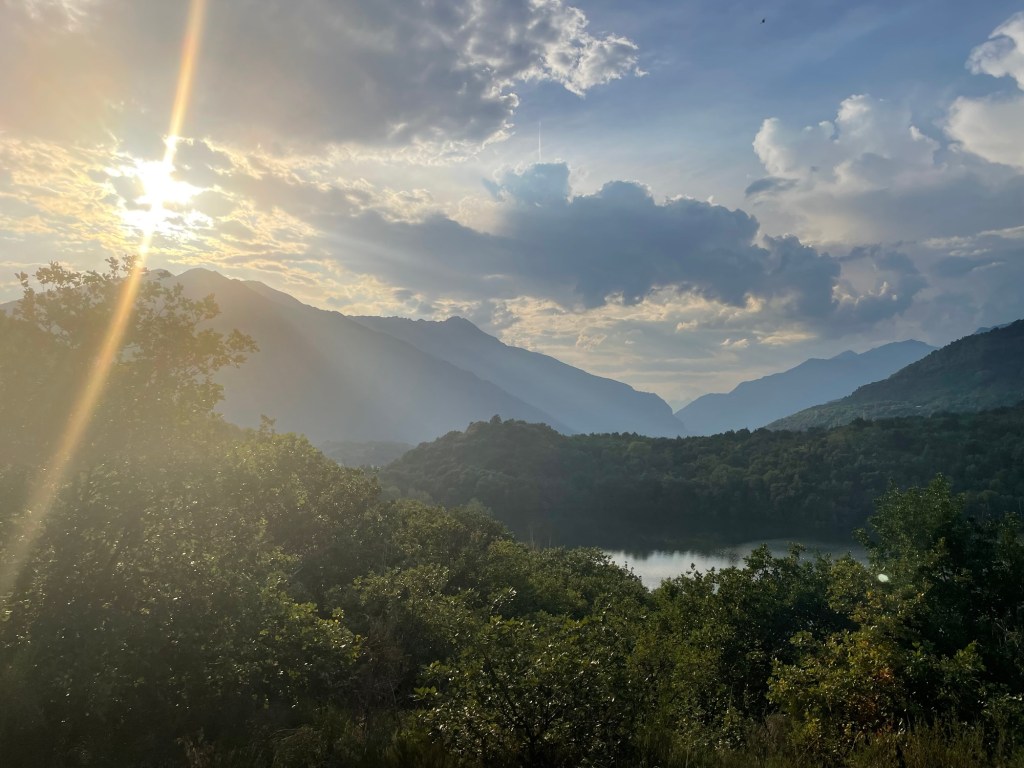
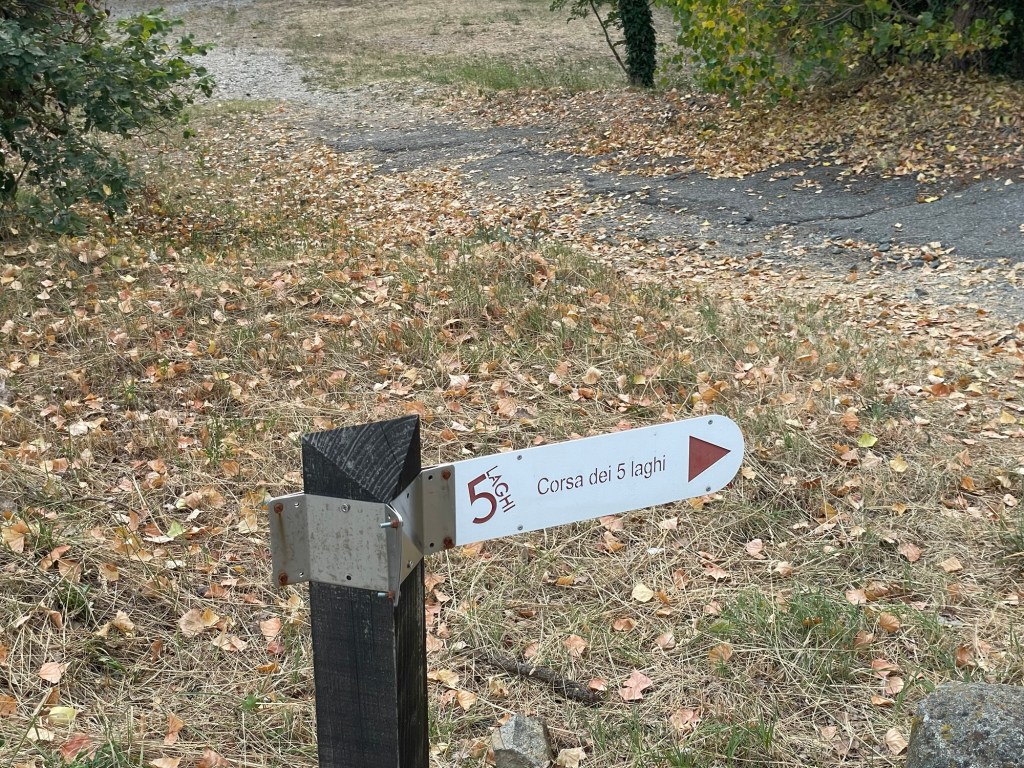
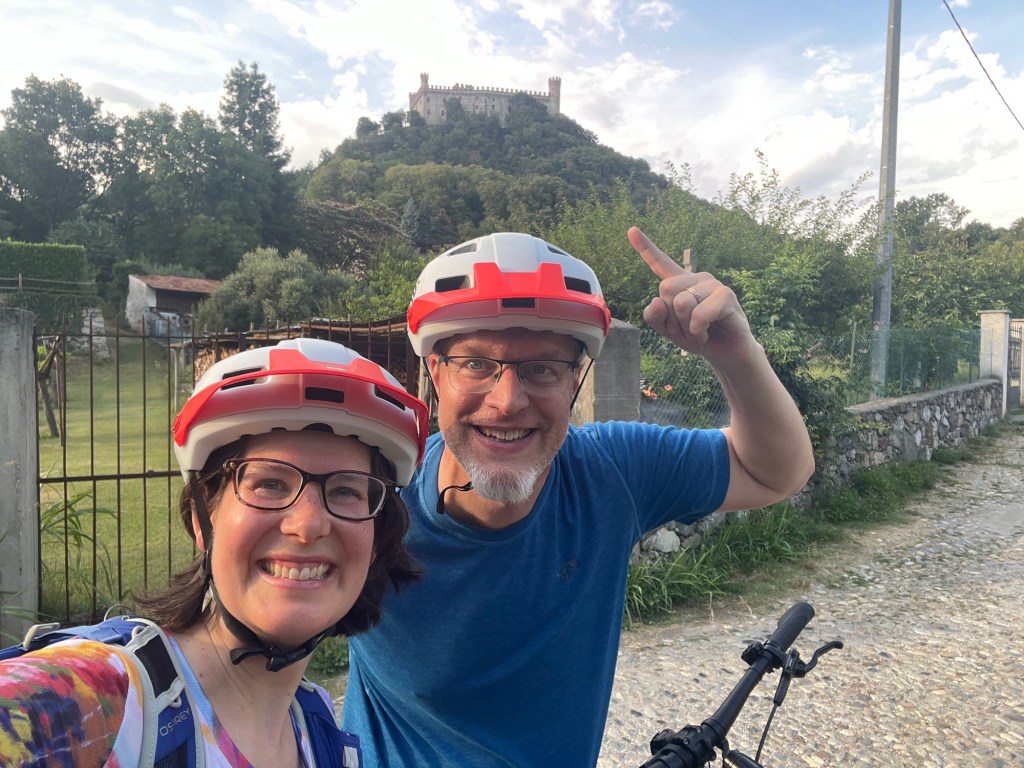
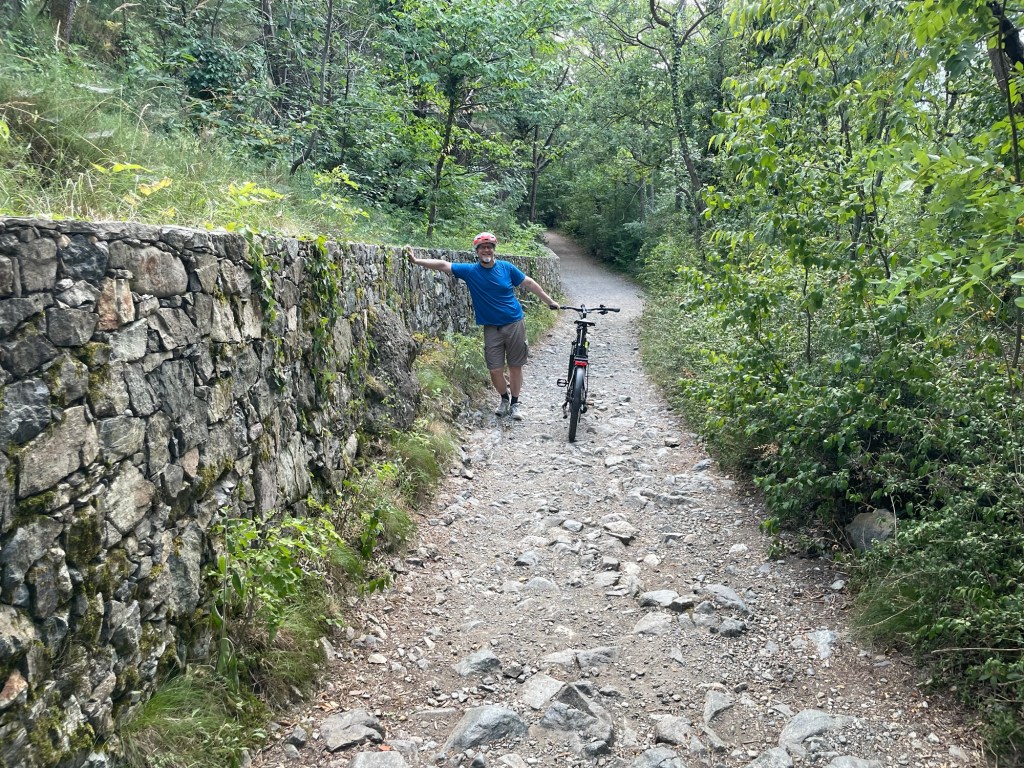
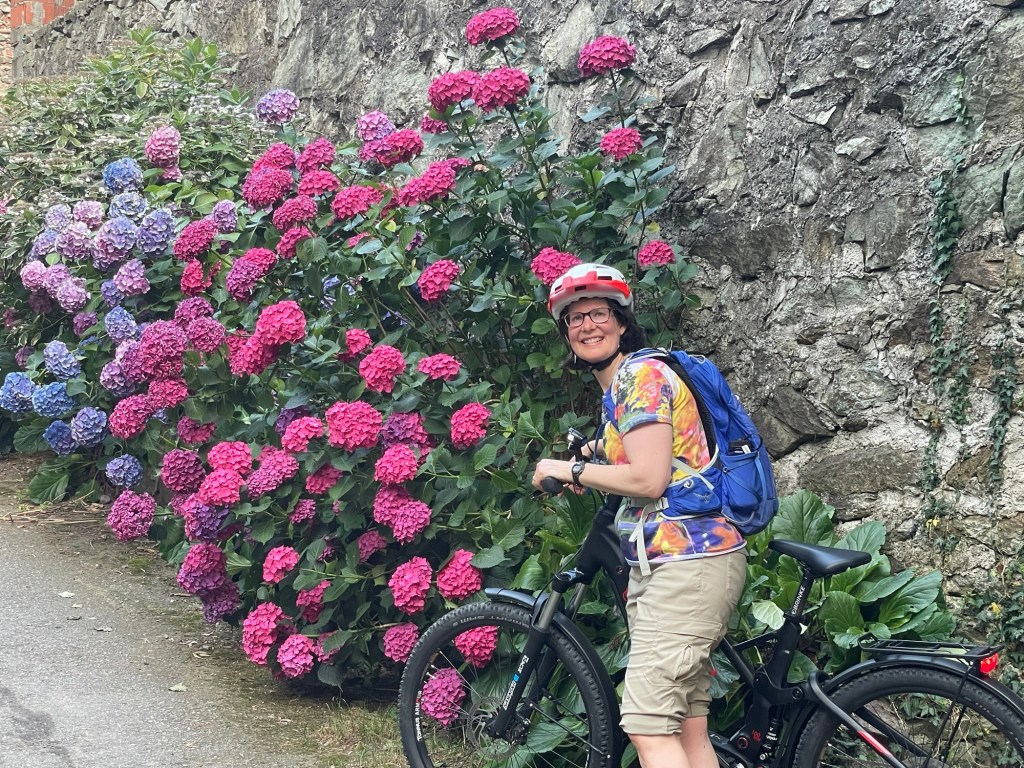
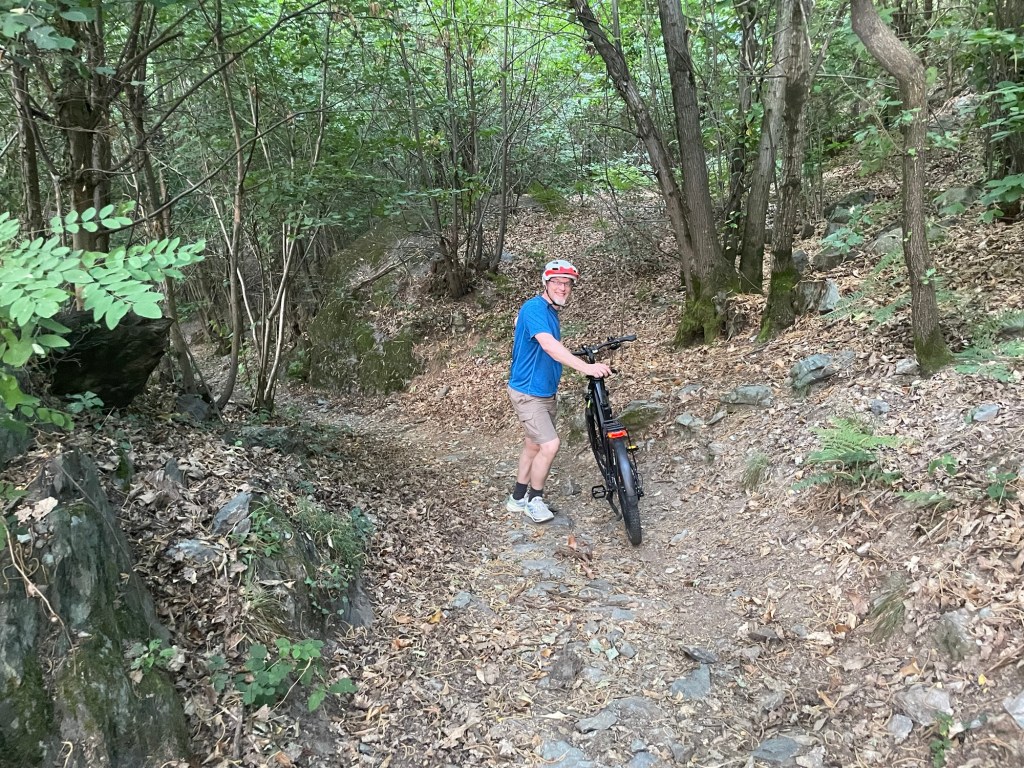
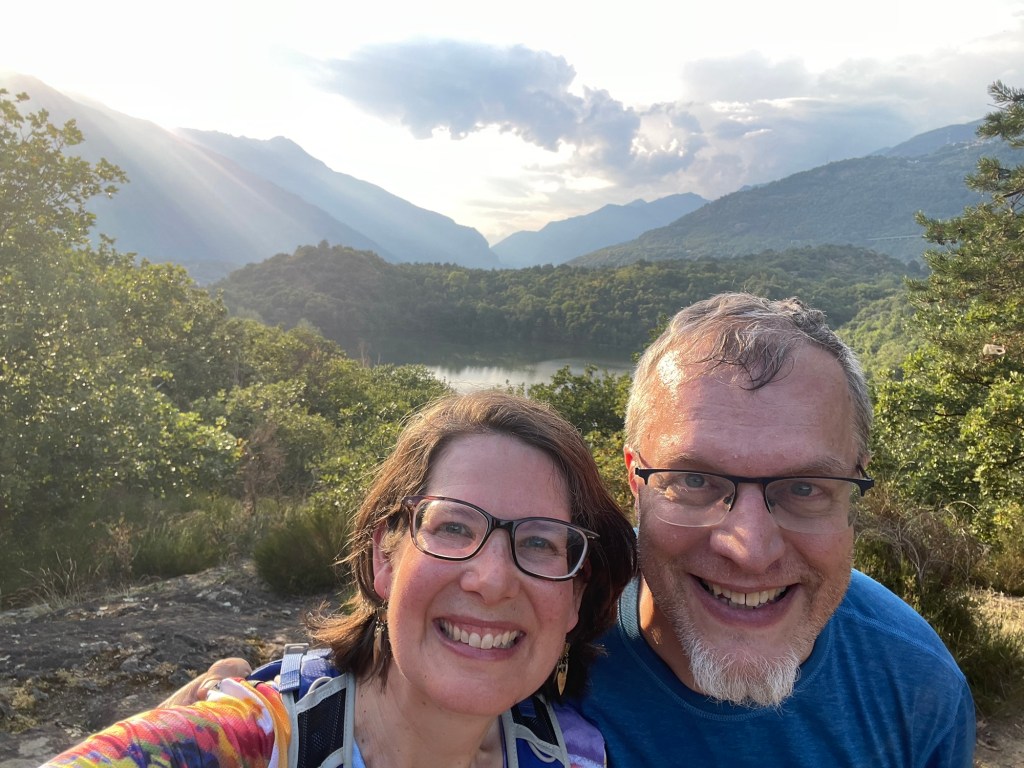
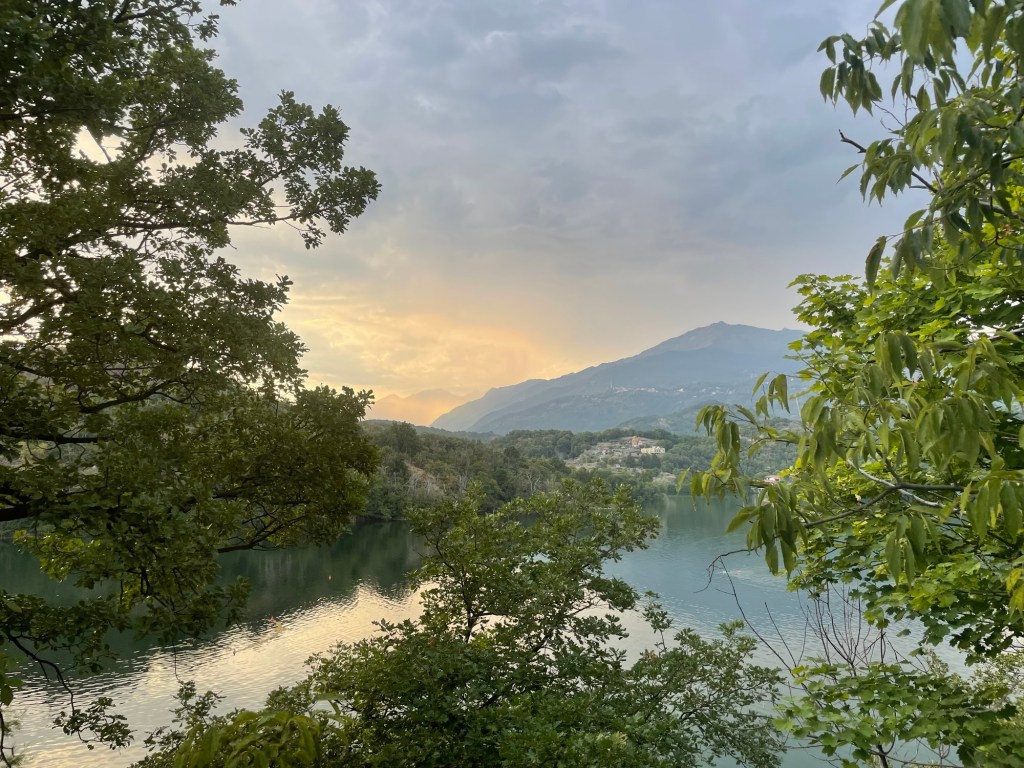
Because there was no organized tour today, we did end the group activities a little earlier than usual. Susannah noted that this left us two or three hours of sunlight at the end of the day, and having been sitting for most of the time we thought it would be nice to get out. The hotel was able to rent us a pair of e-bikes with helmets, and we set off to explore the local “5 Laghi” (five lakes). We had maps showing routes around all the lakes but weren’t quite sure what to expect from the trails. In the end, it turned out that they ranged from paved roads through rocky cobbles down to some areas that seemed little more than hiking trails swarming with mosquitoes. The e-bikes turned out to be a blessing, allowing us to visit much more rugged and distant terrain than would otherwise have been possible. And it was worth it — we discovered a rocky vantage point overlooking the farthest and wildest of the five lakes, with the Valle d’Aoste framed in the background and shafts of sunlight streaming down from above the mountains. Magical stuff!


I wish I could hear your concert!
We’ll see if we can get a recording and, if so, will post a snippet of it! 🙂