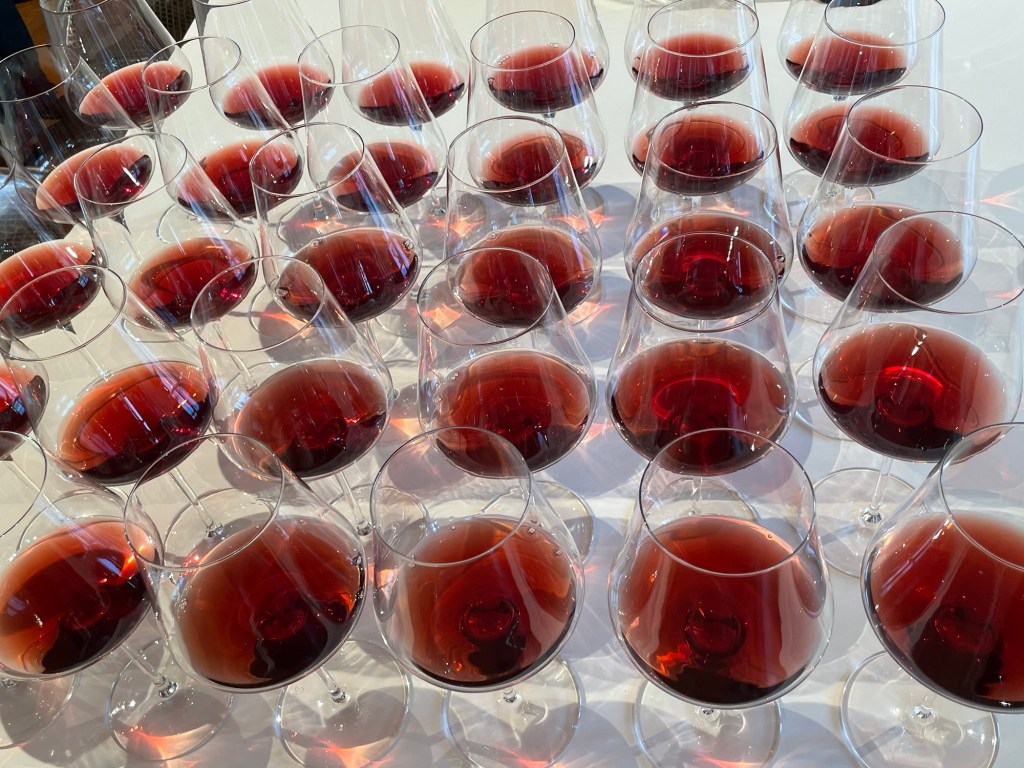
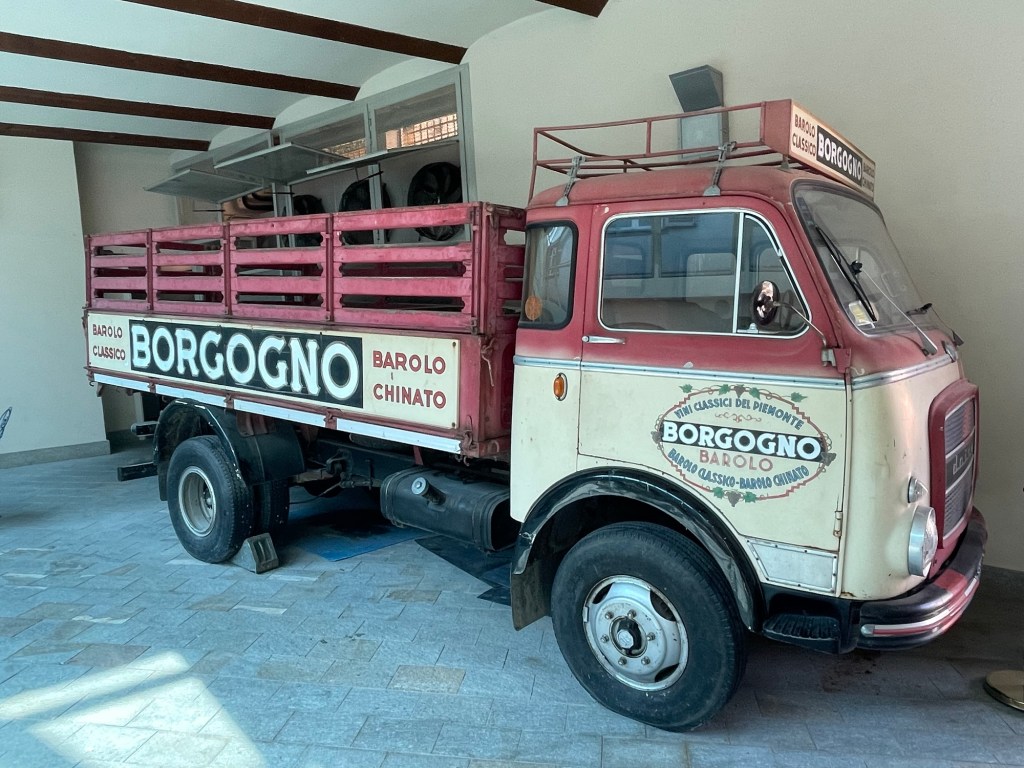
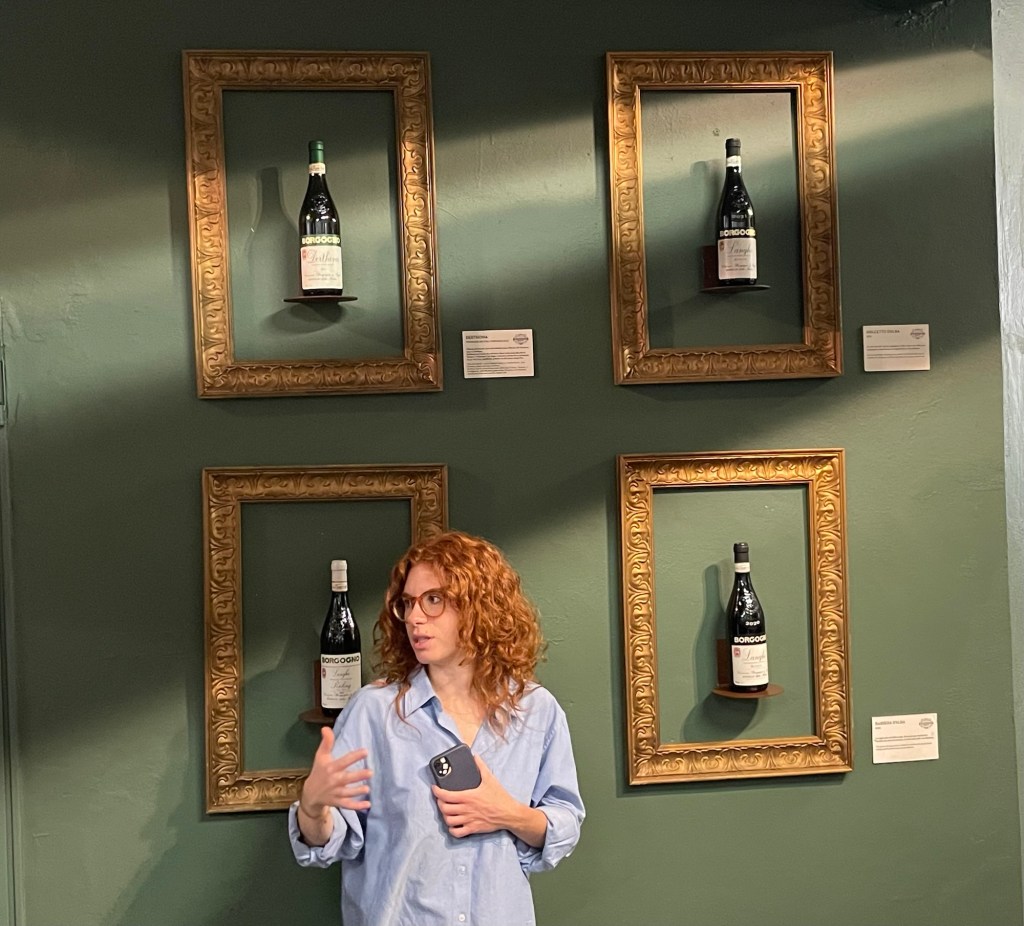
Today our group had one main objective: to visit the village of Barolo, home to world-famous red wines. This required a nearly two hours of travel from our hotel in Ivrea, so we got up bright and early to make the journey. Our exact destination was the Borgogno winery, right in the center of Barolo. In fact, they’re the only winery still processing their grapes within the village limits. They have so little space that when it is time to process the harvest, they park machines in the roadway outside the cellars. Borgogno dates back to 1761 when the founder decided to start producing wines for aging rather than just early drinking. They produce about 250,000 bottles annually, four-fifths of which goes to the export market.
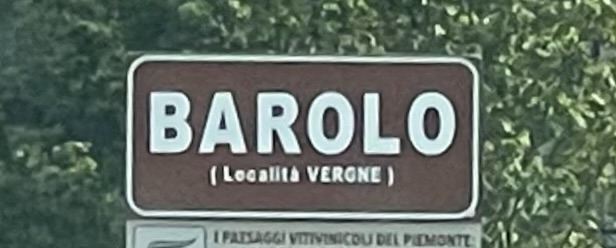
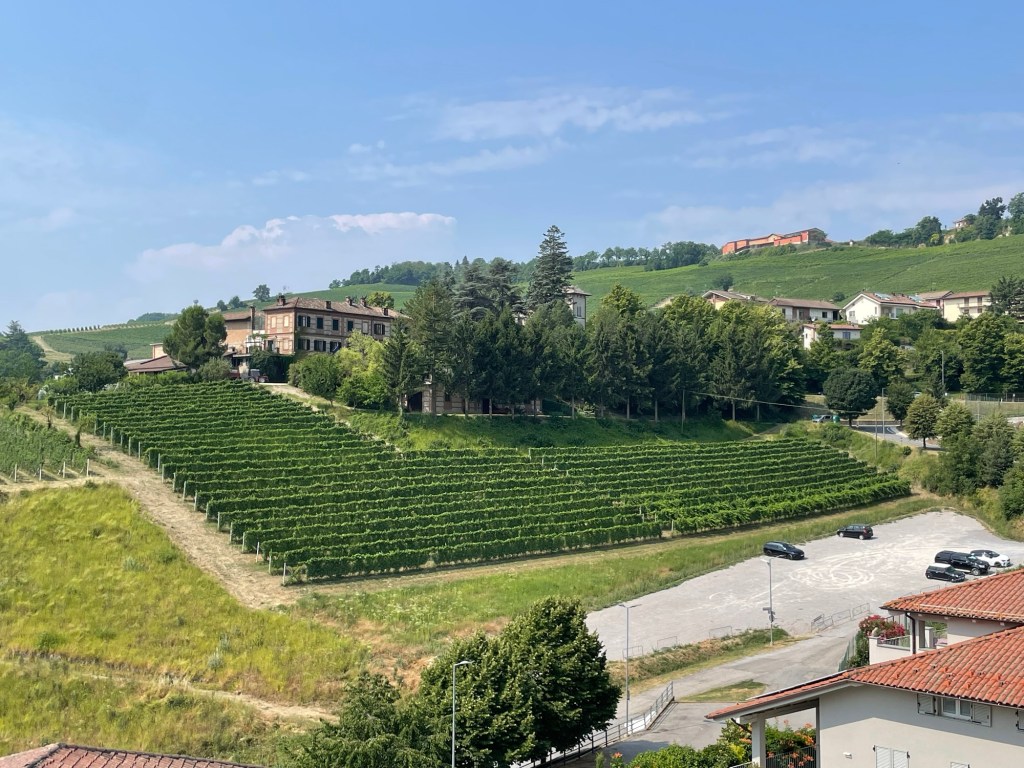
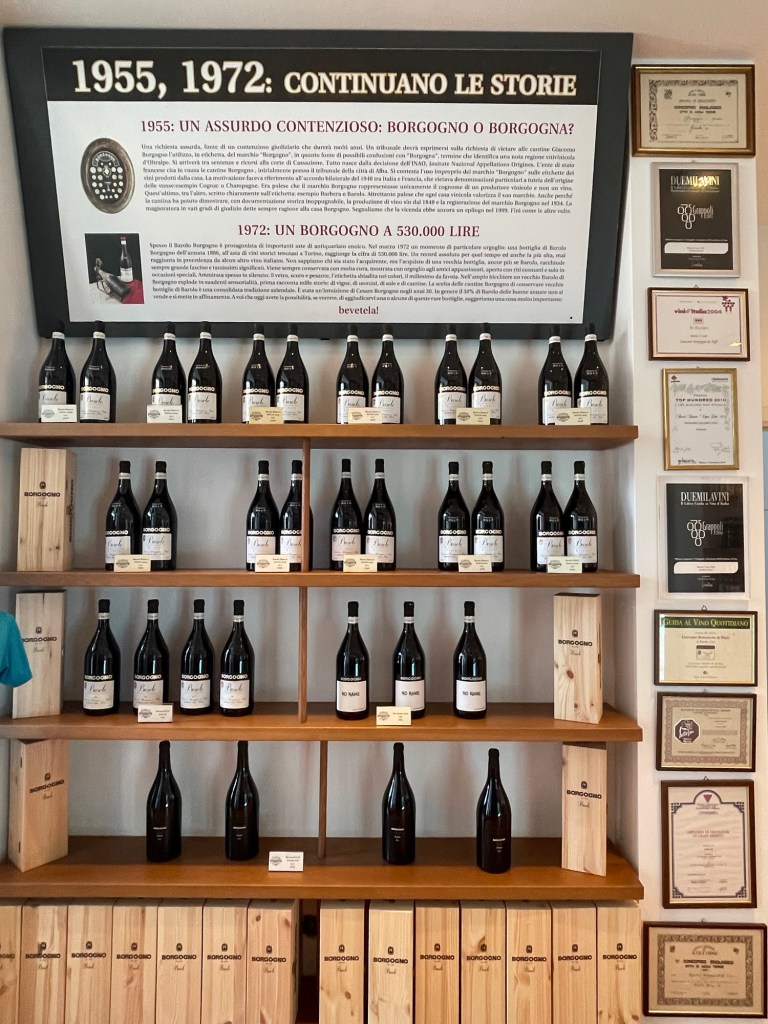
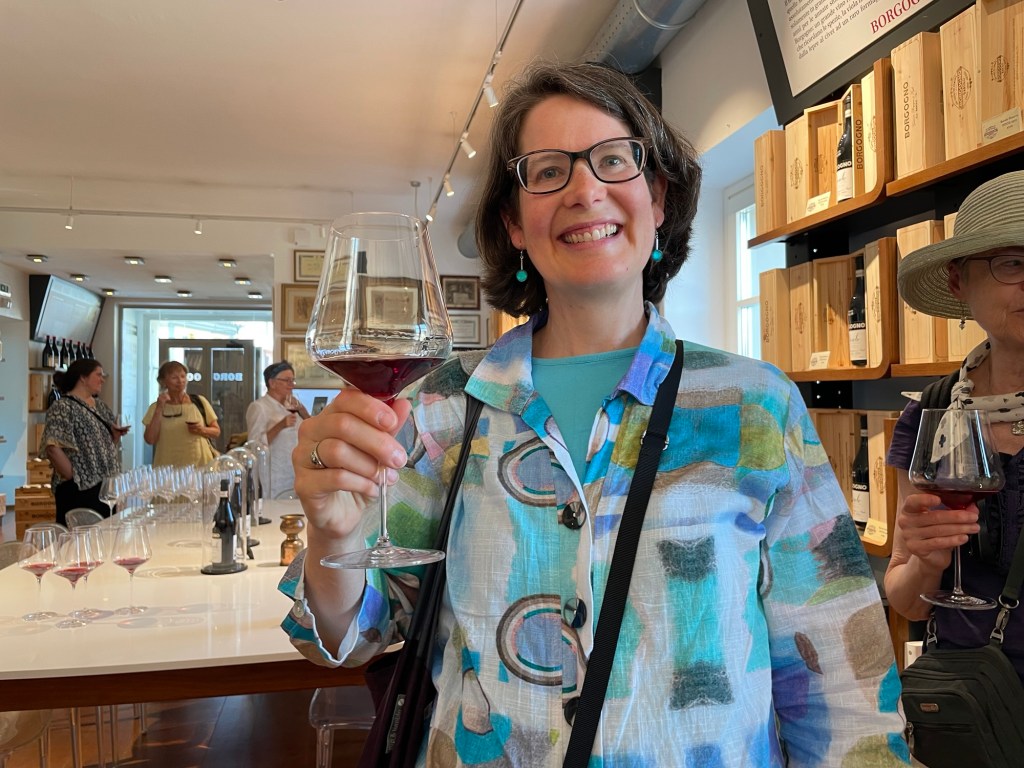
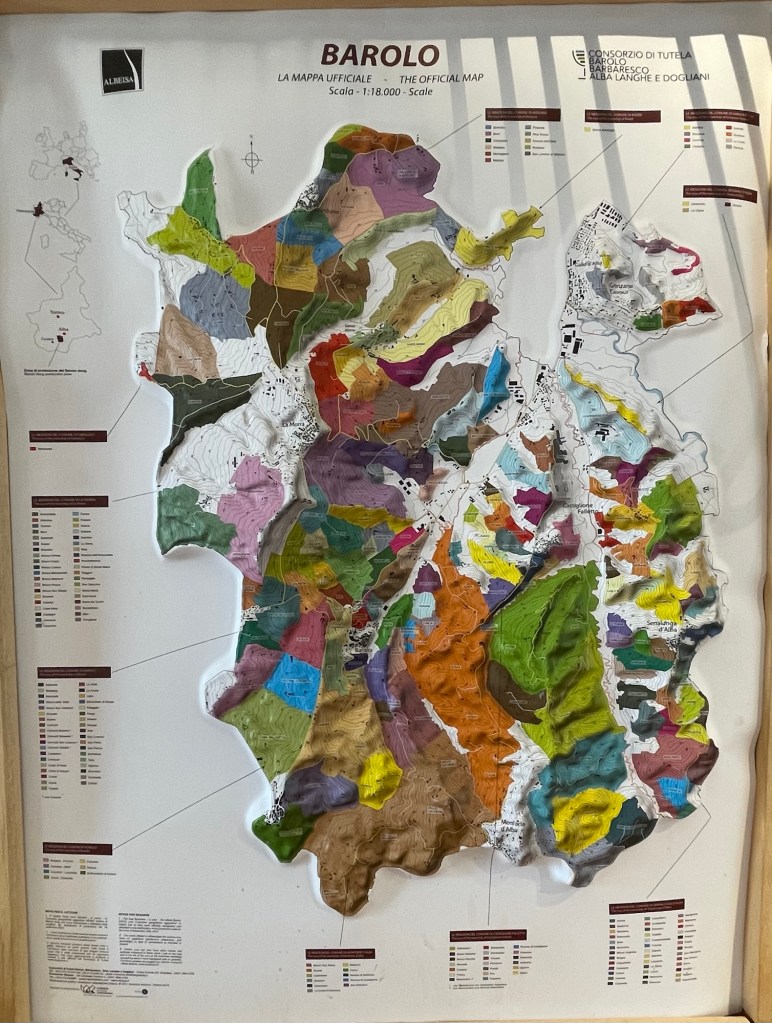
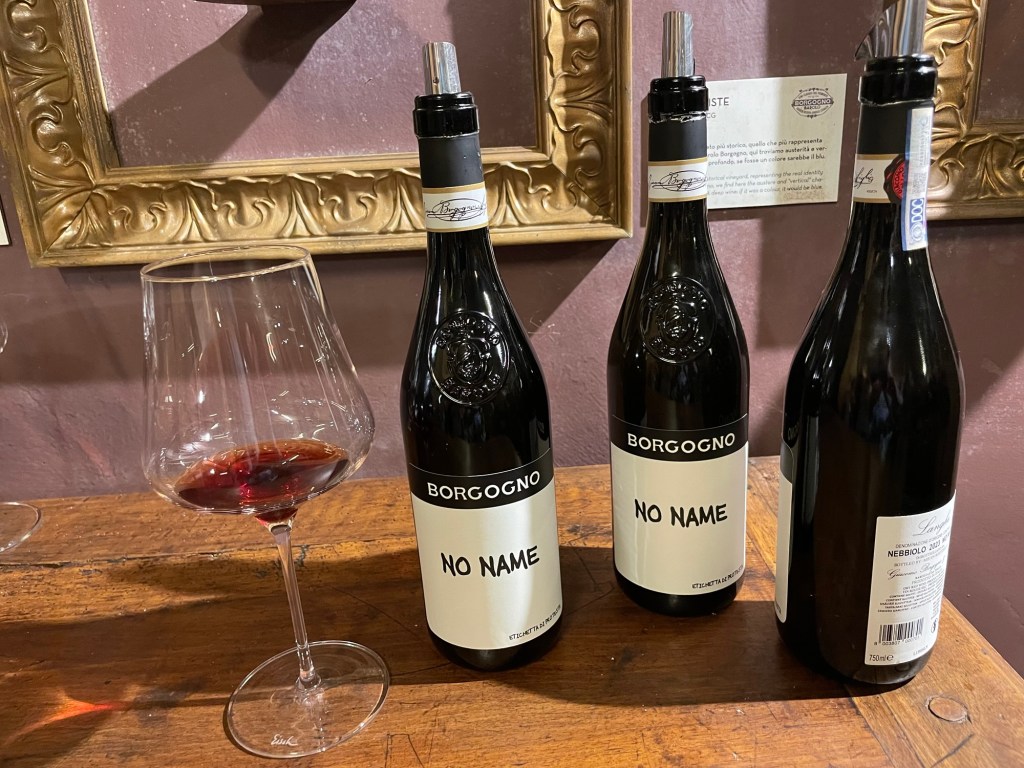
Our wine tasting was combined with a tour of the cellars and production facilities. We tasted three different wines, starting with the least exclusive, made from Nebbiolo grapes sourced in the surrounding region. (Only grapes grown on a handful of hillsides adjacent to Barolo can qualify to bear its prestigious name.)
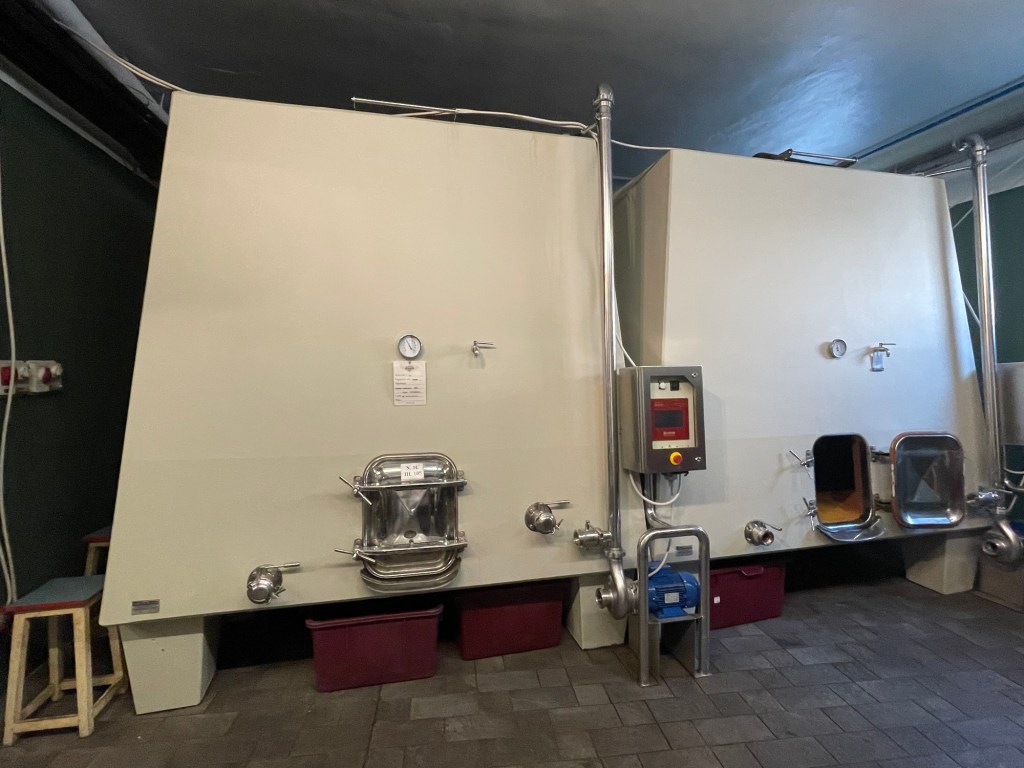
After this warmup for our palettes, we descended the stairs into the cellars where we first saw the large fermentation vats. Although some are made of stainless steel, the most interesting ones to us were cast of concrete, which is a traditional method in this area. You may notice the doors on the front, large enough to admit a human. Brave employees must climb inside to wash the tanks between batches and spray the insides with a glass-resin sealant. To avoid being overcome by the fumes, they have to carry their own oxygen.
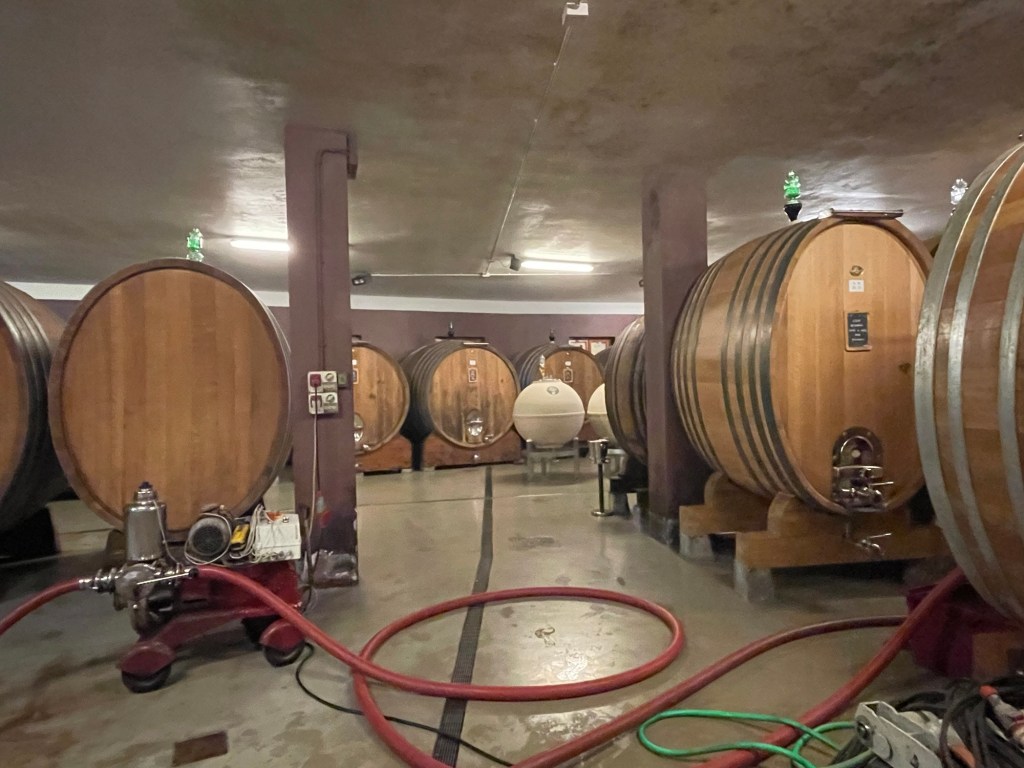
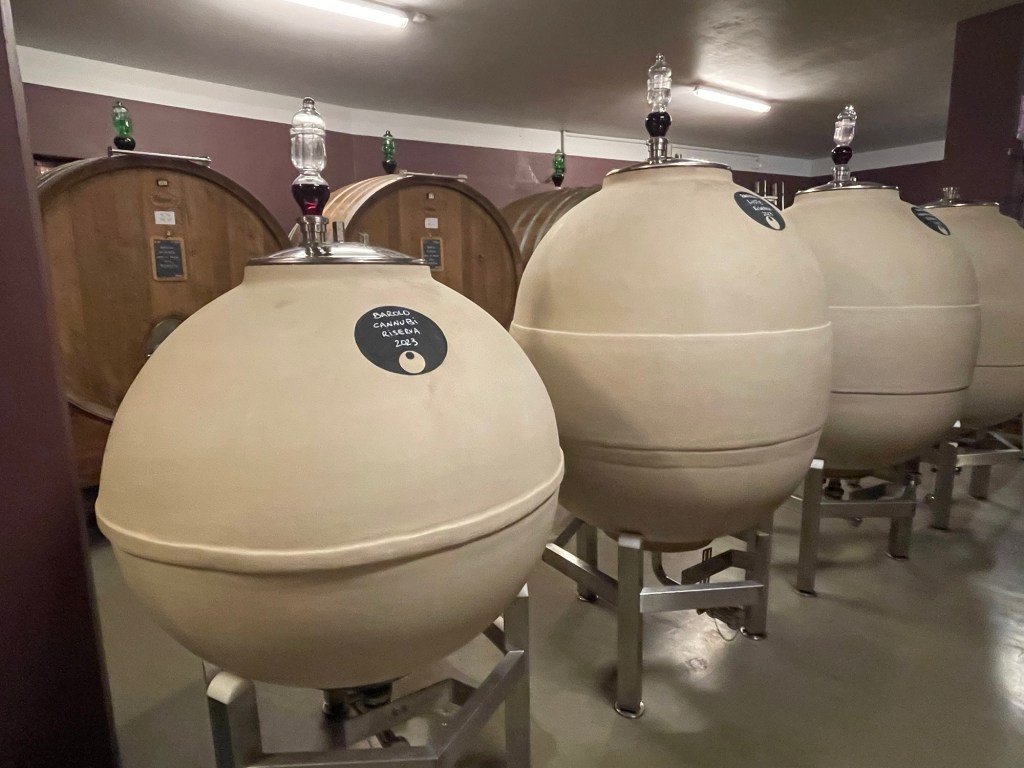
Controlling oxygen turns out to be a theme in winemaking. After fermentation, the wine ages in oak barrels, which are fitted with airlocks to ensure that no oxygen leaks in. These must be periodically topped off by more wine taken from smaller barrels (also with their own airlocks). At the bottling stage, according to our guide, a little oxygen is actually beneficial, which is why Borgogno still uses natural wood corks (traditionally sourced from Sardinia but more recently from Portugal as well).
While in the cellar, we sampled our second wine, which had a “No Name” label. The story behind this goes back to a year when the second half of the winery’s vintage failed to receive certification as a true Barolo due to subjective criticism of the wine’s color. The owner found this unfair, especially considering that the first half batch had passed with no issues. So, instead of selling it as a less-prestigious Nebbiolo, he released it with a label that just said “No Name” as a protest. Everyone knew what it was, of course, and it sold out faster than any of their other wines. The label continues to this day as a vehicle for good wines with certification issues.
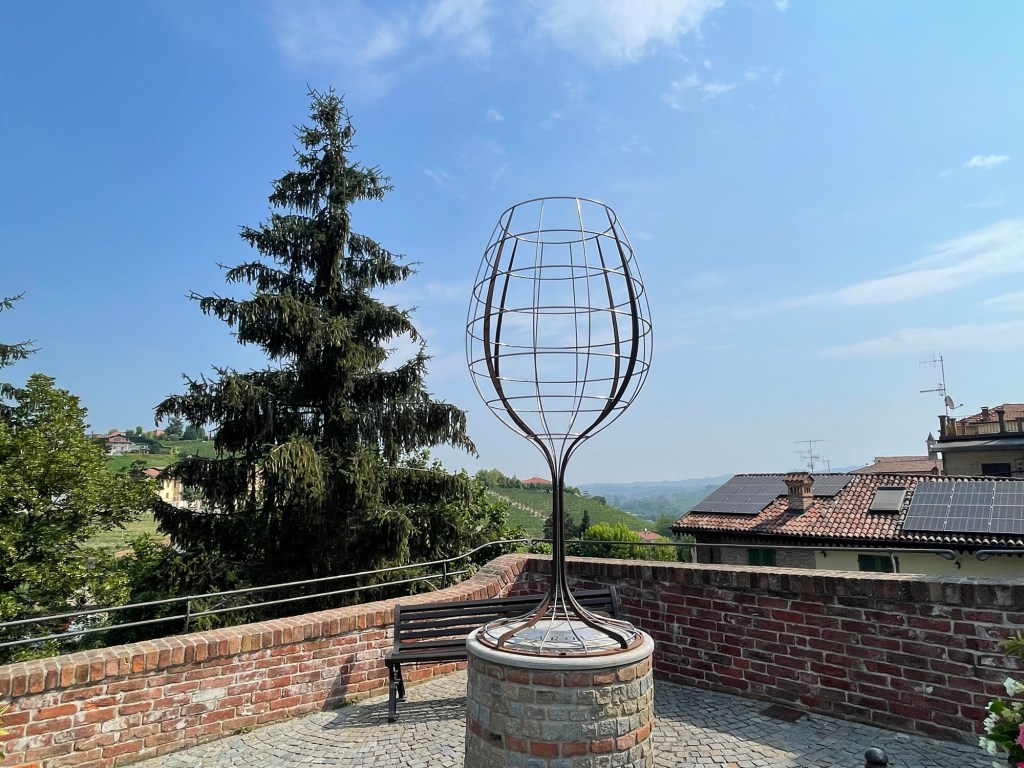
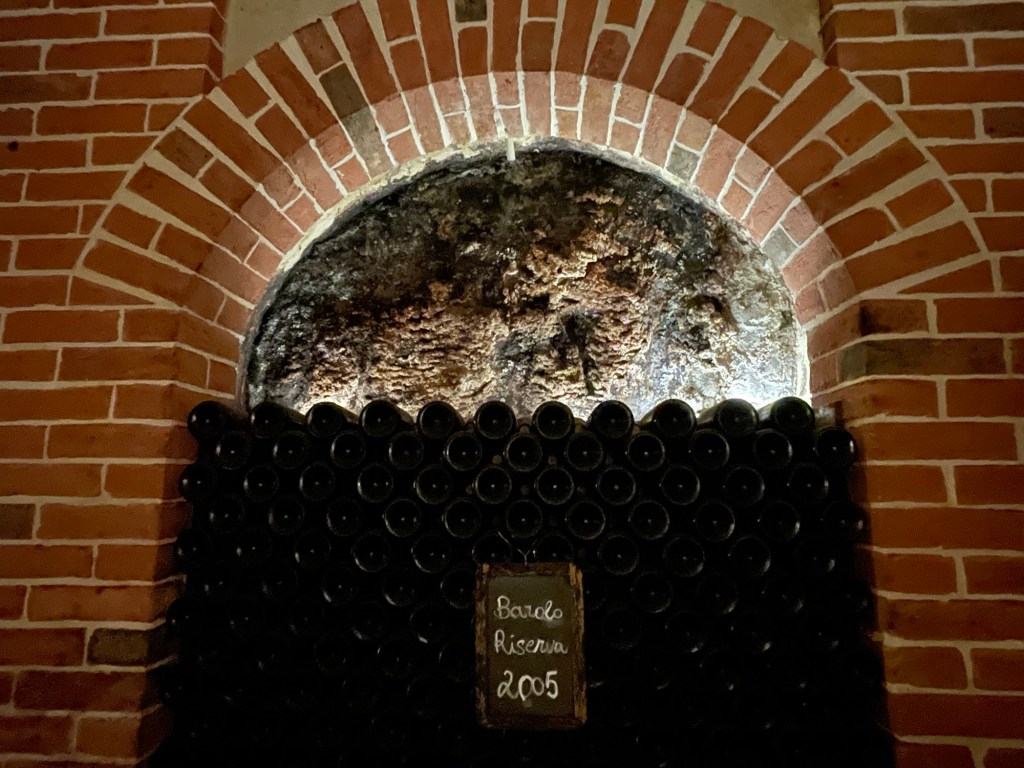
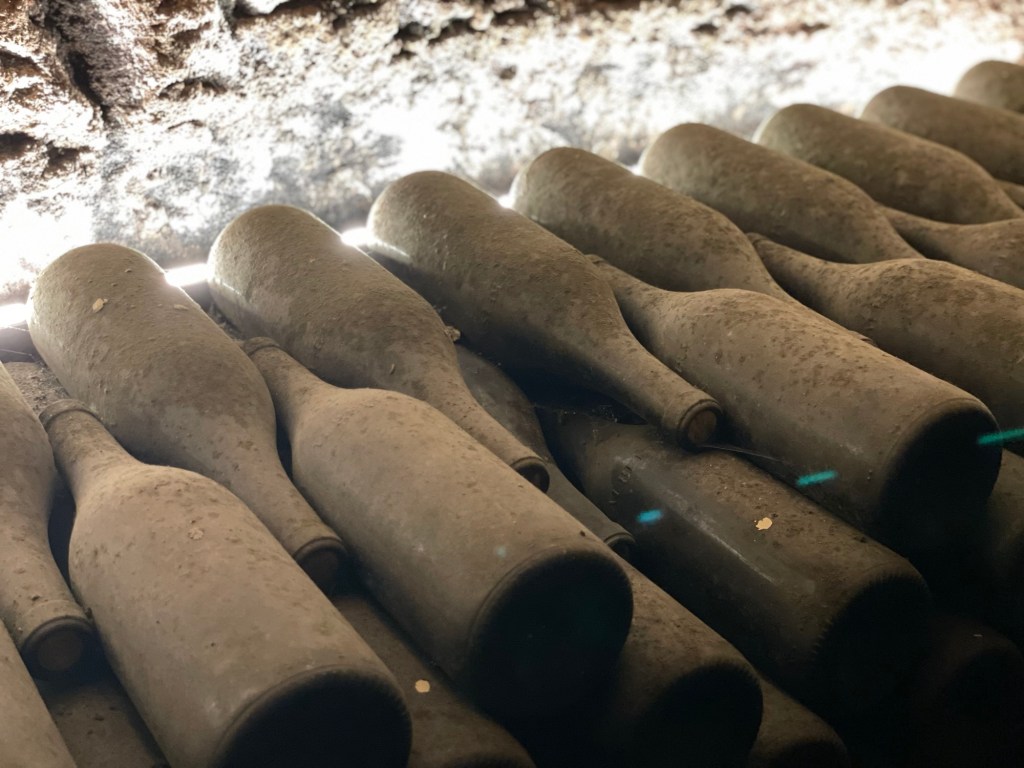
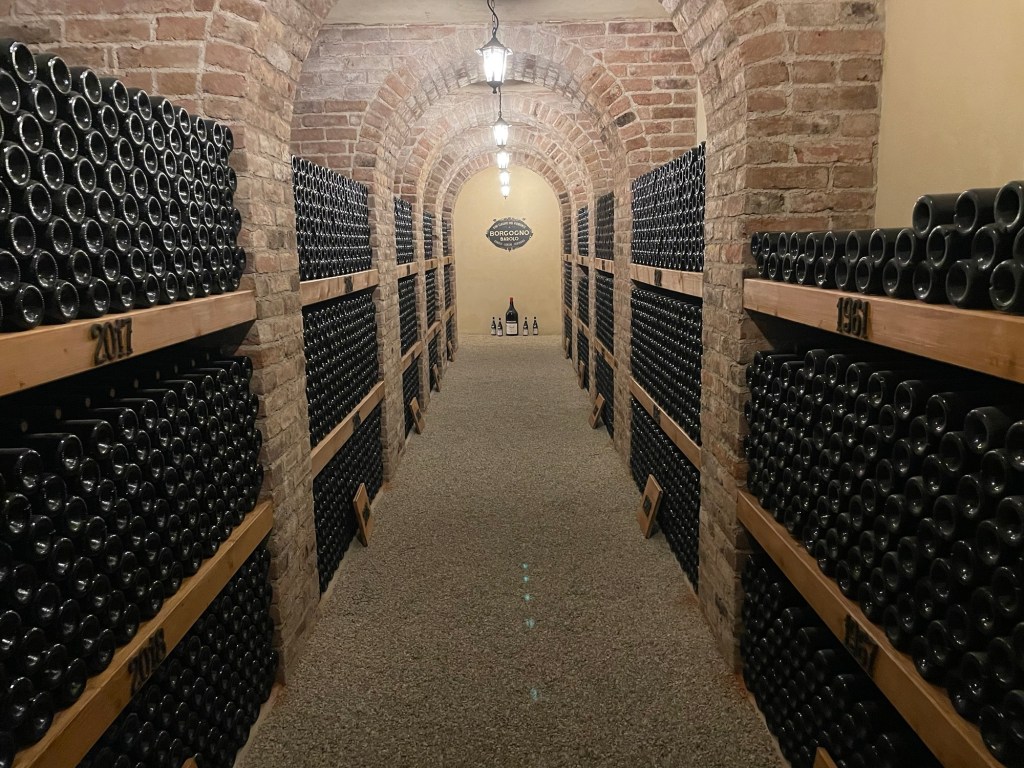
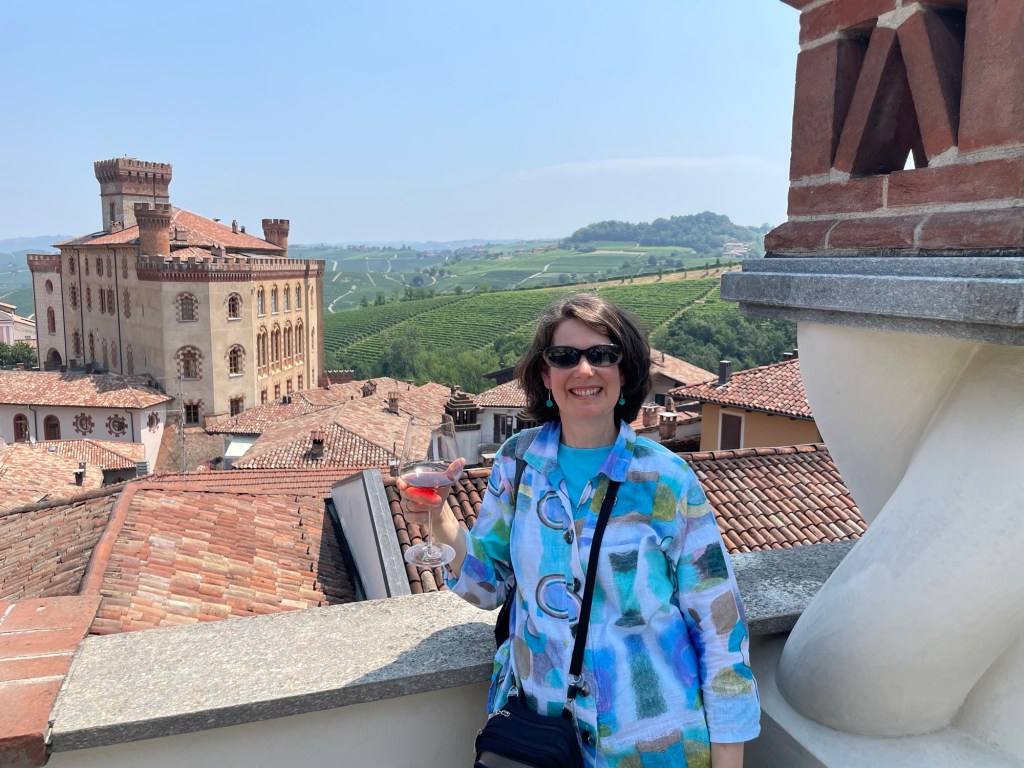
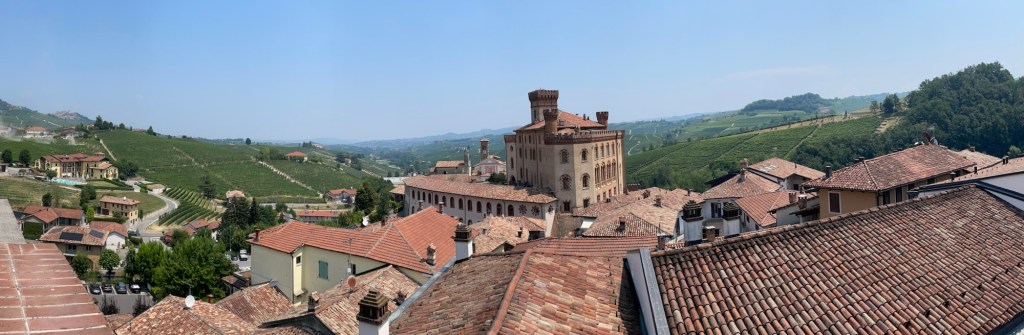
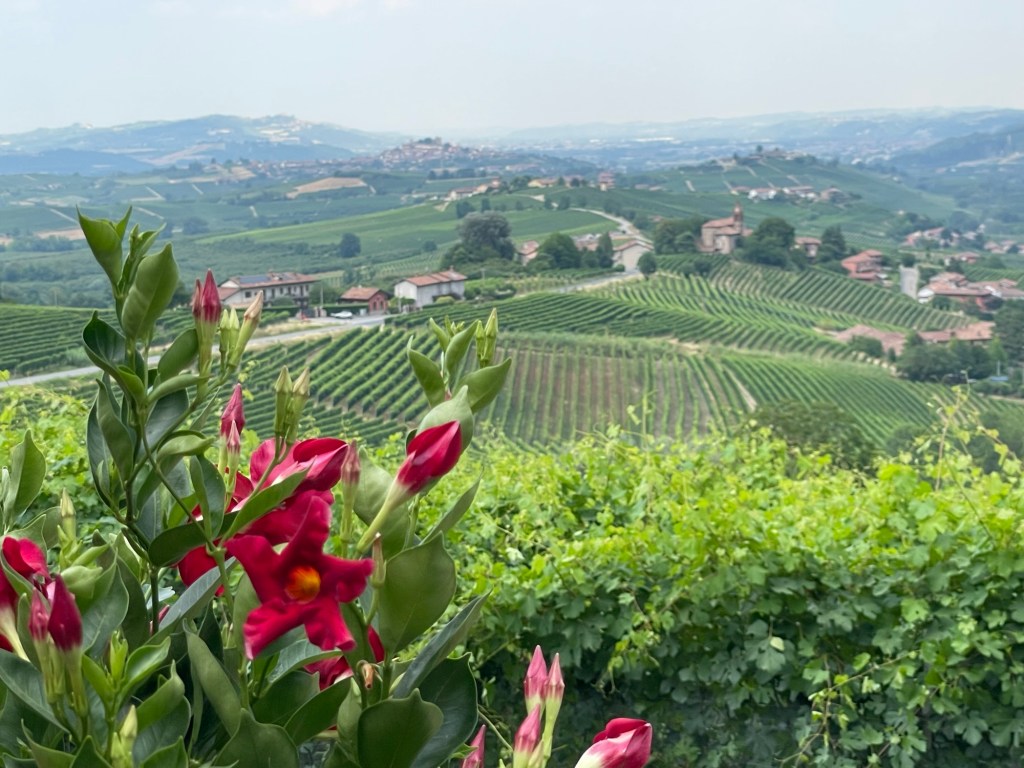
After passing through more cellars stacked with a several fortunes worth of aging wine bottles, we ascended to wine heaven: a sampling of Barolo Classico on a shaded roof-top terrace with panoramic views of the vineyards and surrounding villages.
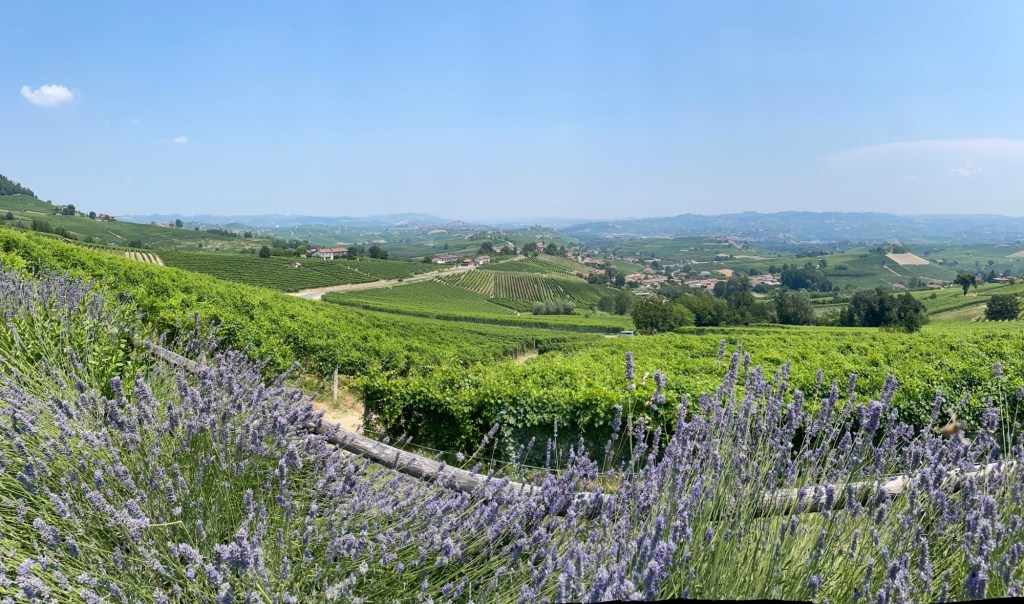
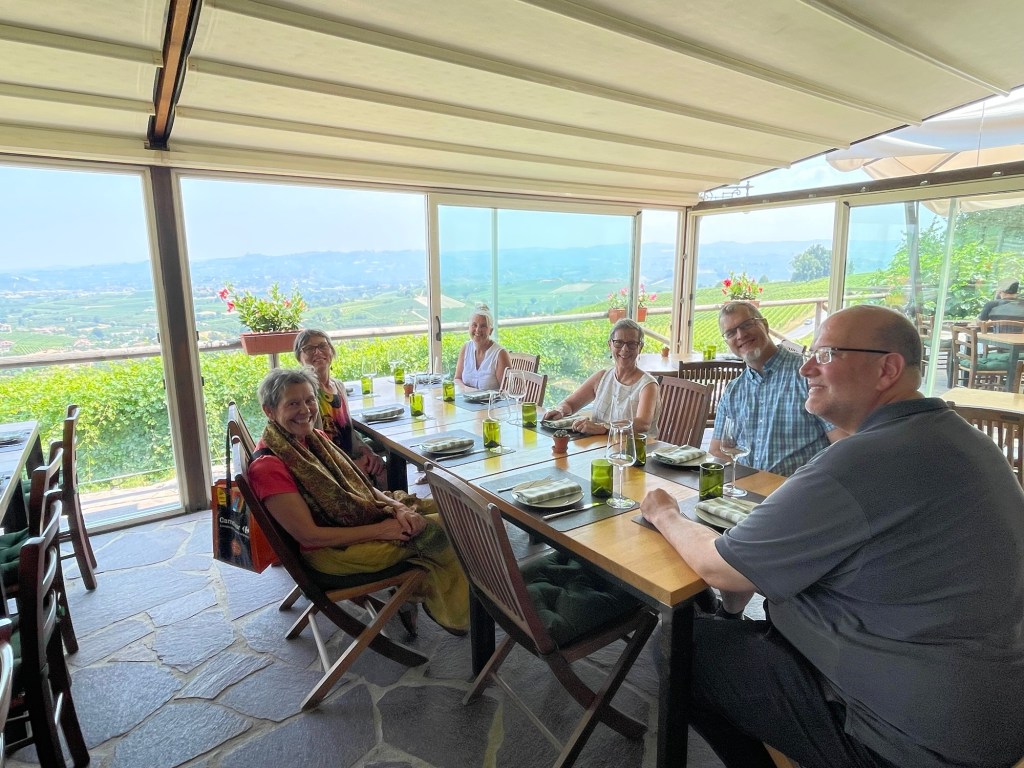
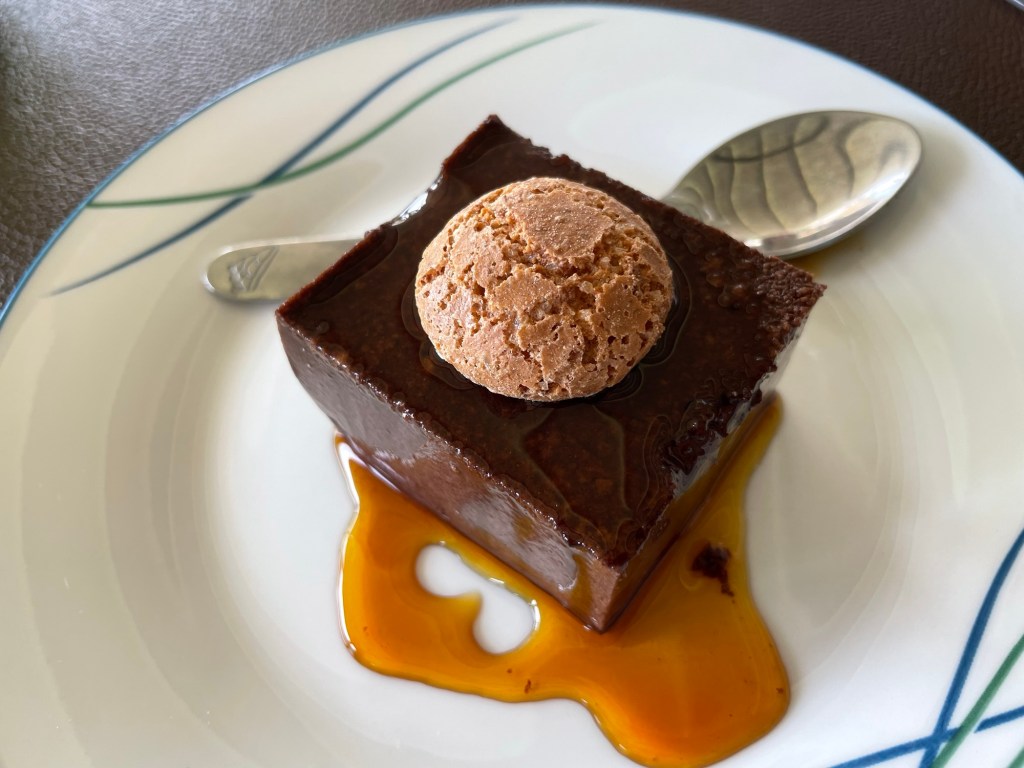
Our tour continued with a group lunch in nearby La Morra at a restaurant with further expansive views. We didn’t sample the beef tartare or beef with tuna sauce, but we enjoyed the risotto with hazelnuts and other vegetarian options, plus the coffee flan at the end.
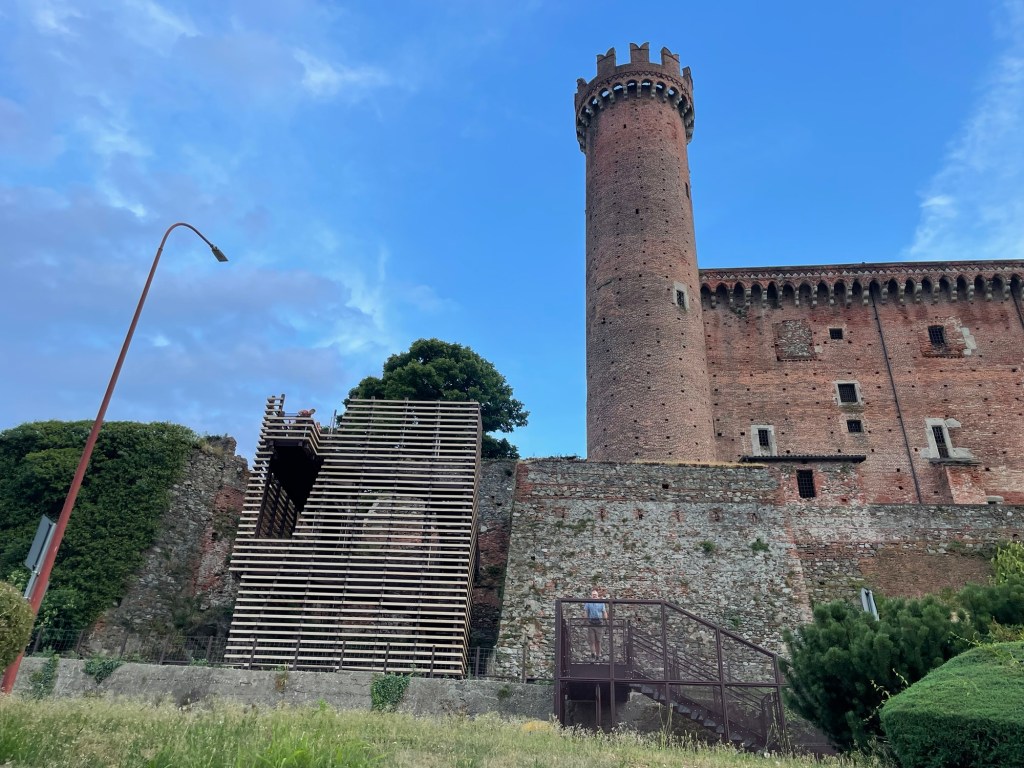
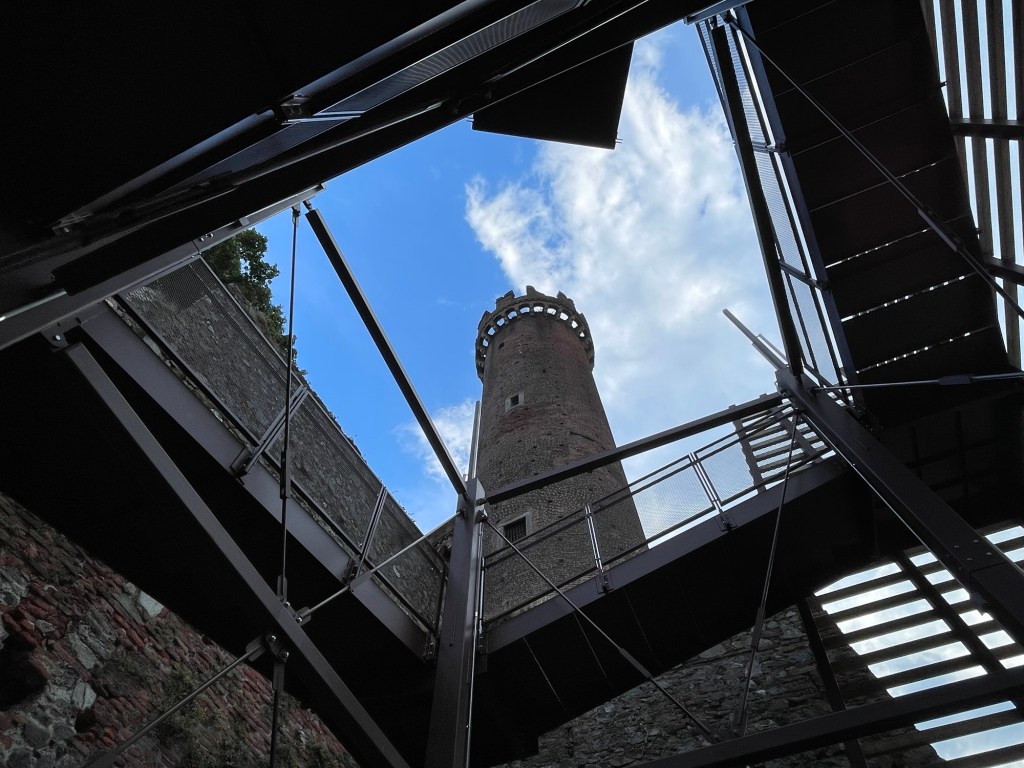
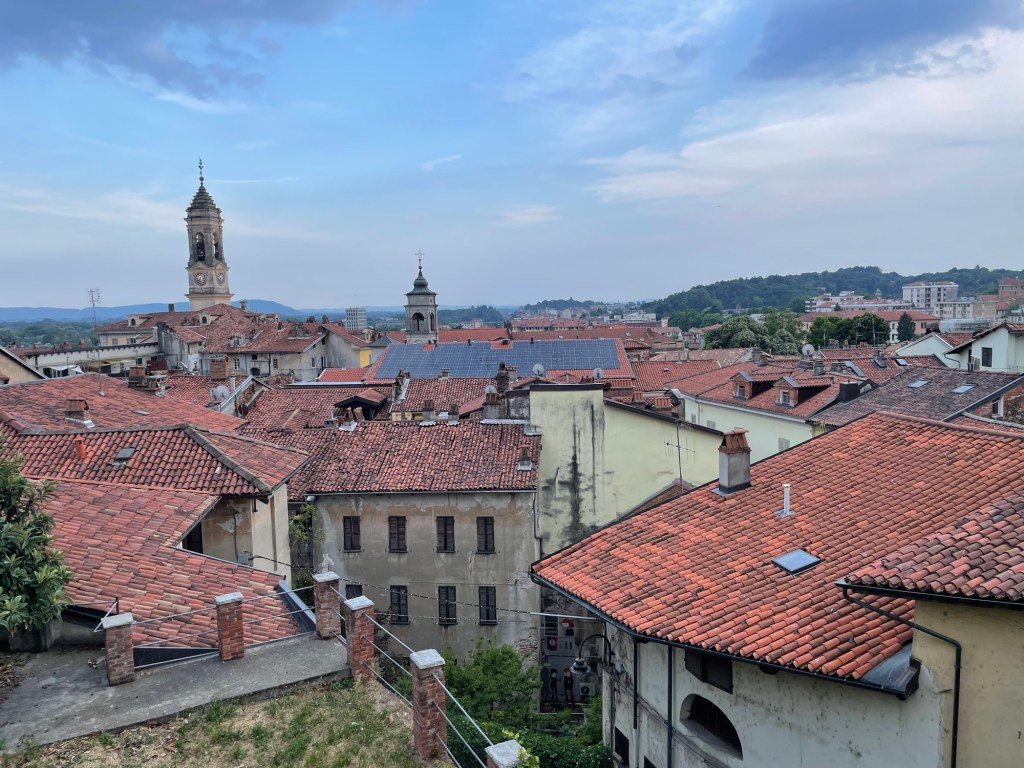
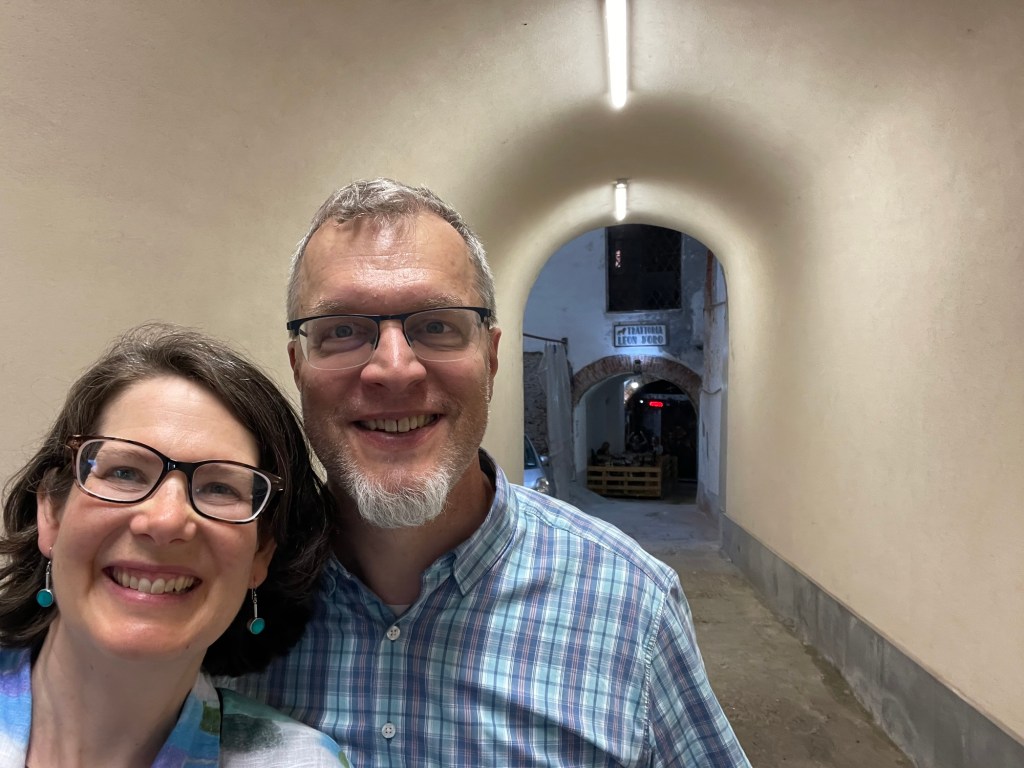
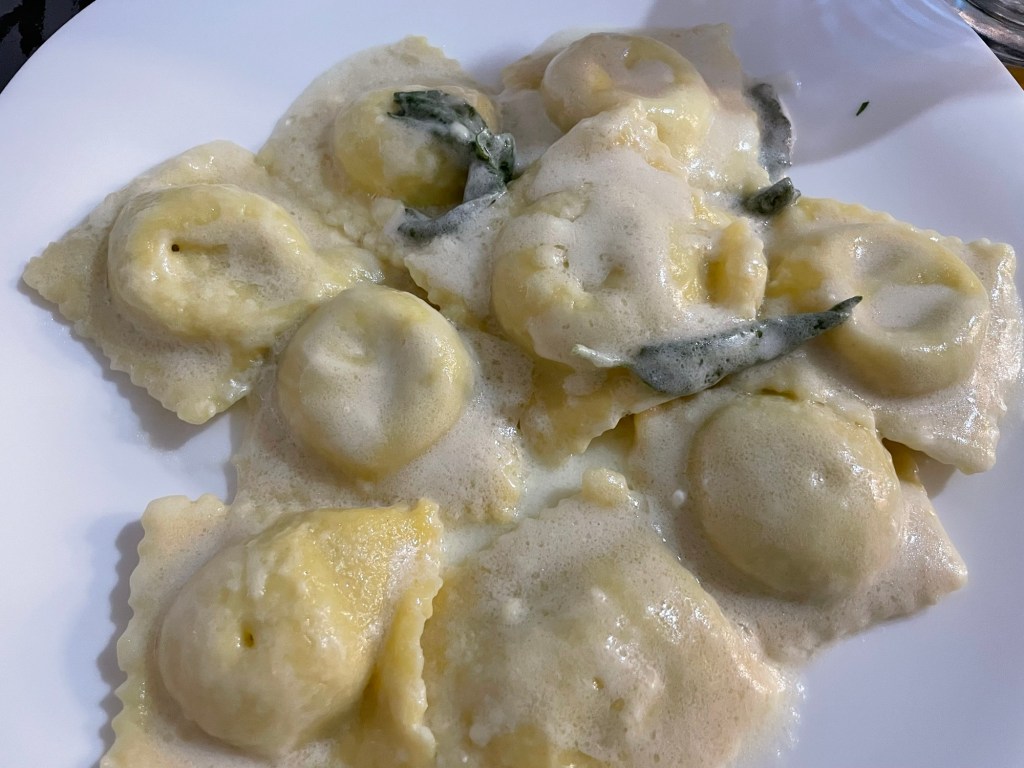
After a long lunch plus the drive back, we just had time for a short exploration of Ivrea, visiting the exteriors of the castle and the duomo – not much to report about either. We were searching for a pasta place for dinner and encountered a mystery – an open window below street level clearly serving guests but with no visible entrance. We eventually found the door down a long tunnel from the other side of the block. The rhubarb and sage ravioli was a hit with us – we need to cook more with sage!


Yum!!!!