Fortifications Galore

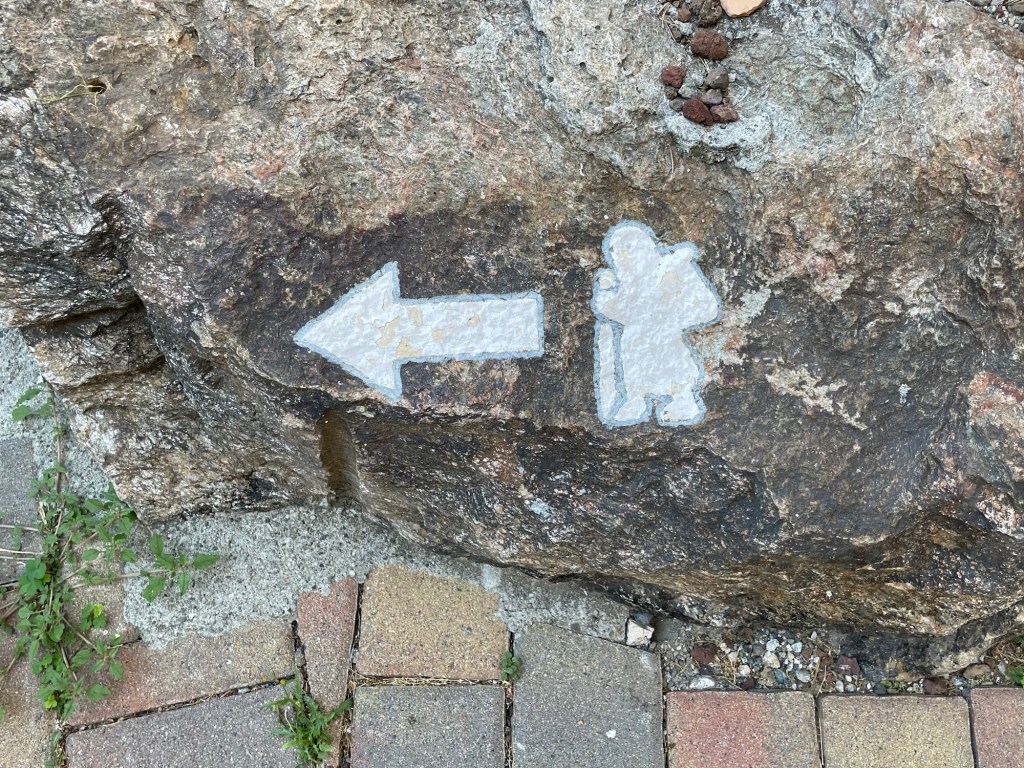
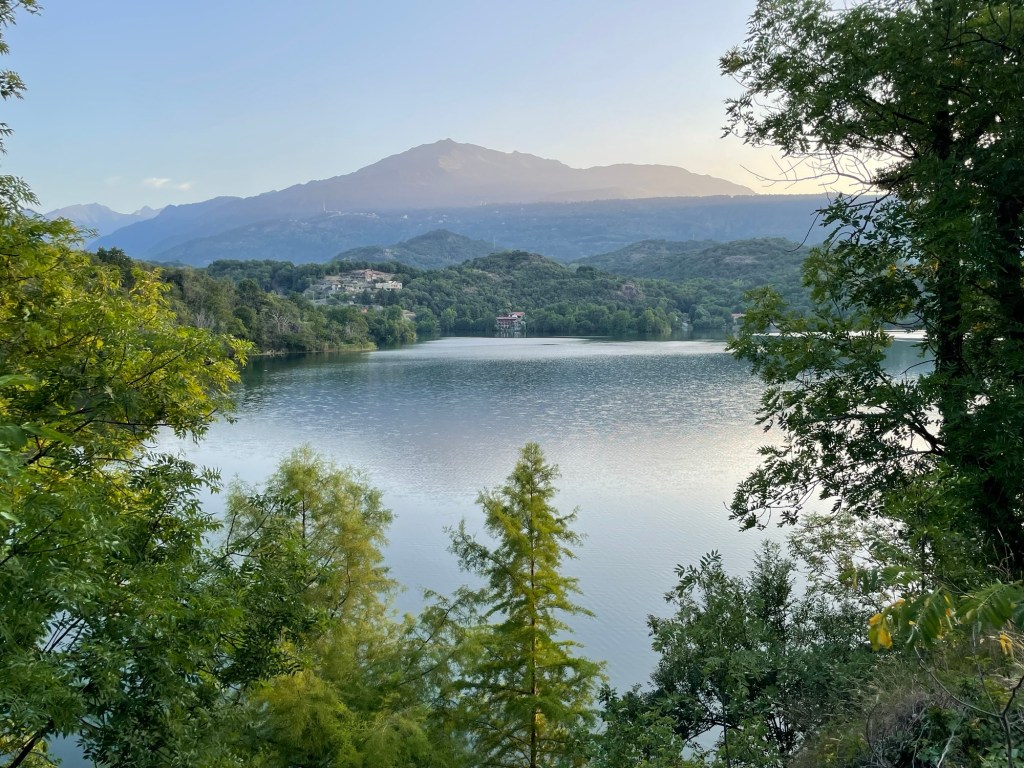
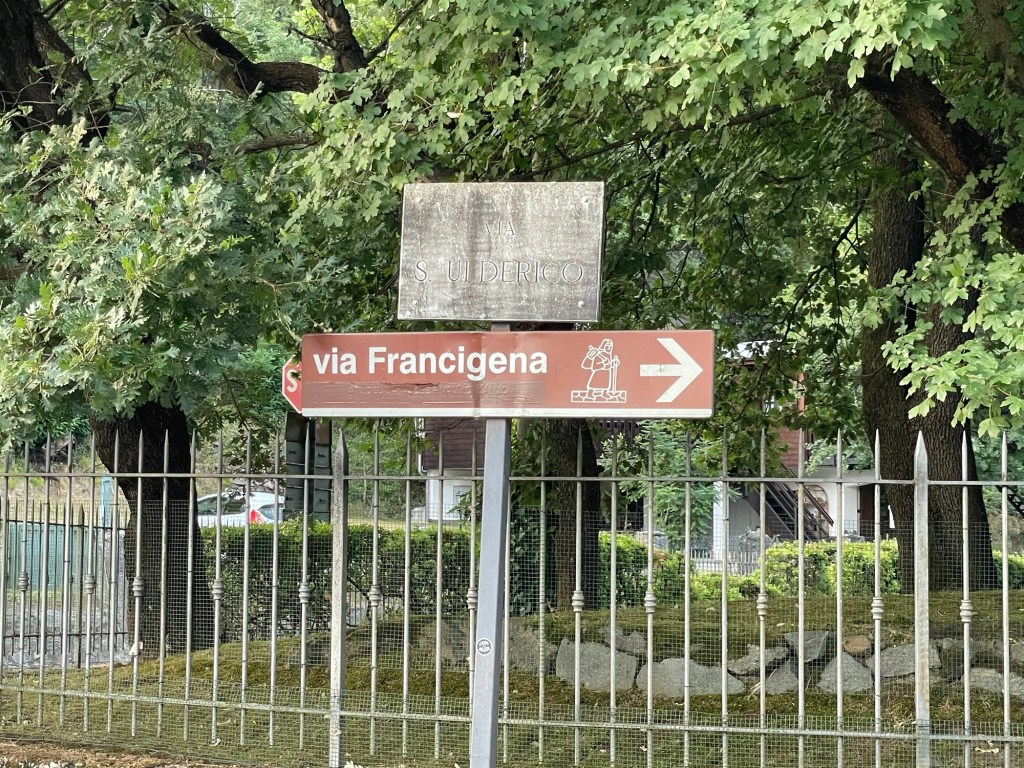
We’re still getting used to the time zone here, and Susannah was wide awake at 5:30 am this morning for some reason. Instead of lying sleeplessly in bed, she decided to go for a walk and explore a bit. Just north of Ivrea there are five small lakes, the nearest of which is a 30 minute walk from our hotel and made a good target. Destination achieved, on her way back her eye caught on one of the trail markers of the Via Francigena. This is a pilgrim trail stretching from Rome to Canterbury, England, laid out by an early archbishop who came to get his blessing from the Pope. In his honor, the trail markers depict a congenial friar with a walking stick. The trail runs the length of the valley we are in and also happens to pass very close by both our hotel and the castle we are singing in. That trip is probably too far given the time available, but it made a nice alternate route back to the hotel.
Lago Sirio

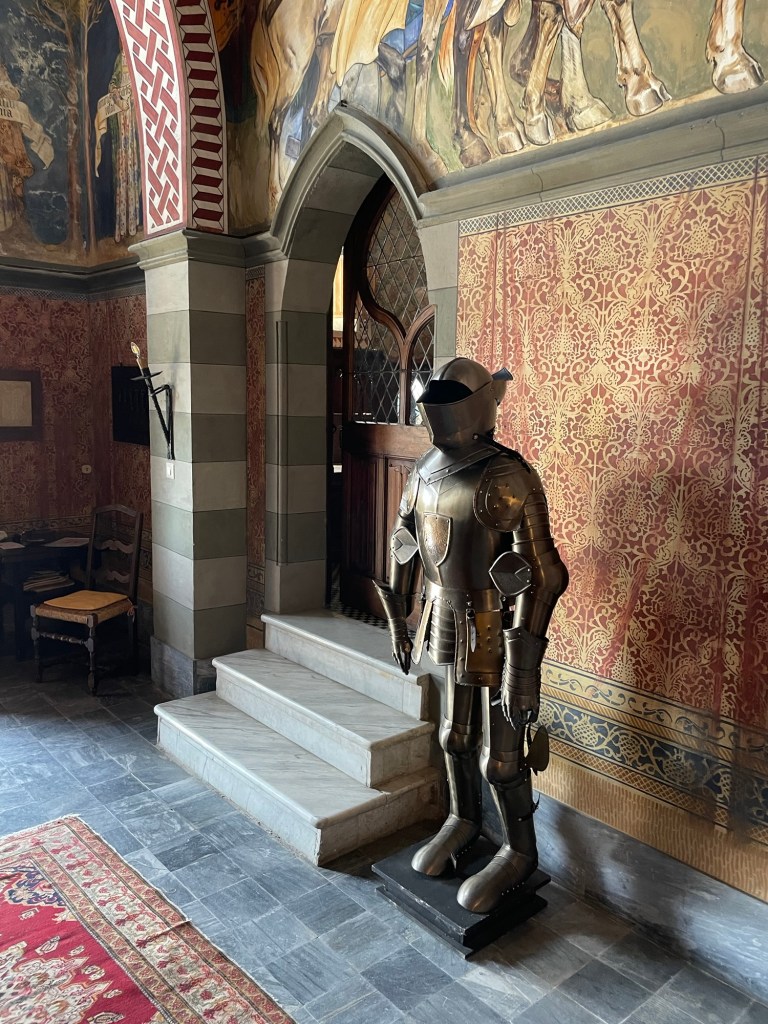
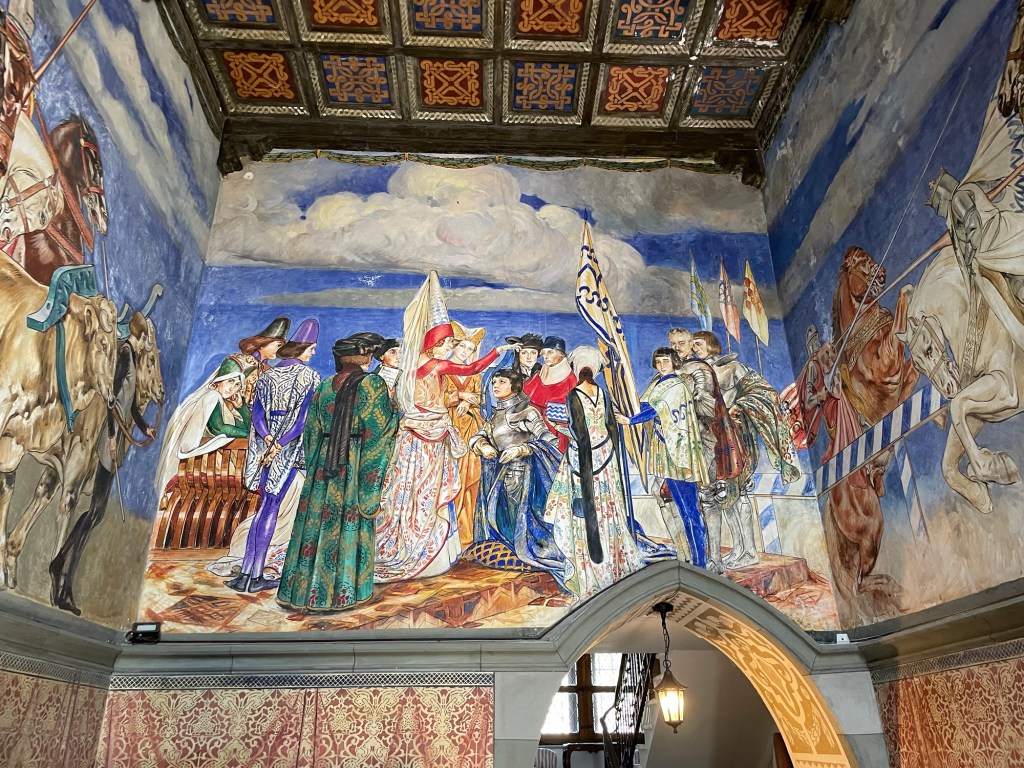
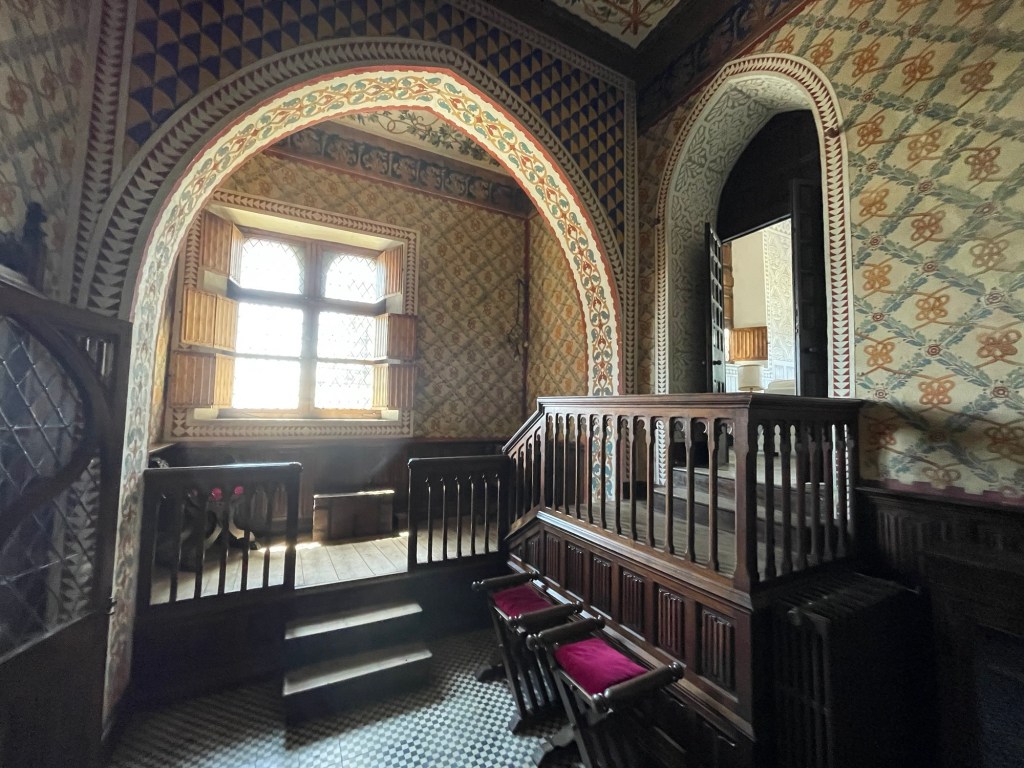
Our singing began today with a long session in the morning and a short one in the afternoon. We are convened in the largest room in the castle, on the second story (or third floor as Americans would say). Like the rest of the castle, the room is richly decorated, with detailed carved-wood panels around the lower parts of the walls and decorative frescoes above. If you’ve only ever visited a castle that is in ruins, it is hard to imagine how it could be very inviting inside. This one shows how luxurious it can be when maintained in good condition as a home. Right before lunch, we were treated to a guest lecture from a local musician who told us about the musical history of the castle, including former owner, Rosario Scalero, who was an accomplished violinist, composer, and educator. Scalero ran workshops for groups of students in the castle during the summer – including the likes of Samuel Barber and Nino Rota. Our speaker performed a piece on the violin that Scalero had once owned.
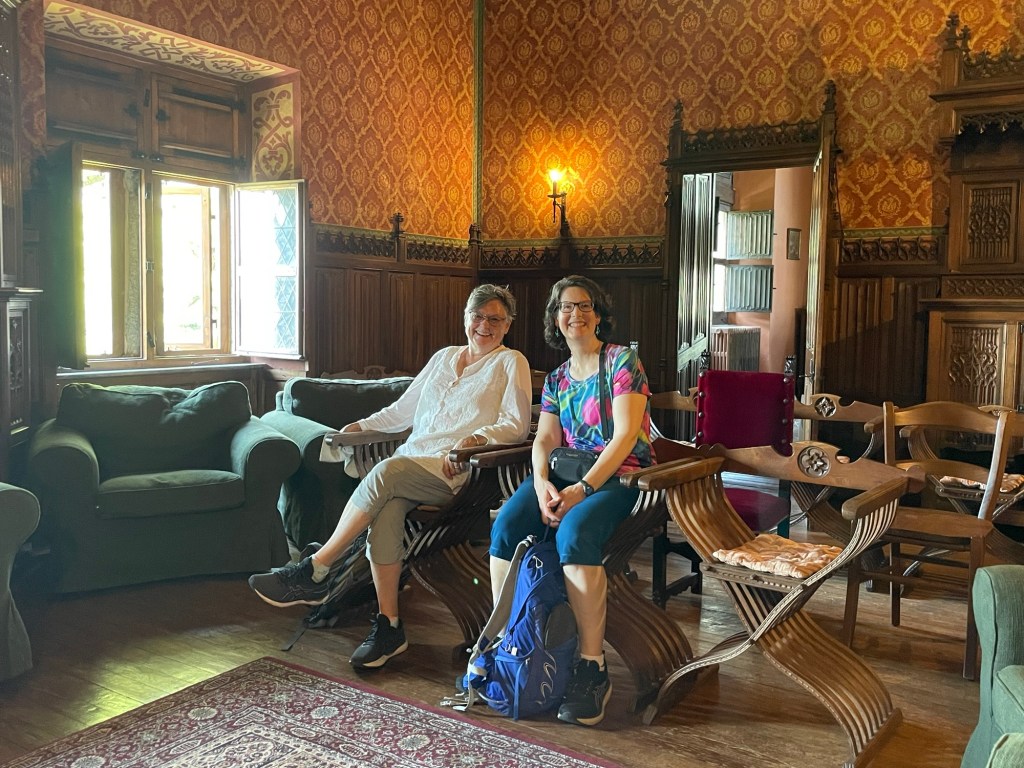
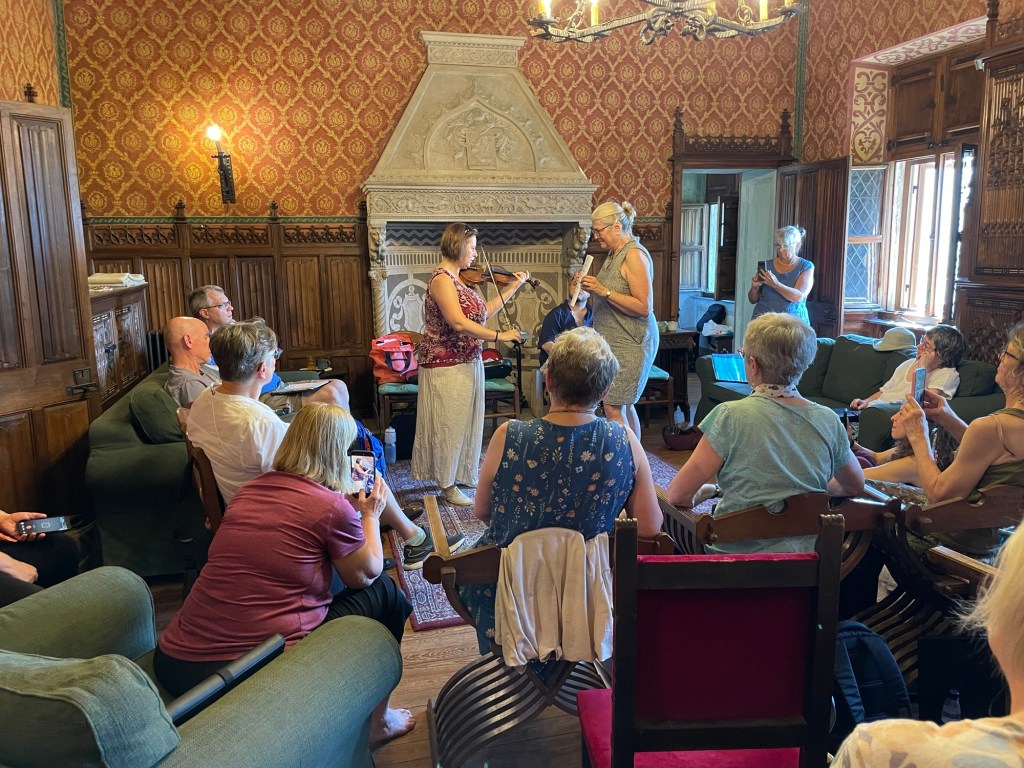
Some of the chairs, while true to the decor, proved less comfortable than others
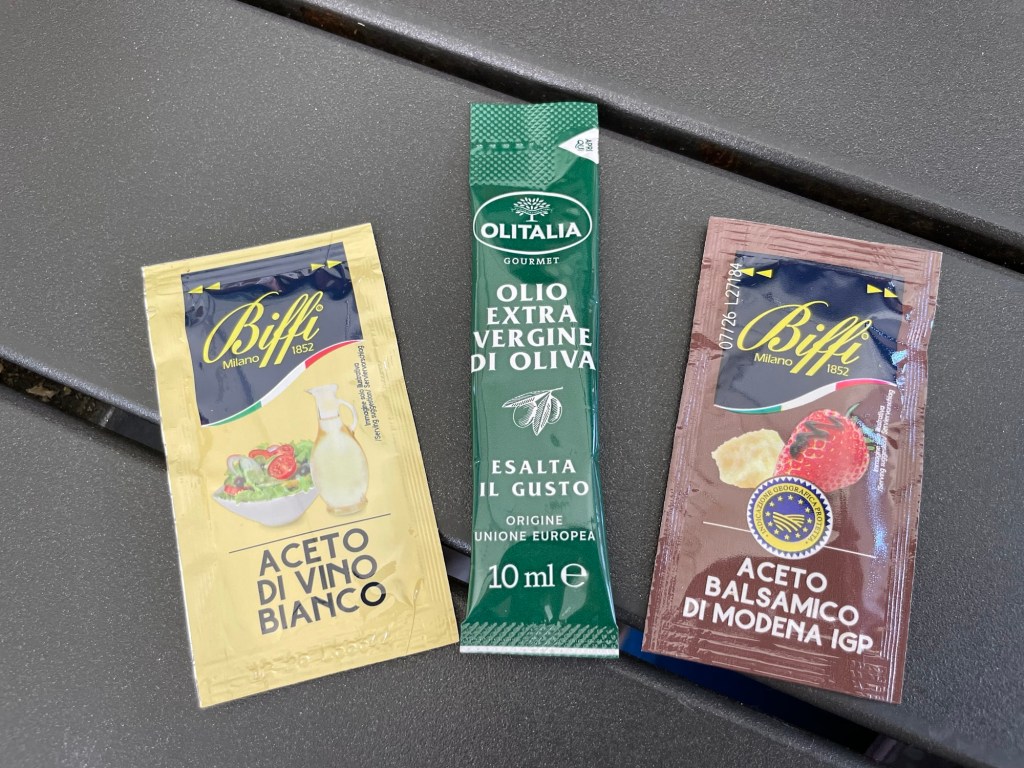
Lunch isn’t served in the castle, but at a restaurant at the base of the hill. Where a U.S. establishment might provide packets of mayonnaise and yellow mustard, here the condiments on offer include extra virgin olive oil plus white and balsamic vinegar.

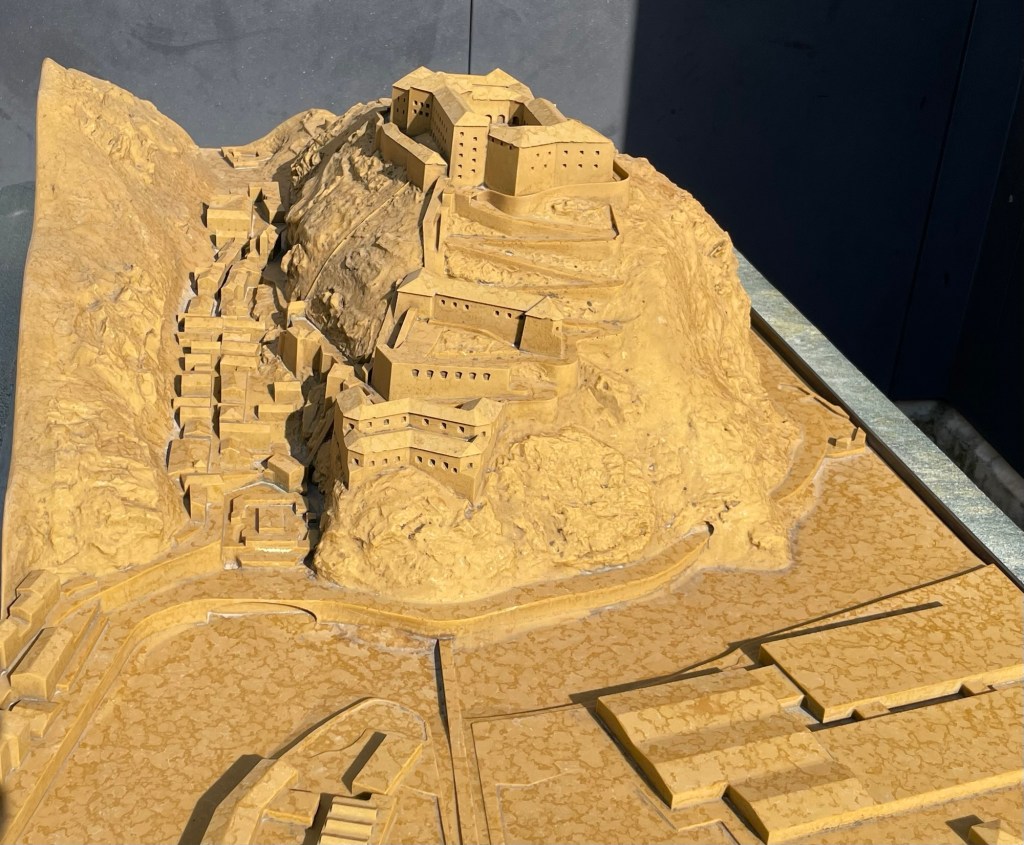
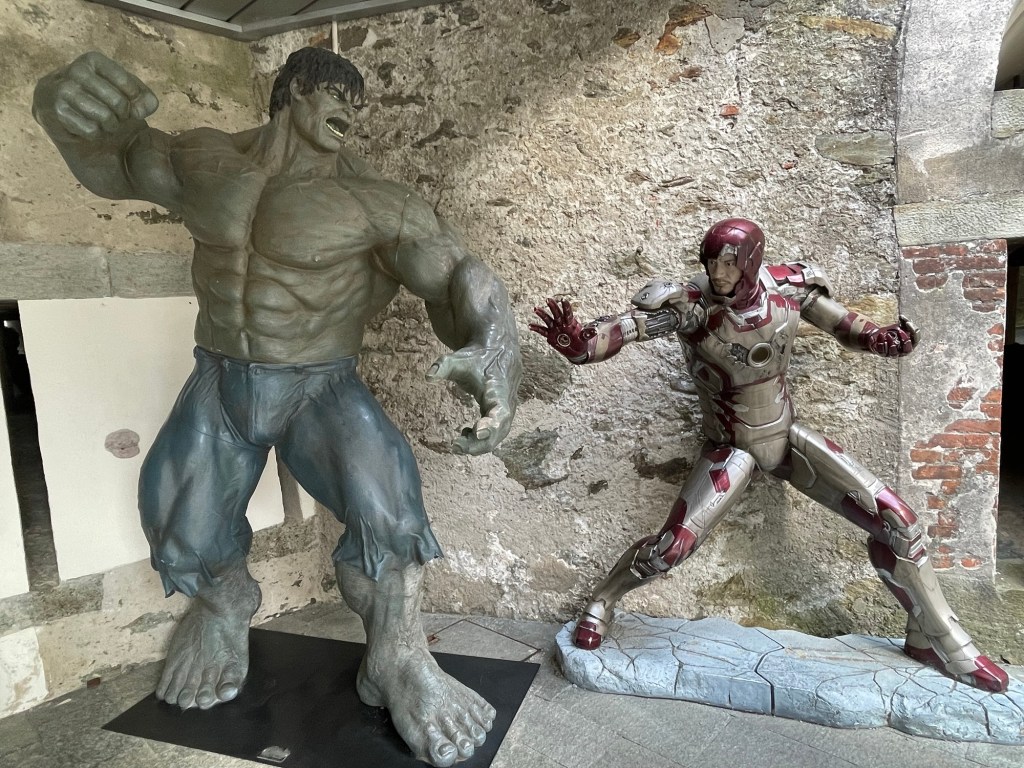
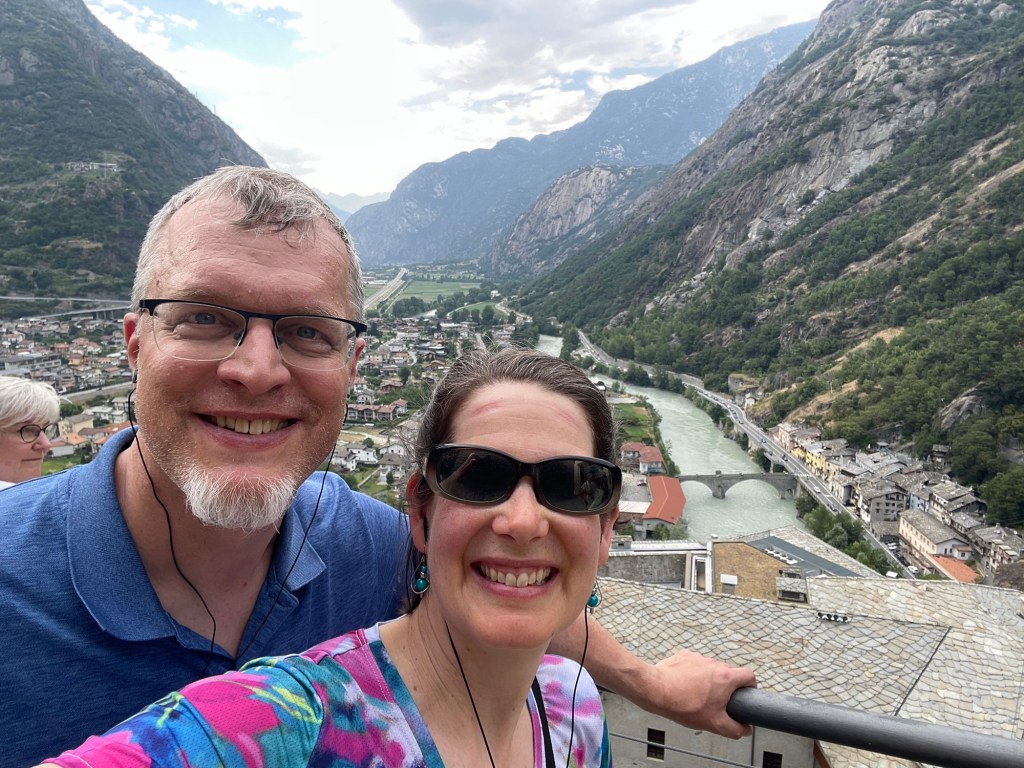
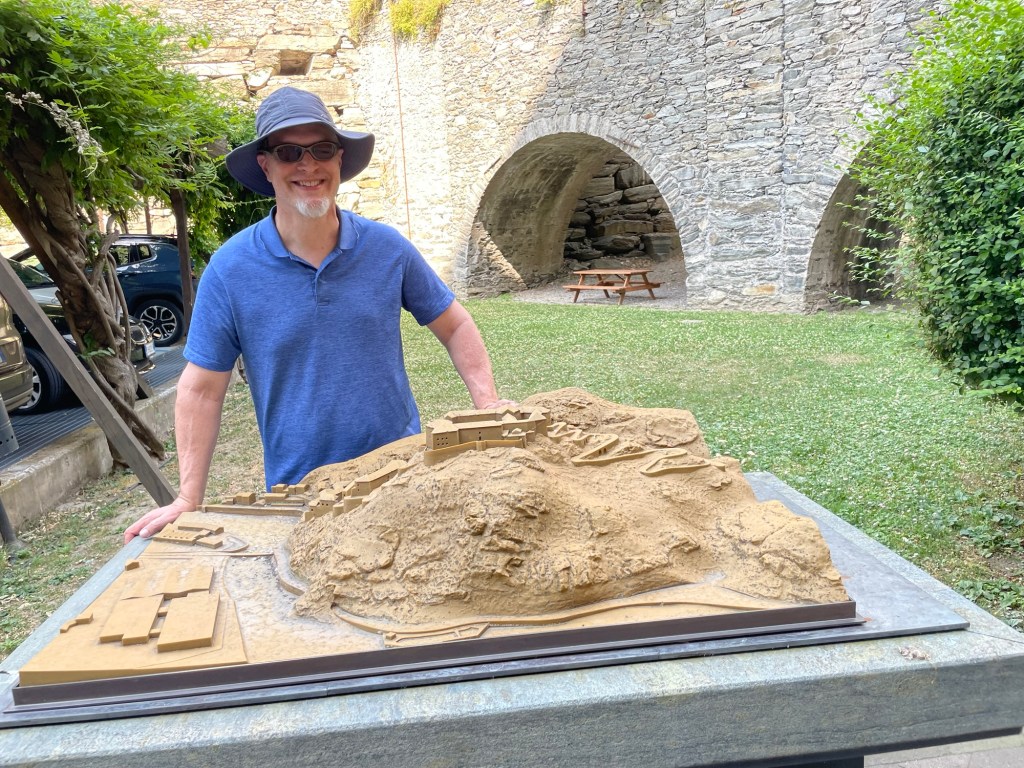
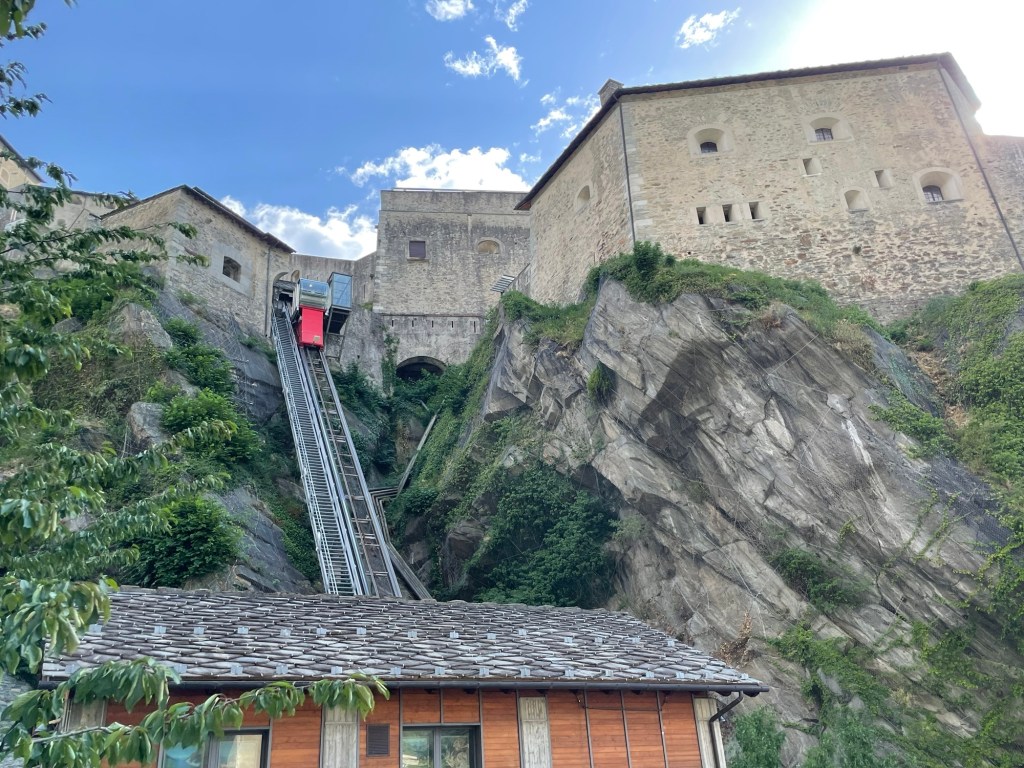
After a short music session in the afternoon, we went as a group to our first tourist destination of the week: the Fortress of Bard. Situated at the mouth of the Valle d’Aosta, the fortification protects the Italian lowlands from French armies that might want to invade through this Alpine pass. The area has been fortified since Roman times at least due to its strategic importance. The predecessor to the current castle achieved notoriety when some 400-odd defenders held off Napoleon’s army of 40,000 for more than two weeks. When he finally took the place he ordered it razed to the ground in vengeance. This state of affairs didn’t last long; a few decades later the King of Italy called for new defenses to be built, resulting in the current massive works. They have never been tested in a real battle, although they did form a key setting for the movie Avengers: Age of Ultron.
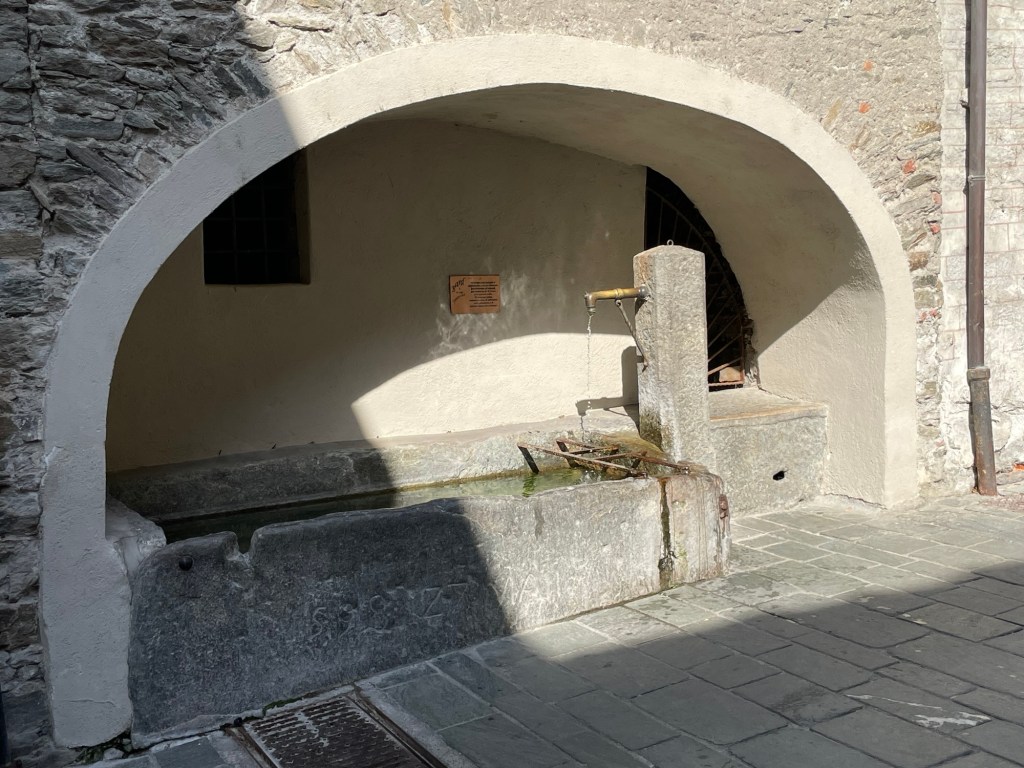
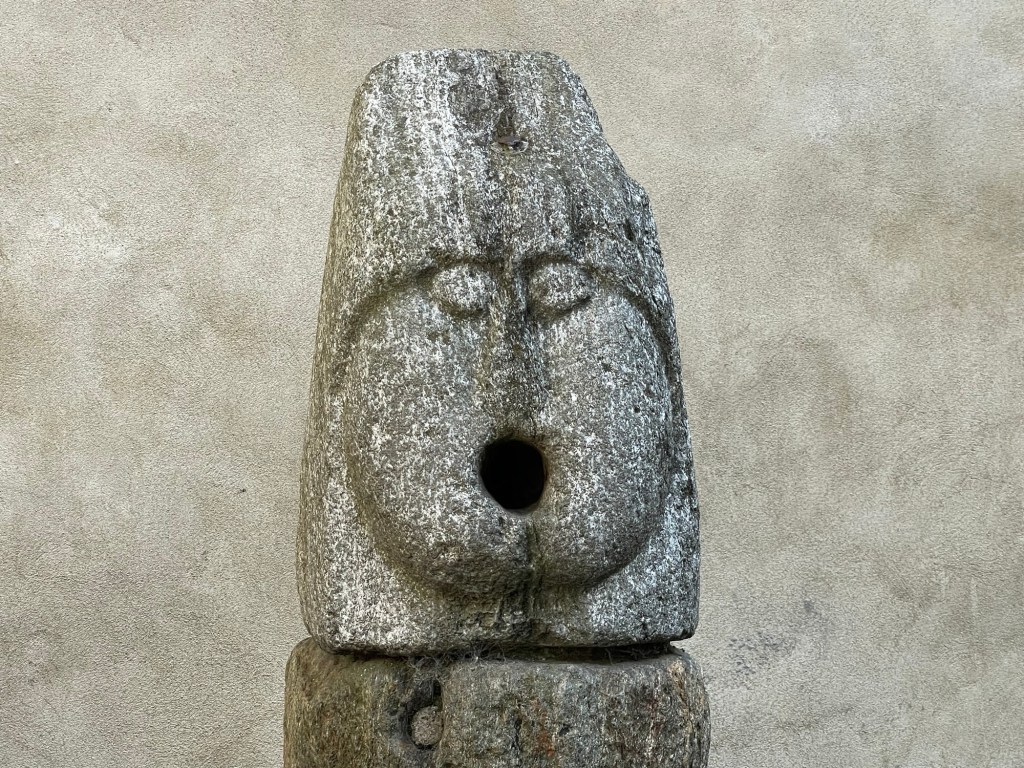
In the valley running alongside the fortress is an old medieval village that used to line the main road through the pass. Since newer roads have rerouted the traffic, it is now pedestrian-only. The oldest known public fountain in Italy is found here, dating to 1598. The water now comes out of a bronze pipe, but once spewed forth from the mouth of a stone wild man. He now stands in view across the street.
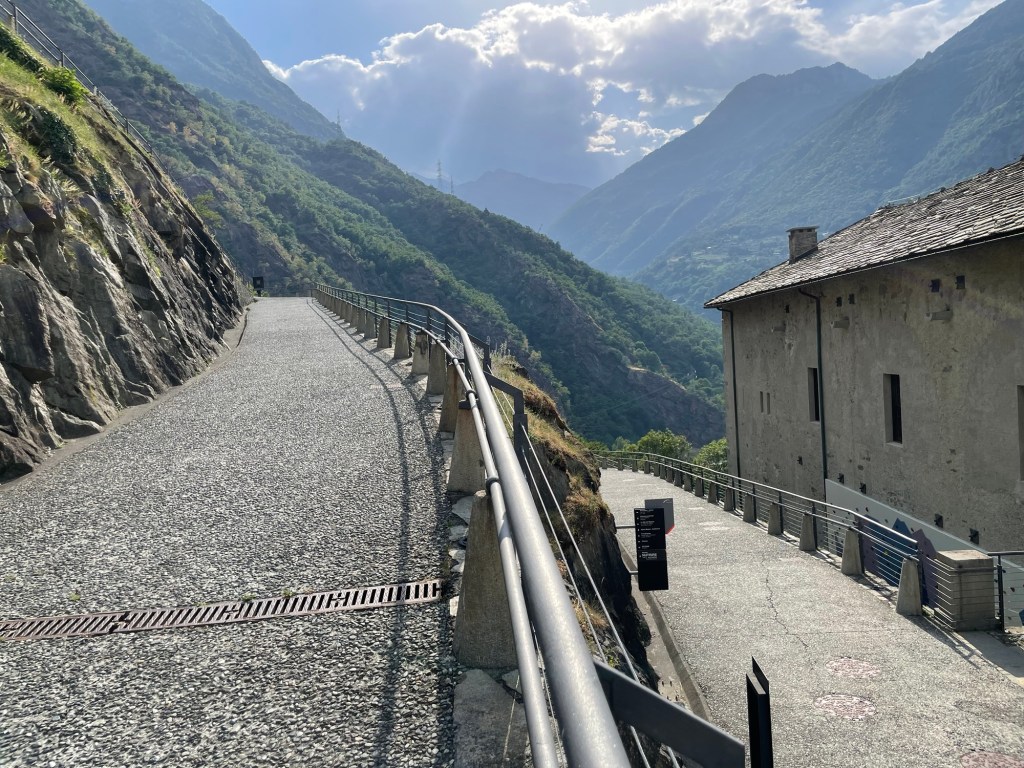
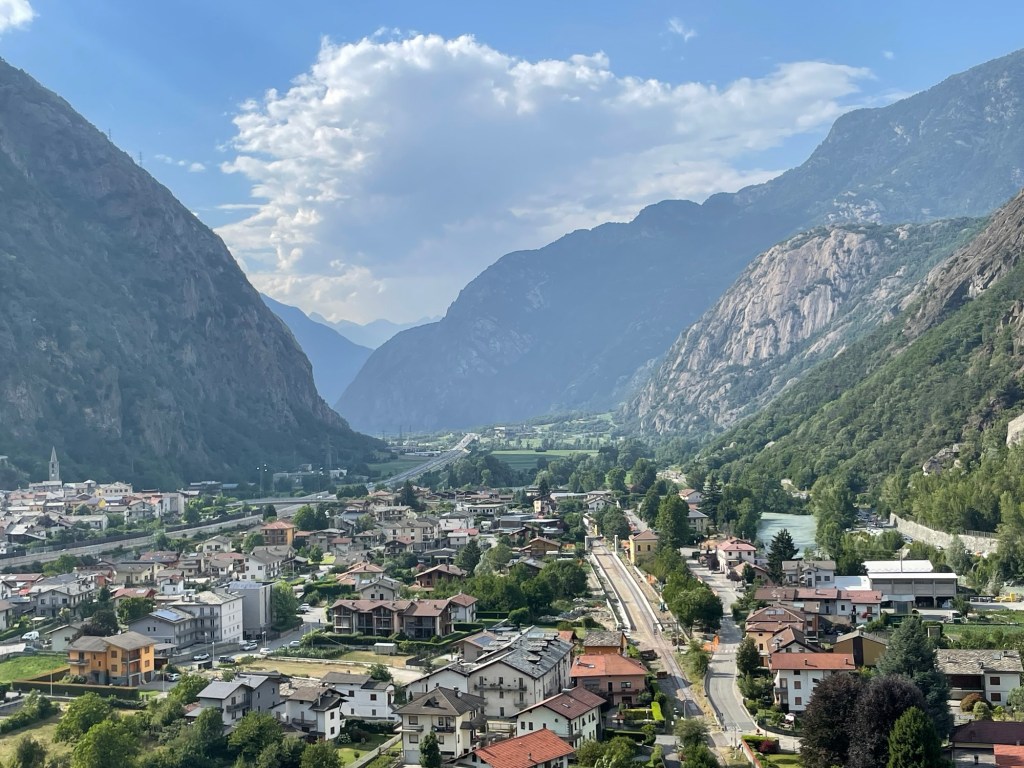
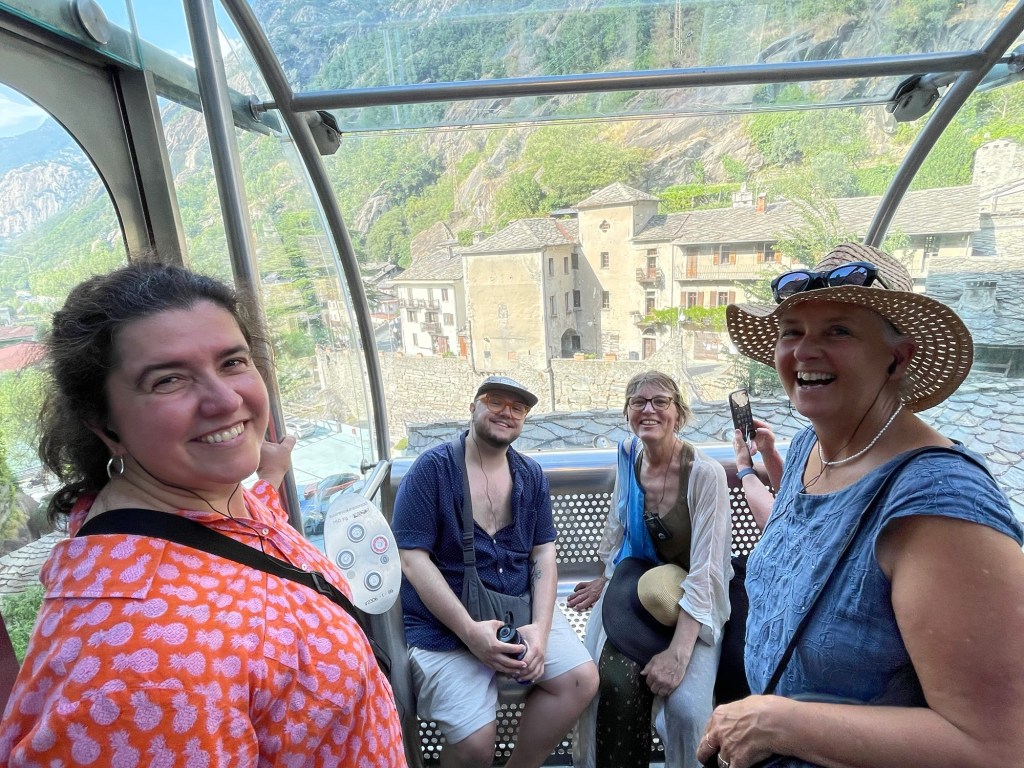
The fortress itself is built in three successive levels, each independently capable of withstanding a siege. Although a winding road links them up, most visitors take a series of three funiculars to the top. From there, one gains a premium view up the Valle d’Aosta.
Commemorating the Avengers movie shot here
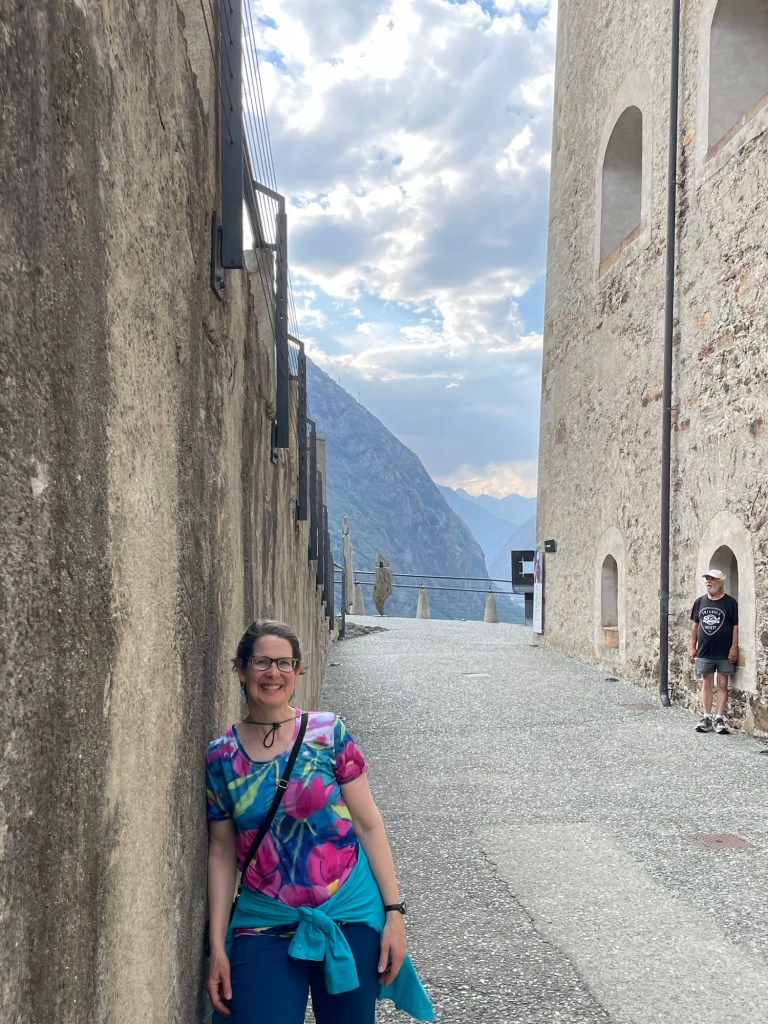
The fortress is now used for museums and event space. We didn’t have time to see much, but we popped in to view an exhibit of cycling photographs on display in the chambers under this wall.
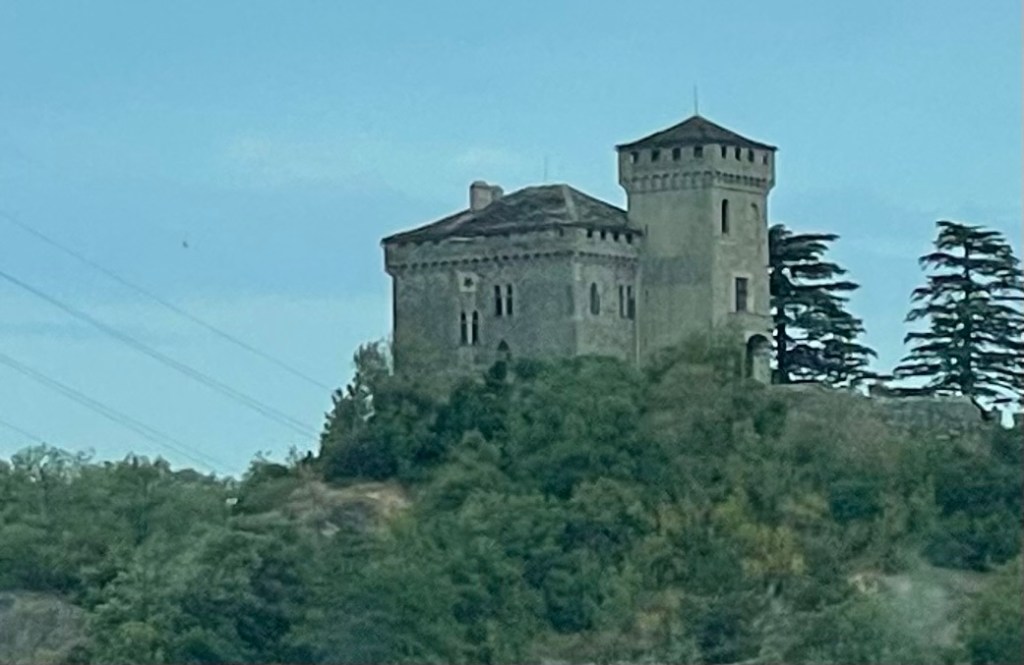
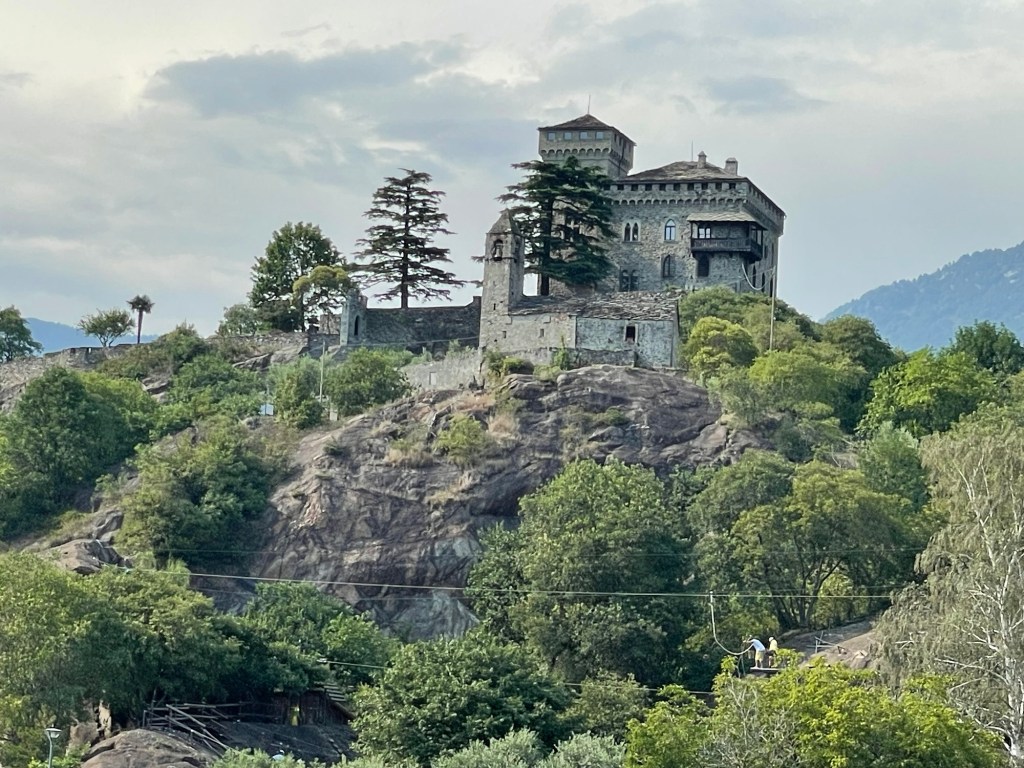
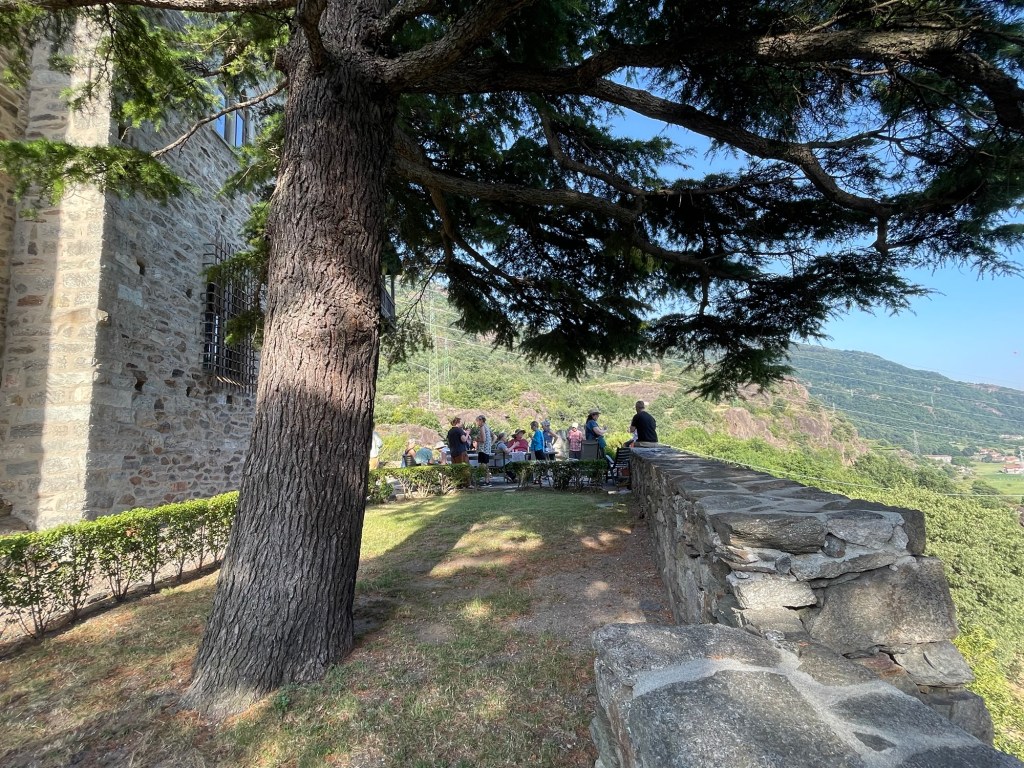
On the way home, we got this view of our singing castle from the other side.

Surprise! Now We’re in Italy!

Back in December, we both participated in a chorus that sang Charpentier’s Messe de Minuit, a baroque masterpiece. (You can see the recorded concert here.) While doing that, we learned that the couple running the chorus were going to be teachers on a summer trip to Italy. The plan was to sing madrigals in a real Italian castle, while exploring some of the finest wines and cuisine on Earth. Where do we sign up? We booked this trip to Italy long before the Alaska vacation was conceived, which is why it may seem as though we are jetting from one trip to another with only a few token days at home in between. Or perhaps not just seem — that’s exactly what we did!

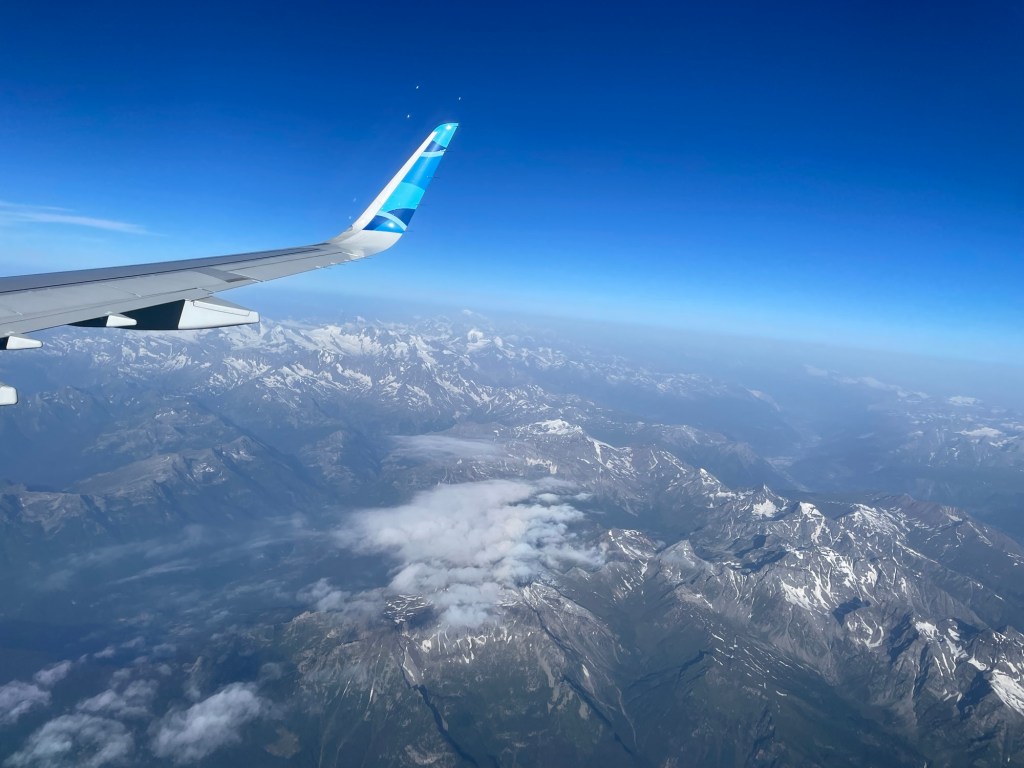
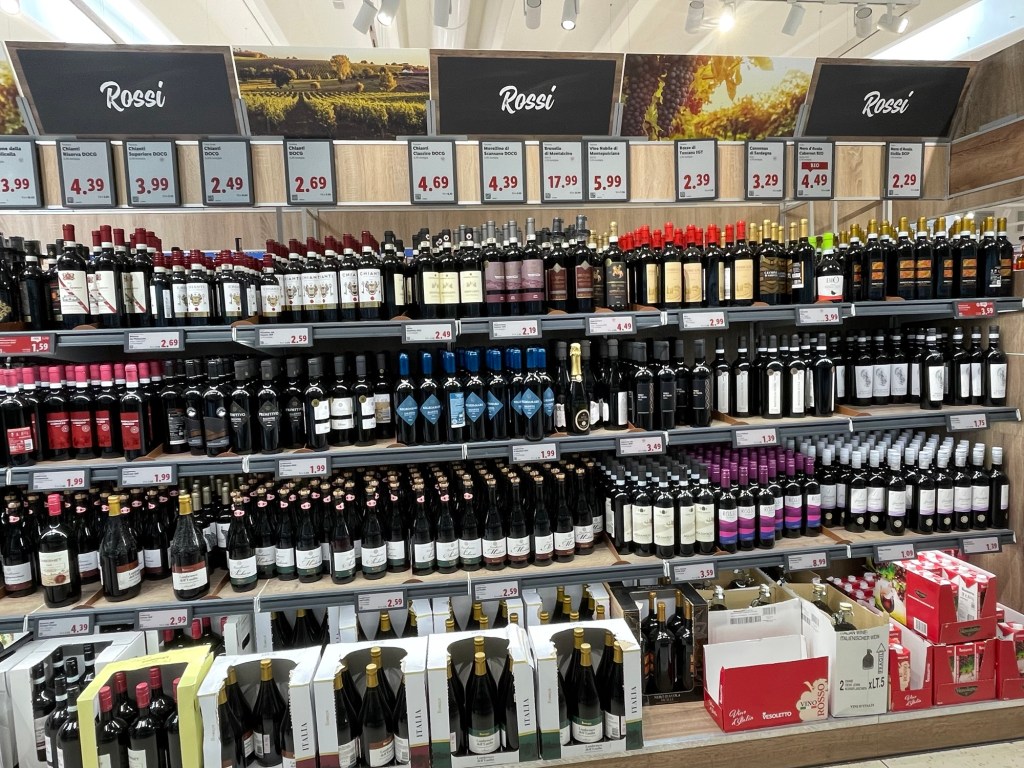
The contrast between the two trips was interesting. Getting to Alaska took three separate flights. For this trip, we had a direct flight from Boston to Milan. We saw mountains both times, but very different in look and history. Our plane came right over the Alps on its way in. From Milan, we rented a car and drove it to Torino, where we picked up another couple from western Massachusetts who are also joining our larger group. From there we proceeded to our hotel in Ivrea, nestled in the foothills of said Alps. Not wanting to make a big production out of lunch, we settled for a trip to the Lidl right across the street from our hotel. They have fine DOCG wines there for 2 euros a bottle.

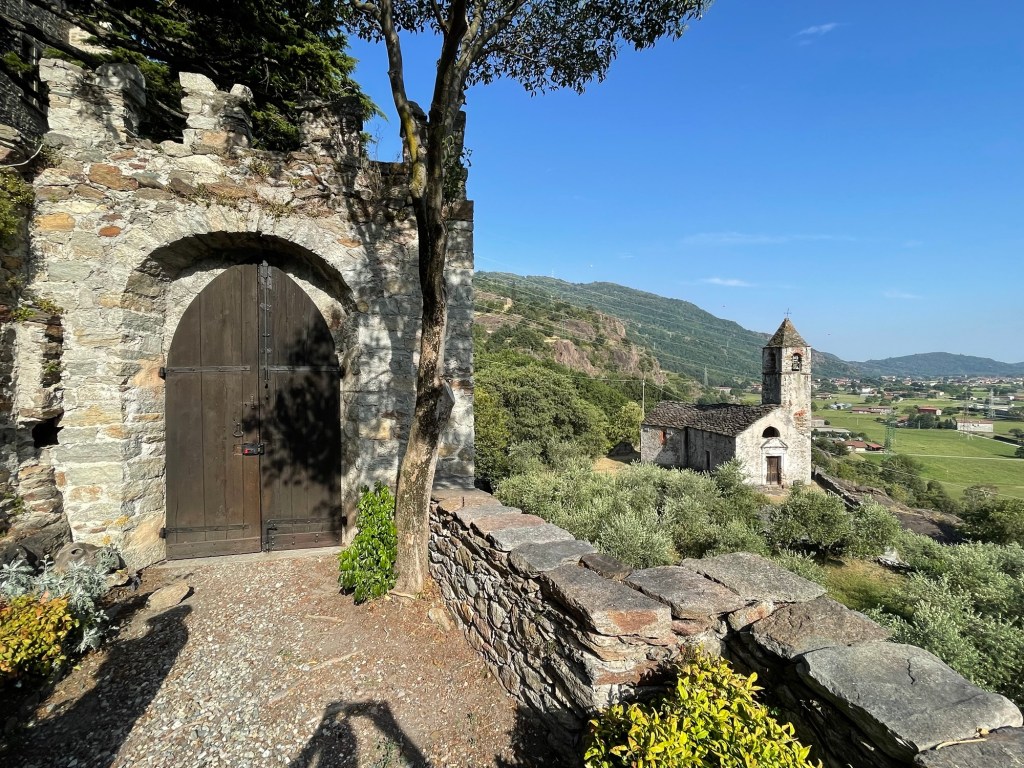
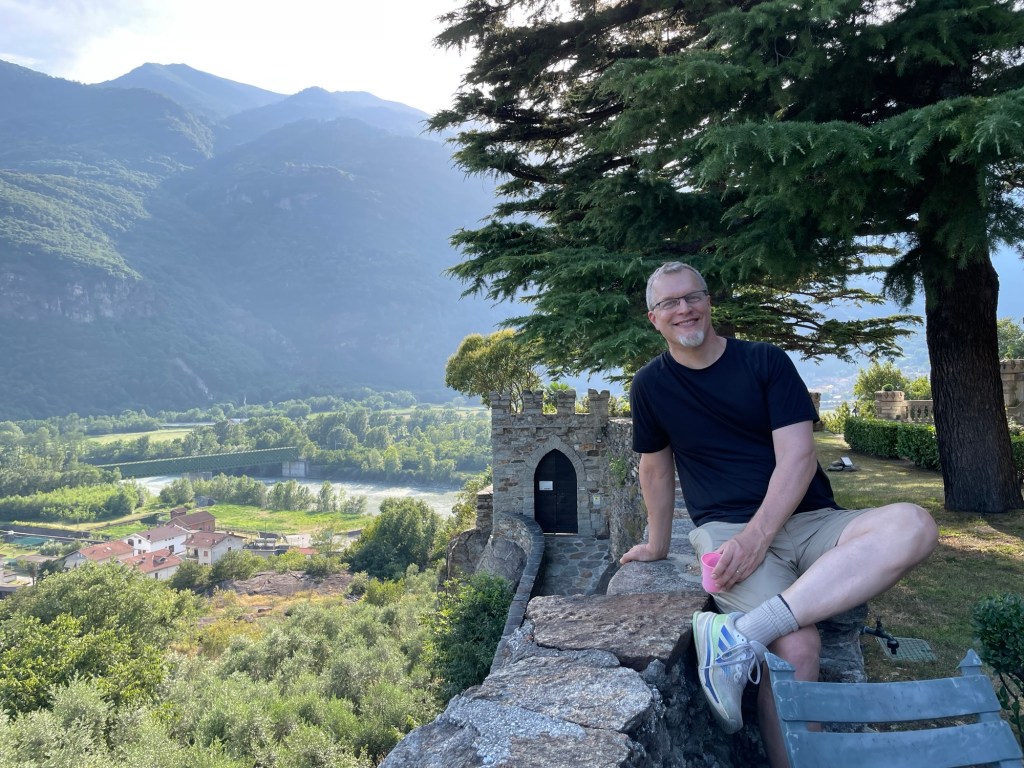
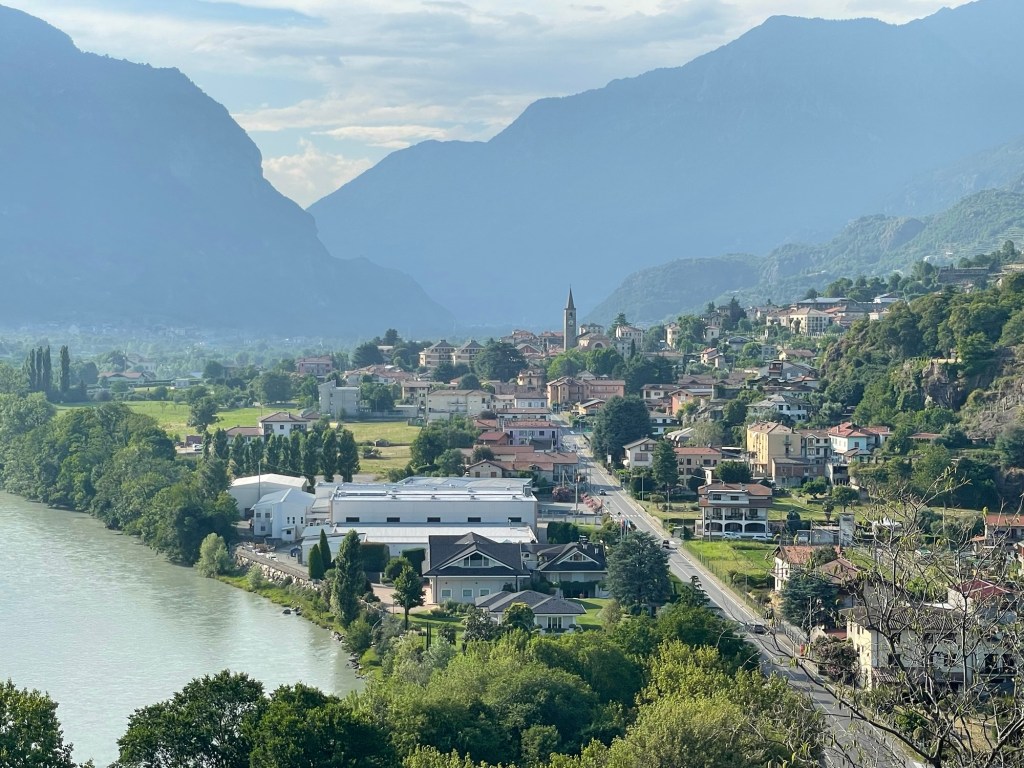
For this opening day, no singing was planned. Instead we had a social gathering on the terrace of the castle so that everyone in the group could meet each other. This is a real castle dating in part back to the 9th century, set on a hill, and only reachable via a steep footpath from the carpark below. We’ll talk more about the beautiful interior tomorrow. For now, we’ll just share the beautiful views from the top. Amazingly, this place is the childhood home of one of the group organizers. Although she had not been back since her family sold the property a few years back, she remembers the place vividly.

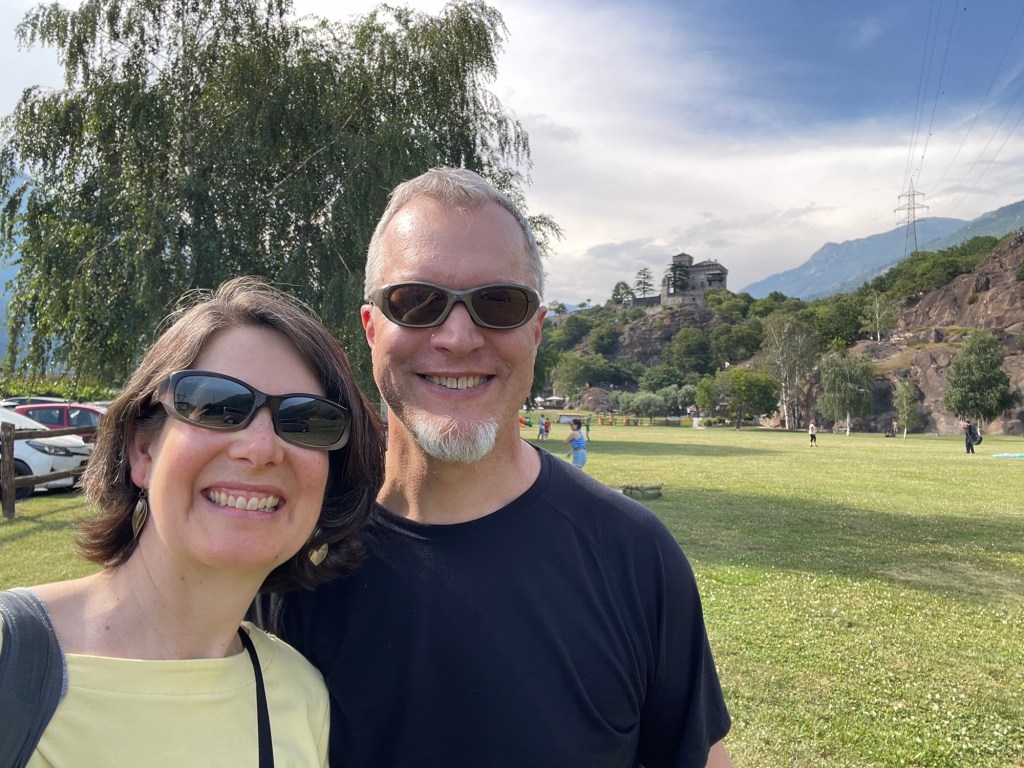
View from the park, with the castle on the hillside
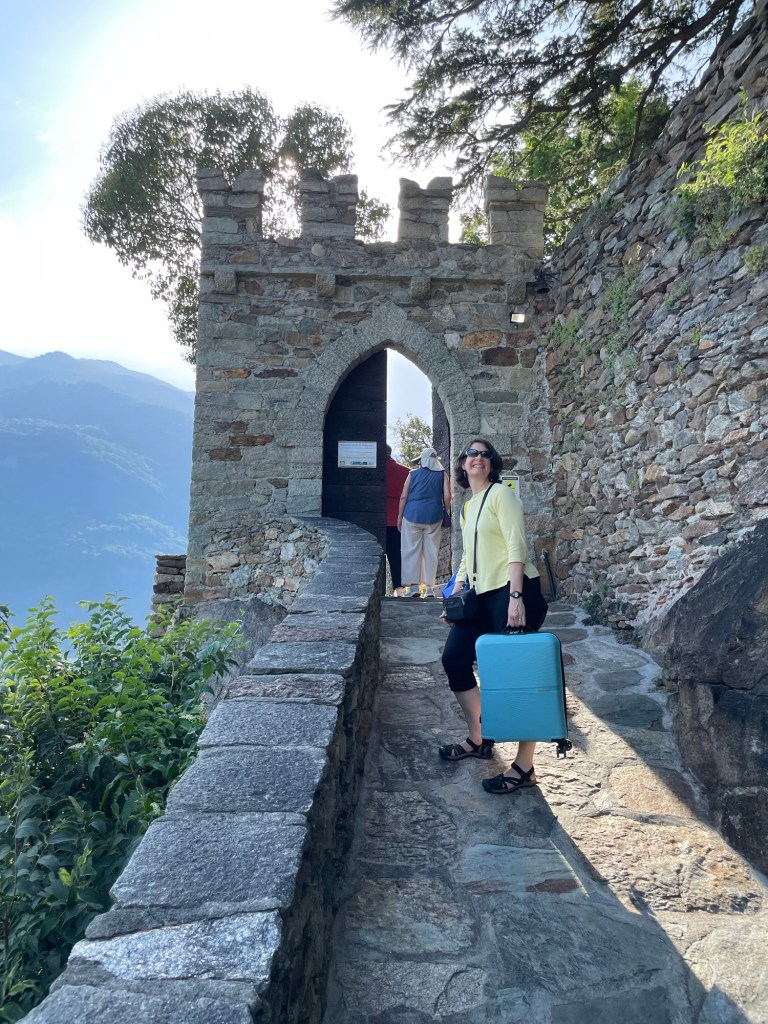
Near the top of the long steep path to the castle, much of which is not paved. Some of our group are staying in the castle; Susannah helped carry luggage.
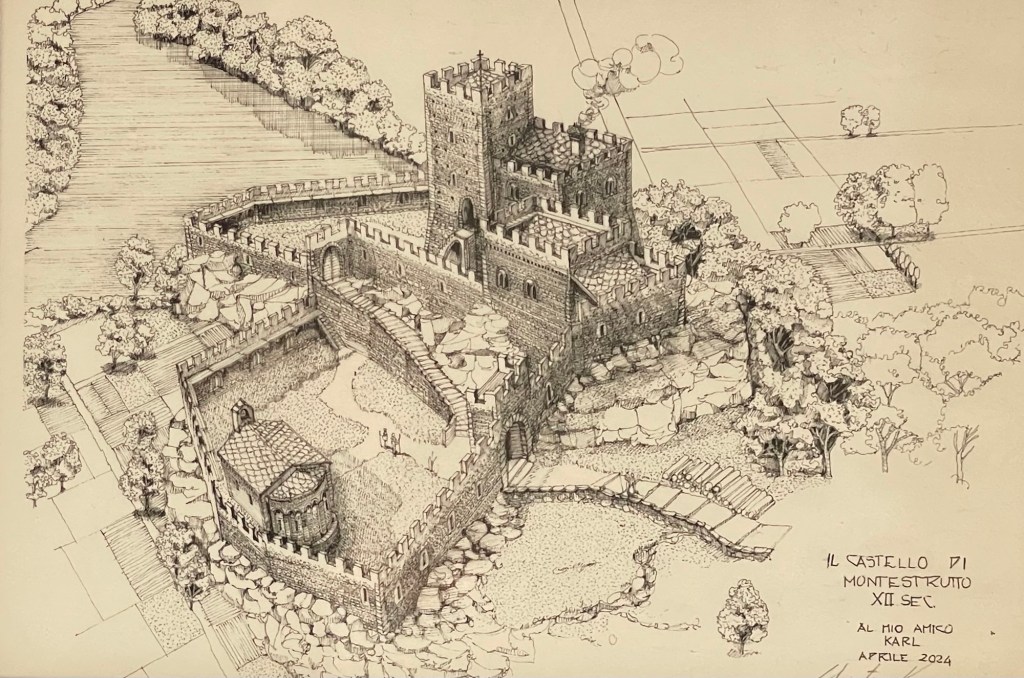
It’s hard to get a good close-up view of the castle exterior, but this drawing provides a good sense of the layout.
Pretty sure this was one of the standard shots they showed during the ’26 Olympics?
Our group on the terrace

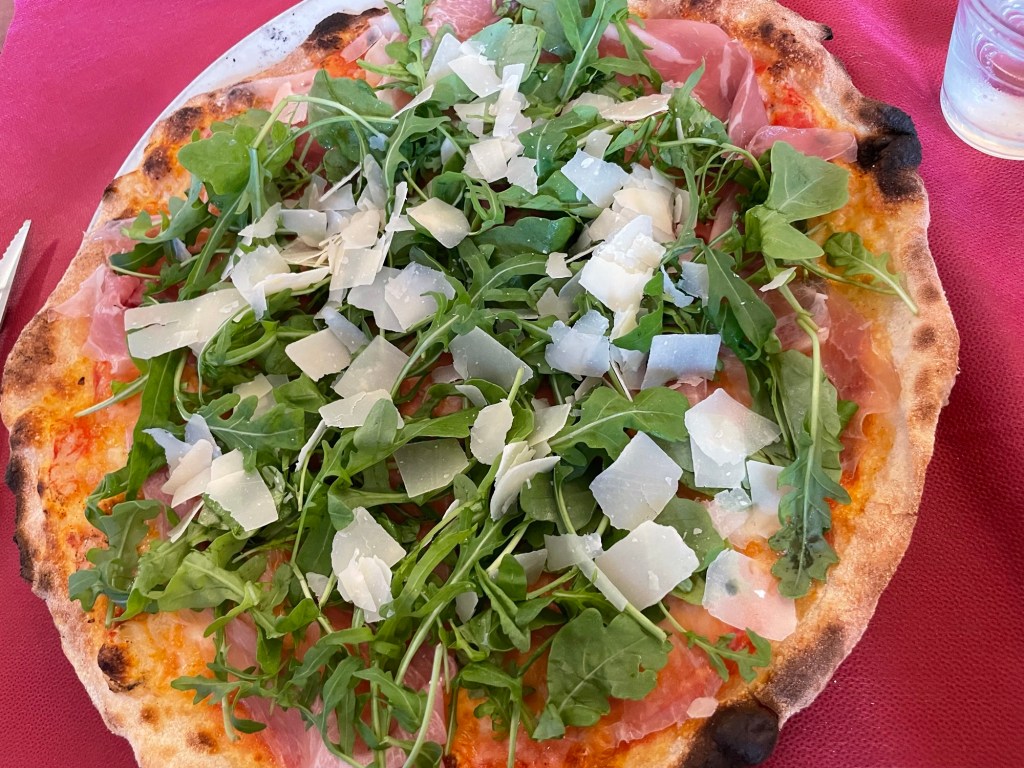
After the gathering on the terrace, we all trooped back down the hill to one of the restaurants in town for a more formal dinner. Our group seems very friendly. Almost everyone hails from the Vancouver region, because the principal organizer of the trip is based there. Many of them already know each other, but they’ve been very welcoming of us.

Italians really know how to make pizza!
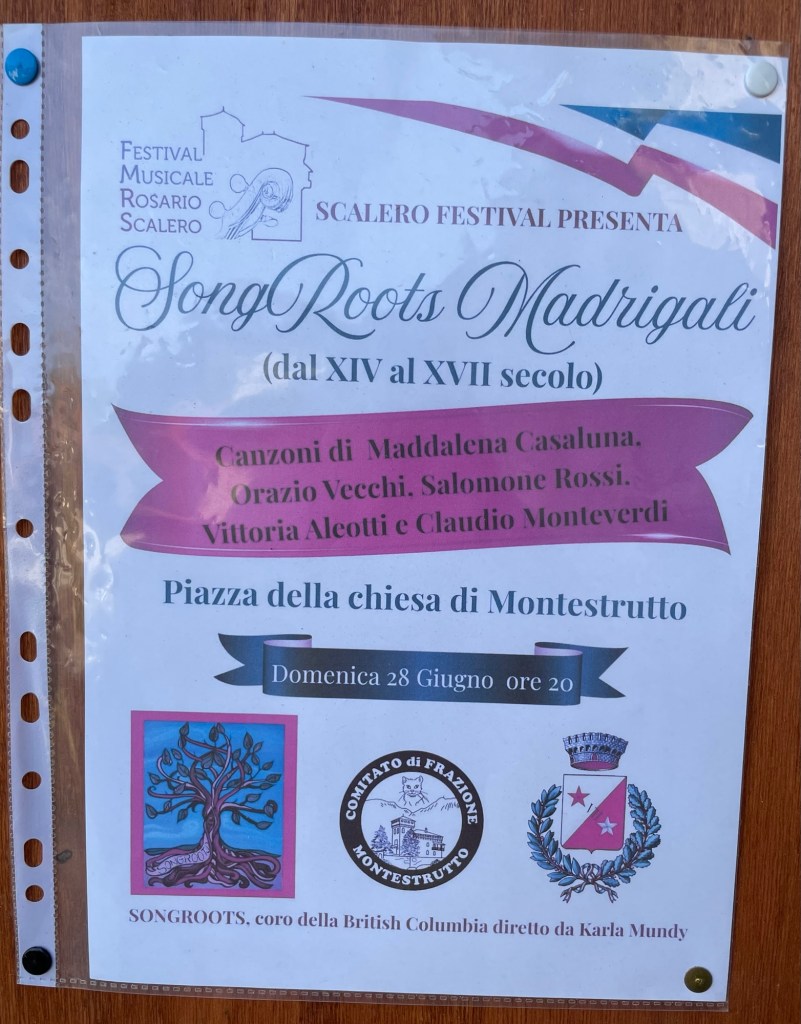
Along the way we saw this flyer for the concert our group will perform at the end of the week

Summing It Up in Sitka

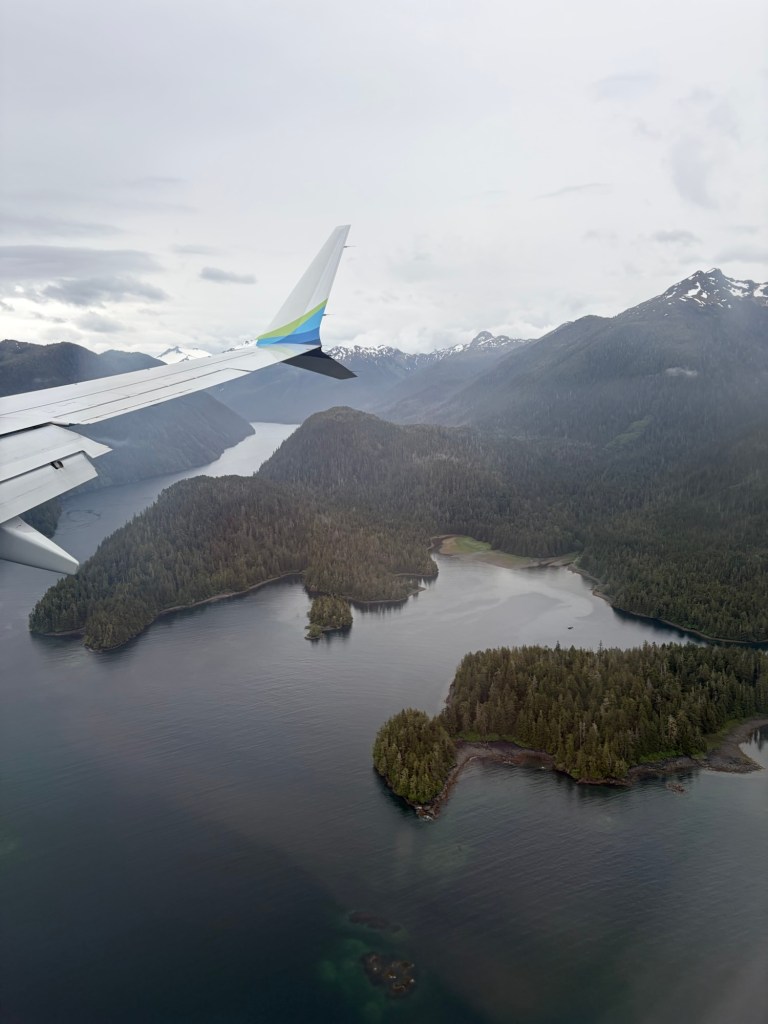
Air and sea travel are far more important in Alaska than elsewhere in the United States, because there are many places that the roads won’t take you. Case in point: this morning, we shared our flight to Sitka with about a hundred teens and preteens who were all traveling together on their way to the summer fine arts camp. What would likely have been a bus in Massachusetts (if not individual family cars) was instead a jet airplane. We don’t envy the adults responsible for shepherding that many kids through the air travel gauntlet!

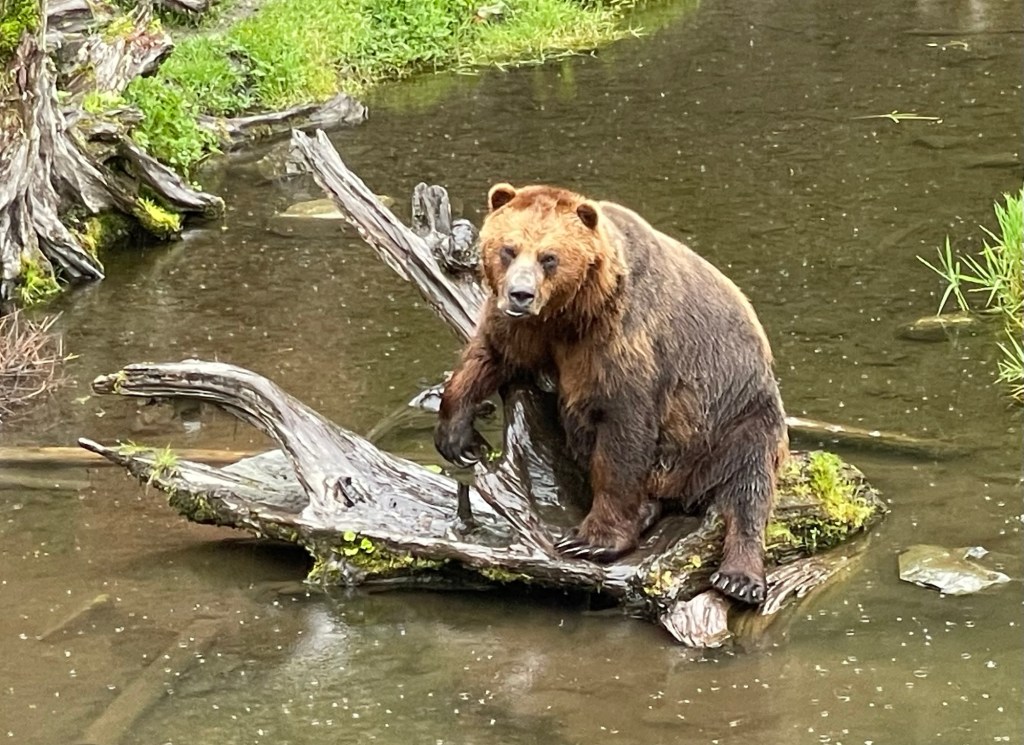
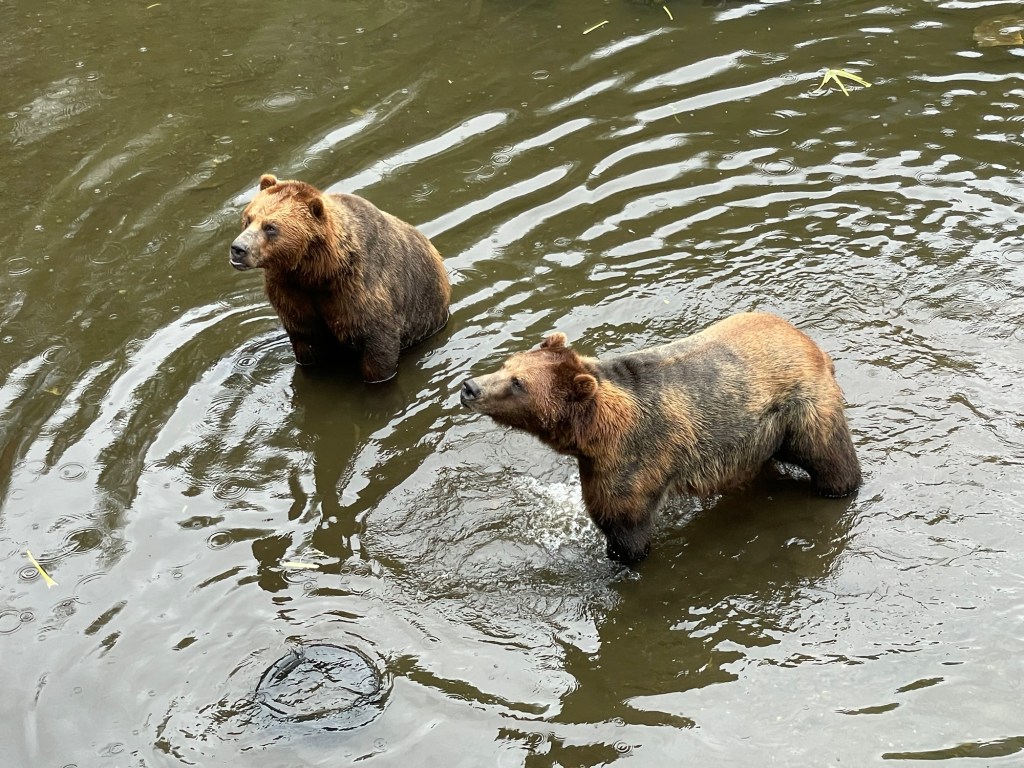
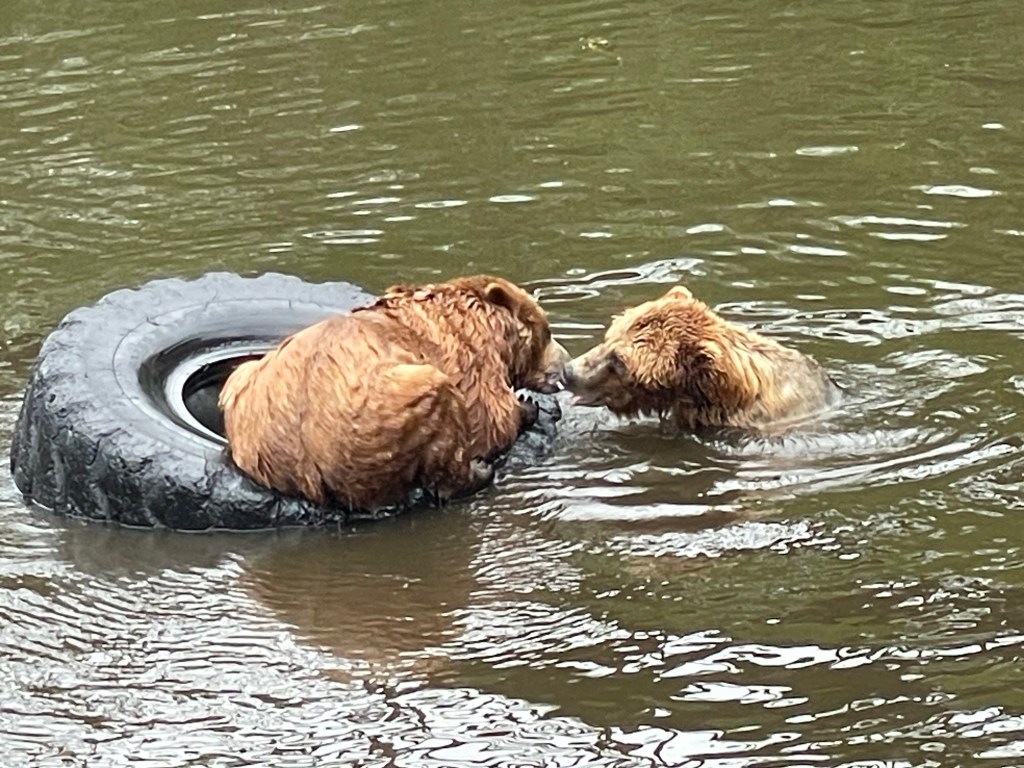
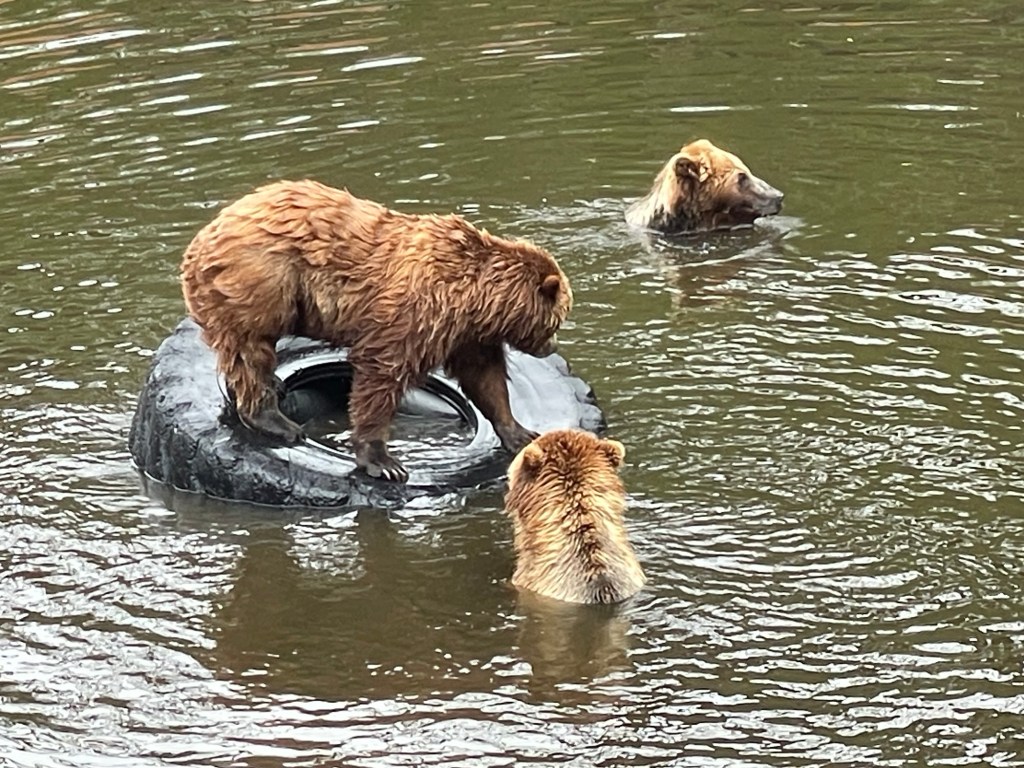
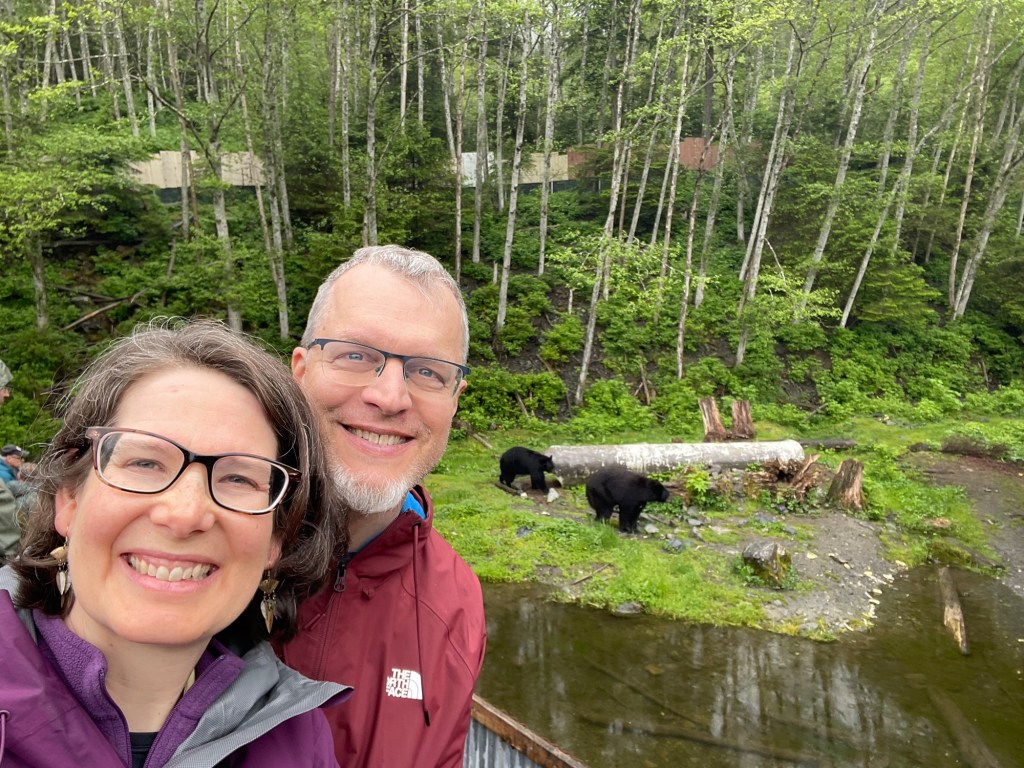
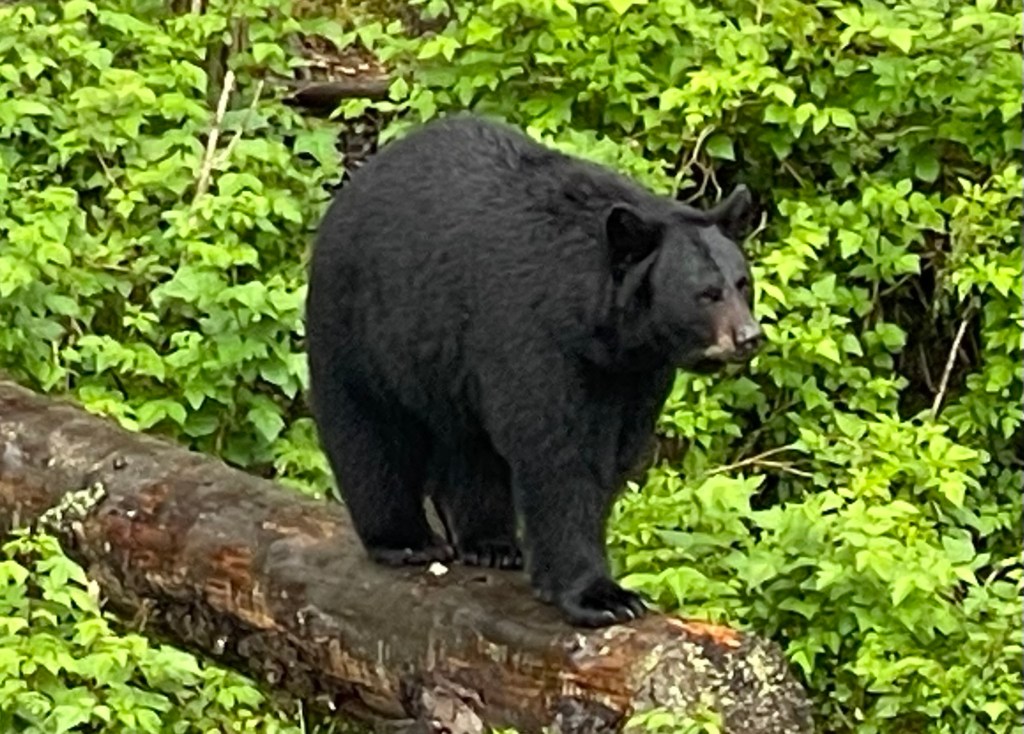
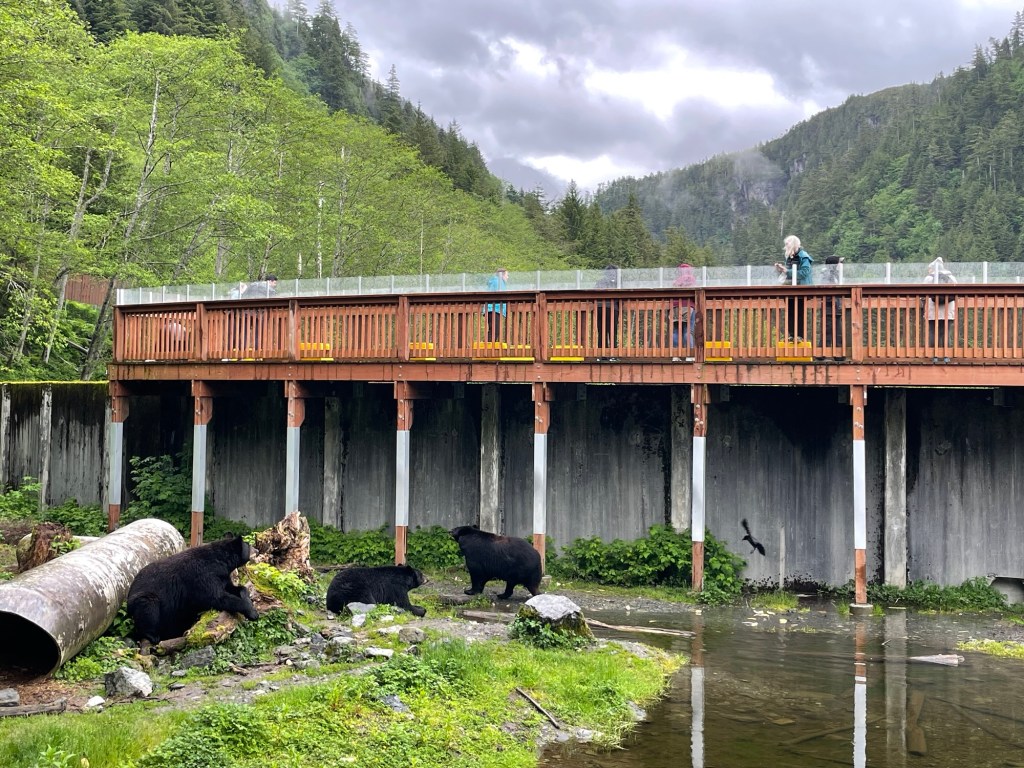
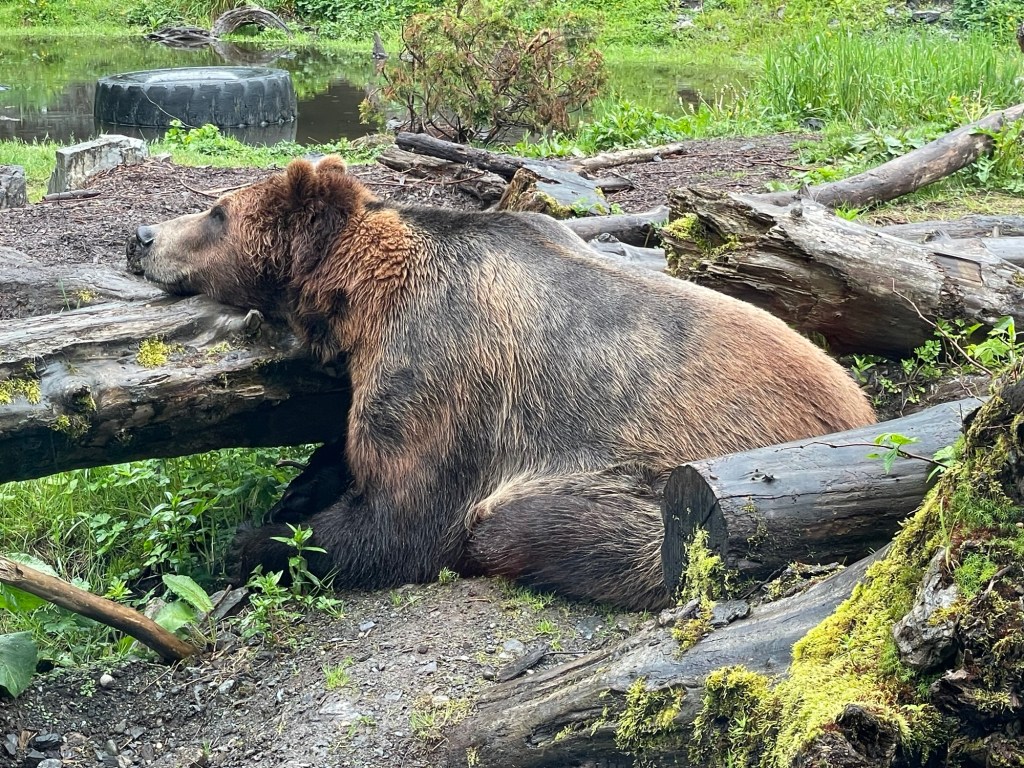
Our time in Sitka is limited, so we tried to make the most of it, guided by local tips from Susannah’s former student Hannah. Our first point of call was the dramatically named Fortress of the Bear, which is actually a bear sanctuary catering mostly to raising cubs who have lost their mothers. Because it is illegal under Alaska state law to release a bear into the wild once it has been in captivity, the bears in the sanctuary must stay there for life if they are not transferred to a zoo out of state. The bears are housed in giant circular enclosures that were originally built as part of the local paper pulp mill and have now been repurposed. Unlike captive bears we have seen elsewhere, these animals did not seem bored or depressed: they were always active, exploring their enclosures and the toys within them, playing with each other, and periodically asking for food. Several of the bears were swimming in the water, and at one point one climbed into a floating tire much as a human might ride an inner tube.

The bears signal with their paws to ask for food

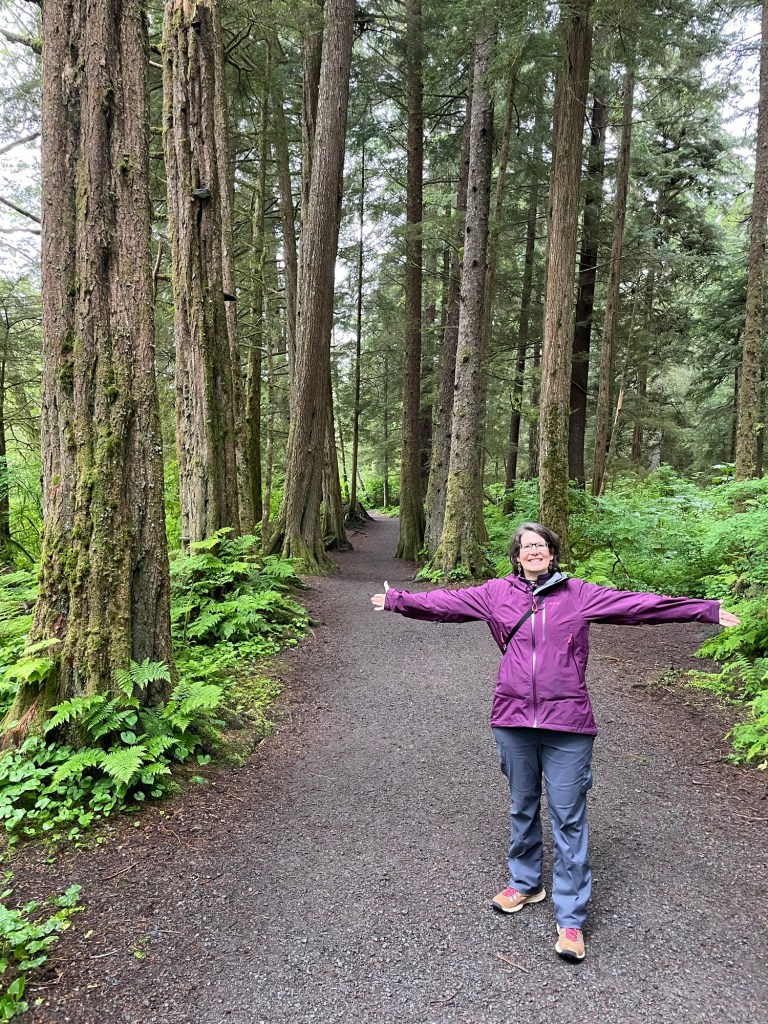
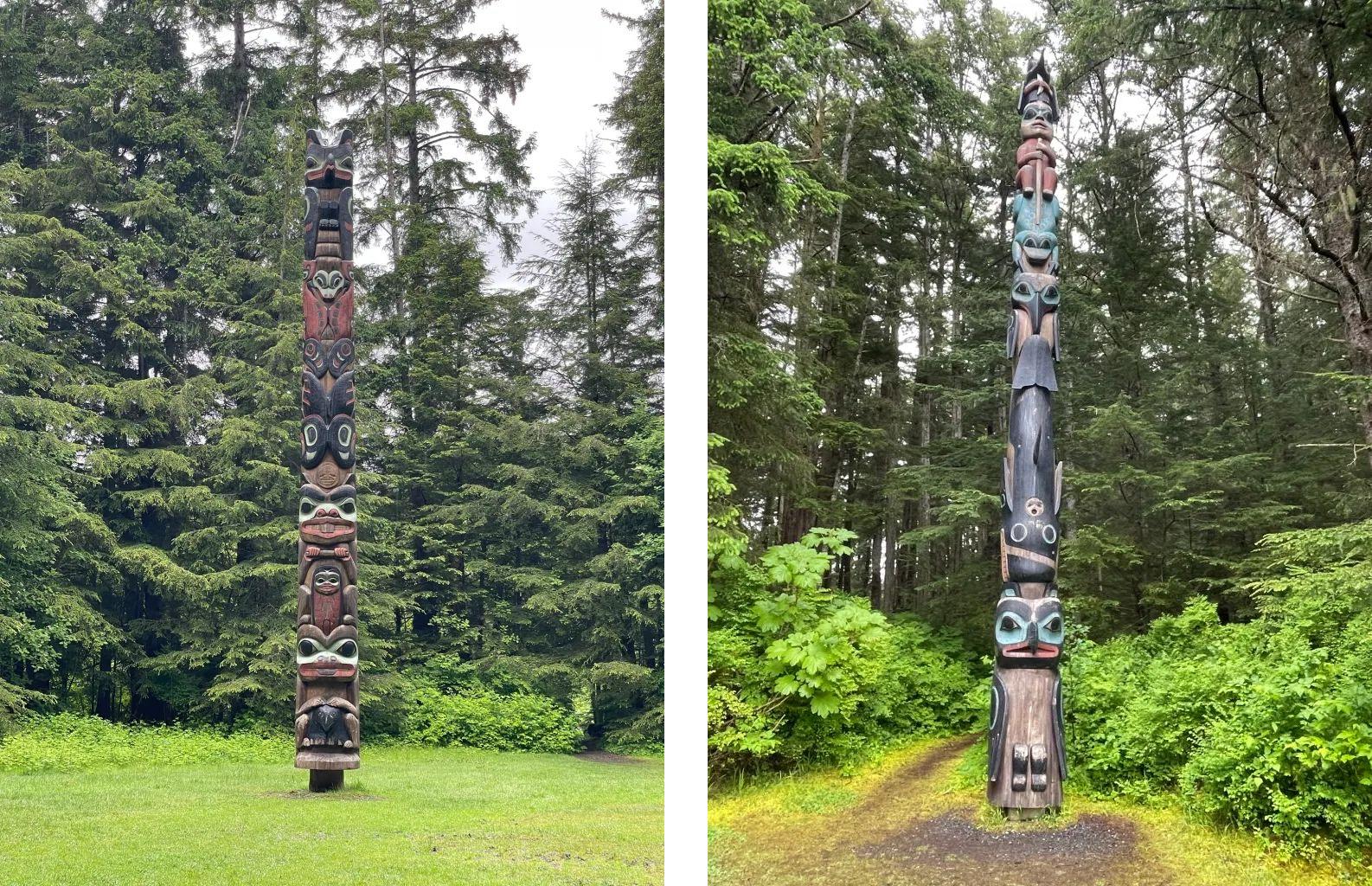
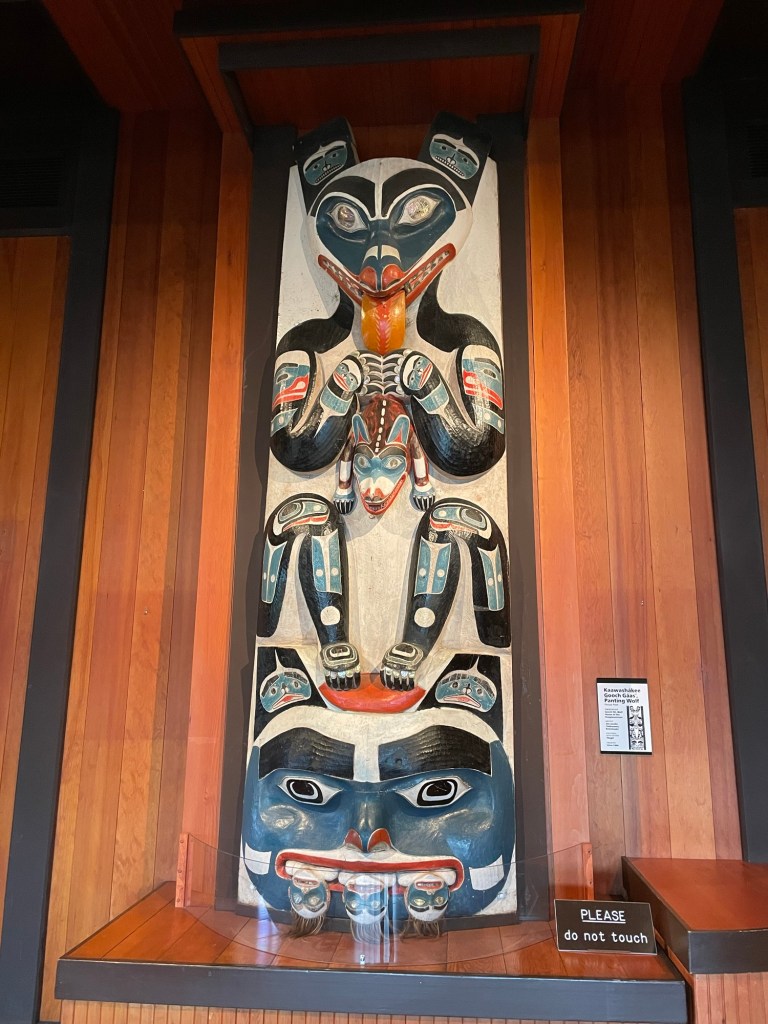
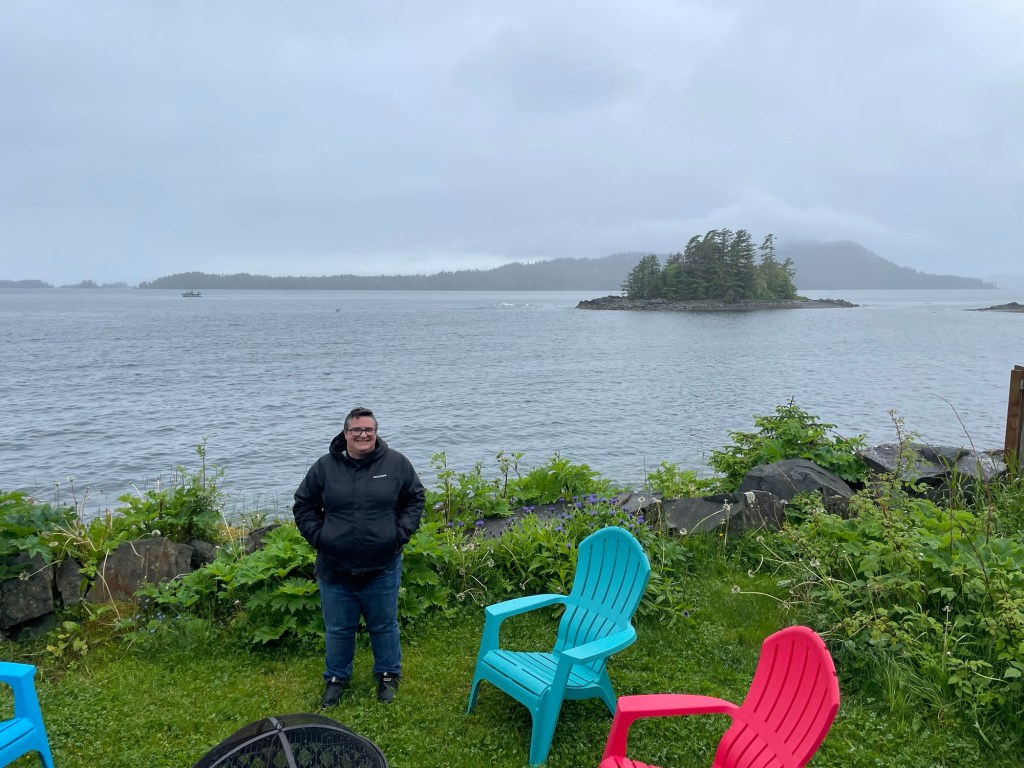
From the Fortress we traveled to the Sitka National Historic Park, which commemorates a pivotal battle between the local Tlingit people and the Russian colonists intent on controlling the local fur trade. Despite preparing carefully and fighting bravely, the Tlingit were forced to retreat when their store of gunpowder and ammunition was blown up. The Russians capitalized on their victory by building a fort overlooking the settlement they called New Archangel, now the city of Sitka. (Fun trivia fact: Technically, Sitka is the largest city in the United States by area, because its municipal boundaries include the entirety of Baranof Island. Most is undeveloped, since the main coastal road is only about 14 miles or so end to end.) Also on display at this site are dozens of totem poles and other carved wooden artifacts. Although the creation of totem poles originated in areas farther to the south, many were collected here as a way of preserving and displaying cultural traditions of the Pacific Northwest.
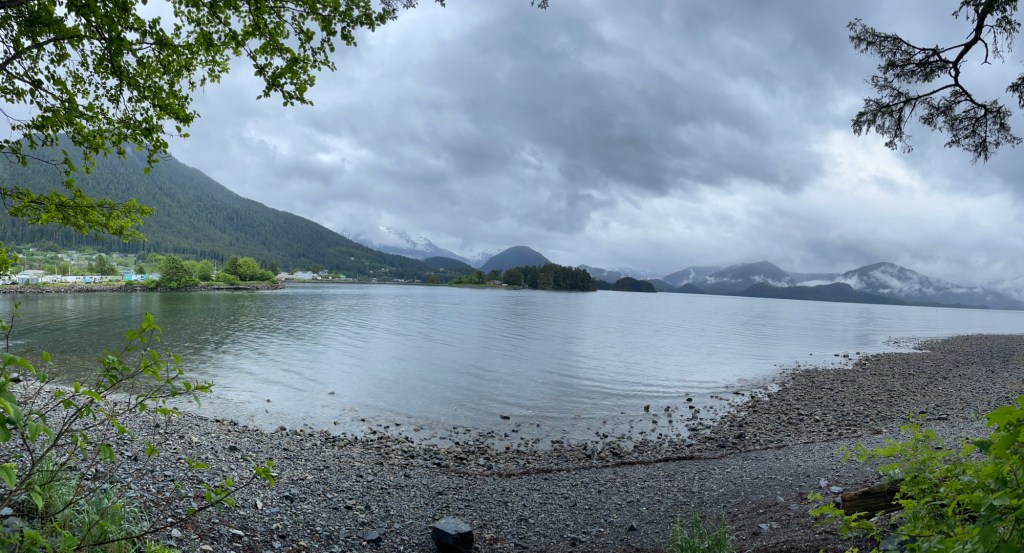
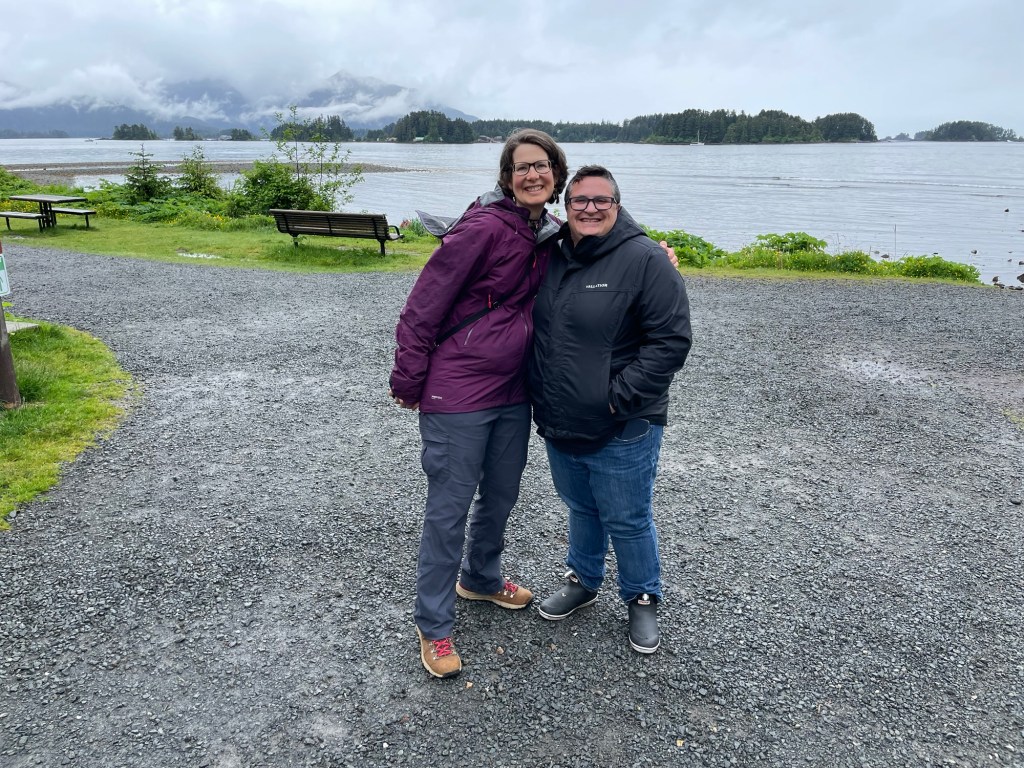
The Totem Trail has many picturesque views of Sitka harbor
The Visitor Center includes many additional carvings on display

Hannah met us at the park and took us on a scenic tour of Sitka, past the new deep-water pier that handles larger cruise ships, past her house, and to the end of the paved road and the site of an earlier conflict between the Tlingit and the Russians. (This one was won by the Tlingit, thus setting up the later battle mentioned above.) There was only one ship currently in port today, but the schedule for tomorrow will be the busiest day of the whole year, with more than 9000 cruise passengers scheduled to visit. Given that is more than the entire year-round population of Sitka, the character of the town is greatly changed by the influx. Either way, we won’t be there to see it: we leave for the airport early in the morning for our flight home.

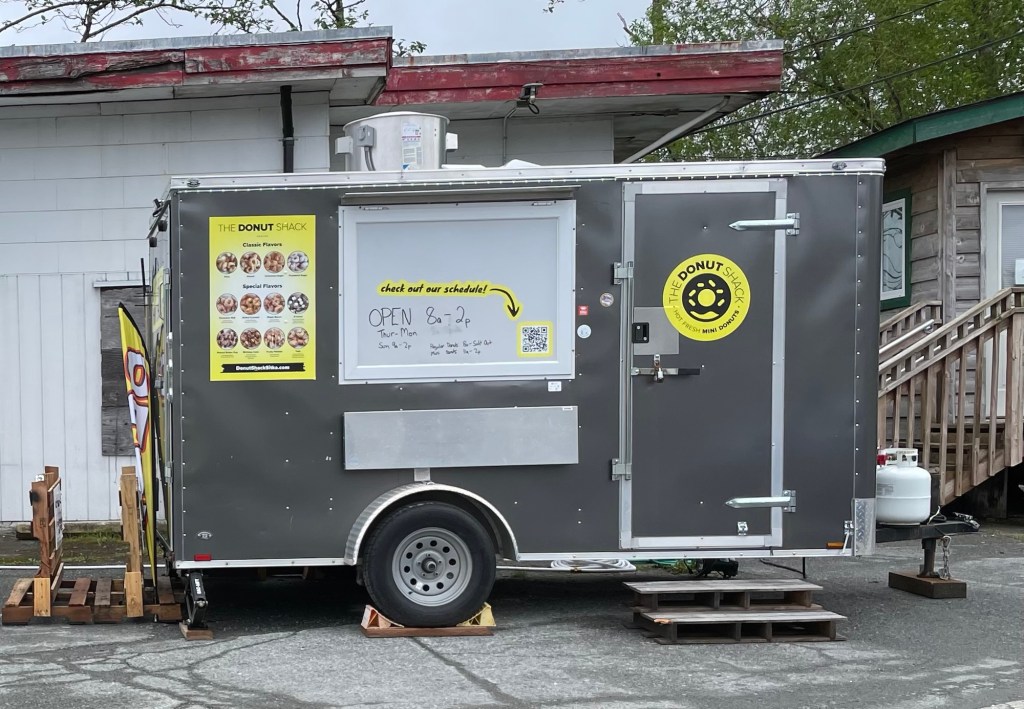
We caught a glimpse of the donut business Hannah’s wife owns, but it was closed so we didn’t get to sample the donuts – too bad!
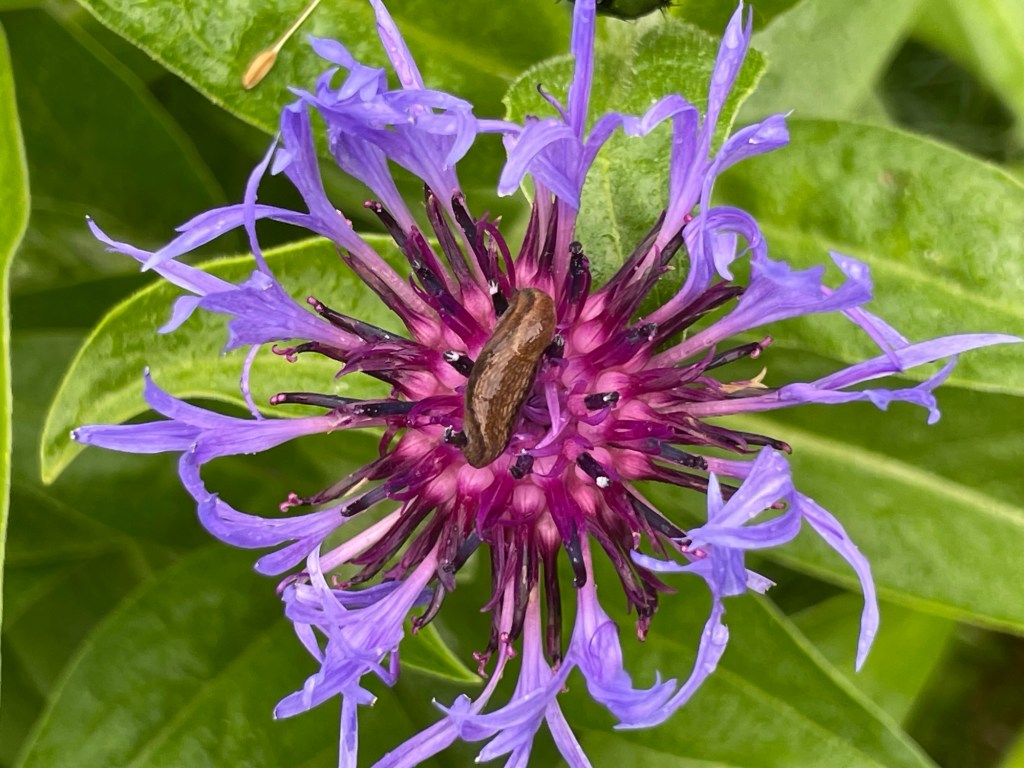
Even slugs like the pretty flowers in the garden at Hannah’s home
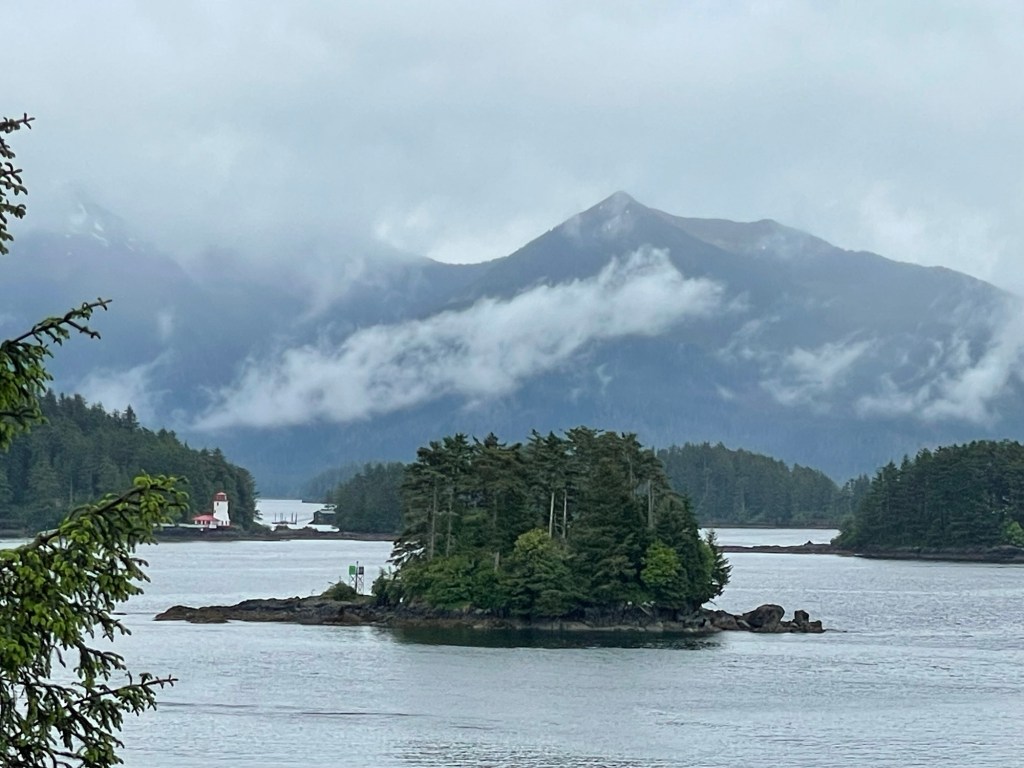
The view from Hannah’s home – the nearby Magic Island is reachable on foot during low tide

We closed out our day at dinner with Hannah and her family, where we enjoyed catching up and learning a little more about life in Sitka. This marks the end of our Alaskan adventure: one cruise, two cities, four glaciers, six travelers, nine days, infinite fun!
Last Chance at Juneau

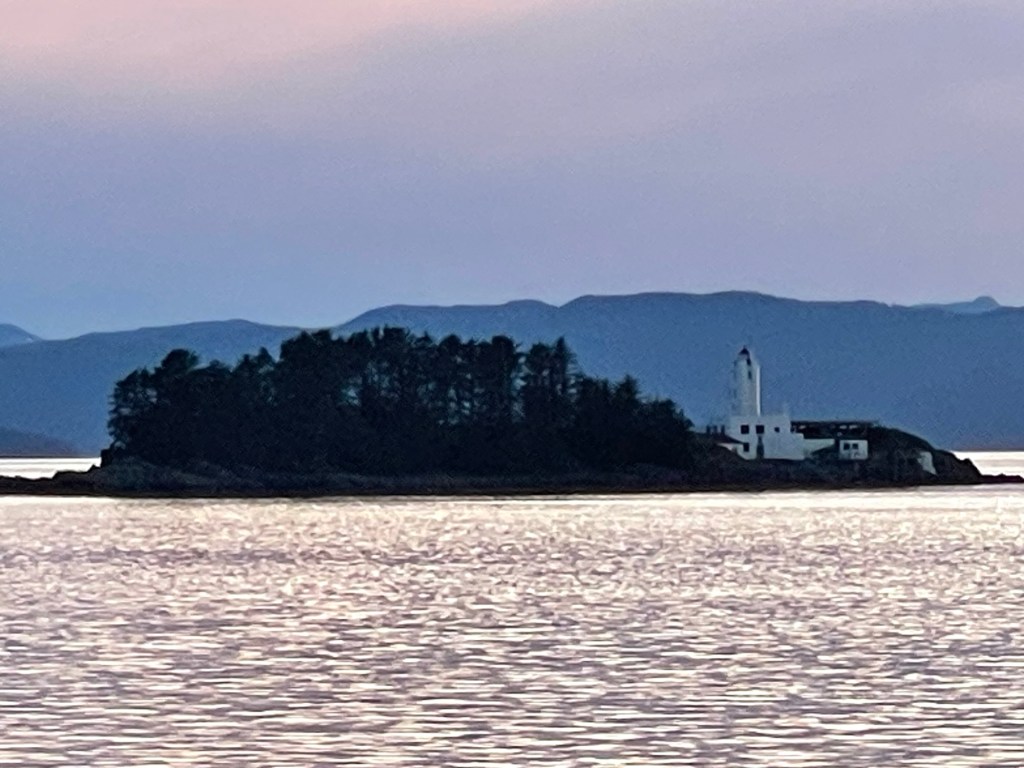
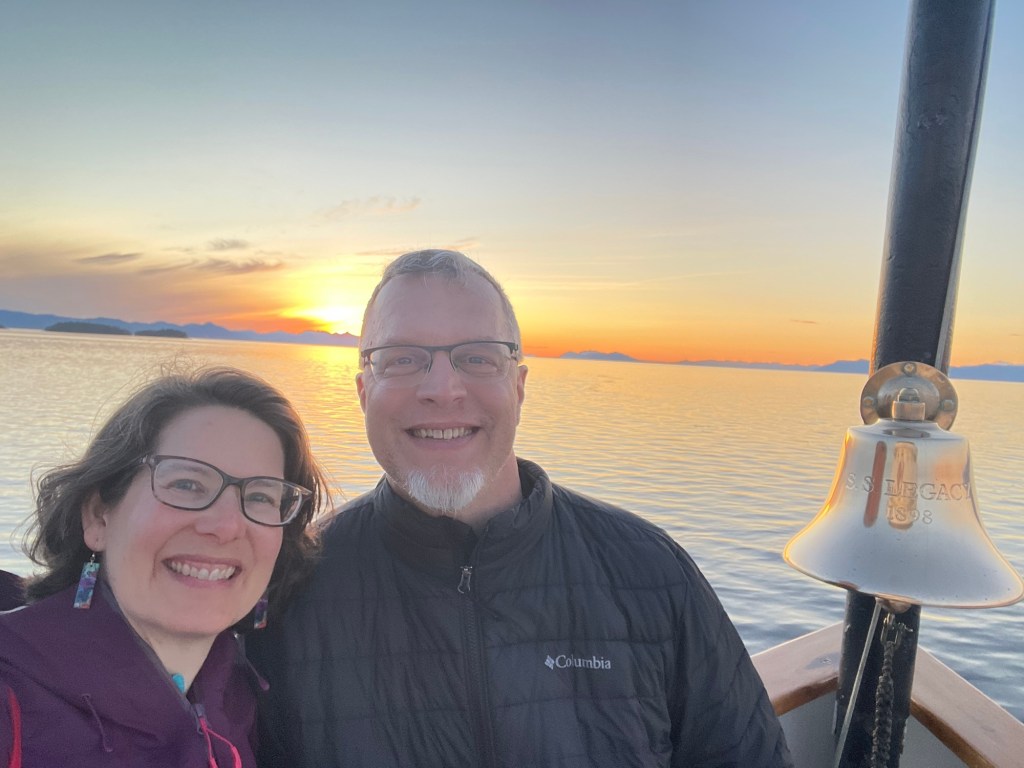
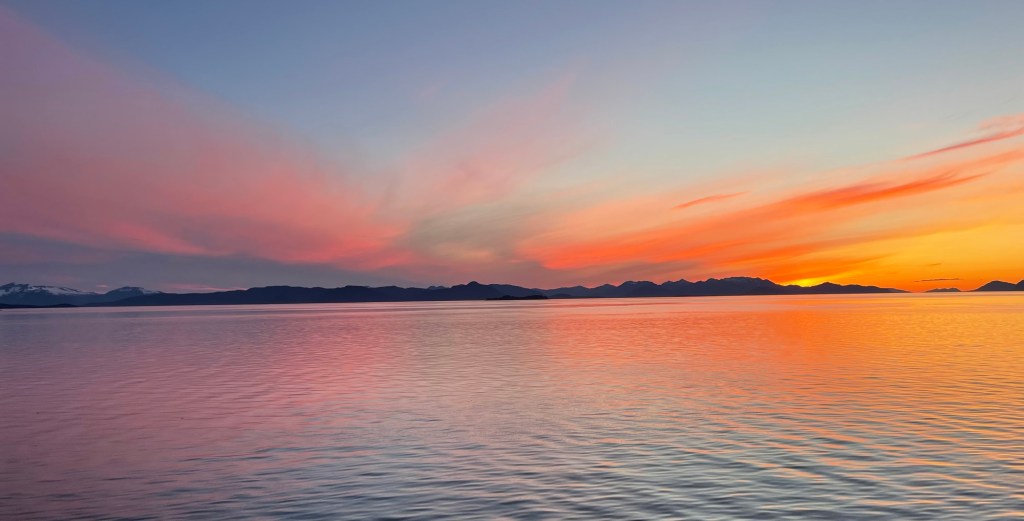
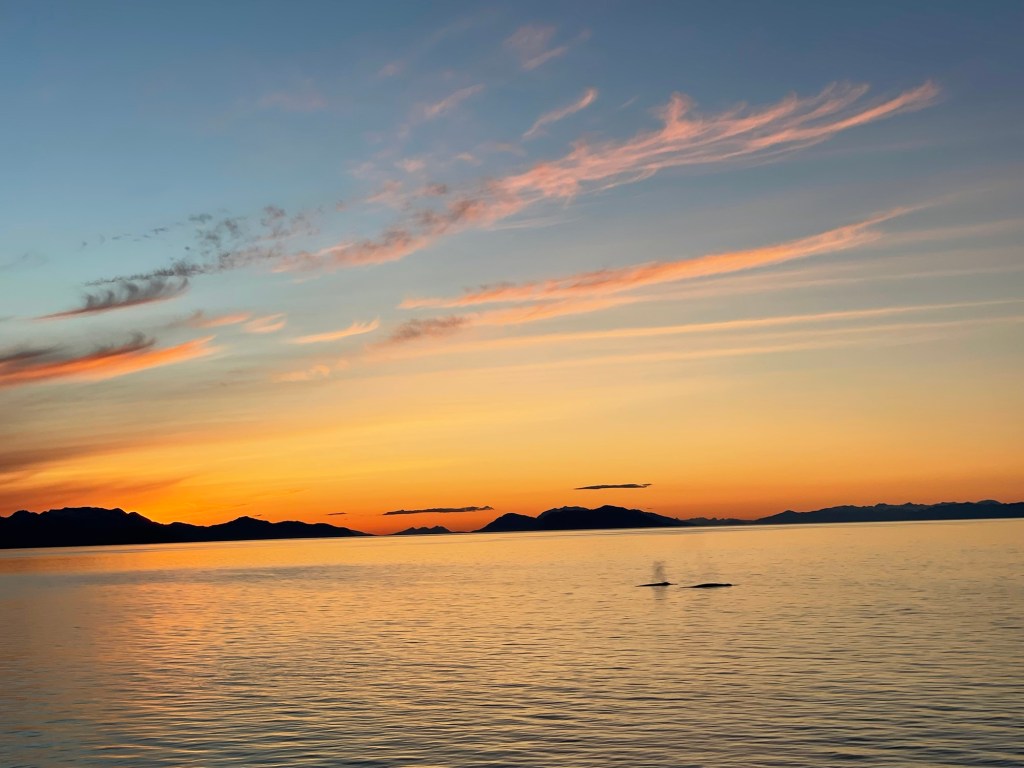
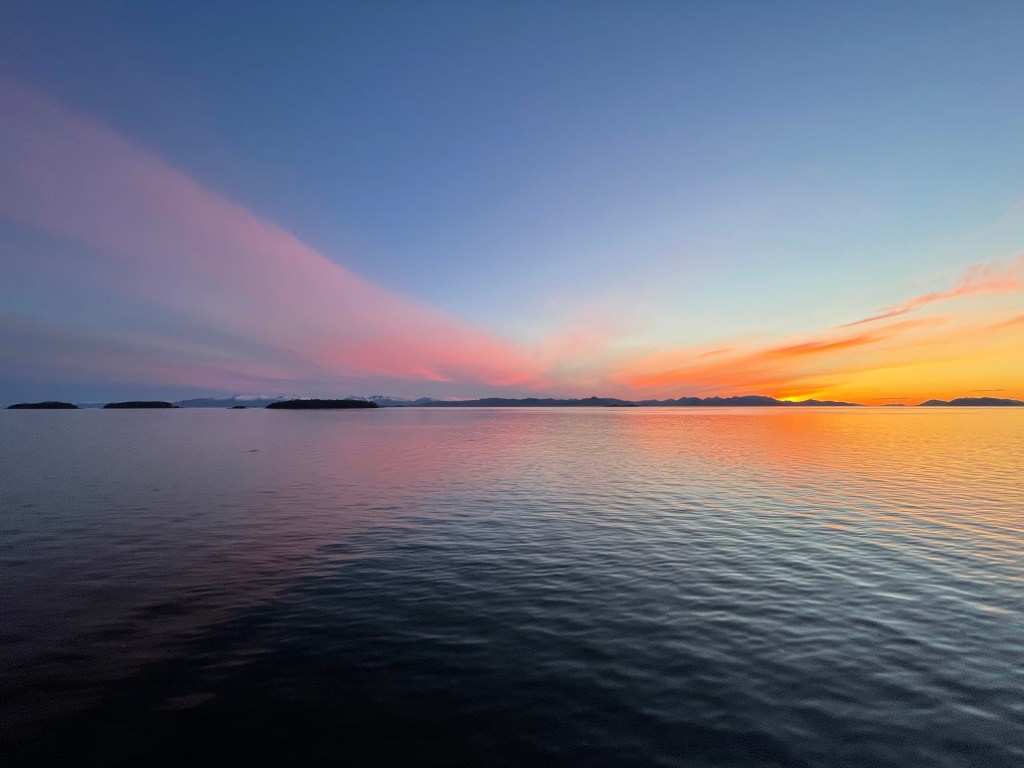
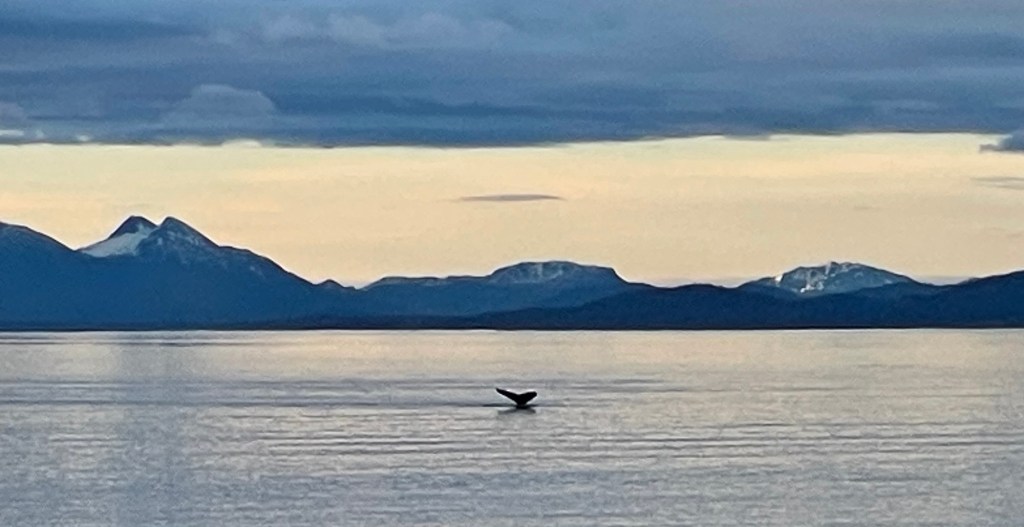
Sunsets last an awfully long time in Alaska during the summer, because the track of the sun slants sideways to the horizon instead of straight down. Add some distant mountains to the picture and there’s a glow in the sky long after the sun itself is no longer visible. After we made yesterday’s post, we lingered on the bow to watch the changing colors. We passed a working lighthouse (the only building we’ve seen since leaving Juneau), and paused to watch a pair of whales who were surfacing in front of us. The atmosphere was magical, made bittersweet by the knowledge that we would be disembarking the next morning. We have had such a wonderful time on this cruise. The crew have been so friendly, and really go the extra mile to make things special.
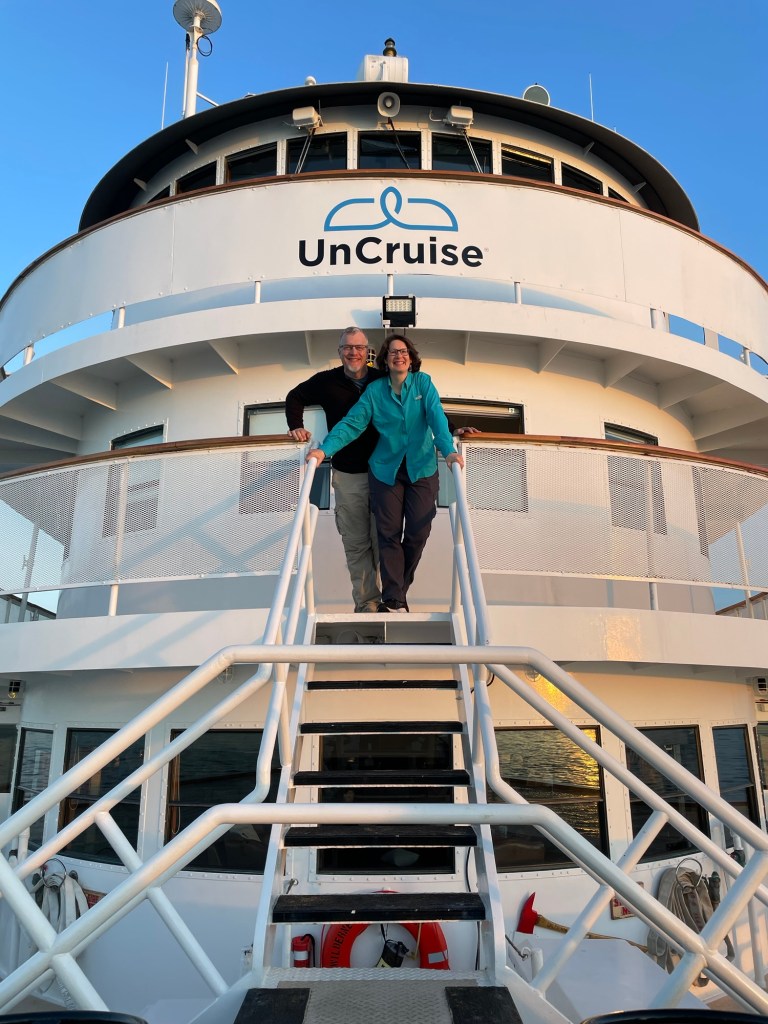
All things do eventually end, and our arrival back in Juneau was announced early the next morning by the bow thrusters of our ship sending reverberations through the hull. As we were eating a final breakfast on board, the founder and owner of the company came to speak with us and hear about our UnCruise experience. It seemed perhaps to surprise him when the passengers gave him a spontaneous ovation in appreciation for our fantastic trip. Because the itineraries are flexible and set by the captain and expedition leader in response to conditions, he was curious to hear about what we had seen and done. We knew our week had been special and he confirmed that we had been really fortunate in the places we had been able to visit. The last time one of the cruises made it to Baird Glacier was seven years ago!

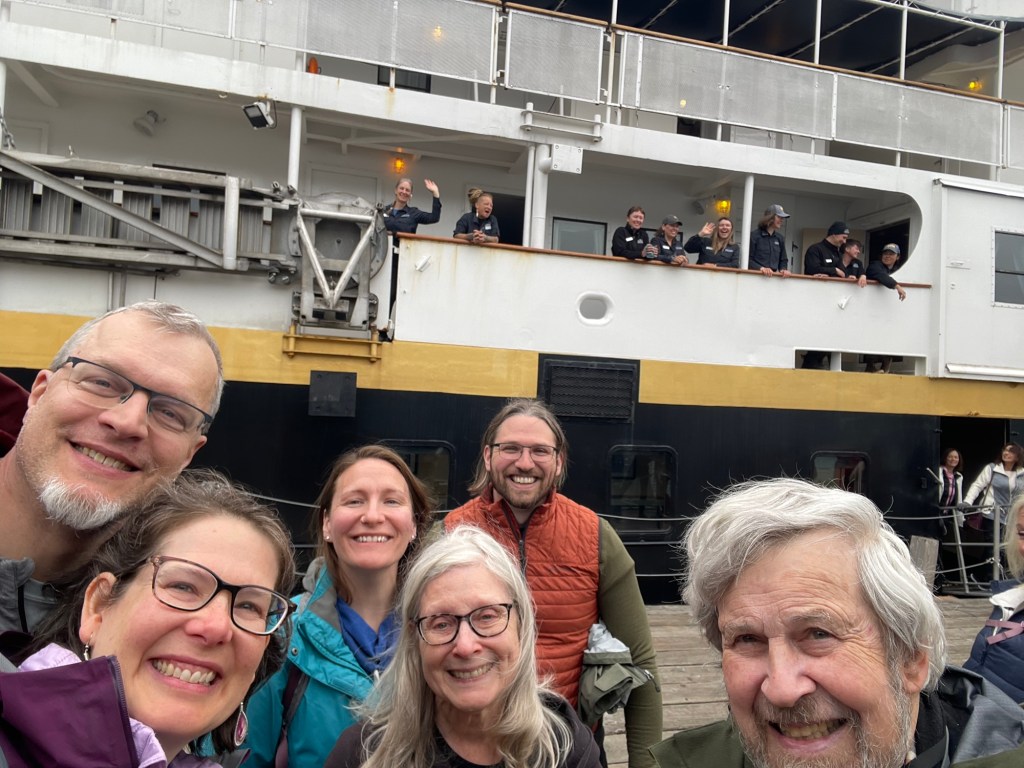
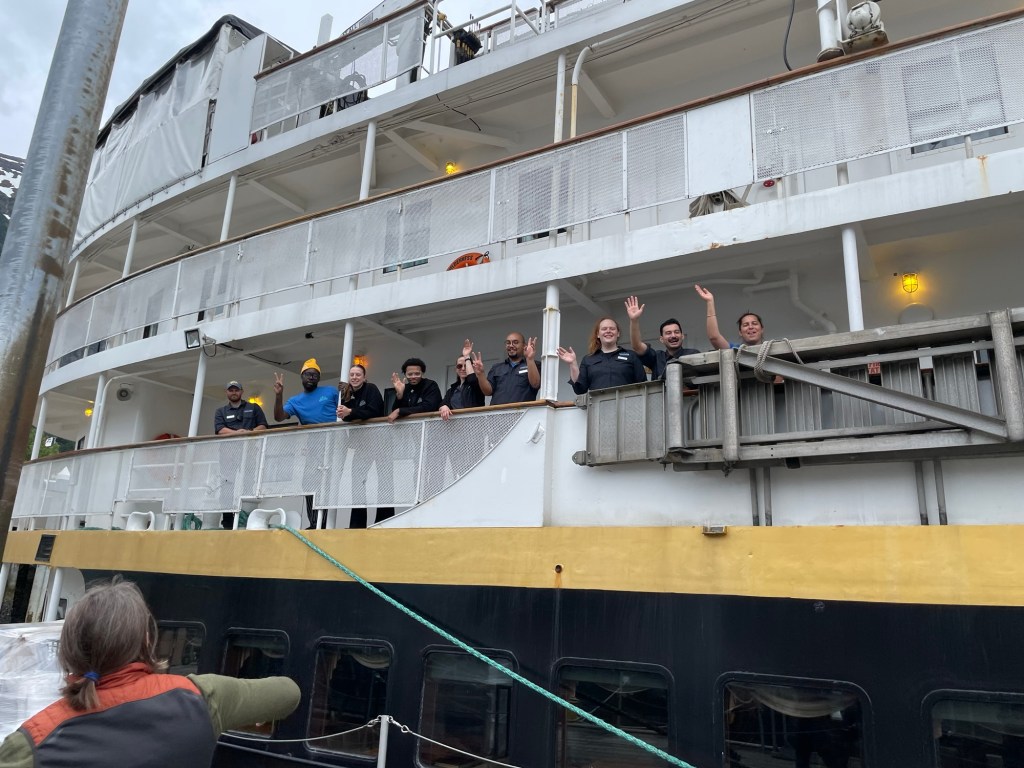
As we stepped off the ship and made our way along the pier, the crew lined the upper decks to wave goodbye. We were incredibly touched when a group of them struck up a spontaneous rendition of Happy Birthday for Linda, in whose honor our vacation had been organized. We can’t really imagine that happening with any other cruise line.

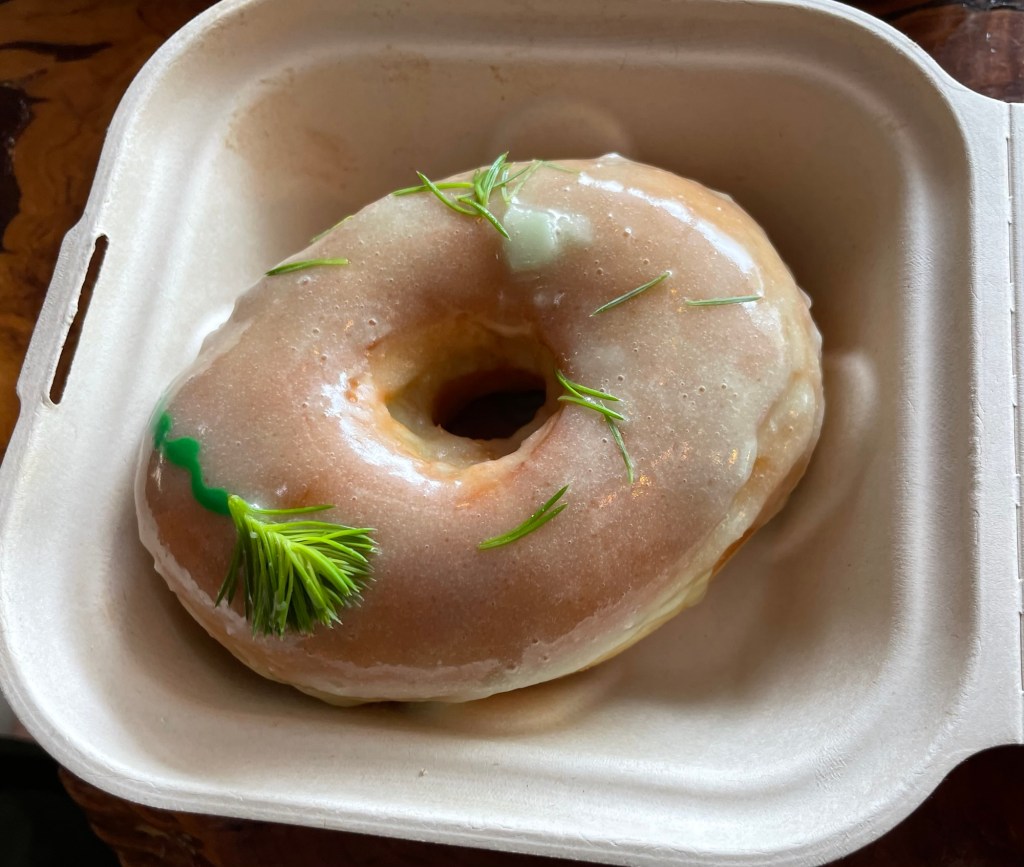
The first part of the day was devoted to exploring Juneau and its many shops. With several large ships in port, the tourist area was busy but not overly so. Besides shopping for souvenirs, we made sure to stop at Jellyfish Donuts, which sells local favorites such as the salmon donut (think cream cheese and lox on a very soft bagel), or the spruce tip donut shown here. We had learned during one of the bushwhacks on our cruise that spruce tips are edible, and even tried a few. Here they have been put to use in creating a citrusy, piney delicacy. Susannah had an especially fun time at the Changing Tides quilt shop, which is reputedly one of the best fabric stores in the state and boasts a rich assortment of Alaskan-themed patterns.

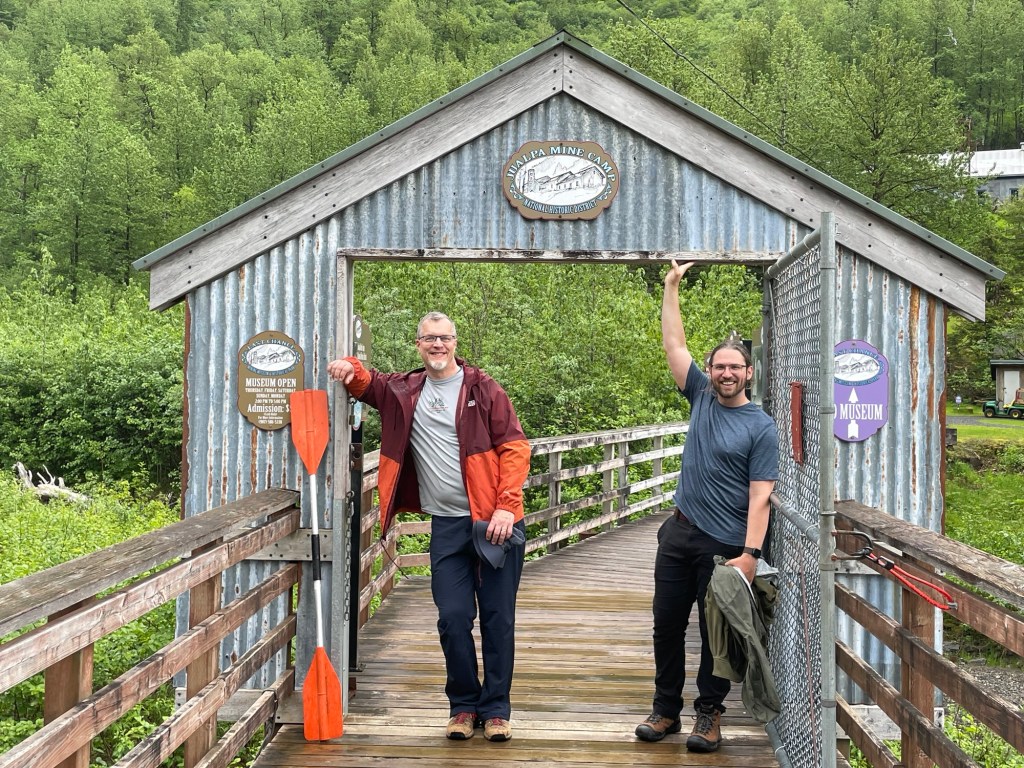
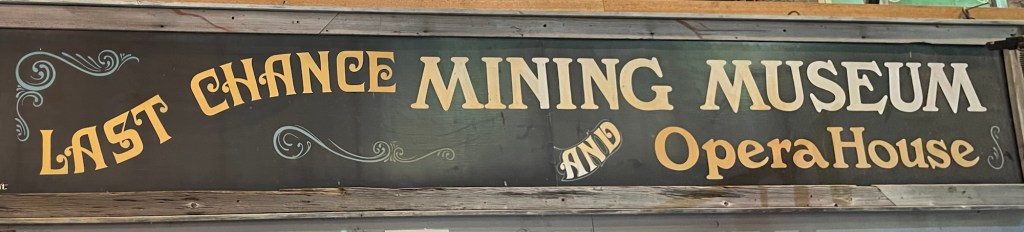
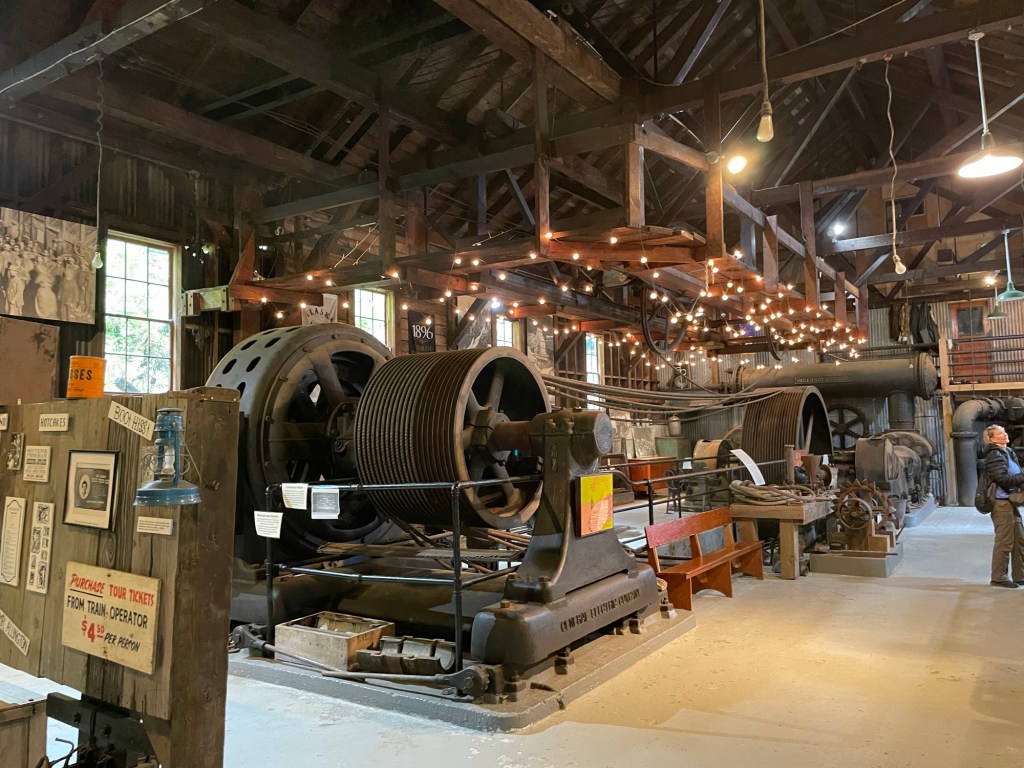
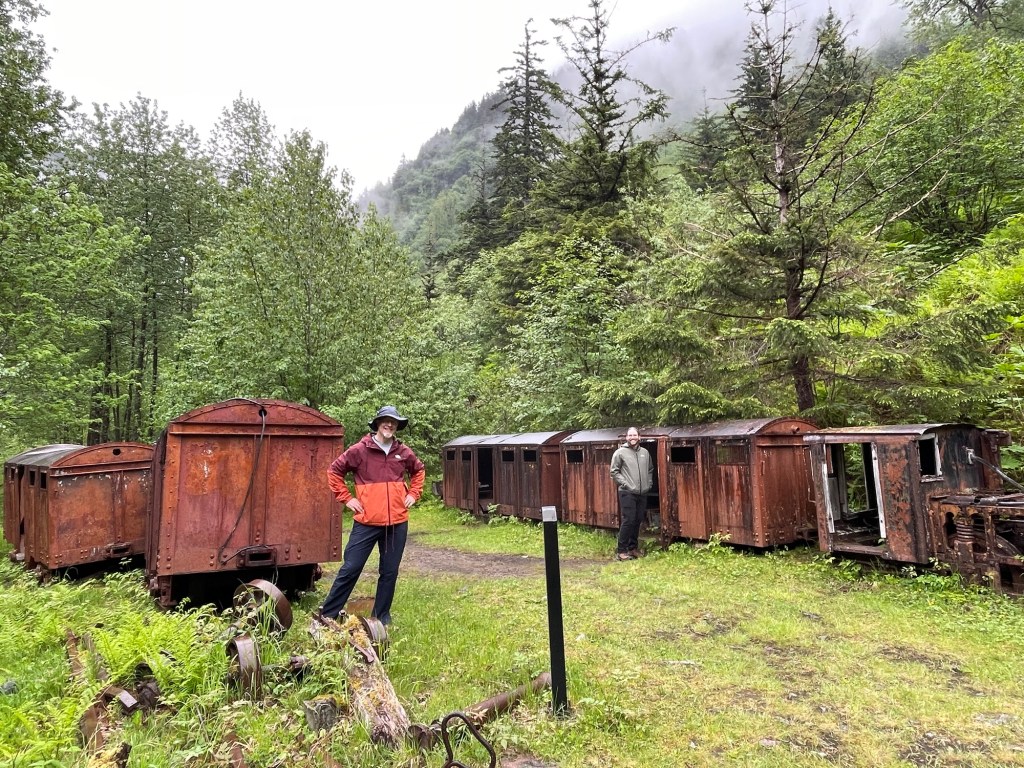
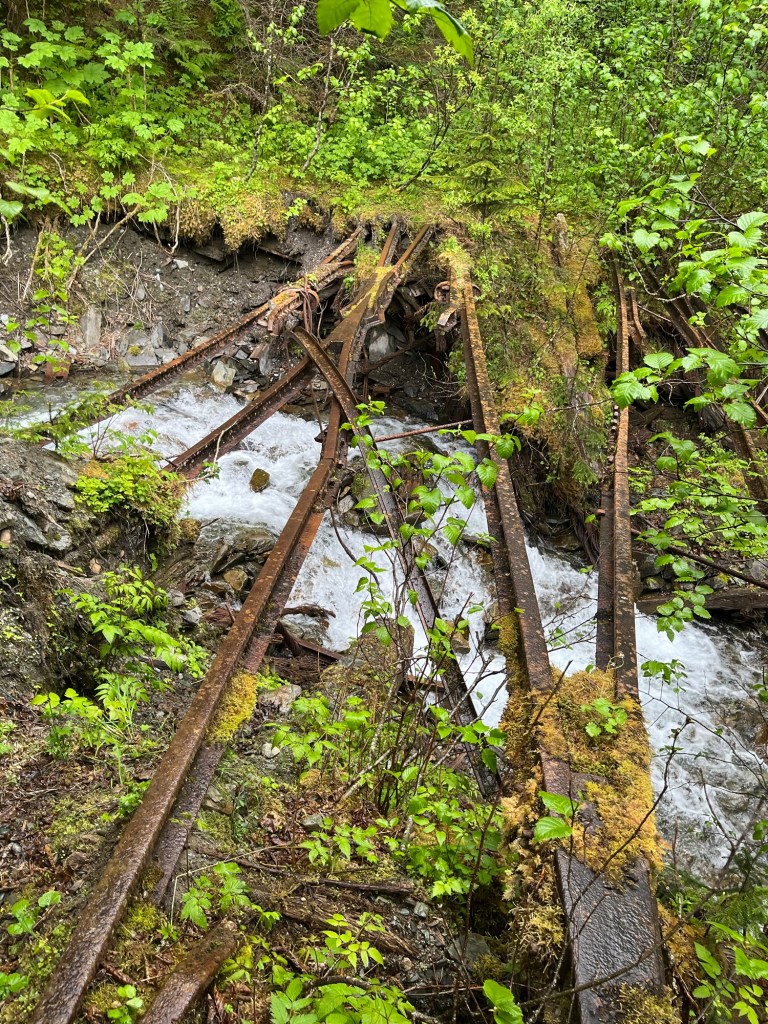
In the afternoon we hiked out to the Last Chance Mining Museum, which is a few miles out of town up Gold Creek. The museum is small, housing some of the old equipment used by the Alaska Juneau Mining Company, including a giant electric air compressor that powered mining activities. Outside, the rusting remains of electric mine trains stood exposed to the elements. Their tracks were still in place, even suspended in midair above a rushing stream like a scene from an Indiana Jones movie, where the wooden trestles that once supported them had apparently rotted and been swept away. We declined to attempt the crossing.

Apparently the museum used to host a musical performance. Somewhat risque, it eventually ended its run.

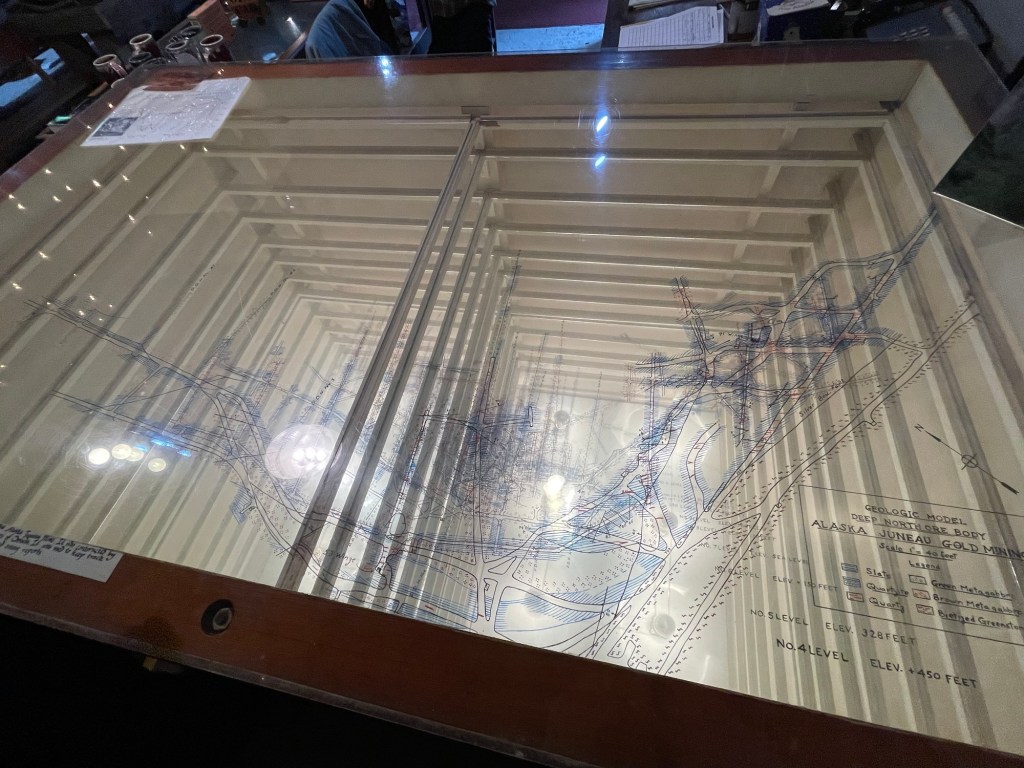
The mountains here are riddled with tunnels from decades of mining, and one display showed a 3D map of the entire mine on a stack of transparent plates, with every shaft and tunnel marked by the miners as they worked. Interestingly, there is still gold in the mountain: operations stopped due to a lack of manpower when World War II began, and have not restarted due to stricter environmental controls in the modern era.

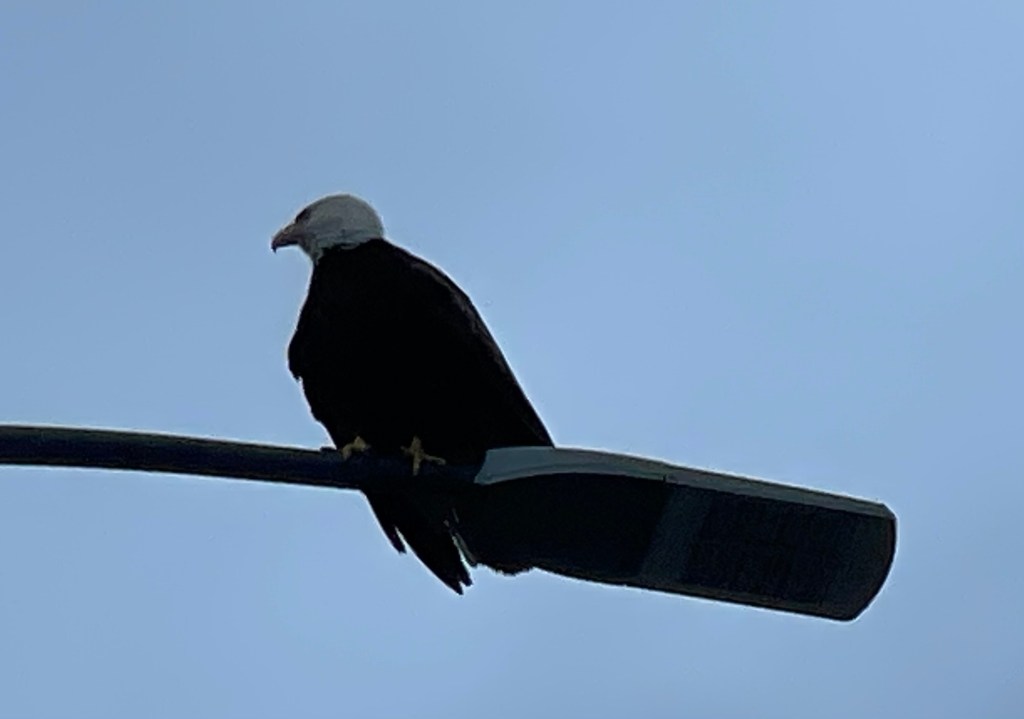
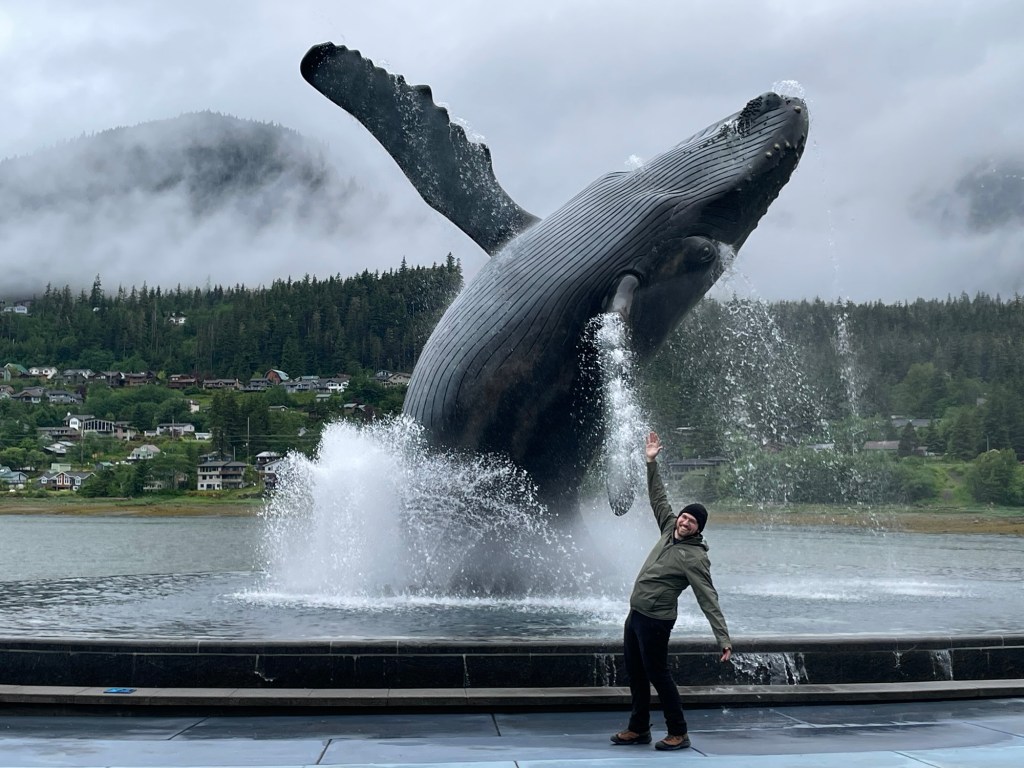
After dinner at a restaurant that served Alaskan-inspired Italian cuisine, we returned to our rooms in the Juneau Hotel to rest up for our flight to Sitka in the morning. Along the way, we saw a bald eagle sitting on a street light and caught the breaching whale sculpture in full fountain mode. (One of the skiffs on our cruise actually saw a whale breach in person; sadly, we weren’t with that particular group.)

Baird for the Win!

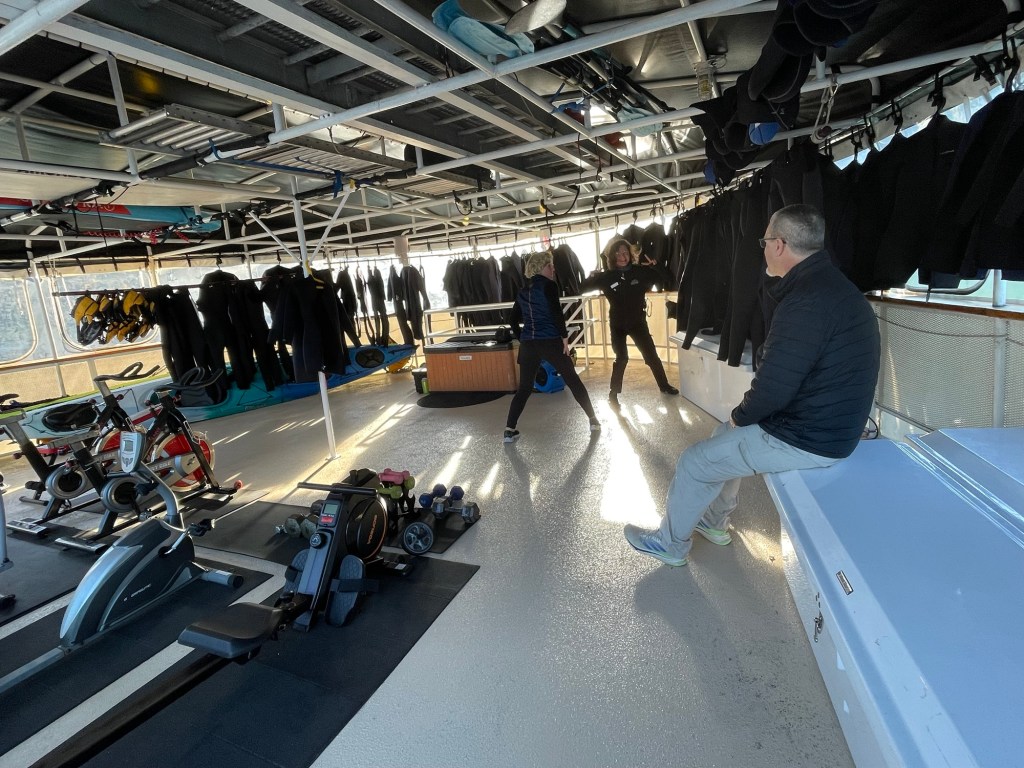
Miraculously, our last full day of the cruise dawned with clear blue skies as we lay at anchor just outside Scenery Cove. (There’s nothing subtle about some of the names out here, although to be honest the scenery outside the bay is plenty scenic also.) As per our now customary routine, we awoke early for first breakfast, followed by stretching in the Barn with Kira (a necessary precaution given how much unaccustomed work we are asking from our bodies). The Barn is an enclosed area on the topmost deck that houses exercise machinery and recreational equipment of all sorts. The windows were briefly clear while all the wetsuits were loaned out, but now they hang in their rows again making a sort of screen through which glimpse of mountains occasionally peek through.

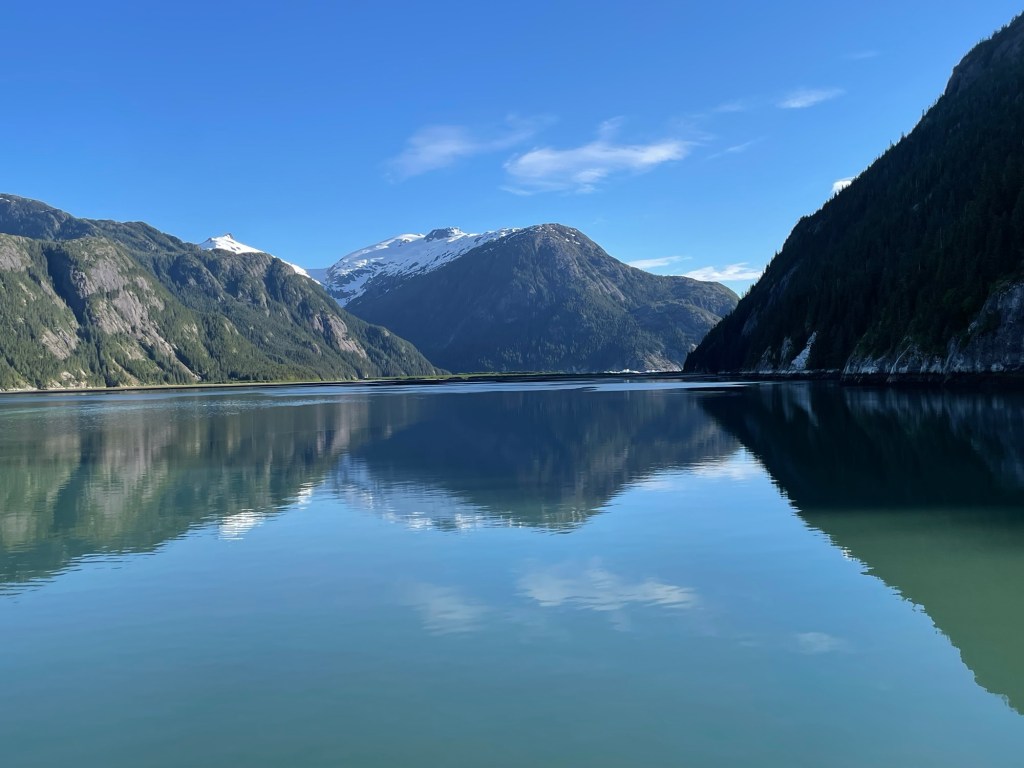
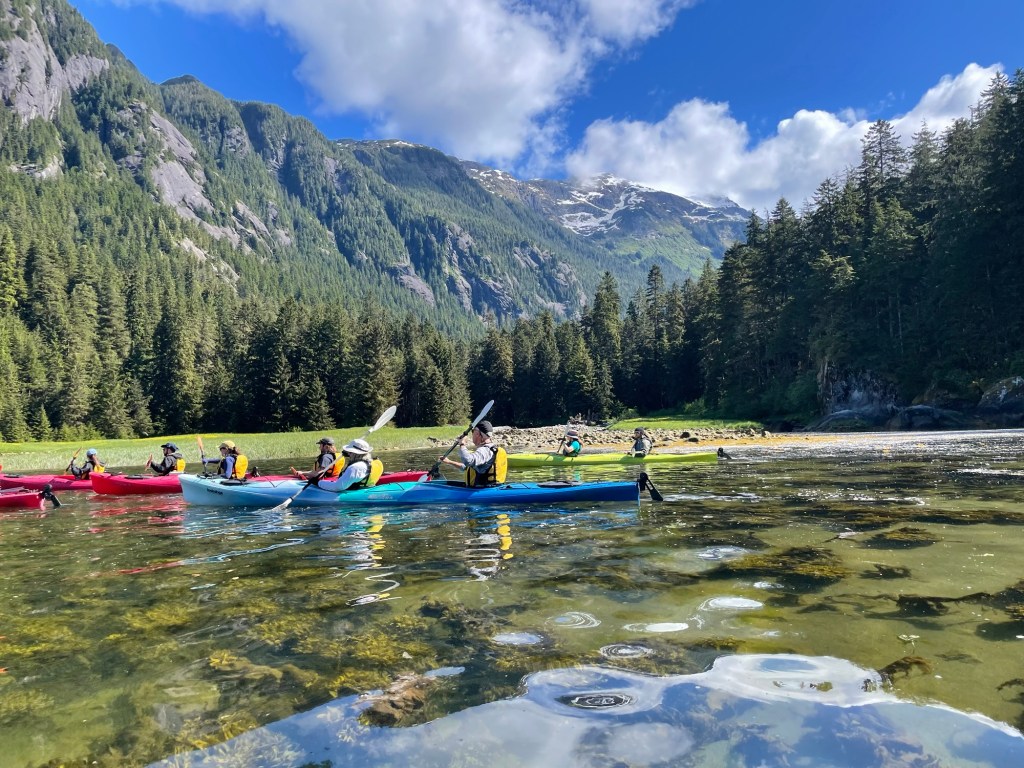
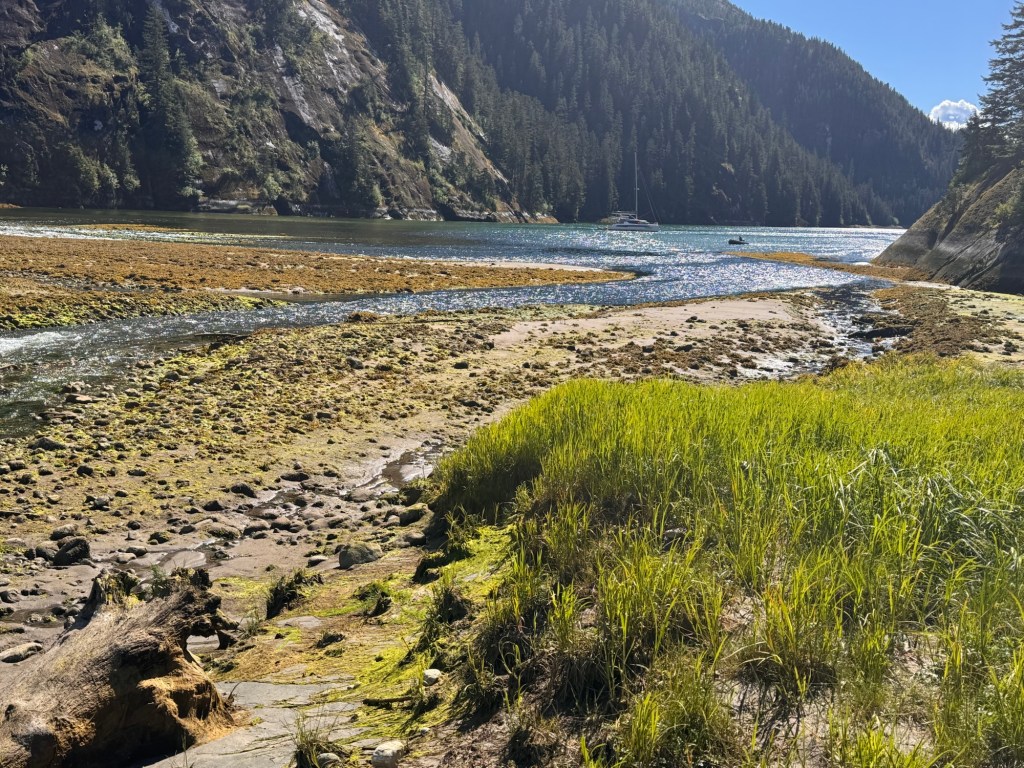
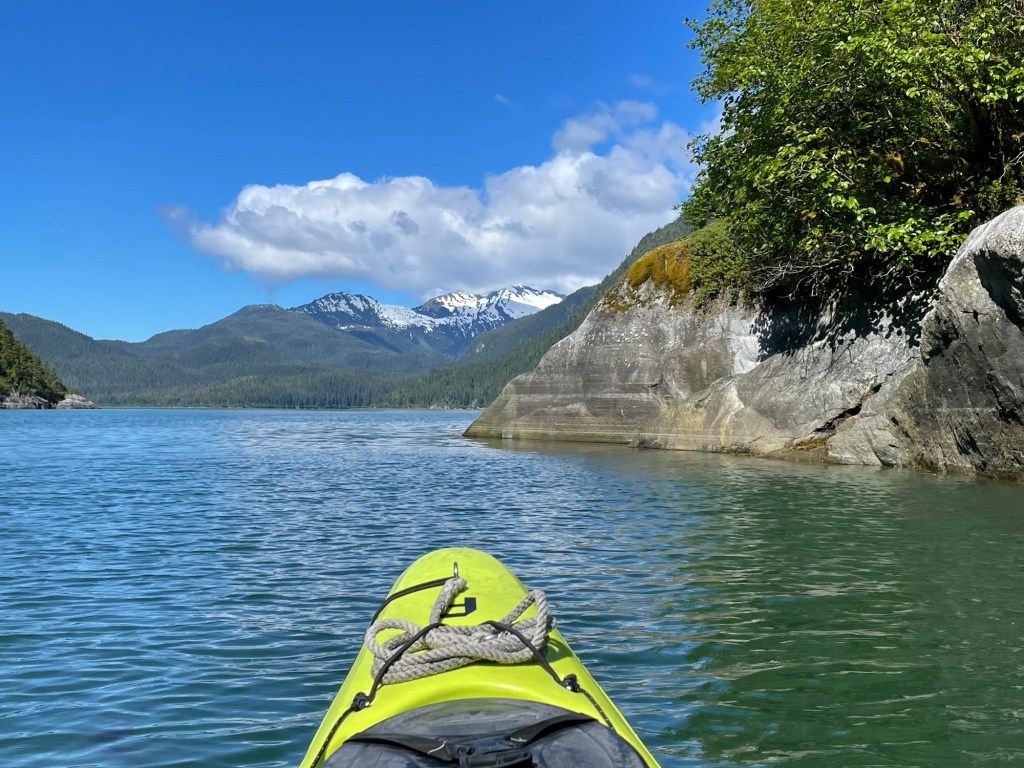
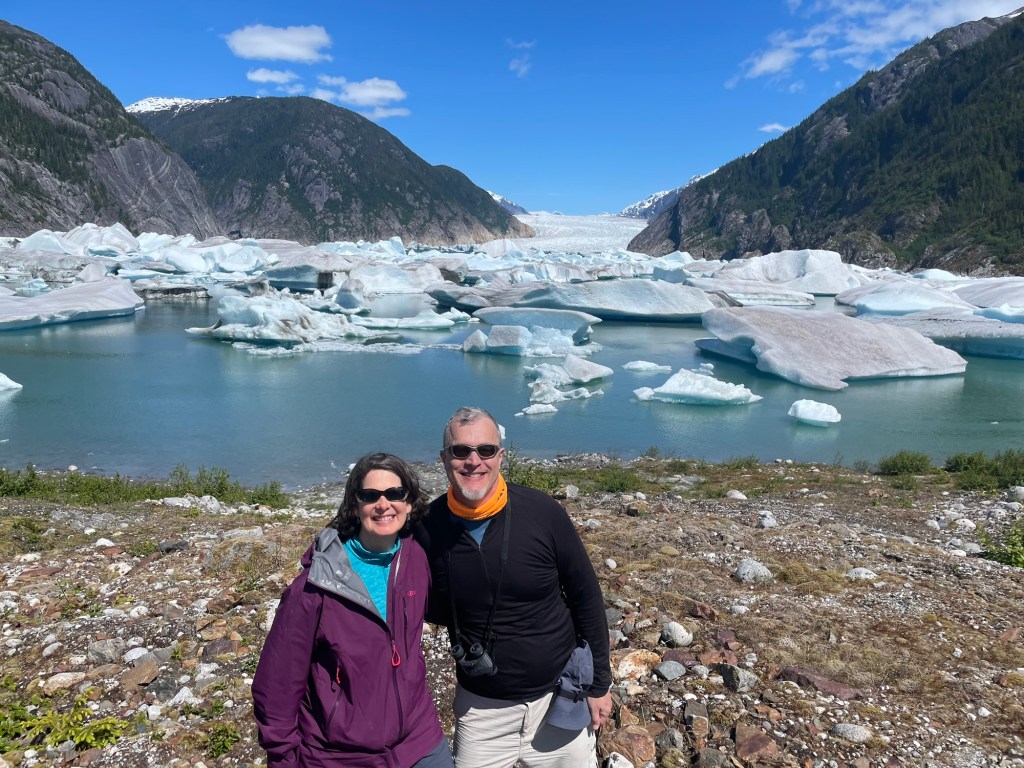
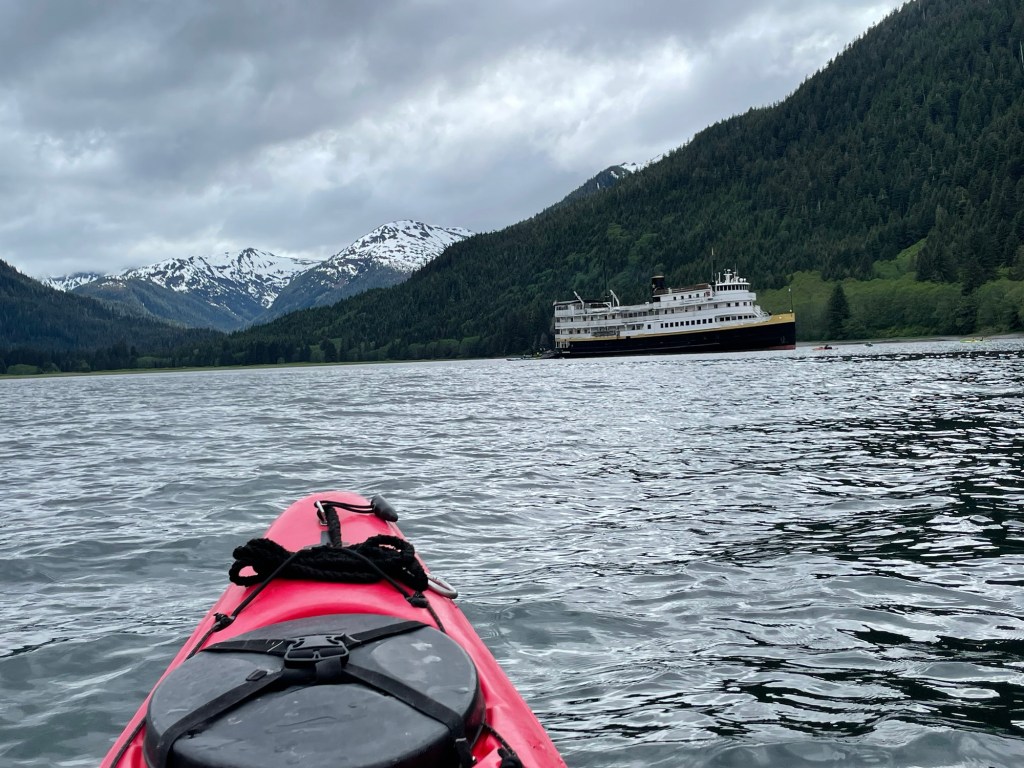
Today was the second opportunity to take an all-day outing, and we were eager to sign up. Our itinerary took us on a kayak tour of Scenery Cove, followed by a journey several miles up Thomas Bay to the mouth of Baird Glacier. The glacier has deposited a large terminal moraine here that stretches across the valley. The right side of this stony ridge has been breached by a river of meltwater flowing into the sea. The current is so strong that our approach had to be timed to coincide with the incoming tide in order to give us a chance of making way against it.

The meadow at the end of Scenery Cove
The same meadow (later in the day) looking into the cove

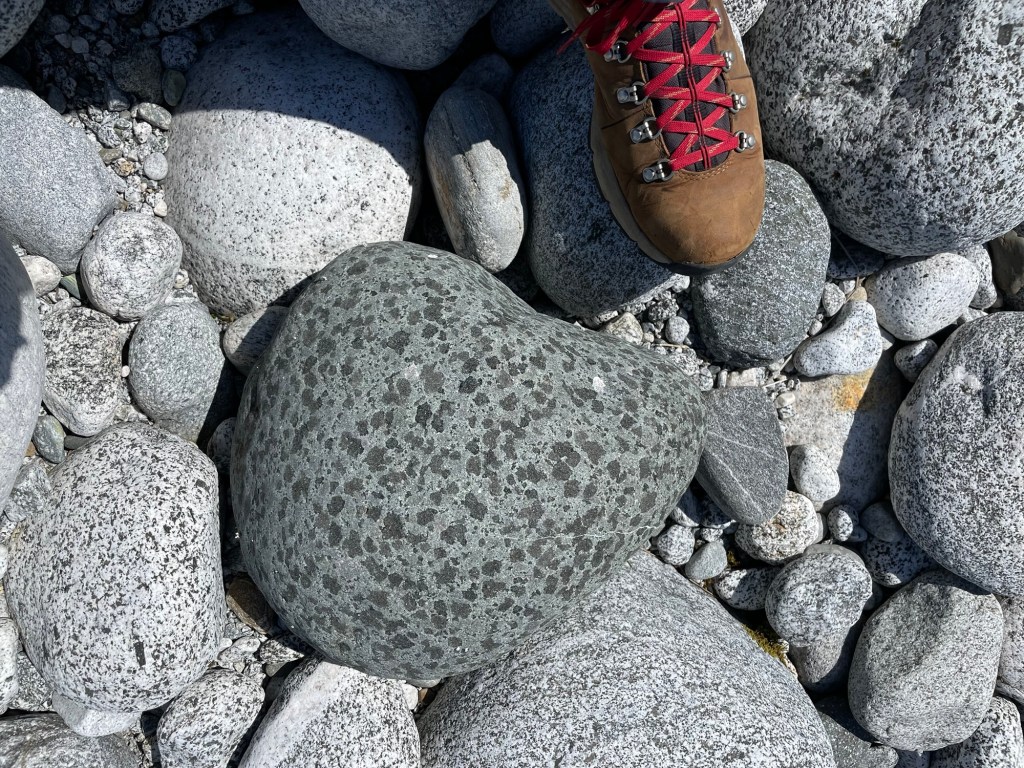
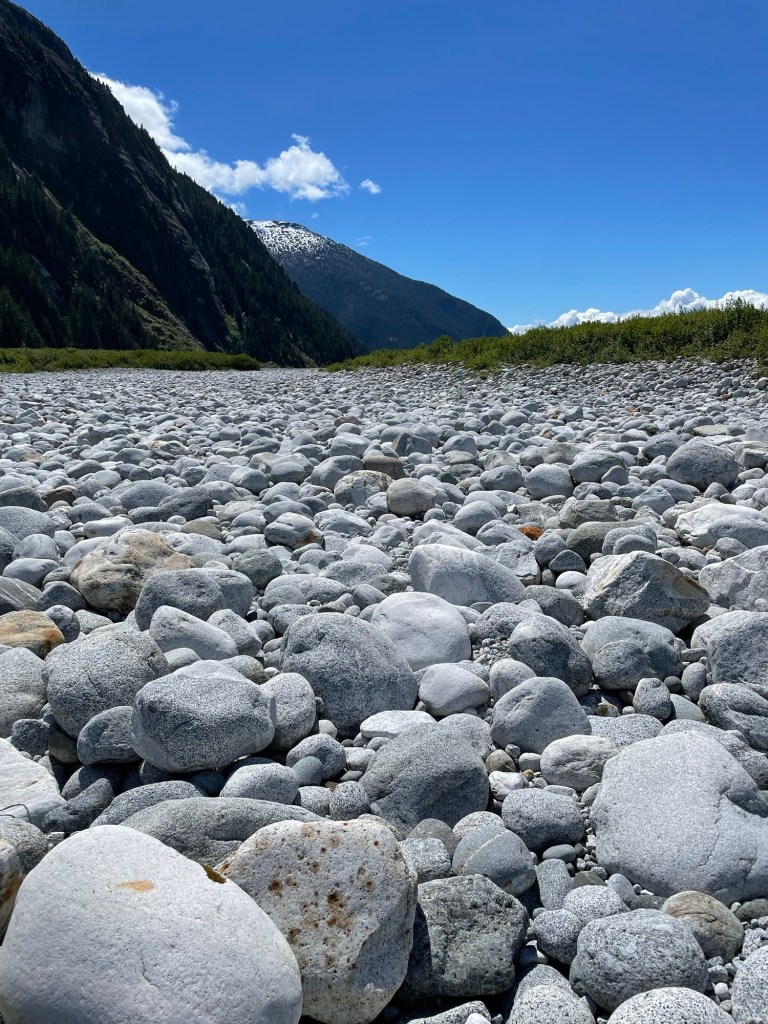
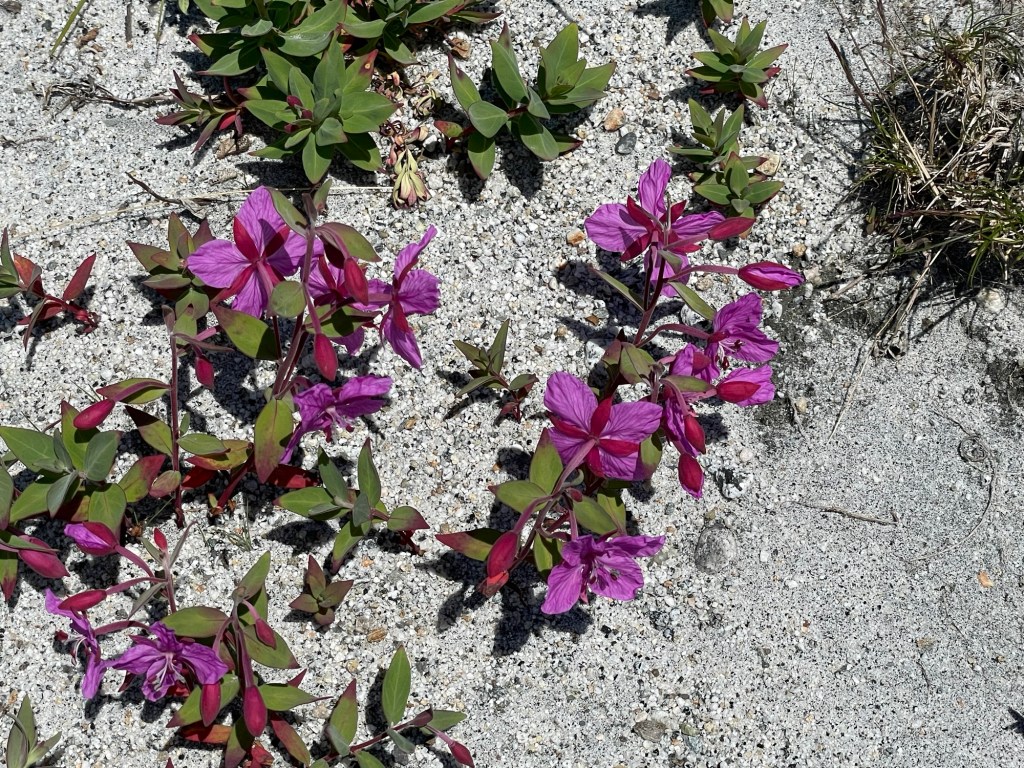
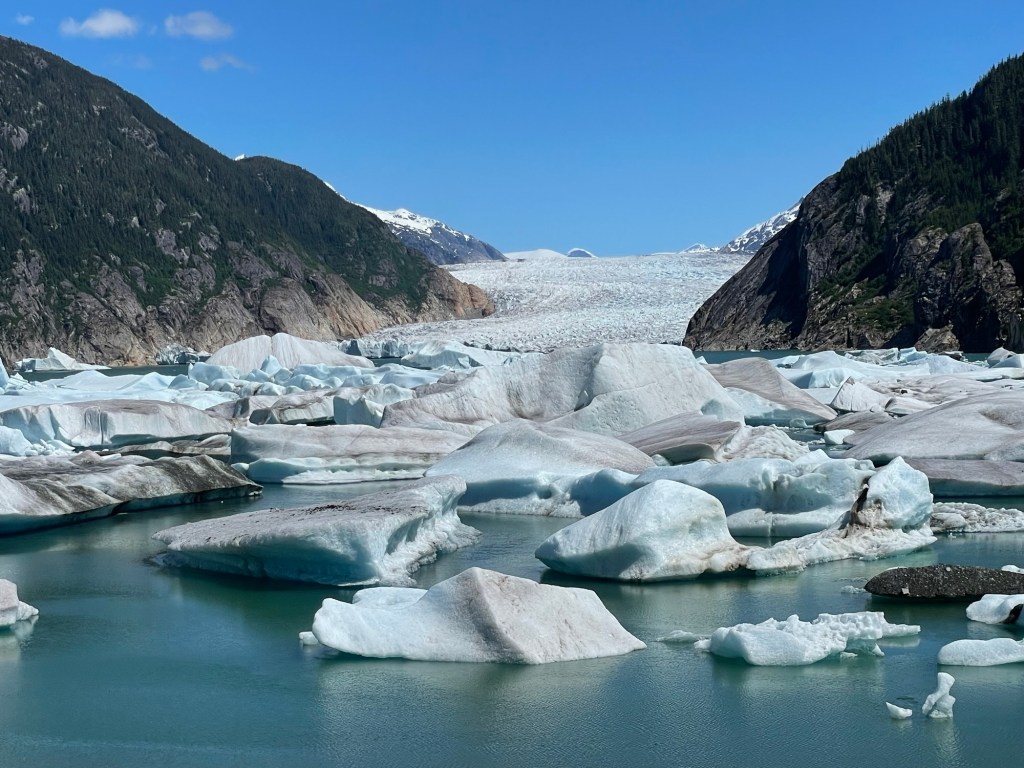
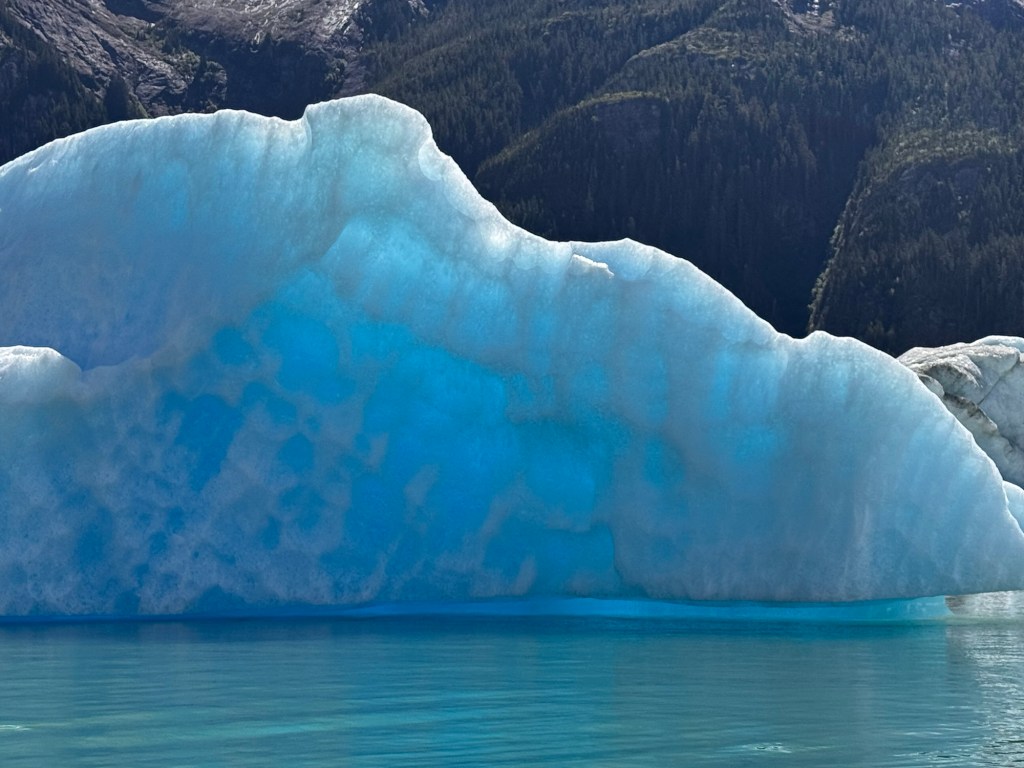
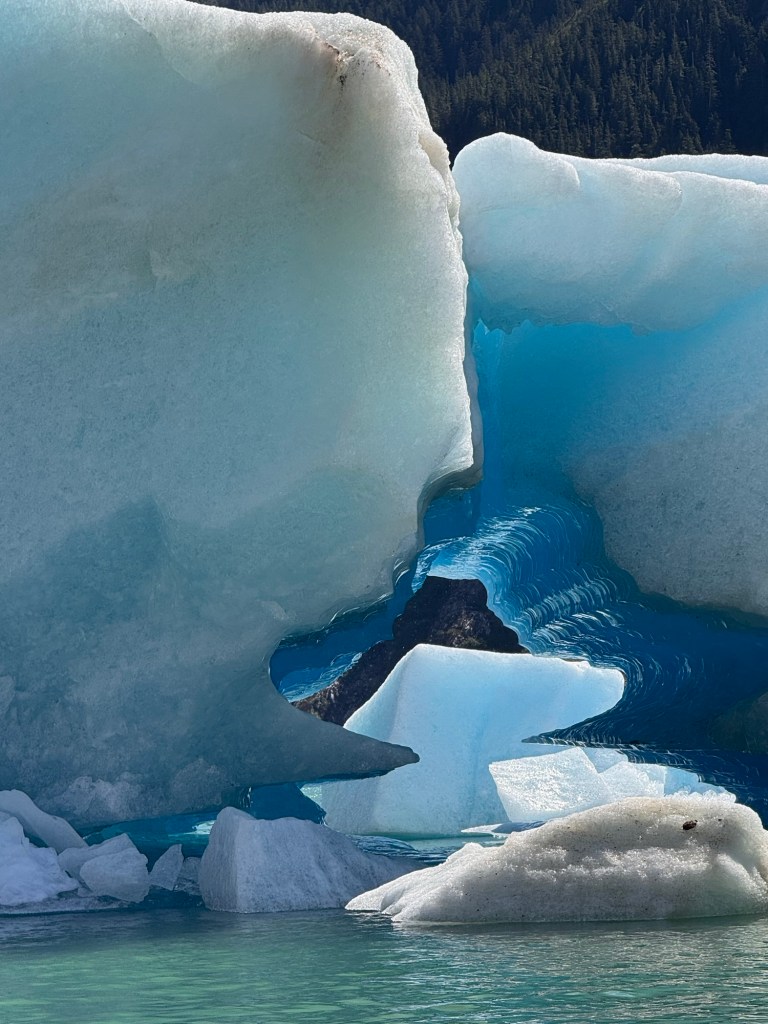
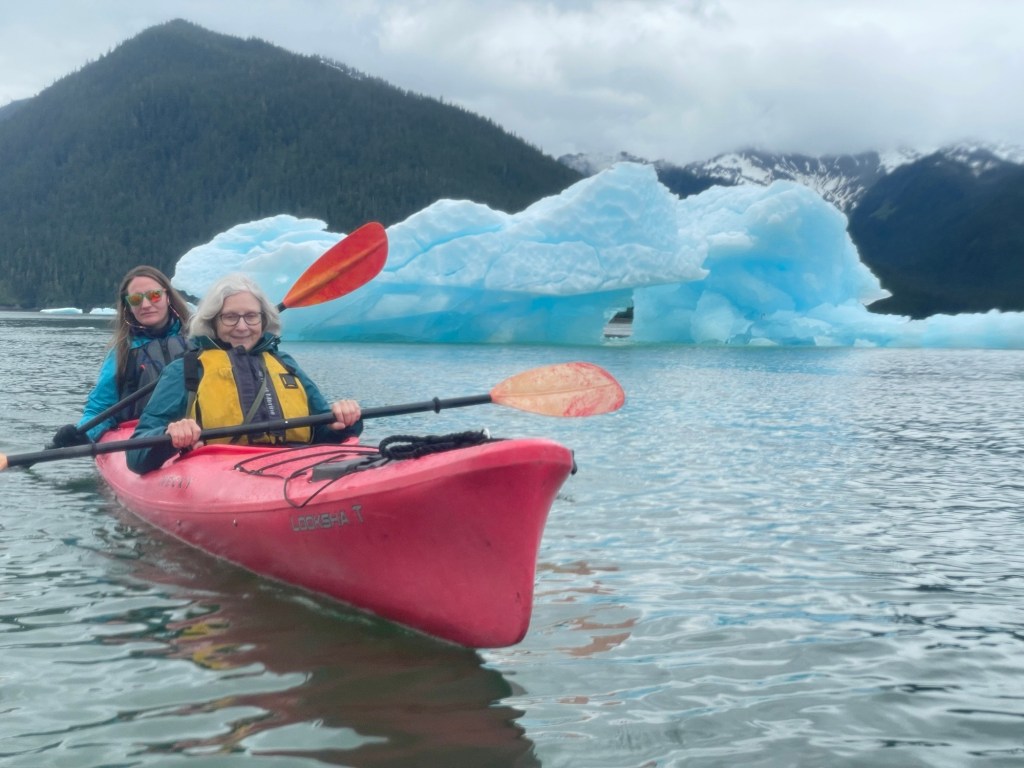
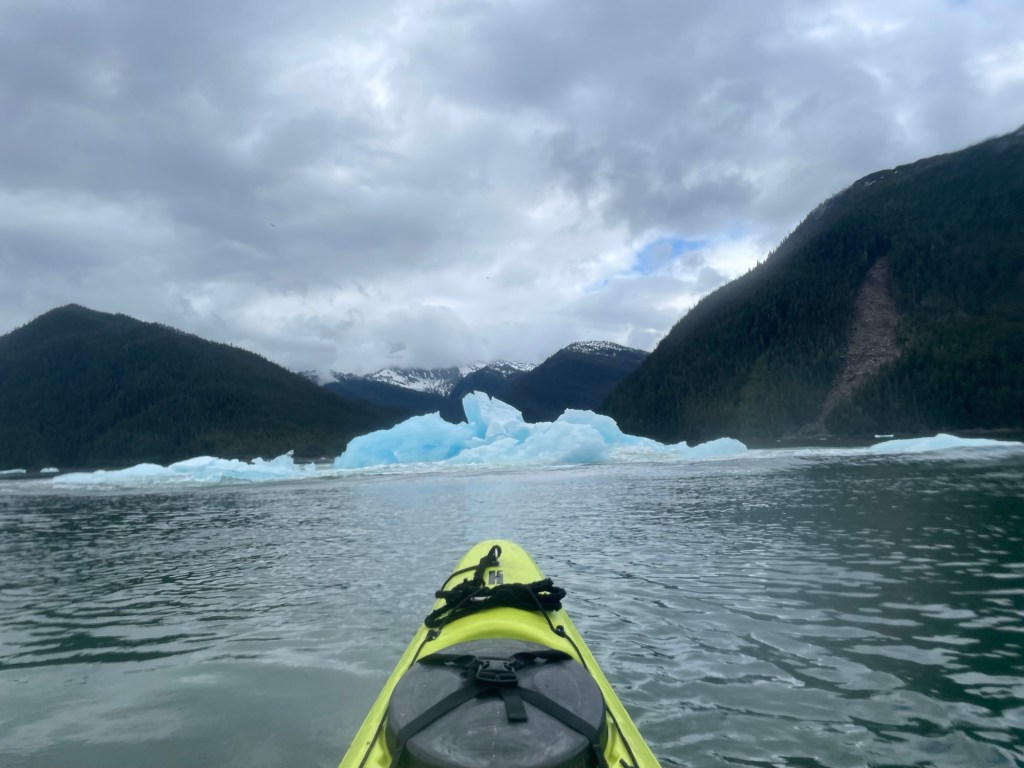
We beached our kayaks on the stony shore and hiked up the moraine (tough going due to the large round rocks, which had a tendency to roll underfoot unless one steps very carefully), admiring the wildflowers and other greenery that was in the process of establishing itself there. Beyond the ridge is a lagoon filled with a brackish mixture of glacial melt and seawater. Enormous icebergs lie jumbled there, some floating but others so large that they are grounded except at the highest of tides. We stopped to eat our lunch on the high ground above this otherworldly tableau. Others from our group had opted for a skiff tour instead of a kayak, and they had the opportunity to thread the shifting channels of this icy maze to get a closeup view of the glacier’s face beyond and the deep blues of the icebergs up close.

Fireweed in bloom
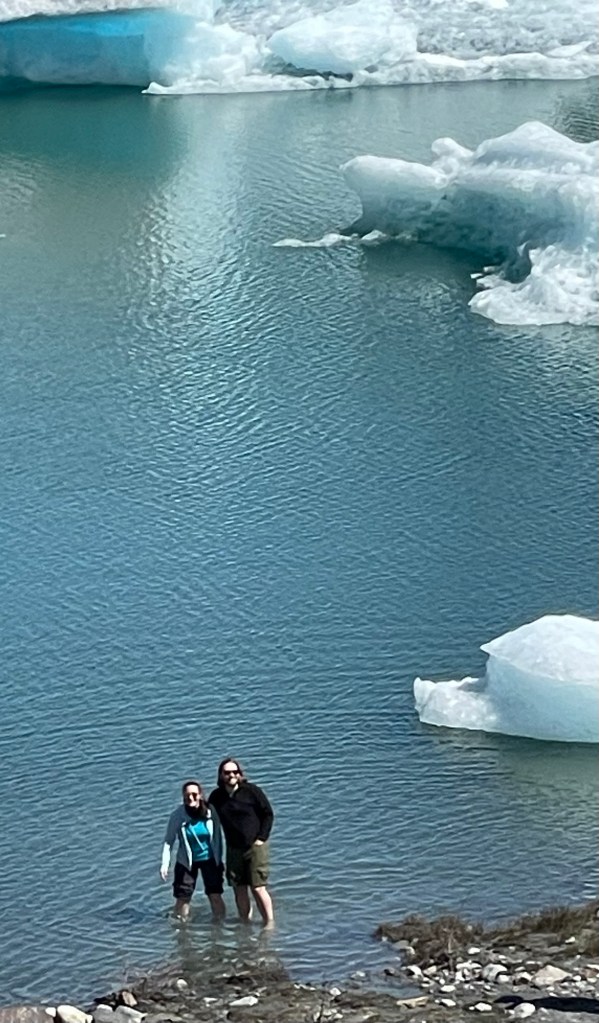
Franklin and Melissa tested the icy waters – even colder than yesterday’s polar plunge!
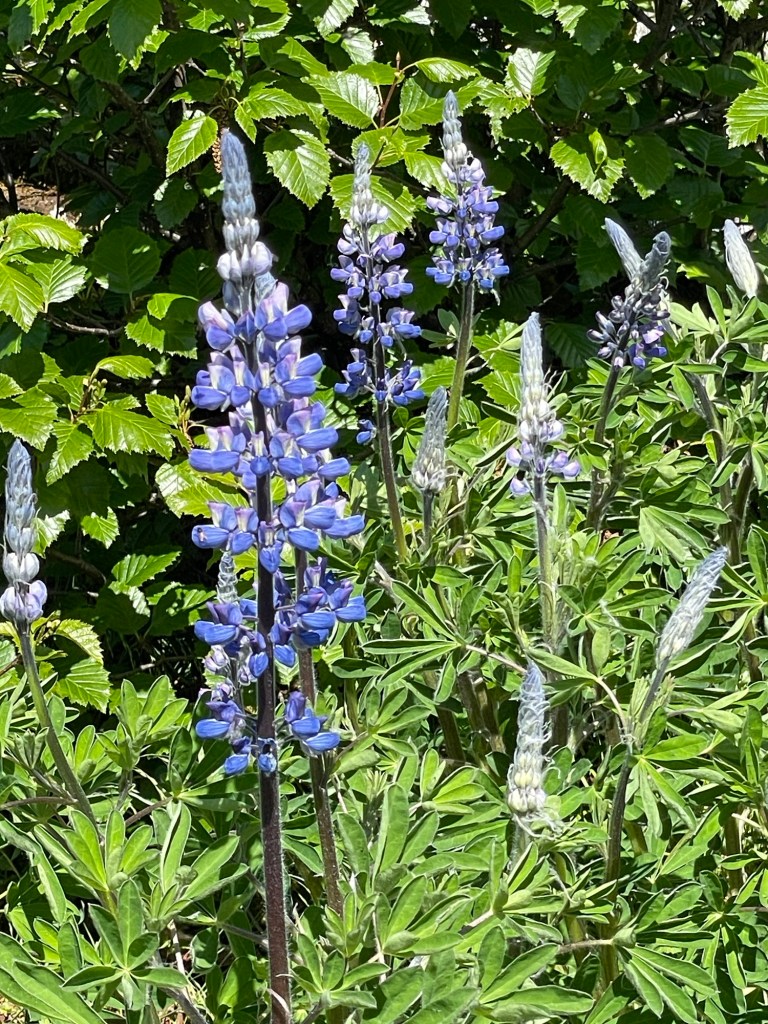
Lupines in bloom

The return trip was a reverse of the journey out: we paddled back to the ship, and when we arrived they said we had time to take another spin around Scenery Cove. Since this would be our last chance to kayak in Alaska, of course we seized the opportunity. When we did finally land our craft on the Sea Dragon, we found mulled wine and double chocolate cookies waiting for us on board.

Bergy is still with us, though slimmed down quite a bit

Our last supper on board was the Captain’s dinner, offering prime rib and sockeye salmon. In lieu of a lecture, the crew put together a slide show of pictures taken by the guides all week. It all went by so fast! As we sailed into the sunset, whales were once again diving beside the ship.

Bergy and the Polar Plunge

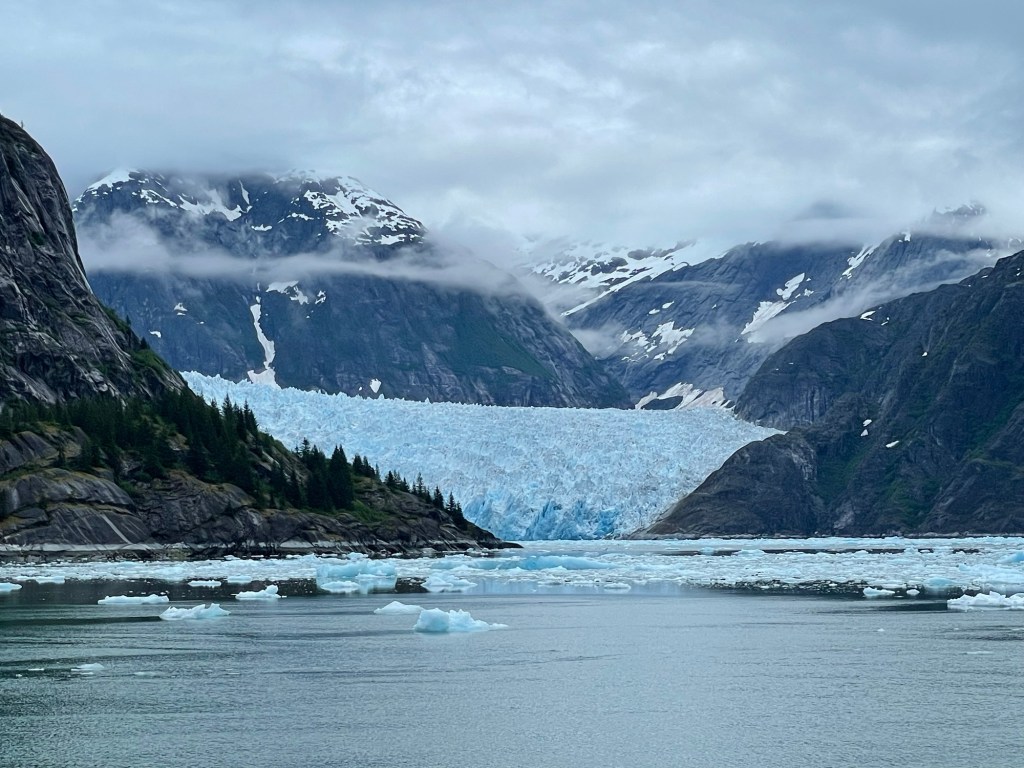
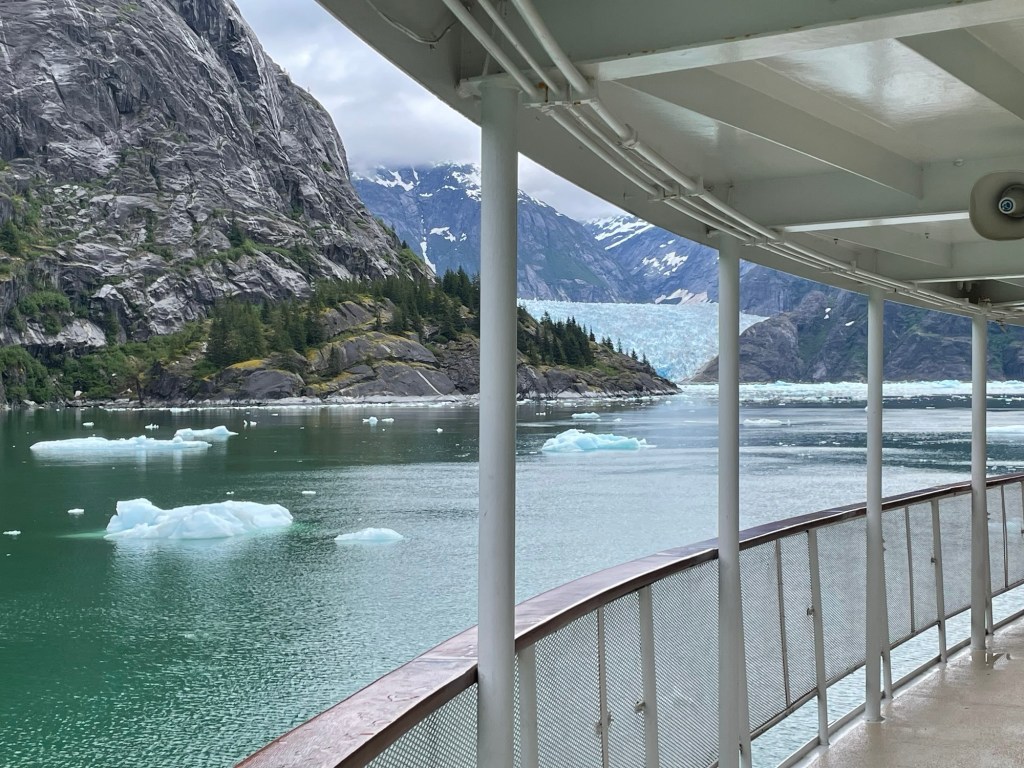
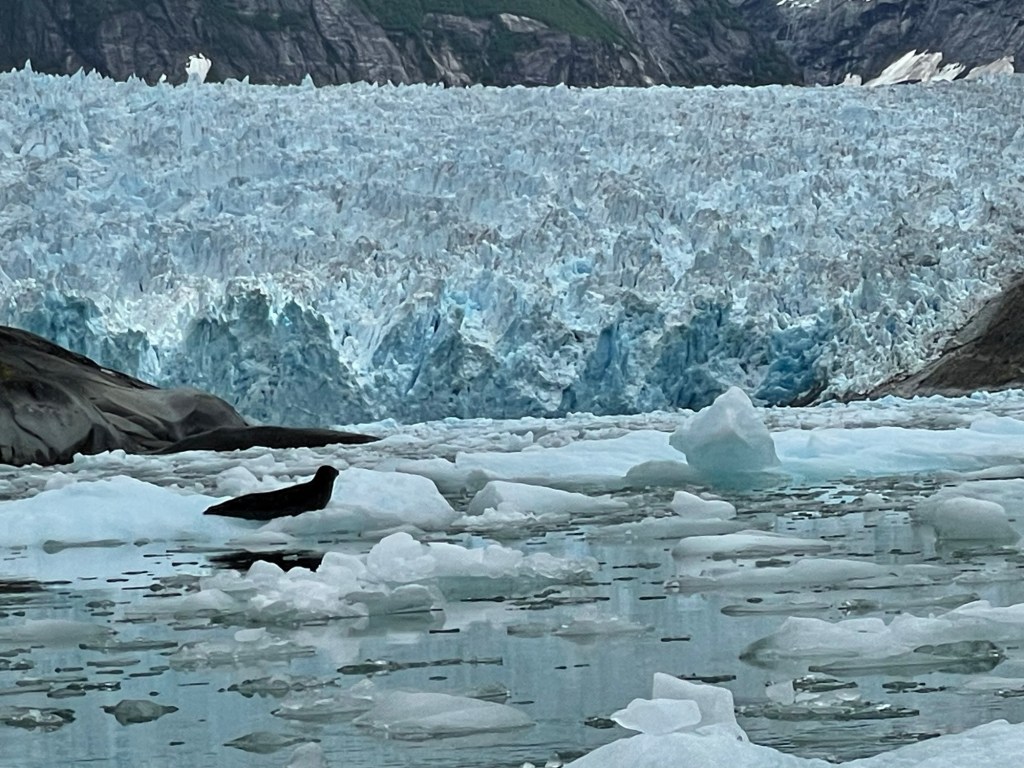
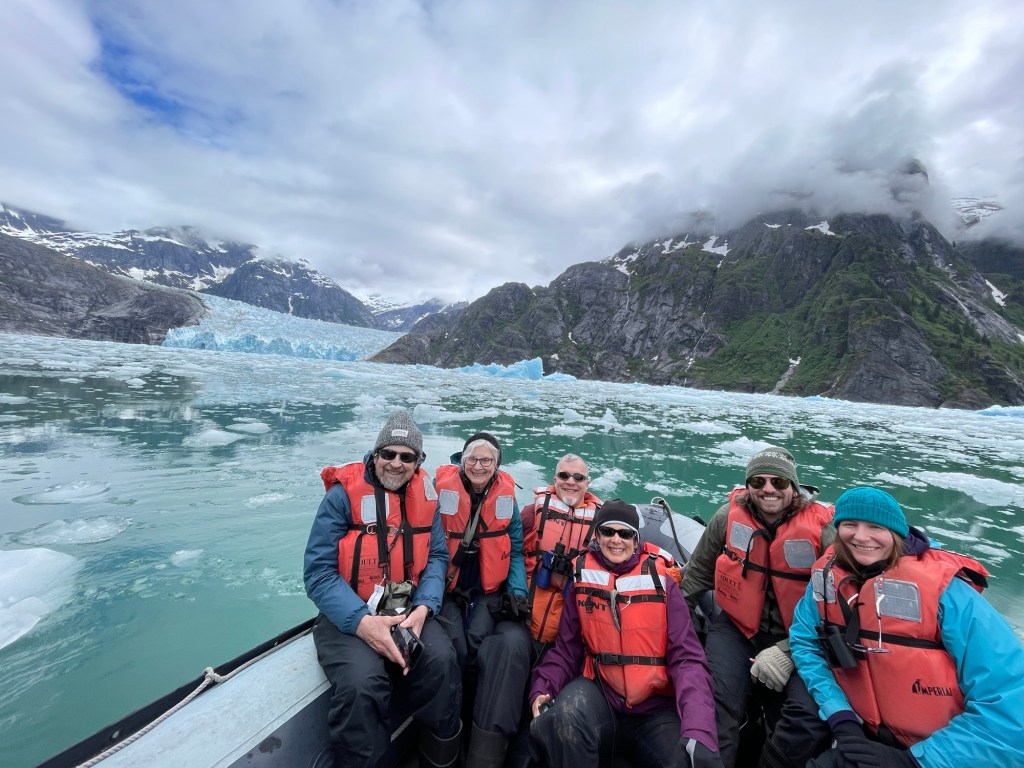
The epic days keep rolling in, one after another. After a sleep disturbed with a few bumps in the night, we woke up to the view above right outside the ship. This is Le Conte Glacier, another of Alaska’s tidewater glaciers, and we spent nearly the whole day in its vicinity. Again the scale is deceptive: the glacier’s front is a half mile wide, and the river of ice extends 21 miles back to the ice field that feeds it. Because the landscape narrows in a sort of funnel down to the water’s edge, this is a particularly fast-moving glacier, from 30 up to 90 feet per day. This means that it calves frequently, sometimes breaking off huge chunks. Indeed, we witnessed several big collapses during our visit, and the bay was filled with icebergs, growlers, and brash ice that came from the glacier. Perhaps inspired by the scenery, Susannah decided to get some exercise by walking laps of the upper deck.

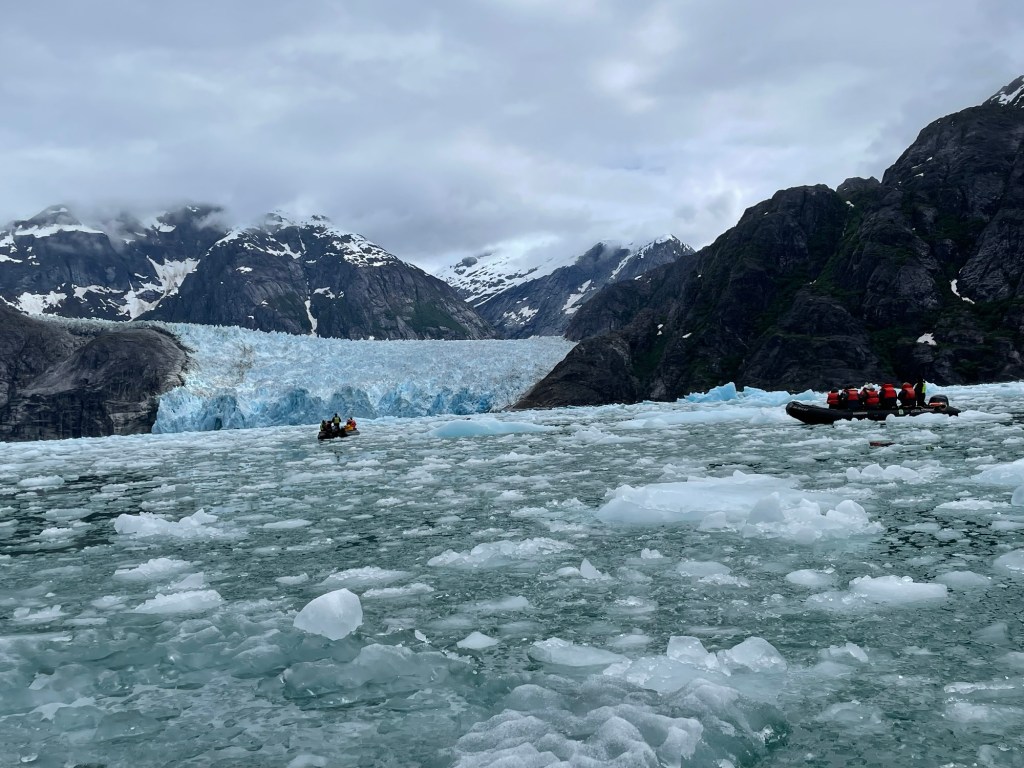
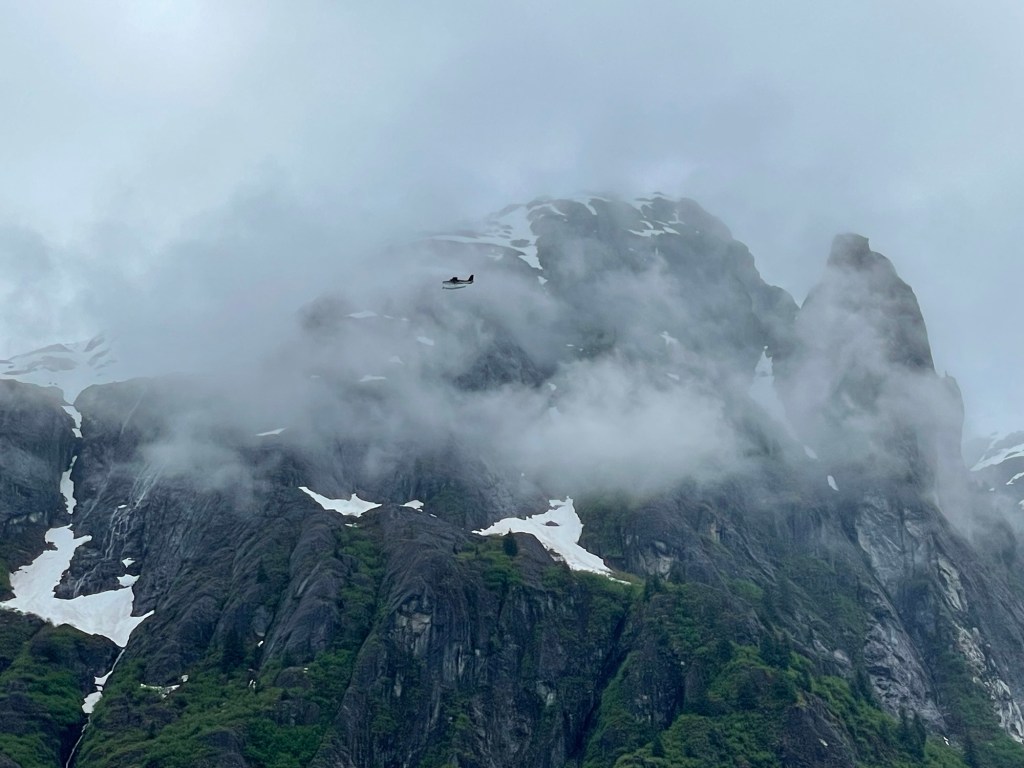
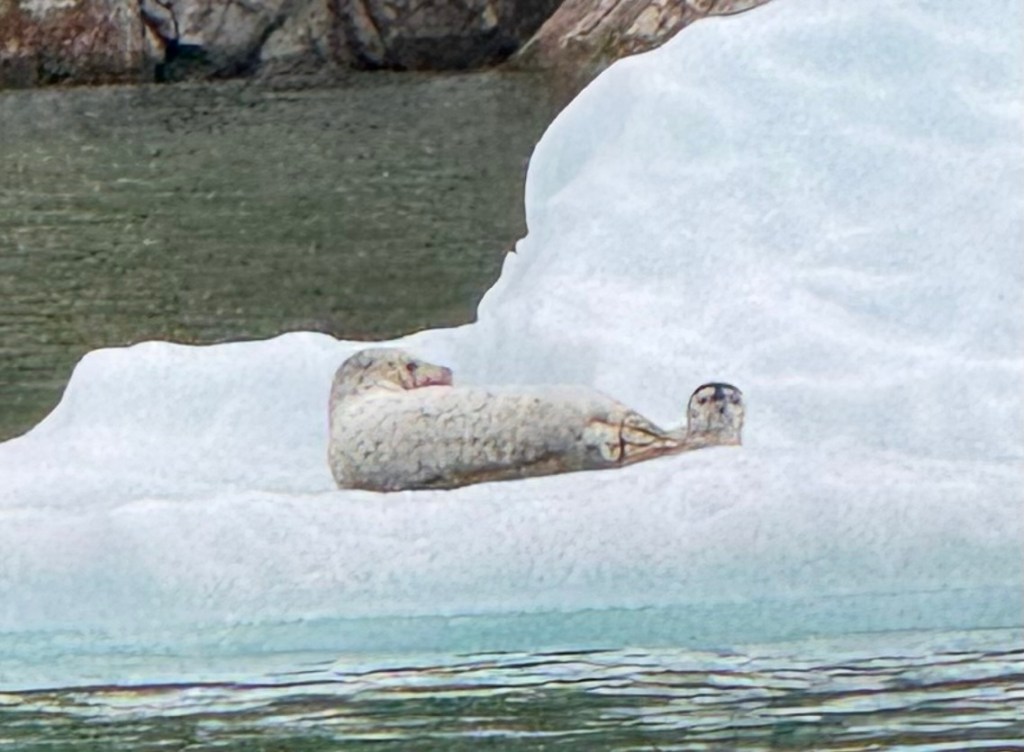
The large ship can only get so close with all that ice in the water, so naturally the first thing one wants to do in such a situation is get closer. Not too close though — those falling chunks of ice would hurt if they fell on top of you, and they can send huge waves radiating outwards, ready to swamp any craft that ventures too close. We ventured out in one of the skiffs, piloted by Rachel, who deftly threaded her way between the larger chunks of ice to get close up views. We weren’t the only ones coming in for a view: during our outing, we also witnessed a tour group in a fishing boat outfitted as an icebreaker, a seaplane buzzing the glacier overhead, and another group mounted on jet skis. (The latter didn’t seem like a particularly good choice, given the size of the bergs blocking the way!) The bay was also home to a number of harbor seals, some of whom had recently born pups. We stayed a respectful distance away to avoid disturbing them, but still got some pictures.

Can you spot the sea plane?
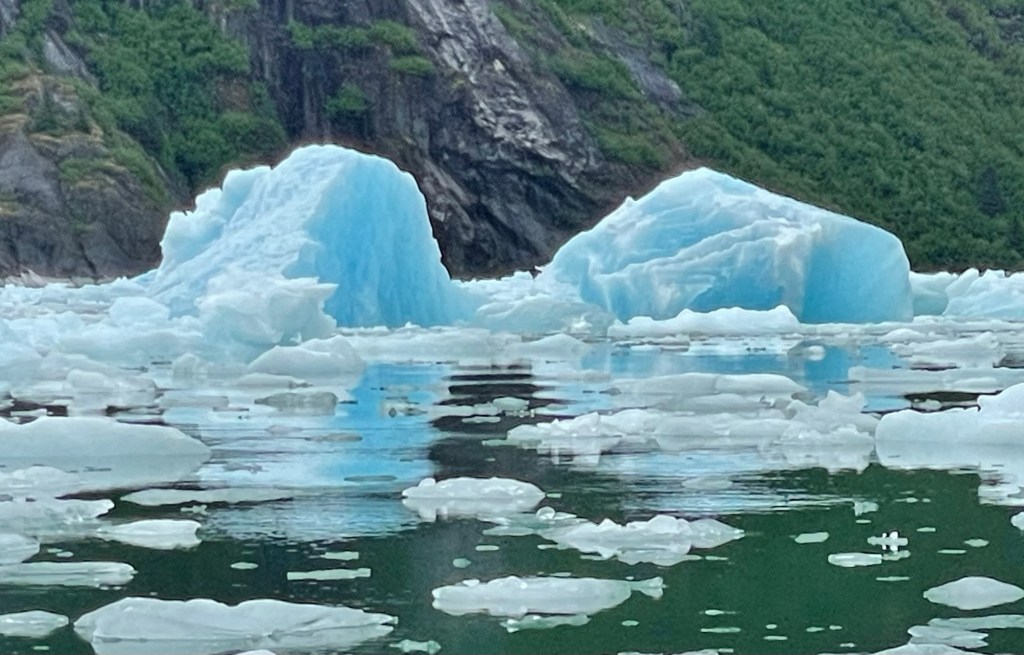
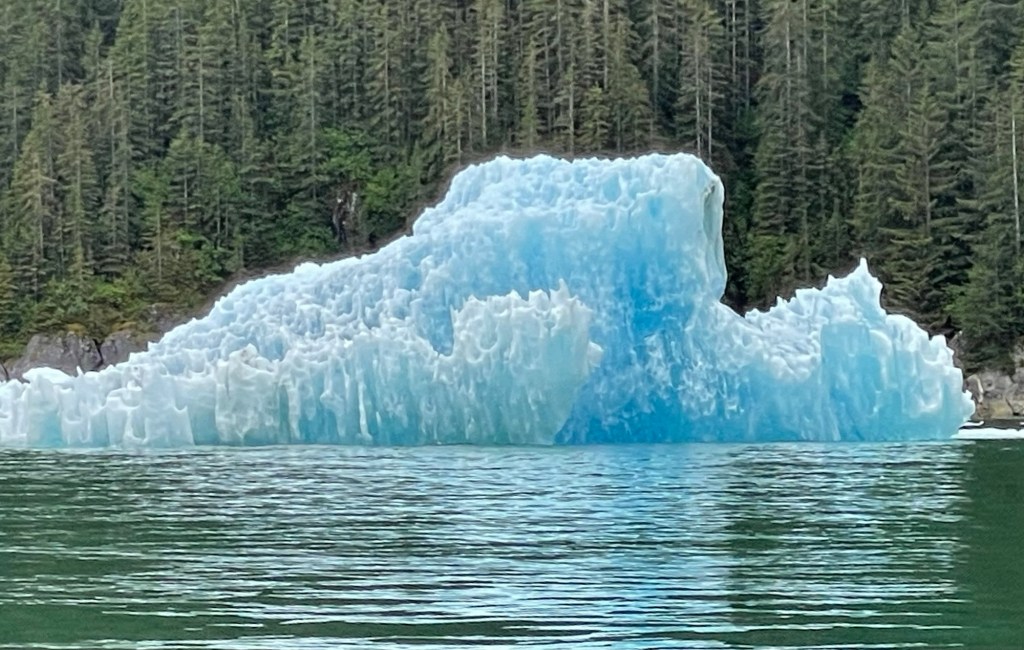
Check out the size of this iceberg relative to the trees behind. And remember that 90% of it is under water.

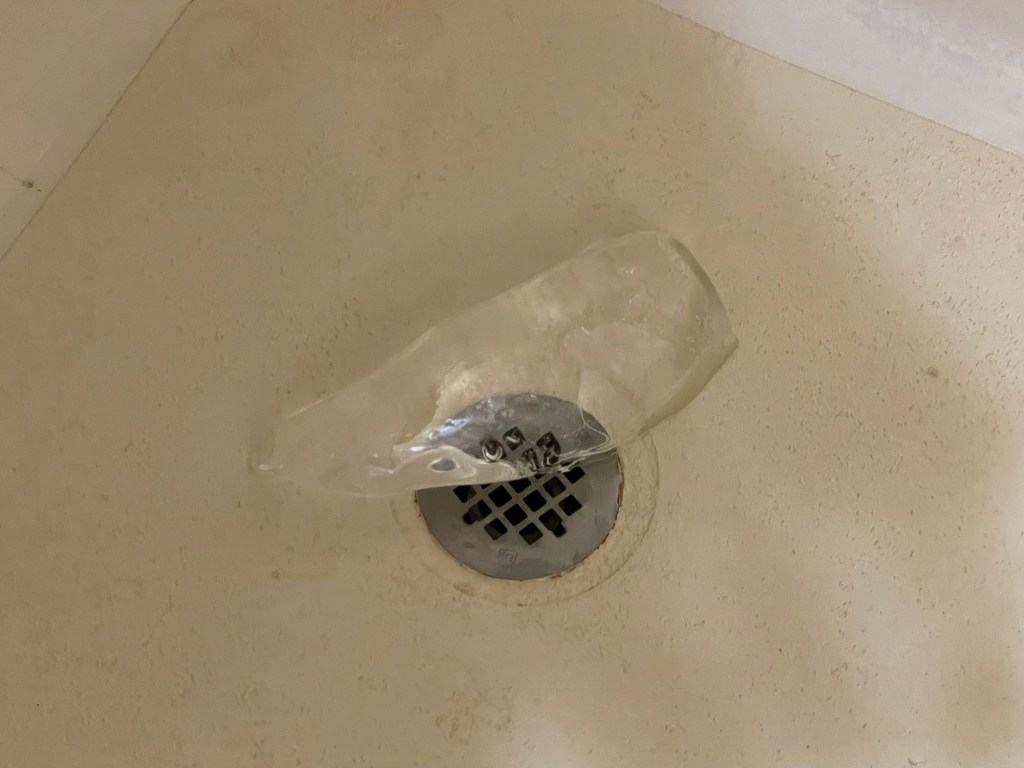
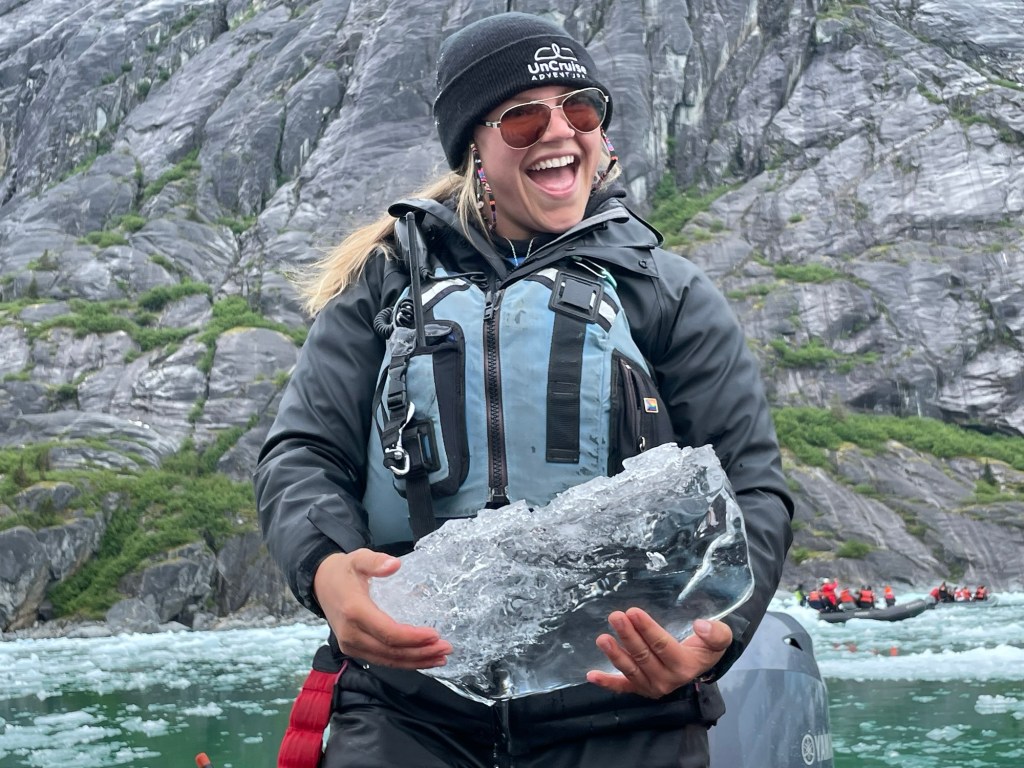
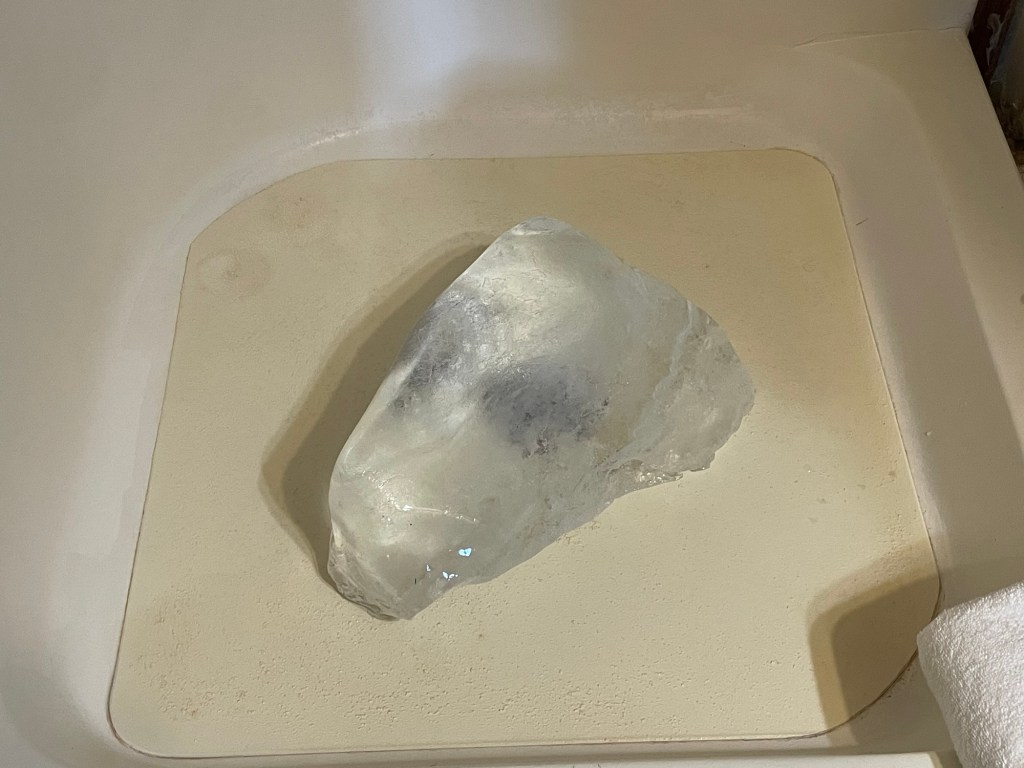
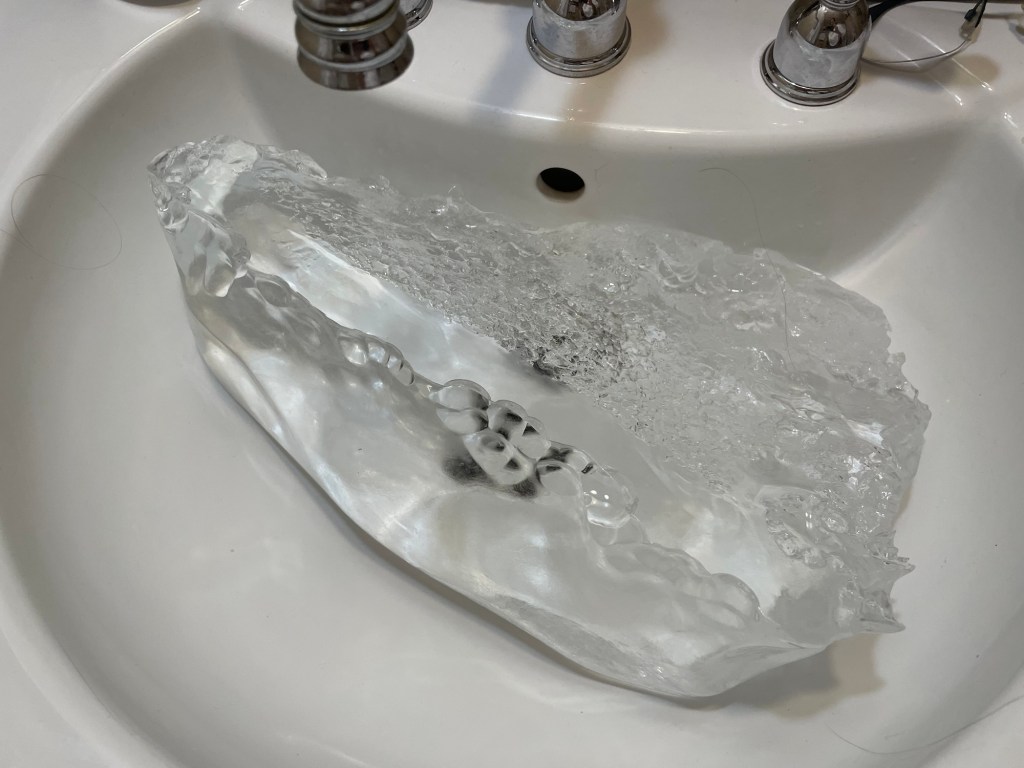
When we had made our closest approach to the glacier, Rachel surprised us with hot cocoa enhanced with a splash of creme de menthe. She also pulled up a chunk of ice that had originated the heart of the glacier, as evidenced by its extreme clarity and unusual weight. We decided to adopt “Bergy,” and brought him back to our room where he sits very comfortably in our shower.

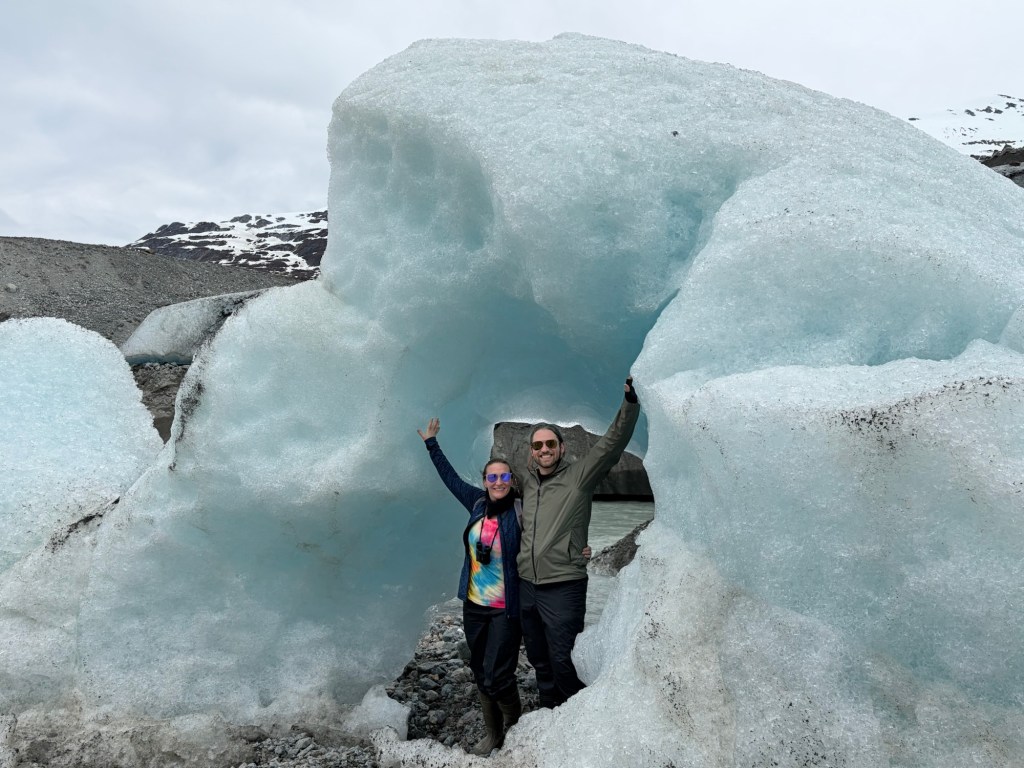
After the morning’s outing, the ship repositioned itself to the outer bay while we ate lunch. The water in this area was clear of smaller bits of ice, but still had plenty of big bergs floating about. This was our chance to explore in kayaks and get closer to these beautiful monsters. Not too close though — as with the glacier itself, the ice is treacherous and can flip unpredictably at any moment. This was illustrated in dramatic fashion right in front of our eyes: we had just finished a photo op moment with the beautiful arched berg below, when it fell to pieces with a bass rumble and the remaining sections flipped over into an entirely new configuration, sending a wave of water in our direction. What drama!

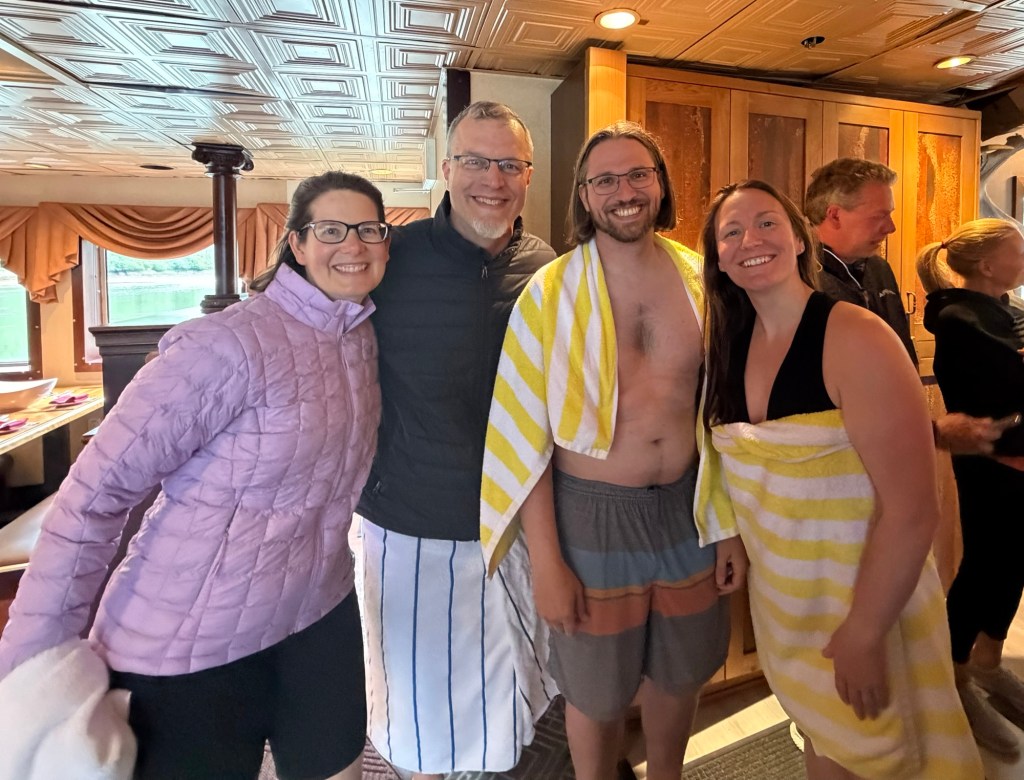
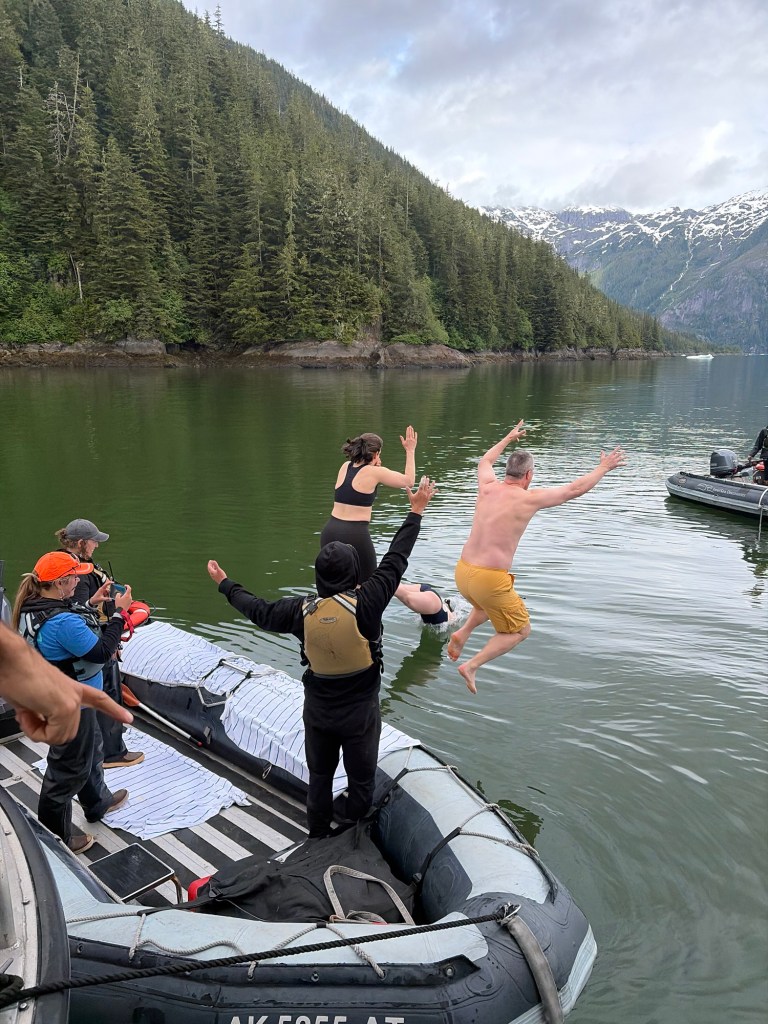
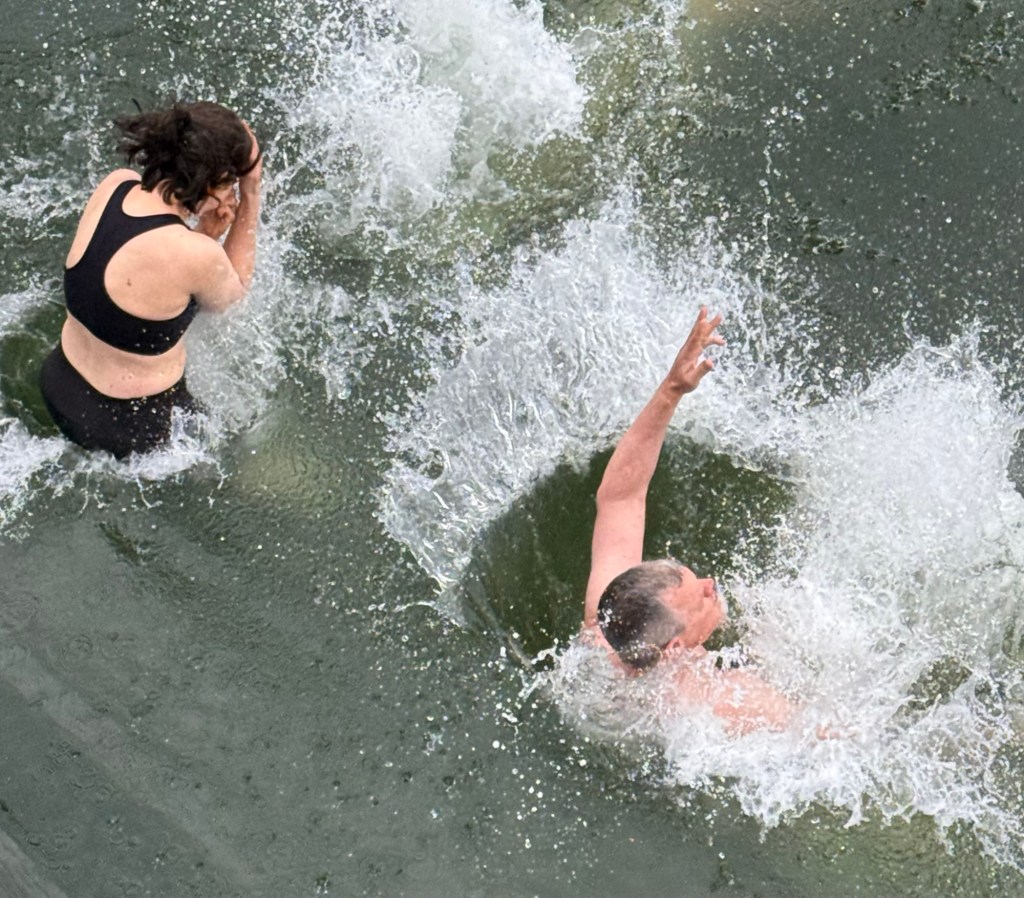
Speaking of drama, the day’s activities were not yet at an end. Here in the bay dotted with icebergs, our ship held an official Polar Plunge for any and all willing participants. A few crew members led the way, taking a brief time out between their official duties. By chance we happened to be the first guests to take to the icy waters, witnessed and cheered on by all the warm and dry spectators on the decks above. Was it cold? Yes it was! But the ship was offering hot drinks to people as they came out of the water, and hot tub sure felt nice afterwards. We are particularly proud of Susannah for overcoming her usual aversion to water (especially cold water) in favor of following the spirit of adventure.

We had to move Bergy to the sink while we showered after the Polar Plunge.

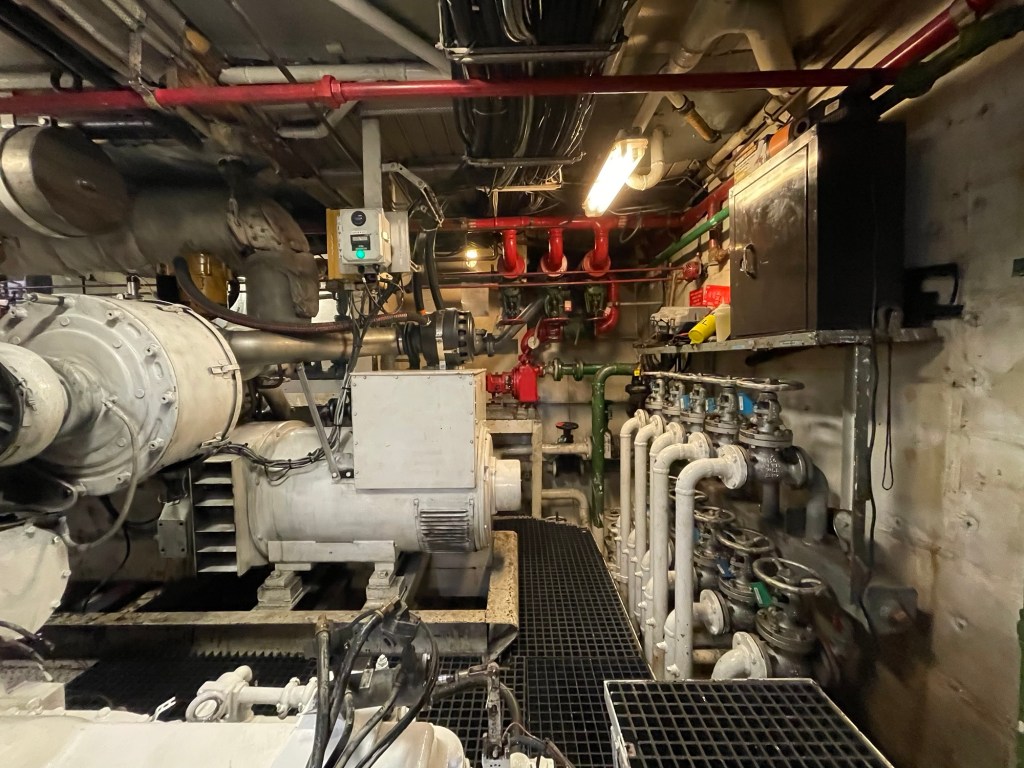
One other event we didn’t mention above: after lunch but before the kayak tour, we were offered a chance to visit the engine room of the Wilderness Legacy. The chief engineer showed us some photographs of the machinery we would see, issued everyone with a pair of disposable earplugs, and ushered us into the depths of the hull. It is truly remarkable the amount of machinery of all different kinds that is packed into an extremely small compartment. Motors, generators, boilers, chillers, bow thrusters, and electric switchboxes plus backups for the most important systems all share space with the humans who tend to them. Not to mention, they had some of the largest spanner wrenches we have ever seen.

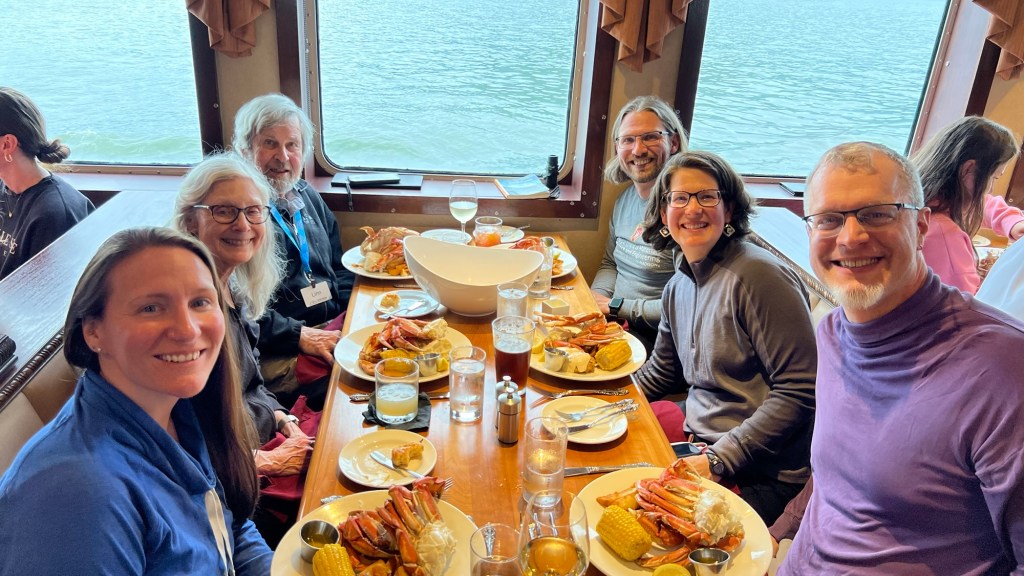
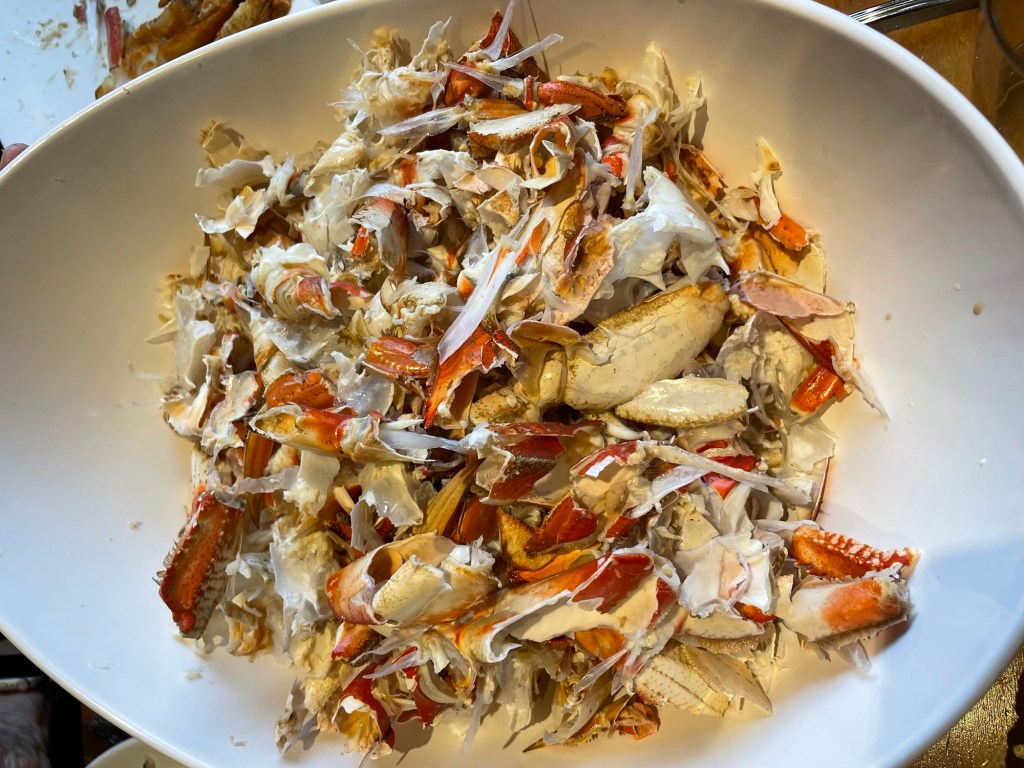
An epic day ended with an epic dinner: 75 pounds of Dungeness crab was served in the dining room, and we ate it all. The shells were collected in huge bowls, segregated from all the rest of the food scraps. Because crab is native to these waters, the remains could be thrown overboard as feed for the creatures of the deep.

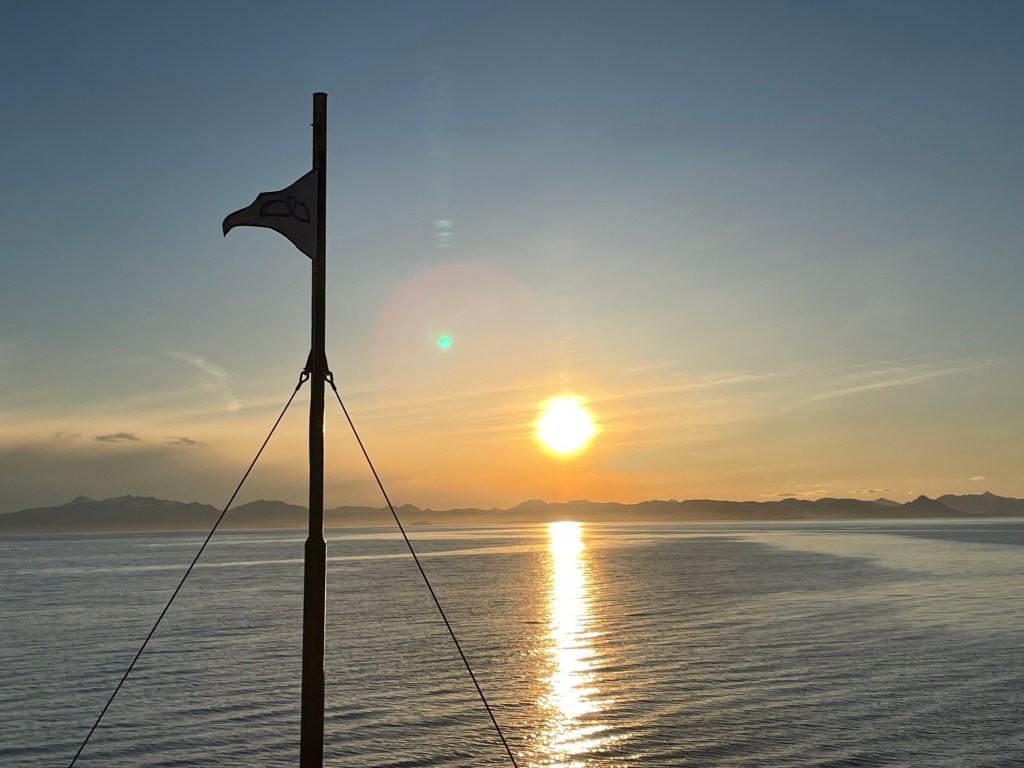
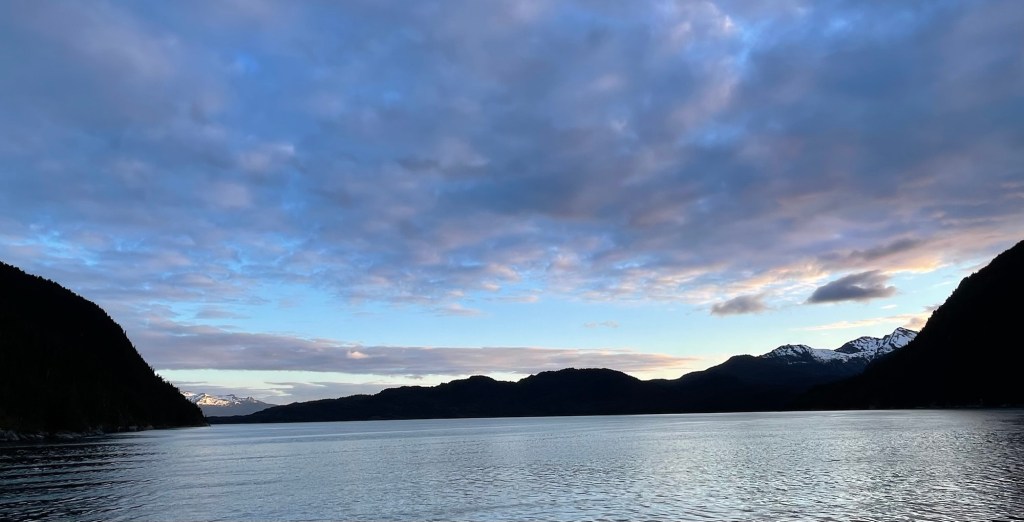
Where other cruises might have some sort of nightclub entertainment after dinner, Uncruise (the operator of our excursion) offers informational talks on a different topic each night, given by the guide crew. Today’s talk was delivered by Rachel (of the cocoa-crème-de-menthe fame) on kelp forests, and included a number of interesting nuggets about these giant algae of the sea. Did you know that you can buy a hot sauce made from kelp? Mmm, we’re thinking of some tasty souvenirs! Also, kelp covers 25% of the world’s coastlines and there’s even a theory that kelp may have played an integral part in the peopling of the Americas. We don’t have any pictures of kelp handy so here’s a pretty sunset. There’s probably kelp down in that water somewhere.

Kuiu and Keku

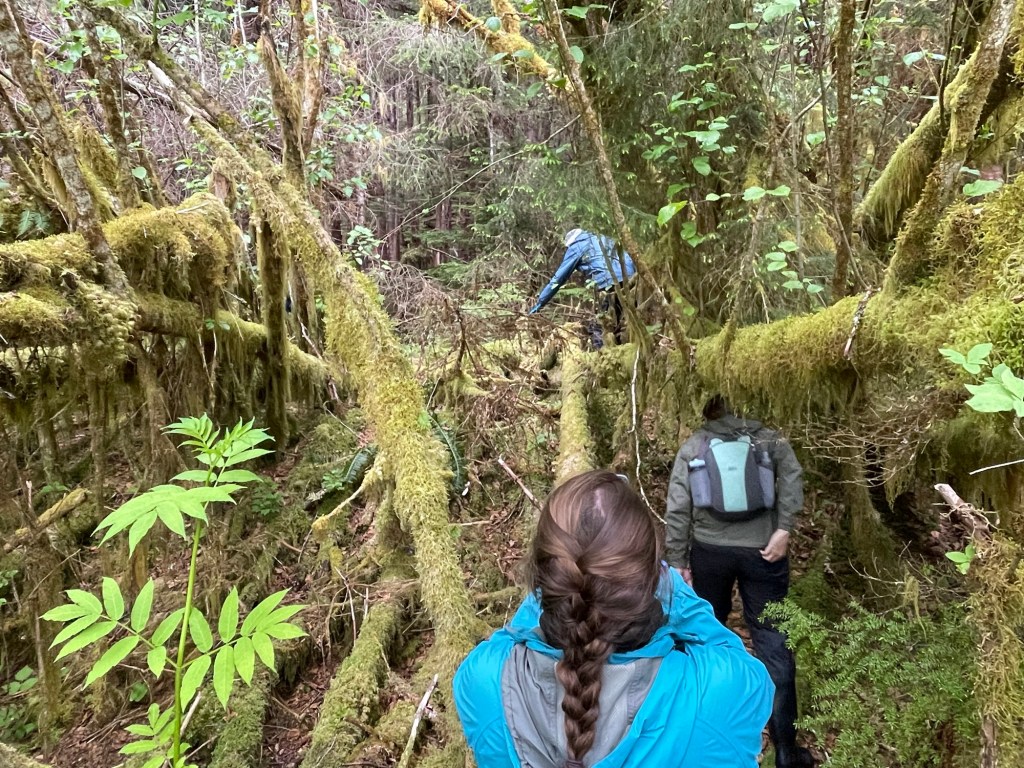
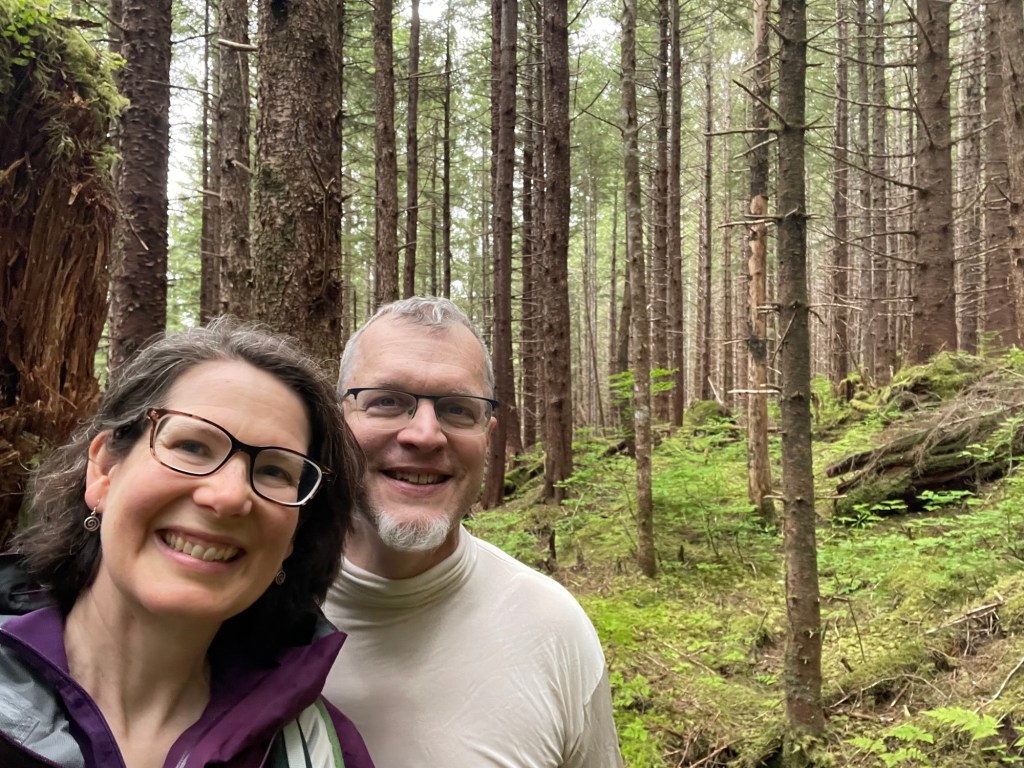
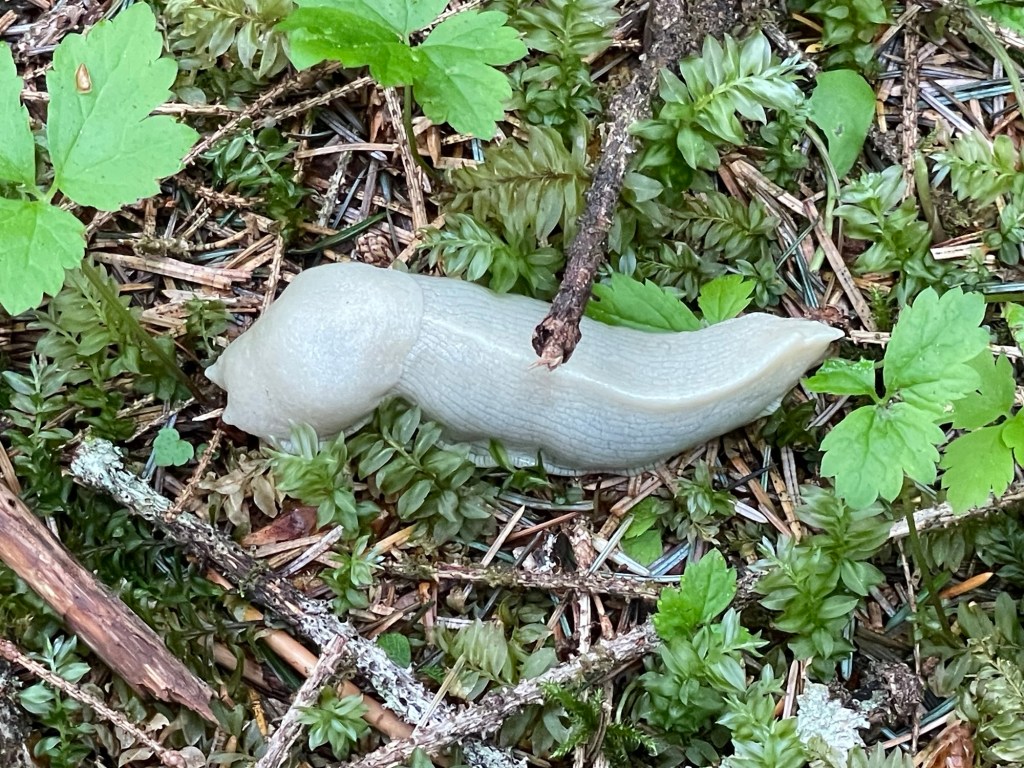
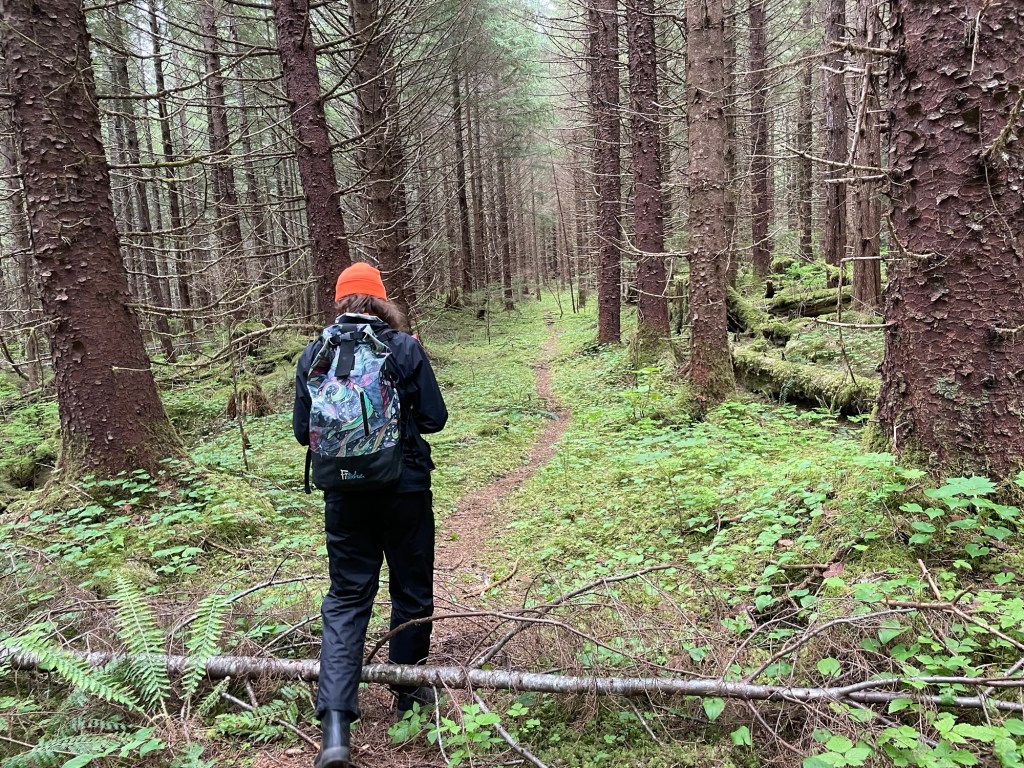
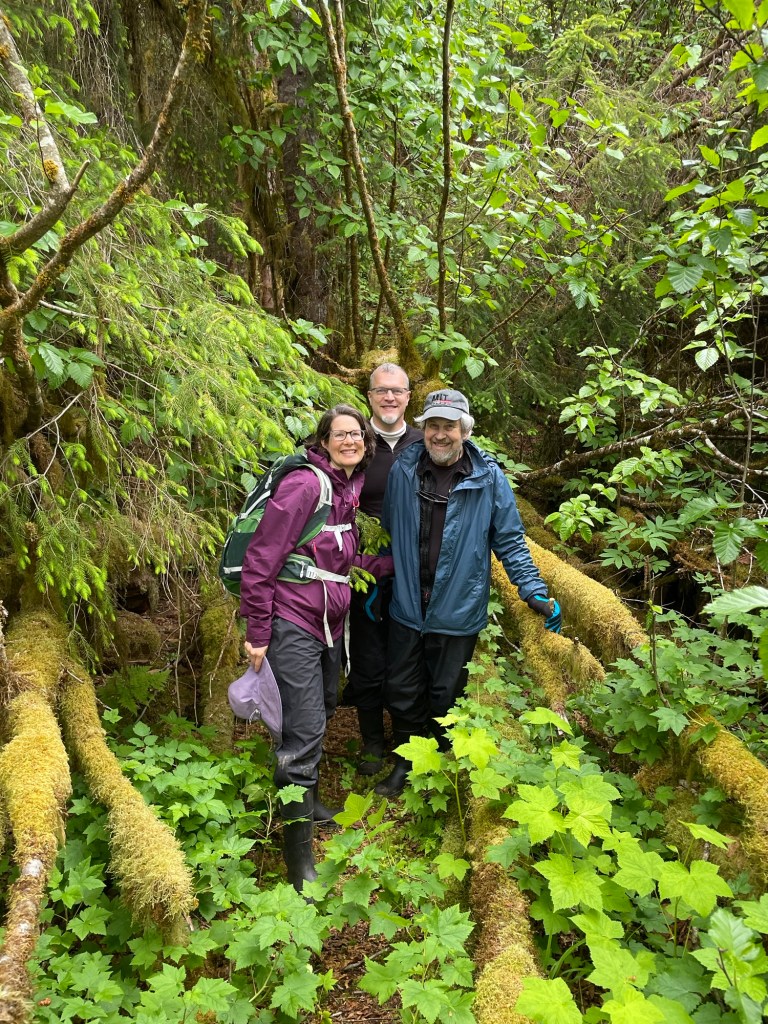
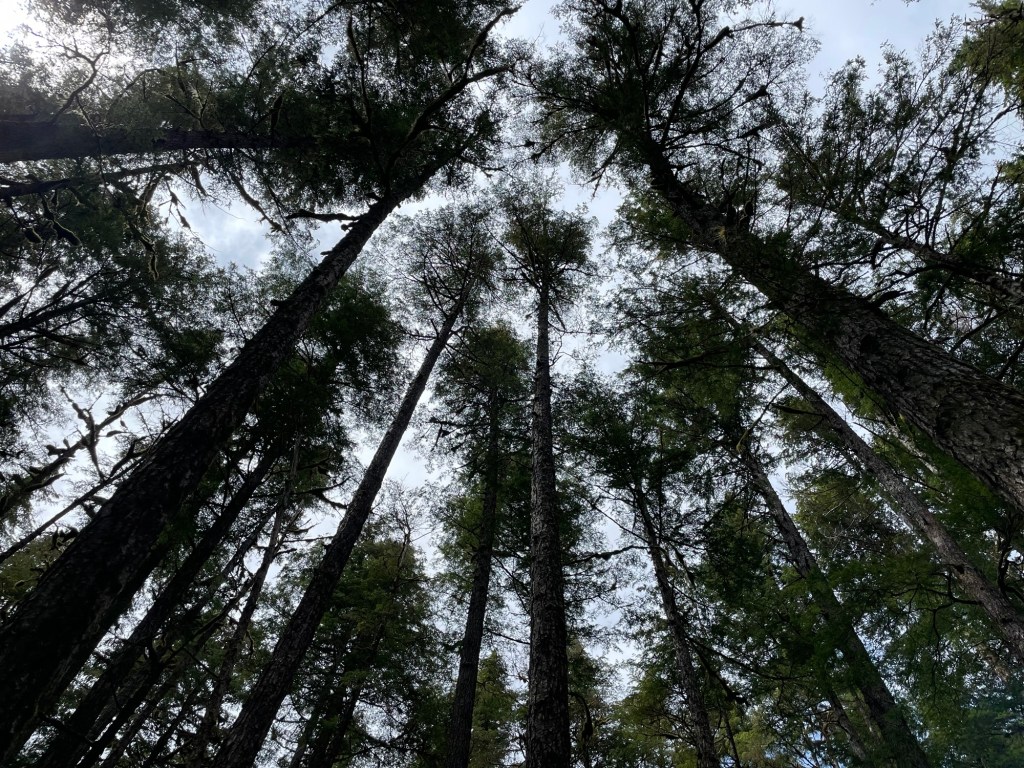
Our streak of sunny weather extended until early this morning, but was not to last much longer than that: by breakfast a layer of gray clouds had rolled in.  Most of us opted for a bushwhack tour this morning, and found something fairly different from either of our earlier such outings.  At our location on Halleck Harbor the woods are still crossed by the remains of old logging roads, so even though there are no formal trails it is not too hard to travel if you find and follow such a route.  One does still have to keep a sharp eye out for devil’s club, which seems to grow preferentially alongside these more open areas.  During our walk we saw a large number of banana slugs, in all three of the local varieties:  white, gray, and spotted.  (For those who haven’t seen one before, banana slugs are native to the west coast and can grow up to ten inches long.  The largest we saw were maybe six.)  We also came across a number of wildflowers and mushrooms, but no bears — unlike one of the skiff tour groups, who saw two!

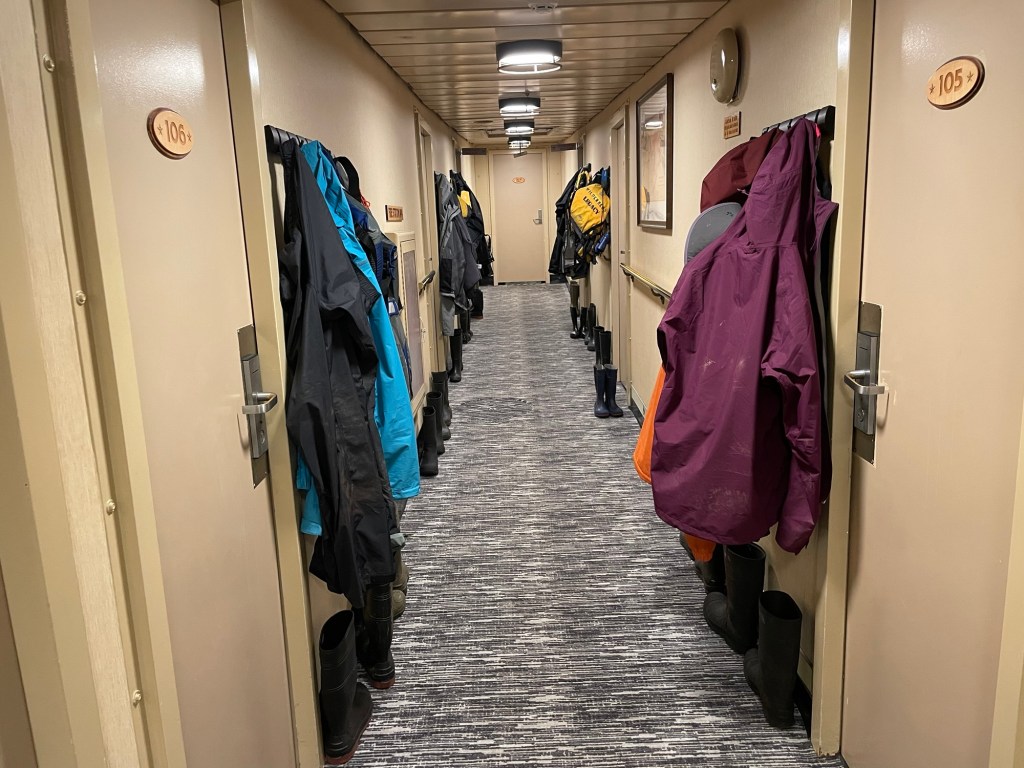
Best place to store rain gear? Hallway hooks! (Note the parade of rubber boots, a cruise staple)
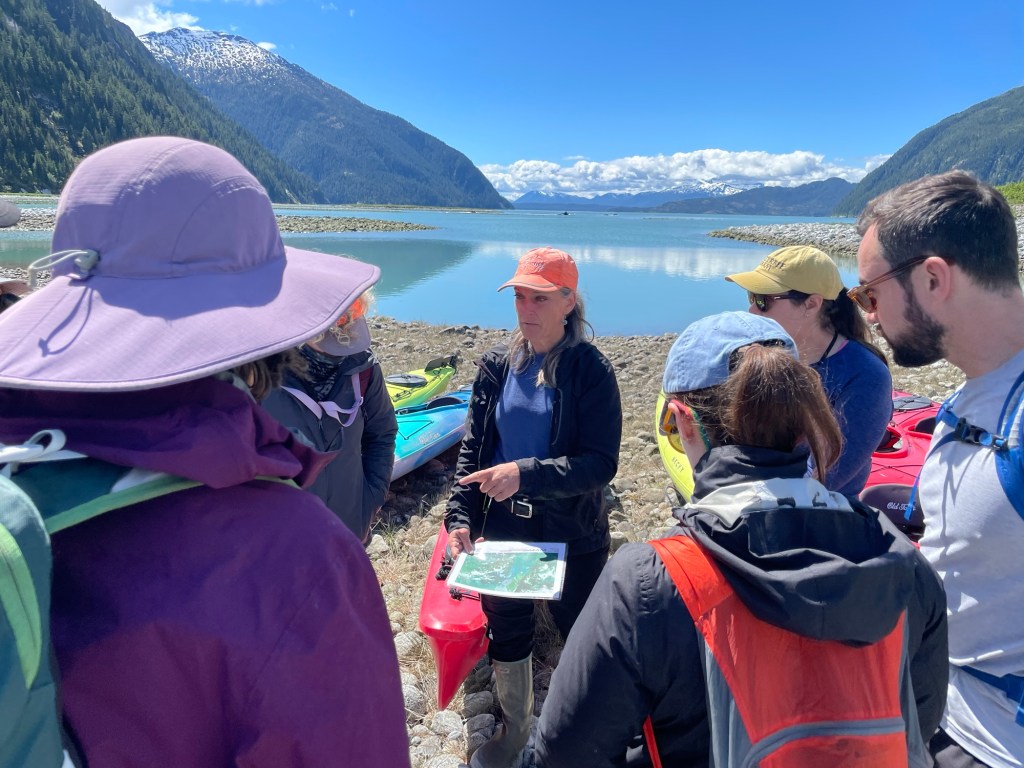
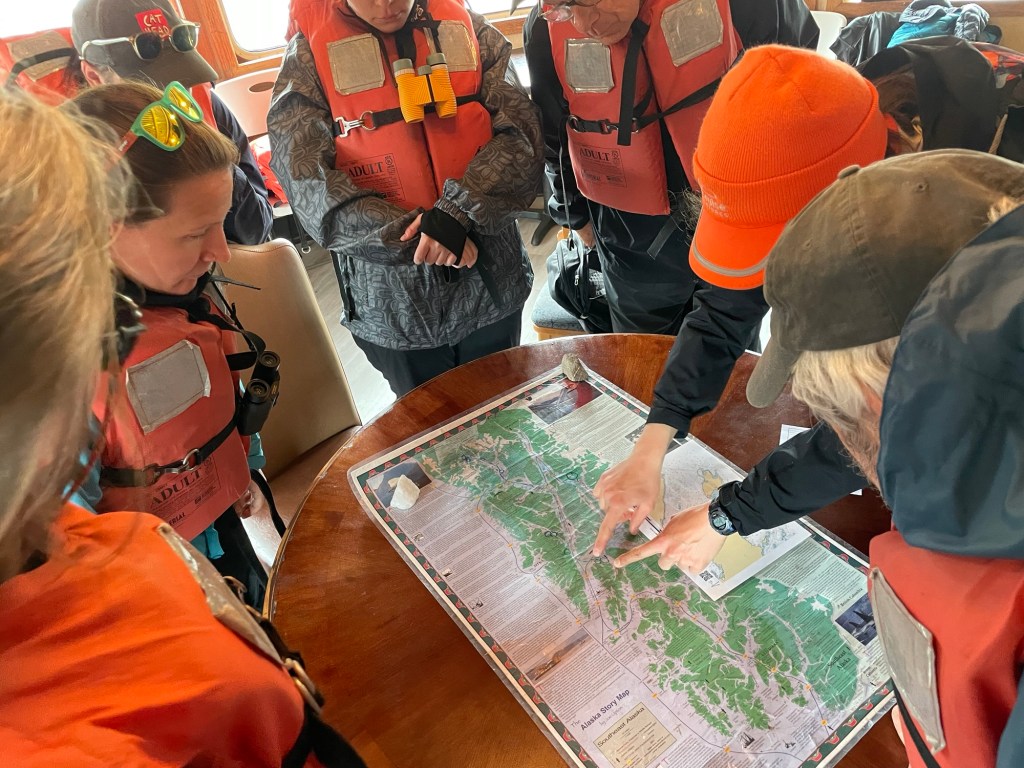
Reviewing the planned route for the bushwhack
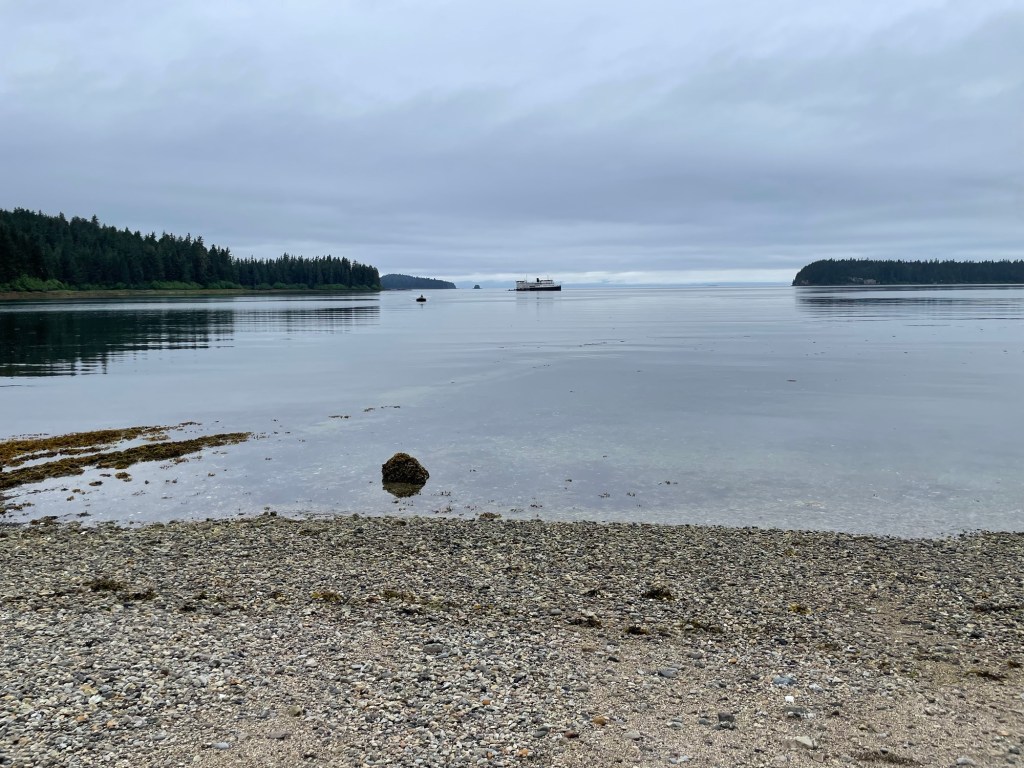
On the beach, post-whack, looking back at the boat

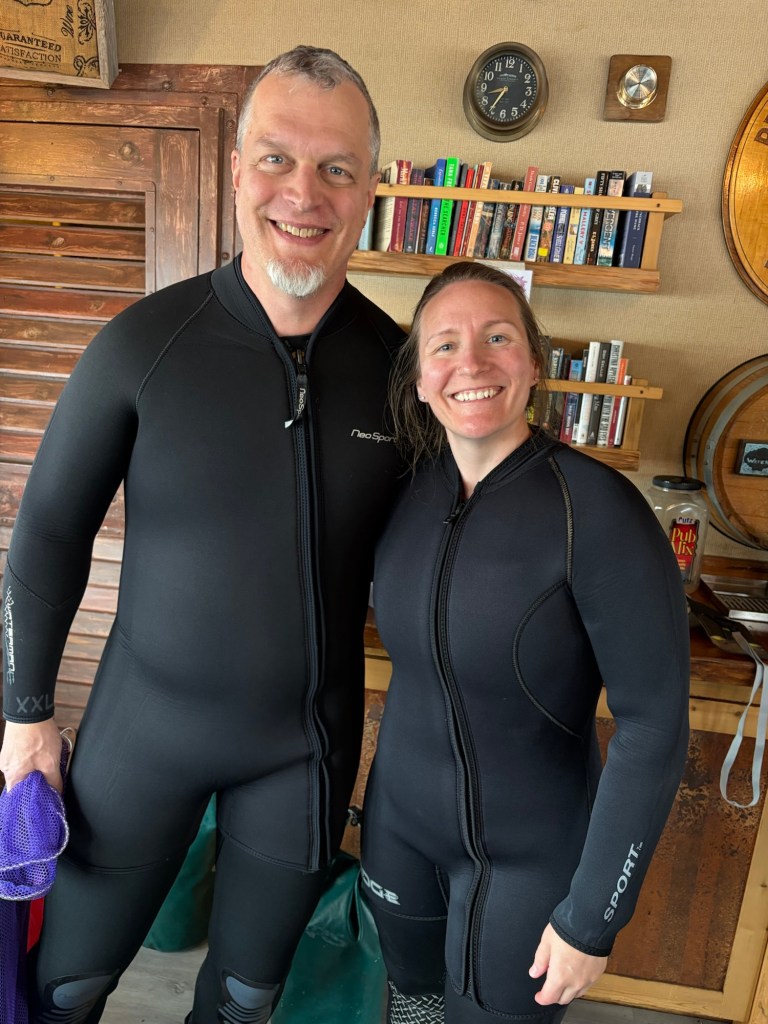
After lunch we split up again.  Nick and Melissa were the only two from our group who opted for the snorkeling expedition.  Because the water temperature is only 42 degrees, all snorkelers were issued wetsuits, which we had tried on in advance two days before.  Today we once again wriggled our way into our 14-mm neoprene skins that covered every inch of our bodies except for a circle around the face, and made our way to the skiff for launch.  (As a bonus, because we already had our wetsuits on, for once we weren’t required to wear life preservers during the skiff ride.)

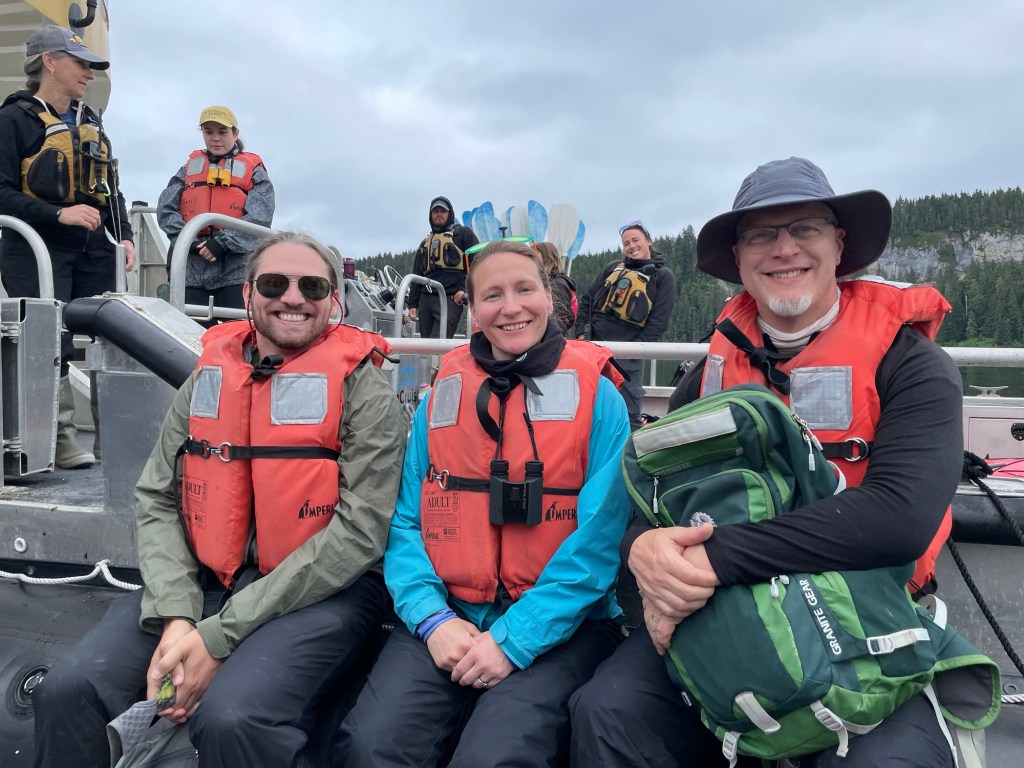
Smiles before snorkeling, even bigger smiles afterwards!

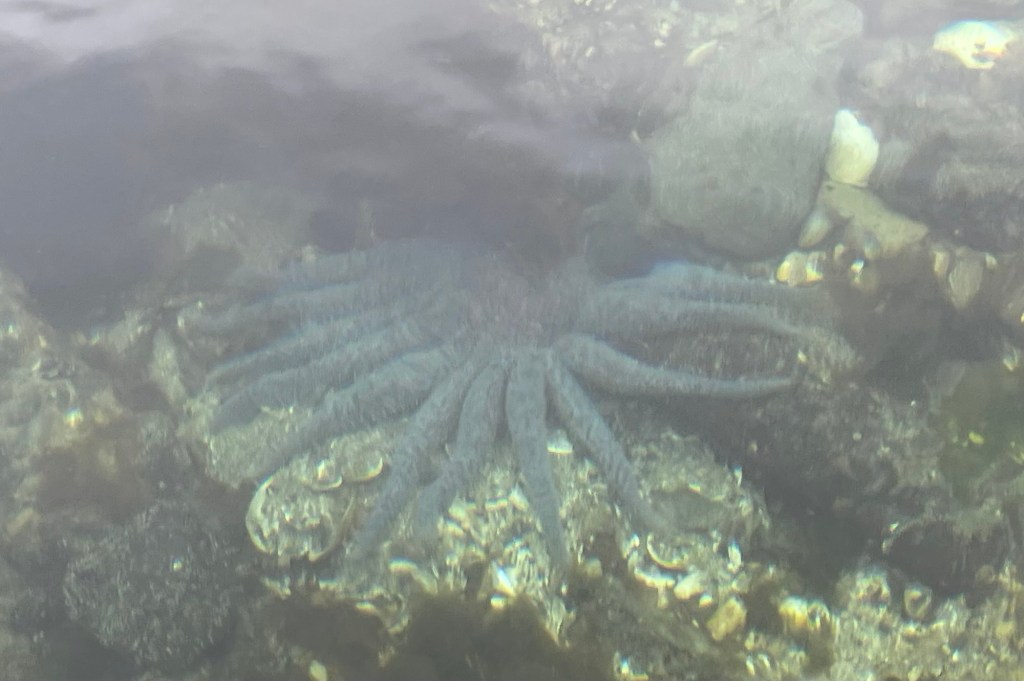
The snorkeling site was an underwater canyon whose sheer walls were teeming with aquatic life, including sea stars in more colors than you would believe (blue? really?), a bewildering variety of crabs, and something we think was a candy corn nudibranch.  There were bright orang hermit crabs the size of a fist walking around in spiral shells, and sea cucumbers extending delicate orange filaments that looked like flowers.  The trip had been planned for dead low tide so that there would be no currents to drag us around, and even above the water the rocks were dripping with sea stars still clinging to the cliffside waiting for the water to come back and cover them up again.  Although we had the option of ending early if we got too cold, we all stayed for the full allotted time of nearly an hour.  Sadly, pictures from this trip are limited because we didn’t have a camera with us, but we’ll add some taken by fellow travelers when we can get them.

Blue sunflower star

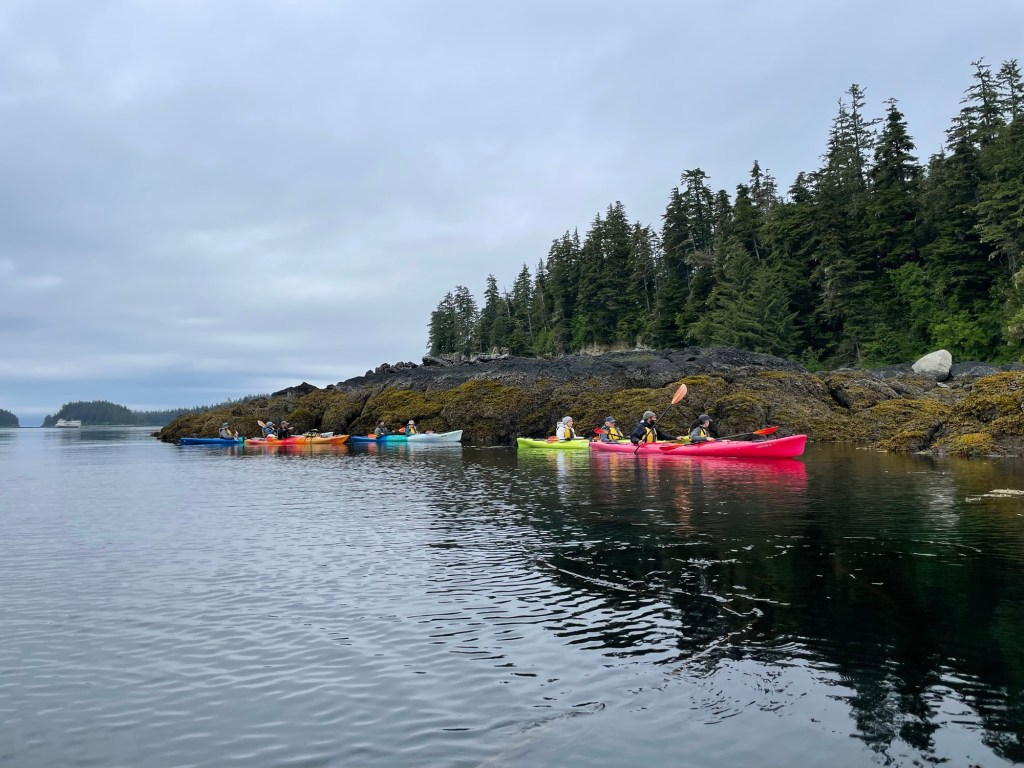
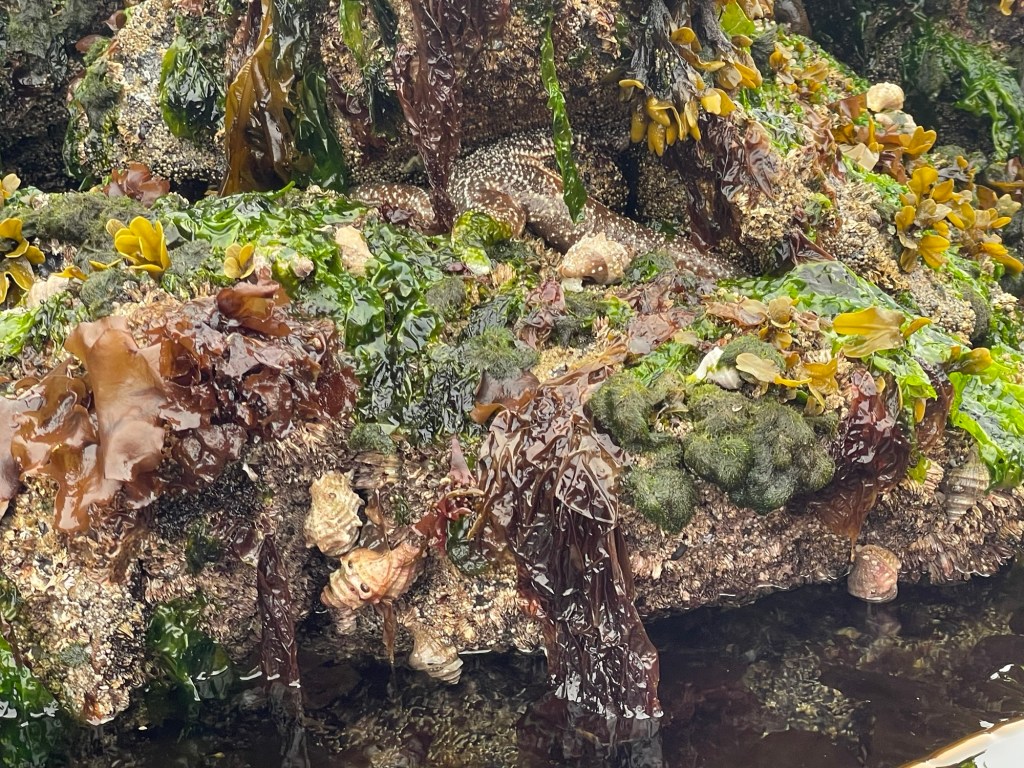
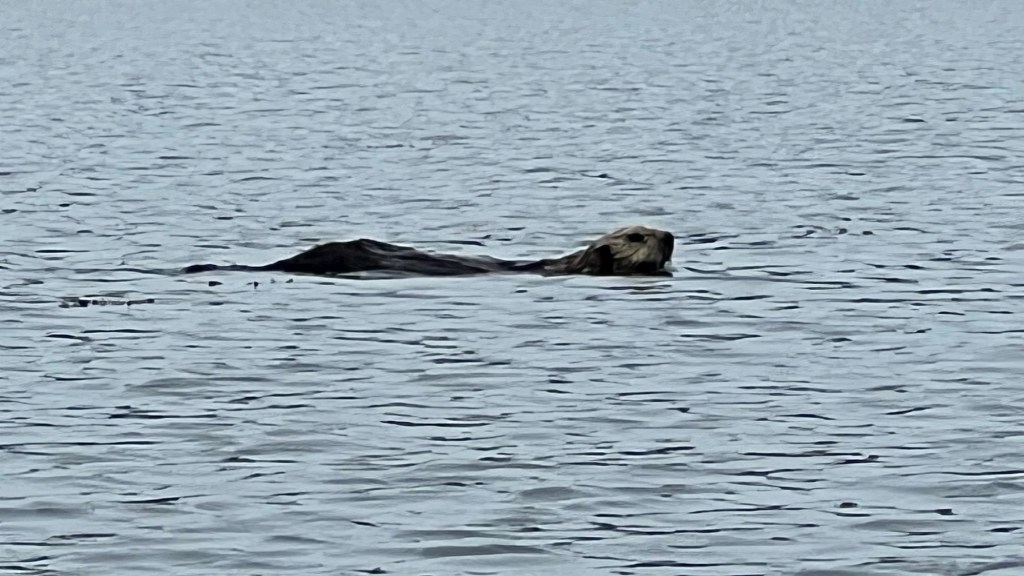
Meanwhile the rest of the group went on a guided kayak tour of the Keku Islands.  After experiencing a triple launch from the Sea Dragon (three boats pushed off in parallel), we explored the intertidal zone, seeing multi-legged sea stars, whelks, anemone, and lots of kelp.  Plus, we spotted a friendly otter and several harbor seal pups likely less than 6 weeks old!

Triple boat launch!

We haven’t said much about the food on this cruise, but it is incredible. Chef Rachel gives us the menu every morning at breakfast, and her delivery suggests she is a born comedian as well as a chef.  Today for lunch we all had poke bowls with either fresh salmon or chicken teriyaki, with key lime tart on a ginger crust for dessert.  So delicious!  At dinner our meals were accompanied by sourdough bread made from a starter over 100 years old named Janet.

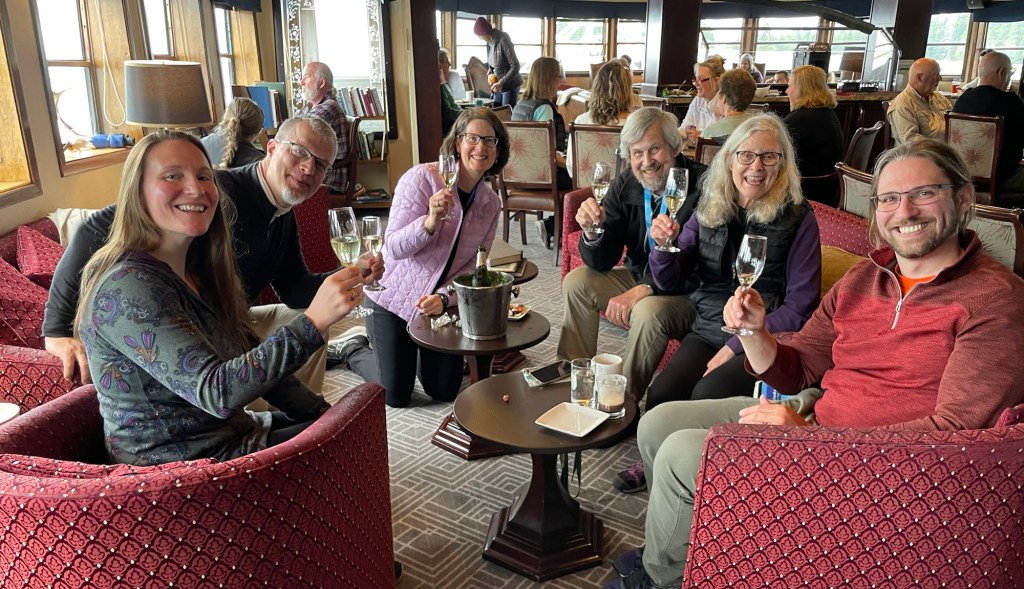
Celebrating Linda’s birthday (early) with champagne

Two Braids Tuesday in Takatz Bay

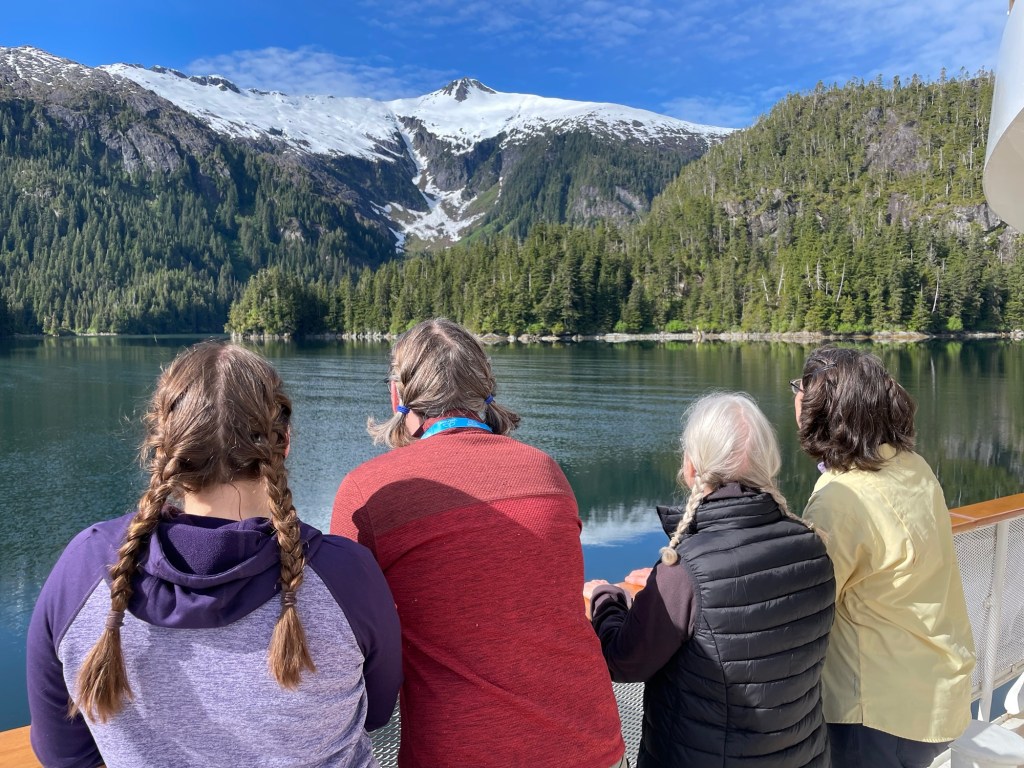
Sunny days in the summer in this part of Alaska are both exquisite and rare. So you can imagine our delight when we opened the curtains this morning to a blue sky graced with a few fluffy white clouds. We were anchored in Takatz Bay, nestled within a deep steep-sided bowl. Our ship had declared this to be “Two Braids Tuesday” and invited everyone with sufficient hair to arrange it in double braids in celebration. Several members of our group were able to partake.

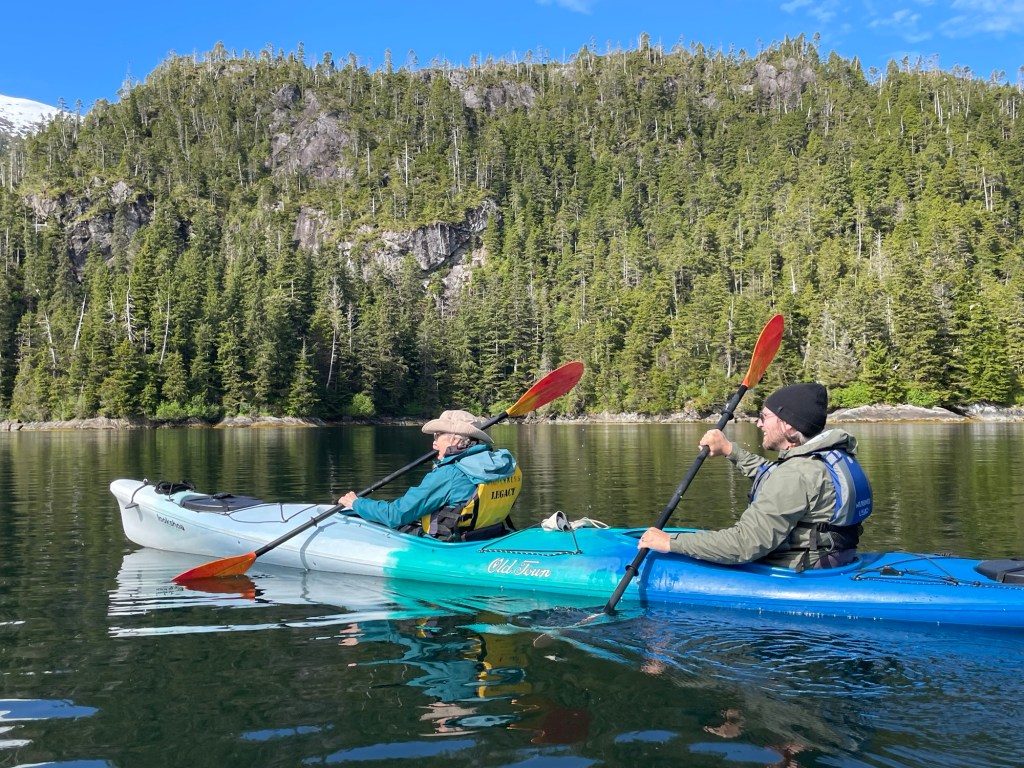
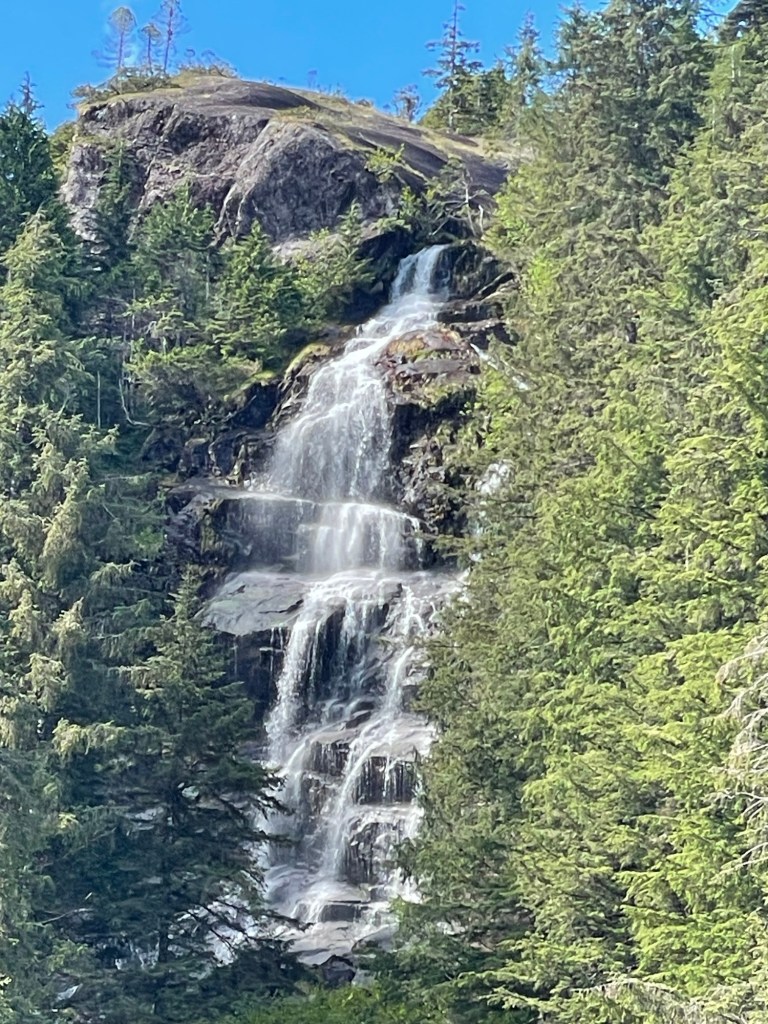
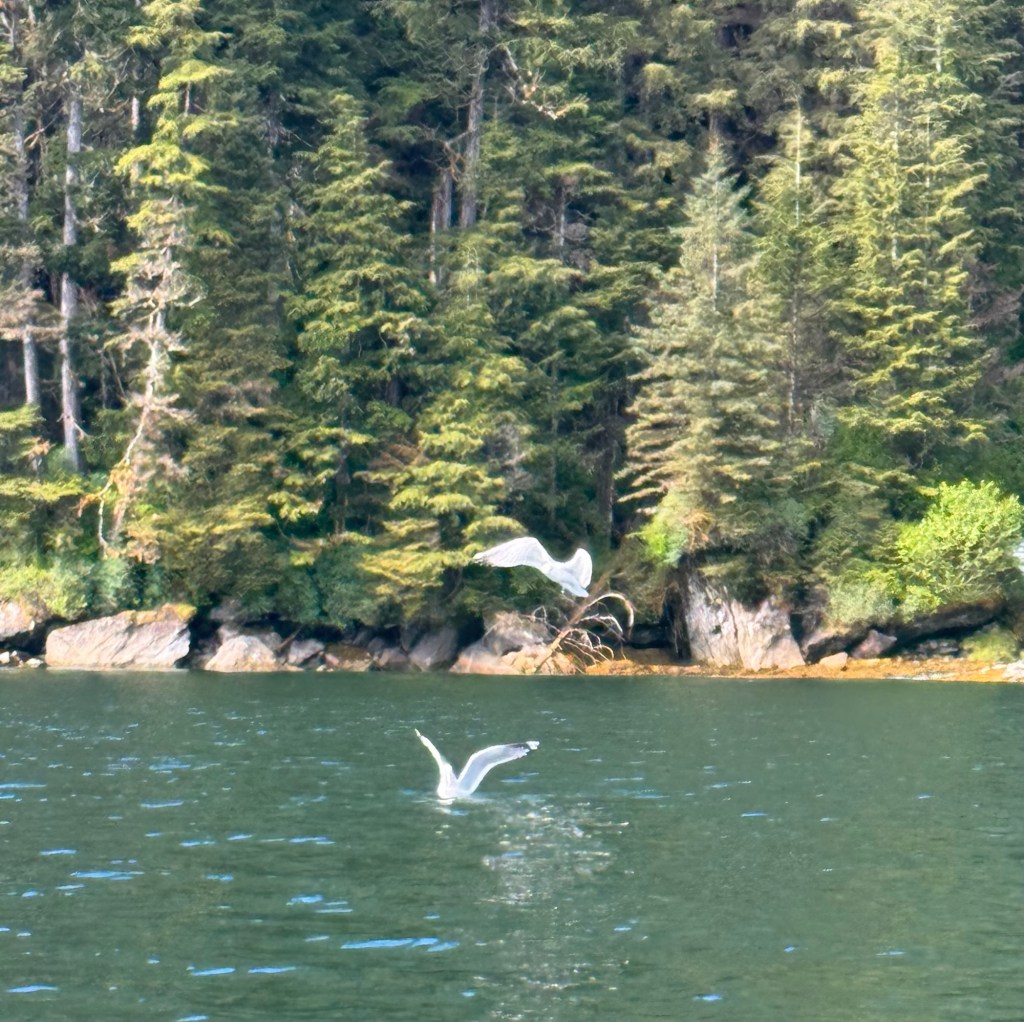
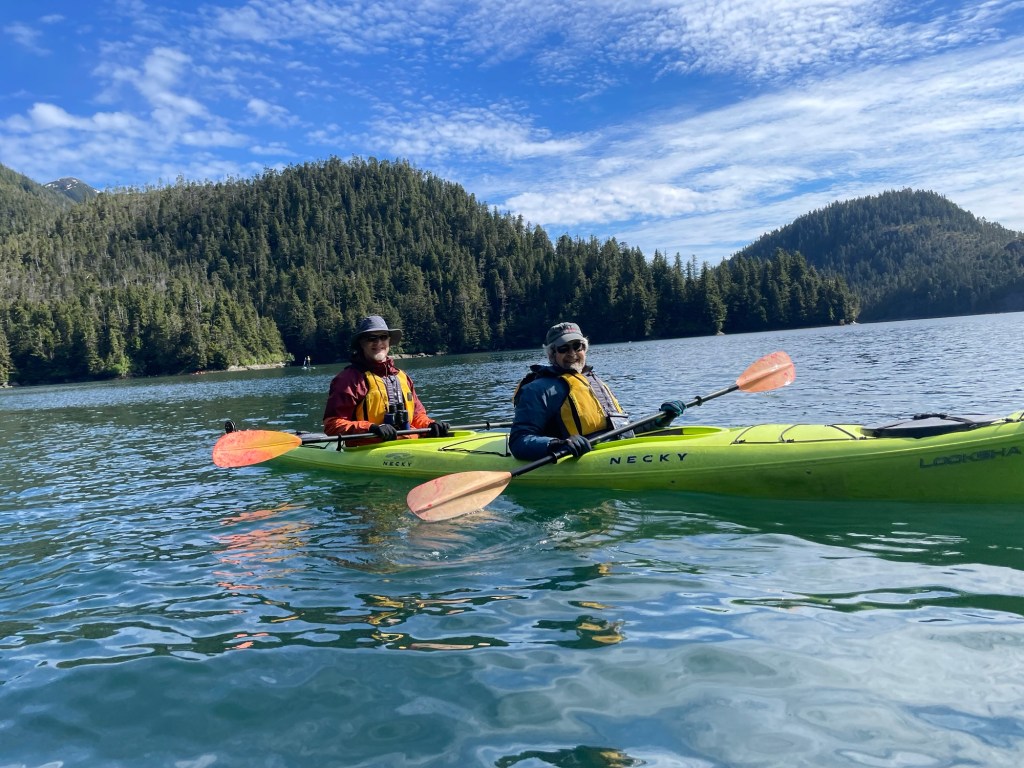
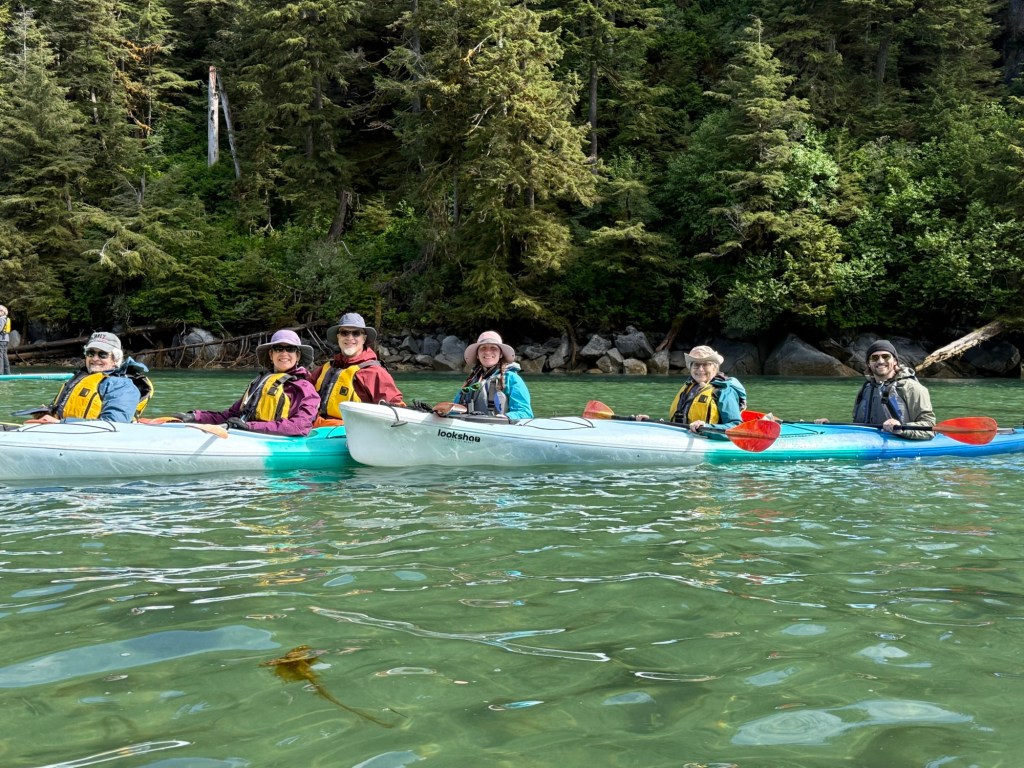
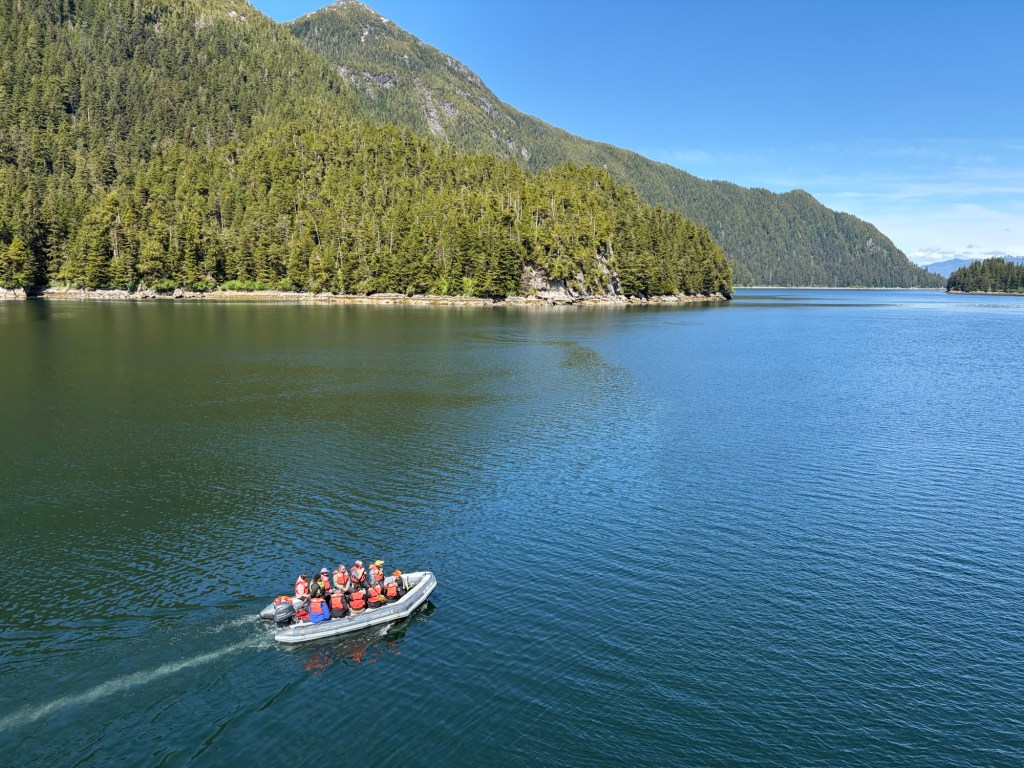
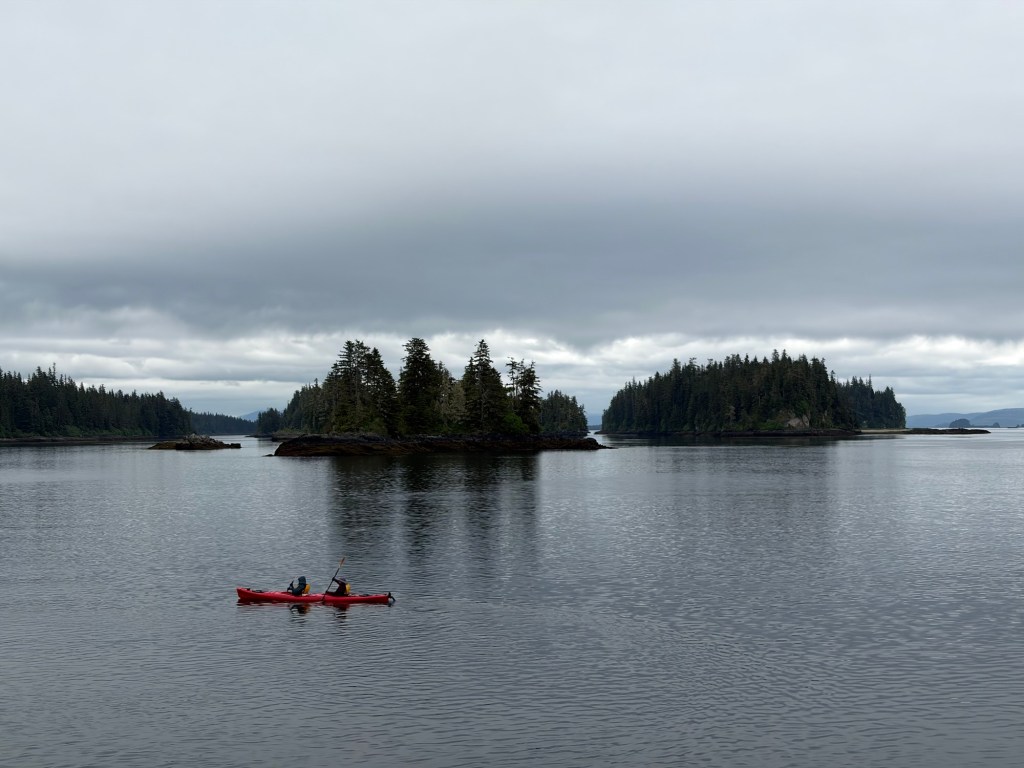
The shelter here meant that we could kayak freely around the bay without a guide, exploring the rocky coves and small islands. Several tall cascades tumbled down the sides of the bowl, and in the water below terns could be seen catching fish and then fighting over the spoils. A few seals swam about in the shallows, poking their heads up from time to time as seems to be their nature.

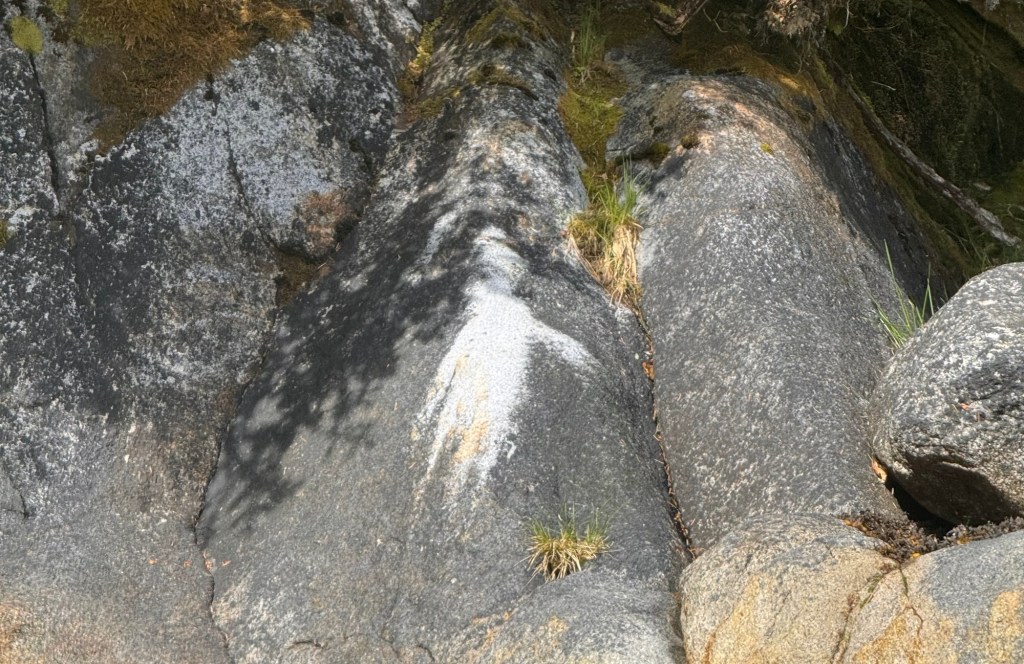
Petroglyph? You decide – our guides aren’t sure

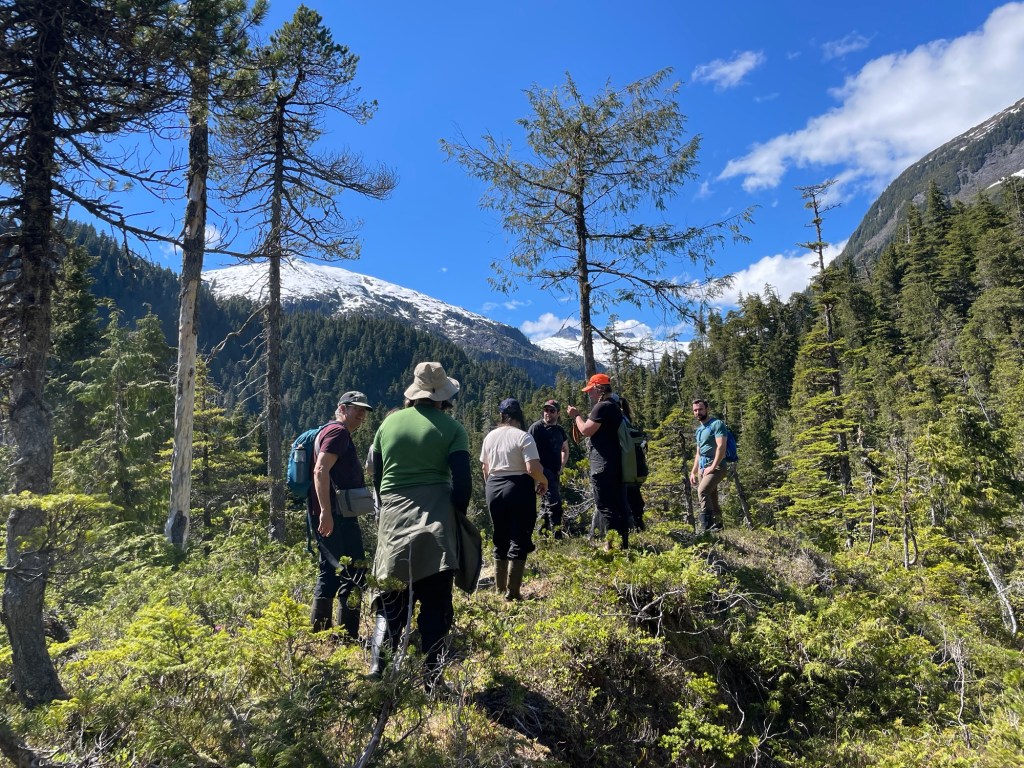
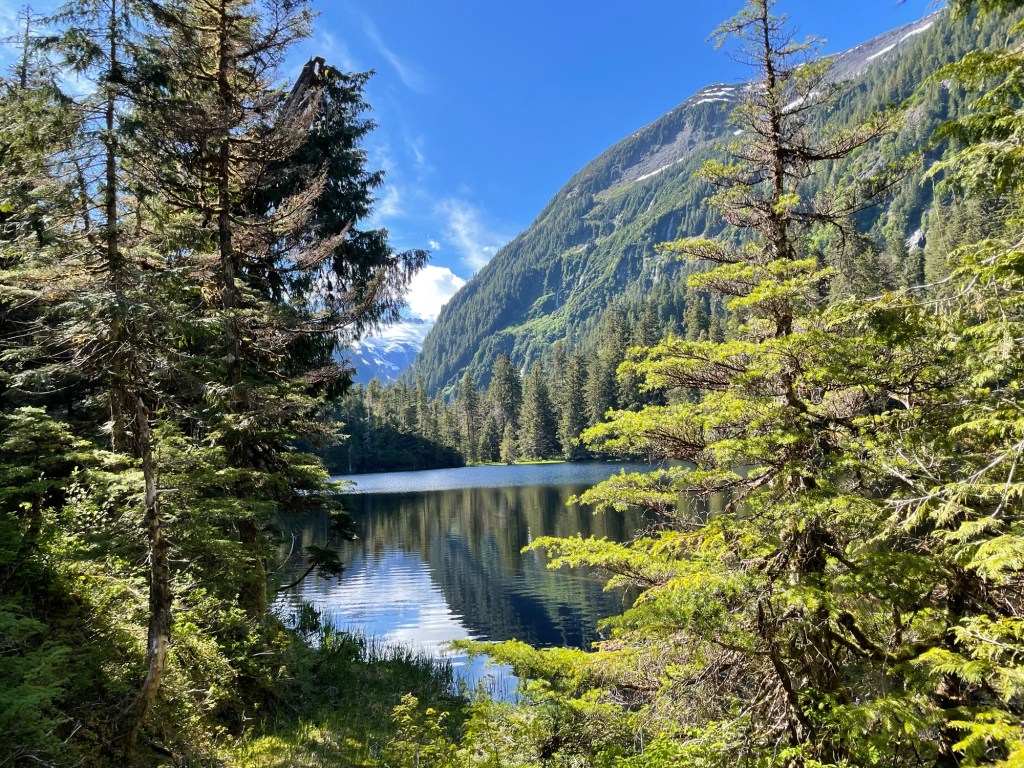
In the afternoon we split up. Susannah and Franklin went on a second bushwhacking tour, which turned out to be extremely different from yesterday’s example. After taking a quick skiff ride to shore, their group trekked up the side of the bowl aiming for a mountain lake. The journey included short steep slopes, thickly forested hillsides, occasional clearings with stunning mountain views, spongy footings, and even some snowy grottos. They found themselves grasping on roots and branches to help pull themselves up the inclines and prevent themselves from sliding down the declines. The experience was unexpectedly exhilarating – rubber boots for the win again!

Over or under?
Back on ship, getting boots washed to preserve the new carpeting

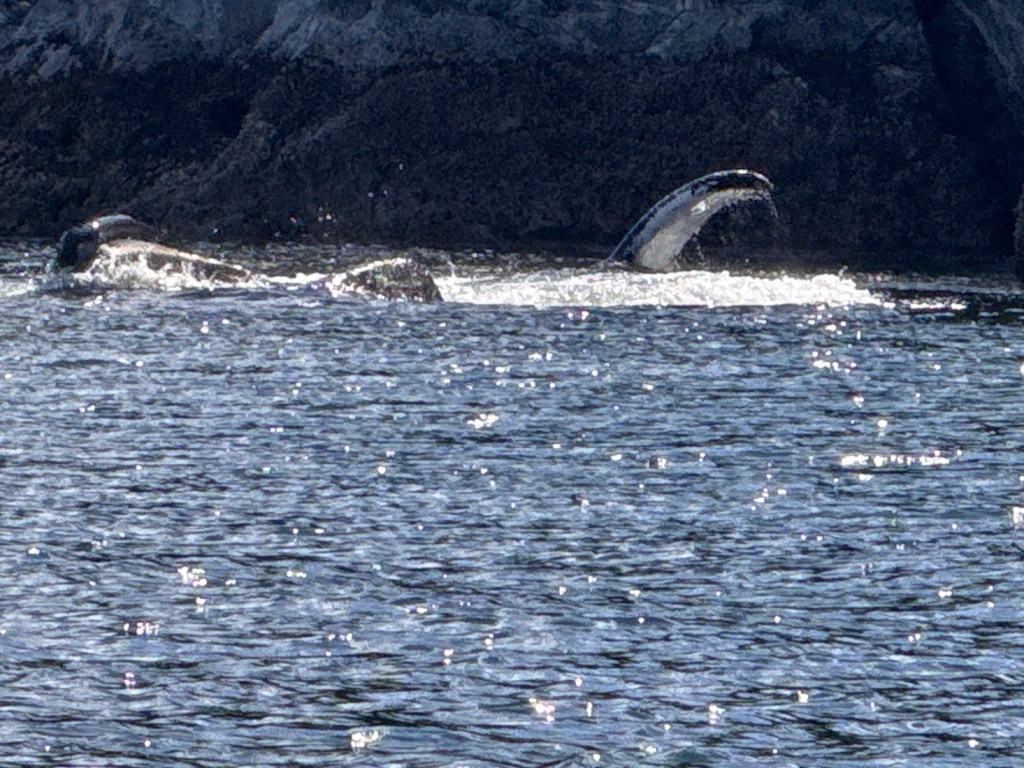
Meanwhile, Nick and the rest of our crew went on a skiff tour that found a whale feeding in the shallows and followed it for quite some time. Unlike the whales from the day before, this one didn’t make any tails-up deep dives. Instead it seemed almost to be scratching its back on the rocks, rolling around and raising flippers into the air from time to time. We saw one or two examples of lunge feeding, where it lifted most of its head out of the water while rushing forward to take a big gulp.

Which way is the whale?
Found it!
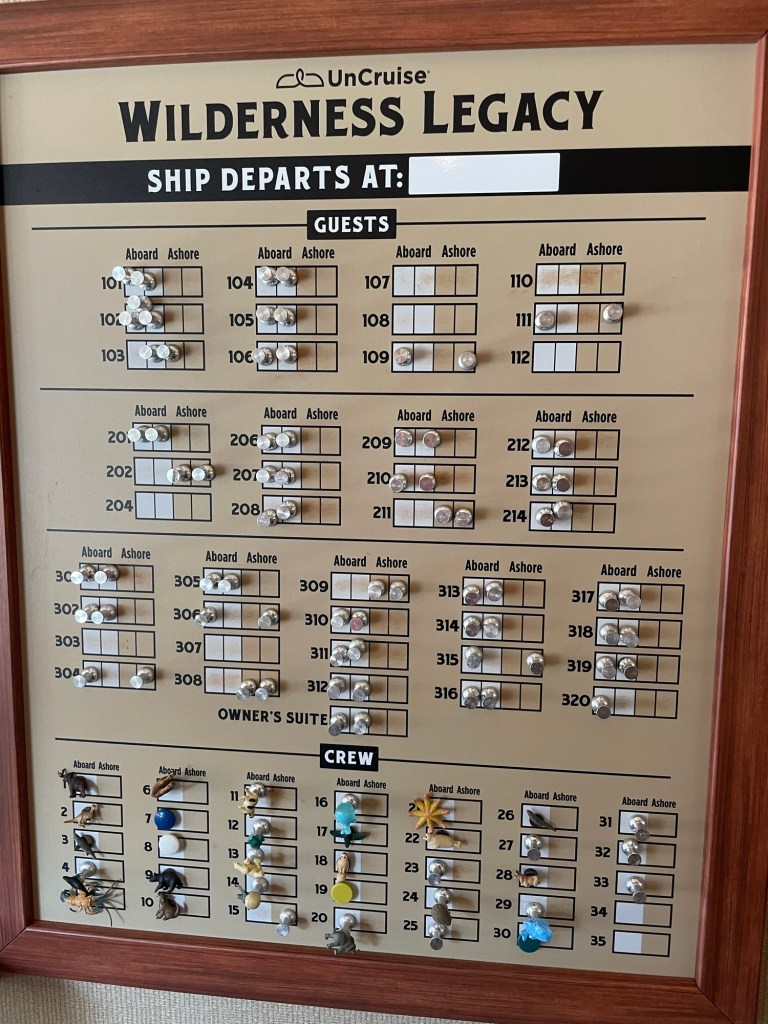
Don’t forget to move your magnet when you leave the boat or come back!

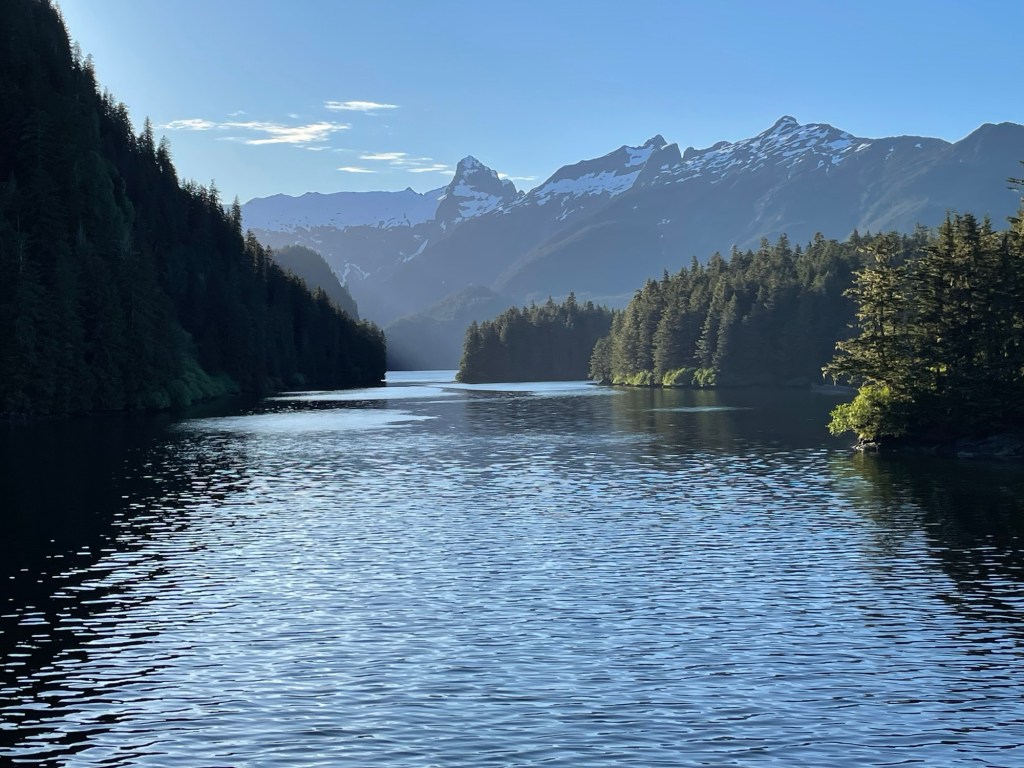
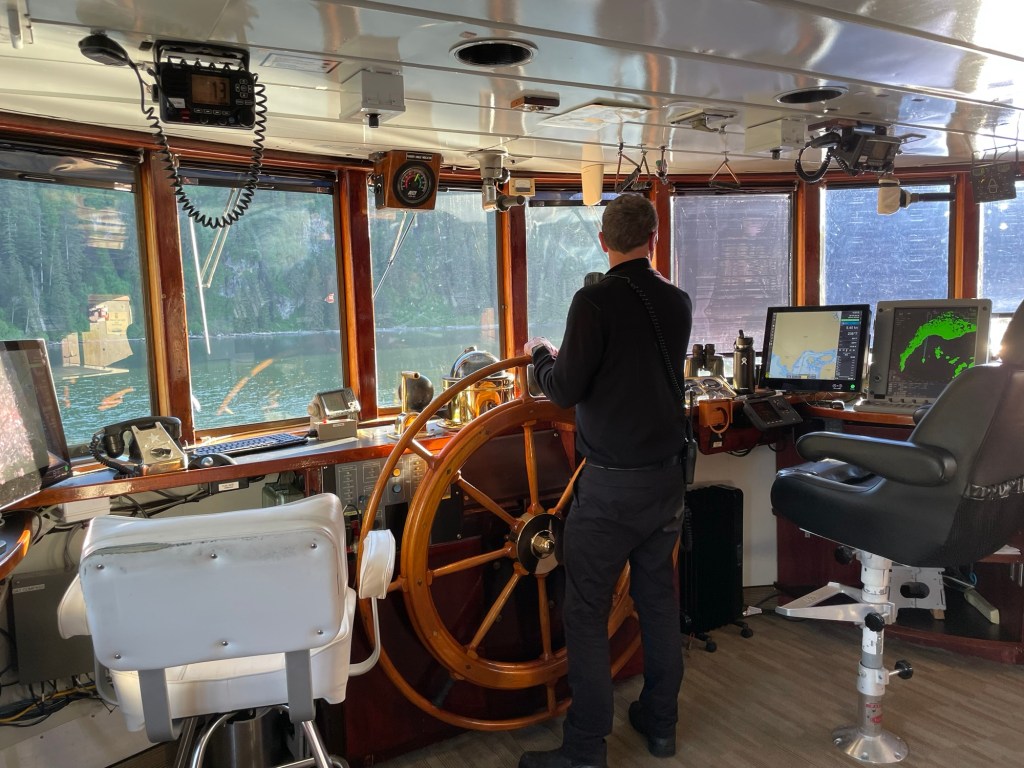
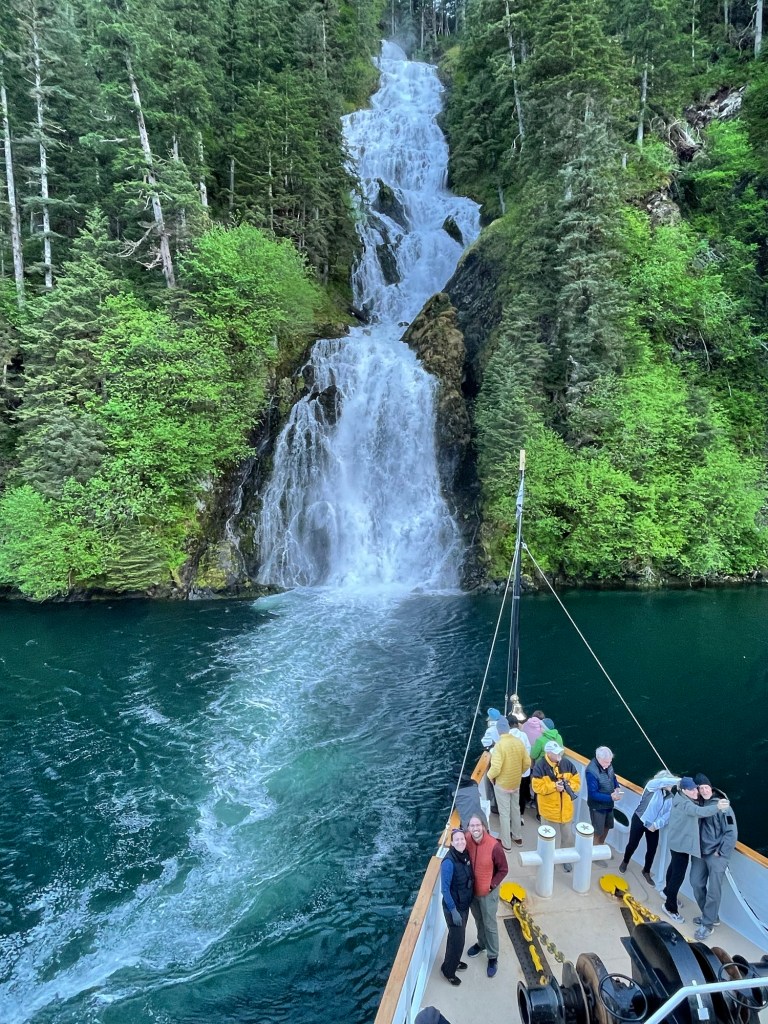
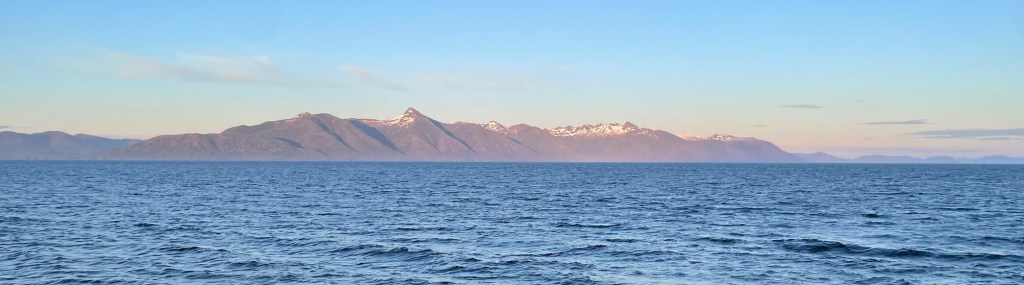
In late afternoon we weighed anchor again to head to a new location for the night. However, after dinner the ship’s crew had a surprise in store: Entering into a narrow inlet that required navigating several tricky pinch points, the captain took us to a Red Bluff Bay, where a lively 600-foot waterfall plunges into the water. The ship has an open bridge policy, and we took advantage of this to watch the captain as he piloted the ship skillfully past all the obstacles. When we reached the waterfall, he was able to hold the bow of the ship right up close to the base of the falls, near enough that we could feel the spray of mist coming off the cascade. After a time spent watching the falls, we retraced our steps out to more open water to make for our next anchorage. As we sailed (listening to a presentation on bears and their habits), the setting sun illuminated the distant mountains across the water.

Yak and Wak!

Have you heard of yak and wak? It’s one of many fine terms we have learned on this trip.  A yak and wak is a combination trip, part kayaking (the yak) and part bushwhacking (the wak).  Instead of shorter morning and evening activities, today we had the option of an all-day yak and wak with a packed lunch.  The ship was shifting its anchorage in the middle of the day, so we were able to make a one-way voyage from the first anchorage to the second.

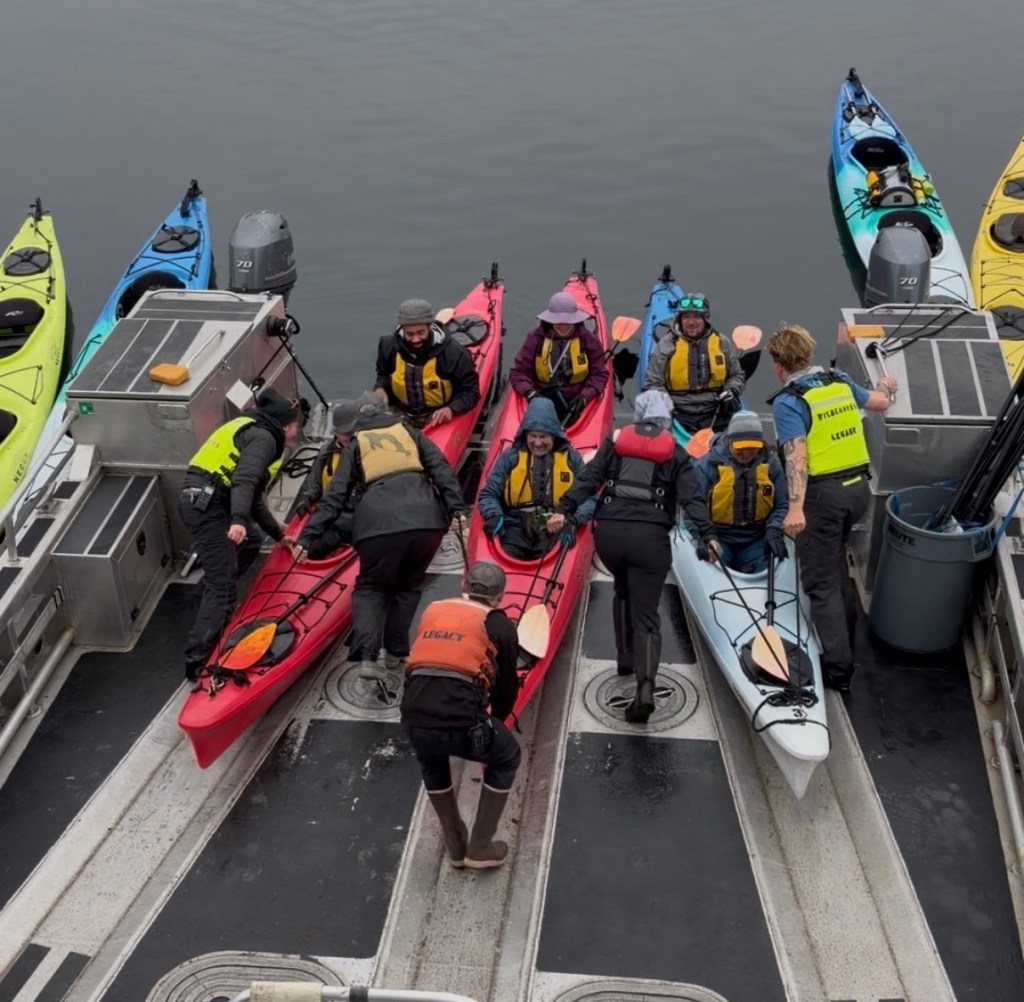
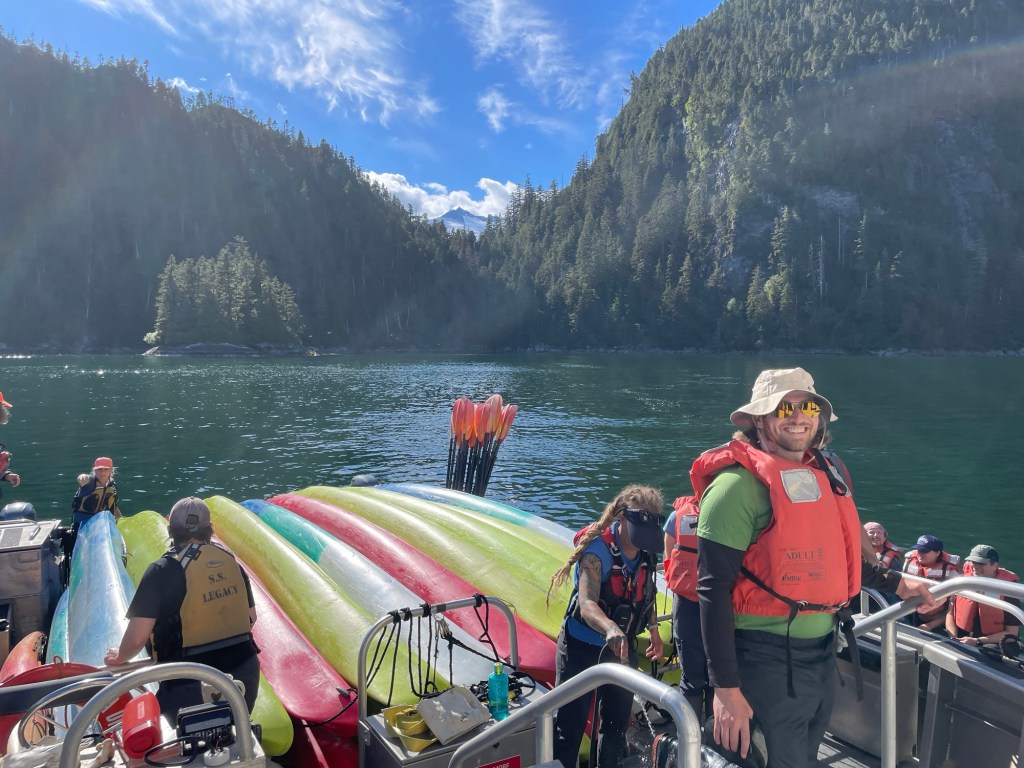
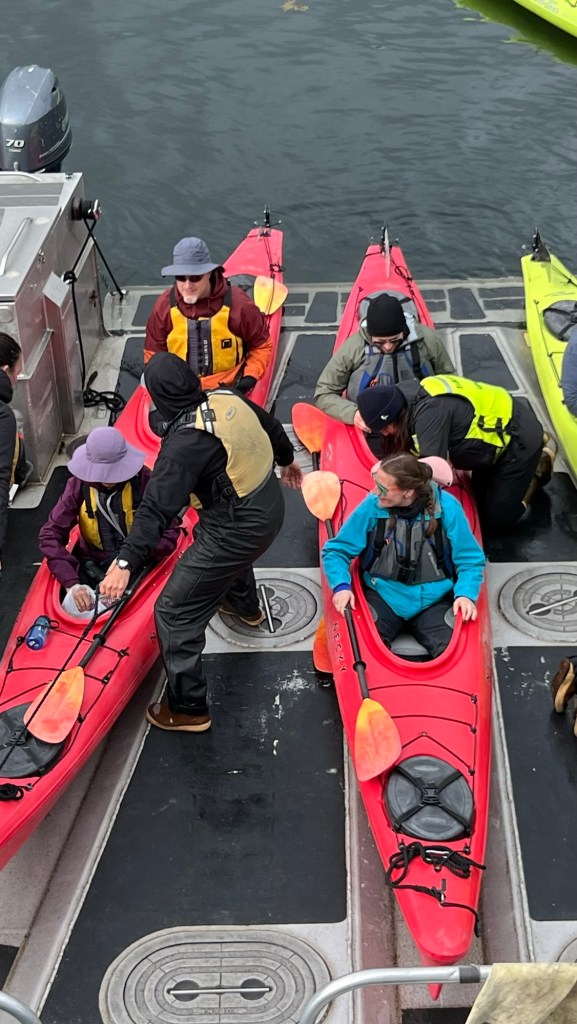
The Sea Dragon doubles as a kayak launch

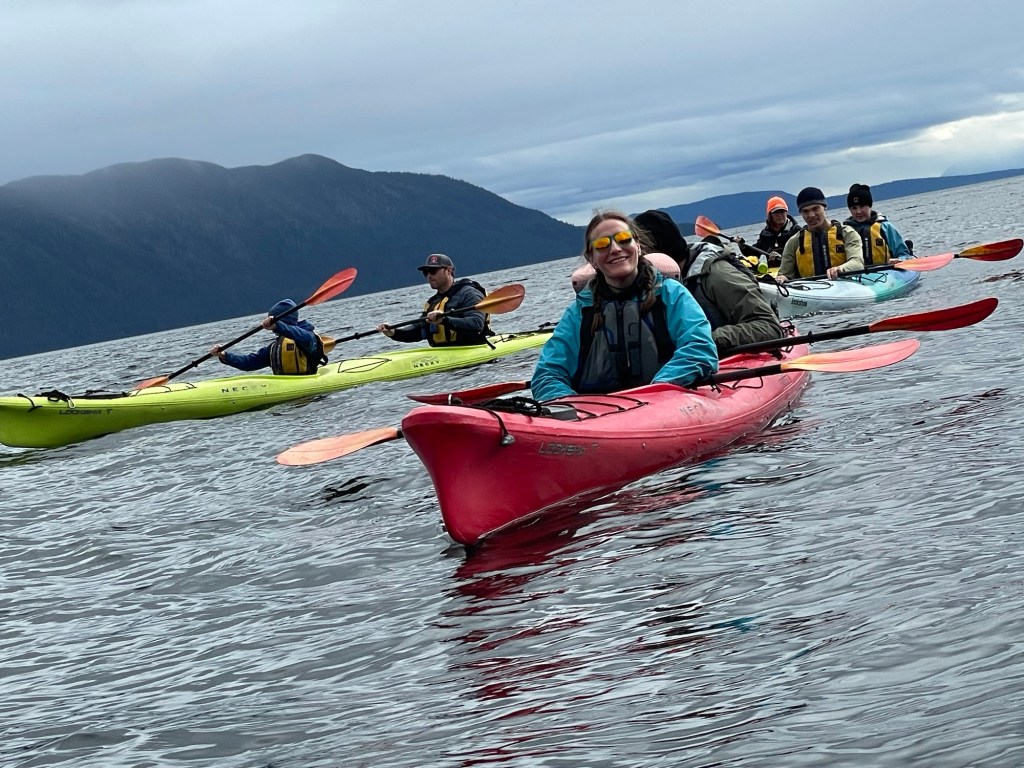
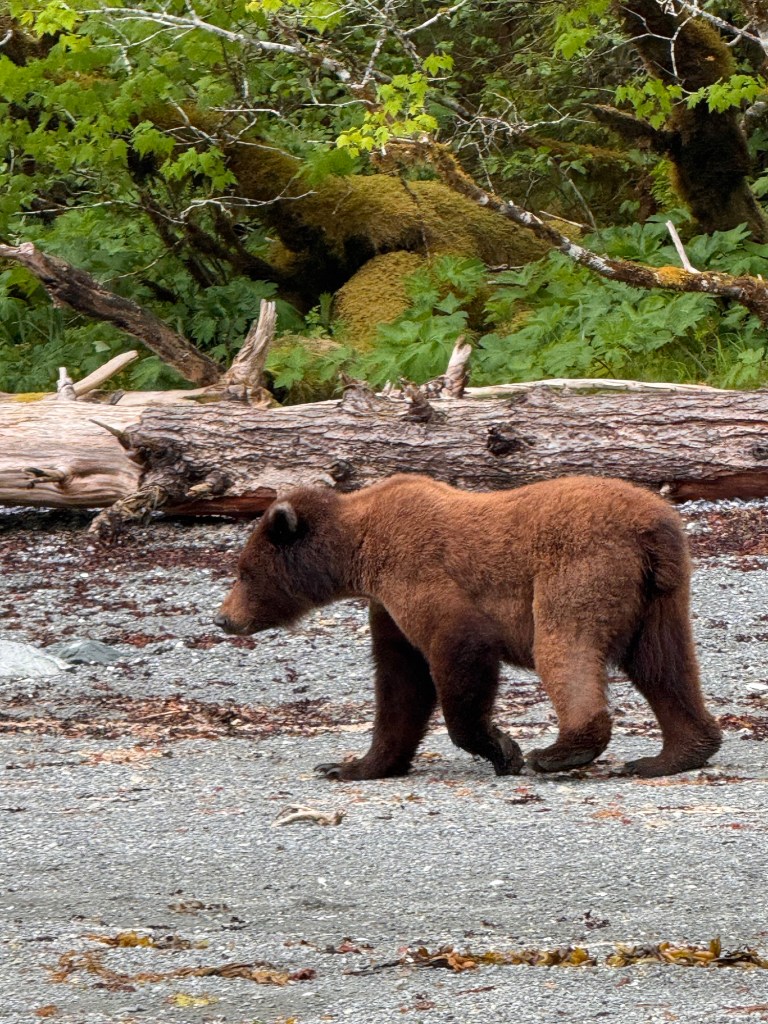
Our journey got off to a dramatic start when a big brown bear walked out of the woods onto the shoreline near where we were putting in.  (We found out later that members of our group had been on shore ready to start a hike, and had to retreat temporarily to the skiff until the bear moved along.)  We watched the bear for a good long time before setting off on our paddle.

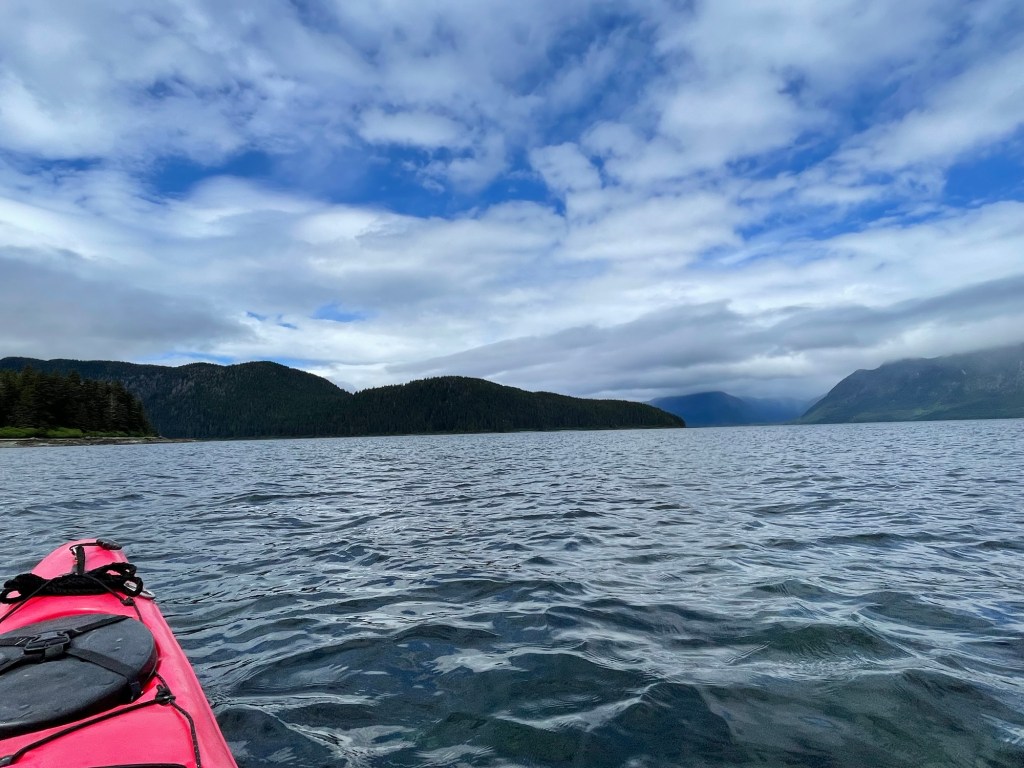
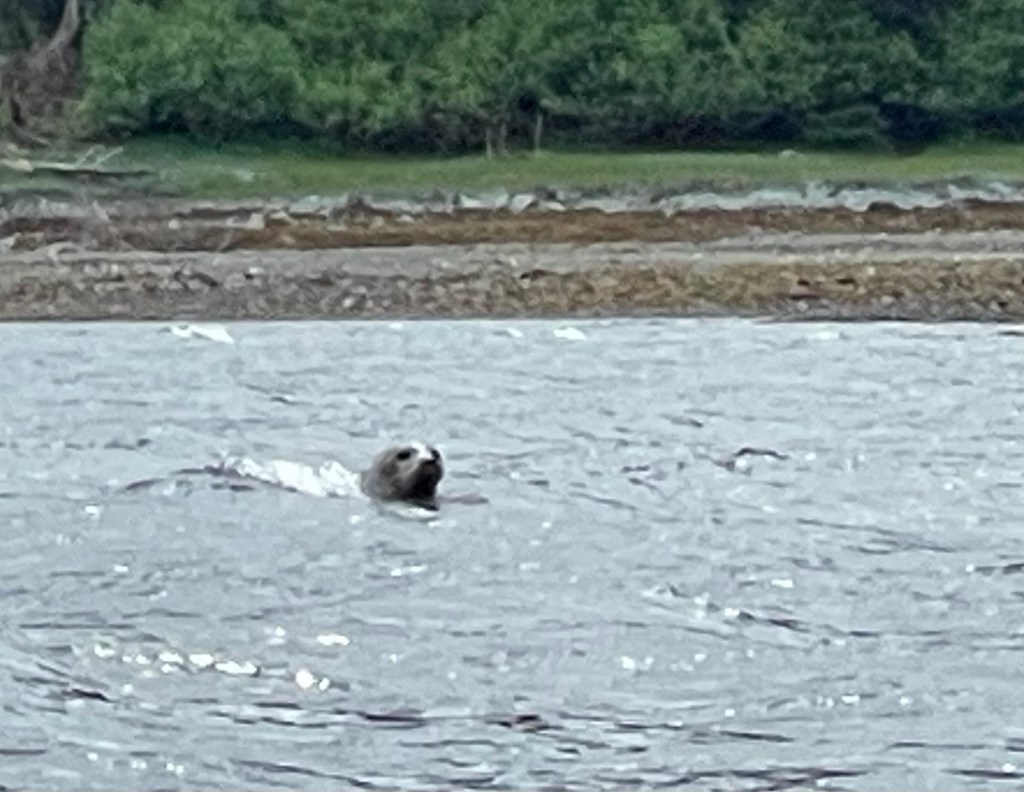
We traveled by kayak for most of the morning, until it was time to make landfall for lunch.  Along the way we passed a group of curious seals, who kept popping their heads above the waves to stare at us, before ducking underwater and coming up again in a new position a few moments later.

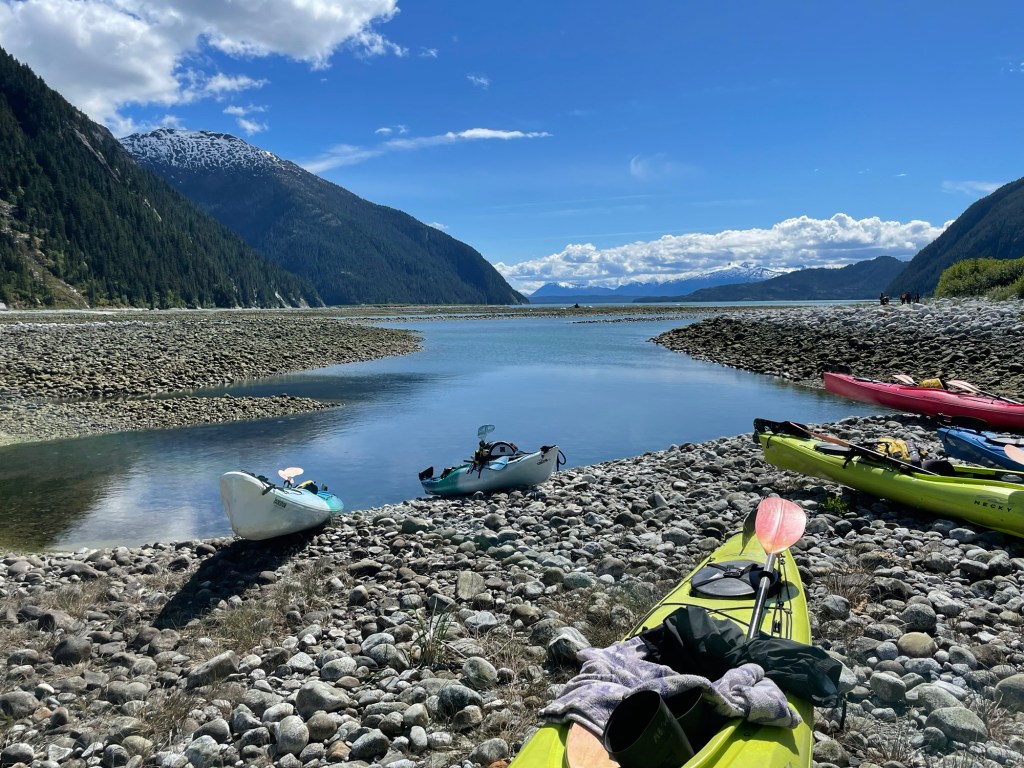
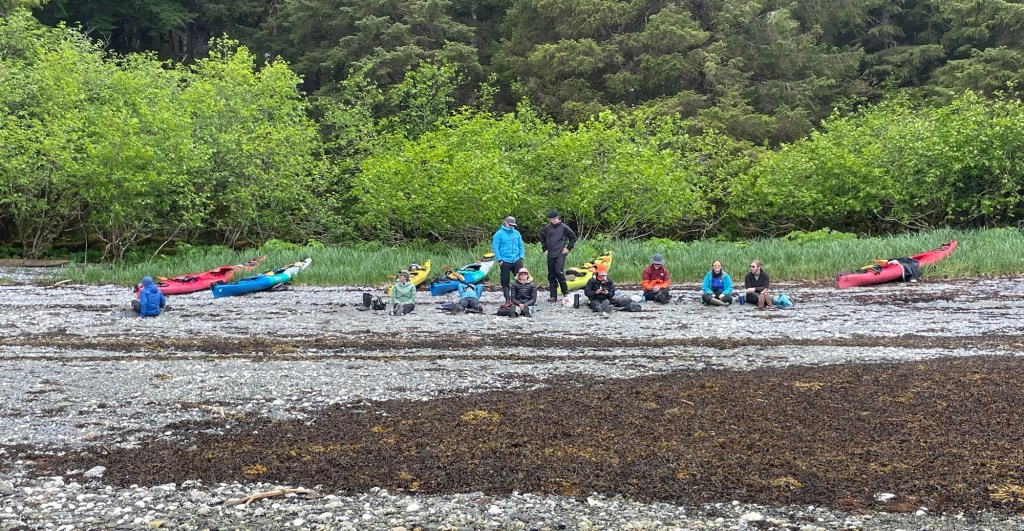
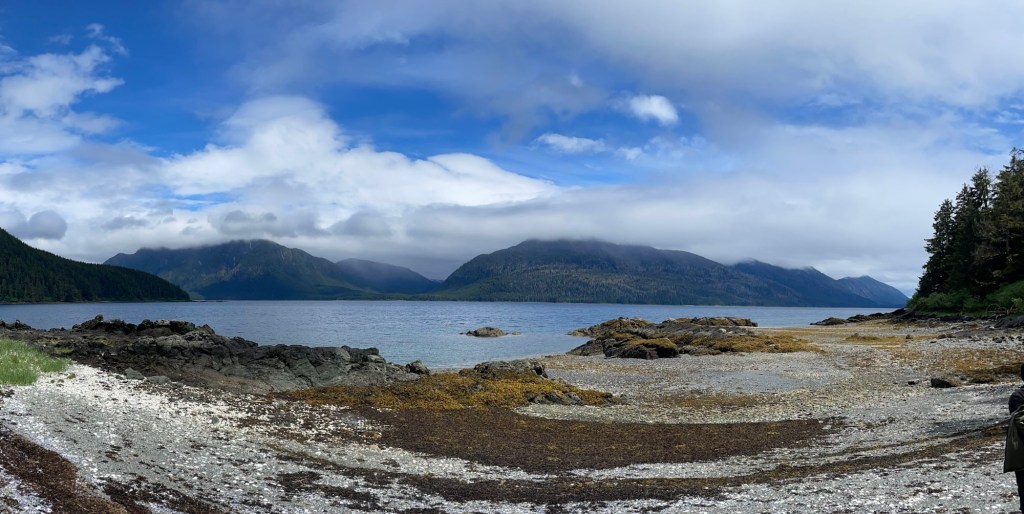
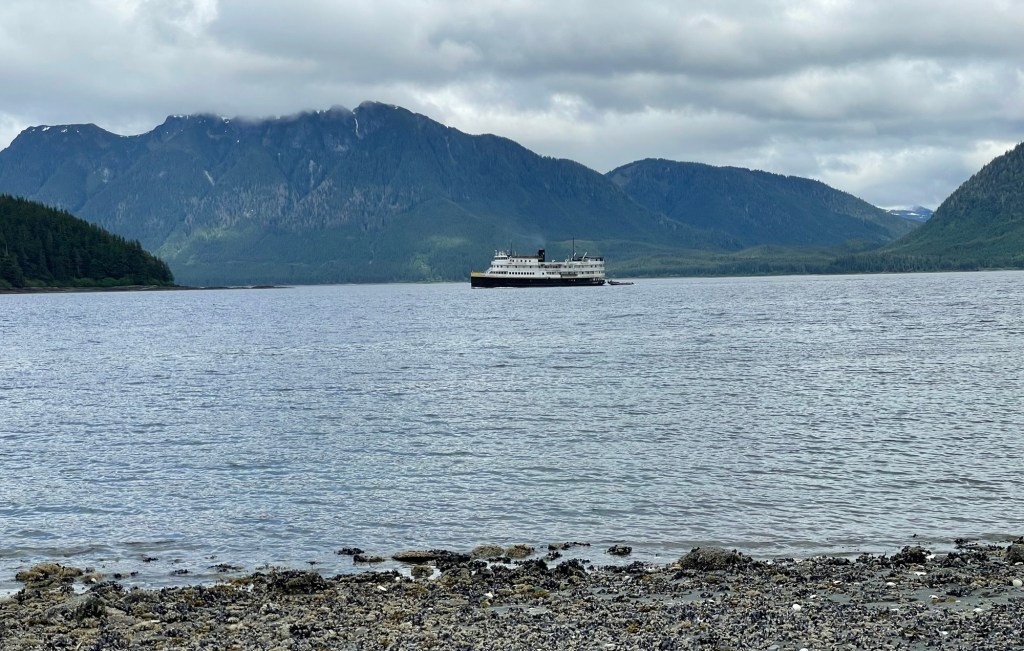
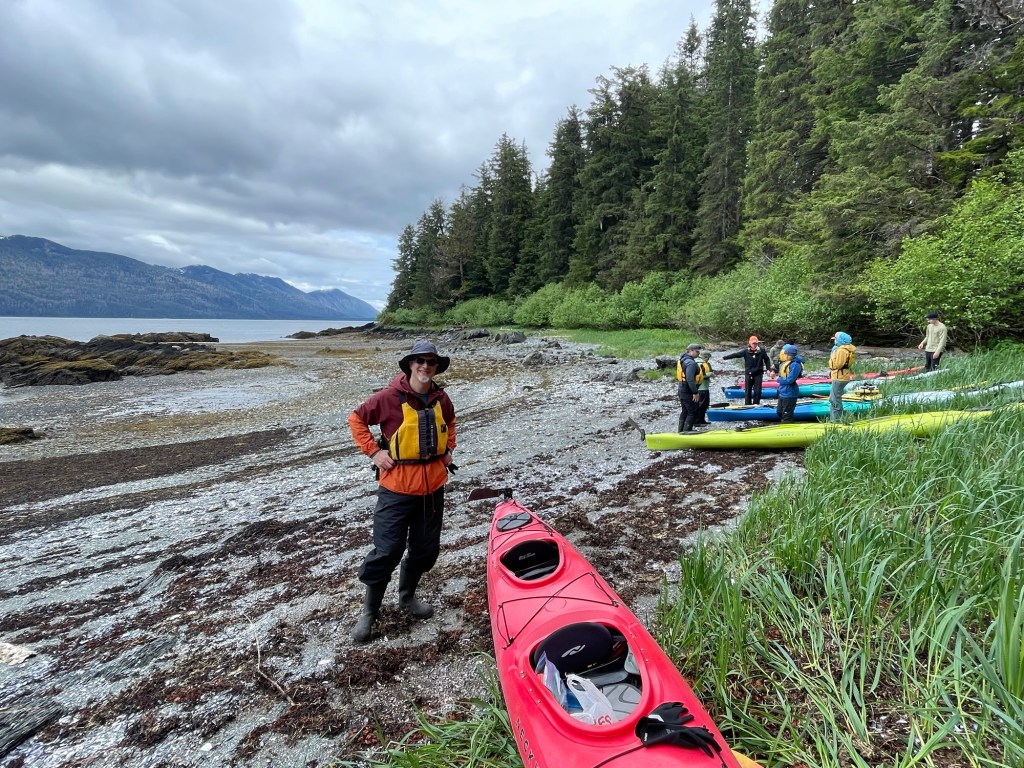
We paused for our picnic lunch on a small shell beach, carrying all the kayaks up above the high water line since the tide was coming in.  Besides the sandwiches and sides we all carried, our guide had brought tomato soup for all of us, still hot in a thermos.  As we ate, we waved at the Wilderness Legacy as it sailed by on its way to the second anchorage.

Quite the spot for lunch!
There goes the mothership

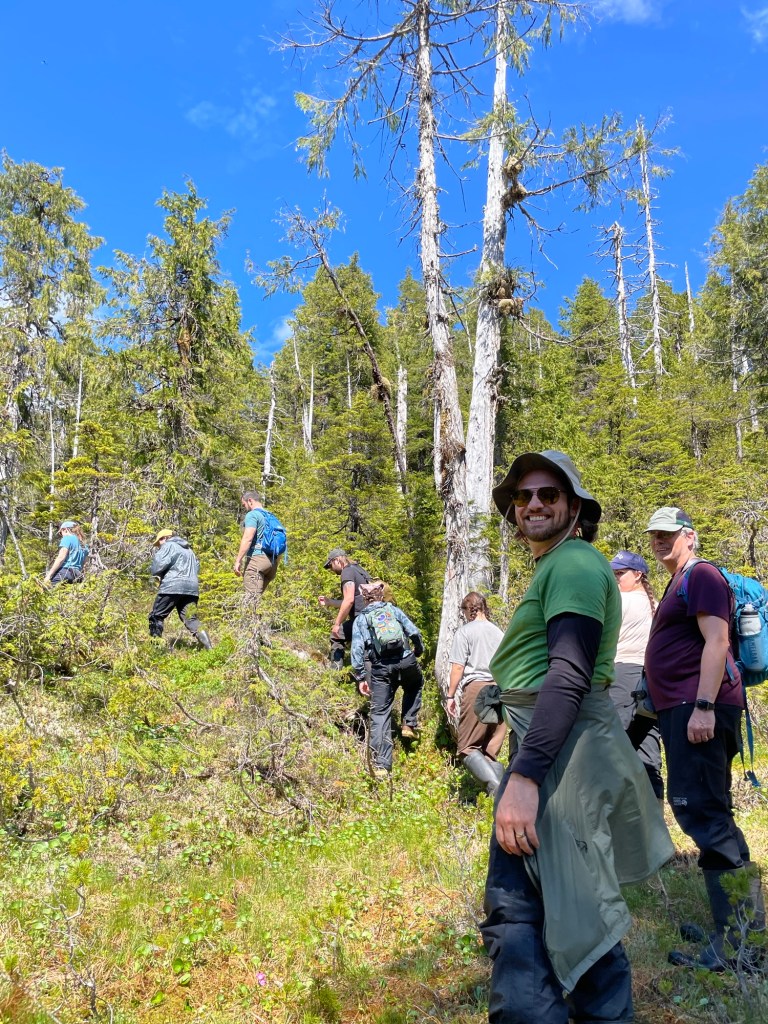
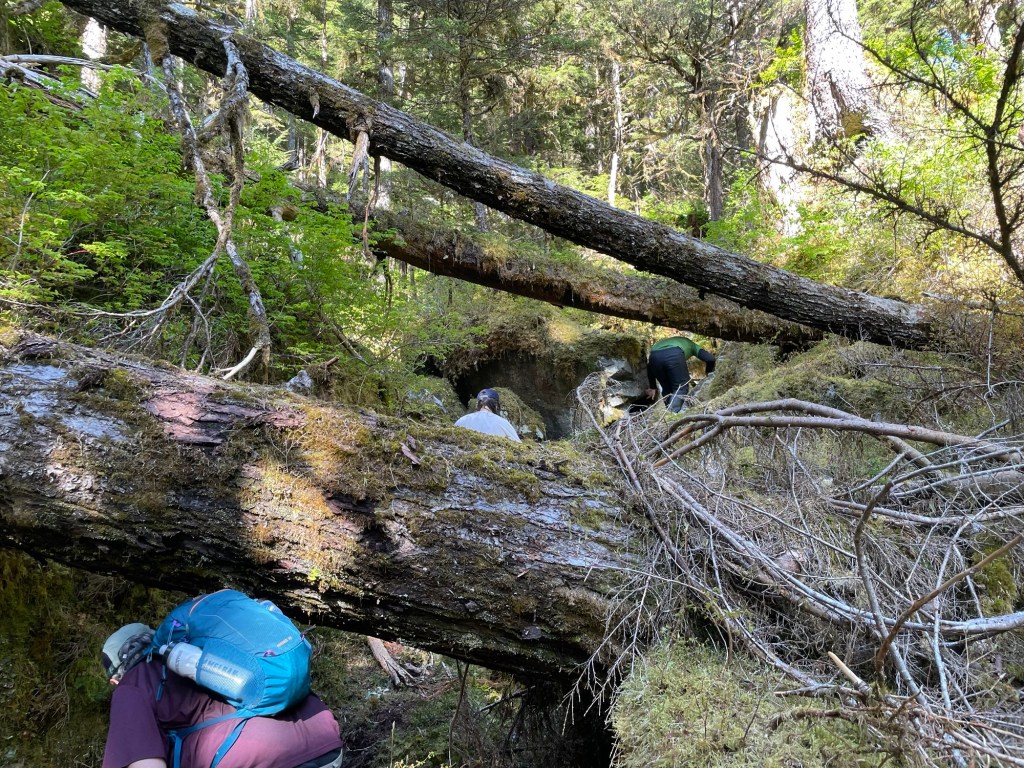
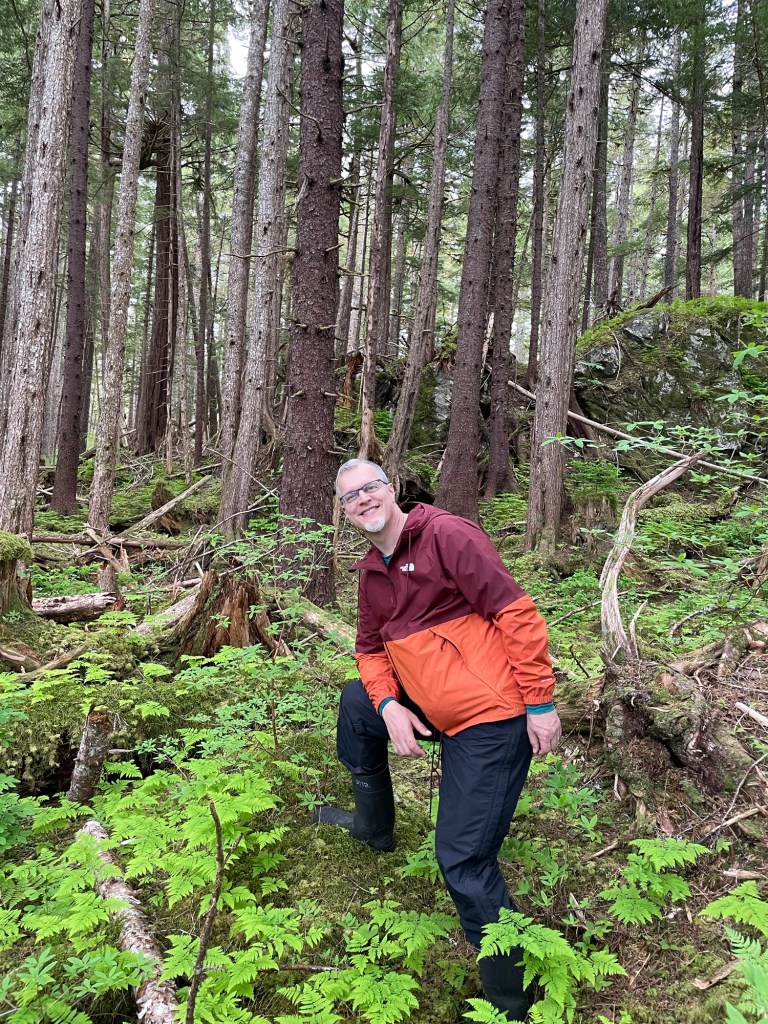
After lunch it was bushwhacking time!  A bushwhack is nothing but a walk in the woods, except that there is no trail, and not really any solid ground either — the surface you are walking on is mostly sphagnum moss, laid on top of downed trees and branches in various states of decomposition.  At any given instant you might step into a deep hole, or perhaps in trying to maintain your balance you might grasp at a nearby plant — hopefully not a devils club, an exceptionally ornery piece of vegetation boasting sharp spines on every surface, even the leaves.  Oh, and you are still wearing your rubber boots, of course.  Fortunately we were forewarned about all these dangers and managed to avoid getting into trouble.  And of course, we were still wearing our trusty rubber boots, which one of the guides jokingly referred to as “Alaskan sneakers”.

Bushwhacking is a form of forest bathing

At the farthest point of our bushwhack we reached a relatively open area, a sort of muskeg — a type of wetlands, except that the ubiquitous sphagnum moss holds much of the moisture to create a sort of spongy, squishy, yet mostly walkable surface.  It had several kinds of pretty flowers — four-lobed dwarf dogwoods, purple shooting stars, and some pretty pink flowers that our guide didn’t recognize.

At this time of year the spruce trees are sending out new greenery from the tips of their branches.  These spruce tips are edible, and a good source of vitamin C according to our guide.  Everyone tasted a sample, with varying degrees of satisfaction.  However, the flavoring would turn out to be a theme of the day — at happy hour later, the featured drink featured gin infused with spruce tips, and after dinner the dessert was panna cotta flavored with — you guessed it — spruce tips!

Standing in the spongy muskeg-like clearing
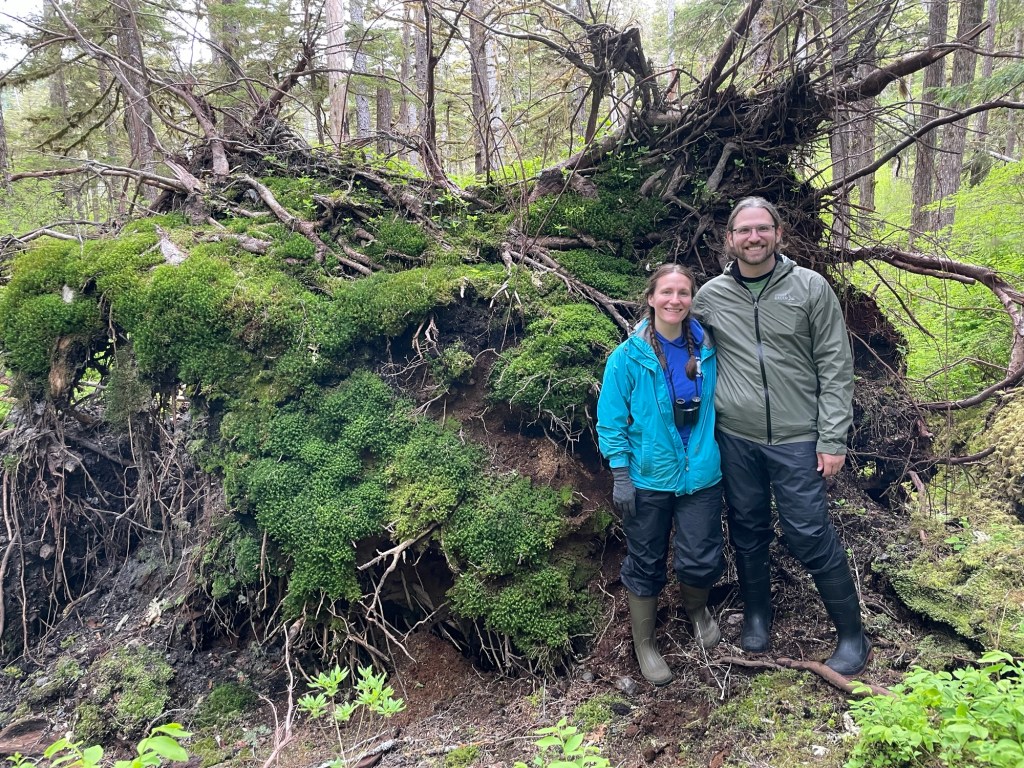
Shallow root system on display

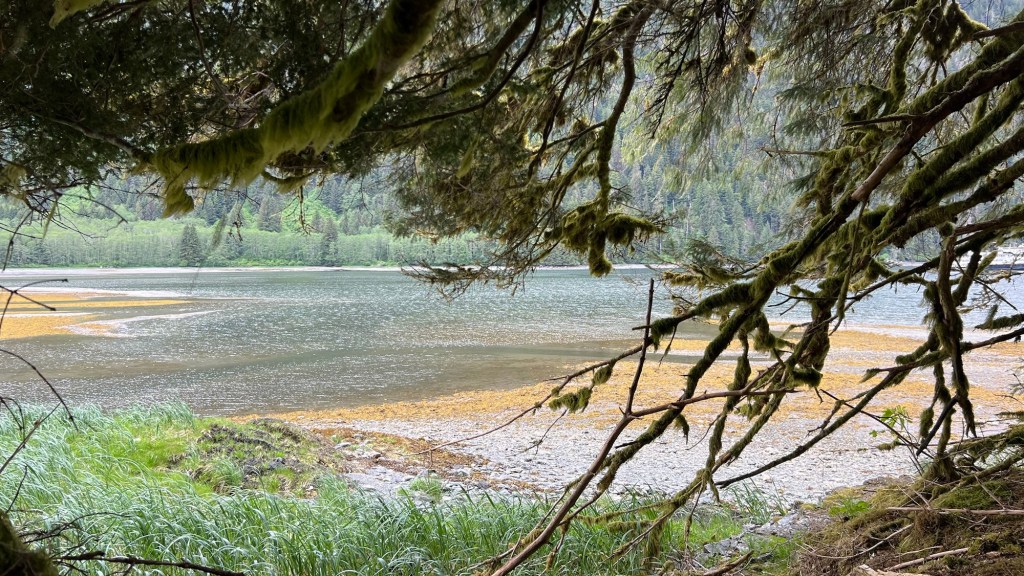
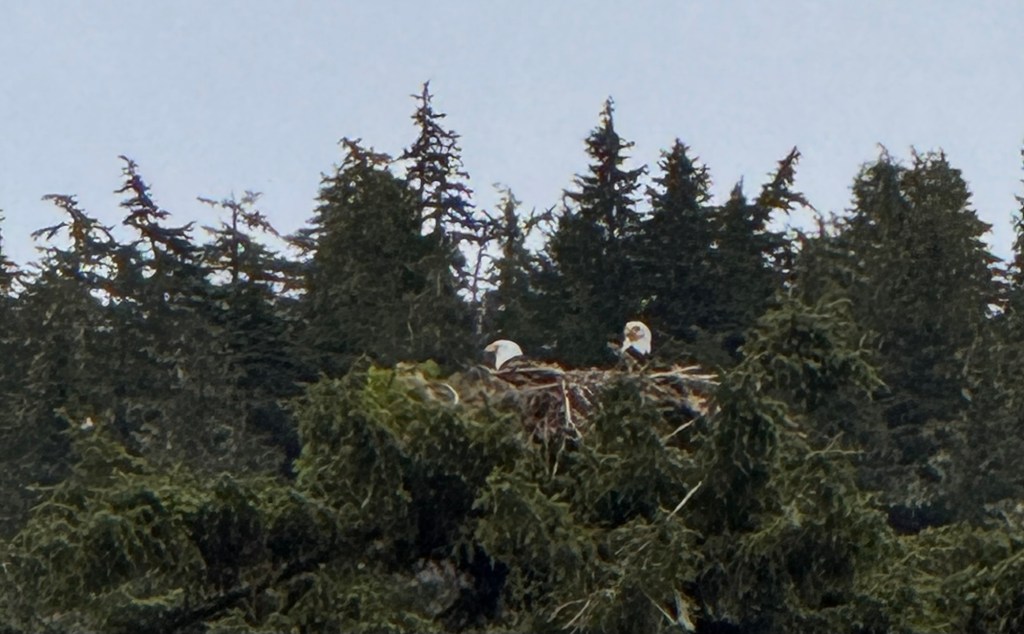
Our bushwhack made a circuit back to the boats, and we continued on our way to catch up with the Wilderness Legacy.  Once there, we met up with the rest of our party and shared photos from the day.  A couple highlights included a forest view from the shore meander, not to mention a pair of eagles nesting in their aerie high up in a tree.  

View from the shore meander

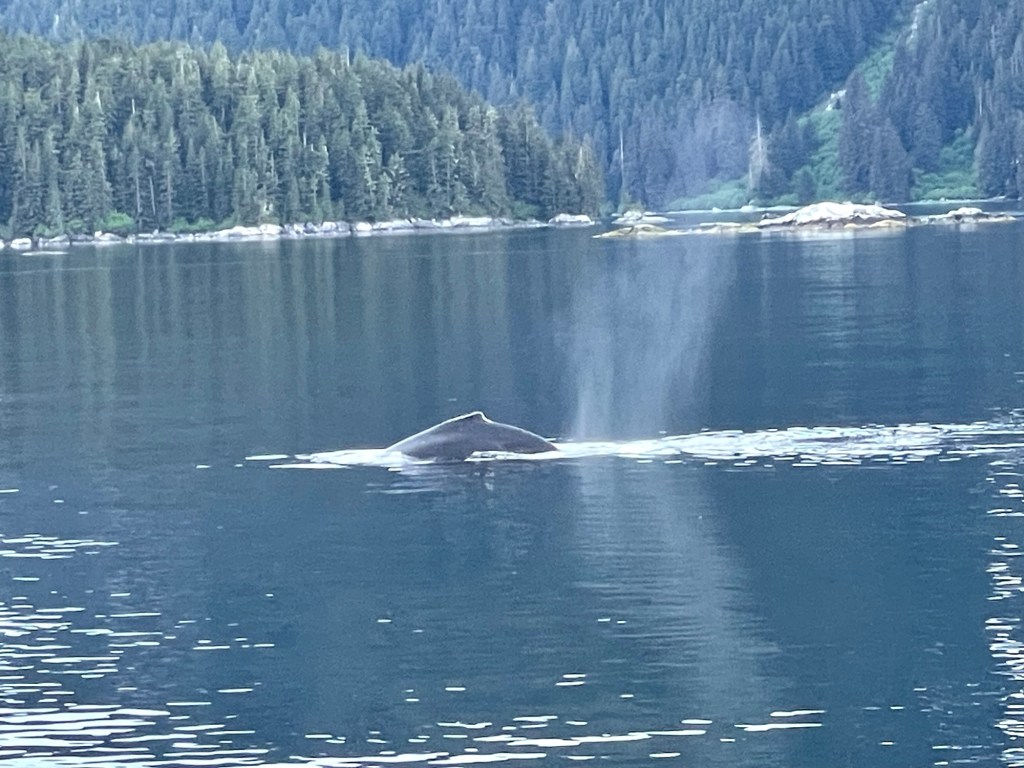
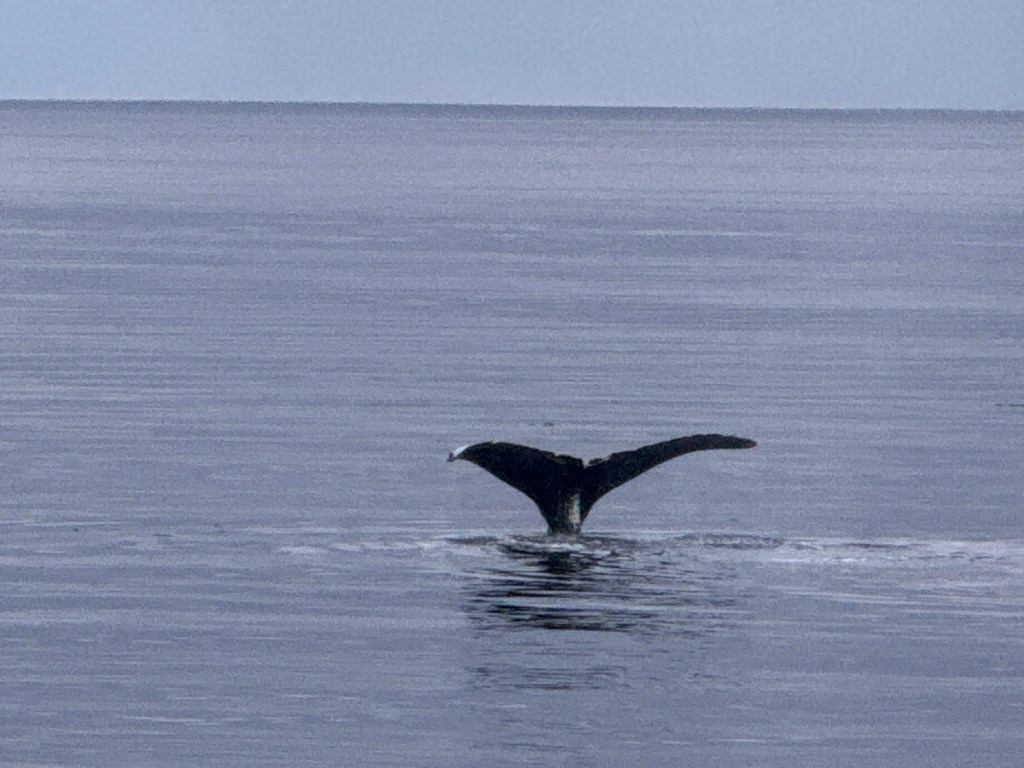
Coincidentally, the after-dinner lecture of the day focused on eagles and their parenting practices.  We thought that this would be the final event of the day.  Boy were we wrong!  Midway through the presentation, the speaker exclaimed that she had just seen a whale off the side of the ship.  Everyone rushed to see, and the one whale turned out to be part of a pod of humpbacks in the middle of foraging for dinner.  Several of them surfaced right next to our ship, blowing spray into the air several times before diving deep and showing us their tails.  Even the crew were entranced by the sight, and we idled in position for almost an hour watching the show — which just for good measure included a stunning sunset and a brief cameo appearance by some passing porpoises.  We counted more than 30 fin dives from all sides of the boat.

Early whale sighting, including blow hole spray

When You Walk on the Glacier, You Must Wear Your Rubber Boots

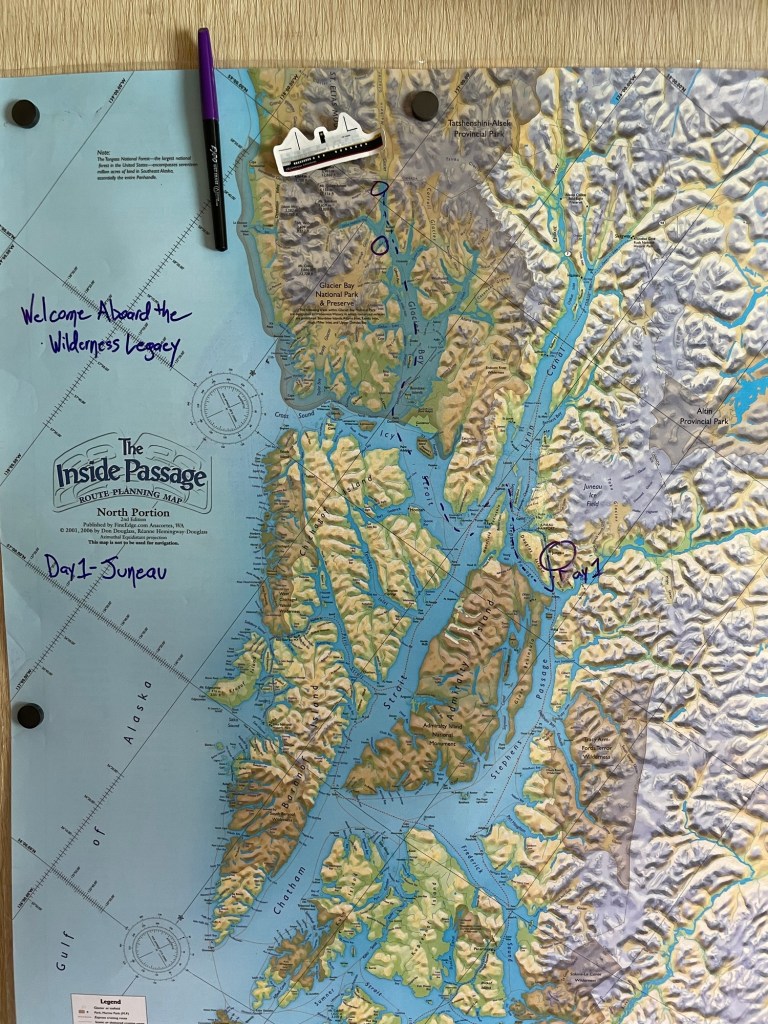
Our voyage began with some very good news: our ship had received a permit to sail into the heart of Glacier Bay National Park. The park service imposes strict limitations and only two ships per day of our size may enter this environmentally sensitive area. So our excursion coordinators happily scrapped our original plans of poking around the outskirts of the park and instead brought us to some of the richest sites this part of the world has to offer.

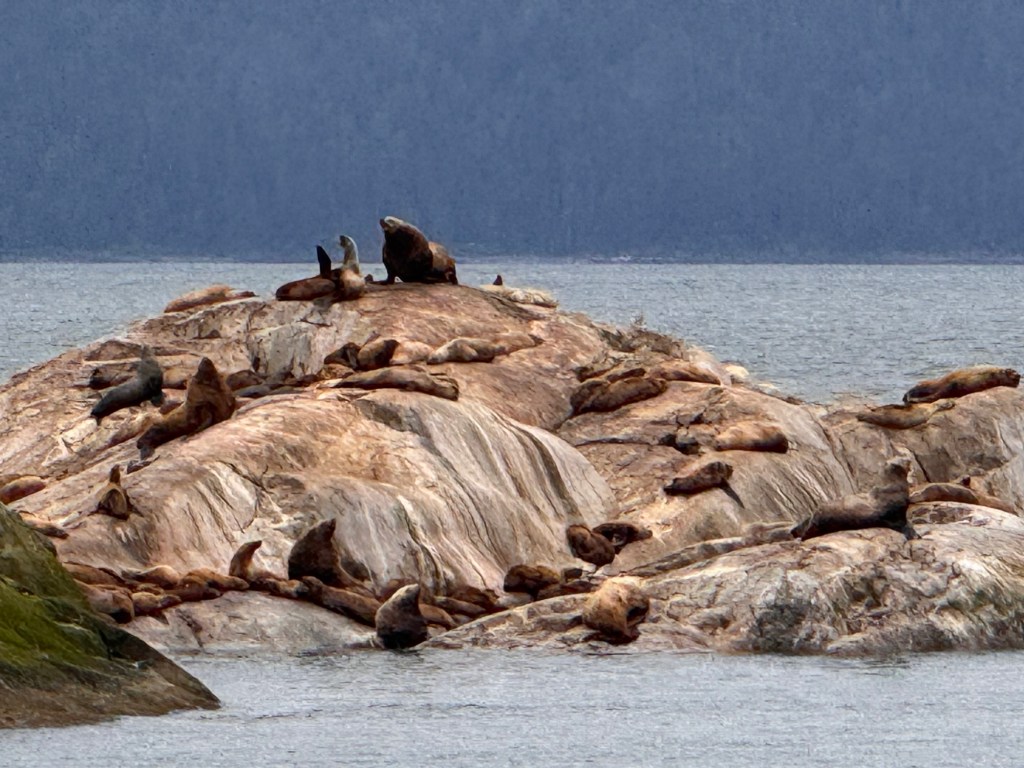
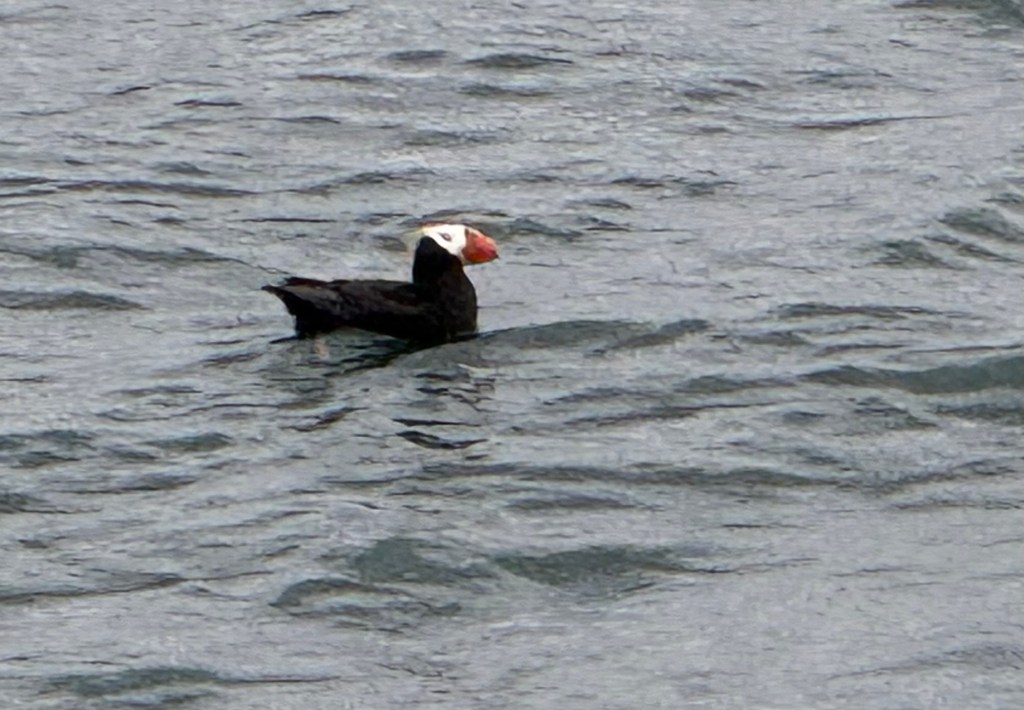
Early in the morning we had a 6 am wakeup call to view South Marble Island pass by on our port side. We found the island teeming with wildlife — sea lions basking on low rocks, sea otters paddling in the water, flocks of seagulls circling overhead and a bald eagle swooping from the clifftops. And puffins! We were fortunate to witness several puffins paddling near our ship.

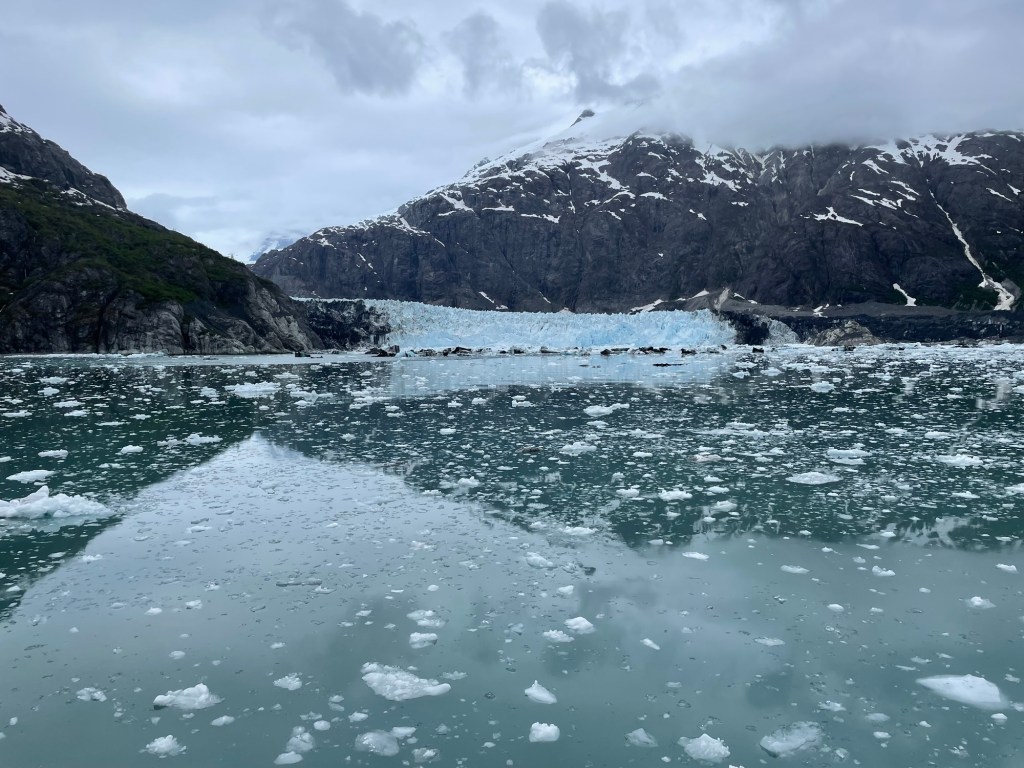
By midmorning we had reached the farthest extent of our journey, some 60+ miles from the mouth of the bay. Directly ahead of us stood the edge of the Margerie Glacier, one of the few remaining tidewater glaciers in the park. 300 years ago, the entire stretch of water we traversed would have been covered in ice, yet now most of the ice fronts have retreated back to dry land. Photographs fail to convey the massive size of this wall of ice: guides told us that it measures a mile across, and extends 21 miles back to its source in the mountains.

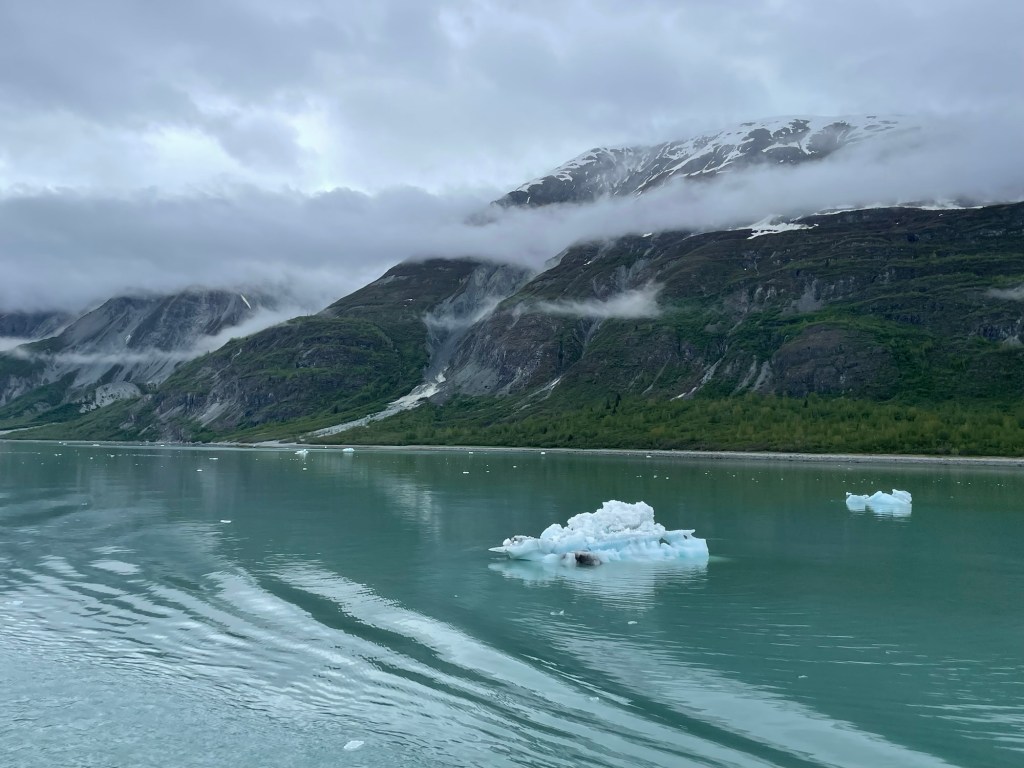
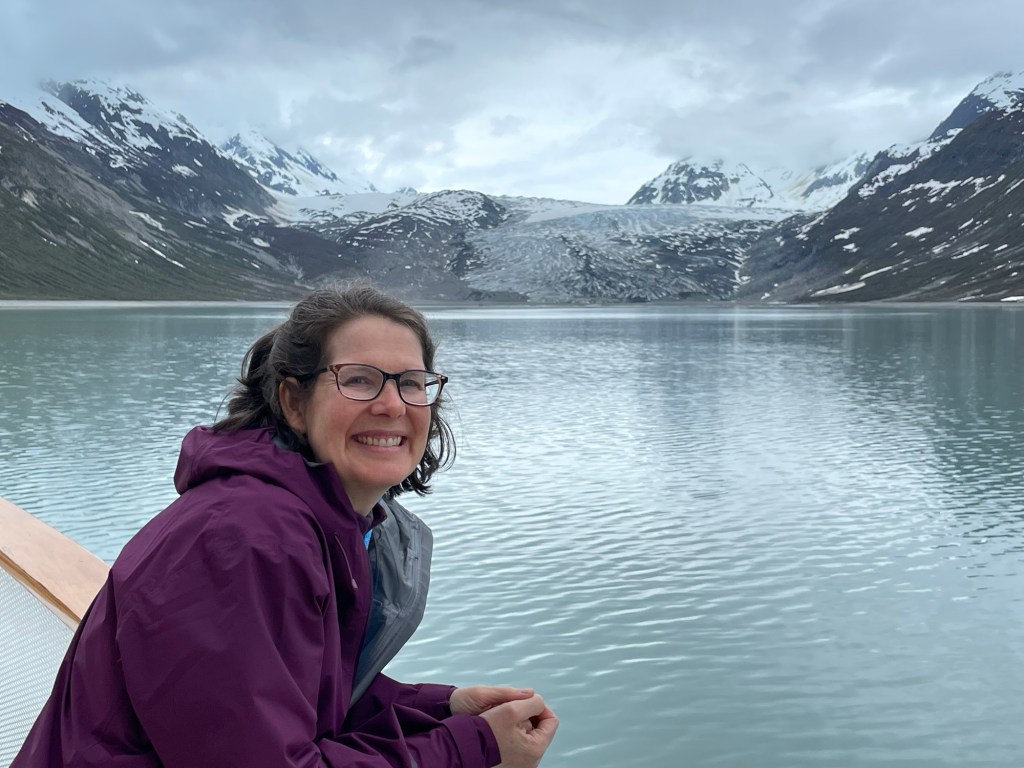
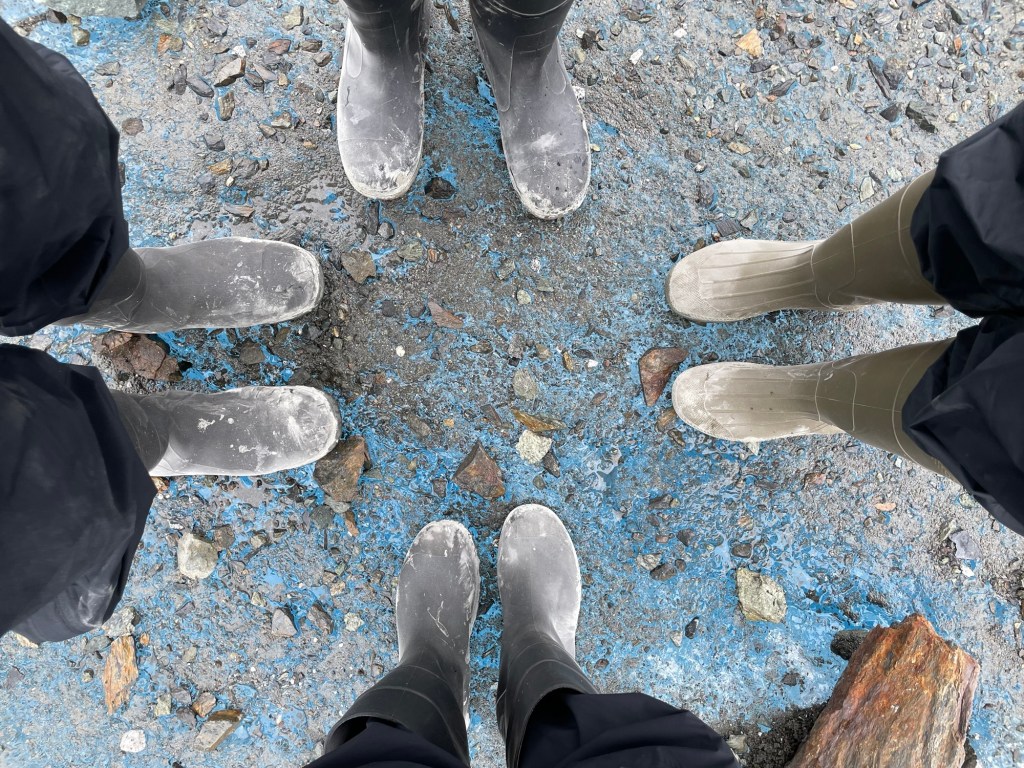
Leaving Margerie behind us, we sailed back through water littered with floes and bergs she had calved. Our destination was the slightly smaller Reid Glacier a few miles away. Unlike Margerie, Reid no longer reaches the water, which made it much easier to land boats beneath it. Or a boat, to be precise: park rules limited our operation to just one spinning propeller at a time, so passengers going ashore were ferried across one skiff at a time in small groups. Because there are no docks, and the skiff cannot operate in water that is too shallow, wet feet are unavoidable during the landing process. The solution adopted by our cruise operators is to issue every passenger a pair of rubber boots, which we are encouraged to wear at all times for shore excursions.

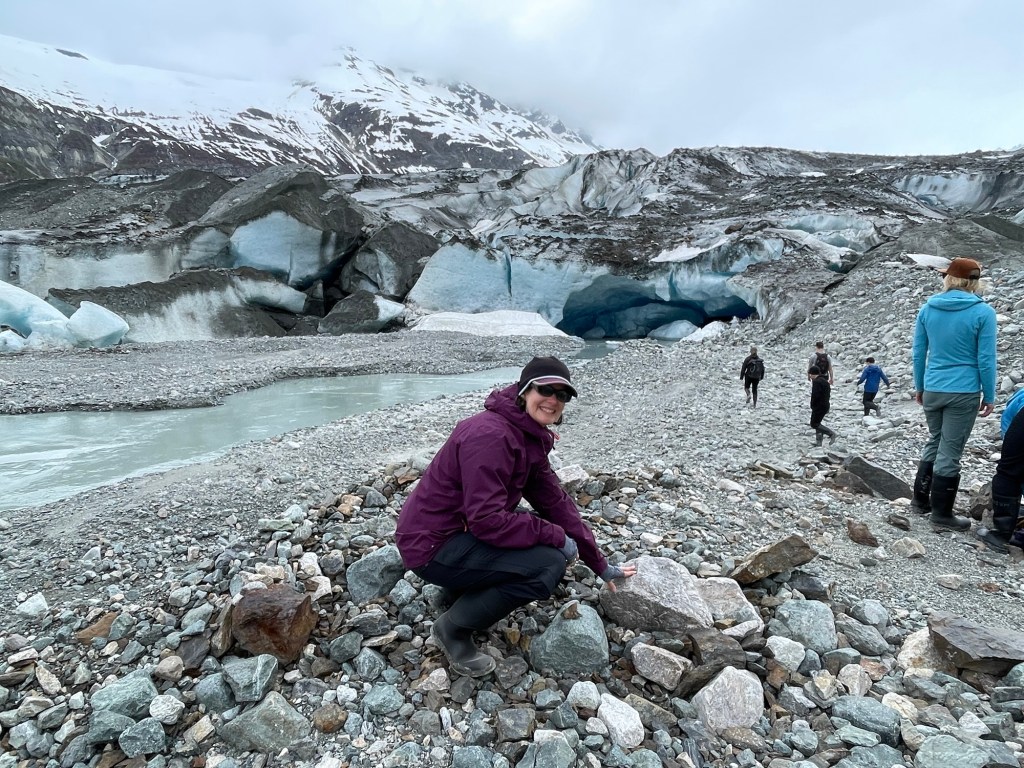
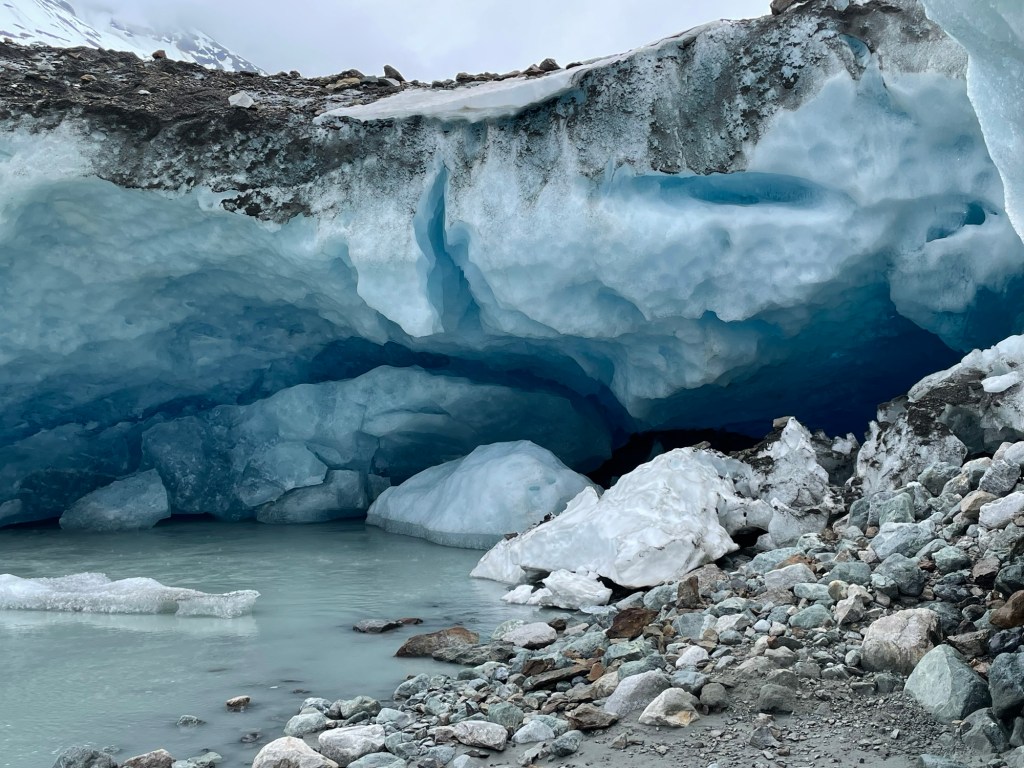
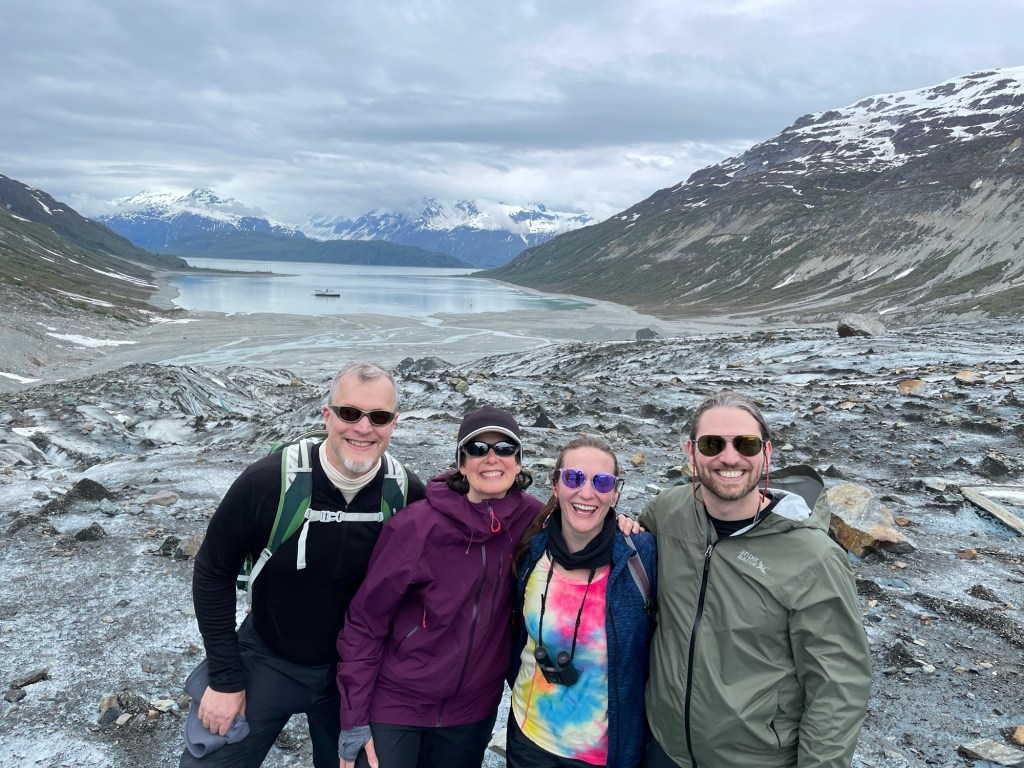
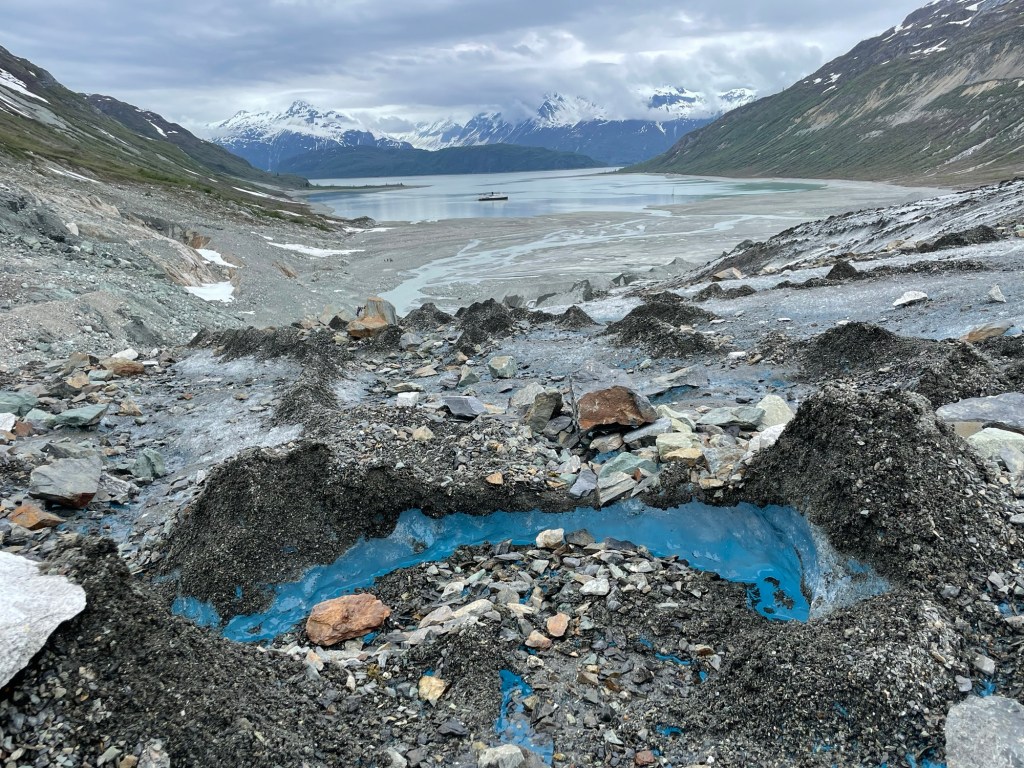
Of the several afternoon activity options, we had chosen the Ridge Walk, which took us over uneven and rocky terrain up the lateral moraine of the glacier. When we had reached a sufficient height, our guide led us onto the glacier itself after a strict caution to follow her path closely lest we fall into a hidden crevasse. Of course we were all still wearing our rubber boots as we did so! You might think that rubber boots on an icy glacier would be slippery, but in fact the boots gripped quite well — aided no doubt by the many rocks embedded in the surface. These rocks were spaced out sufficiently that one could see the eerie blue of the glacial ice glowing between them, like divine grout in an otherworldly mosaic.

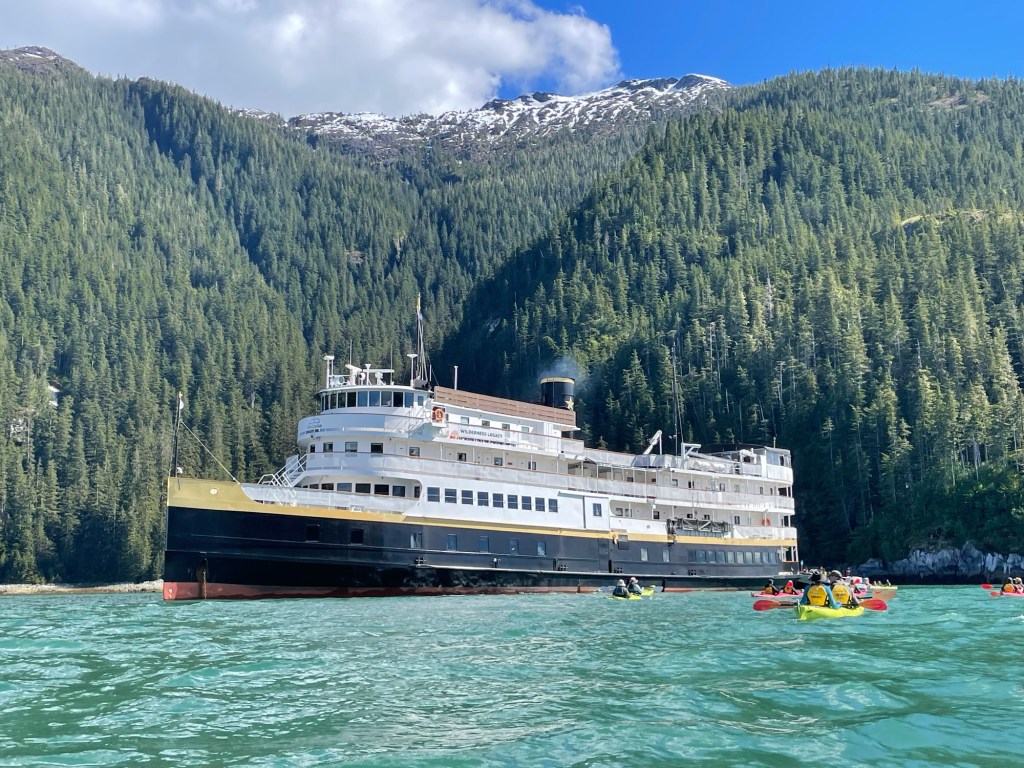
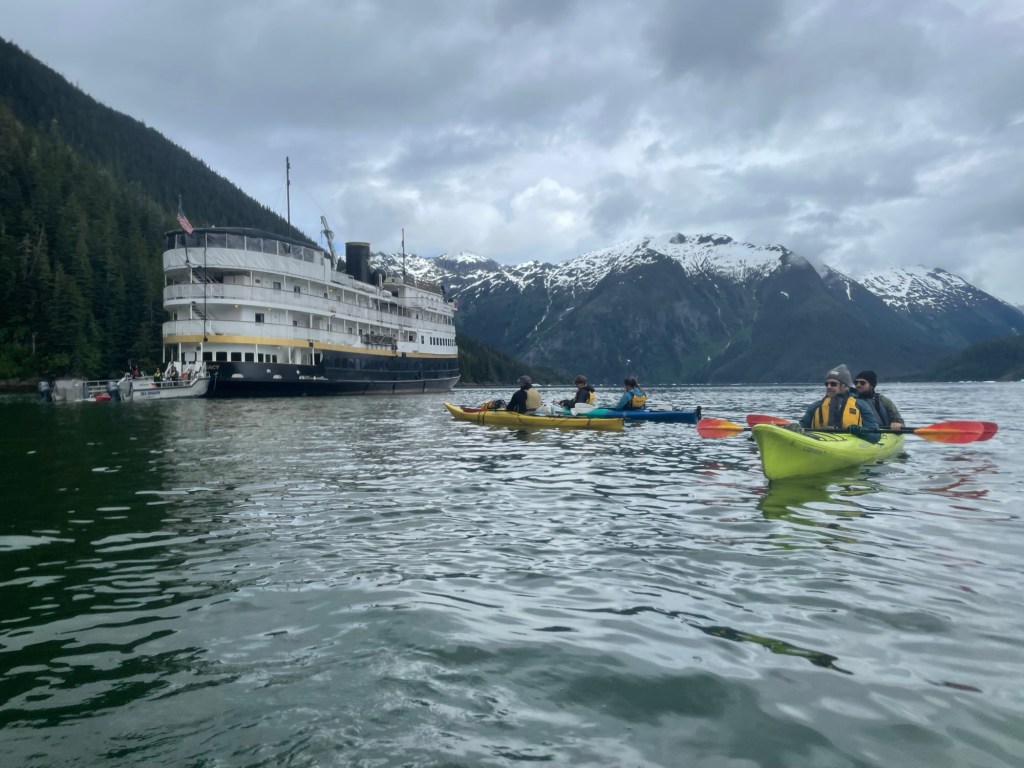
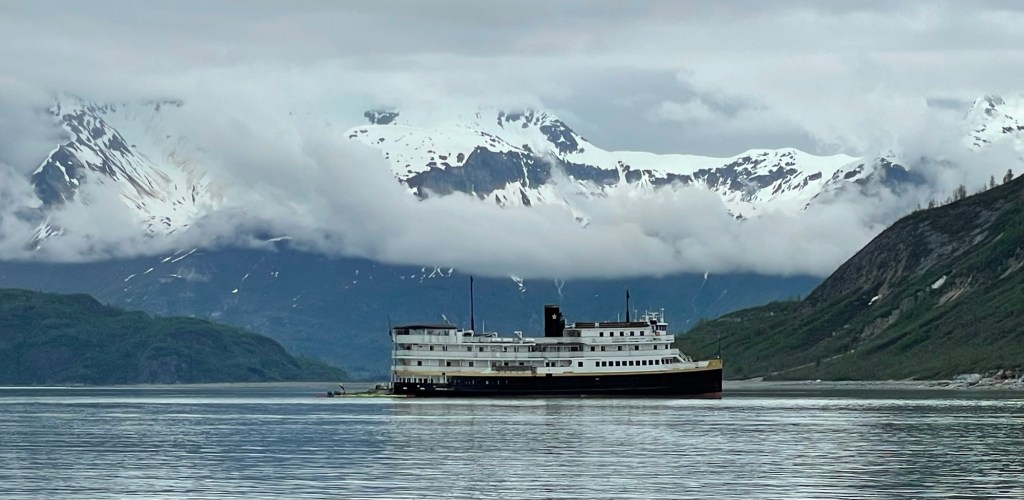
Looking out from atop the glacier’s back, we had sweeping views of the inlet below and our ship lying at anchor. The Wilderness Legacy was built in 1984 and served for a time on the east coast before somehow finding her way to southeast Alaska. Our complement of 76 passengers doesn’t quite fill to her capacity of 86.

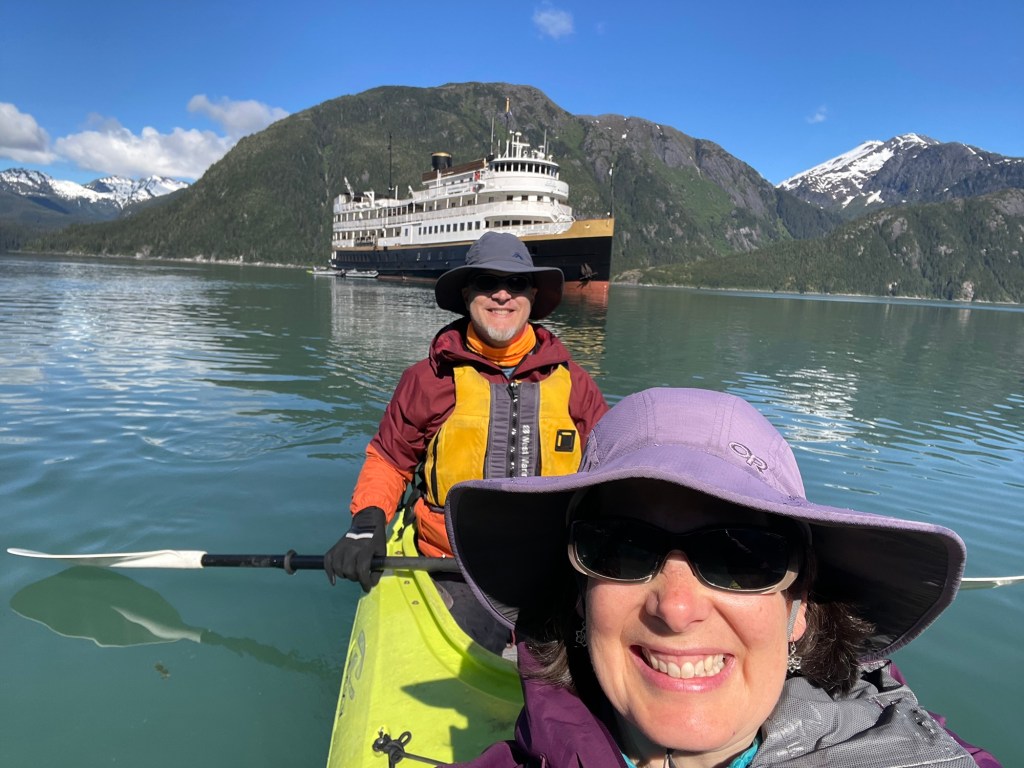
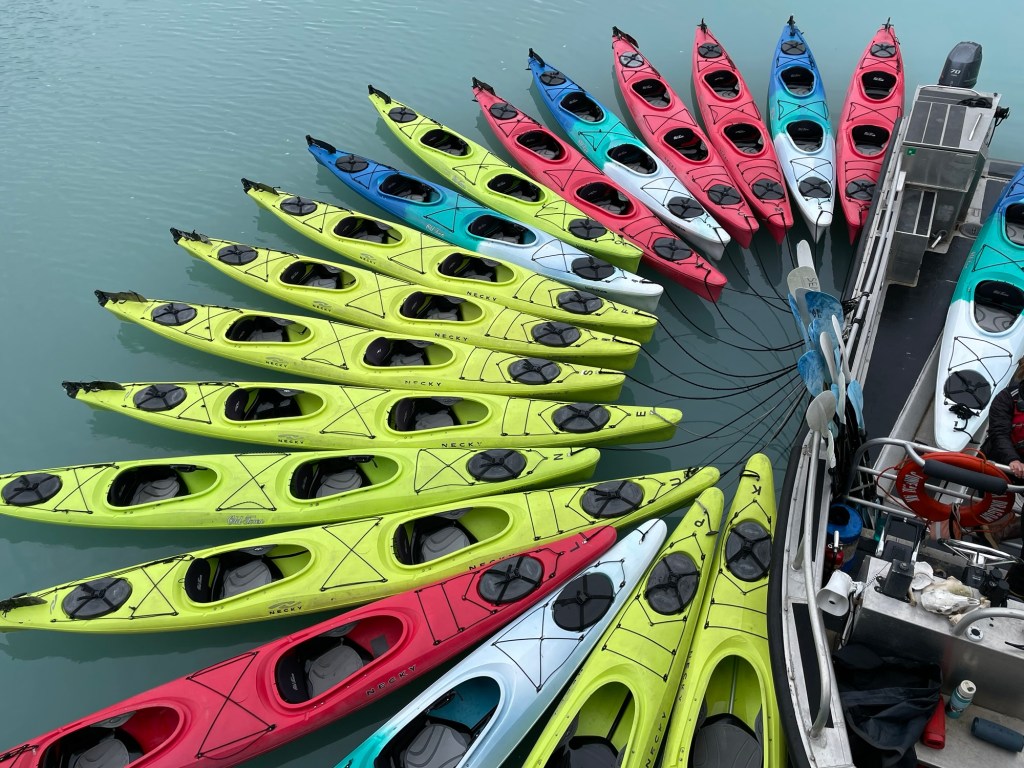
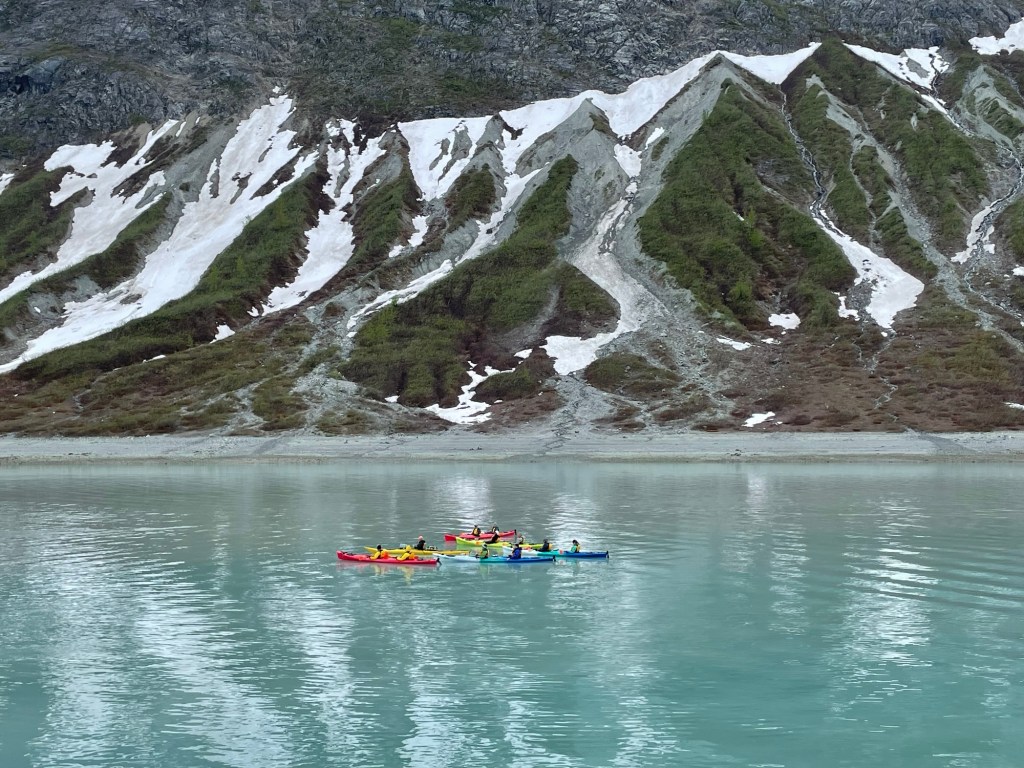
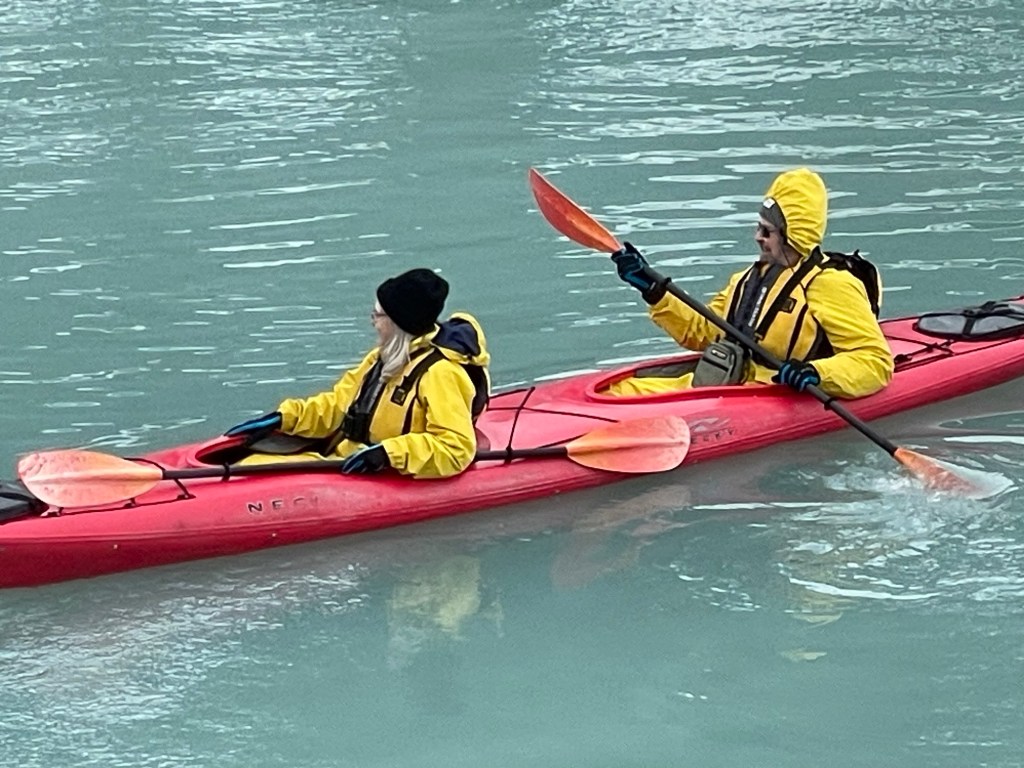
Because the Wilderness Legacy wasn’t exactly designed for adventure touring, its owners had to be creative in outfitting her for such work. Throughout our voyage we are tailed by a small tender, named the Sea Dragon (because it is dragged behind us through the sea — get it?). The Sea Dragon houses all the kayaks and also doubles as a launch platform. When deployed in the water the kayaks make a colorful array. A number of passengers had chosen kayaking for their activity, and could be seen practicing their moves in the water below.

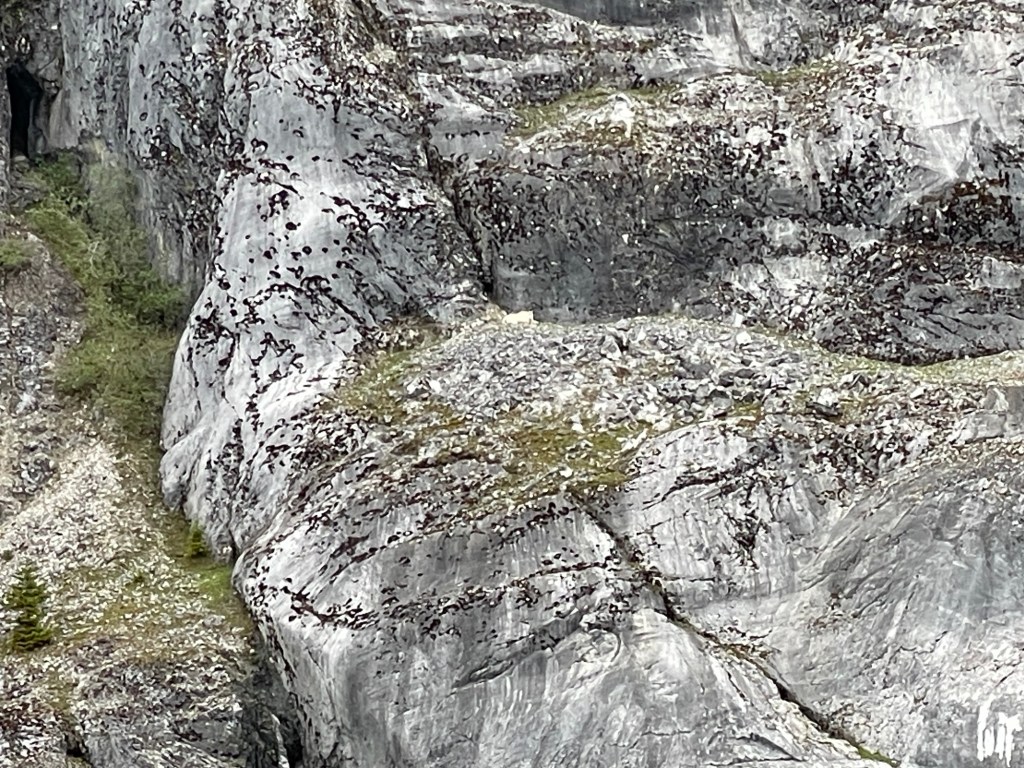
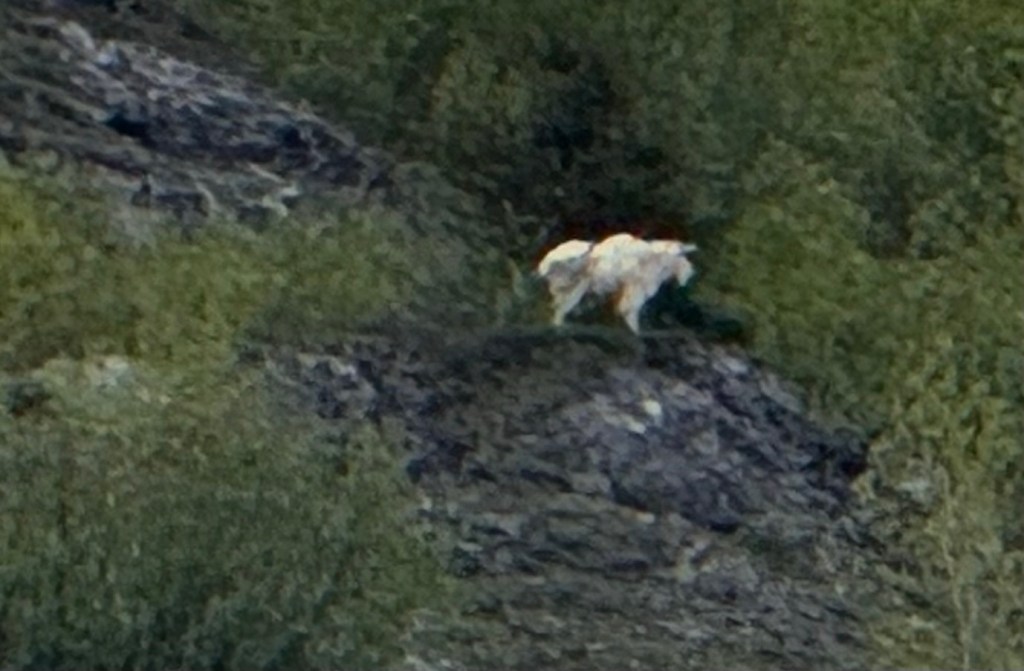
We all returned to the ship in time to sample the cookie of the day as the crew weighed anchor and prepared to sail again. Our dinner later that evening was delayed as we passed by the so-called Gloomy Knob — which was anything but in our case. This particular peak stands out as the home of a herd of mountain goats, who could be seen dotting the rocky cliff face as blobs of furry white here and there amid the gray stone. (Nick could not help observing how much the landscape brought to mind certain biomes in the game Minecraft, with steep rocky headlands topped with sparse trees and small white animals roaming the slopes.) The last to be seen was a mother and child pair. Our guide guessed that the kid was no more than two weeks old, and it sprang and gamboled around its mother as we watched. Plenty good reason to be late to dinner!

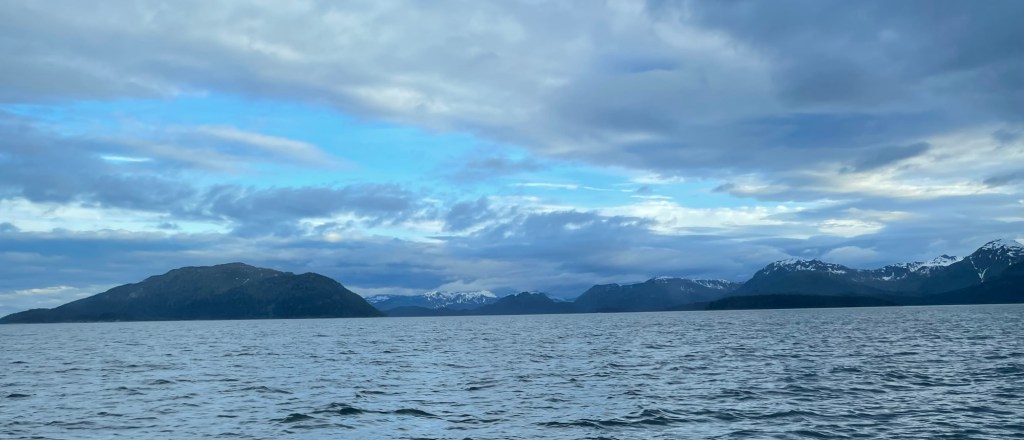
The day ended with an auspicious patch of blue sky as we sailed out the mouth of Glacier Bay. What a special, beautiful place!